* Corresponding author.
E-mail: [email protected] (X. Wang); [email protected] (C. Liu).
0102-695X/$ - see front matter © 2014 Sociedade Brasileira de Farmacognosia. Published by Elsevier Editora Ltda. All rights reserved. http://dx.doi.org/10.1016/j.bjp.2014.10.011
Short communication
Rapid assessment of quality of deer antler slices by using an
electronic nose coupled with chemometric analysis
Guojie Xu
a, Caili Liao
a, Xiaolei Ren
a, Xue Zhang
a, Xinyue Zhang
a, Siqi Liu
a, Xiaorui Fu
a,
Hui Lin
a, Haozhong Wu
a, Luqi Huang
b, Chunsheng Liu
a,*, Xueyong Wang
a,*
aSchool of Chinese Materia Medica, Beijing University of Chinese Medicine, Beijing, P. R. China
bNational Resource Center for Chinese Materia Medica, Academy of Chinese Medical Sciences, Beijing, P. R. China
A RT I C L E I N F O
Article history: Received 28 July 2014 Accepted 21 October 2014
Keywords: Electronic nose Deer antler Lu-Rong Quality
A B S T R A C T
Deer antler is a precious animal-sourced traditional Chinese medicine. We aimed to rapidly assess the quality of deer antler slices by electronic nose so that we can ensure medical safety. In this study, response intensity of the electronic nose was favorably optimized, and samples were well assessed by using an electronic nose based on LDA model. The results obtained herein suggested that electronic nose could be an effective method to rapidly as-sess the quality of deer antler slices, and could also be an important tool for categorization of complex aroma mixtures for the control of quality of drugs or food.
© 2014 Sociedade Brasileira de Farmacognosia. Published by Elsevier Editora Ltda. All rights reserved.
Introduction
Deer antler (Lu-rong in China) is a precious animal-sourced traditional Chinese medicine. Several studies have proven its functions of anti-bone resorption, anti-arthritis and promoting chondrocyte proliferation (Kim et al., 2005; Lin et al., 2011; Wu et al., 2013). Generally, deer antlers are always cut into slices as end products, which have four presentations according to the difference of quality, including wax slices, powder slices, sand slices and bone slices. It is known that deer antler slices of different quality have diverse active ingredients and efficacies. Wax slices, from top of deer antlers, are of higher quality than powder slices, sand slices and bone slices. Bone slices, from partially ossific part of deer antlers, are of low quality (Tseng et al., 2014). However, they are always easily mixed together because of their similar appearance, which may lead to
medical and safety problems. Thus, it is necessary to provide an effective method for assessment of the quality of deer antler slices so that we can ensure safety.
The electronic nose, which can detect odorous volatile components, is an artificial olfactory system. It has been applied in the field of agriculture, food and environmental protection (Pacioni et al., 2014; Wilson, 2013). In comparison to other methods, the electronic nose is more simple and rapid. It can rapidly detect smells of samples, transfer them into digital signals and directly analyze them by attached software’s so that we can intuitively and rapidly assess the results. It has also been investigated the great richness of odorous proteins and lipids in deer antlers (Wu et al., 2013). Therefore, using an electronic nose is suitable for discriminating different deer antler slices. Here, we first tried to use an electronic nose to assess the quality of deer antler slices. Moreover, multiple data analysis models were tested to get optimized analytical method. This study may expand the application of the electronic nose into the field of Chinese medicine and allow experts to rapidly assess the quality of odorous animal-sourced traditional Chinese medicines and other drugs or foods.
Material and methods
Samples
Deer antlers in four presentations, including wax slice, powder slice, sand slice and bone slice were obtained from Anguo, Hebei, China. They were species of Cornu Cervi Pantotrichum described in the Chinese Pharmacopoeia 2010. All the samples were deposited into the specimen room of Beijing University of Chinese Medicine.
Electronic nose
The Alpha M.O.S FOX 3000 with 12 metal oxide sensors consisted of a sampling apparatus, array of sensors, a HS-100 auto sampler, an air generator equipment and software (Alpha Soft V11) for data recording. The sensor array was composed of 12 metal oxide sensors divided into three chambers: T, P and LY (Table 1).
Experimental procedures
The samples were accurately weighed to 0.6 g and were then placed in 10 ml headspace vials. The headspace time and temperature were 500 s and 70°C, respectively. The carrier gas was air with a flow rate of 150 ml/min. The injection volume was 2500 μl, the injection rate 1500 μl/s and the stirring rate 250 rpm. The acquisition time and the time between injections were 200 s and 400 s, respectively. The response value of each of the 12 sensors for every sample was recorded, and response curves were generated (Lin et al., 2013).
Statistical processing
Two response-feature values of the 12 sensors were recorded, including the first-feature values and the second-feature values. The first-feature values represented the 12 maximum response values of 12 sensors. 120 response values at 10 time points (5s, 10s, 15s, 20s, 25s, 30s, 35s, 40s, 45s and 50s) of 12 sensors were taken as the second-feature values. The data
Sensor markers Name Detection of Chemical components
S1 LY2/LG Oxidizing gas
S2 LY2/G Ammonia, carbon monoxide
S3 LY2/AA Ethanol
S4 LY2/GH Ammonia/organic amine S5 LY2/gCTL Hydrogen sulfide
S6 LY2/gCT Propane/butane
S7 T30/1 Organic solvents
S8 P10/1 Hydrocarbons
S9 P10/2 Methane
S10 P10/2 Fluorine
S11 T70/2 Aromatic compounds S12 PA/2 Ethanol, ammonia/organic amine
Table 1
The components and main applications of the sensors of the FOX-3000 electronic nose.
sets of the samples were analyzed using SPSS 19.0 based on cluster analysis (CA), principal component analysis (PCA), linear discriminate analysis (LDA) and artificial neural network (ANN) of radial basis function (Lin et al., 2013).
Results and discussion
Optimization of experimental conditions
Previous studies had not been reported regarding the application of an electronic nose in animal-sourced materials in traditional Chinese medicine. Therefore, we optimized the experimental conditions of electronic nose to get better response values. In this study, four factors, including sample quantity (A), injection volume (B), headspace time (C) and headspace temperature (D), were used to optimize the response intensity in an orthogonal assay (Table 2). The results showed that the most effective factor was Factor D. The next important factor was Factor B, followed by Factor A and C. The optimized conditions were D3B3A3C2, described in Section 2.
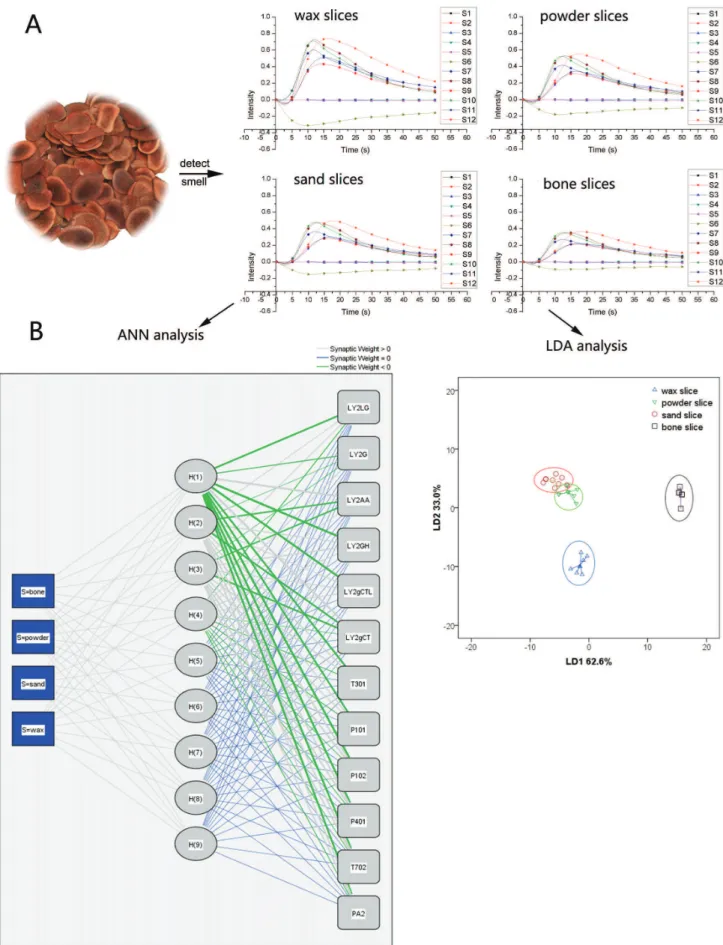
Fig. 1 shows the typical sensor responses for samples of deer antler slices in the four presentations. The curves represent the intensity of each sensor against time, when the volatiles reach the measurement chamber. It indicated that the sensors exported richness of useful information. The maximum response values for each sensor were between 0.3 and 0.9 and the best periods of time were from 10 to 20 s. The result suggested that the detection conditions of the electronic nose were favorably optimized.
Discrimination of deer antler slices of different quality by electronic nose
(PCA), linear discriminated analysis (LDA) and artificial neural network (ANN) models were used to test the applicability of quality assessment of antler slices. CA and PCA models based on first-feature values or second-feature values were successfully built using SPSS software in this study. However, both of them failed to discriminate antler slices of different quality (data not shown). This indicated that CA and PCA models were not suitable for discrimination of different antler slices.
ANN model was also performed in this study (Fig. 1); 80% of the samples were used as the training data and 20% of samples were used as the testing data. The results showed that correct classification rate of ANN for the testing samples varied from 20% to 100%, which suggested that quality of samples could also be generally evaluated by ANN model. We deduced that similar smells between powder sand slices might contribute to low classification rate, while specific smells of wax and bone slices might result in high classification rate, which could be visually reflected in LDA model (Fig. 1).
Fig. 1 also shows the discrimination of deer antlers of four specifications based on LDA model of second feature values. As shown, contribution rates of LD1 and LD2 were 62.6% and 33.0% respectively, and importantly, deer antler slices of four presentations were well distinguished. It implied that the LDA model based on second-feature values was an effective way to discriminate antler slices of different quality and an electronic nose should be able to rapidly assess the quality of deer antler slices.
Notably, we also found that some fake deer antler slices were mixed with authentical ones and they were identified as Rangifer tarandus. These fakes may also affect the quality of deer antlers, which can be regarded as the followed theme of study in the future.
Association analysis between smells and chemical components
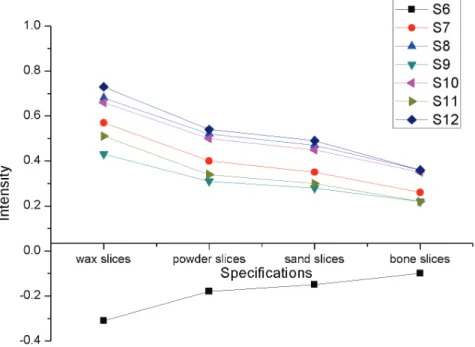
To further understand the reasons inducing the quality differences between deer antler slices, we analyzed their chemical constituents. As shown, several volatile components in high content, including propane, butane, organic solvents, hydrocarbons, methane, fluorine, aromatic compounds, ethanol, ammonia and organic amines, were detected by electronic nose (Table 1). But notably, the contents of volatile components in wax slices, reflected by response intensity of sensors, were the highest, followed by powder slices, sand slices and bone slices, which indicated that volatile components content might be associated with quality differences between deer antler slices and could be effective markers for rapid quality identification of deer antler slices (Fig. 2).
Currently, amino acids are considered as important internal index components for quality control of deer antler slices (Wu et al., 2013). It had been investigated that wax slices of deer antlers have high content of amino acids, followed by powder slices, sand slices and bone slices (Song and Feng, 2013; Wang, 2009). Interestingly, it coincided with the change trend of response intensity of sensors (Fig. 2). We could infer that the intensity response of sensors should also be closely related to amino acids content. In conclusion, the results amazedly suggested that the electronic nose could mirror levels of both volatile components and amino acids, and should be effective for quality control assessment of deer antler slices.
However, the standard “deer antler slices of high quality” is still unclear, thus it is a hard question for many experts since deer antler slices have so many active chemical components we are not able to determine the effective markers for controlling quality (Tseng et al., 2014). This study can be a good supplement for traditional methods.
Perspective and application of the electronic nose
As a matter of fact, lots of TCM are aromatic, such as herbal medicines from Umbelliferae and Labiatae species. Also, most food or drink and even air have specific smells. The electronic nose is suitable for rapid identification of these materials, thus it has broad application prospects. Furthermore, there are not any effective tools for on-spot identification, and an electronic nose, as a mini-sensor, is expected to be developed as a wearable detector for on-spot identification, which will support and facilitate drug control. The electronic nose, we believe, will play an important role in drugs, agriculture, food and environmental protection.
Conclusion
In this study, we first described the use of the electronic nose for the assessment of quality of animal-sourced medicinal materials. As a result, the electronic nose combined with LDA model successfully discriminated deer antler slices of different quality. The result further proves that the electronic nose, like the human olfactory system, is able to discriminate different smells and even quality, and is effective for rapid quality identification. It is also believed that electronic nose can be an important tool for categorization of complex aroma mixtures and control of quality of drugs and food.
Level Factors
Sample quantity (A) Injection volume (B) Headspace time (C) Headspace temperature (D)
1 0. 2 g 1500 μl 300 s 50°C
2 0. 4 g 2000 μl 500 s 60°C
3 0. 6 g 2500 μl 700 s 70°C
Table 2
Figure 2 – Change trend of smell intensity of different antler slices. “S6-S12”, the same as description in Table 1, represents sensors markers. The horizontal axis represents specifications of four slices. The vertical axis represents signal intensity of sensors.
Author’s contribution
GX and CL accomplished the whole experiment. XW and CL guided the experiment and data analysis. HL, LH, HW, SL, XF, XR, XZ and XZ accounted for data analysis, collecting samples and processing samples.
Conflicts of interest
The authors declare no conflicts of interest.
Acknowledgements
We thank Huihui Duan for supporting this study. This work was supported by Beijing Natural Science Foundation (7112076) and National Natural Science Foundation of China (81274011).
R E F E R E N C E S
Chen, D., Guo, Y., Ren, W., 1999. Character identification of 12 kinds of pilose antler medicinal materials. Zhong Yao Cai. 22, 441-444. Fajardo, V., Gonzalez, I., Lopez-Calleja, I., Martin, I., Hernandez, P.E.,
Garcia, T., Martin, R., 2006. PCR-RFLP authentication of meats from red deer (Cervus elaphus), fallow deer (Dama dama), roe deer (Capreolus capreolus), cattle (Bos taurus), sheep (Ovis aries), and goat (Capra hircus). J. Agric. Food Chem. 54, 1144-1150. Haynes, G.D., Latch, E.K., 2012. Identification of novel single
nucleotide polymorphisms (SNPs) in deer (Odocoileus spp.) using the BovineSNP50 BeadChip. PloS one 7, e36536.
Jeong, H.J., Lee, J.B., Park, S.Y., Song, C.S., Kim, B.S., Rho, J.R., Yoo, M.H., Jeong, B.H., Kim, Y.S., Choi, I.S., 2007. Identification of single-nucleotide polymorphisms of the prion protein gene in sika deer (Cervus nippon laiouanus). J. Veterin. Sci. 8, 299-301. Kim, Y.H., Kim, E.S., Ko, B.S., Oh, S.E., Ryuk, J.A., Chae, S.W., Lee,
H.W., Choi, G.Y., Seo, D.W., Lee, M.Y., 2012. A PCR-based assay for discriminating Cervus and Rangifer (Cervidae) antlers with mitochondrial DNA polymorphisms. J. Anim. Sci. 90, 2075-2083.
Kim, K.H., Kim, K.S., Choi, B.J., Chung, K.H., Chang, Y.C., Lee, S.D., Park, K.K., Kim, H.M., Kim, C.H., 2005. Anti-bone resorption activity of deer antler aqua-acupunture, the pilose antler of Cervus korean Temminck var. mantchuricus Swinhoe (Nokyong) in adjuvant-induced arthritic rats. J. Ethnopharmacol. 96, 497-506.
Lin, H., Yan, Y., Zhao, T., Peng, L., Zou, H., Li, J., Yang, X., Xiong, Y., Wang, M., Wu, H., 2013. Rapid discrimination of Apiaceae plants by electronic nose coupled with multivariate statistical analyses. J. Pharm. Biomed. Anal. 84, 1-4.
Lin, J.H., Deng, L.X., Wu, Z.Y., Chen, L., Zhang, L., 2011. Pilose antler polypeptides promote chondrocyte proliferation via the tyrosine kinase signaling pathway. J. Occup. Med. Toxicol. 6, 27, DOI: 10.1186/1745-6673-6-27.
Pacioni, G., Cerretani, L., Procida, G., Cichelli, A., 2014.
Composition of commercial truffle flavored oils with GC-MS analysis and discrimination with an electronic nose. Food Chem. 146, 30-35.
Song, Z., Feng, L., 2013. Determination of amino acids in corn Cervi pantotrichum of different specifications. Zhongguo Zhong yao za zhi 38, 1919-1923.
Wang, S., S. J.-H., Wang, Y.-M., 2009. Comparative analysis of free amino acid contents of bloody antler-chips and nonbioody antler-chips of sika deer. Amino Acids Biotic Res. 3, 62-63. Wilson, A.D., 2013. Diverse applications of electronic-nose
technologies in agriculture and forestry. Sensors (Basel) 13, 2295-2348.
Wu, F., Li, H., Jin, L., Li, X., Ma, Y., You, J., Li, S., Xu, Y., 2013. Deer antler base as a traditional Chinese medicine: a review of its traditional uses, chemistry and pharmacology. J. Ethnopharmacol. 145, 403-415.
Yan, Z., Yuan, R.Y., Wang, C.Y., 2009. Study on fingerprint of corn Cervi pantotrichum by HPCE. Food Sci. Technol. 34, 254-258.
Ye, D.J., 1986. Microscopic identification of pilose antler and deerhorn. Zhong Yao Tong Bao. 11, 17-19.
Zhang, R., Liu, C.S., Huang, L.Q., Wang, X.Y., Cui, G.H., Dong, L., 2011. Study on the identification of Cornu Cervi pantotrichum with DNA Barcoding. Zhongguo Zhong yao za zhi 46, 263-266. Zhao, J.X., Cui, G.H., Xin, M.T., Tang, S.H., 2010. The establishment