Radical Nephrectomy Performed by Open, Laparoscopy with or
without Hand-Assistance or Robotic Methods by the Same
Surgeon Produces Comparable Perioperative Results
Tanya Nazemi, Anton Galich, Samuel Sterrett, Douglas Klingler, Lynette Smith, K.C. Balaji
Division of Urological Surgery, Department of Surgery, University of Nebraska Medical Center,
Omaha, Nebraska, USA
ABSTRACT
Purpose: Radical nephrectomy can be performed using open or laparoscopic (with or without hand assistance) methods, and most recently using the da Vinci Surgical Robotic System. We evaluated the perioperative outcomes using a contempo-rary cohort of patients undergoing radical nephrectomy by one of the above 4 methods performed by the same surgeon.
Materials and Methods: The relevant clinical information on 57 consecutive patients undergoing radical nephrectomy from September 2000 until July 2004 by a single surgeon was entered in a Microsoft Access Database™ and queried. Following appropriate statistical analysis, p values < 0.05 were considered significant.
Results: Of 57 patients, the open, robotic, laparoscopy with or without hand assistance radical nephrectomy were per-formed in 18, 6, 21, and 12 patients, respectively. The age, sex, body mass index (BMI), incidence of malignancy, specimen and tumor size, tumor stage, Fuhrman grade, hospital stay, change in postoperative creatinine, drop in hemoglobin, and perioperative complications were not significantly different between the methods. While the estimated median blood loss, postoperative narcotic use for pain control, and hospital stay were significantly higher in the open surgery method (p < 0.05), the median operative time was significantly shorter compared to the robotic method (p = 0.02). Operating room costs were significantly higher in the robotic and laparoscopic groups; however, there was no significant difference in total hospital costs between the 4 groups.
Conclusions: The study demonstrates that radical nephrectomy can be safely performed either by open, robotic, or laparoscopic with or without hand assistance methods without significant difference in perioperative complication rates. A larger cohort and longer follow up are needed to validate our findings and establish oncological outcomes.
Key words:kidney neoplasms; nephrectomy; laparoscopy; robotic; surgical procedures, operative
Int Braz J Urol. 2006; 32: 15-22
INTRODUCTION
Nephrectomy for the treatment of renal dis-ease was first performed in the 1860s (1). Since Robson’s first description of radical nephrectomy (RN) for renal tumors in the year 1963, RN has been traditionally performed by open methods through
meth-ods (5,6). Most of these studies include patients un-dergoing RN by either open or laparoscopic methods by different surgeons and therefore, were unable to evaluate the impact on the individual surgeon’s per-formance on the outcome independent of the method used in performing the procedure (5). Several studies evaluating outcomes of patients undergoing radical surgery for prostate and bladder cancer by open meth-ods have demonstrated that the performing surgeon is an independent predictor of outcome (7,8). Therefore, in this study we analyzed the perioperative outcome using a contemporary cohort of patients undergoing RN by different methods (open, laparoscopy with hand assistance (HAL), laparoscopy without hand assistance, robotic) performed by the same surgeon, thereby mini-mizing the impact of different surgeons performing the procedure on perioperative outcome.
MATERIALS AND METHODS
The relevant clinical information on 57 con-secutive patients undergoing radical nephrectomy from September 2000 through July 2004 by a single surgeon was entered in a Microsoft Access Data-base™ and queried. Prior to initiation of Laparoscopic and Robotic Surgery Program (LRSP) at our institution in January of 2001, all patients underwent radical nephrectomy by conventional open method. However, since the inception of LRSP all the radical nephrectomies were performed using minimally invasive techniques, including pure laparoscopy, hand assisted laparoscopy, and robot assisted surgery. Open radical nephrectomies con-tinued to be performed in our institution on the pa-tients with medical contraindications to laparoscopy. Hand assisted laparoscopy was a method of choice for radical nephrectomies in the early part of our series because it facilitates transfer of open surgical skills to laparoscopic surgery. However, with in-creasing experience, pure laparoscopic method was more frequently used to complete radical nephrec-tomy and hand assistance was limited to complex cases including large masses, extensive intra-ab-dominal adhesions, uncontrollable bleeding or fail-ure to progress. The robotic method was used to
es-tablish feasibility of using the robot to perform radi-cal nephrectomy as previously published (4). An Institutional Review Board (IRB) exempt status for the study was obtained because all patient identifi-ers were deleted after obtaining pertinent clinical information and subjects were never identified. The information analyzed included age, sex, body mass index (BMI), operative time, postoperative narcotic use including need to use patient controlled analge-sia (PCA) or total quantity of morphine equivalent used, estimated blood loss, hospital stay, change in postoperative creatinine and hemoglobin, presence or absence of malignancy, final pathology of intact specimens including specimen size, tumor size, stage, Fuhrman grade, and perioperative complica-tions.
Postoperatively, several patients received morphine sulfate for analgesia by PCA pump. In this study, we used the need to use PCA for postoperative analgesia as an indicator of increased postoperative pain. Because the total amount of morphine used through the PCA was variable, we were unable to precisely quantify the milligrams of morphine used. However, when the patients’ pain improved, they ei-ther were switched to oral pain medications or were given measured amount of morphine intravenously as needed. Therefore, for the purpose of analysis, we categorized the patients based on PCA use for post-operative pain control when accurate measurements of morphine use were not obtainable.
Finally, a cost analysis was performed com-paring the operating room charges and total hospital costs for a randomly selected group of patients from each group.
Statistical Analysis
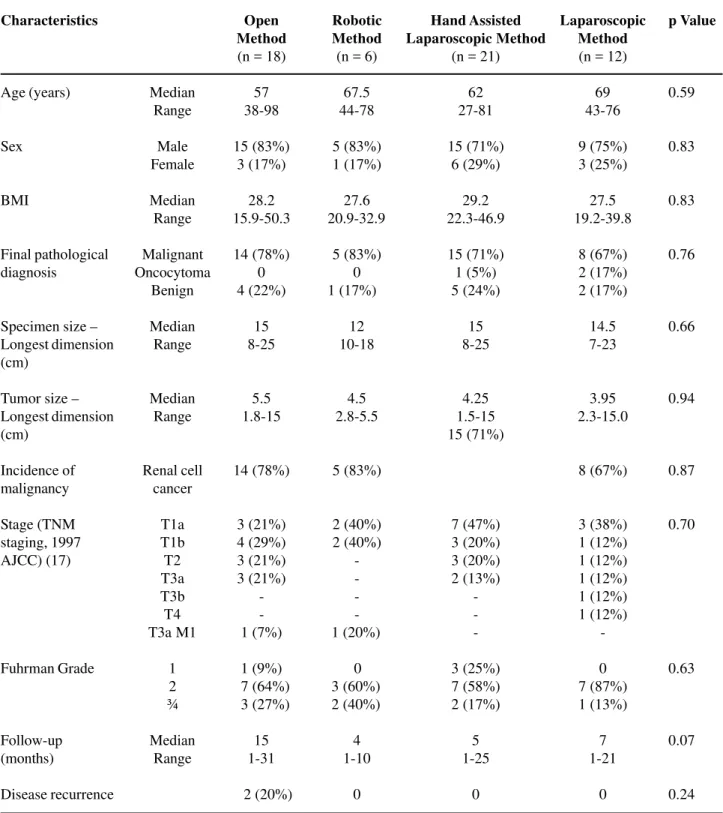
Table 1 – Comparison of characteristics of patients undergoing radical nephrectomy by different methods. Characteristics Age (years) Sex BMI Final pathological diagnosis
Specimen size – Longest dimension (cm)
Tumor size – Longest dimension (cm) Incidence of malignancy Stage (TNM staging, 1997 AJCC) (17) Fuhrman Grade Follow-up (months) Disease recurrence Median Range Male Female Median Range Malignant Oncocytoma Benign Median Range Median Range Renal cell cancer T1a T1b T2 T3a T3b T4 T3a M1 1 2 ¾ Median Range Open Method (n = 18)
57 38-98 15 (83%) 3 (17%) 28.2 15.9-50.3 14 (78%) 0 4 (22%) 15 8-25 5.5 1.8-15 14 (78%) 3 (21%) 4 (29%) 3 (21%) 3 (21%) -1 (7%) 1 (9%) 7 (64%) 3 (27%) 15 1-31 2 (20%) Robotic Method (n = 6)
67.5 44-78 5 (83%) 1 (17%) 27.6 20.9-32.9 5 (83%) 0 1 (17%) 12 10-18 4.5 2.8-5.5 5 (83%) 2 (40%) 2 (40%) 1 (20%) 0 3 (60%) 2 (40%) 4 1-10 0 Hand Assisted Laparoscopic Method
(n = 21)
62 27-81 15 (71%) 6 (29%) 29.2 22.3-46.9 15 (71%) 1 (5%) 5 (24%) 15 8-25 4.25 1.5-15 15 (71%) 7 (47%) 3 (20%) 3 (20%) 2 (13%) -3 (25%) 7 (58%) 2 (17%) 5 1-25 0 Laparoscopic Method (n = 12)
69 43-76 9 (75%) 3 (25%) 27.5 19.2-39.8 8 (67%) 2 (17%) 2 (17%) 14.5 7-23 3.95 2.3-15.0 8 (67%) 3 (38%) 1 (12%) 1 (12%) 1 (12%) 1 (12%) 1 (12%) -0 7 (87%) 1 (13%) 7 1-21 0 p Value 0.59 0.83 0.83 0.76 0.66 0.94 0.87 0.70 0.63 0.07 0.24
RESULTS
Of 57 patients, the open, robotic, laparoscopy with or without hand assistance RN were performed in 18, 6, 21, and 12 patients, respectively. The patient characteristics are listed in Table-1, which were not
significantly different between the four methods. The perioperative outcomes are tabulated in Table-2. There were no positive surgical margins in any of patients with malignancy. The postoperative change in creati-nine, drop in hemoglobin, and perioperative compli-cation rates were similar between the 4 methods. The
Table 2 – Perioperative outcomes in patients undergoing radical nephrectomy by different methods. Statistically signifi-cant pairwise comparisons (p < 0.01 to adjust for multiple comparisons).
Operative time (minutes)
Estimated blood loss (mL)
Postoperative change in creati-nine (mg/dL)
Postoperative drop in Hgb (g/dL)
Blood transfusion
Postoperative analgesia
Postoperative morphine equivalent use for analgesia (mg)
Hospital stay (Days)
Perioperative complication rate
Median Range
Median Range
Median Range
Median Range
PCA pump Other
Median Range
Median Range
N (%)
Open Method (n = 18)
Robotic Method (n = 6)
345 246-548
125 25-1500
0.3 -0.4-0.8
-1.4 -3.5 - 0.1
1 (16%)
0 6 (100%)
19.0 2-212
3 2-5
1 (18%)
Hand Assisted Laparoscopic Method
(n = 21)
Laparoscopic Method (n = 12)
p Value
202 116-382
500 75-3000
0.15 -1.0-2.9
-2.1 -7.4 - 0.5
3 (16%)
6 (75%) 2 (25%)
5.5 1-10
5 3-11
3 (17%)
265 129-402
100 10-1000
0.4 0-3.8
-1.7 -4.2-1.1
5 (24%)
3 (14%) 18 (86%)
16 0-210
4 1-61
4 (19%)
237.5 181-434
125 50-300
0.4 0.1-0.8
-2.3 -3.5 - 0.6
2 (17%)
2 (17%) 10 (83%)
30 0-58
4 3-12
2 (17%)
0.02
0.01
0.11
0.30
0.9
0.0035
0.37
0.03
1.00
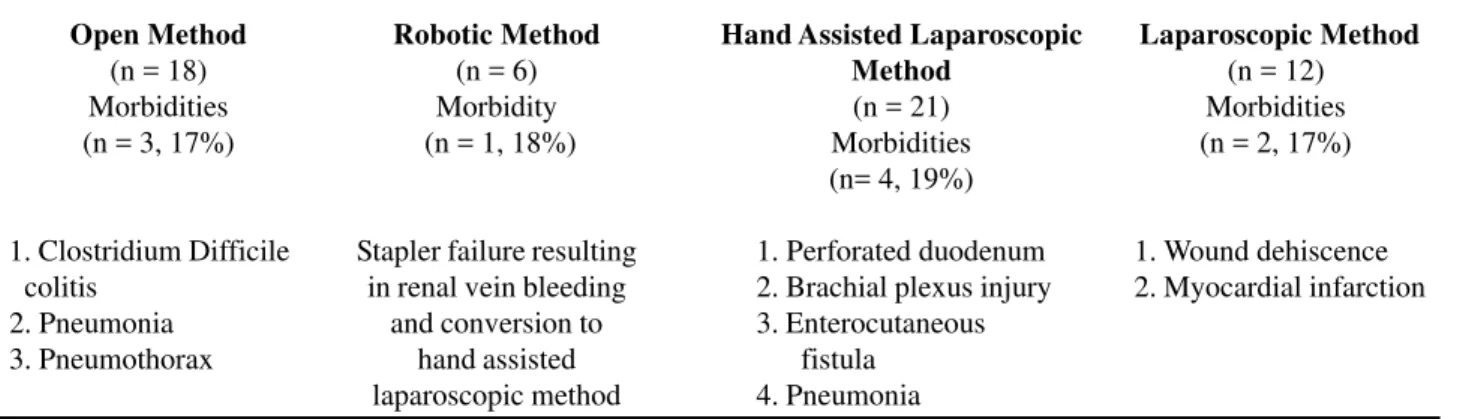
Table 3 – Morbidities following radical nephrectomy by method of surgery.
Open Method (n = 18) Morbidities (n = 3, 17%)
1. Clostridium Difficile colitis
2. Pneumonia 3. Pneumothorax
Robotic Method (n = 6) Morbidity (n = 1, 18%)
Stapler failure resulting in renal vein bleeding
and conversion to hand assisted laparoscopic method
Hand Assisted Laparoscopic Method
(n = 21) Morbidities (n= 4, 19%)
000.1. Perforated duodenum
000.2. Brachial plexus injury
000.3. Enterocutaneous 00....fistula
000.4. Pneumonia
Laparoscopic Method (n = 12) Morbidities (n = 2, 17%)
01. Wound dehiscence
02. Myocardial infarction operative time was significantly longer in the robotic
method 345 (246-548) minutes compared to the open method, 202 (116-382) minutes (p = 0.02). There were no statistical differences in operating time between open, HAL, and laparoscopic methods. However, the median estimated blood loss was significantly higher in the open method 500 (75-3000) mL compared HAL, and laparoscopic methods; 100 (10-1000) and 125 (50-300) mL respectively (p = 0.01). The patients who underwent open nephrectomy tended to have higher rates of postoperative patient controlled analgesia (PCA) use compared to robotic and HAL methods at 75% versus 0% and 14%, for the robotic and HAL methods respectively (p = 0.0035). The median hos-pital stay for patients undergoing RN by robotic meth-ods was significantly shorter compared to open method, 3 vs. 5 days (p < 0.01). A total of 10 (17%) perioperative complications and 2 (3.8%) deaths oc-curred in the entire study cohort. One patient died on postoperative day 10 from aspiration following open radical nephrectomy, and the other death occurred in a patient on postoperative day 6 secondary to fulmi-nant pancreatitis following laparoscopic left radical nephrectomy. The perioperative complication rates between the four methods were not significantly dif-ferent; 17%,18%,19%, and 17% for open, robotic, HAL, and laparoscopic methods respectively (p = 1.00). The morbidities following RN by method of surgery are detailed in Table-3. Of the 57 patients, 11 open (61%), 6 robotic (100%), 12 hand assisted (57%), and 4 pure laparoscopic (33%) cases were
available for cost analysis. Mean operating room costs were US$ 4,533, US$ 10,252, US$ 8,432, and US$ 7,781, for open, robotic, hand assisted, and laparoscopic cases, respectively (p = 0.007). Total mean hospital costs were US$ 25,503, US$ 35,756, US$ 30,417, and US$ 30,293 for open, robotic, hand assisted, and pure laparoscopic cases, respectively (p = 0.36).
COMMENTS
Most recently, the da Vinci Surgical Robotic System has been added to the armamentarium of mini-mally invasive surgery and is being increasingly used to perform complex urologic procedures (10,11). We have previously published on the feasibility of ro-botic radical nephrectomy, and in this study, we evalu-ated the perioperative outcomes of patients undergo-ing RN by one of the four contemporary methods; open, robotic, laparoscopic methods with or without hand assistance (4). The current study includes pa-tients who have undergone RN by one of the four methods performed by a single surgeon, thereby mini-mizing the impact on perioperative outcome of dif-ferent surgeons performing the procedure.
of 500 mL (75-3000) and morphine use (need for PCA) was significantly higher in the open surgery method, and the median operative time was signifi-cantly shorter at 202 minutes (116-382) compared to one or more of the other methods (p < 0.05). The prolonged operative time in patients undergoing RN by robotic method is probably related to the learning curve, as studies in literature confirm improved op-erative time with increasing experience with other robotic urological procedures (12). Another major limitation of RN by robotic method is increased cost. Although a detailed cost analysis is beyond the scope of this article, we demonstrated an increased mean operating room cost in the robotic and laparoscopic groups compared to the open group. Overall hospital costs, however, were not statistically different be-tween groups. Patients treated with robotic methods had the least median length of stay in the hospital, and blood loss was significantly less than the open method and comparable to other laparoscopic meth-ods. Although we have postulated in a prior publica-tion that the three dimensional visualizapublica-tion and endo-wrist movements of the DSRS may facilitate perfor-mance of renal cancer surgery with IVC invasion or partial nephrectomy, it remains to be proved whether these technical advantages will result in improved clinical outcomes compared with pure laparoscopic management of cases by experienced laparoscopic urologic surgeons (4).
The perioperative complication rate for our entire cohort was 17%, which is comparable to pub-lished data in the literature (13). There were no sig-nificant differences in complication rates between the four methods. However, the nature of the complica-tions was distinctly different and dependent on the method used to perform RN. Bowel perforation oc-curred more frequently in patients undergoing HAL nephrectomy, whereas a solitary case of pneumotho-rax occurred in a patient undergoing RN by open method. Although we attempted to perform most open RN through an extraperitoneal approach, almost all cases of laparoscopic RN with and without hand as-sistance was performed using an elective transperitoneal approach. The higher incidence of bowel related complications in the HAL method was perhaps related to the transperitoneal approach and
more frequent use of HAL method in patients with increased intra-abdominal adhesions. All 3 cases of bowel complications occurred in first three patients undergoing surgery by HAL. While other large ne-phrectomy series have also reported similar bowel injuries, both bowel injuries reported in this series occurred early in our experience, highlighting the complexity and learning curve associated with per-forming RN by minimally invasive techniques (13). Several large series published in the litera-ture comparing safety and efficacy of laparoscopic and open RN are either single or multinstitutional series where procedures were performed by multiple surgeons over an extended period of time (14,15). Because the surgeon performing the procedure could be a significant factor influencing both perioperative and long term outcomes, it is unclear from the pub-lished data the exact impact of the performing sur-geon on the outcome. Moreover, there are no pub-lished series in the literature on the same surgeon performing RN using different methods. In our study, by evaluating the perioperative outcome of patients undergoing RN by one of four contemporary meth-ods performed by a single surgeon, we have estab-lished that a single surgeon familiar with various techniques can perform RN by any of the methods effectively with comparable complication rates, which is similar to other published nephrectomy series (13).
of centers of excellence. We performed an average of 15 RN each year during the study period, which confirms that RN by different methods inclusive of the learning curve may be performed without in-creased complications within a limited volume of cases by surgeons familiar with the techniques.
The primary goal of our study was to evalu-ate perioperative outcomes, and the data is not cur-rently mature enough to evaluate oncological out-comes. However, patients with open RN have longer median follow up of 15 (1-31) months, of which 2/ 10 (20%) developed disease recurrence with distant metastasis. Clearly, longer follow-up is needed in patients undergoing RN by the other three methods to compare oncological outcomes. Because the in-cidence of malignancy, stage and grade of malig-nant tumors of were similar in patients undergoing RN by the 4 methods, and no positive margins were noted in any of the patients, we anticipate that the oncological outcomes will also be comparable be-tween the four methods.
Our study is limited by a relatively small sample size, which is inadequately powered to detect small differences between the four methods. The study was conducted at a single institution and our results remain to be validated by other centers where the same surgeons perform RN by different methods. We are unable to evaluate the differences in long-term onco-logical efficacy between the methods because of the short follow-up. Nevertheless, the study establishes that radical nephrectomy can be performed either by open, robotic, or laparoscopic with or without hand assistance methods by a single surgeon familiar with the techniques without significant difference in perioperative complication rates.
CONCLUSIONS
Our data confirms that radical nephrectomy can be performed using either open, robotic, or laparoscopy with or without hand assistance by a single surgeon without significant difference in perioperative complication rates. A larger cohort and a longer follow up are needed to validate our find-ings and establish oncological outcomes.
CONFLICT OF INTEREST
None declared.
REFERENCES
1. Jantsch M: First succesul nephrectomy performed by Gustav Simon 1869. Wien Med Wochenschr. 1969; 119: 663-4.
2. Robson CJ: Radical nephrectomy for renal cell carci-noma. J Urol. 1963; 89: 37-42.
3. Guillonneau B, Jayet C, Tewari A, Vallancien G: Ro-bot assisted laparoscopic nephrectomy. J Urol. 2001; 166: 200-1.
4. Klingler DW, Hemstreet GP, Balaji KC: Feasibility of robotic radical nephrectomy—initial results of single-institution pilot study. Urology. 2005; 65: 1086-9. 5. Baldwin DD, Dunbar JA, Parekh DJ, Wells N, Shuford
MD, Cookson MS, et al.: Single-center comparison of purely laparoscopic, hand-assisted laparoscopic, and open radical nephrectomy in patients at high anesthetic risk. J Endourol. 2003; 17: 161-7.
6. Wille AH, Roigas J, Deger S, Tullmann M, Turk I, Loening SA: Laparoscopic radical nephrectomy: tech-niques, results and oncological outcome in 125 con-secutive cases. Eur Urol. 2004; 45: 483-8; discussion 488-9.
7. Eastham JA, Kattan MW, Riedel E, Begg CB, Wheeler TM, Gerigk C, et al.: Variations among individual sur-geons in the rate of positive surgical margins in radi-cal prostatectomy specimens. J Urol. 2003; 170: 2292-5.
8. Herr H, Lee C, Chang S, Lerner S; Bladder Cancer Collaborative Group: Standardization of radical cys-tectomy and pelvic lymph node dissection for bladder cancer: a collaborative group report. J Urol. 2004; 171: 1823-8; discussion 1827-8.
9. Everitt B: Statistical Methods in Medical Investiga-tions. 2nd ed. London, E. Arnold, 1994.
10. Balaji KC, Yohannes P, McBride CL, Oleynikov D, Hemstreet GP 3rd: Feasibility of robot-assisted totally intracorporeal laparoscopic ileal conduit urinary di-version: initial results of a single institutional pilot study. Urology. 2004; 63: 51-5.
11. Hemal AK, Menon M: Robotics in urology. Curr Opin Urol. 2004; 14: 89-93.
a technique of robotic radical prostatectomy for man-agement of localized carcinoma of the prostate: expe-rience of over 1100 cases. Urol Clin North Am. 2004; 31: 701-17.
13. Shuford MD, McDougall EM, Chang SS, LaFleur BJ, Smith JA Jr, Cookson MS: Complications of contem-porary radical nephrectomy: comparison of open vs. laparoscopic approach. Urol Oncol. 2004; 22: 121-6. 14. Makhoul B, De La Taille A, Vordos D, Salomon L, Sebe P, Audet JF, et al.: Laparoscopic radical nephre-ctomy for T1 renal cancer: the gold standard? A
com-parison of laparoscopic vs open nephrectomy. BJU Int. 2004; 93: 67-70.
15. Lee SE, Ku JH, Kwak C, Kim HH, Paick SH: Hand assisted laparoscopic radical nephrectomy: compari-son with open radical nephrectomy. J Urol. 2003; 170: 756-9.
16. Menon M, Shrivastava A, Tewari A, Sarle R, Hemal A, Peabody JO, et al.: Laparoscopic and robot assisted radical prostatectomy: establishment of a structured program and preliminary analysis of outcomes. J Urol. 2002; 168: 945-9.
Accepted after revision: November 30, 2005
Correspondence address: Dr. K.C. Balaji
Director of Urological Oncology Research 982360, Univ of Nebraska Med Ctr Omaha, Nebraska, 68198-2360, USA Fax: + 1 402 559-6529