Electronic clinical and surgical database
in chronic lower limb ischemia
Base eletrônica de dados clínicos e cirúrgicos
em isquemia crônica de membros inferiores
Carlos Seme Nejm Junior1, Jorge Ruino Ribas Timi1, Valentina Bistolf Amaral2
Abstract
Background: Electronic medical record systems may optimize future studies by improving speed, as well as data comparison and analysis. Objective: (a) To create a general database of clinical and surgical vascular diseases and select data from it to create a speciic database of chronic lower limb ischemia; b) to store this database in the form of an electronic system; c) to incorporate this database into the Brazilian integrated electronic medical record system (SINPE©); and (d) to conduct a pilot study to test the system. Methods: A general database of clinical vascular disease
was created, and a speciic system was developed to record the individual characteristics of the diseases that cause chronic ischemia of lower limbs. When completed, the database was incorporated into SINPE©. Results: For data
collection, an authorized user enters patient data and creates a medical record for that patient. After that, chronic ischemia of lower limbs is selected in the master system to access clinical data. Aided by the autoill tool, the user selects only the data for that speciic patient. Data may be retrieved for studies, to ind out the number of entries that meet the chosen parameters, and to provide statistical information about them. Conclusion: (a) he theoretical database of clinical and surgical vascular diseases and the derived database of chronic lower limb ischemia were created; (b) the theoretical electronic database was created; c) the electronic medical records in both the master and the speciic database were incorporated into SINPE©; (d) the pilot study was successfully created and tested using
the parser module of SINPE©.
Keywords: electronic database; electronic medical record; medical records; vascular surgery; chronic ischemia of lower limbs.
Resumo
Contexto: Um sistema eletrônico de protocolo seria capaz de armazenar dados clínicos e possibilitar futuras pesquisas, visando a rapidez, eiciência de cruzamentos e análise de tais dados. Objetivo: a) criar uma base de dados clínicos cirúrgicos em doenças vasculares e, a partir desta, uma base em Isquemia Crônica de Membros Inferiores; b) informatizar essa base sob forma de um protocolo eletrônico; c) incorporar ao SINPE© (Sistema Integrado de
Protocolos Eletrônicos); d) realizar um projeto piloto. Métodos: Criou-se uma base teórica de dados clínicos sobre as doenças vasculares. O protocolo especíico foi criado considerando-se as características individuais das doenças causadoras de Isquemia Crônica de Membros Inferiores. Após seu término, essa base eletrônica e informatizada seria incorporada ao SINPE©. Resultados: O usuário, previamente cadastrado, realizará o cadastro do paciente e selecionará,
dentro do protocolo mestre, o protocolo especíico em Isquemia Crônica de Membros Inferiores, para acesso aos seus respectivos dados clínicos. Orientado pelas alternativas diretas de preenchimento, o usuário seleciona apenas os dados pertencentes ao seu paciente. Estes podem ser resgatados para pesquisa, mostrando o número de coletas que satisfazem os parâmetros escolhidos e informações estatísticas sobre a mesma. Conclusão: a) a criação da base teórica de dados clínicos e cirúrgicos em doenças vasculares e, a partir desta, em Isquemia Crônica de Membros Inferiores, foi factível; b) a informatização da base teórica sob forma de protocolo eletrônico foi exequível; c) o protocolo eletrônico mestre e especíico poderá ser incorporado ao SINPE©; d) o projeto piloto foi criado com sucesso e testado através
do módulo analisador do SINPE©.
Palavras-chave: banco eletrônico de dados; protocolo eletrônico; registros médicos; cirurgia vascular; isquemia crônica de membros inferiores.
1 Universidade Federal do Paraná – UFPR, Department of Surgery, Curitiba, PR, Brazil. 2 Universidade Federal do Paraná – UFPR, Curitiba, PR, Brazil.
Financial support: None.
Conlicts of interest: No conlicts of interest declared concerning the publication of this article. Submitted on: 07.17.13. Accepted on: 08.12.13.
Classical textbooks had to be used because they describe recent advances and revisions5-8. After the
irst structure of the system was built based on those books, more speciic textbooks had to be checked to clarify some questions9-11.
After the diseases described by the specific subsystem had been deined, a detailed literature review was conducted using electronic medical databases in the Internet and specialized journals in the ield of vascular surgery, such as the books mentioned above.
Four diseases were included according to decreasing order of prevalence6: peripheral arterial
occlusive disease (PAOD); thromboangiitis obliterans (TAO); popliteal artery entrapment syndrome (PAES); and cystic adventitial disease of the popliteal artery (CAD-PA).
Some of the items added after the review for each disease generated sub-items at several orders, according to their importance and prevalence. The changes in data distribution, as well as their updating, were first made using the software Microsoft
Word XP®, where all contents were visualized and
corrected if necessary, and then entered into SINPE©.
After the database was created, the method and form of data inclusion into SINPE© were deined. This
part of the study demanded the participation of a team of IT specialists. The database management software used was Microsoft® Access, which simpliies
CD-ROM recording and program distribution. This program has been used in our Graduate Program on Clinical Surgery, where it is an aid for students to build medical records, as in this study.
All the items included in the records were electronically processed using a tool to incorporate them into SINPE©. The purpose of this program was
to allow other researcher to retrieve and collect data in different centers and to operate the system online, from different places.
If SINPE© has not been previously downloaded
and installed in the computer using the CD-ROM, records may still be visualized and included, as SINPE© may be accessed remotely in the Internet
at www.sinpe.com.br. Therefore, the records in the database may be updated and collected from any place in the world.
The Vascular Surgery Service of the Universidade Federal do Paraná was selected for the pilot study to test the electronic medical record system.
First, together with the IT department of Hospital de Clínicas of Universidade Federal do Paraná, a
INTRODUCTION
Few services keep medical records for purely clinical purposes. Medical records, in the past stored in hospital iles, should be easily accessed for data collection and scientiic quality control1.
After the creation of an electronic clinical and
surgical database of chronic lower limb ischemia, a signiicant number of standardized data may be made available. Data use will be easier, which may lead to greater technical and scientiic development2.
The research line Electronic Medical Records was created in our Graduate Program on Clinical Surgery after we were authorized to use the software of the Brazilian electronic medical record system (Sistema Nacional de Protocolos Eletrônicos, SINPE©),
which can be used to create electronic databases and collect data for prospective clinical studies in several medical areas3,4.
The electronic medical record system for cases of chronic lower limb ischemia originated from the master electronic vascular surgery database. It is a resource for comprehensive investigations, as it provides access to data about epidemiology, diagnostic tools and treatments, and will, therefore, increase the production of studies in this area. The objectives of this study were:
• To create a comprehensive and up-to-date database of vascular diseases, called a master system, and use the master system to deine a theoretical database of diseases that cause chronic lower limb ischemia; • To standardize this electronic database and adapt
it to a speciic computer program, called electronic data collection system;
• To incorporate this program into the Brazilian Elec-tronic Medical Record System (SINPE©);
• To conduct a pilot study to test the medical records and the SINPE© parser module using the
descrip-tion of data collected, and analyze the correladescrip-tions with the incidence of myocardial ischemia deined by indings of pharmacological stress echocardiog-raphy using dobutamine or dipyridamole, and with the need of carotid endarterectomy in patients with chronic lower limb ischemia.
MATERIAL AND METHODS
This descriptive study about the Electronic Clinical and Surgical Database of Chronic Lower Limb Ischemia is in agreement with the Universidade
Federal do Paraná rules.
This study was approved by the Ethics in Research Committee of the university where it was conducted.
search was conducted to identify hospitalizations of patients with chronic lower limb ischemia in six months.
The electronic medical record system was retrospectively applied to a sample of 36 patients to test its operation and validate its applicability for the collection of data to be used in scientiic studies.
After data collection for the pilot study, the SINPE
Analisador©, a parser module, was used to interpret
the information collected. This module provides an interface for the rapid visualization of data included in the SINPE© electronic medical records and
generates graphs and statistical analysis, prints and saves results and exports data.
RESULTS
A chronic lower limb ischemia medical record system was created. All items that are important for the medical record are selected and added to the system. In addition, unwanted items may be removed from the records using the same SINPE©
tool (Figure 1). This action may be taken at any time. After selecting the items that should be part of the speciic chronic lower limb ischemia database, a total of 4612 items were included.
The procedure to include medical records for a speciic patient is described below.
Click on Patient (Paciente in the original in
Portuguese) in the main menu and then on Record
(Cadastro). The screen will show a form to be illed
with patient data, such as code, name, ethnicity, sex and occupation.Data collection begins by clicking on
Data (Dados) and then on Collect (Coletar). Click on
Visualize/Edit Collection (Visualizar/Editar Coleta),
and a form will be displayed with a list of previous data collections, the identiication of the collection in the system, patient number and name, the name of the speciic record and the username, and the date. This screen also shows the button New Collection
(Nova Coleta), which initiates a new round of data
collection (Figure 2).
To start data collection again, select a speciic medical record system (disease) and the patient registered; after that, click on Go (Avançar)
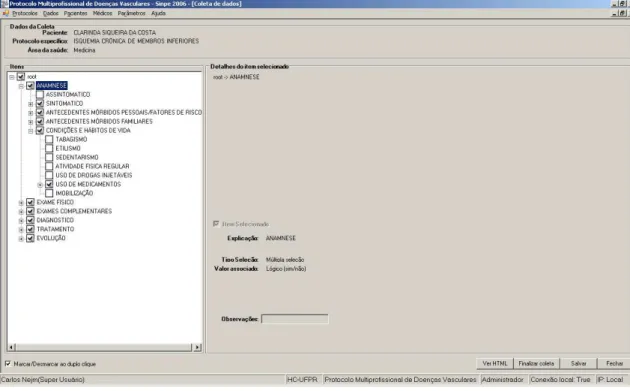
(Figure 2). The data collection screen shows the patient’s name, the speciic record and the area of healthcare. Using the clinical data from the medical record, select the items available in the electronic medical record system, as in the example below.
Speciic medical record system - chronic lower limb ischemia, with the following items selected: history, living conditions and habits, and smoking, considering the natural clinical and chronological form of any disease at any time.
This pilot study was conducted using a retrospective search of the records entered for patients with chronic lower limb ischemia and hospitalized in Hospital de Clínicas of Universidade Federal do Paraná in a period of six months.
Thirty-six patients (12 women) with chronic lower limb ischemia were evaluated, and the age of most patients (36.11%) ranged from 63 to 71 years. Most patients were white, and most were men. Mean age was 70 years, and age ranged from 47 to 90 years.
The system automatically generated graphs that showed data collected about morbidity in the family, as well as living conditions and habits. Nine (30%) patients had a family history of heart disease; eight (26.6%), of diabetes; and six (20%), of systemic hypertension and vascular disease. Thirty-two (47%) patients were smokers, and smoking was the most prevalent item in the category of living conditions
and habits.
The pilot study analysis consisted of the correlation of chronic lower limb ischemia with two diseases that contributed to morbidity and mortality and affected treatment: myocardial ischemia defined by the results of pharmacological stress echocardiography, and severe carotid stenosis defined by Doppler echocardiography indings.
The details of the selection will appear automatically on the right side of the screen; also on the right, click on Save (Salvar) and End Collection
(Finalizar coleta) to save the data iles selected and
to end collection (Figure 3).
In the case the purpose is to search for clinical
data about vascular diseases, click on Data (Dados)
in the menu bar and then on Search (Pequisa) in
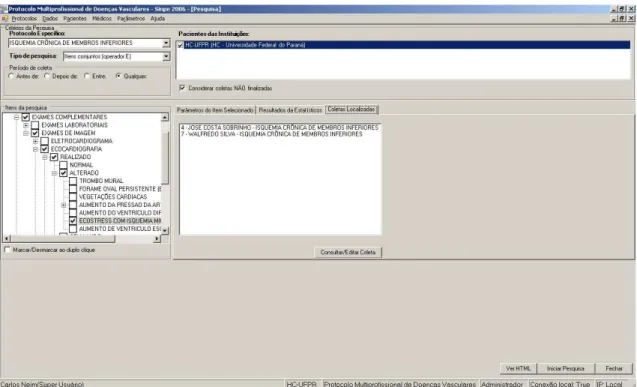
the drop-down menu. The program will display options to select a speciic medical record system, the type of search, the collection period and the list of institutions included in the search. Below the top pane, in the left side, the search items previously selected are displayed; in the right side, there are tabs for the parameters of the item selected, their statistical results and other cases, as well as details of the search item (Figure 4).
At this point, click on Begin Search (Iniciar Pesquisa) to obtain the data collected for the item
selected and the statistical results (Figure 5). After the selection of an item for the analysis of results, click on the irst tab to visualize the number
of collections; on the second, to see the statistical
data about the search (number of collections and percentage of occurrences); and on the third, to see the list of cases found in the search (Figure 5).
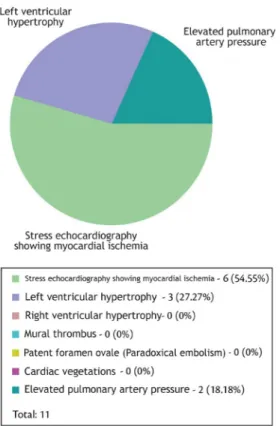
ischemia after pharmacological stress with dobutamine or dipyridamole (Figure 7).
Severe stenosis (>70%), defined by Doppler echocardiography indings, is indicative of carotid endarterectomy according to the Asymptomatic Twenty-seven (75%) patients underwent
pharmacological stress echocardiography using dobutamine or dipyridamole. Twelve of them (44.44%) had abnormal echocardiograms (Figure 6). The most prevalent abnormality was myocardial
Figure 3. Speciic data collection.
The delay in obtaining patient clinical data and the incompleteness of the clinical history handwritten by different professionals, which is often the case in university medicine, greatly complicate the correct assessment of different aspects and undermine the credibility of a database, which is a barrier to the development of high-quality studies12,13.
Carotid Atherosclerosis Study (ACAS) and the Asymptomatic Carotid Surgery Trial (ACST).
Only 14 (38.89%) patients underwent Doppler ultrasound of neck arteries, and the results were abnormal in 12 (85.71%) (Figure 8). Severe stenosis, an indication for carotid endarterectomy, was found in 4 (28.57%) patients (Figure 9).
DISCUSSION
The design of descriptive studies is often limited by the dificulty in obtaining quality data, a result of the incorrect filling of medical records, the lack of coordination and of standardization of the descriptions and, sometimes, the illegibility of those records, which characterizes subjective data and may compromise results12-14.
Most hospital medical centers do not use electronic medical record systems. Their use is often restricted to certain sectors, such as logistics and diagnostic tests. The development and implementation of electronic data collection may organize prospective data searches and enable constant updating and future medical studies.
In Europe and the United States of America, standardized computer-based data collection was developed to overcome the limitations of medical records kept on paper and to eliminate the subjective character of those medical records15-17.
Figure 5. Example of search results.
Future data searches using computer-based systems depend on data collection according to deined parameters, preferably using collection forms that provide lists of acceptable values18.
Medical studies based on clinical data collection using guided electronic medical record systems may increase the reliability and the quality of scientiic
studies19,20. These systems also make it possible to
analyze the data collected, but do not require large physical spaces for their operation.
Electronic medical record systems used to build large clinical databases that are constantly searched may improve the quality of medical studies,
as databases are reliable sources for scientific
investigations21,22. The University of Alabama, for
example, has become a reference center for patients with acquired immunodeiciency syndrome (AIDS) because of its publication of scientiic studies using clinical data stored in computer-based systems23.
The clinical data collected from an electronic database does not have to belong to a single institution, as it may be a multicenter initiative. For example, in France, 38 intensive care units use standardized data storage in a single database, and in Italy, databases are shared for multicenter studies about liver diseases, particularly cirrhosis24.
In Brazil, the Brazilian Association of Intensive Care (AMIB) has an online database (www.amib. com.br) that provides access to information about the main ICUs in Brazil, and allows clinical data exchanges and the analysis of all registered services. The purpose of using electronic medical record
systems to collect clinical data is not the mere replacement of medical charts, important documents for physicians and their patients, but, rather, to provide a safe source of information for future medical studies.
Figure 7. Abnormal echocardiography results.
Figure 8. Doppler ultrasound of neck arteries.
scientiic paradigm, based on the multidisciplinary integration of IT and the medical ield to promote new and more reliable high-quality studies.
CONCLUSION
This study created a theoretical database to collect
clinical data about chronic lower limb ischemia that is operated as a computer program incorporated into the Brazilian integrated medical record system (SINPE©); the electronic medical record system was
tested in a pilot study in which data were collected and analyzed using the SINPE© parser module.
The pilot study showed that myocardial ischemia was found in 44.44% of the patients, which was an indication of the need for further investigation of coronary artery diseases in patients with chronic lower limb ischemia. Moreover, carotid endarterectomy was indicated in 28.57% of the patients, which justiied the investigation of carotid stenosis in this group of patients.
REFERENCES
1. Sigwalt MF. Base eletrônica de dados clínicos das doenças do esôfago. [Dissertação]. Curitiba: Universidade Federal do Paraná; 2001.
2. Tolley EA , Headley AS. Meta-analyses: what they can and cannot tell about clinical research. Curr Opin Clin N u tr M et a b C a re . 2 0 0 5 ; 8 ( 2 ) : 1 7 7 - 8 1 . ht tp : / / d x . d o i . org/10.1097/00075197-200503000-00012
3. Malafaia O, Borsato EP, Pinto JSP. Gerenciamento do conhecimento em protocolos eletrônicos de coleta de dados. In: Anais do 3º Simpósio Internacional de Gestão do Conhecimento; 2003; Curitiba. 2003.
4. Malafaia O, Borsato EP, Pinto JSP. Manual do usuário do SINPE®. Curitiba: UFPR; 2003.
5. Mafei FU, Lastória S, Yoshida WB, Rollo HA. Doenças vasculares periféricas. 3 ed. 2008
6. Brito CJ, Duqu A, Merlo I, Murilo R, Fonseca VL Fº. Cirurgia Vascular - Cirurgia Endovascular – Angiologia. 2. ed. Rio de Janeiro: Revinter; 2008.
7. Haimovici H, Ascher E, Hollier LH et al. Cirurgia Vascular. 5. ed. Rio de Janeiro: Revinter; 2006.
8. Rutherford RB, Cronenwett JL, Johnston W, et al. Cirurgia Vascular. 6. ed. 2007.
9. Zelonockmatery GB. Mastery of Vascular and Endovascular Surgery by. Lippincott Williams & Wilkins; 2005
10. Lobato AC, Colli DF Jr, Costa CAF, Pereira AH. Cirurgia Endovascular. 2006.
11. De Luccia N. Amputação e reconstrução nas Doenças Vasculares. São Paulo; 2005.
12. Dick RS. The computer-based patient record – an essential technology for health care. Washington: Institute of Medicine, National Academy Press; 1991.
13. Rind DM. Real and imagined barriers to an electronic medical record. Proc Annu Symp Comput Appl Med Care. 1993:74-8.
Therefore, the collection of electronic clinical data
promotes the development of multicenter studies, increases the number of data available and improves the quality of scientiic studies. At the same time, it reduces the length of studies, increases the size of the population under study and yields more accurate results in a shorter time25.
The original structure of the electronic medical record system of chronic lower limb ischemia cannot be changed by users that collect data, visualize data or conduct searches, and only the administrator can change the database. However, because of the advances and developments in medicine, this electronic medical record system accepts the addition of new items without changing the database already
in use.
As IT keeps changing rapidly, data storage and exchange should be the cornerstone of medical research, development and improvement.
Patients with chronic lower limb ischemia account for a percentage of the population whose treatment and complications directly affect patient quality of life. Advanced age, number of comorbidities and, consequently, number of hospitalizations make data searches burdensome and tiring.
The electronic medical record system of chronic lower limb ischemia will provide uniform and safe collection and storage of clinical and surgical
data to be used in future studies. The costs for its
implementation, considering also the number of years of studies and initial investment, are relatively low in light of its importance and scope.
The participation and support of IT specialists are essential to choose methods to build and implement the system and collect data, as well as to maintain electronic medical record systems. The rapidly growing ield of IT brings continuous improvement and adaptations for the development of current and future electronic medical record systems.
This electronic medical record system was developed to be easily operated in computers and systems disseminated in the Brazilian and international IT market, which minimizes its risk of not running due to any incompatibility. Its purpose, in addition to motivating workers in the medical ield to conduct scientiic studies, is to provide a computer-based tool to collect and analyze clinical data and improve the quality and reliability of future scientiic studies.
24. Coltorti M. Liver cirrhosis in Italy. A muticenter study on presenting modalities and the impact on health care resources. National project on liver cirrhosis Group. Ital J Gastroenterol. 1991;23(1):42-8.
25. Blumeinstein BA. Medical research data. Control Clin Trials. 1995;16:453-5. http://dx.doi.org/10.1016/S0197-2456(95)00076-3
Correspondence
Carlos Seme Nejm Junior Rua Teixeira Soares, 361 - Seminário CEP 80240-440 - Curitiba (PR), Brazil Tel: +55 (41)32449541 E-mail: [email protected]
Author information
CSNJ holds an MSc degree and is a PhD candidate in surgical practice from Universidade Federal do Paraná (UFPR). JRRT holds MSc and PhD degrees in surgical practice and is associate professor of vascular surgery of the Department of Surgery from Universidade Federal do Paraná (UFPR). VBA is a physician and former student at Universidade Federal do Paraná (UFPR).
Author’s contributions
Conception and design: CSNJ, JRRT Analysis and interpretation: CSNJ Data collection: VBA Writing the article: CSNJ Critical revision of the article: JRRT Final approval of the article*: CSNJ, JRRT, VBA Statistical analysis: CSNJ Overall responsibility: CSNJ Obtained funding: None.
*All authors should have read and approved of the inal version of the article submitted to J Vasc Bras.
14. Tang PC, Larosa MP, Laine C. Use of computer-based records, completeness of documentation, and appropriateness of documented clinical decisions. J Am Med Inform Assoc. 1999;6(3):235-51. http://dx.doi.org/10.1136/jamia.1999.0060245
15. McDonald CJ, Tierney WN, Overhage M. he Regentrief Medical Record System : 20 years of experience in hospitals, clinics, and neighborhood health centers. Med Data Computing. 1992;9(4):206-17.
16. Sittig DF. Grand challenges in medical informatics?. J Am Med Inform Assoc. 1994;1(5):412-3. http://dx.doi.org/10.1136/ jamia.1994.95153429
17. Kohane IS, Greenspun P, Fackler J. Building National Eletronic Medical Record Systems via the World Wide Web. J Am Med Inform Assoc. 1996;3(3):191-207. http://dx.doi.org/10.1136/ jamia.1996.96310633
18. Coeira E. Guide to medical informatics, the internet and telemedicine. 3rd ed. Chicago: Arnold Publication; 1997. p. 376-379.
19. Weinberger M, Hui S, Laine C. Perspectives from the sixth Regenstrief Conference. Ann Intern Med. 1997;2:127-8.
20. McDonald CJ, Overhage JM, Dexter P, Takesue B, Suico JG. What is done, what is needed and what is realistic to expect from medical informatics standards. Int J Med Inform. 1998;48:1-12. http:// dx.doi.org/10.1016/S1386-5056(97)00102-0
21. Goonan KJ. he Juran prescription: clinical quality management. San Francisco: Jossey-Bass; 1995.
22. D a v i d o f f F. D a b a t a s e s i n t h e n e x t m i l l e n n i u m . An n I nter n M e d . 1 9 9 7 ; 1 2 7 ( 8 ) : 7 7 0 - 4 . http : / / d x . d o i . org/10.7326/0003-4819-127-8_Part_2-199710151-00067