Marilisa Berti de Azevedo BarrosI
Neury José BotegaII Paulo DalgalarrondoII Letícia Marín-LeónI
Helenice Bosco de OliveiraI
I Departamento de Medicina Preventiva e Social. Faculdade de Ciências Médicas (FCM). Universidade Estadual de Campinas (Unicamp). Campinas, SP, Brasil
II Departamento de Psicologia Médica e Psiquiatria. FCM–Unicamp. Campinas, SP, Brasil
Correspondence:
Marilisa Berti de Azevedo Barros Departamento de Medicina Preventiva and Social
Faculdade de Ciências Médicas Universidade Estadual de Campinas R. Tessália Vieira de Camargo, 126 13083-970 Campinas, SP, Brasil E-mail: [email protected] Received: 5/24/2006 Reviewed: 2/23/2007 Approved: 3/26/2007
Prevalence of alcohol abuse
and associated factors in a
population-based study
Prevalência da dependência de
álcool e fatores associados em
estudo de base populacional
ABSTRACT
OBJECTIVE: To estimate the prevalence of alcohol abuse/dependence and identify associated factors among demographic, family, socioeconomic and mental health variables.
METHODS: A household survey was carried out in the urban area of Campinas, southeastern Brazil, in 2003. A total of 515 subjects, aged 14 years or more were randomly selected using a stratifi ed cluster sample. The Self-Report Questionnaire and the Alcohol Use Disorder Identifi cation Test were used in the interview. Prevalences were calculated, and univariate and multivariate logistic analyses performed by estimating odds ratios and 95% confi dence intervals.
RESULTS: The estimated prevalence of alcohol abuse/dependence was 13.1% (95% CI: 8.4;19.9) in men and 4.1% (95% CI: 1.9;8.6) in women. In the fi nal multiple logistic regression model, alcohol abuse/dependence was signifi cantly associated with age, income, schooling, religion and illicit drug use. The adjusted odds ratios were signifi cantly higher in following variables: income between 2,501 and 10,000 dollars (OR=10.29); income above 10,000 dollars (OR=10.20); less than 12 years of schooling (OR=13.42); no religion (OR=9.16) or religion other than Evangelical (OR=4.77); and illicit drug use during lifetime (OR=4.47). Alcohol abuse and dependence patterns were different according to age group.
CONCLUSIONS: There is a signifi cantly high prevalence of alcohol abuse/ dependence in this population. The knowledge of factors associated with alcohol abuse, and differences in consumption patterns should be taken into account in the development of harm reduction strategies.
KEY WORDS: Alcoholism, epidemiology. Risk factors. Socioeconomic
RESUMO
OBJETIVO: Estimar a prevalência do abuso/dependência de álcool e identifi car fatores associados entre variáveis demográfi cas, familiares, socioeconômicas e relativas à saúde mental.
MÉTODOS: Inquérito domiciliar na área urbana de Campinas, Estado de São Paulo, realizado em 2003. Indivíduos de 14 anos ou mais de idade (N=515) foram selecionados aleatoriamente, mediante amostragem estratifi cada por conglomerados e avaliados por entrevista com as escalas Self-Report Questionnaire e o Alcohol Use Disorder Identifi cation Test. Foram calculadas as prevalências e realizadas análises logísticas uni e multivariada, razões de chance e intervalos de confi ança.
RESULTADOS: As prevalências estimadas de abuso/dependência de álcool foram 13,1% (IC 95%: 8,4%;19,9%) nos homens e 4,1% (IC 95%: 1,9%;8,6%) nas mulheres. No modelo de regressão logística múltipla fi nal, o abuso/dependência de álcool revelou-se signifi cativamente associado com idade, renda, escolaridade, religião e uso de drogas ilícitas. As categorias que apresentaram as maiores razões de chance ajustadas foram: renda (entre 2.501 e 10.000 dólares, OR=10,29; superior a 10.000 dólares, OR=10,20), escolaridade inferior a 12 anos (OR=13,42), não ter religião (OR=9,16) ou ser de religião que não fosse a evangélica (OR=4,77) e ter usado drogas ilícitas em algum momento da vida (OR=4,47). Os padrões de consumo e de dependência diferenciaram-se segundo o grupo etário.
CONCLUSÕES: A prevalência de uso abusivo/dependência de álcool na população é considerável. O conhecimento dos fatores associados a tal comportamento e das diferenças de padrão de consumo deve ser levado em consideração na elaboração de estratégias de redução do dano.
DESCRITORES: Alcoolismo, epidemiologia. Fatores de risco. Fatores socioeconômicos. Amostragem por conglomerados. Inquéritos de morbidade.
Moderate use of alcohol is benefi cial to some health aspects, such as the reduction of mortality due to heart diseases and the association with favorable levels of various cardiovascular risk factors, according to the literature.6 However, alcohol abuse has harmful conse-quences to health and is responsible for a large number of avoidable deaths.
Abusive alcohol intake produces different quality of damage: increased risk for liver cirrhosis, tumors in various sites, heart diseases, strokes and depressive disorders.7 It is also considered a risk factor for suicidal behavior and is associated with affective and non-af-fective mental conditions.12 A large number of traffi c and work-related accidents and violence, including child abuse and domestic violence, are attributed to excessive alcohol intake.10
It is estimated 6% to 15% of the population seeking primary health care have alcohol abuse or dependence. This prevalence increases up to 61% among patients
seeking specialized clinics or hospitals. However, physicians only detect alcohol abuse in one third of the patients with this condition.1
Studies have identifi ed chromosome sites (chromo-somes 9, 15 and 16) responsible for increased vul-nerability to alcohol dependence.16 Nevertheless, the epidemiological identifi cation of the most susceptible sociodemographic segments of the population to alco-hol dependence is essential to guide effective control policies and programs.
The utilization of an easy, fast, standardized and valid tool for diagnosing alcohol abuse conditions is important for promoting more commitment of health professionals to identifying alcohol abuse conditions and toward proposing appropriate interventions.23,24 Moreover, monitoring alcohol consumption of different population segments is necessary to develop effec-tive dependence control actions and harm reduction strategies.
In Brazil, epidemiological studies have identifi ed point prevalence for alcohol disorders in the general popula-tion of 3% to 12%.2,3,15,19,* This wide range is probably due to the use of different instruments and methods, and also may refl ect geographical variations. In fact, few studies on alcohol misuse using reliable instru-ments and investigating sociodemographic, clinical, and cultural factors have been conducted in Brazil. Mendoza-Sassi & Beria19 (2003) conducted the fi rst Brazilian population-based study using the Alcohol Use Disorder Identifi cation Test (AUDIT) in a southern Brazilian city. They investigated the prevalence and associated factors in a representative sample of 1,260 subjects aged 15 years and over. In regard to the impact of socioeconomic level on the prevalence of alcohol abuse or dependence, different results have been found in Brazilian studies.2,3,19,* In general, alcohol abuse/de-pendence is considered higher in lower socioeconomic level.19,* Mendoza-Sassi & Beria19 (2003) found higher risk of alcohol dependence in those with less favorable socioeconomic conditions. Yet Almeida-Filho et al2 (2004), in a study conducted in Salvador, northeastern Brazil, found higher prevalence of high-risk alcohol consumption in upper social stratum and no statistical association with educational level.
In Brazil there is a lack of population-based studies comprising a broader range of psycho-social variables associated to alcohol abuse/dependence such as those linked to religion, family history and mental health comorbidity. The objective of the present study was to assess the prevalence of alcohol abuse and to identify associated factors among demographic social and health related variables.
METHODS
The study is derived from the Multi-center Intervention Study of Suicide Behavior (SUPRE-MISS) of the World Health Organization (WHO). It is a cross-cultural proj-ect carried out in eight countries (Brazil, Estonia, India, Iran, China, South Africa, Sri Lanka, and Vietnam) as part of a WHO initiative to prevent suicide, under the scientifi c supervision of the Australian Institute for Suicide Research and Prevention, Griffi th University, Brisbane, Australia, and the National Center for Suicide Research and Prevention of Mental Ill-Health, Karo-linska Institute, Stockholm, Sweden.5,26
The survey was carried out in the city of Campinas, lo-cated 100 km from the capital of the State of São Paulo,
southeastern Brazil. In 2003, Campinas had an estimated population of one million inhabitants (98% living in the urban area; 78% aged 14 years and over). The survey included non-institutionalized individuals aged 14 years or more, living in the urban area of the city.
A minimum sample of 500 subjects was adequate to estimate a prevalence of 10%, with a 5% sampling error, a 95% confi dence interval considering a design effect of 2. A stratifi ed three-stage cluster sample was adopted, and sampling units were respectively: the census tract, the household and the individual.
The study used household and census tracts fi le from the Health Survey of the state of São Paulo (ISA-SP).** Campinas’ census tracts were grouped into three strata, according to the percentage of heads of households with college degree: stratum A (over 25% of heads of households with college degree; totaling 278 tracts); stratum B (5% to 25% of heads of households with college degree, totaling 252 tracts); stratum C (less than 5% of heads of households with college degree, total-ing 305 tracts). In the fi rst stage, ten census tracts were drawn from each stratum. Field surveyors covered these tracts to compute all existing households, based on the outline with block limits from the Instituto Brasileiro de Geografi a e Estatítisca (IBGE – Brazilian Institute of Geography and Statistics).
In the second stage, 20 households from each census tract were randomly selected using systematic sam-pling. The procedure resulted in 200 households per stratum, totaling 600 households. Finally, an individual aged 14 years or more from each household was se-lected. The household’s residents were counted in a continuous sequence in increasing order of age until a random number was reached (previously defi ned and printed on the cover of the form), and then this subject was invited to participate.
The instrument applied was based on the European Parasuicide Study Interview Schedule (EPSIS) of the WHO/EURO Multicenter Study on Suicide Behav-iour.26 It contains the following sections: sociodemo-graphic information, history of personal and family suicidal behavior, opinion on community problems, physical and mental health, contact with health services and questions related to the consumption of alcohol and drugs.26
Two psychometric scales were added to the local protocol: the AUDIT*** and the Self-Reporting Ques-tionnaire (SRQ-20), both validated in Brazil.15,18 The
* Barros MBA. Consumo de álcool. In: César CLG, Carandina L, Alves MCGP, Barros MBA, Goldbaum M, organizadores. Saúde e condição de vida em São Paulo. Inquérito Multicêntrico de Saúde no Estado de São Paulo (ISA-SP). São Paulo: Faculdade de Saúde Pública da USP; 2005. p.115-27.
** César CLG, Carandina L, Alves MCGP, Barros MBA, Goldbaum M. Saúde e condição de vida em São Paulo. Inquérito Multicêntrico de Saúde no Estado de São Paulo (ISA-SP). São Paulo: Faculdade de Saúde Pública da USP; 2005
attendance, if the individual considered him/herself a religious person;
• Mental health conditions: non-psychotic psychiatric morbidity, suicidal ideation in their lifetime, history of psychiatric treatment, use of illicit drugs, use of tranquilizers and frequency of alcoholic beverage consumption.
Bivariate analysis was used to compare the prevalence in the subcategories of each variable. Prevalences, odds ratios and 95% confi dence intervals were calculated. A multiple logistic regression was performed including all variables with p-value lower than 0.20 in the bivariate analysis. Variables were included in the multiple logis-tic regression analysis in three consecutive steps: fi rst demographic and socioeconomic variables, then vari-ables related to family and religion and fi nally variables associated to mental health. Only variables with p-value lower than 0.05 remained in the fi nal model.
Analyses were weighed so as to take into account the different probabilities of selecting individuals in the sample and the outlining effect. In each stratum, the weight given to a chosen individual in a given house-hold of a certain census tract was the reverse of its likelihood of selection. Statistics were performed using the Stata software program, version 7.0.
AUDIT identifi es risk of alcohol abuse/dependence when its score (range 0–40) is equal to eight or over.4,15 The SRQ-20 has 20 questions with yes/no answers to screen non-psychotic psychiatric morbidity. Score equal to or above eight, in a range from zero to 20, were used as an indication of psychiatric morbidity.18
Twelve interviewers were trained and made up to three attempts to interview the person who had been randomly selected in case the person was not at home. All interviews were carried out without the participation of third parties. Residential areas considered dangerous were surveyed in groups. The fi eld research started in May and ended in July 2003.
The dependent variable was defi ned as a possible case of alcohol dependence/abuse in individuals who scored eight or more points in the AUDIT test. The prevalence of alcohol abuse was calculated using the past 12 months as a reference period.
The following independent variables were analyzed:
• Demographic and socioeconomic factors: age, sex, occupation, monthly income (in dollars), schooling (in years), marital status, marital separation, whom the interviewed lived with, if he/she had children;
• Variables related to religion, frequency of church
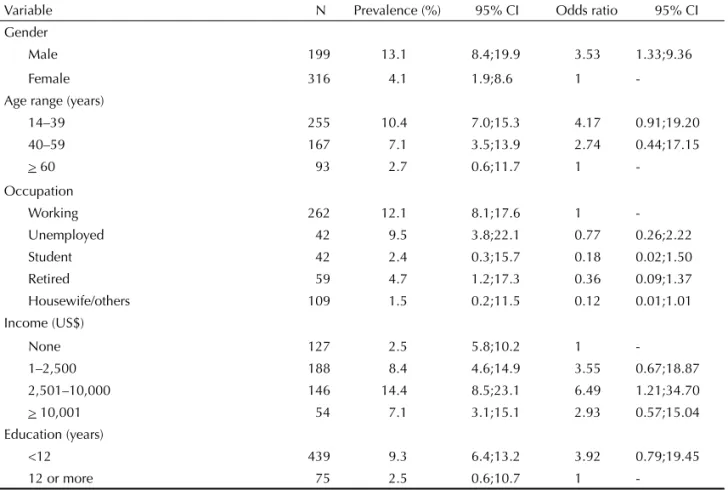
Table 1. Prevalence (%) and odds ratio of alcohol abuse (AUDIT) by adults according to demographic and social variables.
Campinas, southeastern Brazil, 2003.
Variable N Prevalence (%) 95% CI Odds ratio 95% CI Gender
Male 199 13.1 8.4;19.9 3.53 1.33;9.36
Female 316 4.1 1.9;8.6 1
-Age range (years)
14–39 255 10.4 7.0;15.3 4.17 0.91;19.20
40–59 167 7.1 3.5;13.9 2.74 0.44;17.15
> 60 93 2.7 0.6;11.7 1
-Occupation
Working 262 12.1 8.1;17.6 1
-Unemployed 42 9.5 3.8;22.1 0.77 0.26;2.22
Student 42 2.4 0.3;15.7 0.18 0.02;1.50
Retired 59 4.7 1.2;17.3 0.36 0.09;1.37
Housewife/others 109 1.5 0.2;11.5 0.12 0.01;1.01 Income (US$)
None 127 2.5 5.8;10.2 1
-1–2,500 188 8.4 4.6;14.9 3.55 0.67;18.87
2,501–10,000 146 14.4 8.5;23.1 6.49 1.21;34.70 > 10,001 54 7.1 3.1;15.1 2.93 0.57;15.04 Education (years)
<12 439 9.3 6.4;13.2 3.92 0.79;19.45
12 or more 75 2.5 0.6;10.7 1
All subjects signed a consent term. Information confi -dentiality was assured. The survey was approved by the Ethics Research Committee of Faculdade de Medicina of the Universidade Estadual de Campinas.
RESULTS
A total of 538 individuals were selected. There were 23 refusals to participate (4.2%), resulting in a fi nal sample of 515 interviewees. The number of refusals was higher in stratum A, followed by B and C (17, fi ve and one, respectively).
Alcohol abuse/dependence, as estimated by the AUDIT test, was seen in 8.4% (95% CI: 5.9%;11.8%) of the subjects, and the prevalence was 13.1% (8.4%;19.9%) among men and 4.1% (1.9;8.6%) among women.
Alcohol abuse was statistically associated with gender, occupation and income. The prevalence was signifi
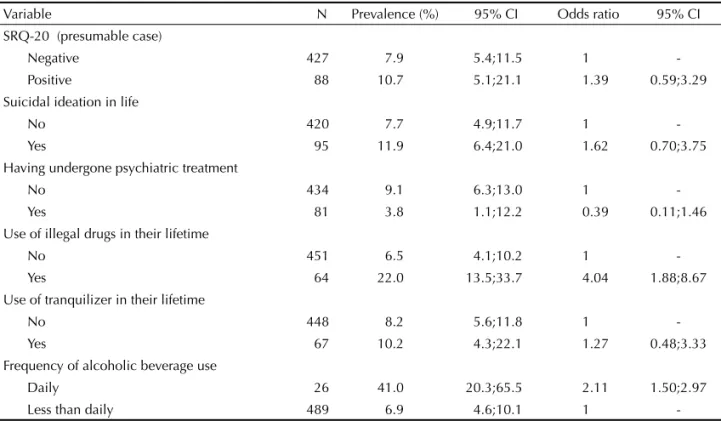
-cantly higher among men and those with income rang-ing from US$ 2,501 to US$ 10,000 and lower among housewives and other occupations (Table 1). The prevalence of abuse was signifi cantly higher among those who lived alone or with other relatives and among those who did not have a religion or went to church less often; and the prevalence was also lower among those who perceived their neighbors as supportive (Table 2). The use of tranquilizers was not associated with alcohol abuse/dependence, but a strong association was found with the use of illicit drugs (Table 3).
The analysis of the answers to each item of the AUDIT test showed that 4.6% of the general population and 22.3% of those with positive AUDITtests consumed al-coholic beverages four or more times a week. Those who consumed between seven and nine doses on a typical day were 2.8% of the general population and 32.4% of those with positive AUDIT tests. Among those who used alcohol inappropriately 51.6% consumed it from two to
Table 2. Prevalence (%) and odds ratios of alcohol abuse by adults (AUDIT) according to family characteristics and religion.
Campinas, southeastern Brazil, 2003.
Variable N Prevalence (%) 95% CI Odds ratio 95% CI Marital status
Single 148 11.4 6.7;18.9 1
-Married/Lives with a partner 286 6.7 4.1;10.7 0.56 0.25;1.28 Widow/divorced 81 6.7 2.3;17.9 0.56 0.21;1.47 Marital separations
No 428 8.1 5.5;12.0 1
-Yes 87 9.9 4.9;18.9 1.23 0.52;2.92
Lives with whom
With children only 43 1.5 0.2;11.2 1
-Partner, with or without children, or with parents 386 7.9 5.1;11.9 5.61 0.65;48.65 Alone or with other relatives/friends 86 15.3 6.7;31.0 11.81 1.06;131.70 Have children
No 160 9.3 4.9;16.7 1
-Yes 355 7.9 5.2;11.9 0.84 0.37;1.92
Perceives neighborhood as supportive
Yes 240 5.8 3.1;10.5 1
-No 267 11.1 7.7;15.8 2.03 0.99;4.14
Religion
Protestant 100 3.1 1.0;8.8 1
-Catholic 345 8.7 5.5;13.5 3.01 0.80;11.33
Spiritualist 22 10.2 2.3;34.8 3.57 0.51;25.21
None 41 18.3 10.5;30.0 7.08 1.86;26.93
Church attendance
At least once a week 218 4.6 2.2;9.5 1 -1 to 3 times a month 113 7.1 3.1;15.5 1.58 0.53;4.76 Less than once a month 143 12.7 7.5;20.6 3.01 1.04;8.66 Considers oneself a religious person
No 47 11.8 5.5;23.4 1
four times a month. Compared to youngsters, there was a greater proportion of adults and elderly who consumed it more often (four or more times) during the week.
In the multiple logistic regression model, demographic, socioeconomic and behavior variables retained their statistical signifi cance. The prevalence of alcohol abuse/ dependence was signifi cantly higher among individu-als of higher income groups (OR=10.2), with less than 12 years of schooling (OR=13,42), with no religion or religion other than Evangelical (OR=4.77) and among those who had used illegal drugs during their lifetime (OR=4.47). The prevalence was signifi cantly lower among the elderly (60 years or more) (Table 4).
DISCUSSION
Some methodological limitations of the present study should be considered. Although the AUDIT is one of the most widely used scales to evaluate alcohol abuse/dependence, with recognized psychometric qualities,14,15,19 there is still some debate. For example, the best cut-off point, which some argue that should be lower for women.20
The 8.4% prevalence of alcohol abuse/dependence estimated by the present study (13.1% for men and 4.1% for women) is above the average value of 6% that Galduroz et al8 (2003) found in a survey performed in 1999. Their study8 comprised people aged 12 to 65 years living in 24 cities with more than 200,000
inhabit-Table 3. Prevalence (%) and odds ratios of alcohol abuse (AUDIT) by adults according to mental health disorder. Campinas,
southeastern Brazil, 2003.
Variable N Prevalence (%) 95% CI Odds ratio 95% CI SRQ-20 (presumable case)
Negative 427 7.9 5.4;11.5 1
-Positive 88 10.7 5.1;21.1 1.39 0.59;3.29
Suicidal ideation in life
No 420 7.7 4.9;11.7 1
-Yes 95 11.9 6.4;21.0 1.62 0.70;3.75
Having undergone psychiatric treatment
No 434 9.1 6.3;13.0 1
-Yes 81 3.8 1.1;12.2 0.39 0.11;1.46
Use of illegal drugs in their lifetime
No 451 6.5 4.1;10.2 1
-Yes 64 22.0 13.5;33.7 4.04 1.88;8.67
Use of tranquilizer in their lifetime
No 448 8.2 5.6;11.8 1
-Yes 67 10.2 4.3;22.1 1.27 0.48;3.33
Frequency of alcoholic beverage use
Daily 26 41.0 20.3;65.5 2.11 1.50;2.97
Less than daily 489 6.9 4.6;10.1 1
-SRQ: Self-Report Questionnaire
Table 4. Factors associated with alcohol abuse: variables
that remained in the multivariate logistic regression model. Campinas, southeastern Brazil, 2003.
Variable Adjusted OR
95% CI
Age group (years)
14;39 1
-40;59 0.50 0.19;1.33
> 60 0.20 0.06;0.73
Income (US$)
None 1
-1;2,500 4.50 0.76;26.57
2,501;10,000 10.29 1.87;56.59
> 10,001 10.20 1.38;75.54
Education
<12 13.42 3.00;59.99
12 or more 1
-Religion
Evangelical 1
-Others 4.77 1.29;17.65
None 9.16 2.42;34.65
Use of illicit drugs during their lifetime
No 1
ants in the state of São Paulo. It is also above the 5.9% (9.1% in men and 2.4% in women) observed in people aged 18 years or more in a survey conducted in four areas of the state of São Paulo. But it is similar to the fi ndings of Mendoza-Sassi & Béria19 (2003) who found a prevalence of 7.9%, with 14.5% for men and 2.4% for women in a state in southern Brazil.
As for the prevalence of high-risk drinkers, Almeida-Filho et al2 (2004) found a prevalence of 2.3% for women and 12.4% for men in Salvador, northeastern Brazil. The higher frequency of alcohol abuse among men found in the present study is entirely consistent with that reported in the literature.7,11,17
The frequency was higher among young adults aged 14–39 years and lower among those aged 60 years or more. Other studies also point towards the reduction of alcohol abuse after 55 or 65 years of age.2,19 The greater prevalence among adolescents and young adults is wor-rying and consistent with the observations of growing consumption of alcohol by adolescents. A study carried out among junior high, and high school students at-tending public and private schools in Campinas found that 11.9% of the students had consumed alcohol in at least 20 of the 30 days preceding the survey.22 A sur-vey conducted in 10 Brazilian capitals found that the frequent use of alcohol (six or more times per month) in students aged 10 to 18 years increased from 9.2%, in 1987, to 15%, in 1997.9
Although the literature points out that single, divorced, or widowed people generally consume more alco-hol,2,11,17,25 the present study did not fi nd any association between marital status and alcoholism.
As in the present study, other authors have reported lower prevalence of alcohol abuse among those with more years of education.11,17,25,* Serdula et al21 (2004), however, found more excessive consumption among more educated youngsters in the United States. Other studies have found no signifi cant association with educational level.2,3
A larger number of positive AUDIT tests was seen among higher income individuals. Discrepant results regarding income and other socioeconomic variables have been seen in the literature. The most frequent fi ndings refer to higher “average intake” in higher so-cioeconomic level, but higher prevalence of “abusive use” in segments of lower social condition.17,19 Some authors,2 however, have reported higher abusive alcohol use in the higher social stratum.
Studies have evidenced the association between mental disorders and excessive alcohol consumption.12 This
was not observed in the present study in the association found between alcohol abuse/dependence and the oc-currence of common mental disorders assessed by the SRQ-20. However, as other studies in the literature,12,22 the present study found strong association between the use of alcohol and illicit drugs.
Since ancient times, many cultures have used alco-hol in their rituals and social events. Cultural norms may explain the occurrence of alcohol abuse mainly restricted to men. Religiousness seems to be a factor of protection towards abusive consumption of alcohol and other drugs.13 This was also observed in the present study, particularly among Evangelicals. This suggests a probable protection effect of anti-alcohol norms preached by Evangelicals and of their social support network (family, friends, workmates, church mates) that discourages abuse.
The present study allowed to identify that alcohol abuse/dependence is associated with various factors. Demographic, socioeconomic and cultural variables outline contexts that facilitate unhealthy patterns of alcohol consumption. Abusive alcohol consumption was lower in the highest education and lowest income segments, as already discussed. Not having a religion substantially increased the likelihood of alcohol abuse but belonging to the Evangelical church was a condi-tion determining the lowest prevalence. These fi ndings emphasize the importance of studies to further explore religious affi liation and health-related behaviors. Dis-tinct patterns of alcohol consumption by age groups were identifi ed and although adults and elderly have higher frequency of alcohol intake, this consumption is moderate. In youngsters, however, alcohol abuse/ dependence occurs mostly as sporadic drinking habits (weekly or at a low frequency) showing the importance of teen-oriented interventions, especially considering its association with illegal drugs.
Understanding the prevalence of alcohol use and the pattern of dependence is essential to establish surveil-lance actions and assess the impact of future interven-tion programs. Identifying the most vulnerable groups to dependence may guide more effective control actions and harm reduction strategies.
ACKNOWLEDGEMENTS
To the coordination of the Health Survey (ISA-SP) project for providing the lists of households in the study sectors; and to the Secretaria de Vigilância em Saúde of the Brazilian Ministry of Health for their support to
the Centro Colaborador em Análise de Situação de
Saúde of Unicamp.
1. Aertgeerts B, Buntinx F, Kester A. The value of the CAGE in screening for alcohol abuse and alcohol dependence in general clinical populations: a diagnostic meta-analysis. J Clin Epidemiol 2004;57(1):30-9.
2. Almeida Filho N, Lessa I, Magalhães L, Araújo MJ, Aquino E, Kawachi I, et al. Alcohol drinking patterns by gender, ethnicity, and social class in Bahia, Brazil. Rev Saude Publica. 2004;38(1):45-54.
3. Almeida LM, Coutinho ESF. Prevalência de consumo de bebidas alcoólicas e de alcoolismo em uma região metropolitana do Brasil. Rev Saude Publica. 1993;27(1):23-9.
4. Barbor TE, La Fuente JR, Saunders J, Grant M. AUDIT – The alcohol use disorders identifi cation test: guidelines for use in primary health care. Geneva: WHO; 1992.
5. Botega NJ, Barros MBA, Oliveira HB, Dalgalarrondo P, Marín-Leon L. Suicidal behavior in the community: prevalence and factors associated with suicidal ideation. Rev Bras Psiquiatr. 2005;27(1):45-53.
6. Burger M, Mendink G, Bronstrup A, Thierfelder W, Pietrzik K. Alcohol consumption and its relation to cardiovascular risk factors in Germany. Eur J Clin Nutr. 2004;58(4):605-14.
7. Centers for Disease Control and Prevention (CDC). Alcohol use among adolescents and adults – New Hampshire, 1991-2003. MMWR Morb Mortal Wkly Rep. 2004;53(8):174-5.
8. Galduroz JC, Noto AR, Nappo SA, Carlini EL. First household survey on drug abuse in São Paulo, Brazil, 1999: principal fi ndings. Sao Paulo Med J. 2003;121(6):231-7.
9. Galduroz JC, Noto AR, Nappo SA, Carlini EA. Trends in drug use among students in Brazil: analysis of four surveys in 1987, 1989, 1993 and 1997. Braz J Med Bio Res. 2004;37(4):523-31.
10. Gianini RJ, Litivoc J, Eluf Neto J. Agressão física e classe social. Rev Saude Publica. 1999;33(2):180-6.
11. Jhingan HP, Shyangwa P, Sharma A, Prasad KM, Khandelwal SK. Prevalence of alcohol dependence in a town in Nepal as assessed by the CAGE questionnaire. Addiction. 2003;98(3):339-43.
12. Kavanagh DJ, Waghorn G, Jenner L, Chant DC, Carr V, Evans M, Hemnan H, Jablensky A, McGrath JJ. Demographic and clinical correlates of comorbid substance use disorders in psychosis: multivariate analyses from an epidemiological sample. Schizophr Res. 2004;66(2-3):115-24.
13. Kendler KS, Gardner CO, Prescott CA. Religion, psychopathology and substance use and abuse: a multimeasure, genetic-epidemiologic study. Am J Psychiatry. 1997;154(3):322-9.
14. Kokotailo PK, Egan J, Gangnon R, Brown D, Mundt M, Fleming M. Validity of the alcohol use disorders
identifi cation test in college students. Alcohol Clin Exp Res. 2004;28(6):914-20.
15. Lima CT, Freire ACC, Silva APB, Teixeira RM, Farrel M, Prince M. Concurrent and construct validity of the AUDIT in an urban Brazilian sample. Alcohol Alcohol. 2005;40(6):584-9.
16. Ma JZ, Zhang D, Dupont RT, Dockter M, Elston RC, Li MD. Mapping susceptibility loci for alcohol consumption using number of grams of alcohol consumed per day as a phenotype measure. BMC Genet. 2003;4(Supl 1):S104.
17. Malyutina S, Bobak M, Kurilovitch D, Nikitin Y, Marmot M. Trends in alcohol intake by education and marital status in urban population in Russia between the mid 1980s and the mid 1990s. Alcohol Alcohol. 2004;39(1):64-9.
18. Mari JJ, Williams P. A validity study of a psychiatric screening questionnaire (SRQ-20) in primary care in the city of São Paulo. Br J Psychiatry. 1986;148:23-6.
19. Mendoza-Sassi RA, Beria JU. Prevalence of alcohol use disorders and associated factors: a population-based study using AUDIT in Southern Brazil. Addiction. 2003;98(6):799-804.
20. Neumann T, Neuner B, Gentilello LM, Weiss-Gerlach E, Mentz H, Rettig JS, et al. Gender differences in the performance of a computerized version of the alcohol use disorders identifi cation test in subcritically injured patients who are admitted to the emergency department. Alcohol Clin Exp Res. 2004;28(11):1693-701.
21. Serdula MK, Brewer RD, Gillespie C, Denny CH, Mokdad A. Trends in alcohol use and binge drinking, 1985-1999: results of a multi-state survey. Am J Prev Med. 2004;26(4):294-8.
22. Soldera M, Dalgalarrondo P, Corrêa Filho HR, Silva CAM. Uso de drogas psicotrópicas entre estudantes: prevalência e fatores sociais associados. Rev Saude Publica. 2004;38(2):277-83.
23. Wallace P. Patients with alcohol problems-simple questioning is the key to effective identifi cation and management. Br J Gen Pract. 2001;51(464):172-3.
24. Whitlock EP, Pólen MR, Green CA, Orleans T, Klein J, U.S. Preventive Services Task Force. Behavioral counseling interventions in primary care to reduce risky/harmful alcohol use by adults: a summary of the evidence for the US Preventive Services Task Force. Ann Intern Med. 2004;140(7):557-68.
25. Wild TC, Roberts AB Cunningham J, Schopfl ocher D, Pazderka-Robinson H. Alcohol problems and interest in self-help: a population study of Alberta adults. Can J Public Health. 2004;95(2):127-32.
26. World Health Organization. Multisite Intervention Study on Suicidal Behaviours SUPRE-MISS: protocol of SUPRE-MISS. Geneva; 2002.
REFERENCES