Original Article
Artigo Original
Postswallow voice modification:
compatibility with videofluoroscopy findings
Modificação da voz após deglutição:
compatibilidade com achados da
videofluoroscopia
Karoline Weber dos Santos1Betina Scheeren2 Antônio Carlos Maciel2 Mauriceia Cassol3
Keywords
Deglutition Voice Quality Deglutition Disorders Voice Respiratory Aspiration
Descritores
Deglutição Qualidade da Voz Transtornos de Deglutição Voz Aspiração Respiratória
Correspondence address:
Karoline Weber dos Santos Departamento de Fonoaudiologia, Universidade Federal de Ciências da Saúde de Porto Alegre – UFCSPA Rua Sarmento Leite, nº 245, Centro, Porto Alegre (RS), Brazil, CEP: 90050-170.
E-mail: [email protected]
Received: January 30, 2017
Accepted: July 27, 2017
Study conducted at the Departamento de Fonoaudiologia, Universidade Federal de Ciências da Saúde de Porto Alegre – UFCSPA - Porto Alegre (RS), Brazil.
1 Grupo Hospitalar Conceição - Porto Alegre (RS), Brazil.
2 Irmandade Santa Casa de Misericórdia de Porto Alegre - Porto Alegre (RS), Brazil.
3 Universidade Federal de Ciências da Saúde de Porto Alegre – UFCSPA - Porto Alegre (RS), Brazil.
Financial support: nothing to declare.
Conlict of interests: nothing to declare. ABSTRACT
Purpose: Verify whether voice modiication after swallowing is associated with videoluoroscopic examination
data. Methods: 27 patients with oropharyngeal dysphagia underwent recording of sustained phonation of vowel /a/ before and after swallowing during videoluoroscopy. The GRBAS scale and the wet voice parameter were used to evaluate the data. Videoluoroscopy results showed stasis of food in the valleculae and piriform recesses, laryngeal penetration, tracheal aspiration, and degree of dysphagia. Results: Decreased dysphonia grade and asthenia and increased strain were observed after swallowing, with no difference for the wet voice parameter. Sensitivity and speciicity of ± 50% were observed for food stasis in the valleculae and piriform recesses. Sensitivity values of 80 and 66-75% were observed for detection of laryngeal penetration and tracheal aspiration and modiication of vocal strain, respectively. Negative predictive values of 77-91% were found for the three assessment parameters with no correlation with the degree of oropharyngeal dysphagia. Conclusion: Modiication
of the GRBAS scale parameters after swallowing showed good compatibility with videoluoroscopy indings.
RESUMO
Objetivo:Veriicar se a modiicação da voz após a deglutição relaciona-se com os dados do exame de videoluoroscopia. Método: 27 indivíduos com disfagia orofaríngea realizaram a gravação da vogal sustentada /a/ antes e após a deglutição durante exame de videoluoroscopia. Utilizou-se a escala GRBAS e acrescentou-se o aspecto voz molhada para avaliação dos dados. Em relação ao exame, veriicou-se estase de alimento em valéculas e recessos piriformes, penetração laríngea, aspiração traqueal e grau de disfagia. Resultados:Houve diminuição do grau de alteração e astenia e aumento da tensão fonatória após a deglutição, sem diferença para o parâmetro voz molhada. Obteve-se sensibilidade e especiicidade de ±50% para estase em recessos piriformes e valéculas; porém, sensibilidade de 80% para detecção de penetração e de 66-75% para aspiração e modiicação da tensão fonatória, com 77-91% de valores preditivos negativos para os três parâmetros de avaliação, sem correlação com o grau de disfagia. Conclusão:A modiicação dos parâmetros da escala GRBAS após a deglutição apresentou
INTRODUCTION
Deglutition is a dynamic phenomenon linked to maintenance of an individual’s health, which is associated with the intake, absorption, and incorporation of adequate nutrients by the organism(1). A signiicant number of diseases are associated
with swallowing disorders. Neurological problems are the most
frequent cause of these conditions, and those that usually affect swallowing dynamics the most(2).
Clinical evaluation of swallowing (CES) is a component that enables understanding dysphagia, obtaining information on its location, nature - structural or functional, and underlying etiology, in addition to determining the effectiveness of clinical management. CES is interpretive and based on the observation of swallowing and signs suggestive of changes in the oral and pharyngeal phases(3).
CES is conducted both directly and indirectly. The indirect assessment includes anamnesis, and structural and sensory evaluation of the oral cavity and laryngeal functioning. The direct evaluation comprises the swallowing of foods of different consistencies (pasty, solid, and liquid), in which cervical auscultation is performed at rest, during swallowing of saliva, and before, during, and after swallowing of food to assess the effectiveness of the oral and pharyngeal stages of deglutition(3). Once CES is conducted, the speech-language
pathologist determines whether the patient is eligible for objective
videoluoroscopic examination - the gold standard measure for
the diagnosis of dysphagia(4).
According to the American Speech-Language-Hearing Association - ASHA(4), patients should be referred to
videoluoroscopic assessment when the signs and symptoms are
inconsistent in the clinical evaluation; to verify the necessity to
conirm a diagnostic suspicion or to assist with determination of
a differential diagnosis; if dysphagia is suspected to contribute to the patients’ pulmonary or nutritional impairment; if there is
concern about the safety and eficiency of swallowing; and when patients are identiied as possible candidates for rehabilitation and speciic information is needed to guide treatment. Thus, clinical
information contributes to the adequate referral of patients to
videoluoroscopy and serves as a basis for appropriate monitoring
of the case.
In this context, conducting a detailed clinical evaluation
that allows adequate referral to complementary assessments is of fundamental importance. Currently, clinical aspects are being studied in order to minimize the need for complementary diagnostic methods, especially regarding laryngeal and vocal aspects that may contribute to the detection of swallowing disorders. Wet voice is a widely used term that denotes a change in postswallow vocal quality; it is considered an important clinical sign of dysphagia.
During CES, patients are asked to sustain phonation of vowel /a/ before and after swallowing of the food evaluated consistencies so that the speech-language pathologist can observe whether there is a change in vocal quality(5). Physiologically, wet voice
is considered a consequence of vocal production with prandial
material in the larynx, causing modiication of mass at the
vocal fold level and altering the vocal quality of individuals(6,7).
Therefore, postswallow vocal modiication indicates laryngeal penetration, which is deined as the passage of food through the larynx within the vocal fold level(8), consequently presenting a
signiicant risk of tracheal aspiration, which is deined as food
passage beyond the vocal fold level(9).
This phenomenon frequently occurs in patients with incoordination between airway protection and deglutition, because food can enter the laryngeal vestibule during the pharyngeal phase. It is also commonly observed in individuals
who cannot clear secretions from the larynx vestibule through
coughing, and especially in those with reduced sensory feedback.
Thus, detection of foreign material in the larynx is a potential
clinical indicator of swallowing disorders(10).
In spite of being an important clinical feature in the diagnosis of dysphagia, the wet voice parameter is poorly studied, presenting
scarce scientiic data. Consequently, it is unclear which vocal
alteration pattern is associated with dysphagia, and which
deglutition disorder causes this vocal quality modiication in patients. In this context, other widely studied auditory-perceptual
characteristics of vocal quality can contribute substantially to
the identiication of swallowing disorders.
Based on the previously presented data, this study aims to
verify whether postswallow voice modiication in individuals with dysphagia is associated with videoluoroscopy indings through
test validity measures of vocal auditory-perceptual aspects.
METHODS
This cross-sectional, prospective, descriptive study aims to
verify the relationship between videoluoroscopy indings and postswallow vocal modiication. The study was approved by the
Research Ethics Committee of the aforementioned Institution under process no. 293.856.
Two assessment methods were used to achieve the proposed
objectives: videoluoroscopic examination and recording and
analysis of the vocal production of individuals.
Patients referred to videoluoroscopy were invited to
participate in the study provided that they were willing to
undergo the proposed assessments and fulilled the inclusion and exclusion criteria. Participants were informed about the
research objectives and procedures and signed an Informed Consent Form prior to study commencement.
Before the examination, vocal production was recorded using an external microphone connected to a Powerpack DVR-576.BK
recorder so that the habitual voice production of the individual could be compared with that after swallowing. Patients were requested to perform usual inspiration followed by sustained
phonation of vowel /a/; ≥4 sec phonation was considered valid for further analysis. The examination procedures began after
completion of the initial recordings.
For videoluoroscopy, an Axion Icons R100 Siemens luoroscope coupled to a computerized image recording
system was used. This device allows further detailed analysis
of the examination. The protocol consisted in the evaluation of
barium (Bariogel) - 1:1 ratio (40 ml water:40 ml barium); and solid, bread soaked in liquid barium (Bariogel). The patients remained seated while lateral and frontal anterior-posterior images were captured, with upper and lower limits ranging from the oral cavity to the stomach. After the swallowing of at least three food boluses in the assessment of each consistency, recording of vocal production was once again performed so that
it could be compared with that recorded before the examination. At each stage of deglutition, speciic parameters were
evaluated to determine the conditions of each food bolus transit stage and, consequently, the degree of oropharyngeal dysphagia. In this study, we only assessed data collected during the pharyngeal stage of swallowing, and compared them with those of the vocal recordings, considering that changes at this stage can directly compromise vocal quality because of its
close relationship with the larynx. Each item evaluated was
considered with respect to its presence or absence: food stasis in the valleculae and piriform recesses, laryngeal penetration, and tracheal aspiration, for each of the consistencies. In addition, the degree of oropharyngeal dysphagia was also obtained for comparison with vocal production data. This aspect was also considered for the inclusion of individuals in the study, whose sample was composed only of individuals who had a diagnosis of
oropharyngeal dysphagia in the examination and who presented
degree of dysphagia between 1 and 5 (severe to mild) on the dysphagia outcome and severity scale(11).
Patients of both sexes, aged 18-60 years, capable of responding
to the research protocol and of swallowing at least one of the
standardized consistencies of the examination were included in the study. Exclusion criteria comprised individuals with a history
of surgeries or removal of tumors from structures involved in swallowing and phonation, who had received tracheostomy, who were diagnosed with laryngeal diseases, and were unable to respond verbally.
As for analysis of the vocal productions, three judges performed the auditory-perceptual analysis of the data. The raters received all the recordings performed during the
videoluoroscopic examination, including those of individuals
who obtained degrees 6 and 7 (normal in all situations and within
functional limits/modiied independence) on the dysphagia
outcome and severity scale used, in order to avoid bias in the diagnosis of dysphagia. The evaluators were not informed about this inclusion and were also blinded as to the type of recording conducted - pre- or postswallow. The recordings were provided in steps, containing no more than one recording of each individual per step in order to avoid comparison. This analysis consisted in the application of the dysphonia GRBAS scale(12), in which
scores from 0 to 3 - referring to without alteration, and mild, moderate and severe alterations - are sequentially assigned to the measured parameters: overall grade (G), roughness (R), breathiness (B), asthenia (A), and strain (S). The vocal perception variable Wet Voice was also added, which should be measured in the same way, as it is a characteristic commonly attributed to the postswallow phonation of individuals with oropharyngeal dysphagia.
The collected data were analyzed by descriptive statistics and statistical tests. The Kappa concordance test was applied to evaluate interrater reliability regarding the auditory-perceptual data
of vocal assessment. Concordance of 0.82 (α=0.05) was veriied, interpreted as almost perfect agreement, allowing uniication of the data for analysis. Normality of the analyzed variables was
assessed using the Shapiro Wilk test. The means of the values assigned by the judges in the auditory-perceptual analysis were calculated so that a single score could be considered for each variable. For comparison between pre- and postswallow vocal quality for each consistency, the paired sample t-test, presented in mean and (standard deviation), was used for the parametric
variables, whereas the Wilcoxon U test, presented in median
and (interquartile range), was applied for the non-parametric variables. In addition, the Spearman’s correlation test was used to investigate the correlation between degree of dysphagia and
the auditory-perceptual variables with signiicant postswallow
alteration. For analysis of test validity, we evaluated the aspects
of sensitivity, speciicity, positive predictive value, and negative predictive value of the variables that were statistically signiicant
in the comparison between pre- and postswallow vocal quality data. For preparation of the 2×2 contingency table for the test validity analyses, the vocal production continuous variables were converted into categorical variables, and “yes” or “no” were attributed to the values according to the difference between pre- and postswallow recordings for each variable, which are detailed in the table that presents the results of the test validity
measures. Results were considered statistically signiicant at a maximum signiicance level of 5% (p<0.05). Data were processed using the SPSS 20.0 statistical software.
RESULTS
Fifty-two videoluoroscopic examinations were performed, of which 27 were included in the study. Participants were 14 men and 13 women with mean ages of 71.07 and 76.69 years, respectively. With respect to the causes of oropharyngeal
dysphagia, 22 (81.48%) individuals had a medical diagnosis of neurological alteration as etiology and the other ive
individuals were under clinical investigation and still without diagnosis of the underlying disease, but structural changes in the pharyngo-laryngeal tract had already been discarded. As for neurological alterations, swallowing disorders were observed in
14 (51.85%) individuals after ischemic stroke; in four (14.81%) patients due to Parkinson’s disease; in two (7.41%) individuals
as a consequence of amyotrophic lateral sclerosis; and in two
(7.41%) patients caused by traumatic brain injury (TBI).
According to the number of patients included in the study,
we expected to obtain 108 vocal recordings; however, not
all participants were able to swallow all the consistencies evaluated, and a total of 101 vocal productions were obtained, with differences in the sample sizes according to the assessed consistency. The largest reduction in sample size occurred for the swallowing of solid consistency because of chewing limitations,
shows the difference between pre- and postswallow assessment results for each consistency evaluated. Analysis performed through application of the t-test for the paired samples showed
signiicant vocal variability only for dysphonia overall grade
for the pasty consistency, with a decrease in grade observed after swallowing.
Analysis conducted using the Wilcoxon U test shows a signiicant decrease in asthenia and an increase in strain after
swallowing of pasty consistency (Table 2). Regarding the results
obtained in the videoluoroscopic examinations, 18 (66.6%) individuals presented degree of dysphagia of 5; ive (18.51%) patients had degree 4; one (3.70%), degree 3; three (11.11%),
degree 2; and none of the individuals presented degree 1. The Spearman’s correlation test showed no correlation between degree of dysphagia and changes in dysphonia grade, asthenia, and strain after swallowing (p>0.05).
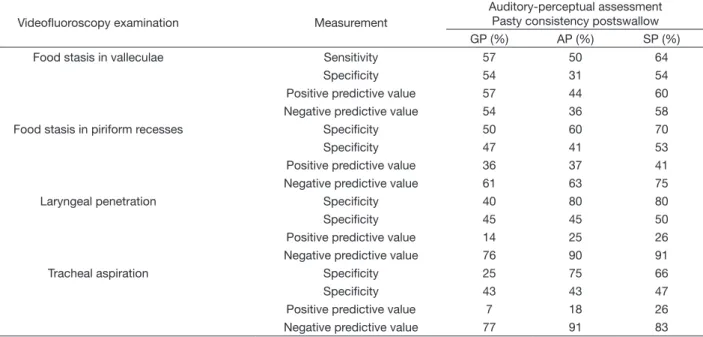
Table 3 presents the results for test validity measures between the auditory-perceptual aspects with postswallow
statistical signiicance - dysphonia grade, asthenia, and strain after swallowing of pasty consistency - and the videoluoroscopy indings for the pharyngeal phase of this consistency.
For preparation of the 2×2 contingency analysis table, the continuous variables were converted into categorical variables, and “yes” was attributed when a positive difference was observed between pre- and postswallow assessments and “no” was assigned when a negative difference or results equal to zero were found for the G (grade) and A (asthenia) variables, considering that a
decrease in these aspects was veriied after swallowing. As for
conversion of the S (strain) variable, “yes” was attributed when a negative difference was observed between pre- and postswallow assessments and “no” was assigned when a positive difference or results equal to zero were found, considering that an increase
in this aspect was veriied after swallowing.
Table 3. Test validity measures for the auditory-perceptual aspects after swallowing of pasty consistency
Videofluoroscopy examination Measurement
Auditory-perceptual assessment Pasty consistency postswallow
GP (%) AP (%) SP (%)
Food stasis in valleculae Sensitivity 57 50 64
Specificity 54 31 54
Positive predictive value 57 44 60
Negative predictive value 54 36 58
Food stasis in piriform recesses Specificity 50 60 70
Specificity 47 41 53
Positive predictive value 36 37 41
Negative predictive value 61 63 75
Laryngeal penetration Specificity 40 80 80
Specificity 45 45 50
Positive predictive value 14 25 26
Negative predictive value 76 90 91
Tracheal aspiration Specificity 25 75 66
Specificity 43 43 47
Positive predictive value 7 18 26
Negative predictive value 77 91 83
Caption: Dysphonia grade (G); Asthenia (A); Strain (S)
Table 1. Difference between pre- and postswallow assessment for the variables dysphonia grade, roughness, and breathiness Compared stage of deglutition
Pre- and postswallow G p R p B p
Pasty consistency (n = 27) 0.21 (0.37) 0.008 -0.17 (0.56) 0.134 0.07 (0.55) 0.5 Liquid consistency (n = 26) 0.14 (0.48) 0.156 -0.10 (0.65) 0.439 0.01 (0.55) 0.91
Solid consistency (n = 21) 0.14 (0.55) 0.267 -0.08 (0.63) 0.581 0.02 (0.64) 0.914
Caption: Dysphonia grade (G); Roughness (R); Breathiness (B); mean (standard deviation); p<0.05 (bold)
Table 2. Difference between pre- and postswallow assessment for the variables asthenia, strain, and wet voice parameter Compared stage of deglutition
Pre- and postswallow A p S p WV p
Pasty consistency (n = 27) 0.30 (-1;1.33) 0.011 -0.25 (-2;0.66) 0.028 -0.12 (-1;1.33) 0.142 Liquid consistency (n = 26) 0.19 (-1.33;1.33) 0.71 -0.20 (-1.33;1.66) 0.077 -0.07 (-1;1.33) 0.345 Solid consistency (n = 21) 0.09 (-1.66;1.33) 0.428 -0.10 (-1.66;1.66) 0.586 -0.07 (-1.33; 0.66) 0.444
DISCUSSION
Postswallow voice modiication has been highlighted as a
parameter for detection of dysphagia during clinical evaluation.
Nevertheless, few studies have been conducted aiming to identify
the best method to perform this assessment and what its results objectively mean.
Previous studies that veriied the use of wet voice for this
purpose presented diverging results, considering that in one research group this parameter proved to be reliable to identify tracheal aspiration and laryngeal penetration(13), whereas in
another group no correlation was found between these aspects(14).
In the present study, no signiicant modiication of this measure
was observed after swallowing in dysphagic individuals in a blinded assessment, demonstrating that wet voice is not a reliable parameter to identify individuals with swallowing disorders. Despite being a vocal parameter attributed to the postswallow
phonation of dysphagic individuals, no deinitions are found in the speciic scientiic literature regarding this vocal characteristic
and, unlike other well-established vocal measures, such as those used in the dysphonia GRBAS scale, it does not present widely conducted auditory-perceptual training because of lack of studies demonstrating its real applicability(13). In addition,
postswallow voice modiications are perceived by raters as
vocal changes commonly analyzed in the voice area, and not associated with the wet voice parameter(13,15). In this study, it
was possible to verify that this may be a reliable hypothesis, because the evaluators perceived a decrease in grade and an increase in strain after swallowing.
As previously mentioned, food stasis in the larynx causes
changes in vocal fold mass that can affect effective phonation, altering vocal quality. The results presented in Tables 1 and 2
show that there was a signiicant change in dysphonia grade
and asthenia, with decreases in these aspects and an increase in strain after swallowing. Thus, it is necessary to associate these aspects with deglutition characteristics indicative of
swallowing disorder, as well as with objective videoluoroscopic examination data(16).
Dysphonia overall grade is an auditory-perceptual parameter associated with rater perception of the negative impact caused by the phonation assessed(12). When associated with the
parameters evaluated in the videoluoroscopic examination, this
vocal parameter was a reasonable indicator of the presence of postswallow stasis in the valleculae and piriform recesses, with
test validity measures of approximately 50%. This percentage indicates that this vocal parameter can identify approximately
half the patients who truly present swallowing disorders(16).
It is believed that decreased dysphonia grade occurs because of attenuation of the glottal noise caused by food stasis along the vocal tract, which acts as a barrier that performs diffraction of the bass sounds that may originate form glottal noise(17).
Nevertheless, this vocal parameter was not very useful in identifying
laryngeal penetration and tracheal aspiration, showing lower
values of sensitivity and speciicity. This fact can be explained
because these aspects of swallowing disorder do not directly affect the overall vocal quality of individuals, considering that
food stasis in these regions does not signiicantly change the
vocal tract, and that vocal quality modiication is perceived only
when food is in direct contact with the vocal folds, generating a change in the vibration behavior as a function of alteration of the vocal fold mass(18,19). Aiming to relate the data globally,
the predictive values of this variable in relation to the aspects of laryngeal penetration and tracheal aspiration are analyzed together with the other variables.
With respect to postswallow phonation strain, it should be noted that during the auditory-perceptual evaluation the judges need to classify the voice as asthenic or strained according to their perception of phonatory effort(12). The results obtained for
presence of food stasis in the valleculae and piriform recesses were very similar to those observed for the variable overall
dysphonia grade. Nevertheless, high percentages of sensitivity were observed for occurrence of laryngeal penetration (80%) and tracheal aspiration (66-75%), demonstrating that increased
phonatory effort in the presence of food stasis, mainly within the laryngeal cavity or reaching the lower airways, is able to correctly identify individuals presenting these swallowing
disorders, corroborating the indings on tracheal aspiration
reported in a previous study(19), despite the risk of also identifying
some individuals without these changes because of reasonable
speciicity, approximately 50%. It is believed that increased
postswallow strain is associated with an attempt to maintain the usual phonation pattern, considering that food stasis causes an obstruction that prevents the normal passage of air during phonation(20). It is worth noting that the sample of this study
was predominantly composed of individuals with mild degree of oropharyngeal dysphagia and that this degree is not directly
associated with modiication of phonatory strain. Therefore, changes
in strain caused by presence of prandial material can be observed even in cases of mild dysphagia, becoming a very useful way to identify dysphagia by the increase in phonation effort.
As for the predictive values obtained in the food stasis assessment tests, the data are very similar to the results found
for sensitivity and speciicity. Nevertheless, regarding the
aspects of laryngeal penetration and tracheal aspiration, low
positive predictive values are veriied, because these aspects
occur more seldom in the studied sample(21). It is known that
aspects of tracheal aspiration and laryngeal penetration present prevalence according to the underlying disease, being more
frequent in neurological patients with inluence of dysphagia
severity(22), and are often observed in the more severe cases of
alteration(23). In this study, the participants were not divided
according to cause and severity of dysphagia, which may be an
aspect to be addressed in further works in order to better deine
the positive predictive value of these assessments. In spite of this, the three auditory-perceptual parameters presented good negative predictive values, that is, the decreases in overall grade
and asthenia and the increase in strain show good identiication
indices for the proportion of individuals without laryngeal penetration and tracheal aspiration who do not present these aspects(21), corroborating a previous study that identiied similar
values of this aspect for overall dysphonia grade(15). Thus, it is
Although this study associates, for the irst time in the literature, vocal production modiication evaluated by the GRBAS scale with videoluoroscopy indings through test validity
measures, it is worth noting that it presents some limitations. As previously discussed, the typology of dysphagia associated with its severity may have limited some outcomes, but showed good sensitivity indices and negative predictive values in both assessments. Moreover, the sample size was also small, which may have limited the scope of the analyses.
CONCLUSION
Postswallow voice data of the dysphagic individuals investigated
in this study show signiicantly decreased dysphonia grade and asthenia and signiicantly increased strain, with no differences
for the wet voice parameter. Regarding presence of stasis in the valleculae and piriform recesses, median test validity measures and negative predictive values were observed for the three parameters evaluated; however, good sensitivity results were
identiied, mainly with respect to phonation strain. Therefore,
we conclude that postswallow vocal assessment presents good
compatibility with videoluoroscopy indings.
REFERENCES
1. Yamada EK, Siqueira KO, Xerez D, Koch HA, Costa MM. The influence of oral and pharyngeal phases on the swallowing dynamic. Arq Gastroenterol. 2004;41(1):18-23. PMid:15499419.
2. Ertekin C, Aydoğdu I, Yüceyar N, Pehlivan M, Ertaş M, Uludağ B, et al. Effects of bolus volume on oropharyngeal swallowing: an electrophysiologic study in man. Am J Gastroenterol. 1997;92(11):2049-53. PMid:9362190. 3. Sordi M, Mourão LF, Silva AA, Flosi LCL. Interdisciplinary evaluation
of dysphagia: clinical swallowing evaluation and videoendoscopy of swallowing. Rev Bras Otorrinolaringol (Engl Ed). 2009;75(6):776-87. http://dx.doi.org/10.1016/S1808-8694(15)30537-1.
4. ASHA: American Speech-Language-Hearing Association [Internet]. ASHA practice policy: clinical indicators for instrumental assessment of dysphagia. American Speech-Language-Hearing Association; 2000 [citado 2017 Jan 30]. Disponível em: www.asha.org/policy
5. Padovani AR, Moraes PD, Mangili LD, Andrade CRF. Speech therapy protocol for assessing the risk for dysphagia (PARD). Rev Soc Bras Fonoaudiol. 2007;12(3):199-205.
6. Longeman JA. Evaluation and treatment of swallowing disorders. Austin: Pro-ed; 1998.
7. Murray J, Langmore SE, Ginsberg S, Dostie A. The significance of accumulated oropharyngeal secretions and swallowing frequency in predicting aspiration. Dysphagia. 1996;11(2):99-103. PMid:8721067. http://dx.doi.org/10.1007/BF00417898.
8. Friedman B, Frazier JB. Deep laryngeal penetration as a predictor of aspiration. Dysphagia. 2000;15(3):153-8. PMid:10839829. http://dx.doi. org/10.1007/s004550010018.
9. Marik PE. Aspiration pneumonitis and aspiration pneumonia. N Engl J Med. 2001;344(9):665-71. PMid:11228282. http://dx.doi.org/10.1056/ NEJM200103013440908.
10. Murugappan S, Boyce S, Khosla S, Kelchner L, Gutmark E. Acoustic characteristics of phonation in “wet voice” conditions. J Acoust Soc Am. 2010;127(4):2578-89. PMid:20370039. http://dx.doi.org/10.1121/1.3308478. 11. O’Neil KH, Purdy M, Falk J, Gallo L. The dysphagia outcome and severity scale. Dysphagia. 1999;14(3):139-45. PMid:10341109. http://dx.doi. org/10.1007/PL00009595.
12. Hirano M. Clinical examination of voice. New York: Springer Verlag; 1981.
13. Groves-Wright KJ, Boyce S, Kelchner L. Perception of wet vocal quality in Identifying penetration / aspiration During swallowing. J Speech Lang Hear Res. 2010;53(3):620-32. PMid:20029051. http://dx.doi.org/10.1044/1092-4388(2009/08-0246).
14. Warms T, Richards J. “Wet Voice” as a predictor of penetration and aspiration in oropharyngeal dysphagia. Dysphagia. 2000;15(2):84-8. PMid:10758190. http://dx.doi.org/10.1007/s004550010005.
15. Waito A, Bailey GL, Molfenter SM, Zoratto DC, Steele CM. Voice-quality Abnormalities as a Sign of Dysphagia: Validation against Acoustic and Videofluoroscopic date. Dysphagia. 2011;26(2):125-34. PMid:20454806. http://dx.doi.org/10.1007/s00455-010-9282-4.
16. McGee SR. Evidence-based physical diagnosis. 3rd ed. Philadelphia: Elsevier; 2012.
17. Horward MD, Angus J. Acoustics & psychoacoustics. Oxford: Focal Press; 1995.
18. Chang HY, Torng PC, Wang TG, Chang YC. Acoustic voice analysis does not identify presence of penetration / aspiration confirmed by the videofluoroscopic swallowing study. Arch Phys Med Rehabil. 2012;93(11):1991-4. PMid:22721869. http://dx.doi.org/10.1016/j.apmr.2012.05.028. 19. McCullough GH, Wertz RT, Rosenbek JC. Sensitivity and specificity of clinical
/ bedside examination signs for detecting aspiration in adults subsequent to stroke. J Commun Disord. 2001;34(1-2):55-72. PMid:11322570. http:// dx.doi.org/10.1016/S0021-9924(00)00041-1.
20. Weir K, McMahon S, Barry L, Masters IB, Chang AB. Clinical signs and symptoms of oropharyngeal aspiration and dysphagia in children. Eur Respir J. 2009;33(3):604-11. PMid:19010985. http://dx.doi. org/10.1183/09031936.00090308.
21. Altman DG, Bland JM. Diagnostic tests 2: Predictive values. BMJ. 1994;309(6947):102. PMid:8038641. http://dx.doi.org/10.1136/ bmj.309.6947.102.
22. van der Maarel-Wierink CD, Meijers JMM, Visschere LMJ, Baat C, Halfens RJG, Schols JMGA. Subjective dysphagia in older care home residents: A cross-sectional, multi-centre point prevalence measurement. Int J Nurs Stud. 2014;51(6):875-81. PMid:24238894. http://dx.doi.org/10.1016/j. ijnurstu.2013.10.016.
23. Lucchi C, Flório CPF, Silverio CC, Reis TM. Oropharyngeal dysphagia incidence in patients with cerebral palsy spastic type tetraparetic institutionalized. Rev Soc Bras Fonoaudiol. 2009;14(2):172-6.
Author contributions