2016 | Lavras | Editora UFLA | www.editora.ufla.br | www.scielo.br/cagro http://dx.doi.org/10.1590/S1413-70542016000100007
Forage mass and morphological composition of Marandu
palisade grass pasture under rest periods
Massa de forragem e composição morfológica do pasto de capim-marandu submetido a períodos de descanso
Albert José dos Anjos1, Carlos Augusto de Miranda Gomide2*, Karina Guimarães Ribeiro3, Afrânio Silva Madeiro4, Mirton José Frota Morenz2, Domingos Sávio Campos Paciullo2
1Universidade Federal dos Vales do Jequitinhonha e Mucuri/UFVJM, Diamantina, MG , Brasil 2Empresa Brasileira de Pesquisa Agropecuária/Embrapa, Juiz de Fora, MG, Brasil
3Universidade Federal de Viçosa/UFV, Departamento de Zootecnia/DZO, Viçosa, MG, Brasil 4Universidade Federal de Roraima/UFRR, Escola Agrotécnica/EA, Boa Vista, RR, Brasil *Corresponding autor: [email protected]
Received in july 6, 2015 and approved in october 14, 2015
ABSTRACT
An evaluation of productive potential is not the only factor used to determine grazing management efficiency; it is also necessary to know the structural characteristics of the canopy. The objective of this study was to evaluate the effects of two management styles on
Marandu palisade grass pastures under rotational stocking with respect to the herbage mass, morphological composition, and structural
characteristics of the pasture. The treatments under consideration were a) a fixed rest period of 30 days (RP30) or b) a rest period based on the time necessary for the canopy to reach 95% light interception (LI95). The experimental design was a completely randomized block
with two blocks and three replicates within the blocks. Animals were placed in the paddocks when the grass reached the established
management criteria, which were maintained for three days to reach 25 cm in stubble height. Shorter grazing intervals (22.8 vs. 30 days), lower pre-grazing heights (35.9 vs. 42.3 cm), and lower forage masses (4,411 vs. 5,290 kg/ha.cycle) were observed in LI95 pastures. The LI95 treatment had a higher leaf percentage (48.3 vs. 41.1) and the lowest percentage of dead forage (19.0 vs. 25.4) in the pre-grazing forage mass of the pasture in relation to that of RP30. Performing pasture management based on RP30 throughout the season is harmful
to the pasture structure because it reduces the leaf percentage and increases the stem and senescent material in the available forage.
The lower pre-grazing forage mass observed under LI95 management is offset by more grazing cycles within the rainy season. Index terms: Pre-grazing height; Grazing cycle; interception of photosynthetically active radiation; leaf mass.
RESUMO
A avaliação do potencial produtivodo pasto não é o único fator que pode ser usado para determinar a eficiência de manejo do pastejo, também
é necessário considerar as características estruturais do dossel. Neste estudo, objetivou-se avaliar a influência de dois critérios para definição
do período de descanso do pasto de capim-marandu sobre a massa de forragem, a composição morfológica e as características estruturais
do pasto durante a estação chuvosa. Os períodos de descanso estudados foram: fixo de 30 dias (PD30) e variável, conforme a interceptação de 95% da radiação fotossinteticamente ativa (IL95). O delineamento experimental utilizado foi em blocos inteiramente casualizados, com duas repetições de área e três repetições dentro de bloco. Os animais (vacas mestiças) foram colocados nos piquetes, logo que os pastos atingiam os critérios de manejo estabelecidos e permaneciam dentro dos mesmos durante três dias, de forma a atingir a altura de resíduo de 20-25 cm. Menor intervalo entre pastejo (22,8 vs. 30 dias), menor altura pré-pastejo (35,9 vs. 42,3 cm) e menor massa de forragem verde (4.411 vs. 5.290 kg/ha.ciclo) foram observados no pasto sob IL95. Contudo, o pasto sob IL95 apresentou maior percentual de lâmina foliar (48,3 vs. 41,1) e menor percentual de material morto (19,0 vs. 25,4) na massa de forragem pré-pastejo em relação ao pasto com PD30. O manejo do pasto de capim-marandu, baseado em período de descanso fixo de 30 dias, ao longo da estação chuvosa, compromete a estrutura do
pasto, reduzindo a participação de folhas e aumentando os percentuais de colmo e material senescente na forragem disponível. A menor
massa de forragem em pré-pastejo observada sob IL95 é compensada pelo maior número de ciclos de pastejo dentro da estação chuvosa.
Termos para indexação: Altura pré-pastejo; ciclo de pastejo; interceptação da radiação fotossinteticamente ativa; massa
de lâmina foliar.
INTRODUCTION
Defoliation frequency is a major factor that has been recently studied under intermittent stocking
However, the evaluation of the productive potential is not the only factor that can be used to determine the grazing
management efficiency, given that it is also necessary
to know the structural characteristics of the canopy, which affects the feeding behavior (Benvenutti; Gordon;
Poppi, 2008) and the efficiency with which forage is used
(Pereira et al., 2015).
The rotational stocking method has come into wide
use, especially in dairy farming, but the use of a fixed rest period has been inefficient in terms of the control of canopy
features (Pedreira; Pedreira; Silva, 2007; Voltolini et al., 2010). The primary grazing management strategy that is used to control the structural characteristics of forage swards is the interception of light as a reference to monitor the regrowth process, which allows for forage harvests under the same physiological conditions (Euclides et al., 2014; Pedreira; Pedreira; Da Silva, 2007).
A rest period of approximately 30 days has been
used in rotational grazing systems. Studies to evaluate
the influence of the resting period when using 95% light
interception (LI) have been recently conducted (Difante
et al., 2009; Giacomini et al., 2009; Trindade et al.,
2007). However, only the works of Pedreira, Pedreira, and Silva (2007) and Voltolini et al. (2010) aimed to
compare the rotational stocking method while using a fixed
defoliation frequency and a variable frequency based on
95% LI in Xaraés (Brachiaria brizantha cv. Xaraés) and elephant grass (Pennisetum purpureum Schum) pastures, respectively. Marandu grass (Brachiaria brizantha cv. Marandu) is the most widely used grass for feeding
Brazilian livestock and accounts for approximately 50%
of cultivated pastures in the country (Vale et al., 2011). The aim of this study was to compare the effects of two intermittent grazing criteria with variable resting periods
with 95% canopy light interception or a fixed resting period of 30 days and to assess their effects on the forage
mass, morphological composition, and structural traits of marandu palisade grass pastures.
MATERIAL AND METHODS
The experiment was performed at an experimental
farm located in Coronel Pacheco, Minas Gerais, Brazil
(21°33′S, 43º16′W, 435 m altitude). According to the Köppen classification, the climate is Cwa (mesothermal)
with a tropical rainy summer and a dry winter from June to September (Peel; Finlayson; McMahon, 2007). The soil
in the experimental area was classified as a Distrophic Fluvisol (Food and Agriculture Organization-Fao, 2006)
(or a Dystrophic Fluvic Neosol according to Empresa
Brasileira de Pesquisa Agropecuária-Embrapa, 2006).
The trial was conducted in a 4-hectare area of marandu palisade grass (Brachiaria brizantha (Hochst ex A.RICH.) STAPF. cv. Marandu), half of which was planted
in 2003 and the other half of which was planted in 2008. The experimental area was managed as proposed from the
beginning of the growth season (October/November) in 2010. However, the occurrence of a prolonged dry period in January and February 2011 undermined the comparisons between treatments. Thus, it was decided that in this study,
the experimental period would range from October 18, 2011 to May 3, 2012.
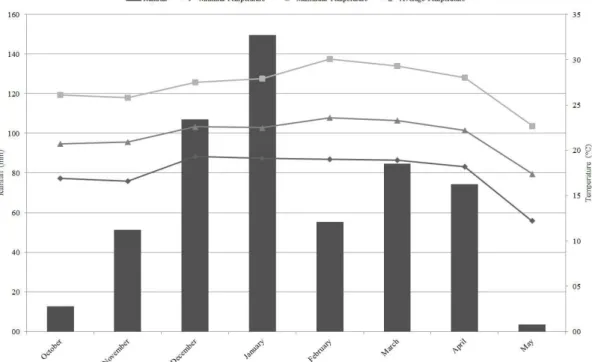
Climatic data for the experimental period (Figure 1)
were collected from the automatic weather station at
the farm, which was approximately 200 meters from the experimental area.
Treatments consisted of two strategies for the rest periods in the rotational stocking grazing method: 1) grazing at the start of every cycle when the canopy light
interception reached 95% (LI95) or 2) fixed rest period of 30 days (RP30). The occupation period was three days
for both treatments, with a goal of maintaining a 20-25 cm stubble height.
The experimental design was a completely
randomized block design with two plots (blocks).
The experimental area blocking was performed while
accounting for the pasture establishment time differences. The replications contained 11 paddocks; however, in each grazing cycle, there were three paddocks that were used to evaluate pasture characteristics.
The total experimental area consisted of 44
paddocks at 850 m2 each, with 11 pickets for each
experimental animal group (four cows). For the treatment with a fixed rest period (RP30), 11 paddocks were used for all grazing cycles, whereas for treatment LI95, the
number of paddocks used in each grazing cycle varied according to the time that was required to reach the
recommended condition, up to a maximum of 11 paddocks. In the LI95 treatment, the paddocks that were not used
within a grazing cycle were defoliated according to the
same criteria when extra animals were used to perform
the grazing. This strategy was aimed at setting the rest period and maintaining the paddocks in the same condition as the others, so that they would be ready to use during
the following grazing cycles if necessary. The 95% light
interception condition varies depending on weather conditions.
Figure 1: Monthly means of rainfall, maximum temperature, average temperature and minimal temperature of air during the experiment period.
daily milk production of 21.3 L. Eight animals were used
for each treatment, with four animals per replicate. The stocking density adjustment was made according to the management targets (residual height) through the
put-and-take technique. Therefore, extra animals (dry dairy
cows) were used to achieve the recommended residual
height. The animals were milked twice daily at 6:00 and
14:00 hours.
With the aim of keeping the post-grazing height
within a range of 20-25 cm during the dry season (May to September 2011), the animals were allowed to graze the paddocks during the night, and the pasture was managed by using the 11 paddocks for each treatment/repetition
with a 30-day rest period and three days of occupation.
During this period, the animals received a roughage supplementation in their troughs between morning and
afternoon milkings. From October 10th to November 19th
of 2011, the pasture was managed paddock-to-paddock to establish the predetermined post-grazing canopy height.
During the experimental period, the pasture was
fertilized, always after the animals left the paddocks, with the equivalent of 50 kg/ha of N and K2O and 12.5 kg/ha of P2O5 for a 20-05-20 formulation of N-P2O5-K2O.
To monitor light interception by the canopy, we used canopy analyzer equipment, namely an AccuPAR
Linear PAR/LAI ceptometer, model LP-80 (DECAGON Devices). For each grazing cycle, weekly assessments were conducted at ten points for each paddock during the regrowth period. These assessments were conducted in
all the experimental units of the LI95 treatment and in at least two paddocks of the RP30 treatment.
The canopy height was measured under pre- and post-grazing conditions. To determine this characteristic, a graduated ruler marked in centimeters was randomly used at 40 points per paddock and the average was estimated. The canopy height at each point corresponded to the height from the ground level to the horizon of the curvature in the upper leaves.
Forage samples were taken at three points for each sampled paddock. These points were representative of the average condition of the pasture in terms of height and coverage. Each sampling point corresponded
to a metal frame of 0.50 x 0.50 m. The materials
A determination of the forage morphological components was performed by withdrawing an aliquot of a known weight, which represented the samples that were taken, to determine the pre-grazing forage mass. These aliquots were separated into the following fractions: leaf blade, stem (stem + sheath), and dead material; they were subsequently dried in an oven by forced air circulation at 55 °C for 72 hours, after which they were weighed. The forage mass values for each morphological component were converted to kg of dry matter per hectare and were
expressed as the percentage (%) of the total forage mass
as well. The evaluated variables were the grazing interval, pre- and post-grazing canopy height, total forage mass in the pre- and post-grazing periods, and the percentages of leaf blades, stems, and dead material in the mass of pre-grazing forage as well as the leaf/stem ratio.
The data were subjected to an analysis of variance
with PROC MIXED in SAS®, the means were estimated by
LSMEANS test, and these findings were compared at a 5%
probability level. The entire data set was tested to ensure that the basic prerogatives of the analysis of variance were met. All the evaluated factors and their interactions were
considered as a fixed effect. Because they are controlled
variables, the rest period and light interception values were not subjected to an analysis of variance.
RESULTS AND DISCUSSION
The rest period varied between grazing periods for the
treatment with 95% light interception (LI95) (Table 1). Shorter rest periods were observed during cycles two and five, when only 18 days were necessary to reach the specified grazing
condition. However, during the fourth cycle, the rest period was the same for both criteria as a result of the reduction in rainfall (Figure 1). Actually, although there was no synchronicity between grazing cycles between treatments, the lower light interception values during the fourth cycle
for the treatment with a fixed RP reinforces the conditions
that limit regrowth for that period.
On average, a shorter rest period was found for
LI95 compared to that of RP30 (22.8 vs. 30 days). A
reduction in the rest period for tropical pastures during
the growing season has been identified as a way to control
the canopy structure (Da Silva; Nascimento Júnior, 2007)
and increase the forage utilization efficiency (Da Silva, 2013). For Napier elephant grass, Voltolini et al. (2010) observed rest periods of 19.4 days under 95% LI, with an average residual height of 62 cm. When evaluating the Xaraés palisade grass with 16.2 cm for the average
residual height, Pedreira, Pedreira and Silva (2007) found
22 days on average for the rest periods during the spring/ summer period.
Table 1: Resting period (days) and interception of the photosynthetically active radiation (iPAR) in response to the criteria for resting period (LI95 and RP30) and
grazing cycles.
Cycle Resting Periods (days) iPAR (%)
LI95 RP30 LI95 RP30
1 27 30 93.0 98.2
2 18 30 94.8 98.1
3 21 30 95.5 98.4
4 30 30 94.7 97.5
5 18 30 95.0 98.7
Average 22.8 30 94.6 98.1
The rest period that was observed in this study
is lower than that found by Giacomini et al. (2009) for
marandu palisade grass. From October to March 2004 and from October to December 2005, this author found an average grazing interval of 45.7 and 28.7 days for pastures with post-grazing heights of 10 and 15 cm, respectively. An explanation for the difference in grazing ranges in these two situations would be the amount of remaining leaves, which is smaller in pastures that were subjected to greater grazing intensity, thereby slowing
down the regrowth process (Korte; Watkins; Harris, 1982; Chaparro; Sollenberger; Quesenberry, 1996). In
this study, the average post-grazing canopy heights were
22.4 and 25.3 cm, respectively, for the LI95 and RP30
treatments.
The average light interception value for the LI95
treatment is quite close to that of the predetermined one,
and for the RP30 treatment, the value was within a range considered close to the maximum light interception because light interception values that are greater than 98%
are rarely found in the literature (Carnevali; Da Silva;
Oliveira, 2006; Pedreira; Pedreira; Silva, 2007; Voltolini et al. 2010).
The RP30 treatment showed greater light
interception (LI) in all grazing cycles when compared
with that of LI95. Smaller values for LI were found as a
For the pre-grazing canopy height, an effect (P <0.05) was observed for the treatments, grazing cycle, and their
interaction (Table 2). The RP30 treatment had higher pre-grazing heights in comparison with those of LI95. Equality
between the canopy heights only occurred in the fourth
grazing cycle. This finding occurred because 17 days
passed without rainfall during this period, which meant
that the rest period for the LI95 treatment was the same as the 30-day period for RP30 (Table 1). It is important
to note that because of the different rest periods for the treatments, there is a lag in grazing cycles.
Sward height control during the pre-grazing period is one way of ensuring good canopy structure and avoiding forage waste, the accumulation of dead leaves
and stems (Carnevalli et al., 2006; Gomide; Gomide, 2013), or the lodging of forage during grazing, which would reduce the efficiency with which forage is used (Da Silva, 2013).
It is interesting to note an increase in the average
canopy height for LI95 during the second grazing
cycle despite the reduced PD (18 days) (Table 1). The favorable climatic conditions during the second cycle were responsible for the rapid growth of grass and the increased
height of the canopy, even in the PD30 treatment in relation to the first grazing cycle. This finding reinforces the need
to establish variable rest periods based on pasture growth.
Giacomini et al. (2009) proposed that canopy heights under 95% light were more suitable for use when
marandu palisade grass is close to 25 cm; however, in this study, the post-grazing heights in use ranged from 10 to 15 cm. Likewise, Gimenes et al. (2011) studied
pre-grazing heights of 25 and 35 cm and nitrogen doses
of 50 and 200 kg/ha/year in marandu palisade grass, and they concluded that ideal management would take place at pre-grazing heights of 25 cm and 15 cm residue. However, in this study, the occupation period of the paddocks varied, reaching up to 11 days in the spring/ summer, to ensure the recommended post-grazing height.
Table 2: Pre-grazing canopy height (cm) in response to the treatments and grazing periods.
Resting period Grazing cycles Average
1 2 3 4 5
LI95 33.8BCb 42.0Ab 33.2Cb 38.4ABa 32.1Cb 35.9b
RP30 39.3Ba 47.5Aa 38.2Ba 37.7Ba 49.0Aa 42.3a Standard error 1.9 3.5 1.9 2.0 1.5
Means followed by the same letter, upper-case within rows and lower-case within columns, do not differ significantly with the LSMEANS test at 5% probability.
This strategy, although technically recommended, is
difficult to adopt in a predetermined rotational grazing
system. Another point to consider is that the average rest period for obtaining the pre-grazing height of 25 cm in
this trial was over 35 days, even during favorable growing
seasons (spring/summer).
For dairy cows, smaller canopy heights can compromise the dry matter intake from grazing animals
(Carvalho et al., 2013), showing that grazing management
should vary according to the purpose of the production
system (Da Silva, 2013). Moreover, it is worth mentioning
that although this statement has been based on a series of
experimental tests, low post-grazing heights have been
used for a long time, and under grazing conditions, this management could compromise the sustainability of the pasture. Even in this study, in which the recommended post-grazing height was 20-25 cm, infestations of invasive plants at certain points in the trial were observed. Moreover, it should be emphasized that obtaining an average canopy height under grazing conditions implies that there are points with values that are higher and lower
in relation to the average. For example, points with 7 cm
heights occurred with some frequency in the paddocks that represented post-grazing heights below 20-25 cm. Overgrazing is known to be a major cause of pasture
degradation (Macedo, 2009); thus, the increase in pasture
points with very low heights may represent potential areas of increasing weed infestation or even the occurrence of uncovered soil.
There was a significant treatment X grazing cycle
interaction (P<0.005) for green forage mass (GFM). In
absolute terms, the GFM of the LI95 treatment was always lower than that of RP30, and a significant difference
between treatments was only observed during the fourth
grazing cycle (Table 3).
There was a progressive increase in GFM with the grazing cycles in both treatments. However, this increase
accumulation of stems in the forage mass. Table 4 shows
higher stem percentages for the RP30 treatment. In Figure 2,
we can also note that the reduction in leaves with grazing cycles is more pronounced in the pasture that was managed
with a fixed 30-day rest period. This damage to the sward structure was an extension of the rest period during the
rainy season and has been found in several tropical grasses such as marandu palisade grass (Trindade et al., 2007),
Mombasa grass (Gomide; Gomide; Alexandrino, 2007; Carnevalli et al., 2006), Tanzania grass (Barbosa et al.,
2007), and elephant grass (Voltolini et al., 2010; Sousa et al., 2013; Gomide et al., 2015).
In the RP30 treatment, there was a significant
increase in the GFM from the third to the fourth cycle.
This increase can be attributed to the flourishing marandu
Table 3: Pre and post-grazinggreen forage mass(kg/ha.cycle) in response to the criteria for resting period and grazing cycles.
Resting period Grazing cycles Average
1 2 3 4 5
Pre-grazing green forage mass
LI95 3,444Ca 4,093BCa 3,664Ca 4,805Bb 6,048Aa 4,411b
RP30 3,728Ca 4,885Ba 4,460Ba 6,805Aa 6,575Aa 5,290a
Standard error 131.3 224.3 236.1 288.6 175.6 Post-grazing green forage mass
LI95 2,050Bb 2,415Bb 2,405Bb 3,304Ab 3,854Aa 2,806b
RP30 2,812Ba 2,988Ba 3,013Ba 4,690Aa 4,526Aa 3,606a
Standard error 154.9 102.1 131.7 225.0 276.6
Means followed by the same letter, upper-case within rows and lower-case within columns, do not differ significantly with the LSMEANS test at 5% probability.
palisade grass, which was concentrated in March (Valle et
al., 2011), but it was better controlled in the LI95 treatment.
The lowest forage mass was observed under the LI95
treatment because of the lower average rest period (22.8 x 30 Days, Table 1) and also because of the control of stem
elongation, thus reducing its proportion in the forage mass. The lowest pre-grazing GFM that was found in
both treatments in the first grazing cycle is a reflection
of pasture management during the dry season. During this period, animals were kept in the barn between the morning and afternoon milkings to provide them with supplemental pasture roughage. The pastures continued to be grazed between the evening and morning milkings. This management strategy was intended to ensure good
pasture structures early in the next rainy season.
Table 4: Percentage of leaf, stem and dead forage on the pre-grazing herbage mass in response to treatments and grazing cycles.
Component Rest period Grazing cycles Average
1 2 3 4 5
% Leaf IL95 54.9Aa 52.1ABa 49.9Ba 48.8Ba 35.8Ca 48.3a
PD30 53.6Aa 46.0 Bb 37.4Cb 30.9 Db 37.4Ca 41.1b
% Stem IL95 21.7Ea 30.1Db 33.3Ca 36.1Ba 42.3Aa 32.7a
PD30 25.7Ba 36.9Aa 34.4Aa 35.8Aa 34.7Ab 33.5a
% Dead forage
IL95 23.4Aa 17.8BCa 16.8Cb 15.1Cb 21.9ABb 19.0b
PD30 20.7Aa 17.0Ba 22.5Aa 24.2Aa 24.9Aa 25.4a
The RP30 treatment showed higher pre-grazing
GFM per cycle; however, the lowest grazing interval for
LI95 allowed for a greater number of grazing cycles when compared with the fixed RP criteria, a fact that offset the lower pre-grazing forage mass. When considering a rainy
period of 180 days and the average values of pre-grazing GFM and rest periods, it would be possible to obtain
a green forage mass of 30,877 kg/DM/ha for the LI95 treatment compared with 26,450 kg/DM/ha for the RP30 as a result of seven and five grazing cycles, respectively.
Similar results were reported by Gomide et al. (2007), who observed higher DM production per hectare for Mombasa grass pastures that were subjected to the rest period, based on the appearance of 2.5 leaves compared
with the appearance of 3.5 and 4.5 leaves per tiller. This
result was a consequence of a greater forage accumulation rate under a shorter rest period.
The post-grazing GFM followed the same trend as
the pre-grazing GFM. Thus, a significant increase in the
mass of the residual forage between the third and fourth
grazing cycles of the RP30 treatment was observed,
thereby revealing the damage that was caused by stems in the use of forage. Benvenutti, Gordon and Poppi (2008) observed that with increasing stem densities, there is a restriction in the bite size and a consequent reduction in
the instantaneous intake by 1 and 3-year-old steers.
The stem elongation process is inevitable in tropical grasses, although it can be controlled through management strategies (Da Silva; Nascimento Jr., 2007; Gomide;
Gomide, 2013). When calculating the efficiency of forage
utilization (which is calculated as the missing green forage in relation to the pre-grazing green forage mass), this
quantity is estimated to decrease from 40.4% to 36.2% between the first and fifth grazing cycles for the LI95 treatment, and it increased from 24.5% to 31.1% in the RP30 treatment. Increased pasture use efficiency is one of the goals of rational grazing management strategies
(Da Silva, 2013). These values are below those found in the literature (Zanini et al., 2012; Rodolfo et al., 2015) in which percentages of 50-70% are considered, but these
studies have considered a reduction in the canopy height, and in this study, the calculation was based on the green forage mass.
The increments in dead forage mass with grazing
cycles are shown in Figure 2. During the first two grazing
cycles, the treatments showed equivalent masses of dead material. Interestingly, these initial cycles for the
pre-grazing GFM (Table 3) were also close between
treatments. However, from the third grazing cycle, there is a strong increase in the mass of dead material for the
RP30 treatment, with the maximum occurring during the
fourth cycle. The higher post-grazing forage mass in the
RP30 treatment can explain this behavior provided that, as
Figure 3: Pre-grazing dead forage mass according to the treatments (LI95 and RP30) and grazing cycles.
previously mentioned, there is greater forage accumulation with the longest rest period. However, there was a lower percentage of utilization because of structural problems, including stem and dead forage accumulation.
For the LI95 treatment, there was an increase observed in the dead forage mass in only the fifth grazing cycle (Figure 3). It is important to emphasize that the
increase that was observed for dead forage mass in the
fifth grazing cycle of the LI95 treatment occurred after
the increase in the post-grazing forage mass of the fourth
grazing cycle (Table 3). Thus, part of the excessive forage
that escapes to grazing in the fourth cycle is senescent after
the new rest period prescribed for the fifth grazing cycle.
The senescence process is controlled by several
physiological factors (Gan; Amasino, 1997), which are
associated with the morphogenesis of the grass and the management that has been adopted, and which then
affects the lifetime of the leaf (Lemaire; Chapman, 1996).
Differences in defoliation patterns are caused by variations
in the intensity (Bircham; Hodson, 1983) and grazing frequency (Carnevalli; Da Silva; Oliveira et al., 2006) and
may contribute to increased leaf senescence.
The leaf mass percentage in the pre-grazing forage
mass was influenced (P <0.05) by the treatment X grazing cycle interaction (Table 4). The LI95 treatment presented with higher leaf percentages than the RP30 treatment. This finding confers superiority to the rest period based on the interception of 95% of the photosynthetically
active radiation, given that leaves are the morphological
component of higher nutritional value and have a greater role in available forage to favor consumption (Brancio
et al., 2003; Difante et al. 2011) and animal performance (Brancio et al., 2003; Trindade et al., 2007).
The largest leaf percentages under the LI95
treatment were found in cycles one and two, and the
lowest percentage was found in cycle five. For the RP30 treatment, the highest leaf percentage was found in the first
cycle and the lowest percentage was found in cycle four. Despite the declining trend in the percentage of leaves with the grazing cycles, as observed in both treatments,
the reduction in RP30 was higher than that associated with the LI95 treatment (Figure 3). A reduction in the leaf percentage was expected with succeeding grazing cycles because the average stem percentage increased from 23.7% in the first cycle to 38.5% in the fifth cycle.
The largest stem elongation in the sward pasture likely
occurred under RP30 management, as already discussed, along
with the highest leaf senescence rate, and it was primarily responsible for the greatest reduction in the percentage of leaves. The effect of grazing cycles on the canopy structure is well-marked and described in the literature, as evident in the
results obtained by Alexandrino et al. (2005).
Higher leaf percentage values were observed for the
LI95 treatment. There were differences in leaf percentages between the treatments in all grazing cycles, except for grazing cycles one and five.
An effect (P <0.05) was observed for the grazing
for the stem percentage. The lowest stem percentages were found in cycle one, for both treatments (Table 4). However, the stem percentage remained constant in the
other cycles for the RP30 treatment, which did not occur for the LI95 treatment.
In the pastures that were managed with LI95, the stem percentage gradually increased from the first to the fifth cycle. Among the treatments, differences were observed only in the second cycle, when the LI95 treatment had the lowest proportion of stems, and in the fifth cycle,
when the situation was reversed.
Surprisingly, there was no difference in stem percentages between the treatments because, besides the
longer rest period for the RP30 treatment, most flowering
rates were visually observed by using these management criteria. In fact, the intense increase in the thatched
percentage that was observed in the fifth grazing cycle with the LI95 treatment raised the average, thus masking
the effect of this treatment. However, given the mean percentage of the two treatments, the highest amount of
stems was estimated for the RP30 treatment in relation to the LI95 treatment (1,874 vs. 2,506 kg/ha/cycle). This finding confirms the hypothesis that the increase in forage
mass in response to the grazing interval is primarily a result
of the increased stem biomass (Alexandrino et al., 2005).
A high proportion of stem and dead forage in the forage mass hinders the forage apprehension capacity and hence
the grazing efficiency, thereby decreasing the voluntary
intake of grazing animals (Difante et al., 2011; Benvenutti
et al, 2008; Brancio et al., 2003).
To take the percentage of dead material in the pre-grazing forage mass, there was an interaction (P <0.05)
between the treatment X grazing cycle (Table 4). The highest
percentages of dead material were observed in cycles one
and five in the LI95 treatment. It is possible that this larger percentage of dead forage in the first cycle is a holdover from the dry period because RP30 also exhibited a high percentage in the first cycle. For the RP30 treatment, the
lowest percentage of dead material was observed in cycle two. Although these same characteristics occur in the
RP30 treatment, the largest grazing interval in this case,
it is most responsible for the highest percentage of dead material during these cycles.
Among the treatments, there were differences in the percentage of dead material during cycles three,
four, and five, with higher values observed for the RP30 treatment. According to the critical leaf area index, the stem elongation intensifies, causing greater shading of the
basal leaves with a concomitant increase in the senescence
process (Da Silva, 2013; Gomide; Gomide, 2013).
CONCLUSIONS
The rest period of marandu palisade grass pastures
under 95% light interception during the rainy season
promotes the highest percentage of leaves and a smaller percentage of dead material in the forage mass, despite the lower herbage mass per cycle, thus ensuring a greater pre-grazing leaf/stem ratio.
The lower herbage mass that was observed per grazing cycle is offset by the greater number of grazing cycles performed during the rainy season.
Shorter grazing intervals (approximately 22 days) are possible when adopting a rest period based on 95% light interception compared to a fixed rest period of 30 days. However, because the canopy growth is influenced by the interaction of several factors, this finding indicates
that marandu palisade grass pastures should be managed at 20-25 cm post-grazing heights for dairy cows, and during
the rest period, it should reach a height of 35 cm.
ACKNOWLEDGMENTS
The autors wish to thank Fundação de Amparo a Pesquisa de Minas Gerias (FAPEMIG) and Conselho de
Desenvolvimento Científico e Tecnológico (CNPq) for the financial support and grants.
REFERENCES
ALEXANDRINO, E. et al. Período de descanso, características
estruturais do dossel e ganho de peso vivo de novilhos em pastagem de capim-mombaça sob lotação intermitente. Revista Brasileira de Zootecnia, 34(6):2174-2184, 2005.
BARBOSA, R. A. et al. Capim-tanzânia submetido a combinações entre intensidade e frequência de pastejo. Pesquisa Agropecuária Brasileira, 42(3):329-340, 2007.
BENVENUTTI, M. A.; GORDON, I. J.; POPPI, D. P. The effects of
stem density of tropical swards and age of grazing cattle on their foraging behaviour. Grass and Forage Science,
63:1-8, 2008.
BIRCHAM, J. S.; HODGSON, J. The influence of swards conditions on rates of herbage growth and senescence in mixed swards
under continuous grazing management. Grass and Forage Science, 38(4):323-331, 1983.
BRANCIO P. A. et al. Avaliação de três cultivares de Panicum maximum Jacq. sob pastejo: disponibilidade de forragem, altura do resíduo pós-pastejo e participação de folhas, colmos e material morto. Revista Brasileira de Zootecnia,
CARNEVALLI, R. A. DA SILVA, S. C.; OLIVEIRA, A. A. Herbage
production and grazing losses in Panicum maximum cv. Mombaça under four grazing managements. Tropical Grasslands, 40:165-176, 2006.
CARVALHO, P. C. F. et al. Comportamento ingestivo de animais
em pastejo, In: REIS, R.A.; BERNARDES, T.F.; SIQUEIRA, G.R.
Forragicultura: Ciência, tecnologia e gestão dos recursos forrageiros. Jaboticabal: FUNEP, 2013, 1ª Ed, p.525-545.
CHAPARRO, C. J.; SOLLENBERGER, L. E.; QUESENBERRY, K. H. Light interception, reserve status, and persistence of
clipped Mott elephantgrass swards. Crop Science, 36:649-655, 1996.
DA SILVA, S. C. Manejo do pastejo e a produção animal. In: REIS,
R. A.; BERNARDES, T. F.; SIQUEIRA, G. R. Forragicultura:
Ciência, tecnologia e gestão dos recursos forrageiros. Jaboticabal: FUNEP, 2013, 1. ed, p.499-524.
DA SILVA, S. C.; NASCIMENTO JUNIOR, D. Avanços na
pesquisa com plantas forrageiras tropicais em pastagens:
características morfofisiológicas e manejo do pastejo.
Revista Brasileira de Zootecnia, 36:121-138, 2007.
DIFANTE, G. S. et al. Características morfogênicas e estruturais
do capim-marandu submetido a combinações de alturas e intervalos de corte. Revista Brasileira de Zootecnia,
40(5):955-963, 2011.
. Sward structure and nutritive value of Tanzania guineagrass subjected to rotational stocking managements.
Revista Brasileira de Zootecnia, 38(1):9-19, 2009.
EMPRESA BRASILEIRA DE PESQUISA AGROPECUÁRIA-EMBRAPA. Centro Nacional de Pesquisa de Solos (Rio de Janeiro, RJ). Sistema brasileiro de classificação de solos. 2.ed. Rio de Janeiro: Embrapa Solos, 2006. 306p.
EUCIDES, V. P. B. et al. Manejo do pastejo de cultivares de Brachiaria brizantha (Hochst) Stapf e de Panicum maximum Jacq. Revista Ceres, 61:808-818, 2014.
FOOD AND AGRICULTURE ORGANIZATION-FAO. World reference base for soil resources 2006: a framework for
international classification, correlation and communication. Rome, Italy: FAO. 2006. 145 p. (World Soil Resources Report, 103).
GAN, S.; AMASINO, R. M. Making sense of senescense –
Molecular genetic regulation and manipulation of leaf senescence. Plant Physiology, 113:313-319, 1997.
GIACOMINI, A. A. et al. Growth of marandu palisadegrass
subjected to strategies of intermittent stocking. Scientia Agricola, 66(6):733-741, 2009.
GIMENES, F. M. A. et al. Ganho de peso e produtividade animal
em capim-marandu sob pastejo rotativo e adubação nitrogenada. Pesquisa Agropecuária Brasileira,
46(7):751-759, 2011.
GOMIDE, C. A. M. et al. Structural traits of elephant grass
(Pennisetum purpureum Schum.) genotypes under rotational stocking strategies. African Journal of Range and Forage Science, 32(1):51-57, 2015.
GOMIDE, C. A. M.; GOMIDE, J. A. Morfofisiologia de gramíneas forrageiras. In: REIS, R. A.; BERNARDES, T. F.; SIQUEIRA,
G. R. Forragicultura: Ciência, tecnologia e gestão dos
recursos forrageiros. Jaboticabal: FUNEP, 2013, 1. ed,
p.31-52.
GOMIDE, C. A. M.; GOMIDE, J. A.; ALEXANDRINO, E. Características
estruturais e produção de forragem em pastos de capim-mombaça submetidos a períodos de descanso. Pesquisa Agropecuária Brasileira, 42(10):1487-1494, 2007.
KORTE, C. J.; WATKIN, B. R.; HARRIS, W. Use of residual leaf area index and light interception as criteria for
spring-grazing management of ryegrass dominant pasture. New Zealand Journal of Agricultural Research,
25(3):309-319, 1982.
LEMAIRE, G.; CHAPMAN, D. Tissue fluxes in grazing plants communities. In: HODGSON, J.; ILLIUS, A. W. (Ed.).
The ecology and management of grazing systems.
Wallingford: CAB International, 1996. p.3-36.
MACEDO, M. C. M. Integração lavoura-pecuária: o estado da arte e inovações tecnológicas. Revista Brasileira de Zootecnia, 38(7):133-146, 2009.
PEDREIRA, B. C.; PEDREIRA, C. G. S.; DA SILVA, S. C. Estrutura
do dossel e acúmulo de forragem de Brachiaria brizantha cultivar Xaraés em resposta a estratégias de pastejo. Pesquisa Agropecuária Brasileira,
42(2):281-287, 2007.
PEEL, M. C.; FINLAYSON, B. L.; MCMAHON, T. A. Updated world map of the Köppen‑Geiger climate classification. Hydrology and Earth System Sciences, 11:1633-1644,
2007.
PEREIRA, L. E. T. et al. Herbage utilisation efficiency of
continuously stocked marandu palisade grass subjected to nitrogen fertilization. Scientia Agricola, 72(2):114-123,
2015.
RODOLFO, G. R. et al. Levels of defoliation and regrowth
dynamics in elephant grass swards. Ciência Rural,
SOUSA, B. M. L. et al. Dynamics of forage accumulation in Elephant grass subjected to rotational grazing intensities. Revista Brasileira de Zootecnia,
42(9):629-638, 2013.
STATISTICAL ANALYSIS SYSTEMS INSTITUTE. User’s guide: statistics, version 8.1. SAS Institute, Inc., Cary, NC, USA. 2001.
TRINDADE, J. K. et al. Composição morfológica da forragem
consumida por bovinos de corte durante o rebaixamento
do capim-marandu submetido a estratégias de pastejo rotativo. Pesquisa Agropecuária Brasileira,
42(6):883-890, 2007.
VALE, C. B. et al. Gênero Brachiaria. In: FONSECA, D. M.; MARTUSCELLO, J. A. Plantas Forrageiras. Viçosa: Editora UFV, 2011, p.30-77.
VOLTOLINI, T. V. et al. Características produtivas e qualitativas do capim-elefante pastejado em intervalo fixo ou variável de acordo com a interceptação da radiação fotossinteticamente ativa. Revista Brasileira de Zootecnia, 39(5):1002-1010, 2010.
ZANINI, G. D. et al. Distribuição de colmo na estrutura vertical de pastos de capim Aruana e azevém anual submetidos a pastejo intermitente por ovinos. Ciência Rural,