AbstrAct: Coffee resistance to Pseudomonas syringae pv. garcae has been associated to pleiotropic effect of SH1 allele, present in coffee plants resistant to certain races of Hemileia vastatrix, the causal agent of leaf rust, or genetic linkage between resistance alleles to both pathogens. To validate this hypothesis, 63 coffee plants in F2 generation were evaluated for resistance to 2 isolates of H. vastatrix carriers of alleles, respectively, v2, v5 (isolate I/2015) and
v1; v2; v5 (isolate II/2015) with the objective to confirm presence of
SH1 allele in resistant plants to isolate I/2015. The same coffee plants were evaluated for resistance to a mixture of P. syringae pv. garcae
PlAnt breeding -Article
S
H
1 leaf rust and bacterial halo blight coffee
resistances are genetically independent
Lucas Mateus Rivero Rodrigues*, Masako Toma Braghini, Oliveiro Guerreiro FilhoInstituto Agronômico - Centro de Café Alcides Carvalho - Campinas (SP), Brazil.
*Correspondence author: [email protected]
Received: May 9, 2016 – Accepted: Jul. 25, 2016
strains highly pathogenic to coffee. Results showed that, among F2 coffee allele SH1 carriers, resistant to isolate I/2015, resistant and susceptible plants to bacterial halo blight were found; the same segregation occurs between F2 homozygous for SH1 allele, susceptible to the same isolate (I/2015) of H. vastatrix. Results also indicate that there is no pleiotropic effect of gene or allele SH1 connection between genes conferring resistance to leaf rust caused by H. vastatrix and bacterial halo blight caused by P. syringae pv. garcae.
intrOdUctiOn
Leaf rust is the most important disease of coffee plantations, and widespread in major Coffee arabica L. producing countries. Variability of the causal agent, fungus Hemileia vastatrix Berkeley & Broome, is quite wide, and there are currently 45 known races of this fungus in world (Várzea and Marques 2005). In Brazilian coffee plantations, 17 races have already been identified (Zambolim et al. 2005).
Races of H. vastatrix are characterized by variable combinations of resistance genes, in total of 9, denominated SH1 to SH9 (Várzea et al. 2005), with direct implications for pathogenicity and in determining amplitude and nature of their hosts.
Studies conducted by Moraes et al. (1975) with diverse
Coffea spp. germplasm exhibiting resistance to different
races of H. vastatrix resulted in the identification of sources of resistance to bacterial halo blight, caused by
Pseudomonas syringae pv. garcae, in C. arabica exotic
varieties of Ethiopian origin, known as Harar, Dilla and Alghe, S 12 Kaffa, and Geisha, all of which are carriers of SH1 allele.
Multiple resistance to leaf rust and bacterial halo blight presented in these exotic varieties, could be explained according to Carvalho (1988), by the genetic linkage between resistance alleles to both pathogens or pleiotropic effect of SH1 allele. Sera (2001) and Fazuoli et al. (2009) also attributed to SH1 allele, present in the Ethiopian varieties (Bettencourt and Carvalho 1968), evaluated by Moraes et al. (1975), the simultaneous resistance to some races of H. vastatrix and bacterial halo blight caused by
P. syringae pv. garcae.
According to Bettencourt and Carvalho (1968), SH1 allele is widespread in major coffee growing areas of Ethiopia. Studies conducted by these authors, allowed SH1 allele identification in various selections as Barbuk Sudan, BE-2 Ghembi, BE-4 Ennarea, BE-5 Wush-Wush, BE-6 Moderalo, BE-7 Boggia, BE-8 Era, BE-14 Loulo, Dilla & Alghe, Geisha, Lejeune’s, S 6 Cioiccie, S 9 Arba Gougou, S 12 Kaffa, S 17 Yrgalem, U l Dalecho, occurring individually or in combination with other resistance genes, as SH4 (SH1 SH4); SH5 (SH1 SH5) and SH4 and SH5 (SH1 SH4 SH5) and conferring resistance to 16 of 24
H. vastatrix races known at the period in which the
research was conducted.
With SH1 allele conferring resistance to both pathogens, the search for sources of coffee resistant plants to
P. syringae pv. garcae will be facilitated and occur
simultaneous with tests to evaluate resistance to H. vastatrix.
Therefore, the present study aimed to investigate whether coffee simultaneous resistance to H. vastatrix and P. syringae
pv. garcae is due to pleiotrophic effect of SH1 allele or genetic linkage between resistance alleles to both pathogens.
MAteriAl And MetHOds
F2 progenies of coffee, from H8089-2 and H8089-7, composed respectively of 34 and 29 plants, were evaluated to infection by bacterium P. syringae pv. garcae and fungus H. vastatrix. These plants were derived from crossing between Catuaí Vermelho IAC 24 cultivar and IAC 1137-5 of Geisha originally from Ethiopia, carrier of SH1 and SH5 alleles (Bettencourt and Carvalho 1968). The Geisha selection was introduced in the coffee collection of Agronomic Institute (IAC) in 1953, coming from the United States Department of Agriculture under registration PI 205.928.
Plants were inoculated with bacteria obtained from the IBSBF Culture Collection of the Biological Institute, Campinas, Brazil, strains IBSBF 75 and IBSBF 1197 of P. syringae pv. garcae, in mixture, with approximate concentration of 108 UFC∙mL−1 (600 nm,
To confirm the presence of dominant SH1 allele, 63 F2 coffee plants were inoculated with 2 isolates of H.
vastatrix obtained on differentiating plants grown in
Centro de Café Alcides Carvalho from IAC.
The isolates used in this research were I/2015 carrying alleles V2 and V5 and isolate II/2015 the carrier of the alleles of virulence V1; V2; and V5. These aspects were confirmed by inoculation of this isolates on known differentiating plants to H. vastatrix races.
Disks of coffee leaves were inoculated with a drop of uredospore suspension with approximate concentration of 1.5 × 10⁵ uredospore∙mL−1 of isolates I/2015 and
II/2015, and subsequently kept in humid chambers in accordance with the methodology proposed by Eskes and Toma-Braghini (1981).
Two parameters were used to determine rust reaction: disease severity, evaluated with a 0 to 9 points scale, 0 being assigned to resistant plants without symptoms and 9, plants with high incidence of large lesions and regular and intense sporulation; and also type of reaction of lesions, evaluated by 0 to 4 point scale, in which 0 was assigned to immune plants without injuries and, four points to high susceptible plants with intense sporulation (Eskes and Toma-Braghini 1981).
Possibility of pleiotropic effect of SH1 allele or any genetic connection between resistance alleles to the pathogens used in this was investigated through reactions of plants to infection by bacteria strains IBSBF 75 and IBSBF 1197 and isolate I/2015 of fungus, and concordance between evaluated methods through following parameters:
• Accuracy of method (AM) = (a + d)/n, calculated from sum of simultaneously resistant plants (a) and simultaneously susceptible (d) to rust and bacterial halo blight divided by total number of plants (n).
• False positive rate (FPR) = b/(b + d), calculated by dividing the number of resistant plants to leaf rust, but susceptible to bacterial halo blight (b) by total of susceptible plants to bacterial halo blight (b + d).
• False negative rate (FNR) = c/(a + c), calculated by division of number of susceptible plants to leaf rust, but resistant to bacterial halo blight (c) by total of resistant plants to bacterial halo blight (a + c).
• Total rate error (TRE) = (b + c)/n, calculated from sum of resistant plants to leaf rust, but susceptible to bacterial halo blight (b) and number of susceptible
plants to leaf rust, but resistant to bacterial halo blight (c) and divided by total number of plants (n).
• McNemar chi-square with Yates continuity correction: (c2
McNemar) = (|b − c| − 0.5)
2/b + c, used
to estimate significance between 2 assessments.
• P value = quantitative measure of significance robustness of c2
McNemar test calculated.
• Yule association coefficient (Q): measure degree of association between determined classes on evaluated plants for resistance to leaf rust and bacterial halo blight.
resUlts And discUssiOn
The results related to resistance expression in progenies F2 from H8089-2 and H8089-7 to infection by P. syringae
pv. garcae and isolates I/2015 and II/2015 of H. vastatrix
are shown in Table 1.
According to the obtained results, F2 plants are segregating for resistance to isolate I/2015 of H. vastatrix, but they proved to be susceptible to isolate II/2015. On the other hand, 34 plants of H8089-2 were susceptible to bacterial halo blight while 29 progenies of H8089-7 segregate in approximate 1R:1S ratio (Table 1).
From the total progeny analyzed regarding response to infection with isolate I/2015 of H. vastatrix, 16 plants presented resistance reaction and 47 were susceptible. On the other hand, regarding reaction to infection by
P. syringae pv. garcae, 15 plants were identified with
resistance reaction while remaining 48 showed to be susceptible (Table 1).
These results show heterozygous nature of F1 matrices (SH1 sH1) and, as demonstrated by Bettencourt and
1Proportion of resistant and susceptible plants to isolate I/2015 of H. vastatrix; 2Proportion of resistant and susceptible plants to isolate II/2015 of H. vastatrix; 3Proportion of resistant and susceptible plants to P. syringae pv. garcae. P = Proportion; R = Resistant; S = Susceptible.
table 1. Reaction to infection by Pseudomonas syringae pv. garcae and isolates I/2015 and II/2015 of Hemileia vastatrix on F2 progeny from H8089-2 and H8089-7, hybrids between Catuaí Vermelho IAC 24 cultivar and Geisha IAC 1137-5 selection.
Parameter H8089-2 H8089-7 total
Plants (nº) 34 29 63
PHV I I/20151 (R:S) 6:28 10:19 16:47
PHV I II/20152 (R:S) 0:34 0:29 0:63
Carvalho (1968), genitors, Catuaí Vermelho IAC 24 cultivar and Geisha IAC 1137-5 selection were respectively homozygous for sH1 and SH1 alleles. Furthermore, according to these results, it was possible to confirm the presence of dominant allele SH1 in a third of plants, six coffee progenies of H8089-2 and ten coffee plants of H8089-7. In the gene-to-gene theory (Flor 1971), these coffee plants, carriers of at least one dominant allele SH1, had broken down resistance when inoculated with isolate II/2015 that carried v1 allele.
In the hypothesis of SH1 allele present pleiotropic effect or occurrence of genetic linkage between alleles that confer resistance to H. vastatrix and P. syringae pv.
garcae as reported by Carvalho (1988), coffee plants
carrying SH1 allele should be resistant to both pathogens. Thus, F2 progenies, segregating, when inoculated with isolate I/2015 of H. vastatrix, should have the same reaction when inoculated with bacterium P. syringae pv.
garcae, that is, resistant and susceptible plants to isolate
I/2015 of H. vastatrix should be, respectively, resistant and susceptible to P. syringae pv. garcae.
In Table 2, it is presented the comparative data analysis of F2 progenies reaction with regarding to infections by
P. syringae pv. garcae and by isolate I/2015 of H. vastatrix.
From 63 F2 coffee plants evaluated, 44 revealed simultaneously resistance (6) and susceptibility (38) to the isolate I/2015 of H. vastarix and to bacterial halo blight. Nineteen plants showed an opposite reaction to biotic agents, 10 of them were resistant to leaf rust and susceptible to bacterial halo blight, and 9 were resistant
to P. syringae pv. garcae and susceptible to H. vastarix
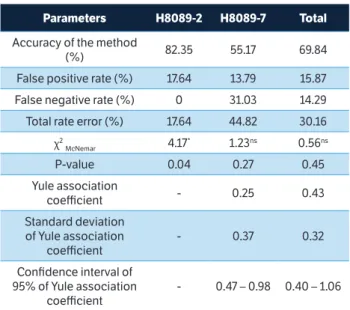
(Table 2). The results of statistical analysis performed with experimental data are described in Table 3.
Accuracy of method (AM) calculated from comparative data analysis of coffee reaction to infection by P. syringae
pv. garcae and isolate I/2015 of H. vastatrix denote
that plants simultaneously resistant or susceptible to both pathogens was 69.84% considering total number of F2 plants in the same group the total rate error (TRE) was equal to 30.16%.
The c2
McNemar test was significant in progenies from
H8089-2 (4.17; p = 0.04), not significant in progenies from H8089-7 (1.23; p = 0.27) and also not significant in total group of plants (0.56; p = 0.45). However, significant value of c2
McNemar test calculated on H8089-2 progeny
reveals inconsistency between the 2 classifications;
H. vastatrixisolate i/2015
P. syringae pv. garcae
total resistant susceptible
n°
Resistant 6a 10b 16a + b
Susceptible 9c 38d 47c + d
Total 15a + c 48b + d 63n
table 2. Total number of F2 coffee plants of 2 hybrids H8089 resistant and susceptible to Pseudomonas syringae pv. garcae and isolate I/2015 of Hemileia vastatrix.
*Significant at 5% probability; nsNon-significant; -Non-calculated values, since false negative rate is 0.
table 3. Estimation of parameters related to coffee F2 progeny of 2 hybrids H8089 response to infection by the bacterium Pseudomonas syringae pv. garcae and fungus Hemileia vastatrix.
Parameters H8089-2 H8089-7 total
Accuracy of the method
(%) 82.35 55.17 69.84
False positive rate (%) 17.64 13.79 15.87
False negative rate (%) 0 31.03 14.29
Total rate error (%) 17.64 44.82 30.16
χ2
McNemar 4.17
* 1.23ns 0.56ns
P-value 0.04 0.27 0.45
Yule association
coefficient - 0.25 0.43
Standard deviation of Yule association
coefficient
- 0.37 0.32
Confidence interval of 95% of Yule association
coefficient
- 0.47 – 0.98 0.40 – 1.06
the number of resistant plants to isolate I/2015 of
H. vastatrix (6) is not the same number of resistant plants
to P. syringae pv. garcae (0).
On the other hand, even though c2
McNemar value was not
significant, in the analysis of all plants evaluated, resistance to biotic agents was not proven to be simultaneous, since 10 plants resistant to the isolate I/2015 of H.
vastatrix carrying SH1 allele proved to be susceptible to
bacterial halo blight and 9 plants resistant to bacterial halo blight have shown susceptibility to the isolate I/2015 of
H. vastatrix, and false positive rate, in same group of
plants, was equal to 15.87% and the false negative in second was 14.29%; the total error rate was 30.16%.
of H. vastatrix, but resistant to P. syringae pv. garcae, was equal to 0. The magnitude of Yule coefficient, which ranges between 0 and ±1, observed individually in progeny H8089-7, and on F2 population as a whole (H8089-2 and H8089-7), confirms the lack of association between resistant and susceptible classes determined in the evaluation ratings of plants resistance to leaf rust and bacterial halo blight.
cOnclUsiOn
In accordance with the analyzed data, we can conclude that SH1 gene has no pleiotropic effect or genetic linkage between genes which confer resistance to isolates homozygous for V1 allele of leaf rust caused by H. vastatrix and to bacterial halo blight caused by P. syringae pv. garcae.
Search for resistance sources to bacterial halo blight for use in breeding programs aiming to develop cultivars
with simultaneous resistance to both biotic agents should not be restricted to Coffea germplasm carrying SH1 gene with resistance to races or isolates of H. vastatrix.
AcKnOWledgeMents
The authors are grateful to the National Council for Scientific and Technological Development (CNPq) for financial support (Project 479.589/2013-50) and research scholarship to OGF; Coordination for the Improvement of Higher Education Personnel (CAPES) (to LMRR) and Coffee Research Consortium (to MTB), as well as to Dr. Suzete A. Lanza Destéfano, Curator of IBSBF Culture Collection, for providing bacterial strains used in this study, and Dr. Júlio Rodrigues Neto, Dr. Flávia Rodrigues Alves Patrício, Msc. Irene Maria Gatti de Almeida and Dr. Luis Otávio Saggion Beriam for their helpful suggestions.
Bettencourt, A. J. and Carvalho, A. (1968). Melhoramento visando à resistência do cafeeiro à ferrugem. Bragantia, 27, 35-68. http:// dx.doi.org/10.1590/S0006-87051968000100004.
Carvalho, A. (1988). Principles and practice of coffee plant breeding for productivity and quality factors. Coffea arabica. In R. J. Clark and R. Macrae (Eds.), Coffee: agronomy (p. 129-165). London: Elsevier Applied Science.
Eskes, A. B. and Toma-Braghini, M. (1981). Assessment methods for resistance to coffee leaf rust (Hemileia vastatrix Berk. & Br.). FAO Plant Protection Bulletin, 29, 56-66.
Fazuoli, L. C., Braghini, M. T., Silvarolla, M. B., Mistro, J. C. and Patrício, F. R. A. (2009). Melhoramento do cafeeiro visando à resistência a doenças. Proceedings of the 9th Curso de Atualização em Café.
Campinas; Brazil. (Documentos IAC 91).
Flor, H. H. (1971). Current status of the gene-for-gene concept. Annual Review ofPhytopathology, 9, 275-296. http://dx.doi.org/10.1146/ annurev.py.09.090171.001423.
Moraes, S. A., Sugimori, M. H., Tomazello Filho, M. and Carvalho, P. C. T. (1975). Resistência de cafeeiros a Pseudomonas garcae. Summa Phytopathologica, 1, 105-110.
reFerences
Paradela Filho, O., Ribeiro, I. J. A. and Sugimori, M. H. (1974). Comportamento diferencial em progênies de cafeeiros de dois isolados do agente causador da mancha aureolada do cafeeiro. Fitopatología, 9, 64.
Sera, T. (2001). Coffee genetic breeding at IAPAR. Crop Breeding and Applied Biotechnology, 1, 179-190.
Várzea, V. M. P. and Marques, D. V. (2005). Population variability of
Hemileia vastatrix vs. coffee durable resistance. In L. Zambolim,
E. M. Zambolim and V. M. P. Várzea (Eds.), Durable resistance to coffee leaf rust (p. 53-74). Viçosa: UFV.
Várzea, V. M. P., Rodrigues Junior, C. J., Silva, M. C. M. L., Gouveia, M., Marques, D. V., Guerra-Guimarães, L. and Ribeiro, A. (2005). Resistência do cafeeiro a Hemileia vastatrix. In L. Zambolim (Ed.), O estado da arte de tecnologias na produção de café (p. 297-320). Viçosa: UFV.
Zambolim, L., Zambolim, E. M., Vale, F. X. R., Pereira, A. A., Sakyama, N. S. and Caixeta, E. T. (2005). Physiological races of Hemileia
vastatrix Berk. et Br. in Brazil — Physiological variability, current