Determinants of CEO
Compensation
The Portuguese Case Study
Ana Jorge de Almeida Silvestre
Católica Porto Business School June 2019
Determinants of CEO
Compensation
The Portuguese Case Study
Final Dissertation Assignement
Presented to Universidade Católica Portuguesa to Obtain Master Degree in Auditing and Taxation
by
Ana Jorge de Almeida Silvestre
under orientation of
Prof. Drª Luísa Anacoreta Correia Prof. Drº Pedro Duarte Silva
Católica Porto Business School June 2019
“A thousand miles begin with a step…” To my parents…
i
Acknowledgements
The last two years of my life have been full of surprises.
In the first place, I have to thank my mentors, Prof. Luísa Anacoreta Correia and Prof. Pedro Duarte Silva. For all the knowledge shared, support, guidance, and faith in my work, my sincere thank you. Without the professors and their dedication, this thesis would not be possible.
Necessarily, the next acknowledgement have to go towards my parents Jorge and Anabela. Firstly for making it possible for me to take my master’s degree in Católica Porto Business School. Secondly, for all the support that both of them demonstrated throughout all the process, the exams, the internship and the thesis. Lastly, for all the words, all the hugs and kisses, all the memories and walks on the beach, and all the emotional background support they provided me with. Thank you for being such amazing parents and believing in me at all times. I have also to acknowledge my sister. She is constantly reminding me that in life we have to take risks and be experimental, as well as have some fun in between of all the responsibilities. To my beloved sister, my honest thank you.
A generalized thank you to the rest of my family, specially my grandparents, and my great grandfather for all the valuable lessons and values they taught me. I also would like to thank my friends Ângela, Carolina and Daniela that made my experience in the master even better. I have to thank them for their support, advices, dedication and for the strength that they gave me in many down times, mostly for their unconditional friendship.
I also have to give an appreciation word to Carminda, for the endeless hours spent with me while I was writing and for all the teas that she made me in those hours., but most of all my thank you for the dedication and support throughout my whole life. I also have to mention my dog, Lottie, which stayed strong beside me in work hours, sleeping, but, nonetheless, beside me.
Lastly, my acknowledgement goes to José Pedro. For believing in me and for the support that he gave me. For all the capability of putting a smile on my face in every moment, and for the partnership that he blessed me with. I am thankfull for you. My most honest thank you for being by my side.
iii
Resumo
A compensação dos CEOs é um tema de interesse global. Os escândalos empresariais, para além de terem trazido um interesse acrescido a este tema, trouxeram também uma série de requerimentos com os quais as empresas devem cooperar, e divulgações que as empresas devem fazer.
Esta tese tem como objectivo verificar quais são as variáveis que definem, e determinam, o nível de compensação dos CEOs das empresas portuguesas cotadas para o período entre 2011 e 2017. Realizámos duas anaálises complementares, uma análise cross-section, e uma análise em painel. As variáveis testadas como determinantes incluem performance, dimensão, anos como CEO, propriedade, conselho de administração, consultores da comissão de remunerações, dualidade e TSR.
Os resultados deste estudo revelaram que a compensação dos CEOs é determinada pela performance e pelos anos em que desempenham a função de CEO na empresa. Também foi detetada a existência de impacto, da dimensão e do número de consultores da comissão de remuneração, na determinação do nível de compensação.
Palavras-chave: Compensação do CEO; Determinants, Portugal; Euronext Lisboa; PSI 20
v
Abstract
CEO compensation is a topic of interest throughout the world. Corporate scandals brought an increased interest in the topic, but also compliance requirements that companies must disclose, such as CEO compensation.
This thesis aims to assess what defines and determines the level of CEO compensation in Portuguese listed companies, for the period between 2011 and 2017. We have performed two complementary analysis, a cross section analysis and a panel analysis. The determinants tested included company performance and size, tenure, ownership, Board of Directors, compensation consultants, duality and TSR.
Our results show that CEO compensation is determined by company performance, as well as by CEO tenure. It was also found an impact of company size, and number of compensation consultants, on CEO compensation.
Keywords: CEO Compensation, Determinants, Portugal, Euronext Lisbon, PSI 20
vii
Table of Contents
Acknowledgements ... i
Resumo ... iii
Abstract ... v
Table of Contents ... vii
Figure Index... ix
Table Index ... xi
Abbreviations ... xiii
Introduction ... 1
Chapter 1: Literature Review ... 5
1.1. Corporate Governance and Agency Theory ... 5
1.2. Rent Extraction or Labour Demand ... 8
1.3. CEO Compensation components ... 9
1.3.1 Main componentes of CEO Compensation Package ... 11
1.3.2 Other Components of CEO Compensation Package ... 12
1.3.2.1 Perquisites ... 12
1.3.2.4 Pensions ... 12
1.3.2.3 Severance Pay ... 13
1.4. Determinants of CEO Compensation ... 13
1.4.1. Company Size ... 14
1.4.2. Company Performance ... 16
1.4.3. Board of Directors: Operation and Structure ... 18
1.4.4. Compensation Consultants: Existence and Structure ... 24
1.4.5. Ownership: Company Management structure ... 29
1.4.6. Duality: The role of CEO and Chairman ... 33
1.4.7. Age and Tenure ... 34
1.4.8. Economic Sector ... 36
1.4.9. Key Human Capital Variables: Personal Features ... 38
1.4.10. Total Shareholders Return... 39
Chapter 2: Regulatory Framework ... 43
Chapter 3: Hypotheses Development ... 49
Chapter 4: Data and Method ... 59
4.1. Data ... 59
4.2. Dependent and Independent Variables ... 63
4.3. Methodology ... 66
Chapter 5: Results ... 69
5.1.1. Cross-Sectional Data ... 69
5.1.2. Panel Data ... 76
5.2. Results ... 82
5.2.1. Cross-sectional Results ... 82
5.2.2. Panel Results ... 85
Chapter 6: Conclusions and Future Research... 91
References ... 95
Appendix ... 109
Appendix A – Companies in Cross-section Analysis ... 109
Appendix B – Companies in Panel Analysis ... 113
Appendix C – Cross-sectional Descriptive Statistics ... 115
ix
Figure Index
Figure 1: Components of CEO Compensation Package (based on Sigler (2011)
and Frydman and Jenter (2010) ... 10
Figure 2: Determinants of CEO Compensation (reproduced from Barkema &
Gomez-Mejia (1998)). ... 14
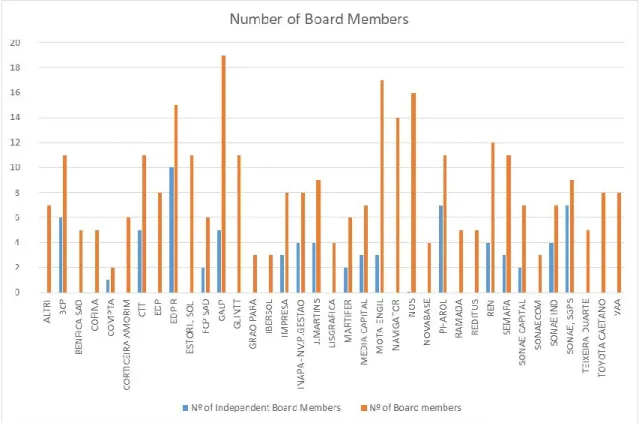
Figure 3: Board Members – Cross-sectional Variables ... 71 Figure 4: Number of Compensation Consultants – Cross-sectional Variables
... 72
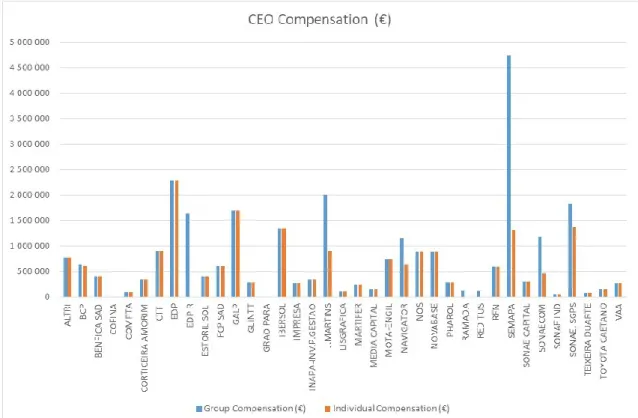
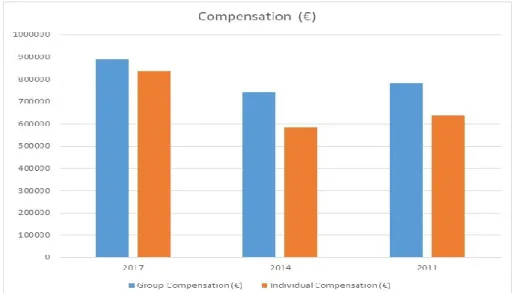
Figure 5: Group and Individual Compensation – Cross-sectional Variables 73 Figure 6: Group and Individual Compensation according to the median –
Panel Variables ... 78
Figure 7: Percentage of independent members according to the median – Panel
Variables... 80
Figure 8: ROA according to the median – Panel Variables ... 80 Figure 9: Sales according to the median – Panel Variables ... 81
xi
Table Index
Table 1: Hypotheses Development ... 55
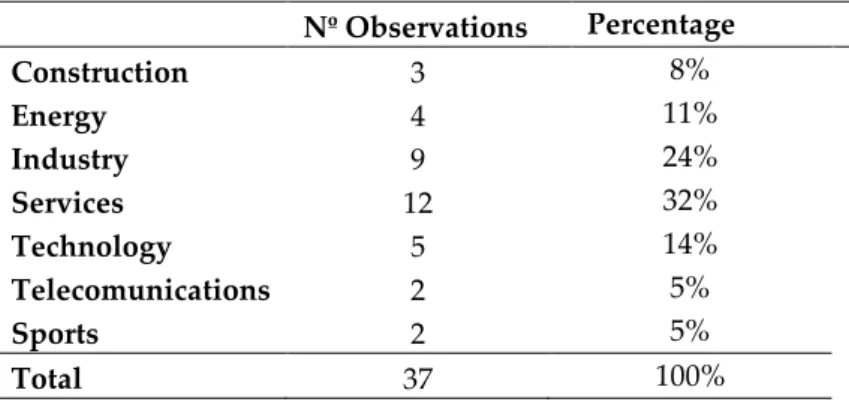
Table 2: Distribution of the Companies by Sector – Cross-sectional Variables ... 70
Table 3: Distribution of the Companies by Ownership – Cross-sectional Variables... 70
Table 4: Distribution of the Companies by Existence of Duality – Cross-sectional Variables ... 70
Table 5: Maximum and Minimum – Cross-sectional Variables ... 74
Table 6: Mean and Median – Cross-sectional Variables ... 75
Table 7: Distribution of Companies by Sector – Panel Variables ... 76
Table 8: Distribution of Companies by Ownership – Panel Variables ... 76
Table 9: Distribution of Companies by Existence of Duality – Panel Variables ... 77
Table 10: Mean and Median 2011 – Panel Variables ... 78
Table 11: Mean and Median 2014 – Panel Variables ... 79
Table 12: Mean and Median 2017 – Panel Variables ... 79
Table 13: Regression Results – Cross-sectional Variables ... 83
Table 14: Regression Results – Panel Variables ... 87
Table 15: Companies – Cross-section Analysis ... 109
Table 16: Companies – Panel Analysis ... 113
Table 17: Standard Deviation and Skewness– Cross-sectional Variables .... 115
Table 18: Correlation Matrix – Cross-sectional Variables ... 116
Table 19: 2017 Standard Deviation and Skewness – Panel Variables ... 119
Table 20: 2014 Standard Deviation and Skewness – Panel Variables ... 119
Table 22: 2017 Maximum and Minimum values – Panel Variables ... 120
Table 23: 2014 Maximum and Minimum values – Panel Variables ... 120
Table 24: 2011 Maximum and Minimum values – Panel Variables ... 120
xiii
Abbreviations
CEO – Chief
CFO – Chief Financial Officer
CMVM – Comissão do Mercado de Valores Mobiliários DIV - Dividend
EMSV – Ending Market Share Value
Fortune 500 – Annual compilation of the 500 largest United States companies, published by Fortune magazine
FTSE 100 – Financial Times Stock Exchange 100 Index (share index with the 100 London Stock Exchange listed companies with highest market
capitalisation)
IMSV – Initial Market Share Value
IPCG – Instituto Português de Corporate Governance OLS – Ordinary Least Squares
ROA – Return on Asset RET – Stock Return
SEC – Securities and Exchange Commission
SGPS – Sociedade Gestora de Participações Sociais SOX Act – Sarbanes Oxley Act
S&P 500 – S&P Down Jones Index (500 American companies with the highest market capitalisation listed in NYSE, NASDAQ, Cboe BZX
Exchange) UK – United Kingdom
USA – United States of America WLS – Weighted Least Squares
1
Introduction
Nowadays society is overwhelmed with Chief Executive Officer1 related news
that media releases. Titles reffering how much CEOs have earned, who are the ones that received higher compensation levels, how much he earns more than the average of his co-workers, how the compensation is or is not affected by company performance, how compensation evolves through time, and lastly how compensation have reacted to crisis.
The impact of crisis on CEO compensation is a very close topic to the Portuguese since it represented a tough period to families and companies. It is then expected that headlines addressing how CEO compensation was not affected by contraction period, even contributing to compensation rises, cause at least some curioseness amongst our society. Real (2018) found that compensation was actually not affected by the crisis period.
Executive compensation, and specially CEO, is also a wide spread topic when it comes to scientific literature. Being understood as an agency problem, it derives from agency theory (Gomez-Mejia, Hinkin, & Tosi (1987) and Nyberg, Fulmer, Gerhart, and Carpenter (2010)). This means that the principal and the agent, shareholders and manager respectively inccur in a moral hazard problem. To solve this problem is crucial to have both, the shareholders and CEO, interests aligned. As the principle is not sure what will be the agent performance, the way to ensure his interests, maximizing shareholders value, is through compensation.
Literature (Bebchuk & Fried (2003)) states that well structure compensation packages are the key to solve such problems. Empirical research have widely focused in what are the components of compensation, what are the best ways to compensate s as to align interests and what and how is determined the optimal level of compensation (Chalmers, Koh, & Stapledon, 2006).
The purpose of this study is to address what, and how, it determines CEO compensation. The aim is to understand, amongst company and environment features, as well as individual characteristics and also time frame, what does have an impact when it comes to the compensation settlement process.
It is of our knowledge that there are studies addressing the relationship between variables such as performance (Brick, Palmon, and Wald (2006) and Firth, Fung, and Rui (2006)) or company size (Baker and Hall (2004) and (Wright, Kroll, and Elenkov (2002)) and compensation. Most of these studies also include some other variables that can influence compensation, but mostly as control variables. Some studies attempt to explain how performance affectes compensation, and others try the reverse, how compensation influences performance.
However, it is of our understanding that this thesis provide a new insight in this topic. Aiming to understand what defines the level of compensation that CEOs earn, we have compiled several compensation determinants that are endogenous and exogenous to the CEO, and the company. The other insight provided by this thesis is the application to Portuguese listed companies, as a way to understand how compensation is determined or settled in the Portuguese case.
In addition to the fact that in this studie we are using the latest annual financial information, for the year of 2017, we are also addressing the years of 2014 and 2011. The reason behind the last year of the sample hides another purpose of this
3
study. 2011 was the year in which compensation disclosure became an obligation to listed companies. Furthermore, 2011 was the year in which the Corporate Governance report requirements enabled the needed information for this study. For this reason, it is our intention also, to assess how compensation reacted to the test of time after the disclosure obligation.
The determinants analysed throughout this study will be performance and size, as well as, ownership, top management structure, human capital variables, duality, compensation consultants, economic sector, total shareholders return.
This study will be organized as it follows: the first chapter presents the literature review, followed by chapter 2 that explains the regulatory framework of disclosure obligation.Chapter 3 develops the hypotheses taken in this thesis and chapter 4 describes the data and methodology used in the study. Chapter 5 presents the results of the model and lastly, the final chapter presents the conclusions and future research suggestions.
5
Chapter 1: Literature Review
1.1. Corporate Governance and Agency Theory
“Corporate governance refers to the systems by which companies are directed and controlled, including the institutional arrangements for boardroom pay setting.”(Conyon, Gregg, & Machin, 1995, p. 710). In this context CEO issues are within corporate governance domain.
As corporate governance includes all the controlling systems, including management, Board of Directors, Fiscal Council, Remuneration Committee, amongst other statutory bodies take part in this play. As mentioned above, pay setting is one of the tasks that corporate governance has to address. This is where CEO compensation enters.2
The process of setting CEO compensation starts with early market research as to what CEO the company should hire. This is where agency theory takes place (Grossman and Hart (1983) and Holmstrom (1979)):
“ (…) contract under which one or more persons (the principal(s)) engage another person (the agent) to perform some service on their behalf which involves delegating some deciosion making authority to the agent. If both parties to the relationship are utility maximizers, there is good reason to believe that the agent will not always act in the best interests of the principal. The principal can limit divergences from his interest by
2 For sure that every statutory body have compensation and for every one of them pay setting is a matter of
establishing appropriate incentives for the agent and by incurring monitoring costs desingned to limit the abberant activities of the agent.” (Jensen & Meckling, 1976, p. 398).
It might be logical to state that the relationship between Board of Directors and CEO fits within the agency theory, and so it suffers from agency problems. The problems will upsurge for reasons such as asymmetric information3 that
management have that can be crucial to compensation settlement and that managers monopolize, as to play in their own advantage (Murphy, 1985).
Agency problems might also arise from weak governance structures, which will present aggravated agency problems. Despite that, CEOs will receive higher compensation, even though those companies tend to have poorer levels of performance (Core, Holthausen, & Larcker, 1999). This might be explained through CEO empowerment. Over empowered management can also be suitable in the agency problem framework. In situations that ownership and management are different entities, management can use power and discretion in order to chase down self-interets, such as the expansion of pay packages (Grabke-Rundell & Gomez-Mejia, 2002).4
These problems might be mitigated through alignement of incentives, ensuring that CEO will act in the best interest of the shareholders maximizing their utility. With differed interests, the latter ones will have to come up with solutions that guarantee great results and higher returns. These practices tendentially lie within compensation and comprehend the indexation of remuneration to performance indicators. Jensen and Murphy (1990) propose that CEOs have to encouraged to maximise company value through salary, bonuses, stake in the company and stock options structured to provide great rewards in cases of superior performance, as well as penalties for cases of poor performance.
3 Asymmetric information, as it is in CEO possession, and shareholders are not aware of it. 4 Which would be easier to happen in weaker structure cases.
7
Jensen and Meckling (1976) argue that sepration of ownership and control is intimately connected with agency problems. These problems come up because of the differenciated interests between shareholders and managers, meaning conflicts of interest. The first ones want to maximize their equity value, the latter ones want to have higher compensation with the least effort possible, “To re-align these interests, organizations aim to employ optimal pay for performance mechanisms.” (Detzen & Zülch, 2012, p. 106).5
Not only pay for performance is necessary in companies, as interests alignement mechanism between ownership and management, but pay is also a great deal once it allows companies to retain expert CEOs. As the CEO is the ultimate responsible for investment and financing decisions, operations and company performance, as Core and Guay (2010) stated, CEO expertise is crucial to companies.
Executive compensation have always been an atracttive topic for both media and academics. Having the background of agency theory, severeal studies have considered the relationship between firm performance and executive compensation, only to find insignificant or minor positive results (Jensen and Murphy (1990)). Newer tests or applications of agency theory allowed interdisciplinary researches to disclose relationships between compensation and governance factors, capital structure, regulation, industrial structure and investment decisions (Murphy (1999)). “However, the variation in CEO compensation still cannot be adequately explained by agency theory.” (Young & Tsai, 2008, p. 364).
There are two other theorys that can help explaining executive compensation: human capital theory and managerialism. Both of them support agency theory by introducing manager specific features6. The first theory states that greater
5 See also Bebchuk & Fried (2003). 6 Such as skill power or age.
managerial skills and expertise act as the source of competitive advantage that companies want to achieve (Harris and Helfat (1997)). The second one states that compensation is tied up with company features such as performance or size (Gomez-Mejia et al. (2000)).
Dow and Raposo (2005) refered that even thought the process of engaging with a CEO and setting his remuneration takes part in the agency model, it differs since compensation can be adjusted over time in order to reflect company performance. 7 This does not mean that the CEO have no influence in
compensation settlement. Business decisions that lay within CEO responsibility, such as mergers, acquisitions and restructuring can lead to higher levels of pay. Nevertheless, it can be concluded that, not only the relationship between board structure and management, but also, between stakeholders and management fit into the agency theory panorama described above.
1.2. Rent Extraction or Labour Demand
Labour demand and rent extraction theory attempt to justify the level of compensation that CEOs are offered. Labour demand theory states that the optimal level of CEO compensation is tied to the company labour demand and the alignement of interests between CEO and shareholders. Rent extraction theory however, states that CEO compensation tends to be excessive, reflecting the CEO capability of extracting benefits (Chalmers et al., 2006).
It is important to keep in mind that rent extraction theory defends the Board inoperativeness given its passivity, reliability on the CEO to obtain information and lack of exposure to share returns. This enables CEO to extract rents8, and
7 Retification is typically done through the variable component of compensation, mainly through options and
incentive plans.
9
ultimately means that weak, or less effective, governance structures have larger agency problems (Bebchuk, Fried & Walker, 2002). Eventually these problems can have a negative impact in company value.
Frydman and Jenter (2010), recurring to S&P 500, show that managerial power and competitive market forces are important determinants of CEO pay. The same is argued by Bugeja, Matolcsy and Spiropoulos (2017), however, the authors found inconsistent managerial power evidence, as compensation of the newly and outgoing CEOs did not differ. Nonetheless, neither theories are sufficient to explain available evidence. That is the reason why there is no consensus if rent extraction or optimal contracting is relatively important to determine the pay of the CEO.
1.3. CEO Compensation components
Over time, the level and the composition of CEO pay have changed radically. Before the 1970s the pay levels were lower, combined with little dispersion across top managers and moderate levels of equity compensation. Since de mid-1970s to the end of 1990s compensation components grew drastically and differences in pay across executives and firms were amplified (Frydman & Jenter, 2010). Nowadays, a variety of news claim that CEOs are earning more eery year, as well as many times more as the average company worker.
As mentioned in agency theory section, compensation is a crucial tool to align CEO and shareholders interests in order to maximize company value. This means that a well designed compensation package can be a great instrument to eradicate conflicts of interest. Compensation comes tendentially in a package, composed by several parts. Sigler (2011) argues that compensation includes base fixed wage, incentive plans and other benefits. These other benefits can be such as life and health insurance, retirement plans, car allowances, health-club
memberships, travel reimbursements, paid holidays and golden parachutes9.
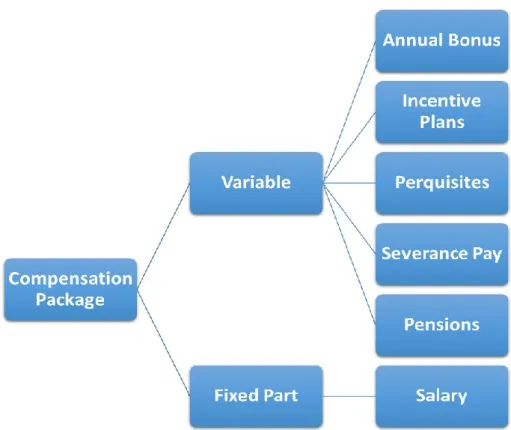
This compensation packages rely on a fixed and a variable component. Comonly, the fixed part consists in cash and, the variable component tends to be linked to performance indicators.
Figure 1 presents a summary of the compensation package components. The
following sections take a further explanation about several compensation components.
Figure 1: Components of CEO Compensation Package (based on Sigler (2011) and Frydman and
Jenter (2010)
9 Benefit given to top management if the company is acquired making them lose their job. It can consist in bonuses,
11
1.3.1 Main componentes of CEO Compensation Package
Frydman and Jenter (2010) identified five basic components that integrate most CEO compensation packages. These are: salary, annual bonus, payouts from long-term incentive plans, restricted option grants and restricted stock grants. In the early times of their analysis (1936-1950’s) the composition of the CEO compensation was mostly salaries and annual bonuses. Bonus were, and are, mainly non-discretionary, tied to measures of annual performance, paid in cash or stock. For this reason, the 1960s saw an increase in the impact of long-term incentive plans. These plans often rely on bonus based in multi-year performance. In the early 1980’s the authors verify the surge of stock option compensation. This kind of compensation tie remuneration to performance, encouraging management to maximize shareholder value, and ultimately aligning interests (Frydman & Jenter, 2010) and therefore aligns the shareholders’ interests to the CEOs interests.
The authors argue that stock option became, in the 1990’s, the largest component of the CEO compensation, probably driven by tax policies that enabled much lower rate for capital gains rather than labor income tax. Also with equity compensation becoming widespread, compensation came to be composed by risk instruments such as shares and options, exposing CEOs to risk.
Even though “a significant portion of overall rise in CEO pay is driven by the increase in option compensation “(…) the growth in stock option use did not occur at the expense of other components of pay” (Frydman & Jenter, 2010, p. 6). This means that despite the visible increase in the use of stock options, other components did not saw their part diminished, leading to an overall raise in CEO compensation.
1.3.2 Other Components of CEO Compensation Package
Frydman and Jenter (2010) outline three additional components of compensation: perquisites, pensions, and severance pay. These elements face insufficient disclosure conducting leading to the so-called “stealth” compensation once it may allow executives to incur in rent extraction. However, these forms of pay can also arise in optimal contracting environments. The authors end up concluding that the relative importance of these components have changed considerably over time.
1.3.2.1 Perquisites
Perquisites comprise a wide variety of goods and services provided to the executive. Perquisites tend to be seen as a general signal of weak corporate governance once when it is revealed it induces a reduction in firm value that is substantially larger than the actual cost of the perquisite itself (Yermack, 2006). Frydman and Jenter (2010) also present evidence suggesting that some perquisites are, indeed, reflection of managerial excess and reduces shareholder value.
1.3.2.4 Pensions
Prior to December 2006 American companies were not required to report values of executive pensions and so evidence was sparse. Because the lack of empirical evidence, Frydman and Jenter (2010), following Sundaram and Yermack (2007), estimated annual increases for pension values, for S&P 500 companies. The authors came to the conclusion that pensions correspond to about 35% of the CEO’s total compensation throughout his CEO years. This means that “ignoring pensions can result in a significant underestimation of total CEO pay”(Frydman & Jenter, 2010, p. 8).
13
1.3.2.3 Severance Pay
In this case, empirical evidence is also scarce. Yermack (2006) found that “golden handshakes”10 are usual but tend to be modest in value. Apart from this,
CEOs usually receive a special severance pay, “golden parachute”, which accounts for the cases in which CEOs loose their jobs through company acquisition.
1.4. Determinants of CEO Compensation
It is expected that CEOs work for the best interest of company shareholders. However, there is the possibility that things do not go as predicted if instead CEOs work for their own interests. Considering this, companies try to align CEOs interests with shareholders’ interests by tying CEO compensation to company performance. Most studies regarding CEO compensation establish that executive pay will depend on the power CEO have over the board as well as firm size. In larger firms with powerful CEOs, compensation will be tied to sales, and not to performance, ensuring a secure level of compensations against any downfall in performance, as an example.
Not only performance and firm size will determine executive pay. Furthermore, company management, duality, board structure, compensation consultants and the sharholders gains will also have an impact in compensation decision. Even more, it is expected that key human capital variables will impact compensation setting process. These variables can be such as investment on education, labour experience, but also tenure or even age, as refered by Gomes, Ramaswamy and Veliyath (2000)
Figure 2 demonstrates several possible determinants of CEO compensation,
each one on its framework. In the next sections, we will describe several determinants that may influence CEO compensation.
Figure 2: Determinants of CEO Compensation (reproduced from Barkema & Gomez-Mejia
(1998)).
1.4.1. Company Size
“The operational complexity of larger firms and managing firms with growth opportunities and riskier operations, demands higher quality executives with a corresponding higher compensation demand.” (Chalmers et al., 2006). The authors, studying Australian companies found that firm size is the only determinant11 for all the considered compensation components12. These results
11 Amongst other economic determinants such as investment opportunity set, stock return, return on assets and
fim risk. Authors used LN(Assests) as a proxy for size.
15
are supported by the theory that larger companies need excellence CEOs and have to be willing to pay for such needs.
There is a wide range of literature connecting CEO compensation and firm size (Gomez-Mejia et al. (1987)) that points towards the explanation that in large companies the job tend to be more complex and comes with greater responsibilities. O’Reiley III, Main and Crystal (1988) found that, for a sample of 150 companies of Fortune 50013, size is positively related to cash compensation.
These authors used sales, assets and number of employees as proxies, which are highly correlated between them. Khanna (2016) also came to the conclusion that size has a positive impact in compensation, when analysing an Indian sample, using sales as proxy for size.
It is expected that under perfectly competitive labour markets CEO compensation resemble the marginal revenue product, the incremental profit CEO earns for the firm due to inherent management skills.14 This means that
larger firms, even with a small increase in profit per unit sold, would have higher impact in the overall profit since the total number of units sold is larger. Consequently, Agarwall (1981) and Roberts (1956) concluded that larger companies are in better position to offer higher levels of compensation to their CEOs.
Furthermore, bigger companies usually present much complex structures, which leads to the same situation as described before, higher levels of CEO compensation. For sure, it can be stated that the size of the company have to be strictly attached to the performance, since the greater the performance the larger we expect the company to be. For that reason, performance is also a determinant of compensation.
13 Annual compiled list of the major 500 companies by revenue of USA.
14 Ultimately, if there is no incremental profit CEO should earn what would be earning in the next best job
1.4.2. Company Performance
The expectation behind the relationship established between performance and compensation is easily stated and supported by a rather logic economic plea: “(…) because the CEO is the individual responsible for the overall performance of the organization, rewards should be contingent (…)” (O'Reilly III et al., 1988). Despite of what seems a logic argument, literature supply mixed results. It is interesting that: "(…) after controlling for size, researchers have not found the relation-ship between CEOs' pay and performance to be as strong or consistent as the classic economic theories would imply.” (Gomez-Mejia et al., 1987, p. 53).
As mentioned earlier in this thesis, agency theory states that problems of trust arises in companies where shareholders have no control over corporate day-to-day decisions, since in most companies ownership and control are distinct powers. To ensure that their interests prevail when decisions are made they tie CEO compensation to firm performance. Jensen and Murphy (1990) addressed this topic and discovered that there is a positive statistical significant relationship between CEO compensation and shareholders wealth. This means that when interests are aligned, CEOs will ensure shareholders interests by ensuring their wealth. When shareholders are statisfied with CEO performance they will reaward him with increased compensation.
Regarding performance it is important to point out the case in which the compensation is tied to past performance. In this situation the literature suggest mixed results. Firstly Jensen and Murphy (1990) found a weak relationship between variables. With time this relationship grew and Boschen, Duru, Gordon and Smith (2003) found a strong positive connection amongst share-based performance and compensation.
Chalmers, Koh and Stapledon (2006) found a positive connection between pay-for-performance and the fixed component of the compensation. Using
17
Return on Asset15 and Stock Return16 as proxies for performance, they found a
positive significant association between all compensation components and ROA, except for shares. This allowed the conclusion that pay-for-performance is a preferred mechanism of compensation. Additionally they established a link between RET and the bonus component of the pay package. They also discovered that contracts are packed with performance goals, which helps lining up incentives as Bebchuk and Fried (2004) argued. Within the same line, but reaching opposite conclusions, for USA reality, Core et al. (1999) found positive connection between RET and compensation and pay-for-performance but not when using ROA.
Studying Indian companies Ramaswamy et al. (2000), demonstrated that compensation is positively related with performance, when using ROA as a proxy. In another Indian study and using ROA, Khanna (2016) showed a positive relationship with CEO compensation. These various findings support the theory that CEO compensation tends to be aligned with shareholders interests17.
Still related to performance, there is some literature showing the association amongst “(…) compensation structure and firm performance once executive compensation, ownership structure and board composition are ultimately part of a simultaneous system that determines the corporation’s value (…)” (Mehran, 1995, p. 164). The author realised that firm performance was positively related to equity-based executive compensation, which, again, supports the tie pay-for-performance practice18. The explanation for this might be related with the fact
that, when compensation is tied to performance, CEOs have more motivation to make value-maximizing decisions (Grossman & Hart, 1983).
15 From here forward, ROA. This variable states the accounting performance of the company.
16 From here forward, RET, as defined by the authors. This variable states the market performance of the company. 17Once CEO compensation is tied to performance indicators CEO and shareholders interests became common. 18 This also relates to agency theory as a solution for agency problems.
“The results of standard agency models sugets that the level of pay is an increasing function of firm performance.” (Core et al., 1999)
Summing up, literature points towards a positive relationship between performance and executive compensation. In this context, the better a company performs, as the CEO is responsible for decisions that affect performance, the higher his compensation will be.
1.4.3. Board of Directors: Operation and Structure
Several studies (Yermack (1996); Core et al. (1999); Angbazo and Narayanan (1997)) address the effect of Board structure in executive compensation. 19 Most
of them indicate that “controlling for the economic determinants of executive compensation, Board structure does help to explain cross-sectional variation in CEO compensation.”(Chhaochharia & Grinstein, 2009, p. 233). Nevertheless, there is some criticism around this evidence as it is seen as inconclusive. This happens because board structure is considered an endogenous variable once it is determined by firm and CEO features that can not be observed, but that determine the CEO pay level. Nonetheless, it is expected that as the Board is empowerd to take several crucial decisions, the structure of the Board have indeed impact in the CEO compensation.
Rent extraction theory questions board efficiency. As argued by Chalmers et al. (2006), Boards are tendentially passive and dependent on CEO for information. Board characteristics such as the above mentioned empowers CEO with the capability of extract excessive compensation when comparing to the optimal compensation level (Bebchuk et al., 2002). It is then reasonable to conclude that poor governance practices20 regarding Board operations or
structure amplifies agency problems.
19 Please note that by Board we mean Board of Directors.
20 Poor governance practices are not only related to board structure or operations. Duality, excessive CEO
influence or power, conflicts of interest are examples of features that are also understand as poor governance practices.
19
As Boyd (1994) stated, Board structure is the most proficient way of influencing and controlling top management decisions, ensuring that shareholder interests prevail. Then it is expected that Boards watch over CEO performance in order to establish the appropriate level of compensation. The author also refered that lack of Board surveillance is related to managerial devious behaviour, which, in turn, has been connected with board composition.
Sometimes is the Board21 it self that settles the components and the level of
CEO compensation. In other cases compensation is established by a compensation committee. Since the Compensation Committee is nominated by the Board, this means that, in any case, directly or indirectly, Board has influence in the compensation settlement process. For that reason, it is important to verify how CEO compensation is affected by the delegation mechanism22. To address
this question some authors, as Ganbaix and Landier (2008), defended that design and the level of compensation contracts were set mostly due to the demand for talent in the labour market. Many other authors, such as Jensen (1993), point out that the delegation mechanism has a significant impact on CEO compensation and therefore Board decisions can have nothing to do with labour market values.
Having theories in mind Chhaochharia and Grinstein (2009) studied the relationship between CEO compensation and Board structure, examining the influence of director regulation upon executive compensation. They aimend at answering the following questions: “How important is the board of directors in setting CEO compensation? How do procedural requirements adopted by boards affect CEO Compensation decisions?” (Chhaochharia & Grinstein, 2009, p. 231). The authors used the effect of the new USA laws on corporate boards to adreess these questions.
21 Which represents shareholders.
Regarding these new laws, it is important to understand the reason behind there implementation. In response to corporate scandals in 2001 and 2002 (e.g. Enron) USA stock exchanges came out with new board requirements in order to establish further restrictions on structure and operations of boards and to enhance board oversight. The Sarbanes-Oxley Act23 and these new rules aimed at
“(…) strengthen corporate governance practices of listed companies.” (Securities and Exchange Commission, 2003). The core requirements of these rules were:
a) The majority of board members on a board have to be independent; b) Members of the compensation, audit and nominating committees must
be independent;
c) Compensation and nomination committees must have an agreement that specifies their obligations. Also they should have self assessment
measures;
d) Non-management board directors should meat regularly in executive meetings, without management so that they can act in a more effective and independent way, supervising management;
e) Specific written procedures must be adopted to evaluate CEOs and to elect new board members.
Taking this into account Chhaochharia and Grinstein (2009) tested whether these new requirements had impact on compensation decisions.
The authors found that there is a requirement that is strongly correlated with decreases in compensation24: the independence of board members. They found
that interesting as the independence requirement do not necessarily means that there will be any substantial effect. CEOs tend to nominate their directors and so, even though there is a legal requirement for director independence, they may not be truly independent, since most of the time they might feel indebted to the CEO (Jensen, 1993). However, the new nomination procedures diminished CEO
23 From here forward, Sox Act.
21
presence in the election of new directors, making them more likely to be actually independent.
Still about Board independency, Bebchuk and Fried (2004) defined those directors as the ones that are not, and have never been, employed and also hold no other relationship with the company. As argued by Zahra and Pearce (1989) boards should be composed by independent directors due to influence issues and conflicts of interest. Fama and Jensen (1983) claimed that the status of independent diretors acts as an incentive to defend their reputation as sources of expertise as they focus on leverage firm performance. Nonetheless, Essen, Otten and Carberry (2015) argued that there are several ways for directors to loose their independence and becoming more exposed to executive power. As examples, CEOs involved in the election of directors, intensified collaboration over time between directors and CEO, shared interests between executives. Despite this, the authors expected that independent directors were better positioned to limit executive power than dependent ones.
Coming back to, Chhaochharia and Grinstein (2009), the authors focused on the argument of Fama and Jensen (1983) that, outside directors, who do not have any type of affiliation with the company or company officers, should be the ones to make compensation decisions. That is because these directors are better positioned to make fair judgements about CEO performance, efficient compensation, hiring and dismissing decisions. However, once more the problem of directors not being truly independent arises. Furthermore, a monitoring problem upsurge from the limited time that board members have. As Bebchuk and Fried (2003) argued, these problems do have an impact when it come to compensation disposals and, once there is a shortage of board oversight that can lead to suboptimal compensation practices.
Hallock (1997), using Forbes 500 firms, discovered that board structure could explain cross-sectional variation in compensation. He found that when
companies have directors that sit in each other boards25 the level of compensation
of both CEOs tend to be higher. Core et al. (1999), studying the level of CEO compensation in large USA firms, found that CEO compensation is positively correlated with the CEO involvement in the nomination of Board directors, as Chhaochharia and Grinstein (2009) also found. However, Core et al. (1999) went even further: CEO compensation tends to increase as the percentage of affiliated directors grow; it also tends to increase when there isn’t a single director that holds considerable stake in the company; when CEO also comprises Board chair role26 (also found by Cyerte (2002)), and lastly, when there is a large number of
Board directors.
Chhaochharia and Grinstein (2009) pointed out several explanations for the compensation reaction to the independent compensation committee, imposed by SOX Act. First, the fact that Board is in charge of the nomination of the compensation committee and therefore, the Board ultimately decides how well informed and in possession of proper negotiation skills the committee is. Second, the Board approves the recommendations made by the compensation committee and, because of that, Board composition and nomination process will ultimately affect the compensation decisions.
It is important to emphasize that these independence requirements not only produce the above-mentioned effects on CEO compensation, but can also produce some side effects. Firms that are not as much compliant with the requirements, as other companies, will be, in theory, more affected by other requirements coming from the Board itself. These requirements can be such as “written charter to explain the compensation policy of the firm, the requirement for a performance evaluation of the committees, and the requirement for Board sessions without management” (Chhaochharia & Grinstein, 2009). These Board
25 Interlocking relations. 26 Chairman.
23
requests will affect the compensation through the need of compliance with good practices.
Chhaochharia and Grinstein (2009) finally came to the conclusion that the companies that were least compliant with the new regulation that the SOX imposed decreased their CEO compensation on the order of 17%. This reinforces that board structure and board procedures have a significant impact on the structure and level of CEO compensation. Board features have a major impact in the settlement of compensation practices, before and after the SOX requirements. However, the question if these Board changes lead to optimal situation to shareholders27, can still be raised. Some authors such as Bebchuck and Fried
(2003) suggested that changing Board structure tends to diminish the influence that managerial power have over boards, and as a result should enlarge shareholder value. Nevertheless, the same changes could also have a negative impact on shareholder value. If boards become so strict that CEO compensation is not enough, nor fair, according to CEO’s true value28, may cause that qualified
and talented CEOs will not be willing to work in those firms.
Other authors also refered that characteristics such as Board size matters to compensation level, by facilitating and strengthening managerial power (van Essen et al., 2015). The authors argued that, the larger the board, the harder is to achieve internal concensus, and for that reason more likely to entrench in higher levels of executive power. Bebchuk and Fried (2004) added that the inoperativeness of larger boards can be related to poor inner coordination and communication difficulties. Along the same lines, Zahra and Pearce (1989) outlined the tendency to consistency amongst smaller boards clashing with the effort and time that has to be taken to build up cohesive larger boards.
27 If they increase shareholder value; what should be the ultimate purpose. 28 Value of their managerial talent.
Additionally Grinstein and Hribar (2004), analysed the impact of CEO power over Boards on the size of bonus that they are awarded for acquiring another company. As mentioned earlier, in this singular situation, the bonus is higher when CEO plays a role in the nomination of board directors, and when CEO is also Board chair. Chhaochharia and Grinstein (2009) recognised that despite the vast literature that relates board structure and compensation practices, it is harder to establish from there that “board structure has a causal effect on compensation practices”, since both variables are endogenous and determined by unobservable firm and CEO features.
Regarding Board characteristics, it is possible to conclude that independence of Board members might have a negative impact when determining compensation. The more independent the Board, the more impartial is the Board judgement and evaluation of CEO’s work.
1.4.4. Compensation Consultants: Existence and Structure
Adoption of compensation consultants has become a widespread practice in the corporate world as pointed out by Kabir and Minhat (2014). “The consultants do not only offer advices on whether to pay with bonus, options, shares, etc., but also on how much each compensation component should be.” (Kabir & Minhat, 2014, p. 172). There are two distinct insights that literature takes on the role of compensation consultants. On one hand, Conyon, Peck and Sadler (2009), saw them as providers of valuable services that helps companies in accomplishing optimal compensation. On the other hand, Bebchuck and Fried (2003) saw them as a mechanism for firms to justify higher pay grants. Ogden and Watson (2012) claimed that consultants make it easier to firms to attract and retain executives of the appropriate quality, experience and skills that are necessary in order to attain success.
25
Several studies (Murphy and Sandino (2010) and Conyon et al. (2009)) state that most of the UK and USA companies have compensation consultants working for them. These studies also address the fact that CEOs in those companies receive higher compensation when comparing to CEOs in firms that do not employ any consultant.
The role of compensation consultants on executive compensation can be studied through three perceptions: efficient or optimal contracting theory, rent extraction or managerial power theory, and resource dependency theory. Regarding the first one, consultants provide expert advice and valuable information that help Board of Directors in designing and structure executive pay29 so that manager-shareholder interest alignment can take place (Conyon et
al., 2009). Conyon et al. (2019) argued that this specifically happens when consultants work within an independent committee, as this lead to efficient interest alignement and reduces moral hazard, as stated by Fama and Jensen (1983), which is present in principal agent relationships.
Along with the SOX Act requirements for independent Compensation Committee there are studies addressing this topic. These consultants appear as an important variable since large companies tend to rely on executive compensation consultants to give advice on suitable pay levels and packages, to design and implement incentive plans, for the short or long-term. These consultants will not only help making decisions compensation wise but also deliver “(…) competitive-benchmarking information on industry and market pay practices.” (Murphy & Sandino, 2010, p. 247). It is important to outline that there are consultants that are only executive compensation focused and others offering a range of compensation, benefits and other human resources services. It is logical, in the latter case, that compensation consultants must face potential
29 In the cases that companies do not have a compensation committee. If they do, the compensation committee is
conflicts of interest, which can lead to higher levels of CEO pay. In this matter, critics of apparent abuses allege consultants as being compliant with apparent excesses in compensation. This accusation is focused on two sources of conflicts which Murphy and Sandino (2010) call “repeat business” and “other services”.
“Repeat business” establishes that compensation consultants, who have been engaged not by the compensation committee but by the management, work for and with the head of human resources, Chief Financial Officer30 and CEO. This
creates conflicts of interest because consultants recommend on the pay of the people who hire them, and might hire for “repeat business”. The second one, “other services” comes because the fees that are paid to consultants for other services31 tend to be much larger than the fees paid for the development of
executive pay recommendations. These other services also create conflicts of interest by themselves since “the decisions to engage the consulting firm in these more-lucrative corporate-wide consulting areas are often made or influenced by the same top executives who are benefited or harmed by the consultant’s executive pay recommendations.” (Murphy & Sandino, 2010, p. 248).
The authors studied both, USA and Canada, cases because Securities Exchange Commission32 required companies to identify and define the role
played by consultants on providing advice on executive compensation, and to unveil if the consultants are engaged directly by Compensation Committee or by management. The authors found evidence that CEO pay is higher in companies in which the consultant, not only advise about executive compensation, but also provides other services. USA CEOs receive about 18% more, and Canadian CEOs 33% more, when consultants provide not only executive services but also other
30 From here forward, CFO.
31 By other services, we mean all services provided by consultants that are not compensation related. As an
example: “(…) actuarial services, benefits administration services, insurance services, employee-pay services, tax services, pension fund asset management, employee training non-pension actuaria work, HR outsourcing (…)” (Hsu et al., 2014)
27
services to the company. Likewise, executive pay is higher in Canadian firms when consultants receive higher fees for other services than for executive compensation services, and when consultants provide actuarial services. CEO compensation in USA, will be greater in firms where consultants work solely for the compensation committee or the board.
Along with this study but with opposite results Conyon et al. (2009), while examining UK companies found no evidence of higher CEO compensation in firms where compensation consultants provided other services. Moreover, for a USA sample, Cadman, Carter and Hillegeist (2010), did not found evidence to proof that conflicts of interest lead to higher levels of payment. Moreover Hsu et al. (2014) found evidence that compensation and non-compensation-related services33 are positively connected. Adittionally the authors set that NCS tend to
diminish pay-performance sensitivity.
Kabir and Minhat (2014) stated that although there is literature regarding consultants and their impact in CEO compensation the phenomenon that can come from employing not just one but numerous consultants remains unexplored. Since consultants do not come cheap for companies the authors found it interesting to verify how CEOs benefit from having multiple consultants as well as how CEOs benefit from employing compensation consultants holding large market shares (Kabir & Minhat, 2014). Using a sample of UK listed firms34,
the authors also studied how CEO compensation reacted to increases or decreases in the number of compensation consultants along consecutive years.
The authors verified that CEOs have much higher equity-based pay when firms employ more than one compensation consultant, this even “(…) after
33 From here forward NCS (non-compensation-related services). By non-compensation-related services, we mean
the same as other services.
34 In contrast to USA companies, UK companies started to provide information regarding consultants prior to
controlling for firm, corporate governance and CEO characteristics.”(Kabir & Minhat, 2014, p. 173).35 In addition, they found that when there is an increase in
the number of consultants this is accompanied with rises in equity-based compensation. The authors stand by the fact that firms tendentially hire two or more consultants so that they are able to justify higher level of compensation. Although the tendency is larger compensation when there are more consultants, the opposite is not verified. This means that there is no decline on CEO pay when the number of consultants is reduced. Finally, the authors found that market share of compensation consultants and CEO pay are positively related. The larger the CEO compensation, the higher will be the consultant market share.
This may raise some questions as to whether consultants purposely advise higher compensation so that they can grant their business interests. The topic can also be addressed as higher CEO compensation reflecting the competition that takes place amongst consultants. Nonetheless, it is important to understand that higher CEO pay can also be driven by strategy. It is also significant to address that the increasing equity-based compensation when companies have multiple compensation consultants suggest that pay consultants compete “in facilitating firms to attract executives with the right talents by advising toward higher equity-based pay” (Kabir & Minhat, 2014, p. 173). This because as Arya and Mittendorf (2005) stated, equity-based pay is seen as an efficient way to match managerial pay and managerial capacity.
It might be interesting, regarding consultant independence and potential conflicts of interest, to make the inevitable comparison with auditor independence. Literature (DeAngelo (1981) and Kinney et al. (2004)) explain why independence is crucial to audit quality and how conflicts arise when there are other services, beyond auditing, carried out by auditors. These conflicts led to
35 It is important to outline that these authors do not take the independency factor into account. They only account
29
SOX Act, detailed disclosures of fees charged for auditing and non-auditing business, requirements. These ultimately led to firms avoiding using their auditors for other necessary services, despite the fact they might be the proficient providers of such services.
Concluding, literature points towards two possible impacts in compensation, led by consultants. The first one is the number of compensation consultants, which tendentially have a positive impact in CEO compensation level. The second one, however, shows a positive relationship between the compensation consultants’ independence and CEO compensation.
1.4.5. Ownership: Company Management structure
The relationship between stakeholders and management fit easily in the definition of agency relation. Agency theory goes even further suggesting that once control and ownership are separated powers, this causes agency problems, as interests between shareholders and managers may not be aligned.
If companies are family or professionally owned, could have a significant impact in CEO compensation since the CEO itself can be a family member or not. In family managed companies the tendency is to have fewer conflicts of interest once ownership and control are centralized powers.36 Generally it could be
expected higher CEO compensation when companies are family managed than when they are professionally managed, given the fact that the first ones have ownership and control in the same hands. However, this is not the case.
Family managed firms are associated with secure employment for CEOs, many times sacrificing huge earnings over security as Schulze, Lubatkin and Dino (2001) showed. Moreover, it is unlikely that family CEOs compete in labour market and seek the next best job offer (Gomez-Mejia, Gutierrez, &,
Nickel 2001). This “family handcuff” (Gomez-Mejia et al., 2003, p. 227) will diminish the need to appropriately compensate the family CEO to match the market, and will keep their pay package below the average and the professional CEO. This situation happens when the CEO is the actual owner, but also when the CEO is family related to the owner (Gomez-Mejia, Larraza-Kintana, & Makri, 2003). The authors also point out that it is expectable that, the greater the level of family ownership, the more security is granted to the family CEO, and the lower the CEO is exposed to risk. By sheltering family members for the negative consequences that they could be exposed once in the labour market the CEO will be offered less earnings.
“Family CEOs possess spontaneous and superior incentives, and monetary compensation is only one source of their utility function, family CEOs have less need to receive additional compensation from the firm for their equity capital.” (Young & Tsai, 2008, p. 373). Firms that seek to attract and retain expert CEOs, will have, by the means of compensation to align interests. Aligning “(…)CEOs' compensation with their social networking efforts motivates them to build, develop, and use equity capital to create value for stakeholders.” (Young & Tsai, 2008, p. 373), which is the ultimate purpose of the shareholders.
It is important to feature what defines a family owned company. Anderson and Reeb (2003) state that family owned companies are the ones in which the founder, or a member of his family is the blockholder. Amit and Villalong (2006) add the need for control mechanisms, as voting rights. The authors, for a Fortune 500 sample, found out that family ownership only creates value for a company in situations in which the CEO is also Chairman. Despite not being a direct impact in compensation this could pontentially influence compensation indirectly via duality or company performance. Khanna (2016), with a sample of 300 Indian companies reached the conclusion that family management presents
31
a positive relation with CEO compensation. This was a surprising result for the author since literature and himself predicted the opposite.
In the case of non-family owned companies, there are two possible situations: large concentrated owners or free-float. This latter situation is where investors hold a small portion of shares making them not significant to decision-making process. In the first case, investors tend to look after their interests by both electing directors and straight communication with management as argued by Smith (1996). This happens because, as large investors, they are more reliant to firm performance and so the incentive to monitor magament is higher. In free-float reality, the cost of monitoring management can be too high to dispersed owners once the possible gains are not that great. Also, Thomsen and Pedersen (2000), as well as Becker (2006), argued that, the more dispersed the shareholders are, the more likely it is that strategies to increase firm value are different, leaving management more empowered. This is consistent with the theory that empowered management can extract higher level of compensation.
It is also interesting to address what Core, Holthausen and Larcker (1999) and Khan, Dharwadkar and Brandes (2005) found out. The authors discovered that having blockholders that hold 5% or more, have a negative impact in the level of CEO compensation. This comes along with the conclusion reached by Bebchuk and Fried (2004) and Sleifer and Vishny (1997) that relationship between company performance and executive pay is stronger when the concentration level of ownership is higher. This may be justified by the early mentioned fact that concentrated shareholders tend to constrain managerial power by supervising and ensuring that decisions are in line with shareholders understand of value-added decisions.
Another interesting feature regarding ownership that can impact CEO compensation is the owner identity. In this case it is adressed whether the owners
are institutional investors or non-institutional investors 37 . The status of
institutional investor does not come with addittional formal power. These investors frequently have holdings and fiduciary responsibilities to increase the earnings of their clients. For this reason Carberry, Essen and Otten (2015) state that they monitor management more actively and also have more influence in restraining executive power. Also, Chourou, Abaoub and Saadi (2008) found that with highly dispersed ownerhip structure the individuals tend to pursue their own goals instead of the shareholders interests which could lead to excessive compensation and absence of pay-for-performance sensitivity.
Gomez-Mejia et al. (2003) studied the determinants of CEO compensation in family-controlled public corporations. For a sample of USA companies, they found a negative correlation between CEO compensation and family ties. Gomez-Mejia et al. (2001) supported the explanation for such negative correlation: family ties induce the feel of higher job assurance. It is also expectable that performance evaluations are positively biased when there is emotional attachments between employees. This is interesting because as it can lead to statements of misfortune when company performance is not satisfying. In these cases, it is likely that the Board give the beenift of the doubt rather than replacing the CEO based on incompetence statement.
Concluding, ownership can affect compensation in many ways. If the companies are family owned, CEO compensation is expected to be lower, when comparing to professionally owned ones. The dimension of the blockholder is another ownership feature that might influence compensation, since larger blockholders show higher levels of power and control.
37 It is important to notice the difference between institutional and non-institutional investors. The first ones trade
great numbers of shares, with great expertise, act with a prespetive of long-run and tend to assume greater risk when the return is higher. Commonly this investors are financial institutions such as banks, investement funds or pension funds. The second one represents th individual by itself, with much less know-how and trading few shares with a short-run intent and risk aversion profile.