For Peer Review
Computerized adventitious respiratory sounds as outcome
measures for respiratory therapy: a systematic review
Journal: Respiratory Care Manuscript ID: RC-02765.R1 Manuscript Type: Review Article Date Submitted by the Author: n/a
Complete List of Authors: Marques, Alda; University of Aveiro, Escola Superior de Saúde Oliveira, Ana; University of Aveiro, School of Health Sciences Jácome, Cristina; University of Aveiro, School of Health Sciences
Categories: Airway clearance/secretion management, Bronchodilators, Outcome
measures
For Peer Review
TITLE: 1
Computerized adventitious respiratory sounds as outcome measures for respiratory 2
therapy: a systematic review 3
ARS as outcome measures for respiratory therapy 4
Alda S. P. D. Marques, PhD1,2, Ana L. A. Oliveira1, PT, Cristina I. O. Jácome, MSc1, 3 5
6
1 School of Health Sciences, University of Aveiro (ESSUA), Aveiro, Portugal 7
2 Unidade de Investigação e Formação sobre Adultos e Idosos (UniFAI), Porto, Portugal 8
3 Research Centre in Physical Activity, Health and Leisure, Faculty of Sports, University of 9
Porto, Portugal 10
Funding 11
This work was funded by Fundação para a Ciência e a Tecnologia (FCT), Portugal (Project: 12
Adventitious lung sounds as indicators of severity and recovery of lung pathology and sputum 13
location- PTDC/SAU-BEB/101943/2008). 14
Conflict-of-interest statement 15
The authors report no conflict of interests. 16
Contributors 17
AO conducted the literature search. AM, AO and CJ decided the articles inclusion. AM and AO 18
assessed the studies quality. AM and CJ extracted the data from studies. AM, CJ and AO 19
drafted the manuscript and revised it critically for important intellectual content. 20
21
Corresponding author: Alda Marques, School of Health Sciences, University of Aveiro 22
(ESSUA), Agras do Crasto - Campus Universitário de Santiago, Edifício 30, 3810-193 Aveiro, 23
Portugal. Telephone: 00351 234 372 462. Email: [email protected] 24
For Peer Review
Abstract 1
Introduction: There is a need to develop simple, non-invasive and sensitive outcome measures 2
for respiratory therapy. Adventitious respiratory sounds (i.e., crackles and wheezes) can be 3
objectively characterized with computerized respiratory sound analysis and have been shown to 4
contribute for diagnosis purposes however; their potential to be used as outcome measures is 5
unknown. Thus, this systematic review synthetizes the evidence on the use of computerized 6
adventitious respiratory sounds as outcome measures. 7
Methods: The Web of knowledge, MEDLINE, EMBASE and SCOPUS databases were 8
searched. Reviewers independently selected studies according to the eligibility criteria. Effect 9
sizes and 95% confidence intervals were computed. 10
Results: Twelve studies with different designs (observational (n=3), quasi-experimental (n=7) 11
and randomized controlled trial (n=2)) were included. Eight studies were conducted with adults 12
and four with children. Most studies explored only one type of adventitious respiratory sound. 13
For wheezes, the occupation rate seemed to be the most promising parameter to be used as an 14
outcome measure, with high/medium effect sizes (from 0.62 to 1.82). For crackles, the largest 15
deflection width showed high effect sizes (1.31 and 1.04) however, it was only explored in one 16
study. Crackle number and two cycle duration presented conflicting information, with high/poor 17
effect sizes depending on the study. 18
Conclusion: Specific variables of each adventitious respiratory sound detected and 19
characterized by computerized respiratory sound analysis showed high effect sizes and thus, 20
potential to be used as outcome measures. Further research with robust study designs, larger 21
samples, both of children and adult populations, and following CORSA guidelines are needed to 22
build evidence base knowledge on this topic. 23
Key words: computerized respiratory sound analysis; respiratory sounds; adventitious 24
respiratory sounds; wheezes; crackles; outcome measure 25
For Peer Review
Introduction 1
Respiratory diseases are a major cause of societal, health and economic burden worldwide1. 2
Therefore, in the last decade, significant research efforts have been dedicated to improve early 3
diagnosis and routine monitoring of patients with respiratory diseases to allow timely 4
interventions. However, this has been found to be highly challenging with the available 5
respiratory measures (e.g., spirometry, blood gas analysis, imaging techniques), since they are 6
commonly affected by patient’s motivation and cooperation, are not always available in all 7
clinical settings and are expensive 2, 3. 8
Computerized respiratory sound analysis, which consists of recording patients’ respiratory 9
sounds with an electronic device and analyzing them based on specific signal characteristics: is 10
a simple, objective and non-invasive method to detect and characterize adventitious respiratory 11
sounds (ARS), i.e., crackle (CR) and wheeze (WH). ARS provide crucial information on 12
respiratory dysfunction4 and changes in their characteristics (intensity, duration, timing, etc.) 13
might inform the clinical course of respiratory diseases and treatments5, 6. Through the use of 14
computerized respiratory sound analysis, ARS have been found to be a more sensitive 15
indicator, detecting and characterizing the severity of the respiratory disease before any other 16
measure7. Thus, this approach through the objective data collection and management, 17
generation of permanent records of the measurements made with easy retrievability and 18
through graphical representations, assists the diagnosis and monitoring of patients with 19
respiratory diseases8-11. 20
However, research on this topic has been focusing on the use of computerized respiratory 21
sound analysis as a diagnostic aid12 and the findings reporting its potential to be used as an 22
outcome measure, i.e., to monitor respiratory treatments, are widespread in the literature. Thus, 23
this systematic review synthetizes the evidence on the use of computerized ARS as outcome 24 measures. 25 Methods 26 Search strategy 27
For Peer Review
An electronic literature search was performed from December 2012 to January 2013 in Web of 1
knowledge (1970-2012), MEDLINE (1948-2012), EMBASE (1974-2012) and SCOPUS (1960-2
2013) databases. Search terms were based on a combination of the following keywords: 3
monitor* OR "computerized analyses" OR "digital auscultation" OR "electronic auscultation" OR 4
"automatic auscultation" OR "acoustic signal processing" AND "added lung sounds" OR 5
"abnormal lung sounds" OR "adventitious lung sounds" OR "adventitious respiratory sounds" 6
OR crackle* OR wheez*. The search terms were limited to titles and abstracts. The reference 7
lists of the selected articles were scanned for other potential eligible studies. Additionally, a 8
weekly update was conducted until June 2013. This systematic review is reported according to 9
preferred reporting items for systematic reviews and meta-analyses (PRISMA) guidelines13. 10
Eligibility criteria 11
Articles were included if 1) they detected and characterized ARS with computerized respiratory 12
sound analysis before and after an intervention on adults or children; 2) were experimental, 13
quasi-experimental or observational studies; 3) were full papers published as original articles or 14
in conference proceedings and 4) were written in English, Portuguese, Spanish or French. 15
Articles were excluded if the study was conducted with animals or assessed ARS with 16
computerized respiratory sound analysis only at one specific moment in time. Book chapters, 17
review papers, abstracts of communications or meetings, letters to the editor, commentaries to 18
articles, unpublished work and study protocols were not considered suitable and, therefore, 19
were also excluded from this review. 20
Study selection 21
Duplicates were first removed. Then, the title, abstract and keywords were analyzed to assess 22
the type and relevance of the publication for the scope of the review. Finally, the full-text of 23
potentially relevant articles was independently screened for content by the three reviewers to 24
decide its inclusion in the review. Reviewers resolved disagreements by consensus. 25
Data extraction 26
For Peer Review
Data from the included articles were extracted in a structured table-format, i.e.,: first author’s 1
last name and year of publication, type of study, participants, intervention, data collection 2
protocol, recording device, data analyses, ARS outcome and findings. 3
Quality assessment 4
The quality of the included studies was assessed with the checklist created by Downs and 5
Black14. The checklist provides a list of 27 questions to measure study quality, split into five 6
sections: reporting (ten items); external validity (three items); internal validity – bias (seven 7
items); internal validity – confounding (seven items) and power (one item). Similarly to previous 8
systematic reviews15, 16, the scoring for question 27 - dealing with statistical power, was 9
simplified to a choice of awarding either 1 point or 0 points, depending on whether there was 10
sufficient power to detect a clinically important effect. Downs and Black score ranges were 11
grouped into the following 4 quality levels: excellent (26 –28), good (20 –25), fair (15–19), and 12
poor (≤14)15, 16. The risk of bias assessment was carried out by two independent reviewers. 13
Disagreements between reviewers were resolved by reaching a consensus through discussion. 14
Data analysis 15
To determine the consistency of the quality assessment performed by the two reviewers, an 16
inter-rater agreement analysis using the Cohen’s kappa was performed. The value of Cohen’s 17
kappa ranges from 0 to 1 and can be categorized as slight (0.0-0.20), fair (0.21-0.40), moderate 18
(0.41-0.60), substantial (0.61-0.80) or almost perfect (≥0.81) agreement17. This statistical 19
analysis was performed using PASW Statistics (version 18.0, SPSS Inc., Chicago, IL). When 20
quantitative pooling was appropriate the effect sizes together with the 95% confidence intervals 21
(95% CI) were computed for the outcomes of interest. The effect sizes (ES) were interpreted as 22
low (0.20), medium (0.50) and high (0.80) effect magnitudes18. This quantitative data analyses 23
were performed using the meta-analysis software Comprehensive Meta-Analysis (CMA) version 24
2 (Biostat, Englewood, New Jersey)19. 25
Results 26
Study selection 27
For Peer Review
The database search identified 1224 records. After duplicates removal, 900 records were 1
screened for relevant content. During the title, abstract and keyword screening, 876 articles 2
were excluded. The full-text of the 24 potentially relevant articles was assessed and 18 articles 3
were excluded due to the following reasons: ARS detection was performed with standard 4
auscultation (n=2) or manual annotation (n=4), ARS automatic detection occurred only in one 5
specific time-point to validate algorithms (n=5), did not provide data on ARS (n=3) and an 6
intervention was absent (n=4). Six original articles were included in the review. The search for 7
relevant articles within the reference list of the selected articles retrieved 6 studies which were 8
also included. 9
(insert figure 1 about here)
10
Quality assessment 11
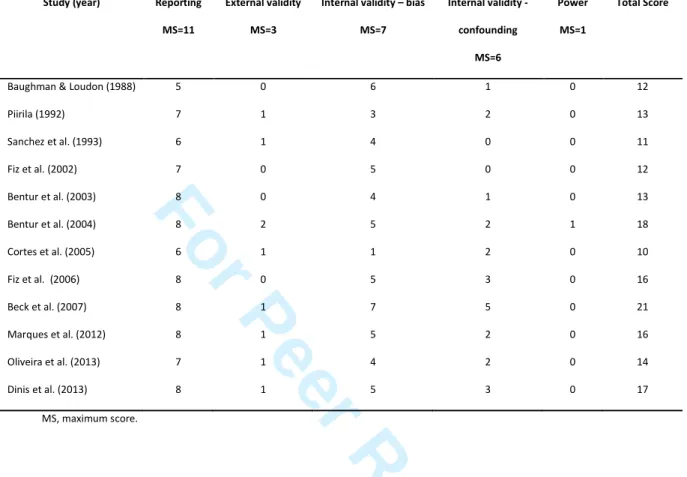
The articles included in this review scored 10 to 21 on the Downs and Black checklist, with a 12
mean of 14.42±0.93 (Table 1). Results of the risk of bias assessment indicated that seven 13
(64%) studies had poor quality, four had fair quality and one good quality. Studies scored 14
particularly poor on the following items: description of confounders, sample representativeness, 15
patient blinding, outcome assessor blinding, recruitment, randomization, adjust for confounding 16
factors in the analysis and power to detect outcomes that are clinically important. The 17
agreement between two authors was almost perfect (k=0.825; 95% CI 0.758-0.885; p=0.001). 18
(insert table 1 about here)
19
Study characteristics 20
The majority of the included studies were quasi-experimental5, 20-25, three were observational26-28 21
and two were randomized controlled trials29, 30. Ten studies recruited patients receiving 22
specialized care and two during hospital admission24, 27. A total of 275 subjects (n=126; 45.8% 23
male) participated in the included studies, 47 were healthy subjects and 208 had respiratory 24
conditions (Asthma (n=84), Pneumonia (n=11), Cystic fibrosis (n=23), Chronic Obstructive 25
Pulmonary Disease (COPD) (n=6), prolonged cough (n=28), Bronchiolitis (n=27), 26
Bronchiectasis (n=23) and Lower Respiratory Tract Infection (LRTI) (n=26)). Eight studies were 27
For Peer Review
conducted with adults (n=167; 60.7%; age range 21-73 years old)5, 21, 24-29 and four with children 1
(n=108; 39.3%; age range 4 months - 18 years old)20, 22, 23, 30. 2
The interventions of most studies consisted of pharmacotherapy20-30, only two studies combined 3
pharmacotherapy with respiratory physical therapy5, 29. The respiratory physical therapy 4
consisted mainly in active cycle of breathing techniques5, 29, but also breathing retraining 5
techniques; incentive spirometry; thoracic mobility, expansion and flexibility exercises and 6
aerobic training29. In almost all studies, the respiratory sounds were recorded in more than one 7
chest location however, in three studies recordings were performed exclusively in the trachea21, 8
25, 26
. Only the three more recent studies, acquired the respiratory sounds following the 9
Computerized Respiratory Sound Analysis (CORSA) guidelines for short-term acquisition5, 28, 29. 10
The recording devices used varied among studies: microphones21, 24, 25, 27, 29, piezoelectric 11
sensors20, 22, 23, 26, 30 and electronic stethoscopes5, 28. 12
Algorithms based on Fast Fourier Transformation were the most used to automatically detect 13
ARS. Two studies used an algorithm based on Short-Time Fourier transformation28, 29 and one 14
used a modification of the algorithm proposed by Shabtai-Musih et al.31 and Homs-Corbera et 15
al25, 32. A total of nine studies analyzed WHs (3 were conducted in children), two analyzed CRs5, 16
27
and one both WHs and CRs in children30. Two studies detected breathing cycles 17
automatically, one used an analogous method reported by Qiu et al5, 33 and the other used the 18
Huq and Moussavi algorithm30, 34. Only three studies considered the breathing phases 19
(inspiration and expiration) in the analysis of the ARS26, 27, 29. 20
(insert table 2 about here)
21
Synthesis of the results 22
Wheezes 23
Presence
24
The presence of WHs was used to identify a bronchial response during bronchial provocation 25
tests in two studies conducted with children20, 22. Sanchez et al. (1993) used concentrations of 26
For Peer Review
methacholine and found that WHs had 50% sensitivity and 100% specificity to detect bronchial 1
hyperreactivity20. Bentur et al. (2004) observed that WHs were detected after a mean adenosine 2
concentration of 15.6mg/ml22. Both studies verified that WHs were feasible to assess bronchial 3
reactivity. 4
Number
5
Two studies investigated the number of WHs in adults. Oliveira et al. (2013) found a significant 6
increase in the number of WHs after 3 weeks of standard medical treatment (6 vs. 14.8; p=0.03; 7
ES=4.38) in patients with LRTI28. A similar result, but not significant, was found in subjects with 8
stable asthma after terbutaline inhalation (ES=0.34), however in healthy subjects and subjects 9
with non-stable asthma a non-significant decrease was observed (ES=-0.10 and ES=-0.012, 10
respectively)25. 11
Frequency
12
The frequency of WHs was investigated in four studies conducted with adults21, 25, 28, 29. After 13
terbutaline inhalation, the frequency of WHs significantly decreased in patients with asthma 14
(ES=-0.15), COPD (ES=-0.21) and in healthy subjects (ES=-0.28)21. Similar, however non-15
significant, results were found with the same intervention in healthy subjects (ES=-0.18) and 16
subjects with non-stable asthma (ES=-0.24)25. In subjects with stable asthma (ES=0.01)25 and 17
LRTI (ES=-0.06)28 the frequency remained approximately the same. Dinis et al. (2013) 18
investigated the effect of respiratory physical therapy in subjects with LRTI and observed a non-19
significant increase in the frequency of inspiratory and expiratory WHs in both experimental 20
(ES=0.73 and ES=0.04, respectively) and control groups (ES=0.97 and ES=0.97, 21
respectively)29. 22
Occupation rate
23
This parameter, which is the proportion of the respiratory cycle occupied by WHs, was explored 24
in studies conducted with children and adults. In three studies the wheeze occupation rate 25
(WH%) was used to analyze the effect of pharmacotherapy24, 25, 30. A non-significant reduction in 26
WH% during the night in the group of subjects administered with long-acting sympathomimetic 27
For Peer Review
agent (ES=-1.9) was found; whereas in the placebo group, a significant increase was observed 1
(ES=1.15)24. In a study conducted with infant viral bronchiolitis, WH% also decreased 10 2
minutes after the administration of epinephrine (ES=-1.09); however it increased in the group of 3
children administered with albuterol (ES=1.27)30. Nevertheless, no significant differences were 4
found between or within groups. When exploring monophonic and polyphonic WH% significant 5
change was also not found however, low effect sizes in non-stable and healthy subjects and 6
medium effect sizes in subjects with stable asthma (ES=-0.54) were found25. A significant 7
decrease in inspiratory and expiratory WH% was found after 3 weeks of pharmacotherapy plus 8
respiratory physical therapy (ES=-0.66 (inspiratory); ES=-0.64 (expiratory)) or pharmacotherapy 9
alone (ES=-0.69 (inspiratory); ES=-0.62 (expiratory))29. A similar result was found for the 10
nocturnal WH index, calculated from the WH% (after 2 days (ES=-0.61) and after 6 weeks 11
(ES=-0.80)), when monitoring respiratory sounds overnight to assess the effects of montelukast 12
in nocturnal asthma23. 13
Duration
14
Two studies explored this variable when assessing the impacts of pharmacotherapy with adult 15
subjects26, 28. In both studies WH duration remained approximately the same pre/post 16
intervention. Only in subjects with moderate and severe obstruction, changes in the duration of 17
WHs after medication were observed26. 18
Crackles 19
Number
20
Three studies analyzed the number of CRs before and after intervention and no significant 21
differences were found. In two studies, this variable remained approximately the same, with 22
effect sizes ranging from 0.02 to 0.225, 27. In the study of Beck et al., the number of CRs 23
increased (ES=0.58) with albuterol and decreased with epinephrine (ES=-1.65)30. 24
Frequency
For Peer Review
The CR frequency was analyzed only in one study27. The peak frequency increased during 1
inspiration (ES=0.11) and decreased during expiration (ES=-0.47) whereas the upper frequency 2
at -20-dB level decreased in both inspiration (ES=-0.12) and expiration (ES=-0.35). No 3
significant differences were found. 4
Two cycle duration (2CD), Largest deflection width (LDW) and Initial deflection width (IDW)
5
Two studies analyzed the 2CD variable; Marques et al. did not show any change from pre to 6
post intervention (ES=0.07)5 and Piirila showed a non-significant reduction post intervention 7
both in inspiratory (ES=-0.85) and expiratory (ES=-0.83) phases27. In the study of Piirila, both 8
LDW and IDW of inspiratory (ES=-1.25 and -0.38) and expiratory (ES=-1 and -0.76) CRs were 9
shorter after the intervention27. 10
Timing
11
Only Piirila explored timing parameters of the CRs related to inspiratory tidal volume and 12
inspiratory and expiratory phases. These parameters were significantly different post 13
intervention (ES from 0.5 to 1.14) 14
Due to the heterogeneity of the outcome measures used across studies, a meta-analysis was 15
not possible to compute. 16
Discussion 17
The main finding of this systematic review was that ARS detected and characterized by 18
computerized respiratory sound analysis show potential to be used as outcome measures in 19
children and adults, as specific variables of each ARS presented high effect sizes. However, the 20
most appropriate variable(s) or variables are yet to be explored. 21
Most studies (11/12) explored WH presence and characteristics before/after an intervention. 22
Wheeze occupation rate seemed to be the most promising parameter to be used as an outcome 23
measure in children and adults, with medium to high effect sizes varying from 0.62 to 1.924, 29. A 24
strong association between the proportion of the respiratory cycle occupied by WHs and the 25
degree of bronchial obstruction has been widely demonstrated21-23, 35. This WH parameter, even 26
For Peer Review
when identified with standard auscultation, has shown to be sensitive to assess the 1
effectiveness of respiratory interventions in children36, 37. The WH complexity may also be a 2
variable of interest as the presence of polyphonic WHs indicates a more serious obstruction 3
than monophonic WHs25 however, this was only explored in one study (ES from 0.24 to 0.54)25. 4
Wheeze monitoring has been found to provide more information on the changes of airway 5
obstruction than measurements of pulmonary function24, such as the percentage predicted of 6
FEV1 in people with asthma26. Thus, WHs and their variables seem to be a promising objective 7
outcome measure for all populations with a special emphasis on non-collaborative populations 8
such as children, people with dementia and people in the intensive care. However, it should be 9
noticed that WHs only occur when there is a flow limitation (but flow limitation is not necessarily 10
accompanied by WHs), that reaches a critical value, called flutter velocity38. Thus, when there is 11
not enough flow to generate WHs, WHs parameters will not be useful despite the presence of 12
the respiratory problem. The complementary information provided by CRs is therefore, crucial. 13
Crackles are assumed to be caused by the sudden opening of abnormally closed airways39-42, 14
and their parameters provide essential information about the function and structure of the 15
tracheobronchial tree41, e.g., CR recording during mechanical ventilation has been considered a 16
simple method to monitor lung recruitment-derecruitment43. However, CR variables have been 17
explored as outcome measures in only three studies5, 27, 30. From the limited evidence available, 18
LDW seemed to be the most valuable parameter to be used as an outcome measure due to its 19
high effect sizes (1 and 1.25)27. Hoevers and Loudon (1990) had already found that LDW 20
seemed to be a better measure than IDW or 2CD when differentiating between coarse and fine 21
CRs44. However, LDW was also the variable less explored among studies. Conflicting 22
information was found for the number of CRs and 2CD. The number of CRs had low effect sizes 23
reported in Piirila (0.14 and 0.22)27 and in Marques et al. (0.02)5 studies, and medium/high 24
effect sizes in Beck et al. (0.74 and 1.65)30. High (0.83 and 0.85)27 and low (0.07)5 effect sizes 25
were also found for the variable 2CD. The timing of CRs (ES 0.5 to 1.14) also showed to be 26
sensitive to the clinical course of pneumonia27 and has been described as a sensitive 27
parameter to discriminate respiratory diseases45. However, similarly to LDW limited research 28
has been conducted considering this parameter as an outcome measure. At this point in time it 29
is difficult to provide any recommendations on which CR’s variable(s) are more adequate to be 30
For Peer Review
used as an outcome measure to monitor respiratory interventions. These limited and conflicting 1
data may be a result of the different respiratory sound acquisition sensors (which differ in their 2
acoustic sensitivity to capture CRs waveforms), filtering and analysis methods used across 3
studies46, 47. Since CRs show potential for diagnosis purposes but also as an outcome measure 4
for respiratory treatments in different clinical/research contexts, these procedures need to be 5
standardized. This will allow comparisons among different studies and improve the 6
understanding of CRs’ mechanisms and acoustic characteristics. 7
The study of both main types of ARS is essential to gather complementary information about 8
the tracheobronchial tree. This information may help health professionals to conduct more 9
accurate diagnosis and enhance their understanding about the respiratory system responses to 10
treatments. However, only one study analyzed both types of ARS as an outcome measure in a 11
study conducted with children30. Thus, the study of computerized ARS is an exciting area where 12
much research is needed to develop knowledge for diagnosis and monitoring of patients but 13
also to be used as a non-invasive, objective and reliable outcome measure for treatments. 14
The level of evidence that can be drawn at this moment in time from this systematic review is 15
considerably weak due to the 1) small sample sizes; 2) distinct respiratory therapies and doses 16
implemented and 3) different ARS variables used in the included studies. The large variety of 17
acquisition methods used is an issue added to the list of difficulties when comparing results 18
across studies. A BIOMED 1 Concerted Action project entitled CORSA, funded by the European 19
Community, developed guidelines for research and clinical practice in the field of respiratory 20
sound acquisition and analysis4, 9, 48. The CORSA project group produced guidelines on the 21
definitions of medical/technical terms used in pulmonary acoustics; environmental conditions; 22
patient management procedures; acquisition, pre-processing, digitization and analysis of 23
respiratory sounds; and also about publishing the results of research4, 9, 48. These international 24
guidelines have been available since 2000, however from the 9 studies conducted after this 25
year, only 3 followed the acquisition procedures recommended by CORSA. Regarding the 26
analysis methods, algorithms based on Fast Fourier Transformation were the most used, which 27
is in accordance with the CORSA recommendations. Future research, with improved study 28
designs, larger samples, both of children and adult populations, and following the CORSA 29
For Peer Review
guidelines, should be conducted to explore the ARS response to respiratory therapies. This will 1
facilitate the comparison of results from different studies, promote research into the 2
development of standardized respiratory sound acquisition equipment and analysis and finally 3
enhance the understanding of computerized ARS as well as their use as an outcome measure. 4
Conclusion 5
Specific variables of each ARS detected and characterized with computerized respiratory sound 6
analysis showed high effect sizes and thus may have potential to be an objective, reliable and 7
non-invasive outcome measure for respiratory therapy in children and adults. Further research 8
exploring the ARS response to different respiratory therapies are needed to enhance the 9
understanding of computerized ARS and their clinical use not only for the diagnosis purposes 10
but also for monitoring patients and treatments. 11
References 12
1. World Health Organization. The World Health Report 2008: Primary Health Care - Now 13
more than ever. World Health Organization, Geneva, Switzerland 2008. 14
2. Hayes D, Jr., Kraman SS. The physiologic basis of spirometry. Respir Care 15
2009;54(12):1717-1726. 16
3. Marques A, Bruton A, Barney A. Clinically useful outcome measures for physiotherapy 17
airway clearance techniques: a review. Physical Therapy Reviews 2006;11(4):299-307. 18
4. Sovijarvi ARA, Dalmasso F, Vanderschoot J, Malmberg LP, Righini G, Stoneman SAT. 19
Definition of terms for application of respiratory sounds. Eur Respir Rev 20
2000;10(77):597-610. 21
5. Marques A, Bruton A, Barney A, Hall A. Are crackles an appropriate outcome measure 22
for airway clearance therapy? Respir Care 2012;57(9):1468-1475. 23
6. Vyshedskiy A, Murphy R. Crackle Pitch Rises Progressively during Inspiration in 24
Pneumonia, CHF, and IPF Patients. Pulmonary Medicine 2012;2012:1-4. 25
7. Gavriely N, Nissan M, Cugell DW, Rubin AHE. Respiratory health screening using 26
pulmonary function tests and lung sound analysis. Eur Respir J 1994;7(1):35-42. 27
For Peer Review
8. Sovijarvi ARA, Malmberg LP, Charbonneau G, Vanderschoot J, Dalmasso F, Sacco C, 1
et al. Characteristics of breath sounds and adventitious respiratory sounds. Eur Respir 2
Rev 2000;10(77):591-596. 3
9. Sovijarvi ARA, Vanderschoot J, Earis JE. Standardization of computerized respiratory 4
sound analysis. Eur Respir Rev 2000;10(77):585. 5
10. Pasterkamp H. Accoustic markers of airway responses during inhalation challenge in 6
children. Pediatr Pulmonol 2004;Supplement 26:175-176. 7
11. Murphy RLH. In defense of the stethoscope. Respir Care 2008;53(3):355-369. 8
12. Gurung A, Scrafford C, Tielsch J, Levine O, Checkley W. Computerized lung sound 9
analysis as diagnostic aid for the detection of abnormal lung sounds: a systematic 10
review and meta-analysis. Respir Med 2012;105(9):1396-1403. 11
13. Moher D, Liberati A, Tetzlaff J, Altman DG, PRISMA group. Preferred Reporting Items 12
for Systematic Reviews and Meta-Analyses: The PRISMA Statement. Ann Intern Med 13
2009;151(4):264-269. 14
14. Downs SH, Black N. The feasibility of creating a checklist for the assessment of the 15
methodological quality both of randomised and non-randomised studies of health care 16
interventions. J Epidemiol Community Health 1998;52(6):377-384. 17
15. Chudyk AM, Jutai JW, Petrella RJ, Speechley M. Systematic review of hip fracture 18
rehabilitation practices in the elderly. Arch Phys Med Rehabil 2009;90(2):246-262. 19
16. Samoocha D, Bruinvels DJ, Elbers NA, Anema JR, van der Beek AJ. Effectiveness of 20
web-based interventions on patient empowerment: a systematic review and meta-21
analysis. J Med Internet Res 2010;12(2):e23. 22
17. Landis JR, Koch GG. The measurement of observer agreement for categorical data. 23
Biometrics 1977;33(1):159-174. 24
18. Cohen J. Statistical power analysis for the behavioral sciences. Lawrence Earlbaum 25
Associates: Hillsdale, NJ; 1988. 26
19. Borenstein M, Hedges L, Higgins J, Rothstein H. Comprehensive Meta-analysis 2.0. 27
Englewood, NJ: Biostat Inc; 2005. 28
For Peer Review
20. Sanchez I, Powell RE, Pasterkamp H. Wheezing and airflow obstruction during 1
methacholine challenge in children with cystic fibrosis and in normal children. Am Rev 2
Respir Dis 1993;147(3):705-709. 3
21. Fiz JA, Jane R, Homs A, Izquierdo J, Garcia MA, Morera J. Detection of wheezing 4
during maximal forced exhalation in patients with obstructed airways. Chest 5
2002;122(1):186-191. 6
22. Bentur L, Beck R, Berkowitz D, Hasanin J, Berger I, Elias N, et al. Adenosine bronchial 7
provocation with computerized wheeze detection in young infants with prolonged cough: 8
correlation with long-term follow-up. Chest 2004;126(4):1060-1065. 9
23. Bentur L, Beck R, Shinawi M, Naveh T, Gavriely N. Wheeze monitoring in children for 10
assessment of nocturnal asthma and response to therapy. Eur Respir J 2003;21(4):621-11
626. 12
24. Baughman RP, Loudon RG. The utility of the estimated Tw/Ttot in evaluating a long 13
acting sympathomimetic agent used for nocturnal asthma. Annual Review of 14
Chronopharmacology 1988;5:157-160. 15
25. Fiz JA, Jane R, Izquierdo J, Homs A, Garcia MA, Gomez R, et al. Analysis of forced 16
wheezes in asthma patients. Respiration 2006;73(1):55-60. 17
26. Cortes S, Jane R, Fiz JA, Morera J. Monitoring of wheeze duration during spontaneous 18
respiration in asthmatic patients. Conference Proceedings: Annual International 19
Conference Of The IEEE Engineering In Medicine And Biology Society IEEE 20
Engineering In Medicine And Biology Society Conference 2005;6:6141-6144. 21
27. Piirila P. Changes in crackle characteristics during the clinical course of pneumonia. 22
Chest 1992;102(1):176-183. 23
28. Oliveira A, Pinho C, Dinis J, Oliveira D, Marques A. Automatic Wheeze Detection and 24
Lung Function Evaluation: a preliminary study, International Conference on Health 25
Informatics, In Biomedical Engineering Systems and Technologies 6th International 26
Joint Conference, BIOSTEC 2013, Barcelona, 2013. 27
29. Dinis J, Oliveira A, Pinho C, Campos G, Rodrigues J, Marques A. Automatic wheeze 28
and respiratory phase detectors to evaluate respiratory physiotherapy in LRTI: a 29
preliminary study, International Conference on Health Informatics, In Biomedical 30
For Peer Review
Engineering Systems and Technologies 6th International Joint Conference, BIOSTEC 1
2013, Barcelona, 2013. 2
30. Beck R, Elias N, Shoval S, Tov N, Talmon G, Godfrey S, et al. Computerized acoustic 3
assessment of treatment efficacy of nebulized epinephrine and albuterol in RSV 4
bronchiolitis. BMC Pediatr 2007;7(22):1-6. 5
31. Shabtai-Musih Y, Grotberg JB, Gavriely N. Spectral content of forced expiratory 6
wheezes during air, He, and SF6 breathing in normal humans. J Appl Physiol 7
1992;72(2):629-635. 8
32. Homs-Corbera A, Fiz JA, Jane R. Time-frequency detection and analysis of wheezes 9
during forced exhalation. IEEE Trans Biomed Eng 2004;51(1):182-186. 10
33. Qiu Y, Whittaker AR, Lucas M, Anderson K. Automatic wheeze detection based on 11
auditory modelling. Proc Inst Mech Eng H 2005;219(3):219-227. 12
34. Huq S, Moussavi Z. Automatic breath phase detection using only tracheal sounds. Conf 13
Proc IEEE Eng Med Biol Soc 2010;2010:272-275. 14
35. Baughman RP, Loudon RG. Quantitation of wheezing in acute asthma. Chest 15
1984;86(5):718-722. 16
36. Postiaux G, Louis J, Labasse HC, Gerroldt J, Kotik AC, Lemuhot A, et al. Evaluation of 17
an alternative chest physiotherapy method in infants with respiratory syncytial virus 18
bronchiolitis. Respir Care 2011;56(7):989-994. 19
37. Gomes EL, Postiaux G, Medeiros DR, Monteiro KK, Sampaio LM, Costa D. Chest 20
physical therapy is effective in reducing the clinical score in bronchiolitis: randomized 21
controlled trial. Revista brasileira de fisioterapia (Sao Carlos (Sao Paulo, Brazil)) 22
2012;16(3):241-247. 23
38. Grotberg JB, Gavriely N. Flutter in collapsible tubes: a theoretical model of wheezes. J 24
Appl Physiol 1989;66(5):2262-2273. 25
39. Pasterkamp H, Kraman SS, Wodicka GR. Respiratory sounds – advances beyond the 26
stethoscope. Am J Respir Crit Care Med 1997;156(3 Pt 1):974-987. 27
40. Alencar AM, Hantos Z, Petak F, Tolnai J, Asztalos T, Zapperi S, et al. Scaling behavior 28
in crackle sound during lung inflation. Physical review E, Statistical physics, plasmas, 29
fluids, and related interdisciplinary topics 1999;60(4 Pt B):4659-4663. 30
For Peer Review
41. Alencar AM, Majumdar A, Hantos Z, Buldyrev SV, Eugene Stanley H, Suki B. Crackles 1
and instabilities during lung inflation. Physica A: Statistical Mechanics and its 2
Applications 2005;357(1):18-26. 3
42. Alencar AM, Buldyrev SV, Majumdar A, Stanley HE, Suki B. Avalanche dynamics of 4
crackle sound in the lung. Phys Rev Lett 2001;87(8):088101. 5
43. Peták F, Habre W, Babik B, Tolnai J, Hantos Z. Crackles-sound recording to monitor 6
airway closure and recruitment in ventilated pigs. Eur Respir J 2006;27(4):808-816. 7
44. Hoevers J, Loudon RG. Measuring crackles. Chest 1990;98(5):1240-1243. 8
45. Piirila P, Sovijarvi ARA. Crackles: recording, analysis and clinical significance. Eur 9
Respir J 1995;8(12):2139-2148. 10
46. Katila T, Piirila P, Kallio K, Paajanen E, Rosqvist T, Sovijarvi AR. Original waveform of 11
lung sound crackles: a case study of the effect of high-pass filtration. J Appl Physiol 12
1991;71(6):2173-2177. 13
47. Kraman SS, Wodicka GR, Pressler GA, Pasterkamp H. Comparison of lung sound 14
transducers using a bioacoustic transducer testing system. J Appl Physiol 15
2006;101(2):469-476. 16
48. Rossi M, Sovijarvi ARA, Piirila P, Vannuccini L, Dalmasso FVJ. Environmental and 17
subject conditions and breathing manoeuvres for respiratory sound recordings. Eur 18 Respir Rev 2000;10(77):611-615. 19 20 21 22
For Peer Review
Figure captions 1
Figure 1 - PRISMA Flowshart of the included studies. 2
For Peer Review
TITLE: 1
Computerized adventitious respiratory sounds as outcome measures for respiratory 2
therapy: a systematic review 3
ARS as outcome measures for respiratory therapy 4
Alda S. P. D. Marques, PhD1,2, Ana L. A. Oliveira1, PT, Cristina I. O. Jácome, MSc1, 3 5
6
1 School of Health Sciences, University of Aveiro (ESSUA), Aveiro, Portugal 7
2 Unidade de Investigação e Formação sobre Adultos e Idosos (UniFAI), Porto, Portugal 8
3 Research Centre in Physical Activity, Health and Leisure, Faculty of Sports, University of 9
Porto, Portugal 10
Funding 11
This work was funded by Fundação para a Ciência e a Tecnologia (FCT), Portugal (Project: 12
Adventitious lung sounds as indicators of severity and recovery of lung pathology and sputum 13
location- PTDC/SAU-BEB/101943/2008). 14
Conflict-of-interest statement 15
The authors report no conflict of interests. 16
Contributors 17
AO conducted the literature search. AM, AO and CJ decided the articles inclusion. AM and AO 18
assessed the studies quality. AM and CJ extracted the data from studies. AM, CJ and AO 19
drafted the manuscript and revised it critically for important intellectual content. 20
21
Corresponding author: Alda Marques, School of Health Sciences, University of Aveiro 22
(ESSUA), Agras do Crasto - Campus Universitário de Santiago, Edifício 30, 3810-193 Aveiro, 23
Portugal. Telephone: 00351 234 372 462. Email: [email protected] 24
For Peer Review
Abstract 1
Introduction: There is a need to develop simple, non-invasive and sensitive outcome measures 2
for respiratory therapy. Adventitious respiratory sounds (i.e., crackles and wheezes) can be 3
objectively characterized with computerized respiratory sound analysis and have been shown to 4
contribute for diagnosis purposes however; their potential to be used as outcome measures is 5
unknown. Thus, this systematic review synthetizes the evidence on the use of computerized 6
adventitious respiratory sounds as outcome measures. 7
Methods: The Web of knowledge, MEDLINE, EMBASE and SCOPUS databases were 8
searched. Reviewers independently selected studies according to the eligibility criteria. Effect 9
sizes and 95% confidence intervals were computed. 10
Results: Twelve studies with different designs (observational (n=3), quasi-experimental (n=7) 11
and randomized controlled trial (n=2)) were included. Eight studies were conducted with adults 12
and four with children. Most studies explored only one type of adventitious respiratory sound. 13
For wheezes, the occupation rate seemed to be the most promising parameter to be used as an 14
outcome measure, with high/medium effect sizes (from 0.62 to 1.82). For crackles, the largest 15
deflection width showed high effect sizes (1.31 and 1.04) however, it was only explored in one 16
study. Crackle number and two cycle duration presented conflicting information, with high/poor 17
effect sizes depending on the study. 18
Conclusion: Specific variables of each adventitious respiratory sound detected and 19
characterized by computerized respiratory sound analysis showed high effect sizes and thus, 20
potential to be used as outcome measures. Further research with robust study designs, larger 21
samples, both of children and adult populations, and following CORSA guidelines are needed to 22
build evidence base knowledge on this topic. 23
Key words: computerized respiratory sound analysis; respiratory sounds; adventitious 24
respiratory sounds; wheezes; crackles; outcome measure 25
For Peer Review
Introduction 1
Respiratory diseases are a major cause of societal, health and economic burden worldwide1. 2
Therefore, in the last decade, significant research efforts have been dedicated to improve early 3
diagnosis and routine monitoring of patients with respiratory diseases to allow timely 4
interventions. However, this has been found to be highly challenging with the available 5
respiratory measures (e.g., spirometry, blood gas analysis, imaging techniques), since they are 6
commonly affected by patient’s motivation and cooperation, are not always available in all 7
clinical settings and are expensive 2, 3. 8
Computerized respiratory sound analysis, which consists of recording patients’ respiratory 9
sounds with an electronic device and analyzing them based on specific signal characteristics: is 10
a simple, objective and non-invasive method to detect and characterize adventitious respiratory 11
sounds (ARS), i.e., crackle (CR) and wheeze (WH). ARS provide crucial information on 12
respiratory dysfunction4 and changes in their characteristics (intensity, duration, timing, etc.) 13
might inform the clinical course of respiratory diseases and treatments5, 6. Through the use of 14
computerized respiratory sound analysis, ARS have been found to be a more sensitive 15
indicator, detecting and characterizing the severity of the respiratory disease before any other 16
measure7. Thus, this approach through the objective data collection and management, 17
generation of permanent records of the measurements made with easy retrievability and 18
through graphical representations, assists the diagnosis and monitoring of patients with 19
respiratory diseases8-11. 20
However, research on this topic has been focusing on the use of computerized respiratory 21
sound analysis as a diagnostic aid12 and the findings reporting its potential to be used as an 22
outcome measure, i.e., to monitor respiratory treatments, are widespread in the literature. Thus, 23
this systematic review synthetizes the evidence on the use of computerized ARS as outcome 24 measures. 25 Methods 26 Search strategy 27
For Peer Review
An electronic literature search was performed from December 2012 to January 2013 in Web of 1
knowledge (1970-2012), MEDLINE (1948-2012), EMBASE (1974-2012) and SCOPUS (1960-2
2013) databases. Search terms were based on a combination of the following keywords: 3
monitor* OR "computerized analyses" OR "digital auscultation" OR "electronic auscultation" OR 4
"automatic auscultation" OR "acoustic signal processing" AND "added lung sounds" OR 5
"abnormal lung sounds" OR "adventitious lung sounds" OR "adventitious respiratory sounds" 6
OR crackle* OR wheez*. The search terms were limited to titles and abstracts. The reference 7
lists of the selected articles were scanned for other potential eligible studies. Additionally, a 8
weekly update was conducted until June 2013. This systematic review is reported according to 9
preferred reporting items for systematic reviews and meta-analyses (PRISMA) guidelines13. 10
Eligibility criteria 11
Articles were included if 1) they detected and characterized ARS with computerized respiratory 12
sound analysis before and after an intervention on adults or children; 2) were experimental, 13
quasi-experimental or observational studies; 3) were full papers published as original articles or 14
in conference proceedings and 4) were written in English, Portuguese, Spanish or French. 15
Articles were excluded if the study was conducted with animals or assessed ARS with 16
computerized respiratory sound analysis only at one specific moment in time. Book chapters, 17
review papers, abstracts of communications or meetings, letters to the editor, commentaries to 18
articles, unpublished work and study protocols were not considered suitable and, therefore, 19
were also excluded from this review. 20
Study selection 21
Duplicates were first removed. Then, the title, abstract and keywords were analyzed to assess 22
the type and relevance of the publication for the scope of the review. Finally, the full-text of 23
potentially relevant articles was independently screened for content by the three reviewers to 24
decide its inclusion in the review. Reviewers resolved disagreements by consensus. 25
Data extraction 26
For Peer Review
Data from the included articles were extracted in a structured table-format, i.e.,: first author’s 1
last name and year of publication, type of study, participants, intervention, data collection 2
protocol, recording device, data analyses, ARS outcome and findings. 3
Quality assessment 4
The quality of the included studies was assessed with the checklist created by Downs and 5
Black14. The checklist provides a list of 27 questions to measure study quality, split into five 6
sections: reporting (ten items); external validity (three items); internal validity – bias (seven 7
items); internal validity – confounding (seven items) and power (one item). Similarly to previous 8
systematic reviews15, 16, the scoring for question 27 - dealing with statistical power, was 9
simplified to a choice of awarding either 1 point or 0 points, depending on whether there was 10
sufficient power to detect a clinically important effect. Downs and Black score ranges were 11
grouped into the following 4 quality levels: excellent (26 –28), good (20 –25), fair (15–19), and 12
poor (≤14)15, 16. The risk of bias assessment was carried out by two independent reviewers. 13
Disagreements between reviewers were resolved by reaching a consensus through discussion. 14
Data analysis 15
To determine the consistency of the quality assessment performed by the two reviewers, an 16
inter-rater agreement analysis using the Cohen’s kappa was performed. The value of Cohen’s 17
kappa ranges from 0 to 1 and can be categorized as slight (0.0-0.20), fair (0.21-0.40), moderate 18
(0.41-0.60), substantial (0.61-0.80) or almost perfect (≥0.81) agreement17. This statistical 19
analysis was performed using PASW Statistics (version 18.0, SPSS Inc., Chicago, IL). When 20
quantitative pooling was appropriate the effect sizes together with the 95% confidence intervals 21
(95% CI) were computed for the outcomes of interest. The effect sizes (ES) were interpreted as 22
low (0.20), medium (0.50) and high (0.80) effect magnitudes18. This quantitative data analyses 23
were performed using the meta-analysis software Comprehensive Meta-Analysis (CMA) version 24
2 (Biostat, Englewood, New Jersey)19. 25
Results 26
Study selection 27
For Peer Review
The database search identified 1224 records. After duplicates removal, 900 records were 1
screened for relevant content. During the title, abstract and keyword screening, 876 articles 2
were excluded. The full-text of the 24 potentially relevant articles was assessed and 18 articles 3
were excluded due to the following reasons: ARS detection was performed with standard 4
auscultation (n=2) or manual annotation (n=4), ARS automatic detection occurred only in one 5
specific time-point to validate algorithms (n=5), did not provide data on ARS (n=3) and an 6
intervention was absent (n=4). Six original articles were included in the review. The search for 7
relevant articles within the reference list of the selected articles retrieved 6 studies which were 8
also included. 9
(insert figure 1 about here)
10
Quality assessment 11
The articles included in this review scored 10 to 21 on the Downs and Black checklist, with a 12
mean of 14.42±0.93 (Table 1). Results of the risk of bias assessment indicated that seven 13
(64%) studies had poor quality, four had fair quality and one good quality. Studies scored 14
particularly poor on the following items: description of confounders, sample representativeness, 15
patient blinding, outcome assessor blinding, recruitment, randomization, adjust for confounding 16
factors in the analysis and power to detect outcomes that are clinically important. The 17
agreement between two authors was almost perfect (k=0.825; 95% CI 0.758-0.885; p=0.001). 18
(insert table 1 about here)
19
Study characteristics 20
The majority of the included studies were quasi-experimental5, 20-25, three were observational26-28 21
and two were randomized controlled trials29, 30. Ten studies recruited patients receiving 22
specialized care and two during hospital admission24, 27. A total of 275 subjects (n=126; 45.8% 23
male) participated in the included studies, 47 were healthy subjects and 208 had respiratory 24
conditions (Asthma (n=84), Pneumonia (n=11), Cystic fibrosis (n=23), Chronic Obstructive 25
Pulmonary Disease (COPD) (n=6), prolonged cough (n=28), Bronchiolitis (n=27), 26
Bronchiectasis (n=23) and Lower Respiratory Tract Infection (LRTI) (n=26)). Eight studies were 27
For Peer Review
conducted with adults (n=167; 60.7%; age range 21-73 years old)5, 21, 24-29 and four with children 1
(n=108; 39.3%; age range 4 months - 18 years old)20, 22, 23, 30. 2
The interventions of most studies consisted of pharmacotherapy20-30, only two studies combined 3
pharmacotherapy with respiratory physical therapy5, 29. The respiratory physical therapy 4
consisted mainly in active cycle of breathing techniques5, 29, but also breathing retraining 5
techniques; incentive spirometry; thoracic mobility, expansion and flexibility exercises and 6
aerobic training29. In almost all studies, the respiratory sounds were recorded in more than one 7
chest location however, in three studies recordings were performed exclusively in the trachea21, 8
25, 26
. Only the three more recent studies, acquired the respiratory sounds following the 9
Computerized Respiratory Sound Analysis (CORSA) guidelines for short-term acquisition5, 28, 29. 10
The recording devices used varied among studies: microphones21, 24, 25, 27, 29, piezoelectric 11
sensors20, 22, 23, 26, 30 and electronic stethoscopes5, 28. 12
Algorithms based on Fast Fourier Transformation were the most used to automatically detect 13
ARS. Two studies used an algorithm based on Short-Time Fourier transformation28, 29 and one 14
used a modification of the algorithm proposed by Shabtai-Musih et al.31 and Homs-Corbera et 15
al25, 32. A total of nine studies analyzed WHs (3 were conducted in children), two analyzed CRs5, 16
27
and one both WHs and CRs in children30. Two studies detected breathing cycles 17
automatically, one used an analogous method reported by Qiu et al5, 33 and the other used the 18
Huq and Moussavi algorithm30, 34. Only three studies considered the breathing phases 19
(inspiration and expiration) in the analysis of the ARS26, 27, 29. 20
(insert table 2 about here)
21
Synthesis of the results 22
Wheezes 23
Presence
24
The presence of WHs was used to identify a bronchial response during bronchial provocation 25
tests in two studies conducted with children20, 22. Sanchez et al. (1993) used concentrations of 26
For Peer Review
methacholine and found that WHs had 50% sensitivity and 100% specificity to detect bronchial 1
hyperreactivity20. Bentur et al. (2004) observed that WHs were detected after a mean adenosine 2
concentration of 15.6mg/ml22. Both studies verified that WHs were feasible to assess bronchial 3
reactivity. 4
Number
5
Two studies investigated the number of WHs in adults. Oliveira et al. (2013) found a significant 6
increase in the number of WHs after 3 weeks of standard medical treatment (6 vs. 14.8; p=0.03; 7
ES=4.38) in patients with LRTI28. A similar result, but not significant, was found in subjects with 8
stable asthma after terbutaline inhalation (ES=0.34), however in healthy subjects and subjects 9
with non-stable asthma a non-significant decrease was observed (ES=-0.10 and ES=-0.012, 10
respectively)25. 11
Frequency
12
The frequency of WHs was investigated in four studies conducted with adults21, 25, 28, 29. After 13
terbutaline inhalation, the frequency of WHs significantly decreased in patients with asthma 14
(ES=-0.15), COPD (ES=-0.21) and in healthy subjects (ES=-0.28)21. Similar, however non-15
significant, results were found with the same intervention in healthy subjects (ES=-0.18) and 16
subjects with non-stable asthma (ES=-0.24)25. In subjects with stable asthma (ES=0.01)25 and 17
LRTI (ES=-0.06)28 the frequency remained approximately the same. Dinis et al. (2013) 18
investigated the effect of respiratory physical therapy in subjects with LRTI and observed a non-19
significant increase in the frequency of inspiratory and expiratory WHs in both experimental 20
(ES=0.73 and ES=0.04, respectively) and control groups (ES=0.97 and ES=0.97, 21
respectively)29. 22
Occupation rate
23
This parameter, which is the proportion of the respiratory cycle occupied by WHs, was explored 24
in studies conducted with children and adults. In three studies the wheeze occupation rate 25
(WH%) was used to analyze the effect of pharmacotherapy24, 25, 30. A non-significant reduction in 26
WH% during the night in the group of subjects administered with long-acting sympathomimetic 27
For Peer Review
agent (ES=-1.9) was found; whereas in the placebo group, a significant increase was observed 1
(ES=1.15)24. In a study conducted with infant viral bronchiolitis, WH% also decreased 10 2
minutes after the administration of epinephrine (ES=-1.09); however it increased in the group of 3
children administered with albuterol (ES=1.27)30. Nevertheless, no significant differences were 4
found between or within groups. When exploring monophonic and polyphonic WH% significant 5
change was also not found however, low effect sizes in non-stable and healthy subjects and 6
medium effect sizes in subjects with stable asthma (ES=-0.54) were found25. A significant 7
decrease in inspiratory and expiratory WH% was found after 3 weeks of pharmacotherapy plus 8
respiratory physical therapy (ES=-0.66 (inspiratory); ES=-0.64 (expiratory)) or pharmacotherapy 9
alone (ES=-0.69 (inspiratory); ES=-0.62 (expiratory))29. A similar result was found for the 10
nocturnal WH index, calculated from the WH% (after 2 days (ES=-0.61) and after 6 weeks 11
(ES=-0.80)), when monitoring respiratory sounds overnight to assess the effects of montelukast 12
in nocturnal asthma23. 13
Duration
14
Two studies explored this variable when assessing the impacts of pharmacotherapy with adult 15
subjects26, 28. In both studies WH duration remained approximately the same pre/post 16
intervention. Only in subjects with moderate and severe obstruction, changes in the duration of 17
WHs after medication were observed26. 18
Crackles 19
Number
20
Three studies analyzed the number of CRs before and after intervention and no significant 21
differences were found. In two studies, this variable remained approximately the same, with 22
effect sizes ranging from 0.02 to 0.225, 27. In the study of Beck et al., the number of CRs 23
increased (ES=0.58) with albuterol and decreased with epinephrine (ES=-1.65)30. 24
Frequency
For Peer Review
The CR frequency was analyzed only in one study27. The peak frequency increased during 1
inspiration (ES=0.11) and decreased during expiration (ES=-0.47) whereas the upper frequency 2
at -20-dB level decreased in both inspiration (ES=-0.12) and expiration (ES=-0.35). No 3
significant differences were found. 4
Two cycle duration (2CD), Largest deflection width (LDW) and Initial deflection width (IDW)
5
Two studies analyzed the 2CD variable; Marques et al. did not show any change from pre to 6
post intervention (ES=0.07)5 and Piirila showed a non-significant reduction post intervention 7
both in inspiratory (ES=-0.85) and expiratory (ES=-0.83) phases27. In the study of Piirila, both 8
LDW and IDW of inspiratory (ES=-1.25 and -0.38) and expiratory (ES=-1 and -0.76) CRs were 9
shorter after the intervention27. 10
Timing
11
Only Piirila explored timing parameters of the CRs related to inspiratory tidal volume and 12
inspiratory and expiratory phases. These parameters were significantly different post 13
intervention (ES from 0.5 to 1.14) 14
Due to the heterogeneity of the outcome measures used across studies, a meta-analysis was 15
not possible to compute. 16
Discussion 17
The main finding of this systematic review was that ARS detected and characterized by 18
computerized respiratory sound analysis show potential to be used as outcome measures in 19
children and adults, as specific variables of each ARS presented high effect sizes. However, the 20
most appropriate variable(s) or variables are yet to be explored. 21
Most studies (11/12) explored WH presence and characteristics before/after an intervention. 22
Wheeze occupation rate seemed to be the most promising parameter to be used as an outcome 23
measure in children and adults, with medium to high effect sizes varying from 0.62 to 1.924, 29. A 24
strong association between the proportion of the respiratory cycle occupied by WHs and the 25
degree of bronchial obstruction has been widely demonstrated21-23, 35. This WH parameter, even 26
For Peer Review
when identified with standard auscultation, has shown to be sensitive to assess the 1
effectiveness of respiratory interventions in children36, 37. The WH complexity may also be a 2
variable of interest as the presence of polyphonic WHs indicates a more serious obstruction 3
than monophonic WHs25 however, this was only explored in one study (ES from 0.24 to 0.54)25. 4
Wheeze monitoring has been found to provide more information on the changes of airway 5
obstruction than measurements of pulmonary function24, such as the percentage predicted of 6
FEV1 in people with asthma26. Thus, WHs and their variables seem to be a promising objective 7
outcome measure for all populations with a special emphasis on non-collaborative populations 8
such as children, people with dementia and people in the intensive care. However, it should be 9
noticed that WHs only occur when there is a flow limitation (but flow limitation is not necessarily 10
accompanied by WHs), that reaches a critical value, called flutter velocity38. Thus, when there is 11
not enough flow to generate WHs, WHs parameters will not be useful despite the presence of 12
the respiratory problem. The complementary information provided by CRs is therefore, crucial. 13
Crackles are assumed to be caused by the sudden opening of abnormally closed airways39-42, 14
and their parameters provide essential information about the function and structure of the 15
tracheobronchial tree41, e.g., CR recording during mechanical ventilation has been considered a 16
simple method to monitor lung recruitment-derecruitment43. However, CR variables have been 17
explored as outcome measures in only three studies5, 27, 30. From the limited evidence available, 18
LDW seemed to be the most valuable parameter to be used as an outcome measure due to its 19
high effect sizes (1 and 1.25)27. Hoevers and Loudon (1990) had already found that LDW 20
seemed to be a better measure than IDW or 2CD when differentiating between coarse and fine 21
CRs44. However, LDW was also the variable less explored among studies. Conflicting 22
information was found for the number of CRs and 2CD. The number of CRs had low effect sizes 23
reported in Piirila (0.14 and 0.22)27 and in Marques et al. (0.02)5 studies, and medium/high 24
effect sizes in Beck et al. (0.74 and 1.65)30. High (0.83 and 0.85)27 and low (0.07)5 effect sizes 25
were also found for the variable 2CD. The timing of CRs (ES 0.5 to 1.14) also showed to be 26
sensitive to the clinical course of pneumonia27 and has been described as a sensitive 27
parameter to discriminate respiratory diseases45. However, similarly to LDW limited research 28
has been conducted considering this parameter as an outcome measure. At this point in time it 29
is difficult to provide any recommendations on which CR’s variable(s) are more adequate to be 30
For Peer Review
used as an outcome measure to monitor respiratory interventions. These limited and conflicting 1
data may be a result of the different respiratory sound acquisition sensors (which differ in their 2
acoustic sensitivity to capture CRs waveforms), filtering and analysis methods used across 3
studies46, 47. Since CRs show potential for diagnosis purposes but also as an outcome measure 4
for respiratory treatments in different clinical/research contexts, these procedures need to be 5
standardized. This will allow comparisons among different studies and improve the 6
understanding of CRs’ mechanisms and acoustic characteristics. 7
The study of both main types of ARS is essential to gather complementary information about 8
the tracheobronchial tree. This information may help health professionals to conduct more 9
accurate diagnosis and enhance their understanding about the respiratory system responses to 10
treatments. However, only one study analyzed both types of ARS as an outcome measure in a 11
study conducted with children30. Thus, the study of computerized ARS is an exciting area where 12
much research is needed to develop knowledge for diagnosis and monitoring of patients but 13
also to be used as a non-invasive, objective and reliable outcome measure for treatments. 14
The level of evidence that can be drawn at this moment in time from this systematic review is 15
considerably weak due to the 1) small sample sizes; 2) distinct respiratory therapies and doses 16
implemented and 3) different ARS variables used in the included studies. The large variety of 17
acquisition methods used is an issue added to the list of difficulties when comparing results 18
across studies. A BIOMED 1 Concerted Action project entitled CORSA, funded by the European 19
Community, developed guidelines for research and clinical practice in the field of respiratory 20
sound acquisition and analysis4, 9, 48. The CORSA project group produced guidelines on the 21
definitions of medical/technical terms used in pulmonary acoustics; environmental conditions; 22
patient management procedures; acquisition, pre-processing, digitization and analysis of 23
respiratory sounds; and also about publishing the results of research4, 9, 48. These international 24
guidelines have been available since 2000, however from the 9 studies conducted after this 25
year, only 3 followed the acquisition procedures recommended by CORSA. Regarding the 26
analysis methods, algorithms based on Fast Fourier Transformation were the most used, which 27
is in accordance with the CORSA recommendations. Future research, with improved study 28
designs, larger samples, both of children and adult populations, and following the CORSA 29