(Annals of the Brazilian Academy of Sciences)
Printed version ISSN 0001-3765 / Online version ISSN 1678-2690 www.scielo.br/aabc
Nanoparticle-based therapy for respiratory diseases
ADRIANA L. DA SILVA1, RAQUEL S. SANTOS1, DÉBORA G. XISTO1,2, SILVIA DEL V. ALONSO3,
MARCELO M. MORALES2 and PATRICIA R.M. ROCCO1
1Laboratório de Investigação Pulmonar, Instituto de Biofísica Carlos Chagas Filho, Universidade Federal do Rio de Janeiro, Centro de Ciências da Saúde, Av. Carlos Chagas Filho, s/n, Ilha do Fundão, 21941-902 Rio de Janeiro, RJ, Brasil 2
Laboratório de Fisiologia Celular e Molecular, Instituto de Biofísica Carlos Chagas Filho, Universidade Federal do Rio de Janeiro, Centro de Ciências da Saúde,
Ilha do Fundão, 21941-902 Rio de Janeiro, RJ, Brasil
3Laboratorio de Biomembranas, Departamento de Ciencia y Tecnologia, Universidad Nacional de Quilmes, Roque Saenz Pena 352, Bernal, B1876BXD, Buenos Aires, Argentina
Manuscript received on February 15, 2011; accepted for publication on June 28, 2011
ABSTRACT
Nanotechnology is an emerging science with the potential to create new materials and strategies involving manipulation of matter at the nanometer scale (<100 nm). With size-dependent properties, nanoparticles have introduced a new paradigm in pharmacotherapy – the possibility of cell-targeted drug delivery with minimal systemic side effects and toxicity. The present review provides a summary of published findings, especially regarding to nanoparticle formulations for lung diseases. The available data have shown some benefits with nanoparticle-based therapy in the development of the disease and lung remodeling in respiratory diseases. However, there is a wide gap between the concepts of nanomedicine and the published experimental data and clinical reality. In addition, studies are still required to determine the potential of nanotherapy and the systemic toxicity of nanomaterials for future human use.
Key words: asthma, turberculosis, nanotechnology, lung cancer.
Correspondence to: Patricia Rieken Macedo Rocco E-mail: [email protected]
INTRODUCTION
The advent of nanotechnology holds great promise to improve health and quality of life. Since Feynman’s notorious lecture in 1959, nanotechnologies have grown exponentially (Feynman 1992) based on miniaturization of materials without affecting their properties (Choi et al. 2007). As a result, a wide range of nanotechnology-based medical applications are being developed. In particular,
nano-scaled carriers have innovated drug delivery, improving biochemical adverse reactions, allowing selective targeting of organs, tissue and cells for drug delivery, and minimizing exposure of healthy tissue to drugs (Bhaskar et al. 2010).
area, size, size distribution, and shape (Warheit et al. 2007, Card et al. 2008). The miniaturization of systems has been shown to have many advantages, including new materials properties, great increment of surface capability due to enlarged surface-volume ratio, shortened transport time of molecules, high linear flow rate using a tiny sample loading system, and almost limitless expansion of detection spot in the case of arrays (Bhaskar et al. 2010).
While our understanding of the functioning of the human body at the molecular and nanometer scale has greatly improved, the development of diagnostic and therapeutic options for the treatment of severe and chronic diseases has moved at a slower pace (Pison et al. 2006, Stone et al. 2007, Surendiran et al. 2009). The ability to incorporate drugs into nanosystems introduces a new paradigm in pharmacotherapy – the possibility of cell-targeted drug delivery (Pison et al. 2006, DiMarco et al. 2010), minimizing systemic side effects and toxicity
and improving routes of administration (Pison et al. 2006, Surendiran et al. 2009, DiMarco et al. 2010).
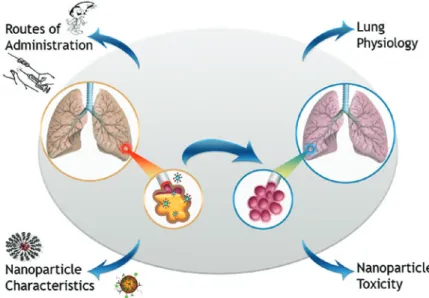
Theoretically, nanoparticles can be tailored to reach the right target at the right time. That would mean that pathogenic agents such as viruses or bacteria and cancer cells could be precisely targeted and treated without disturbing healthy tissue (De Jong and Borm 2008, Griset et al. 2009). However, a major challenge of this new therapy is the possibility of side effects or a decrease in beneficial effects caused by changes in pH and temperature, leading to modifications in the properties of drugs. In lungs, the success of nanotherapy depends on a number of factors, such as route of administration, nanoparticle characteristics and toxicity, and physiological aspects of the lung in the presence of respiratory disease (Figure 1).
The present review discusses overall aspects of nanotechnology as well as the applicability of nanoparticle formulations to specifically treat pulmonary diseases.
Figure 1 - Factors that can influence nanoparticle drug delivery.
NANOPARTICLE CHARACTERISTICS
A thorough understanding of physiology, mole-cular biology, biophysics, and cell physiology is required in order to search for new generation drug carriers, leading us to search for better techniques
established as contrast enhancers (Bakan et al. 2000, Harrington et al. 2000, Krause 1999). Real-time methods for monitoring pharmacokinetics and biodistribution (Taylor et al. 2001), multi-photon imaging, intracellular fate of aggregates in situ (Watson et al. 2005), application of high throughout screening methodology to pharmacokinetics (Watt et al. 2000), and above all the development of fast and efficient methods that allow simultaneous data compilation on pharmacokinetics and metabo-lism have provided the conditions for data collection that are qualitatively different and more precise than those previously available. All these methodological advances are accompanied by the development and implementation of new non-compartmental modeling methods and advanced theoretical tools for physiological and metabolic models proposals.
It is well known that conventional drugs have major limitations, with adverse effects resulting from non-specific drug action and lower efficacy associa ted with improper or ineffective dosage formulation.
ROUTES OF ADMINISTRATION ORAL
The oral route is comfortable for drug administration especially when repeated or routine dosing is necessary. Nevertheless, the development of oral carriers for many proteins remains a challenge because the bioavailability of these molecules is limited. In fact, most polypeptides and proteins are quickly degraded in the gastrointestinal tract by proteolytic enzymes, and the intestinal epithelium is a barrier to the absorption of hydrophilic drugs (DiMarco et al. 2010, Bailey and Berkland 2009).
Numerous investigations have shown that nanocarriers can improve the stability of therapeutic agents against enzymatic degradation and achieve desired therapeutic levels in target tissues for the required duration with a lower number of doses. Nanoparticle drug-delivery
systems might ensure an optimal pharmacokinetic profile to meet specific needs. Using nanoparticles as oral protein carriers might protect the active ingredient in the gastrointestinal tract and prolong residence time on the mucous membrane. The small size of the nano-drug delivery system also facilitates transport by enterocytes across the intestinal mucosa after administration (DiMarco et al. 2010, Mansour et al. 2009).
TRANSDERMAL AND PARENTERAL
There is little evidence that nanoparticles at a size exceeding 100 nm cross the skin barrier into the dermal compartment. The penetration of nanoparticles at a size smaller than 100 nm requires further investigation. Moreover, dermal uptake of nanoparticles will be an order of magnitude lower than uptake via the inhalation or oral routes (Stern and McNeil 2008).
Because of the difficulties associated with topical and transdermal delivery of proteins, parenteral administration is widely employed, despite the many complications associated with this route, such as local infections. Another disadvantage of parenteral administration is that small proteins are quickly filtered out by the kidneys. Without an appropriate drug carrier, proteins can also cause unwanted allergic reactions, be targeted by the immune system, and be rapidly degraded (DiMarco et al. 2010).
LUNG
The lungs are perhaps the oldest known route of drug delivery. In Egypt, inhaled vapors were used to treat a variety of diseases as early as 1,500 BC. Unfortunately, the lungs were soon put aside, and it was not until the early 1950s that serious consideration was again given to this route, with the appearance of the first metered dose inhaler. This device was used to locally administer albuterol to treat asthma, but offered little precision in dose control (Bailey and Berkland 2009). Since then, promising advances have been achieved with the application of nanotechnology to particle engineering, leading to innovative treatment strategies, including a more favorable route for direct drug delivery in respiratory diseases that avoids the first-pass metabolism (Bur et al. 2009). Nanotechnology is capable of producing low-density microstructures for delivery of drugs to the deep lung that present enhanced dissolution and bioavailability.
In turn, the respiratory tract has several unique advantageous anatomical and physio-logical features. There are approximately 300 million alveoli in the lungs, with a surface area that is greater than 100m2, and an alveolar epithelium as thin as 0.1 μm (for comparison: the columnar intestinal epithelium is ~20-30 μm). This large surface area, combined with an extremely thin barrier between the pulmonary lumen and the capillaries and a high blood perfusion rate providing direct access to the central circulation, creates conditions that are well suited for efficient mass transfer. In addition, the lung is less aggressive than the gastrointestinal to proteins and nucleic acids, even though enzymatic degradation of molecules such small peptides may occur in the lungs (Bailey and Berkland 2009, Bur et al. 2009).
Conversely, the epithelial barrier in the deep lung is quite formidable, with a resistance that is 1,200 Ω*cm2 higher in comparison with the intestinal mucosa. Not designed for absorption of
nutrients, the human lung is clearly less equipped with transporters and channels than liver and intestine (Bur et al. 2009). Despite all these limitations, pulmonary delivery is still a promising route for nanoparticle administration.
Inhalable forms of insulin have been developed to take advantage of systemic drug delivery through the lungs, however without success. Despite the lack of success of inhaled insulin, much excitement surrounds the potential medicinal benefit of inhaled therapeutics (McMahon and Arky 2007).
In 2005, the European Centre for Ecotoxicology and Toxicology of Chemicals (ECETOC) convened a workshop to develop testing strategies to establish the safety of nanomaterials. To evaluate nanoparticles in terms of human health hazard, in vivo techniques should be validated. A Tier 1 in vivo testing strategy should assess lung inflammation, cell proliferation, and histopathology of the respiratory tract. A Tier 2 in vivo testing should be based on a longer term inhalation study to determine particle deposition, translocation, and distribution within the body (Warheit et al. 2007).
PROS AND CONS OF USING NANOPARTICLES
An important goal of the pharmaceutical industry is to develop therapeutic agents that can be selectively delivered to specific areas in the body to maximize the therapeutic index. The use of nanosized carriers for advanced drug delivery is advantageous because these particles protect nanoencapsulated drugs from premature degradation, allowing the targeting to specific tissue with increased bioavailability, better control of absorption, and clearance and drug release.
particular therapy to be employed. Nevertheless, pharmaceutical nanocarriers must be manufactured from biocompatible materials, and their quality, safety and efficacy have to be demonstrated by appropriate pre-clinical and clinical studies (Yih and Al-Fandi 2006).
In the lung, deposited particles are removed quite rapidly by macrophages. Mucociliary and macrophage clearance can only be circumvented by particles that are able to cross the mucus layer and reach the sol layer below the gel layer (Bur et al. 2009). Lai et al. in 2005 reported the permeation of 200 nm PEGylated (with polyethylene glycol) particles across mucus. Thus, PEGylation seems to be a promising approach to bypass the bronchial clearance of pharmaceutical particles. Tang et al. 2009 demonstrated that a biodegradable copolymer of poly (sebacic acid) and poly (ethylene glycol) rapidly penetrated the mucus barrier in the lungs of patients with cystic fibrosis, possibly by the efficient partitioning of polyethylene glycol (PEG).
Depending on the site of the disease, specific materials should be used in order to reduce toxicity. Liposomes are stable and effective vehicles for drug delivery, gene therapy and vaccines, and can be easily modified by other appropriate ligands, resulting in attractive formulations for targeted drug delivery (Anabousi et al. 2005, Abu-Dahab et al. 2001).
Concerning gene therapy, new concepts for the transfer of DNA into the nucleus are of special interest. Various polycationic compounds (polymers, lipids, inorganic nanoparticles) have been used as non-viral transfection agents (Lutten et al. 2008). DNA compacted with polycations accesses the nucleus of cells more efficiently than non-compacted DNA or lipid-DNA complexes. However, complexes consisting of only polycation and DNA tend to aggregate in tissue fluids. Addition of PEG to complexes was shown to influence particle characteristics including structure and stabilization, preventing aggregation (Ziady et al. 2003).
Unfortunately, high DNA complexation efficacy is often associated with toxicity. Consequently, nanoparticles formulated from biodegradables polymers are being extensively studied as a non-viral alternative to polycationic polymers. Poly (lactide-co-glycolide-acid) (PLGA), a biodegradable polyester, has been recognized for its ability to deliver DNA. However, complexation and delivery of nucleotides by PLGA nanoparticles are limited by their negative charge. As previously stated, positive surface charge seems to be essential for an effective binding of the negatively charged DNA to the carrier (Bur et al. 2009).
In contrast, Harush-Frenkel et al. 2010 showed increased local and systemic toxic effects with cationic nanoparticle based PEG-PLA (polylactide). Conversely, anionic nanoparticles of similar size were much better tolerated and did not present a systemic toxicity effect, although a moderate change was noted in platelet count, with no clinical significance. Overall, these observations suggest that anionic PEG-PLA nanoparticles are useful pulmonary drug carriers. Conversely, several groups of nanomaterials (i.e. carbon nanotubes, carbon black, fullerenes, silica, metals or metal oxides) can induce inflammation and/or fibrosis in the lung (Liu et al. 2009). Polyamidoamine (PAMAM), a group of materials that appear to be very promising as nanocarriers for drug delivery, can induce autophagic cell death (Li et al. 2009).
NANOPARTICLE THERAPY IN LUNG DISEASES
There are many nanoparticles currently being developed for respiratory applications that aim at overcoming the limitations of conventional drugs (Table I).
Once deposited, particles in micrometer scale encounter a variety of physicochemical and biological barriers. These include mucus barriers and macrophages in the alveolar region. Inside the peripheral lung, particles must dissolve and drug must diffuse through the epithelial barrier and into the blood stream. Larger particles, that dissolve slowly, are subject to phagocytosis by alveolar macrophages and to inertial properties and sedimentation in the bronchial region, where the drugs that are delivered are likely to have few systemic effects (Bailey and Berkland 2009). In turn, particles with diameters in nanometer scale would be more likely to reach the alveolar region.
In this context, nanoparticles could be incorporated into pulmonary formulations to enhance systemic bioavailability, improving long-term drug effects. In addition, many lung diseases are prime candidates for nanoparticle therapy, such as asthma, tuberculosis, emphysema, cystic fibrosis, and cancer. Treating these diseases locally avoids first-pass metabolism, eliminates potential side effects caused by high systemic concentrations,
typical of conventional delivery methods, and may reduce costs, because smaller doses are employed.
ASTHMA
Asthma, a major public health problem, is charac-terized by chronic inflammatory disorder of the airways associated with airway hyperresponsiveness. The chronic inflammation in asthma can lead to ultrastructural changes in airways associated with airway remodeling. These changes are not completely reversed by the current available therapeutic stra-tegies, such as steroids (Kroegel 2009).
Inhaled steroids are the treatment of choice to control asthma, but their pharmacological effect tends to be short, no more than 1–2 h. A recent study has shown that stealth steroids compacted with nanoparticles achieve prolonged and higher benefits at the site of airway inflammation compared to free steroids (Matsuo et al. 2009). Furthermore, budesonide nanoparticle agglomerates demons-trated a desirable microstructure for efficient lung deposition and nanostructure for rapid dissolution of poorly water-soluble drugs (El-Gendy et al. 2009).
STUDY NANOPARTICLE DESCRIPTION USE
Freitas et al. 1998 Respirocytes Nanodevices that function as red blood cells,
but with greater efficacy Delivery of oxygen to tissues
Iga et al. 2007
Quantum dots Nanocrystals made to fluoresce when
stimulated by light Imaging of lung cancer Fullerenes Water-soluble C60 fullerenes Inhibition of allergic response Surendiran et al. 2009 INGN401 Nanoparticle formulation of tumor suppression
gene FUS1 Lung cancer
Surendiran et al. 2009 ABRAXANE® Albumin bound taxane particles Non-small cell lung cancer Surendiran et al. 2009 Liposomes Uni-multilamellar spherical nanoparticles
made of lipid bilayer membranes
Cancer chemotherapy/ gene therapy Matsuo et al. 2009 Poly PLA homopolymers
conjugated with PEG
Betamathasone encapsulated by poly PLA
homopolymers Asthma
Kimura et al. 2009 PEG-PLGA Nanoparticle compacted with NF-κB Pulmonary arterial hypertension Beck-Broichsitter et al.
2010 PLGA and VS(72)-10 Salbutamol-loaded polymeric nanoparticle Respiratory diseases Saraogi et al. 2010 Gelatin nanoparticles Natural polymer encapsulated with rifampicin Tuberculosis
TABLE I
Smaller nanoparticles also have a more efficient action in bronchodilation (Usmani et al. 2005). In this line, Bhavna et al. 2009 showed that nanoparticles compacted with salbutamol interact more with the lung membrane because peripheral deposition and mucociliary movement back to tracheo-bronchial region are more intense, causing higher and more sustained drug concentration in the target area.
One important development in gene transfer was the discovery that chitosan (a biocompatible cationic polysaccharide derived from crustacean shell chitin) in the form of nanoparticles (100–200 nm) could be used to deliver plasmids. Kumar et al. 2003 demonstrated that chitosan interferon (IFN)-γ- plasmid deoxyribonucleic acid (pDNA) nanoparticle therapy effectively reduced the functional and immunological abnormalities associated with allergen sensitization and challenge. This effect was predominantly mediated via a STAT4 signaling pathway. Moreover, because of the similarities between mice and humans in the T-cell differentiation pathway, these results indicated that chitosan IFN-γ-pDNA nanoparticle may be capable of reversing allergic asthma in humans.
The results obtained by Kumar et al. also show that intranasal chitosan IFN-γ-pDNA nanoparticle therapy may be useful in both prophylaxis and treatment of asthma.
In addition, Kong et al. 2008 demonstrated that this therapy led to in situ production of IFN- γ, reduced inflammation and airway reactivity, decreased number of pro-inflammatory CD8+ T cells, and inhibition of the antigen-presenting activity of dendritic cells in mice.
TUBERCULOSIS
Although potentially curative treatments for tuberculosis have been available for almost half a century, this disease remains the leading cause of preventable deaths in the world today. Nanoparticle-based drug delivery systems may be considered for the treatment of tuberculosis (Gelperina et al. 2005).
In this line, a single inhalation of aerosolized poly (DL-lactideco-glycolide) nanoparticles loaded with antitubercular drugs has resulted in therapeutic plasma drug levels for up to 6 days in guinea pigs, and repeated inhalations were as effective as more frequent oral administrations of free drug in treating experimental tuberculosis (Pandey et al. 2003). Another study reported that a single subcutaneous injection of antitubercular drug-containing nano-particles in mice resulted in therapeutic plasma drug levels for up to 32 days, and was more effective at reducing bacterial counts in the lungs and spleen than was daily oral administration of free drug (Pandey and Khuller 2004).
Additionally, Pandey and Khuller studied the chemotherapeutic potential of solid lipid nanoparticles incorporating rifampicin, isoniazid and pyrazinamide against experimental tuberculosis, and observed a slow and sustained release of drugs from the solid lipid nanoparticles both in vitro and in vivo. Inhaled antitubercular drugs encapsulated in alginate nanoparticles are more effective than free oral drugs (Zahoor et al. 2005).
Finally, in order to enhance drug bioavailability by prolonged residence at the site of absorption owing to increased epithelial contact, bioadhesive drug delivery systems were formulated. Sharma et al. (2004) suggested that tuberculosis control with reduced drug dosage could be achieved with lectin-functionalized poly (lactide-co-glycolide) nanoparticles as carriers of antitubercular drugs through the oral or aerosol route (Sharma et al. 2004).
LUNG CANCER
Therefore, most pharmaceutical research concerning nanoparticles has been developed in the field of oncology. Nanoparticles have been studied as a multifunctional strategy, in which a single molecule allows detection, diagnosis, imaging, cell destruction and delivery of drugs, decreasing drug-related side effects. Many nanoparticles can be functionalized with different types of molecules simultaneously - DNA, RNA, targeting molecules and peptides, carbohydrates, and imaging agents (Li et al. 2009). Hitzman et al. showed that inhalation delivery of 5-fluorouracil in lipid-coated nanoparticles to hamsters led to effective local targeting and sustained efficacious concentrations of 5-fluorouracil at the expected tumor sites.
Guthi et al. 2010 have recently described a multifunctional polymeric micelle system encoded with a lung cancer-targeting peptide and encapsulated with superparamagnetic iron oxide and doxorubicin, which potentially enables magnetic resonance imaging and target-specific treatment of lung cancer.
PLGA is one of the most widely used biode gradable polymers in the production of nanoparticles in order to control drug delivery. However, this polymer has very high hydro-phobicity and slow degradation.
In addition, long-term incompatibility with blood cells may also represent a problem. However, methoxy poly (ethylene glycol)-modified nano-particles have been shown to provide protection against interaction with blood components. In addition, Ma et al. 2010, demonstrated that a PLGA copolymer modified with PEG [poly (lactide-co-glycolide)-d-a-tocopheryl polyethylene glycol 1,000 succinate] promoted faster drug release in comparison with PLGA nanoparticles.
CONCLUSION
This overview summarizes the potential beneficial effects of nanoparticle therapy in lung diseases. Nanoparticle drug formulations offer many
advantages over traditional formulations. The use of lungs for nanoparticle drug delivery holds great promise for the treatment of systemic diseases.
ACKNOWLEDGMENTS
We would like to express our gratitude to Mr. Andre Benedito da Silva and Mrs. Ana Lucia Neves da Silva for their skillful technical assistance during the experiments, and Mrs. Moira Elizabeth Schöttler and Mrs. Claudia Buchweitz for assistance in editing the manuscript. Supported by Programa de Apoio a Núcleos de Excelência (PRONEX-FAPERJ), Conselho Nacional de Desenvolvimento Científico e Tecnológico (CNPq), Fundação Carlos Chagas Filho de Amparo à Pesquisa do Estado do Rio de Janeiro (FAPERJ), Coordenação de Aperfeiçoamento de Pessoal de Nível Superior (CAPES), INCT-INOFAR 17.
RESUMO
A nanotecnologia é um campo emergente de ciência com o potencial de criar novos materiais e estratégias envolvendo a manipulação de materiais em escala nanométrica (<100nm). Uma vez que as propriedades das nanopartículas dependem do seu tamanho, elas vêm introduzido um novo paradigma na farmacoterapia – a possibilidade de entregar drogas a células-alvo com o mínimo de efeitos colaterais sistêmicos e toxicidade. A presente revisão fornece um resumo de achados publicados, especialmente no que concerne às formulações de nanopartículas para doenças pulmonares. Os dados disponíveis têm mostrado alguns benefícios da terapia com nanopartículas no desenvolvimento da doença e remodelamento pulmonar em doenças respiratórias. Entretanto, há uma grande diferença entre os conceitos de nanomedicina, os dados experimentais publicados e a realidade clínica. Além disso, estudos são necessários para determinar o potencial da nanoterapia e a toxicidade sistêmica de nanomateriais para o uso futuro em humanos.
Palavras-chave: asma, tuberculose, nanotecnologia,
REFERENCES
ABU-DAHAB R, SCHAEFER UF AND LEHR CM. 2001. Lectin-functionalized liposomes for pulmonary drug delivery: Effect of nebulization on stability and bioadhesion. Eur J Pharm Sci 1: 37-46.
ANABOUSI S, LAUE M, LEHR CM, BAKOWSKY U AND EHRHARDT C. 2005. Assessing transferring modification of lipossomes by atomic force microscopy and transmission electron microscopy. Eur J Pharm Biopharm 2: 295-303.
BAILEY MM AND BERKLAND CJ. 2009. Nanoparticle formula-tions in pulmonary drug delivery. Med Res Rev 29: 196-212. BAKAN DA, WEICHERT JP, LONGINO MA AND COUNSELL RE. 2000. Polyiodinated triglyceride lipid emulsions for use as hepatoselective contrast agents in CT. Investigative Radio 35: 158-169.
BECK-BROICHSITTER M, GAUSS J, GESSLER T, SEEGER W, KISSEL T AND SCHMEHL T. 2010. Pulmonary targeting with biodegradable salbutamol-loaded nanoparticles. J Aerosol Med Pulm Drug Deliv 23(1): 47-57.
BHASKAR S ET AL. 2010. Multifunctional nanocarriers for diagnostics, drug delivery and targeted treatment across blood-brain barrier: perspectives on tracking and neuro-imaging. Part Fibre Toxicol 7: 3.
BHAVNA, AHMAD FJ, MITTAL G, JAIN GK, MALHOTRA G, KHAR RK AND BHATNAGAR A. 2009. Nano-salbutamol dry powder inhalation: A new approach for treating broncho-constrictive conditions. Eur J Pharm Biopharm 71: 282-291.
BUR M, HENNING A, HEIN S, SCHNEIDER M AND LEHR CM. 2009. Inhalative nanomedicine – opportunities and challenges. Inhal Toxicol 21:137-143.
CARD JW, ZELDIN DC, BONNER JC AND NESTMANN ER. 2008. Pulmonary applications and toxicity of engineered nano-particles. Am J Physiol Lung Cell Mol Physiol 295: 400-411. CHIARAMONI NS, GASPARRI J, SPERONI L, TAIRA MC AND ALONSO S DEL V. 2010. Biodistribution of liposome/ DNA systems after subcutaneous and intraperitoneal inoculation. J Liposome Res 20: 191-201.
CHOI JW, OH BK, KIM YK AND MIN J. 2007. Nanotechnology in biodevices. J Microbiol Biotechnol 17: 5-14.
DE JONG WH AND BORM PJ. 2008. Drug delivery and nanoparticles: Applications and Hazards. Int J Nano-medicine 3: 133-149.
DIMARCO M, SHAMSUDDIN S, RAZAK KA, AZIZ AA, DEVAUX C, BORGHI E, LEVY L AND SADUN C. 2010. Overview of the main methods used to combine proteins with nanosystems: absorption, bioconjugation, and encapsulation. Int J Nanomedicine 5: 37-49.
EL-GENDY N, GORMAN EM, MUNSON EJ AND BERKLAND C. 2009. Budesonide nanoparticle agglomerates as dry powder aerosols with rapid dissolution. J Pharm Sci 98(8): 2731-2746.
FEYNMAN RP. 1992. There is plenty rooms at the bottom. J Microelec Tromech Syst 1: 60-66.
FREITAS JrRA. 1998. Exploratory design in medical
nano-technology: a mechanical artificial red cell. Artif Cells
Blood Substit Immobil Biotechnol 26(4): 411-430.
GELPERINA S, KISICH K, ISEMAN MD AND HEIFETS L. 2005. The potential advantages of nanoparticle drug delivery systems in chemotherapy of tuberculosis. Am J Respir Crit Care Med 172: 1487-1490.
GRISET AP, WALPOLE J, LIU R, GAFFEY A, COLSON YL AND GRINSTAFF MW. 2009. Expansile nanoparticles:
syn-thesis, characterization, and in vivo efficacy of an
acid-responsive polymeric drug delivery system. J Am Chem Soc 131: 2469-2471.
GUTHI JS ET AL. 2010. MRI-visible micellar nanomedicine for targeted drug delivery to lung cancer cells. Mol Pharm 7: 32-40.
HARRINGTON KJ, ROWLINSON-BUSZA G, SYRIGOS KN, USTER PS, ABRA RM AND STEWART JSW. 2000. Biodistribution and pharmacokinetics of 111In-DTPA-labelled pegylated liposomes in a human tumour xenograft model: impli-cations for novel targeting strategies. Brit J Cancer 83: 232-238.
HARUSH-FRENKEL O ET AL. 2010. A safety and tolerability study of differently-charged nanoparticles for local pul-monary drug delivery. Toxicol Appl Pharmacol 246(1-2): 83-90.
HITZMAN CJ, WATTENBERG LW AND WIEDMANN TS. 2006. Pharmacokinetics of 5-Fluorouracil in the hamster following inhalation delivery of lipid-coated nanoparticles. J Pharm Sci 95: 1196-1211.
IGA AM, ROBERTSON JH, WINSLET MC AND SEIFALIAN AM. 2007. Clinical potential of quantum dots. J Biomed Biotechnol 2007: 76087-76097.
KIM SC, KIM DW, SHIM YH, BANG JS, OH HS, WAN KIM S AND SEO MH. 2001. In vivo evaluation of polymeric
micellar paclitaxel formulation: toxicity and efficacy. J
Control Release 72: 191-202.
KIMURA S ET AL. 2009. Nanoparticle-mediated delivery of nuclear factor kappaB decoy into lungs ameliorates monocrotaline-induced pulmonary arterial hypertension. Hypertension 53(5): 877-883.
KONG X, HELLERMANN GR, ZHANG W, JENA P, KUMAR M, BEHERA A, LOCKEY R AND MOHAPATRA SS. 2008. Chitosan interferon-γ nanogene therapy for lung disease:
modulation of T-cell and dendritic cell immune responses. Allergy Asthma Clin Immunol 4: 95-105.
KRAUSE W. 1999. Delivery of diagnostic agents in computed tomography. Adv Drug Delivery Rev 37: 159-173. KROEGEL C. 2009. Global Initiative for Asthma (GINA)
guide-lines: 15 years of application. Expert Rev Clin Immunol 5(3): 239-249.
KUMAR M, KONG X, BEHERA AK, HELLERMANN GR, LOCKEY RF AND MOHAPATRA SS. 2003. Chitosan IFN-γ-pDNA Nanoparticle (CIN) therapy for allergic asthma. Genet Vaccines Ther 1: 3.
LI C ET AL. 2009. PAMAM nanoparticles promote acute lung injury by inducing autophagic cell death through the Akt-TSC2-mTOR signaling pathway. J Mol Cell Biol 1: 37-45. LIU M, ZHANG H AND SLUTSKY AS. 2009. Acute lung injury: a yellow card for engineered nanoparticles? J Mol Cell Biol 1: 6-7.
LUTTEN J, VAN NOSTRUM CF, DE SMEDT SC AND HENNINK WE. 2008. Biodegradable polymers as non-viral carriers for plasmid DNA delivery. J Control Release 2: 97-110. MA Y, ZHENG Y, LIU K, TIAN G, TIAN Y, XU L, YAN F, HUANG
L AND MEI L. 2010. Nanoparticles of Poly(Lactide-Co-Glycolide)-d-a-Tocopheryl Polyethylene Glycol 1000 Succinate Random Copolymer for cancer treatment. Nanoscale Res Lett 5: 1161-1169.
MANSOUR HM, RHEE YS AND WU X. 2009. Nanomedicine in pulmonary delivery. Int J Nanomedicine 4: 299-319. MATSUO Y, ISHIHARA T, ISHIZAKI J, MIYAMOTO K, HIGAKI M
AND YAMASHITA N. 2009. Effect of betamethasone phosphate loaded polymeric nanoparticles on a murine asthma model. Cell Immunol 260: 33-38.
MCMAHON GT AND ARKY RA. 2007. Inhaled insulin for diabetes mellitus. N Engl J Med 356: 497-502.
PANDEY R AND KHULLER GK. 2004. Subcutaneous nanoparticle-based antitubercular chemotherapy in an experimental model. J Antimicrob Chemother 54: 266-268.
PANDEY R, SHARMA A, ZAHOOR A, SHARMA S, KHULLER GK AND PRASAD B. 2003. Poly (DL-lactide-co-glycolide) nanoparticle-based inhalable sustained drug delivery system for experimental tuberculosis. J Antimicrob Chemother 52: 981-986.
PISON U, WELTE T, GIERSIG M AND GRONEBERG DA. 2006. Nanomedicine for respiratory diseases. Eur J Pharmacol 533: 341-350.
SARAOGI GK, GUPTA P, GUPTA UD, JAIN NK AND AGRAWAL GP. 2010. Gelatin nanocarriers as potential vectors for effective management of tuberculosis. Int J Pharm 385(1-2): 143-149.
SHARMA A, SHARMA S AND KHULLER GK. 2004. Lectin-functionalized poly (lactide-co-glycolide) nanoparticles as oral/aerosolized antitubercular drug carriers for treatment of tuberculosis. J Antimicrob Chemother 54: 761-766.
STERN ST AND MCNEIL SE. 2008. Nanotechnology safety concerns revisited. Toxicol Sci 101: 4-21.
STONE V, JOHNSTON H AND CLIFT MJ. 2007. Air pollution,
ultra-fine and nanoparticle toxicology:celular and molecular
interactions. IEEE Trans Nanobioscience 6: 331-340. SURENDIRAN A, SANDHIYA S, PRADHAN SC AND ADITHAN C.
2009. Novel applications of nanotechnology in medicine. Indian J Med Res 130: 689-701.
TANG BC ET AL. 2009. Biodegradable polymer nanoparticles that rapidly penetrate the human mucus barrier. Proc Natl Acad Sci USA 106: 19268-19273.
TAYLOR DL, WOO ES AND GIULIANO KA. 2001. Real-time molecular and cellular analysis: the new frontier of drug discovery. Curr Opin Biotechnol 12: 75-81.
USMANI OS, BIDDISCOMBE MF AND BARNES PJ. 2005. Regional lung deposition and bronchodilator response as a function of beta2-agonist particle size. Am J Resp Crit Care Med 172: 1497-1504.
WARHEIT DB, BORM PJ, HENNES C AND LADEMANN J. 2007. Testing strategies to establish the safety of nanomaterials: conclusions of an ECETOC workshop. Inhal Toxicol 19: 631-643.
WATSON P, JONES AT AND STEPHENS DJ. 2005. Intracellular
trafficking pathways and drug delivery: fluorescence imaging of living and fixed cells. Adv Drug Deliv Rev
57: 43-61.
WATT AP, MORRISON II AND EVANS DC. 2000. Approaches to higher-throughput pharmacokinetics (HTPK) in drug discovery. Drug Discov Today 5: 17-24.
YIH TC AND AL-FANDI M. 2006. Engineered nanoparticles as precise drug delivery systems. J Cell Biochem 97: 1184-1190. ZIADY AG ET AL. 2003. Transfection of airway epithelium by stable PEGylated Poly-l-Lysine DNA nanoparticles in vivo. Mol Ther 8: 936-947.