Andriy Lyubchyk
Faculdade de Ciencia e Tecnologia
Universidade Nova de Lisboa
GAS ADSORPTION IN THE MIL-53(Al)
METAL ORGANIC FRAMEWORK.
EXPERIMENTS AND MOLECULAR
SIMULATION
iii
N
0de Arquivo_______________________________
Faculdade de Ciencia e Tecnologia
Universidade Nova de Lisboa
GAS ADSORPTION IN THE MIL-53(Al)
METAL ORGANIC FRAMEWORK.
EXPERIMENTS AND MOLECULAR
SIMULATION
Dissertação para obtenção do Grau de Doutor
em Engenharia Química
Orientador: José Paulo Barbosa Mota
Júri:
Presidente: Prof. Doutor Manuel Jose Teixeira Carrondo Arguente(s): Prof. Doutor Francois Beguin Prof. Doutor Sergey V. Mikhalovsky
Vogais: Prof. Doutor Esteban Saatdjian Prof. Doutor Jose Paulo Barbosa Mota Prof. Doutor Gregorie Marie Jean Bonfait Prof. Doutor Francisco Avelino da Silva Freitas Prof. Doutor Joaquim Silverio Marques Vital
ii
I would like to dedicate this thesis to my loving family- my son, my wife, parents,
my grandparents, to whom I owe my unconditional love and friendship
iii
Acknowledgements
I would not be able to complete this work without the support and encouragement of
a countless number of people over the past four years. Firstly, I would like to express my
gratitude towards my supervisor, Prof. Jose Paulo Mota. His leadership, support and
friendship have set an example that I hope to match someday.
I would like to acknowledge several national and international program which
supported my research and allowed me to accomplish this work:
(1) FCT for PhD Fellowship at Universidade Nova de Lisboa, Department of Chemistry
(bolsa N SFRH/BD/45477/2008), which allowed me to accomplish the research on
Gas
storage in the metal organic framework MIL-53(Al). Experiment and simulation
;
(2) the FCT Program, project PTDC/AAC-AMB/108849/2008
Purification and Cleaning of
Gaseous Effluents for Environmental Applications by Hybrid Pressure-Assisted Simulated
Moving-Bed Processes
carried out at UNL/FCT, REQUIMTE, Departamento de Química;
(3) the NANO_GUARD,
Project N°269138, Programme “PEOPLE” –
Call ID “FP7
-PEOPLE-2010-IRSES
”
I also want to acknowledge my colleagues and friends Isabel Esteves, Ricardo
Silva, Rui Rodriguez and Fernando Cruz helping me on the laboratory, coffee break
discussion and friendship. A special thanks to my colleague and my wife OlenaLygina,
who help me a lot with the discussion and writing.
I would like to thank my grandfather Prof. Boris Voevoda from National Technical
University of Ukraine, Dr. Leonid Galushko from Institute of Physical Organic and Coal
Chemistry, Eng. Igor Lyubchik form Joint Stock Company “Electrod”, who from the
beginning accompanied the growth of my research and who are also good friends. Thank
you for all the support and words given.
I acknowledge Universidade Nova de Lisboa, Dept. Quimica, associated laboratory
REQUIMTE, for the opportunity to train me there.
I gratefully acknowledge Faculdade de Ciências e Tecnologia, UNL for the
possibility to present and defend my thesis in Portugal to obtain the Doctor Degree of the
Faculdade de Ciências e Tecnologia, Universidade Nova de Lisboa.
I thank my parents, my brother and my grandparents for instilling in me integrity and
a willing to always pursue something more. Their endless support, care and friendship are
something immeasurable.
Also, I would like to express special thanks to Prof. Svitlana Lyubchyk, who is my
mother for her support and professional expertise with this thesis preparation.
iv
The PhD work was carried out as a part of Portugal national program FCT project
PTDC/AAC-AMB/108849/2008. Research on
“
Gas storage in the metal organic framework
MIL-53(Al). Theoretical and Experimental
”
was done at Universidade Nova de Lisboa,
Faculdade de Ciências e Tecnologia, REQUIMTE, Departamento de Química under
supervision of Prof. Paulo Mota. The research was carried out in a frame of the FCT PhD
Fellowship SFRH/BD/45477/2008 and FCT R&D project PTDC/AAC-AMB/108849/2008.
The thesis is divided in six
CHAPTERS .Chapter 1
and
6
correspond to the
introduction and conclusions, respectively. The structure of the research, the
achievements and the conclusions are divided in three major sections:
The characterization of the Metal Organic Framework MIL-53Al (
Chapter 2
);
Thermodynamic studies of gas adsorption on MIL-53(Al) (
Chapters 3-5
);
The theoretical studies of the MIL-53(Al) as a storage unit for the investigated
gases (
Chapters 4, 5
).
The main core of the
Chapters
is based on published 1 book chapter, 1 scientific
paper in a refereed journal, and 4 conference presentations, namely:
1. S. B. Lyubchik, A. I. Lyubchik, O. S. Lygina, S. I. Lyubchik and I. M. Fonseca
Comparison of the Thermodynamic Parameters Estimation for the Adsorption Process of the Metals from Liquid Phase on Activated Carbons
Book Thermodynamics – Interaction Studies – Solids, Liquids and Gases ISBN: 978-953-307-563-1; Ed. J. C. Moreno-Piraján Chapter N 4, 2011, pp. 95 - 122
2. Andriy Lyubchyk, Isabel A. A. C. Esteves, Fernando J. A. L. Cruz, and José P. B. Mota Experimental and Theoretical Studies of Supercritical Methane Adsorption in the MIL-53(Al) Metal Organic Framework
J. Phys. Chem. C, 2011, 115 (42), pp 20628–20638
3. Fernando J.A.L. Cruz, Andriy I. Lyubchyk, Isabel A.A.C. Esteves, Jose P.B. Mota Probing the Adsorptive Behaviour of MIL-53(Al) using light organics (C1-C4) Computational Molecular Science and Engineering Forum AIChE 2012, Pittsburgh.
4. Andriy I. Lyubchyk, Isabel A. A. C. Esteves, Fernando J. A. L. Cruz and José P. B. Mota Simulated and Experimental Adsorption Equilibria of Light Alkanes In MIL-53(Al) Metal-Organic Framework AIChE 2011 Chemical Engineering Conference In Minneapolis Highlights Energy, Water Sustainability, Bioengineering Advances.
5. A.I. Lyubchyk, I.A.A.C. Esteves, F.J.A.L. Cruz, S. Agnihotri, J.P.B. Mota* ADSORPTION CHARACTERIZATION OF METAL-ORGANIC FRAMEWORKS RIA2010, Portugal
v
The main aim of this research was to explore MIL-53(Al) metal organic framework as a
selective adsorbent for adsorption of the components of natural gas (CH4, C2H6, C3H8,
C4H10) and possible storage unit according to the Department Of Energy (DOE) target.
To achieve this purpose, the research was focused on the following objectives:
1.
Treatability studies of the metal organic framework MIL-53(Al) using
advanced chemical-physical techniques.
2.
Treatability studies of the thermodynamics of the components of natural gas
(CH4, C2H6, C3H8, C4H10) adsorption using gravimetric analytical approach in
a temperature range 303-353K and pressure 0 - 5 MPa.
3.
Molecular simulation of the adsorption process using the Grand Canonical
Monte Carlo (GCMC) method.
4.
The GCMC calculations of the gas storage on MIL-53(Al) according to the
DOE target.
In order to gain some insight into gas adsorption process the MIL-53(Al) material was
characterize by elemental analyze, N2 adsorption, mercury porosimetry, solid state
13C-NMR, X-ray diffraction, FTIR and thermogravimetric analysis.
The gas-adsorption runs were performed using high-pressure magnetic-suspension
balance measurements with automated online data acquisition of temperature, pressure,
and sample weight. Adsorption experiments were done for C1-C4 alkanes in a wide range
of temperature 303-353 K and pressure 0-5 MPa.
The simulation work was done by the GCMC model using United Atom force field
which shows good agreement between simulated and the experimental adsorption data.
It was concluded that the MIL-53(Al) must operate with a charge pressure slightly
above 10 MPa to deliver the DOE target of 150 volumes of methane per storage volume
in an isothermal cycle operating at 298.15 K and depletion pressure of 0.136 MPa.
vii
O principal objetivo desta pesquisa foi explorar MIL-53 (Al) quadro orgânico de metal
como um adsorvente seletivo para a adsorção dos componentes do gás natural (CH4,
C2H6, C3H8, C4H10) e possível unidade de armazenamento de acordo com o
Departamento de energia alvo (DOE).
Para alcançar este objetivo, a pesquisa foi focada nos seguintes objetivos:
1.
Tratabilidade estudos de estrutura orgânica do metal MIL-53 (Al) através de
técnicas físico-química avançada.
2.
Estudos de tratabilidade da termodinâmica dos componentes do gás natural
(CH
4, C
2H
6, C
3H
8, C
4H
10) adsorção usando gravimétrico abordagem analítica em
uma ampla gama de temperaturas de 303-353 K e pressão 0-5 MPa.
3.
Simulação molecular do processo de adsorção, utilizando o método de Monte
Carlo Grande canónica (GCMC).
4.
Os cálculos GCMC do armazenamento de gases na MIL-53 (Al) de acordo com
a meta DOE.
A fim de ganhar alguma introspecção em processo de adsorção gás-53 MIL (Al)
material foi caracterizar por análise elementar, N2 adsorção, porosimetria de mercúrio, de
estado sólido de
13C-RMN, difração de raios-X, FTIR e análise termogravimétrica.
As corridas de gás de adsorção foram realizadas utilizando medições dos balanços
de suspensão magnética de alta pressão, com a aquisição automática de dados on-line
da temperatura, pressão, e o peso da amostra. Foram realizadas experiências de
adsorção para C1-C4 alcanos em uma ampla gama de temperatura de 303-353 K e
pressão de 0-5 MPa.
O trabalho de simulação foi feito pelo modelo GCMC usando o campo de força Atom
United, que mostra boa concordância entre simulação e os dados experimentais de
adsorção.
Concluiu-se que o MIL-53 (Al) deve ser operado a uma pressão ligeiramente acima
da carga de 10 MPa para entregar o alvo DOE de 150 volumes de metano por volume de
armazenamento de um ciclo de funcionamento isotérmico a 298.15 K e pressão de
esgotamento de 0.136 MPa.
ix
Abbreviations
Symbol
Description
1, 3, 5-tris (4-carboxyphenyl) ben zene
Benzenetribenzoate
AMBER Assisted Model Building and Energy Refinement
ARE Average relative error
BDC Benzenedicarboxylate
BET Brunauer, Emmett and Teller (Isotherm model)
BIFs Boron-Imidazolate Frameworks
BKS Beest, Kramer, Santen (force field)
BPR Back-pressure regulator
BTB Benzenetribenzoate
BTC Benzenetricarboxylate
CHARMM Chemistry at HARvard Molecular Mechanics
COFs Covalent Organic frameworks
CSD Cambridge Structural Database
CVFF Consistent Valence Forcefield
DFT Density functional theory
DOE U.S. Department of Energy
DREIDING Force field
FSE Fit standard error
FT-IR Fourier-transform infrared (spectrum)
GCMC Grand canonical Monte Carlo
GEMC Gibbs Ensemble Monte Carlo
GGA generalized gradient approximation
HKUST-1 Hong Kong University of Science and Technology IAST Ideal adsorbed solution theory
IRMOF Isoreticular Metal Organic Framework
LDA local-density approximation
LJ Lenard-Jones
MAS Magic angle spinning
MC Monte Carlo
MCM Mobil Crystalline Material
MD Molecular dynamics
MFC Mass-flow meter/controller
MIL Materials of Institut Lavoisier
MIL-53as as-synthesized
x
MIL-53lt low-temperature form MIL-53np MIL-53 narrow pore form
MM2 MM3 MM4 Developed by Norman Allinger, parametrized for a broad range of molecules.
MMFF Merck Molecular Force Field
MMOFs Microporous metal organic frameworks MMOMs microporous metal coordination materials
MOFs Metal organic frameworks
MP (2,3,4) Møller–Plesset perturbation theory (order)
MSB Magnetic-suspension balance
NG Natural gas
NMR Nuclear magnetic resonance
OPLS-AA Optimized Potentials for Liquid Simulations - all atom PCFF Polymer consistent force field
PCN Porous Coordination Network
QZVPP Quadrupole zeta valence basis set
RON Research octane number
RSS Regression sum of squares
SBU Secondary building unit
SWNTs single walled carbon nanotubes TBUs tetrahedral building units
TGA Thermogravimetric Analysis
TIFs Tetrahedral-Imidazolate Frameworks
TraPPE-UA Transferable Potentials for Phase Equilibria-United Atom
Tripos Force Field developed by Clark, M., Cramer III, R. D., van Opdenhosch, N. TZVPP Triple zeta valence basis set
UFF Universal force field
UMCM University of Michigan Crystalline Material
ZIFs Zeolitic-Imidazolate Frameworks
ZMOFs Zeolitelike Metal-Organic Frameworks
ZPH Zero-potential hypersurface
Variables and Notations
ϵ the inter-crystal void fraction
1/n constant related to adsorption efficiency (Frendlich isotherm model)
ai () particle’s acceleration
B second Virial coefficient
b (bar-1) the adsorption affinity
b0 (bar-1) the adsorption affinity at the reference temperature
C parameter related to the binding intensity for all layers (BET isotherm model)
xi
e error
f (atm; bar, MPa) the gas fugacity
Fi force acting on the particle i
G (kJ mol-1) Gibbs energy
hg molecular enthalpy of the bulk adsorptive
I () relative intensity
kB (J K-1) Boltzmann’s constant
KF constant related to adsorption capacity (Frendlich isotherm model)
KL constant of Langmuir isotherm
m (g) weight, displayed by the balance mh (g) mass of the sample holder
mi (g) particle mass
ms (g) mass of the adsorbent sample
N The ensemble average number of molecules in the simulation box n (mol/kg; mmol/g) adsorbed amount (absolute adsorption)
nex (mol/kg; mmol/g) Excess amount adsorbed
nm (mol/kg; mmol/g) saturation adsorbed amount of monolayer
nnet (mol/kg; mmol/g) expressed per unit mass of adsorbent
ns (mol/kg; mmol/g) maximum adsorbed amount
P (atm; bar, MPa) Pressure
Q (kJ mo-1) heat of adsorption qi and qj (C) charges in atoms i and j
Qst (kJ mol-1) isosteric heat of adsorption
r (Å) the distance between the particles R (cm3MPaK−1mol−1) Universal Gas Constant
t Constant characterizing the adsorbate adsorbent interaction (Toth isotherm model)
T (0C; K) Temperature
t0 Constant characterizing the adsorbate adsorbent interaction at reference temperature
T0 (K) Reference temperature
Tc (K) critical temperature
U (kJ) Potential energy
Ubend (kJ) the bond bending energy for the angle formed by two successive chemical bonds Ubonded (kJ) the intramolecular energy within a molecule
UCoulomb (kJ) the coulombic interaction energy
Unon-bonded (kJ) the intermolecular energy arising between different molecules Ustretching (kJ) the bond stretching energy
xii
UvdW (kJ) the van der Waals interaction energy
V (m3) Volume
Vbox (cm3) volume of the simulation box
Vc (cm3/g) the specific volume of the unit cell of MIL-53
Vh (cm3/g) the volume of all moving parts present in the measuring cell
Vp (cm3/g) the specific pore volume of the adsorbent
Vs (cm3/g) specific adsorbent volume impenetrable to the adsorbate
Vzs specific pore volume renders excess adsorption
W (g) Weight
Wexp (g) weight reading before correction
Z the compressibility factor
α Constant (Sips isotherm model)
β (1/K) the inverse temperature Γ (mmol/m2) constant surface concentration γ = Q/RT0 the heat coefficient
ΔS entropy change
ΔW (g) weight change
ε (J) the depth of the potential well
η Constant characterizing the adsorbate adsorbent interaction (Sips isotherm model)
η (mol) mole number
η0 Constant characterizing the adsorbate adsorbent interaction at reference temperature
θ fractional loading
Λ (nm) the thermal de Broglie wavelength μ (kJ mol-1) chemical potential
ν (kJ mol-1) effective chemical potential 0
ig
v (kJ mol-1) reference effective chemical potential for the ideal gas (noninteracting particles)
ρg (g/cm3) density of the bulk gas
ρh (g/cm3) density of the sample holder
ρHe (g/cm3) Density of Helium
ρs (g/cm3) density of the adsorbent sample
σ (Å) the finite distance at which the inter-particle potential is zero
xiii
1.
INTRODUCTION
1
1.1.
METAL ORGANIC FRAMEWORKS (MOFs)
3
1.1.1. MOFs overview
3
1.1.2. MOFs applications
10
1.2.
GAS STORAGE/ADSORPTION
14
1.2.1. Single-component adsorption
14
1.2.2. Multi-component adsorption
15
1.3.
THERMODYNAMICS of GAS ADSORPTION
20
1.3.1. Supporting theory
20
1.3.1.1. Adsorption in microporous solids
20
1.3.1.2. Adsorption isotherm models
25
1.3.3. Thermodynamic parameters
28
1.4.
SIMULATION TOOLS
30
1.4.1. INTERACTION POTENTIAL
30
1.4.2. MONTE CARLO
32
1.4.2.1. CANONICAL ENSEMBLE
32
1.4.2.2. GRAND CANONICAL ENSEMBLE
32
1.4.2.3. GIBBS ENSEMBLE
34
1.5.
RESEARCH STRATEGY AND OBJECTIVES
36
1.6.
REFERENCES
38
2.
METAL ORGANIC FRAMEWORK
MIL-53Al CHARACTERIZATION
47
2.1.
INTRODUCTION
49
2.2.
EXPERIMENTAL
50
2.2.1. Investigation techniques
50
2.3.
RESULTS AND DISCUSSION
51
2.3.1. Elemental Analysis
51
2.3.2. Mercury porosimetry
51
2.3.3. Thermogravimetric Analysis
52
2.3.4. FT-IR
52
2.3.5. MAS
13C-NMR
54
2.3.6. X-ray Powder Diffraction
55
2.3.7. Low Temperature Gas Adsorption
56
2.4.
REFERENCES
58
3.
EQUILIBRIUM ADSORPTION MEASUREMENTS
61
3.1.
INTRODUCTION
63
3.2.
EXPERIMENTAL
64
xiv
3.4.
CONCLUSION
69
3.5.
REFERENCES
70
4.
EXPERIMENTAL AND THEORETICAL STUDIES OF SUPERCRITICAL
METHANE ADSORPTION IN THE MIL-53(Al) METAL ORGANIC
FRAMEWORK
73
4.1.
INTRODUCTION
75
4.2.
EXPERIMENTAL
75
4.2.1. Molecular Model and Simulation Method
75
4.3.
RESULTS AND DISCUSSION
79
4.3.1. Adsorption Equilibrium Measurements
79
4.3.2. Data Fitting
87
4.3.3. Isosteric Heat of Adsorption
89
4.3.4. DOE Target Calculations
92
4.4.
CONCLUSION
95
4.5.
REFERENCES
96
5.
EXPERIMENTAL AND THEORETICAL STUDIES OF C
2H
6, C
3H
8, C
4H
10ADSORPTION IN THE METAL ORGANIC FRAMEWORK MIL-53(Al)
99
5.1.
INTRODUCTION
101
5.2.
EXPERIMENTAL
101
5.2.1. Molecular Model and Simulation Method
101
5.3.
RESULTS AND DISCUSSION
102
5.3.1. Adsorption Equilibrium Measurements
102
5.3.1.1. Adsorption isotherms of C
1-C
4n-alkanes
106
5.3.1.2. Analysis of the experimental adsorption isotherms
112
5.3.2. Data Fitting
119
5.3.3. Evaluation of the MIL 53 (Al) storage capacity towards C2-C4 gases
129
5.4.
CONCLUSION
136
5.5.
REFERENCES
137
6.
CONCLUSIONS
141
6.1.
METAL ORGANIC FRAMEWORK MIL-53(Al) CHARACTERISTICS
143
6.2. THERMODYNAMICS OF GAS ADSORPTION ON MIL-53(Al)
144
6.3.
MOLECULAR SIMULATION OF GAS STORAGE ON MIL-53(Al)
146
6.4. SUGGESTIONS FOR FUTURE RESEARCH
147
6.5.
REFERENCES
149
APPENDIX A. Equilibrium adsorption data
151
xv
xvii
List of Figures
Figure 1.1. Schematic representation of metal organic framework structure (IRMOF) and respective pore structure. 4
Figure 1.2. Series of 16 highly crystalline MOFs from the prototype MOF-5 by functionalizing the organic linkers with different groups 4
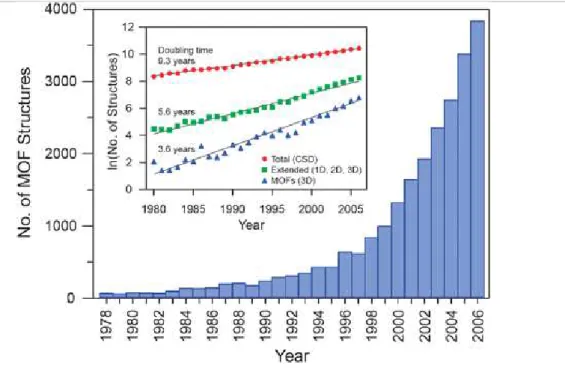
Figure 1.3. Number of MOF structures reported in the Cambridge Structural Database (CSD) from 1978 through 2006. 5
Figure 1.4. Number of MOFs published per year since 1970 (left) and the change in the percentage of MOFs in the overall CSD since 1970
(right) 5
Figure 1.5. Schematic presentation of the reticular chemistry 6
Figure 1.6. Structure of MIL-53ht 7
Figure 1.7. Structure of COF-1 8
Figure 1.8. Single-crystal structure of rho-ZMOF (left) and sod-ZMOF (right). 9
Figure 1.9. Schematic illustrating various reference states for the definition of adsorption 22
Figure 1.10. Common isotherm measurement systems 24
Figure 1.11. Schematic representation of GCMC simulation 33
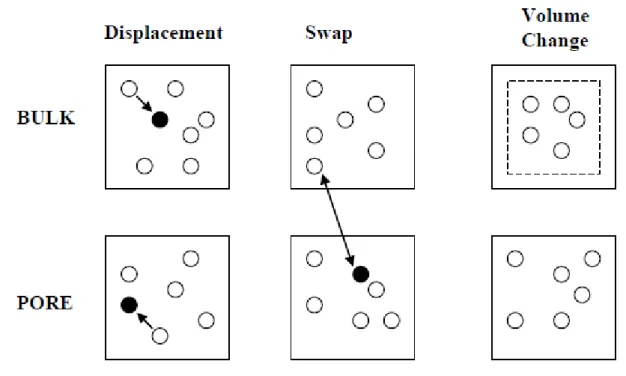
Figure 1.12. Three types of move attempted in constant pressure-GEMC 35 Figure 2.1. Atomic structure of MIL-53lp(Al) unit framework 50 Figure 2.2. Experimental mercury intrusion–extrusion cycle 52
Figure 2.3. Particle size distribution of MIL-53(Al) powder 53
Figure 2.4. TGA analysis of hydrated MIL-53(Al) powder 53
Figure 2.5. FT-IR spectrum of hydrated MIL-53(Al) powder 54
Figure 2.6. MAS 13C-NMR spectrum of the MIL-53(Al) sample 55
Figure 2.7. Powder XRD spectrum of MIL-53(Al) sample 56
Figure 2.8. Adsorption-desorption of N2 on MIL-53(Al) 57
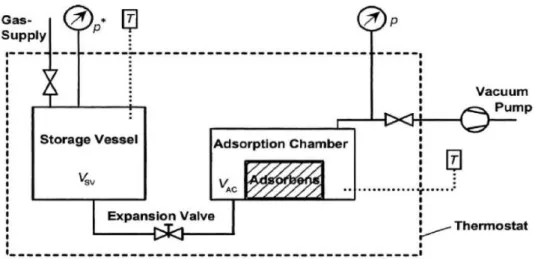
Figure. 3.1 Experimental setup for volumetric measurement of pure gas adsorption equilibria 63
Figure. 3.2 Schematic diagram of gravimetric apparatus 64
Figure 3.3 ISOSORP 2000 high-pressure magnetic-suspension balance (MSB) from Rubotherm GmbH (Bochum, Germany). 65
Figure 3.4 Schematic of the experimental set-up used for the adsorptionmeasurements 66
Figure 4.1 Snapshot of the GCMC simulation box with condensed methane molecules inside MIL-53lp(Al) 81
Figure 4.2 Molecular density field for condensed methane at 152.5 K 82
Figure 4.3. Absolute (●), excess (○), and net adsorption (■) isotherms of methane in MIL-53lp(Al) 84
xviii
Sips and Toth isotherm models
Figure 4.6. (a) Isosteric heat as a function of loading and (b) adsorption isosteres for the CH4/MIL-53lp(Al) system at 303
–353 K 90
Figure 4.7. Isosteric heats of adsorption derived from the Sips and Toth isotherm models 91
Figure 4.8. Cubic Hermite interpolation (solid lines) of the GCMC adsorption isotherms (open circles) 95
Figure. 5.1. Orthographic view of the unit cell along a axis (top-left), b axis (top-right),and c axis (bottom-right). 102
Figure. 5.2
Orthographic view of the unit cell along the a axis (top-left) and identification of the three types of sub-channel: type 1, type 2, and
type 3. 102
Figure 5.3 Molecular density profile, na(x), along the a-axis of each sub-channeof the unit cell of MIL-53(Al)lp for a loading of one (top) and thre
(bottom) ethane molecules per unit cell 104
Figure 5.4 Molecular density field, na(x; y), at various positions along the a-axis of the unit cell of MIL-53(Al)lp for a loading of one ethane
molecule per unit cell 105
Figure 5.5 Molecular density field, na(x; y), at various positions along the a-axis of the unit cell of MIL-53(Al)lp for a loading of 6 ethane
molecules per unit cell 106
Figure 5.6 Absolute (◊), excess (□), and net (Δ) adsorption isotherms of methane in MIL-53lp(Al) at 303 K (a), 323 K (b) and 353 K (c) 108
Figure 5.7 Absolute (◊), excess (□), and net (Δ) adsorption isotherms of ethane in MIL-53lp(Al) at 303 K (a), 323 K (b) and 353 K (c) 109
Figure 5.8 Absolute (◊), excess (□), and net (Δ) adsorption isotherms of propane in MIL-53lp(Al) at 303 K (a), 323 K (b) and 353 K (c) 110
Figure 5.9 Absolute (◊), excess (□), and net (Δ) adsorption isotherms of butane in MIL-53lp(Al) at 303 K (a), 323 K (b) and 353 K (c) 111
Figure 5.10 Methane (◊), ethane (□), propane (Δ) and butane (○) adsorption isotherms on MIL-53(Al) at 303 K expressed here in terms of nex 112
Figure 5.11 Methane (◊), ethane (□), propane (Δ) and butane (○) adsorption isotherms on MIL-53(Al) at 323 K expressed here in terms of n
ex 113
Figure 5.12 Methane (◊), ethane (□), propane (Δ) and butane (○) adsorption isotherms on MIL-53(Al) at 353 K expressed here in terms of nex 113
Figure 5.13 Semi-butane (O) adsorption isotherms in MIL-53lp(Al) at 303 K log scale of methane (◊), ethane (□), propane (Δ), and 114
Figure 5.14
Comparison of the experimental isotherms presented in semi-log scale obtained at 303 K (◊), 323 K(Δ) and 353 K (□) during the
adsorption of ethane on MIL-53(Al) 114
Figure 5.15 Experimental adsorption isotherms of butane on MIL-53(Al) at 303
K (◊) and 323 K (□) presented in semi-log scale 115
Figure 5.16
Upper panel: adsorption isotherms of CH4 (in red) and C4H10(in blue) in MIL-53(Cr), in a Langmuir model. Lower panel: difference in osmotic potential between lp and np phases, as a function of pressure
117
Figure 5.17 Existence of guest-induced structural transitions upon gas adsorption as a function of ΔFhost, the free energy difference between empty structures, and the ratio of gas affinities, K1/K2
xix
adsorption, with guests of different affinities (Klp and Knp).
Figure 5.19 Comparison of excess adsorption isotherms of ethane in MIL-53lp(Al): gravimetry (solid symbols) and simulation (open symbols) 119
Figure 5.20 Comparison of excess adsorption isotherms of propane in MIL-53lp(Al): gravimetry and simulation. 120
Figure 5.21 Global fitting of the experimental ethane adsorption data by the Sips and Toth isotherm models 121
Figure 5.22 Global fitting of the experimental propane adsorption data by the Sips and Toth isotherm models 121
Figure 5.23 Global fitting of the experimental butane adsorption data by the Sips and Toth isotherm models 122
Figure 5.24 (isosteres for the Ca) Isosteric heat as a function of loading and (b) adsorption
2H6/MIL-53lp(Al) system at 303–353 K. 124
Figure 5.25 (isosteres for the C3H8/MIL-53lp(Al) system at 303a) Isosteric heat as a function of loading and (b) adsorption
–353 K. 124
Figure 5.26 (isosteres for the Ca) Isosteric heat as a function of loading and (b) adsorption
4H10/MIL-53lp(Al) system at 303–353 K. 125
Figure 5.27 Isosteric heats of adsorption of ethane derived from the Sips and Toth isotherm models 126
Figure 5.28 Isosteric heats of adsorption of propane derived from the Sips and Toth isotherm models 127
Figure 5.29 Isosteric heats of adsorption of ethane derived from the Sips and Toth isotherm models 128
Figure 5.30 Total storage capacity (black), net adsorption (red) and bulk gas compressed (blue) for the CH4 adsorption on MIL-53(Al) 130
Figure 5.31 Total storage capacity (black), net adsorption (red) and bulk gas compressed (blue) for the C2H6 adsorption on MIL-53(Al) 131
Figure 5.32 Total storage capacity (black), net adsorption (red) and bulk gas compressed (blue) for the C
3H8 adsorption on MIL-53(Al) 132
Figure 5.33 Total storage capacity (black), net adsorption (red) and bulk gas compressed (blue) for the C4H10 adsorption on MIL-53(Al) 133
Figure 5.34 Non Cylindrical ANG and Cylindrical CNG, LNG, LPG tanks 135
Figure 5.35 Adsorption (blue rhombs) and desorption (red circled) run for butane in MIL-53(Al) at 323 K 136
xxi
List of Tables
Table 2.1. Elemental analysis for anhydrous MIL-53(Al) sample 51
Table 2.2. Crystallographic unit cell parameters obtained for MIL-53(Al). 57
Table 4.1. Lennard-Jones parameters for dispersive interactions in the CH4/MIL-53lp(Al)
system 77
Table 4.2. Parameters obtained from the data fitting with the Sips and Toth models 88
Table 5.1. Table 5.1.Lennard-Jones parameters for dispersive interactions in the C2
-C4/MIL-53lp(Al)system. 102
Table 5.2. Predicted Pressures for the lp-np and np-lp Transitions 115
Table 5.3. Parameters obtained from the data fitting for the C1-C4 experimental adsorption with the Sips and Toth models. In every case r2>0.998; ARE is the
average relative error 122
Table 5.4. Isosteric Heat of adsorption determined by GCMC simulation method, integrated form of Clapeyron equation and Sips, Toth isotherms models 125
Table 5.5. Storage capacity of propane and butane under critical pressure 134
Table 6.1. Results of low temperature N2 adsorption 144
Table 6.2. Maximal adsorption capacity obtained from the data fitting for the C1-C4 experimental adsorption by the Sips and Toth isotherms model 144
Table 6.3. Isosteric Heat of adsorption determined by GCMC simulation method, integrated form of Clapeyron equation and Sips, Toth isotherms models. 146
xxiii
List of Schemes
Scheme 1.1. Presentation of a typical adsorption process 20
Scheme 1.2. Models presentation of the adsorption process 25
Scheme 5.1. Diagram for the hypothesis of the temperature and chain size effects on “breathing” and “gate opening” phenomena in MIL-53 (Al) upon C1-C4 adsorption.
116
INTRODUCTION
1.1.
METAL ORGANIC FRAMEWORKS (MOFS)
3
1.1.1. MOFs overview
3
1.1.2. MOFs applications
10
1.2.
GAS STORAGE/ADSORPTION
14
1.2.1. Single-component adsorption
14
1.2.2. Multi-component adsorption
18
1.3.
THERMODYNAMICS of GAS ADSORPTION
20
1.3.1. Supporting theory
20
1.3.1.1. Adsorption in microporous solids
21
1.3.1.2. Adsorption isotherm models
25
1.3.3. Thermodynamic parameters
28
1.4.
SIMULATION TOOLS
30
1.4.1. INTERACTION POTENTIAL
30
1.4.2. MONTE CARLO
32
1.4.2.1. CANONICAL ENSEMBLE
32
1.4.2.2. GRAND CANONICAL ENSEMBLE
32
1.4.2.3. GIBBS ENSEMBLE
34
1.5.
RESEARCH STRATEGY AND OBJECTIVES
36
3 |
1 6 6
1.1.
Metal Organic Framework
Porous materials are of scientific and technological interest because of their ability to interact with atoms, ions and molecules not only at their surfaces, but also in bulk. The pores sizes, shapes and volumes govern their ability for desired function in a particular application. The applications of porous materials involve storage, separation, ion exchange, catalysis and etc. Recently, an advanced approach to porous solid materials synthesis has gained renewed interest [1]. It involves coordination of the metal ions to the organic „linker‟ moieties, thus yielding open framework structures called the Metal-Organic Frameworks (MOFs).
1.1.1. MOFs overview
A metal-organic framework (MOF) is composed of two major components: a metal ion or cluster of metal ions and an organic molecule called a linker. The organic units are typically mono, di-, tri-, or tetravalent ligands. The combination of the two components of a MOF, the metal ion or cluster and the organic linker, provides endless possibilities (Fig. 1.1 and 1.2).
Since the 1990s, this area of chemistry has experienced almost unparalleled growth, as evidenced by not only the sheer number of research papers published but also the ever-expanding scope of the research [1-3]. The MOF design via functionalization or incorporation of various building blocks ensures the unique physicochemical properties of the resulting materials, such as redox potentials, light absorption, magnetic moments, optics, electronic properties and etc. To date, there are tens of thousands of MOFs catalogued in the Cambridge Structural Database (CSD) (Fig. 1.3, 1.4) [4]. Thus, discovered 15 years ago, MOFs represent one of today’s hottest fields of research.
4 |
1 6 6
Figure 1.1. The MOF-5 (or IRMOF-1) Structure [http://en.wikipedia.org/wiki/File:IRMOF-1_wiki.png]. Color scheme is as follows: Zn (blue polyhedra), O (red spheres), C (black spheres), Br (green spheres in 2), amino-groups (blue spheres in 3). The large yellow spheres represent the largest Van der Waals spheres that would fit in the cavities without touching the frameworks. All hydrogen atoms have been omitted, and only one orientation of disordered atoms is shown for clarity5 |
1 6 6
Figure 1.3 Number of MOF structures reported in the Cambridge Structural Database (CSD) from 1978 through 2006. The bar graph illustrates the recent dramatic increase in the number of reports, while the inset shows the natural log of the number of structures as a function of time, indicating the extraordinarily short doubling time for MOF structures compared to the total number of structures archived in the database [10].Figure 1.4 Graph of the number of MOFs published per year since 1970 (left) and the change in the percentage of MOFs in the overall CSD since 1970 (right)
6 |
1 6 6
Figure 1.5 Schematic presentation of the reticular chemistry [http://en.wikipedia.org/wiki/File:Reticular_figure!.jpg]As metal sites play a central role in a vast majority of molecular recognition processes, Chen et al. reported a presence of open metal sites by single-crystal X-ray diffraction analysis in a crystalline MOF [17]. The 3D crystalline MOF named as MOF-11 was formed from copolymerization of inorganic square cluster with an organic adamantine tetrahedral cluster, consisting of 3-D channel filled with guest water molecules. Several chiral porous MOFs were synthesized based on chiral ligands for enantioselective applications. As most of the MOFs contain transition elements, new MOFs were developed based on lanthanide elements due to their high coordination number with specific magnetic and luminescence properties [14-16]. The structure of enclathrated water can be an important parameter in understanding the mechanism of formation of different MOFs. Bharadwaj and co-workers [7-9, 17-22] examined the stable conformation of different isomers of water cluster in various MOFs.
7 |
1 6 6
regeneration is possible by guest resorption. The other is crystal-to-crystal transformation where guest exchange or removal causes structural change without loss of crystallinity, i.e., unit cell expansion/contraction or scissoring.In the MOFs, two processes may occur during adsorption of gas, namely gating and kinetic trapping. Gating occurs when the porous structure changes during adsorption process, going from non-porous to porous at a specific pressure. Physical adsorption of species on many porous materials produces adsorption isotherms that are virtually completely reversible. However, Zhao et al. [28] reported irreversibility in hydrogen uptake in a MOF at 77 K, whereby all or some of the H2 is retained on pressure reduction referred to as “kinetic trapping”. This is due to a presence of narrow windows, which are considerably smaller than the cavities they connect resulting in a kinetic tapping of the H2 gas by windows.
Ferey and co-workers first developed a series of 3D rare earth diphosphonates named as MIL-n (Materials of the IMIL-nstitute Lavoisier) [29-31]. Later they exteMIL-nded to compouMIL-nds coMIL-ntaiMIL-niMIL-ng 3D transition metals (M = V, Fe, Ti) and metallic dicarboxylates [32-34]. Ferey et al. [35] used combined targeted chemistry and computational design to create chromium terephthalate based MIL-101 with very large pore sizes of ~ 30-40 Ǻ and surface area of ~ 3900 m2/g. Serre et al. synthesized the first Cr (III) dicarboxylate MIL-53as (as-synthesized) under hydrothermal conditions [36]. MIL-53as exists in two forms, low-temperature form filled with water molecules and high temperature form, the dehydrated solid (Fig. 1.6). The transition between the hydrated form (MIL-53lt) and the anhydrous solid (MIL-53ht) is fully reversible and followed by a very high breathing effect. The pores are clipped in a presence of water molecules (MIL-53lt) and reopened when the channels are empty (MIL-53ht). In addition, MIL-53as and MIL-53lt exhibit antiferromagnetic properties. Similar breathing occurs when they change the Cr atom with other elements such as Al, Fe and Ga and this is due to the presence of the OH groups in one-dimensional channel which strongly interact with water [37-39]. However, no such breathing occurs in vanadium kind of the MIL-47 material, where there are no OH groups in the skeleton [40].
8 |
1 6 6
A major breakthrough in the MOFs development is an evolution of the covalent organic frameworks (COFs), which consist of light elements (B, C, N and O) resulting in various 2D and 3D porous framework. Côté et al. [41, 42] and El-Kaderi et al. [43] synthesized the crystalline, porous COFs solely from light elements such as B, C, O and H. Consisting of organic-linkers covalently bonded with boron-oxide clusters, the COF-1 has salient features such as high thermal stability, large surface area and porosity. These boron-oxide clusters can be regarded as analogous to the metal-oxide clusters in MOFs. With the light elements, COFs have even lower density than MOFs. The cocondensation of boronic acid with hexahydroxytriphenylene results in 2D COF6, 8 and -10 [42]. These 2D COF structures resemble the layered graphite composed of graphene sheets. The inter-layer distances in the COF-6, -8 and -10 are of 3.399, 3.630 and 3.526 Å, respectively. Alternatively, joining triangular and tetrahedral nodes leads to 3D the COF-102, 103, 105 and 108 [43]. The COF-108 was reported to have the lowest density (as low as 0.17 g/cm3), even lower than the highly porous materials MOF-177 (0.42 g/cm3) and the lowest in any crystalline materials. Similar to carbon nanotube, armchair or zig-zig 1D the COF nanotube (COF_NT) could be constructed by rolling a COF layer in a particular direction. Mazzoni and coworkers [44] tested the stability of COF_NTs by examining the structural and electronic properties using the first principle calculations. Later, Hunt et al. [45] extended this approach by linking organic units with the strong covalent bonds found in the Pyrex (borosilicate glass, B-O and Si-O) to give a porous covalent organic borosilicate framework designated as the COF-202. Uribe-Romo et al. synthesized the first 3D crystalline framework (COF-300) constructed solely from C-C and C-N covalent linkages and demonstrated its permanent porosity by studying Ar adsorption at 87 K [46]. Wan et al. reported the synthesis of a new COF, the TP-COF based on the condensation reaction of triphenylene and pyrene monomers [47]. The TP-COF is highly luminescent, electrically conductive and capable of repetitive on-off current switching at room temperature.9 |
1 6 6
Advanced design of the topological networks of zeolites (inorganic tetrahedral building units) resulted in a new generation of highly porous MOFs, such as the Zeolitic-Imidazolate Frameworks (ZIFs), Tetrahedral-Imidazolate Frameworks (TIFs), Boron-Imidazolate Frameworks (BIFs) and Zeolite like Metal-Organic Frameworks (ZMOFs). Those exhibit unique properties of extra-large cavities, chemical stability and ion-exchange capability. Tian et al. [48] reported a novel MOF with large pores and diamond-like topology from tetrahedral building block (TX4) with four connections, where T-X-T angle is of 145º, T is Co(II) and X is imidazole linker. Similarly, Tian et al. [49-52] synthesized several MOFs based on the Co (II) and Zn imidazolates with zeolite-like topology. Huang et al. [53] established a new strategy to develop the zeolite-type MOFs with large pores by using a simple imidazolate ligand with a smaller substituent such as a methyl or ethyl group at the 2-position resulting in SOD and ANA topologies [54, 55]. Park et al. [56] synthesized a series of the ZIFs by copolymerization of either the Zn (II) or Co (II) with imidazolate-type linkers. Hayashi et al. [57] reported the ZIF-20, ZIF-21 and ZIF-22 based on the FAU or LTA topologies. Banerjee et al. [58] developed 25 different ZIFs structures, 10 of which have two different links and 5 of topology not yet observed in zeolites and ZIF-68, -69 and -70 are of high thermal and chemical stability in organic and aqueous media. Wang et al. [59] reported the ZIF-95 and ZIF-100 with topology non-observed for the zeolites. Zhang et al. [60] demonstrated a new synthetic method based on the cross-linking of various pre-synthesized boron imidazolate complexes (BIFs). Wu et al. [61] synthesized five 4-connected zeolitic metal imidazolate frameworks (TIFs). Liu et al. [62] reported the 4-connected MOF (rho-ZMOF) which is anionic in nature with topology of rho-zeolite (Fig. 1.8). Similarly, Sava et al. [63] used the approach based on rigid and directional single-metal-ion tetrahedral building units (TBUs) to synthesize the pyridine - carboxylate ZMOFs.Figure 1.8 Single-crystal structure of rho-ZMOF (left) and sod-ZMOF (right). Hydrogen atoms and quest molecules are omitted for clarity. In - green, C - gray, N - blue, O - red. The yellow sphere represents the largest sphere that can be fit inside the cage, considering the van der Waals radii [63].
Post-synthetic modification of MOFs opens up another dimension of structural possibilities that might not be achieved by conventional synthesis
.
A critical review on post-synthetic modification of10 |
1 6 6
1.1.2. MOFs applications
The MOFs have been explored for their interesting properties including optical [62, 65-67], magnetic [68-70] and electronic properties [71-74], as well as their potential applications such as in catalysis [75-78], ion-exchange [62, 63, 79-81], gas storage and separation [82-84], sensing [85-87], polymerization [88, 89] and drug-delivery [90-92]. A brief discussion on the application of MOFs, particularly in gas adsorption, separation and catalysis is summarized below.
Gas Storage
Metal Organic Frameworks (MOFs) attract attention as materials for adsorptive gas storage because of their exceptionally high specific surface areas and chemically tunable structures. MOFs can be considered as a three-dimensional grid. Gas molecules are stored in a MOF by adsorbing to its surface without space-blocking by non-accessible volume. Also, MOFs have a fully reversible uptake-and-release behavior: since the storage mechanism is based primarily on physisorption, there are no large activation barriers to be overcome when liberating the adsorbed gases.
Over past few years, numerous studies have been reported in MOFs toward the H2 storage for vehicular applications. Rowsell et al. [93] observed that the adsorption capacity in MOFs can be further increased by altering a chemical nature of the organic component. Chen et al. [94] highlighted the H2 adsorption in the MOF-505 based on NbO topology with two pores types, open metal sites, permanent porosity. Ferey et al. [95] studied the H2 storage capacity of the MIL-53 (nanoporous metal-benzenedicarboxylate containing trivalent Cr or Al) and found it is of 3.8 wt% and 3.1 wt%, respectively, at 77 K and 1.6 MPa.
Pan et al. [96] explored a new type of microporous metal coordination materials (MMOMs) with pore dimensions comparable to the molecular diameter of H2. The open channels in MMOMs are perfectly ordered, allowing the effective access of H2 to interior space. The structures of these materials, including the metal building unit, pore dimension, shape, size and volume, can be systematically tuned for modifying and improving H2 uptake and adsorption/desorption properties.
Rowsell and Yaghi [97] reported comprehensive study on the strategies that enhance the H2 storage in MOFs, included the optimization of pore size and adsorption energy by linker modification, impregnation, catenation, and inclusion of open metal sites and lighter metals. Following this, numerous experimental studies have been reported on the effect of catenation and inclusion of open metal sites on the H2 uptake [98-101]. Wang et al. [102] reported a new porous coordination network, the PCN-12 exhibiting the H2 uptake of 3.05 wt % at 77 K and 1 bar. Vitillo et al. [103] reported a MOF (CPO-27-Ni) with the highest heat of adsorption of -13.5 kJ/mol.
11 |
1 6 6
Eddaoudi et al. [2] synthesized various MOFs and studied gas storage, particularly the CH4 storage. They proposed a strategy based on reticulating metal ions and organic carboxylate links into extended networks in which pore size and functionality could be varied systematically. As a prototype of MOFs, the MOF-5 was constructed from Zn4O clusters and benzene links. The threedimensional structure of the MOF5 can be functionalized with the groups Br, NH2, OC3H7, -OC5H11, -C2H4, -C4H4 and the pore size can be expanded with long molecular struts biphenyl, tetrahydropyrene, pyrene and tetraphenyl. They synthesized an isoreticular series of 16 highly crystalline materials with open space up to 91.1% of the crystal volume and pore size from 3.8 to 28.8 Ǻ. One member of this series exhibited a high capacity for the CH4 storage of 240 cm3(STP)/g at 36 atm and ambient temperature. A correlation between efficient CH4 adsorption and large surface area, high free volume, low framework density was proven [108]. Ma et al. [109] reported a microporous MOF, PCN-14, based on anthracene derivative consisting of nanoscopic cages. High pressure CH4 adsorption study showed that PCN-14 exhibits an absolute CH4-adsorption capacity of 230 v/v, which is 28% higher than the DOE target of 180 v/v [110] at ambient temperature.Gas Removal
In addition to gas storage for energy application, removal of gases from environment is also important. Yaghi and Millward [84] tested the storage capacity for CO2 at room temperature in nine MOFs, representing a cross section of framework characteristics such as square channels (MOF-2), pores decorated with open metal sites (MOF-505 and Cu3(BTC)2), hexagonally packed cylindrical channels (MOF-74), interpenetration (the IRMOF-11), amino-and alkyl–functionalized pores (IRMOFs-3 and -6), and the extra-high porosity frameworks (IRMOF-1 and MOF-177). Llewellyn and Chowdhury et al. [111, 112] reported high uptake of the CO2, CH4 CO2, CH4, C3H8, SF6 and Ar in chromium-based MIL-101. For all gases considered in their study, the enthalpy of adsorption was found to be lower than those in purely siliceous zeolites such as silicalite indicating a weaker interaction between the adsorbates and MIL-101 framework. Furukawa and Yaghi [83] measured the CO2 storage capacity in various 1D, 2D and 3D structures of covalent organic frameworks (COFs) [42, 43] and showed that 3D COF structures outperform 1D and 2D COFs. For instance, CO2 uptake in COF-102 and COF-103 is around 1010 mg/g and 1200 mg/g at 55 bar and 298 K and comparable to that in MOF-177 (1490 mg/g at 40 bar and 298 K) [84] and MIL-101(Cr) (1760 mg/g at 50 bar and 298 K) [111].
Medical applications
12 |
1 6 6
Gas SeparationSome MOFs have been demonstrated being potentially useful in gas separation. Chen et al. [115] designed the MOF-508 with pores that can be tuned to match alkane molecular sizes and found highly selective chromatographic separation of alkanes in this MOF. Separation of linear and branched isomers of pentane and hexane were examined in detail, because of their availability and industrial relevance in petroleum refining. Pan et al. [116] studied the separation of hydrocarbons in microporous MOFs (MMOFs). Compared to zeolites, the MMOF structures are typically composed of aromatic rings and other organic moieties. Their pore structures can be designed and modified to yield the desired shape, size, and surface characteristics. They designed and synthesized a group of MMOFs that have 3D or 2D structures built upon paddle-wheel metal clusters (nodes) and a V-shaped dicarboxylate ligand. These structures contain irregular-shaped micro channels with alternating large cages (or chambers) and small entrances (or necks) that connect these cages. One of the MMOFs developed has unique property to separate normal C2, C3 and n-C4 olefins and alkanes from all branched alkanes and all normal hydrocarbons above C4. Dybtsev et al. [117] reported a new MMOF from manganese formate with permanent porosity, high thermal stability and high selective gas sorption properties. It selectively adsorbs H2 and CO2 but not the gases of larger kinetic diameters due to a smaller aperture of the channels. The selective adsorption of H2 over N2 was also reported on PCN-13 [118], Mg3(ndc)3 [119] and Cu (F-pymo)2 [120].
The adsorption properties of different gases have been studied for the first robust MOFs, the Cu-BTC with a microporous structure [121, 122]. Ma et al. [123] reported a coordinatively linked interpenetrated MOF, the PCN-17, which has the porous structure containing large cages linked by relatively small apertures and retains its porosity at temperatures >480ºC. It selectively adsorbs H2 and O2 over N2 and CO aiming at fuel-cell applications.
Taking into account the guest-surface interaction, it is worth noting that the selectivity is related to adsorbate properties such as polarity, quadrupole moment and H-bonding. Matsuda et al. [124] reported the selective adsorption of C2H2 over CO2 at low pressures and room temperature in Cu2(pzdc)2(pyz), where pzdc is pyrazine-2,3-dicarboxylate and pyz is pyrazine. Selective adsorption based on the hydrophobic/hydrophilic properties of pores was observed in the Zn (tbip) [125], (tbip-5-tert-butyl isophthalic acid), Zn(bdc)(ted)0.5 [126], (bdc -1,4 benzene dicarboxylate, ted-triethylenediamine) and CID-1 [127], (CID-coordination polymer with interdigitated structure). These MOFs selectively adsorb MeOH, EtOH and dimethyl ether over H2O. Several MOFs selectively adsorb CO2 over CH4 because CO2 has a large quadrupole moment whereas CH4 has none. For example, Mn(ndc) (napthalenedicarboxylate) [128] is a 3D microporous MOF with 1D channels which contain unsaturated metal sites. The adsorption measurements show that CO2 is more adsorbed than CH4 at ambient temperature. Similarly, Bae et al. [129] reported selective adsorption of CO2 over CH4 in a carborane based-MOF with coordinatively unsaturated metal sites. Recently, Mu et al. [130] synthesized a new 2D interpenetrating MOF with unsaturated metal sites and uncoordinated carboxylic group, exhibiting a high selectivity (~13) for CO2 over CH4.
13 |
1 6 6
highly constricted pores, a higher affinity was found for CO2 over CH4, CO and N2 [131]. A high selectivity for CO2 is due to the combined effects of the aperture sizes, strong quadrupolar interactions of CO2 with the N surface atoms and higher condensability of CO2 than other gases.Catalytic applications
MOFs have large potential in numerous catalytic applications. The study of MOFs as catalysts has only recently begun with the majority of the work achieved during the last few years. The mild synthetic conditions typically employed for MOF synthesis allow direct incorporation of a variety of delicate functionalities into the framework structures. The high surface area, tunable porosity, diversity in metal and functional groups of MOFs makes them especially suited for use as catalysts. Furthermore, the set geometry of the MOFs internal framework allows for their use as size selective catalysts.
14 |
1 6 6
1.2.
Gas Storage/Adsorption
1.2.1. Single-component adsorption
H2 Storage
Considerable interest has been shown in the development of non-petroleum energy carriers for use in transportation. Hydrogen is an attractive option because it has a high energy content (120 MJ/kg compared to 44 MJ/kg for gasoline), produces clean exhaust product (water vapor without CO2 or NOx), and can be derived from a variety of primary energy sources. A key issue for a practical utilization of H2 is development of safe and high-capacity systems for the H2 storage. The U.S. Department of Energy (DOE) has set the targets for on-board H2 storage as of 6.0 wt% and 45 g/L by 2010, and 9.0 wt% and 81 g/L by 2015 [142]. Considerable research has been undertaken over the past two to three decades to determine the H2 storage capacity in different carbon nanostructures such as activated carbon, graphite, carbon nanofibres, carbon nanotubes, fullerenes and also in zeolites, metal hydrides and MOFs. Several techniques such as the Monte Carlo, molecular dynamics and first-principle approaches have been employed to examine the H2 adsorption in different classes of materials and in turn guide to rational design of adsorbent materials that can meet storage targets.
Ab initio calculations have been reported to investigate an interaction of H2 with MOFs and COFs. Hüber et al. [143] studied H2 interaction with MOFs using approximate resolution of the identity Møller-Plesset (MP2) [144-146] calculations and triple zeta valence basis set (TZVPP) [163]. They estimated the binding energies between H2 and various substituted benzenes such as C6H6, C6H5F, C6H5OH, C6H5NH2, C6H5CH3 and C6H5CN. The binding energies of H2 to benzene and naphthalene are of 3.91 and 4.28 kJ/mol, respectively, indicating that enlarging the aromatic systems increases the interaction energy. Sagara et al. [147,148] calculated the binding energy of H2 with organic linker and metal-oxide part in IRMOF-1 using MP2 with the quadrupole zeta QZVPP [149] basis set. In addition, they calculated H2 interaction with organic linkers in various MOFs (the IRMOF-1, IRMOF-3, IRMOF-1-4NH2, IRMOF-6, IRMOF-8, IRMOF-12, IRMOF-14, IRMOF-18 and IRMOF-993) and found that the larger linkers bind more H2 molecules and addition of NH2 or CH3 group to each linker increases a binding energy by up to 33%. Han et al. [166] performed the MP2/QZVPP calculation to find a binding energy of the H2 with different metal oxides and found that the substitution of metal sites from the Zn to Mg and Be does not change the configuration, with the Mg cluster showing the higher binding energy.
15 |
1 6 6
The presence of open metal sites was found to have a favorable impact on the H2 uptake, but an uptake was still low at room temperature. Garberoglio et al. [154] predicted the H2 adsorption isotherms in various MOFs namely, the MOF-2, MOF-3, IRMOF-1, IRMOF-5, IRMOF-8 and IRMOF-14 using the UFF [155] and the DREIDING force fields [156]. The simulation results agreed better with experiments considering the quantum effects, and without the quantum effects they are overestimated in the IRMOF-1 and underestimated in the IRMOF-8 at 1 bar and 77 K. Frost et al. [157] used the GCMC simulations to predict the adsorption isotherm of H2 in ten different non-interpenetrating MOFs. The calculated results reveal existence of three different adsorption regimes: at low pressures, the H2 uptake correlates with the heat of adsorption; at intermediate and higher pressures, correlates with the uptake, the surface area and free volume. Jung et al. [158] studied the effect of catenation on the H2 adsorption in catenated MOFs using the GCMC and found that the small pores generated by catenation play a significant role in densely confining H2 molecules; therefore, the capacity in catenated frameworks is higher than that of the non-catenated counterparts. Similarly, Ryan et al. [159] reported the effect of catenation on the H2 uptake in MOFs and found that catenation can be beneficial for improving the H2 storage in MOFs at a cryogenic temperature and low pressures, however not necessarily at a room temperature.16 |
1 6 6
Rowsell and Yaghi [97] discussed six strategies for high H2 adsorption in MOFs, such as high porosity with appropriate pore size, impregnation, catenation, open metalsites, light metals and functionalized linkers. Using the GCMC simulation based on ab initio force field, Han et al. [166] found a large heat of adsorption for H2 of 8.8 kJ/mol in COF-1 due to appropriate pore size, showing a high uptake of 1.7 wt % at 0.1 bar which is higher than in other COFs, such as COF-5, COF-102, COF-103, COF-105 and COF-108. However, at 300 K COF-1 shows a low H2 storage of 0.78 wt % at 100 bar. Yaghi and co-workers [97] suggested insertion another adsorbate molecule in large-pore MOFs to create appropriate pore size for high H2 adsorption. Using this approach, Han et al. [156] obtained the C60 loaded MOF-177 by the GCMC simulation at 300 and 1 bar and the standard DRIEDING force field. They found that at low pressures the H2 uptake increases by an inclusion of C60 into MOF-177 at 77 K and 300 K. However, at high pressures it decreases due to a reduction in pore volume. Another way to reducing MOFs pore size is a framework catenation. Jung et al. and Ryan et al. proved that catenation increases the H2 adsorption at 77 K, but not at 300 K [167].Open metal sites can also be used to enhance the H2 binding energy (up to 10-50 kJ/mol) by using different transition metals in the MOF systems [167-169]. Doping alkali elements on the organic linker parts of MOFs and COFs was considered as another strategy to improve the H2 uptake [170-175]. Recently, Cao et al. [176] simulated the H2 adsorption in Li-doped COFs using ab initio based force field and the GCMC simulations and reported exceptionally high uptake of H2 at 298 K and 100 bar in COF-105 (6.84 wt %) and COF-108 (6.73 wt %).
CH4 Storage
17 |
1 6 6
CO2 StorageKawakami et al. [179] simulated the CO2 adsorption in Zn3(bdc)3 at 78 K using ab initio. They found that the framework charge has a substantial effect on the CO2 saturation capacity. Walton et al. [180] calculated the CO2 adsorption isotherms in IRMOF-1 at different temperatures which match qualitatively with experimental results. They showed that an inclusion of electrostatic interaction between the CO2 molecules is required to capture an inflection in the adsorption isotherms. In addition, Walton et al. [180] predicted the CO2 adsorption isotherms in IRMOF-3 and MOF-177 at 298 K and found good agreement with experiments. It was concluded that inclusion of framework charges has negligible effect on the CO2 adsorption in different MOFs.
Yang et al. [181] predicted the CO2 adsorption isotherms in various MOFs (CuBTC, IRMOF1, -8, -10, -11, -14, -16, MOF-177 and Mn-MOF) by fitting parameters to match experimental data. At moderate pressure of 30 bar, the CO2 uptake is related to both free volume and surface area. They also found that electrostatic interaction between CO2 and framework atoms enhances the adsorption by ~ 20-30 % at low pressures and decreases to ~ 3 % at high pressures compared with the neutral framework. Ramasahye et al. [182-184] calculated CO2 adsorption in MIL-53 (Al) and MIL-53 (V). They used the charges computed by the DFT method and a three site model for CO2. They predicted the adsorption isotherms and enthalpies of the adsorption in two different structures of MIL-53 (Al), namely narrow-pore MIL-53np (Al) and large-pore MIL-53lp (Al) forms, having the same chemical identity but different pore widths of 8.3 and 13.8 Ǻ, respectively. The simulated enthalpy in MIL-53np (Al) matches the experimental results at low pressures, while the enthalpy in MIL-53lp (Al) agrees with the experimental data at high pressures. This finding is consistent with a structural transition from narrow-pore form to large-pore form in MIL-53(Al) during the CO2 adsorption. They also calculated the CO2 adsorption isotherms at 303 K for pressure up to 30 bar in the two MIL-53(Al) structural forms and concluded that the μ2-OH groups in MIL-53(Al) is the main factor for structural transition. The calculated adsorption isotherm for CO2 in MIL-53(V) overestimates responsible experimental results probably due to a presence of incomplete solvent molecules in the experimental samples. In addition, Ramasahye et al. [185] used the DFT to probe different adsorption sites for the CO2 adsorption in MIL-53 (Al, Cr) and MIL-53 (V).
Other Gases
18 |
1 6 6
the adsorption sites for Ar and N2 in IRMOF-1. The positions and occupations of the adsorption sites match well with experiments. The molecules are localized around their crystallographic sites at 30 K, however, at 300 K they are quite dispersed inside the pore. Preferential adsorption site were also identified for many gases such as Ar, N2, CO2, CH4, H2, C2H6 and C3H8, which are near to the ZnO4 cluster with the organic linkers pointing outward.Walton et al. [188] calculated the BET surface areas in various IRMOFs, IRMOF-1, -6, -10, -14, -16 and -18, using the N2 adsorption isotherms and found good agreement with the accessible surface areas estimated from crystal structures. They concluded that by careful choosing of pressure range, the BET method can be used to obtain the surface areas of MOF materials. Yang et al. [189] simulated the adsorption isotherms of N2 and O2 in the Cu-BTC and adjusted the potential parameters to match experimental adsorption isotherms at 295 K and pressure up to 1 bar. Later they used these potentials to study multicomponent adsorption. Garberoglio et al. [154] predicted the Ar adsorption isotherms in Cu-BTC at 87 K and in manganese formate at 78 K. The simulated result agrees well with experiment at low pressure. However, it is overestimated at high pressure by a factor of ~ 30 % and ~ 50 %, respectively. Since the experiment was conducted at temperature lower than the triple point of Ar (83.8 K), a discrepancy may arise due to a formation of bulk, like the Ar clusters on the adsorbent surface. Similarly, Garberoglio et al. [162] simulated the Ar adsorption in the COF-102 and COF-103 at 87 K using the UFF and DRIEDING force fields and compared with experiments. The predicted adsorption overestimated experiments by ~ 25 % upon saturation and was worse at low pressures. The author mentioned that this discrepancy might be due to a number of effects, including the defects in a crystal structure, inaccurate solid-fluid interaction potentials and structure change upon adsorption at high loadings.
1.2.2. Multi-component adsorption
The potential of MOFs for separations of variety of gas mixtures such as CO2/N2, CO2/CH4, CO2/CO, CO2/C2H4, C2H6/C2H4, and hydrocarbons has been investigated both experimentally [190–198] and using molecular simulations [199–205].
![Figure 1.5 Schematic presentation of the reticular chemistry [http://en.wikipedia.org/wiki/File:Reticular_figure!.jpg]](https://thumb-eu.123doks.com/thumbv2/123dok_br/16496456.733579/34.892.136.688.114.547/figure-schematic-presentation-reticular-chemistry-wikipedia-reticular-figure.webp)