0
Perception and Practice of Gender among Nepalese in Portugal.
A Male Perspective
Sanjeev Dahal
Erasmus Mundus Masters in Social Work with Families and Children
Supervisors
Prof. Dr. Maria das Dores Guerreiro Prof. Dr. Cláudia Pereira
Instituto Universitário de Lisboa June, 2016
1 Ju n e, 20 1 6 Pe rcep tion a n d Pr act ic e o f Ge n d er amo n g N ep al ese in Po rt u gal. A M al e P ersp ect ive
2
Abstract
Title: Perception and Practice of Gender among Nepalese in Portugal. A Male Perspective
Author: Sanjeev Dahal
Key words: immigration, gender, perception, practice, praxis, masculinities, Nepalese, Portugal
The study looked into the perception and practice of gender among Nepalese men in Portugal. It explored gender related discourses and practices through these key research questions: i) how do Nepalese men migrants in Portugal perceive gender relations; ii) how are Nepalese men migrants in Portugal performing gender and iii) has migration affected the perception and practice of gender in Nepalese men. The study engaged in micro-ethnographic method using qualitative interviews and participant observation as tools. Five Nepalese men were interviewed during ethnographic field work which was substantiated with participant observation in private and public sphere of the life of Nepalese in Lisbon and Faro districts in Portugal. It was mentioned in the discourses of Nepalese men that migration and the resultant new social context of Portugal had a significant impact on how they perceive and practice gender which facilitated their understanding of unequal gender relations in Nepal as well as their move towards egalitarian gender relations. The study concludes that Nepalese men experienced significant changes in their perception of gender relation with women; but these changes were yet to be adequately reflected in their practices.
3
Table of contents
Table of figures and table of tables ... 4
Acknowledgements ... 5
1. Introduction and problem area ... 6
1.1 The research ... 6
1.2 Brief overview of the context of emigration of Nepalese ... 7
1.3 Rationale and significance of the study ... 8
1.4 The research approach ... 10
1.5 Structure of the thesis ... 11
2. Literature review and analytical framework ... 12
2.1 An introduction to gender in social context ... 12
2.2 Gender and migration ... 14
2.3 Nepalese and emigration ... 21
2.4 Immigration statistics in Portugal ... 23
2.5 Nepali society and gender ... 28
2.6 Analytical framework ... 29
3. Research methodology ... 35
3.1 Population of the study ... 35
3.2 Research method ... 35
3.3 Data collection tools and analysis ... 38
3.4 Ethical considerations ... 41
3.5 Limitations ... 42
4. Findings and discussions ... 43
4.1 Nepalese men‘s perception of gender ... 43
4.2 Nepalese men‘s practice of gender ... 55
4.3 Effects of migration in the perception and practice of gender ... 61
5. Conclusion and scope for further research ... 67
5.1 Conclusion ... 67
5.2 Scope for further research ... 73
List of references ... 74
Appendix 1: Interview Guide ... 78
4
Table of figures and table of tables
FiguresFigure 1: Nepalese nationals residing in Portugal, 2000 – 2013 ... 26
Figure 2: Distribution of Nepalese in Portugal by district and sex in 2013 ... 27
Figure 3: Illustration of analytical frame ... 34
Tables Table 1: Inflow of South Asians to Portugal, 2013 ... 23
Table 2: South Asians residing in Portugal, by sex till 2013 ... 24
Table 3: Residence permits granted to Nepalese nationals in Portugal from 2000 to 2013 ... 25
Table 4: Education Level of Nepalese residing in Portugal, by sex, 2011 ... 26
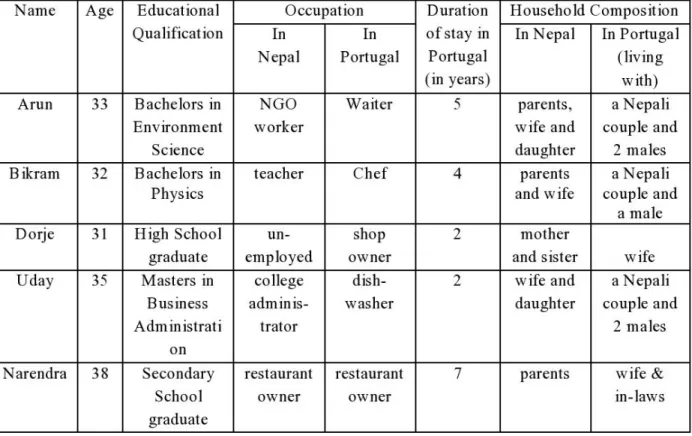
Table 5: Details of the interviewees ... 35
5
Acknowledgements
I would like to begin with thanking ISCTE-IUL for providing me with the opportunity to conduct the research under its guidance and support. I am highly indebted to MFamily coordinator Prof. Maria das Dores Guerreiro for putting out all the resources available at the University including inviting guest lectures and organizing seminars.
I deeply appreciate my supervisor Prof. Maria das Dores Guerreiro for providing me a broader understanding and deeper insights in the issue; going carefully through my work with expert eyes and suggesting relevant literature. I wholeheartedly thank my supervisor Prof. Claudia Pereira for looking at my work meticulously and giving inputs; providing feedback to each of my presentations before and after; for orienting me towards publication since the beginning of the research engagement; for connecting me with other professionals at ISCTE-IUL, in particular Ms. Alexandra Pereira, who connected me to her Nepalese network. The thesis has largely come out in the present shape because of the combined inputs of my supervisors; I couldn‘t have asked for more.
I am grateful to all my respondents for their time, welcoming me into their private space and personal lives and sharing their life stories and perspectives. I am thankful to all those who contributed to my data knowingly or unknowingly, while I was moving between covert and overt roles as ethnographer. I would like to mention two of my friends Mr. Amrit Poudel and Mr. Binod Bastakoti who were my key contacts in the field; I thank them for facilitating the whole research process and reconnecting me to Nepal in different ways.
Words cannot do justice to my deep appreciation of my best friend Angela who has been a co-traveler in this awaited yet challenging journey of research. I thank her for her inputs in the thesis and for believing I can do better. I will forever be indebted to her for helping me break my boxes and helping me develop a wider perspective which I believe has reflected in the thesis and will be with me for life.
I cannot thank Mr. Avash Piya enough for taking the time out to go through my research proposal meticulously and providing feedback that has been very useful. I would also like to mention my friend Ana Carvalheira for sharing insights from a similar journey of PhD and helping me plan each of the days and making sure I followed the plan. I express sincere gratitude to my dearest friend Richard Kamei for proof reading my work.
I sincerely appreciate the help provided by Prof. Ines Pereira throughout the process. I am highly encouraged by Prof. Vishanthie Sewpaul‘s interest in my work. I thank her for providing me with invaluable feedback that, to borrow her word, ‗illuminated‘ my work, in particular, the methodology. I take this opportunity to thank Prof. Liv Schjelderup for pointing out the possible flaws in my methodology and Prof. Cecile Omre for her feedback and encouragement.
And I am indebted to my family, who despite being far away and missing me, for entrusting me to take complete responsibility of my life without question; I acknowledge them with all I have for largely making me who I am today.
6
1. Introduction and problem area
Imperialism and globalization have created institutions that operate on a world scale. These institutions all have internal gender regimes, and each gender regime has its gender dynamic - interests, gender politics, processes of change. (Connell, 2002, p.111)
World-spanning institutions thus create new arenas for gender formation and gender dynamics; the most important of these innovations seem to be transnational and multinational corporations, the international state (e.g., United Nations agencies, the European Union), international media and global markets (Connell, 2002). Connell‘s arguments alert us of the critical need to look at the issue of gender in a global context as the impact of these world
spinning organizations can be felt in everyday lives of people, worldwide. Nepal is no exception. Nepal has highly gender stratified society. Gender plays a significant role in shaping very different life experiences for men and women in Nepal as many socially constructed roles are based on sex. Nepalese society is largely patriarchal, patrilocal, patrilineal: the father is by default the head of the family and makes most of the socio-economic decisions, hence “the
patriarch”; majority of the couples in Nepal live with the man‘s family after marriage, making
families patrilocal; and the family line is continued through the males- women take the family name ―surname‖ of the husband and the same is transferred to their children, making it
patrilineal. The researcher became acutely aware of this gender stratification present in Nepal during the initial classes on the course ‗Sociology of family‘ as a part of the Masters program on Social Work with Families and Children when all students were asked to draw the family chart: he drew only members of the family from his father‘s side. The reflections on what family meant to each of us helped the researcher realize how the understanding and doing of the family was different in each context. This exercise per se created ripple effects on the student to look at things in a different light and the inquisitiveness to look into ‗doing family‘ and ‗doing gender‘ within families was conceived.
The high visibility of Nepalese in Lisbon was another precursor for the development of the study. Portugal has been increasingly becoming one of the main destination countries in Europe for Nepalese, particularly after 2008 (Bajracharya, 2015). There were 2588 Nepalese in Portugal with residence permit in the year 2013 as compared to 560 in 2008; the Nepalese Consulate in Lisbon estimated around 10,000 Nepalese to be in Portugal in 2015 (ibid.). During my interactions with the Nepalese, they expressed that being in Portugal has changed their outlook on things. This visible presence of Nepalese in Portugal, their sharing of changes due to migration to Portugal and the researcher‘s own acute awareness shaped the study on gender and Nepalese in Portugal.
1.1 The research
The study ―Perception and Practice of Gender among Nepalese in Portugal. A Male Perspective‖ looks into the discourses and practices on gender among Nepalese male immigrants in Portugal. Through a micro-ethnographic methodology, it makes an attempt to look into gender relations
7
among Nepalese within the context of migration to Portugal through three key questions: i) how do Nepalese men migrants in Portugal perceive gender relations; ii) how are Nepalese men migrants in Portugal performing gender and iii) has migration affected the perception and practice of gender in Nepalese men. The introductory chapter provides a bird‘s eye view of the Nepali context at an outset, the phenomena and context of migration and the gendered context in Nepali society to contextualize the study undertaken.
1.2 Brief overview of the context of emigration of Nepalese
The constitution promulgated on September 20, 2015 was a welcome relief for Nepalese who underwent armed struggle (1996-2006) causing a loss of more than 15,000 lives and internal displacement of an estimated 100,000-150,000, also fueling emigration of many Nepalese. The researcher finds it relevant to bring here some salient provisions in the very recent
constitution as they reflect the discourses that took place within the Constituent Assembly that represented Nepali people‘s voice. The specific relevance of these provisions to the study undertaken is that they speak about the existing social order and also throw light on the way the society is moving towards by ending all forms of discriminations and oppression created by the feudal, autocratic, centralized and unitary system of government in the past. Noting commitment to Nepal's multiethnic, multilingual, multicultural and diverse geographical specificities, these provisions express commitment to end discriminations relating to class, ethnicity, region, language, religion and gender discrimination. They also express the determination to create an
egalitarian society on the basis of the principles of proportional inclusion and participation, to
ensure equitable economy, prosperity and social justice. The promulgation of the Constitution and the commitment for change and vision for „New Nepal‟ prominent in political discourses are yet to be translated into practice and emigration of Nepalese continues to be an increasing and concerning phenomenon. A significant and growing increase of the absentee population substantiates this claim.
A look at the development indicators in Nepal can illuminate the increasing emigration of Nepalese. Exposure to the Western World and the perceived economic and educational opportunities have enthused the young population to leave the nation, augmented by the bleak socio-economic status of the country. According to the National Planning Commission/UNDP (2014) Nepal‘s national Human Development Index (HDI) value, based on the geometric mean, is 0.490 for 2011. The HDI score puts Nepal in the lowest rank among the countries of the South Asian Association for Regional Cooperation (ibid.). HDI is a summary measure of average achievement in key dimensions of human development: a long and healthy life, being knowledgeable and have a decent standard of living (UNDP, 2016, available at:
http://hdr.undp.org/en/content/human-development-index-hdi). This highlights the plight of the Nepalese. Small Area Estimates of Poverty, 2011 by Central Bureau of Statistics (CBS), Nepal presents that Poverty Head Count Ratio is 23.5. Poverty headcount ratio at $1.90 a day is the percentage of the population living on less than $1.90 a day at 2011 international prices
8
the Nepalese population lived in poverty in 2011. The CBS, Nepal (2014) shares that percentage of agricultural holdings reporting insufficiency of their agricultural product in household
consumption by period of insufficiency is 10.9 percent for 1-3 months; 26.3 percent for 4-6 month, 13.9 percent for 7-9 month, 8.9 percent for 10-12 months, which is alarming and calls for serious transformations in the agriculture sector. The unavailability of even the basic amenities for a decent living in Nepal has caused heightened frustration among the Nepalese. According to National Population and Housing Census, 2011 only 85.6 percent people in Nepal have access to safe drinking water. Even today the capital and most of the electrified areas in Nepal suffer huge power cuts; according to the load-shedding schedule published by the Nepal Electricity
Authority, effective from March 29, 2016, people have to face 77 hours of ―load-shedding‖ (power cut) in a week, i.e. 11 hours each day, on an average. Fuel supply is irregular and the demand is mostly unmet causing people to queue for unpredictable periods. Inadequate facilities for a decent living, scarce opportunities for employment in the country coupled with systemic marginalization of a large populace from the state and its resources and an unstable political situation in the country since 1996 (the beginning of the armed struggle) has tunneled the young people to view emigration as the only opportunity to expand their life choices.
The inflow of Nepalese migrants in Portugal is an interesting yet understudied
phenomenon. The large gap between documented and undocumented migrants calls for serious attention. Since most of the undocumented migrants come alone, there are significant impacts on their family. The dearth of studies on Nepalese in Portugal, in general, and the non-existence of studies related to gender among them provide impetus for the study, elaborated in the next section.
1.3 Rationale and significance of the study
When families move from one country to another, the most visible change in physical
environment is accompanied by some degree of changes in values, perspectives and practices. One such prominent change within families could be changes in the gender relation. But there is overall inattentiveness displayed over ―bringing gender in‖ to research on international migration (Mahler, 2003). Mahler argues that although gender is one of the oldest, if not the oldest, forces shaping human life and accordingly influences migration and migrants‘ lives, it has been regularly sidelined in scholarly research on international migration over the past 100 years. The same pattern holds, regrettably, for the more recent breakthroughs in migration studies led by early proponents of the transnational framework (Schiller, Basch, & Blanc, 1995). The research is an attempt to contribute to this significant yet understudied contributor of change in human lives within the context of migration.
Gender is a socio-cultural construct of female and male identity that shapes how individuals live and interpret the world around them. Gender is not natural; it is learned in society through direct and indirect means (Knapp, Muller & Quiros, 2009). Ministry of Labor and Employment- Government of Nepal (2014) shares that surge in out-migration for foreign employment has brought profound changes in the socio-economic fabric of the country. This
9
provides an interesting avenue to explore how the migration of Nepalese to Portugal in
significant numbers has contributed to the change in socio-economic fabric of Nepal. The study undertaken looks into the Nepalese men‘s understanding of gender and gender relations and how they practice gender within the household.
The rationale for the study is primarily shaped and informed by the dearth of literature on the male perspective with regard to gender relations in general and also within the context of migration.
Literature on migration and gender relations seems to be lopsided in its focus on women although men are also a significant component. As Charsley & Wray (2015) put it:
Migration scholarship has often lagged behind developments in gender studies. The importance of gender has gained increasing recognition, but this has predominantly meant a focus on women migrants. Only recently has a gendered lens been turned to the study of migrant men. Discourses surrounding migration in law and government, and in legal scholarship, remain characterized by neglect or dismissal of the gendered
experiences of male migrants (p. 403).
The research attempts to contribute to this fairly new and understudied area of gender and migrant men; exploring men‘s perception and practices of gender within families and residential context can throw light on the macro issues of gender and migration. It also shares the emotions manifested by migrant men (viz. Nepalese) which is poorly acknowledged and scarcely
documented in the transnational migration and gender literature (Montes, 2013).
Migration of Nepalese in Portugal being a recent phenomenon, the Nepali population remains under studied. So far only two studies ―Nepalese women migrants in Portugal and their experience with socio-cultural integration‖ by Bajracharya (2015) and ―Parenting among Nepalese families in Lisbon and its effect on child integration‖ by Dangol (2015) could be located, both based in Lisbon. The research contributes to the study on Nepalese in Portugal, empirically expanding it to Faro (in Algarve region) and Lisbon districts. Nepalese in Portugal are sporadically distributed throughout the country; Lisbon has the highest concentration of Nepalese and Faro the second highest (Bajracharya, 2015). The research is also innovative in the sense that very few studies in the context of migration were found to be conducted in the Algarve region: Torkington, K.M. (2011) with her PhD thesis on ―The discursive construction of place-identity: British lifestyle migrants in the Algarve‖ seems to be the precursor of most of the research work in the region, inspiring and supporting Ribeiro, F. P. in the study ―Lifestyle migrants and working migrants in the algarve (portugal): multilingual challenge or monolingual imperative?‖. Thus the study will contribute to the research within the context of migration in this region.
The study by Bajracharya (2015) brought out that changes in gender relations have occurred within the experience of migration but these changes have been latent and not presented in discourse due to fear of confronting the traditional perception held by men (Bajracharya, 2015). This research is an effort to explore the understanding and practice of gender among Nepalese in Portugal from a male perspective, identifying the factors that facilitate or resist changes in the practice of gender. The study not only looks at the ―gender display‖ (Goffman,
10
1976) among Nepalese males in Portugal but also how they are ―doing gender‖ (West &
Zimmerman, 1987) within the household through micro-ethnography using qualitative interviews and participant observation. The researcher believes that doing gender is an extension of the gendered perception constructed through discourses. In retrospection, the practice of gender by a man, within the household, speaks significantly about his understanding and perception of gender. Through the performance of everyday tasks, not only are ideas of gender, caste and social difference brought into view, but the embodied nature of difference that extends beyond the body and into the spaces of everyday life is evident (Nightingale, 2011).
The research has value for social work educators and practitioners as it brings out the gendered understanding of men within different contexts, viz. Nepali and the Portuguese, which can add to the multilayered understanding and practice of gender in other contexts too, e.g. the South Asian population because of its socio-economic-cultural similarities. This increased understanding will help change makers to engage in the field of gender more effectively. The research provides an insight into how doing gender is a product of the social structures and not merely individual‘s activities. This research brings out, through the male perspective, how both men and women are limited by society at large; this provides impetus to all those working towards an egalitarian society to understand men‘s perception and ensure their active
participation in all efforts. In a nutshell, this research project looks into how Nepalese men in Portugal understand and carry about gender roles in their everyday lives. It also explores if their perception of gender has changed after migrating to Portugal. As the study is on Nepali migrant men in Portugal, it also looks at how they are placed in relations to the Portuguese and the outcome from the meeting of these two different cultures. The study also traverses the factors contributing to this change in their understanding of gender and gender relations, and their participation within the household.
1.4 The research approach
The research uses micro-ethnographic approach to explore the perception and praxis of gender among Nepalese male immigrants in Portugal. There is no doubt that the existing literature on how gender affects migrants‘ and non-migrants‘ negotiation of work is rich and suggestive albeit far from conclusive (Pessar & Mahler, 2003). Pessar & Mahler (2003) argue that at least one essential piece of the puzzle is still missing, viz. the actual observation of how these relationships are negotiated, without which we are limited to a dissatisfying assessment of their effects. Most relevant data have been collected in retrospective interviews as opposed to immediate
ethnographic observation; in order to improve the understanding of this complex transnational area the next generation of research needs to employ both methods at a minimum (ibid.). The research attempted to addresses this deficiency by employing a micro-ethnographic design incorporating qualitative interviews and participant observation. The research is qualitative in nature and exploratory in design. The qualitative inquiry on the understanding of gender relations was conducted through semi-structured interviews and observation of the study group in their
11
natural environment: qualitative interviews were the key source of data and observations were made objectively at various occasions to enrich the data.
1.5 Structure of the thesis
The presentation of the study on ―Perception and Practice of Gender among Nepalese in
Portugal. A Male Perspective‖ will be done in five chapters. The first chapter gives an overview of the Nepalese context in terms of gender and migration; introduces the research approach in brief and mentions the rationale and significance of the study. The second chapter covers an extensive review of literature on the theme of gender and gender in the context of migration, along with migration of Nepalese in Portugal and the gendered Nepali context. It also elaborates on the theoretical framework used in the conceptualization and analysis of the study, namely the concepts of ‗doing gender‘ (West & Zimmerman, 1987) and ‗undoing gender‘ (Deutsch, 2007). The third chapter provides detailed account of methodology used throughout this
micro-ethnographic study. The fourth chapter includes findings and discussions relevant to those findings in light of earlier studies identified through the literature review. The final chapter concludes the study and suggests avenues for further research. The key finding is that the discourses on gender have changed within the context of migration, so have practices but these changes are yet to be adequately transformed into praxis.
12
2. Literature review and analytical framework
2.1 An introduction to gender in social context
Gender refers to those social, cultural, and psychological traits linked to males and females through particular social contexts. Sex makes us male or female; gender makes us masculine or feminine. Sex is an ascribed status because a person is born with it, but gender is an achieved status because it must be learned (Lindsey, 2005, p.4).
Lindsey also argues that gender can be viewed on a continuum of characteristics demonstrated by a person regardless of the person‘s biological sex and gender roles are the expected attitudes and behaviors a society associates with each sex. Lindsey‘s placement of gender in the socio-cultural context is in agreement with other authors (Ridgeway & Kricheli-Katz, 2013; Khalid, 2011; Deutsch, 2007; West & Zimmerman, 1987).
―Sex/gender, of course, is a form of human variation that is highly susceptible to cultural generalization as a primary category for framing social relations‖ (Ridgeway, 2009, p.148). Ridgeway also points out that the social importance given to gender as a primary frame for making sense of self and other affect the extent to which individuals actively gender their behavior.
As a belief system that privileges men over women, it gives most men and some women who benefit from male dominance an interest in enacting and maintaining that system. In addition, as a fundamental category for understanding the self, it gives almost all women and men a sometimes powerful interest in enacting essentialist expressions of gender difference. Both types of interests can have consequences for the actions individuals take when the constraining social structures around them give them the space to act on their own (Ridgeway, 2009, p.149).
Within the social construct that we live in, or the context, there are roles associated with these categories.
A role is the expected behavior associated with a status. Roles are performed according to social norms, shared rules that guide people‘s behavior in specific situations. Social norms determine the privileges and responsibilities a status possesses. Females and males, mothers and fathers, and daughters and sons are all statuses with different normative role requirements attached to them. The status of mother calls for expected roles involving love, nurturing, self-sacrifice, home-making, and availability. The status of father calls for expected roles of breadwinner, disciplinarian, home technology expert, and ultimate decision maker in the household. Society allows for a degree of flexibility in acting out roles, but in times of rapid social change, acceptable role limits are often in a state of flux, producing uncertainty about what appropriate role behavior should be. People may experience anomie—normlessness—because traditional norms have changed but new ones have yet to be developed (Lindsey, 2005, p.2).
13
From an evolutionary point of view, emotions have partially equipped humanity to adapt and, therefore, survive (Montes, 2013). Lindsey argues that emotions not only correspond to biological factors but are also ―socially shaped by other social structures, such as culture and gender‖, p.471). Rosaldo (1984) in Montes (2013) argues, drawing on Bourdieu‘s notion of the ―positioned subject‖, that the ―positioned subject‖ is structured by such factors as age, gender, and status, which typically afford the individual a set of life experiences that ―naturally‖ and universally produce certain kinds of feelings. Montes draws attention to this context where both gender and culture determine not only what emotion can be shown to whom and in what
contexts, but, most importantly, what set of emotions is entitled to what gender.
―An explosion of research on gender issues now suggests that all social interactions, and the institutions in which the interactions occur, are gendered in some manner‖ (Lindsey, 2005, p.2). She argues that all societies are structured around relatively stable patterns or statuses that establish how social interaction will be carried out, gender being one of the most important ascribed statuses. If our fundamental understanding of who we are is rooted in our primary identities, including gender, then many of us will implicitly fall back on cultural beliefs about gender to frame what it means to make life choices that "express" ourselves; there will be a tendency on the part of many us to, in Charles and Bradley's (2009) phrase, ‗indulge our
gendered selves‘ (Ridgeway, 2011). ―Social relations, whether in person or even in imagination, require us to find a way to coordinate with the other for which we need some way to anticipate the other‘s behavior so we can decide how to act ourselves‖ (Ridgeway & Kricheli-Katz, 2013, p.297). They express, as suggested by range of research, that people solve this problem by categorizing the other and by comparing themselves, according to widely shared ―common knowledge‖ cultural codes of social difference.
In social relational contexts, the prime categories perceived by individuals make their cultural beliefs cognitively available to implicitly shape the perceiver‘s judgment and behaviors in response to others (Macrae & Quadflieg, 2010 in Ridgeway & Kricheli-Katz, 2013)). These cultural beliefs associated with categorization, e.g. gender, often extend as stereotypes. Kunda & Spencer (2003) argue that the extent to which these mentally primed stereotypes actually do bias the perceiver‘s responses varies from negligible to substantial depending on features of the context and thus context is fundamental to their effects.
Evidence indicates that gender and race stereotypes are effectively salient (i.e.,
sufficiently salient to measurably bias judgments and behavior) in contexts in which the participants differ on the characteristic (mixed-sex or mixed-race settings) or that are culturally linked to the characteristics (gender- or race-associated contexts, which can include same-sex or same-race contexts) (Berger & Webster, 2006 in Ridgeway & Kricheli-Katz, 2013, p.299).
14
2.2 Gender and migration
2.2.1 Migration and gender scholarship
Migration has largely shaped the world in the way we experience it today. In the global context, migrant is a person
who is outside the territory of the State of which they are nationals or citizens and who has resided in a foreign country for more than one year irrespective of the causes, voluntary or involuntary, and the means, regular or irregular, used to migrate (EMN, 2014, p.33).
In 2013, the number of international migrants worldwide reached 232 million, up from 175 million in 2000, with an annual growth rate hovering around 2 per cent (United Nations Department of Economic and Social Affairs, 2013). Labor migrants comprise a significant proportion of all international migrants and the ILO estimates that some 105 million persons worked in a country other than the land of their birth in 2010 (Department of Foreign
Employment-DoFE, 2014).
Migration has also reshaped the way in which men and women accomplish gender identities. Migration scholarship has focused on either men or women, at particular period of time. Initial studies on migration have been found to look into the process of migration and men. Migration of men was followed by migration of women and later a significant presence of women was observed in the phenomena of migration, referred to as feminization of migration, which called for a focus on the inclusion of women in the study of migration. The minimal presence of studies of women and migration and the growth of feminist scholarship resulted in upsurge of studies of women and migration, thereby making migration studies lopsided at some stage therefore needing a more balanced inquiry, stepping away from gendered studies of migration.
International migration patterns have changed as a consequence of broad social, political, economic, and environmental trends. Now the driving forces include war, globalization,
urbanization, and changing cultural norms regarding social roles and responsibilities (Ross-Sheriff, 2011). Ross-Sheriff shares that international migration is a causal factor in the problems addressed regularly by many, perhaps most, social workers in all countries. This illuminates the importance of the study under discussion.
In the 1970s historians and sociologists began to include gender as a variable in statistics on migration and some examinations of social roles of immigrant men versus women were published (Ross-Sheriff, 2011). Sheriff argues that in recent times, ethnographers and other poststructuralist scholars have described the complex roles of women migrants as wage earners who contribute substantially to their families both in their countries of origin and in the host countries. By the late 1980s, the evidence had grown large enough to require redrawing the map of gender and migration scholarship leading to emergence of new theoretical formulations (Curran et al., 2006). In these frameworks the household economy became a critical site for revealing the relationship between migration and women. Some scholars contended that
15
migration tends to reinforce gender asymmetries via the tensions between reproductive labor and productive labor markets; some suggested that migration created opportunities for reworking gender with possible improvements in women's status and some others were more equivocal advocating the need for more research about the context of migration. By the mid-1990s
sociologists had effectively turned to qualitative methods to understand the dynamics of gender and migration instead of relying on quantitative data to generate insights about gender and migration (Curran et al, 2006). At the same time, their studies shifted their lens away from women to gender in the migration process. By addressing methodological and theoretical
critiques of early reviews, the new scholarship showed how migration processes are reciprocally related to the social construction of gender.
Most gender analyses assume that maleness and femaleness are defined in relationship to each other, as other axes of power and difference (e.g. class, race, and ethnicity) (Curran et al, 2006). Rather than viewing gender as fixed or biological, more scholars now emphasize its dynamic nature: gendered ideologies and practices change as human beings (gendered as male or female, and sexualized as homosexual, bisexual, or heterosexual) cooperate or struggle with each other, with their pasts, and with the structures of changing economic, political, and social worlds linked through their migrations (Mahler & Pessar, 2003; Hondagneu-Sotelo, 1994). Migrants often become particularly aware of the relational and contextual nature of gender as they attempt to fulfill expectations of identity and behavior that may differ sharply in the several places they live and scholars have stressed the importance of the context: gender roles are influenced by multiple sources across culture and time and they cannot be understood outside the context of particular ethnicities, societies and social settings (Ferdman, 1999).
Scholars have succeeded in bringing female migration out of the shadows in many
disciplines (Curran et al, 2006). With the increase of female migration on a global level, virtually equal to migration of males, the terminology feminization of migration is gaining currency and importantly many migration scholars now insist that migration itself is a gendered phenomenon that requires more sophisticated theoretical and analytical tools than studies of sex roles and of sex as a dichotomous variable allowed in the past. Recent studies have gone beyond the
economic aspect to address issues of social and psychological well-being (Ross-Sheriff, 2011). Anthropologists have begun to examine the influence of cultural traditions on immigrants‘ adjustments to their changing situations and sociologists have assessed social networks and informal organizations that support new immigrants. But changes within the context of migration have been phenomenal and scholars emphasize the need for more explorations. Charsley & Wray (2015) contend that the interdisciplinary field of migration studies sometimes appears to lag behind developments in the social sciences and humanities, something that has been particularly apparent in the field of gender.
In relation to this view that women have been neglected in migration studies, Charsley & Wray (2015) reflect that initial moves toward gendering understandings of migration took the form of increased attention to the experiences of women and to address the ‗‗invisibility‘‘ of women researchers may over-emphasize the migration experiences of women, paying less
16
attention to those of men. This would inadvertently undermine the gendered view of migration that helps explain the experiences of both males and females (Hibbins & Pease, 2009). Charsley & Wray (2015) present that over the last decade or so, a small body of social science research has belatedly emerged, which applies a gendered lens to the study of male migration.
2.2.2 Migration, men and masculinities
In recent years the question of masculinity in general, and particularly with respect to
transnational communities, has attracted attention among international migration scholars with most of the studies focusing on Filipinos, Mexicans, Vietnamese, Indians and recently
Ecuadorians, leaving other transnational communities understudied (Montes, 2013). Albeit there are limited studies looking into masculinities, various scholars have discussed on how
masculinities are expressed within the context of migration (Charsley & Wray, 2015; Adhikari, 2013; Montes, 2013; Messerschmidt, 2012; Sharma, 2012; Kleist, 2010; Curran et al, 2006; Mahler & Pessar, 2003).
One of the prominent and common expressions of masculinity stated by the authors above is the undertaking of or resistance to migration (as a process) by men. Drawing on a specific localized hegemonic masculinity that emphasized hierarchical gender relations in the family and vigilant fathering, Messerschmidt (2012) presents Broughton‘s study of men‘s contemplation of migration from North to south Mexico reflecting these men deployed ‗‗traditionalist,‘‘ ‗‗adventurer,‘‘ and ‗‗breadwinner‘‘ masculinities. All of these masculinities provided differing gendered responses to realizing both instrumental and identity goals in a time of rapid and wrenching change with the traditionalist emphasizing masculinity by maintaining the established local hegemonic masculinity primarily through family cohesion and refraining from migration; the adventurer proving his masculinity through seeking thrills and breaking free from rural life and the breadwinner symbolically dignifying masculinity by taking up migration as an inescapable duty for improving the standard of living of the family (ibid.).
Migration has also been seen as a rite of passage (Charsley & Wray, 2015; Sharma, 2012; Mapril, 2011; Kandel & Massey, 2002; Osella & Osella, 2000). Charles & Wray (2015) see it as a luminal phase before the acquisition of a new status. Osella & Osella‘s (2000) study shows young men from Kerela in South India transit to the adult patron householder role from the status of an immature youth by accumulating goods stored in the parental home. Mapril (2011) shares how migration for the Bangladeshi youth is not just an opportunity to earn foreign money essential for the consumption of modernity, reproduction of their parents‘ household and constitution of new ones but also the only opportunity to reach adulthood. Sharma (2012) presents similar account of young Nepali men from the hills covertly migrating to Delhi in search of both employment and adventure; returning clad in fashionable clothes to display their newfound worldliness and independence as well as the cash in their pockets. Kandel & Massey (2002) report that Mexican youths' migrant aspirations were substantially influenced by cultural expectations about life course trajectories and therefore young men were expected to migrate as a cultural rite of passage.
17
Charles & Wray (2015) look into the rite of passage model most often involving male migrants traveling alone to argue that it does not necessarily assure enhanced status. The Keralan returnees in Osella & Osella‘s (2000) study must tread a balance in how they spend and save to avoid being judged to be kallan—a self-interested maximizer disengaged from social
obligations—or pavam—an overgenerous innocent who squanders his resources. Bangladeshi migrants to Portugal in Mapril‘s (2011) study continuously find themselves, either explicitly or implicitly, between patrao—a successful migrant who is a role model for all migrant men or paagal manush—a madman who has lost touch with reality, encapsulating failure in its most extreme form. Sotelo (1992) reflects that financial gains which have been anticipated and
invested against may not materialize through migration alone; for those aspiring to or attempting to maintain a breadwinner role, disappointing returns can be a severe blow. Walter, Bourgois, and Loinaz (2004) in (Quayson, 2005) report that the shame experienced by some Mexican construction workers in the United States who are injured and so no longer able to earn and remit money can contribute to depression and substance abuse.
The economic challenges migrant men face are further added by being away from home and not being able to share their deeper feelings because of the socially constructed ideas of masculinity limiting their sharing of emotions. While all family members suffer the emotional cost of separation, migrant men endure a greater cost precisely because of their rigid and inhibited emotional expressiveness (Montes, 2013). She argues that for men, migration might create the opportunity to get in touch with deeper emotions that would be overlooked under normal circumstances as a result of the social association with feminine identities. In particular, the narratives of these men indicate that a father–son relationship can also have bonds of love and sacrifice normally associated only with mother–child relations. Charsley & Wray (2015) share that at a more mundane level, the type of employment migrants are able to obtain may challenge their models of masculine success, as migrant employment niches are often located in feminized and/or low-status sectors (ibid.). It can be seen that most migrant Nepali men in Portugal are engaged in restaurants and a majority of them start with copa-doing dishes, which is considered the work of females in Nepal. Individuals may vary in their willingness to be flexible with their gendered identities in light of the perceived gains of migration (Batnitzky, McDowell & Dyer, 2009).
Migration can be seen as a space within which masculinities are constructed, validated, reinforced, deconstructed, negotiated and reconstructed. The public inspection undergone by men hoping to migrate under the Bracero program providing Mexican agricultural workers to the United States (1942–64) provides an example (Cohen, 2004). To be chosen, in addition to
knowledge of agriculture, they had to fulfill various criteria of ideal manhood: to be married with children (i.e., head of a household), to have no recent scars, disease, or other sign of weakness and to have manly hands (calloused, showing evidence of work). In this selection process, which both judges and produces a certain type of masculinity, peasant men are reborn as ideal
masculine representatives of the Mexican state. Somalis negotiate respectable masculinity in the Diaspora, following their displacement to Western countries as refuges or family re-unified
18
persons on the backdrop of years of civil war (Kleist, 2010). Men‘s difficulties are articulated as a transfer of male authority to the welfare state, reflecting female empowerment and male misrecognition, causing multiple losses of social position and upheavals in gender relations (ibid.). Kleist argues that Somali men negotiate and enact respectable masculinity through associational and community involvement, creating alternative social spaces of recognition. The fluidity of masculinity between cultures and over time has also been discussed by Donaldson et al. (2009) who share that migrant men may find that the signifiers of masculinity in the new country contrast with those in their countries of origin. The Australian collection of Migrant Men, with migration and masculinity as its main focus, provides numerous illustrations of the encounters between varied migrant and non-migrant masculinities to look at how immigrant men renegotiate their gender identity as they relate their own cultural understandings of masculinity to the meanings and practices in the dominant culture (ibid.).
Men may pursue routes to legal migration that are in themselves less compatible with ideals of masculine independence or authority, that is, as refugees, as dependents of migrant women, or as migrant husbands in transnational marriages. The majority of marriage migrants globally are women, but significant numbers of men also migrate as spouses, and husbands even form the majority in a few contexts, such as Filipino spousal migration to the United Kingdom (Charsley et al. 2012) and the Nepalese spousal migration to the UK (Adhikari, 2013). The recent upsurge of marriage migration where young Nepalese men go through Australia
marriage1also adds to these examples. Studies of South Asian migration have exposed the gendered tensions that sometimes arise when this movement, often against virilocal norms, leaves such men reliant on wives (and sometimes in-laws), upturning conventional gendered domestic relations of power (Charles & Wray, 2015).
Migrant men are found to use various subtle and manifest expressions to negotiate masculinities. Humor can be spotted being used to express dissatisfaction over the changed circumstances affecting gender relations and subtly trying to reinstate masculinities defined by the power to make decisions within households. When the state is visible and its strong
involvement can be felt in the daily lives of people, even within households, guiding their behavior and keeping a watch on the rights of men and women (which might not be the experience in their countries of origin), it provides impetus and space for women to challenge and negotiate gendered norms and practices that oppress them. The men might not hold much power against the state and when they realize this, they see no choice but to give in to the
negotiations. And they express this dissatisfaction through humor: the expression ―Denmark is a ladies‘ country‖ (Kleist, 2010) by Somali men resonates with the expression of Nepali men in the UK that they were ‗living in a Queen‘s country‘ (Adhikari, 2013).
1 The increasing incidences of pretend marriages that are taking place in Kathmandu between young men who are
waiting for any chance to go out of Nepal and young women who have obtained residence permit in Australia through ‗migration occupations in demand‘ e.g. registered nurse, have been reported. Commonly referred to as ‗Australia marriage‘, there are wedding organizers who set up everything required for the marriage (to meet visa application requirements) including wedding venue, priest, photographer, food and guests.
19
Academic study of masculinity in law has been primarily concerned with the structures and discourses which reinforce male privilege (Collier, 2010). The limitation of studies on masculinities has consequences like insufficient critical deconstruction of masculinity itself, which has somewhat been taken as a given, reinforcing rather than deconstructing the masculine ‗‗norm‘‘ and risking reliance on an essentialist conception of gender and relatively little attention paid in the legal scholarship to the differences and relationships between men and between masculinities, particularly ‗‗hegemonic‘‘ and other forms such as ‗‗subordinate,‘‘ ‗‗complicit,‘‘ ‗‗marginalized, or ‗‗subversive‘‘ masculinities (Connell, 2005).
Charsley & Wray (2015) raise flag that not all men benefit in equal measure (or at all) from the ‗‗patriarchal dividend‘‘; differences in class, ethnicity, immigration status, and other factors all determine relative power. This may be disguised because masculinity itself is ‗‗a constant struggle, never achieved but always needing to be proved‘‘ (Dowd, 2008). Men consistently have to ‗display‘ masculinities in accordance to the societal expectations, e.g. the status and benefits received by a Hindu man of a so-called higher caste within a religious context, more often than not, outweigh those of the so-called lower caste man. And men in positions of weakness may seek solutions not in the rejection of the norms of hegemonic
masculinity but in their reassertion, even in ‗hypermasculinity.‘‘ It can be difficult for individual men, operating within the legal system and grounded in particular social, economic, or
psychological conditions, to stand apart from dominant models of manhood; equally, they may be regarded skeptically if they make a claim based on non-hegemonic attributes (Charsley & Wray, 2015).
Charsley & Wray (2015) also discuss the role of the state in gendered experiences of migration. They note that migrant men (particularly migrant husbands) may find themselves with diminished power at home and yet be regarded as patriarchs by state institutions. Such men may perceive state interventions to protect or promote women‘s interests as further undermining their authority; in Ong‘s (1996) US research with Cambodian refugee families, one research
participant complained that ‗‗ . . . in America, men feel they have lost value because they are no longer masters of their own families‘‘ (p. 743). Charsley & Wray (2015) derive key insight from this portrait of state institutions intervening on the basis of racialized normative assumptions about gender relations quoting Hearn and Howson (2009, p.42 ) who state that:
Not only is much policy and policy development constructed by and through assumptions about gender, but also, much policy and policy development can be understood as policy on and about gender relations. Gender constructs policy as policy constructs gender (p. 410).
The idea of mobile masculinities therefore has been widely discussed in literature and a commonly shared understanding is that of the intersectionality encompassing it. Connell and Messerschmidt (2005) indicate that masculinity is not a fixed entity embedded in the body of an individual but, rather, that it responds to a socially constructed set of practices determined particularly by a specific social, cultural, and historical setting. Masculinity is then relational not only to femininity but also to factors of space, time, and socially constructed structures, such as
20
class and race (Montes, 2013). Charsley & Wray (2015) emphasize the relevance of intersections of gender with sexuality, race, religion, ethnicity, immigration status, and labor market position and advocate the need for a complex intersectional understanding to appreciate the position of individuals or different groups of migrant men. Thus migration involves multiple cultural contexts that might provide avenue for multiple constructions of masculinity.
2.2.3 Migration and changes associated with gender
Gender is imagined and lived across multiple social and spatial scales with the disciplining force and seeming immutability of any given gender regime being reinforced through repetitions in the ways in which gender is embedded and reenacted between and among these scales (Pessar & Mahler, 2003).They argue that envisioning and practice of gender within and across different scales and transnational spaces also brings out inconsistencies and contradictions. They share Fouron & Schiller‘s (2001) documentation of Haitian immigrant women often gaining power and prestige, on one hand, among non-migrant family members and friends through the remittances they send home and on the other hand, through these remittances, financing the Haitian elites‘ ability to retain power. The elites sustain the patriarchal structures embedded within their nation-building project: structures that systematically limit women‘s access to political power and secure employment. This provides a good example of how patriarchy is both challenged and reinforced by transnational migration. Another facet of migration is the precipitation of gendered division of work, with women and girls taking tasks usually performed by men and boys after they emigrate and weakening the traditional gendered roles (Pessar & Mahler, 2003). Similar observations were found in Aguirre & Pietropaoli's (2008) study in Nepal focusing on the impact of the armed conflict that it went through (1996-2006) resulting in forced migration in large numbers. Women in conflict affected areas undertook the responsibility of farm-work that was considered heavy and needing much strength, an area traditionally dominated by men. By performing this work, women not only challenged the hegemonic traditions but also established their strength, simultaneously weakening the traditional gendered roles. Thus it can be seen that migration merely does not change the economic situation as expected but also plays a significant role in the socio-cultural construction of gender in the countries of origin.
Migration disrupts gender relations and the institutions that reinforce gender relations and cultural expectations about gendered behavior (Curran et al., 2006). Curran et al.‘s speculation can be exemplified by the negotiation of gender roles and relations within families when a member migrates; the undertaking of household chores by Nepali men with caretaker-wives in Israel or leading of decision making by Nepali women and their increased agency to negotiate with in-laws with construction worker-husbands in the Middle East provide examples of disruption of gender relations reinforced by the institution of family. The decreasing ability to exert power in Mexican migrants in the United States, noticed by Hondagneu-Sotelo (1992), with the corresponding increasing power of women and the erosion of their ability to exert patriarchal privilege provides another example (Curran et al., 2006). The increased likeliness of Pakistani migrants returned from UK to share responsibility for housework and childcare in
21
Pakistan spotted by Khalid (2011) also supports Curran et al.‘s speculation. Khalid points this change to the experience of living in UK, a more liberal and egalitarian environment where segregation of sexes is not practiced, relationships between men and women are more informal and gender roles are more flexible and permissive, as compared to the traditional Muslim and patriarchal society in Pakistan where gender roles are organized in terms of sex and age of its members. Growing size of Hindu women in labor market in Lisbon shows that they are negotiating their gender role and playing both the role of care giver and economic support, breaking the gendered stereotypes of women as mere homemakers (Lourenço, 2011). The increased bargaining power of educated and profession Nepali women, working abroad, over marriage and experiencing shared responsibility for childcare and household activities, unlike in Nepal also supports this claim (Adhikari, 2013). Although the impact of migration on gender equality is a debated issue, there is a common assertion that migration may restructure gendered domestic relations of power (Charles & Wray, 2015).
2.3 Nepalese and emigration
Nepal has a long history of labor migration. The induction of young Nepali individuals into the colonial British army in the early nineteenth century appears to be the first instance of the state‘s involvement in formalizing labor migration through treaties between two governments
(Department of Foreign Employment-DoFE, 2014; Bhattarai, 2005). Much of the history of labor migration for foreign employment from Nepal is characterized by the outflow to India, at least up to the mid-1980s. Nepal and India share a long and open border and no documentation or
approval is required to cross the border from either side (DoFE, 2014; Kollmair et al. 2006). With the intensification of globalizing dynamics and the boom in the oil industry that started in the Middle East in the 1970s, new destinations emerged; the demand for workers in industries in Middle East countries created massive opportunities (DoFE, 2014). The
Government of Nepal responded with the promulgation of the Foreign Employment Act, 1985. The Act specified the countries to which Nepali citizens (preferably low-skilled workers) were encouraged to migrate, opening avenues for the private sector to facilitate foreign employment through agreements with companies in the countries to which Nepalese were encouraged to migrate for labor. With the restoration of democracy in the country in 1990, followed by liberalization, the Government expressed its commitment to a market economy, opening up to the wider world. This resulted in the increase of Nepali migrants travelling beyond India.
The new destinations for foreign employment were so attractive that the 2001 National Population Census detected a decrease in Nepali migrants to India. Of the total emigrant population from Nepal, 89.2 percent went to India in 1991 but only 77.3 percent in 2001
(Kansakar, 2003).According toDoFE (2014) more than 100,000 labor permits have been issued each year since 2001, peaking at 249,051 in 2007/08. The total population of Nepal in 2001, as shared by the Census, was about 24 million. The most attractive destination countries for Nepali foreign labor migrants since 1993 have been Kuwait, Malaysia, Qatar, Saudi Arabia and the UAE; from 1993/94 to 2007/08, these countries received nearly 97 per cent of all labor migrants
22
from Nepal (DoFE, 2014). It is estimated that more than 100,000 and perhaps as many as 200,000 Nepali migrants were living in Gulf countries by the early twenty-first century, including both men and women (Williams, 2009).
Nepalese have migrated to different parts of the world and a pattern of migration can be established according to the economic status. Gurung (2000) presents that Nepalese workers opting to work in the Gulf countries are found to be less educated and less wealthy (Group D) than those heading for North America, Europe or to Far East countries. He shares that Nepalese with the highest resources and education (Group A) migrate to Anglo-Saxon countries like Australia, Canada, United Kingdom, The Unites States of America and Japan whereas people in Group B migrate to countries in Europe like Belgium, Germany, Switzerland; people in Group C migrate to East Asian countries like Malaysia, Maldives, Singapore, South Korea, Taiwan, Guam; the ones in Group D migrate to Gulf Countries and the people in Group E migrate to India. Migration of large number of Nepalese to Portugal is a fairly recent phenomenon which is not discussed in Gurung‘s study. But it can be predicted that the large majority of labor migrants coming to Portugal, also a European country, show the same characteristics as the other migrants in Group C.
The Government of Nepal did not maintain sex-disaggregated data until 2005/06; but the Nepali labor migrants have predominantly been men. Available records from the former
Department of Labor and Employment Promotion (2001)show that only 161 women migrated for foreign employment between 1985 and 2001 (Gurung & Adhikari, 2004). The most popular destination countries for women in that time were Hong Kong (China), Israel and the Republic of Korea. As of 2013/14, 46,274 permits were issued to women going abroad to work (DoFE, 2014).
The National Population Census, carried out every ten years, elaborates further on the migration status of the Nepali population. Since 1961, the Census collected information on the absent population (the census considers absentee to be any member of household who has been abroad for six months or more prior to the time of enumeration) with the records revealing a substantial increase in absolute terms. Kansakar (2003) suggests that the increase in the absent population as a proportion of total population, however, is not so compelling; in the 1991
Census, there was an increase of 63.4 percent in the absent population in absolute terms from the previous Census, but it accounted for only 3.4 percent of the total population. In the subsequent decade‘s data (2001), the rate of increase in absolute terms slowed significantly, to 15.8 percent, accounting for 3.2 percent of the total population (ibid.). In 2011, Nepal had a population of 26,494,504 (CBS, 2014) of which 6.8 percent were absent. The number of Nepalese leaving Nepal is significantly increasing every day.
Department of Labor of the Government of Nepal reports that everyday 500 persons officially leave the country to work in foreign countries other than India as migrant workers. A large number of Nepali migrants go to India---The ailing economy of the country has been propped up by remittances sent by these migrant workers (NIDS, assessed April 29, 2016, available at : http://www.nids.org.np/current-activities.htm)
23
The World Bank shares that Nepal is a low income country with a GDP of $19.77 billion in 2014. According to Nepal Rastra Bank, the monetary, regulatory and supervisory authority of banks and financial institutions in the country, the total inflow of remittance during the fiscal year 2013-14, equaled to 25 percent of its GDP. ―A recent study by the World Bank has ranked Nepal in third position in the world in terms of the contribution of remittance to the GDP.‖ (www.globaltimes.cn, assessed April 29, 2016). Thus migration of Nepalese has accompanied significant socio-economic changes in the country indicating a need to study this phenomenon.
2.4 Immigration statistics in Portugal
2.4.1 Migration of South Asians in Portugal
Despite not being the poorest region in the world, South Asia has some of the worst human development outcomes, with millions lacking access to services like clean water, electricity, vaccinations and schooling (Domínguez, 2015). For centuries, upward mobility has often depended on aspects such as gender, location, or caste and shares that a recent World Bank report has found that substantial upward mobility in the biggest countries in the region is now being driven by jobs and migration, even among socially disadvantaged groups (ibid.). This brief description of the South Asian region provides significant insights into the ground realities and illuminates the changing landscape of the region in terms of gender and migration.
As discussed earlier, gender in this region significantly impacts life course. The changes in life course within the context of migration, more often than not, translate into changes in the understanding and practice of gender. The significant migration of Nepalese to Portugal also needs to be contextualized in the frame of South Asians residing in the country because of the similarities their region exhibits in terms of culture, food and language. The statistics of South Asians in Portugal throws some light into this.
South Asians in Portugal, 2013
Table 1: Inflow of South Asians to Portugal, 2013
Country of nationality Men Women Total
(n) Total (%) Afghanistan 3 2 5 0.1 Bangladesh 469 49 518 18.7 Bhutan - - - -India 674 296 970 35.1 Maldives - - - -Nepal 611 236 847 30.7 Pakistan 281 122 403 14.6 Sri Lanka 8 6 14 0.51 Total 2046 711 2757 100.0
24
In the year 2013, India was the biggest contributor to the inflow of South Asian migrants in Portugal contributing 35 percent and Nepal was the second, contributing 31 percent of the total. Bangladesh contributed 19 percent and Pakistan 14 percent respectively. The sex segregated data on immigrant inflow also places Nepal in the second position in South Asia contributing 33 percent of the female migrants from the region, giving significant information about the mobility of Nepalese (Bajracharya, 2015)2
South Asians residing in Portugal, by sex till 2013
The table represents the total number of residence permits granted to South Asian immigrants in Portugal, till the year 2013. It shows that migrants from India occupy the biggest share in Portugal, occupying 46 percent of the total. One fifth of the South Asian migrants held Pakistani national identity (20.1 percent) and another fifth held Nepalese (19.8 percent). Migrants from Bangladesh make 13 percent of the total South Asian population in Portugal. The figures of women immigrant from South Asia residing in Portugal shows that Nepalese women contribute around 22 percent of total South Asian women population, second highest for the region (Bajracharya, 2015).
Table 2: South Asians residing in Portugal, by sex till 2013
Country of citizenship Men Women Total
(n) Total (%) Afghanistan 18 13 31 0.2 Bangladesh 1440 293 1733 13.2 Bhutan - - - -India 4201 1821 6022 46.1 Maldives - - - -Nepal 1736 852 2588 19.8 Pakistan 1785 843 2628 20.1 Sri Lanka 35 12 47 0.3 Total 9215 3834 13049 100.0
Source: Bajracharya, 2015 based on SEF, 2014.
2.4.2. Migration of Nepalese to Portugal
A bigger wave of Nepalese immigration to Portugal is estimated to have started recently,
2
The systematization and analysis of the data provided by Serviço de Estrangeiros e Fronteiras (SEF) and Instituto Nacional de Estatística (INE) was done by Bajracharya (2015). Since no new data is available, Bajracharya‘s data analysis has been referred to in this section.
25
especially from 2008. The 2011 Census showed a population of 959 Nepalese residing in Portugal (INE, 2015) and according to SEF (2014), there are total of 2588 legal Nepalese residing in Portugal in 2013 out of which 32 percent are Nepalese women residing in Lisbon (Bajracharya, 2015). The official data indicates 2,050 people in the metropolitan area of Lisbon alone in 2013; 671 misdemeanor proceedings initiated over stay in the country and 200 notifications for voluntary abandonment of the country to Nepalese in 2013 suggest an important immigration and illegal stay in recent years, which is not captured by official statistics (SEF, 2014). The Nepalese consulate and Non Residential Nepalese Association estimate around 15,000 Nepalese to be in Portugal (Alexandra Pereira3, email communication, February 28, 2016). The alarming gap between official and unofficial data stresses the need to establish a formal mechanism to assist people who might be facing various problems as problems faced by a migrating individual tremendously impacts her/his family and the relations within the family, including gender relations.
Nepalese residing in Portugal: 2000-2013
Table 3 and figure 1 demonstrate the total number of resident permits granted by the Immigration and Borders Service (SEF) to Nepalese immigrants from 2000 to 2013. From only two Nepalese to be granted resident permit in 2000, the number increased to 2588 in 2013 (Bajracharya, 2015).
Table 3: Residence permits granted to Nepalese nationals in Portugal from 2000 to 2013
Years Men Women Total Annual growth in percentage (%)
2000 2 - 2 -2001 3 - 3 50.0 2002 5 6 11 266.6 2003 6 7 13 18.1 2004 15 10 25 92.3 2005 25 17 42 68.0 2006 173 67 240 471.4 2007 196 106 302 25.8 2008 390 170 560 84.3 2009 470 215 685 22.3 2010 586 211 797 16.3 2011 770 375 1145 43.6 2012 1094 608 1702 48.6 2013 1736 852 2588 52.0
Source: Bajracharya, 2015 based on SEF, 2014.
3 Pereira is pursuing a PhD in Sociology with OpenSoc PhD Programme at ISEG/ICS-University of Lisbon. Her
26
The population of Nepalese residing in Portugal increased gradually until 2005 and rapidly in the following years. SEF recorded that 1145 Nepalese (including 375 women) were granted residence permit in 2011 which increased significantly to 2588 (including 852 women) in 2013 (ibid.).
Figure 1: Nepalese nationals residing in Portugal, 2000 – 2013
3000 2500 2000 1500 1000 Immigrants 500 0 2000 2001 2002 2003 2004 2005 2006 2007 2008 2009 2010 2011 2012 2013 Source: Bajracharya, 2015 based on SEF, 2014.
The socio-economic performance of immigrants is largely affected by the levels of education. Albeit one of the challenges faced in integration by Nepalese immigrants in Portugal is the non-recognition of their academic degrees from Nepal (Bajracharya, 2015) their prior academic experiences do largely shape the outcomes of migration. The education level of Nepalese prior to migration can be seen through the table below:
Table 4: Education Level of Nepalese residing in Portugal, by sex, 2011
Educational level In numbers In percentage
Total Men Women Total Men Women
Without education 60 38 22 6.3 5.4 8.8 Pre-primary education 3 1 2 0.3 0.1 0.8 Primary education 68 40 28 7.1 5.6 11.2 Secondary education 578 426 152 60.3 60.3 61.0 Tertiary education 250 205 45 26.1 29 18.7 Total 959 710 249 100.0 100.0 100.0
Source: Bajracharya, 2015 based on INE, 2014.
27
completed secondary education (60 percent); one quarter (26 percent) tertiary education and a few (14 percent) had education below secondary level (Bajracharya, 2015). This represents that majority of the Nepalese immigrants (around 86 percent) have completed at least secondary level of education, which is in agreement with Gurung‘s (2010) claim that majority of Nepalese travelling to America and Europe have gone through formal education (ibid.). The table also shows that among the women immigrants, around 61 percent have completed secondary education; 18 percent tertiary education and around 21 percent have education below secondary level (ibid.).
Nepalese reside in many parts of Portugal, with Lisbon and Faro districts showing the highest concentration. The micro-ethnographic study covered these two areas. The distribution of Nepalese in Portugal by district and sex can be seen in the figure below:
Figure 2: Distribution of Nepalese in Portugal by district and sex in 2013