ISSN 0104-6632 Printed in Brazil
www.abeq.org.br/bjche
Vol. 31, No. 01, pp. 9 - 18, January - March, 2014
Brazilian Journal
of Chemical
Engineering
THE STIMULATING EFFECTS OF THE ADDITION
OF GLUCOSE ON DENITRIFICATION AND
REMOVAL OF RECALCITRANT ORGANIC
COMPOUNDS
Dong Wang, Min Ji
*and Can Wang
Tianjin University, School of Environmental Science and Engineering, Tianjin 300072, China. Phone: + 86-22-27406057, Fax: + 86-22-27406057,
E-mail: [email protected]
(Submitted: January 13, 2013 ; Revised: February 23, 2013 ; Accepted: February 26, 2013)
Abstract - A laboratory scale aerobic oxidation ditch combined with an anoxic reactor was conducted to treat wastewater from a chemical industrial park in Tianjin, China. The wastewater exhibited a low biodegradabil-ity, and the results of gas chromatography mass spectrometry (GC-MS) analysis showed that some recalcitrant organic components are present in the wastewater. Ammonia nitrogen (NH4+-N) removal
efficiency of over 90% was obtained. However, the removal efficiencies of total nitrogen (TN) and chemical oxygen demand (COD) were below 16% and 15%, respectively. The addition of glucose to the anoxic reactor in the system increased the removal efficiencies of TN and COD to approximately 72% and 25.57%, respectively. Results of mass balance indicate that about 60% of the external carbon was consumed as electron donor for denitrification, while 40% was consumed as a substrate for co-metabolism. The optimal dose of added glucose was also investigated, which was determined at 0.35 to 1.20 (CODglucose:CODoriginal). Keywords: Recalcitrant organic compounds; Chemical industrial wastewater; Additional carbon source; Co-metabolism.
INTRODUCTION
In China, most of the industrial wastewater is pretreated through the sewage treatment plants of factories before being discharged to the centralized wastewater treatment plants (CWWTPs) in industrial parks (Lei et al., 2010). Therefore, such integrated industrial wastewater always exhibits several charac-teristics, such as complex components, toxicity or inhibition of biological treatment systems, and refractoriness to biodegradation. Physical, chemical, and biological processes can be applied to treat this kind of integrated industrial wastewater. Compared with biological processes, physical and chemical processes perform better in removing organic
are persistent in biological wastewater treatment processes (Cheriaa et al., 2008; Ahmad et al., 2010; González et al., 2007; Radjenovic et al., 2007).
The main organic compounds in this kind of integrated industrial wastewater are recalcitrant or refractory compounds. Moreover, the biodegradable carbon sources are insufficient. Thus, the denitrifica-tion and the removal of organic compounds is ineffective in conventional biological treatment proc-esses. In addition, the biomass, activity, and mor-phology of the activated sludge may change in long– term operation. In this case, a biodegradable carbon source is added to the biological treatment processes to improve TN removal and maintain the activated sludge biomass and activity.
Previous studies revealed that the use of addi-tional carbon sources as co-substrate can enhance the biodegradation of recalcitrant compounds, such as chlorophenols, insecticides, PAHs and azo dyes (Xiangchun et al., 2003; Shen et al., 2005; Rentz et al., 2005; Majumder and Gupta, 2008; Blánquez et al., 2008; Bajaj et al., 2008; Ahmad et al., 2010; Shawaqfeh, 2010). However, most of these studies focused on these recalcitrant compounds in synthetic wastewater, and only a few studies have explored the effects of additional carbon sources on complex component degradation in actual integrated industrial wastewater. Moreover, previous studies obtained different results on the optimal stage (aerobic or anoxic) and dose for carbon addition.
This study focuses on the degradation characteris-tics of industrial wastewater by using a laboratory scale system with a combined anoxic reactor and aerobic oxidation ditch. The performances of nitro-gen and organic compound removal with and with-out the addition of glucose as a carbon source was investigated. The optimal section where glucose was added and the ratio of optimal added glucose were also investigated. These measures can provide eco-nomic and efficacious technical support to full-scale industrial wastewater treatment plants.
MATERIALS AND METHODS
Wastewater Source and Characteristics
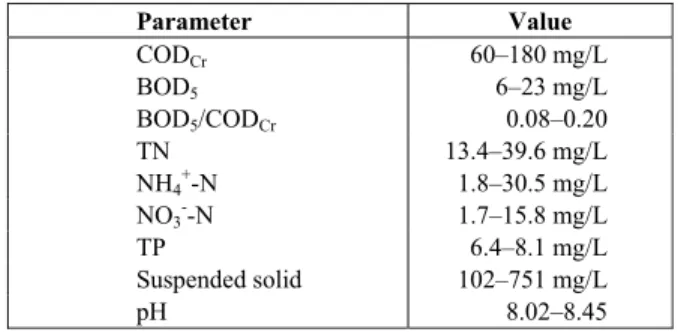
The wastewater was obtained from the influent of a full-scale wastewater treatment plant in a chemical industrial park of Tianjin, China. Over 30 kinds of industrial plants, such as pharmaceutical, manufac-turing, chemical, and food and drink processing in-dustries, are situated in the park area. The different waste streams were pretreated prior to being dis-charged to the CWWTPs, making the wastewater component-complex and difficultly biodegradable. The concentration variation of ammonia and nitrate in the influent is dependent on the pretreatment and intermittent discharge of different sewage by the factories. The characteristics of the wastewater sam-ples are presented in Table 1.
Table 1: Characteristics of the actual wastewater used in the experiment.
Parameter Value
CODCr 60–180 mg/L
BOD5 6–23 mg/L
BOD5/CODCr 0.08–0.20
TN 13.4–39.6 mg/L
NH4+-N 1.8–30.5 mg/L
NO3--N 1.7–15.8 mg/L
TP 6.4–8.1 mg/L
Suspended solid 102–751 mg/L
pH 8.02–8.45
Experiment Set Up
Figure 1 shows the schematic diagram of the laboratory scale process in this study. The anoxic reactor and the aerobic oxidation ditch were made of Plexiglas and had working volumes of 9 L and 73 L, respectively. The anoxic reactor was an anoxic bio-film reactor with a biomass carrier that accounts for 30% of the reactor volume.
1 5 2 3 7 4 8
Ef f l uent
Excess act i vat ed sl udge 6
Excess activated sludge Effuent 1 5 2 3 7 4 8
Ef f l uent
Excess act i vat ed sl udge 6
Excess activated sludge Effuent
1. influent tank, 2. anoxic reactor,
3. aerobic oxidation ditch reactor, 4. secondary sedimentation tank, 5. influent peristaltic feed pump, 6. effluent circumfluence pump, 7. activated sludge recycle pump, 8. surface aerator
The flocculent seed sludge in the reactor was obtained from the anoxic tank and oxidation ditch of a full-scale wastewater treatment plant in the industrial park. During the start-up stage (15 days), the mixed liquor suspended solids (MLSS) were kept at approximately 10.0 g/L in the anoxic reactor and 3.0 g/L in the aerobic oxidation ditch. The re-cycle flow rate was 200% of the influent. The influent wastewater was mixed with glucose to cultivate and enrich the activated sludge, and then glucose was decreased gradually, so that the influ-ent was only the industrial wastewater at the end of the start-up stage.
Operation Conditions
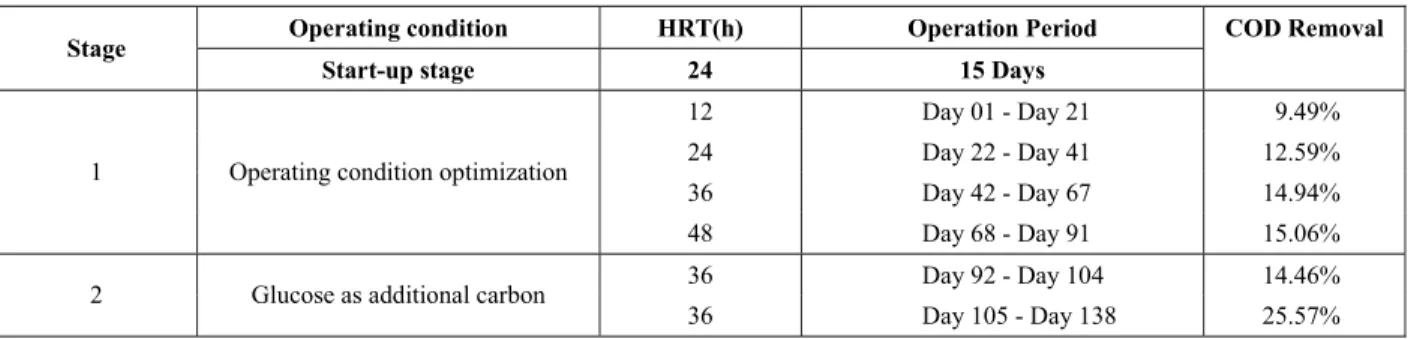
The process operating condition is shown in Table 2. During the experimental stage, the perform-ances of COD and nitrogen removal with and without the addition of external carbon (a concen-trated solution of glucose, 5000 mg/L) were investi-gated. The concentrated solution of glucose was pumped and mixed with the wastewater influent. The flux of glucose solution was much lower than the flux of wastewater influent. Hence, the influence of flux can be neglected. The glucose COD in the mixed influent was increased from 10.40 mg/L to 354.14 mg/L during Stage 2. COD removal effi-ciency during the glucose addition phase was the original COD removal efficiency without the COD of the additional glucose.
During Stage 1, the operating condition was optimized by varying the hydraulic retention time (HRT) from 12 h to 48 h. During Stage 2, glucose was added to the aerobic oxidation ditch at the beginning (day 92 to day 104). From day 105 to day 138,
glucose was added to the anoxic reactor.
Wastewater Quality Analysis
The following procedure was performed during the experiment. First, the influents and effluents of each reactor were collected and tested for parameters following standard methods (National Environ-ment Bureau Water Wastewater Monitoring Analysis Committee, 2002). COD was measured using the potassium dichromate oxidation method. BOD5 was
determined using fast BOD measuring devices (OxiTOP IS6, Germany). A spectrophotometer (HACH DR2800, USA) was used to measure ammonia nitrogen, nitrate, and TN concentrations. pH and dissolved oxygen (DO) levels were detected daily (HACH sension156, USA).
The compositions of organic compounds in the wastewater were analyzed using GC-MS. The sam-ples were pretreated by CH2Cl2 (Fisher Corporation,
USA) liquid-liquid extraction and extracted under acidic, neutral, and alkaline conditions, which were conducted using the extraction procedure proposed by Lai et al. (2008). Then, 1 µL of the pretreated sample was injected into the GC-MS system (GC: 6890N; MS: 5975C, Agilent; USA). The carrier gas was pure helium gas (99.999%) with a flow rate of 1 mL/min. A DB-35MS capillary column with an inner diameter of 0.25 mm and length of 30 m was used in the separation system. The temperature control program was performed as follows: 40 °C was maintained for 3 min and then increased to 280 °C at a rate of 4 °C/min. The temperature in the oven was maintained at 280 °C for 15 min. Organic compound analysis was conducted with reference to the NIST05 mass spectral library database.
Table 2: Operating conditions of the laboratory scale system.
Operating condition HRT(h) Operation Period
Stage
Start-up stage 24 15 Days
COD Removal
12 Day 01 - Day 21 9.49%
24 Day 22 - Day 41 12.59%
36 Day 42 - Day 67 14.94%
1 Operating condition optimization
48 Day 68 - Day 91 15.06%
36 Day 92 - Day 104 14.46%
2 Glucose as additional carbon
RESULTS AND DISCUSSION
The Characteristics and Biodegradation of the Wastewater
The wastewater COD varied between 60 mg/L and 180 mg/L, and BOD5 was in the range of
ap-proximately 6 mg/L to 23 mg/L. The BOD5/COD
ratio was approximately 0.08–0.2, which was too low to allow biological treatment.
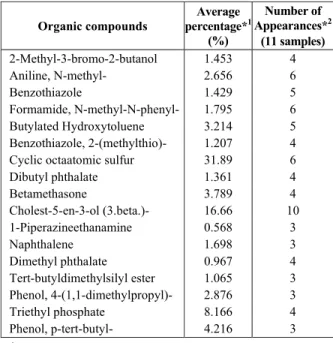
Results of the GC-MS analysis show that some of the organic compounds in the wastewater influent were phenols, Benzene, Toluene, Ethylbenzene and Xylene (BTEX), nitrogen heterocyclic compounds (such as benzothiazole), and PAHs (such as naphtha-lene), all of which are recalcitrant to biological degradation (Table 3). Therefore, biodegradable car-bon was insufficient in the wastewater sample, and most of the organic compounds were refractory compounds.
Table 3: The main organic compounds in the wastewater used in the experiment.
Organic compounds Average percentage*1 (%) Number of Appearances*2 (11 samples) 2-Methyl-3-bromo-2-butanol 1.453 4
Aniline, N-methyl- 2.656 6
Benzothiazole 1.429 5
Formamide, N-methyl-N-phenyl- 1.795 6
Butylated Hydroxytoluene 3.214 5
Benzothiazole, 2-(methylthio)- 1.207 4
Cyclic octaatomic sulfur 31.89 6
Dibutyl phthalate 1.361 4
Betamethasone 3.789 4
Cholest-5-en-3-ol (3.beta.)- 16.66 10
1-Piperazineethanamine 0.568 3
Naphthalene 1.698 3
Dimethyl phthalate 0.967 4
Tert-butyldimethylsilyl ester 1.065 3
Phenol, 4-(1,1-dimethylpropyl)- 2.876 3
Triethyl phosphate 8.166 4
Phenol, p-tert-butyl- 4.216 3
*1
Average percentage that the compounds account for in the total peak area;
*2
Times that the organic matter appeared in the GC-MS analysis during the experiment.
The Performance of Nitrogen and COD Removal in the Combined System
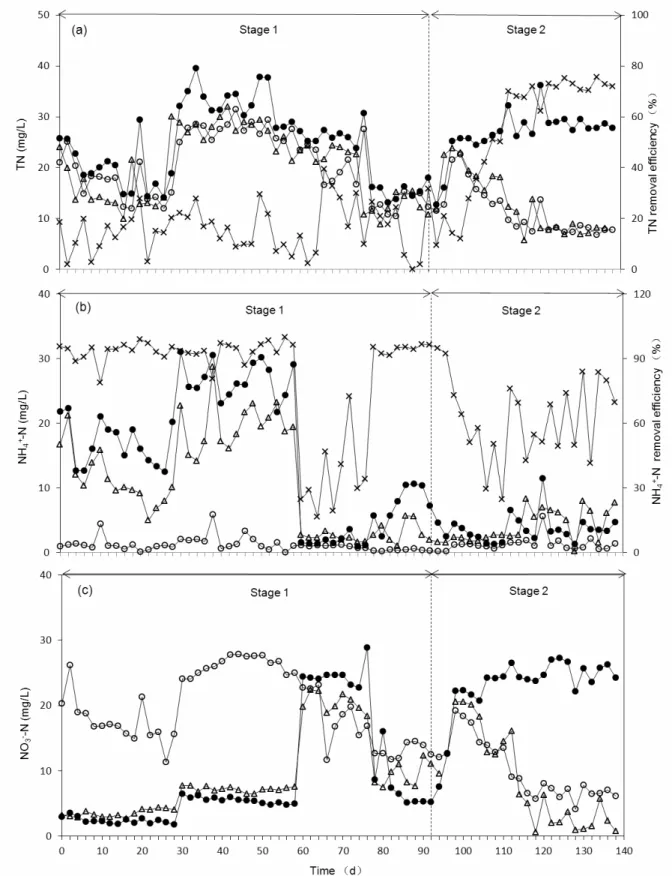
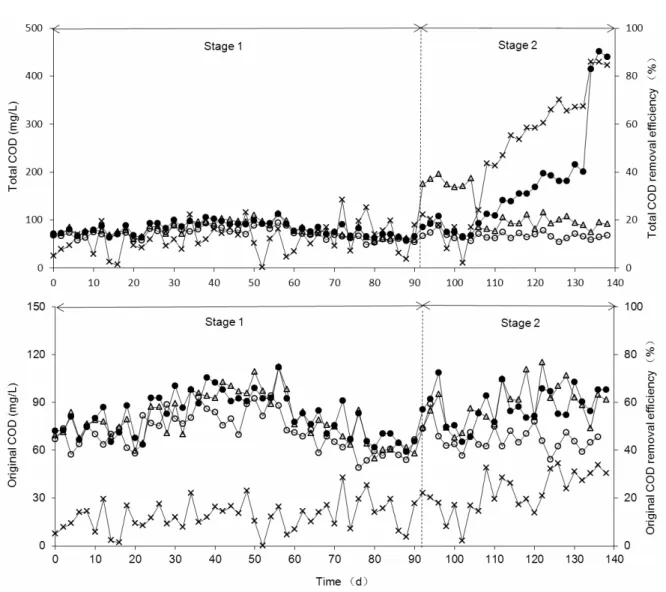
Fig. 2 (stage 1) and Fig. 3 (stage 1) show the performances of NH4+-N, nitrate nitrogen (NO3--N),
TN, and COD removal in the proposed system. In stage 1, the influent NH4+-N was 11 mg/L to
31 mg/L and the effluent was approximately 1 mg/L because of the long sludge retention time, which is suitable for the growth of nitrifiers (Moussa et al., 2006). In addition, the influent disturbance of ammonia and nitrate on day 58 was due to the pretreatment and intermittent discharge of a different waste steam.
The operating conditions were optimized by varying the hydraulic retention time (HRT) from 12 h to 48 h. According to the COD removal efficiency, HRT=36 h was optimal. However, the removal effi-ciencies of TN and COD were not greater than 16% and 15%, respectively, because the amount of biode-gradable carbon in the wastewater was insufficient. Hence, denitrification and COD removal had ex-tremely low efficiencies.
Effect of Additional Glucose on System Performance
Stage 2 of Fig. 2 and Fig. 3 shows the system per-formance with glucose addition. As can be seen in Fig. 2, the external glucose added to the system had an adverse effect on the performance of ammonia removal. However, the final effluent NH4+-N was
approximately 1 mg/L. TN removal efficiency in-creased immediately after the addition of glucose to the anoxic reactor (day 105 to day 138). TN removal efficiency was enhanced and good performance was maintained with increasing doses of additional glu-cose because gluglu-cose provided enough electron donor during the denitrification process. During the stable stage, TN removal efficiency remained un-changed at an average of approximately 72.01%, even when the dosage of additional carbon was sig-nificantly increased.
As can be seen in Fig. 3, glucose was added to the aerobic oxidation ditch at the beginning of stage 2 (day 92 to day 104). The total COD and original COD removal was inefficient and did not increase compared with the removal efficiency in Stage 1. However, glucose was added to the anoxic reactor from day 105 to day 138. The total COD removal efficiency was increased from 23.93% to 85.71% and the degradation of external glucose contributed to the high removal efficiency of total COD. The addition of glucose resulted in an apparent increase in the organic compound removal and some recalcitrant compounds were transformed, thereby producing 25.57% CODoriginal removal efficiency and
Figure 2: TN, NH4+-N, and NO3--N removal in the system: (●) influent, (∆) anoxic reactor effluent,
Figure 3: COD removal in the system: (●) influent, (∆) anoxic reactor effluent, (○) oxidation ditch effluent, and (×) removal efficiency
Effect of Glucose Addition to the Different Sections of the System
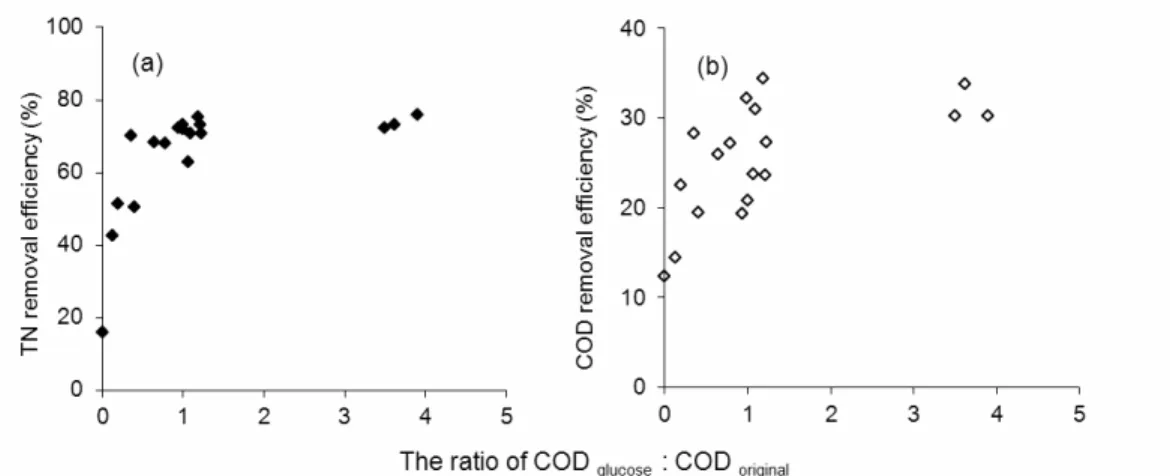
The effect of adding glucose to the different sections of the system was analyzed, as shown in Fig. 4. The system performances with glucose added to the aerobic oxidation ditch and the anoxic reactor were compared with the system performances with-out the addition of glucose. As can be seen in Fig. 4, the TN removal efficiency increased when glucose was added to the anoxic reactor. However, the TN removal efficiency remained constant despite the addition of glucose to the aerobic oxidation ditch. On the other hand, the COD removal efficiency apparently increased when glucose was added to the anoxic reactor. The performance of COD removal did not change significantly regardless of whether glucose was added to the aerobic oxidation ditch or not.
Figure 4: Various COD and TN removal
This result illustrates that the addition of glucose as electron donor to the anoxic reactor can enhance the denitrification process. Furthermore, the recalci-trant organic compounds in the wastewater may be transformed under anoxic or anaerobic conditions by using glucose as co-substrate. The literature indicates that the aromatic structure of compounds can be metabolized under anoxic or anaerobic conditions (Young and Haggblom, 1990). However, the degra-dation rate of such compounds by microbes is slow, as the energy required for bacterial growth is not adequate from such recalcitrant compounds (Ghosh and Philip, 2004). Additional carbon can provide the primary energy and carbon source for microbe metabolism (Christiansen et al., 1995). In such a case, the co-metabolic enzymes required for the transformation of refractory compounds are induced. The energy quickly regenerates with the rapid metabolism of glucose, which, in turn, can be used to transform refractory compounds (Bali and Sengül, 2002; Wang et al., 2007). However, in this study, the addition of glucose to the aerobic phase only provided a carbon source for the growth and metabo-lism of the heterotrophs.
The Effect of the CODglucose:CODoriginal Ratio on
COD and TN Removal Efficiencies
The optimal ratio of CODglucose:CODoriginal was
also investigated (Fig. 6). As can be seen in Fig. 5, the TN removal efficiency significantly increased when the CODglucose:CODoriginal ratio increased from 0
to 0.35. However, the increase of TN removal
efficiency became slow but remained stable when the CODglucose:CODoriginal ratio was increased
sequen-tially. Moreover, the original COD removal effi-ciency also increased slightly when the CODglucose:
COD original ratio was increased from 0 to 1.2. This is
because additional glucose was utilized for the denitrification and co-metabolism of recalcitrant compounds. The original COD removal efficiency gradually stabilized when the CODglucose:COD original
ratio was increased from 1.2 to 4.0. The recalcitrant compounds that could be co-metabolized with glucose were degraded completely and residuals were non-degradable. The rest of the glucose was utilized by the heterotrophic bacteria. Hence, excessive addition of glucose is not economical for full-scale wastewater treatment plants, and the optimal ratio of CODglucose:CODoriginal ranged from 0.35 to 1.2.
Nitrogen and Organic Compound Consumption Analyses in the System
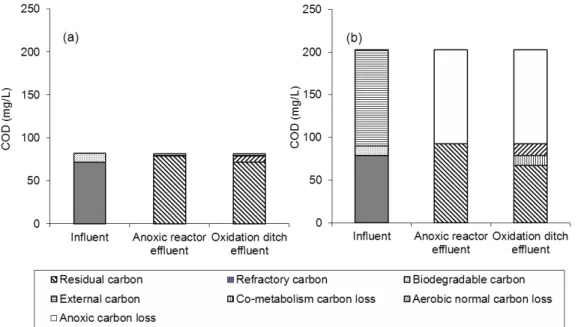
Nitrogen and organic materials consumption mass balance was analyzed to reveal the characteristics of nitrogen and organic compound transformation with and without the addition of glucose in the system (Fig. 6 and Fig. 7). Without additional glucose, nitrate removal was limited due to insuffi-cient carbon source, and most of the biodegradable organic materials metabolized in raw wastewater were utilized by denitrification under the anoxic condition. However, the insufficient biodegradable COD contributed to the low efficiency of original COD removal.
When the external carbon was added to the anoxic reactor, most of the additional glucose was consumed by denitrification and metabolism as a co-substrate. A portion of the refractory compounds, which were persistent without external carbon as co-substrate, were transformed primarily under the an-oxic condition and degraded in the aerobic oxidation ditch reactor.
When CODglucose:CODoriginal = 0 and 1.2, 60% of
the external carbon was consumed as substrate for denitrification (1 mg COD consumption needs 0.35 mg NO3--N during the denitrification process), while
40% of external carbon was consumed as substrate for co-metabolism. However, without external carbon, most of the biodegradable COD was consumed as substrate for denitrification in the anoxic reactor.
Figure 6: Nitrogen mass balance analysis in the system: (a) nitrogen mass balance without additional
glucose; (b) nitrogen mass balance with additional glucose. Loss of nitrogen was calculated according to the masses of the influent and effluent in the system with CODglucose:CODoriginal = 0 and 1.2
Figure 7: Organic material consumption mass balance analysis in the system: (a) organic material
CONCLUSIONS
This study was conducted through a laboratory scale process to investigate the biological treatment performance of integrated industrial wastewater from a chemical industrial park in Tianjin, China. The wastewater was refractory to biodegradation accord-ing to the results of the BOD5/COD and GC-MS
analyses. Hence, the COD and TN removal efficien-cies did not exceed 15% and 16%, respectively. Glucose was added to the process as an additional carbon source. No obvious increases of COD and TN removal efficiencies were observed when glucose was added to the aerobic reactor. However, when glucose was added to the anoxic reactor, the TN removal efficiency increased immediately to 72% and the COD removal efficiency apparently increased to 25.57%. Results of mass balance show that the external carbon was consumed by co-metabolism and denitrification. Some recalcitrant compounds were transformed, which were persistent in the wastewater. Hence, the original COD removal showed a better performance. Moreover, the optimal additional carbon dosage was in the ratio of COD
glucose: COD original = 0.35–1.2.
ACKNOWLEDGMENTS
The authors wish to thank the support from the Science and Technology Support Project of Tianjin, China (No. 12ZCZDSF01800).
NOMENCLATURE
COD chemical oxygen demand mg/L CODoriginal the original COD in raw
wastewater
mg/L
CODglucose the additional glucose COD mg/L
BOD5 5-day biochemical oxygen
demand
mg/L
TN total nitrogen mg/L NH4+-N ammonia nitrogen mg/L
NO3--N nitrate nitrogen mg/L
REFERENCES
Ahmad, R., Mondal, P. K. and Usmani, S. Q., Hybrid UASFB-aerobic bioreactor for biodegra-dation of acid yellow-36 in wastewater. Biore-source Technolongy, 101, No. 10, 3787 (2010).
Bajaj, M., Gallert, C. and Winter, J., Effect of co-substrates on aerobic phenol degradation by accli-matized and non-accliaccli-matized enrichment cultures. Engineering in Life Sciences, 8, No. 2, 125 (2008). Bali, U. and Sengül, F., Performance of a fed-batch
reactor treating a wastewater containing 4-chloro-phenol. Process Biochemistry, 37, No. 11, 1317 (2002).
Ben-Youssef, C. and Vázquez-Rodriguez, G.A., Model-based design of different fed batch strategies for phenol degradation in acclimatized activated sludge cultures. Bioresource Tech-nology, 102, No. 4, 3740 (2011).
Blánquez, P., Sarrà, M. and Vicent, T., Development of a continuous process to adapt the textile wastewater treatment by fungi to industrial condi-tions. Process Biochemistry, 43, No. 1, 1 (2008). Borja, R., Alba, J., Mancha, A., Martin, A., Alonso, V.
and Sanchez, E., Comparative effect of different aerobic pretreatments on the kinetics and macro-energetic parameters of anaerobic digestion of olive mill wastewater in continuous mode. Bio-process Engineering, 18, No. 2, 127 (1998). Carucci, A., Cappai, G. and Piredda, M.,
Biodegrad-ability and toxicity of pharmaceuticals in biologi-cal wastewater treatment plants. Journal of En-vironmental Science and Health Part A-Toxic/ Hazardous Substances & Environmental Engi-neering, 41, No. 9, 1831 (2006).
Cheriaa, J., Mosrati, R., Ladhari, N. and Bakhrouf, A., Acclimated biomass that degrades sulfonated naphthalene formaldehyde condensate. Pakistan Journal of Biological Sciences, 11, No. 12, 1588 (2008).
Christiansen, N., Hendriksen, H. K., Jarvinen, K. T. and Ahring, B. K., Degradation of chlorinated aromatic compounds in UASB reactors. Water Science and Technology, 31, No. 1, 249 (1995). Eleren, S. Ç., and Alkan, U., Reducing effect of
aerobic selector on the toxicity of synthetic organic compounds in activated sludge process. Bioresource Technology, 100, No. 23, 5714 (2009).
Ghosh, P. K. and Philip, L., Atrazine degradation in anaerobic environment by a mixed microbial consortium. Water Research, 38, No. 9, 2277 (2004).
Lai, P., Zhao, H. Z., Ye, Z. F. and Ni, J. R., Assess-ing the effectiveness of treatAssess-ing cokAssess-ing effluents using anaerobic and aerobic biofilms. Process Biochemistry 43, No. 3, 229 (2008).
Lei, G., Ren, H., Ding, L., Wang, F. and Zhang, X., A full-scale biological treatment system application in the treatment wastewater of pharmaceutical industrial park. Bioresource Technology, 101, No. 15, 5852 (2010).
Majumder, P. S. and Gupta, S. K., Degradation of 4-chlorophenol in UASB reactor under methano-genic conditions. Bioresource Technology, 99, No. 10, 4169 (2008).
Moussa, M. S., Sumanasekera, D. U., Ibrahim, S. H., Lubberding, H. J., Hooijmans, C. M., Gijzen, H. J. and van Loosdrecht, M. C. M., Long term effects of salt on activity, population structure and floc characteristic in enriched bacterial cultures of nitrifiers. Water Research, 40, No. 7, 1377 (2006). National Environment Bureau Water Wastewater
Monitoring Analysis Committee. 2002 Water and Wastewater Monitoring Analysis Method. Beijing, (2002).
Radjenovic, J., Petrovic, M. and Barceló, D., Advanced mass spectrometric methods applied to the study of fate and removal of pharmaceuticals in waste-water treatment. Trends in Analytical Chemistry, 26, No. 11, 1132 (2007).
Rentz, J. A., Alvarez, P. J. and Schnoor, J. L., Benzo[α]pyrene co-metabolism in the presence of plant root extracts and exudates: Implications for
phytoremediation. Environmental Pollution, 136, No. 3, 477 (2005).
Sen, S. and Demirer, G. N., Anaerobic treatment of real textile wastewater with a fluidized bed reactor. Water Research, 37, No. 8, 1868 (2003). Shawaqfeh, A. T., Removal of pesticides from water
using anaerobic-aerobic biological treatment. Chinese Journal of Chemical Engineering, 18, No. 4, 672 (2010).
Shen, D. S., Liu, X. W. and Feng, H. J., Effect of easily degradable substrate on anaerobic of penta-chlorophenol in an upflow anaerobic sludge blanket (UASB) reactor. Journal of Hazardous Materials, 119, No. 1, 239 (2005).
Wang, S. G., Liu, X. W., Zhang, H. Y., Gong, W. X., Sun, X. F. and Gao, B. Y., Aerobic granulation for 2,4-dichlorophenol biodegradation in a se-quencing batch reactor. Chemosphere, 69, No. 5, 769 (2007).
Xiangchun, Q., Hanchang, S., Yongming, Z., Jianlong, W., and Yi, Q. Biodegradation of 2,4-dichlorophenol in an air-lift honeycomb-like ceramic reactor. Process Biochemistry, 38, No. 11, 1545 (2003). You, S. J., Tsai, Y. P. and Huang, R. R. Y., Effect of
heavy metals on nitrification performance in different activated sludge processes. Journal of Hazardous Materials, 165, No. 1, 987 (2009). Young, Y. L. and Haggblom, M. M, Biotechnology