Antônio I de Loyola Filho Elizabeth Uchoa
Josélia O A Firmo
Maria Fernanda Lima-Costa
Núcleo de Estudos em Saúde Pública e Envelhecimento. Fundação Oswaldo Cruz e Universidade Federal de Minas Gerais (UFMG). Belo Horizonte, MG, Brasil
Correspondence:
Antônio I. de Loyola Filho Fundação Oswaldo Cruz
Av. Augusto de Lima, 1715 – sala 610 30190-002 Belo Horizonte, MG, Brasil E-mail: [email protected] ocruz.br Received: 9/20/2006 Reviewed: 4/18/2007 Approved: 7/30/2007
Infl uence of income on the
association between cognitive
impairment and polypharmacy:
Bambuí Project
ABSTRACT
OBJECTIVE: To evaluate the prevalence of polypharmacy and the infl uence of income on the association between medication use and cognitive impairment among elderly people.
METHODS: Out of the 1,606 baseline members of the Bambuí cohort of
elderly people, which started in 1997, 1,554 took part in the study. The Mini-Mental State Examination was applied to all the participants. The association between cognitive impairment and polypharmacy was tested by means of multivariate ordinal regression, performed for the whole population and for each of the income strata.
RESULTS: The prevalence of polypharmacy (two or more medications
consumed) was 70.4% and the number of medications used presented an independent negative association with cognitive impairment (OR=0.72; 95% CI: 0.55;0.95). When this was stratifi ed according to personal income (<2 minimum monthly salaries versus > 2 minimum monthly salaries), a negative association was observed between medication use and cognitive impairment among elderly people with lower income (OR=0.64; 95% CI: 0.48;0.86), but not among those with higher income (OR=1.74; 95% CI: 0.81;3.74).
CONCLUSIONS: With regard to the association between cognitive
impairment and number of medications consumed, the results indicate social inequality in the use of medications. It is possible that these elderly people are not consuming the medicines needed for appropriate treatment of their health problems.
KEY WORDS: Health of the elderly. Polypharmacy.
Pharmacoepidemiology. Drug utilization. Cognitive impairment. Income.
INTRODUCTION
Polypharmacy is more commonly defi ned as multiple consumption of medica-tions, although there is no consensus in the literature regarding the quantity of medications needed to characterize this practice.7,8,14 The basis for this defi nition
is solely quantitative and it does not take into account the clinical pertinence of the use of these medications (for example, the presence of multiple diseases) or the adequacy of the proposed therapeutic regimen.21
The present study had the aim of evaluating the preva-lence of polypharmacy and the infl uence of income on the association between the use of medications and cognitive impairment, among elderly people.
METHODS
This study was conducted in the city of Bambuí (15,000 inhabitants), situated in the State of Minas Gerais. The life expectancy of the population of the municipality of Bambuí in 1997 was 70.2 years and the human development index (HDI) was 7.0. Low schooling levels (42.6% of the population aged 25 years or over presented less than four years of schooling) and low income levels (46.0% had an income of less than 0.5 minimum monthly salary) predominated. Cardiovascu-lar diseases were the principal cause of mortality and the second greatest cause of hospitalization.13
The Bambuí Project is a population-based cohort study among elderly people living in the city of the same name. The participants were identifi ed by means of a complete census of the city that was carried out by the team of investigators. All the people living in the city aged 60 years or over on January 1, 1997, were invited to participate in the study. Among the 1,742 residents within the age range considered, 1,606 participated in the baseline cohort that was constituted in 1997. Further details can be obtained in a previous study.13 All
par-ticipants in the Bambuí baseline cohort who underwent the Mini-Mental State Examination (MMSE) and for whom there was information on their use of medications were selected for the present study.
The dependent variable was the number of medica-tions consumed over the last 90 days. The participants were asked about the medications consumed over this period, and the information was confi rmed by checking the packaging of the medications mentioned. For cases in which the elderly individual selected was unable to answer the questionnaire because of health problems or incapacity (90/1,606; 5.6%), responses given by someone with whom the individual had a personal relationship (a close informant) were used.13 The name
and dosage of the medications were used in identifying them. After identifi cation, the medications were broken down into their active agents and classifi ed on the basis of their chemical formulations. The classifi cation was based on the Anatomical Therapeutic Chemical Index (ATC/DDD Index), which was developed by the World Health Organization Collaborating Centre for Drug Sta-tistics Methodologya and is recommended for
compari-sons with international studies. The total consumption of medications was categorized as 0, 1, 2-4 and 5 or more. Polypharmacy was defi ned as the consumption of two or more medications, such that consumption of interactions and adverse drug reactions, diffi culty in
complying with prescriptions and excessive expendi-ture on healthcare are some of the undesirable conse-quences from polypharmacy.21,22 These consequences
are more likely to occur among the elderly, because of the anatomofunctional changes that accompany aging and modify the pharmacokinetics of medications.22
Multiple use of medications is more frequent among elderly people,1 because of the high prevalence of
chronic diseases during this phase of life.2 In developed
countries, population-based pharmacoepidemiological studies have shown that, among elderly people, the number of chronic diseases,7,8,25 healthcare service
usage,7,8 being female14 and being at a more advanced
age8,14 are related to multiple use of medications. In
Brazil, a study carried out among elderly people living in the metropolitan region of Belo Horizonte16 showed
that there were signifi cant independent associations between the consumption of three or more medications and female sex, older age group (80 years or over), having at least one chronic disease and having three or more medical consultations over the last 12 months. Among this same population, high consumption of medications (fi ve or more) was associated with higher schooling levels (eight years or more) and the other variables mentioned above.
Cognitive impairment is frequent in old age,20 and it
may have negative repercussions on elderly peoples’ functional capacity.26 Individual characteristics,
life-style habits, diseases and illnesses are factors that predispose elderly people to such impairment, but it may be exacerbated through the use of medications.26
In such cases, cognitive impairment may result from polypharmacy or the use of certain classes of medica-tions (anticholinergic, psychiatric and cardiovascular drugs, to cite a few).18
Population-based studies that have investigated associa-tions between the use of medicaassocia-tions and the presence of cognitive impairment among elderly people living in communities are scarce. Hidalgo et al7 (1997) and
Klarin et al9 (2003) found among elderly people in
Spain and Sweden respectively that a greater number of medications was consumed among those with cog-nitive impairment, but the associations did not remain signifi cant after adjustment for other variables. On the other hand, among elderly people in Britain20 and the
United States,5 the consumption of medications was
lower among those who presented cognitive impair-ment. However, like in the studies cited earlier, the differences did not remain signifi cant after adjustment for the other exploratory variables. Nonetheless, none of these studies investigated whether these associations might have been infl uenced by the socioeconomic situ-ation of the elderly individuals and/or their families.
a World Health Organization. Collaborating Centre for Drug Statistics Methodology. Disponível em:
2-4 medications was called minor polypharmacy and the consumption of fi ve or more medications was called major polypharmacy.1
The presence of cognitive impairment was determined by means of the MMSE,3 adapted for Brazil. In this,
instead of the season of the year, individuals are asked about the period of the day; in the questions about spatial orientation, the district, address and room in the house replace respectively the county, hospital and fl oor. Instead of the series of multiples of seven, individuals are asked to sequentially add fi ve, starting from 25, or alternatively to spell the name “Maria” (very common in Brazil), back-to-front. For individu-als who do not know how to read, two modifi cations are introduced: a fi gure “with closed eyes” is presented and the individual is asked to do the same as the fi gure is doing; and the individual is asked to say a phrase, instead of writing it.23 The MMSE scores were
dichoto-mized: elderly people with no schooling and a score < 19 and those with some schooling and score < 23 were considered positive for the presence of cognitive disorder (code 1); and the remainder were considered negative (code 0).6
The other independent variables included: 1) sociode-mographic characteristics; 2) health condition; and 3) healthcare service usage. The sociodemographic characteristics considered were sex, age (continu-ous variable), schooling (completed years), conjugal situation and monthly personal income (in Brazilian minimum monthly salaries, MMS, at that time). The health condition indicators were the number of chronic diseases diagnosed by a doctor, as self-reported by the individual (“Has any doctor or health professional ever told you that you have one or more of the following diseases: hypertension, coronary disease, arthritis/rheu-matism, diabetes or Chagas disease?”), and incapacity to perform at least one out of three activities of daily living, without help from another person (eating, hav-ing bath and/or movhav-ing between rooms on the same
fl oor of the house) The indicators for healthcare service usage included the number of medical consultations attended over the 12 months preceding the interview and the history of hospitalization over the same period. These variables were included in the study because of their epidemiological importance and because they are traditionally associated with the use of medications in pharmacoepidemiological studies.
Univariate analyses were performed to investigate as-sociations between: 1) the characteristics of the study population and polypharmacy; and 2) the consumption of certain classes of medications and positive results from the MMSE. The association between cognitive impairment and polypharmacy was tested by means of multivariate ordinal regression, carried out for the whole population and for each of the income strata (<
2 MMS and ≥ 2 MMS). The ordinal regression model was equivalent to a set of binary logistic regressions totaling the number of event-variable categories minus one. It assumed the premise of proportional odds, i.e. it generated a constant association measurement across the response-variable categories. The model made it possible to pick up the ordered nature of the response variable and its underlying continuity attribute, thereby minimizing information loss in the categorization.17
In the multivariate analyses, the associations between cognitive impairment and use of medications were ini-tially adjusted for sex and age, and the fi nal model was constructed by introducing the other sociodemographic variables, the variables indicating health condition and those for health service usage (introduced en bloc), in-dependent of the presence or absence of any signifi cant association in univariate analysis. The variables that presented associations at the level of p<0.05 in the fi nal model were considered to be independently associated with the use of medications. An approximation of the maximum likelihood ratio test was used to check the premise of proportionality of the odds. To test the as-sociation between the consumption of certain classes of medications and positive results from the MMSE, in the whole population and in each of the income strata, logistic regression taking a signifi cance level of 5% was used. All the analyses were done using the Stata statistical package, version 7.0.
This study had been approved by the ethics committee of Fundação Oswaldo Cruz, and all of the participants signed an informed consent statement.
RESULTS
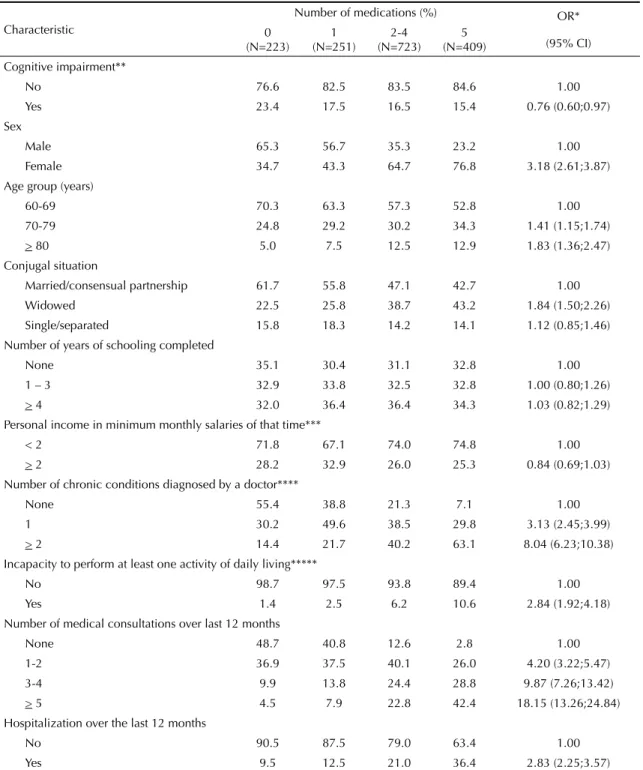
Table 2 presents the results from the multivariate analy-sis on the association between cognitive impairment and the consumption of medications, for the whole population of this study. After adjusting for all the
variables included in the model (Model 2), cognitive impairment presented an independent negative associa-tion with polypharmacy. All the variables listed in the table (except for conjugal situation and schooling from
Table 1. Results from univariate analysis on the association between the number of medications consumed and the so-ciodemographic characteristics, health condition indicators and healthcare service usage indicators. Bambuí, Southeastern Brazil, 1997.
Characteristic
Number of medications (%) OR*
(95% CI) 0
(N=223) 1 (N=251)
2-4 (N=723)
5 (N=409) Cognitive impairment**
No 76.6 82.5 83.5 84.6 1.00
Yes 23.4 17.5 16.5 15.4 0.76 (0.60;0.97) Sex
Male 65.3 56.7 35.3 23.2 1.00
Female 34.7 43.3 64.7 76.8 3.18 (2.61;3.87) Age group (years)
60-69 70.3 63.3 57.3 52.8 1.00
70-79 24.8 29.2 30.2 34.3 1.41 (1.15;1.74) > 80 5.0 7.5 12.5 12.9 1.83 (1.36;2.47) Conjugal situation
Married/consensual partnership 61.7 55.8 47.1 42.7 1.00 Widowed 22.5 25.8 38.7 43.2 1.84 (1.50;2.26) Single/separated 15.8 18.3 14.2 14.1 1.12 (0.85;1.46) Number of years of schooling completed
None 35.1 30.4 31.1 32.8 1.00
1 – 3 32.9 33.8 32.5 32.8 1.00 (0.80;1.26) > 4 32.0 36.4 36.4 34.3 1.03 (0.82;1.29) Personal income in minimum monthly salaries of that time***
< 2 71.8 67.1 74.0 74.8 1.00
> 2 28.2 32.9 26.0 25.3 0.84 (0.69;1.03) Number of chronic conditions diagnosed by a doctor****
None 55.4 38.8 21.3 7.1 1.00
1 30.2 49.6 38.5 29.8 3.13 (2.45;3.99)
> 2 14.4 21.7 40.2 63.1 8.04 (6.23;10.38) Incapacity to perform at least one activity of daily living*****
No 98.7 97.5 93.8 89.4 1.00
Yes 1.4 2.5 6.2 10.6 2.84 (1.92;4.18)
Number of medical consultations over last 12 months
None 48.7 40.8 12.6 2.8 1.00
1-2 36.9 37.5 40.1 26.0 4.20 (3.22;5.47) 3-4 9.9 13.8 24.4 28.8 9.87 (7.26;13.42) > 5 4.5 7.9 22.8 42.4 18.15 (13.26;24.84) Hospitalization over the last 12 months
No 90.5 87.5 79.0 63.4 1.00
Yes 9.5 12.5 21.0 36.4 2.83 (2.25;3.57) * OR 95% CI, estimated by the ordinal regression method
** Based on the score obtained from the Mini-Mental State Examination *** Minimum monthly salary = R$ 120 (at that time, R$ 1 = US$ 1)
one to four years) remained signifi cantly associated with polypharmacy.
The fi nal results from the multivariate analyses accord-ing to income strata are in Table 3. In the social stratum of lower income (<2 MMS), a signifi cant negative as-sociation was observed between cognitive impairment
and polypharmacy (OR=0.64; 95%CI: 0.48;0.86). In the higher stratum (income ≥2 MMS), the direction of this association was positive, but it was not signifi cant (OR=1.74; 95%CI: 0.81;3.74). The association pattern for polypharmacy was similar in the two strata: the differences were in the incapacity to perform activi-ties of daily living (signifi cant positive association in
Table 2. Results from multivariate analysis on the association between cognitive impairment, number of medications consumed and other variables. Bambuí, Southeastern Brazil, 1997.
Variable Model 1 Modelo 2
OR (95% CI)* OR (95% CI)** Disfunção cognitiva***
No 1,00 1,00
Yes 0,82 (0,64;1,06) 0,72 (0,55;0,95) Sex
Male 1,00 1,00
Female 3,10 (2,54;3,78) 2,18 (1,72;2,75) Age (in years) 1,03 (1,02;1,05) 1,03 (1,02;1,05) Conjugal situation
Married/consensual partnership 1,00
Widowed 1,00 (0,78;1,27)
Separated/divorced 0,92 (0,69;1,23)
Schooling in completed years
None 1,00
1-3 1,21 (0,95;1,54)
> 4 1,42 (1,09;1,83)
Monthly personal income in minimum monthly salaries****
< 2 1,00
> 2 1,39 (1,09;1,77)
Number of chronic conditions diagnosed by a doctor*****
None 1,00
1 2,49 (1,93;3,22)
> 2 4,61 (3,49;6,10)
Incapacity to perform at least one activity of daily living******
No 1,00
Yes 1,96 (1,26;3,06)
Number of medical consultations over the last 12 months
None 1,00
1-2 2,56 (1,94;3,38)
3-4 5,32 (3,84;7,36)
> 5 8,23 (5,84;11,61)
Hospitalization over the last 12 months
No 1,00
Yes 1,55 (1,20;2,00)
* OR 95% CI, obtained by ordinal regression and adjusted for sex and age
** OR 95% CI, obtained by ordinal regression and adjusted for the variables described in column 1 (1,550 individuals participated in this analysis)
*** Evaluated using the Mini-Mental State Examination (see methodology section) **** MMS = R$ 120 (at that time, R$ 1 = US$ 1)
***** Hypertension, arthritis/rheumatism, Chagas disease, coronary disease or diabetes
the lower income stratum and non-signifi cant negative association in the higher income stratum) and absence of statistical signifi cance for the associations found for female sex and history of hospitalization in the higher income stratum.
The results from the analysis of associations between the consumption of certain classes of medications and cognitive impairment, adjusted for sex and age, are
described in Table 4. Table 5 presents the results from the same analysis for income strata. Considering level 1 classifi cation (anatomical), the consumption of all the medication classes investigated was lower among the elderly people with cognitive impairment, although the differences were not statistically signifi cant. Con-sidering the therapeutic/pharmacological classifi cation, presence of cognitive impairment was positively and signifi cantly associated with the use of digoxin-based
Table 3. Result from multivariate analysis on the association between cognitive impairment, number of medications consumed and other variables, stratifi ed according to monthly personal income. Bambuí, Southeastern Brazil, 1997.
Variable
Monthly income in mini-mum monthly salaries
Monthly income in mini-mum monthly salaries < 2 MMS ≥ 2 MMS
OR (95% CI)* OR (95% CI)* Cognitive impairment**
No 1.00 1.00
Yes 0.64 (0.48;0.86) 1.74 (0.81;3.74) Sex
Male 1.00 1.00
Female 2.37 (1.79;3.13) 1.59 (0.99;2.54) Age (in years) 1.03 (1.01;1.04) 1.05 (1.02;1.08) Conjugal situation
Married/consensual partnership 1.00 1.00 Widowed 1.01 (0.77;1.33) 1.22 (0.72;2.08) Single/separated 0.98 (0.71;1.37) 0.89 (0.48;1.63) Schooling in completed years
None 1.00 1.00
1-4 1.23 (0.94;1.61) 1.24 (0.66;2.33) > 4 1.36 (1.01;1.83) 1.87 (1.03;3.41) Number of chronic conditions diagnosed by a doctor***
None 1.00 1.00
1 2.46 (1.80;3.38) 2.54 (1.62;3.99)
> 2 4.10 (2.94;5.73) 6.63 (3.92;11.19) Incapacity to perform at least one activity of daily living****
No 1.00 1.00
Yes 2.55 (1.56;4.17) 0.58 (0.20;1.72) Number of medical consultations over last 12 months
None 1.00 1.00
1-2 3.05 (2.17;4.29) 1.75 (1.07;2.86) 3-4 6.30 (4.27;9.31) 3.60 (1.98;6.54) > 5 9.89 (6.59;14.83) 5.30 (2.65;10.61) Hospitalization over the last 12 months
No 1.00 1.00
Yes 1.54 (1.15;2.06) 1.69 (0.99;2.90)
* OR 95% CI, estimated by the ordinal regression method; 1,128 individuals with income <2 MMS and 422 individuals with income ≥ 2 MMS participated in this analysis.
** Based on the score obtained from the Mini-Mental State Examination
*** Arthritis/rheumatism, Chagas disease, coronary disease, diabetes and/or hypertension
cardiac therapy and the use of antipsychotic drugs, and negatively and signifi cantly associated with the use of angiotensin-converting enzyme (ACE) inhibitors and tricyclic antidepressives.
The results from the stratifi ed analysis showed that there were differences in the association pattern between the two strata. For most of the medications, the consump-tion was lower among the elderly people with cognitive impairment and lower income (and signifi cantly so for ACE inhibitors and tricyclic antidepressives), although the consumption of digoxin-based medications and antipsychotic drugs presented a signifi cant positive association. Among the elderly people with higher in-come, on the other hand, the consumption was greater for most classes of medications, and all the signifi cant associations that were observed (for cardiovascular medications, digoxin-based cardiac therapy drugs and methyldopa-based antihypertensives) were positive.
DISCUSSION
The prevalence of polypharmacy observed in the present study was greater than what has been found in some studies conducted in developed countries.8,25 On
the other hand, the prevalence of major polypharmacy was lower than what has been observed in European
countries,8,9,25 while it was greater than what has been
observed in Hong Kong27 and in the metropolitan region
of Belo Horizonte.16 Differences regarding
sociodemo-graphic characteristics, cultural traits, morbidity pat-terns and healthcare service usage patpat-terns may underlie the variations in medication consumption between different populations. However, the possibility that methodological differences may partially explain the variation observed cannot be dismissed. The Bambui study included prescribed and non-prescribed drugs and the question on medication consumption covered the last 90 days. This may partially explain the greater prevalence observed there, in comparison with studies that solely considered prescribed medications8,25 or
that used shorter time windows, such as one week27
or a fortnight.16
In the present study, the variables indicating health conditions and healthcare service usage, and some so-ciodemographic characteristics, were considered to be a priori confounding variables in relation to investigating the association between polypharmacy and cognitive impairment. The greater usage of medications among women confi rmed the fi ndings from another Brazilian study.16 Both the variables indicating health
condi-tions and those for healthcare service usage presented strong and independent associations with the number of
Table 4. Results from analysis of the association between consumption of certain selected classes of medications and cognitive impairment, adjusted for sex and age. Bambuí, Southeastern Brazil, 1997.
Class of medications* Cognitive impairment** OR (95% CI)**** Yes (%)*** No (%) ***
Alimentary tract and metabolism***** 28.9 33.1 0.78 (0.60;1.06) Antihistamines H2 4.8 3.9 1.13 (0.59;2.16) Alimentary tract with anticholinergic action 1.5 1.6 0.70 (0.23;2.15) Cardiovascular system***** 54.4 57.3 0.99 (0.75;1.31) Digoxin-based cardiac therapy 20.4 13.9 1.72 (1.21;2.46) Methyldopa-based antihypertensives 7.8 7.9 1.17 (0.70;1.94) ACE inhibitors****** 3.7 9.0 0.40 (0.20;0.78) Musculoskeletal system***** 11.9 16.6 0.79 (0.53;1.19) Non-steroidal anti-infl ammatory drugs 3.0 5.0 0.68 (0.32;1.45) Central nervous system***** 45.2 48.6 0.95 (0.72;1.26) Benzodiazepines******* 17.4 19.7 0.95 (0.67;1.37)
Analgesics 12.2 16.8 0.78 (0.52;1.17)
Anticonvulsants 8.9 5.9 1.61 (0.98;2.65) Antipsychotics 5.9 3.5 2.08 (1.13;3.82) Antiparkinsonians 2.6 2.0 1.19 (0.50;2.85) Tricyclic antidepressives 2.2 7.6 0.34 (0.15;0.80) * Classifi cation in accordance with the Anatomical Therapeutic Chemical Index (ATC)
** Based on the score obtained from the Mini-Mental State Examination, adjusted for schooling level *** % of users of the class of medications
**** OR 95% CI, estimated by logistic regression and adjusted for sex and age ***** Level 1 of the ATC classifi cation
medications consumed, thus corroborating a pattern that has been found to be consistent across different popu-lations.7,8,16 The magnitude and independence of these
associations prove the importance of these variables for explaining the use of medications. This consequently attests to the pertinence of including them in the study for adjustment purposes.
The consumption of medications was signifi cantly lower among the elderly people in Bambuí who were classifi ed as positive for cognitive impairment. Simi-lar results have been found in developed countries,5,20
although in those countries the association did not remain signifi cant after adjusting for confounding variables. Elderly people with cognitive impairment more frequently present chronic health problems28
and functional limitations,20 and thus it is plausible
to expect a higher frequency of polypharmacy among them. Hanlon et al5 (1996) expressed concern that lower
consumption of medications among elderly people with cognitive impairment might constitute underuse of medications, because doctors had failed to prescribe adequate drug therapy, infl uenced by knowledge of their patients’ cognitive status. Knowing that elderly people with abnormal cognitive function are more likely not to
comply with a therapeutic regimen,19 doctors perhaps
become more parsimonious in their prescriptions. Among the classes of medications investigated in the present study, only tricyclic antidepressives and ACE inhibitors (negative associations), and digoxin-based cardiac therapy and antipsychotic drugs (positive asso-ciations), were associated with the presence of cognitive impairment. With regard to ACE inhibitors, Klarin et al9 (2003) found similar results among elderly people
in a rural community in Sweden. Since the medication classes investigated are considered to induce cognitive impairment,18 one likely explanation for lower use of
some of them is that this expresses greater precaution among doctors with regard to prescribing them, fearful of possible negative effects on their patients’ cogni-tion levels. On the other hand, these patients would not be receiving adequate pharmacological treatment for their health problems.9 Among elderly people with
cognitive impairment, health problems may go un-noticed by health professionals because the patients are unable to adequately describe their symptoms.5,9
On the other hand, the positive association between the use of digoxin and antipsychotics and cognitive impairment is a matter of concern, since both of these
Table 5. Results from analysis of the association between consumption of certain selected classes of medications and cognitive im-pairment,* stratifi ed according to income and adjusted for sex and age. Baseline cohort, Bambuí, Southeastern Brazil, 1997.
Class of medications**
Monthly income in minimum monthly salaries***
< 2 MSS OR (95% CI)****
≥ 2 MSS OR (95% CI)****
Alimentary tract and metabolism***** 0.75 (0.54;1.05) 1.28 (0.58;2.83)
Antihistamines H2 1.09 (0.50;2.37) 2.42 (0.70;8.34)
Alimentary tract with anticholinergic action 0.76 (0.23;2.44) -Cardiovascular system***** 0.93 (0.68;1.28) 2.47 (1.05;5.79)
Digoxin-based cardiac therapy 1.55 (1.05;2.28) 3.85 (1.13;13.12)
Methyldopa-based antihypertensives 0.93 (0.53;1.63) 3.20 (1.01;10.14)
ACE inhibitors***** 0.40 (0.18;0.89) 0.86 (0.25;3.00) Musculoskeletal system***** 0.74 (0.47;1.17) 1.66 (0.63;4.38)
Non-steroidal anti-infl ammatory drugs 0.63 (0.28;1.44) 1.05 (0.13;8.43)
Central nervous system***** 0.96 (0.70;1.30) 0.97 (0.44;2.14)
Benzodiazepines****** 0.90 (0.61;1.35) 1.56 (0.64;3.85) Analgesics 0.85 (0.55;1.31) 0.57 (0.16;1.98)
Anticonvulsants 1.63 (0.93;2.87) 2.02 (0.62;6.61)
Antipsychotics 2.04 (1.06;3.93) 1.61 (0.19;13.49)
Antiparkinsonians 1.06 (0.37;2.98) 2.42 (0.45;13.13) Tricyclic antidepressives 0.34 (0.13;0.86) 0.54 (0.07;4.24)
* Based on the score obtained from the Mini-Mental State Examination, adjusted for schooling level ** Classifi cation in accordance with the Anatomical Therapeutic Chemical Index (ATC)
*** MMS = R$ 120 (at that time, R$ 1 = US$ 1)
**** OR 95% CI, estimated by logistic regression and adjusted for sex and age. ***** Level 1 of the ATC classifi cation
medications have been correlated with the occurrence of this problem. The appearance of neurological disorders has been associated with toxic doses of digoxin and with the use of antipsychotics, and in both cases this occurs more frequently among elderly people.18 Deeper
investigations are needed for better understanding of the association between the use of these medications and cognitive impairment among this population.
The analyses stratifi ed according to income showed differences in the association between the use of medi-cations and cognitive impairment.
In the poorer stratum, elderly people with cognitive impairment presented a signifi cantly lower prevalence of polypharmacy and had lower consumption of the medications investigated. On the other hand, in the higher income stratum, cognitive impairment was posi-tively associated with polypharmacy (without reach-ing signifi cance) and, among the elderly people with cognitive impairment, there was higher consumption of most of the medications investigated. In the study population, the poorer individuals presented worse state of health (number of chronic diseases and incapacity to perform at least one activity of daily living) and they used the healthcare services more (number of medical consultations and history of hospitalizations). As stated earlier, all these variables presented positive associations with polypharmacy, and this allows it to be supposed that the medication needs were greater among the population stratum of lower income. In this light, the results are of concern, since they indicate that inequality relating to the use of medications ex-ists among this population. In Brazil, there is unequal availability of medications, since pharmaceutical care remains marked by defi ciencies in the public sector with regard to the storage, distribution and dispensing of medications, while these are predominantly avail-able in private pharmacies. Thus, access to and use of medications is conditional on the funding capac-ity, which is greater among individuals with higher income.4 Expenditure on medications has a signifi cant
weight in the budget of the elderly population in Brazil. Half of them receive ≤ 1 minimum monthly salary and spend an average of 23% of this income on purchasing medications.11 Abandonment of treatment with
medica-tions because of their cost occurs frequently.10 All the
indications are that Bambuí reproduces this Brazilian pattern, since the relationship between use of medica-tions and socioeconomic situation has appeared in other studies developed there. Income was positively associated with the use of prescribed medications,15
and the elderly people of lower socioeconomic level presented greater diffi culty in obtaining them, which
they ascribed to fi nancial problems.12 References to
diffi culties in funding expenses due to medications among this population were also observed in a study with qualitative methodology.24 Thus, two questions
can be raised: 1) whether, among the elderly people in Bambuí, medical prescriptions should be differenti-ated not only as a function of doctors’ knowledge of patients’ cognitive state, as suggested by Hanlon et al5
(1996), but also as a function of socioeconomic level; and/or 2) whether, under pressure because of adverse economic conditions, poorer elderly people with cogni-tive impairment might be consuming lower quantities of medications than those that would be necessary for treating their health problems.
The present investigation is the fi rst Brazilian popula-tion-based study developed with the aim of fi nding out whether there is any association between cognitive impairment and the use of medications. It is also the fi rst Brazilian pharmacoepidemiological study to investigate whether socioeconomic conditions would infl uence this association, if it were to exist. All the methodological care required for ensuring information quality was taken, such as standardization of the data collection instrument, training for interviewers and census iden-tifi cation of participants, among other measures.13
However, the cross-sectional nature of the present study did not enable clarifi cation of the time relationships be-tween cognitive impairment and the use of medications. It can also be envisaged that insuffi ciency of statistical power in the higher-income stratum (N=422) may not have allowed confi rmation of a positive association between cognitive dysfunction and polypharmacy, although this was suggested by the magnitude of the association measurement and the respective confi dence interval (OR=1.74; 95%CI: 0.81;3.74).
1. Bjerrum L, Søgaard J, Hallas J, Kragstrup J. Polypharmacy: correlations with sex, age and drug regimen. Eur J Clin Pharmacol. 1998;54(3):197-202.
2. Desai MM, Zhang P, Hennessy CH. Surveillance for morbidity and mortality among older adults - United States, 1995-1996. MMWR Morb Mortal Wkly Rep. 1999;48(SS08):7-25.
3. Folstein MF, Folstein SE, McHugh PR. “Mini-Mental State”: a practical method for grading the cognitive state of patients for the clinician. J Psychiatr Res. 1975 12(3):189-98.
4. Guerra Jr AA, Acúrcio FA, Gomes CAP, Miralles M, Girardi SN, Werneck GAF, et al. Disponibilidade de medicamentos essenciais em duas regiões de Minas Gerais, Brasil. Rev Panam Salud Publica. 2004;15(3):168-75.
5. Hanlon JT, Landerman LR, Wall WE Jr, Horner RD, Fillenbaum GG, Dawson DV, et al. Is medication use by community-dwelling elderly people infl uenced by cognitive function? Age Ageing. 1996;25(3):190-6.
6. Herrera Jr E, Caramelli P, Nitrini R. Estudo
epidemiológico populacional de demência na cidade de Catanduva - Estado de São Paulo - Brasil. Rev Psiq Clin. 1998;25(2):70-3.
7. Hidalgo JLT, Diaz RC, Olano CF, Gallego MR, Casalderrey CF, Puime AO. Factores associados al consumo de medicación crônica em personas ancianas. Med Clin (Barc). 1997;108:572-6.
8. Jörgensen T, Johansson S, Kennerfalk A, Wallander MA, Svärdsudd K. Prescription drug use, diagnoses, and healthcare utilization among the elderly. Ann Pharmacother. 2001;35(9):1004-9.
9. Klarin I, Fastbom J, Wimo A. A population-based study of drug use in the very old living in a rural district of Sweden, with focus on cardiovascular drug consumption: comparison with an urban cohort. Pharmacoepidemiol Drug Saf. 2003;12(8):669-78.
10. Lebrão ML, Laurenti R. Saúde, bem-estar e
envelhecimento: o estudo SABE no Município de São Paulo. Rev bras Epidemiol. 2005;8(2):127-41.
11. Lima-Costa MFF, Barreto SM, Firmo JO, Uchoa E. Socioeconomic position and health in a population of Brazilian elderly: the Bambuí Health and Aging Study (BHAS). Rev Panam Salud Publica. 2003;13(6):387-94.
12. Lima-Costa MFF, Barreto SM, Giatti L. Condições de saúde, capacidade funcional, uso de serviços de saúde e gastos com medicamentos da população brasileira: um estudo descritivo baseado na Pesquisa Nacional por Amostra de Domicílios. Cad Saude Publica. 2003;19(3):735-43.
13. Lima-Costa MFF, Uchoa E, Guerra HL, Firmo JOA, Vidigal PG, Barreto SM. Estudo de Bambuí sobre saúde e envelhecimento: metodologia e resultados preliminares de coorte de estudo de idosos no Brasil. Rev Saude Publica. 2000;34(2):126-35.
14. Linjakumpu T, Hartikainen S, Klaukka T, Veijola J, Kivelä SL, Isoaho R. Use of medications and polypharmacy are increasing among the elderly. J Clin Epidemiol. 2002;55(8):809-17.
15. Loyola Filho AI, Uchoa E, Firmo JOA, Lima-Costa MFF. Estudo de base populacional sobre o consumo de medicamentos entre idosos: Projeto Bambuí. Cad Saude Publica. 2005;21(2):545-53.
16. Loyola Filho AI, Uchoa E, Lima-Costa MFF. Estudo epidemiológico de base populacional sobre uso de medicamentos entre idosos na Região Metropolitana de Belo Horizonte (MG). Cad Saude Publica. 2006;22(12):2657-67.
17. Manor O, Matthews S, Power C. Dichotomous or categorical response? Analysing self-rated health and lifetime social class. Int J Epidemiol. 2000;29(1):149-57.
18. Moore AR, O’Keeffe ST. Drug-induced cognitive impairment in the elderly. Drugs Aging. 1999;15(1):15-28.
19. Okumo J, Yanagi H, Tomura S. Is cognitive impairment a risk factor for poor compliance among Japanese elderly in the community? Eur J Clin Pharmacol. 2001;57(8):589-94.
20. Rait G, Fletcher A, Smeeth L, Brayne C, Stirling S, Nunes M, et al. Prevalence of cognitive impairment: results from the MRC trial of assessment and management of older people in the community. Age Ageing. 2005;34(3):242-8.
21. Rollason V, Vogt N. Reduction of polypharmacy in the elderly: a systematic review of the role of the pharmacist. Drugs Aging. 2003;20(11):817-32.
22. Rozenfeld S. Prevalência, fatores associados e mal uso de medicamentos entre idosos: uma revisão. Cad Saude Publica. 2003;19(3):717-24.
23. Seabra MLV, Concílio GV, Villares JB, Carlini EA. Avaliação do teste Mini-Mental State em voluntários e pacientes brasileiros. Rev ABP-APAL. 1990;12(1/4):1-7.
24. Uchoa E, Firmo JOA, Costa MFFL. Envelhecimento e saúde: experiência e construção cultura. In: Minayo MCS, Coimbra Jr CEA, organizadores. Antropologia, saúde e envelhecimento. Rio de Janeiro: Fiocruz, 2002; p.25-35.
25. Veehof LJG, Stewart RE, Haaijer-Ruskamp FM, Jong BM. The development of polypharmacy. A longitudinal study. Fam Pract. 2000;17(3):261-7.
26. Verbrugge LM, Jette AM. The disablement process. Soc Sci Med. 1994;38(1):1-14.
27. Woo J, Ho SC, Yuen YK, Lau J. Drug use in an elderly Chinese population: prevalence and associated factors. Gerontology. 1995;41(2):98-108.
28. Yen YC, Yang MJ, Shih CH, Lung FW. Cognitive impairment and associated risk factors among aged community members. Int J Geriatr Psychiatry. 2004;19(6):564-9.
REFERENCES
Funded by Financiadora de Estudos e Projetos (Finep – Procedure no. 6694009-00) and by Conselho Nacional de Desenvolvimento Científi co e Tecnológico (CNPq – Procedure no. 520337/96-4).