Alexandre C PereiraI,II Isabela M BensenorII Ligia M FedeliII Cristina CastilhosIII Pedro G VidigalIV Viviane ManieroV Claudia M LeiteVI Robercia A PimentelVII Bruce B DuncanIII Jose Geraldo MillVI Paulo A LotufoII
I Centro de Pesquisa Clínica e Epidemiológica. Hospital Universitário. Universidade de São Paulo. São Paulo, SP, Brasil
II Laboratório de Biologia Molecular. Instituto do Coração. Universidade de São Paulo. São Paulo, SP, Brasil
III Programa de Pós-Graduação em Epidemiologia. Faculdade de Medicina. Universidade Federal do Rio Grande do Sul. Porto Alegre, RS, Brasil
IV Departamento de Clínica Médica. Faculdade de Medicina. Universidade Federal de Minas Gerais. Belo Horizonte, MG, Brasil
V Fundação Oswaldo Cruz. Rio de Janeiro, RJ, Brasil
VI Centro Biomédico. Universidade Federal do Espírito Santo. Vitória, ES, Brasil
VII Universidade Federal da Bahia. Salvador, BA, Brasil
Correspondence: Paulo Andrade Lotufo
Centro de Pesquisa Clínica e Epidemiológica Hospital Universitário - USP
Av. Prof Lineu Prestes, 2565 Cidade Universitária
05508-900 São Paulo, SP, Brasil E-mail: [email protected]
Received: 10/10/2011 Approved: 7/2/2012
Article available from: www.scielo.br/rsp
Design and implementation of the
ELSA-Brasil biobank: a prospective
study in a Brazilian population
ABSTRACT
The Brazilian Longitudinal Study for Adult Health (ELSA-Brasil) is a multicenter prospective cohort of civil servants designed to assess the determinants of chronic diseases, especially cardiovascular diseases and type 2 diabetes. The present article describes the main design and implementation points of the ELSA-Brasil biobank project. Economic, political, logistical and technological aspects of this study are characterized. Additionally, it discusses the fi nal biorepository protocol and the facilities implemented to achieve this objective. The design and implementation process of the ELSA-Brasil biobank took three years to be performed. Both the central and local biobanks were built according to the best biorepository techniques, using different technological solutions for the distinct needs expected in this study.
In a prospective study, the way in which biological samples are collected, processed or stored in a biobank has an important impact on the future scientifi c useful-ness of this repository. The collection protocol must maximize the variety of samples, the number of aliquots, and specimen volume for the dosage of the proposed biomarker in an effective way, aiming to guarantee the adaptability of future technologies and the appearance of new biomarkers during the development of the study.2 As this was the fi rst study with such magnitude conducted in Brazil, data collection was performed after four years of intense protocol preparation and infrastructure develop-ment. Due to the prospective nature and importance of the study in the assessment of chronic diseases in Brazil, a great effort was made to develop epidemiological tools that could promote the continuance of the study in the future. In this context, the design and implementation of the ELSA-Brasil biobank was of great importance, in view of the task of anticipating technological innova-tions and needs, apart from the high cost and workload associated with this type of enterprise.
Biobanks are research or industrial facilities mainly aimed at the collection and storage of different types of biological material associated with individual medical information or other characteristics of a large number of individuals participating in a study or belonging to a certain institution.3 These research structures are associated with specific studies or the institutions’ capacity to transmit prospective information to resear-chers interested in the medical/biological aspects and to technological innovation centers, which are usually a part of medical complexes/universities. In this sense, the implementation of a biobank is a key promoter of future research in the development of a particular area of knowledge. The most important point is that a biobank enables the design of future case-cohort studies that will answer new scientifi c questions.
To achieve this goal, biobanks must follow good storage and sample retrieval practices, including the following: adequate defrosting, ventilation, temperature main-tenance, safety, adequate monitoring of freezers and fridges, adequate back-up capacity, contingency plan, and maintenance and fi xing systems.4
Few studies have described the planning and imple-mentation process of these centers in detail. The present study characterizes the main points that will guide the development of a biobank, the main determinants of the process (economic, political and logistical) and the fi nal storage protocol.
DESCRIPTION OF PROCEDURES
The ELSA-Brasil is a cohort study conducted in fi ve universities and one research institution in six different INTRODUCTION
states of Brazil. This study was designed to include 15,000 individuals, who were either active or retired workers of these six institutions. Recruitment of parti-cipants was planned in the form of quotas for sex, age and occupation in each institution. The inclusion of participants in the study should occur at the same time in each participating institution, which would be responsible for the implementation and conduction of the same standard protocol to collect data from the baseline. Several reading centers were created, aiming to standardize other study measures: echocardiography, ultrasonography of carotid arteries, retinography, clinical tests and biobank.
As the institutions were working together and each center had their own types of expertise, it was essential to develop protocols that were adequate and standar-dized from a logistical perspective to be implemented in all six study locations. Additionally, different storage capacities and distinct research interests were considered when making the following decisions: what and how many samples should be collected from each participant, whether the biobank should be centralized or not, and what resources should be allocated for this purpose.
Since the fi rst project team meetings, it was decided that biobank development would be one of the main project characteristics. Having decided this, the main points of the protocol were discussed. A committee responsible for the creation of the basic laboratory and biobank protocols was formed, including members from the six centers. The meetings began two years before data were collected from the baseline.
The main determinants in the implementation of the biobank were as follows:
1. To store several types of specimens, considering the amount of blood to be collected from each participant and the minimum requirements needed in each center;
2. To guarantee the best storage conditions possible for the samples from all participants;
3. To provide the means for each center to be capable of designing and implementing their own scientifi c ques-tions to use the local samples in each of these centers;
4. To guarantee the implementation of quality control protocols, aliquoting, transportation, sample follow-up and storage in the long term.
collection, transportation and quality control were always driven by economic aspects.
The main economic questions in the project design stage can be summarized as follows: cost of the implementation of a minimum infrastructure for data collection, processing and short-term storage; selection of adequate technology for long-term storage; selection of the types of specimens collected and the number of aliquots per participant; selection of the type of container to be used in long-term storage; transportation of samples after collection; and the need to develop an infrastructure to install the study’s central biobank.
Once consensus was reached on the key points of biobank implementation, the main question to be resolved by the responsible committee was the asses-sment of the need to establish a centralized protocol. This would include the central biobank, which could store plasma, serum, urine and DNA. Arguments for and against the establishment of a central biobank were taken into consideration and, in the end, there was a consensus for the defi nition of a hybrid system, comprised by two central biobanks and one local biobank in each center. There were many reasons for this decision, including the fact that the division of samples would minimize the risk of a catastrophic event; and that two central biobanks would increase the fl exibility of laboratory determinations and human resources available for the required dosages.
The main strategy that regulated the design and implementation of the ELSA-Brasil biobank was associated with two domains: the development of local expertise in management and the creation of the infrastructure necessary to store samples and manage their transportation.
The protocol should be suffi ciently complex to enable the storage of a highly diverse collection of biological samples, considering the amount of blood to be collected from each participant. At the same time, it should be suffi ciently simple for centers without great laboratory expertise to be able to fully comply with the protocol approved for the study. This involves not only the deve-lopment of expertise in collection, aliquoting and storage, but also the needs of a specifi c center not surpassing its capacity to maintain a regular fl ow of participants.
The transportation of specimens was also a main concern in the creation of the biobank protocol. Samples should be necessarily transported to the central labora-tory and/or the storage location (biobank), but the length of storage should be similar between different samples and different centers. Additionally, the transportation costs should be low, without compromising safety regu-lations or the comparability and stability of samples.
The research project was approved by all Research Ethics Committees of each center and by the National Research Ethics Committee. New projects using stored samples must be submitted to the Supporting Study Committees, local Research Ethics Committees and National Research Ethics Committee.
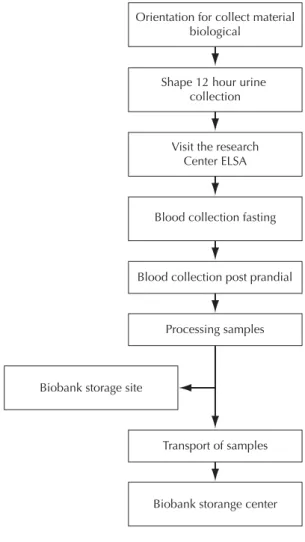
Figure 1 shows the general organization of the biobank protocol. The Table lists all samples available for each participant at the end of the study baseline.
As previously described, after considering the technical, economic, logistical and political aspects of the project, a hybrid storage system was selected. Each participating center would have a local biobank with some of the aliquots selected in each of these centers (Table). These aliquots would be stored in freezers at -80oC. The local biobanks were designed to guarantee the availability of samples for projects restricted to local centers, such as specifi c serological studies in certain populations or specifi c biomarkers of a certain center with experience or expertise in this area.
On the other hand, the ELSA-Brasil also predicted the need for a central biobank that could maintain a great diversity of biological samples of all study participants, regardless of the investigation center in which participants were recruited. This biorepository, exclusively designed to meet the needs of this study, was constructed close to the center with the greatest laboratory expertise (São Paulo).
The centralized training and team certifi cation included in the data collection at each center were performed in the city of São Paulo. Standard blood collection techniques with the vacutainer system were used. A fasting blood sample and a postprandial blood sample were collected from each participant. While fasting, the following were collected: three EDTA tubes of 3.5 mL, three tubes of 4.0 mL with serum clot activator,
Table. Aliquots available at the end of the study baseline for each participant.
Fasting serum
Fasting EDTA plasma
Fasting plasma with
citrate
Fasting plasma with
heparin
Urine Postprandial
serum
Postprandial plasma with
heparin Cryotubes
(local biobanks)
3 3 2 1 2 2 1
Straws
(central biobank)
two tubes with citrate, one tube with fl uorite/oxalate, one tube with heparin, and one tube of 7.0 mL with urine. In the postprandial period, the following were collected: one tube of 4.0 mL with serum clot activator, one tube with heparin, and one tube with citrate, using the vacutainer system in all cases.
After blood and urine collection, the detailed aliquoting process was performed. All samples were processed in the same area of collection to prevent sample stability problems due to local transportation before processing. Samples were always maintained in ice and should be centrifuged until 30 minutes after collection.
Following refrigerated centrifugation, samples were aliquoted. The fi rst aliquots were always used for laboratory testing. After a suffi cient amount of material was separated for tests predefi ned in the baseline to be performed,1 biorepository aliquots were separated. Once there were several local and central storage loca-tions in the present study, the preparation of aliquots in this stage refl ected such logistics. Some of the decisions made in the study planning stage had to be reviewed
during its implementation. The initial decision of crea-ting aliquots until the available samples were exhausted had to be dismissed due to lack of space in the freezers. However, 14 samples were stored from the random cohort sample, increasing the number of samples stored from 42 to 56 per participant.
The transfer of frozen samples maintained in dry ice from each center to the central biobank was performed monthly. Styrofoam boxes with dry ice were used for transportation, following the International Air Transport Association regulations. The receipt and arrival condi-tions of samples were monitored on each transfer.
The present study developed a set of unique labels with barcodes for each collection tube in each box and per aliquot (in cryotubes or straws). In addition, spread-sheets of limited access were also created, linking the barcodes of labels to a certain participant, maintaining sample anonymity.
Specimen collection and processing protocols guaranteed that all data were always recorded at the beginning and end of each procedure. This enabled the calculation of time intervals that were used in quality control: the time spent to complete the collection while fasting, the time between the end of collection and centrifuging, the time between centrifuging and the storage of samples in the freezer, the time required for participants to take the oral glucose solution as part of the oral glucose tolerance test, and the time between the intake of solution and the postprandial collection after two hours.
The facilities for local sample storage at -80oC were planned to meet the storage needs of each study parti-cipant. These facilities were planned to safely store aliquots of several types of biological specimens from each participant of a certain center, guaranteeing the continuance of sample integrity and storage conditions. The aliquots stored in local biobanks were maintained
Orientation for collect material biological
Shape 12 hour urine collection
Visit the research Center ELSA
Blood collection post prandial
Transport of samples Biobank storage site
Biobank storange center Blood collection fasting
Processing samples
Figure 1. General organization of the biobank protocol.
in cryotubes (Figure 2) and identifi ed using the barcode system especially developed for this study. Both the local and central biobanks guarantee the sample loca-tion and an accurate identifi caloca-tion in a simple way.
The mechanical refrigeration in freezers was the technology of choice of local biobanks. Each setup was comprised of two or more freezers with electrical backup and long-distance monitoring systems. An air condition refrigeration structure was created in each location to absorb the heat demand generated by this system. Sound protection was assessed individually, with different local solutions to maintain an acceptable level of noise in the workplace.
Each local biobank was managed by a coordinator and between one and three technicians. Each coordinator received detailed material about the sample collection and storage process. Several pre-tests were performed before and during the recruitment period of the study, organized by the laboratory committee. The materials distributed to the laboratory coordinators included the study’s manual of instructions, a flow chart with specimen processing, standardized specimen collection descriptive kits and shipment supplies. Additionally, laboratory equipment and materials were standardized and all centers used the same brands and types of consumables.
Apart from the local biobanks, the ELSA-Brasil imple-mented a complete cryogenic center capable of storing biological samples from study participants in vapor phase (Figure 3). Liquid nitrogen storage system has many advantages. The signifi cantly more stable storage temperature (-196oC) enables the rapid decrease in temperature and recovery rate and, based on the size of the ELSA-Brasil biobank, a considerably lower maintenance cost. Moreover, the liquid nitrogen system includes fewer mechanical and electrical components when compared to freezers, which enables it to be less vulnerable to mechanical or electrical failures.
This usually reduces the need for regular updates and simplifi es system maintenance in the long term.5
In spite of this, large banks using liquid nitrogen need to be carefully planned to guarantee that samples are main-tained in an adequate long-term storage environment and that teams work under safe conditions in the facilities.
One company was commissioned to provide the entire system infrastructure, including the following: project, construction management, materials required for the construction and installation of tanks, external tank, super insulated vacuum lines, high-capacity tanks to store samples for long periods of time in nitrogen vapor (Espace 661) with an automatic supply system and all long-distance and local control programs required for its functioning.
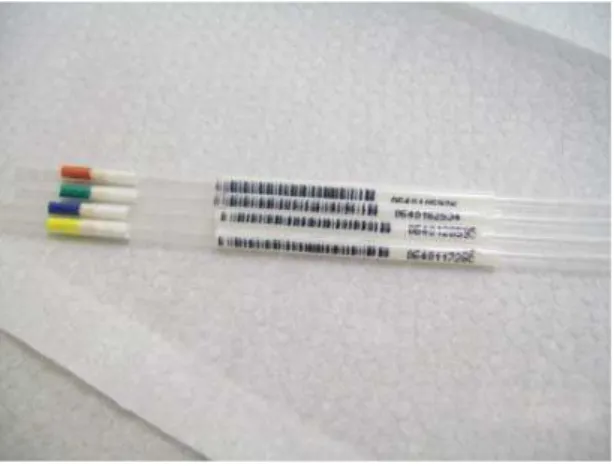
One of the main concerns of the team was how to fi t the largest number of samples into the smallest area possible. All samples in the tanks were stored in straws (Figure 4). These straws were kept in boxes, which fi t into racks designed to accommodate them in tanks. In the specifi c biobank context, straws have several advantages when compared to cryotubes. They are smaller and save more space than cryotubes. They have a sealing system that prevents nitrogen infi ltration in the samples (liquid nitrogen penetrates through cryotube screws, but not through sealed straws). Additionally, the latter are available in various colors and each color can correspond to a type of biological fl uid. In the ELSA-Brasil, green straws always contain urine, facilitating the identifi cation of a specifi c biological fl uid among the several straws of a certain participant. Moreover, these straws usually hold 0.5 mL, compared to cryotubes that usually hold 2.0 mL. As the volume of material required for a dosage has decreased in recent years, it is better to store four straws of 0.5 mL each than one cryotube of 2.0 mL.6 The main limitations to the use of the straws are their cost and the need to purchase the equipment required to fi ll and seal them for each center.
Another important consideration is this system’s capacity to detect failures on a regular basis and, upon detection of a failure, to notify the team for immediate error correction. In this sense, the planned system can identify any type of malfunctioning in each part of the system and problems in the central cryogenic structure (such as temperature and ventilation) or malfunctioning in the liquid nitrogen communicating tubes. In the presence of any type of malfunctioning, the system sends emails or makes telephone calls to the entire team that monitors the cryogenic center immediately after detection; or, in the absence of any changes, it sends a routine message informing that all is functioning normally.
During the implementation stage, there were several technological and logistical problems. Unstable and precarious power sources and shortage of power in practically all centers and the limitations of mainte-nance support for freezers were an important concern during the entire data collection stage. In truth, minor fl aws in certain freezers showed the absolute need for a freezer backup in each center and for preventive maintenance of all freezers in use. Problems caused by the increase in temperature and level of noise were also identifi ed in some centers. With regard to the logistical problems, hindrances to purchasing and the need for budget changes among others, caused by the bureau-cracy of the system responsible for the purchases of consumables and durable goods for research, required additional planning
CONCLUSIONS
Although studies describing the technical aspects of certain cryogenic biorepository centers have been
published, few of them assess non-technical aspects of biobank planning and implementation. Many other problems such as political issues, budget, diffi culties in the importation process and its costs, and bureaucratic and legal aspects for the use of the study’s budget are certainly as important as the technical aspects, when fi nally determining whether the biobank implementa-tion was successful or not.
1. Bensenor IM, Fedeli L, Vidigal P, Leite CM, Castilhos C, Pimentel RA. Logística de coleta e transporte de material biológico e organização do laboratório central no ELSA-Brasil. Rev Saude Publica. 2013;47(Supl 2):63-71.
2. Elliott P, Peakman TC. The UK Biobank sample handling and storage protocol for the collection, processing and archiving of human blood and urine. Int J Epidemiol. 2008;37(2):234-244. DOI:10.1093/ije/dym276
3. Hallmans G, Vaught JB. Best practices for establishing a biobank. Methods Mol Biol. 2011;675:241-60. DOI:10.1007/978-1-59745-423-0_13
4. International Society for Biological and Environmental Repositories. 2008 best practices for repositories collection, storage, retrieval and distribution of biological materials for research international. Cell Preserv Technol. 2008;6(1):3-58. DOI:10.1089/cpt.2008.9997
5. Owen JM, Woods P. Designing and implementing a large-scale automated -80 degrees C archive.
Int J Epidemiol. 2008;37 Suppl 1:i56-61. DOI:10.1093/ije/dym293
6. Yasui GS, Arias-Rodriguez L, Fujimoto T, Arai K. Simple and inexpensive method for cryopreservation of fi sh sperm combining straw and powdered dry ice.
Cryo Letters. 2008;29(5):383-90.
REFERENCES
The study was funded by the FINEP (Research Funding Agency – process number 01 3458-0).
The Brazilian Longitudinal Study for Adult Health (ELSA-Brasil) was funded by the Brazilian Ministry of Health (DECIT – Department of Science and Technology) and Ministry of Science and Technology (FINEP – Research Funding Agency and CNPq – National Council for Scientifi c and Technological Development – process numbers 01 06 0010.00 RS, 01 06 0212.00 BA, 01 06 0300.00 ES, 01 06 0278.00 MG, 01 06 0115.00 SP, 01 06 0071.00 RJ).
The authors declare that there are no confl icts of interest.