ORIGIN
AL RESEAR
CH
Corresponding address: Thais Massetti – Rua Cipotânea, 51, Cidade Universitária, São Paulo (SP), Brazil – Zip Code: 05360-000 – Email: [email protected] – Finance source: Universidade do Oeste Paulista (Unoeste) – Conlict of interests: Nothing to declare – Presentation: Nov. 2016– Accepted for publication: May 2017 – Approved by the Research Ethics Committee on advice no. 1475.
Study carried out at Universidade do Oeste Paulista – Presidente Prudente (SP), Brazil.
1Faculdade de Ciências da Saúde, Universidade do Oeste Paulista (Unoeste) – São Paulo (SP), Brazil.
2Graduate Program in Rehabilitation Sciences, Faculdade de Medicina da Universidade de São Paulo (FMUSP) – São Paulo (SP), Brazil. 3Graduate Program in Cardiology, Escola Paulista de Medicina (Unifesp), Universidade Federal de São Paulo – São Paulo (SP), Brazil. 4Graduate Program in Physical Activity Sciences, Escola de Artes, Ciências and Humanidades, Universidade de São Paulo (EACH-USP) –
São Paulo, SP, Brazil.
5Graduate Program in Rehabilitation Sciences, Faculdade de Medicina da Universidade de São Paulo (FMUSP); Graduate Program in
Cardiology, Escola Paulista de Medicina (Unifesp), Universidade Federal de São Paulo; Graduate Program in Physical Activity Sciences, Escola de Artes, Ciências and Humanidades, Universidade de São Paulo (EACH-USP) – São Paulo (SP), Brazil.
6Faculdade de Ciências da Saúde, Universidade do Oeste Paulista (Unoeste) – Presidente Prudente (SP), Brazil. ABSTRACT | The objective of this study was to evaluate
the anthropometric proile, level of physical activity, anxiety level, and posture of graduate students in the health ield. This is a cross-sectional study involving 100 college students from health courses at a university in the western state of São Paulo. Weight, height, waist circumference, and body mass index data were collected. We also applied the International Physical Activity Questionnaire for physical activity; the State-Trait Anxiety Inventory for anxiety; and the Postural Assessment Instrument for postural defects. The results of this study show that 67% of students have an average BMI of 22.12±4.84 kg/m², and 38% are regularly active. Regarding anxiety levels, the sample obtained (mean STAI E 40.6 points and STAI T 40.05) can be classiied as moderate. In addition, 50% of the sample have lumbar concavity. Therefore, most health care university students displayed normal anthropometric values, were regularly active, had a moderate level of anxiety and had no postural defects.
Keywords | Anxiety; Posture; Physical Fitness.
RESUMO | O objetivo deste estudo é avaliar o peril antropométrico, o nível de atividade física e a postura em universitários da área da saúde. Este é um estudo transversal envolvendo 100 estudantes de uma universidade na Zona
191
Oeste de São Paulo. Peso, altura, circunferência da cintura e índice de massa corporal foram coletados. Também foram aplicados o Questionário Internacional de Atividade Física, o Inventário de Ansiedade Traço-Estado e o Instrumento de Avaliação Postural. Os resultados deste estudo mostram que 67% dos estudantes têm IMC médio de 22,12±4,84 kg/ m² e 38% são regularmente ativos. Acerca dos níveis de ansiedade, a amostra obtida (média IDATE E 40,6 pontos e IDATE T 40,05) pode ser classiicada como moderada. Além disso, 50% da amostra tem concavidade lombar. Portanto, a maioria dos estudantes demonstrou valores antropométricos normais, eram regularmente ativos, tinham nível moderado de ansiedade e nenhum defeito na postura corporal.
Descritores | Ansiedade; Postura; Condicionamento Físico.
RESUMEN | El objectivo de este estudio fue evaluar peril antropométrico, nivel de actividad física, grado de ansiedad y postura de estudiantes universitarios de la salud. Este es un estudio transversal de observación envolviendo 100 estudiantes universitarios de cursos de la salud en una universidad del Oeste del estado de São Paulo, Brasil. Datos como peso, altura, circunferencia de la cintura y índice de masa corporal (IMC) fueron recogidos. Nosotros también
Anthropometric profile, physical activity level,
degree of anxiety, and posture in college students
Peril antropométrico, nível de atividade física, grau de ansiedade e postura em universitários
Peril antropométrico, nivel de actividad física, grado de ansiedad y postura en estudiantes
universitarios
Deborah Cristina Gonçalves Luiz Fernani1, Giovana Mendes Cortez1, Isabelle Amaral Santos1, Francis
Lopes Pacagnelli1, Thais Massetti2, Talita Dias da Silva3, Denise Cardoso Ribeiro Papa2, Íbis Ariana Peña
aplicamos el Cuestionario Internacional de Actividad Física para actividad física; el Inventario de Ansiedad Trazo-Estado (Idate) para ansiedad; y el Instrumento de Evaluación Postural para defectos de postura. Los resultados de este estudio mostraron que 67% de los estudiantes tienen IMC medio de 22.12±4.84 kg/m² y 38% son regularmente activos. Considerándose los grados de ansiedad, el ejemplo obtenido (Idate-E de 40,6 puntos y Idate-T
de 40,05) puede ser clasiicado como moderado. Además, 50% de los estudiantes del ejemplo presenta concavidad lumbar. Por lo tanto, la mayoría de los estudiantes de la salud analizados presentan valores antropométricos normales, son regularmente activos, tienen grado moderado de ansiedad y no presentan defectos posturales.
Palabras clave | Ansiedad; Postura; Aptitud Física.
INTRODUCTION
New challenges arise when one starts college. It is a time of transition, which requires adaptation to this new lifestyle. his new phase may arouse fears, insecurities,
uncertainties, and anxiety1.
Anxiety is an emotional state experienced by many people and can be triggered by tension caused by a stressful and physically exhausting experience; this is often the case when starting university life as the student does not know how they will adapt to this new lifestyle and have to take responsibility for themselves. However, that can be relieved by the practice of
physical activity2,3.
Anxiety combined with inadequate physical activity tends to worsen the painful condition, which can trigger a vicious cycle of adversely afected posture in university
students4.
When the individual starts this cycle, the state of stress excessively increases muscle contraction; the muscle cannot generate adequate relaxation, causing fatigue. Fatigue is a power outage caused by maintenance or strength failure during repeated muscle contractions.
his makes it diicult to maintain a stance5. his
position can be deined as body position and attitude, the relative arrangement of various body parts in order
to maintain balance and harmony6.
herefore, this study is justiied because it seeks to demonstrate the level of anxiety, bad postural habits, and level of physical activity in college students attending undergraduate courses in the health area and consider if these conditions are related. his relationship could be important to clarify if physical activity can positively
modify bad postural habits and anxiety levels7,8.
he objective of this research was to evaluate the anthropometric proile, level of physical activity, anxiety level, and posture of undergraduate students in the health ield.
METHODOLOGY
his is a cross-sectional study involving 100 college students with an average age of 19.38±1.71 years, enrolled in courses in the health ield at a university in the western state of São Paulo. he study was approved by the Research Ethics Committee with the number CAAE: 32315314.0.0000.5515.
he proposal was presented to the coordinators of the courses in order to seek support and dissemination throughout the healthcare department; the chosen courses were Dentistry, Physical therapy, Medicine, Biomedicine, Pharmacy, and Nutrition, which are all full-time courses. Consequently, following the dissemination of information, students interested in participating were asked to enroll in the Physical herapy Clinic for one week, being selected in the order. Enrolled students were included in the study once they agreed to sign the informed consent form. Subjects diagnosed previously with postural changes or other pathological disorders of the musculoskeletal system were excluded.
Data collection began with the identiication of the individuals (name, sex, age) and anthropometric data (weight, height, waist circumference, and body mass
index (BMI)9. Weight was obtained using a Plena®
digital scale with a maximum capacity of 160 kg and a resolution of 100 g. Each student was dressed in gym clothes (shorts and shirt) and positioned standing in the center of the scale platform, barefoot, and with arms positioned straight along the body.
he abdominal circumference (AC) was measured in centimeters (cm), using a tape measure with a resolution of 0.1 cm, positioned on the umbilicus of the individual and parallel to the ground and, for this analysis, the individual was placed in the standing position, with feet together and a relaxed abdomen and
arms along the body10.
he abdominal circumference is considered obese when measuring ≥94 cm in men and ≥80 cm in women, increasing the risk of metabolic complications. Already at risk of metabolic complications increased substantially ≥102 for men and ≥88 for women. BMI was classiied as <18.5 – underweight; 18.5 to 24.9 – normal weight; 25.0 to 29.9 – overweight; 30.0 to 34.9 – obesity I; 35.0
to 39.9 – obesity II; ≥40.0 – obesity III11.
To assess the level of physical activity, the International Physical Activity Questionnaire – the 8-question short version (IPAQ) proposed by the
World Health Organization (1998) – was applied12. he
IPAQ consists of three levels:
• Very active: one who fulills the criteria of vigorous activity ≥5 days/week and ≥30 minutes per session, or vigorous activity ≥3 days/week and ≥20 minutes per session + moderate exercise or walking ≥5 days/week and ≥ 30 minutes per session;
• Active: one who fulills the criteria of vigorous activity ≥3 days/week and ≥20 minutes per session; or moderate exercise or walking ≥5 days/ week and ≥30 minutes per session; or any added activity ≥5 days/week and ≥150 minutes/week (walk + moderate + vigorous);
• Irregularly active: one who performs physical activity insuiciently to be classiied as active as the activity does not meet the recommendations regarding frequency or duration. he accomplishment of this rating adds to the frequency and duration of diferent types of activities (walking + moderate+ vigorous);
• Sedentary: one who does not carry out any physical activity for at least 10 continuous minutes during the week.
his Questionnaire was self-administered.
Anxiety was assessed by the State-Trait Anxiety
Inventory (STAI)13,14, developed by Spielberg,
Gorsuch, and Lushene and translated and validated in Brazil by Biaggio and Natalicio. IDATE is a
self-assessment questionnaire and consists of two parts; each has 20 questions. he irst part was evaluated as follows: exceedingly anxious (4), a lot anxious (3), a bit anxious (2), and not at all anxious (1). he second part was evaluated as follows: always (4), often (3) sometimes (2) and rarely (1). Anxiety levels were scored as follows: low anxiety (20-34 points), moderate (35-49 points), high (50-64 points)
and very high (65-80 points)15,16.
For an analysis of posture, the Instrumento de
Avaliação Postural (IAP) by Liposcki16 was used, and
this study used only those items pertaining to the
alignment of head, shoulders and trunk16, relating to
the posture symmetry impairment and afected by
anxiety and stress17.
For statistical analysis, continuous data is presented as mean and standard deviation and. for categorical data, the results are presented in frequency and percentage. SPSS 15.0 was used, and the distribution of the data was assessed by the Shapiro-Wilk test. To analyze the association between the categorical data, we used the chi-square test. To evaluate the relationship between categorical and numerical data, the Spearman correlation test was used; for the relationship between numerical data, we used the Pearson test for parametric data and Spearman test for nonparametric data. he correlation magnitude parameters were recorded using those given by Portney and Watkins: from 0.00 to 0.25, little or no correlation; >0.25 to 0.50, reasonable correlation; >0.50 to 0.75, moderate correlation to good; >0.75, good correlation to excellent; and 1.00, perfect correlation. he signiicance level for all tests was 5%.
RESULTS
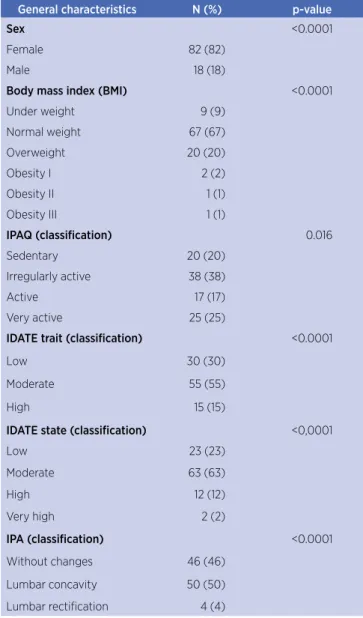
Table 1. General characteristics of health care students
General characteristics N (%) p-value
Sex <0.0001
Female 82 (82)
Male 18 (18)
Body mass index (BMI) <0.0001
Under weight 9 (9)
Normal weight 67 (67)
Overweight 20 (20)
Obesity I 2 (2)
Obesity II 1 (1)
Obesity III 1 (1)
IPAQ (classification) 0.016
Sedentary 20 (20)
Irregularly active 38 (38)
Active 17 (17)
Very active 25 (25)
IDATE trait (classification) <0.0001
Low 30 (30)
Moderate 55 (55)
High 15 (15)
IDATE state (classification) <0,0001
Low 23 (23)
Moderate 63 (63)
High 12 (12)
Very high 2 (2)
IPA (classification) <0.0001
Without changes 46 (46) Lumbar concavity 50 (50) Lumbar rectiication 4 (4)
Chi-square univariate test
Regarding the STAI indings, the sample mean score reached by IDATE 40.6 points and IDATE T 40.05 and is classiied as moderate anxiety. When considering the association between the BMI classiication and the evaluation of the IAP, it was observed that there was little diference compared with normal weight individuals with concavity (32%) and no change with normal weight (33%). Regarding overweight individuals, 10% of them had concavity, 8% had no change, and 2% had rectiied lordosis. As for the classiication of obesity (I, II, III) there was a total of 4% of individuals with concavity who were distributed across obesity II and III (2%) and obesity I (2%; p=0.641).
By linking the IPAQ test evaluation IAP, a good to excellent correlation (r=0.816) was found, which demonstrates that the concavity had a higher incidence in irregularly active individuals.
Table 2. Distribution between IPAQ test and evaluation IAP
Sedentary Regular active Active Very active Total
Hiperlordosis 12 18 8 12 50
Rectiied 0 1 1 2 46
Without changes 8 19 8 12 4
Total 20 38 12 25 100
When combining IDATE with the IPAQ, the highest rate found was a moderate rating of 63%, of which 23% are irregularly active, 15% active, 13% very active, and 12% inactive. In relation to the lower rate of anxiety, we found 5% to be sedentary, 8% irregularly active, 2% active, and 8% very active; a total of 23%. Of those with a high score in IDATE, 3% were sedentary, 5% were irregularly active, no students were active, and 4% were very active, totaling 12%. For very high ratings of 2%, the same number was regularly active (p=0.350). When the IDATE T was combined with the level of physical activity, it was shown that 55% had a moderate index of anxiety, 15% were sedentary, 20% irregularly active, 10% active, and 10% very active. In the low index rating, 4% were sedentary, 10% irregularly active, 4% active, and 12% very active, totaling 30%. In the high anxiety index, 1% of the population was sedentary, 8% irregularly active, 3% active, and 3% very active, totaling 15% (p=0.183).
Associating sex and the indings of IAP, 50% of the students showed concavity, with a higher incidence in women (p=0.042). One can justify this high incidence of concavity for individuals without change and link this to the fact that the average number of hours they spent sitting during the day was 8.31±4.33 hours, because of the full college schedule.
Regarding the proile of anxiety and depression, there was a signiicant diference between the sexes in respect to STAI traits (p=0.001), in which 51 (62.2%) women were moderate when compared with men; only 4 (22, 2%) women had moderate anxiety and depression. In relation to the level of physical activity, no signiicant diference was found between genders (p=0.024), in which 36 (43.9%) women were regularly active and only 6 (33.3%) men were active.
DISCUSSION
he results of this study demonstrate the anthropometric proile of health care students, with 67% of college students with normal weight and 20% overweight, according to the BMI classiication. he results of the IDATE showed a higher prevalence of moderate levels of anxiety in both tests (T and D), according to the classiication. he level of physical activity showed that 20% of the subjects were sedentary and 38% were regularly active. he highest prevalence of postural changes (50%) was concavity.
he IPAQ found that the highest prevalence was in irregularly active individuals (38%), perhaps because the health beneits and improved quality of life with regular
physical activity are well-known12.
However, recent evidence suggests that gender diferences exist in correlations of physical activity in
adolescents16. Ceschini and Júnior18 compared the level
of physical activity according to sex among young people
in the metropolitan region of São Paulo.he highest
prevalence was regularly active individuals (44.03%); when categorized by sex, 45.1% of women were physically active. Female adolescents are often described as being
physically less active than their male counterparts19,20.
As for this study, the IDATE showed that a moderate level of anxiety was found for both ratings (average STAI E 40.6 points and IDATE T 40.05),
which resembles the study by Almondes and Araujo21,
who evaluated anxiety and obtained an average of 37.9 for anxiety state and 38.84 for trait anxiety. he explanations for these indings may be due to the new phase that these students are experiencing and to the imposition of a new lifestyle.
In a study using analysis of computed photogrammetry, concavity was presented in 65.7% of
university students22, which is similar to the indings of
this study in which concavity was the postural change with the highest incidence: 50% of college students with a prevalence in women (45%). his fact is reinforced in
the study by Baroni et al.23, which also shows a higher
prevalence of concavity in female students and active individuals. he justiication for this prevalence in women may be explained by the female anatomy and the presence of anteversion, which is associated with the shortening of the quadratus lumborum, psoas ilium, and adductors. All this postural change may result in pressure overload on the lower back, which can develop into other musculoskeletal disorders.
In this study, 20% of students were overweight and 67% were normal weight, which is similar to the
study by Miranda et al.24, which evaluated 685 college
students and found the prevalence of overweight to be
16% and the study of Miranda et al.25,which evaluated
535 students and veriied 18.3% as overweight and
obese and 75.2% as normal weight24. Although there
is a prevalence in the category of normal weight, what stands out are those with excess weight, as obesity is a risk factor for the development of psychosocial disorders, cardiovascular diseases, endocrine disorders,
sleep disorders, and more advanced age obesity26.
By associating the level of anxiety with the practice of exercise, it was shown that 63% of students were classiied as having a moderate level of anxiety and 51% engaged in some kind of physical activity. he study by
Cevada et al.3related sport to anxiety, quality of life, and
resilience and it acknowledges that athletes and former athletes are less anxious than sedentary people. his fact shows that physical activity contributes to the physical and emotional well-being.
As already discussed, when relating anxiety level to physical exercise, we found that regardless of the level of anxiety, young people respond similarly to exercises of diferent intensities with a decreased level of anxiety, which afects physical and associated
emotional well-being25.
When correlated with BMI, IDATE shows that having a lower body mass index can provide a higher level of anxiety. A study by Rocha reported no association between high BMI and a high level of anxiety in an
individual27. A study by Hainzenreder et al.28evaluated
this on 136 students of a Physical Education course; their study found AC with an average of 77.1±0.62 cm, which is similar to the average AC found on this study of 77±9.45 cm, with no diference between the sexes.
In relation to time spent sitting, the average time was 6 hours, justifying the lack of time – especially taking into account internships and other activities – for physical activity. In the current study, this means that college students spent 8.31±4.33 hours sitting, which is a igure
similar to that found in the work done by Raddi et al.29
which evaluated 186 third year students at the Faculdade de Ciências Médicas da Santa Casa de São Paulo and their level of physical activity; the accumulation of time sitting averaged 8.92±8.72 hours on weekdays.
As estimated by Farias et al.30, this study shows that:
83% had no protruding shoulder, 64% had symmetrical Tales Triangle (formed between the shoulders, upper limbs and spine), 97% had no trunk rotation, 90% had no cervical abnormalities, 94% had no chest changes, 98% had no changes in the shoulder blade, and 94% did not have scoliosis. Fifty percent had concavity; the higher incidence of concavity was in women, suggesting a weakness of the abdominal muscles, which has a higher prevalence in women and can contribute to this postural change.
hese indings are diferent when compared with studies of teenage dance practitioners, which give a higher percentage of postural changes; 100% of the adolescents had shoulder elevation on the left or right, 50% had anterior shoulders, 50% had normal shoulders, 80% had a higher Tales Triangle to the right and 20% had it higher to the left, 80% had trunk rotation or inclination, with a predominance of rotation to the right compared with the proile of the umbilicus, 50% had asymmetry towards the left, 60% had no cervical abnormalities, 80% had no chest changes, 80% had scoliosis in the cervical, thoracic, or lumbar region, and
80% of adolescents had lumbar concavity30.
CONCLUSION
he anthropometric proiles of university health care students are within normal standards. hese students are regularly active and the practice of physical activity softens anxiety symptoms, which are stratiied at a moderate level. Alterations are present in this population and lumbar concavity has a higher incidence than the standard, especially in women. here is a need for further studies with research approaches directed at other elements and intervention in the university population, who can be particularly vulnerable to anxiety when not practicing physical activity.
REFERENCES
1. Bassols AM, Sordi AO, Eizirik CL, Seeger GM, Rodrigues GS, Reche M. A prevalência de estresse em uma amostra de estudantes do curso de medicina da Universidade Federal do Rio Grande do Sul. Rev HCPA. 2008;28(3):153-7.
2. Gama MMA, Moura GS, Araújo RF, Teixeira-Silva F. Ansiedade-traço em estudantes universitários de Aracaju (SE). Rev Psiquiatr Rio Gd Sul. 2008;30(1):19-24. doi: 10.1590/ S0101-81082008000100007
3. Cevada T, Cerqueira LS, Moraes HSd, Santos TMd, Pompeu FAMS, Deslandes AC. Relação entre esporte, resiliência, qualidade de vida e ansiedade. Rev Psiquiatr Clin. 2012;39(3):85-9. doi: 10.1590/S0101-60832012000300003 4. Farah BQ, Barros MVG, Farias Júnior JC, Ritti-Dias RM,
Lima RA, Barbosa JPAS, et al. Percepção de estresse: associação com a prática de atividades físicas no lazer e comportamentos sedentários em trabalhadores da indústria. Rev Bras Educ Fís Esporte. 2013;27(2):225-34. doi: 10.1590/ S1807-55092013000200007
5. Cheik NC, Reis IT, Heredia RAG, Ventura MdL, Tuik S, Antunes HKM, et al. Efeitos do exercício físico e da atividade física na depressão e ansiedade em indivíduos idosos. Rev Bras Ciênc Mov. 2003;11(3):45-52.
6. Costa TB, Giantorno JB, Suzuki FS, Oliveira DL. Análise postural em escolares do ensino fundamental. Rev Bras Ciênc Saúde. 2012;16(2):219-22. doi: 10.4034/RBCS.2012.16.02.14 7. Freitas ECG, Ferreira EAG. Alinhamento postural, ansiedade
e estresse em adultos jovens. Rev PIBIC. 2007;4(1):81-94. 8. Sloan RA, Sawada SS, Girdano D, Liu YT, Biddle SJH, Blair SN.
Associations of sedentary behavior and physical activity with psychological distress: a cross-sectional study from Singapore. BMC Public Health. 2013;13(1):885. doi: 10.1186/1471-2458-13-885 9. Castro TGd, Barufaldi LA, Schlüssel MM, Conde WL, Leite MS,
Schuch I. Waist circumference and waist circumference to height ratios of Kaingáng indigenous adolescents from the State of Rio Grande do Sul, Brazil. Cad Saúde Pública. 2012;28(11):2053-62. doi: 10.1590/S0102-311X2012001100005 10. Cabrera TFC, Correia IFL, Santos DO, Pacagnelli FL,
Prado MTA, Silva TD, et al. Analisys of the prevalence of overweight and obesity and the level of physical activity in children and adolescents of a southwestern city of São Paulo. J Human Growth Develop. 2014;24(1):67-72.
11. Bener A, Yousafzai MT, Darwish S, Al-Hamaq AOAA, Nasralla EA, Abdul-Ghani M. Obesity index that better predict metabolic syndrome: body mass index, waist circumference, waist hip ratio, or waist height ratio. J Obesity. 2013; 2013: 269038. doi: 10.1155/2013/269038
12. Pardini R, Matsudo S, Araújo T, Matsudo V, Andrade E, Braggion G, et al. Validação do questionário internacional de nível de atividade física (IPAQ-versão 6): estudo piloto em adultos jovens brasileiros. Rev Bras Ciên e Mov Brasília. 2001;9(3):39-44.
13. Spielberger CD, Gorsuch RL, Lushene R, Vagg PR, Jacobs GA. Manual for the state-trait anxiety inventory. J Clin Psychiatry. 1983;53:267-71.
14. Biaggio AMB, Natalício L. Manual para o inventário de ansiedade traço-estado (IDATE). CEPA. 1979;15.
15. Leal RA, dos Santos ALM, da Silva CA, Borges RGL, Barbosa ANO. Depression and anxiety traits among medical students. Rev Paraense Med. 2010;24(2):13.
16. Liposcki DB, Rosa Neto F, Savall AC. Validação do conteúdo do instrumento de avaliação postural–IAP. Rev Digital. 2007;12(109):1-7.
18. Ceschini FL, Júnior AF. Physical activity level in young adults living at the metropolitan region of São Paulo. Rev Atenção Saúde. 2010;4(8).
19. Oehlschlaeger MHK, Pinheiro RT, Horta B, Gelatti C, San’Tana P. Prevalência e fatores associados ao sedentarismo em adolescentes de área urbana. Rev Saúde Pública. 2004;38(2):157-63. doi: 10.1590/S0034-89102004000200002 20. Coelho JJ, Graciosa MD, De Medeiros DL, Da Costa LMR,
Martinello M, Ries LGK. Inluência do peril nutricional e da atividade física na postura de crianças e adolescentes. Fisioter Pesqui. 2013;20(2):136-42. doi: 10.1590/ S1809-29502013000200007
21. Almondes KM, Araújo JF. Padrão do ciclo sono-vigília e sua relação com a ansiedade em estudantes universitários. Estud Psicol. 2003;8(1):37-43. Doi: 10.1590/ S1413-294X2003000100005
22. Santos AMCD, Amaral CP, Oliveira MRTO, Souza Bastos VC, Nascimento LSG, Cunha EF, et al. Alterações posturais da coluna vertebral em indivíduos jovens universitários: análise por biofotogrametria computadorizada. Saúde Pesqui. 2014;7(2):191-8.
23. Baroni BM, Bruscatto CA, Rech RR, Trentin L, Brum LR. Prevalência de alterações posturais em praticantes de musculação. Fisioter Mov. 2010;23(1):129-39. doi: 10.1590/ S0103-51502010000100013
24. Miranda VPN, Filgueiras JF, Neves CM, Teixeira PC, Ferreira MEC. Insatisfação corporal em universitários de diferentes áreas de conhecimento. J Bras Psiquiatr. 2012;61(1):25-32.
25. Miranda R, Neto ES, De Mello M, Antunes H. O nível de ansiedade traço inluencia a percepção de fadiga e bem-estar após diferentes intensidades de exercício físico? Rev Bras Ativ Fís Saúde. 2014;18(6):730. doi: 10.12820/RBAFS.V.18N6P730 26. Speiser PW, Rudolf MCJ, Anhalt H, Camacho-Hubner C,
Chiarelli F, Eliakim A, et al. Childhood obesity. J Clin Endocrinol Metab. 2005;90(3):1871-87. doi: 10.1210/jc.2004-1389
27. Rocha C, Costa E. Aspectos psicológicos na obesidade mórbida: avaliação dos níveis de ansiedade, depressão e do auto-conceito em obesos que vão ser submetidos à cirurgia bariátrica. Aná Psicol. 2012;30(4):451-66.
28. Hainzenreder ID, Montes LS, Schwengber LM, Lopes CP. Tempo habitual de atividade física de universitários durante as fases do curso de educação física na cidade de Torres-RS. RBPFEX- Rev Bras Prescr Fisiol Exerc. 2012;4(22):409-20. 29. Raddi LLdO, Silva Júnior JPd, Ferrari GLdM, Oliveira LCd,
Matsudo VKR. Physical activity level and accumulation of sitting time among medical students. Rev Bras Med Esporte. 2014;20(2):101-4.