Kidney function estimate among subjects aged 18-59 years
in Tubarão, Santa Catarina: A population-based study
Authors
João Carlos Fantini Schaefer1
Mariana Soares Pereira1 Clovisa Reck de Jesus1 Fabiana Schuelter-Trevisol1,2 Daisson José Trevisol1,2
1 Universidade do Sul de Santa
Catarina (UNISUL).
2 Centro de Pesquisas Clínicas
HNSC/Unisul.
Submitted on: 08/08/2014. Approved on: 12/09/2014.
Correspondence to:
Daisson José Trevisol. University of Southern Santa Catarina (UNISUL).
Avenida José Acácio Moreira, 787 Bairro Dehon Tubarão - SC. CEP: 88704-900.
E-mail: [email protected] Tel: (48): 3631-7239. Foundation for Research and Innovation Support of the State of Santa Catarina (FAPESC).
Introduction: Among the increasing chronic degenerative diseases, chronic kidney disease (CKD) is a major public health challenge facing the 21st
century. Objectives: To estimate the GFR by using the CKD-EPI formula among subjects aged 18-59 years, and to identify factors associated with glomerular filtration rate (GFR). Methods: A cross-sectional population-based study was conducted on adults between November 2011 and March 2012. We collected sociodemographic, anthropometric, clinical, and laboratory tests to build a database. The Pearson's chi-square test was used to assess the association between variables, and the Student's t-test was used for mean comparison at 95% confidence level. Results: A cohort of 371 adults was surveyed (63.8% women; 86.3% Whites). The mean age was 40.4 years (SD ± 12.3). Of the total, 76.8% had normal GFR; 21.8% showed a slight decline, 1.1% a moderate decline, and 0.3% a significant decline in GFR. There were significant differences related to age and obesity, because the greater the age or the higher the body mass index, the lower the GFR of participants. Individuals with systemic hypertension showed a tendency towards a reduction in GFR compared to non-hypertensive population (p < 0.06). Conclusion: This study concluded that the vast majority of the surveyed subjects had normal GFR levels, and that only 1.4% (95% CI: 0.3 - 2.4) had moderate or severe dysfunction.
ABSTRACT
Keywords: creatinine; glomerular filtra-tion rate; kidney funcfiltra-tion tests; renal insufficiency.
I
NTRODUCTIONWe have seen changes in the morbidity and mortality profile of the world population in recent decades, with a significant increase in chronic diseases, including chronic kidney disease (CKD), which remains a public health challenge in world, due to its economic and social implications.1,2
CKD is a silent disease in most cases, although diagnosis is easy with clinical history and inexpensive laboratory tests. However, in the absence of early detection, the disease has a progressive course that sometimes leads to complete loss of kidney function, which may cause death.3
To properly measure kidney function is important not only to make the diagnosis and proceed to treatment of renal diseases, but, among other applications, to administer adequate doses of drugs, define prognosis, interpret possible uremic symptoms and make decisions regarding the onset of renal replacement therapy.3,4
It is based on these observations that laboratory tests are recommended, and these should ideally be low-cost and widely available in most laboratories.5,6
method’s simplicity, compared to the difficulties inherent to the technique of endogenous creatinine clearance with 24-hour urine collection - a more accurate method, but more laborious execution and subject to errors.8,9
However, normal plasma creatinine (PCr) values is not synonymous with normal renal function, and several studies have shown that a significant portion of individuals, despite having normal PCr values may have impaired kidney function.10,11 Burmeister
et al. found that up to 15% of individuals with normal PCr values had renal function levels below 60 ml/Min.8
Formulas for estimating GFR have been created and published in order to overcome some of the limitations encountered in establishing the glomerular filtration rate (GFR) by measuring plasma creatinine. These formulas use demographic and clinical variables known as surrogates for the physiological factors that were not measured and that impact the level of serum creatinine. The most commonly used formulas are the Cockcroft and Gault (CG), Modification of Diet in Renal Disease (MDRD), and more recently, Chronic Kidney Disease Epidemiology Collaboration (CKD-EPI).12
The CG formula was the first of these equations to gain acceptance and to estimate creatinine clearance; however, it systematically overestimates GFR because creatinine tubular secretion and weight gain due to obesity or fluid overload are not taken into account.13
The MDRD equation to estimate GFR was originally developed based on the Modification of Diet in Renal Disease in CKD patients study data and did not include healthy individuals. In its original version, the MDRD equation requires establishing serum albumin and nitrogen urea.14
Currently, the abbreviated MDRD formula with “four variables” has been recommended, for its performance is as good as that of the original one.14 GFR calculated from the MDRD equation
and the actual GFR are very close to results < 60 mL/min/1.73m2, while the true GFR exceeds the
estimated rate by a small value when the GFR is > 60 mL/min/1.73m2.14,15
The Chronic Kidney Disease Epidemiology Collaboration group recently developed, from a cohort that included patients with and without CKD, a new equation which is a variation of the MDRD formula. The equation, called CKD-EPI, uses the same four variables of the MDRD equation, but in comparison, it has better performance and better risk prediction. Higher accuracy and lower bias associated with the CKD-EPI equation, particularly for GFR in ranges > 60 mL/min/1.73 m2, of the MDRD study are of routine clinical
use.15,16
The aim of this study was to estimate renal function from GFR calculations made by the CKD-EPI formula in adults from a population sample from Tubarão (SC), and to pinpoint factors that may alter normal GFR values.
M
ETHODSThis study is linked to the ESATU project (Health Study of Adults from Tubarão), a partnership between the Center for Clinical Research of the Our Lady of Conception Hospital, University of Southern Santa Catarina and Department of Health of the city of Tubarão. This study recei-ved financial aid from the Support to Research and Innovation Foundation of the State of Santa Catarina (FAPESC) and was approved by Ethics Committee of UNISUL under protocol # 11.130.4.01.III.
Tubarão is a coastal town in the southern portion of Santa Catarina state. The resident population is made up of 97,235 people, 51.5% are females. We chose the minimum age of 18 years (when adults come of age in Brazil) to 59, which corresponded to 66.7% of the population, since in Brazil people 60 years of age and older are considered elderly. In addition, a previous study was published with the elderly of this town.17
of 5% and margin of error of 1%, resulting in a minimum sample of 138 individuals for a 95% confidence level.
The study included all participants from the ESATU study who underwent laboratory determinations of serum creatinine and who agreed to participate by signing the Term of Consent.
Participants were selected from simple random sampling, according to the numbers of homes registered in each of the 250 micro areas of the city, recorded in 27 family health strategy units (ESF). Each micro-area has a community health worker to make periodic home visits, and the coverage rate is estimated at about 90% of the resident population.
Data collection took place on Saturday mornings, on the premises of Our Lady of Conception Hospital, in pre-scheduled appoint-ments of randomly selected participants. The patients were asked to fast for 12 hours, and to avoid drinking alcohol within 72 hours prior to the appointment.
The participant was interviewed so that we could collect demographic and socioeconomic data (age, gender, skin color, marital status, and educational level), behavioral data (physical activity, alcohol use, and cigarette) and clinical condition (hypertension, diabetes, dyslipidemia, obese).
We considered as smokers those individuals who smoked 100 or more cigarettes during his life. We used the CAGE questionnaire for those adults who reported drinking alcohol currently or in the past.
To measure physical activity we used the International Physical Activity Questionnaire - short version. We considered physically active those individuals who performed at least 30 minutes of physical activity five days a week or more, and ≥ 150 minutes of weekly physical activity was the cutoff point.
To define obesity among the adults studied, we used the cutoff point for the body mass index (BMI) proposed by the World Health Organization (WHO) - individuals with BMI ≥ 30 kg/m2 are
considered obese at any age (general obesity).
To assess systolic and diastolic blood pressure levels, we used the criteria proposed by the Brazilian Society of Cardiology in its Hypertension Guidelines of 2010, which consists of checking three blood pressure measurements within one-minute intervals between measurements, with the patient seated. Patients with mean blood pressure values ≥ 140/90 mmHg or those using antihypertensive medications were considered hypertensive.
Diabetes mellitus diagnose was based on the medical history of diabetes and/or use of hypogly-cemic agents, and by serum determination of blood glucose ≥ 126 mg/dl.
We collected 10 ml of peripheral venous blood for serum creatinine and fasting blood sugar levels, done by a technically skilled professional.
Kidney function was assessed by serum creati-nine and GFR estimated by the CKD-EPI formula (GFR = 141 X min (SCR/κ of 1) α X max (SCR/κ of 1)-1.209 X 0.993 X 1.018 Age [if female] X 1,159
[if black]).
GFR was found to be normal or abnormal when the calculated values were seen to be above or below 60 ml/min/1.73 m2. This
criterion was used to classify individuals into two groups: with normal GFR (> 60 min/ ml/1.73 m2) and abnormal GFR (< 60 min/
ml/1.73 m2); and into the five stages of kidney
dysfunction according to the chronic kidney disease guide:18,19 Normal kidney function: >
90 ml/min/1.73 m2; Mild kidney damage: 60-89
ml/min/1.73 m2; Moderate kidney impairment:
30 - 59 ml/min/1.73 m2; Severe kidney damage:
15-29 ml/min/1.73 m2; Kidney failure: < 15 ml/
min/1.73 m2.
values in the normal distribution of quantitative variables. The confidence interval was set at 95%.
R
ESULTSThree hundred and seventy one adults were studied in a population-based study of the city of Tubarão. Of these, 237 were women (63.8%). Most of the adults were white (86.3%) and their mean age was 40.4 years (SD = 12.3).
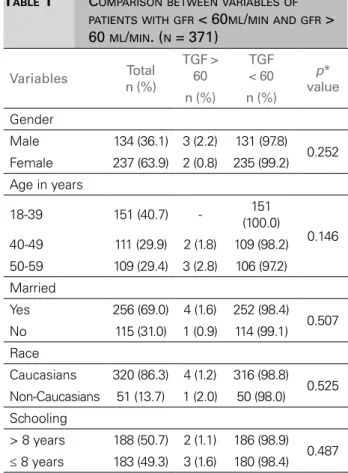
Table 1 shows the sociodemographic variables and their comparison among participants with normal or decreased GFR.
Individuals with reduced GFR had higher mean age (52.4 ± 6.3 years) than those with normal GFR (40.3 ± 12.3 years) (p = 0.028). Table 2 depicts the clinical variables and comparisons among participants with normal or decreased GFR.
There was a significant difference as far as obesity was concerned, and the higher the BMI the lower the GFR in adults. In addition, individuals with hypertension diagnosis tended to have lower GFR compared to their non-hypertensive counterparts (p < 0.06).
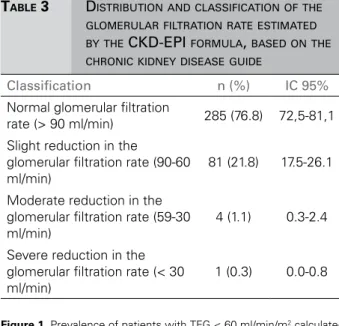
Table 3 depicts the sample distribution as to the classification of the GFR estimated by the CKD-EPI.
Figure 1 shows the prevalence of individuals with GFR < 60 ml/min calculated by different formulas in the literature.
We found that MDRD overestimated GFR as compared to the other formulas.
D
ISCUSSIONIn the present study we found a prevalence of 1.4% of subjects with GFR < 60 ml/min. Matsushita et al.20 found a prevalence of 14.3%; however, there
was a large proportion of elderly individuals in the sample, and old age is related to renal disorder and causes a higher percentage of GFR < 60.
There was no significant difference in GFR < 60 ml/min with respect to age, obesity; and we found a trend towards hypertension in the study population.
Studies have shown that advanced age is directly related to decreased GFR. Kidney function tends to
TABLE 1 COMPARISON BETWEEN VARIABLES OF
PATIENTS WITH GFR < 60ML/MIN AND GFR > 60 ML/MIN. (N = 371)
Variables Total n (%)
TGF > 60
TGF
< 60 p* value n (%) n (%)
Gender
Male 134 (36.1) 3 (2.2) 131 (97.8)
0.252
Female 237 (63.9) 2 (0.8) 235 (99.2)
Age in years
18-39 151 (40.7) - 151
(100.0)
0.146
40-49 111 (29.9) 2 (1.8) 109 (98.2)
50-59 109 (29.4) 3 (2.8) 106 (97.2)
Married
Yes 256 (69.0) 4 (1.6) 252 (98.4)
0.507
No 115 (31.0) 1 (0.9) 114 (99.1)
Race
Caucasians 320 (86.3) 4 (1.2) 316 (98.8)
0.525
Non-Caucasians 51 (13.7) 1 (2.0) 50 (98.0)
Schooling
> 8 years 188 (50.7) 2 (1.1) 186 (98.9)
0.487
≤ 8 years 183 (49.3) 3 (1.6) 180 (98.4)
decrease with increasing age, being an independent factor of the aforementioned comorbidities, confirming data in the literature,21-23 that can be
explained by the physiological and structural changes that occur in the renal system. In addition, epidemiological evidence shows that the prevalence of hypertension increases with idade.9,20
Regarding anthropometric indicators, patients considered obese had altered glomerular filtration rates when compared to otherwise normal individuals. It is quite settled in the literature that obesity is a major risk factor for glomerular hyperfiltration and progression to chronic kidney disease.6,24
The studied subjects who had hypertension diagnosed tended to have decreased GFR, a fact proven by Zhang et al.,25 who pointed out that the
main factors associated with kidney damage were: hypertension, diabetes and cardiovascular diseases.
TABLE 2 COMPARISONS BETWEEN VARIABLES OF
PATIENTS WITH GFR < 60 ML/MIN AND GFR > 60 ML/MIN. (N = 371)
Variables Total
TFG < 60
TFG > 60 p*
value n (%) n (%) n (%)
DM
Yes 22 (5.9) 0 (0.0) 22 (6.0)
0.735
No 349
(94.1) 5 (100.0)
344 (94.0)
Obesity
Yes 100
(27.0) 4 (80.0)
96 (26.2)
0.020
No 271
(73.0) 1 (20.0)
270 (73.8) Dyslipidemia
Yes 240
(65.0) 5 (100.0)
235 (64.6)
0.115
No 131
(35.0) 0 (0.0)
129 (35.4)
Hypertension
Yes 137
(37.3) 4 (80.0)
133 (36.7)
0.067
No 230
(62.7) 1 (20.0)
229 (63.3)
Sedentary lifestyle
Yes 225
(60.6) 4 (20.0)
221 (60.4)
0.347
No 146
(39.4) 1 (80.0)
145 (39.6) Smoking
Yes 116
(31.3) 3 (60.0)
113 (30.9)
0.179
No 255
(68.7) 2 (40.0)
253 (69.1)
Alcoholism
Yes 31 (8.4) 1 (20.0) 30 (8.2)
0.343
No 340
(91.6) 4 (80.0)
336 (91.8)
involving only diabetic patients showed high prevalence of GFR < 60 and association between diabetes and kidney injury.26,27
In this study there was no significant difference in renal function as far as gender is concerned, which corroborates data found in the literature.1,2,28
In the study there was no statistically significant difference between race and renal function. Similar data has been reported by Levey et al.;15 however,
authors such as Peralta et al.29 pointed out that
TABLE 3 DISTRIBUTION AND CLASSIFICATION OF THE
GLOMERULAR FILTRATION RATE ESTIMATED BY THE CKD-EPI FORMULA, BASED ON THE CHRONIC KIDNEY DISEASE GUIDE
Classification n (%) IC 95%
Normal glomerular filtration
rate (> 90 ml/min) 285 (76.8) 72,5-81,1
Slight reduction in the
glomerular filtration rate (90-60 ml/min)
81 (21.8) 17.5-26.1
Moderate reduction in the glomerular filtration rate (59-30 ml/min)
4 (1.1) 0.3-2.4
Severe reduction in the glomerular filtration rate (< 30 ml/min)
1 (0.3) 0.0-0.8
Figure 1. Prevalence of patients with TFG < 60 ml/min/m2 calculated
by different formulas. (n = 371).
African-descendants had higher rates of decline in renal function regardless of sociodemographic or traditional risk factors.
As for the habits adopted by the sample, this studied showed no positive association between smoking and alcoholism and decreased GFR; however, it is well documented that smoking is a risk factor associated with decline in kidney function.30
The major criticism over the CKD-EPI paradigm and using the MDRD equation is that the underestimation of GFR measured by the MDRD leads to false positive diagnoses, as per depicted on Figure 1. When calculated by the MDRD, the prevalence of abnormal GFR was above 70% when compared to other formulas. This fact overestimates the risks and therefore increases healthcare costs.31
individuals from the ESATU study due to the results found in this study and in several papers.2,18,32
We concede to the methodological limitations in this study. For instance, we found no elements to differentiate between transient decrease in glomerular filtration rate and incipient CKD. Because it is a population sample, mainly involving healthy people and young adults, the prevalence of hypertension and DM was low; consequently, there was a low prevalence of CKD. The ESATU study limited the sample to individuals between 18 and 59 years of age, because the ESITU17 study
had already been carried out for individuals aged 60 years or more. Thus, this resulted in lower prevalence of CKD, as evidence shows that older age is directly related to TFG.
Data does not enable us to infer that the 1.4% individuals found with GFR < 60 ml/min/1.73 mm2 have CKD or not, since the CKD definition
proposed by the K/DOQI and endorsed by the National Kidney Foundation/Kidney Disease Outcomes Quality Initiative (NKF-KDOQI) and Kidney Disease: Improving Global Outcomes (KDIGO) takes into account the presence of kidney damage (especially persistent proteinuria) with or without decreased GFR for a period of three months or more. Data on lifestyle (such as smoking, alcohol use, diet, physical activity) were self-reported by respondents, which can lead to low accuracy information. Another limiting factor is that the CKD-EPI formula is relatively recent, with only a few studies in other populations.
C
ONCLUSIONSWe concluded that most individuals in the sample had normal GFR and that only 1.4% had moderate or severe degree of dysfunction. Older age and obesity were positively associated with decreased GFR and individuals with hypertension had a tendency towards reduced GFR.
The literature remains scarce as to studies involving the adult population with the new CKD-EPI formula. It is known that the CKD-CKD-EPI is not the best marker of renal function; it is, nonetheless, a good predictor of changes in GFR in the general population, it is of low cost and it must be used in
R
EFERENCES1. Lessa I. Níveis séricos de creatinina: hipercreatininemia em seg-mento da população adulta de Salvador, Brasil. Rev Bras Epi-demiol 2004;7:176-86. DOI: http://dx.doi.org/10.1590/S1415--790X2004000200007
2. Bastos RMR, Bastos MG, Ribeiro LC, Bastos RV, Teixeira MT. Prevalência da doença renal crônica nos estágios 3, 4 e 5 em adultos. Rev Assoc Med Bras 2009;55:40-4. DOI:http:// dx.doi.org/10.1590/S0104-42302009000100013
3. Katharina-Susanne S, Kollerits B, Ritz E, Hersberger M, Kro-nenberg F, Eckardstein AV. Creatinina sérica, cistatina C e pro-teína β-traço no estadiamento diagnóstico e na predição da progressão da doença renal crônica não diabética. J Bras Patol Med Lab 2011;47:13-23.
4. Kirsztajn GM. Avaliação do ritmo de filtração glomerular. J Bras Patol Med Lab 2007;43:257-64. DOI: http://dx.doi. org/10.1590/S1676-24442007000400007
5. Kirsztajn GM, Bastos MG, Andriolo A. Dia Mundial do Rim 2011. Proteinúria e creatinina sérica: testes essenciais para diagnóstico de doença renal crônica. J Bras Patol Med Lab 2011;47:100-3. DOI: http://dx.doi.org/10.1590/S1676-24442011000200002
6. Bastos MG, Kirsztajn GM. Doença renal crônica: importân-cia do diagnóstico precoce, encaminhamento imediato e abor-dagem interdisciplinar estruturada para melhora do desfecho em pacientes ainda não submetidos à diálise. J Bras Nefrol 2011;33:93-108. DOI:http://dx.doi.org/10.1590/S0101-28002011000100013
7. Silva ABT, Molina MDCB, Rodrigues SL, Pimentel EB, Baldo MP, Mill JG. Correlação entre a depuração plasmática de crea-tinina utilizando urina coletada durante 24 horas e 12 horas. J Bras Nefrol 2010;32:165-72. DOI: http://dx.doi.org/10.1590/ S0101-28002010000200005
8. Burmeister JE, Agnolin R, Costa MG, Miltersteiner DR, Cam-pos BM. Creatinina plasmática normal significa função renal normal? Rev AMRIGS 2007;51:114-20.
9. Santos EM, França AKTC, Salgado JVL, Brito DJA, Calado IL, Santos AM, et al. Valor da equação Cockcroft-Gault na triagem de função renal reduzida em pacientes com hipertensão arterial sistêmica. J Bras Nefrol 2011;33:313-21. DOI: http:// dx.doi.org/10.1590/S0101-28002011000300007
10. Duncan L, Heathcote J, Djurdjev O, Levin A. Screening for renal disease using serum creatinine: who are we missing? Ne-phrol Dial Transplant 2001;16:1042-6.
11. Pinto PS, Silva FJ, Munch ECSM, Chaboubah A, Bastos RV, Andrade LCF, et al. Inadequabilidade da creatinina sérica na identificação precoce da disfunção renal. J Bras Nefrol 2004;26:196-201.
12. Levey AS, Stevens LA, Schmid CH, Zhang YL, Castro AF 3rd, Feldman HI, et al.; CKD-EPI (Chronic Kidney Disease Epide-miology Collaboration). A new equation to estimate glomeru-lar filtration rate. Ann Intern Med 2009;150:604-12. PMID: 19414839 DOI:http://dx.doi.org/10.7326/0003-4819-150-9-200905050-00006
13. Lim WH, Lim EM, McDonald S. Lean body mass-adjusted Co-ckcroft and Gault formula improves the estimation of glome-rular filtration rate in subjects with normal-range serum creati-nine. Nephrology (Carlton) 2006;11:250-6. DOI: http://dx.doi. org/10.1111/j.1440-1797.2006.00560.x
14. Stevens LA, Coresh J, Feldman HI, Greene T, Lash JP, Nelson RG, et al. Evaluation of the modification of diet in renal di-sease study equation in a large diverse population. J Am Soc Nephrol 2007;18:2749-57. DOI: http://dx.doi.org/10.1681/ ASN.2007020199
http://dx.doi.org/10.7326/0003-4819-16. Lin J, Knight EL, Hogan ML, Singh AK. A comparison of predic-tion equapredic-tions for estimating glomerular filtrapredic-tion rate in adults without kidney disease. J Am Soc Nephrol 2003;14:2573-80. DOI: http://dx.doi.org/10.1097/01.ASN.0000088721.98173.4B 17. Dutra MC, Uliano EJM, Machado DFGP, Martins T, Schuelter--Trevisol F, Trevisol DJ. Avaliação da função renal em idosos: um estudo de base populacional. J Bras Nefrol 2014;36:297-303. 18. National Kidney Foundation. K/DOQI clinical practice
guide-lines for chronic kidney disease: evaluation, classification, and stratification. Am J Kidney Dis 2002;39:S1-266.
19. Magacho EJC, Pereira AC, Mansur HN, Bastos MG. Nomo-grama para a estimação da taxa de filtração glomerular ba-seado na Fórmula CKD-EPI. J Bras Nefrol 2012;34:313-5. DOI:http://dx.doi.org/10.5935/0101-2800.20120017
20. Matsushita K, Selvin E, Bash LD, Astor BC, Coresh J. Risk implications of the new CKD Epidemiology Collaboration (CKD-EPI) equation compared with the MDRD Study equa-tion for estimated GFR: the Atherosclerosis Risk in Commu-nities (ARIC) Study. Am J Kidney Dis 2010;55:648-59. PMID: 20189275 DOI: http://dx.doi.org/10.1053/j.ajkd.2009.12.016 21. Hasegawa E, Tsuchihashi T, Ohta Y. Prevalence of chronic
kidney disease and blood pressure control status in elderly hypertensive patients. Intern Med 2012;51:1473-8. DOI:http:// dx.doi.org/10.2169/internalmedicine.51.7285
22. Grewal GS, Blake GM. Reference data for 51Cr-EDTA mea-surements of the glomerular filtration rate derived from live kidney donors. Nucl Med Commun 2005;26:61-5. DOI:http:// dx.doi.org/10.1097/00006231-200501000-00010
23. Imai E, Horio M, Watanabe T, Iseki K, Yamagata K, Hara S, et al. Prevalence of chronic kidney disease in the Japanese gene-ral population. Clin Exp Nephrol 2009;3:621-30. DOI:http:// dx.doi.org/10.1007/s10157-009-0199-x
24. Gerchman F, Tong J, Utzschneider KM, Zraika S, Udayasankar J, McNeely MJ, et al. Body mass index is associated with increa-sed creatinine clearance by a mechanism independent of body fat distribution. J Clin Endocrinol Metab 2009;94:3781-8. PMID: 19584179 DOI:http://dx.doi.org/10.1210/jc.2008-2508
25. Zhang L, Wang F, Wang L, Wang W, Liu B, Liu J, et al. Preva-lence of chronic kidney disease in China: a cross-sectional sur-vey. Lancet 2012;379:815-22. DOI: http://dx.doi.org/10.1016/ S0140-6736(12)60033-6
26. Ravera M, Noberasco G, Re M, Filippi A, Gallina AM, Weiss U, et al. Chronic kidney disease and cardiovascular risk in hypertensive type 2 diabetics: a primary care perspective. Ne-phrol Dial Transplant 2009;24:1528-33. DOI: http://dx.doi. org/10.1093/ndt/gfn692
27. Villarroel RP, Parra LX, Ardiles AL. Frequency of chronic kid-ney disease among ambulatory patients with type 2 diabetes. Rev Med Chil 2012;140:287-94.
28. Ma YC, Zuo L, Chen L, Su ZM, Meng S, Li JJ, et al. Distribu-tion of measured GFR in apparently healthy Chinese adults. Am J Kidney Dis 2010;56:420-1. DOI:http://dx.doi.org/10.1053/j. ajkd.2010.05.005
29. Peralta CA, Katz R, DeBoer I, Ix J, Sarnak M, Kramer H, et al. Racial and ethnic differences in kidney function decli-ne among persons without chronic kiddecli-ney disease. J Am Soc Nephrol 2011;22:1327-34. DOI: http://dx.doi.org/10.1681/ ASN.2010090960
30. Rezende Neta DS, Brandão DB, Silva KCO, Santos TMMG, Silva GRF. Avaliação renal de hipertensos pela clearance de creatinina num centro de saúde de Teresina-PI, Brasil. Rev Enf Ref 2012;3:25-31. DOI: http://dx.doi.org/10.12707/ RIII1165
31. Stevens LA, Li S, Kurella Tamura M, Chen SC, Vassalotti JA, Norris KC, et al. Comparison of the CKD Epidemiology Colla-boration (CKD-EPI) and Modification of Diet in Renal Disease (MDRD) study equations: risk factors for and complications of CKD and mortality in the Kidney Early Evaluation Program (KEEP). Am J Kidney Dis 2011;57:S9-16. PMID: 21338849 DOI:http://dx.doi.org/10.1053/j.ajkd.2010.11.007