Perioperative Blood Glucose Level and Postoperative Complications
in Pediatric Cardiac Surgery
Rodrigo Leal Alves
1,3, Macius Pontes Cerqueira
1, Nadja Cecília de Castro Kraychete
1,2, Guilherme Oliveira Campos
1,2,
Marcelo de Jesus Martins
1, Norma Sueli Pinheiro Módolo
4Hospital São Rafael1; Hospital Ana Neri2; Universidade Federal da Bahia3, Salvador, BA; Faculdade de Medicina de Botucatu - Universidade Estadual Paulista4, Botucatu, SP – Brazil
Abstract
Background: Anesthesia for pediatric cardiac surgery is systematically performed in severely ill patients under abnormal physiological conditions. In the intraoperative period, there are significant variations in blood volume, body temperature, plasma composition, and tissue blood flow, in addition to activation of inflammation, with important consequences. Serial measurements of blood glucose levels can indicate states of exacerbation of the neuroendocrine-metabolic response to trauma, serving as prognostic markers of morbidity in that population.
Objective: To correlate perioperative blood glucose levels of children undergoing cardiac surgery with the occurrence of postoperative complications, and to compare intraoperative blood glucose levels according to perioperative conditions.
Methods: Information regarding the surgical/anesthetic procedure and perioperative conditions of patients was collected from the medical records. The mean perioperative blood glucose levels in the groups of patients with and without postoperative complications and the frequencies of perioperative conditions were compared by use of odds ratio and non-parametric univariate analyses.
Results: Higher intraoperative blood glucose levels were observed in individuals who had postoperative complications. Prematurity, age group, type of anesthesia, and character of the procedure did not influence the mean intraoperative blood glucose level. The use of extracorporeal circulation (ECC) was associated with higher blood glucose levels during surgery. In procedures with ECC, higher blood glucose levels were observed in individuals who had infectious and cardiovascular complications. In surgeries without ECC, that association was observed with infectious and hematological complications.
Conclusion: Higher intraoperative blood glucose levels are associated with higher morbidity in the postoperative period of pediatric cardiac surgery.(Arq Bras Cardiol 2011;97(5):372-379)
Keywords: Heart defects, congenital; thoracic surgery; postoperative complications; blood glucose.
Mailing Address: Rodrigo Leal Alves •
Rua Sargento Astrolábio, 209, apt 1202, Ed. Paolo Passolini – Pituba – 41810-340 – Salvador, BA - Brazil
E-mail: [email protected], [email protected]
Manuscript received 15/02/11; revised manuscript received 15/02/11; accepted 26/04/11.
several defense mechanisms, defined as “neuroendocrine, immune, metabolic response to trauma”, aimed at surviving the initial injury. The endocrine changes and immune responses triggered lead to a set of metabolic changes to protect the major physiological functions2. However,
similarly to other adaptive mechanisms, the exacerbation of that response can contribute to the perpetuation of the pathological state and occurrence of clinical-surgical complications3.
Hormone variations to stress, such as elevations in circulating catecholamines, glucagon, cortisol, and growth hormone, trigger a state of tissue resistance to the effect of insulin, with gluconeogenesis and catabolism of lean body mass4,5. The hyperglycemia generated, which has been
long underestimated and considered a secondary event, is currently recognized as a predictive factor of poor prognosis in critical patients6,7. Studies in adults, investigating the
intraoperative elevation in blood glucose levels in cardiac surgery, have also evidenced a positive correlation with
Introduction
The perioperative period of pediatric cardiac surgery represents a crucial moment in the outcome of children with congenital and acquired cardiopathies. In that period, patients undergo significant changes in blood volume, body temperature, plasma composition, and tissue blood flow, with important pathophysiological consequences1. Additional
postoperative morbidity and mortality, both in diabetic and non-diabetic individuals8-10.
Similarly to that which occurs in adults, the elevation in blood glucose levels in children is expected to be an early biological marker of clinical-surgical outcome, enabling the identification of groups at risk, even in the intraoperative period. The interpretation and management of such alterations, however, are adaptations of conclusions and generalized observations without the appropriate pediatric confirmation. The present study aimed at analyzing perioperative blood glucose levels of children undergoing low- and moderate-risk cardiac surgery, and at comparing them according to surgical/anesthetic conditions and the occurrence of infectious, cardiovascular, respiratory, renal, neurological, and hematological complications, and of death in the postoperative period.
Methods
After approval by the Committee on Ethics and Medical Research, 160 consecutive cardiac surgeries performed in different children aged up to 16 years at the São Rafael and Ana Neri hospitals in the city of Salvador (state of Bahia), in the years 2007 and 2008, were retrospectively studied. All type 1, 2, and 3 procedures according to the Risk Adjustment for Congenital Heart Surgery (RACHS-1) score were selected for the study11.
The perioperative variables were collected in a standardized sheet with information regarding demographic data, preoperative conditions, type and complexity of the procedure performed, type of anesthesia, use and duration of ECC, and use of blood components. All patients underwent arterial catheterization for continuous measurement of arterial blood pressure, and samples were collected at least twice in the intraoperative period (right after arterial catheterization and at the end of the procedure) and at the surgical/anesthetic team’s discretion. Diuresis, insensitive losses, and the volume of crystalloids and colloids administered were computed in the final calculation of fluid balance, and the weight of surgical pads and gauzes, aspirated volume, estimated loss in the ECC circuit, and volume of blood components administered were used in blood balance.
Regarding preoperative conditions, the following data were collected: gender; age; prematurity; weight; primary cardiopathy (with greater clinical impact on the child); associated diseases (including secondary cardiopathies); presence of cyanosis; pulmonary hypertension; congestive heart failure or mechanical ventilation prior to surgery; and character of the procedure (elective or emergency). In addition, the last preoperative laboratory exams, including fasting blood glucose levels, were also assessed.
During surgery, the following data regarding the surgical/anesthetic act were collected: type of anesthesia (general anesthesia alone x general anesthesia with spinal anesthesia); surgery performed; ECC data; administration of blood components; use of vasoactive drugs, insulin and corticosteroids; and administration of glucose at any form or dilution. The laboratory exams of the period were
performed in an automate blood gas analyzer (Radiometer Medical ABL 700, Copenhagen) of the same brand and model in both hospitals studied, with blood sample collected from the invasive arterial blood pressure system or from the arterial line of ECC. The mentioned blood gas analyzer measures not only the blood gas profile of the sample (pH, PCO2, PO2, HCO3
-, and BE), but also blood
glucose levels, erythrogram (hematocrit and hemoglobin), lactatemia, and electrolytes (sodium, potassium, calcium, and chloride). Because of the large variability in the number and time of intraoperative samplings, the initial and maximum blood glucose levels were recorded during surgery, as was the mean of the blood glucose levels collected during the period.
In the postoperative period, the occurrence of death and complications was assessed based on the report of events in the medical record until the patient’s discharge from hospital. The types of complications were recorded in correlate groups according to the following pre-established definitions: infections: confirmed situations or suspicion of infected site with the use of antibiotics; cardiovascular complications: occurrence of arrhythmias, total atrioventricular block, cardiac tamponade, use of vasoactive drug for more than 24 hours (infusions greater than 15 µg/kg/min of dopamine or any value of continuous infusion of noradrenaline and/or adrenaline), inotropic drug use for more than 24 hours (infusions up to 15 µg/kg/min of dopamine or any value of continuous infusion of dobutamine or milrinone), low cardiac output, and systemic arterial hypertension requiring sodium nitroprusside for blood pressure control for more than 24 hours; respiratory complications: embolism, pulmonary edema, mechanical ventilation for more than 48 hours in the postoperative period, and acute pulmonary injury; renal complications: acute renal failure (elevation greater than or equal to twice the baseline creatinine serum level) and/or dialysis need; neurological complications: coma, convulsion, neurological deficit, and stroke; hematological complications: coagulopathy (prothrombin and activated partial thromboplastin times greater than twice the normal value or fibrinogen lower than 100 mg/dL and/or platelet count lower than 80,000/mm3), hemorrhagic events with or
without coagulopathy and need to return to the operating room for hemostasis review. A combined event was the occurrence of at least one of the complications listed.
The values of initial, maximum and average intraoperative and preoperative blood glucose, as well as the average of the values of the 1st postoperative day of patients who had or not complications were compared using the Mann-Whitney test. The effect of intraoperative blood glucose average on the chance of complications was calculated by binary logistic regression, adjusted according to the estimated risk (RACHS-1), and values were expressed as odds ratio with confidence intervals of 95%. The different mean intraoperative blood glucose levels according to prematurity, type of anesthesia, surgery character, and use of ECC were compared by use of the Mann-Whitney test. The mean intraoperative blood glucose levels according to age group and risk group were compared by use of Kruskal-Wallis test. The chi-square test was used to compare the relative frequencies of ECC use and complication rates according to risk groups. Effects and differences were considered statistically significant when p < 0.05.
Results
Of the 160 patients studied, 85 were of the male sex (75 females), 90 had another associated disease, and only five were premature babies. Median age and weight were 36 months and 13 kg, respectively, with a large variation range in sampling (15 days to 16 years, and 2.3 to 67 kg of weight). Most procedures (81% of the cases) were considered elective, general anesthesia alone being the most commonly used anesthetic procedure (76.8%) as compared to combined anesthesia (general plus spinal anesthesia). Extracorporeal circulation was used in approximately half of the surgeries (48%), with a median duration of 70 minutes and median aortic clamping time of 55 minutes. In 62.5% of the cases, transfusion of any type of blood components was required, and the patients had a median intraoperative diuresis of 3.67 mL.kg-1 and median fluid and blood balances of +140 mL and
+20 mL, respectively. The preoperative use of corticosteroid and the intraoperative administration of glucose or insulin were uncommon events in our sampling. Because of the surgical protocol of methylprednisolone use (30mg/kg) in ECC, the intraoperative corticoid administration rate was identical to the ECC use rate (Tables 1 and 2).
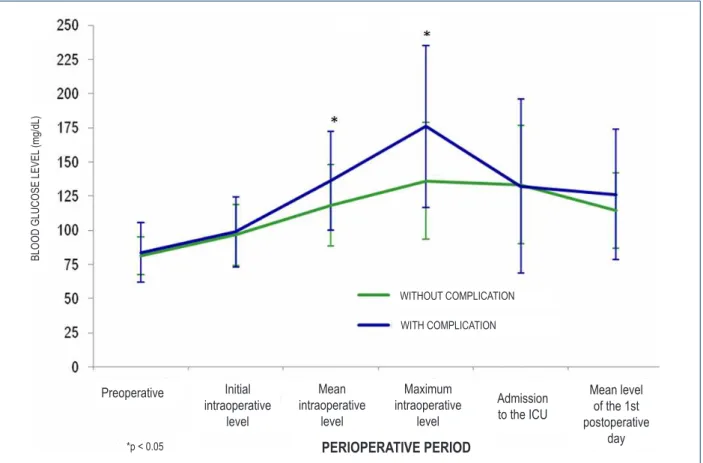
Graph 1 shows the evolution of blood glucose levels at different times in the perioperative period in patients with and without at least one of the previously listed complications (combined event). A statistically significant difference is observed in the maximum and mean blood glucose levels in the intraoperative period, with higher levels being observed in those evolving with a morbid event. Because the mean blood glucose level obtained from all samples during surgery probably better reflects the metabolic status than the unitary measures of blood glucose peak in that period, we chose to analyze its association with postoperative complications and the impact of possible confounding variables on it.
Tables 3 and 4 show that prematurity, surgery character, type of anesthesia, and age group were not associated with differences in the mean blood glucose level during surgery. Extracorporeal circulation, with the concomitant administration of high doses of corticosteroid, however, was associated with significantly higher blood glucose levels in the period (Table 4).
Table 1 – Demographic data and anesthetic and surgical conditions
in the intraoperative period
Variable Values
Age (months) 36 (8 / 96)
Weight (kg) 13 (6.23 / 22.15)
Gender Male - 85 (53%)
Prematurity Premature – 5 (3%)
Cyanosis Yes – 48 (30%)
Increased pulmonary low Yes – 97 (61%)
Congestive heart failure Yes – 72 (45%)
Associated disease Yes – 90 (56%)
Character of surgery Elective – 130 (81%)
Type of anesthesia General - 123 (76.8 %)
Extracorporeal circulation use 77 (48.1%)
Intraoperative transfusion 100 (62.5%)
Intraoperative glucose administration 6 (3.8%)
Intraoperative insulin administration 13 (8.1%)
Intraoperative corticoid administration 77 (48.1%)
Preoperative corticoid use 6 (4%)
* Age and weight expressed as median, 1st and 3rd quartiles; † Other variables expressed as absolute and relative frequencies.
Table 2 – Surgical times, urinary volumes, and fluid balance
Variable Values
Anesthesia duration of (min) 240 (180 / 303)
Surgery duration (min) 140 (80 / 206)
Extracorporeal circulation duration (min) † 70 (45 / 107)
Aortic clamping duration (min) † 55 (30 / 80)
Intraoperative diuresis (mL/kg) 3.67 (2.0 / 5.5) Final luid balance (mL) + 140 (-25 / +300)
Final blood balance (mL) +20 (-140 / +120)
* Values expressed as median, 1st and 3rd quartiles; † In surgeries with extracorporeal circulation.
The estimated RACHS-1 surgical risk11 has also influenced
no ECC and a complication rate, such as pulmonary artery cerclage and systemic-pulmonary anastomoses, similar to that of group 2. Because of the presumed impact of ECC on intraoperative blood glucose levels, the surgical sampling was subdivided according to its use for a better analysis of the groups.
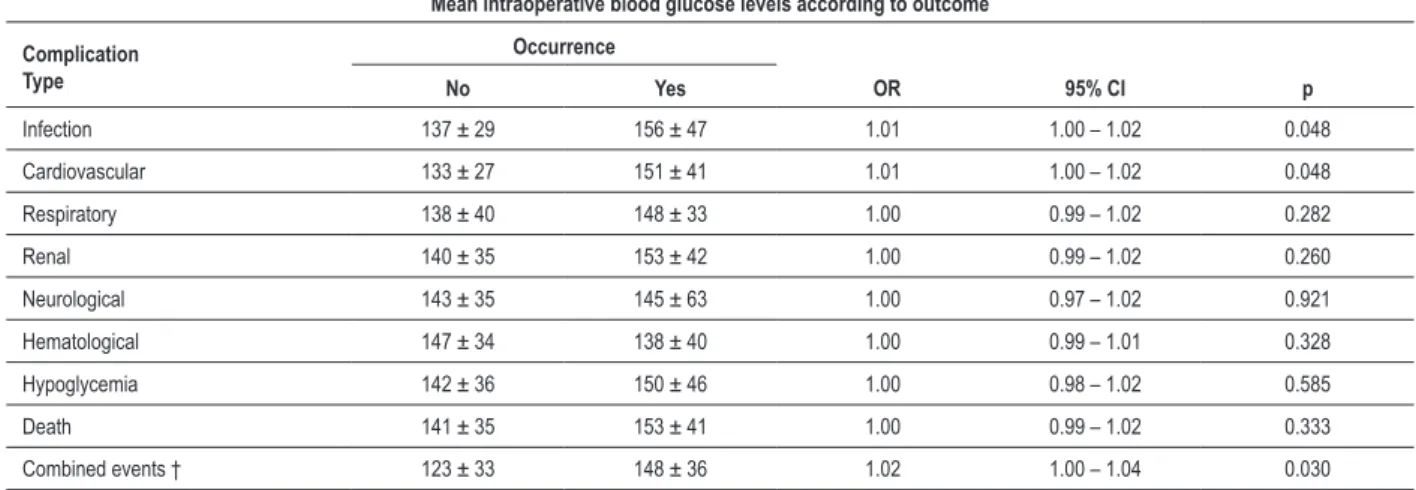
Table 6 shows that, in the surgeries without ECC, the patients experiencing infectious and hematological complications had higher means of intraoperative blood glucose levels than those without such complications. In the surgeries requiring ECC (Table 7), that association was evidenced for infectious
and cardiovascular complications and combined events (occurrence of at least one of the complications mentioned). The death rate did not associate with the mean intraoperative blood glucose level in procedures with and without ECC.
Discussion
Although in adults higher blood glucose levels in the intraoperative and postoperative period of cardiac surgery are associated with higher morbidity and mortality6-10, little
is known about that relation in the pediatric population. A large number of possible confounding factors, such as
Table 3 – Mean intraoperative blood glucose level (mg/dL), with signiicance level of the difference (p), regarding prematurity, surgery character, type of anesthesia, and use of extracorporeal circulation in the procedure
Perioperative condition Mean intraoperative blood glucose levelMean and standard deviation p
Prematurity Yes – 133 (± 10) No – 132 (± 36) 0.656
Surgery character Emergency – 135 (± 34) Elective – 131 (± 36) 0.524
Type of anesthesia General – 130 (± 33) General/subarachnoid – 137 (± 44) 0.566
Extracorporeal circulation Yes – 143 (± 37) No – 120 (± 30) < 0.001
*Comparison between groups by use of Mann-Whitney test.
Graph 1 – Mean perioperative blood glucose levels (mg/dL) with standard deviation, according to the outcome of patients regarding postoperative complications (combined events).
BLO
OD
G
LU
CO
SE
LE
VE
L (m
g/dL)
WITHOUT COMPLICATION
WITH COMPLICATION
PERIOPERATIVE PERIOD
Preoperative Initial intraoperative
level
Mean intraoperative
level
Maximum intraoperative
level
Admission to the ICU
Mean level of the 1st postoperative
day
prematurity of the physiological systems, greater availability of surgical procedures, and less uniformity in preoperative clinical conditions, makes conclusive results difficult to obtain.
Figure 1 shows the perioperative variation of blood glucose levels in patients without intercurrences and those with at least one of the complications analyzed in the postoperative period. The mean and the maximum value found during surgery showed a positive statistical association with the occurrence of complications, which was evidenced neither in the measurements on ICU admission nor in the mean of the first postoperative day. This is the opposite of the result reported by Polito et al12,
who found no association between severe complications and intraoperative blood glucose levels, but showed greater blood glucose levels in the first 72 postoperative hours among those with complications. Other studies13-15 have also shown higher
postoperative blood glucose levels in children with morbidities after cardiac surgery. However, Rossano et al16, studying neonates
recovering from the surgery to correct transposition of the great vessels, have reported that those who maintained, on the first postoperative day, blood glucose levels between 80 and 110 mg/ dL for a long period (more than 50% of the time), had a higher risk of adverse events than those who maintained blood glucose levels over 200mg/dL.
As previously mentioned, several confounding variables should be considered when assessing the results, and the sample should be subdivided for better analysis. Figure 1 shows the data
of the general population studied, and the differences found in the mean and maximum blood glucose levels in the intraoperative period can be explained by the use of high doses of corticoid and of ECC. Both factors are associated with inherent complications and usually indicate clinical and surgical situations of higher risk, requiring a specific analysis of the subgroups. Regarding the mean blood glucose level of the first postoperative day, which did not differ in patients with or without intercurrences, other non-controlled variables, such as insulin use or glucose administration rate at the ICU at the discretion of the physician in charge, can have influenced the blood glucose levels of the two groups, hindering their interpretation and comparison with data in the literature.
When analyzing the clinical and surgical factors that can theoretically influence intraoperative blood glucose levels, the following were not associated with differences in the mean blood glucose level in the period: prematurity; age group; elective or emergency character of the procedure; and type of anesthesia used (general alone or general with spinal anesthesia). The use of ECC, however, was associated with significantly higher intraoperative blood glucose levels (Table 4). Although the corticosteroid dose of the protocol can explain that association, ECC per se is one of the major triggers of pro-inflammatory activity in surgery, with substantial elevations in cytokines and circulating interleukines17, thus, higher blood glucose levels are
expected with ECC use. Thus, patients were subdivided according to ECC use in the surgical procedure for analyzing the relation between the mean intraoperative blood glucose level and the occurrence of specific complications of the major body systems in each situation (Tables 6 and 7).
Based on the analysis of postoperative complication rates according to ECC use, this study showed that infectious complications were associated with higher intraoperative blood glucose levels, regardless of ECC use. In procedures without ECC, hematological complications were associated with higher blood glucose means during surgery, while in procedures with ECC, that association occurred with cardiovascular complications.
When comparing with studies in the adult population, some differences in the subtypes of complications can be observed. Ouattara et al9, in a prospective analysis, have
reported that a poor intraoperative blood glucose control, four consecutive measures over 200 mg/dL, was associated with greater rates of death and cardiovascular, respiratory, renal, and Table 4 – Mean intraoperative blood glucose level according to
age group
Age group
Mean intraoperative blood glucose level
(mg/dl)
Mean and standard deviation
< 30 days 138 (± 34)
1 to 12 months 127 (± 34)
1 to 3 years 137 (± 48)
3 to 8 years 128 (± 33)
> 8 years 134 (± 28)
* Signiicance level of the differences in blood glucose level according to
age group by use of the Kruskal-Wallis test; p = 0.723
Table 5 – Mean intraoperative blood glucose levels with standard deviation (mg/dL), rates of extracorporeal circulation use, and relative frequency of complications (combined events) according to adjusted surgical risk (RACHS-1)
SURGICAL RISK AND RELATIVE ABSOLUTE
FREQUENCY
MEAN INTRAOPERATIVE BLOOD GLUCOSE LEVEL
MEAN AND STANDARD DEVIATION
EXTRACORPOREAL
CIRCULATION USE RELATIVE FREQUENCY OF COMPLICATIONS
RACHS – 1 1 51 (32%) 116 ± 28 * 28.0 % † 56.0 % ‡
RACHS – 1 2 51 (32%) 152 ± 42 * 79.6 % † 87.8 % ‡
RACHS – 1 3 58 (36%) 128 ± 29 * 39.7 % † 84.5 % ‡
* Signiicance level of the differences in blood glucose levels according to surgical risk – p<0.001 (Kruskal-Wallis); † Signiicantly higher rate of ECC use in RACHS-1 2 procedures - p<0.001 (chi-square in combinations of the groups); ‡ Signiicantly lower rate of complications in RACHS-1 1 group – p = 0.001 (chi-square in
neurological, but not infectious, complications in diabetic adults undergoing myocardial revascularization with ECC. Gandhi et al8, in myocardial revascularization surgeries, have reported
greater intraoperative blood glucose means in individuals who developed renal and pulmonary disorders, but not cardiovascular, neurological, or infectious disorders, and/or died. Duncan et al18,
however, have reported a positive association between a blood glucose level over 200 mg/dL during different cardiac surgeries with ECC in adults and the occurrence of infection and prolonged mechanical ventilation, even after multivariable analysis with control of probable confounding factors. In children, the studies usually approach the complications jointly, like combined events, focusing on the postoperative period of complex procedures with
ECC. In some of the few studies on that population, Ghafoori et al19 have reported a greater risk of mediastinitis in individuals
whose blood glucose peaks exceeded 130 mg/dL in the first 24 postoperative hours, while Székely et al14 have reported a
higher rate of heart failure and severe infections in children with hyperglycemia after cardiac surgery.
Diabetic patients represent a group at higher risk for postoperative infection in several surgical procedures. Even though the noxious effects of chronic hyperglycemia in the immune and vascular systems are known to increase the likelihood of infectious complications, acute hyperglycemia also has its own adverse effects. Experimental studies have shown the suppression of several aspects of immunity, such as
Table 6 – Mean intraoperative blood glucose levels (mg/dL) according to the occurrence of death and postoperative complications in surgeries without extracorporeal circulation
Mean intraoperative blood glucose levels according to outcome
Complication Type
Occurrence
No Yes OR 95% CI p
Infection 113 ± 27 132 ± 31 1.02 1.01 – 1.04 0.017
Cardiovascular 117 ± 30 126 ± 29 1.01 0.99 – 1.02 0.220
Respiratory 115 ± 27 130 ± 33 1.01 0.99 – 1.03 0.064
Renal 121 ± 30 112 ± 23 0.98 0.96 – 1.01 0.370
Neurological 120 ± 30 121 ± 21 1.00 0.97 – 1.03 0.941
Hematological 114 ± 27 132 ± 32 1.02 1.00 – 1.03 0.025
Hypoglycemia 121 ± 29 112 ± 35 0.98 0.96 – 1.01 0.388
Death 121 ± 30 109 ± 21 0.98 0.95 – 1.01 0.358
Combined events † 115 ± 28 122 ± 30 1.00 0.99 – 1.02 0.392
* Values expressed as mean and standard deviation with P value (p), odds ratio (OR), and 95% confidence interval (95% CI) for the occurrence of the
complication; † Combined events – occurrence of at least one of the complications listed.
Table 7 – Mean intraoperative blood glucose levels (mg/dL) according to the occurrence of death and postoperative complications in surgeries with extracorporeal circulation
Mean intraoperative blood glucose levels according to outcome
Complication Type
Occurrence
No Yes OR 95% CI p
Infection 137 ± 29 156 ± 47 1.01 1.00 – 1.02 0.048
Cardiovascular 133 ± 27 151 ± 41 1.01 1.00 – 1.02 0.048
Respiratory 138 ± 40 148 ± 33 1.00 0.99 – 1.02 0.282
Renal 140 ± 35 153 ± 42 1.00 0.99 – 1.02 0.260
Neurological 143 ± 35 145 ± 63 1.00 0.97 – 1.02 0.921
Hematological 147 ± 34 138 ± 40 1.00 0.99 – 1.01 0.328
Hypoglycemia 142 ± 36 150 ± 46 1.00 0.98 – 1.02 0.585
Death 141 ± 35 153 ± 41 1.00 0.99 – 1.02 0.333
Combined events † 123 ± 33 148 ± 36 1.02 1.00 – 1.04 0.030
chemotaxis, phagocytosis, generation of free radicals, and the bactericidal activity of macrophages20, with an acute elevation
in blood glucose levels. The increase in the concentration of circulating inflammatory cytokines has also been reported in acute hyperglycemia21, causing a pro-inflammatory state with
reduced immune function, justifying higher infection rates in such situations.
The reduction in the production and release of endothelial nitric oxide, the increase in angiotensin II levels, and the changes in vascular reactivity, also associated with hyperglycemia4, can
cause disorders in the systemic and pulmonary circulations with consequent cardiovascular complications. Even arrhythmias and myocardial dysfunctions after cardiac surgery with ECC can be attributed to inflammatory changes in the heart parenchyma22, presumably proportional to the intensity
of the inflammatory state.
Platelet dysfunctions due to a decrease in the nitric-oxide-induced antiaggregating activity have been reported in hyperglycemic patients with acute coronary syndromes23.
Hypercoagulability associated with an elevation in blood glucose levels has been demonstrated in situations of endotoxemia induced in humans24 and in patients with
septic shock25. Such alterations in coagulation can explain
the association observed between higher intraoperative blood glucose levels and coagulopathy in the postoperative period of surgeries without ECC, since both events are related to the magnitude of tissue trauma and the size of the wound area. In surgeries with ECC, the higher intensity of the anticoagulation used and the negative impact of ECC itself on the physiological systems of hemostasis constitute the major causes of postoperative coagulopathy1, which probably
surpasses any effect of blood glucose levels in such situations. The present study has the limitations expected from a retrospective study. Although positive associations between hyperglycemia and postoperative complications have been observed, causality cannot be established. The lack of institutional protocols to measure and control blood glucose levels hindered a
longer postoperative follow-up and a more detailed assessment of possible intraoperative influencing factors (relationship of the markers with ECC variables, impact of specific anesthetic or surgical measures). The impact of other confounding variables, which were not assessed, cannot be eliminated in data analysis, since other elements can justify the associations found.
Several advances in medical knowledge and improvement in perioperative care have contributed in a favorable way to reduce morbidity and mortality in pediatric cardiac surgery. The intraoperative and immediate postoperative periods are important for the adoption of measures and managements that can favorably influence the clinical outcome of patients. Thus, laboratory markers of prognosis should be actively pursued to help the surgical/anesthetic team to improve their therapeutic decisions. As demonstrated in our study, higher blood glucose levels during cardiac surgeries in children did not correlate with mortality, but were associated with a higher occurrence of infectious, cardiovascular, and hematological complications depending on ECC use in the procedure. However, the impact of specific measures for controlling blood glucose levels, such as insulin administration in hyperglycemia, has not been consistently established in the literature, and further studies are required for its determination.
Potential Conflict of Interest
No potential conflict of interest relevant to this article was reported.
Sources of Funding
There were no external funding sources for this study.
Study Association
This article is part of the thesis of master submitted by Rodrigo Leal Alves, from Faculdade de Medicina de Botucatu – Universidade Estadual Paulista.
References
1. Greeley WJ, Steven JM, Nicolson SC, Kern FH. Anesthesia for pediatric cardiac surgery. In: Miller RD (editor). Anesthesia. Philadelphia: Churchill Livingstone; 2000. p. 1805-47.
2. Wilmore DM. Homeostasis: bodily changes in trauma and surgery. In: Sabiston DC (editor). Textbook of surgery: the biological basis of modern surgical practice. Philadelphia: WB Saunders Company; 1997. p. 55-67.
3. Ljungqvist O, Nygren J, Soop M, Thorell A. Metabolic perioperative management: novel concepts. Curr Opin Crit Care. 2005;11(4):295-9.
4. Akhtar A, Barash PG, Inzucchi SE. Scientific principles and clinical implications of perioperative glucose regulation and control. Int Anesth Res Soc. 2010;110(2):478-97.
5. Devos P, Chioléro R, Van denBerghe G, Preiser JC. Glucose, insulin and myocardial ischaemia. Curr Opin Clin Nutr Metab Care. 2006;9(2):131-9.
6. Van den Berghe G, Wouters P, Weekers F, Verwaest C, Bruyninckx F, Schetz M, et al. Intensive insulin therapy in the critically ill patients. N Engl J Med. 2001;345(19):1359-67.
7. Finney SJ, Zekveld C, Elia A, Evans TW. Glucose control and mortality in critically ill patients. JAMA. 2003;290(15):2041-7.
8. Gandhi GY, Nuttal GA, Abel MD, Mullany CJ, Schaff HV, Williams L, et al. Intraoperative hyperglicemia and perioperative outcomes in cardiac surgery patients. Mayo Clinic Proc. 2005;80(7):862-6.
9. Ouattara A, Lecomte P, Le Manach Y, Landi M, Jacqueminet S, Platonov I, et al. Poor intraoperative blood glucose control is associated with a worsened hospital outcome after cardiac surgery in diabetic patients. Anesthesiology. 2005;103(4):813-20.
10. Lazar HL, Chipkin SR, Fitzgerald CA, Bao Y, Cabral H, Apstein CSl. Tight glycemic control in diabetic coronary artery bypass graft patients improves perioperative outcomes and decreases recurrent ischemic events. Circulation. 2004;109(12):1497-502.
12. Polito A, Thiagarajan RR, Laussen PC, Gauvreau K, Agus MSD, Schreuer MA, et al. Association between intraoperative and early postoperative glucose levels and adverse aotcomes after major complex congenital heart surgery. Circulation. 2008;118(22):2235-42.
13. Yates AR, Dyke PC 2nd, Taeed R, Hoffman TM, Hayes J, Feltes TF, et al. Hyperglycemia is a marker for poor outcome in the postoperative pediatric cardiac patient. Pediatr Crit Care Med. 2006;7(4):351-5.
14. Székely A, Zúpan K, Breuer T, Sápi E, Szekely E, Héthársi B, et al. Role of postoperative hyperglycemia after paediatric heart surgery. Eur J Anaesthesiol. 2005;22:142.
15. Falcao G, Ulate K, Kouzekanani K, Bielefeld MR, Morales JM, Rotta AT. Impact of postoperative hyperglycemia following surgical repair of congenital cardiac defects. Pediatr Cardiol. 2008;29(3):628-36.
16. Rossano JW, Taylor MD, Smith EO, Fraser CD Jr, McKenzie ED, Price JF, et al. Glycemic profile in infants who have undergone the arterial switch operation:hyperglycemia is not associated with adverse events. J Thorac Cardiovasc Surg. 2008;135(4):739-45.
17. Ascione R, Lloyd CT, Underwood MJ, Lotto AA, Ptsis AA, Angelini GD. Inflammatory response after coronary revascularization with or without cardiopulmonary bypass. Ann Thorac Surg. 2000;69(4):1998-204.
18. Duncan AE, Abd-Elsayed A, Maheshwari A, Xu M, Soltesz E, Koch CG. Role of intraoperative and postoperative blood glucose concentration in predicting outcomes after cardiac surgery. Anesthesiology. 2010;112(4):860-71.
19. Ghafoori AF, Twite MD, Friesen RH. Postoperative hyperglycemia is associated with mediastinitis following pediatric cardiac surgery. Paediatr Anaesth. 2008;18(12):1202-7.
20. Blondet JJ, Beilman GJ. Glycemic control and prevention of perioperative infection. Curr Opin Crit Care. 2007;13(4):421-7.
21. Esposito K, Nappo F, Marfella R, Giugliano G, Giugliano F, Ciotola M, et al. Inflammatory cytokine concentrations are acutely increased by hyperglycemia in humans. Role of Oxidative Stress. Circulation. 2002;106(16):2067-72.
22. Fontes ML, Mathew JP, Rinder HM, Zelterman D, Smith BR, Rinder CS; Multicenter Study of Perioperative Ischemia Research Group. Atrial fibrillation after cardiac surgery/cardiopulmonary bypass is associated with monocyte activation. Anesth Analg. 2005;101(1):17-23.
23. Worthley MI, Homes AS, Willoughby SR, Kucia AM, Heresztyn T, Stewart S, et al. The deleterious effects of hyperglycemia on platelet function in diabetic patients with acute coronary syndromes. J Am Coll Cardiol. 2007;49(3):304-10.
24. Stegenga ME, van der Crabben SN, Blümer RM, Levi M, Meijers JC, Serlie MJ, et al. Hyperglycemia enhances coagulation and reduces neutrophil degranulation, whereas hyperinsulinemia inhibits fibrinolysis during human endotoxemia. Blood. 2008;112(1):82-9.