CHEMICAL COMPOSITION AND RELEASE IN SITU DUE TO INJURY OF THE
INVASIVE CORAL Tubastraea (CNIDARIA, SCLERACTINIA)*
Bruno G. Lages1**, Beatriz G. Fleury2, Cláudia M. Rezende3, Angelo C.Pinto3 and Joel C.Creed2
1Universidade do Estado do Rio de Janeiro
Programa de Pós-graduação em Ecologia e Evolução, IBRAG
(PHLC Sala 524, Rua São Francisco Xavier 524, 20559-900 Rio de Janeiro, RJ, Brasil)
2
Universidade do Estado do Rio de Janeiro Departamento de Ecologia, IBRAG
(PHLC Sala 220, Rua São Francisco Xavier 524, 20559-900 Rio de Janeiro, RJ, Brasil)
3Universidade Federal do Rio de Janeiro
(Instituto de Química, 21.945-970, Rio de Janeiro, RJ, Brasil)
**Corresponding author: [email protected]
A
B S T R A C TDefensive chemistry may be used against consumers and competitors by invasive species as a strategy for colonization and perpetuation in a new area. There are relatively few studies of negative chemical interactions between scleratinian corals. This study characterizes the secondary metabolites in the invasive corals Tubastraea tagusensis and T. coccinea and relates these to an in situ experiment using a submersible apparatus with Sep-Paks® cartridges to trap substances released by T.
tagusensis directly from the sea-water. Colonies of Tubastraea spp were collected in Ilha Grande
Bay, RJ, extracted with methanol (MeOH), and the extracts washed with hexane, dichloromethane (DCM) and methanol, and analyzed by GC/MS. Methyl stearate and methyl palmitate were the major components of the hexane and hexane:MeOH fractions, while cholesterol was the most abundant in the DCM and DCM:MeOH fractions from Tubastraea spp. The organic material retained in Sep-Paks® cartridges was tentatively identified as hydrocarbons. There was a significant difference
between treatments and controls for 1-hexadecene, n-hexadecane and n-eicosane contents. The production of defensive substances by the invasive corals may be a threat to the benthic communities of the region, which include endemic species.
R
E S U M OSubstâncias químicas de defesa contra consumidores e competidores podem ser usadas por espécies invasoras marinhas como estratégia de colonização e perpetuação em novo ambiente. Entretanto, há poucos estudos experimentais que demonstrem as possíveis interações negativas entre corais escleractínios. Este trabalho tem como objetivo caracterizar os metabólitos secundários dos corais invasores Tubastraea tagusensis e T. coccinea; avaliar através da técnica de amostragem in situ quais são as substâncias de T. tagusensis liberadas na água do mar, com o auxílio de aparelho subaquático com colunas Sep-Paks®. Colônias dos corais invasores Tubastraea spp foram coletadas na Baía de
Ilha Grande, RJ, e extraídas com MeOH. Os extratos foram submetidos à eluições com hexano, DCM e MeOH, e analisados por CG-EM. Estearato de metila e palmitato de metila foram as substâncias majoritárias das frações hexânicas e hexano: DCM, enquanto o colesterol foi a substância mais abundante das frações DCM e DCM:MeOH de Tubastraea spp. O material orgânico retido nas colunas Sep-Paks® foi identificado como hidrocarbonetos. Diferenças significativas entre controle e
tratamento foram relacionadas a diferentes quantidades de 1-hexadeceno, n-hexadecano e n-eicosano. A produção de substâncias de defesas em Tubastraea spp permite especular sobre a ameaça que estes corais invasores representam para as comunidades bentônicas da Ilha Grande.
Descriptors: Injury, Secondary metabolites, Tubastraea coccinea, Tubastraea tagusensis, Submersible apparatus.
Descritores: Lesão artificial, Metabólitos secundários, Tubastraea coccinea, Tubastraea tagusensis, Aparelho submersível.
__________
I
NTRODUCTIONChemical defense against consumers and competitors have been studied in great detail for sessile invertebrates and plants and the detailed mechanisms, in several instances, have been elucidated by manipulative field experiments (HAY; FENICAL, 1988; DE NYS et al., 1991; HAY; STEIN BERG, 1992; PAWLIK, 1993; SCHMITT et al., 1995; THACKER et al., 1998; IRFANULLAH; MOSS, 2005). In the marine environment, the success of defense used by soft corals and gorgonians against consumers and competitors has been attributed to their production of secondary metabolites, many of which show predator deterrence and allelopathic activities (COLL et al., 1982; PAWLIK et al., 1987; DE NYS et al., 1991; VAN ALSTYNE et al., 1994; KELMAN et al., 1999; KOH et al., 2000; LAGES et al., 2006; CHANGYUN et al., 2008).
Despite the fact that hard corals produce a protective external skeleton some experiments have showed that these also produce bioactive compounds (TARRANT et al., 2003; KONTIZA et al., 2006) some of which are deterrent to fish (LAGES et al., 2010) and may function as allelochemicals (KOH; SWEATMAN, 2000).
The compounds involved in allelopathic interactions can act in different concentrations (repellent or toxic) and distances and some of these are soluble or volatile so as to diffuse away from the source (HADFIELD; SCHEUR, 1985; SLATTERY et al., 1997, VAN ALSTYNE et al., 2001). Others may be deposited on the surface of the organism and act by direct contact with potential competitors. The production of secondary metabolites likely requires considerable cost to the organism (COLL, 1992) because the resources allocated to production will not, therefore, be available for other processes such as growth and reproduction (VAN ALSTYNE et al., 2001).
The secondary metabolites used against consumers and competitors may affect the behavior and distribution of organisms in marine systems
(LUBCHENCO; GAINES, 1981; ESTES;
STEINBERG, 1988; KVITEK et al., 1991; COLL, 1992; STACHOWICZ, 2001). However, compounds responsible for the competitive effects have rarely been isolated and identified (COLL et. al., 1982; SULLIVAN et al. 1983, DE NYS et al. 1991). The use of the submersible sampling apparatus described by Schulte and collaborators (1991) is a method available to collect, in situ, trace quantities of organic compounds from seawater. This method provides a simple means of sampling the water around aquatic organisms for bioactive substances thus avoiding the
use of large quantities of solvents for extraction (COLL et al., 1982; SCHULTE et al., 1991).
The ahermatypic coral T. tagusensis Wells, 1982 is a scleractinian coral non-indigenous to the South Atlantic and was probably introduced into Brazil in the late 1980's (CASTRO; PIRES, 2001) jointly with T. coccinea Lesson, 1829. It is well-established on the rocky shores of Ilha Grande Bay, southeastern Brazil (PAULA; CREED, 2004). These species are non-zooxanthellate corals which mainly inhabit overhangs and vertical surfaces (PAULA; CREED, 2005). Studies have demonstrated that this genus produces mainly steroids and alkaloids and that some are toxic to cells and bioactive (FUSETANI et al., 1986; GUELLA et al., 1988; RASHID et al. 1995; IWAGAWA et al., 2008; MEYER et al., 2009). They also may function against competitors (KOH, 1997). Therefore, the chemical study of these alien species is important to understand the behavior in colonization and range expansion. The compounds produced by
Tubastraea may be aiding these species to establish
and persist among the endemic flora and fauna and so change community structure.
This study described the secondary metabolites in the invasive corals T. tagusensis and T.
coccinea, and evaluated, in a field assay, whether T. tagusensis releases secondary metabolites in seawater
and whether the method applied here may collect, in
situ, these compounds.
M
ATERIAL ANDM
ETHODSCoral material and extraction: T. coccinea and T.
tagusensis were collected at a depth of
Chemical analysis: The gas chromatography mass spectrometry (GC/MS) analysis for substances from MeOH fractions were carried out in a HP Model 5973 with electron impact ionization at 70
eV. A HP5 MS capillary column (30 m × 0.25 mm; coating thickness 0.25 m / J&W Scientific) was used. Sample volumes of 1 l (DCM solution) were injected in a split mode ratio (1:20) using a manual syringe. Helium was employed as carrier gas. Oven temperature was programmed from 60°C to 290°C at 15°C min-1, where it remained constant for 15 minutes. Injector and detector temperature were kept constant at 280 and 290°C, respectively. The identification of the substances by CG/MS in comparison with literature data (BUDZIKIEWICZ et al. 1964; YAMASHIRO et al., 1999), some co-injections with authentic samples and the Wiley 275 Mass Spectra Library were used.
The GC/MS analysis for compounds trapped into Sep-Paks® columns were carried out using the same capillary column described above. The oven temperature was programmed from 100°C to 290°C at 10°C/min, and it remained constant for 45 minutes. Injector and detector temperatures were also the same as those described above.
Field experiment: Ten small colonies of T.
tagusensis were collected in June 2007 on a rocky
shore by SCUBA diving at about 2 m depth at Ilha dos Macacos, Ilha Grande Bay, Brazil (23º04.713'S 44º13.479'W). Five living colonies were transplanted to artificial surface (concrete blocks) in the shore along with five skeleton controls that had been previously treated using commercial bleach to remove the tissues and then soaked in running water to remove the bleach. Each colony was individually attached on a concrete block using epoxy putty (Tubolit®). The corals remained in situ for 3 weeks at 3 m depth before the beginning of the experiment. Only T.
tagusensis colonies were used for the experiment
because this species is far more abundant in the Ilha Grande Bay (PAULA; CREED, 2005).
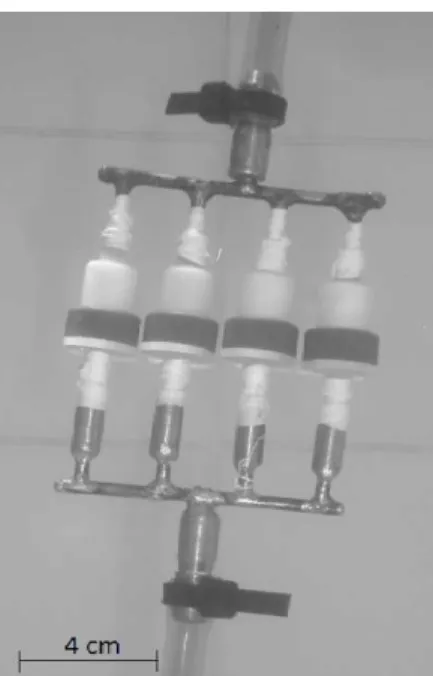
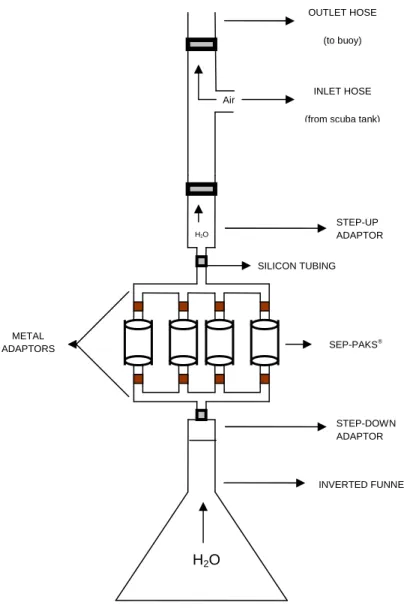
The collecting apparatus was constructed in accordance with Schulte et al. (1991). The apparatus consisted of a metal adaptor of four 18 mm long hollow stainless-steel tubes 3 mm in diameter with central opening 1 mm in diameter that were brazed to a basal tube 60 mm long. A single 18 mm long tube was then brazed to the basal tube. This metal frame was duplicated and the two pieces (adaptors) connected by four Sep-Paks® columns (Reversed-phase C18, Waters) (Fig. 1). An inverted funnel was connected to the lower metal adaptor by a silicon hose and the upper metal adaptor was connected to an outlet silicon hose that received compressed air from a
SCUBA tank (Fig. 2). Previous studies have suggested that sampling procedures which involve plastic hoses or other similar material should be avoided since the hose has a strongly lipophilic surface capable of adsorbing the allelopathic compounds to be examined, while, at the same time, releasing considerable quantities of plasticizers (FAULKNER et al., 1980). We used an apparatus constructed using silicon hoses to avoid adsorption of compounds by the apparatus.
Before the field experiment, the apparatus were previously tested in a pool by using ink to verify the rate of flow of water moving through Sep-Paks® columns. The substances collecting apparatus were powered by compressed air from a SCUBA tank, whose flow was controlled. A knife was used to cut the colonies inducing an artificial release of chemical compounds in the water following the methods of SCHULTE et al. (1991). The apparatus collected the substances around the species of each replicate during 4-5 hr. The forty Sep-Paks® columns were activated using MeOH solvent before the field experiment. Each colony sampled used four Sep-Paks® columns to capture the substances (see Fig.1) which were pooled into a replicate (n=5 replicates) for subsequent analysis. After each sampling the columns were eluted with 60 mL distilled water, 60 mL MeOH and 60 mL DCM. The MeOH extracts were washed with DCM and the DCM extracts were combined. The differences between control and treatment extracts were detected by GC-MS.
Fig. 1. Metal adaptors with Sep-Paks® in
Fig. 2. Schematic representation of the submersible sampling apparatus (adapted from Schulte et al., 1991).
Statistical Analyses: The table of data (areas of peaks) was transformed to percentage area and arcsine transformed for statistical analysis (QUINN; KEOUGH, 2002). The SPSS package was performed using the non-parametric Mann-Whitney U to test for differences between control and treatments in the detected substances.
R
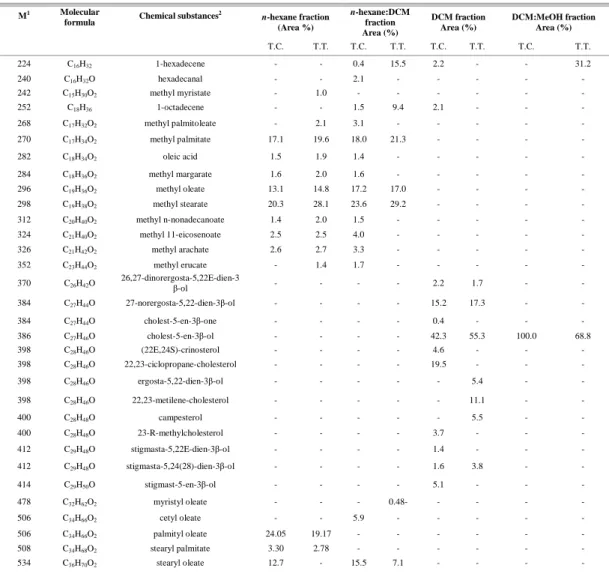
ESULTSTable 1 shows the secondary metabolite contents from different fractions of MeOH extracts of the two invasive species of Tubastraea at Ilha Grande Bay, RJ. Thirty-two compounds were tentatively (>90% probability) identified as hydrocarbons, fatty
esters and sterols. The hexane and hexane:DCM fractions contained a range of fatty esters (C17-C36) and methyl stearate was found to be the major compound, representing 20.3% and 28.1% (T.
coccinea and T. tagusensis) and 23.6% and 29.2% (T. coccinea and T. tagusensis, respectively) of the total
composition, respectively. Methyl palmitate was also one of the most abundant compounds (17.1% and 19.6%, T. coccinea and T. tagusensis respectively) in hexane and (18.0% and 21.3%, T. coccinea and T.
tagusensis respectively) in hexane:DCM fractions. The
substance palmityl oleate (C34) was found only in hexane fraction (24% T. coccinea and 19.2% T.
tagusensis). On the other hand, the DCM fractions H2O
H2O Air
INVERTED FUNNEL STEP-DOWN ADAPTOR SEP-PAKS® SILICON TUBING
STEP-UP ADAPTOR INLET HOSE
(from scuba tank) OUTLET HOSE
(to buoy)
showed a diverse array of sterols (C26 – C29) and cholest-5-en-3β-ol (cholesterol) had the highest values observed in T. coccinea (42.3%) and T. tagusensis (55.3%). The dominant compound cholesterol was also observed in T. coccinea (100%) and T. tagusensis (68.8%) in the DCM:MeOH fractions (Table 1). The hydrocarbon 1-hexadecene was observed in the hexane:DCM (15.5%) and DCM:MeOH (31.2%) fractions from T. tagusensis (Table 1).
One of the replicate treatments used in the field experiment was lost. Five compounds, in each treatment, contained straight chain hydrocarbons (C16 to C22) and were tentatively (>90% probability) identified by GC/MS, as 1-hexadecene, n-hexadecane,
n-octadecane, n-eicosane and n-docosane (Table 2).
Despite the fact that 1-hexadecene was found higher concentration in different fractions of the MeOH extract of Tubastraea tagusensis (Table 1), it represented 7.2% and 5.2% of the total composition of substances detected in control and treatment in field experiment, respectively; n-octadecane appeared in higher concentrations (37.9% and 39.7%, respectively) (Table 2). The contents of 1-hexadecene, n-hexadecane and n-eicosane showed significant differences between control and treatment (see Table 2). n-docosane tended to be more abundant in treated than control extracts but analysis did not detect significant differences between control and treatment (p = 0.076; Mann-Whitney U test).
Table 1. GC-MS analysis of % area of n-hexane, n-hexane:DCM, DCM and DCM:MeOH fractions from MeOH extracts for T.
coccinea (T.C.) and T. tagusensis (T.T.).
n-hexane fraction
(Area %)
n-hexane:DCM
fraction Area (%)
DCM fraction Area (%)
DCM:MeOH fraction Area (%) M1 Molecular
formula Chemical substances
2
T.C. T.T. T.C. T.T. T.C. T.T. T.C. T.T.
224 C16H32 1-hexadecene - - 0.4 15.5 2.2 - - 31.2
240 C16H32O hexadecanal - - 2.1 - - - - -
242 C15H30O2 methyl myristate - 1.0 - - - -
252 C18H36 1-octadecene - - 1.5 9.4 2.1 - - -
268 C17H32O2 methyl palmitoleate - 2.1 3.1 - - - - -
270 C17H34O2 methyl palmitate 17.1 19.6 18.0 21.3 - - - -
282 C18H34O2 oleic acid 1.5 1.9 1.4 - - - - -
284 C18H36O2 methyl margarate 1.6 2.0 1.6 - - - - -
296 C19H36O2 methyl oleate 13.1 14.8 17.2 17.0 - - - -
298 C19H38O2 methyl stearate 20.3 28.1 23.6 29.2 - - - -
312 C20H40O2 methyl n-nonadecanoate 1.4 2.0 1.5 - - - - -
324 C21H40O2 methyl 11-eicosenoate 2.5 2.5 4.0 - - - - -
326 C21H42O2 methyl arachate 2.6 2.7 3.3 - - - - -
352 C23H44O2 methyl erucate - 1.4 1.7 - - - - -
370 C26H42O
26,27-dinorergosta-5,22E-dien-3
β-ol - - - - 2.2 1.7 - -
384 C27H44O 27-norergosta-5,22-dien-3β-ol - - - - 15.2 17.3 - -
384 C27H44O cholest-5-en-3β-one - - - - 0.4 - - -
386 C27H46O cholest-5-en-3β-ol - - - - 42.3 55.3 100.0 68.8
398 C28H46O (22E,24S)-crinosterol - - - - 4.6 - - -
398 C28H46O 22,23-ciclopropane-cholesterol - - - - 19.5 - - -
398 C28H46O ergosta-5,22-dien-3β-ol - - - 5.4 - -
398 C28H46O 22,23-metilene-cholesterol - - - 11.1 - -
400 C28H48O campesterol - - - 5.5 - -
400 C28H48O 23-R-methylcholesterol - - - - 3.7 - - -
412 C29H48O stigmasta-5,22E-dien-3β-ol - - - - 1.4 - - -
412 C29H48O stigmasta-5,24(28)-dien-3β-ol - - - - 1.6 3.8 - -
414 C29H50O stigmast-5-en-3β-ol - - - - 5.1 - - -
478 C32H62O2 myristyl oleate - - - 0.48- - - - -
506 C34H66O2 cetyl oleate - - 5.9 - - - - -
506 C34H66O2 palmityl oleate 24.05 19.17 - - - -
508 C34H68O2 stearyl palmitate 3.30 2.78 - - - -
534 C36H70O2 stearyl oleate 12.7 - 15.5 7.1 - - - -
Table 2. Mean proportion of substances detected by GC-MS analysis of DCM extracts from seawater near injured and control colonies of T. tagusenisis captured in Sep-Paks® cartridges in an in situ experiment. Comparison between control and treatment concentration was by nonparametric Mann-Whitney U test (Z).
M1 Molecular
formula
Chemical substances2
Control mean area (%)
Treatment mean
area (%) Z Significance (p)
224 C16H34 1-hexadecene
7.2 (± 0.41 SE)
5.2 (± 0.48 SE) -2.611 0.009*
226 C16H32 n-hexadecane 25.1 (± 6.28 SE) 7.9 (± 2.57 SE) -2.402 0.016*
254 C18H38 n-octadecane 37.9 (±0.59 SE) 39.7 (± 1.64 SE) -0.940 0.347
282 C20H42 n-eicosane 19.6 (± 4.27 SE) 32.6 (± 2.59 SE) -2.611 0.009*
310 C22H46 n-docosane 10.2 (± 1.43SE) 14.6 (± 1.79 SE) -1.776 0.076
1Molecular weight; 2Tentatively identified (> 90% probability) by co-injections with authentic samples and Wiley 275 mass spectra library; SE =
standard error; *significant difference.
D
ISCUSSIONMany metabolites produced by cnidarians are assumed to act against predators and competitors (COLL, 1992; PAWLIK, 1993; HARPER et al., 2001; LAGES et al., 2006; PAUL et al., 2006; FLEURY et al., 2008). The phylum Cnidaria possesses an array of secondary metabolites, mainly terpenes, and the soft coral group possesses more than 80 percent of all cnidarian compounds (HARPER et al., 2001; BLUNT et al., 2007, 2008). Despite the absence of accessible fleshy and soft tissues, scleractinian corals also produce secondary metabolites for defense and many of them are toxic to cells (FUSETANI et al., 1986; GUELLA et al., 1988; FUNG et al., 1997, KONTIZA et al., 2006); predators (BAIRD et al., 2001) and competitors (DE RUYTER VAN STEVENICK et al. 1988; KOH; SWEATMAN, 2000).
The detection of fatty acids and sterols by GC-MS showed that Tubastraea spp produced several secondary metabolites that may act antagonistically to other organisms and thus be responsible, in part, for success in invasion on rocky shores at Ilha Grande Bay (LAGES et al., 2010). Sterol composition, mainly cholesterol, of a variety of marine invertebrates has been investigated in detail (KANAZAWA, 2001; BLUNT et al., 2009). Yamashiro et al. (1999) identified 11 major sterols common to 15 species of cnidarians including scleractinian corals. According to these authors, cholesterol was the predominant substance for Tubastraea sp. The major substance found in our DCM fraction for T. tagusensis was also cholesterol, where it represented more than 50% of the substances present. A range of sterols isolated from soft corals and gorgonians have exhibited biological and ecological activities (TOMONO et al., 1999; EPIFANIO et al., 2007; CHANGYUN et al., 2008). Slattery et al. (1997) studied metabolites in the soft
corals Alcyonium paessleri and Gersemia antarctica, which were mainly sterols identified as cholesterol, dehydro-cholesterol, 24-methylene-cholesterol, 22-dehydro-7β-hydroxy-cholesterol released into the surrounding seawater and demonstrated that these compounds played predator deterrence and antibacterial roles, respectively.
All substances from different extracts, mainly sterols, fatty acids and hydrocarbons detected by GC-MS here have been registered in corals in other studies (YAMASHIRO et al., 1999; HARPER et al., 2001; CHANGYUN et al., 2008; PAUL; RITSON-WILLIAMS, 2008; BLUNT et al., 2007, 2008, 2009). Despite the hydrocarbons detected here in field experiment, it seems that the other classes of substances are not appreciably water soluble as their absence in Sep-Paks® was confirmed by GC-MS. Furthermore, scleractinian corals possess low fresh tissue/skeleton ratio compared with soft corals which lowers the volumetric concentration of substances inside the coral and may reduce sterols and fatty acids in seawater to undetectable levels.
It is known that allelochemical compounds produced by some soft corals can help them to expand or avoid competitors such as scleractinian corals and other soft corals (COLL et al., 1982; SAMMARCO et al., 1985; LA BARRE et al., 1986; COLL, 1992; MAIDA et al., 1995; SLATTERY et al. 1997; KOH; SWEATMAN, 2000; MAIDA et al., 2001; FLEURY et al., 2004; 2006). The exotic coral Chromonephthea
braziliensis (Alcyonacea) has established in Brazil and
responsible for ictyotoxic effects around the world. Jüttner (2001) showed that diatom biofilms produced polyunsaturated fatty acids which can also act as defense substances against grazers. In fact, a range of fatty acids produced by algae exert negative effects on a variety of aquatic organisms (SPRUELL, 1984; IKAWA et al., 1996; KAMAYA et al., 2003; MUNDT et al., 2003). Therefore, numerous researchers have suggested that fatty acids might also serve as allelochemicals in aquatic organisms (KAKISAWA et al., 1988; SUZUKI et al., 1996; CHIANG et al., 2004). Hydrocarbons, fatty acids and esters are considered as allelopathic agent in plants (GEORGIEVA et al. 2005). Therefore, compounds produced by Tubastraea, may be aiding this exotic species to expand in the new area, even though there are no known specialist predators in this region.
Lages and cols. (2010) demonstrated experimentally that Tubastraea coccinea and T.
tagusensis produce chemical substances which can
affect negatively interactions with potential predators and foulers. Creed (2006) showed also that when in close proximity Tubastraea caused necrosis in the endemic scleractinian coral Mussismilia hispida. This evidence so far suggests that these species produce active compounds used against competitors. The harmful effects produced by chemical compounds of
Tubastraea on other organisms together with its
reproductive strategy brings advantages to the corals (GLYNN et al., 2007) and could explain their success in invading new regions to the detriment of local fauna and flora.
It is known that the mucus produced by corals possesses an array of esters, sterols and other lipids, including hydrocarbons, some of which are soluble in seawater at low concentrations (BENSON; MUSCATINE, 1974; NAKAJIMA et al., 2009). Considerable levels of straight-chain hydrocarbons produced by corals and other marine organisms are products of coral lipogenesis, rather than derived from dietary sources (CLARK; BLUMER, 1967; MEYERS, 1977). Contrary to unsaturated or oxygenated compounds such as sterols and esters that can be easily oxidized by hypochlorite (bleach), saturated hydrocarbons do not react, and thus are not solubilized. Therefore, hydrocarbons were found in the control (skeleton) through GC/MS. On the other hand, the high concentration of 1-hexadecene and n-hexadecane on Sep-Paks® control compared with treatments, detected by GC-MS, was due to their great affinity for seawater. Other exuded substances such as
n-eicosane may be bound on surface tissues or in
mucus and thus would show low concentrations in waterborne samples of the control.
Coll et al. (1982) demonstrated that the concentration of cembranolides terpenes (allelopathic compounds) in the sea water around the soft corals
Sinularia flexibilis and Sarcophyton crassocaule was
quite low (1 to 5 ppm). We, therefore, suggest that the concentration of substances around T. tagusensis trapped by Sep-Paks® cartridges was probably also very low. These compounds were thus detected and confirmed by GC-MS, but not detected by TLC.
This experiment created an artificial injury where hydrocarbons were released and this leads to the hypothesis that interference competition (JACKSON; BUSS, 1975) and mechanisms of interspecific aggression such as predation between species of marine organisms may be linked to the excretion of toxic substances (COLL et al., 1982). Although not conclusive, the presence of the substances in Sep-Paks® columns coupled with the probable toxicity (allelopathic action) of hydrocarbons (according to the study cited above) suggests a negative interactive mechanism. The next step would be to detect variability in chemical compounds of Tubastraea spp due to the proximity of potential competitors in the field to confirm this hypothesis.
The exotic corals T. coccinea and T.
tagusensis have established and invaded rocky reefs at
Ilha Grande Bay (PAULA; CREED, 2004), being most abundant in the shallow subtidal depths where they reach very high densities compared to native species (PAULA; CREED, 2005). The present study has described the chemical compounds produced by these exotic corals and the application of a novel method which detected chemical compounds after injury to the corals in situ. The mediation of negative interactions through chemical compounds and the high abundance of the exotic invasive corals on rocky shores of Ilha Grande Bay is therefore expected to increase the frequency of these negative chemical interactions with the native benthic communities over time and will lead to further change in community structure as well as facilitate further range expansion of the exotic corals.
A
CKNOWLEDGEMENTSGrant from the Fundação Carlos Chagas Filho de Amparo à Pesquisa do Estado do Rio de Janeiro No E-25/170669/2004 and the Coordenação de Aperfeiçoamento de Pessoal de Nível Superior (CAPES/Ciências do mar 1137/2010), and sponsorship of the Programa Petrobras Ambiental.
R
EFERENCESBAIRD, A. H.; PRATCHETT, M. S.; GIBSON, D. J.; KOZIUMI, N.; MARQUIS, C. P. Variable palatability of coral eggs to a planktivorous fish. Mar. Freshw. Res., v. 6, p. 865-868, 2001.
BENSON, A. A.; MUSCATINE, L. Wax in coral mucus: Energy transfer from corals to reef fishes. Limmol.
Oceanogr., v. 19, p. 810-814, 1974.
BLUNT, J. W.; COPP, B. R.; HU, W.; MUNRO, M. H. G.; NORTHCOTE, P. T.; PRINSEP, M. R. Marine natural products. Nat. Prod. Rep., v. 24, p. 31-86, 2007. BLUNT, J. W.; COPP, B. R.; HU, W.; MUNRO, M. H. G.;
NORTHCOTE, P. T.; PRINSEP, M. R. Marine natural products. Nat. Prod. Rep., v. 25, p. 35-94, 2008. BLUNT, J. W.; COPP, B. R.; HU, W.; MUNRO, M. H. G.;
NORTHCOTE, P. T.; PRINSEP, M. R. Marine natural products. Nat. Prod. Rep., v. 26, p. 170-244, 2009. BUDZIKIEWICZ, H.; DJERASSI, C.; WILLIAMS, D.H.
Interpretation of mass spectra of compounds. San
Francisco: Holden-Day, 1964.
CASTRO, C. B.; PIRES, D. O. Brazilian coral reefs: what we already know and what is still missing. Bull. mar. Sci., v. 69, p. 357-371, 2001.
CHANGYUN, W.; HAIYAN, L; CHANGLUN, S; YANAN, W; LIANG, L; HUASHI, G. Chemical defensive substances of soft corals and gorgonians. Acta Ecol.
Sin., v. 28, p. 2320-2328, 2008.
CHIANG, I.Z.; HUANG, W.Y.; WU, J.T. Allelochemicals of
Botryococcus braunii (Chlorophyceae). J. Phycol., vol.
40, p. 474–480, 2004.
CLARK, R. C., Jr.; BLUMER, M. Distribution of n-paraffins in marine organisms and sediment. Limnol. Ocean., v. 12, p. 79-87, 1967.
COLL, J. C. The chemistry and chemical ecology of octocorals (Coelenterata, Anthozoa, Octocorallia).
Chem. Rev., v. 92, p. 613-631, 1992.
COLL, J. C.; BOWDEN, B. F.; TAPIOLAS, D. M.; DUNLAP., W. C. In situ isolation of allelochemicals released from soft corals (Coelenterata: Octocorallia): a totally submersible apparatus. J. expl mar. Biol. Ecol., v. 60, p. 293-299, 1982.
CREED, J. C. Two invasive alien azooxanthellate corals,
Tubastraea coccinea and Tubastraea tagusensis,
dominate the native zooxanthellate Mussismilia hispida in Brazil. Coral Reefs, v. 25, 350, 2006.
DE NYS, R.; COLL, J. C.; PRICE, I. R. Chemically mediated interactions between the red alga Plocamium
hamatum (Rhodophyta) and the octocoral Sinularia cruciata (Alcyonacea). Mar. Biol., v. 108, p. 315-320,
1991.
DE RUYTER VAN STEVENICK, ED.; VAN MULEKOM, L. L.; BREEMAN, A. M. Growth inhibition of
Lobophora variegata (Lamouroux) Womersley by
scleractinian corals. J. expl Mar. Biol. Ecol., v. 115, p. 169-178, 1988.
EPIFANIO, R.A.; MAIA, L.F.; PAWLIK, J.; FENICAL, W. Antipredatory secosterols from Pseudopterogorgia
americana. Mar. Ecol. Prog. Ser., v. 329, p. 307-310,
2007.
ESTES, J. A.; STEINBERG, P. D. Predation, herbivory and kelp evolution. Paleobiology, v. 14, p. 19-36, 1988.
FAULKNER, D. J.; WALKER, R. P.; THOMPSON, J. Chemical ecology of a temperate sponge-dominated assemblage. In: INT. SYMP. MAR. NAT. PROD., 3., Brussels, Belgium, 1980. Contribution C-6, 1980. FERREIRA, C. E.L. Non-indigenous corals at marginal sites.
Coral Reefs, v. 22, p. 498, 2003.
FLEURY, B. G.; LAGES, B. G.; BARBOSA, J. P.; KAISER, C. R.; PINTO, A. C. New hemiketal steroid from the introduced soft coral Chromonephthea braziliensis is a chemical defense against predatory fishes. J. chem.
Ecol., v. 34, p. 1-5, 2008.
FLEURY, B. G., COLL, J.; SAMMARCO, P. Complementary (secondary) metabolites in a soft coral: sex-specific variability, inter-clonal variability, and competition. Mar. Ecol., v. 27, p. 204–218, 2006. FLEURY, B. G., COLL, J. C., SAMMARCO, P. W.,
TENTORI, E.; DUQUESNE, S. Complementary (secondary) metabolites in an octocoral competing with a scleractinian coral: effects of varying nutrient regimes.
J. expl mar. Biol. Ecol., v. 303, p. 115-131, 2004.
FUNG, F. M. Y.; TACHIBANA, S.; CHOU, L. M.; DING, J. L. Cytotoxic and anticancer agents in mucus of Galaxea
fascicularis: Purification and characterization. J. mar. Biotechnol., v. 5, p. 50-57, 1997.
FUSETANI, N.; ASANO, M.; MATSUNAGA, S.; HASHIMOTO, K. Bioactive marine metabolites-XV. Isolation of aplysinopsin from the scleractinian coral
Tubastraea aurea as an inhibitor of development of
fertilized sea urchin eggs. Comp. Biochem. Physiol., v. 85B, p. 845-846, 1986.
GEORGIEVA, E.; HANDJIEVA, N.; POPOV, S.; EVSTATIEVA, L. Comparative analysis of the volatiles from flowers and leaves of three Gentiana species.
Biochem. Syst. Ecol., v. 33, p. 938-947, 2005.
GINER, J. L.; ZHAO, H.; TOMAS, C. Sterols and fatty acids of three harmful algae previously assigned as
Chattonella. Phytochemistry, v. 69, p. 2167-2171, 2008.
GLYNN, P.W.; COLLEY, S.B.; MATÉ, J.L.; COTÉS, J.; GUZMAN, H.M.; BAILEY, R.L.; FEINGOLD, J.S.; ENOCHS, I.C. Reproductive ecology of the azooxanthelate coral Tubastraea coccinea in the Equatorial Eastern Pacific: Part V. Dendrophylliidae.
Mar. Biol., v. 153, p. 529-544, 2007.
GUELLA, G.; MANCINI, I.; ZIBROWIUS, H.; PIETRA, F. Novel Aplysinopsin-Type Alkaloids from scleractinian corals of the family Dendrophylliidae of the Mediterranean and Philippines. Configurational-Assignment Criteria, stereospecific synthesis, and photoisomerization. Helv. Chim. Acta, v. 71, p. 773-782., 1988.
HARPER, M. K.; BUGNI, T. S.; COPP, B. R.; JAMES, R. D.; LINDSAY, B. S.; RICHARDSON, A. D.; SCHNABEL, P. C.; TASDEMIR, D.; VANWAGONER, R. M.; VERBITSKI, S. M.; IRELAND, C. M. Introduction to the chemical ecology of marine natural products. In: MCCLINTOCK, J.B.; BAKER, B.J. (Ed.).
Marine Chemistry Ecology . Boca Raton, Fla.: C.R.C.
Press, 2001. p. 3-69.
HAY, M. E.; FENICAL, W. Marine plant-herbivore interactions: the ecology of chemical defense. A. Rev.
Ecol. Syst., v. 19, p.111-145, 1988
HAY, M. E.; STEINBERG, P. D. The chemical ecology of plant-herbivore interactions in marine versus terrestrial communities. In: ROSENTHAL, J,; BERENBAUM, M.(Ed.) Herbivores: Their interaction with secondary
metabolites, evolutionary and ecological processes.
San Diego: Academic Press, 1992. p. 371-413. .
IRFANULLAH, H. M; MOSS, B. Allelopathy of filamentous algae. Hydrobiologia, v. 543, p. 169–179, 2005. IKAWA, M.; HANEY, J.F.; SASNER, J.J. Inhibition of
Chlorella growth by the lipids of cyanobacterium Microcystis aeruginosa. Hydrobiologia, v. 331, p. 167–
170, 1996.
IWAGAWA, T.; MIYAZAKI, M.; YOKOGAWA, Y.; OKAMURA, H.; NAKATANI, M.; DOE, M.; MORIMOTO, Y.; TAKEMURA, K. Aplysinopsin dimmers from a stony coral Tubastraea aurea.
Heterocycles, v. . 75, p. 2023-2028, 2008.
JACKSON, J.B.C.; BUSS, L. Allelopathy and spatial competition among coral reef invertebrates. Proc. natn.
Acad. Sci. U.S.A., v. 72, p. 5160-5163, 1975.
JUTTNER, F. Liberation of 5,8,11,14,17-eicosapentaenoic acid and other polyunsaturated fatty acids from lipids as a grazer defense reaction in epilithic diatom biofilms. J.
Phycol., v. 37, p. 744–755, 2001.
KAKISAWA, H.; ASARI, F.; KUSUMI, T.; TOMA, T.; SAKURAI, T.; OOHUSA, T.; HARA,Y.; CHIHARA, M. An allelopathic fatty acid from the brown alga
Cladosiphon okamuranus. Phytochem., v. 27, p. 731–
735, 1988.
KAMAYA, Y., KUROGI, Y., SUZUKI, K. Acute toxicity of fatty acids to the freshwater green alga Selenastrum
capricornutum. Environ. Toxicol., v. 18, p. 289–294,
2003.
KANAZAWA, A. Sterols in marine invertebrates. Fish. Sci., v. 67, p. 997-1007, 2001.
KELMAN, D.; BENAYAHU, Y.; KASHMAN,Y. Chemical defense of the soft coral Parerythropodium fulvum
fulvum (Forskal) in the Red Sea against generalist reef
fish. J. expl Mar. Biol. Ecol., v. 238, p. 127-137, 1999. KOH, E. G. L.; SWEATMAN, H. Chemical warfare among
scleractinians: bioactive natural products from
Tubastraea falkneri Wells kill larvae of potential
competitors. J. expl mar. Biol. Ecol., v. 251, p. 141-160, 2000.
KOH, E. G. L. Do scleractinian corals engage in chemical warfare against microbes? J. Chem. Ecol., v. 23, p. 379-398, 1997.
KOH, L. L.; GOH, N. K. C.; CHOU, L. M.; TAN, Y.W. Chemical and physical defenses of Singapore gorgonians (Octocorallia: Gorgonacea). J. expl Mar. Biol. Ecol., v. 251, p. 103-115, 2000.
KONTIZA, I.; ABATIS, D.; MALAKATE, K.; VAGIAS, C.; ROUSSIS, V. 3-Keto steroids from the marine organisms Dendrophyllia cornigera and Cymodocea
nodosa. Steroids, v. 71, p. 177-181, 2006.
KVITEK, R.G.; DEGANGE, A.R.; BEITLER, M. K. Paralytic shellfish poisoning toxins mediate feeding behavior of sea otters. Limnol. Oceanogr., v. 36, p. 393-404, 1991.
LA BARRE, S. C.; COLL, J. C.; SAMMARCO, P. W. Competitive strategies of soft corals (Coelenterata: Octocorallia) III Spacing and aggressive interactions between alcyonaceans. Mar. Ecol. Prog. Ser., v. 28, p. 147-156, 1986.
LAGES, B. G., FLEURY, B. G., PINTO, A. C.; CREED, J. C. Chemical defenses against generalist fish predators and fouling organisms in two invasive ahermatypic corals in the genus Tubastraea. Mar. Ecol., v. 31, p. 473-482, 2010.
LAGES, B. G.; FLEURY, B. G.; FERREIRA, C. E. L.;PEREIRA, R. C. Chemical defense of an exotic coral as invasion strategy. J. expl mar. Biol. Ecol., v. 328, p. 127-135, 2006.
LUBCHENCO, J.; GAINES, S. D. A unified approach to marine plant-herbivore interactions. I. populations and communities. A. Rev. Ecol. Syst., v. 12, p. 405-437, 1981.
MAIDA, M.; SAMMARCO, P. W.; COLL, J. C. Effects of soft corals on scleractinian coral recruitment. II. Allelopathy, spat survivorship and reef community structure. Mar. Ecol., v. 22, p. 397–414, 2001.
MAIDA, M.; SAMMARCO, P. W.; COLL, J. C. Preliminary evidence for directional allelopathic effects of the soft coral Sinularia flexibilis (Alcyonacea: Octocorallia) on scleractinian coral recruitment. Bull. mar. Sci., v.56, p. 303-311, 1995.
MEYER, M.; DELBERGHE, F.; LIRON, F.; GUILLAUME, M.; VALENTIN, A.; GUYOT, M. An antiplasmodial new (bis)indole alkaloid from the hard coral Tubastraea sp. Nat. Prod. Res., v. 23, p. 178-182, 2009.
MEYERS, P. A. Fatty acids and hydrocarbons of Caribbean corals. In: INT. CORAL REEF SYMP., 3., Miami, USA, 1977. p. 530-536.
MUNDT, S.; KREITLOW, S.; JANSEN, R. Fatty acids with antibacterial activity from the cyanobacterium
Oscillatoria redekei HUB 051. J. appl. Phycol.,v. 15, p.
263–267, 2003.
NAKAJIMA, R.; YOSHIDA,T.; AZMAN, B. A. R.; ZALEHA, K.; OTHMAN, B. H. R.; TODA, T. In situ release of coral mucus by Acropora and its influence on the heterotrophic bacteria. Aquat. Ecol., v. 43, p. 815-823, 2009.
PAUL, V. J.; RITSON-WILLIAMS, R. Marine chemical ecology. Nat. Prod. Rep., v. 25, p. 662-695, 2008.
PAUL, V. J.; PUGLISI, M. P.; RITSON-WILLIAMS, R. Marine chemical ecology. Nat. Prod. Rep., v. 23, p. 153-180, 2006.
PAULA, A. F.; CREED, J. C.Two species of the coral
Tubastraea (Cnidaria, Scleractinia) in Brazil: a case of
PAULA, A. F.; CREED, J. C. Spatial distribution and abundance of nonindigenous coral genus Tubastraea (Cnidaria, Scleractinia) around Ilha Grande, Brazil.
Braz. J. Biol., v. 65, p. 661-673, 2005.
PAWLIK, J. R. Marine invertebrate chemical defense.
Chem. Rev., v. 93, p. 1911-1922, 1993.
PAWLIK, J. R.; BURCH, M. T.; FENICAL, W. Patterns of chemical defense among Caribbean gorgonian corals: a preliminary survey. J. expl mar. Biol. Ecol., v. 108, p. 55-66, 1987.
QUINN, G. P.; KEOUGH, M. J. Experimental design and
data analysis for biologists. Cambridge: Cambridge
University Press, 2002.
RASHID, M. A.; GUSTAFSON, K. R.; CARDELLINA, I. J. H.; BOYD, M. R. Mycaloides D and E, new cytotoxic macrolides from a collection of the stony coral
Tubastraea faulkneri. J. Nat. Prod., v. 58, p. 1120-1125,
1995.
SAMMARCO, P. W., COLL, J. C.; LA BARRE, S. Competitive strategies of soft corals (Coelenterata: Octocorallia). II. Variable defensive responses and susceptibility to scleractinian corals. J. expl mar. Biol.
Ecol., v. 91, p. 199-215, 1985.
SCHMITT, T. M., HAY, M. E., LINDQUIST, N. Constraints on chemically mediated coevolution: multiple functions of seaweed secondary metabolites. Ecology, v. 76, p. 107-123, 1995.
SCHULTE, B. A.; DE NYS R.; BAKUS, G. J.; CREWS, P.; EID, C.; NAYLOR, S.; MANES, L. V. A modified allomone collecting apparatus. J. Chem. Ecol., v. 17, p. 1327-1332, 1991.
SLATTERY, M. ; HAMANN, M. T.; MCCLINTOCK, J. B.; PERRY, T. L.; PUGLISI, M. P.; YOSHIDA, W. Y. Ecological roles for water-borne metabolites from Antarctic soft corals. Mar. Ecol. Prog. Ser., v. 161, p. 133–144, 1997.
SPRUELL, J.A. Response to algae and zooplankton to C18 fatty acids of Chlamydomonas reinhardtii. Hydrobiologia, v. 114, p. 9–12, 1984.
STACHOWICZ, J. J. Chemical ecology of mobile benthic invertebrates: Predators and prey, allies and competitors. In: MCCLINTOCK, J.B.; BAKER, B.J. (Ed.). Marine
Chemical Ecology. Boca Raton, Fla.: C.R.C. Press,
2001. p. 157-193.
SULLIVAN, B.; FAULKNER, D. J.; WEBB, L. Siphonodictidine, a metabolite of the burrowing sponge
Siphonodictyon sp. that inhibits coral growth. Science, v.
221, p. 1175-1176, 1983.
SUZUKI, M.; WAKANA, I.; DENBOH, T.; TATEWAKI, M. An allelopathic polyunsaturated fatty acid from red algae. Phytochem., v. 43, p. 63–65, 1996.
TARRANT, A. M.; BLOMQUIST, C. H.; LIMA, P. H.; ATKINSON, M. J.; ATKINSON, S. Metabolism of estrogens and androgens by scleractinian corals. Comp.
Biochem. Physiol., v. 136B, p. 473–485, 2003.
THACKER, R. W.; BECERRO, M. A.; LUMBANG., W. A.; PAUL, V. J. Allelopathic interactions between sponges on a tropical reef. Ecology, v. 79, p. 1740-1750, 1998. TOMONO, Y.; HIROTA, H.; FUSETANI, N. Isogosterones
A-D, antifouling 13,17-Secosteroids from an Octocoral
Dendronephthya sp. J. org. Chem., v. 6, p. 2272–2275,
1999.
VAN ALSTYNE, K. L.; DUGGINS, D. O.; DETHIER, M. N. Spatial patterns in macroalgal chemical defenses. In: MCCLINTOCK, J. B.; BAKER, B.J. (Ed.). Marine .
Chemical Ecology. Boca Raton, Fla.: C.R.C. Press,
2001. p. 301-324.
VAN ALSTYNE, K.L.; WYLIE, C.R.; PAUL, V.J. Antipredator defenses in tropical Pacific soft corals (Coelenterata: Octocorallia). II. The relative importance of chemical and structural defenses in three species of
Sinularia. J. expl mar. Biol. Ecol., v. 178, p. 17-34,
1994.
YAMASHIRO, H.; OKU, H.; HIGA, H.; CHINEN, I.; SAKAI, K. Composition of lipids, fatty acids and sterols in Okinawan corals. Comp. Biochem. Physiol., v. 122, p. 397-407, 1999.