Psychological adjustment in children with episodic migraine:
a population-based study
Marco A. Arruda
1and Renato Arruda
2 1. Instituto Glia, Ribeirão Preto, SP, Brazil2. Universidade Estadual de Campinas, Campinas, SP, Brazil
Abstract
We investigated psychological adjustment in a preadolescent pediatric population as a function of headache diagnosis. Children from a city public education system were enrolled in this study.Parents were interviewed using validated headache questionnaires and the Strengths and Difficulties Questionnaire (SDQ), which measures psychological adjustment. Crude and adjusted prevalence ratios were obtained using a binary regression model. The relative risk [RR] of SDQ items and scores were modeled as a function of headache diagnosis in adjusted analyses. Multivariate models estimated determinants of psychological adjustment characteristics in children with migraine. The sample consisted of 846 children (65.9% of the target sample) from 5 to 12 years old (50.5% girls). Relative to children without headache, children with episodic migraine (EM) were more likely to have abnormal scores on the following SDQ scales: emotional symptoms (RR = 3.43, 95% confidence interval [CI] = 2.51-4.69), conduct problems (RR = 1.96, 95% CI = 1.37-2.79), total difficulties (RR = 2.23, 95% CI = 1.59-3.13), and total impact (RR = 2.85, 95% CI = 1.15-7.11). The multivariate analysis showed that total difficulties in psychological adjustment in children with EM were significantly influenced by headache frequency (p < .05), analgesic intake (p < .001), and the occurrence of nausea (p < .01) and vomiting (p < .05) in headache attacks. To the best of our knowledge, this is the first study reported in the literature to identify determinants of the association between migraine and difficulties in psychological adjustment in preadolescent children. Providers and educators should be aware of this association, and studies that address causality should be conducted. Keywords: headache, migraine, psychological adjustment, SDQ, children, epidemiology.
Received 27 March 2012; received in revised form 27 July 2012; accepted 25 September 2012. Available online 07 March 2014.
Marco A. Arruda, M.D., Ph.D., Instituto Glia, Ribeirão Preto, SP, Brazil. Renato Arruda, Faculdade de Ciências Médicas, Universidade Estadual de Campinas, SP, Brazil. Correspondence regarding this article should be directed to: Marco A. Arruda, Av. Braz Olaia Acosta, 727, s. 310, Ribeirão Preto, SP, CEP 14026-040, Brazil. Phone: +55 (16) 39119234. Fax: +55 (16) 39119234. E-mail: [email protected]
Introduction
Headache is one of the most common pain and neurological symptoms in childhood (Goodman & McGrath, 1991; Perquin et al., 2001). The lifetime prevalence of headache in children reaches a striking rate of 82% (Arruda et al., 2010a). Migraine and tension-type headache, the prototypical primary headaches, are common in the preadolescent pediatric population (Abu-Arafeh, Razak, Sivaraman, & Graham, 2010). When the International Headache Society criteria are strictly followed, the prevalence of migraine in children ranges from 3.3% to 21.4%, increasing from early childhood to adolescence (Abu-Arafeh et al., 2010). The burden of pediatric headaches is best characterized for migraine, which impacts the child’s quality of life (Powers, Patton, Hommel, &
Hershey, 2003), school attendance (Abu-Arefeh, & Russell, 1994; Arruda, & Bigal, 2012a), and school performance (Arruda & Bigal, 2012a). Pediatric headache can also disrupt the family (Galli, Canzano, Scalisi, & Guidetti, 2009). Research suggests that the impact of migraine is inluenced by several factors including severity of pain and its associated symptoms, frequency of pain, anticipatory anxiety, adequacy of treatment, and comorbidities (Arruda & Bigal, 2012a; Bigal, Krymchantowski, & Lipton, 2009; Lipton & Silberstein, 1994). Nonetheless, the inluence of established comorbidities of psychological symptoms on the burden of primary headaches is still poorly studied in children and adolescents.
not with fully developed attention-deicit/hyperactivity disorder (ADHD, Arruda, Guidetti, Galli, Albuquerque, & Bigal, 2010b). Representative data for other primary headaches are scarce.
In his seminal work with children who suffered from migraine, Bille (1962) found that children with migraine were “more sensitive,” “more tidy,” “less physically enduring,” and “more vulnerable to frustration” than controls (Bille, 1962). The concept of a “migrainous personality” was later proposed by Saper (1983), describing a migraine patient as having the following characteristics: “compulsive, perfectionistic, rigid, and achievement driven elements, often accompanied by internalized anger and excessive self-control.” However, the association between these characteristics and migraine has not yet been conirmed by scientiic evidence. Findings from more recent studies suggest a possible association between migraine and other psychological characteristics in children and adolescents such as shyness, emotional rigidity, tendency to repress anger and aggression, and a poor level of adjustment (Andrasik, Kabela, Quinn, Attanasio, Blanchard, & Rosenblum, 1988; Lanzi et al., 2001; Mazzone, Vitiello, Incorpora, & Mazzone, 2006).
Adjustment in psychology can be deined as a process of the progressive modiication of thoughts and behavior to balance conlicting needs or needs against obstacles in the environment. Although it largely relects the dificulties that individuals have in mastering or adapting to adverse conditions, personality characteristics are important factors that inluence individual responses to life events (Sarbin, 1940). Adjustment disorder occurs when there is an inability to make normal adjustments to needs or stress in the environment (American Psychiatric Association, 1994).
Over the last decades, some studies have suggested that children with chronic physical disorders exhibit a higher level of dificulty in psychological adjustment and are more prone to develop psychopathology (Lavigne & Faier-Routman, 1992). Therefore, a greater understanding of psychological functioning in children with migraine is of interest. To address this need, we have taken advantage of a large epidemiological study (Attention-Brazil Project) in which children were identiied at schools, and parents were interviewed to investigate psychological adjustment assessed by the Strengths and Dificulties Questionnaire (SDQ) as a function of headache status and diagnosis.
Methods
Overview
This study is part of a larger project designed to establish inception cohorts for studying disorders that may impact learning in preadolescent children. It was built from a virtual network of professionals that began
in 2006 with a nonproit academic organization called “Aprender Criança” (Learning the Child; Arruda, 2009). Currently, a total of 4,500 members are registered in the organization. Of these members, 81% are teachers from the educational system in Brazil.
To achieve this aim, a pilot study was initially conducted in which all of the children registered in the school system of a city were selected. Their mothers and teachers were interviewed by one of the researchers of the present study. The details of this phase have been described elsewhere (Arruda, Guidetti, Galli, Albuquerque, & Bigal, 2010a, b). The pilot study deined the validated questionnaires that would be used in the nationwide phase.
Flow of the study
In May 2009, we invited 124 teachers selected from 1,152 members of the organization who were registered to participate in the project. They were selected to representatively cover the Brazilian territory including rural and urban areas (Instituto Brasileiro de Geograia e Estatística, 2009). They all completed 4-h online training administered by one of the authors of the present study (MAA). During training, they were instructed on how to apply the study questionnaires (see below). We emphasize that using teachers to obtain health information is a well-accepted method for assessing mental health in preadolescent children (Akinbami, Liu, Pastor, & Reuben, 2011; Epstein, Langberg, Lichtenstein, Kolb, Altaye, & Simon, 2011). The teachers were not selected based on special interest in headache disorders, although they certainly had an interest in mental health because they voluntarily joined the community.
We present indings from the survey conducted in the city of Araquari in Santa Catarina state where four teachers were trained and conducted the interviews. The students were randomly identiied and their parents were contacted. Those who agreed to participate were enrolled in the study. The interviews were performed at the end of October, which is close to the end of the school year in Brazil, which begins in February and ends in November.
Geographic characterization and target sample
Assessments
Parents were interviewed by the teachers using a standardized questionnaire with 102 questions that assessed the following: (1) sociodemographic features, (2) past medical history of the child, (3) headaches, (4) parental perspective on school performance (not reported here), and (5) psychological adjustment.
The headache module of the questionnaire consisted of 14 questions that assessed the distinguishing features required for headache diagnosis in the children according to the International Classiication of Headache Disorders, 2nd edition (ICHD-2; Headache Classiication Subcommittee of the International Headache Society, 2004). The questionnaire was the validated Portuguese version used in American migraine studies (Lipton, Diamond, Reed, Diamond, & Stewart, 2001) and has been extensively used in pediatric and adult populational studies in Brazil (Queiroz et al., 2008). Based on the response to the questionnaire, headache diagnoses were assigned by strictly following the ICHD-2 criteria. Children with EM fulilled all of the required criteria for diagnosing EM. We did not differentiate migraine with and without aura. Probable migraine and chronic migraine were not considered in the analyses. Episodic tension-type headache (ETTH) encompassed children with frequent and infrequent ETTHs. Children in the “no headache” group did not meet the criteria for any primary headaches (including tension-type headaches).
Psychological adjustment was evaluated using the validated Brazilian version of the SDQ (Fleitlich-Bilyk & Goodman, 2004; Goodman et al., 2005). The SDQ is a 25-item instrument developed to assess emotional and behavioral problems from the view of the self (in adolescents or adults) or from the view of parents or teachers (Dickey & Blumberg, 2004; Goodman, Lamping, & Ploubidis, 2010). Validation studies and factor analyses have revealed that the SDQ can identify hyperactivity, inattention, emotional symptoms, peer problems, conduct problems, and prosocial behavior (Dickey & Blumberg, 2004).
Analyses
Race and income were deined according to the deinitions of the Brazilian Institute of Geography and Statistics (Instituto Brasileiro de Geograia e Estatística, 2009), which are adopted by the National Census. Race was dichotomized as white vs. non-white. The ive income classes were deined based on total family income and do not relect quintiles. They are determined based on the buying power for a basket of products and services that is deined by the institute and that correlates with socioeconomic characteristics. Classes A and B represent the upper classes. Classes D and E describe different levels of poverty. Class C is the middle class.
Sex-speciic 1-year prevalence estimates of migraine and tension-type headache were derived by age, race, and income. To characterize the sample, descriptive statistics were performed. To estimate the
relationship between sociodemographic characteristics and migraine status, cross tabulations were performed. Crude and adjusted prevalence ratios were obtained using a binary regression model. Prevalence ratios and 95% conidence intervals (CIs) were used to compare speciic categories (e.g., age categories or race) with the reference category.
Multivariate analyses
We initially developed nested multivariate models by considering the presence of migraine and an abnormal score on each of the six SDQ scales (emotional symptoms, conduct problems, hyperactivity, peer problems, total dificulties, and total impact) as dependent variables as a function of demographics (Model 1) and headache characteristics (mean duration, frequency and severity of the attacks, photophobia, phonophobia, nausea, vomiting, and analgesic abuse; Model 2). The level of signiicance adopted was 5%. Statistical analysis was performed using SPSS 15.0 for Windows (SPSS Inc., Chicago, IL, USA).
Investigation review board approval
This study and the surveys received full approval from a university-based Ethics Review Committee (São José do Rio Preto Medical School, São Paulo, Brazil). Written informed consent was obtained from all parents.
Results
Overview
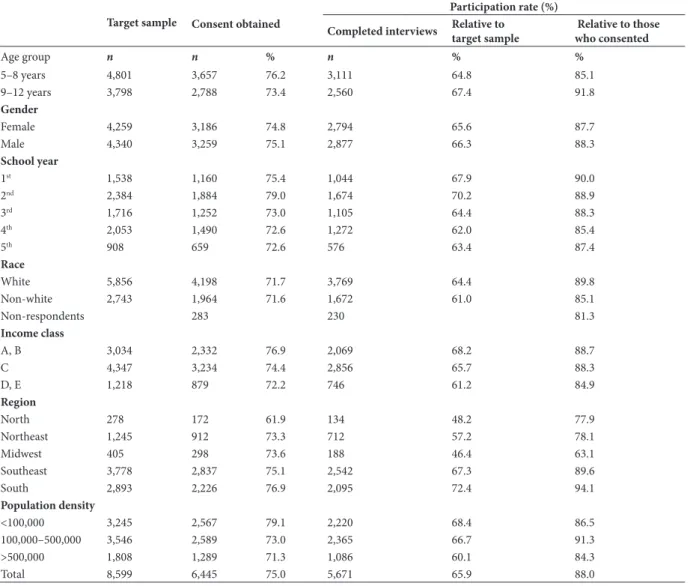
Table 1 displays the demographics of the participating sample and those without complete data. The overall participation rate was -73%, and complete data were obtained from 66% of the target sample and 90% of those who consented. Approximately 50% of the respondents were girls, and most were from the middle class (Class C, 56.1%). The participation rates were very high for all categories, although they decreased as a function of decreased family income.
Prevalence of headaches
Among the participating children, 19.7% did not report headaches (Table 2). Episodic migraine was diagnosed in 10.9% of the children (11.5% of the girls and 10.3% of the boys). The prevalence of EM was not signiicantly associated with gender, age, race, or income class.
ETTH was diagnosed in 13% of the children (11.5% of the girls and 14.6% of the boys). Although a higher prevalence was found in children aged 5 to 8 years (relative to those aged 9 to 12 years) and in boys, and a lower prevalence was found in children who came from lower income classes (relative to those from Classes A, B, and C), the differences were not statistically signiicant.
Table 1. Target sample, consent obtained, and the inal sample according to demographic features
Target sample Consent obtained
Participation rate (%)
Completed interviews Relative to target sample
Relative to those who consented
Age group n n % n % %
5–8 years 4,801 3,657 76.2 3,111 64.8 85.1
9–12 years 3,798 2,788 73.4 2,560 67.4 91.8
Gender
Female 4,259 3,186 74.8 2,794 65.6 87.7
Male 4,340 3,259 75.1 2,877 66.3 88.3
School year
1st 1,538 1,160 75.4 1,044 67.9 90.0
2nd 2,384 1,884 79.0 1,674 70.2 88.9
3rd 1,716 1,252 73.0 1,105 64.4 88.3
4th 2,053 1,490 72.6 1,272 62.0 85.4
5th 908 659 72.6 576 63.4 87.4
Race
White 5,856 4,198 71.7 3,769 64.4 89.8
Non-white 2,743 1,964 71.6 1,672 61.0 85.1
Non-respondents 283 230 81.3
Income class
A, B 3,034 2,332 76.9 2,069 68.2 88.7
C 4,347 3,234 74.4 2,856 65.7 88.3
D, E 1,218 879 72.2 746 61.2 84.9
Region
North 278 172 61.9 134 48.2 77.9
Northeast 1,245 912 73.3 712 57.2 78.1
Midwest 405 298 73.6 188 46.4 63.1
Southeast 3,778 2,837 75.1 2,542 67.3 89.6
South 2,893 2,226 76.9 2,095 72.4 94.1
Population density
<100,000 3,245 2,567 79.1 2,220 68.4 86.5
100,000–500,000 3,546 2,589 73.0 2,365 66.7 91.3
>500,000 1,808 1,289 71.3 1,086 60.1 84.3
Total 8,599 6,445 75.0 5,671 65.9 88.0
children aged 9 to 12 years (16.4% vs. 22.4%, relative risk [RR] = .73, 95% CI = .55-.98).
Psychological adjustment as a function of headache diagnosis
Table 3 displays the prevalence of psychological adjustment characteristics assessed by the SDQ as a function of headache status. Compared with controls (no headache), children with EM were more likely to have the following psychological characteristics (RR and CI are displayed in the table only for the ease of reading): “Often has temper tantrums or hot tempers” (48.3% vs. 20.4%), “Often ights with other children
or bullies them” (20.9% vs. 8%), “Often unhappy, down-hearted or tearful” (23.3% vs. 12.3%), “Easily distracted, concentration wanders” (38.2% vs. 25.3%), “Nervous or clingy in new situations, easily loses conidence” (39.3% vs. 22.1%), “Picked on or bullied by other children” (34.4% vs. 18.9%), and “Many fears, easily scared” (36.3% vs. 20.6%; Table 3). Children with ETTH presented no signiicant differences from controls (Table 3).
Figure 1 contrasts the SDQ scores of children with EM and ETTH relative to controls (“no headache”).
Compared with controls, children with EM were signiicantly more likely to have abnormal scores in the following domains: emotional symptoms (73.9%
vs. 21.6%, RR = 3.43, 95% CI = 2.51-4.69), conduct problems (45.7% vs. 23.4%, RR = 1.96, 95% CI = 1.37-2.79), total dificulties (52.2% vs. 23.4%, RR = 2.23, 95% CI = 1.59-3.13), and presence of impact (12% vs. 4.2%, RR = 2.85, 95% CI = 1.15-7.11). Compared with controls, children with ETTH were signiicantly more likely to have conduct problems (34.5% vs. 23.4%, RR = 1.48, 95% CI = 1.02-2.16).
Multivariate analyses
Table 2. Prevalence of migraine (overall and episodic), tension-type headache (overall and episodic), and “no headache” as a function of demographics
No headache Migraine overall Episodic migraine
Tension-type headache overall
Episodic ten-sion-type headache
Age n % RR
(95% CI) n % RR
(95% CI) n %
RR
(95% CI) n %
RR
(95% CI) n % RR (95% CI)
5–8 years 753 24.2 reference 761 24.5 reference 223 7.2 reference 1,368 44.0 reference 404 13.0 reference
9–12 years 417 16.3 .67 (.60-.75) 781 30.5 1.25 (1.15-1.36) 287 11.2 1.56 (1.32-1.85) 1,122 43.8 1.00 (.94-1.06)
322 12.6 .97 (.84-1.11)
Gender
Female 525 18.8 .84
(.76-.93) 770 27.6
1.03
(.94-1.12) 268 9.6 1.14
(.97-1.35) 1,261 45.1 1.06 (1.00-1.12)
357 12.8 1.00 (.87-1.14)
Male 645 22.4 reference 772 26.8 reference 242 8.4 reference 1,229 42.7 reference 369 12.8 reference Race
White 778 20.6 reference 1,000 26.5 reference 338 9.0 reference 1,725 45.8 reference 516 13.7 reference
Non-white 338 20.2 .98
(.87-1.10) 488 29.2
1.10
(1.004-1.21) 158 9.4
1.05
(.88-1.26) 661 39.5
.86
(.81-.92) 184 11.0 .80 (.69-.94)
Non-
respondents 54 23.5 1.14
(.89-1.45) 54 23.5 .88
(.70-1.12) 14 6.1 .68
(.40-1.14) 104 45.2 .99 (.85-1.14)
26 11.3 .83 (.57-1.20)
Income class
A, B 442 21.4 reference 505 24.4 reference 162 7.8 reference 961 46.4 reference 297 14.4 reference
C 561 19.6 .92
(.82-1.03) 811 28.4
1.16
(1.06-1.28) 274 9.6 1.23
(1.02-1.48) 1,264 44.3
.95 (.90-1.01)
365 12.8 .89 (.77-1.03)
D, E 167 22.4 1.05
(.90-1.23) 226 30.3
1.24
(1.09-1.42) 74 9.9
1.27
(.97-1.65) 265 35.5
.76
(.69-.85) 64 8.6
.60 (.46-.77)
Total 1,170 20.6 1,542 27.2 510 9.0 2,490 43.9 726 12.8
Table 3. Prevalence of SDQ abnormal scores in children with migraine (overall and episodic), tension-type headache (overall and episodic), and controls (“no headache”)
SDQ Score
No headache Migraine overall Episodic migraine Tension-type head-ache overall
Episodic tension-type headache
Overall sample
n % n %
RR (95% CI) n % RR (95% CI) n % RR (95% CI) n % RR (95% CI) n % RR (95% CI) Emotional
symptoms 241 20.6
refer-ence 860 55.8
2.71 (2.40-3.06) 318 62.4 3.03 (2.66-3.45) 822 33.0 1.60 (1.41-1.82) 200 27.5 1.34 (1.14-1.57) 2,026 35.7 1.73 (1.54-1.95) Conduct
problems 271 23.2
refer-ence 621 40.3
1.74 (1.54-1.96) 222 43.5 1.88 (1.63-2.17) 716 28.8 1.24 (1.10-1.40) 184 25.3 1.09 (.93-1.29) 1,726 30.4 1.31 (1.18-1.47)
Hyperac-tivity 164 14.0
refer-ence 414 26.8
1.92 (1.63-2.26) 149 29.2 2.08 (1.71-2.54) 439 17.6 1.26 (1.07-1.48) 107 14.7 1.05 (.84-1.32) 1,062 18.7 1.34 (1.15-1.56) Peer
problems 277 23.7
refer-ence 485 31.5
1.33 (1.17-1.51) 167 32.7 1.38 (1.18-1.63) 594 23.9 1.01 (.89-1.14) 144 19.8 .84 (.70-1.00) 1,454 25.6 1.08 (.97-1.21) Total
diiculties 244 20.9
refer-ence 650 42.2
2.02 (1.78-2.29) 244 47.8 2.29 (1.99-2.65) 656 26.3 1.26 (1.11-1.44) 164 22.6 1.08 (.91-1.29) 1,637 28.9 1.38 (1.23-1.56) Total plus
impact 40 3.4
refer-ence 227 14.7
4.31 (3.10-5.97) 86 16.9 4.93 (3.44-7.07) 187 7.5 2.20 (1.57-3.07) 40 5.5 1.61 (1.05-2.47) 471 8.3 2.43 (1.77-3.33)
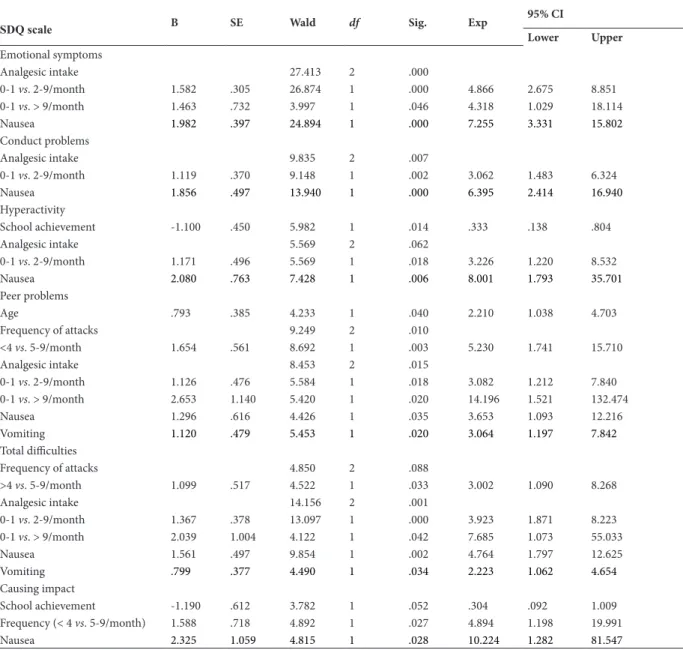
Table 4. Multivariate analyses of determinants of SDQ abnormal scores in children with episodic migraine
SDQ scale B SE Wald df Sig. Exp
95% CI
Lower Upper
Emotional symptoms
Analgesic intake 27.413 2 .000
0-1 vs. 2-9/month 1.582 .305 26.874 1 .000 4.866 2.675 8.851
0-1 vs. > 9/month 1.463 .732 3.997 1 .046 4.318 1.029 18.114
Nausea 1.982 .397 24.894 1 .000 7.255 3.331 15.802
Conduct problems
Analgesic intake 9.835 2 .007
0-1 vs. 2-9/month 1.119 .370 9.148 1 .002 3.062 1.483 6.324 Nausea 1.856 .497 13.940 1 .000 6.395 2.414 16.940
Hyperactivity
School achievement -1.100 .450 5.982 1 .014 .333 .138 .804
Analgesic intake 5.569 2 .062
0-1 vs. 2-9/month 1.171 .496 5.569 1 .018 3.226 1.220 8.532
Nausea 2.080 .763 7.428 1 .006 8.001 1.793 35.701
Peer problems
Age .793 .385 4.233 1 .040 2.210 1.038 4.703
Frequency of attacks 9.249 2 .010
<4 vs. 5-9/month 1.654 .561 8.692 1 .003 5.230 1.741 15.710
Analgesic intake 8.453 2 .015
0-1 vs. 2-9/month 1.126 .476 5.584 1 .018 3.082 1.212 7.840
0-1 vs. > 9/month 2.653 1.140 5.420 1 .020 14.196 1.521 132.474 Nausea 1.296 .616 4.426 1 .035 3.653 1.093 12.216 Vomiting 1.120 .479 5.453 1 .020 3.064 1.197 7.842
Total diiculties
Frequency of attacks 4.850 2 .088
>4 vs. 5-9/month 1.099 .517 4.522 1 .033 3.002 1.090 8.268
Analgesic intake 14.156 2 .001
0-1 vs. 2-9/month 1.367 .378 13.097 1 .000 3.923 1.871 8.223
0-1 vs. > 9/month 2.039 1.004 4.122 1 .042 7.685 1.073 55.033
Nausea 1.561 .497 9.854 1 .002 4.764 1.797 12.625 Vomiting .799 .377 4.490 1 .034 2.223 1.062 4.654
Causing impact
School achievement -1.190 .612 3.782 1 .052 .304 .092 1.009 Frequency (< 4 vs. 5-9/month) 1.588 .718 4.892 1 .027 4.894 1.198 19.991
Nausea 2.325 1.059 4.815 1 .028 10.224 1.282 81.547
Emotional Symptoms
Conduct Problems
Hyperactivity
Peer Problems
Prosocial Behavior
Total Dificulties
Presence of Impact
0 0 1 2
Relative Risk
No Headache Episodic TTH Episodic Migraine
3 4 5
20 40
% 60
achievement (p = .052) and was signiicantly associated
with headache frequency (p < .05) and the occurrence of nausea (p < .05) in headache attacks. Other demographic and migrainous characteristics did not signiicantly contribute to the model (Table 4).
Discussion
Migraine in childhood impacts quality of life (Powers, Patton, Hommel, & Hershey, 2004), school attendance (Abu-Arefeh & Russell, 1994; Arruda & Bigal, 2012a), and school achievement (Arruda & Bigal, 2012a) and is associated with behavioral, emotional, and social problems and competencies (Anttila et al., 2004; Arruda & Bigal, 2012b; Bruijn et al., 2010). To the best of our knowledge the present study is the irst to examine psychological adjustment in preadolescent children with EM and ETTH using the ICHD-2 criteria and SDQ in a large community-based study.
Our indings can be summarized as the following. (1) Relative to controls (children without headache), children with EM were more likely to exhibit the following psychological characteristics that relect dificulties in psychological adjustment: “Often has temper tantrums or hot tempers,” “Often ights with other children or bullies them,” “Often unhappy, down-hearted or tearful,” “Easily distracted, concentration wanders,” “Nervous or clingy in new situations, easily loses conidence,” “Picked on or bullied by other children,” and “Many fears, easily scared.” (2) Compared with controls, children with EM were more likely to have abnormal scores in the following domains: emotional symptoms, conduct problems, total dificulties in psychological adjustment, and the presence of impact secondary to these dificulties. (3) Compared with controls, children with ETTH were signiicantly more likely to have conduct problems. (4) In the multivariate analyses, the total dificulties in psychological adjustment in children with EM were signiicantly inluenced by headache frequency, analgesic intake, and the occurrence of nausea and vomiting in headache attacks. The occurrence of impact caused by dificulties in psychological adjustment was signiicantly inluenced by poor school achievement, headache frequency, and nausea in headache attacks. Other migrainous and demographic characteristics did not signiicantly contribute to the model.
Two main approaches have been used to assess behavioral symptoms in childhood: categorical diagnoses that describe psychopathological states as distinct syndromes and dimensional approaches that view psychopathology as a deviance from normal with no clear threshold between subjects with and without a disorder (Schmeck et al., 2001). The latter approach is used by the SDQ and was adopted by us. An advantage of this approach is that it avoids stigmatization and labeling, which are common risks when conducting behavioral research.
The SDQ is designed to measure psychological adjustment in children and adolescents. Psychometric
evaluations of the instrument have shown satisfactory convergent and discriminant validity, whereas factor analyses have shown mixed results across countries (Stone, Otten, Engels, Vermulst, & Janssens, 2010).
Our indings corroborate the higher prevalence of emotional symptoms in preadolescent children with EM compared with those without headache. Previous populational studies have also shown a higher prevalence of somatic (Anttila, 2004; Laurell, Larsson, & Eeg-Olofsson, 2005) and anxiety-depressive symptoms (Fichtel & Larsson, 2002; Virtanen et al., 2004) in children and adolescents with migraine compared with children without chronic headaches, although controversial indings have been reported concerning children with tension-type headaches (Anttila et al., 2004; Laurell, Larsson, & Eeg-Olofsson, 2004).
In our sample, children with EM were more likely to exhibit social behaviors and conduct problems directly related to bullying which, in turn, are associated with emotional problems and deeply related to an important impact on personal and social life. A recent meta-analysis of clinical studies strongly suggested that children with migraine are not more likely to have problems in thought, social, delinquent, and aggressive domains relative to children without migraine, but they are more likely to have somatic complaints and exhibit internalizing behavior (Bruijn et al., 2010). Our data, therefore, are consistent with previous indings.
The impact of migraine on psychological adjustment in children is rarely documented, and multivariate analyses with adjustments that account for demographics, family income, school achievement, migraine symptoms, and frequency have not been conducted to the best of our knowledge. This is important to disentangle the true drivers of psychological adjustment in children with migraine.
After adjustments, our indings indicate that headache frequency, nausea, vomiting, and analgesic intake were the key determinants of impact. Headache, nausea, and vomiting are considered some of the most frequent functional-somatic symptoms in children and adolescents associated with young-adult psychopathology (Steinhausen, Eschmann, & Metzke, 2007).
The strengths and limitations of our study deserve comment. The strengths include the following: (1) the population nature of our study, (2) the relatively large sample size of preadolescents, (3) the use of validated questionnaires, (4) the strict accordance with standardized criteria for headache diagnosis, (5) the relatively high participation rate, and (6) the use of multivariate adjustments.
ETTHs because we only classiied the most severe type of headache presented by patients. This is a standard method in the ield (Lipton, Stewart, & Simon, 1998); however, by not assessing more than one type of headache, we cannot adjust for whether one headache (ETTH) inluences the association of headache/SDQ scores in children with another type of headache (EM). Another limitation is that the ICHD-2 may have limited value in separating migraine and tension-type headache in young children. In a longitudinal study with 417 children, the ICHD-2 had high speciicity but low sensitivity in diagnosing migraine in childhood (Arruda et al., 2004). Finally, we identiied children registered in the public school system. Although this is a well-established method for investigating the epidemiology of diseases in the pediatric population (Abu-Arefeh, & Russell, 1994; Bille, 1997) because education is mandatory in most countries, children from higher socioeconomic strata are less likely to be enrolled in the public school system. Adjustments are not able to precisely address this issue because all socioeconomic variables would be shifted toward the lower incomes in samples of children from public school only.
In summary, we found that EM was signiicantly associated with dificulties in psychological adjustment in preadolescent children. Speciically, children with migraine were more likely to present emotional and conduct symptoms that impact their ability to master to some need or stress in the environment. The association between these psychological dificulties and the burden caused by migraine itself may perpetuate both conditions. Providers should be aware of this possibility in children with migraine to properly address the problem. Long-term longitudinal studies are needed to study causality, investigate predictive validity, and clarify the effect of prophylactic treatment in psychological adjustment in children with migraine.
References
Abu-Arafeh, I., Razak, S., Sivaraman, B., & Graham, C. (2010). Prevalence of headache and migraine in children and adolescents: A systematic review of population-based studies. Developmental Medicine and Child Neurology, 52(12), 1088-1097.
Abu-Arefeh, I., & Russell, G. (1994). Prevalence of headache and migraine in schoolchildren. British Medical Journal, 309(6957), 765-769.
Akinbami, L. J., Liu, X., Pastor, P. N., & Reuben, C. A. (2011).
Attention deicit hyperactivity disorder among children aged 5-17
years in the United States, 1998-2009. NCHS Data Brief, 70, 1-8. American Psychiatric Association (1994). Diagnostic and statistical
manual of mental disorders, 4th edition. Washington, D.C.: American Psychiatric Press.
Andrasik, F., Kabela, E., Quinn, S., Attanasio, V., Blanchard, E. B., & Rosenblum, E. L. (1988). Psychological functioning of children who have recurrent migraine. Pain, 34(1), 43-52.
Anttila, P. (2004). Tension-type headache in children and adolescents. Current Pain and Headache Reports, 8(6), 500-504.
Anttila, P., Sourander, A., Metsahonkala, L., Aromaa, M., Helenius, H., & Sillanpaa, M. (2004). Psychiatric symptoms in children with primary headache. Journal of the American Academy of Child and Adolescent Psychiatry, 43(4), 412-419.
Arruda, M. A. (2009). Aprender Criança. [www.aprendercrianca.com. br; accessed October 14, 2013]
Arruda, M. A., & Bigal, M. E. (2012a). Migraine and migraine subtypes in pre-adolescent children: association with school performance. Neurology, 79(18), 1881-1888.
Arruda, M. A., & Bigal, M. E. (2012b). Behavioral and emotional symptoms and primary headaches in children: a population-based study. Cephalalgia, 32(15), 1093-1100.
Arruda, M. A., Bordini, C. A., Ciciarelli, M. C., & Speciali, J. G. (2004). Decreasing the minimal duration of the attack to 1 hour: Is
this suficient to increase the sensitivity of the ICHD-II diagnostic
criteria for migraine in childhood? Journal of Headache and Pain, 5(2), 131-136.
Arruda, M. A., Guidetti, V., Galli, F., Albuquerque, R. C., & Bigal, M. E. (2010a). Primary headaches in childhood: A population-based study. Cephalalgia, 30(9), 1056-1064.
Arruda, M. A., Guidetti, V., Galli, F., Albuquerque, R. C., & Bigal, M.
E. (2010b). Migraine, tension-type headache, and attention-deicit/
hyperactivity disorder in childhood: A population-based study. Postgraduate Medicine, 122(5), 18-26.
Bigal, M., Krymchantowski, A. V., & Lipton, R. B. (2009). Barriers to satisfactory migraine outcomes: What have we learned, where do we stand? Headache, 49(7), 1028-1041.
Bille, B. (1962). Migraine in school children: a study of the incidence and short-term prognosis, and a clinical, psychological and electroencephalographic comparison between children with migraine and matched controls. Acta Paediatrica Suppplementum, 136, 1-151.
Bille, B. (1997). A 40-year follow-up of school children with migraine. Cephalalgia, 17(4), 488-491; discussion 487.
Bruijn, J., Locher, H., Passchier, J., Dijkstra, N., & Arts, W. F. (2010). Psychopathology in children and adolescents with migraine in clinical studies: A systematic review. Pediatrics, 126(2), 323-332. Dickey, W. C., & Blumberg, S. J. (2004). Revisiting the factor
structure of the Strengths and Dificulties Questionnaire: United
States, 2001. Journal of the American Academy of Child and Adolescent Psychiatry, 43(9), 1159-1167.
Epstein, J. N., Langberg, J. M., Lichtenstein, P. K., Kolb, R., Altaye, M., & Simon, J. O. (2011). Use of an Internet portal to improve community-based pediatric ADHD care: A cluster randomized trial. Pediatrics, 128(5), E1201-E1208.
Fichtel, A., & Larsson, B. (2002). Psychosocial impact of headache and comorbidity with other pains among Swedish school adolescents. Headache, 42(8), 766-775.
Fleitlich-Bilyk, B., & Goodman, R. (2004). Prevalence of child and adolescent psychiatric disorders in southeast Brazil. Journal of the American Academy of Child and Adolescent Psychiatry, 43(6), 727-734.
Galli, F., Canzano, L., Scalisi, T. G., & Guidetti, V. (2009). Psychiatric disorders and headache familial recurrence: A study on 200 children and their parents. Journal of Headache and Pain, 10(3), 187-197. Galli, F., D’Antuono, G., Tarantino, S., Viviano, F., Borrelli, O.,
Chirumbolo, A., Cucchiara, S., & Guidetti, V. (2007). Headache and recurrent abdominal pain: A controlled study by the means of the Child Behaviour Checklist (CBCL). Cephalalgia, 27(3), 211-219. Goodman, A., Lamping, D. L., & Ploubidis, G. B. (2010). When to
use broader internalizing and externalizing subscales instead of
the hypothesized ive subscales on the Strengths and Dificulties
Questionnaire (SDQ): Data from British parents, teachers and children. Journal of Abnormal Child Psychology, 38(8), 1179-1191. Goodman, J. E., & McGrath, P. J. (1991). The epidemiology of pain in
children and adolescents: a review. Pain, 46(3), 247-264.
Goodman, R., Neves dos Santos, D., Robatto Nunes, A. P., Pereira de Miranda, D., Fleitlich-Bilyk, B., & Almeida Filho, N. (2005). The Ilha de Maré study: A survey of child mental health problems in a predominantly African-Brazilian rural community. Social Psychiatry and Psychiatric Epidemiology, 40(1), 11-17.
Guidetti, V., Galli, F., Fabrizi, P., Giannantoni, A. S., Napoli, L., Bruni, O., & Trillo, S. (1998). Headache and psychiatric comorbidity: clinical aspects and outcome in an 8-year follow-up study. Cephalalgia, 18(7), 455-462.
Headache Classiication Subcommittee of the International Headache Society (2004). The International Classiication of Headache
Instituto Brasileiro de Geografia e Estatística (2009). Estatística da
População Brasileira. [http://www.ibge.gov.br/home/estatistica/
populacao/estimativa2008/POP2008_DOU.pdf; accessed October
14, 2013].
Lanzi, G., Zambrino, C. A., Ferrari-Ginevra, O., Termine, C., D’Arrigo, S., Vercelli, P., De Silvestri, A., & Guglielmino, C. R. (2001). Personality traits in childhood and adolescent headache. Cephalalgia, 21(1), 53-60.
Laurell, K., Larsson, B., & Eeg-Olofsson, O. (2004). Prevalence of headache in Swedish schoolchildren, with a focus on tension-type headache. Cephalalgia, 24(5), 380-388.
Laurell, K., Larsson, B., & Eeg-Olofsson, O. (2005). Headache in schoolchildren: Association with other pain, family history and psychosocial factors. Pain, 119(1-3), 150-158.
Lavigne, J. V., & Faier-Routman, J. (1992). Psychological adjustment to pediatric physical disorders: A meta-analytic review. Journal of Pediatric Psychology, 17(2), 133-157.
Lipton, R. B., Diamond, S., Reed, M., Diamond, M. L., & Stewart, W. F. (2001). Migraine diagnosis and treatment: results from the American Migraine Study II. Headache, 41(7), 638-645.
Lipton, R. B., & Silberstein, S. D. (1994). Why study the comorbidity of migraine? Neurology, 44(10 Suppl. 7), S4-S5.
Lipton, R. B., Stewart, W. F., & Simon, D. (1998). Medical consultation for migraine: Results from the American Migraine Study. Headache, 38(2), 87-96.
Mazzone, L., Vitiello, B., Incorpora, G., & Mazzone, D. (2006). Behavioural and temperamental characteristics of children and adolescents suffering from primary headache. Cephalalgia, 26(2), 194-201.
Perquin, C. W., Hunfeld, J. A., Hazebroek-Kampschreur, A. A., van Suijlekom-Smit, L. W., Passchier, J., Koes, B. W., & van der Wouden, J. C. (2001). Insights in the use of health care services in chronic benign pain in childhood and adolescence. Pain, 94(2), 205-213. Powers, S. W., Patton, S. R., Hommel, K. A., & Hershey, A. D.
(2003). Quality of life in childhood migraines: Clinical impact and comparison to other chronic illnesses. Pediatrics, 112(1 Pt 1), e1-e5.
Powers, S. W., Patton, S. R., Hommel, K. A., & Hershey, A. D. (2004). Quality of life in paediatric migraine: Characterization of age-related effects using PedsQL 4.0. Cephalalgia, 24(2), 120-127.
Queiroz, L. P., Peres, M. F., Kowacs, F., Piovesan, E. J., Ciciarelli, M. C., Souza, J. A., & Zukerman, E. (2008). Chronic daily headache in Brazil: A nationwide population-based study. Cephalalgia, 28(12), 1264-1269.
Saper, J. R. (1983). Headache disorders: Current concepts and treatment strategies. Boston: John Wright.
Sarbin, T. R. (1940). Adjustment on psychology. Character and Personality, 8(3), 240-249.
Schmeck, K., Poustka, F., Dopfner, M., Pluck, J., Berner, W., Lehmkuhl, G., Fegert, J. M., Lenz, K., Huss, M., & Lehmkuhl, U. (2001). Discriminant validity of the child behaviour checklist
CBCL-4/18 in German samples. European Child and Adolescent Psychiatry, 10(4), 240-247.
Steinhausen, H. C., Eschmann, S., & Metzke, C. W. (2007). Continuity, psychosocial correlates, and outcome of problematic substance use from adolescence to young adulthood in a community sample. Child and Adolescent Psychiatry and Mental Health, 1(1), 12.
Stone, L. L., Otten, R., Engels, R. C., Vermulst, A. A., & Janssens, J. M. (2010). Psychometric properties of the parent and teacher
versions of the strengths and dificulties questionnaire for 4- to
12-year-olds: a review. Clinical Child and Family Psychology Review, 13(3), 254-274.
Vannatta, K., Getzoff, E. A., Powers, S. W., Noll, R. B., Gerhardt, C. A., & Hershey, A. D. (2008). Multiple perspectives on the psychological functioning of children with and without migraine. Headache, 48(7), 994-1004.