Rev Odontol UNESP. 2016 July-Aug; 45(4): 234-239 © 2016 - ISSN 1807-2577
ORIGINAL ARTICLE
Doi: http://dx.doi.org/10.1590/1807-2577.09216
Evaluation of coconut water neutralized by diferent agents on the
viability of human ibroblasts: an in vitro study
Avaliação da água de coco neutralizada por diferentes agentes na viabilidade de
ibroblastos humanos: estudo in vitro
Priscilla Barbosa Ferreira SOARES
a, Aletheia Moraes ROCHA
a, Manuella Verdinelli de Paula REIS
a,
Camilla Christian Gomes MOURA
a, Carlos José SOARES
a*
aFaculdade de Odontologia, UFU – Universidade Federal de Uberlândia, Uberlândia, MG, Brasil
Resumo
Objetivo: Avaliar a eficácia de quatro tipos de substâncias usadas para ajuste do pH da água de coco (AC) sobre a viabilidade de fibroblastos humanos (HFF). Material e método: O pH da AC natural e industrializada foi ajustado para pH 7,0 utilizando: (1) Hidróxido de Sódio (NaOH), (2) bicarbonato de sódio (NaHCO3), (3) Trietanolamina (C6H15NO3), (4) 2-Amino-2- Methil-1-propanol (C4H11NO). Células HFF foram plaqueadas em 2×10⁴ células/poço
em placas de 96 poços e mantidas nas diferentes soluções de AC acima durante 2 h e 4 h. Controle positivo foi representado por HFF mantidas em DMEM e o controle negativo por água da torneira. A viabilidade celular foi avaliada pelo método de MTT Formazan. Os dados foram analisados por 3-way ANOVA seguido pelo teste de Tukey e Dunnett. Resultado: A viabilidade celular não é influenciada pelo período de avaliação, e as interações entre AC e período de avaliação, AC e método de ajuste de pH, método de ajuste de pH e período de avaliação (p>0,05). Conclusão: O produto utilizado para ajuste do pH não interfere na viabilidade de FH, embora, haja uma tendência de melhor desempenho em AC natural.
Descritores: Avulsão dentária; água de coco; viabilidade celular.
Abstract
Objective: This study evaluated four types of pH adjustment of the coconut water (CW) on viability of human fibroblasts (HFF). Material and method: Natural and industrialized CW were adjusted to pH 7.0 using: (1) Sodium Hidroxide (NaOH), (2) Sodium bicarbonate (NaHCO3), (3) Triethanolamine (C6H15NO3), (4) 2-Amino-2-Methil-1-Propanol (C4H11NO). Fibroblasts were plated at 2×10⁴/ well in 96 well plates and maintained in the CW solutions for
2 h and 4 h. Positive control was represented by HFF maintained in DMEM and the negative control by tap water. Cell viability was analyzed by MTT formazan method. Data were analyzed by 3-way ANOVA followed by Tukey’s and Dunnet’s test. Result: There are no significant effect on the cell viability regarding type of CW, period of evaluation, and the interactions between CW and period of evaluation, CW and pH adjustment method, pH adjustment method and period of evaluation (p>0.05). Conclusion: The product used for CW pH adjustment did not influenced HFF viability, thought there are a tendency of better performance in natural CW.
Descriptors: Tooth avulsion; coconut water; cell viability.
INTRODUCTION
Tooth avulsion is an injury characterized by the complete displacement of a tooth from its alveolar socket, which oten results in damage to the periodontal ligament (PDL) cells and pulp necrosis1. he ideal treatment is immediate replantation2,3, though
it is not always possible3-5. he most critical factors afecting the
avulsed tooth are the extra-alveolar period and the dry conditions to which the tooth is subject until treatment is rendered3-5. Such
conditions afect the survival of PDL cells resulting in ankylosis and subsequent replacement resorption6.
Hence, the choice of a storage medium, for maximum PDL cell survival until replantation, is crucial for a good prognosis7. he ideal
storage media should present biocompatibility, sterility, pH 6.0-7.0, physiologic osmolarity, and nutrients5 which maintain cell viability.
Solution (HBSS), Gatorade®, propolis8,9, soy milk10,11, and coconut
water (CW)11-15.
Recently, some studies11-15 have proposed CW as a promising
storage medium for avulsed teeth. he natural, fresh and tender CW is a sterile solution, with physiological osmolarity used in the past as a blood plasma substitute16. It can replace luids, amino
acids (lysine, cystine, phenylalanine, histidine, and tryptophan), sugars (fructose and glucose), and electrolytes (potassium, calcium, and magnesium)12. All these properties may explain its ability to
preserve cell viability12,13,17. Despite the favorable characteristics
of CW, studies involving this solution as a storage medium have shown contradictory results. Some studies report that CW showed better performance than other storage media such as HBSS or milk in terms of maintaining PDL cell viability ater avulsion11-13,15,18;
another study addressed low capability to preserve cells14. he pH
adjustment of this solution seems to be an indispensable stage for its production at an industrial scale9. he agents used to neutralize
the pH of coconut water must be stable over time and have no negative inluence on the osmolarity. Another important factor is the possible diference regarding properties of natural versus industrialized coconut water, which may inluence the inal results19.
herefore, the purpose of this in vitro study was to evaluate the inluence of diferent coconut water pH control agents on the viability of human ibroblasts (HFF), and their long-term stability. Two hypotheses were tested: 1) natural coconut water will provide better results because it does not have the preservatives used in the process of industrialized coconut water; 2) triethanolamine and amino methyl propanol provide more promising results than sodium hydroxide and sodium bicarbonate because they are weak alkaline compounds and, consequently, may not have a signiicant efect on the osmolarity, resulting in less pH variation over time.
MATERIAL AND METHOD
Natural (NCW) and industrialized coconut water (ICW) (Ducoco®, Linhares, ES, Brazil) were adjusted to pH 7.0, measured with a digital pH meter (mPA-210; MS TECNOPON, Piracicaba, SP, Brasil), at room temperature using: (1) Sodium Hydroxide (NaOH) 1M (Fmaia, Zilquimica, Ribeirão Preto, SP, Brazil), (2) Sodium bicarbonate (NaHCO3) 1M (Fmaia), (3) Triethanolamine (TEA) (C6H15NO3) 1M (Bothanica, Uberlândia, MG, Brazil), and (4) Amino methyl propanol (AMP) (C4H11NO) 1M (Farmácia de Manipulação Oriente, Uberaba, MG, Brazil).
Immortalized human skin ibroblasts (HFF) (Cell Bank of Rio de Janeiro, Rio de Janeiro, RJ, Brazil) were cultured in T-25 cell culture lasks containing Dulbecco’s Modiied Eagle Medium (DMEM) (Sigma Chemical Co., St. Louis, MO, USA) supplemented with 10% fetal bovine serum (FBS) (Invitrogen, Branchburg, NJ, USA), 100 units mL-1 of penicillin/streptomycin (Sigma) in a
humidiier incubator with 5% CO2, and 95% air at 37 °C. Growth was permitted until the cells achieved conluence. hese cells were detached, counted using a hemocytometer, and plated in 96-well plates (Coastar Corp., Cambridge, MA, USA) at an initial density of 1×10⁴ cells/well in 100 µL of culture medium. he plates were
returned to the incubator for 24 h. Subsequently, the culture medium was drained from each well and the cells were exposed
for 2 hours and 6 hours to 100 µL of CW, DMEM or tap water, and divided into the following experimental groups: NCW; ICW; NCW neutralized with NaOH (NCW+NaOH); ICW neutralized with NaOH (ICW+NaOH); NCW neutralized with NaHCO3 (NCW+NaHCO3); ICW neutralized with NaHCO3 (ICW+NaHCO3); NCW neutralized with Triethanolamine (NCW+TEA); ICW neutralized with triethanolamine (ICW+TEA); NCW neutralized with amino methyl propanol (NCW+AMP); and ICW neutralized adjusted with amino methyl propanol (ICW+AMP). he positive control corresponded to cells maintained in DMEM 10% of FBS, and the negative control group corresponded to cells maintained in tap water.
he pH was measured with a pH meter (mPA-210; São Paulo/SP, Brazil) in the NCW and ICW and, immediately ater, substances to adjust the pH were added, and then for all the analyzed periods (2 hours and 4 hours), to provide long-term pH variation. Cell viability was determined by the MTT Formazan assay (Sigma). At the conclusion of the experimental periods, the storage solutions were replaced with 100 µL of DMEM 10% and incubated with MTT solution (5 mg. mL–1) for 4 h. he same protocol was
used for the positive and negative control groups. Ater this period, the MTT solution was removed and 100 µL of dimethyl sulfoxide (Sigma) were added to each well. Cell viability was determined by measuring the optical density at 540 nm using a microplate reader (Asyz UVM 340; Biochrom, Cambridge, England). he absolute values of absorbance obtained from each well, for each group, at all experimental times, were subjected to analysis of normality. he goal of the initial analysis was to determine the inluence of the 2 factors involved in cell viability: the pH adjustment method and the period of evaluation. Osmolarity was measured using a cooling digital osmometer (Peltier; Roebling, Germany) immediately ater pH adjustment substances were added. Cell viability and pH variation over the analyzed periods were performed using two-way ANOVA and, for the data of osmolarity, using one-way ANOVA. Dunnett’s test was used to compare the control with the experimental groups. he statistical analysis showed signiicant diference, for α=0.05.
RESULT
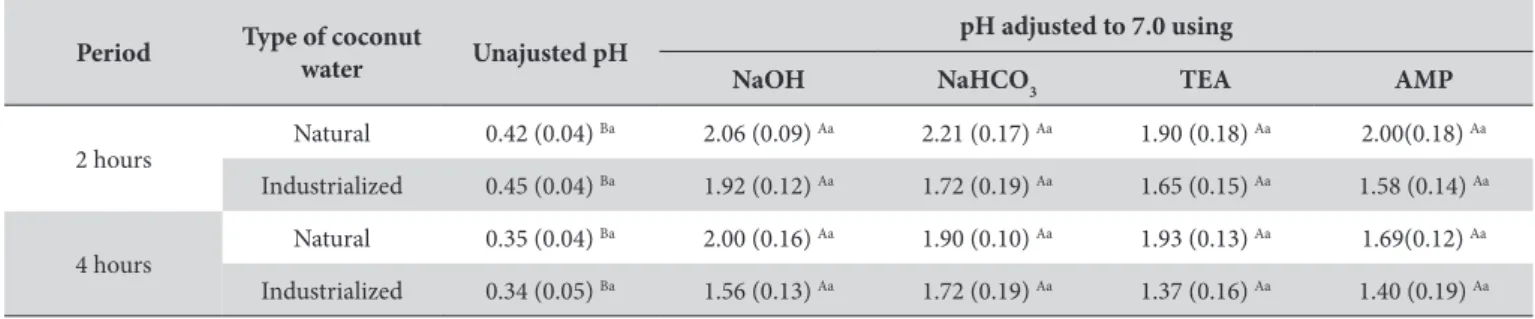
Table 1. Means and standard deviations for the number of viable cells and statistical category determined by Tukey’s test (α=0.05)
Period Type of coconut
water Unajusted pH
pH adjusted to 7.0 using
NaOH NaHCO3 TEA AMP
2 hours Natural 0.42 (0.04)
Ba 2.06 (0.09) Aa 2.21 (0.17) Aa 1.90 (0.18) Aa 2.00(0.18) Aa
Industrialized 0.45 (0.04) Ba 1.92 (0.12) Aa 1.72 (0.19) Aa 1.65 (0.15) Aa 1.58 (0.14) Aa
4 hours Natural 0.35 (0.04)
Ba 2.00 (0.16) Aa 1.90 (0.10) Aa 1.93 (0.13) Aa 1.69(0.12) Aa
Industrialized 0.34 (0.05) Ba 1.56 (0.13) Aa 1.72 (0.19) Aa 1.37 (0.16) Aa 1.40 (0.19) Aa
Diferent letters indicate signiicant diferences veriied by ANOVA two-way and Tukey’s test (P<0.05). Capital letters represent comparisons between the pH adjustment method (in columns rows), and lower case letters represent comparisons between the type of coconut water (in rows columns). No signiicant diference was found between period of evaluation.
Table 2. Means and standard deviations (SD) of the number of viable cells for the control and experimental groups for the period of 2 hours, with P values calculated by the Dunnett’s test
Groups Means (SD) P value Positive Control
P Value Negative Control
Positive control group 2.76 (0.15) - P<0.01*
Negative control group 0.15 (0.00) P<0.01*
-Natural with unajusted pH 0.42 (0.04) P<0.01* P=0.41
Industrialized with unajusted pH 0.45 (0.04) P<0.01* P=0.40
Natural + pH adjusted with NaOH 2.06 (0.09) P=0.45 P<0.01*
Industrialized + pH adjusted with NaOH 1.92 (0.20) P=0.33 P<0.01*
Natural + pH adjusted with NaHCO3 2.21 (0.27) P=0.65 P<0.01*
Industrialized + pH adjusted with NaHCO3 1.72 (0.19) P=0.28 P<0.01*
Natural + pH adjusted with TEA 1.90 (0.28) P=0.31 P<0.01*
Industrialized + pH adjusted with TEA 1.65 (0.15) P=0.12 P<0.01*
Natural + pH adjusted with AMP 2.03 (0.18) P=0.44 P<0.01*
Industrialized + pH adjusted with AMP 1.58 (0.14) P=0.10 P<0.01*
* Indicates a signiicant diference between the experimental group and the control group.
Table 3. Means and standard deviations (SD) of the number of viable cells for the control and experimental groups for the period of 4 hours, with P values calculated by the Dennett’s test
Groups Means (SD) P value Positive Control
P Value Negative Control
Positive control group 1.91 (1.14) - P<0.01*
Negative control group 0.15 (0.02) P<0.01*
-Natural with unajusted pH 0.35 (0.04) P<0.01* P=0.51
Industrialized with unajusted 0.34 (0.05) P<0.01* P=0.50
Natural + pH adjusted with NaOH 2.00 (0.36) P=0.87 P<0.01*
Industrialized + pH adjusted with NaOH 1.56 (0.13) P=0.65 P<0.01*
Natural + pH adjusted with NaHCO3 1.80 (0.30) P=0.74 P<0.01*
Industrialized + pH adjusted with NaHCO3 1.72 (0.19) P=0.69 P<0.01*
Natural + pH adjusted with TEA 1.93 (0.13) P=0.97 P<0.01*
Industrialized + pH adjusted with TEA 1.37 (0.16) P=0.23 P<0.01*
Natural + pH adjusted with AMP 1.65 (0.22) P=0.71 P<0.01*
Industrialized + pH adjusted with AMP 1.43 (0.19) P=0.34 P<0.01*
also showed that NCW, ICW and ICW +TEA had signiicantly higher cell viability than the positive control group (Table 3, p<0.05). he negative control group showed the lowest level of cell viability among the experimental groups (Tables 2-4, p>0.05). he osmolarity values ranged from 442.3±21.4 for ICW+AMP to 496.7±17.0 for NCW+NaHCO3, with no signiicant diferences among all tested groups.
DISCUSSION
he irst hypothesis was not supported because the NCW did not show better results than the ICW regardless of the neutralizing solution used. hese indings indicate that the industrialization process does not have a negative impact on CW properties regarding long-term cell viability. he second hypothesis was not supported because the AMP and the TEA groups showed results of cell viability similar to the NaOH and NaHCO3 groups.
Tender CW is sterile as long as it remains in the inner cavity of the nut. As soon as the nut is opened its biological composition and physical appearance begin to change20. hat is why several methods
have been used to preserve the CW, resulting in a viable solution for human consumption. In Brazil, the conservation methods of CW are applied in synergism (lash pasteurization + use of additives + cooling) to avoid deterioration and loss of quality during storage21.
According to the manufacturer’s speciications for the ICW used in the present study, fructose and sodium metabisulphite were added during the formulation process. Based on this information, it was hypothesized that the additives used in the manufacture of this CW could decrease its ability to maintain cell viability. However, the ability to maintain cell viability did not difer between groups using NCW and groups using ICW. his study postulated that the use of pH neutralizing agents may result in undesirable changes in osmolarity. his is a negative factor, since it is known that physiological osmolarity is one of the key parameters for the choice of a storage medium22,23. Osmolality values measured in
this study were higher than in other studies12,24, especially in the
ICW groups. However, the osmolality values did not vary with the addition of neutralizing agents. Most studies evaluating CW
as a storage medium for avulsed teeth did not investigate the pH neutralization18,24. To date, only three studies have been concerned
with adjusting the pH to physiological conditions11,14,15. However,
these studies have not compared the efects of other neutralizer agents, potentially applicable for this purpose, in order to better preserve the CW properties. In spite of the inluence of pH and the industrialization process on CW characteristics, its ability to replace luids and nutrients justiies the great interest in this solution in recent years11,17,18,24.
he present study conirmed the need to neutralize the pH of CW so that it becomes an efective storage medium. In the present study, the substances used to neutralize pH are widely used in industrial and laboratorial scales. NaOH and NaHCO3, in the presence of water, dissociate generating anions by an exothermic reaction. hus, it was expected that the generation of anions may interfere negatively in the long-term stability of pH. his expectation was refuted in the present study because the solutions using NaOH or NaHCO3 showed similar results to the AMP and TEA groups for both periods analyzed (2 and 4 hours). TEA and AMP are amines widely used as pH neutralizers in the cosmetics industry. Like other amines, they are weak bases that might promote low ionic dissociation which could inluence pH stability. However, the results of the present study demonstrated that these amines show similar results to NaOH, NaHCO3, and the control group. hese results corroborate previous studies in which NCW+TEA showed viability values similar to the positive control group1. Regardless
of the methodological limitations inherent in any in vitro study, these studies are useful in preliminary analyses, and for guiding further in vivo studies. he immortalized cell culture reduces the need for using large amounts of replicates for statistical validation of the results. Various in vitro studies evaluating interim storage media have used this experimental model, due to their ability to multiply rapidly and their unlimited lifespan14,17,24.
Based on the results presented here, we can conclude that all the analyzed solutions can be used for the pH adjustment of CW since they present higher viability than the negative control group and similar results to the positive control group. As presented in the present study, the industrialization process did not inluence
Table 4. Means and standard deviations for the pH variation over the analyzed periods of time and statistical category determined by Tukey’s test (α=0.05)
Period Type of
coconut water Unajusted pH
pH adjusted to 7.0 using
NaOH NaHCO3 TEA AMP
0 hours Natural 5.5 (0.5)
Aa 7.0 (0.0) B 7.0 (0.0) Bb 7.0 (0.0) Bb 7.0 (0.0) Bb
Industrialized 5.4 (0.4) Aa 7.0 (0.0) B 7.0 (0.0) Bb 7.0 (0.0) Bb 7.0 (0.0) Bb
2 hours Natural 5.6 (0.4)
Ab 7.1 (0.1) B 7.2 (0.2) Bb 7.1 (0.1) Bb 7.2 (0.1) Bb
Industrialized 5.5 (0.4) Ab 7.1 (0.1) B 7.2 (0.2) Bb 7.2 (0.0) Bb 7.2 (0.0) Bb
4 hours Natural 5.6 (0.4)
Ac 7.3 (0.1) B 7.5 (0.2) Bb 7.3 (0.1) Bb 7.3 (0.1) Bb
Industrialized 5.5 (0.3) Ac 7.3 (0.0) B 7.6 (0.1) Bb 7.4 (0.1) Bb 7.3 (0.1) Bb
cell viability negatively. hus, all the eforts should focus on the possibility of developing an industrial product made of CW with pH adjusted to 7.0 in order to facilitate access to this product by the population, which would not need to be concerned about the seasonal availability of the coconut or about the pH neutralization process.
CONCLUSION
he results of this study indicate that pH adjusted NCW tended to show better performance than the ICW regarding long-term cell viability, independently of the solution used for the pH adjustment.
REFERENCES
1. Rajendran P, Varghese NO, Varughese JM, Murugaian E. Evaluation, using extracted human teeth, of Ricetral as a storage medium for avulsions: an in vitro study. Dent Traumatol. 2011 Jun;27(3):217-20. http://dx.doi.org/10.1111/j.1600-9657.2011.00988.x. PMid:21535405. 2. Andreasen JO. Effect of extra-alveolar period and storage media upon periodontal and pulpal healing after replantation of mature permanent
incisors in monkeys. Int J Oral Surg. 1981 Feb;10(1):43-53. http://dx.doi.org/10.1016/S0300-9785(81)80007-5. PMid:6792094.
3. Trope M. Avulsion of permanent teeth: theory to practice. Dent Traumatol. 2011 Aug;27(4):281-94. http://dx.doi.org/10.1111/j.1600-9657.2011.01003.x. PMid:21635689.
4. Andreasen JO, Andreasen FM, Skeie A, Hjørting-Hansen E, Schwartz O. Effect of treatment delay upon pulp and periodontal healing of traumatic dental injuries: a review article. Dent Traumatol. 2002 Jun;18(3):116-28. http://dx.doi.org/10.1034/j.1600-9657.2002.00079.x. PMid:12110104.
5. Souza BD, Lückemeyer DD, Felippe WT, Simões CM, Felippe MC. Effect of temperature and storage media on human periodontal ligament fibroblast viability. Dent Traumatol. 2010 Jun;26(3):271-5. http://dx.doi.org/10.1111/j.1600-9657.2010.00886.x. PMid:20572843.
6. Lindskog S, Blomlöf L, Hammarström L. Mitoses and microorganisms in the periodontal membrane after storage in milk or saliva. Scand J Dent Res. 1983 Dec;91(6):465-72. PMid:6581523.
7. Ozan F, Polat ZA, Er K, Ozan U, Değer O. Effect of propolis on survival of periodontal ligament cells: new storage media for avulsed teeth. J Endod. 2007 May;33(5):570-3. http://dx.doi.org/10.1016/j.joen.2006.12.021. PMid:17437874.
8. Goswami M, Chaitra TR, Chaudhary S, Manuja N, Sinha A. Strategies for periodontal ligament cell viability: An overview. J Conserv Dent. 2011 Jul-Sep;14(3):215-20. http://dx.doi.org/10.4103/0972-0707.85789. PMid:22025820.
9. Udoye CI, Jafarzadeh H, Abbott PV. Transport media for avulsed teeth: a review. Aust Endod J. 2012 Dec;38(3):129-36. http://dx.doi. org/10.1111/j.1747-4477.2012.00356.x. PMid:23211073.
10. Moura CC, Soares PB, Reis MV, Fernandes AJ No, Soares CJ. Soy milk as a storage medium to preserve human fibroblast cell viability: an in vitro study. Braz Dent J. 2012;23(5):559-63. http://dx.doi.org/10.1590/S0103-64402012000500015. PMid:23306234.
11. Moura CC, Soares PB, Reis MVP, Fernandes Neto AJ, Barbosa DZ, Soares CJ. Potential of coconut water and soy milk for use as storage media to preserve the viability of periodontal ligament cells: an in vitro study. Dent Traumatol. 2014 Feb;30(1):22-6. http://dx.doi.org/10.1111/ edt.12042. PMid:23566116.
12. Gopikrishna V, Thomas T, Kandaswamy D. A quantitative analysis of coconut water: a new storage media for avulsed teeth. Oral Surg Oral Med Oral Pathol Oral Radiol Endod. 2008 Feb;105(2):e61-5. http://dx.doi.org/10.1016/j.tripleo.2007.08.003. PMid:18230380.
13. Gopikrishna V, Baweja PS, Venkateshbabu N, Thomas T, Kandaswamy D. Comparison of coconut water, propolis, HBSS, and milk on PDL cell survival. J Endod. 2008 May;34(5):587-9. http://dx.doi.org/10.1016/j.joen.2008.01.018. PMid:18436040.
14. Moreira-Neto JJ, Gondim JO, Raddi MS, Pansani CA. Viability of human fibroblasts in coconut water as a storage medium. Int Endod J. 2009 Sep;42(9):827-30. http://dx.doi.org/10.1111/j.1365-2591.2009.01591.x. PMid:19549148.
15. Reis MVP, Moura CC, Soares PB, Leoni GB, Souza-Neto MD, Barbosa DZ, et al. Histologic and micro-computed tomographic analyses of replanted teeth stored in different kind of media. J Endod. 2014 May;40(5):665-9. http://dx.doi.org/10.1016/j.joen.2013.09.023. PMid:24767561. 16. Campbell-Falck D, Thomas T, Falck TM, Tutuo N, Clem K. The intravenous use of coconut water. Am J Emerg Med. 2000 Jan;18(1):108-11.
http://dx.doi.org/10.1016/S0735-6757(00)90062-7. PMid:10674546.
17. Thomas T, Gopikrishna V, Kandaswamy D. Comparative evaluation of maintenance of cell viability of an experimental transport media “coconut water” with Hank’s balanced salt solution and milk, for transportation of an avulsed tooth: An in vitro cell culture study. J Conserv Dent. 2008 Jan-Mar;11(1):22-9. http://dx.doi.org/10.4103/0972-0707.43414. PMid:20142880.
18. Sanghavi T, Shah N, Parekh V, Singbal K. Evaluation and comparison of efficacy of three different storage media, coconut water, propolis, and oral rehydration solution, in maintaining the viability of periodontal ligament cells. J Conserv Dent. 2013 Jan;16(1):71-4. http://dx.doi. org/10.4103/0972-0707.105303. PMid:23349581.
19. Souza BD, Lückemeyer DD, Reyes-Carmona JF, Felippe WT, Simões CM, Felippe MC. Viability of human periodontal ligament fibroblasts in milk, Hank’s balanced salt solution and coconut water as storage media. Int Endod J. 2011 Feb;44(2):111-5. http://dx.doi.org/10.1111/j.1365-2591.2010.01809.x. PMid:21083571.
20. Prades A, Dornier M, Diop N, Pain J-P. Coconut water preservation and processing: a review. Fruits. 2012 May-Jun;67(3):157-71. http:// dx.doi.org/10.1051/fruits/2012009.
22. Blomlöf L. Milk and saliva as possible storage media for traumatically exarticulated teeth prior to replantation. Swed Dent J Suppl. 1981;8:1-26. PMid:6942523.
23. Blomlöf L. Storage of human periodontal ligament cells in a combination of different media. J Dent Res. 1981 Nov;60(11):1904-6. http:// dx.doi.org/10.1177/00220345810600111301. PMid:6945330.
24. Silva EJ, Rollemberg CB, Coutinho-Filho TS, Zaia AA. A multiparametric assay to compare the cytotoxicity of soy milk with different storage media. Dent Traumatol. 2013 Aug;29(4):319-22. http://dx.doi.org/10.1111/j.1600-9657.2012.01175.x. PMid:22882901.
CONFLICTS OF INTERESTS
he authors declare no conlicts of interest.
*CORRESPONDING AUTHOR
Carlos José Soares, Departamento de Dentística e Materiais Odontológicos, UFU – Universidade Federal de Uberlândia, Avenida Pará, 1720, Bloco 2B, Campus Umuarama, 38400-902 Uberlândia - MG, Brasil, e-mail: [email protected]