Case Report
Major Article
http://dx.doi.org/10.1590/0037-8682-0124-2013INTRODUCTION
Address to: Dr. Roberto Martinez. Divisão de Moléstias Infeciosas e Tropicais/
FMRP/USP. Av. Bandeirantes 3900, 14048-900 Ribeirão Preto, SP, Brasil.
Phone: 55 16 3602-2468
e-mail: [email protected]
Received 12 June 2013
Accepted 26 July 2013
Histoplasmosis in immunocompetent individuals living
in an endemic area in the Brazilian Southeast
Rivian Christina Lopes Faiolla
[1],
Mariana Correa Coelho
[1],
Rodrigo de Carvalho Santana
[1]and Roberto Martinez
[1][1]. Divisão de Moléstias Infecciosas e Tropicais, Departamento de Clínica Médica, Hospital das Clínicas, Faculdade de Medicina de Ribeiro Preto, Universidade de São Paulo, Ribeirão Preto, SP.
ABSTRACT
Introduction: The distribution of infection by Histoplasma capsulatum in Brazil is heterogeneous, and the number of cases affecting immunocompetent individuals is relatively small. This study reports the epidemiological and clinical data regarding histoplasmosis in non-immunosuppressed individuals. Methods: The study included only the immunocompetent patients with histoplasmosis who were diagnosed between 1970 and 2012 at a university hospital located in Ribeirão Preto, State of São Paulo, Brazil. Clinical and epidemiological data were collected retrospectively from the patient records. Results: Of the 123 patients analyzed, 95 had an active disease that manifested in the different clinical forms of histoplasmosis. Men were the predominant gender, and most patients resided in the Northeast of the State of São Paulo and in the nearby municipalities of the State of Minas Gerais. The risk factors for acquiring histoplasmosis and prolonged contact in a rural environment were recorded in 43.9% and 82.9% of cases, respectively. Smoking, alcoholism, and comorbidity rates were high among the patients with the chronic pulmonary and subacute/chronic disseminated forms of histoplasmosis. Many patients achieved clinical cure spontaneously, but 58.9% required antifungals; the disease lethality rate was 5.3%. Conclusions: Immunocompetent individuals manifested the diverse clinical forms of histoplasmosis over a period of 4 decades, revealing an additional endemic area of this fungal disease in the Brazilian Southeast.
Keywords: Histoplasmosis. Epidemiology of fungal diseases. Endemic mycoses. Interstitial pneumonia. Chronic meningitis.
Epidemiological surveys based on the histoplasmin intradermal test and case reports of disease caused by Histoplasma capsulatum suggest the existence of histoplasmosis endemic areas
in the fi ve major regions of Brazil1. Many cases of co-infection of H. capsulatum in Brazilian patients with acquired immunodefi ciency syndrome (AIDS) have been reported in recent years, with some series including more than 100 patients2,3. In contrast, there have been relatively few reports of histoplasmosis affecting immunocompetent individuals. Until 1978, a short time before
the human immunodefi ciency virus/acquired immunodefi ciency
syndrome (HIV/AIDS) epidemic, only 36 cases of this fungal disease had been reported in Brazilian patients4. A later series involving a larger number of immunocompetent patients included 54 cases in the State of Rio Grande do Sul5, 38 in Rio de Janeiro6, eight in the State of São Paulo7, eight in the State of Minas Gerais3,
and fi ve in the State of Mato Grosso do Sul8. Small outbreaks of
histoplasmosis have also occurred in different regions of Brazil, involving approximately 200 non-immunosuppressed persons9. The available data suggest a low prevalence in the population with intact immunological defenses and an irregular distribution of histoplasmosis in Brazil.
The risk of exposure to and acquisition of infection with H. capsulatum have been identifi ed in patients with the acute pulmonary form of the disease. Often, exposure to caves and other locations with bats10 or contact with and aspiration of guano from these animals and from birds11 have been reported. Additionally, habitual smoking and non-immunosuppressive
comorbidities may be associated with the chronifi cation and
dissemination of that fungal disease12,13.
This study presents epidemiological and clinical data regarding histoplasmosis in immunocompetent persons and reveals the characteristics of this fungal disease and the existence of an endemic area in the interior of Southeast Brazil.
METHODS
RESULTS
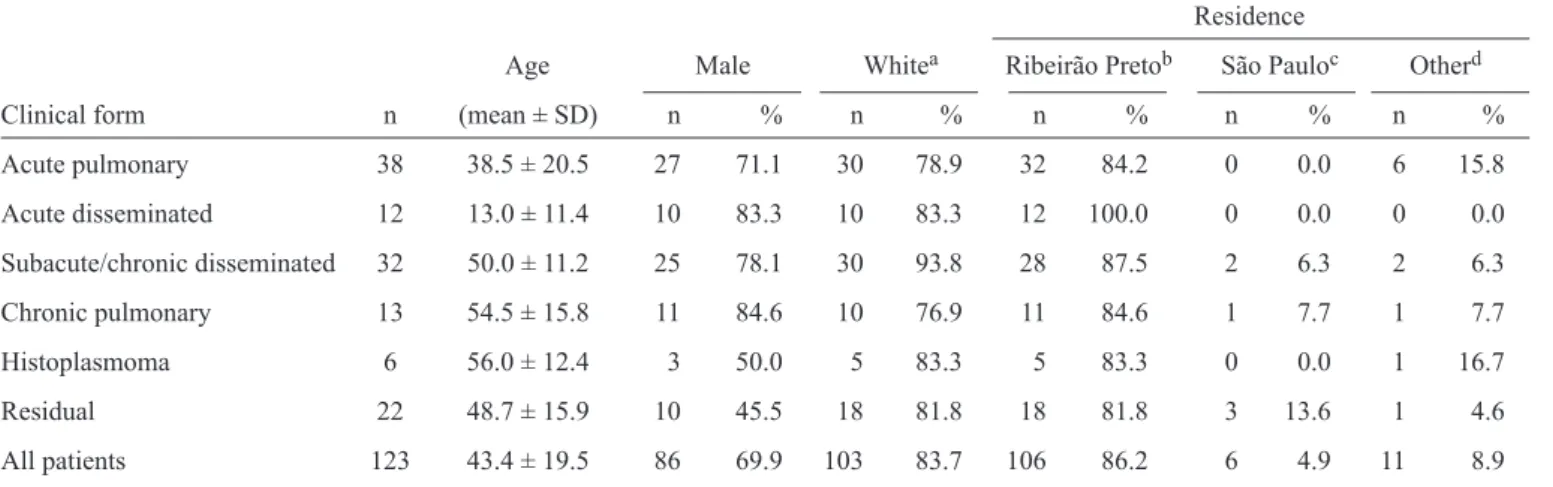
TABLE 1- Demographic data of patients according to the clinical form of histoplasmosis.
Residence
Age Male Whitea Ribeirão Pretob São Pauloc Otherd
Clinical form n (mean ± SD) n % n % n % n % n %
Acute pulmonary 38 38.5 ± 20.5 27 71.1 30 78.9 32 84.2 0 0.0 6 15.8
Acute disseminated 12 13.0 ± 11.4 10 83.3 10 83.3 12 100.0 0 0.0 0 0.0
Subacute/chronic disseminated 32 50.0 ± 11.2 25 78.1 30 93.8 28 87.5 2 6.3 2 6.3
Chronic pulmonary 13 54.5 ± 15.8 11 84.6 10 76.9 11 84.6 1 7.7 1 7.7
Histoplasmoma 6 56.0 ± 12.4 3 50.0 5 83.3 5 83.3 0 0.0 1 16.7
Residual 22 48.7 ± 15.9 10 45.5 18 81.8 18 81.8 3 13.6 1 4.6
All patients 123 43.4 ± 19.5 86 69.9 103 83.7 106 86.2 6 4.9 11 8.9
aWhite skin color; bRibeirão Preto and Northeastern region of the State of São Paulo; cOther municipalities of the State of São Paulo; dOther
Brazilian states.
It is the regional seat and is surrounded by 26 other municipalities with economies based on agriculture and animal husbandry. The institution at which the study was conducted is a general university hospital that provides medical care to patients from the aforementioned region in addition to municipalities located at a distance up to approximately 150km.
All diagnosed histoplasmosis immunocompetent patients
confi rmed by mycologic, histopathological, and/or serologic
tests were included in the study. A standardized chart was used to collect information from the medical records of these patients, including demographic, epidemiological, and clinical data as well as radiologic alterations and disease outcome. The
patients were classifi ed according to the following clinical
forms of histoplasmosis: acute pulmonary, chronic pulmonary, subacute/chronic disseminated, and histoplasmoma14. Residual pulmonary histoplasmosis cases were also included. Patients with histoplasmosis and clear immunosuppression related to AIDS, with associated or previous neoplasias, organ transplants, and/or the use of immunosuppressive medications (e.g., corticosteroids and cytotoxic drugs) were excluded.
The identifi cation of H. capsulatum isolated from a culture of secretions and lesion fragments was based on the macro- and
microscopic characteristics of the fi lamentous form of the fungus.
Hematoxylin-eosin (HE) and methenamine silver (GMS) staining was used for the histopathological examinations of the tissues and biopsied lesions. Anti-H. capsulatum antibodies were detected with counterimmunoelectrophoresis using histoplasmin as the antigen, and the patient serum samples were titrated with consecutive 2-fold serum dilutions with 0.9% saline15. The demographic data and other variables are presented by descriptive statistics.
Table 1 shows the demographic and epidemiological data of 123 immunocompetent patients according to the clinical form of histoplasmosis. Most patients were white males ranging in
age from 3 to 79 years. More children and young subjects were
diagnosed with the acute forms of the disease, and more older persons had the chronic forms of histoplasmosis. More than 90% of the patients lived and worked in Ribeirão Preto and nearby towns in the northeast of the State of São Paulo and in part of the southwest of the State of Minas Gerais.
Patients with chronic disseminated or chronic pulmonary disease frequently reported smoking and alcoholism (Table 2). Prolonged permanence in the rural environment was observed in 82.9% of the patients. Of the 54 patients who were actively questioned about other risk factors for exposure to H. capsulatum, 10 patients recalled the presence of bats in their homes, eight reported visiting caves or being in sewers, 10 reported raising fowl (particularly chickens), six reported preparing organic fertilizer using mammalian or bird excrement, eight reported domestic or professional contact with tree limbs or wood, and 12 reported
habitual exposure to forest or agricultural fi elds.
Three small outbreaks were identifi ed among the patients
with the acute pulmonary form, each outbreak involving two persons. Two patients were diagnosed after visiting caves in the southwest part of the State of Minas Gerais, and the other
outbreak involved two fi remen performing rescue work in the
bottom of a septic tank in the municipality of Ribeirão Preto. In the acute pulmonary form of histoplasmosis, the lungs had
a diffuse reticulonodular infi ltrate and/or scattered nodules. Some
of these patients had cervical or generalized lymphadenomegaly and other manifestations of dissemination or of immunological hyperactivity (Table 3). Anti-H. capsulatum antibodies were detected in 30 (83.3%) of the 36 cases, and histopathological
confi rmation was obtained in 15 cases, with biopsies of a nodule or
lung tissue. Antifungal agents were used by 57.9% of the patients because of the intensity or prolongation of the respiratory symptoms. The outcome was favorable in all cases, with the exception of one patient who also had cardiopathy caused by Chagas disease.
TABLE 2 - Epidemiologic data of the patients according to the clinical form of histoplasmosis.
Rural exposure* Risk of infection** Smoking habit Alcoholism
Clinical form n % n % n % n %
Acute pulmonary (n=38) 15/22 68.2 16/38 42.1 11/33 33.3 6/32 18.8
Acute disseminated (n=12) 6/8 75.0 3/12 25.0 0/0 0.0 0/0 0.0
Subacute/chronic disseminated (n=32) 19/22 86.4 15/32 46.9 19/24 79.2 14/23 60.9
Chronic pulmonary (n=13) 9/10 90.0 9/13 69.2 11/13 84.6 10/12 83.3
Histoplasmoma (n=6) 1/1 100.0 4/6 66.7 4/6 66.7 1/6 16.7
Residual (n=22) 13/13 100.0 7/22 31.8 14/21 66.7 4/21 19.0
All patients (n=123) 63/76 82.9 54/123 43.9 59/97 60.8 35/94 37.2
*Rural work or residence; **Risk factors for exposure to Histoplasma capsulatum.
TABLE 3 - Clinical manifestations, diagnoses, and outcomes of the patients with acute pulmonary or acute disseminated histoplasmosis.
AcP (n=38) AcD (n=12)
Organ involvement n % n %
Lungs 38 100.0 3 25.0
Cervical lymphadenopathy 8 21.1 2 16.7
Abdominal lymphadenopathy 0 0.0 1 6.3
Generalized lymphadenopathy 3 7.9 8 66.7
Hepatomegaly 5 13.2 8 66.7
Splenomegaly 1 2.6 8 66.7
Arthritis/arthralgia 3 7.9 0 0.0
Pericarditis 1 2.6 0 0.0
Others* 1 2.6 1 8.3
Laboratory diagnosis
Histoplasma capsulatum in histologic examination n (%) 15 39.5 7 58.3
Histoplasma antibodies
reactive (%) 30/36 83.3 10/12 83.3
titer-median (range)** 32 (NR-256) 64 (NR-256)
Treatment
antifungal usage n (%) 22 57.9 6 50.0
outcome/cure n (%) 37 97.4 11 91.7
death n (%) 1 2.6 1 8.3
AcP: acute pulmonary form; AcD: acute disseminated form; NR: non-reactive; *Erythema nodosum in 1 patient with AcP; oral mucosa (1), nasal mucosa and skin (1), meninges and adrenals (1), bone marrow (1) in different patients with the AcD form. **titer: inverse of the serum dilution.
had generalized lymphadenopathy and hepatosplenomegaly.
Additionally, 25% of patients had interstitial infi ltrates in the
lungs, and 5 of the 12 cases showed involvement of other tissues. Anti-H. capsulatum antibodies at generally high titers were detected in 10 (83.3%) of the 12 cases. Only 50% of these patients received antifungal agents, and 11 of the 12 patients were cured.
Table 4 shows that many patients with the subacute/chronic disseminated form of histoplasmosis had ulcerations in the
oral mucosa and/or injury to the upper and lower airways.
Central nervous system involvement manifested as meningitis, myelitis, or brain granuloma, and 2 patients had Addison’s
disease caused by adrenal injuries. Associated diseases were
TABLE 4 - Organ and tissue involvement in patients with subacute and chronic disseminated histoplasmosis.
Involvement/lesion Number Percentage
Oropharyngeal/nasal mucosa 19 59.4
Interstitial pneumonitis 11 34.4
Larynx 8 25,0
Cervical lymphadenopathy 8 25,0
Hepatomegaly 10 31.3
Splenomegaly 4 12.5
Skin 2 6.3
Central nervous system 7 21.9
Adrenal 3 9.4
Esophagus 1 3.1
Total number of patients 32 100.0
leprosy (n=1), Chagas disease (n=3), leishmaniasis (n=1), cardiovascular disease (n=3), diabetes mellitus (n=2), liver disease (n=1), hypothyroidism (n=1), and chronic intestinal disease (n=1). H. capsulatum was isolated from 4 patients
and specifi c antibodies (titers ranging from 1:2 to 1:512) were
present in 27 of the 28 cases. Among the 27 patients who were followed up after the antifungal therapy, 25 were cured or showed clinical improvement, and 2 died during treatment.
Many patients with the chronic pulmonary form of the disease had associated diseases, including chronic obstructive pulmonary disorder (n=6), bullous emphysema (n=1), tuberculosis (n=2), paracoccidioidomycosis (n=1), diabetes (n=1), and chronic renal failure (n=1). A chest X-ray revealed
an interstitial infi ltrate of the lungs, usually bilateral, and
micro- or macronodules. Six of the 13 patients had pulmonary cavitation. H. capsulatum was isolated from 4 patients. The histopathological exam was positive in 3 cases, and anti-H. capsulatum antibodies with titers ranging from 1:8 to 1:256 were present in 11 of the 12 cases. Among the 11 patients who were followed after the antifungal treatment, there was only 1 clinical cure, while the remaining patients continued to have chronic pulmonary disease (n=8) or died (n=2).
Histoplasmoma was detected in 6 patients who had no respiratory symptoms but did have chest X-rays taken because of trauma or other diseases. These patients had nodules measuring 1.0 to 1.5cm in diameter that were located most commonly in the lower lobe of the right lung. Three patients underwent surgery to remove the nodules. The nodule size remained stable over 1 to 6 years of follow-up in the remaining 3 patients.
The patients with the residual form of pulmonary histoplasmosis presented with lesions with variable degrees of
calcifi cation in the chest X-rays; the lesions were represented by a diffuse or localized reticulonodular infi ltrate (n=7), single
or multiple nodules measuring up to 1.0cm in diameter (n=12),
and/or calcifi ed perihilar or mediastinal lymph nodes (n=7).
In 2 cases, the diagnosis was established by a histopathological
examination of the surgically removed nodules. The diagnosis of the remaining cases was determined by anti-H. capsulatum antibody titers ranging from 1:2 to 1:32. One of the patients whose pulmonary nodule contained granulomas with H. capsulatum reported professional exposure to mammals and birds. This patient had also experienced a fever of indeterminate origin that had spontaneously regressed a few years earlier.
Regarding the duration and the antifungal agent used, the treatments of 56 of the 95 (58.9%) patients with active disease varied widely. Sulfadiazine,
sulfamethoxazole-trimethoprim, and amphotericin B were used during the fi rst
2 decades of the treatment period, with the use of azole drugs prevailing thereafter. Five (5.3%) of the 95 patients with active histoplasmosis died: 2 did not receive antifungal agents, 2 had started treatment less than 3 weeks prior to their deaths, and 4 had comorbidities that contributed to the lethal outcomes.
DISCUSSION
This study analyzed the largest Brazilian series of histoplasmosis cases affecting immunocompetent individuals. Compared to the 95 cases of active disease, 1,219 cases of paracoccidioidomycosis affecting immunocompetent individuals occurred in the same geographic area over an approximately equal period of time16. This result suggests that the incidence of histoplasmosis-disease is approximately 13 times lower than that of paracoccidioidomycosis, whose mean incidence in the Ribeirão Preto region has been estimated at 2.7 cases/100,000 inhabitants/ year17. However, this ratio needs careful interpretation because the patients with chronic pulmonary and chronic disseminated histoplasmosis did not know the places or times of the fungal infections. Histoplasmosis occurred over a period of 4 decades in the study area (both endemically and as small outbreaks) and manifested in the clinical forms recognized in endemic areas in the United States and Brazil5,6,18. Outbreaks and the acute pulmonary form reveal recent exposure to H. capsulatum and, therefore, indicate that the region surrounding Ribeirão Preto is an endemic area of histoplasmosis.
Both the unequal distribution of the age ranges of the patients with acute or chronic histoplasmosis and the predominance of the disease among men have been observed in other case series13,19. The higher prevalence of women in the group with histoplasmoma or residual disease may attributed to the habitual radiographic evaluation of the lungs in cases of mammary nodules and the better attention to personal health care among women. The predominance of white skin color among the patients is similar to that of the general population in the same area of residence.
of the chronifi cation and focal dissemination of this mycosis12,20. The analysis of the risk factors for histoplasmosis infection has limitations because of the lack of information in some medical records and the absence of a control group of histoplasmin-negative patients. The various comorbidities associated with the subacute/chronic disseminated form may be the consequence of the living conditions of the patients and may eventually have contributed to the onset of disease caused by H. capsulatum.
The present case series confi rms the clinical polymorphism
of histoplasmosis, the propensity to a spontaneous cure in the acute forms, and the lethality associated with the disease. The cases with residual histoplasmosis are examples of diagnoses
that were not made during the active disease phase, refl ecting the
natural and common regression of the lung lesions. Considering the histoplasmin surveys21 and autopsy studies22 conducted in Brazil, the patients with the acute pulmonary form of the disease in this series most likely represent a small fraction of the real number of cases in the aforementioned region. Another
possible cause of the diagnostic diffi culty is the clinical similarity
of the acute and chronic disseminated forms of the disease to paracoccidioidomycosis. This mycosis is more prevalent and also manifests as generalized lymphadenopathy in children and young people and as oropharyngeal ulcerations and visceral lesions in adults16. The serologic test to detect antibodies has provided great laboratory support to differentiate histoplasmosis from other fungal diseases and tuberculosis. Antibody titers may vary according to the clinical form, duration, and severity of histoplasmosis18,19.
Many patients received antifungal agents and were clinically cured, although a standardized treatment was not adopted.
The clinical effi cacy of currently recommended drugs, such as
amphotericin B and itraconazole23, was observed, as was the
effi cacy of sulfamide drugs. Although these sulfamide drugs are not
currently used for anti-Histoplasma therapy, 7 patients with subacute or chronic disseminated histoplasmosis obtained lesion regression after using sulfamethoxazole-trimethoprim or sulfadiazine.
This study revealed the presence of an endemic area for histoplasmosis in the Ribeirão Preto region, Southeast Brazil, and the occurrence of various clinical forms of the disease in immunocompetent persons over a 4-decade period.
The authors declare that there is no confl ict of interest.
CONFLICT OF INTEREST
FINANCIAL SUPPORT
This research was supported by Fundação de Apoio ao Ensino, Pesquisa e Assistência do Hospital das Clínicas da Faculdade de Medicina de Ribeirão Preto, Universidade de São Paulo.
REFERENCES
1. Colombo AL, Tobón A, Restrepo A, Queiroz-Telles F, Nucci M. Epidemiology of endemic systemic fungal infections in Latin America. Med Mycol 2011; 49:785-798.
2. Pontes LB, Leitão TMJS, Lima GG, Gerhard ES, Fernandes TA. Clinical and evolutionary characteristics of 134 patients with disseminated histoplasmosis associated with AIDS in the state of Ceará. Rev Soc Bras Med Trop 2010; 43:27-31.
3. Ferreira MS, Borges AS. Histoplasmosis. Rev Soc Bras Med Trop 2009; 42:192-198.
4. Londero AT, Ramos CD. The status of histoplasmosis in Brazil. Mycopathologia. 1978; 64:153-156.
5. Severo LC, Oliveira FM, Irion K, Porto NS, Londero AT. Histoplasmosis in Rio Grande do Sul, Brazil: a 21-years experience. Rev Inst Med Trop São Paulo 2001; 43:183-187.
6. Leimann BCQ, Pizzini CV, Muniz MM, Albuquerque PC, Monteiro PCF, Reis RS, et al. Histoplasmosis in a Brazilian Center: clinical forms and laboratory tests. Rev Iberoam Micol 2005; 22:141-146.
7. Machado LR, Nobrega JP, Livramento JA, Vianna LS, Spina-França A. Histoplasmosis of the central nervous system. Clinical aspects in 8 patients. Arq Neuropsiquiatr 1993; 51:80-86.
8. Chang MR, Taira CL, Paniago AMM, Taira DL, Cunha RV, Wanke B. Study of 30 cases of histoplasmosis observed in Mato Grosso do Sul State, Brazil. 2007; Rev Inst Med Trop São Paulo 49:37-39.
9. Oliveira FM, Unis G, Severo LC. An outbreak of histoplasmosis in the city of Blumenau, Santa Catarina. J Bras Pneumol 2006; 32:375-378. 10. Zöllner MSCA, Carvalho Rezende KMP, Birman S, Elias CPF, Anisowa
EAL, Santos MABDV. Clinical and evolutionary characteristics of four patients with pulmonary histoplasmosis reported in the Paraiba Paulista Valley Region. Rev Soc Bras Med Trop 2010; 43:599-601. 11. Zancopé-Oliveira RM, Wanke B. Distribuição das fontes de infecção por
Histoplasma capsulatum var. capsulatum em Rio da Prata – Município do Rio de Janeiro (RJ). Rev Inst Med Trop São Paulo 1987; 29:243-250. 12. Kennedy CC, Limper AH, Redefi ning the clinical spectrum of chronic
pulmonary histoplasmosis: a retrospective case series of 46 patients. Medicine (Baltimore) 2007; 86:252-258.
13. Tobon AM, Agudelo CA, Rosero DS, Ochoa JE, Bedout C, Zuliaga A, et al. Disseminated histoplasmosis: a comparative study between patients with
acquired immunodefi ciency syndrome and non-human immunodefi ciency
vírus-infected individuals. Am J Trop Med Hyg 2005; 73:576-582. 14. Zancopé-Oliveira RM, Muniz MM, Wanke B. Histoplasmose. In: Coura
JR, editors. Dinâmica das Doenças Infecciosas e Parasitárias, 1st Ed.
Rio de Janeiro: Guanabara- Koogan; 2005. p. 1207-1221.
15. Martinez R, Vitali LH, Henriques JHS, Machado AA, Albernaz A, Lima AA. Inquérito soroepidemiológico para infecções por fungos causadores de micoses sistêmicas na Reserva Indígena Xacriabá, Estado de Minas Gerais. Rev Soc Bras Med Trop 2002; 35:347-350.
16. Bellíssimo-Rodrigues F, Bollela VR, Fonseca BAL, Martinez R. Endemic paracoccidioidomycosis: relationship between clinical presentation and patients demographic features. Med Mycol 2013; 51:313-318.
17. Bellíssimo-Rodrigues F, Machado AA, Martinez R. Paracoccidiomycosis epidemiological features of a 1,000-cases series from a hyperendemic area on the Southeast of Brazil. Am J Trop Med Hyg 2011; 85:546-550. 18. Knox KS, Hage CA. Histoplasmosis. Proc Am Thorac Soc 2010; 7:
169-172.
19. Kauffman CA. Histoplasmosis: a clinical and laboratory update. Clin Microbiol Rev 2007; 20:115-132.
20. García-Morrón M, García-García JM, Pajín-Collada M, Alvarez-Navascués F, Martínez-Muñiz MA, Sánchez-Antuño-AA. Chronic pulmonary his-toplasmosis diagnosed in a nonimmunosuppressed patient 10 years after returnig from a endemic area. Arch Bronconeumol 2008; 44:567-570. 21. Fava SC, Fava Netto C. Epidemiologic survey of histoplasmin and
paracoccidioidim sensitivity in Brazil. Rev Inst Med Trop São Paulo 1998; 40:155-164.
22. Prado M, Silva MB, Laurenti R, Travassos LR, Taborda CP. Mortality due to systemic mycosis as a primary cause of death or in association with AIDS in Brazil: a review from 1996 to 2006. Mem Inst Oswaldo Cruz 2009; 104:513-521.