www.reumatologia.com.br
REVISTA BRASILEIRA DE
REUMATOLOGIA
Review article
Back schools in Brazil: a review of the intervention
methodology, assessment tools, and results
Matias Noll, Adriane Vieira*, Caroline Darski, Cláudia Tarragô Candotti
Univesidade Federal do Rio Grande do Sul (UFRGS), Porto Alegre, RS, Brazila r t i c l e i n f o
Article history:
Received on 23 March 2013 Accepted on 4 April 2013
Keywords: Posture
Education in health Health promotion Adult
Brazil
a b s t r a c t
The Back School is characterized as an educational program aimed at individuals who have chronic pain in spine. In Brazil, a growing number of research studies on the effects of such programs have been observed in the last decades. Thus, the purpose of this systematic re-view was to identify studies on Back Schools carried out in Brazil with a population of adults and elderlies, and to compare their intervention methodologies, data collection tools, and results. A search for scientii c articles and Master’s and doctoral theses in several databases was conducted. The keywords used in that search were Postural Program; Postural School; Back School; Back Care Education; Back Education, as well as the respective terms in Portuguese. Eigh-teen studies were found, being fourEigh-teen quantitative and four qualitative studies. The studies showed many differences between them, in both the interventions proposed and the meth-odological design. However, the use of similar tools for assessing pain intensity, functional capacity, and quality of life between the quantitative studies allowed a partial comparison of the efi cacy of those programs. The studies included in this systematic review demonstrated, in general, the immediate efi cacy in reducing pain and improving functional capacity and quality of life after the Back School. Results, however, are still conl icting regarding the ef-i cacy ef-in the medef-ium and long terms. Thus, ef-it becomes necessary to conduct further studef-ies that include follow-up assessments in the medium and long terms in order to obtain more accurate conclusions about the efi cacy of Back Schools.
© 2014 Elsevier Editora Ltda. All rights reserved.
* Corresponding author.
E-mail: [email protected] (A. Vieira).
0482-5004/$ - see front matter. © 2014 Elsevier Editora Ltda. All rights reserved. http://dx.doi.org/10.1016/j.rbre.2014.02.007
Escolas posturais desenvolvidas no Brasil: revisão sobre os instrumentos de avaliação, as metodologias de intervenção e seus resultados
Palavras-chave: Postura
Educação em saúde Promoção da saúde Adulto
Brasil
r e s u m o
busca foram Postural Program; Postural School; Back School; Back Care Education; Back Education, e os respectivos termos em português. Foram encontrados dezoito estudos, sendo quatorze quantitativos e quatro qualitativos. Os estudos apresentam inúmeras diferenças entre si, tanto nas propostas de intervenções quanto no desenho metodológico. Contudo, a utiliza-ção de instrumentos semelhantes para a avaliautiliza-ção da intensidade da dor, da capacidade funcional e da qualidade de vida entre os estudos quantitativos permite uma comparação parcial da ei cácia desses programas. Os estudos incluídos nesta revisão demonstram, em geral, a ei cácia imediata na diminuição da dor e na melhora da capacidade funcional e da qualidade de vida após a Escola Postural. Porém ,observou-se que os resultados ainda são divergentes em relação à ei cácia no médio e longo prazos. Deste modo, torna-se necessária a realização de novos estudos que contemplem reavaliações a médio e longo prazos para que conclusões mais precisas sobre a ei cácia das Escolas Posturais sejam obtidas.
© 2014 Elsevier Editora Ltda. Todos os direitos reservados.
Introduction
The World Health Organization (WHO) proclaimed the pe-riod between 2001 and 2010 as the "Decade of Bone and Joint", in order to raise awareness for musculoskeletal pa-thologies and pain.1,2
Back pain is the most common musculoskeletal disor-der; it is estimated that 60% to 80% of the world population will, at some point in their life, suffer from it.3-7 Of these
individuals, it is estimated that 40% will develop a picture of chronic pain,8 which is defined by the WHO as sporadic
episodes of pain over a period of six months, or a pain that lasts over three months, which may lead to frequent work absenteeism, early retirement, and lower productivity.9,10
Chronic low back pain is relevant, because it creates physical, mental, and emotional distress due to the inabil-ity of the individual to control it and due to the reduced functional capacity.4,11,12 These changes trigger a reduction
in the quality of life of individuals and contribute to the chronicity of the problem.13,14
In 1969, Mariane Zachrisson-Forssell, a Swedish phys-iotherapist, proposed an educational program called the Back School, aimed at reducing the features of chronic low back pain.15,16 The translation of the name of the program
into Portuguese has varied, and the most commonly used terms are: Escola de Coluna,17,18 Escola de Postura,8,19
Es-cola Postural20,21 e Programa de Educação Postural22 (Back
School, Postural School, Back School, Postural Education Program).
The main objective of the Swedish Back School was to educate and ergonomically improve the posture of indi-viduals with back pain, enabling them to actively protect themselves against spinal injuries. The proposed approach was a physiotherapist teaching four lessons of 45 minutes each, twice a week. Based on the etiology of back pain and on electromyographic studies, Forssell believed that, when performing appropriately activities of daily living (ADL), individuals would be able to prevent or control their pain.15,16 In the first lesson of the program, notions about
the spine, causes of pain, and postures of relaxation are addressed. In the second lesson, theoretical orientations on ADL are issued, emphasizing the sitting and standing posture, and with exercises at home. In the third lesson, the participants practice the previously received
informa-tion; transport of objects and lifting practice are addressed, and exercises for the lower limbs are practiced at home. In the last lesson, patients are encouraged to practice regular physical exercise to decrease pain; finally, the contents of previous classes are reviewed.15,16
After the Swedish Back School, different programs emerged; while the original objectives were retained, the number of classes and the contents were modified.17,23,24
In Brazil, back school was implemented in 1972, at the Hospital do Servidor Público de São Paulo by physician Jo-seph Knoplich,17,18,24 but only in 1998 was the first research
on a back school program developed in Brazil published.17
In the literature, there are several publications on back schools, as well as systematic reviews comparing the results of previous studies on the effectiveness of back schools.25-27
However, only one study conducted in Brazil was found in a systematic review of articles,27 which prevents the
sum-marization of the researchers’ interest and of the studies that have been developed in this country.There are two reviews published in Brazilian journals that address back schools and discuss the structure of programs in Europe, North America, and Brazil.17,18 However, these reviews did
not present data on the Brazilian scientii c production. Thus, this study aimed to answer the question: do the studies developed in Brazil demonstrate the effectiveness of the back school programs and allow for this educational approach to be recommended in healthcare services? To answer this question, studies that evaluate back schools developed in Brazil with adults and older populations were identified, determining research methods, intervention proposals, data collection instruments, and results.
Methodology
Systematic search (Scopus + ScienceDirect + PubMed + SciELO) Articles identified using keywords
(n = 563)
Articles excluded for not being conducted in Brazil (n = 527)
Selected articles, published since the 1970s and conducted in Brazil (n = 36)
Articles excluded after the analysis of abstracts (N = 20)
Articles developed with the adult population for this review study (n = 16)
Studies retrieved from the Banco de Teses e Dissertações
da Capes (n = 2)
Studies included in this systematic review (n = 18)
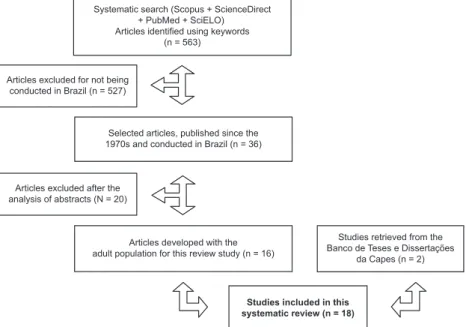
Fig. 1 – Flowchart of selection of articles from 1970 to 2011.
studies directed to patients with acute and subacute pain, i.e., with less than three months’ duration.
In order to include dissertations and theses that were not published in scientii c journals, a survey was conducted with the same keywords in the CAPES Bank of Theses and Disserta-tions (Banco de Teses e Dissertações da CAPES - BTDC).
The initial selection was performed by the reading the titles and the city where the back school programs were ap-plied. For potentially eligible studies, in addition to the read-ing of the titles, the abstracts were also read. The articles that initally met the inclusion criteria were read and analyzed in full; after i nal analysis, those that met all inclusion criteria were included.
At the end of article selection, data regarding the loca-tion and the type of study (qualitative or quantitative) were initially collected; then, the programs developed, the instru-ments used for data collection, and the results found were also recorded.
Results
Fig. 1 shows the l owchart of the adopted strategy to search and inclusion of articles. Of the 563 articles initially identi-i ed from the keywords identi-in the peridenti-iod from 1970 to 2011, 527 were excluded because they had not been conducted in Bra-zil. Of the 36 articles addressing programs in Brazil, 20 were excluded after the abstract analysis, since they did not meet all the inclusion criteria. Therefore, 18 articles were selected for this review. Finally, two studies retrieved from the BTDC - a Ph.D. thesis and a Master’s degree dissertation – were in-cluded.
Table 1 presents and describes in chronological order the 18 studies selected and included in this review, which devel-oped programs in Brazil directed to the teaching of proper posture in ADL for people over 18 years of age. In this table authors, year of publication, title and place of study, and clas-sii cation (qualitative, experimental, quasi-experimental and
semi-experimental) are identii ed.28 Table 2 summarizes the
qualitative studies and the instruments used. Table 3 contains the quantitative studies, presenting the sample size and data collection instruments, which were divided into instruments for measuring pain intensity, functional capacity, and quality of life.
The structure of the back school programs described in the analyzed studies varied regarding the teaching strategies, du-ration of the classes, and program. There was a predominance of programs organized in up to i ve lessons,8,21,29-36 featuring
a tendency to follow the parameters of the Swedish Back School program, which is taught in four classes of 45 minutes each. However, six programs were administered in eight to 14 classes,20,37-41 and two programs were structured with 20 or
more classes.42-43
Regarding the duration of the classes, classes of up to one hour duration8,21,29,32,33,36,41,43 and between one and two
hours20,31,35,38,42 were predominant. In relation to the number
of classes administered per week, most programs had classes once a week.8,20,32,33,35-39
In general, the back school programs developed in the studies addressed all the topics that comprise the Swedish Back School.8,20,21,30-32,34-39,41-43 These programs addressed
theo-retical notions on the spine and causes of pain, provided the-oretical and practical guidelines on ADL, performed exercises and relaxation postures, and encouraged the practice of home exercises. The studies by Caraviello,29 Ribeiro,33 and Souza40
developed only theoretical classes and exercises.
The programs were taught either by physical thera-pists,8,20,21,31,32,40,42 physical therapists and physicians,33 physical
therapists and physical education teachers,36 or by
multidisci-plinary teams.29,30,34,39,43
The studies were performed predominantly in the state of São Paulo, where eight studies were retrieved, pertaining mostly to the University of São Paulo;8,29,30,33,34,36,39,43 and Rio
Grande do Sul, from where i ve studies were retrieved.20,21,35,41,42
univer-sity clinics, and only three were developed at primary care services.8,21,35
The sample covered in the studies varied in size: – the smallest sample was comprised by four subjects,40 and the
largest, 110.30
Only four qualitative20,37,38,42 studies were found; in these
studies, interviews (individual or group) and participant ob-servations were used as research instruments (Table 2). Such studies interpreted meanings and perceptions expressed by participants during or after the program completion.44
Table 1 – Summary of studies included in this review.
Author/Year Title Study Site Type of Study
FURLAN, 1998 Escola de Coluna – Programa desenvolvido
no Instituto de Ortopedia e Traumatologia do HC FMUSP
IOT HC FMUSP SE
SCHUCH, 2000 Escola Postural para a Terceira Idade NUTTI – UNISINOS QE
UES, 2003 Escola Postural para Terceira Idade PSF Dante Westphalen, Cruz Alta- RS SE
SOUZA, 2003 Escola postural: um caminho para o conhecimento
de si e do bem-estar corporal
EsEF/UFRGS Q
VIEIRA, 2004 A Escola Postural sob a Perspectiva da Educação Somática: a reformulação de um programa de extensão na EsEF/UFRGS
EsEF/UFRGS Q
CARAVIELLO, 2005 Avaliação da dor e função dos pacientes com lombalgias tratados com um programa de Escola de Coluna
Lar Escola São Francisco UNIFESP – EPM
SE
TSUKIMOTO, 2006 Avaliação longitudinal da Escola de Postura para dor lombar crônica: através da aplicação dos questionários Roland Morris e Short Form Health Survey (SF-36)
DMR HC FMUSP SE
GUEDES, 2007 A metodologia da problematização na Escola de
Postura da UFPB: um processo emancipatório da educação gerontológica.
Clinical Physiotherapy School, UFPB Q
SANTOS, 2008 Avaliação do programa Escola de Postura em
pacientes com lombalgia crônica do Hospital Municipal de Rolim de Moura – RO
Hospital de Rolim de Moura/RO SE
ARCANJO, 2008 Percepção sobre a qualidade de vida de mulheres participantes de oi cinas educativas para dor na coluna.
Higher Education Institution, Fortaleza, Brazil
Q
ANDRADE, 2008 Escola de Coluna para pacientes com lombalgia crônica inespecíi ca: benefícios da associação de exercícios e educação do paciente
Clinical Physiotherapy School, Universidade Potiguar (UnP)-RN
E
RIBEIRO, 2008 Effectiveness of a back school program in low back pain
UFSP E
FERREIRA, 2010 Efeitos de um programa de orientação para adultos com lombalgia
UBS and USF, Marília-SP SE
TOBO, 2010 Estudo do tratamento da lombalgia crônica por meio
da Escola de Postura
IMREA-HCFMUSP SE
SOUZA, 2010 Efeitos da escola de postura em indivíduos com
sintomas de lombalgia crônica
Physical Therapy Clinic of the FACIMED
SE
MARTINS, 2010 A ei cácia da conduta do Grupo de Coluna em
pacientes com lombalgia crônica
FUNFARME/FAMERP- SP SE
BORGES, 2011 Efeitos da participação em um Grupo de Coluna sobre as dores musculoesqueléticas, qualidade de vida e funcionalidade dos usuários de uma Unidade Básica de Saúde de Porto Alegre
UBS em Porto Alegre – RS SE
GARCIA, 2011 Effects of two physical therapy interventions in patients with chronic non-specii c low back pain: feasibility of a randomized controlled trial
Physical Therapy Clinic of the UCSP-SP
QE
SE, semi-experimental; QE, quasi-experimental; Q, qualitative; E, experimental.
Table 2 – Qualitative studies, author and year, sample size, and methodology used for data collection.
Author/Year Sample Methodology for data collection
SOUZA, 2003 Ten subjects Semi-structured interviews, i eld notes, and perceptions of class.
VIEIRA, 2004 65 subjects Semi-structured interviews, participant’s observations.
GUEDES, 2007 Ten subjects Discussions and focal groups, data analysis from the perspective of Fiorin.
The quantitative method,28 which addresses the variables
using correlations and comparisons with specii c statisti-cal techniques (Table 3), was used in the remaining studies included in this review. Among these studies, two were ex-perimental, characterized by a random sample divided into intervention group and control group; 32,33 two were classii ed
as quasi-experimental, 36,41 in which there is a control group
but without a randomized sample; and ten were semi-ex-perimental, in which there is no control group.8,21,29-31,34,35,39,40,43
Of the abovementioned quantitative studies, seven used only two evaluations, a pre-intervention before the begin-ning of the program, and a post-intervention immediately after the end of the back school.8,21,29,31,35,36,39-41 Other
stud-ies have re-evaluated individuals after one,30,32,33 two,,34 and
four months.29,32,33 Only two studies reassessed the
partici-pants30,43 one year after the post-intervention assessment.
Among the instruments used in quantitative studies, evaluation of pain intensity and structured questionnaires to assess functional capacity and quality of life prevailed (Table 3).
Pain intensity was the most analyzed variable; 12 14,21,29-33,36,37,39,40,43 of the 14 quantitative articles measured it . The
Visual Analog Scale (VAS) was the most used (nine studies) assessment tool for that variable.39-33,35,39,40,43 Other studies
have used the Visual Numerical Scale36 and semi-structured
questionnaires21,41 for the analysis of this variable.
Among the nine studies using VAS, seven30-32,35,40,42 found
a signii cant decrease in pain intensity immediately after the completion of the back school. Among the studies that have made post-intervention assessment in the medium-term, Tsukimoto et al.30 observed a signii cant difference
between the i rst post-intervention assessment, performed one month after the completion of the classes, and the sec-ond post-intervention, performed after four months. Howev-er, these authors did not observe differences between these evaluations and those performed one year after the start of the back school.
In the two experimental studies32,33 with higher
meth-odological quality, only Andrade et al.32 observed signii cant
reduction in pain intensity after two re-evaluations: the i rst,
one month, and the second, four months after the completion of the classes.
The second most commonly used variable for back school analysis was the improvement in functional capacity. For the analysis of this variable, seven studies29-33,36,37 used the
Roland-Morris Questionnaire (RMQ)45 and three studies8,34,35 used the
Oswestry Disability Index (ODI) questionnaire.46
Compar-ing the functional capacity, it was observed that six of the seven articles29-32,36,39 described a signii cant improvement in
functional capacity when using the RMQ. Of these studies, i ve29,31,33,36,39 observed differences immediately after the end
of the back school. The study by Tsukimoto et al.30 obtained
signii cant improvement one month, four months, and one year after the intervention.
Among the studies on functional capacity who used the ODI questionnaire, all observed signii cant improvements in functional capacity at the end of the program; Tobo et al.34
found improvement two months post-intervention.
In the two experimental studies32,33 identii ed in this
re-view, only the study by Andrade et al.32 indicated a signii cant
improvement in functional capacity immediately after, and one month after the back school. However, this improvement was not maintained in the post-intervention assessment per-formed four months after completion of classes.
Among the instruments analyzed in this review, those for quality of life evaluation were the least used. The Medi-cal Outcomes Study 36-Item Short-Form Health Survey (SF-36)47 was used by i ve studies.8,30,33,35,40 The studies observed
a signii cant improvement in six8,35 and seven areas30,40 at the
post-intervention assessment. In the study by Tsukimoto et al.,30 the improvement was maintained for a year in the
func-tional capacity, physical aspects, pain, general state of health, and vitality domains. From the comparison between studies using the SF-36 questionnaire, it was observed that the pain and functional capacity domains showed signii cant improve-ments in four of i ve studies.8,30,35,40 It was also observed that
in four of these studies,30,33,35,40 the means of physical aspects
and pain domains, in the pre-intervention assessment, were below 50% of the maximum value; in the post-intervention assessment, the means were above 50% in all studies. Of the
Table 3 – Quantitative studies, author and year, sample size, and methodology used for data collection.
Author/Year Sample Methodology of data collection
QoL1 FC2 PI3 Other4
FURLAN, 1998 64 subjects X X
SCHUCH, 2000 Ten subjects X X
UES, 2003 Nine subjects X X
CARAVIELLO, 2005 30 subjects X X
TSUKIMOTO, 2006 110 subjects X X X
SANTOS, 2008 39 subjects X X X
ANDRADE, 2008 70 subjects X X X
RIBEIRO, 2008 55 subjects X X X X
FERREIRA, 2010 41 subjects X X
TOBO, 2010 43 subjects X X
SOUZA, 2010 Four subjects X X
MARTINS, 2010 25 subjects X X X X
BORGES, 2011 29 subjects X X X
GARCIA, 2011 18 subjects X X X
studies included in this review, only that by Ribeiro et al.33
ob-served a signii cant improvement in the general health status domain for a period of four months.
Discussion
Published articles indicate that the research developed in Brazil to evaluate the effectiveness of back schools is recent; most of these studies were published in the 2000s, which dif-fers from other regions such as Europe, where studies have been developed on this topic since the 1980s.48-50
However, regarding the instruments included in the quantitative studies cited in the present review, they fol-low the trend of international publications. According to the systematic review by Chapman et al.,51 which included 354
experimental studies on the effectiveness of treatments for chronic low back pain published from 2007 to 2011, the in-struments that assess functional capacity and quality of life are prevalent. Instruments for assessing functional capacity are more recurrent, mainly ODI and RMQ, which were used in over 50% of the studies.51 The assessment of quality of
life also appeared in over 40% of the studies; the SF-36 was the most used tool.51 Only the instruments for assessment of
pain intensity were not as signii cant; they were employed in only 20% of the studies,51 unlike the studies included in
this review, in which the evaluation of this variable was the most used.
Although the application of these instruments is impor-tant for comparing results from different studies, in i nal analysis, the differences in the duration of the program and the content covered hindered the comparison. This difi culty has also been emphasized by authors who conducted sys-tematic reviews on back schools.25-27
Another important limiting factor for evaluating the ef-fectiveness of back schools in Brazil is the low quality of the studies.52 Of the 14 quantitative studies, only four had a
con-trol group and only two were fully experimental. This is the main obstacle for studies conducted in Brazil to be consid-ered relevant and have their results compared to those from other publications in systematic reviews, since one of the in-clusion criteria for systematic reviews on interventions for chronic low back pain is that the study is experimental.52 The
other limiting factor is the language in which the article was published. Ribeiro's study, published in the English language in 2008, was integrated into the review of van Middelkoop et al.;27 this did not happen with the article by Andrade et al.,32
an experimental study of good quality published in the same year, possibly because it was published in Portuguese.
The authors of this article acknowledge the limitations of studies published in Brazil, but consider it important that re-searchers working with chronic back pain have knowledge of the existing publications on back schools, especially at a time when the government is investing in measures aimed at pro-moting health education and the reduction of damage caused by chronic diseases, mainly in primary care services.53
It can be inferred that the studies evaluating the effec-tiveness of back school programs developed in Brazil (which, due to poor quality, have a strong possibility of bias) showed a decrease in pain intensity and an improvement in
func-tional capacity in the short-term, but the results of the stud-ies evaluating the effectiveness in the medium- and long-term are conl icting, requiring further studies to coni rm the duration of improvement achieved after participation in back school programs. These results are similar to those presented by authors who conducted systematic reviews on the topic.25-27
Studies evaluating the quality of life by the SF-36 ques-tionnaire suggest that the pain and physical aspects do-mains are the most affected in participants of Back Schools, and that these subjects present a signii cant improvement in these domains soon after the intervention. Results related to quality of life have not been included in systematic reviews of back schools; however, three international experimental studies54-56 published in the last years also observed a
great-er involvement of the pain and physical aspects domains, with a mean below 50 points for the sample in the pre-in-tervention assessment. These studies identii ed an improve-ment in the quality of life of the study participants after six months56 and one year of intervention.55
It is possible to relate the improvement of the quality of life of participants of back school in the studies cited with respect to reducing the pain and improving functional ca-pacity, gains afforded by the greater knowledge of the spine and the pathologies that affect this area, and by learning the proper way to perform ADL. Furthermore, the importance of social interaction provided by back school classes must be considered,6 since the group system allows people with
similar problems to share their difi culties, their doubts, and their achievements.
Thus, the effectiveness of back school in the short term can be related to an improvement in general health, which involves physical, social, and emotional aspects. This inter-pretation corroborates the i nding of a signii cant improve-ment in most areas covered by the assessimprove-ment of quality of life found in studies conducted in Brazil8,30,35,40 and abroad.54-56
The study by Ribeiro et al.,33 which developed only
the-oretical activities to learn to perform ADL, was the only study in this review that showed unfavorable results in the post-intervention assessment. This i nding suggests that practical activity and exchange of experiences among par-ticipants, when teaching the proper way to perform ADs, are important pedagogical strategies for reducing pain and im-proving functional capacity and quality of life. Perhaps the mere theoretical explanation of the proper implementation of ADL is not enough to incorporate new habits, reducing the possibility of interaction between the participants. This is an issue that should be more thoroughly investigated in future studies.
Final considerations
area. However, there are still few experimental studies with a control group and random sample, as well as few qualitative studies.
It was observed that, apart from a low methodological quality of most studies, the structure of the programs is quite diverse, making it difi cult to compare them. However, regard-ing the contents of the programs and tools used in quantita-tive studies, it can be stated that there is consistency among them. In most studies that evaluated the quality of life, some improvement of physical, emotional, and social aspects was observed, which can be related to group dynamics developed in this type of intervention.
In short, based on the work presented here, the results on the effectiveness of back school programs developed in Brazil are still very questionable, due to low methodological quality of the studies and lack of a greater number of publications that evaluate the results in the medium- and long-term. Al-though the pain relief and improvement in functional capac-ity and qualcapac-ity of life in the immediate post-intervention are relevant, since they can be a stimulus for increased invest-ment in the maintenance of exercises and incorporation of healthy postural habits, the application of more resources is important to ensure the improvement of chronic diseases in the long run.
This review indicates, therefore, that there is no evidence of the effectiveness of back school programs developed in Brazil to justify their recommendation for healthcare services in Brazil.
Financial support
Coordination for the Improvement of Higher Education Per-sonnel (Coordenação de Aperfeiçoamento de Pessoal de Nível Superior – CAPES), National Council for Scientii c and Techno-logical Development (Conselho Nacional de Desenvolvimento Cientíi co e Tecnológico – CNPq).
Conl icts of interest
The authors declare no conl icts of interest.
R E F E R E N C E S
1. Lidgren L. The bone and joint decade 2000-2010. Bulletin of the World Health Organization. 2003;81(9):629.
2. Woolf AD. The bone and joint decade 2000-2010. Ann Rheum Dis. 2000;59:8-12.
3. Limon S, Valinsky LJ, Shalon YB. Risk factors for low back pain in the elementary school environment. Spine. 2004;29(6):697-702.
4. Ribeiro CC, Goméz-Conesa A. Lumbalgia. Prevalencia y programas preventivos em la infancia y adolescencia. Rev Iberoam Fisioter Kinesiol. 2008;11(1):32-8.
5. Martinéz-González M, Goméz-Conesa A, Montesinos H. Programas de higiene postural desarrollados con escolares. Fisioterapia. 2008;30(5):223-30.
6. Nordin M. Back pain: lessons from patient education. Patient EducCouns. 1995;26:67-70.
7. Karahan A, Bayraktar N. Determination of the usage of body mechanics in clinical sittings and the occurrence of low back pain in nurses. Int J Nurs Stud. 2004;41:67-75. 8. Ferreira MS, Navega MT. Efeitos de um programa de
orientação para adultos com lombalgia. Acta Ortop Bras. 2010;18(3):127-31.
9. Verhaak PFM, Kerssens JJ, Dekker J, Sorbi MJ, Bensing JM. Prevalence of chronic benign pain disorder among adults: a review of the literature. Pain. 1998;77:231-39.
10. World Health Organization. The burden of musculoskeletal conditions at the start of the new millennium. World Health Organization Technical Report Series. 2003:1-218. 11. Trevelyan, FC, Legg SJ. Back pain in school children – where
to from here?. Appl Ergon. 2006;37:45-54.
12. Hadjistavropoulos TK, Craig D. Pain: psychological perspectives. Lawrence Erlbaum Associates: New Jersey;2004
13. Cunha LL, Mayrink WC. A inl uência da dor crônica na qualidade de vida em idosos. Rev Dor. 2011;12(2):120-4. 14. Ehrlich GE. Low back pain. Bulletin of the World Health
Organization. 2003;81:671-6.
15. Forssell MZ. The Swedish Back School. Physiotherapy. 1980;66(4):112-4.
16. Forssell MZ. The Back School. Spine. 1981;6(1):104-6. 17. Andrade SC, Araújo AG, Vilar MJ. Escola de coluna: revisão
histórica e sua aplicação na lombalgia crônica. Rev Bras de Reumatol. 2005;45(4)224-8.
18. Chung TM. Escola de Coluna – experiência do Hospital das Clínicas da Universidade de São Paulo. Acta Fisiatr. 1996;3(2):13-7.
19. Knoplish J. Qual deveria ser o nome da back school brasileira?. Rev Bras de Reumat. 2006; 46(1):80. 20. Souza JL, Vieira A. Escola Postural: um caminho para o
conhecimento de si e o bem-estar corporal. Movimento. 2003;9(3):101-22.
21. Ues ME, Moraes JP. Escola Postural para a terceira idade. Praxisterapia. 2003;8(8):51-76.
22. Candotti CT, Nune SE, Noll M, Freitas K, Macedo CH. Efeitos de um programa de educação postural para crianças e adolescentes após oito meses do seu término. Rev. Paul. Pediat. 2011;29(4):577-83.
23. Henrotin Y, Vanderthommen, M, Fauconnier C, Grisart J, Masquelier E, Peretz A, et al. Déi nition, critéres de qualité et evaluation d’un programme de type école du dos. Recommandations de la Société Belge des Écoles du Dos. Revue du Rhumatisme. 2001;68(2):185-91.
24. Knoplich J. Enfermidades da coluna vertebral. 2nd ed. Editora panamed: São Paulo; 1986:317-26.
25. Heymans MW, Van Tuder MW, Esmail R, Bombardier C, Koes BW. Back school for nonspecii c low back pain: a systematic review within the framework of the Cochrane Collaboration Back Review Group. Spine. 2005;30(19):2153-63.
26. Brox JI, Storhein K, Grotle M, Tveito TH, Indahl A, Eriksen HR. Systematic review of back schools, brief education, and fear-avoidance training for chronic low back pain. The Spine J. 2008;8:948-58.
27. van Middelkoop M, Rubinstein SM, Kuijpers T, Verhagen AP, Ostelo R, Koes BW, et al. A systematic review on the effectiveness of physical and rehabilitation interventions for chronic non-specii c low back pain. Eur Spine J. 2011; 20:19–39.
28. Gaya A, et al. Ciências do movimento humano: introdução à metodologia da pesquisa bibliográi ca. Artmed: Porto Alegre; 2008.
30. Tsukimoto GR, Riberto M, Brito CA, Battistella LR. Avaliação longitudinal da Escola de Postura para dor lombar crônica através da aplicação dos questionários Roland Morris e Short Form Health Survey (SF-36). Acta Fisiatr. 2006;13(2):63-9. 31. Santos CVS. Avaliação do programa escola de postura em
pacientes com lombalgia crônica do hospital municipal Rolim de Moura-RO. [dissertation] Universidade de Brasília; Brasília-DF; 2008.
32. Andrade SC, Araújo AGR, Vilar MJ. Escola de Coluna para pacientes com lombalgia crônica inespecíi ca: benefícios da associação de exercícios e educação ao pacientes. Acta Reumatol Port. 2008;33:443-50.
33. Ribeiro LH, Jennings F, Jones A, Furtado R, Natour J.
Effectiveness of a back school program in low back pain. Clin Exp Rheumatol. 2008;26:81-8.
34. Tobo A, Khouri M, Cordeiro Q, Lima MC, Brito Junior CA, Battistella LR. Estudo do tratamento da lombalgia crônica por meio da Escola de Postura. Acta Fisiatr. 2010;17(3):112-6. 35. Borges RG, Vieira A, Noll M, Bartz PT, Candotti CT. Efeitos
da participação em um Grupo da Coluna sobre as dores musculoesqueléticas, qualidade de vida e funcionalidade dos usuários de uma Unidade Básica de Saúde de Porto Alegre. Motriz. 2011,17(4):719-27.
36. Garcia NA, Gondo FLB, Costa RA, Cyrillo FN, Costa LOP. Effects of two physical therapy interventions in patients with chronic non-specii c low back pain: feasibility of a randomized controlled trial. Rev Bras Fisioter. 2011;15(5):420-7.\ 37. Arcanjo GN, Valdés MTM, Silva RM. Percepção sobre
qualidade de vida de mulheres participantes de oi cinas educativas para dor na coluna. Ciênc Saúde Coletiva. 2008;13(2):2145-54.
38. Guedes BN, Silva MIT, Silva CC. A metodologia da
problematização na Escola de Posturas da UFPB: um processo emancipatório na prática da educação gerontológica. Rev Eletrônica de Enferm. 2007;9(2):298-314.
39. Martins MRI, Foss MMD, Junior RS, Zancheta M, Pires IC, Cunha AMR, et al. A ei cácia da conduta do Grupo de Postura em pacientes com lombalgia crônica. Rev Dor. 2010;11(2):116-21. 40. Souza AS, Oliveira NTB, Santos I, Oliveira MS, Gonçalves MMB.
Efeitos da Escola de Postura em indivíduos com sintomas de lombalgia crônica. Conscientiae Saúde. 2010;9(3):497-503. 41. Schuch EV, Candotti CT, Pressi AM. Escola Postural para
terceira idade. Revista Peri l. 2000;4:16-24.
42. Vieira, A. A Escola Postural sob a perspectiva da Educação Somática: a reformulação de um programa de extensão na EsEF/UFRGS. 2004. [thesis]. Universidade Federal do Rio Grande do Sul: Porto Alegre; 2004.
43. Furlan AD, Castro AW, Chung TM, Imamura ST, Camanho GL. Escola de Coluna – programa desenvolvido no Instituto
de Ortopedia e Traumatologia do HC/FMUSP. Acta Ortop Bras.1998;6(2):55-60.
44. Denzin NK, Lincoln YS, et al. O planejamento da pesquisa qualitativa: teorias e abordagens. 2nd ed. Artmed;Porto Alegre; 2006.
45. Nusbaum L, Natour J, Ferraz MB, Goldenberg J. Translation, adaptation and validation of the Roland-Morris questionnaire - Brazil Roland-Morris. Braz J Med Biol Res. 2001;34:203-10. 46. Vigatto R, Alexandre NMC, Correa Filho HR. Development of a
Brazilian Portuguese version of the Oswestry Disability Index. Spine. 2007;32(4): 481-6.
47. Ciconelli RM, Ferraz MB, Santos W, Meinão I, Quaresma MR. Tradução para a língua portuguesa e validação do questionário genérico de avaliação de qualidade de vida SF-36 (Brasil SF-SF-36). Rev Bras Reumatol. 1999;39(3):143-50. 48. Lankhorst GJ, Van de Stadt RJ, Vogelaar TW, Van der Korst
JK, Prevo AJ. The effect of the Swedish Back School in chronic idiopathic low back pain. A prospective controlled study. Scand J Rehabil Med. 1983;15(3):141-5.
49. Klaber Moffett JA, Chase SM, Portek I, Ennis JR. A controlled, prospective study to evaluate the effectiveness of a back school in the relief of chronic low back pain. Spine. 1986;11:120–2.
50. Keijsers JF, Groenman NH, Gerards FM, van Oudheusden E, Steenbakkers M. A back school in the Netherlands: evaluating the results. Patient Educ Couns. 1989;14:31–44. 51. Chapman JR, Norvell DC, Hermsmeyer JT, Bransford RJ,
DeVine J, McGirt MJ, et al. Evaluating common outcomes for measuring treatment success for chronic low back pain. Spine. 2011; 36 (21S): S54–S68.
52. Furlan AD, Pennick V, Bombardier C, Van Tulder MW; Editorial Board, Cochrane Back Review Group. 2009 updated method guidelines for systematic reviews in the Cochrane Back Review Group. Spine. 2009; 34: 1929–1941.
53. BRASIL, Ministério da Saúde. Secretaria de Atenção à Saúde. Departamento de Atenção Básica. Política nacional de atenção básica. Brasília: Ministério da Saúde, Série Pactos pela Saúde, 2006; 4:1-59.
54. Tavai an SS, Jamshidi AR, Mohammad K, Montazeri A. Low back pain education and short term quality of life: a randomized trial. BMC musculoskelet disord. 2007; 8(21):1-6 55. Tavai an SS, Jamshisi AR; Montazeri A. A randomized study of back school in women with chronic low back pain. Spine. 2008; 33(15):1617-21.