Long-Acting Reversible Contraception
Contracepção reversível de longa ação
Rogerio Bonassi Machado
1Ilza Maria Urbano Monteiro
2Jarbas Magalhães
3Cristina Aparecida Falbo Guazzelli
4Milena Bastos Brito
5Marta Franco Finotti
6Jaqueline Neves Lubianca
7Luis Carlos Sakamoto
8Silvio Antonio Franceschini
91Tocogynecology Departament, Faculdade de Medicina de Jundiaí,
Jundiaí, São Paulo, Brazil
2Tocogynecology Departament, Faculdade de Ciências Medicas,
Universidade Estadual de Campinas, Campinas, São Paulo, Brazil
3Centro Personna de Ginecologia e Saúde da Mulher de Mogi Mirim
(Center Personna for Gynecology na Woman’s Health of Mogi Mirim), Mogi Mirim, São Paulo, Brazil
4Escola Paulista de Medicina, Universidade Federal de São Paulo,
São Paulo, São Paulo, Brazil
5Gynecology and Obstetrics Departament, Escola Bahiana de Medicina e
Saúde Pública, Universidade Federal da Bahia, Salvador, Bahia, Brazil
6Gynecology and Obstetrics Departament, Faculdade de Medicina,
Universidade Federal de Goiás, Goiás, Brazil
7Gynecology and Obstetrics Departament, Faculdade de Medicina,
Universidade Federal do Rio Grande do Sul, Porto Alegre, Rio Grande do Sul, Brazil
8Centro de Referência da Saúde da Mulher (Reference Center of
Woman’s Health), Hospital Perola Byington de São Paulo, São Paulo, São Paulo, Brazil
9Faculdade de Medicina de Ribeirão Preto, Universidade de São Paulo,
Ribeirão Preto, São Paulo, Brazil
Rev Bras Ginecol Obstet 2017;39:294–308.
Address for correspondence Rogério Bonassi Machado, Projeto Diretrizes e Recomendações da Federação Brasileira das Associações de Ginecologia e Obstetrícia e Comissão Nacional Especializada em Anticoncepção, São Paulo, SP, Brazil (e-mail: [email protected]).
Keywords
►
contraception
►
contraceptive agents
►
contraceptive devices
►
intrauterine devices
►
progestins
Abstract
Unwanted pregnancy is a major public health problem both in developed and
developing countries. Although the reduction in the rates of these pregnancies
requires multifactorial approaches, increasing access to long-acting contraceptive
methods can contribute signi
fi
cantly to change this scenario. In Brazil, gynecologists
and obstetricians play a key role in contraceptive counseling, being decisive in the
choice of long-acting reversible methods, characterized by intrauterine devices (IUDs)
and the contraceptive implant. The vast scope due to the reduced number of situations
to indicate long-acting methods should be emphasized in routine contraceptive
counseling. On the other hand, gynecologists and obstetricians should adapt the
techniques of insertion of long-acting methods, and engage in facilitating conditions to
access these contraceptives through public and private health systems in Brazil. This
study is part of a project called
Diretrizes e Recomendações FEBRASGO
(
Guidelines and
This revision is part of the Project Series, Guidelines and
Recommendations of the Federação das Associações de Ginecologia e Obstetrícia - FEBRASGO, elaborated by the Specialized National Committees in Contraception.
received
December 4, 2016 accepted March 3, 2017
DOI https://doi.org/ 10.1055/s-0037-1603647. ISSN 0100-7203.
Copyright © 2017 by Thieme Revinter Publicações Ltda, Rio de Janeiro, Brazil
Introduction
Prevalence and Social-medical Impact of Unintended Pregnancy
Unwanted pregnancies affect a large number of women in the world and in Brazil. Surveys have observed an average worldwide pregnancy rate of 133 in every 1,000 women aged 15–44, but40% of them, 53 in every 1,000, are
unintend-ed.1The highest incidence is in Latin America, the Caribbean and Africa, reaching rates above 60% of pregnancies.1
More than 200 million women living in developing coun-tries want to avoid pregnancy, but unfortunately do not use any contraceptive method.2In Brazil, in 2006, data from the National Survey on Demography and Health of Children and Women showed that only 54% of women had planned their pregnancies, and 18% of pregnancies were unwanted.3More recently, it was observed that 55.4% of Brazilian pregnant women did not want to be pregnant at that time.4 Unintend-ed pregnancy is defined as untimely or unwanted at the time of conception.1Knowledge about the pregnancy is important because it can result in adverse effects for both the mother and the fetus.5These data may help especially developing countries, where maternal morbidity and mortality are higher.
Despite the difficulty of establishing causal relationships, some studies have found an association between unwanted pregnancy and negative repercussions in the maternal and fetal health sphere, as well as in the economic and social health spheres.5These are considered risky pregnancies for their frequent association with some type of habit or
obstet-rical disorder.6The most frequently observed alterations are inadequate prenatal care or delayed start of prenatal care, no reduction or interruption of smoking/alcohol use, increased incidence of abortion, prematurity, low birth weight and lower chance of breastfeeding.6
Studies have shown a strong association between altered or poor quality mental health in women and unwanted pregnan-cies. Especially in those situations in which the couple already had the desired number of children.7 The prevalence of psychiatric illnesses, such as depression, is twice as high among women who did not plan their pregnancies when compared to those who planned them.7Studies suggest that unwanted pregnancy reduces the opportunities of education and work, contributing to reduced socioeconomic growth and, consequently, the worsening of social inequalities. This issue is considered one of the great challenges for the public health system, because it is responsible for a significantfinancial and social cost to society.5
Unwanted pregnancies can be reduced through quality of life improvement programs. The most effective programs and with the best socioeconomic results are those acting in the training and education of individuals. The implementa-tion of preventive measures, such as promoting health information, improving and adapting care systems, and expanding techniques for women’s treatment and follow-up is also necessary. Prevention through contraceptive meth-ods is an effective way that can bring good results. One of the main causes of unwanted pregnancy is the unmet need for contraception. The lack of contraceptive methods, the
Recommendations of the FEBRASGO
–
Brazilian Federation of Gynecology and Obstetrics
Associations
from the Portuguese acronym). It aims to review the main characteristics
of long-acting contraceptives and critically consider the current situation and future
prospects to improve access to these methods, proposing practical recommendations
of interest in the routine of gynecologists and obstetricians.
Resumo
A gravidez não planejada representa importante problema de saúde pública tanto em
países desenvolvidos quanto naqueles em desenvolvimento. Embora a redução das
taxas dessas gestações requeira abordagens multifatoriais, o aumento no acesso aos
métodos contraceptivos de longa ação pode contribuir de forma expressiva na
mudança desse cenário. No Brasil, os ginecologistas e obstetras têm papel fundamental
no aconselhamento contraceptivo, sendo decisivos na escolha dos métodos reversíveis
de longa ação, caracterizados pelos dispositivos intrauterinos (DIUs) e pelo implante
anticoncepcional. A grande abrangência decorrente do pequeno número de situações
que contraindicam os métodos de longa ação deve ser enfatizada no aconselhamento
contraceptivo de rotina. Por outro lado, os ginecologistas e obstetras devem se adaptar
às técnicas de inserção dos métodos de longa ação, bem como se engajar na facilitação
de condições para o acesso a esses contraceptivos por meio do sistema de saúde
pública e privada no Brasil. Este estudo, parte do projeto denominado
“
Diretrizes e
Recomendações FEBRASGO
”
, tem por objetivo revisar as principais características dos
contraceptivos de longa ação, além de considerar de forma crítica o panorama atual e
as perspectivas futuras, visando melhorar o acesso a esses métodos, com
recomenda-ções práticas de interesse na rotina do ginecologista e obstetra.
Descritores
►
anticoncepção
►
anticoncepcionais
►
dispositivos
anticoncepcionais
►
dispositivos
intrauterinos
existence of few options, and the incorrect use of the contraceptive system lead to unwanted pregnancy. Thus, the chosen method and the frequency and type of use over time can reduce this risk. Among the available contraceptive options, long-acting methods are the main interventions for reducing unwanted pregnancies, especially in the groups that are at risk, given their high efficacy. By definition, long-acting reversible contraceptives (LARCs) last for three years or more, and are represented by intrauterine devices (IUDs, such as copper IUDs and the levonorgestrel intrauterine system [LNG-IUS]) and the contraceptive implant.8
Methods
This literature review has the objective of offering theoret-ical and practtheoret-ical knowledge about long-acting reversible contraceptive methods. The selected topics are related to effectiveness, safety, ethical-legal aspects and practical applicability.
PubMed was the searched database by using Medical Subject Headings (MeSH) that suggested treatment outcome for contraceptives,contraceptive agents,femaleor contracep-tive agents, female (pharmacological action). Other related terms includedintrauterine devicesor intrauterine devices, medicated and 3-keto-desogestrel (supplementary concept). The generic keywordlong-acting reversible contraceptivewas also used. The Brazilian legislation was also consulted, including the Brazilian Civil Code and the Statute of the Child and Adolescent (ECA, in the Portuguese acronym), as well as resolutions from the government and specialties societies, which were verified by bibliographical survey or quotes on the internet.
All relevant studies published until October 2016 were included. The bibliographic references of the selected articles were also used. The classification of the studies followed the classification of the Brazilian Medical Association (AMB, in the Portuguese acronym) regarding the degree of recom-mendation: (A) observational or experimental studies of better consistency (meta-analysis or randomized clinical trials); (B) less consistent observational or experimental studies (other non-randomized clinical trials or observation-al studies or case control studies); (C) reports or case series (uncontrolled studies); and (D) opinion devoid of critical evaluation based on consensus, physiological studies or animal models.
Results and Discussion
Principles of Long-Acting Reversible Contraceptives
Effectiveness
Compared with short-acting methods, LARCs are superior in terms of efficacy, providing pregnancy rates of less than 1% per year in perfect and typical use (A).8 One of the main advantages of LARCs in relation to short-acting reversible contraceptives is the maintenance of their high efficacy regardless of the user’s motivation. Long-acting reversible contraceptives are independent of the physicians’ or the
user’s action to maintain their efficacy, and have the highest rates of satisfaction and continuity of use among all revers-ible contraceptives.
The etonogestrel contraceptive implant is the only avail-able type in Brazil, and it has a failure rate of 0.05% and duration of 3 years(A).9The copper IUD is very effective as a contraceptive, with a failure rate ranging from 0.6 to 0.8% in thefirst year of use, and up to 10 years of action (A).9Recent studies confirm the high efficacy of the LNG-IUS, which has been associated with pregnancy rates ranging from 0 to 0.6% of women/year (D).10
Indications
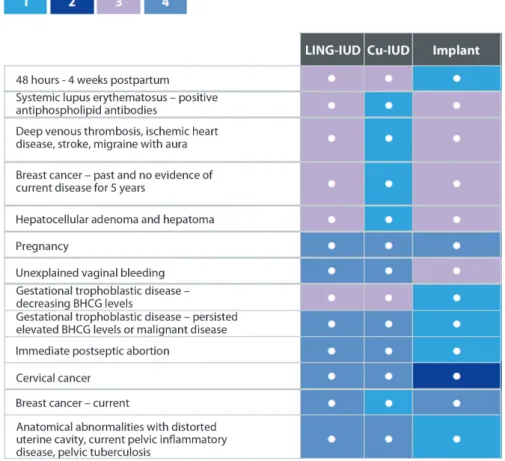
Long-acting reversible contraceptives are recommended for all women who desire effective contraception, including adolescents, nulliparous, women in the postpartum or post-abortion periods, and in comorbidities that may char-acterize contraindications to estrogen-containing methods (D).11Thus, the great scope of LARCs can be attested by the small number of contraindications of these methods.►Fig. 1 shows both the conditions in which LARCs are recommended and not recommended (D).12
Acceptance and Continuity
Long-acting reversible contraception methods maintain their high efficacy regardless of the users’motivation, unlike short-acting reversible contraceptive methods, which rely on correct use to achieve high efficacy. Because of their typical ease of use, LARCs were dubbed‘get it and forget it’(B).13
Contraception experts believed the high rates of unwant-ed pregnancies could be runwant-educunwant-ed by increasing access to LARCs (D).14 The Contraceptive CHOICE Project was con-ducted with this objective. It is a prospective cohort that broke the main barrier to use LARCs: the cost. The purpose of the CHOICE Project was to evaluate the satisfaction and continuity rates among all reversible contraceptive methods, including LARCs (B).15
The CHOICE results coincided with the experts’thinking: continuity and satisfaction rates were higher among LARC users (in all age groups) when compared with short-acting contraceptive methods (86.2% versus 54.7%, and 83.7% versus 52.7% respectively). It is important to note that most partic-ipants of the CHOICE Project had low income, were at high risk for unwanted pregnancies, and 41.8% of the study participants had had at least one abortion (B).15The overall discontinuity rate was higher among adolescents (14–19 years of age) compared with adult women (>25 years of age). In addition, for two years, two-thirds of adolescent LARC users continued with their method, while only a third of short-acting method users continued to use their method in the same period. Adolescents in the CHOICE study had a lower rate of satisfaction with short-acting methods com-pared with adult women. However, satisfaction rates among LARC users were high and similar among adolescents and adult women (B).16
►Table 1shows the higher continuity rate among LARC
Continuity rates above 80% in thefirst year of use are also reported in other populations, always associated to adequate prior counseling on all contraceptive methods (B).19A Brazil-ian study has observed a trend in the past 15 years of more women continuing to use LARCs and depot medroxyproges-terone acetate (DMPA) until menopause rather than
under-going surgical sterilization, either in them or in their partners. There was also a reduction in female and male sterilization rates in the service. The authors attribute the high continuity rate of LARCs and DMPA observed in the study to the appropriate orientation regarding the high efficacy of these methods (B).20
Higher continuity rates were associated to the beginning of the use of a LARC method in the postpartum period and to higher satisfaction rates (C).21A study with American stu-dents found higher acceptance rates of LARCs among ado-lescents with previous history of vaginal intercourse and younger age (C).22
Counseling and Barriers to Access to Long-acting Methods
There are numerous advantages to LARCs, but their use is still below what is expected due to myths among patients and health professionals.
Counseling is critical to increase the continuity rate of the method. A national study evaluating the efficacy of conven-tional counseling versus intensive counseling among women who chose LARCs did not observe a difference in discontinuity rates between groups. In this study, conventional counseling Fig. 1 Clinical conditions represented by categories of Medical Eligibility Criteria for contraceptive use.
Table 1 Continuity rate of reversible contraceptive methods in
thefirst and second year of use according to different studies
Method WHO18–
1styear % CHOICE
13 –
1styear % CHOICE
13 –
2ndyear %
Pills 67 59 43
Ring 67 56 41
Patch 67 49 39
Injectables 56 57 38
Copper IUD 78 85 77
LNG-IUS 80 88 78
Implant 84 83 68
consisted of verbal guidance on mechanism of action, safety, efficacy, how and when fertility returns, adverse effects of the chosen method, and its non-contraceptive benefits.
For intensive counseling, in addition to information from conventional counseling, a leaflet was provided with a picture of the pelvic anatomy, further explanation of changes in bleeding patterns that could occur during the use of the chosen method, the mechanism of action of menstrual irregularities, and the possibilities of treatment. The authors concluded that routine counseling appears to be sufficient among the majority of women to help improve the rates of continuity and satisfaction among new LARC users (A).23
On the other hand, a study comparing the acceptance of LARCs among post-abortion women undergoing a motiva-tional interview versus common counseling (control) found that more than twice as many women in the intervention group chose and continued to use LARCs (60% versus 31%). Motivational interviewing is a kind of patient-centered counseling that includes reflective listening, open discussion about the advantages and disadvantages of contraceptive methods, always avoiding confrontation, to promote the patients’ own motivation for behavior change. Women in the intervention group also reported higher rates of satisfac-tion with counseling than those in the control group (92% versus 65%) (A).24
Studies have shown that the continuity and satisfaction rates with the contraceptive method are greater when the decision is made by the patient. Women prefer to decide on their contraceptive method autonomously, with less influence of the health professional, and after appropriate advice (B).25 Thus, it is important to explain about all methods clearly and objectively, so patients make an informed decision. Women selected for the CHOICE study received brief infor-mation from a trained professional on the duration, efficacy, and site of implantation of all LARCs (B).26After this orien-tation and eliminating the cost of medications, of the 5,087 women included in the study, 68% chose LARCs, 23% chose combined hormones, and 8% chose medroxyprogesterone acetate (B).13 The training of health professionals is also fundamental to reduce barriers and increase access to LARCs. A study was conducted in 40 family planning services for low-income population in several American cities. It found the training of service providers had increased the counsel-ing, selection and initiation of LARCs among adolescents and young adults compared with women in service settings that did not receive training (start of LARCs: 27% versus 12% for adolescents, and 28% versus 18% for young adults). The intervention was a continuing education course that lasted for half a day based on eligibility criteria and clinical cases, and a practical training to insert IUDs and implants (A).27The American College of Obstetricians and Gynecologists (ACOG) recommends that health professionals provide guidance on LARCs in all consultations with sexually active adolescents. Long-acting reversible contraceptives should be thefirst line of contraceptive option for them, due to the high risk of unwanted pregnancy in this age group (D).28The experience and training of health professionals with LARCs is directly proportional to their supply. A study with more than 1,000
American gynecologists and obstetricians has shown that 95% of the interviewees offer IUDs to patients, while only half of those interviewed offer contraceptive implants. During medical residency, 92% were trained for IUDs, while only 50% were trained for their implantation. Continuing education in the last two years was the most associated variable with provision of contraceptive implants, and 32% of interviewees reported lack of training on insertion as a barrier (B).29
A study with over 200 gynecologists and obstetricians in Latin America on the knowledge of IUDs found deficiencies and contradictions regarding their knowledge and attitudes. Of the participants, 10% did not recognize the high efficacy of LARCs, 80% answered they did not offer IUDs for nulliparous women, and almost 10% did not offer them for adolescents, even though 90% of respondents reported that nulliparous women are candidates for LNG-IUS (B).30In addition to the importance of appropriate counseling to increase access to LARCs, other barriers need to be overcome, such as the high cost of the medications. Studies have shown that LARCs are the most cost-effective reversible methods, although they are still inaccessible to the low-income population (B).31
The most commonly mentioned barrier for the use of LARCs is the cost of the medications (63%), followed by the women’s lack of knowledge about their safety, acceptability, and expectations. The shortage of trained health professio-nals was a commonly cited barrier, especially among primary health care providers (49%) (D).32
Clinical Features, Indications and Clinical
Management with Long-acting Reversible Methods
Levonorgestrel Intrauterine System
The LNG-IUS has a reservoir containing 52 mg of levonor-gestrel, measures 32 mm in length, and releases 20μg of
levonorgestrel per day. Through the control membrane, the system releases levonorgestrel, which starts circulating in the plasma 15 minutes after insertion. The release rate of 20 μg/day drops throughout use, stabilizing at around
12–14μg/day, untilfinally reaching 11μg/day at the end of
5 years, the recommended time for using LNG-IUS (D).33 According to Luukkainen and Toivonen (D),34the main mech-anisms of action that collaborate to obtain a contraceptive with fewer side effects and high effectiveness are the following:
• thick cervical mucus hostile to sperm penetration, inhib-iting the sperm’s motility in the cervix, endometrium and fallopian tubes, preventing fertilization;
• high levonorgestrel concentration in the endometrium, preventing response to circulating estradiol;
• strong anti-proliferative effect in endometrium; • inhibition of mitotic activity in the endometrium; and • maintenance of estrogenic production, enabling good
vaginal lubrication.
for both‘correct’and‘habitual’use (B) (A).36Its satisfaction rate showed indexes higher than 75% in thefirst year (A).37 One of the main points of the LNG-IUS is its local action on the endometrium, leading to endometrial atrophy. This endometrial atrophy allows the appearance of clinical effects such as amenorrhea and/or oligomenorrhea, which differen-tiate it from patients using copper IUDs (A).36Simply put, the beneficial effects of the LNG-IUS are the following:
• increased hemoglobin concentration; • it is an effective treatment for menorrhagia;
• it is an alternative to hysterectomy and endometrial ablation;
• it prevents anemia;
• it can be used in endometrial protection for hormone replacement therapy; and
• it minimizes the effects of tamoxifen on the endometrium.
With these non-contraceptive effects, LNG-IUS can offer alternatives to the treatment of menorrhagia, endometrial hyperplasia and adenomyosis. It offers good results in im-proving symptoms and menstrual pattern in women with endometriosis and uterinefibroids (C).38
Clinical Management
The use of LNG-IUS may present some complications and, although not so frequent, these possibilities should be dis-cussed before insertion. Anticipatory guidance on possible side effects helps to achieve better user acceptance, good results and, consequently, a higher rate of continuity of use of LNG-IUS. In addition, anticipatory guidance allows a greater understanding of the method by the users, and leads to a faster search of professionals or services, in case any compli-cation is perceived. The most common side effects are:
• expulsion; • pain or bleeding; • perforation; • infection;
• ectopic pregnancy; and • topical pregnancy.
Signs of possible complications that may lead to the return of patients to the doctor are the following:
• significant bleeding or abdominal pain within thefirst three tofive days after insertion may indicate perforation at the time of insertion or the possibility of infection or displacement of the LNG-IUS;
• irregular bleeding or pain in all cycles may correspond to displacement or partial expulsion of the LNG-IUS; • fever or chills with or without vaginal discharge may
indicate the presence of infection;
• persistent pain during sexual intercourse may relate to infection, perforation or partial expulsion;
• menstrual delay with pregnancy symptoms or expulsion of the LNG-IUS may indicate intra or extrauterine preg-nancy, although rarely observed; and
• longer or non-visible LNG-IUS string may indicate dis-placement of the device or even gestation.
LNG-IUS and Infections
Bacterial infections may appear because of endometrial cavity contamination at the time of LNG-IUS insertion, and although acute pelvic inflammatory disease (PID) is quite rare, when it occurs, it is more common in thefirst 20 days after insertion (C).39Administration of doxycycline (200 mg) or azithromycin (1 g) an hour before insertion of the IUS may protect against pelvic infections, but the prophylactic use of antibiotics should not be indicated for women at low risk for sexually transmitted diseases who are candidates for LNG-IUS insertion. On the other hand, in women with a potential risk for bacterial endocarditis, antibiotic prophylaxis should be used an hour before insertion or removal of the LNG-IUS. During thefirst year of use, the infection rate is low for both the LNG-IUS and TCu-380A. After three years, the rate of acute PID in LNG-IUS users is lower than that of TCu-380A users (0.5% and 2.0%, respectively). The low rate of acute PID in young women under 25 years of age stands out. In patients aged between 17 and 25 years, the difference is quite signifi -cant, with an index of 5.6% inTCu-380A users, and 0.3% in LNG-IUS users (C).39In conclusion, the risk of developing pelvic inflammatory disease associated with IUDs is quite low and related to the moment of insertion (B).40
LNG-IUS and Perforations
Perforations are rare complications occurring in 1.3 times per 1,000 insertions. The careful insertion technique is the main form of prevention (B).40 Perforation usually occurs when the LNG-IUS is not inserted in the direction of the uterine cavity, or when the cavity length (hysterometry) is not measured correctly.
At the time of perforation, patients experience severe pain, and the insertion procedure must be interrupted immediately. The LNG-IUS must be removed through deli-cate traction of the strings, which solves the vast majority of cases. Perforation may be partial or complete. Pelvic ultraso-nography, particularly the transvaginal one, is of great value for the diagnosis of perforations, enabling a more appropri-ate conduct in each case.
In cases of partial perforation, hysteroscopy is indicated to remove the device when traction maneuvers of the strings are not successful.
In complete perforations or beyond the uterine serosa, laparotomy or laparoscopy are indicated to locate the LNG-IUS and remove it (C).41
LNG-IUS and Ectopic Pregnancy
Anderson, Odlind and Rybo (A)36found an ectopic pregnancy rate of 0.2 women/year after 5 years of LNG-IUS use, com-pared with 2.5 women/year in Nova-T (Bayer, Leverkusen, Germany) users. Other studies have not observed the occur-rence of ectopic pregnancies in patients using LNG-IUS. These numbers represent a reduction of 80% to 90% in ectopic pregnancy risk when compared with women not using contraception. For ectopic pregnancy, the approximate Pearl index is 0.02 per 100 women/year (D).33
LNG-IUS and Topical Pregnancy
Although pregnancy rates are extremely low, its occurrence in women using the LNG-IUS requires adequate conduction according to the location of the gestational sac in relation to the LNG-IUS and the gestational age at the time of the diagnosis (C).42
If the device strings are visible on specular examination (gestation not greater than 12 weeks), they should be gently removed by continuous and gentle traction. If the strings are not visible on the specular examination, hysteroscopy per-formed by an experienced and careful professional usually solves most cases.
In cases of more advanced gestation, with the LNG-ISU distant from the internal bore of the cervix, removal at-tempts should be avoided, as the occurrence of failure is very high. In these cases, advice for the pregnant woman is key, bearing in mind it is a pregnancy with increased risk of abortion, preterm labor and infections. In addition, it should be monitored and examined frequently in the prenatal routine or in the presence of any sign or symptom of hemorrhagic and/or infectious complications.
LNG-IUS and Acne
The occurrence of acne (12%), weight gain (7%), depressive mood (5%) and headache are minor side effects, and most often do not require LNG-IUS removal for their treatment (D).43Severe cases are rare, and the user should be advised to remove the LNG-IUS only when there is no clinical improve-ment with the use of spironolactone (100 mg/day for 3 months) in mild and moderate cases, and/or Roaccutane (Hoffman-La Roche, Basel, Switzerland) in cases of more intense symptomatology (C).44
Copper Intrauterine Device
Intrauterine devices are the most known long-acting meth-ods, and copper IUDs are the most widely used in the world (D).45The device
’s mechanism of action is the alteration of sperm motility and decrease of its viability caused by cervi-cal mucus with high copper concentrations (C).46,47In addi-tion, increased leukocytes and cytokines in the uterine cavity drastically reduce the likelihood of fertilization (A).48Despite being scarcely used in Brazil (less than 5% of sexually active women use IUDs), these methods are highly effective, low cost, and easy to use (B).49,50
Copper-containing IUDs do not contain hormones, and the most widely used types nowadays are the TCu-380 IUD and the Multiload R375 IUD. They are more effective than other models with lower copper concentrations that were used in the past. They are easily inserted or removed and, at the same time, do not require that the women or their partners remember to use or apply them daily, enhancing the con-traceptive effect (B).49
The TCu-380 IUD is probably the most widely used in the world. It has a ten-year durability, and very low Pearl index (one pregnancy or less in every 100 users in thefirst year of use, and accumulating the rate of 3 out of every 100 users after 5 years) (B).49The cumulative pregnancy rate through-out 20 years in a Brazilian clinic was 4 in every 100 women/
year (B).51 Large randomized clinical trials have shown copper IUDs remain effective for 12 to 13 years (A).52
Insertion of Copper IUD
Traditionally, IUDs are inserted during the menstrual peri-od, because the uterine cervix is believed to be discretely dilated. However, the advantage of this practice is the exclusion of pregnancy. Although unusual, IUDs can be inserted at any point in the menstrual cycle if the pregnan-cy is safely excluded. In addition, IUDs can be inserted immediately after miscarriage, or in the immediate post-partum period (A).52
For a long time, nulliparity was a reason for contraindi-cating IUD use. However, recent studies have demonstrated no greater difficulty in IUD insertion into nulliparous women (failure rates of insertion are similar to those of multiparous women), as well as similar acceptance, tolerability and pain compared with women with previous pregnancies (B).53 Though this group is known to have a slight increase in expulsion rates in thefirst 6 months (B),53the World Health Organization (WHO) currently considers it category 2 of the eligibility criteria, that is, the benefits outweigh the possible harm (D).12
Medications to Facilitate IUD Insertion
One of the main limiting factors for IUD use is pain during insertion. Medications such as misoprostol (prostaglandin inhibitor), non-steroidal anti-inflammatory drugs (NSAIDs), and local anesthetics have been used to try to minimize this pain. A recent systematic review found 15 randomized clinical trials (A).54The evidence did not show the insertion was easier, neither a reduction in the need for techniques to dilate the uterine cervix, nor higher success rates (A).54Only a study with women who underwent a failed insertion proce-dure showed higher success rates in the group that used misoprostol prior to the procedure compared with the placebo group (A).55 The use of diclofenac plus 2% intra-cervical lidocaine also showed no positive effect on insertion (A).56
Acceptability of the TCu-380 IUD
A recent Australian study followed a cohort of TCu-380 IUD users to learn more about which women used the method. Between 2009 and 2012, 211 women were monitored. One third of the women were under 30 years of age, 36.5% had never been pregnant, and the main reasons to choose the method were effectiveness and not wanting to use hormonal methods. The continuity rate was 79.1% and 61.3% at the end of 1 and 3 years respectively (B).57
IUD and Pelvic Inflammatory Disease
PID. Therefore, the method can be offered to patients previ-ously considered outside the eligible group for their use (D).58,59
Irregular Bleeding with Copper IUD
It is unclear why copper IUDs increase uterine bleeding. This may occur due to increased subendometrial vascularization in users of this method (D).60A comparative study between users of TCu-380 and LNG-IUS showed greater uterine bleeding in thefirst month after insertion of the TCu-380 with subsequent decrease until the third month, when the menstrual pattern stabilizes (C).61 No study has shown satisfactory results in the treatment of irregular bleeding with copper IUD. Empirically, in an attempt to avoid prema-ture removal of the IUD, clinicians have used NSAIDs (to try to decrease vascular proliferation factors) or combined oral contraceptives to stabilize the endometrium. One of the causes of this bleeding may be infection and, if early-stage PID is suspected, the use of broad-spectrum antibiotics can improve irregular bleeding because they treat subclinical endometritis.
Etonogestrel Implant
Implants are plastic devices placed under the skin that continuously release progestogens. In Brazil, the only ap-proved implant is IMPLANON, which is a single rod,4 cm
long by 2 mm thick, containing 68 mg of etonogestrel (ENG) (3-ketodesogestrel), the active metabolite of desogestrel, involved in a non-radiopaque ethylene vinyl acetate (EVA) membrane (B).62
The contraceptive effect is achieved mainly through con-sistent ovulation inhibition (C).4Alongside ovulation inhibi-tion, ENG also causes alterations in the cervical mucus that hinder sperm passage, as well as alterations in the endome-trium, making it less suitable for nidation (C).63,64On the other hand, after the removal, the users’serum levels become undetectable within a week, then most women show ovula-tion and are able to conceive within a few days after implant removal (B).65
Indications for ENG implantation depend on the women’s preference, on comorbidities in which estrogens cannot be used, and on vulnerable groups such as adolescents, drug addicts and women with HIV.
Management of Events and Adverse Events
A follow-up of more than 900 women for 3 years (C)66 showed that among general events, complaints of headache (in 15% of patients) are more frequent during the first 6 weeks, when ENG release has a higher concentration (60 to 70 mcg/day) (B).67,68 The headache usually occurs at the end of the day without hemicrania characteristics and, when necessary, common analgesics are effective (C).69 Another characteristic complaint of estrogenic action is mastalgia (10%). However, in cases of implants, it is also more frequent in the initial six-week period, generally well-tolerated, requiring mostly the reassurance of no risk of malignancy. If needed, common analgesics are effec-tive (C).69
A meta-analysis study found complaints regarding weight gain from 12% of the patients. Importantly, this gain with isolated progestogen methods is similar to that found in women using other hormonal and non-hormonal contracep-tive methods (A).70The CHOICE study showed no difference in weight gain among LARC (copper IUD, LNG-IUS and ENG implant) users during the first year of follow-up (B).71 Therefore, if there is weight gain, women should be con-sulted about any changes in lifestyle and diet (C).69
Acne as an adverse event was reported by 11% of the users. The most likely women to complain about acne are former users of the combined hormonal method. Because of ethinyl estradiol (EE), such method greatly increases the sex hormone-binding globulin (SHBG), considerably decreasing free testosterone (B).72 The ENG-releasing implant, on the other hand, has a neutral effect on the SHBG (C).63 There-fore, the replacement of the EE method by the implant causes SHBG levels to fall rapidly, increasing free testoster-one. There is no study evaluating the use of anti-androgenic drugs in the acne of the users of progestogen-only methods. However, for the management of this adverse event, it is possible to initially use 100 to 200 mg/day of spironolactone and, if there is no improvement, 25 mg/day of cyproterone acetate for 15 days/month or throughout the month, for about 6 months (D).73
As the ENG-releasing implant does not inhibit the follicle-stimulating hormone (FSH) (C),63,64follicular cysts can occur in25% of the users after 12 months (C),74but these ovarian
cysts are benign, with no repercussion for the women, and tend to disappear in 12 weeks. Usually, they are occasional
findings, and do not cause symptoms. However, if there is abdominal pain, the use of non-steroidal analgesics or anti-inflammatory drugs may be indicated (C).69
The main adverse event of the ENG-releasing implant, as of any progestogen-only contraceptive, is the change in the bleeding pattern and also the main cause for abandoning the method.23,75To discuss irregular bleeding, it is important to know the patterns of vaginal bleeding induced by the con-traceptive methods (C),76taking into account the number of days and the intensity of the vaginal bleeding or spotting (spotting/bleeding of small quantity with use of at most one pad or tampon/day) for a 90-day period, called reference period (RP). The following are considered: 1) amenorrhea: absence of bleeding in the RP; 2) infrequent bleeding: up to three episodes (days) of bleeding in the RP; 3) normal frequency: between three andfive episodes of bleeding in the RP; 4) frequent bleeding: more thanfive episodes in the RP; 5) prolonged bleeding: more than 14 days of bleeding (uninterrupted) in the RP.
Studies show these bleedings are usually well-tolerated by women, provided they are well-oriented prior to insertion (B).23,75Amenorrhea, infrequent bleeding and regular bleed-ing are considered a favorable bleedbleed-ing pattern, while fre-quent and prolonged bleeding is considered unfavorable. As shown in►Table 2, the great majority of women presented a favorable bleeding pattern, and only 20–25% presented an unfavorable pattern (frequent or prolonged bleeding) (C)
How to Manage Irregular Bleeding?
• Guidance regarding the expected bleeding pattern prior to the insertion (B).23,75
• Patience in thefirst 6 months is key, since50% of women
with an unfavorable pattern have a chance to improve their bleeding pattern (C).78
• Rule out all other bleeding causes if the pattern remains unfavorable after six months or associated pain appears (B).79
• Treat as often as necessary, and with medications that can be used and demonstrated in studies to be better than placebo, though with different strength of evidence:79,80 • 30 mcg of EEþ150 mcg of LNG for 1 to 3 cycles with or
without pause between cartons (A).
• Tranexamic acid 500 mg - 1,000 mg every 8 hours for 5–7 days (A). The treatment can be repeated as many times as necessary, as long as they do not exceed 7 days. • Doxycycline 100 mg every 12 hours for 5–7 days (C). Here, the action is of decreasing metalloproteinases, and not the known antibiotic action.
• Non-steroidal anti-inflammatory drugs (C). The most studied were:
– Ibuprofen: 400 mg, every 8 hours for 5 days. – Mefenamic acid: 500 mg, every 8 hours for 5 days. – Celecoxib: 200 mg/day for 5 days.
• Estrogens (C): they have not shown to be better than placebo at usual doses. Because of the decrease in estrogen receptors, their action is difficult. Ethynil estradiol 50 mcg/day was effective to decrease bleed-ing in users of LNG-releasbleed-ing implants.78
• Progestogens-only (D): even though to date there are no studies comparing them to placebos, they have been increasingly used:
• Desogestrel 75 mcg/day for 1–3 cycles.
• Norestisterone 10 mg every 12 hours for 21 days. • Medroxyprogesterone acetate (MPA) 10 mg every
12 hours for up to 21 days.
Special Situations for Use of Long-acting Contraceptive Methods
Adolescents and Nulliparous Women
After a decline in the past 15 years, the rate of teenage pregnancy returned to grow for thefirst time in 2006 in the USA, an increase of3% over the rate of 2005 in women aged
between 15–19 years (B).1Part of this can be explained by
the fact that the most popular contraceptive methods used by adolescents depend on correct use for their effectiveness. Adolescents want a safe and effective contraception method, butfind barriers to know and access the different options, often because of the high initial cost.
Guidance to adolescents about contraception should in-clude information on all available methods, including IUDs and implants asfirst-line methods. However, many doctors do not feel safe inserting IUDs and implants in adolescents because they are not trained to do so. A study with predomi-nantly medical professionals concluded that only 31% of them considered IUDs an appropriate method for adoles-cents; 50% would insert an IUD in a 17-year-old girl with a child, and only 19% would insert it in an adolescent with the same age without children, which goes totally against the available guidelines (B).81
Currently, the most popular forms of contraception in adolescents are condoms and the withdrawal method (coitus interruptus), followed by contraceptive pills (B).82Only 3.6% of women aged 15–19 years use IUDs. The use of less reliable methods probably contributes to the 80% rate of unwanted pregnancy among adolescents aged 15–19 years.
Age and parity are not contraindications to use LARCs. Thus, they are indicated to adolescents and nulliparous women (D).12
There are few studies of implants in adolescents. In a retrospective study (2010–2013), Obijuru et al (B),83 evalu-ated 116 records of adolescents using etonogestrel implants who were in follow-up in an adolescent clinic.
Although in this group 39% of the participants reported previous use of oral contraceptives, and 27% previous use of DMPA, only 14% of the patients were using the method at the time of implant insertion.
Among them, 35% used only condoms, 42% did not use any contraceptive method, only 3% used IUDs, and 3% used implants. This means the majority of sexually active adoles-cent (77%) patients were at risk of gestation, considering the low efficacy of condoms as a contraceptive method.
Of the 116 participating patients, 94% were nulliparous, and complete follow-up was available for 81% of them. The authors considered as early removal of the implant if it happened in less than 32 months. The implant continuity rate at 12, 24 and 32 months was 78%, 50% and 40% respectively.
Removal in less than 32 months occurred in 35% of the cases. Early removal because of uncomfortable bleeding oc-curred in 18% (17/94) of the patients. There was no significant association between body mass index, uncomfortablebleeding and early removal of the implant. The results indicate the continuity rate is high at 12 and 24 months, with 40% of patients reaching 32 months of implant use, a significant period of pregnancy protection (B).83
There are different guidelines for IUD use in adolescents. In 2007, the committee of the American College of Obstetri-cians and Gynecologists (D)84 recommended considering IUDs asfirst-line options for contraception in adolescents with or without children. The WHO also supports the use of IUDs in adolescents by providing eligibility criteria 2
Table 2 Bleeding pattern with use of ENG-releasing implant
Bleeding pattern ENG implant%
Amenorrhea 22-40
Infrequent 30-40
Regular 20
Unfavorable pattern 6.7 frequentþ17.7 prolonged
(benefits superior to risk) for women at menarche aged 20 years (D).12The American Academy of Pediatrics (D)85 also considers IUDs to be safe in nulliparous adolescents, not causing tubal infertility. Their removal is followed by the rapid return of fertility.
Health professionals often do not identify adolescents as potential candidates for using intrauterine methods. Part of this thought results from the old fear that IUDs caused pelvic inflammatory disease (PID) and tubal infertility, which would be particularly worrying in childless adolescents. Current evidence discards this association. The use of IUDs does not increase the risk of pelvic inflammatory disease of the upper genital tract above the baseline risk expected for women.
In addition to the unfounded fear of tubal infertility, the IUD is often avoided in adolescents because of the thought of its greater risk of expulsion and adverse effects in nulliparous women compared with multiparous women. A study of 129 nulliparous LNG-IUD users found an expulsion rate of less than 1% per year in women who had never been pregnant (B).36Other studies also found no increased risk of expulsion in nulliparous women, nor a relationship with endometrial cavity size measured by hysterometer or ultrasonography (regardless of parity) (B).86
Immediate Postpartum Period and Post-abortion Usually, the prescription of contraceptives in the puerperal period occurs around six weeks after delivery (A).87On the other hand, the rates of missed postpartum consultations are high, ranging from 10 to 40%, which makes many women exposed to a new gestation (C).69Despite the contraceptive effectiveness of lactation and amenorrhea, in Brazil, the aver-age period of exclusive breastfeeding is around 50 to 60 days (median of 54 days) (C).88Thus, it seems opportune that some women initiate contraception still in the maternity, particu-larly among drug users, distant dwellers, and those who would not have access to puerperium consultations. Long-acting reversible contraceptives are alternatives for these women. The WHO recommends the use of all LARCs in thefirst 48 hours after delivery, provided there are no contraindications to these methods (D).12In this situation, continuity rates at 12 months are high, and, in adolescents who used LARCs in the immediate postpartum period, there was more than 80% reduction in the risk of a new pregnancy in 1 year (B).89
The expulsion rates of copper IUD and LNG-IUS are higher at immediate postpartum insertion, and higher than the rates observed in users of implants inserted in the postpartum period (39% versus 14% respectively) (B).90Long-acting revers-ible contraceptives inserted in the immediate postpartum period appear not to affect lactation, growth, and neonatal and infant development (A).91The insertion of LARCs after abortion is released if the woman wishes to become pregnant (WHO), since ovulation occurs in more than 90% of women in the month following the abortion (D).12
Drug Addiction
In Brazil, there are370,000 people who use crack or similar
drugs, of which 21% are women (78,000) and, of these, 13% are pregnant (10,000) (C).92
Crack consumption has been directly associated with HIV infection. The prevalence among women is double that of men (C).92In Cracolândia, an area in the central region of the city of São Paulo where crack users gather, 9% of women have positive serology for HIV (B).93 The most frequent risk behaviors in this population are the high number of partners, unprotected sex, and the exchange of sex for drugs or money to buy drugs, especially among sex workers (B).94–96
Compared with the general population, morbidity is increased among female drug users with regard to abortions (16.1%), fetal intrauterine death (1.7%) and prematurity (20.6%) (B).93Female drug users in Brazil had 3.4
–3.8 preg-nancies/woman, and birth rates of 2.6–2.9 live children/ woman (B).95
All these reasons determine the need to avoid pregnancies in this vulnerable population due to the damages caused by drugs, and because they are high-risk pregnancies. Much has been written about the consequences of substance use during pregnancy, but there has been much less focus on preventing these unwanted pregnancies in women with disorders with the use of opioid substances and their derivatives.
The studies demonstrate the unmet contraception de-mand, especially for the most effective methods, compared with non-user women, such as long-acting reversible con-traception, and barriers to easier access and use. A way to alleviate the problem would be for institutions to treat the use of substances in conjunction with services providing contraception to promote the use of those methods (A).97,98 Approximately 35% of women who use drugs do not use any contraceptive method (B).93 In a systematic review performed in 2015 (6 studies), when opioid-user women took contraception, they did it less frequently than non-users (56% versus 81% respectively). The percentages of use varied as follows: IUDs, 7%; implants, 15%; tubal ligation, 17%; oral hormonal contraceptives, 17%; and quarterly injectable, 8%. No study evaluated the vaginal ring or transdermal patch. The use of moderately effective methods was observed as follows: condom, 62%; diaphragm, 10%; sponge and natural methods,4%; and less effective methods, such as foam
(3%) and vaginal shower (23%). The condom is the most widely used method because of its dual function of prevent-ing sexually transmitted diseases (STDs) (A).97In Brazil, the efficacy of the methods should be adjusted with the avail-ability of safe methods that do not depend on the willingness of female drug users to use them, given the difficulty in tracing this population.
With regard to very effective methods, tubal ligation can be performed as long as it is available in the basic health network, within established clinical criteria, and with in-formed and signed consent, avoiding the criticisms of the movements contrary to the ‘sterilization’ process (D).99 Despite the difficulties in access and the rapid return of fertility after the time of use, LARCs can be offered (A).98
used, and it promotes safe protection against unwanted pregnancy (B).93
As short-duration methods are difficult to use in drug users and have a 9% real failure rate, they should be avoided (A).9Although the quarterly injectable method has up to 3% of failure rate, it can be an option, but it needs active control of health agencies (A).9Condoms should always be recom-mended and offered, given the risks of sexually transmitted diseases.
Ethical and Legal Aspects for the Procedure of Inserting Long-acting Methods in Adolescents In Brazil, the use of the informed consent form (ICF) in studies involving human beings wasfirst proposed by Reso-lution number 01/88 of the Brazilian National Health Coun-cil, and the entire chapter IV of Resolution 196/96-CNS/MS is dedicated to it.101Although the ICF was more widely used in clinical trials, the value of consent was extended to routine medical care situations. Thus, in article 1 of January 21 2016 (Federal Council of Medicine recommendation 1/2016), it is emphasized that physicians should consider the ICF in decisions about patient health care.102
The insertion of LARCs is characterized as a medical procedure; hence, it could follow the precepts of establishing the informed consent. Age is the main controversial point, because there are differences in the interpretation of laws involving adolescents. The WHO characterizes adolescence as the second decade of life (10 to 19 years), and youth as the period between 15 and 24 years of age. The Brazilian Statute of the Child and Adolescent, in Article 2, considers people aged up to 12 incomplete years as children, and those aged between 12 and 18 years as adolescents. The Brazilian Civil Code, in turn, considers the age of 18 years for the practice of all acts of civil life. People older than 16 years can reach civilian majority for certain acts (emancipation, marriage, exercise of effective public employment, etc.).103
The Brazilian Statute of the Child and Adolescent pre-serves privacy, confidentiality and informed consent as fundamental rights. The‘family power’(old parens patriae) of the parents or legal guardians is not an absolute right.104 However, in Brazil, according to the new article 217-A of the penal code modified by law 12.015/2009, article 3, the age of consent for sex is 14 years. Article 217-A of the Criminal Code defines as ‘rape of a vulnerable’ the act of ‘having carnal conjunction’or practicing libidinous acts with somebody aged under 14 years, regardless if real violence has occurred. That is, if a minor under 14 years of age engages in any sexual act, it may be considered sexual violence, even if the act was performed on one’s own free will.105
Article 228 of the Brazilian Federal Constitution estab-lishes that “minors under 18 years of age are criminally unimputable, subject to the norms of a special legislation,” and, in accordance with the constitutional norm, the Statute of the Child and Adolescent infraction regime does not follow the typical system of Criminal Law based on criminal types and minimum and maximum penalties for each offense. The Statute of the Child and Adolescent does not refer to penal-ties or crimes practiced by adolescents, mentioning only
infractions and social and educational measures that are not individualized for each specific conduct. There is no refer-ence to“criminal liability”in the Statute of the Child and Adolescent.103
The Brazilian Pediatric Society (SBP, in the Portuguese acronym) and the Brazilian Federation of Gynecology and Obstetrics Societies (FEBRASGO, in the Portuguese acronym) have prepared a document stating that the“prescription of contraceptive methods”should take into account the ado-lescents’ request, and respect medical eligibility criteria regardless of age. The prescription of contraceptive methods for adolescents younger than 14 years of age is no unlawful act of the physician, as long as the aforementioned criteria are respected. In the care of sexually active adolescents younger than 14 years, there is no longer the presumption of rape, as long as there is professional knowledge that it is not happening, based on information provided by the ado-lescent and careful evaluation of the case, all of which must be duly recorded in the patients’medical record (D).106
As this is a difficult issue, the Women’s Health Reference Center (in the city of São Paulo) provided an alternative to this situation by adopting a term of consent for adolescents aged younger than 15 years using an etonogestrel subdermal implant as contraceptive. The document is signed by the adolescent, and has the same guidelines contained in the ICF, although more appropriate to that age, in addition to the regular ICF signed by the legal guardian (B).93
In conclusion, since there are many doubts in this situa-tion, the consent of the adolescents and the legal guardians are considered for the use of LARCs, reinforcing the con-traceptive counseling and suggesting the use of the ICF. These aspects still need further debate among the involved socie-ties and public bodies.
Final Recommendations
1. Long-acting reversible contraceptives include the copper IUD, the LNG-IUS and the etonogestrel implant (D). 2. Long-acting reversible contraceptives have greater
con-traceptive efficacy compared with short-duration meth-ods (B).
3. Long-acting reversible contraceptives have greater ac-ceptance and continuity rates, and less contraindications compared with short-duration methods (A).
4. Anticipatory guidance about the bleeding pattern in each method is key, because, although low, discontinuity of the use of LARCs is mainly due to irregular bleeding (B). 5. Intrauterine methods do not increase the risk of PID (B). 6. Intrauterine methods may be indicated to women with
history of ectopic pregnancy (B).
7. The LNG-IUS and the etonogestrel implant may be indi-cated for lactating women, including during the imme-diate postpartum period, because they are not related to thromboembolic events, and do not affect milk produc-tion and the infants’growth and development (A). 8. The postpartum insertion of intrauterine methods is
9. Long-acting reversible contraceptives can be indicated to adolescents and nulliparous women (B).
10. Intrauterine methods and the etonogestrel implant do not increase the risk of venous thromboembolism (A). 11. The etonogestrel implant plays an important role in the
contraception of vulnerable groups, such as drug users and homeless people (B).
12. The insertion of LARCs in adolescents should be per-formed after consent of the legal guardian as well, and the ICF can be used (D).
13. The main barriers for the use of LARCs are related to access and cost. Training the health professionals, pro-viding proper guidance in particular, is also fundamental to reduce the barriers and expand the access to LARCs (B).
Conclusion
Long-acting reversible contraceptives are more effective contraceptive methods than short-acting contraceptive methods. They present a higher continuity rate, and have a small number of contraindications. Irregular bleeding is the main cause of discontinuation. They can be indicated for nulliparous women and adolescents, and can be inserted in the postpartum or immediate post-abortion. Intrauterine methods are not associated with increased risk of PID, provided that the technical rigors of insertion are observed. The main barriers to the use of LARCs are access and cost. Health professionals involved in contraceptive measures should prioritize appropriate guidance and training to offer and recommend LARCs.
Note
This study is part of the Guidelines and Recommendations of the FEBRASGO, and its authors are members of the Brazilian National Specialized Commission in Contraception.
References
1 Sedgh G, Singh S, Hussain R. Intended and unintended
pregnan-cies worldwide in 2012 and recent trends. Stud Fam Plann 2014; 45(03):301–314
2 Darroch JE, Singh S. Trends in contraceptive need and use in
developing countries in 2003, 2008, and 2012: an analysis of national surveys. Lancet 2013;381(9879):1756–1762
3 Brasil. Ministério da Saúde. Pesquisa Nacional de Demografia e Saúde da Criança e da Mulher–PNDS 2006: dimensões do processo reprodutivo e da saúde da criança. Ministério da Saúde, Centro Brasileiro de Analise e Planejamento. Brasília (DF): Ministério da Saúde; 2009. 300 p.
4 Viellas EF, Domingues RM, Dias MA, et al. Prenatal care; maternal
and child health; maternal-child health services. Cad Saude Publica 2014;30(Suppl 1):S1–S15
5 Yazdkhasti M, Pourreza A, Pirak A, Abdi F. Unintended pregnancy
and its adverse social and economic consequences on Health System: a narrative review article. Iran J Public Health 2015; 44(01):12–21
6 Gipson JD, Koenig MA, Hindin MJ. The effects of unintended
pregnancy on infant, child, and parental health: a review of the literature. Stud Fam Plann 2008;39(01):18–38
7 Abajobir AA, Maravilla JC, Alati R, Najman JM. A systematic review
and meta-analysis of the association between unintended preg-nancy and perinatal depression. J Affect Disord 2016;192:56–63
8 Espey E, Ogburn T. Long-acting reversible contraceptives:
intrauterine devices and the contraceptive implant. Obstet Gynecol 2011;117(03):705–719
9 Trussell J. Contraceptive failure in the United States.
Contra-ception 2011;83(05):397–404
10 Mansour D, Inki P, Gemzell-Danielsson K. Efficacy of contra-ceptive methods: a review of the literature. Eur J Contracept Reprod Health Care 2010;15(Suppl 2):S19–S31
11 Committee on Gynecologic Practice Long-Acting Reversible
Con-traception Working Group. Committee Opinion No. 642: In-creasing Access to Contraceptive Implants and Intrauterine Devices to Reduce Unintended Pregnancy. Obstet Gynecol 2015;126(04):e44–e48
12 World Health Organization (WHO). Medical eligibility criteria for
contraceptive use [Internet]. 5th ed. Geneva: WHO 2015. [cited 2016 Oct 10]. Available from: www.who.int/reproductivehealth/ publications/family_planning/MEC-5/en/
13 Peipert JF, Zhao Q, Allsworth JE, et al. Continuation and
satisfac-tion of reversible contracepsatisfac-tion. Obstet Gynecol 2011;117(05): 1105–1113
14 Klein JD; American Academy of Pediatrics Committee on
Ado-lescence. Adolescent pregnancy: current trends and issues. Pediatrics 2005;116(01):281–286
15 Sedgh G, Finer LB, Bankole A, Eilers MA, Singh S. Adolescent
pregnancy, birth, and abortion rates across countries: levels and recent trends. J Adolesc Health 2015;56(02):223–230
16 Rosenstock JR, Peipert JF, Madden T, Zhao Q, Secura GM.
Con-tinuation of reversible contraception in teenagers and young women. Obstet Gynecol 2012;120(06):1298–1305
17 O&neil-Callahan M, Peipert JF, Zhao Q, Madden T, Secura G. Twenty-four-month continuation of reversible contraception. Obstet Gynecol 2013;122(05):1083–1091
18 Trussell J. Contraceptive efficacy. In: Hatcher RA, Trussell J, Nelson AL, Cates W, Kowal D, Policar M, editors. Contraceptive technology: twentieth revised edition. New York (NY): Ardent Media; 2011
19 Sapkota S, Rajbhandary R, Lohani S. The impact of balanced
counseling on contraceptive method choice and determinants of long acting and reversible contraceptive continuation in Nepal. Matern Child Health J 2016 [Epub ahead of print]
20 Ferreira JM, Monteiro I, Castro S, Villarroel M, Silveira C,
Baha-mondes L. The use of long acting reversible contraceptives and the relationship between discontinuation rates due to meno-pause and to female and male sterilizations. Rev Bras Ginecol Obstet 2016;38(05):210–217
21 Dickerson LM, Diaz VA, Jordon J, et al. Satisfaction, early removal,
and side effects associated with long-acting reversible contra-ception. Fam Med 2013;45(10):701–707
22 Hoopes AJ, Ahrens KR, Gilmore K, et al. knowledge and
accept-ability of long-acting reversible contraception among adolescent women receiving school-based primary care services. J Prim Care Community Health 2016;7(03):165–170
23 Modesto W, Bahamondes MV, Bahamondes L. A randomized
clinical trial of the effect of intensive versus non-intensive counselling on discontinuation rates due to bleeding distur-bances of three long-acting reversible contraceptives. Hum Reprod 2014;29(07):1393–1399
24 Whitaker AK, Quinn MT, Munroe E, Martins SL, Mistretta SQ,
Gilliam ML. A motivational interviewing-based counseling inter-vention to increase postabortion uptake of contraception: A pilot randomized controlled trial. Patient Educ Couns 2016;99(10): 1663–1669
25 Dehlendorf C, Diedrich J, Drey E, Postone A, Steinauer J.
Prefer-ences for decision-making about contraception and general health care among reproductive age women at an abortion clinic. Patient Educ Couns 2010;81(03):343–348
26 Secura GM, Allsworth JE, Madden T, Mullersman JL, Peipert JF.
long-acting reversible contraception. Am J Obstet Gynecol 2010; 203(02):115.e1–115.e7
27 Gibbs SE, Rocca CH, Bednarek P, Thompson KM, Darney PD,
Harper CC. Long-acting reversible contraception counseling and use for older adolescents and nulliparous women. J Adolesc Health 2016;59(06):703–709
28 Committee on Adolescent Health Care Long-Acting Reversible
Contraception Working Group, The American College of Obste-tricians and Gynecologists. Committee opinion no. 539: adoles-cents and long-acting reversible contraception: implants and intrauterine devices. Obstet Gynecol 2012;120(04):983–988
29 Luchowski AT, Anderson BL, Power ML, Raglan GB, Espey E,
Schulkin J. Obstetrician-gynecologists and contraception: long-acting reversible contraception practices and education. Contraception 2014;89(06):578–583
30 Bahamondes L, Makuch MY, Monteiro I, Marin V, Lynen R.
Knowledge and attitudes of Latin American obstetricians and gynecologists regarding intrauterine contraceptives. Int J Wo-mens Health 2015;7:717–722
31 Mavranezouli I; LARC Guideline Development Group. The
cost-effectiveness of long-acting reversible contraceptive methods in the UK: analysis based on a decision-analytic model deve-loped for a National Institute for Health and Clinical Excellence (NICE) clinical practice guideline. Hum Reprod 2008;23(06): 1338–1345
32 Foster DG, Barar R, Gould H, Gomez I, Nguyen D, Biggs MA.
Projections and opinions from 100 experts in long-acting reversible contraception. Contraception 2015;92(06):543–552
33 Beatty MN, Blumenthal PD. The levonorgestrel-releasing
intrau-terine system: Safety, efficacy, and patient acceptability. Ther Clin Risk Manag 2009;5(03):561–574
34 Luukkainen T, Toivonen J. Levonorgestrel-releasing IUD as a
method of contraception with therapeutic properties. Contra-ception 1995;52(05):269–276
35 Lähteenmäki P, Rauramo I, Backman T. The levonorgestrel
in-trauterine system in contraception. Steroids 2000;65(10-11): 693–697
36 Andersson K, Odlind V, Rybo G. Levonorgestrel-releasing and
copper-releasing (Nova T) IUDs during five years of use: a randomized comparative trial. Contraception 1994;49(01): 56–72
37 Power J, French R, Cowan F. Subdermal implantable
contra-ceptives versus other forms of reversible contracontra-ceptives or other implants as effective methods of preventing pregnancy. Co-chrane Database Syst Rev 2007;(03):CD001326
38 Fraser IS. Non-contraceptive health benefits of intrauterine hormonal systems. Contraception 2010;82(05):396–403
39 Farley TMM, Rosenberg MJ, Rowe PJ, Chen JH, Meirik O.
Intrau-terine devices and pelvic inflammatory disease: an international perspective. Lancet 1992;339(8796):785–788
40 Sivin I, Stern J, Coutinho E, et al. Prolonged intrauterine
contra-ception: a seven-year randomized study of the levonorgestrel 20 mcg/day (LNg 20) and the Copper T380 Ag IUDS. Contra-ception 1991;44(05):473–480
41 Margarit LM, Griffiths AN, Vine SJ. Management of levonorges-trel-releasing intrauterine system (LNG-IUS) uterine perfora-tion. J Obstet Gynaecol 2004;24(05):586–587
42 Family Planning: A Global handbook for Providers. Baltimore and
Geneva: CCP and WHO; 2007
43 National Institute for Health and Clinical Excellence (NICE).
Long-acting reversible contraception. London: Royal College of Obstetricians and Gynecologists; 2005
44 Karri K, Mowbray D, Adams S, Rendal JR. Severe seborrhoeic
dermatitis: side-effect of the Mirena intra-uterine system. Eur J Contracept Reprod Health Care 2006;11(01):53–54
45 World Contraceptive Use. 2007 [Internet]. United Nations
Department of Economic and Social Affairs. Population Division. [cited 2017 Feb 20]. Available from: http://www.un.org/esa/
population/publications/contraceptive2007/contraceptive2007. htm
46 Jonsson B, Landgren BM, Eneroth P. Effects of various IUDs on
the composition of cervical mucus. Contraception 1991;43(05): 447–458
47 Roblero L, Guadarrama A, Lopez T, Zegers-Hochschild F. Effect of
copper ion on the motility, viability, acrosome reaction and fertilizing capacity of human spermatozoa in vitro. Reprod Fertil Dev 1996;8(05):871–874
48 O’Brien PA, Marfleet C. Frameless versus classical intrauterine device for contraception. Cochrane Database Syst Rev 2005;(01): CD003282
49 Sivin I, Batár I. State-of-the-art of non-hormonal methods of
contraception: III. Intrauterine devices. Eur J Contracept Reprod Health Care 2010;15(02):96–112
50 Bahamondes L, Díaz J, Petta C, Monteiro I, Monteiro CD,
Regina CH. Comparison of the performances of TCu380A and TCu380S IUDs up to five years. Adv Contracept 1999;15(04): 275–281
51 Long-term reversible contraception. Twelve years of experience
with the TCu380A and TCu220C. Contraception 1997;56(06): 341–352
52 Bahamondes L, Bottura BF, Bahamondes MV, et al. Estimated
disability-adjusted life years averted by long-term provision of long acting contraceptive methods in a Brazilian clinic. Hum Reprod 2014;29(10):2163–2170
53 Díaz J, Pinto Neto AM, Bahamondes L, Díaz M, Arce XE, Castro S.
Performance of the copper T 200 in parous adolescents: are copper IUDs suitable for these women? Contraception 1993; 48(01):23–28
54 Zapata LB, Jatlaoui TC, Marchbanks PA, Curtis KM. Medications to
ease intrauterine device insertion: a systematic review. Contra-ception 2016;94(06):739–759
55 Bahamondes MV, Espejo-Arce X, Bahamondes L. Effect of vaginal
administration of misoprostol before intrauterine contraceptive insertion following previous insertion failure: a double blind RCT. Hum Reprod 2015;30(08):1861–1866
56 Fouda UM, Salah Eldin NM, Elsetohy KA, Tolba HA, Shaban
MM, Sobh SM. Diclofenac plus lidocaine gel for pain relief during intrauterine device insertion. A randomized, double-blinded, placebo-controlled study. Contraception 2016;93(06): 513–518
57 Bateson D, Harvey C, Trinh L, Stewart M, Black KI. User
char-acteristics, experiences and continuation rates of copper intrau-terine device use in a cohort of Australian women. Aust N Z J Obstet Gynaecol 2016;56(06):655–661
58 Mishell DR Jr. Intrauterine devices: mechanisms of action, safety,
and efficacy. Contraception 1998;58(3, Suppl)45S–53S, quiz 70S
59 d’Arcangues C. Worldwide use of intrauterine devices for contra-ception. Contraception 2007;75(6, Suppl)S2–S7
60 Jiménez MF, Vetori D, Fagundes PA, de Freitas FM, Cunha-Filho JS.
Subendometrial microvascularization and uterine artery blood
flow in IUD-induced side effects (levonorgestrel intrauterine system and copper intrauterine device). Contraception 2008; 78(04):324–327
61 Suvisaari J, Lähteenmäki P. Menstrual bleeding patterns in
copper IUD and IUS users. Contraception 1996;54(04): 201–208
62 Croxatto HB, Urbancsek J, Massai R, Coelingh Bennink H, van
Beek A; Implanon Study Group. A multicentre efficacy and safety study of the single contraceptive implant Implanon. Hum Reprod 1999;14(04):976–981
63 Mäkäräinen L, van Beek A, Tuomivaara L, Asplund B, Coelingh
Bennink H. Ovarian function during the use of a single contra-ceptive implant: Implanon compared with Norplant. Fertil Steril 1998;69(04):714–721