Are There Changes in the Fatty Acid Pro
fi
le of
Breast Milk with Supplementation of Omega-3
Sources? A Systematic Review
Existem mudanças no per
fi
l de ácidos graxos no
leite materno com a suplementação de fontes de
ômega 3? Uma revisão sistemática
Yasmin Notarbartolo di Villarosa do Amaral
1Daniele Marano
1Leila Maria Lopes da Silva
1Aline Carnevale Lia Dias Guimarães
1Maria Elisabeth Lopes Moreira
11Clinical Research Unit, Instituto Nacional de Saúde da Mulher, da Criança e do Adolescente Fernandes Figueira, Fundação Oswaldo Cruz, Rio de Janeiro, RJ, Brazil
Rev Bras Ginecol Obstet 2017;39:128–141.
Address for correspondence Yasmin Notarbartolo di Villarosa do Amaral, MSc, Fundação Oswaldo Cruz, Instituto Nacional de Saúde da Mulher, da Criança e do Adolescente Fernandes Figueira, Unidade de Pesquisa Clínica, Av. Rui Barbosa, 716, Flamengo, 22250-020, Rio de Janeiro, RJ, Brasil (e-mail: [email protected]).
Keywords
►
pregnant women
►
breastfeeding
►
human milk
►
omega-3 fatty acids
►
systematic review
Abstract
Purpose
To evaluate the effect of supplementation with omega-3 sources on the fatty
acid composition of human milk.
Methods
The review consisted of the search for articles published in PubMed,
Biblioteca Virtual de Saúde (Virtual Health Library[VHL]) and Web of Science databases
using the following keywords:
fatty acids
,
omega-3
,
human milk
and
supplementation
; for
this purpose, we have used the program of research to integrate the services for the
maintenance of autonomy (PRISMA) checklist. The following selection criteria were
used: articles in English, Portuguese, Spanish or Italian, published between 2000 and
2015, and about studies performed in humans. We found 710 articles that met the
established criteria; however, only 22 of them were selected to be part of this study.
Results
All studies found a positive relationship between the consumption of
omega-3 sources and their concentration in human milk. The differences in the
fi
ndings are due
to the distinct methods used, such as the speci
fi
c time of the omega-3
supplementa-tion, the type of omega-3 source offered, as well as the sample size.
Conclusion
Although the studies were different in several methodological aspects, it
was possible to observe the importance of omega-3 supplementation during gestation
and/or the puerperium.
Resumo
Objetivo
Avaliar o efeito da suplementação com fontes de ômega 3 sobre a
composição de ácidos graxos do leite humano.
received February 11, 2016 accepted
December 20, 2016 published online March 17, 2017
DOI http://dx.doi.org/ 10.1055/s-0037-1599094. ISSN 0100-7203.
Copyright © 2017 by Thieme-Revinter Publicações Ltda, Rio de Janeiro, Brazil
Introduction
The importance of polyunsaturated fatty acids of the
omega-3 (ω-3) series (docosahexaenoic acid [22:6 ω3, DHA] and
eicosapentaenoic acid [20:5ω3, EPA]) in the development of
the fetal brain, as well as in the cognitive and visual acuity of the child, is widely recognized. These fatty acids are part of the composition of the cell membranes and the nervous system, especially DHA, which is preferentially transported by the placenta to the fetus and provides important
compo-nents to the phospholipid membrane.1,2
The amount of fatty acids in human milk (HM) depends on maternal stocks, dietary intake and synthesis thereof in the
mammary glands.3The concentration of DHA varies speci
fi
-cally, probably due to the woman’s feeding habits, since its
synthesis in the mammary gland is minimal.1,2,4 During
gestation and lactation, this synthesis is limited by the fetus. For this reason, numerous studies have been conducted to evaluate the effects of the supplementation of this fatty acid
on the composition of HM .4,5Other facts to be taken into
consideration are that the concentration of DHA in HM decreases as lactation progresses, and that supplementation
during lactation raises DHA concentrations in breast milk.6
The study conducted by Bortolozo et al (2013)2aimed to
evaluate the impact of omega-3 fatty acid supplementation between the third trimester of pregnancy and the third
month after delivery, and its influence on the composition
of HM. Although no statistical difference was found in the total lipid values between the studied groups, the milk of
mothers supplemented withfish oil had higher
concentra-tions of DHA and EPA, demonstrating that a higher
consump-tion of omega-3 may influence its concentration in HM.2
However, the results on the effects of omega-3
supplemen-tation during gessupplemen-tation are still contradictory.4
Due to the controversies between the studies, as well as to the importance of the theme for the health of the newborn, this systematic review aims to evaluate the studies that
verified the effects of omega-3 supplementation during
pregnancy and/or the puerperium on the composition of
HM. The bibliographical survey of this theme aims to assist the maternal and infant populations, together with health professionals, to determine the importance of supplementa-tion, offering subsidies for its practice.
Methods
A systematic review of the available literature consisted of a
retrospective search of scientific articles that aimed to
evaluate the composition of HM after supplementation with omega-3 fatty acids.
The following bibliographic databases have been used: PubMed, Biblioteca Virtual da Saúde (Virtual Health Library [VHL]) and Web of Science. The search for the articles was performed independently by two researchers, and it began in August and ended in October of 2015. The selected studies were published during the period comprised between 2000 and 2015. The following keywords were used in the
search strategy: fatty acids, omega-3, human milk and
supplementation.
The bibliographic search was performed according to the established strategy, and resulted in 710 articles. A total of 163 articles were found in the VHL database; however, after reading the abstracts, we have selected 11 thereof; 239 articles were found in the PubMed database; however, we have only selected 21of these; and 308 articles were found in the Web of Science database, from which we have selected 2 articles. Thus, a total of 22 articles have been selected to compose the present study, reiterating that there were 12 articles replicated in the analyzed databases. The others were suppressed for the following reasons: discussion of different associations between omega-3 and HM, such as allergy, visual acuity and growth; literature reviews; studies repli-cated across different databases; studies published in other languages and/or that were were not available in their entirety. We used a checklist with 27 items and a 4-step
flowchart, advocated by PRISMA,7 which aims to help
authors improve the reporting of systematic reviews.
Métodos
A revisão consistiu na busca de artigos publicados nas bases de dados
PubMed, Biblioteca Virtual de Saúde e
Web of Science
utilizando-se as palavras-chave:
ácidos graxos
,
ômega-3
,
leite materno
e
suplementação
; para isso, foi utilizado o checklist
PRISMA. Foram utilizados os seguintes critérios para a seleção: artigos publicados em
inglês, português, espanhol ou italiano, entre os anos de 2000 a 2015, sobre estudos
realizados em humanos. A busca bibliográ
fi
ca, segundo a estratégia estabelecida,
resultou em 710 artigos. Entretanto, apenas 22 destes foram selecionados para
compor a presente revisão.
Resultados
Todos os estudos encontraram relação positiva entre o consumo de
fontes de ômega 3 e sua concentração no leite humano. As diferenças nos achados se
devem aos métodos empregados como, por exemplo, o momento da suplementação
do ômega 3, o tipo de fonte de ômega 3 ofertado, e o tamanho amostral.
Conclusão
Apesar de os estudos serem díspares em inúmeros aspectos
metodoló-gicos, observou-se a importância da suplementação do ômega 3 na gestação e/ou no
puerpério.
Palavras-chave
►
gestantes
►
aleitamento materno
►
leite humano
►
ácidos graxos ômega-3
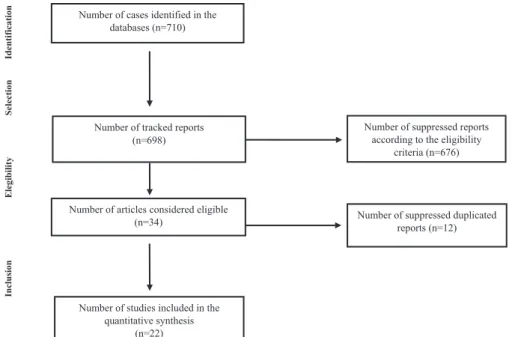
Therefore, a summary of each stage of the selection process of articles that composed this systematic review was arranged
in the Flowchart (►Fig. 1).
The criteria used in the selection of articles for the review included language (Portuguese, English, Spanish and Italian) and year of publication (2000 to 2015).
The selected articles were compared in relation to the following parameters: year of publication, country of origin, sample size, average age of participants, type of design, rate of follow-up losses, period in which the woman and the milk have been evaluated, omega-3 supplementation period, type of supplement, amount offered, omega-3 evaluation meth-ods, confounding factors controlled in the analysis, estima-tors used in the statistical analysis, and main results observed.
Results
Once the established strategy was put into practice, 22 articles were selected by bibliographic search to compose the present revision. Four were originated in the United States, one in Canada, one in Denmark, three in Brazil, three in Australia, three in Chile, one in Israel, one in Iceland, one in Mexico, two in Germany, and two in the Netherlands. Regarding the age groups, the majority of the articles (18) only reported the average age of the participants. Regarding language, two articles were written in Spanish, one in
Portuguese and the remaining ones in English (►Table 1).
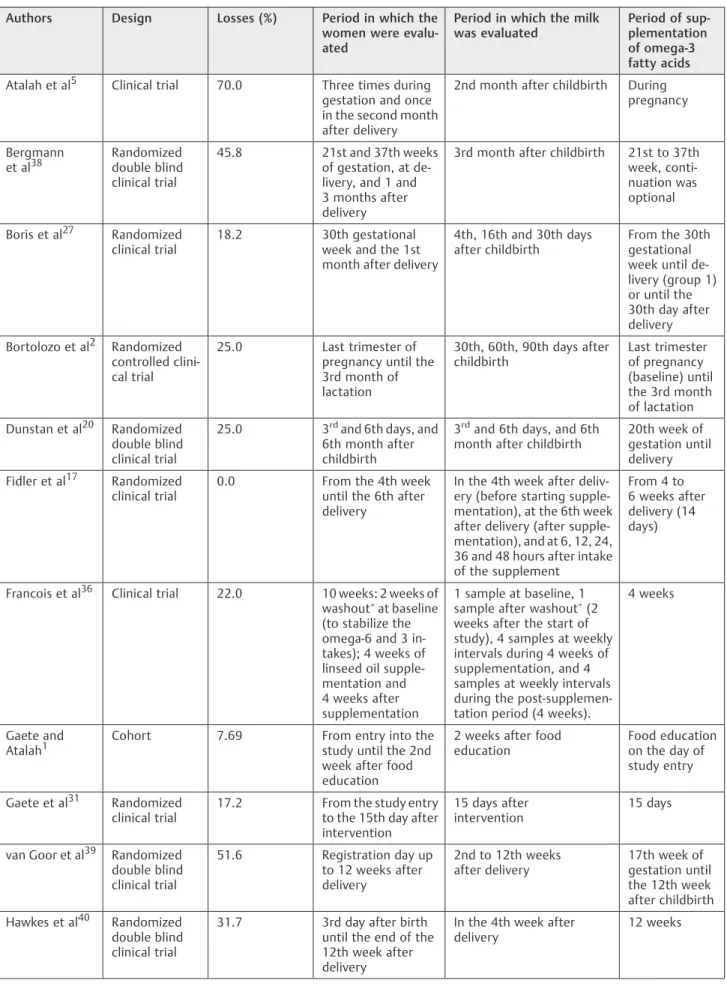
As for the design employed, intervention studies were used in most cases, and there was only one observational study. Information on follow-up losses were obtained from 21 studies. The losses ranged from 0 to 78%. The results among the studies, regarding the period of evaluation of the woman and the milk, were quite dissimilar. Regarding the period of supplementation, it was observed that 12 studies
evaluated supplementation in infants, 7 in pregnant women, and only 3 evaluated supplementation both in pregnancy
and in the puerperium (►Table 2).
In regards to the type of supplement or food offered to the participants, 3 studies used dairy supplements, 16 provided
DHA-rich oils (such as, tuna, single-celled algae, cod,fl
ax-seed), 2 suppliedfish (sardine and jure) and 1 study
per-formed food education to increase the consumption offish
sources. As for the method to evaluate the amount of omega 3 in HM, it was observed that all the studies used chromatog-raphy. The DHA value ranged from 170 mg to 2,200 mg per
day (►Table 3).
Among the 22 selected articles, 9 did not evaluate the consumption of omega-3 food sources. Among those who reported it, the majority (32%) used the food frequency questionnaire (FFQ). Regarding the estimators, it was ob-served that nine studies used the average, seven used the
correlation index,five the median and only one study used
the combination of correlation index with the average. Regarding the exclusion criteria, nine articles did not
men-tion them in the methods (►Table 4).
Regarding supplementation, all studies found a positive relationship between the consumption of omega-3 sources and their concentration in HM, therefore, highlighting the importance of supplementation of these fatty acids during pregnancy and/or puerperium, which translates into positive results in both cognitive development and visual acuity.
Discussion
The omega-3 and omega-6 polyunsaturated fatty acids con-sumed through dietary triglycerides are digested in the small intestines and can then be absorbed, transported into the bloodstream and taken up between tissues throughout the
body (including brain, retina and heart).8Essential dietary
Number of cases identified in the databases (n=710)
Number of suppressed duplicated reports (n=12) Number of tracked reports
(n=698)
Number of suppressed reports according to the eligibility
criteria (n=676)
Number of articles considered eligible (n=34)
Number of studies included in the quantitative synthesis
(n=22)
Identification
Select
ion
Elegibility
Inclusion
Table 1 Year of publication, origin, sample size, and age of the participants of the selected studies on the fatty acid profile of breast milk with the supplementation of omega-3 sources, 2000–2015
Authors Pub year Country Sample (n) Age (years)
Atalah et al5 2009 Chile 352 pregnant
women
Intervention group 26.7 and control group 25.0 (average)
Bergmann et al38 2008 Germany 144 pregnant
women
30.7 (average)
Boris et al27 2004 Denmark 44 pregnant/
puerperal women
NI
Bortolozo et al2 2013 Brazil 80 pregnant/
puerperal women
25.0 (average)
Dunstan et al20 2007 Australia 98 pregnant
women
NI
Fidler et al17 2000 Germany 10 puerperal
women
30.6 (average)
Francois et al36 2003 United States 9 puerperal women
28.0 to 39.0
Gaete and Atalah1
2003 Chile 26 puerperal
women
26.9 (average)
Gaete, Atalah and Araya31
2002 Chile 28 puerperal
women
Intervention group 25.6 and control group 26.4 (average)
van Goor et al39 2009 Netherlands 182 pregnant/ puerperal women
32.4 (average)
Hawkes et al40 2001 Australia 120 puerperal
women
30.2 (average)
Imhoff-Kunsch et al13
2011 Mexico 1,094 pregnant
women
26.0 (average)
Jensen et al18 2000 United States 26 puerperal women
29.2 (average)
Marc et al32 2011 Canada 32 puerperal
women
Intervention group 27.2 and control group 26.9 (average)
Olafsdottir et al41 2006 Iceland 77 puerperal
women
31.0 (average)
Patin et al35 2006 Brazil 31 puerperal
women
27.9 (average)
Ribeiro et al30 2012 Brazil 51 pregnant
women
20.0 to 30.0
Sherry et al42 2015 United States 89 pregnant
women
29.0 (average)
Smit et al37 2000 Israel 26 puerperal
women
23.5 (average)
Smithers et al43 2010 Australia 121 puerperal
women
30.0 (average)
Valentine et al44 2013 United States 21 puerperal wo-men (donors)
31.0 (average)
Weseler et al45 2008 Netherlands 52 pregnant/
puerperal women
31.7 (average)
Table 2 Type of design, losses, period of evaluation and supplementation of sources of omega-3, 2000–2015
Authors Design Losses (%) Period in which the
women were evalu-ated
Period in which the milk was evaluated
Period of sup-plementation of omega-3 fatty acids
Atalah et al5 Clinical trial 70.0 Three times during gestation and once in the second month after delivery
2nd month after childbirth During pregnancy
Bergmann et al38
Randomized double blind clinical trial
45.8 21st and 37th weeks of gestation, at de-livery, and 1 and 3 months after delivery
3rd month after childbirth 21st to 37th week, conti-nuation was optional
Boris et al27 Randomized clinical trial
18.2 30th gestational week and the 1st month after delivery
4th, 16th and 30th days after childbirth
From the 30th gestational week until de-livery (group 1) or until the 30th day after delivery
Bortolozo et al2 Randomized controlled clini-cal trial
25.0 Last trimester of pregnancy until the 3rd month of lactation
30th, 60th, 90th days after childbirth
Last trimester of pregnancy (baseline) until the 3rd month of lactation
Dunstan et al20 Randomized double blind clinical trial
25.0 3rdand 6th days, and 6th month after childbirth
3rdand 6th days, and 6th month after childbirth
20th week of gestation until delivery
Fidler et al17 Randomized clinical trial
0.0 From the 4th week until the 6th after delivery
In the 4th week after deliv-ery (before starting supple-mentation), at the 6th week after delivery (after supple-mentation), and at 6, 12, 24, 36 and 48 hours after intake of the supplement
From 4 to 6 weeks after delivery (14 days)
Francois et al36 Clinical trial 22.0 10 weeks: 2 weeks of washout
at baseline (to stabilize the omega-6 and 3 in-takes); 4 weeks of linseed oil supple-mentation and 4 weeks after supplementation
1 sample at baseline, 1 sample after washout
(2 weeks after the start of study), 4 samples at weekly intervals during 4 weeks of supplementation, and 4 samples at weekly intervals during the post-supplemen-tation period (4 weeks).
4 weeks
Gaete and Atalah1
Cohort 7.69 From entry into the study until the 2nd week after food education
2 weeks after food education
Food education on the day of study entry
Gaete et al31 Randomized clinical trial
17.2 From the study entry to the 15th day after intervention
15 days after intervention
15 days
van Goor et al39 Randomized double blind clinical trial
51.6 Registration day up to 12 weeks after delivery
2nd to 12th weeks after delivery
17th week of gestation until the 12th week after childbirth
Hawkes et al40 Randomized double blind clinical trial
31.7 3rd day after birth until the end of the 12th week after delivery
In the 4th week after delivery
Table 2 (Continued)
Authors Design Losses (%) Period in which the
women were evalu-ated
Period in which the milk was evaluated
Period of sup-plementation of omega-3 fatty acids
Imhoff-Kunsch et al13
Randomized double blind clinical trial
11.0 Gestation (18th to 22nd weeks) until 1 month after delivery
1 month after birth From the 18th to the 22nd ge-stational week until delivery
Jensen et al18 Clinical trial 7.7 2nd to 8th weeks after delivery
At the 2nd, 5th and 8th weeks after delivery
6 weeks
Marc et al32 Clinical trial 25.0 1 postnatal week (between 3 and 7 days) before starting DHA supplementa-tion and at follow-up at 15 days (3 weeks) and 49 days (7 weeks)
First postnatal week (be-tween 3rd and 7th days) before starting supplemen-tation and at follow-up on days 15 and 49
1 week after delivery until term (36 weeks) ->8– 12 weeks of supplementa-tion
Olafsdottir et al41
Randomized clinical trial
48.0 2nd and 4th months after delivery
2nd and 4th months after delivery
Registration day up to 4 months after delivery
Patin et al35 Clinical trial NI 0, 15 and 30 days after delivery
0, 15 and 30 days after delivery
1st and 15th days after delivery
Ribeiro et al30 Randomized clinical trial
78.4 30th gestational week up to 15 days after delivery
15th day after delivery 15 days (from the 30th gesta-tional week)
Sherry et al42 Clinical trial 7.9 From enrollment (4th to 6th weeks after delivery) up to 6 weeks after supplementation
Baseline and 6th week aftersupplementation
6 weeks
Smit et al37 Clinical trial 11.0 For one week Baseline shortly after inges-tion of the supplement. On day 1 and day 7 after the intake of the supplement
1 week
Smithers et al43 Randomized double blind clinical trial
19.0 During all hospitali-zation of the pre-term newborn
At intervals of 2 weeks dur-ing the hospitalization of the newborn
From study en-try (delivery <33 weeks) until the ex-pected date of delivery
Valentine et al44
Randomized clinical trial
38.0 3 days before sup-plementation until 12 weeks post supplementation
0, 7th, 14th, 21st, 28th and 84th days after the supplementation
During all the time they do-nated milk to the milk bank (from 7–90 days)
Weseler et al45 Randomized double blind clinical trial
34.6 Pregnancy (36 weeks) up to the 11th week after delivery
3rd, 5th and 11th weeks after delivery
Gestation (36th week) up to 11th week postpartum
Abbreviation: NI, not informed.
Table 3 Characteristics of the selected studies on the profile of fatty acids in breast milk with omega-3 sources supplementation, 2000–2015
Authors Type of
supplement/food used as source of omega-3
Amount offered Placebo/control Method used to evaluate omega-3 intake
Method to evalu-ate the amount of omega-3 pre-sent in HM
Atalah et al5 Milk drink made from powdered milk and hydro-lyzed cereals en-riched with microencapsula-ted vitamins, minerals and omega-3 fatty acids
60 mg DHAþ14 mg EPA in 200 mL (2 kg/month)
Powdered milk Food survey Chromatography
Bergmann et al38 Supplement based on acidified and flavored milk
Group 1: Basic supplement plus 4.5 g FOS Group 2: Basic supplement with FOSþ200 mg of DHA
Basic supplement enriched with vi-tamins and minerals
NI Chromatography
Boris et al27 Fish oil 900 mg DHA
þ1300 mg EPA/ day
Olive oil NI Chromatography
Bortolozo et al2 Fish oil 315 mg DHA
þ80 mg EPA/day
Maize starch 24h reminder on alternate days of the week, includ-ing a weekend day
Chromatography
Dunstan et al20 Fish oil 2200 mg DHA
þ1100 mg EPA / day
Olive oil NI Chromatography
Fidler et al17 Oil rich in DHA (DHASCO)1
200 mg DHA / day Mixture of soy-bean and corn oils
7-day food record Chromatography
Francois et al36 Linseed oil 10.7 g ALA NI Food survey Chromatography Gaete and Atalah1 Food education NI NI Food survey Chromatography Gaete et al31 Cannedfish(horse
mackerel)
160 gfish 2 times a week
Regular food Food survey Chromatography
van Goor et al39 DHAþARA cap-sules, DHA capsules
Group
1¼220 mg DHA
þ36 mg EPA
þ220 mg ARA
þ7 mg ALAþ46 LA
Group
2¼220 mg DHA, 34 mg EPAþ15
mg ARAþ32 mg ALAþ274 LA
Soybean oil NI Chromatography
Hawkes et al40 Tuna oil Group
1¼300 mg DHA
þ70 mg EPA/day Group
2¼600 mg DHA
þ140 mg EPA/ day
Sunflower seed oil NI Chromatography
Imhoff-Kunsch et al13
fatty acids in the form of linoleic acids (LAs) andα
lino-lenic acids (ALAs) are activated in the forms known as keto-acyl-CoA, and then used for the conversion of long chain polyunsaturated fatty acids and other polyunsaturated prod-ucts, such as those derived from the series of desaturation and elongation reactions that are particularly active in the
liver and, to a lesser extent, in other tissues.8
Linoleic and ALA fatty acids need to be ingested through food, since the human body does not have enzymes to synthe-size them. Some vegetables synthesynthe-size them and are, therefore, an abundant source of these fatty acids, as well as the products derived from these vegetables. Omega-3 fatty acids (DHA and EPA) can be synthesized by the human body to a certain level, albeit a very limited one. The consumption of omega-3 sources Table 3 (Continued)
Authors Type of
supplement/food used as source of omega-3
Amount offered Placebo/control Method used to evaluate omega-3 intake
Method to evalu-ate the amount of omega-3 pre-sent in HM
Jensen et al18 Group 1: supple-ment made from algae with a high content of DHA Group 2: eggs with a high content of DHA
Group 3:fish oil
Group 1: 230 mg DHA/day Group 2: 170 mg DHA/day Group 3: 260 mg DHA/day
Eggs NI Chromatography
Marc et al32 Oil rich in DHA
(DHASCO) 1200 mg DHA/ day
No intervention Food survey Chromatography
Olafsdottir et al41 Cod liver oil 1107 mg DHA
þ783 mg EPA/ day
No intervention 24h reminderþ
additional ques-tions aboutfish consumption
Chromatography
Patin et al35 Fried sardines 4 kg of sardines (2 kg on day 0 and 2 kg on the 15th day)
The study had no control group
24h reminder Chromatography
Authors Type of supple-ment/food used as source ofomega-3
Value offered Placebo/control Method used to evaluate omega-3 intake
Method to evalu-ate the amount of omega-3 present in HM
Ribeiro et al30 Fish oil 0.72 gω3/day Primroseoil 24h reminder Chromatography
Sherry et al42 Oil rich in DHA Group 1: 200 mg DHA/day Group 2: 400 mg DHA/day
NI Food survey and 3-day food records
Chromatography
Smit et al37 Oil rich in ARA and DHA
Group 1: 300 mg ARA/day
Group 2: 300 mg ARAþ110 mg EPA and 400 mg DHA/day
No intervention NI Chromatography
Smithers et al43 Tuna oil 900 mg DHA
þ195 mg EPA
þ54 mg ARA / day
Soybean oil NI Chromatography
Valentine et al44 Seaweed oil 1000 mg DHA Soybean oil 3-day foodrecords Chromatography Weseler et al45 Milk drink made
from powdered milk enriched with LCPUFAs
Group 1: 200 mg ARA/day
Group 2: 400 mg ARA/day
Group 3: 320 mg DHAþ80 mg EPA
Powdered milk NI Chromatography
Abbreviation: ALA,α linolenic acid; ARA, arachidonic acid; DHA, docosahexaenoic acid; EPA, eicosapentaenoic acid; FOS, fructooligosaccharide; HM, human milk; LA, linoleic acid; LCPUFAs, long chain polyunsaturated fatty acids; NI, Not informed.
through diet can be done by ingestingfish orfish oils, and foods
enriched or fortified with these important fatty acids.9
Although ALA in humans is converted to EPA and DHA, the exact percentage of this conversion is unknown, but it is
estimated to be low (5% EPA and 0.5% DHA).10,11Due to their
enzymatic immaturity, children and especially neonates cannot convert all the DHA required for their development
from ALA.12Therefore, feeding in the gestational period is of
great importance as it determines the type of fatty acid that will accumulate in the fetal tissue. The essential fatty acids are transferred through the placenta, and in the third gesta-tional trimester are deposited in the brain and retina of the fetus. It should be noted that the fetus withdraws a total of 50 to 75mg of polyunsaturated fatty acids from the mother,
most of them being DHA.13–16
Numerous studies have been conducted to evaluate the effects of the supplementation of omega-3 and its metabo-lites in pregnancy and puerperium on the composition of HM. This is due to the synthesis of DHA probably occurring
minimally in the mammary gland6,17,18as well as due to the
role that this polyunsaturated fatty acid plays on visual acuity, cognition and in the formation of the nervous tissue
of the newborn.19
Although supplementation appears to be the most reli-able medium for increasing omega-3 levels in HM, there are numerous differences among the studies evaluated in rela-tion to the following parameters: sample size, study design, timing of omega-3 supplementation (gestation and/or
lacta-tion), type of supplementation (fish oil, in naturafish
con-sumption), and amount and type of omega-3 offered (EPA and/or DHA).
Regarding the diversity of the countries where the studies selected for this systematic review were performed, it is worth noting that the consumption of omega-3 rich foods in
Western countries is well below that of other countries.20In
the United States, the intake of omega-3 and its metabolites
(DHA and EPA) was estimated at 1.6 and 0.1–0.2 g/day
respectively, and the dietary ratio between omega-6 and
omega-3 was 9.8:1.21 A study with Canadian pregnant
women showed that the average daily intake of omega-3 and
DHA was 1.45 and 0.082 g/day respectively.22Populations
living in coastal countries, such as Japan and Norway, where
fish are widely consumed, have a higher dietary intake of
omega-3 (>1 g/day), and consequently, high concentrations
of DHA in their breast milk.20,23,24 Although there is no
official dietary recommendation for EPA and DHA in the US,
several expert groups suggest a DHA intake of at least 200 mg/day, which may reach 1,000 mg DHA/day for pregnant
and lactating women, and 1.4–2.7 g of omega-3, and suggest
the omega-6/omega-3 ratio of2–5:1.21,25
Corroborating the above recommendations, the consensus
published by Koletzko et al26states that an average intake of at
least 200 mg of DHA per day is advisable; it also states that consumption of up to 1 g of DHA or 2 to 7 g of omega-3 per day is safe. This amount can be achieved by consuming one to two
servings offish per week, including fattyfish such as herring,
mackerel and salmon. However, it is known that the
consump-tion of fish can contribute significantly to the exposure to
contaminants such as methylmercury, which is particularly toxic to the developing brain and possibly harmful to infant growth. To decrease the amounts of methylmercury in the body, one should reduce the intake of contaminated foods
during the pregestational and gestational periods. Thefish
with the highest levels of methylmercury are predatoryfish
such as marlin, pike, swordfish and shark. However, after an
extensive literature review, the consensus points out that the
beneficial effects of regular consumption offish sources of
DHA during pregnancy appear to overcome the potential drawbacks of the increased intake of contaminants.
Regarding the period of supplementation, the selected studies presented different time periods (pregnant and/or nursing) when omega-3 supplementation was performed and measured, which may partially justify the differences in the results we found. On this issue, in their randomized clinical
trial, Boris et al27 evaluated two hypotheses, namely: 1)
whether omega-3 supplementation during pregnancy in-creased omega-3 levels at the beginning of breastfeeding; and 2) whether the continuation of supplementation after delivery was necessary to sustain the long-term increase in omega-3 levels. There was a marked drop in omega-3 levels in the group that stopped supplementation during the puerperi-um. Such a decrease in the concentration of DHA in breast milk as lactation progresses is corroborated by numerous stud-ies.4,28,29On the other hand, the group that receivedfish oil
during gestation and lactation showed levels of omega-3 three
times higher, and double the levels of DHA.27 It is worth
mentioning that polyunsaturated fatty acids are deposited in the brain during the last gestational trimester, and that this process continues after delivery. Furthermore, the
neurologi-cal development continues during thefirst years of life.27The
results found by Ribeiro et al30also demonstrated that
sup-plementation withfish oil limited to pregnancy was not as
effective as supplementation during pregnancy and lactation. Therefore, supplementation during pregnancy and lactation is
recommended by numerous studies.20,30,31
Important issues to take into account in these studies are the type of omega-3 source and the quantity that was supplied. It
was observed that most of the selected studies usedfish oil to
increase the consumption of omega-3; however, some studies
have used the supply of fresh food, fortified drinks and food
education techniques. The use offish oil has benefits, but it can
lead to low compliance due to its adverse effects, such asfish
flavor eructation, digestive discomfort and night sweats.5,32
The randomized double blind clinical trial conducted by
Dun-stan et al20aimed to evaluate the effects offish oil
supplemen-tation during pregnancy on the composition of HM and on the
development of the infant in thefirst year of life. The
concen-tration of fatty acids in the milk was analyzed on the third day, sixth week and sixth month after delivery. It was observed that
women who receivedfish oil had a higher concentration of EPA
and DHA in the milk on the third day and the sixth week after delivery.
Regarding the consumption offish, the study by
Hender-son et al33demonstrated that ingesting 100
–120 g of
sar-dines 2 to 3 times a week resulted in increased levels of fatty
milk, 2000–2015
Authors Estimator Confounding factors controlled in the analysis
ligibility criteria Exclusion criteria Results
Atalah et al5 Median Age, schooling, parity, initial weight, height, GA at baseline
GA<14 weeks, age18 years, primiparous, absence of chronic pathologies
NI 50% increase in omega-3 concentration in total
fatty acids in HM, a non-statistically significant value (p¼0.06), probably due to the small sample size and insufficient adhesion level
Bergmann et al38
Average Age, pregestational BMI, gesta-tional weight gain, gestagesta-tional age, parity type, parity, marital status, nationality, work, education, female gender, Apgar7 in 10 minutes, umbilical cord pH7.2, weight, length and head circumference
Pregnant, caucasian, healthy women, aged>18 years and intending to breastfeed for at least 3 months
Severe illness, age<18 years, non-Caucasian, increased risk of preterm or multiple pregnancy, allergy to cow milk protein, lactose intolerance, diabetes, smoking, alcohol consumption, participation in another study, consumption of other supplements, prematurity malformations, hospitalization>1 week
The percentage of DHA in the breast milk was twice as high in the DHA-FOS group (0.50%) (p<0.001), and the ratio of ARA to DHA in the DHA-FOS group compared with the other two groups was signifi -cantly reduced from 2.10.76 to 1.00.43 (p<0.001). The Authors concluded that 200mg/ day of DHA from mid-pregnancy to lactation appears to be adequate to improve the state of DHA in mothers and infants
Boris et al27 Average NI NI NI Comparing the two intervention groups, it was
observed that women who receivedfish oil during gestation and lactation had increased levels of omega-3 compared with those who received until gestation only
Bortolozo et al2
Average Age, schooling and income Healthy, pregnant women aged 18–38 years, in the last trimester of pregnancy, non-smokers, no high-risk pregnancies, and adequate dietary patterns
NI The milk of the mothers of the intervention group
presented high levels of DHA and EPA at the 30th and 60th days, demonstrating that higher con-sumption of omega-3 could influence their con-centration in HM, and there was no change between omega-3 and omega-6
Dunstan et al20
Correlation coefficient (R2)
Parity, pre-gestational BMI, age and maternal allergy (allergic rhinitis or asthma)
Pregnant women between the 16th to the 20th gestational weeks and who had delivered after the 36th gesta-tional week, with presence of allergic rhinitis, asthma or positive test in the Prick test
Pregnant smokers, with health problems and with
fish consumption above two meals per week
In the intervention group, colostrum presented a high proportion of DHA and EPA when compared with the control group (p<0.001). During the
three moments, the drop was higher in the inter-vention group when compared with the control group (p<0.001). However, the amount of DHA
and EPA remained higher in the intervention group at 6 weeks postpartum when compared with the control group (p<0.001). At 6 months, no differences were found between groups
Fidler et al17 Correlation coefficient (R2)
Maternal age, height, weight (day 0), weight (day 14), BMI (day 14), milk secretion (mL/day), TL in HM (g/100 mL)
Healthy lactating mother, with omnivorous diet, with single, full-term, healthy newborns
NI At baseline, there was no difference in fatty acid
composition between the intervention and the placebo group. After two weeks of supplementa-tion with 200mg of DHA/day, the milk from the intervention group contained a significantly higher percentage of DHA relative to milk from the pla-cebo group (p¼0.003), a content almost 1.8 times higher of DHA. There was no significant difference in the content of any other fatty acids at any time point after supplementation.
(Continues)
R
e
v
Bra
s
G
ine
col
Obste
t
V
o
l.
39
N
o
.
3
/2017
A
re
T
h
e
re
C
h
an
ges
in
the
Fa
tt
y
A
ci
d
o
f
B
re
a
st
M
ilk
w
ith
S
u
p
p
leme
n
tation
of
O
m
ega-3
?
Amaral
e
t
al.
Table 4 (Continued)
Authors Estimator Confounding factors controlled in the analysis
ligibility criteria Exclusion criteria Results
Francois et al36
Average NI Healthy women aged 28–39 years NI The omega-3 content in HM increased significantly
over time, from 1.0% of total lipids (TL) at baseline to 6.8% of TL after one week of linseed oil supple-mentation. The omega-3 content remained high at 2 and 4 weeks. After 4 weeks of supplementation, the omega-3 concentration reached a peak of 7.7% of TL, and then returned to baseline (1.9% of TL) at 1 week after supplementation
Gaete and Atalah1
Median Weight, height and BMI GA>37 weeks and exclusive
breastfeeding
Women with diabetes, altered lipid metabolism and alcohol and drug dependence
After food education, the consumption offish increased three times in relation to the initial consumption. The increased intake of DHA did not significantly modify the DHA content of the milk. However, in mothers with an intake of DHA>200
mg/day there was a positive correlation between intake and milk content (r¼0.71,p<0.05) Gaete et al31 Median Weight, height, BMI, parity, age of
the newborn
GA>37 weeks and exclusive breastfeeding
Women with diabetes, altered lipid metabolism and alcohol and drug dependence
After supplementation, an increase in the amount of EPA and DHA in HM was observed. DHA consumption in the intervention group increased significantly from 64 mg to 335.9 mg daily
van Goor et al39
Median Maternal age, pregestational BMI, weight, gestational weight gain, GA at birth, birth weight and parity
Women with low risk,first or second pregnancy, and with single gestation
Vegetarian/vegan women and/or with diabetes mellitus
Compared with placebo, supplementation of ARA
þDHA or DHA alone significantly increased the concentration of DHA in milk in both the second (59% and 43%, respectively) and in the 12th (56% and 52%, respectively) week after delivery
Hawkes et al40
Average Maternal age,fish consumption, smoking, alcoholic beverages and side effects
Healthy women, age18 years, single full-term infants, and breast-feeding for12 weeks
Inflammatory diseases, use of anti-inflammatory drugs orfish oil supplements
The concentration of DHA in HM increased linearly in response to the diet with DHA. The authors concluded that the consumption of600 mg/day of DHA and 140 mg/day of EPA for 4 weeks increased the concentrations of omega-3 and its metabolites in relevant tissues but did not cause changes in the concentrations of cytokines in human milk
Imhoff-Kunsch et al13
Correlation coefficient (R2)
Age, GA, parity, BMI, schooling, GA at birth, prematurity and birth weight of the newborn
Women of gestational age between 18–22 weeks, who planned to breast-feed for at least 3 months, aged 18–35 years
High risk pregnancy, lipid absorption or metabo-lism disorder, regular intake offish oil or supple-ments rich in DHA, and frequent use of certain medications
The concentration of DHA in breast milk in the intervention group was higher than for the placebo group (p<0.01)
Jensen et al18 Correlation coefficient (R2)
Age, parity, weight, height, GA, birth weight of the newborn
Pregnant women with the intention to exclusively breastfeed
Maternal age at birth<19 or>35 years,
diabetes, egg allergy, gestational age<37 weeks,
and birth weight<2,500 g or>4,200 g
DHA supplementation increased plasma DHA concentrations in lactating women and in breast milk, resulting in a higher plasma concentration of DHA in children. A positive correlation was found between the DHA, EPA and ARA contents in maternal plasma and breast milk (r2¼66.2%,
p<0.001) Marc et al32 Average Age, BMI, parity, schooling, work,
marital status, use of vitamins, race and income
Childbirth with GA29 weeks and intending to breastfeed
Age<18 years or>40 years,>3fish servings/ week, use of omega-3 supplements,fish allergy, coagulation disorder, drug or alcohol use
The dietary DHA supplement provided during lac-tation increased the concentration of DHA in breast milk in mothers of preterm infants (GA29 weeks) and in the plasma of these infants
R
e
v
B
ra
s
G
inec
o
l
Obst
e
t
V
o
l.
3
9
No.
3
/2017
A
re
T
here
Change
s
in
the
Fa
tt
y
A
ci
d
o
f
B
re
a
st
M
ilk
w
it
h
S
upplementati
on
of
Omega-3?
Amaral
e
t
Authors Estimator Confounding factors controlled in the analysis
ligibility criteria Exclusion criteria Results
Olafsdottir et al41
Correlation coefficient (R2)
Food intake, smoking, alcohol, drug use and schooling
Irish or having lived in the country for at least 15 years, single birth and breastfeeding
NI EPA and DHA were significantly different between
the groups, being 1.3–2.3 times higher in the milk of the intervention group when compared with the control group, without any negative effect on another fatty acids
Patin et al35 Correlation coefficient (R2)
Age, BMI, Parity, gestational weight gain, weight and length of the newborn at birth
Exclusive breastfeeding, no smoking, no allergy/intolerance to sardines, birth weight2500 g, GA between 37 and 42 weeks
NI Consumption of 300 g of sardines per week
in-creased DHA levels in HM
Ribeiro et al30
Averageand correlation coefficient (R2)
NI Age between 20–30 years, 30th week
of gestation, no use of medication, no intolerance/allergy tofish, no use of dietary supplements with omega-3 and omega-6, and with intention to breastfeed exclusively
NI The data confirmed that the omega-3 content in
HM, DHA in particular, is influenced by the consumption of omega-3 by the pregnant woman. A positive correlation was found between omega-3 content in the phospholipids of erythrocytes of pregnant women and the content of these fatty acids in breast milk
Sherry et al42 Average Age, BMI and skin color Age18 years, with full term infants, 4–6 weeks postpartum and who planned to breastfeed for6 weeks
NI Lactating women consumed25% of the
recom-mended amount of DHA/day. The data found demonstrated that supplementation significantly increased DHA in HM, as well as decreased the ratio of omega-6/omega-3
Smit et al37 Average Maternal age, number of children and duration of lactation
Infants between the third and tenth months of breastfeeding
NI The administration of 300 mg ARAþ110 mg
EPAþ400 mg DHA increased the LCPUFAs con-tent in HM, with no significant result
Smithers et al43
Average Age, smoking, schooling, human milk production, breastfeeding at the end of the intervention, single gestation, gestational age at birth, gender and birth weight of the newborn
GA<33 weeks Coagulation disorders, congenital or chromosomal anomalies, and multiple births in which not all live births were eligible
Mothers in the intervention group had 3-fold higher levels of DHA in HM compared with women in the placebo group but also had slightly lower linoleic acid content
Valentine et al44
Median Age and stage of lactation Donor to the human milk bank Women who did not have enough milk to donate The DHA content of the milk increased in the group supplemented with DHA capsules (p<0.05)
Weseler et al45
Correlation coefficient (R2)
Age, pregestational BMI, blood pressure, number of gestations, total fatty acids in milk and erythrocyte
GA (34–35 weeks), intention to breastfeed, pregestational BMI (18–27 kg/m2), consumption of
fish<2x per week, without use of omega-3 sup-plements, alcohol, cigarette, drugs or supplements
GA<37 or>43 weeks, allergy/intolerance to
supplements and vegetarian components
It was observed that the concentrations of DHA in HM increased significantly after 2 weeks of supplement intake (320 mg DHAþ80 mg EPA)
Abbreviations: BMI, body mass index; ARA, arachidonic acid; DHA, docosahexaenoic acid; EPA, eicosapentaenoic acid; GA, gestational age; HM, human milk; LCPUFAs, long chain polyunsaturated fatty acids; NI, not informed; TL, total lipids.
R
e
v
Bra
s
G
ine
col
Obste
t
V
o
l.
39
N
o
.
3
/2017
A
re
T
h
e
re
C
h
an
ges
in
the
Fa
tt
y
A
ci
d
o
f
B
re
a
st
M
ilk
w
ith
S
u
p
p
leme
n
tation
of
O
m
ega-3
?
Amaral
e
t
al.
with this, and have observed that in order to increase 0.5 to
1 g of DHA in breast milk, it is necessary to consume 350–
750 g of 1% fat or 75–150 g of 10%fish fat. In the study by
Patin et al,35it was observed that the levels of DHA in HM
increased with the ingestion of 300 g of sardines per week,
with 5% fat, without the need to usefish oil supplementation.
This study recommended the consumption offish two to
three times per week during gestation.
Gaete and Atalah1conducted a prospective study with 26
pregnant women, which consisted of an educational feeding strategy to recommend individual consumption of different preparations based on marine foods. A guide with informa-tion on the importance of maternal lactainforma-tion to the newborn,
and on the importance offish consumption by the mother to
increase DHA levels was also distributed. The strategy of food education is considered an important intervention to raise
awareness about the need forfish consumption during the
gestational and puerperal period.
The study by Atalah et al5aimed to evaluate the effects of
the introduction of omega-3 fortified milk beverages (DHA
and EPA) during gestation on the composition of HM and red
blood cells. One-hundred and seventy-five women from the
intervention group and 177 from the control group were evaluated in the clinical trial. The pregnant women were evaluated at three moments of the pregnancy and once after delivery to evaluate the consumption near the date of the interview. The evaluation of milk composition was per-formed in only 16 women, and a 50% increase in omega-3 in breast milk was observed. However, there was no statisti-cal difference between the evaluated groups in relation to the amount of EPA and DHA, probably due to the small sample size.
Regarding the type of omega-3 offered, seven studies offered DHA and EPA, seven offered DHA only, and three offered DHA, arachidonic acid (ARA) and EPA. It was observed that the amount of DHA was always higher than that of EPA, probably because of its important role on the nervous system, cognition and vision. It is worth noting that there is no consensus regarding the optimal levels of DHA con-sumption at different stages of life. However, most technical groups recommend around 200 to 500 mg/day in the adult population, and, during gestation, it is recommended to
consumefish between two to three times per week.5
There are numerous factors that contribute to the variabili-ty of EPA and DHA content in breast milk, such as lactation stage, gestational age, and maternal nutritional status. What is
verified is that certain selected studies20,27,30,36did not control
the analyses for important confounding factors, such as food consumption. Therefore, estimates of association may be compromised by the fact that certain studies did not quantify follow-up losses, but also because they did not control impor-tant confounding factors.
All selected articles showed the importance of supple-mentation of omega-3 in different forms (capsules, dairy
drinks, strategy for feeding education, consumption offish)
on the nutritional composition of HM in the gestational and/
or puerperal periods. However, four studies1,5,27,37did not
reach statistical significance. This can be partially explained
by the sample size, which can reduce the strength of the study to elucidate possible associations, possible adhesion reduction in relation to the intake of supplements and the food education practices employed, as well as the follow-up losses, which may cause a decrease in the validity of the results.
Conclusion
Although the studies were disparate in several methodolog-ical aspects, the importance of omega-3 supplementation in pregnancy and/or the puerperium, especially DHA, as well as the safety of its supplementation were observed with the data from the studies that composed this systematic review. However, it is of great importance that further studies be conducted to establish the adequate amount of omega-3s and their metabolites during gestation and lactation that will
bring benefit to newborns.
References
1 Gaete GM, Atalah SE. Niveles de LC-PUFA n-3 en la leche materna
después de incentivar el consumo de alimentos marinos. Rev Chil Pediatr 2003;74(02):158–165
2 Bortolozo EAFQ, Sauer E, Santos MS, et al. Supplementation with
the omega-3 docosahexaenoic acid: influence on the lipid com-position and fatty acid profile of HM. Rev Nutr 2013;26(01): 27–36
3 Ballard O, Morrow AL. Human milk composition: nutrients and
bioactive factors. Pediatr Clin North Am 2013;60(01):49–74
4 Nishimura RY, Barbieiri P, Castro GS, Jordão AA Jr, Perdoná GdaS,
Sartorelli DS. Dietary polyunsaturated fatty acid intake during late pregnancy affects fatty acid composition of mature breast milk. Nutrition 2014;30(06):685–689
5 Atalah SE, Araya BM, Rosselot PG, et al. Consumption of a
DHA-enriched milk drink by pregnant and lactating women, on the fatty acid composition of red blood cells, breast milk, and in the newborn. Arch Latinoam Nutr 2009;59(03):271–277
6 Innis SM. Human milk: maternal dietary lipids and infant
devel-opment. Proc Nutr Soc 2007;66(03):397–404
7 Moher D, Liberati A, Tetzlaff J, Altman DG; PRISMA Group.
Preferred reporting items for systematic reviews and meta-ana-lyses: the PRISMA statement. LoS Med 2009;6(07):e1000097
8 Williams CM, Burdge G. Long-chain n-3 PUFA: plant v. marine
sources. Proc Nutr Soc 2006;65(01):42–50
9 Holub BJ. Clinical nutrition: 4. Omega-3 fatty acids in
cardiovas-cular care. CMAJ 2002;166(05):608–615
10 Burdge GC. Metabolism of alpha-linolenic acid in humans.
Pros-taglandins Leukot Essent Fatty Acids 2006;75(03):161–168
11 Kus MM, Mancini-Filho J. Ácidos graxos: eicosapentaenóico (EPA)
e docosahexaenóico (DHA). São Paulo: ILSI Brasil; 2010
12 Agostoni C. Role of long-chain polyunsaturated fatty acids in the
first year of life. J Pediatr Gastroenterol Nutr 2008;47(Suppl 2): S41–S44
13 Imhoff-Kunsch B, Stein AD, Martorell R, Parra-Cabrera S, Romieu I,
Ramakrishnan U. Prenatal docosahexaenoic acid supplementa-tion and infant morbidity: randomized controlled trial. Pediatrics 2011;128(03):e505–e512
14 Carlson SE, Colombo J, Gajewski BJ, et al. DHA supplementation
and pregnancy outcomes. Am J Clin Nutr 2013;97(04):808–815
15 Rogers LK, Valentine CJ, Keim SA. DHA supplementation: current
16 Swanson D, Block R, Mousa SA. Omega-3 fatty acids EPA and DHA:
health benefits throughout life. Adv Nutr 2012;3(01):1–7
17 Fidler N, Sauerwald T, Pohl A, Demmelmair H, Koletzko B.
Docosahexaenoic acid transfer into human milk after dietary supplementation: a randomized clinical trial. J Lipid Res 2000; 41(09):1376–1383
18 Jensen CL, Maude M, Anderson RE, Heird WC. Effect of
docosa-hexaenoic acid supplementation of lactating women on the fatty acid composition of breast milk lipids and maternal and infant plasma phospholipids. Am J Clin Nutr 2000;71(1, Suppl):292S–299S
19 Makrides M. Outcomes for mothers and their babies: do n-3
long-chain polyunsaturated fatty acids and seafoods make a differ-ence? J Am Diet Assoc 2008;108(10):1622–1626
20 Dunstan JA, Mitoulas LR, Dixon G, et al. The effects offish oil supplementation in pregnancy on breast milk fatty acid composi-tion over the course of lactacomposi-tion: a randomized controlled trial. Pediatr Res 2007;62(06):689–694
21 Kris-Etherton PM, Taylor DS, Yu-Poth S, et al. Polyunsaturated
fatty acids in the food chain in the United States. Am J Clin Nutr 2000;71(1, Suppl)179S–188S
22 Denomme J, Stark KD, Holub BJ. Directly quantitated dietary (n-3)
fatty acid intakes of pregnant Canadian women are lower than current dietary recommendations. J Nutr 2005;135(02):206–211
23 Hibbeln JR, Nieminen LR, Blasbalg TL, Riggs JA, Lands WE. Healthy
intakes of n-3 and n-6 fatty acids: estimations considering world-wide diversity. Am J Clin Nutr 2006;83(6, Suppl)1483S–1493S
24 Brenna JT, Varamini B, Jensen RG, Diersen-Schade DA, Boettcher
JA, Arterburn LM. Docosahexaenoic and arachidonic acid con-centrations in human breast milk worldwide. Am J Clin Nutr 2007;85(06):1457–1464
25 Koletzko B, Lien E, Agostoni C, et al; World Association of Perinatal
Medicine Dietary Guidelines Working Group. The roles of long-chain polyunsaturated fatty acids in pregnancy, lactation and infancy: review of current knowledge and consensus recommen-dations. J Perinat Med 2008;36(01):5–14
26 Koletzko B, Cetin I, Brenna JT; Perinatal Lipid Intake Working
Group; Child Health Foundation; Diabetic Pregnancy Study Group; European Association of Perinatal Medicine; European Association of Perinatal Medicine; European Society for Clinical Nutrition and Metabolism; European Society for Paediatric Gas-troenterology, Hepatology and Nutrition, Committee on Nutri-tion; International Federation of Placenta Associations; International Society for the Study of Fatty Acids and Lipids. Dietary fat intakes for pregnant and lactating women. Br J Nutr 2007;98(05):873–877
27 Boris J, Jensen B, Salvig JD, Secher NJ, Olsen SF. A randomized
controlled trial of the effect offish oil supplementation in late pregnancy and early lactation on the n-3 fatty acid content in human breast milk. Lipids 2004;39(12):1191–1196
28 Makrides M, Gibson RA. Long-chain polyunsaturated fatty acid
requirements during pregnancy and lactation. Am J Clin Nutr 2000;71(1, Suppl)307S–311S
29 Bonham MP, Duffy EM, Wallace JM, et al. Habitual fish con-sumption does not prevent a decrease in LCPUFA status in pregnant women (the Seychelles Child Development Nutrition Study). Prostaglandins Leukot Essent Fatty Acids 2008;78(06): 343–350
30 Ribeiro P, Carvalho FD, Abreu AdeA, Sant’anna MdeT, Lima RJ, Carvalho PdeO. Effect offish oil supplementation in pregnancy on
the fatty acid composition of erythrocyte phospholipids and breast milk lipids. Int J Food Sci Nutr 2012;63(01):36–40
31 Gaete MG, Atalah ES, Araya JA. Efecto de la suplementación de la
dieta de la madre durante la lactancia con ácidos grasos omega 3 en la composición de los lípidos de la leche. Rev Chil Pediatr 2002; 73(03):239–247
32 Marc I, Plourde M, Lucas M, et al. Early docosahexaenoic acid
supplementation of mothers during lactation leads to high plasma concentrations in very preterm infants. J Nutr 2011; 141(02):231–236
33 Henderson RA, Jensen RG, Lammi-Keefe CJ, Ferris AM, Dardick KR.
Effect offish oil on the fatty acid composition of human milk and maternal and infant erythrocytes. Lipids 1992;27(11):863–869
34 Harris WS, Connor WE, Lindsey S. Will dietary omega-3 fatty acids
change the composition of human milk? Am J Clin Nutr 1984; 40(04):780–785
35 Patin RV, Vítolo MR, Valverde MA, Carvalho PO, Pastore GM, Lopez
FA. The influence of sardine consumption on the omega-3 fatty acid content of mature human milk. J Pediatr (Rio J) 2006;82(01): 63–69
36 Francois CA, Connor SL, Bolewicz LC, Connor WE. Supplementing
lactating women withflaxseed oil does not increase docosahex-aenoic acid in their milk. Am J Clin Nutr 2003;77(01):226–233
37 Smit EN, Koopmann M, Boersma ER, Muskiet FA. Effect of
sup-plementation of arachidonic acid (AA) or a combination of AA plus docosahexaenoic acid on breastmilk fatty acid composition. Prostaglandins Leukot Essent Fatty Acids 2000;62(06):335–340
38 Bergmann RL, Haschke-Becher E, Klassen-Wigger P, et al.
Supple-mentation with 200 mg/day docosahexaenoic acid from mid-pregnancy through lactation improves the docosahexaenoic acid status of mothers with a habitually lowfish intake and of their infants. Ann Nutr Metab 2008;52(02):157–166
39 van Goor SA, Dijck-Brouwer DA, Hadders-Algra M, et al.
Human milk arachidonic acid and docosahexaenoic acid contents increase following supplementation during pregnancy and lactation. Prostaglandins Leukot Essent Fatty Acids 2009; 80(01):65–69
40 Hawkes JS, Bryan DL, Neumann MA, Makrides M, Gibson RA.
Transforming growth factor beta in human milk does not change in response to modest intakes of docosahexaenoic acid. Lipids 2001;36(10):1179–1181
41 Olafsdottir AS, Thorsdottir I, Wagner KH, Elmadfa I.
Polyunsatu-rated fatty acids in the diet and breast milk of lactating icelandic women with traditionalfish and cod liver oil consumption. Ann Nutr Metab 2006;50(03):270–276
42 Sherry CL, Oliver JS, Marriage BJ. Docosahexaenoic acid
supple-mentation in lactating women increases breast milk and plasma docosahexaenoic acid concentrations and alters infant omega 6:3 fatty acid ratio. Prostaglandins Leukot Essent Fatty Acids 2015; 95:63–69
43 Smithers LG, Markrides M, Gibson RA. Human milk fatty acids
from lactating mothers of preterm infants: a study revealing wide intra- and inter-individual variation. Prostaglandins Leukot Es-sent Fatty Acids 2010;83(01):9–13
44 Valentine CJ, Morrow G, Pennell M, et al. Randomized controlled
trial of docosahexaenoic acid supplementation in midwestern U. S. human milk donors. Breastfeed Med 2013;8(01):86–91
45 Weseler AR, Dirix CE, Bruins MJ, Hornstra G. Dietary arachidonic