David José Souto
Patinha
Análise de compostos triterpénicos na
casca de espécies de Eucalyptus
Analysis of triterpenic compounds in the
bark of Eucalyptus species
David José Souto
Patinha
Análise de compostos triterpénicos na
casca de espécies de Eucalyptus
Analysis of triterpenic compounds in the
bark of Eucalyptus species
Dissertação apresentada à Universidade de Aveiro para cumprimento dos requisitos necessários à obtenção do grau de Mestre em Química, realizada sob a orientação científica da Doutora Carmen Freire, Investigadora Auxiliar do CICECO da Universidade de Aveiro e do Doutor Juan José Villaverde Mella, Estagiário de Pós-Doutoramento do CICECO e do Departamento de Química da Universidade de Aveiro.
Apoio financeiro do projecto AFORE (CP-IP 228589-2) no âmbito do VII Quadro Comunitário
de Apoio
Dedico este trabalho aos meus pais, irmã, namorada e amigos pelo incansável apoio.
o júri
presidente Prof. Doutor Artur Manuel Soares da Silva
Professor Catedrático do Departamento de Química da Universidade de Aveiro
Doutora Paula Cristina de Oliveira Rodrigues Pinto
Investigadora Auxiliar do LSRE da Faculdade de Engenharia da Universidade do Porto
Doutora Carmen Sofia da Rocha Freire Barros
Investigadora Auxiliar do CICECO do Departamento de Química da Universidade de Aveiro
Doutor Juan José Villaverde Mella
Estagiário de Pós-Doutoramento do CICECO e do Departamento de Química da Universidade de Aveiro
agradecimentos Quero agradecer à Dra. Carmen Freire e ao Dr. Juan Villaverde pela excelente orientação científica, dedicação, compreensão, incentivo e paciência ao longo de todo o tempo.
Um agradecimento especial ao Prof. Doutor Armando J. D. Silvestre pelo acompanhamento total e contínuo deste trabalho.
Agradeço ao Prof. Doutor Artur Silva pela realização e discussão dos espectros de ressonância magnética nuclear.
Agradeço em especial à Sónia Santos e ao Rui Domingues pelas dicas e ajuda ao longo do trabalho.
Agradeço a todos os colegas (nacionais e estrangeiros) dos laboratórios, aquário, bancada e mesa pelo bom ambiente vivido, pelas gomas, pelas pausas para café e pelos conselhos.
Agradeço a toda a minha família mas principalmente aos meus pais Armanda e António pelo apoio total durante toda a minha formação pessoal e académica.
Agradeço à minha irmã Daniela por tudo o que tem feito por mim até hoje em todos os aspectos.
Um carinho especial à Catarina que me acompanha em todos os momentos.
Agradeço aos meus amigos Ângelo S., B. Reis, Bruno C., Humberto C., Mickael S.,Nuno F., Pedro F., Tiago B., Tiago M. pelo companheirismo e presença constante.
palavras-chave Eucalyptus nitens, Eucalyptus grandis x globulus, biorrefinaria, casca, extração Soxhlet, ácidos triterpénicos, 3-hidroxiolean-18-en-28-oato de metilo, GC-MS, RMN.
resumo Portugal tem na indústria de pasta e papel um forte sector da sua economia. Estas indústrias geram anualmente grandes quantidades de resíduos, sendo a casca um dos principais. O fim destes resíduos é normalmente a queima em caldeiras de biomassa para produção de energia, mas com o surgir do conceito da biorrefinaria, estes resíduos podem ser aproveitados de maneira mais eficiente, nomeadamente através da extração prévia da fração lipofílica das cascas de eucalipto ricas em ácidos triterpénicos com elevado valor comercial e atividades biológicas interessantes. Assim, o presente trabalho tem como principal objetivo o estudo dos extratáveis lipofílicos presentes na casca da espécie Eucalyptus nitens e do híbrido E. grandis x globulus. A cromatografia gasosa acoplada com a espectrometria de massa (GC-MS) foi a técnica base usada na caracterização destes extratos.
A análise das amostras de casca externa de E. nitens revelou teores em triterpenóides superiores aos referidos na literatura para outras espécies estudadas anteriormente, em particular no que diz respeito aos ácidos triterpénicos com cerca de 22 g/kg de casca. No híbrido E. grandis x globulus, o 3-hidroxiolean-18-en-28-oato de metilo, ou morolato de metilo, um éster triterpénico derivado do ácido morólico, com uma estrutura do tipo oleanano foi identificado como componente maioritário (~3 g/kg de casca externa). Além da análise por GC-MS, este composto foi isolado por cromatografia preparativa e detalhadamente caracterizado por espectrometria de massa com ionização por electrospary (ESI-MS), RMN de 1H e 13C, HSQC, HMBC, DEPT e NOESY.
Foram ainda obtidos os extratos em MeOH:H2O (50:50) das cascas de E.
nitens e de E. grandis x globulus, nos quais foi avaliada a capacidade antioxidante e o teor de fenóis totais. O E. nitens (~49 g AGE/kg casca) apresenta valores de fenóis totais superiores aos encontrados no E. globulus (~38g AGE/kg casca) e E. grandis x globulus (~35g AGE/kg casca). Contudo, o híbrido apresenta maior capacidade antioxidante (~45 g AAE/kg casca) relativamente ao E. nitens (~34 g AAE/kg casca) e E. globulus (~20 g AAE/kg casca).
keywords Eucalyptus nitens, Eucalyptus grandis x globulus, biorefinery, bark, Soxhlet extraction, triterpenic acids, methyl-3-hydroxyolean-18-en-28-oate, GC-MS, NMR.
abstract The pulp and paper industry is a strong sector of the Portuguese economy. These industries generate annually considerable amounts of biomass residues, among which bark is one of the most abundant. These residues are currently burned in biomass boilers for energy production, but with the emergence of the biorefinery concept, these residues can be more efficiently exploited, for example through the pre-extraction of the lipophilic fraction of Eucalyptus barks, which are rich in high value and bioactive triterpenic acids. In this perspective, the main objective of the present work is to study the chemical composition of the lipophilic extracts of Eucalyptus nitens and of the hybrid E. grandis x globulus barks. Gas chromatography coupled with mass spectrometry (GC-MS) was the main analytical technique used in the characterization of these extracts.
The analysis of the E. nitens outer bark fractions showed higher levels of triterpenoids than those found in the literature for other previously studied species, especially in terms of triterpenic acids accounting for about 22 g/Kg of bark. In E. grandis x globulus bark extracts, methyl-3-hydroxyolean-18-en-28-oate, or methyl morolate, an ester derived from morolic acid, with an oleanane type triterpene skeleton was identified as the main component (~3 g/Kg of bark). In addition to the GC-MS analysis, this compound was isolated by preparative chromatography and characterized in detail by electrospray ionization mass spectrometry (ESI-MS), 1H and 13C NMR, HSQC, HMBC, DEPT and NOESY.
Extracts in MeOH:H2O (50:50) from the two bark samples studied were
also obtained and the antioxidant activity and total phenolic content were evaluated. E. nitens (~49 g GAE/kg of bark) shows higher values for phenolic content than those found in E. globulus (~38 g GAE/kg of bark) and E. grandis x globulus (~35 g GAE/Kg of bark). However, the hybrid Eucalyptus species has higher antioxidant activity (~45 g AAE/Kg of bark) than E. nitens (~34 g AAE/Kg of bark) and E. globulus (~20 g AAE/Kg of bark).
A
BBREVIATIONSHVLV HIGH VALUE-LOW VOLUME LVHV LOW VALUE-HIGH VOLUME
WHC WHOLE CROP BIOREFINERY
GR GREEN BIOREFINERY
LCF LIGNOCELLULOSIC FEEDSTOCK BIOREFINERY
HMF 5-HYDROXYMETHYLFURFURAL
PLA POLYLACTIC ACID
GC-MS GAS CHROMATOGRAPHY-MASS SPECTROMETRY HHDP HEXAHYDROXYDIPHENOYL
TMS TRIMETHYLSILYL
BSTFA N,O-BIS(TRIMETHYLSILYL)TRIFLUOROACETAMIDE
TMSCL TRIMETHYLSILYLCHLOROSILANE
ESI-MS ELECTRONSPRAY IONIZATION –MASS SPECTROMETRY
NMR NUCLEAR MAGNETIC RESONANCE
COSY CORRELATION SPECTROSCOPY
HSQC HETERONUCLEAR SINGLE QUANTUM COHERENCE HMBC HETERONUCLEAR MULTIPLE BOND CORRELATION
TPC TOTAL PHENOLIC CONTENT
DPPH 2,2-DIPHENYL-1-PICRYLHYDRAZYL BHT 3,5-DI-TERT-4-BUTYLHYDROXYTOLUENE
DCM DICHLOROMETHANE
IS INTERNAL STANDARD
FA FATTY ACIDS
LCAA LONG CHAIN ALIPHATIC ALCOHOLS
ST STEROLS
TT TRITERPENES
NOESY NUCLEAR OVERHAUSER EFFECT SPECTROSCOPY
C
ONTENTS1. PREAMBLE ... 1
1.1 THE BIOREFINERY CONCEPT ... 2
1.1.1BIOREFINERIES CLASSIFICATION ... 4
1.2 FOREST RESOURCES ... 5
1.3 BIOREFINERY IN PULP INDUSTRY ... 7
1.3.1.EUCALYPTUS BARK ... 9
1.4 OBJECTIVES OF THE PRESENT STUDY ... 10
2. EXTRACTIVES ... 11
2.1. ALIPHATIC COMPOUNDS ... 11
2.2. TERPENES AND TERPENOIDS ... 12
2.3. PHENOLIC COMPOUNDS ... 14
2.3.1.SIMPLE PHENOLS AND PHENOLIC ACIDS (C6,C6C1AND C6C3) ... 14
2.3.2.STILBENES (C6C2C6) ... 15
2.3.3.FLAVONOIDS (C6C3C6)... 16
2.3.4.LIGNANS (C6C3)2 ... 16
2.3.5.TANNINS ... 17
3. MATERIALS AND METHODS ... 19
3.1. BARK SAMPLES ... 19
3.1.1.EXTRACTION ... 19
3.2. ANALYSIS OF THE EXTRACTS ... 20
3.2.1.GAS CHROMATOGRAPHY –MASS SPECTROMETRY ANALYSIS ... 20
3.2.2.ISOLATION AND CHARACTERIZATION OF THE MOST ABUNDANT COMPOUND PRESENT IN THE OUTER BARK FRACTION OF E. GRANDIS X GLOBULUS... 21
3.2.3.TOTAL PHENOLIC CONTENT... 22
3.2.4.ANTIOXIDANT ACTIVITY ... 23
4. RESULTS AND DISCUSSION ... 25
4.1 LIPOPHILIC FRACTION ANALYSIS ... 25
4.1.1.CHARACTERIZATION OF TOTAL BARK LIPOPHILIC EXTRACTIVES ... 27
4.1.2.CHARACTERIZATION OF INNER BARK LIPOPHILIC EXTRACTIVES ... 29
4.1.3.CHARACTERIZATION OF OUTER BARK LIPOPHILIC EXTRACTIVES ... 35
4.2.1.1HNMR... 44
4.2.2.13CNMR ... 45
4.2.3.2DNMRSTUDIES... 47
4.3. TOTAL PHENOLIC CONTENT AND ANTIOXIDANT ACTIVITY ... 51
5. CONCLUSIONS ... 53
5.1 FUTURE WORK ... 53
L
IST OF FIGURESFIGURE 1-REPRESENTATION OF A BIO-BASED ECONOMY (ADAPTED FROM KAMM ET AL [3]). ... 1
FIGURE 2–LIGNOCELLULOSIC BIOMASS COMPOSITION. ... 3
FIGURE 3-SCHEMATIC DIAGRAM OF THE BIOREFINERY CONCEPT. ... 3
FIGURE 4-PORTUGUESE FORESTED AREA, BY DOMINANT SPECIES, IN 2005/2006. ... 5
FIGURE 5 -REPRESENTATION OF DIFFERENT PARTS FROM EUCALYPTUS GLOBULUS, E. NITENS AND E.GRANDIS. ... 6
FIGURE 6 - CONCEPT OF AN INTEGRATED BIOREFINERY APPLIED IN A PULP AND PAPER INDUSTRY. ... 8
FIGURE 7-STRUCTURES OF SOME COMMON ALIPHATIC COMPOUNDS. ... 11
FIGURE 8-STRUCTURES OF MONO AND SESQUITERPENES IDENTIFIED IN EUCALYPTUS GLOBULUS [26] . ... 12
FIGURE 9-EXAMPLES OF TRITERPENOIDS FOUND IN E. GLOBULUS BARK [14]. ... 13
FIGURE 10-EXAMPLES OF TWO STEROLS FOUND IN WOOD AND HIGHER PLANTS... 14
FIGURE 11-EXAMPLES OF SIMPLE PHENOLS, PHENOLIC ACIDS AND CINNAMIC ACIDS PRESENT IN PLANTS. ... 15
FIGURE 12-EXAMPLES OF STILBENES FOUND IN PLANTS. ... 15
FIGURE 13-EXAMPLES OF FLAVONOIDS, ISOFLAVONOIDS AND ANTHOCYANIDINS... 16
FIGURE 14-EXAMPLES OF LIGNANS FOUND IN EUCALYPTUS SPP. ... 17
FIGURE 15 -STRUCTURE OF THE HIDROLYSABLE TANNIN BIS (HHDP)-GLUCOSE FOUND IN E. GLOBULUS. ... 18
FIGURE 16-EUCALYPTUS NITENS BARK, A;EUCALYPTUS GRANDIS X GLOBULUS BARK, B;2CM2 EXTERNAL BARK, C; AND MILLED INTERNAL BARK, D. ... 19
FIGURE 17 - SOXHLET APPARATUS PARTS: FLASK (1), SOXHLET EXTRACTOR (2) AND CONDENSER (3). ... 20
FIGURE 18– DCM EXTRACTION YIELDS FOR NON-MILLED BARK EXTRACTION AND A MILLED BARK EXTRACTION. ... 26
FIGURE 19– GC-MS CHROMATOGRAMS OF THE DICHLOROMETHANE EXTRACTS OF E. NITENS (UPPER) AND E. GRANDIS X GLOBULUS (LOWER) TOTAL BARK WITH TETRACOSANE AS INTERNAL STANDARD (IS). FA-FATTY ACIDS, LCAA-LONG CHAIN ALIPHATIC ALCOHOLS, ST-STEROLS AND TT-TRITERPENES. ... 27
FIGURE 20 - TYPICAL GC-MS CHROMATOGRAMS OF THE DERIVATIZED DICHLOROMETHANE EXTRACTS OF E. NITENS (UPPER) AND E. GRANDIS X GLOBULUS (LOWER) INNER BARKS. ... 29
FIGURE 21-MASS SPECTRUM OF THE TMS DERIVATIVE OF Β-SITOSTEROL. ... 33
FIGURE 22-MASS SPECTRUM OF THE TMS DERIVATIVE OF HEXADECANOIC ACID. ... 34
FIGURE 23-MASS SPECTRA OF THE TMS DERIVATIVE OF OCTACOSAN-1-OL. ... 34
FIGURE 24 - TYPICAL GC-MS CHROMATOGRAMS OF THE DERIVATIZED DICHLOROMETHANE EXTRACTS OF E. NITENS (UPPER) AND E. GRANDIS X GLOBULUS (LOWER) OUTER BARKS. ... 35
FIGURE 25-STRUCTURES OF TRITERPENOIDS IDENTIFIED IN EUCALYPTUS NITENS OUTER BARK.
... 37
FIGURE 26-MASS SPECTRUM OF THE TMS DERIVATIVE OF URSOLIC ACID. ... 38
FIGURE 27-MASS SPECTRA OF THE TMS DERIVATIVE OF BETULINIC ACID. ... 39
FIGURE 28-MASS SPECTRUM OF THE TMS DERIVATIVE OF 3-ACETYLURSOLIC ACID. ... 39
FIGURE 29 - STRUCTURES OF TWO PHENOLIC COMPOUNDS IDENTIFIED IN THE OUTER BARK FRACTION OF ... 40
FIGURE 30 - MASS SPECTRUM OF METHYL-3-HYDROXYOLEAN-18-EN-28-OATE TMS DERIVATIVE. ... 42
FIGURE 31–STRUCTURE OF MOROLIC ACID FOUND IN THE BARK OF E. GROSSA. ... 43
FIGURE 32-MAIN CLEAVAGES AND RELATIVE ABUNDANCES OF TMS DERIVATIVE OF METHYL MOROLATE UNDER EI CONDITIONS. ... 44
FIGURE 33-1HNMR SPECTRUM OF METHYL-3-HYDROXYOLEAN-18-EN-28-OATE. ... 45
FIGURE 34-13CNMR SPECTRUM OF METHYL-3-HYDROXYOLEAN-18-EN-28-OATE. ... 46
FIGURE 35-ALLYLIC CORRELATION PRESENT IN THE COSY SPECTRUM. ... 47
FIGURE 36-COSY SPECTRUM OF METHYL-3-HYDROXYOLEAN-18-EN-28-OATE. ... 47
FIGURE 37-HMBC CORRELATIONS OF METHYL-3-HYDROXYOLEAN-18-EN-28-OATE. ... 48
FIGURE 38-HMBC CORRELATIONS OF METHYL-3-HYDROXYOLEAN-18-EN-28-OATE. ... 49
FIGURE 39-HMBC CORRELATION OF METHYLIC PROTONS WITH CARBON FROM DOUBLE BOND. ... 49
FIGURE 40-NOESY CORRELATION BETWEEN PROTON FROM HCOH WITH METHYLIC PROTONS FROM C4. ... 50
L
IST OF TABLESTABLE 1-BIOLOGICAL AND PHARMACEUTICAL PROPERTIES OF SOME COMPOUNDS IDENTIFIED
IN EUCALYPTUS BARK. ... 10
TABLE 2-LIPOPHILIC COMPONENTS (MG OF COMPOUND/KG OF DRY BARK) IDENTIFIED IN THE
DICHLOROMETHANE EXTRACT OF THE INNER BARK OF E. NITENS AND E. GRANDIS X GLOBULUS.
THE PEAK NUMBERS REFERS ONLY TO THE CHROMATOGRAMS ON THE FIGURE 20. ... 31
TABLE 3-LIPOPHILIC COMPONENTS (MG OF COMPOUND/KG OF DRY BARK) IDENTIFIED IN THE
DICHLOROMETHANE EXTRACT OF THE OUTER BARK OF E. NITENS AND E. GRANDIS X GLOBULUS.
THE PEAK NUMBERS REFERS ONLY TO THE CHROMATOGRAM ON THE FIGURE 24. ... 36
TABLE 4-MAJOR TRITERPENIC COMPOUNDS IDENTIFIED IN EUCALYPTUS SPECIES OUTER BARKS
(G/KG OF DRY BARK). ... 41
TABLE 5 -MAJOR FAMILIES OF COMPOUNDS IDENTIFIED IN EUCALYPTUS SPECIES (MG/KG OF
DRY BARK) ... 41
TABLE 6-1H AND 13CNMR CHEMICAL SHIFTS OF METHYL-3-HYDROXYOLEAN-18-EN-28-OATE
IN CDCL3 WITH TMS AS INTERNAL STANDARD... 46
TABLE 7–YIELD AND TOTAL PHENOLIC CONTENT OF THE TWO EUCALYPTUS SPECIES STUDIED.
... 51
1.
P
REAMBLESince 12000 years ago, humankind had agriculture as a source to meet most of their needs in terms of food but also of materials and energy, making possible the social, cultural and economic changes which shaped the modern world [1]. However, since the beginning of the twentieth century, the humankind development has been based primarily on the exploitation of fossil resources, leading to an exponential growth of the petrochemical industry, which has been the main supplier of energy, fuels and materials to the society. All this caused radical changes in the economy and living standards of developed countries. However, it is well known that this model of development is not sustainable. The main drawback of this system is the decrease of finite raw material reserves, which are being spent at a rate that cannot be maintained indefinitely. Other negative aspects are the overuse of these materials and the huge accumulation of non-biodegradable wastes. The oil-based products have reached their goals, but the secondary effects of their overuse are causing a massive impact on humans and biosphere in terms of greenhouse gas emissions and pollution, that needs to be stopped. Therefore, the global economy will have to transit from a model based on fossil resources to one based on renewable resources. In this context, the available biomass will have to be exploited in an efficient way to obtain materials and energy, leading to a low carbon footprint society and a new economic model based on bio-energy, bio-fuels and bio-based products as the main pillar of the so-called bio-economy (Figure 1) [2-4].
B i o - e c o n o my B i o - r a w - ma t e r i a l s B i o r e f i n e r y Bio -b a s e d p ro d u c ts Bio -f u e ls Bio -e n e rg y M a t e r i a l s , f u e l s a n d e n e r g y m a r k e t s
This new economic model is based on a new type of industrial exploitation called biorefinery. It uses biomass as raw material instead of fossil fuels used in existing refineries. However, this transition cannot be made without a deep reflection about some issues related to the utilization of the available biomass, paying particular attention in questions related with the right selection of plant species and their production increase. In addition, issues like the rational use of soils, the use of fertilizers and pesticides, the water consumption and the use of genetically modified organisms are also topics that have to be carefully analyzed.
Another point of special importance will be the analysis of how this production increase will affect the price and availability of food, ensuring that production meets the needs of an increasingly urban global population [5, 6]. Taking into account these concerns and other that may emerge in between, the implementation of a bio-economy still have a long way to go. Examples like the production of bioethanol and biodiesel are excellent starting points to the replacement of fossil resources. The implementation of biorefineries will certainly offer an enormous contribution in this new economic trend [6]
.
1.1THE BIOREFINERY CONCEPT
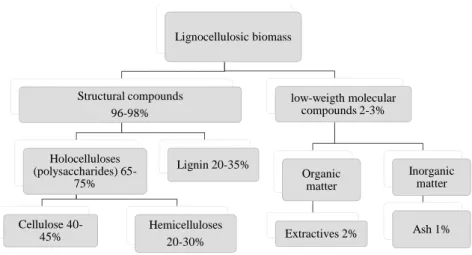
As previously stated, a sustainable future will be based on proper and increasingly intelligent use of available biomass. The term “biomass” is often used for all biodegradable and non fossilized organic material which comes from plants, animals or micro-organisms [7-9]. Biomass has a quite complex and diverse chemical composition[10] (Figure 2) that requires a preliminary separation of its main components. Similarly to an oil refinery, where crude oil is fractionated to obtain diesel, gasoline, naphtha, kerosene, etc., also biomass undergoes a fractionation into its major components namely cellulose, hemicelluloses and lignin.
Figure 2 – Lignocellulosic biomass composition.
Figure 3 describes the conversion systems of a biorefinery. Through the production of multiple products, biorefineries can take advantage of the biomass complexity and maximize the value derived from this feedstock. The main goal is to co-produce high-value but low-volume products (HVLV) and low-value but high-volume (LVHV) products using multiple operations [11]. The operations should be designed to maximize the valued products and minimize the waste streams, generating electricity and process heat for its own use and perhaps enough for sale. Doing this, the high-value products enhance the profitability, while the high-volume fuels help to meet the global energy demand and the power production reduces costs avoiding greenhouse-gas emissions.
Figure 3 - Schematic diagram of the biorefinery concept. Lignocellulosic biomass Structural compounds 96-98% Holocelluloses (polysaccharides) 65-75% Cellulose 40-45% Hemicelluloses 20-30% Lignin 20-35% low-weigth molecular compounds 2-3% Organic matter Extractives 2% Inorganic matter Ash 1%
Biomass Conversion Systems
Thermochemical conversion processes
Pyrolysis Bio-char ReFuels, chemicals and materials Bio-oil Liquefaction Gasification Bio-syngas
Biochemical conversion processes
Residues
Animal food
Combined heat and power
Sugar feedstocks
Fermentation
1.1.1 BIOREFINERIES CLASSIFICATION
Biorefineries can be distinguished in three levels - phase I, II or III - according to their technological development, raw materials and processing technologies [3].
A phase I biorefinery is characterized by having a limited number of raw materials, with little flexibility of processes and limited products [12]. A dry mill ethanol plant is an example of a phase I biorefinery which produces a fixed amount of ethanol, other feed products and carbon dioxide, but with almost no processing flexibility [11].
Phase II biorefineries are similar to phase I, the difference here is the capability to produce various end products having far more processing flexibility, depending on market needs [3]. A system involving wet milling technology could be considered a phase II biorefinery. The typical products are starch, high fructose corn syrup, ethanol, and corn oil [11].
The phase III biorefineries are the most developed. In this case, it is possible to use a mixture of biomass feedstock producing a wide range of products, based on both the HVLV and LVHV products, by employing combination of technologies [3, 11, 12]. The Phase III biorefineries can be further sub-divided according to the raw material, namely: i) whole-crop biorefinery (WhC) – which processes and consumes the entire crop. Raw materials such as wheat, rye, triticale, and maize can be used as feedstock; ii) green biorefinery (Gr) - uses natural wet feedstock derived from untreated products, such as grass, green plants, or green crops and iii) lignocellulose feedstock biorefinery (LCF) - uses hard fibrous plant materials generated by lumber, forestry residues or municipal wastes. Plant materials are cleaned and broken down into the three main fractions (hemicelluloses, cellulose, and lignin) [11].
Another interesting concept is the integrated biorefinery that is an approach that optimizes the use of various types of biomass for the production of multiple materials and energy, minimizing waste and using a wide conversion technology platform which cuts across the various types of biorefineries [6, 13].
1.2FOREST RESOURCES
The importance of the forest resources, as in the Portuguese economy, is well known. The pulp and paper industry, together with the cork industries, is one of the most important activities related with forest exploitation in Portugal, and it is mainly based on the use of Eucalyptus globulus tree (or tasmanian blue gum) [14, 15]. According to the 2009 report of the National Forest Authority, the Portuguese forest area occupies about 3.1×10⁶ ha (Figure 4). Cork tree (Quercus suber), with 7.4×10⁵ ha planted is the most common tree followed by pine tree (Pinus pinaster), with 7.1×10⁵ ha. In third place, with 6.5×10⁵ ha of forested area, appears the Eucalyptus, mainly the E. globulus species [16].
Figure 4 - Portuguese forested area, by dominant species, in 2005/2006.
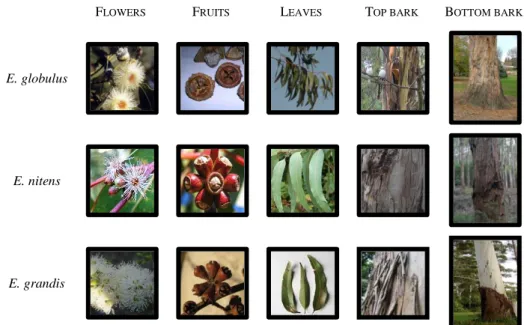
E. globulus (Figure 5) is a rapid growing tree, that could attain about 14 m in the
first 3 years and the possibility of reaching about 70 m high and 2 m in diameter, usually with a rough, greyish or brownish bark at the base, decorticating above in long strips leaving a smooth yellowish or greyish surface [17]. Due to the properties of the fibers obtained and the easy adaptation to the temperate climate [18] and soil, this species has become an important source of fast-growing pulpwood from plantations established in Australia, but also in Chile, Spain and Portugal [15, 17, 19], where it also helps small farmers with honey production.
In other countries, such as South Africa, Brazil, Uruguay, India and Zimbabwe, the most used species in the pulp and paper industry, is Eucalyptus grandis (or flooded gum) (Figure 5) certainly due to the rainfall limits which are 1000–3500 mm per year
compared to 600–1400 mm per year for E. globulus. E. grandis is a tall to very tall tree that grows up to 55 m high and reaches a maximum diameter of about 2 m. This subtropical tree [18] generally has 1–4 m of a short greyish rough bark at the base and above that, a smooth, powdery, white, greyish white or bluish grey bark [17].
Another Eucalyptus species that can be used in pulp and paper production is
Eucalyptus Nitens [20] (or shining gum) (Figure 5). These are tall to very tall trees that
can reach 70 m high and a maximum diameter of 2 m, with smooth and greyish bark, decorticating in long ribbons in the top and with a rough form at the base. These species inhabit high altitude slopes; having mountaintops as common habitats. During winter,
E. nitens resist in areas where snowing is common [17, 21].
FLOWERS FRUITS LEAVES TOP BARK BOTTOM BARK
E. globulus
E. nitens
E. grandis
Figure 5 - Representation of different parts from Eucalyptus globulus, E. nitens and E.grandis.
In the past decades, biotechnology has been one of the sciences with higher developments and applications. Also in forestry, biotechnology has shown significant progresses. Thanks to new powerful biotechnological tools, potential advances in fields like the growth of more productive forests, healthier or better adapted to marginal conditions such as nutrient-poor soils, saline, water deficit, cold or bugs have been made essentially owed to hybridization techniques, leading to the creation of genetically modified organisms. Thereby, several hybrids of Eucalyptus species have already been obtained, such as E. robusta x E. tereticornis, E. botryoides x E. tereticornis or E.
globulus x E. nitens. The hybrid between E. grandis and E. globulus is another example
of a wide cross among eucalypt tree species and its bark composition will be discussed further in this thesis.
1.3BIOREFINERY IN PULP INDUSTRY
Among the potential large-scale industrial biorefineries, the LCF biorefinery will be probably those with higher success [3] mainly because of the low cost of raw material such as straw, reed, grass, wood, paper-waste, corn stover, etc. [6, 8, 22]. Also, at an early stage, LCF biorefineries could be developed based on infrastructures of lignocellulosic materials industries such as pulp industries. These industries have already implemented systems of transport, storage and handling, among other requirements, that otherwise have to be built from zero. This will avoid the intensive initial investments, focusing on an early stage, not only in the production of energy in biomass boilers that is already made, but also on the exploitation of by-products like extractives, lignin or hemicelluloses from the production processes, without interfering with the main objectives of such industries. In the future, depending on markets demands, processing conditions can be adapted to maximize the production of other products and energy/fuels and to integrate alternative applications for the main products, as cellulose fibers [3].
Figure 6 shows a general outline of the operations of an integrated biorefinery in a pulp industry. A pre-extraction of hemicelluloses from wood prior to cooking or from black liquors (from which lignin is also isolated), as well as the separation of short cellulose fibers from long fibers after cooking are procedures that may add value to the wood material [23]. Hemicelluloses can be then used to produce ethanol, furfural or xylitol, while the long / short fibers separated after cooking, can be converted into ethanol, 5-hydroxymethylfurfural (HMF) or sorbitol [3, 24]. Note that, at an early stage of implementation, the cellulose fibers will only be used in the regular production of pulp and paper, not interfering with the main objective of this industry, but in the future, the exploitation of this resource can be redesigned to obtain other fibrous materials instead of paper, such as biocomposites, materials formed by a naturally occurring resin matrix or biodegradable synthetic polymer such as polylactic acid (PLA), reinforced with natural fibers of cellulose, making them more environmentally friendly and with various industrial applications [25].
Figure 6 - Concept of an integrated biorefinery applied in a pulp and paper industry.
In addition to the cellulose fibers and hemicelluloses, lignin dissolved in black liquor offers a huge opportunity for the development of LCF biorefineries. Residual lignin from wood pulping is mainly burned for heat and power. However, it can find other added-value applications, that could be divided in two groups: insoluble lignin and chemically modified lignin [3].
The insoluble lignin belong to the LVHV applications such as cement additives or roads tar filling[3]; while the chemically modified lignin has a much wider variety of potential markets, like surfactants, detergents or biocides. One example is the depolymerisation of lignin by a base-catalyzed treatment obtaining a series of low molecular weight phenolic compounds [6, 11]. This mixture can be also subjected to hydroprocessing, which primarily yields a mixture of alkylbenzenes useful as potential liquid biofuels [6]. Another strategy is the thermal-cracking of lignin, using temperatures from 250 to 600 ˚C, that generates low molecular weight feedstock for further processing [6].
1.3.1. EUCALYPTUS BARK
A pulp mill with a production capacity of about 5.0×10⁵ ton/year of bleached pulp can generate around 1.0×10⁵ ton/year of bark [14]. These bark, among other residues like leaves or fruits are nowadays simply burned in biomass boilers for energy production or are simply left in the forest for soil nutrition [14]. In 2009, according to the Statistical Bulletin of CELPA (Paper Industry Association), the production of virgin pulp stood at 2.031 million tons that is equivalent to about 400 ktons of bark produced in Portugal in one year. These numbers, together with the chemical composition of this fraction alerts for the enormous interest on the up-grading of this unexploited renewable resource.
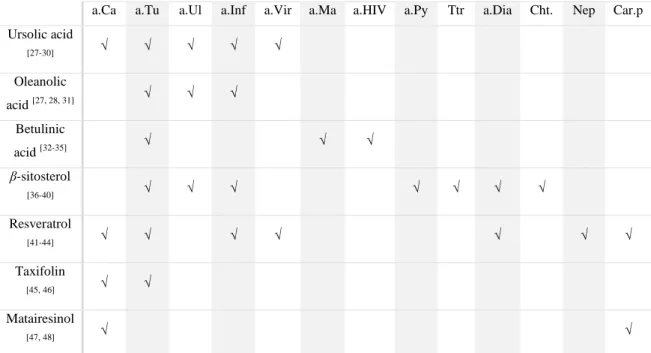
Freire et al. [26] reported that lipophilic extractives from E. globulus account for more than 10% of dry outer bark. This fraction revealed the presence of high commercial value compounds like sterols and triterpenoids with lupane, ursane and oleanane skeletons. These compounds have a wide range of activities (e.g. anti-tumoral effect, anti-HIV properties and cardiovascular protection, among other) that make them extremely valuable for biomedical applications (Table 1).
Among the triterpenic compounds found in Eucalyptus globulus, oleanolic, betulinic and ursolic acid, with contents around 4.0, 4.2 and 7.8 g/kg, respectively, could represent something like 21 ktons of ursolic acid per year. With an estimated commercial value in the range of 1295-1590 €/kg for 98% of purity, these values could be a push forward to the implementation of an integrated biorefinery, installed in a pulp mill.
Table 1 - Biological and pharmaceutical properties of some compounds identified in eucalyptus bark.
a.Ca a.Tu a.Ul a.Inf a.Vir a.Ma a.HIV a.Py Ttr a.Dia Cht. Nep Car.p
Ursolic acid [27-30] √ √ √ √ √ Oleanolic acid [27, 28, 31] √ √ √ Betulinic acid [32-35] √ √ √ β-sitosterol [36-40] √ √ √ √ √ √ √ Resveratrol [41-44] √ √ √ √ √ √ √ Taxifolin [45, 46] √ √ Matairesinol [47, 48] √ √
(Anticarcinogenic (a.Ca), Antitumoral (a.Tu), Antiulcer (a.Ul), Anti-inflamatory (a.Inf), Antiviral (a.Vir), Antimalarial (a.Ma), Anti-HIV (a.HIV), Antipyretic (a.Py), Tuberculosis Treatment (Ttr), Antidiabetic (a.Dia), Cholesterol Treatment (Cht.), Neurological Protection (Nep.) and Cardiovascular Protection (Car.p))
1.4 OBJECTIVES OF THE PRESENT STUDY
The searching for a sustainable future will pass through the exploitation of the residues. The pulp and paper industry generates considerable amounts of residues which are not exploited to their full potential. In this context, this work evaluates the chemical composition of bark residues from two Eucalyptus namely E. nitens and E. grandis x
globulus. These species have shown potential in the pulp and paper industries and for
that, the characterization of the lipophilic extractives is important to evaluate their potential as sources of bioactive compounds, such as triterpenic acids. The main objectives were:
- To carry out the chemical characterization of the lipophilic extractives of
Eucalyptus nitens and Eucalyptus grandis x globulus bark by GC-MS (Gas
Chromatography-Mass Spectrometry);
- To isolate the main unidentified compounds by GC-MS and characterize them by other techniques;
- To evaluate the antioxidant activity and total phenolic content of the polar extractives of bark.
2.
E
XTRACTIVES“Extractives” is a term used to designate a variety of chemical components that are removable from biomass with various organic solvents. The chemical composition and amounts of this fraction varies with the species and also with factors like geographical location, time of the year, age, location on the tree, harvesting, transportation and storage [49-51]. This group of compounds act in trees as protection against parasites, water and contaminants barrier and in the wood colour definition [50]. Regarding some structural characteristics, extractives can be divided into three main groups: aliphatic compounds, terpenes and terpenoids and phenolic compounds [49].
2.1.ALIPHATIC COMPOUNDS
The aliphatic compounds found in vegetal biomass include alkanes, alcohols and fatty acids, both free and esterified [49]. Esters of aliphatic alcohols and fatty acids are know as waxes and are normally found in small amounts, whereas other esters of fatty acids are more abundant, mainly glyceryl esters in the form of mono-, di- or triglycerides (Figure 7). Steryl esters are also found showing several applications in food industry (e.g. margarine and yoghurts with cholesterol-lowering properties). On the other hand, free fatty acids and aliphatic alcohols, either saturated or unsaturated, are also present in this fraction. Aliphatic alcohols such as hexadecane-1-ol (Figure 7), octadecan-1-ol or tetracosan-1-ol and fatty acids such as palmitic, oleic or linoleic acids (Figure 7) were found in wood and bark extractives of E. globulus [52, 53].
OH Hexadecan-1-ol O OH Linoleic acid (18:2 (9,12)) O O O O O O Triolein
2.2.TERPENES AND TERPENOIDS
Terpenes are a large group of natural compounds derived from isoprene (2-methylbutadiene). Given the number of isoprene units that build these compounds, they are denominated as monoterpenes (2 units of isoprene), sesquiterpenes (3 units), diterpenes (4 units), sesterterpenes (5 units), triterpenes (6 units), tretraterpenes (8 units) and polyterpenes (> 8 units).
Monoterpenes (Figure 8) can be divided in acyclic, monocyclic and dicyclic compounds. As well as sesquiterpenes (Figure 8), they are mostly present in the volatile oils of certain morphological parts of plants, as in the leaves. Some of these compounds are often responsible for characteristics odours and others are known to have insect repellent properties [49, 54, 55]. In E. globulus some of the identified monoterpenes are eucalyptol and α-terpineol and several sesquiterpenes, namely α-gurjunene, aromadendrene, allo-aromadendrene, caryophyllene and globulol [26].
Diterpenes have a structure with 20 carbon atoms and they can be grouped into acyclic, monocyclic, dicyclic and tricyclic structural types [49, 56], being the last one the most common structure found in the oleoresin of softwoods [49, 51].
Triterpenes are composed of 30 carbon atoms and the most common structures have tetracyclic and pentacyclic arrangements.
H
H
H
H
Caryophyllene Aromadendrene α-gurjunene
OH O
H
H OH
α-terpineol Eucalyptol Globulol
Terpenes with one or more oxygen-containing functional groups such as alcohols, aldehydes, ketones and acids are known as terpenoids [49, 54]. In this class of compounds, triterpenoids are a large and structurally diverse group of natural products. They are derived from squalene or related acyclic 30-carbon precursors. Most triterpenoids are fused 6-6-6-5 tetracycles, 6-6-6-6-5 pentacycles, or 6-6-6-6-6 pentacycles, however, acyclic, monocyclic, bicyclic, tricyclic, and hexacyclic triterpenoids have also been isolated from natural sources [57].
Most of the triterpenic alcohols and acids found in the Eucalyptus globulus bark have a pentacyclic ring system with a hydroxyl group at C3, specifically with ursane (e.g. ursolic acid), oleanane (e.g. oleanolic acid) and lupane type skeletons (e.g. betulinic acid) [14, 51, 56] (Figure 9).
R1= OH; R2= CH3 Lupeol
R1= OH; R2= COOH Betulinic acid
R1= OC(O)CH3; R2= COOH 3-Acetylbetulinic acid
R1= =O; R2= COOH Betulonic acid
R1= OH; R2= CH3; R3= H; R4= CH3 β - Amyrin
R1= OH; R2= CH3; R3= CH3; R4= H α - Amyrin
R1= OH; R2= COOH; R3= H; R4= CH3 Oleanolic acid
R1= OC(O)CH3; R2= COOH; R3= H; R4= CH3 3-Acetyloleanolic acid
R1= OH; R2= COOH; R3= CH3; R4= H Ursolic acid
R1= OC(O) CH3; R2= COOH; R3= CH3; R4= H 3-Acetylursolic acid
Figure 9 - Examples of triterpenoids found in E. globulus bark [14].
Sterols are compounds closely related to triterpenoids, which have about 27 to 30 carbon atoms and a tetracyclic ring system, specific to steroids [54]. Normally, plant sterols (phytosterols) have a hydroxyl group at the C3 position and a side chain with variable length at the C17 position. Double bonds and methyl groups are also found in these compounds being sometimes called methyl or dimethyl sterols due to the saturation of C . β-sitosterol is the most common phytosterol found in wood and higher
R1 R2 R1 R2 R4 R3
plants (Figure 10). Campesterol (Figure 10) is structurally similar, but it is found in fewer amounts than β-sistosterol. Besides their free form, sterols are also found as fatty acids esters (steryl esters) and as glycosides [49].
HO HO
β-sitosterol Campesterol
Figure 10 - Examples of two sterols found in wood and higher plants.
2.3.PHENOLIC COMPOUNDS
These family includes compounds that have aromatic rings with hydroxyl groups in the structure [58]. Some of them contribute to the coloration of wood [59] and most of them have important biological properties [49]. The phenolic extractives could be sub-divided in simple phenols and phenolic acids, stilbenes, lignans, flavonoids and tannins.
2.3.1. SIMPLE PHENOLS AND PHENOLIC ACIDS (C6, C6C1AND C6C3)
Phenol (Figure 11) is the simplest compound of this family. It has been identified in large quantities in wood of Pinus silvestris and Picea abies [59].
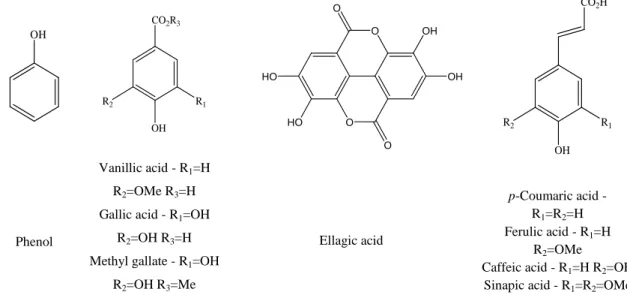
Benzoic type acids (C6C1), such as vanillic and syringic acids, seem to be widely present in plants, although in low concentrations and some aldehydes like vanillin and syringaldehyde were identified in wood of Norway spruce (Picea abies)[54]. The acids are found mainly covalently linked with other structural components in plants [60]. For example, gallic acid (Figure 11) and its dimmeric derivative, ellagic acid, are present mainly esterified as hydrolysable tannins as will be referred below. Santos et al.[61] identified some phenolic acids in E. globulus bark such as quinic acid, dihydroxyphenylacetic and methyl gallate.
The cinnamic type acids (C6C3) are the most frequent phenolic compounds and are found in the esterified and etherified form [62, 63]. Caffeic, p-coumaric, ferulic and sinapic acids are the most common elements of this family (Figure 11). Ferulic acid, for
example, is found in the free form in Pinus radiata [56], esterified in Eucalyptus
globulus wood [19] and caffeic acid was found free in E. globulus bark [61].
Figure 11 - Examples of simple phenols, phenolic acids and cinnamic acids present in plants.
2.3.2. STILBENES (C6C2C6)
This is a small group of plant phenolic compounds found in wood, bark and leaves of both softwoods and hardwoods [56]; derived from 1,2–diphenylethylene, these compounds possess a conjugated double bond system [49]. Two examples of these compounds are pinosylvin and resveratrol (Figure 12). The first one is found in Pinus species and causes problems in the delignification process and in the colour reversion of pulps [54]. The second one (Figure 12) is another well know stilbene with cancer preventative activities, as evidenced in tissue culture and animal model studies [64] and has been identified in E. sideroxylon wood [65].
HO OH HO OH OH Pinosylvin Resveratrol
Figure 12 - Examples of stilbenes found in plants.
OH OH CO2R3 R1 R2 O O O O HO HO OH OH OH R1 R2 CO2H Phenol Vanillic acid - R1=H R2=OMe R3=H
Gallic acid - R1=OH
R2=OH R3=H
Methyl gallate - R1=OH
R2=OH R3=Me Ellagic acid p-Coumaric acid - R1=R2=H Ferulic acid - R1=H R2=OMe
Caffeic acid - R1=H R2=OH
2.3.3. FLAVONOIDS (C6C3C6)
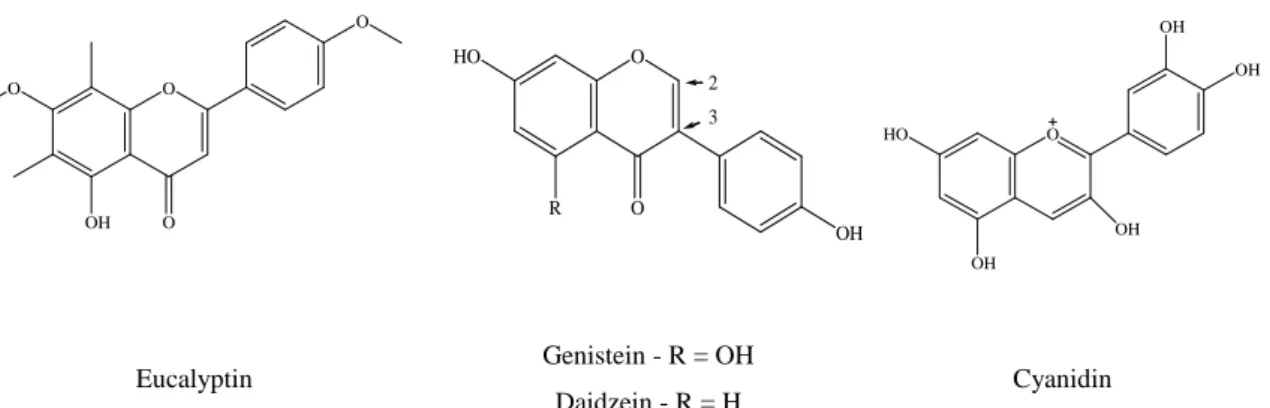
Among vegetal polyphenols, flavonoids are the largest family, with thousands of structural variants described [66]. They are known to occur widely in woody plants and are found in both hardwoods and softwoods [56]. Flavonoids have a C6C3C6 carbon skeleton and can be divided in various subclasses according to the degree of oxidation of the heterocyclic oxygen [58, 62]. Examples of these compounds are anthocyanines. They belong to a subclass of flavonoids responsible for the intense orange, red or blue colours of fruits, flowers, leaves and roots. Cyanidin and malvidin are two examples of anthocyanidines. The first one causes the reddish-orange colour of many red berries [67] while malvidin, found in Vitis vinifera is, is the responsible of the red wine colour [68]. In a recent work, Santos et al. [61] identified several flavonoids in the bark of E. globulus such as catechin, mearnsetin, quercetin, isorhamnetin, luteolin, taxifolin, eriodictyol, naringenin and several flavonoid glycosides such as isorhamentin-hexoside, quercetin-hexoside, myricetin-rhamnoside, aromadendrin-rhamnoside, phloridzin and mearnsetin-hexoside. Others found in E. globulus wood and bark are apigenin, eucalyptin (Figure 13) and sideroxylin, [69, 70]. The change from position 2 to the position 3 of the lateral aromatic ring linking gives origin to isoflavonoids (Figure 13). The most commons are daidzein and genistein (Figure 13), found inGlycine max [71].
O O O OH O O O HO R OH 2 3 OH HO OH OH OH O Eucalyptin Genistein - R = OH Daidzein - R = H Cyanidin
Figure 13 - Examples of flavonoids, isoflavonoids and anthocyanidins.
2.3.4. LIGNANS (C6C3)2
Lignans are a heterogeneous group of secondary plant metabolites formed mainly by oxidative coupling of two phenylpropane (C6C3) units, which may be bridged
with oxygen linkages [49, 56]. Some lignans have been suggested to be associated with low risk of cancer and in the treatment of HIV [72, 73]. Pinoresinol (Figure 14), globoidnan A and sesamin (Figure 14) are some lignans identified in Eucalyptus spp [72, 74, 75] . OH H3CO O H H O H H OCH3 OH O O O O H H O O Pinoresinol Sesamin
Figure 14 - Examples of lignans found in Eucalyptus spp.
2.3.5. TANNINS
Tannins are an abundant family of oligomeric or polymeric compounds which can be divided in two groups:
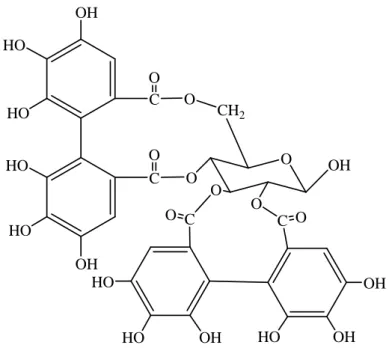
i) hydrolysable tannins are composed by a monosaccharide, usually glucose, esterified with gallic acid (gallotannins) or ellagic acid (ellagitannins). Pedunculagin found in E. nitens wood [76] or eucalbanin and tellimagrandin I found in E. globulus [77], are examples of these type of compounds. Santos et al [61] also identified in E. globulus bark the bis(hexahydroxydiphenoyl(HHDP))-glucose (Figure 15) and galloyl-bis(HHDP)-glucose.
ii) condensed tannins are formed by polycondensation of the flavonoids catequin and leucoanthocyanidin and are therefore more resistant to chemical breakdown than hydrolysable tannins [49]. Condensed tannins of leucoanthocyanidin type were detected in E. globulus, E. camaldulensis and E. rudis wood and bark [78, 79].
C C OH HO HO HO HO OH O O O O CH2 O OH O C O HO HO OH O C O OH OH HO
3.
M
ATERIALS AND METHODS3.1.BARK SAMPLES
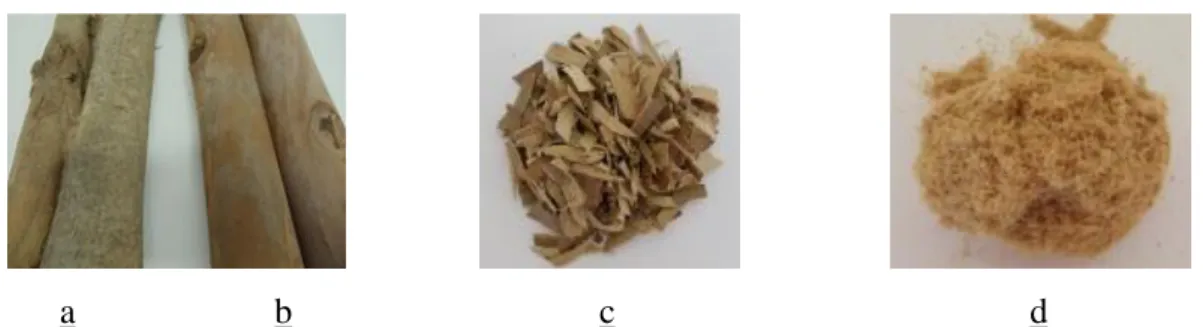
The Eucalyptus grandis x globulus bark samples (Figure 16,b) used in this study were collected from 12 years old trees that came from two different plantations in Portugal, located in the north and in the south of the country. The bark samples of E.
nitens (Figure 16,a) were collected from a 10 years old plantation and located on the
outskirts of Águeda, north of Portugal.
The bark samples (total bark) were air dried until a constant weight was achieved. Then, their superficial layer (≈2mm) was removed and designated as outer bark. The remaining bark was denominated as the inner bark fraction. Some of the outer bark was cut into pieces of about 2cm2 (Figure 16,c) and the remaining outer, inner and total barks were milled in a Retsch SK1 cutting mill to granulometry lower than 2mm (Figure 16,d), prior to extraction.
a b c d
Figure 16 - Eucalyptus nitens bark, a; Eucalyptus grandis x globulus bark, b; 2cm2 external bark, c; and milled internal bark, d.
3.1.1. EXTRACTION
Extractives analysis typically includes extraction followed by analysis of component groups and individual compounds [51]. Solid samples, like bark and wood, are normally Soxhlet extracted (Figure 17) [80]. In this study, about 20g of bark were extracted with dichloromethane for 7h. Dichloromethane was chosen because it is a fairly specific solvent for lipophilic extractives [14]. The solvent was evaporated to
dryness, the extracts were weighted and the results were expressed in terms of dry biomass material. Further, the samples were characterized by GC-MS [14, 15, 19, 26, 81, 82].
Figure 17 - Soxhlet apparatus parts: flask (1), Soxhlet extractor (2) and condenser (3).
To carry out the quantification of the phenolic fraction, the total bark residue was also submitted to extraction with a methanol/water (MeOH/H2O) mixture (50:50 (v/v)), at room temperature, for 24 h and under constant stirring. Then, the suspension was filtered, MeOH removed by low-pressure evaporation and the extract freeze-dried in a VirTis® benchtop K equipment.
3.2.ANALYSIS OF THE EXTRACTS
3.2.1. GAS CHROMATOGRAPHY – MASS SPECTROMETRY ANALYSIS
Prior to GC–MS analysis, about 20 mg of each dried extract were trimethylsilylated according to the literature [14, 15, 26, 81-83]. The extracts, together with 0.25-0.50 mg of tetracosane (99% pure, Sigma) used as internal standard, were dissolved in 250 µL of pyridine. Compounds with hydroxyl and carboxyl groups were then converted into trimethylsilyl ethers and esters (TMS) respectively, by adding 250 µL of N,O-Bis (trimethylsilyl)trifluoroacetamide (BSTFA) and 50 µL of trimethylchlorosilane (TMSCl) and keeping the reaction mixture in an oil bath at 70 °C for 30 min. The GC–MS analysis was performed on a trace Gas Chromatograph 2000 series, equipped with a Thermo Scientific DSQII single-quadrupole mass spectrometer. Analysis of samples were carried out using a DB-1 J&W capillary column (30m × 0.32
mm inner diameter, 0.25 μm film thickness) using Helium as carrier gas (35 cm s-1). The chromatographic conditions were as follows: initial temperature, 80 C for 5 min; temperature gradient, 4 °C/min up to 260 ºC; and 2 °C/min till the final temperature of 285 ºC and kept at 285 ºC for 10 min. Injector temperature, 250 °C; transfer-line temperature, 290 °C; split ratio, 1:50. The MS was operated in the electron impact mode with electron impact energy of 70 eV and data collected at a rate of 1 scan s−1 over a range of m/z 33–750. The ion source was maintained at 250 °C.
Chromatographic peaks were identified on the basis of the comparison of their mass spectra with the equipment mass spectral library (Wiley-NIST Mass Spectral Library 1999), their characteristic retention times obtained under the described experimental conditions, and their fragmentation profiles with published work data. For quantitative analysis, GC–MS was calibrated with pure reference compounds, representative of the major lipophilic extractive components (namely, palmitic acid, 1-nonacosanol, β-sitosterol, betulinic acid, ursolic acid and oleanolic acid), relative to tetracosane, the internal standard. The respective response factors were calculated as an average of six GC–MS runs. Two aliquots of each extract were analyzed. Each aliquot was injected in triplicate. The presented results are the average of the concordant values obtained for each part (less than 5% variation between injections of the same aliquot and between aliquots of the same sample).
3.2.2. ISOLATION AND CHARACTERIZATION OF THE MOST ABUNDANT COMPOUND PRESENT IN THE OUTER BARK FRACTION OF E. GRANDIS X GLOBULUS
To carry out the isolation of the most abundant compound detected in the E.
grandis x globulus outer bark and whose identification was not achieved based on the
GC-MS analysis, 50 g of this outer bark were Soxhlet extracted with dichloromethane for 7 hours. The solvent was removed and the extract dried for gravimetric quantification.
The dried extract was redissolved in hexane, transferred to a separating funnel and washed with a potassium hydroxide (0.1 M) solution to exclude compounds such as fatty acids or triterpenic acids. The organic fraction was collected, concentrated and finally fractionated by column chromatography on silica gel, eluting with a mixture of ethyl acetate: petroleum ether. Several fractions were collected and analysed by
GC-MS. The fractions enriched in the desired compound were further fractionated by thin layer chromatography in silica gel, eluting with the same eluent used in the column chromatography, allowing to isolate the pure compound.
Electronspray Ionization – Mass Spectrometry (ESI-MS) and Nuclear Magnetic resonance (NMR) techniques (1H, 13C and 2D NMR) were then used to characterize the compound.
The ESI-MS and ESI-MS/MS analyses of the isolated compound were carried out in a QqQ Quattro (Micromass) using MassLynx software (version 4.0). MS spectra were obtained at least in triplicate, in the positive mode and the collision energy used was optimized to reduce the relative abundances of precursor ions of approximately 15%, varying the normalised collision energy between 15 and 40 eV.
Samples were prepared for analyses by dissolving the compounds with 200 µL of CHCl3. Then 50 L of this sample were diluted with 50 L of methanol and introduced into the electrospray source at a flow rate of 0.6 mL min-1, setting the needle and cone voltage at 30 V, ion source at 80 ºC and desolvation temperature at 150 ºC. Tandem mass spectra of the molecular ions were obtained by collision induced dissociation (CID), using argon as collision gas. The gas pressure in the Q2 collision cell was approximately 3.85x10⁻⁴ mbar. Full scan mass spectra, ranging from m/z 100 to 1000, and each spectrum, were produced by accumulating data during 1 minute [84].
NMR spectra were recorded on a Bruker DRX 300 spectrometer (300.13 and 75.47 MHz, for 1H and 13C, respectively), using CDCl3 as solvent and TMS as internal reference. Unequivocal 1H and 13C assignments were made with the aid of 2 Dimensional (2D) Correlation Spectroscopy (COSY) (1H/1H), Heteronuclear Single Quantum Coherence (HSQC) (1H/13C) and Heteronuclear Multiple Bond Correlation (HMBC) experiments. The low-pass J-filter portion of the experiment was optimised for an average of one-bond heteronuclear coupling of 145 Hz; the delay for evolution of long-range couplings was optimised for 7 and 2 Hz.
3.2.3. TOTAL PHENOLIC CONTENT
The total phenolic content (TPC) of the total bark extracts was determined by the Folin-Ciocalteu method [61, 85, 86]. 2.5 mL of Folin-Ciocalteu reagent, previously diluted
with water (1:10, v/v) and 2 mL of aqueous sodium carbonate (75 g/L), were added to accurately weighed aliquots of the total bark extract dissolved in 0.5 mL of water, corresponding to concentration ranges between 35 and 500 μg of extract/mL. Each mixture was kept for 5 min at 50 °C. After cooling, the absorbance was measured at 760 nm, using a Jasco® UV-vis V-530 spectrophotometer. The TPC was calculated as gallic acid equivalents from the calibration curve of gallic acid standard solutions (1.5 – 60 μg/mL) and expressed as mg of gallic acid equivalent (GAE)/g of dry extract. The analyses were carried out using three aliquots of extract, measured in triplicate and the final result was calculated as an average value.
3.2.4. ANTIOXIDANT ACTIVITY
The antioxidant activity of the total bark extract was determined by the 2,2-diphenyl-1-picrylhydrazyl (DPPH) radical scavenging [85, 87]. In test tubes, 0.25 mL of DPPH (0.8mM) in MeOH was added to 1 mL of the aqueous solution of the extract and 2.75 mL of MeOH, corresponding to concentrations of extract between 2.5 – 10.0 µg/mL. After mixing, the samples were maintained in the dark at room temperature for 30 min. The absorbance was measured at 517 nm using a Jasco® UV/Vis V- 530 spectrophotometer and compared with a control without extract. A blank was prepared using methanol instead of the DPPH solution. Ascorbic acid and 3,5-di-tert-4-butylhydroxytoluene (BHT) were used as reference compounds. Antioxidant activity was expressed as a percent inhibition of DPPH radical and calculated from the equation:
Scavenging activity (%) = [(Abs control − Abs sample)÷Abs control]×100
IC50 values were determined from the plotted graphs of scavenging activity against the concentration of the extracts. These values are defined as inhibitory concentration of the extract necessary to decrease the initial DPPH radical concentration by 50% and are expressed in µg/mL. Triplicate measurements were carried out. The antioxidant activity was also expressed in g of ascorbic acid equivalents/kg of dry bark (g AAE/kg dry bark).
4.
R
ESULTS AND DISCUSSIONThe main aim of this thesis was to study the chemical composition of the lipophilic extractives of E. nitens and E. grandis x globulus bark.
Preliminary studies of the effect of the size of the bark samples on the extraction yields and the determination of total phenolic content and antioxidant activity of the extracts were also carried out. The results obtained are presented in the next paragraphs, with more focus on the GC-MS analysis and characterization of the lipophilic fraction.
4.1LIPOPHILIC FRACTION ANALYSIS
In order to study the effect of particle size on the extraction yield, some bark samples were milled and sieved to obtain particles of 2mm, while the remaining bark was cut into 2cm2 pieces. Due to the hardness of the inner bark, it was only possible to perform the extraction with the milled bark.
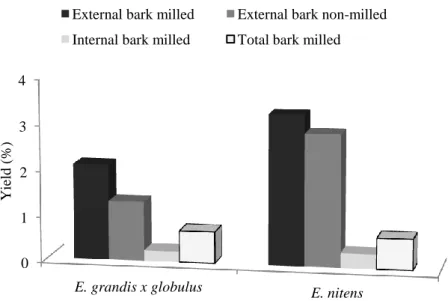
According to the results presented in Figure 18, the extraction yield increased, as expected, with the decrease of the particle size. The DCM extraction yield was significantly higher for both species when the milled bark was used, with 3.3% against 2.9% for E. nitens and 2.1% against 1.3 for E. grandis x globulus in the case of external bark. There are several well known explanations for this fact, such as the higher surface area of the samples and the easiest diffusion of the solvent in smaller particles [88].
The yields of the DCM extracts differ between the two Eucalyptus spp. studied and within the same species among the two morphological parts of bark (inner and outer bark). It was observed that the outer bark fractions are richer in lipophilic extractives than the inner bark. These results are in close agreement with those reported for E.
globulus or E. maidenii [14, 26, 89].
The yields of the outer bark extracts of both species studied (2.1% for E. grandis
x globulus and 3.3% for E. nitens) are in the range of values reported for other Eucalyptus species (e.g. 1.3% in E. grandis, 3.9% in E. globulus and 6.1% in E.maidenii) [26, 90]. The inner bark extract yields of E. grandis x globulus and E. nitens account for 0.23% and 0.32%, respectively. These values are also in the same range of those found for other Eucalyptus species studied before [14, 26, 89], but with E. grandis x
globulus inner bark as the fraction with lower extractive contents. The dichloromethane
extractive yields of the total bark samples account for 0.68% for E. nitens and 0.69% for
E. grandis x globulus. These values are more closed to those detected for the inner bark
fractions due to the higher proportion of this morphological part.
These results also indicate that the outer barks of the most common species planted in temperate and Mediterranean zones, such as E. globulus and E. nitens, are richer in lipophilic extractives than the species of sub-tropical and tropical zones, such as E. grandis and E. urograndis [26, 89].
Figure 18 – DCM extraction yields for non-milled bark extraction and a milled bark extraction. 0
1 2 3 4
E. grandis x globulus E. nitens
Yield
(
%)
External bark milled External bark non-milled Internal bark milled Total bark milled
4.1.1. CHARACTERIZATION OF TOTAL BARK LIPOPHILIC EXTRACTIVES
A typical GC-MS chromatogram of the derivatized dichloromethane extract of
E. nitens and E. grandis x globulus total bark are presented in Figure 19.
Figure 19 – GC-MS chromatograms of the dichloromethane extracts of E. nitens (upper) and E. grandis x globulus (lower) total bark with tetracosane as internal standard (IS). FA-Fatty acids,
The GC-MS chromatograms show that fatty acids (FA), long chain aliphatic alcohols (LCAA), sterols (ST) and triterpenoids (TT) are the main families of compounds found in these extracts. Triterpenoids are the major components of the total bark extract of both species, with betulonic and betulinic acids as the main components found in E. nitens and β-amyrin in E. grandis x globulus. β-sitosterol is the most abundant sterol, while teracosan-1-ol, hexacosan-1-ol, octacosan-1-ol, oleic acid and linoleic acid are the most representative of long chain aliphatic alcohols and fatty acids respectively. Obviously, the composition of the total bark extractives reflect the relative composition of the two morphological fractions as will be discussed below.
4.1.2. CHARACTERIZATION OF INNER BARK LIPOPHILIC EXTRACTIVES
Figure 20 shows the typical GC-MS chromatograms obtained for the derivatized dichloromethane extracts of E. nitens and E. grandis x globulus inner barks and in Table 2 are compiled the lipophilic components (mg of compound/kg of dry bark) identified in these extracts.
Figure 20 - Typical GC-MS chromatograms of the derivatized dichloromethane extracts of E. nitens (upper) and E. grandis x globulus (lower) inner barks.
Sterols and triterpenoids are the major compounds found in the E. nitens inner bark extract, with β-sitosterol (40) and β-amyrin (39) being the most abundant components and account for 0.5 and 0.3 g/kg of dry bark, respectively (Table 2) (numbers in bold refer to chromatographic peaks in the Figure 20). Triterpenic acids, such as oleanolic (44), betulinic (45) and ursolic acids (46), with a total content of 245.9 mg/kg were identified in lower quantities, but, as will be discussed later, represent the most predominant compounds found in outer bark fractions.
Some fatty acids such as linoleic (21) (29.7 mg/kg) and octadecanoic acid (24) (21.7 mg/kg) and long chain aliphatic alcohols like hexadecan-1-ol (16) (5.4 mg/kg) or octacosan-1-ol (37) (14.5 mg/kg) were also found in this extract.
In the dichloromethane extract of E. grandis x globulus inner bark, long chain aliphatic alcohols are the most abundant family of compounds, with a total amount of 205.8 mg/kg bark. Hexadecan-1-ol (16) (32.2 mg/kg), octadecen-1-ol (18) (51.1 mg/kg) and octadecan-1-ol (20) (24.9 mg/kg) are the most representative compounds of this family.
Fatty acids account for 132.4 mg/kg bark, with hexadecanoic (17) (53.2 mg/kg), heptadecanoic (19) (10.4 mg/kg) and tetracosanoic acids (31) (4.7 mg/kg) as the main compounds of this family.
However, although fatty acids and long chain aliphatic alcohols are the major families, the most abundant compound is β-sitosterol (82.4 mg/kg). This sterol seems to be specific of the inner bark extracts as well as the low content of triterpenic acids.
Table 2 - Lipophilic components (mg of compound/kg of dry bark) identified in the dichloromethane extract of the inner bark of E. nitens and E. grandis x globulus. The peak numbers refers only to the chromatograms on the Figure 20.
Peak Compound Retention time
(min) E.nitens (mg compound /kg dry bark) E.grandis x globulus (mg compound /kg dry bark) 1 Butan-1,3-diol 5.0 - 38.6 2 Lactic acid 5.1 12.4 3.7 3 Hexanoic acid 5.3 - 4.5 4 Diethylene glycol 11.1 2.4 1.8 5 Glycerol 12.8 4.4 15.4 6 Nonanoic acid 14.8 3.3 4.9 7 Decanoic acid 17.8 1.6 6.6 8 Vanillin 19.2 4.0 2.8 9 Docosan-1-ol 21.6 - 1.0 10 Dodecanoic acid 23.5 6.6 2.1
11 n.i. Sesquiterpenic alcohol 24.0 9.9 -
12 Vanillic acid 26.2 6.5 0.5 13 Tetradecanoic acid 28.6 7.3 1.4 14 Syringic acid 29.6 3.0 0.7 15 Pentadecanoic acid 31.0 4.5 1.0 16 Hexadecan-1-ol 31.6 5.4 32.2 17 Hexadecanoic acid 33.3 110.4 53.2 18 (Z)-9-Octadecen-1-ol 35.3 - 51.1 19 Heptadecanoic acid 35.5 5.6 10.4 20 Octadecan-1-ol 36.0 6.7 24.9 21 Linoleic acid 36.7 29.7 7.4 22 Oleic acid 36.9 26.2 1.2 23 Elaidic acid 37.1 2.8 24 Octadecanoic acid 37.6 21.7 9.5 25 Eicosanoic acid 41.6 9.1 2.4 26 Heneicosanoic acid 43.5 4.8 - 27 Docosan-1-ol 43.9 2.6 - 28 Docosanoic acid 45.3 11.5 4.1 29 Tricosanoic acid 47.0 5.3 2.3 30 Tetracosan-1-ol 47.4 2.0 31 Tetracosanoic acid 48.8 14.7 4.7 32 Stilbene 1* 49.1 42.5 - 33 Pentacosanoic acid 50.4 7.5 2.2 34 Hexacosan-1-ol 50.7 5.1 1.3 35 22-Hydroxydocosanoic acid 51.5 - 1.2 36 Hexacosanoic acid 52.1 9.1 3.8 37 Octacosan-1-ol 54.3 14.5 7.9 38 Octacosanoic acid 55.9 8.2 3.1 39 β - Amyrin 57.4 330.8 40.9 40 β - Sitosterol 57.6 555.9 82.4 41 β - Sitostanol 57.7 52.8 7.9 42 Triacontan-1-ol 58.6 - 11.0 43 Triacontanoic acid 60.3 - 3.5 44 Oleanolic acid 62.2 86.3 8.0 45 Betulinic acid 62.6 91.2 7.5 46 Ursolic acid 63.1 68.4 13.0 47 3-Acetyloleanolic acid 63.6 23.0 4.4 48 3-Acetylursolic acid 64.8 18.6 9.7 Total identified 1733.1 524.1
Total non identified 741.9 195.3
Total 2475.1 719.5
n.i. – non identified
The main chromatographic peaks were identified by comparing their mass spectra with the equipment mass spectral library (NIST mass spectral library 2005) and their characteristic retention times and fragmentation profiles with published data [19, 26, 52, 83, 91-95]
.
β-Sitosterol is the main sterol identified in the inner bark of some Eucalyptus spp. The mass spectra of TMS ethers of sterols exhibit easily discernible molecular ion
peaks, or indirect information about their molecular weight can be obtained from the fragment ions formed by the loss of one methyl group [M-CH3]+, which is generally present in their spectra. The trimethylsilyl group strongly directs the fragmentation of the molecules and consequently, the mass spectra of sterols are usually characterized by the presence of abundant TMS-containing groups [83, 94, 95]. The ions at m/z 73 [(CH3)3Si]+ and 75 [[(CH3)2Si-OH]+ are present in the mass spectra of all TMS derivatives of sterols and in general provide negligible or no structural information. However, the TMS containing ions are in most cases of structural significance. For example, the ions at m/z 129 and [M-129]+ which correspond to the loss of the TMS group, together with a three carbon fragment of ring A containing the C-1, C-2 and C-3, are characteristic of 3-hydroxy-Δ5-sterols [26, 83, 93]. The ion corresponding to the 1,2-elimination of the trimethylsilanol group [M-90]+ is another important structural ion [83]. Additionally, common fragmentations between the C13 and C17 and between the C14 and C15 bonds leading to the elimination of the D-ring (Figure 21) are also present. All the ions referred to above are clearly visible in the mass spectrum of the TMS derivative of
Figure 21 - Mass spectrum of the TMS derivative of β-sitosterol.
Fatty acids are also easily identified by GC-MS as TMS derivatives. Abundant ions arise from the derivatizing group itself at m/z 73 and 75. The ion [M-15]+ and other abundant ions appear at m/z 117, 129, 132 and 145, being the last two due to the McLafferty type rearrangement [96, 97]. A mass spectrum of the TMS derivative of hexadecanoic acid is presented in (Figure 22) as an example.
Long chain aliphatic alcohols were identified by the high intensity of the m/z 75 and [M-15]+ ions, that are characteristic of this type of compounds (Figure 23). Ions at
m/z 89 and 103 [(CH3)3SiOCH2]+ are also usually present in the mass spectra of TMS derivatives of fatty alcohols (Figure 23) and help to distinguish them from the TMS derivatives of fatty acids [96, 97].
[M] +
Figure 22 - Mass spectrum of the TMS derivative of hexadecanoic acid.
Figure 23 - Mass spectra of the TMS derivative of octacosan-1-ol. [M-15] +
[M-15] +
4.1.3. CHARACTERIZATION OF OUTER BARK LIPOPHILIC EXTRACTIVES
Typical GC-MS chromatograms obtained of the derivatized dichloromethane extracts of E. nitens and E. grandis x globulus outer barks are presented in Figure 24 and the lipophilic components (mg of compound/kg of dry bark) identified in these fractions are shown in Table 3.
Figure 24 - Typical GC-MS chromatograms of the derivatized dichloromethane extracts of E. nitens (upper) and E. grandis x globulus (lower) outer barks.

![Figure 8 - Structures of mono and sesquiterpenes identified in Eucalyptus globulus [26]](https://thumb-eu.123doks.com/thumbv2/123dok_br/15755394.1074161/27.892.179.705.758.1092/figure-structures-mono-sesquiterpenes-identified-eucalyptus-globulus.webp)