UNIVERSIDADE DE LISBOA FACULDADE DE CIÊNCIAS
Tropical forest fragmentation: effects on the
spatio-temporal dynamics of its bat communities
Doutoramento em Biologia
Especialidade de Biologia da Conservação
José Ricardo Teixeira Rocha
Tese orientada por:
Doutor Christoph Friedrich Johannes Meyer
Professor Doutor Jorge Manuel Mestre Marques Palmeirim Professora Doutora Maria del Mar Cabeza Jaimejuan Documento especialmente elaborado para a obtenção do grau de doutor
UNIVERSIDADE DE LISBOA FACULDADE DE CIÊNCIAS
Tropical forest fragmentation: effects on the
spatio-temporal dynamics of its bat communities
Doutoramento em Biologia
Especialidade de Biologia da Conservação
José Ricardo Teixeira Rocha
Tese orientada por:
Doutor Christoph Friedrich Johannes Meyer
Professor Doutor Jorge Manuel Mestre Marques Palmeirim Professora Doutora Maria del Mar Cabeza Jaimejuan Júri:
Presidente:
● Doutor Pedro Miguel Alfaia Barcia Ré Vogais:
● Doutor Christoph Friedrich Johannes Meyer ● Doutor Pedro Rui Correia Oliveira Beja ● Doutor Carlos Manuel Martins Santos Fonseca ● Doutor Luís Miguel do Carmo Rosalino ● Doutor Rui Miguel Borges Sampaio e Rebelo ● Doutora Ana Margarida Torres Rainho
Documento especialmente elaborado para a obtenção do grau de doutor Fundação para a Ciência e a Tecnologia
This study was funded by Fundação para a Ciência e a Tecnologia, through a PhD scholarship SFRH/BD/80488/2011 and the research project grant project grant PTDC/BIA-BIC/111184/2009. Additional funding was provided by Bat Conservation International through a Student Research Scholarship.
Notas prévia
A presente tese apresenta artigos científicos já publicados ou submetidos para publicação (capítulos 2 a 5), de acordo com o previsto no nº 2 do artigo 25º do Regulamento de Estudos de Pós-Graduação da Universidade de Lisboa, publicado no Diário da República, 2.ª série — N.º 57 — 23 de Março de 2015. Uma vez que estes trabalhos foram realizados em colaboração o candidato esclarece que participou integralmente na conceção dos trabalhos, obtenção dos dados, análise e discussão dos resultados, bem como na redação dos manuscritos.
Lisboa, Dezembro de 2016 José Ricardo Teixeira Rocha
“Reserve 1202 is part of a whole archipelago of Amazonian islands, all with equally clinical-sounding names: Reserve 1112, Reserve 1301, Reserve 2107. Some of the reserves are even smaller than twenty-five acres; a few are quite a bit bigger. Collectively, they represent one of the world’s largest and longest-running experiments, the Biological Dynamics of Forest Fragments Project or, for short, the BDFFP. Pretty much every square foot of the BDFFP has been studied by someone: a botanist tagging trees, an ornithologist banding birds, an entomologist counting fruit flies. When I visited Reserve 1202, I ran into a graduate student from Portugal who was surveying bats. At noon he had just recently woken up and was eating pasta in a shed that served as a research station-cum-kitchen. While we were talking, a very skinny cowboy rode up on an only slightly less skinny horse. He had a rifle slung over one shoulder. I wasn’t sure whether he’d come because he’d heard the truck I’d arrived on and wanted to protect the student from possible intruders, or because he sensed that there was pasta.”
Elizabeth Kolbert The Sixth Extinction: An Unnatural History
i
Acknowledgments
Someone once said that “a journey is best measured in friends, rather than miles”. Well, I somehow feel that something similar can be said about PhDs. I have been lucky enough to have a PhD that has been a journey both in the figurative and literal sense. This marvelous journey has been shared with many friends that have greatly contributed for it to be much more enjoyable that it would otherwise have been. Words fall short to express my gratitude but in the following lines I’ll do my best to express how thankful I am to all those colleagues, institutions and friends that have been part of making this dream come true.
First and foremost, I want to thank my outstanding team of supervisors: Christoph Meyer, Jorge Palmeirim and Mar Cabeza. Each one of you has been important on its own way and I would not have been able to navigate through the waters of this PhD without your vision, guidance, inspiration, support and friendship.
Of my three supervisors the first I have met was Palmeirim, during a fieldtrip to Doñana National Park back in 2005. He sat on the back of the bus and during a fair share of the way he shared stories of his adventures in Africa, the Amazon and a few other exotic places. What an impression that made on me. I already knew I wanted to visit some of those places but hearing his stories made me realize I could raise the bar. Why not aim to work in such places as well? Palmeirim, your inspiration has been key for my decision to dive into tropical ecology and throughout these years your enthusiasm for debating anything related to ecology and your love for conservation issues has been truly contagious. It was an enormous pleasure to do fieldwork with you and I am very grateful for all your suggestions regarding the analyses and feedback on the writing.
Mar I met during my MSc. We came across each other at the Cambridge Students Conference in Conservation Science back in 2008. At the time I mentioned that I would love to apply for a scholarship to spend some time in Finland and asked if she would be keen to act as my supervisor. Well… 8 years have passed and in the meantime a project looking into protected area effectiveness in Madagascar developed into several collaborations spanning from the Amazon, to Madagascar and, more recently, Kenya. Mar, I admire so much your energy, commitment and research ethics. Ever since my
ii internship in Finland you have been pivotal to my career path, always ready to provide thoughtful advice, always keen to build bridges not only between researchers but also between research fields. Somehow you have this amazing capacity of translating what sometimes feels like disconnected thoughts into something that actually makes sense but, of all your qualities, the one that strikes me the most is your humane side. The way you’re always ready to help others, me included. Unfortunately, you’re yet to discover the amazing diversity of Amazonian bats but it has been trilling to see your enthusiasm for their African counterparts. I had tremendous fun working with you and you helped me like no other to grow as a scientist and as an individual. Thank you for that.
Last but not least, Christoph. I am so grateful you managed to find your way to Portugal! This thesis would have never happened without your vision, teaching and much appreciated support. I am utterly thankful for the trust you have put on me since the beginning of the project. Looking now back I can see how green and inexperience I was when we first jumped into the plane heading to the Amazon. Even so, from the beginning you made me feel more like a colleague than an apprentice. I have been struck by your humbleness, acute thinking and scientific curiosity and I am extremely thankful for your friendship! I am proud to have been your first PhD student and I want you to know that you’re the kind of supervisor most students would like to have! It has been a fun ride and I truly hope we’ll continue to collaborate in the years to come.
Needless to say I am extremely grateful for to the collaborators that contributed to make different sections of this thesis much more significant than would have been otherwise. Much of the work presented here was only possible due to the datasets provided by Erica Sampaio and Paulo Bobrowiec and to vegetation layers provided by João Carreiras. A special thanks is due to Otso Ovaskainen for leading the work regarding the application of the hierarchical join species models used in chapter 4 and 5.
The nearly two and a half years of fieldwork that led to this thesis have been shared with a rather large amount of colleagues and friends that have played a pivotal role in the acquisition of the data here presented. Some, like Inês Silva, Milou Groenenberg, Fábio Farneda and Diogo Ferreira were doing their MSc thesis, whereas others, like Julia Treitler, Gilberto Fernandez, Madalena Boto, Oriol Massana Valeriano, Iolanda Guerra and Marta Acácio joined as volunteers. All have exceeded themselves during the time in the Amazon and regardless of the extremely demanding field conditions were
iii always keen to add a couple of hours to the day and take the work a step further. Many of the moments we shared will forever be carved in my memory and in my hearth. I thank you for all for contributing for my time in Brazil to have been so enjoyable! Here, a special thanks is due to Madalena and Oriol for allowing me use the gorgeous photos they took during their time in the field – some of which can be seen in this thesis and another to Diogo, for giving me the opportunity to co-supervise his MSc thesis, it was a tremendous pleasure and a great learning experience.
I am extremely thankful for the support given by the Instituto Nacional de Pesquisas da
Amazônia (INPA) and by the Biological Dynamics of Forest Fragments Project
(BDFFP), especially José Luís Camargo, Ary Ferreira and Rosely Hipólito for all the logistic support given throughout the project. Pivotal for this project was Paulo Bobrowiec, whom since the first moment was a key participant in the organization of the field logistics and has provided critical suggestions to the improvement of this thesis. Key for the success of the fieldwork were our amazing field guides Alaércio Reis, Osmaildo Silva and José Tenaçol and our drivers Luiz Queiroz and Josimar Menezes. Rodrigo Marciente, Kevina Vulinec, Joana Carvalho, Solange Farias, Leonardo Oliveira, Ileana Mayes and Ubirajara Capaverde also joined us multiple times in the field contributing with their time and dedication for the results here presented.
My time in Brazil was also marked by the kindness of Pedro Santos, that hosted me (free of charge!) during my first two months of fieldwork and helped me expanding my appreciation for the music of Chico Burque and other classic Brazilian beats, by Douglas Pinheiro, an outstanding housemate and cherished friend, by Filipa Palmeirim, that allowed me to shortly experience the wonderful world of the giant river otters and Amazon river dolphins at the massive Balbina dam, by Sofia Ponce de Leão that provided me with a roof during the last few months of fieldwork and guided me through the cultural life of Manaus, and by the American and Brazilian bird teams working at the BDFFP. Among the American team, special thanks to Luke Powell and Jared Wolf for some enjoyable moments both in the field and out of it, and amongst the Brazilian team special thanks to Aída Rodrigue, Gonçalo Ferraz, Ulisses Camargo, Francisco Diniz and Gabriel McCrate – it has been a tremendous pleasure to share this experience with you! Aída, please feel free to continue to make fun of my Portuguese accent in the years to come.
iv From the hot and humid tropics this PhD journey took me back to the Metapopulation Research Center (MRC) and to Finland. What an amazing place this is. Ilkka Hanski has made an outstanding work by creating such a stimulating environment. Needless to say I love the country and I deeply cherished being back. Many of my memorable moments in the country are due to Mar’s Global Change and Conservation Group (GCCG) members, namely: Johanna, Henna, Erin, Marisa, Aili, Álvaro, Sara, Antti, Attila, Annika, Piia, Johannes, Jani, Katarina, Heini, Cristina, Juan, Silvija and Maria and to the extra GCCG pulla (Finnish buns) journal club members such as Dani, Enrico, Joona, Andrea, Victoria, Peter, Aija, Tiina and Ninni. Thanks for your friendly similes, insightful discussions and fun moments! I learned a lot by debating conservation with many of you! Special thanks to Dani, Juan, Sara and Álvaro for inviting me to see brown bears and Sana for taking me to see flying squirrels! Special thanks also for Erin, Juan and Cristina for an extremely fun earthworm expedition across the Arctic Circle when I desperately needed a break from data analysis. Lastly, thanks to Aki Antila, for introducing me to the birds of Finland, to the Finnish culture and, most importantly, for his warm friendship!
The final stage of this PhD was divided between Lisbon, Manchester and more recently Madeira. Of the time spent in Lisbon am grateful to my office and team colleagues, namely Ana Leal, Ricardo Martins, Bruno Carreira, Ana Rainho, Ricardo Lima, Tiago Marques, William Douglas, Nuno Pedroso, Miguel Rosalino and Inês Rosário. Thanks for creating a good work environment, for all the help with bureaucracy and other PhD and non-PhD related matters. The time spent in FCUL was deeply enriched by the interaction with many other PhD students and researchers. Lunch time conversations were especially enjoyable and for that I thank Inês Orfão, Silvia Ceasu, Laetitia Navarro, Joana Carvalho, Susana Varela, Luís Borda-de-Água, Adriana Silva, Manuel Sapage, Jorge Henriques, Sara Silva and many others. Basketball and ultimate frisbee games were good fun!
This journey would not have been the same without my old FCUL friends. Amongst those, especial thanks to Andreia Penado, Marta Sampaio, Aurora Santos, Nidia Fernandes, Sasha Vasconcelos, Mariana Campos, Ana Queirós, Gonçalo Rosa and so many others. It has been a privilege to grown alongside you both as an individual and professionally. Of my non-FCUL friends I am especially thankful to Filipe Tavares, Patricia Bastos and Alexandre Leitão for being the best flat mates one could ask for and
v Dália Bodelgo for being such and inspiration and ray of sunlight. Thanks also to Joana Ribeiro that has been such a key person during much of the second half of this PhD. You have all deeply contributed for maintaining my mental health through this process and for me to feel such at home in Lisbon, thanks for that! Sasha, thanks once more for the multiple times you commented on my English and for you greatly appreciated friendship. From my time in Manchester I am thankful for the kindness of Adrià and Eva for hosting me during the first weeks and showing me around the city. For the first time I managed to work with European bats, and for that I am grateful for the South Lancashire Bat Group, especially to Steve and Fiona Parker and Baptiste Chadeyron. It was heartwarming to see your passion for bats! Time spent in Manchester was also marked by the fun moments spent with James Kemp, Laura Torrent and Irene Corenna. In last few months in Madeira have been a big learning experience. I am grateful to Manuela Gouveia for allowing me the opportunity to lecture at the University of Madeira and José Jesus for being such a good colleague and for so many interesting discussions. Thanks also to the students from whom I have learned loads.
Thanks for my life-long friends, Fábio Teixeira, Ana Ornelas, Filipa Alves, André Barbeito, Filipe Pires, Mónica Rodrigues, André Velosa, Carlos Sousa, Rodrigo Dias and Catarina Cunha. Thanks for giving my brain a rest away from biology and for providing me a safety net whenever needed! And Sana Okayasu, thanks being such a close friend even if being thousands of km away!
Mãe, quem diria que passado tanto tempo ainda andaria a apanhar bichos. As palavras
escasseiam para expressar o quão grato estou por todos os teus sacrifícios e pelo teu amor incondicional. O que está nesta tese e aquilo que sou é sem dúvida reflexo disso. Muito, muito obrigado por tudo. Carlota, obrigado por me aturares todos estes anos, irás certamente ganhar um lugar no céu. Dalila, abençoada hora que decidiste vir morar connosco, tem sido um prazer, sinto que ganhei uma irmã mais velha.
Catarina… I don’t even know how to start. We first met soon after I had started working on this PhD project and as the project matured so did your friendship. You have been a constant over these 5 years and many of my most cherished moments in recent times have been shared with you. I’ll forever remember the one week working with Amazonian river turtles and the Quilombola communities, what an experience. I am so tremendously
vi grateful for your friendship, kindness and fun-spirit. Your constant support and positive energy surely contributed for my life as a PhD student to be much more enjoyable. You rock!
Adrià, então e tu pah? Pensavas que me ia esquecer de ti? What a ride have the last 5 years been! Close encounters with jaguars in the Amazon, running away from hippos in Kenya, flash-floods in Madagascar… fun fun fun! Meeting you has been one of the best things it has ever happened to me! It is so rare to meet someone with whom one so easily connects and with whom work flows so smoothly. Your list of collaborations continues to expand and the more we work together the more amazed I am about your work ethics, energy, willingness to help and your passion for bats (and almost anything nature-related). I am so grateful for everything you have taught me and I am sure that without your constant support and friendship this PhD would have been a much more difficult and surely less fun endeavor. Thank you also for introducing me to Eva, what a lovely couple you two make! Hopefully we will continue to work together for many years to come my dear friend.
Lastly, thanks to the natural world itself. In the words of Sir David Attenborough “it
seems to me that the natural world is the greatest source of excitement; the greatest source of visual beauty; the greatest source of intellectual interest. It is the greatest source of so much in life that makes life worth living”. Oh, and thanks to Sir David…
vii TABLE OF CONTENTS ACKNOWLEDGMENTS i ABSTRACT ix RESUMO xi CHAPTER 1 1 General Introduction
Tropical forest fragmentation 3
Fragmentation research 5
Study area: The Biological Dynamics of Forest Fragments Project 8
Neotropical bats 11
Neotropical bats and fragmentation 14
Bat research at the Biological Dynamics of Forest Fragments Project 18
Main aims and outline of the thesis 19
Manuscripts presented 20
References 24
CHAPTER 2 33
Consequences of a large-scale fragmentation experiment for Neotropical bats: disentangling the relative importance of local and landscape-scale effects
Abstract 35
Introduction 36
Material and methods 39
Results 46 Discussion 54 Acknowledgments 60 References 61 Supplementary material 67 CHAPTER 3 75
Does sex matter? Gender-specific responses to forest fragmentation in Neotropical bats
Abstract 77
Introduction 78
Methods 81
viii Discussion 94 Acknowledgments 99 References 100 Supplementary material 107 CHAPTER 4 111
Control matters: an evaluation of the impact of small man-made forest clearings on tropical bats using a before-after-control-impact design
Abstract 113
Introduction 114
Material and methods 118
Results 123 Discussion 130 Acknowledgments 135 References 136 Supplementary material 142 CHAPTER 5 149
Neotropical bats in a recovering fragmented landscape: effects of secondary forest regrowth on specialist and generalist species
Abstract 151 Introduction 152 Methods 155 Results 161 Discussion 165 Acknowledgments 170 References 171 Supplementary material 177 CHAPTER 6 189 General Discussion
Bat responses to spatial heterogeneity in fragmented forest landscapes 191 Bat responses to temporal heterogeneity in fragmented forest landscapes 195
Conservation implications 200
Study limitations and future research 203
Concluding remarks 206
ix
Abstract
Tropical forest ecosystems harbour more than half of the planet’s terrestrial species and are of paramount importance for human well-being. Yet, the persistence of tropical forests and their faunal communities is jeopardised by growing rates of habitat loss, fragmentation and degradation. Bats provide critical ecosystem services to tropical forest and are thus crucial for the maintenance of healthy forest habitats. However, as with many other taxa, they are increasingly threatened by anthropogenic forest modification. The main aim of this thesis was to investigate the spatio-temporal effects of forest fragmentation on tropical forest bats. The study was based at the Biological Dynamics of Forest Fragment Project (BDFFP), a whole-ecosystem experiment implemented in the Central Brazilian Amazon. The BDFFP bat fauna was initially studied in 1996-2002, allowing for a comparative follow-up study capable of unveiling the combined effects of spatial and temporal heterogeneity on tropical bat assemblages in fragmented forest landscapes. The controlled experimental setting provided by the BDFFP was further used to investigate the relative roles of vegetation structure and landscape composition and configuration on bat communities, and the depth of this analysis was extended by the examination of sex-specific responses to both local- and landscape-level attributes. Additionally, the re-isolation of forest fragments in late-2013 enabled a before and after re-isolation comparison, allowing valuable insights into short-term responses to abrupt changes in matrix structure.
The regeneration of the secondary forest surrounding the BDFFP fragments buffered some of the pervasive consequences of forest fragmentation, however, more than 30 years after initial deforestation bat communities still exhibited scale-sensitive and sex-specific responses to fragmentation. While results highlight the importance of larger (> 10 ha)
x forest patches and mature secondary forest (> 20 years) for the conservation of tropical bats, they emphasize the irreplaceable value of vast tracts of primary habitat for the long-term conservation of tropical biodiversity.
Key-words: Amazon, Bats, Edge effects, Fragmentation, Landscape ecology, Rainforest, Secondary forests.
xi
Resumo
Nas últimas décadas temos assistido a significativos avanços na compreensão da resposta de diversos grupos faunísticos à modificação florestal. No entanto, a nossa perceção de como a qualidade do habitat interage com o contexto de paisagem, e como estas afetam de forma conjunta as espécies que habitam regiões tropicais alteradas pela ação humana ainda é limitada e um aumento deste conhecimento é urgente para uma melhor gestão e conservação destas mesmas paisagens.
Os morcegos são a segunda ordem de mamíferos mais diversa e atingem o auge da sua diversidade taxonómica e ecológica nos Neotrópicos, onde desempenham importantes funções ecológicas. Devido à sua elevada abundância, diversidade funcional e “fácil” amostragem, são um bom modelo biológico para a investigação do efeito da alteração de habitat em florestas tropicais.
Esta tese teve como objetivo principal contribuir para o conhecimento de como comunidades faunísticas tropicais respondem à fragmentação florestal ao longo dos eixos espaciais e temporais. Para tal foram usados morcegos como modelo biológico e os efeitos da fragmentação florestal na sua diversidade, abundância e composição foram estudados na paisagem experimental do Projeto de Dinâmica Biológica de Fragmentos Florestais (PDBFF), na Amazónia Brasileira.
xii
Capítulo 2. Consequências de uma experiência de fragmentação de grande escala para morcegos neotropicais: avaliação da importância relativa da influência das variáveis locais e ao nível da paisagem
Os primeiros estudos relativos ao impacto da fragmentação tiveram as suas raízes na teoria de biogeografia de ilhas e centravam-se essencialmente no estudo da influência do tamanho dos fragmentos e da distância dos mesmos entre si e destes a zonas de habitat não fragmentado. Com o progredir dos anos, avanços teóricos no domínio da ecologia de paisagem levaram a uma maior consideração do arranjo espacial dos fragmentos e da composição da matriz. No entanto, apesar de uma vasta literatura sobre o tema, a maioria dos estudos limita-se a comparar locais no interior de fragmentos com habitats no interior de floresta contínua, fazendo com que estudos que analisem todo o gradiente de perturbação de paisagens fragmentadas (interiores de floresta contínua e fragmentos, bordas florestais e matriz) sejam escassos. Adicionalmente, o real efeito da fragmentação nas comunidades florestais é condicionado pela escassez de estudos que incluam métricas referentes à estrutura da vegetação, variável que se encontra fortemente associada ao grau de degradação do habitat.
Neste capítulo, pretendeu-se investigar como comunidades de morcegos neotropicais respondem à ação conjunta da estrutura da vegetação e da composição e configuração da paisagem em gradientes de perturbação do qual fazem parte o interior de florestas contínuas e fragmentos, bordas florestais e matriz. Assim, com base em mais de 4 000 capturas de 50 espécies, analisou-se a várias escalas, a forma como diferentes métricas de biodiversidade (riqueza específica, dominância e abundância) são afetadas pela estrutura da vegetação e pela quantidade e configuração da floresta primária.
xiii Apesar da matriz relativamente permeável em que os fragmentos do PDBFF são incorporados (composta por vegetação secundária com idade ≥ 16 anos), foi observado que as comunidades de morcegos são afetadas pela área dos fragmentos, e que as respostas a métricas de estrutura da vegetação e de composição e configuração da paisagem variam consoante o grupo funcional e a escala espacial considerada. Os resultados indicam que mesmo em paisagens com uma matriz bastante permeável, os efeitos da fragmentação ainda se fazem sentir e sublinham que a consideração de métricas de paisagem a várias escalas permite uma compreensão mais abrangente dos efeitos da fragmentação em comunidades de vertebrados tropicais.
Capítulo 3. Será que o sexo importa em paisagens fragmentadas? Efeitos deferenciais da fragmentação em machos e fêmeas de morcegos tropicais.
A gestão de paisagens fragmentadas com vista à persistência, de longo prazo, de espécies nativas dos habitats originais é um dos maiores desafios da comunidade conservacionista. No entanto, apesar de machos e fêmeas de várias espécies animais apresentarem diferenças no uso do habitat, as respostas específicas dos diferentes sexos à fragmentação florestal têm sido pouco estudadas.
Neste capítulo, foram estudas as respostas de macho e fêmeas de 8 espécies de morcegos a um gradiente de perturbação florestal incluindo o interior de florestas contínuas e fragmentos, bordas e matriz. Antevendo potenciais efeitos de sazonalidade na resposta de ambos os sexos, analisaram-se de forma independente dados das estações seca e chuvosa e para as duas espécies com maior número de capturas (Carollia perspicillata e
Rhinophylla pumilio), investigou-se ainda, a várias escalas focais, o efeito conjunto da
xiv Os nossos resultados revelam que apesar de ambos os sexos reagirem de forma semelhante ao gradiente de perturbação analisado, para três espécies, machos e fêmeas apresentam respostas diferenciadas em pelo menos uma das estações consideradas. Observou-se ainda que, apesar das proporções entre machos e fêmeas serem equilibradas no interior de floresta contínua e fragmentos, para a maioria das espécies as fêmeas superam os machos na borda e na matriz. Ademais, a resposta da abundância à estrutura da vegetação e composição e configuração da paisagem diferiram entre machos e fêmeas e as diferenças observadas foram consistentemente mais pronunciadas na estação seca. Os resultados deste estudo revelam diferenças consideráveis na resposta de machos e fêmeas à fragmentação e degradação florestal, complementando desta forma o atual conhecimento relativo ao impacto da fragmentação sobre comunidades de vertebrados tropicais.
Capítulo 4. Avaliação do impacto de pequenas clareiras florestais provocadas pela ação humana em morcegos de uma paisagem fragmentada
Nas regiões tropicais a ação humana tem vindo a moldar paisagens nas quais pequenas clareiras de origem antropogénica são características conspícuas. No entanto, várias espécies florestais evitam áreas desflorestadas, mesmo que estas sejam de dimensões modestas (< 30 m de largura). Como tal, a análise do impacto destas perturbações de pequena escala em espécies com hábitos florestais é fundamental para a elaboração de estratégias de conservação eficazes.
Cada 10 anos a equipa de gestão do PDBFF procede ao re-isolamento dos fragmentos florestais através do corte de uma faixa de 100 m de floresta secundária em torno dos mesmos. Neste capítulo, realizou-se uma comparação pré- e pós-reisolamento das
xv comunidades dos morcegos no interior, borda e matriz de oito fragmentos florestais, bem como em áreas de floresta contínua, que serviram de controlo experimental. Desta forma estudou-se a resposta a curto-prazo dos morcegos, a uma alteração abrupta no contraste entre fragmentos e a matriz. As oito visitas pré- e as quatro visitas pós-reisolamento traduziram-se em mais de 6 000 capturas e a análise de dados, com base em modelos de distribuição conjunta de espécies, permitiu desvendar que o reisolamento teve pouco efeito na riqueza específica, mas, no entanto, teve um efeito considerável na semelhança da composição de espécies entre floresta contínua e habitats modificados (interior, borda e matrix dos fragmentos florestais). A amostragem de áreas de floresta contínua pré- e pós-reisolamento dos fragmentos florestais permitiu desvendar que grande parte da variação na ocupação de espécies entre os dois períodos de mostragem não se deverá dever ao efeito do reisolamento dos fragmentos, mas sim ser um reflexo da variabilidade espacial e temporal natural das comunidades de morcegos tropicais.
Capítulo 5. Efeito da regeneração da floresta secundária em morcegos de uma paisagem fragmentada
As florestas secundárias são atualmente o tipo de coberto florestal mais comum nos trópicos e embora o potencial destas para a conservação da biodiversidade continue a ser debatido, um crescente número de estudos sugere que a regeneração da floresta secundária pode diminuir os impactos de fragmentação em paisagens modificadas.
Neste capítulo, foi estudada a forma como os morcegos do PDBFF foram influenciados pela regeneração da floresta secundária entre ~15 e ~30 anos após o isolamento experimental dos fragmentos.
xvi As comunidades de morcegos do PDBFF foram amostradas pela primeira vez em entre 1996 e 2002 em áreas de floresta contínua, fragmentos florestais e áreas de floresta secundária. De forma a avaliar o efeito da regeneração da floresta secundária na ocupação e abundância de morcegos generalistas e especialistas, estes mesmos locais foram novamente amostrados entre 2011 e 2013. No combinar de ambos os períodos foram capturados mais de 6 000 morcegos de 50 espécies que foram classificadas, de acordo com a sua afinidade para floresta primária, em especialistas e generalistas. A análise de dados, através de modelos de distribuição conjunta de espécies, revelou que enquanto a maturação da floresta secundária teve efeitos positivos nas espécies especialistas, teve por sua vez efeitos insignificantes (nos fragmentos) e negativos (na floresta secundária) sobre as espécies generalistas.
Assim, os nossos resultados enfatizam que o potencial das florestas secundárias para reverter o declínio faunístico em paisagens tropicais fragmentadas aumenta com o aumento da idade dessas mesmas florestas secundárias e que as espécies especialistas, que geralmente são alvo de maior preocupação do ponto de vista da sua conservação, são as maiores beneficiárias da maturação da floresta secundária. Assim sendo, apesar da conservação da floresta primária dever sempre ser priorizada, os resultados deste estudo sugerem que a proteção de florestas secundárias em avançado estado de regeneração (> 20 anos) deve ser incentivada.
Palavras-chave: Amazónia; Conservação; Ecologia de paisagem; Florestas secundárias; Fragmentação; Morcegos.
1
C
HAPTER
1
3
CHAPTER 1
General introduction
If (anthropogenic) “forest fragmentation” brings fear to a conservationist’s heart, “tropical forest fragmentation” is nightmare material.
Tropical forest fragmentation
Fragmentation, the process by which previously continuous habitat is broken into smaller habitat patches discordant from the adjacent matrix, is not a new phenomenon nor is it solely an anthropogenic process. In fact, fragmented habitats are commonly occurring features at a range of scales in natural landscapes and examples are as varied as rocky outcrops in grassland environments, water ponds in savannah ecosystems and islands in an oceanic setting. Yet, although habitat fragmentation is at least as old as life itself and has been a key driver of speciation and biological differentiation (Weir and Schluter 2004), fragmentation as a by-product of anthropogenic habitat modification is currently considered as one of the greatest threats to biodiversity worldwide (Ewers and Didham 2006).
The human population is projected to approach 11 billion within our century (United Nations 2016). As human numbers soar, so does our global footprint and much of the projected threats to biodiversity arising from human growth and increasing per-capita consumption are expected to be especially severe for tropical ecosystems, which are already massively disrupted by habitat loss and myriad environmental alterations such as overhunting and climate change (Bradshaw et al. 2008; Wright 2010; Laurance et al.
4 2014; Malhi et al. 2014). A prime consequence of large-scale land-use transformation associated with human expansion is the division of continuous forest habitats into smaller and more isolated forest patches embedded in a matrix of modified habitat (Haddad et al. 2015). By the synergistic effects of area reduction, increased isolation and greater exposure to habitat deterioration and human activities along its edges, this process of forest subdivision (fragmentation) has pervasive and long-lasting impacts on the function and structure of forest remnants (Ewers and Didham 2006; Fischer and Lindenmayer 2007; Haddad et al. 2015). The contribution of these impacts to the ongoing biodiversity crisis is such that Diamond (1989), in his investigation of the drivers of recent extinctions, included the correlated process of habitat loss and fragmentation in the “evil quartet” (alongside overexploitation, invasive species and chains of extinctions) and the theme is now cornerstone in conservation biology (Ewers and Didham 2006).
Humans have been clearing and modifying forests for Millennia (Williams 2006; Chazdon 2014). Yet, despite massive deforestation, global forest cover amounts to ~53.06 million km2 (an area more than 3 times the size of Russia) (Riitters et al. 2016), most of which is located in the tropics (Hansen et al. 2013). However, even though large expanses of continuous forests still persist (e.g. in the Amazon and Congo River Basins) (Hansen et al. 2013), a recent analysis of high-resolution global forest cover maps revealed that more than 50% of remaining forest is within 500 m of the forest’s edge (of which 20% is within 100 m from the edge) and most of the remaining forest fragments have less than 10 ha (Haddad et al. 2015). Moreover, between 2000 and 2012 global forest loss (2.3 million km2) far surpassed forest gain (0.8 million km2) (Hansen et al. 2013), indicating that deforestation and fragmentation continues to rise with the increasing demand for agricultural lands (Wright 2010; Laurance et al. 2014). Although deforestation and forest fragmentation are global phenomena, forest loss is greater in poorer countries and forest
5 clearance in the tropics has surpassed the rates of all other regions (Sloan and Sayer 2015). In fact, between 2002 and 2012 tropical deforestation amounted to 32% of global forest loss, half of which is taking place in South America (Hansen et al. 2013).
Fragmentation research
As with many other terms in ecology and conservation, “fragmentation” is a multi-faceted concept that embraces numerous, often interacting patterns and processes (Ewers and Didham 2007). Over the last decades this umbrella concept has galvanized abundant empirical and theoretical research on themes as diverse as habitat area (Nupp and Swihart 1996), effects of patch shape and isolation (Tischendorf et al. 2003), edge effects (Ewers and Didham 2008; Ewers and Banks-Leite 2013), matrix influence on connectivity (Powell et al. 2015) or fragmentation effects on ecosystems services (Ferraz et al. 2014), and on a wide array of taxa and study systems (Ewers and Didham 2006). This rich literature has led to considerable conceptual advances (Didham et al. 2012) and the field, supported by plentiful empirical evidence, has now moved far beyond its early roots in MacArthur and Wilson’s (1967) island biogeography theory (IBT) (Laurance 2008).
The IBT states that 1) larger islands (to which forest fragments are terrestrial analogues) hold higher species richness than smaller islands; 2) the distance between islands and mainland is inversely related to the island’s species richness; and 3) there’s a continuous species turnover over time (MacArthur and Wilson 1967). These premises have formed the bedrock to much of the research on forest fragmentation and, as predicted by the IBT, plentiful field data attest to strong area and isolation effects (e.g. Ferraz et al. 2007; Struebig et al. 2008; Meyer and Kalko 2008; Benchimol and Peres 2015) and that fragment communities undergo a process of biological relaxation in which species
6 diversity declines with time (e.g. Laurance et al. 2011). However, the elegant simplicity of the IBT has the downside of being unable to predict the response of fragment communities to many important biotic and abiotic processes associated with fragmentation such as habitat degradation due to novel ecological boundaries (Laurance et al. 2007), landscape configuration (Villard and Metzger 2014) and the influence of dynamic “real world” landscape matrices (Prevedello and Vieira 2010; Watling et al. 2011).
The degree by which the surrounding matrix influences the communities inhabiting forest remnants in anthropogenic fragmented landscapes has attracted increasing attention in recent years and a growing body of evidence now supports that many responses to fragmentation are strongly mediated by matrix quality and permeability (Gascon et al. 1999; Laurance et al. 2007; Mendenhall et al. 2014; Wolfe et al. 2015). Matrix composition affects connectivity (Watling et al. 2011; Powell et al. 2015), which in turn impacts on the demography (Korfanta et al. 2012), gene flow (Struebig et al. 2011), metapopulation dynamics (Vandermeer and Carvajal 2001) and eventually the long-term persistence of local populations. Moreover, the matrix can provide supplementary resources for some species, benefiting some groups but not others, and consequently can lead to distorted species interaction networks and alter within-patch dynamics (Watling et al. 2011).
One of the most ubiquitous features of fragmented forest landscapes is the deterioration in habitat quality near forest edges (Haddad et al. 2015). Here, abiotic gradients and alternative successional pathways alter vegetation structure (Laurance et al. 2011) leading to frequent large-scale changes in biological communities (e.g. Ewers and Didham 2008). The magnitude of these changes is fundamentally influenced by the matrix surrounding
7 forest fragments, with high structural contrast between fragment and matrix leading to more pronounced edge effects than low-contrast edges (Ewers and Didham 2006).
Across the tropics, vast areas cleared of old-growth undergo secondary succession (Chazdon 2014). Despite considerable difficulties in using remote sensing data to differentiate secondary regrowth from tree plantations and even (for late stages of regeneration) from old-growth, estimates, using high-resolution satellite imagery indicate that between 2000 and 2012 there has been a global increase of 0.25 million km2 in secondary forest cover (Hansen et al. 2013). In the Neotropics, up to one third of the areas of primary forest annually deforested were estimated to initiate forest regeneration between 2001 and 2010 (Aide et al. 2013). Secondary forests represent therefore a conspicuous (low-contrast) matrix type in many human-modified tropical landscapes and understanding how this land-use type interacts with and likely mediates fragmentation processes is critical for conservation, management and conservation strategies (Arroyo-Rodríguez et al. 2015).
Numerous recent studies suggest that secondary forests act as important reservoirs of tropical biodiversity and an important source of ecosystem functions and services (e.g. Barlow et al. 2007; Gardner et al. 2007; Parry et al. 2007; Goosem et al. 2016). However, most of these studies base their inference on chronosequences - spatially distinct sites with different vegetation age classes – and, while yielding important insights, often lack rigorous controls, randomization and capacity to isolate confounding variables. Long-term, whole-ecosystem experiments, by manipulating specific components of regeneration and fragmentation while controlling for confounding (sometimes correlated and synergistic) factors such as hunting and habitat amount, offer a unique setting in which to undertake longitudinal studies aimed at investigating the ecological mechanisms
8 that underpin the interaction between forest remnants and secondary forest matrices (Fayle et al. 2015; Haddad et al. 2015).
Research on the often neglected temporal dimension of fragmentation has revealed that, following fragment isolation, short-term crowding effects eventually fade into long-term extinction debts (Ewers and Didham 2006; Driscoll et al. 2013). The realisation that several aspects of fragmentation require time to appear is indicative that fragmentation cannot be studied as a static phenomenon and emphasises the key importance of long-term fragmentation experiments to evaluate the dynamics of fragmented landscapes over long timescales.
Study area: The Biological Dynamics of Forest Fragments Project
The Biological Dynamics of Forest Fragments Project (BDFFP) is a whole-ecosystem manipulation spanning 800 km2 and located ~80 km north of Manaus, Brazil (S2º30’, W
60º; Fig. 1). The project, originally termed the Minimal Critical Size of Ecosystems project, was initiated in 1979 by Thomas E. Lovejoy with the intention of addressing the SLOSS (Single Large Or Several Small) debate by investigating how much forested area was needed to preserve species composition and species interactions unaffected by forest fragmentation (Bierregaard Jr. and Gascon 2001). The experiment has been running continuously ever since and is now the world's longest-running experimental study of habitat fragmentation, being currently managed by the National Institute of Amazonian Research (INPA) in collaboration with the Smithsonian Tropical Research Institute (Laurance et al. 2016).
9 Figure 1 - Map of the Biological Dynamics of Forest Fragments Project (BDFFP) study area in the Central Amazon. Dark green: primary forest fragments and continuous primary forest; light green: secondary forest matrix.
In the late-70s the BDFFP study area was due to be cleared for cattle ranching under subsidies by the Brazilian federal government in order to boost the region’s economic development. Legislation at the time determined that an area equivalent to 50% of the primary forest of a given property had to be retained. Aware of this, Thomas E. Lovejoy with the support from the Word Wildlife Fund-US, coordinated efforts with the ranchers to experimentally isolate pockets of old-growth forest as land was cleared by cutting and burning. Logistical and economic drawbacks restrained the project to 11 of the originally intended 24 reserves and eventually dictated the end of cattle ranging activities, allowing the regrowth of much of the area previously cleared. The secondary vegetation around the experimentally isolated forest fragments is currently dominated by Vismia spp. (areas that were cleared and burned) and Cecropia spp. (areas that were cleared without fire)
10 (Mesquita et al. 2015). Fragments have been re-isolated on 4 to 5 occasions (one of which during this study) by clearing and sometimes burning (Laurance et al. 2011). The 11 experimental fragments are grouped in three size classes: 1 ha (five fragments), 10 ha (four fragments) and 100 ha (two fragments). Their distance from continuous forest ranges from 70 to 1000 m (Fig. 1).
The BDFFP experimental landscape is classified as unflooded terra firme Amazonian forest. It has a mean annual temperature of 26ºC (minimum 19-21ºC and maximum 35-39 ºC) (Oliveira and Mori 1999) and receives 1900-3500 mm of rain annually. There is a rainy season from November to June (when monthly precipitation can exceed 300 mm) and a dry season from July to November (when monthly precipitation drops below 100 mm) (INPA 2014). Flowering and fruiting peaks take place during the dry season and at the beginning of the wet season, respectively (Haugaasen and Peres 2005). The dominant soil type is yellow latosols, which are acidic, well-drained and nutrient-poor (Laurance et al. 2011). The topography is relatively flat (80-160 m elevation) and the primary forest canopy reaches 30-37 m, with emergent trees up to 55 m (Laurance et al. 2011). Tree species richness (diameter at breast high ≥ 10 cm) can exceed 285 species per ha (Oliveira and Mori 1999).
This study included eight forest fragments (three of 1 ha, three of 10 ha, two of 100 ha – distributed in Dimona, Porto Alegre and Colosso camps), nine control sites in three areas of continuous forest (Cabo Frio, Florestal and Km 41 camps) and several sites in the regenerating secondary forest matrix (Fig. 1).
For a more detailed description of the study area, experimental manipulation and research outcomes see Laurance et al. (2011; 2016).
11 Neotropical bats
At present, more than 1 300 species of bats are known to science (Fenton and Simmons, 2014) and, following a commonly observed biogeographic pattern, bat diversity rises with increasing proximity to the equator and peaks in tropical regions (Altringham 2011). The Neotropics of South and Central America constitute the planet’s epicenter of chiropteran diversity with close to 300 species and more than 80 genera (Mickleburgh et al. 2002). Within the region, the Amazon basin is especially rich, harboring more than one in ten of the world’s known bat species (Bernard et al. 2011a) (Fig. 2). Indeed, in some Central Amazonian localities more than 100 species can be found living sympatrically (Rex et al. 2008).
Figure 2 - Geographic variation in bat species richness across Latin America. Sources: IUCN and Bat Conservation International.
12 Bats are divided into 17 families, of which nine (Phyllostomidae, Thyropteridae, Furipteridae, Noctilionidae, Mormoopidae, Emballonuridae, Vespertilionidae, Molossidae, and Natalidae) can be found in the Neotropics (Altringham 2011). Species distribution across Neotropical bat families is rather uneven with the majority of species belonging to the family of New World leaf-nosed bats (Phyllostomidae), the ecologically most diverse family within the order with nearly 200 recognized species across Central and South America (Gardner 2007) (Fig. 3).
Bats are key providers of many ecosystem services such as seed dispersal, pollination and regulation of small vertebrate and invertebrate populations (Kunz et al. 2011). They are key elements of the intricate ecological networks of tropical ecosystems and, in both pristine and human-modified landscapes frugivores, the phyllostomid subfamilies Stenodermatinae and Carolliinae, play pivotal roles as “forest gardeners” by dispersing seeds far and wide and, by doing so aid maintaining plant diversity and promote secondary forest succession (de la Peña-Domene et al. 2014). Some other species (such as Glossophaginae), hover like hummingbirds in front of several plant species and with their long muzzles and tongues probe flowers to extract their nectar, effectively acting as pollinators, and therefore facilitating reproduction and helping to maintain the genetic diversity of flowering plants (Quesada et al. 2004). Most Neotropical bats are either obligate or facultative insect-eaters, gleaning insects and other arthropods directly from the vegetation in the forest understory or capturing prey in open space, above and below the forest canopy. By doing so they greatly reduce arthropod-related herbivory (Maas et al. 2015) and redistribute nutrients through their guano, helping to maintain terrestrial and aquatic ecosystems (Iskali and Zhang 2015). In the Neotropics four species of phyllostomids, namely the greater spear-nosed bat Phyllostomus hastatus, the fringe-lipped bat Trachops cirrhosus, the big-eared woolly bat Chrotopterus auritus and the spectral bat Vampyrum spectrum, are confirmed carnivores (e.g. Rocha et al. 2012; Rocha et al. 2016) and the two species of Noctilio are fish-eaters. Bats themselves are on the menu of several groups including spiders, giant centipedes, frogs, marsupials, other bats, birds and snakes (e.g. Rocha and López-Baucells 2014).
13 Figure 3 – Rostrum of several Amazonian phyllostomids. A) Mimon crenulatum; B)
Lophostoma brasiliense; C) Lonchophylla thomasi; D) Desmodus rotundus; E) Ametrida centurio; F) Tonatia saurophila; G) Dermanura gnomus H) Chrotopterus auritus; I) Artibeus obscurus; J) Artibeus litutatus; K) Lampronycteris brachyotis; L) Mesophylla macconnelli; M) Carollia perspicillata; N) Micronycteris sanborni; O) Lophostoma silvicolum; P) Lophostoma carrikeri; Q) Trachops cirrhosus; R) Chiroderma trinitatum;
S) Trinycteris nicefori and T) Glyphonycteris daviesi. All photos by Adrià López-Baucells and Oriol Massana.
14 In recent years several new species have been described and new records have extended the geographic range of some species by hundreds of kilometers (such as the recent records of Lasiurus egregius and Micronycteris sanborni at the BDFFP (López-Baucells et al. 2013; 2014). However, knowledge on Neotropical bats is still limited and extremely biased to some relatively well-studied localities such as the BDFFP and the Barro Colorado Island in Panama (Bernard et al. 2011b; Kalko et al. 2008).
Neotropical bats and fragmentation
Bats, as many other taxa, are under threat from habitat loss and fragmentation and this is especially true for tropical rainforest communities, which are particularly species rich (Mickleburgh et al. 2002). As stated above, bats occupy a wide range of trophic niches, being both taxonomically and ecologically diverse. These features, combined with their high sensitivity to human-induced landscape changes (García-Morales et al. 2013), their local abundance and relative ease to sample qualifies them as a well-suited indicator group to examine the effects of anthropogenic environmental changes, including fragmentation, on tropical biota (Jones et al. 2009).
Although bats, and in particular the species-rich Phyllostomidae have been the chosen group for numerous fragmentation studies across the New World, generalisations about how Neotropical bats respond to fragmented landscapes are difficult (reviewed in Meyer et al. 2016). The difficulty in detecting consistent trends among bat responses to fragmentation may be at least partially explained by between site differences in bat assemblages, fragmentation history and the degree of contrast between the structure of the remaining forests fragments and the matrix in which they are embedded in (Meyer et al. 2016). Still, the available evidence seems to suggest that frugivorous and nectarivorous
15 bats tend to increase their abundance in fragmented landscapes due to additional food resources (Delaval and Charles-Dominique 2006; Bobrowiec and Gribel 2010; Farneda et al. 2015) whereas the abundance of gleaning animalivores tends to decrease in response to insufficient roosting and prey resources (Gorresen and Willig 2004; Meyer and Kalko 2008; Farneda et al. 2015).
Early research on the impacts of fragmentation on Neotropical bats was profoundly influenced by MacArthur and Wilson’s (1967) island biogeography theory (IBT) and focused chiefly on the effects of patch area and isolation metrics, while ignoring the matrix in which fragments are embedded. Whereas population- and assemblage-level responses were found for both patch area (Cosson et al. 1999) and isolation (Estrada et al. 1993; Meyer and Kalko 2008) some studies found either weak or no influence of these metrics (e.g. Faria 2006; Pardini et al. 2009). Over the years the conceptual basis of fragmentation studies matured to reflect the importance of the matrix (Kupfer et al. 2006; Driscoll et al. 2013) and Neotropical bat-fragmentation studies came to integrate landscape features such as habitat composition and configuration. The effect of landscape context on Neotropical bats remains understudied but the available evidence suggests that similarly to many other taxa, landscape-scale habitat amount appears to have a stronger effect than fragmentation per se (Fahrig 2003). Accordingly, studies analysing land-bridge island systems have found forest cover at the landscape-scale to be a strong determinant of species richness and composition (Meyer and Kalko 2008; Henry et al. 2010). However, studies on non-aquatic matrix systems demonstrated a less marked response to forest amount and consistently, population- and assemblage-level responses to configuration were highly context-specific (Gorresen and Willig 2004; Klingbeil and Willig 2009, 2010; Cisneros et al. 2015). Detection of common responses between different studies is further complicated by findings that Neotropical bats respond to
16 landscape structure in a scale-sensitive manner (Pinto and Keitt 2008; Klingbeil and Willig 2009, 2010; Chambers et al. 2016).
As previously mentioned, edge effects are important drivers of assemblage dynamics in fragmented landscapes (Ewers and Didham 2006; Haddad et al. 2015). Yet, despite evidence that edge sensitivity is an important determinant of vulnerability to fragmentation in Neotropical bats (Meyer et al. 2008), studies targeting how bat assemblages react to the changes in biotic and abiotic conditions created by forest edges in the Neotropics are still scarce (Meyer et al. 2016). Nonetheless, the existing studies indicate that at the landscape-level, edges appear to influence species richness and assemblage composition in systems with aquatic matrices (Meyer and Kalko, 2008; Henry et al. 2010). However, responses in systems with less structurally contrasting matrices have been mixed, with some studies failing to detect any responses (Gorresen and Willig 2004; Klingbeil and Willig 2009, 2010), while others found evidence for an influence of forest edges (Bolívar-Cimé et al. 2013; Chambers et al. 2016; Arroyo-Rodríguez et al. 2016). This emphasizes the influence of level of fragment-matrix contrast on edge effects. The responses to edges were also found to be scale-dependent (Klingbeil and Willig 2009) and somewhat ensemble-specific, with gleaning animalivorous bats exhibiting more pronounced responses than frugivorous bats (Henry et al. 2010). These inconsistencies across spatial-scales, ensembles and matrix context, alongside the scarcity of studies addressing edge effects on Neotropical bats precludes a concise understanding of how New World bat communities are impacted by habitat edges.
While the spatial aspects of fragmentation upon Neotropical bats have received some research attention, the temporal dimension has been, up-to-now, overlooked (Meyer et al. 2016). Understanding of how communities respond to fragmentation over time is especially important in dynamic, non-aquatic matrix systems in which temporal
17 heterogeneity in matrix resources as well as structural changes alter matrix permeability and, consequently, fragment connectivity (Laurance et al. 2011). These changes in matrix permeability are particularly evident in regenerating landscapes, in which secondary regrowth is reclaiming previously deforested land (Chazdon 2014). As secondary forest matures not only the composition of the matrix is altered but edge contrast also changes, generally leading to temporal variation in the strength of edge effects (Laurance et al. 2007).
Across the Neotropics several studies have investigated the response of bat assemblages to different secondary forest age classes (e.g. Castro-Luna et al. 2007; Bobrowiec and Gribel 2010; Avila-Cabadilla et al. 2012). Despite being based on chronosequences in which space is used as a proxy for time and therefore incapable to fully disentangle the temporal from the spatial component (Dornelas et al. 2013), these studies have shown that the maturation of second growth vegetation increases matrix permeability for Neotropical bats, allowing species to recolonize forest remnants. However, although researchers have tackled how matrix dynamics over time mediates fragmentation responses in some taxa such as birds and beetles (Quintero and Roslin 2005; Stouffer et al. 2011), no study has investigated how matrix temporal heterogeneity affects bat assemblages in fragmented landscapes.
18 Bat research at the Biological Dynamics of Forest Fragments Project
Aware of the importance of baseline data, BDFFP researchers began data collection prior to fragment isolation in 1979. Unfortunately, bats were not included in these first sampled groups and the first bat studies were carried out more than 15 years after forest clearance, in the late-90s. The first bat studies at the BDFFP were led by Erica Sampaio (Sampaio et al. 2003, PhD dissertation) and Enrico Bernard (Bernard 2001, MSc dissertation). Whereas Sampaio’s study sampled 6 continuous forest sites and 6 fragments (3 of 1 ha and 3 of 10 ha) with ground level mistnets and was focused on the impacts of forest fragmentation, Bernard’s was restricted to continuous forest and used a combination of canopy- and ground-level mistnets to investigate the patterns of vertical stratification in BDFFP primary forests (Bernard 2001). Data collected by Enrico Bernard were also used to assess the diet, activity and reproduction of Central Amazonian bats (Bernard 2002). Soon after, a new research team used ground-level misnetting to investigate how secondary vegetation type influenced bat assemblages in the regenerating matrix (Bobrowiec and Gibrel 2010). More recently seed dispersal by bats was also studied but this time no mistnetting was conducted (Wieland et al. 2011).
Since 2011 and with the beginning of this study, which ran parallel to several other independent (but interrelated) bat research projects, the knowledge about the chiropteran fauna of the BDFFP and their responses to forest fragmentation has massively increased. Mist net data collected for this study was used for 5 MSc theses, focussing on vertical stratification of bat assemblages in continuous forest and forest fragments (Silva 2012), on matrix and area effects (Groenenberg 2012), on trait-related fragmentation vulnerability (Farneda 2013; Farneda et al. 2015), on seasonal responses to fragmentation (Ferreira 2014) and on the vertical stratification of aerial insectivorous bats in primary and secondary forests (Navarro et al. 2014). Additionally, parallel to this, two other
19 doctoral theses (one focusing on the impacts of forest fragmentation on aerial insectivorous bats (Adrià Lopez-Baucells) and another on bat functional diversity (Fábio Farneda)) are currently ongoing and the intensive fieldwork undertaken at the BDFFP during the last few years materialized into the first morphological and acoustic field guide for Central Amazonian bats (Lopéz-Baucells et al. 2016) and numerous natural history notes (e.g. Rocha et al. 2012; Lopéz-Baucells et al. 2013; Rocha and Lopéz-Baucells 2014; Lopéz-Baucells et al. 2014; Rocha et al. 2016).
Main aims and outline of the thesis
The general objective of this thesis was to explore both the spatial and temporal variation in responses to fragmentation within the BDFFP landscape, using bats as a model group. Based on extensive fieldwork undertaken at several sites in secondary forest, forest fragments and continuous forest between August 2011 and June 2014, I approach the following research topics, each representing an independent publication:
1. “Consequences of a large-scale fragmentation experiment for Neotropical bats: disentangling the relative importance of local and landscape-scale effects” 2. “Does sex matter? Gender-specific responses to forest fragmentation in
Neotropical bats”
3. “Design matters: an evaluation of the impact of small man-made forest clearings
on tropical bats using a before-after-control-impact design”
4. “Neotropical bats in a recovering fragmented landscape: effects of secondary forest regrowth on specialist and generalist species”
The specific objectives, main methodological approaches and key findings of each chapter are presented below.
20 Chapter 2. Consequences of a large-scale fragmentation experiment for Neotropical bats: disentangling the relative importance of local and landscape-scale effects
Habitat loss, fragmentation and degradation are central issues in biodiversity conservation. From their early roots in classical island biogeography theory, forest fragmentation studies have since matured to incorporate landscape ecological principles, with an emphasis on the spatial arrangement of fragments and on matrix composition. However, despite a vast literature on the topic, studies focusing on the full disturbance gradient of fragmented forest landscapes (continuous forest and fragment interiors, forest edges and matrix habitats) are scarce and habitat quality metrics are rarely considered.
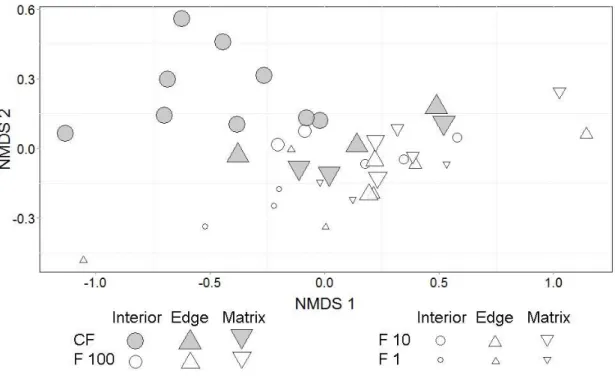
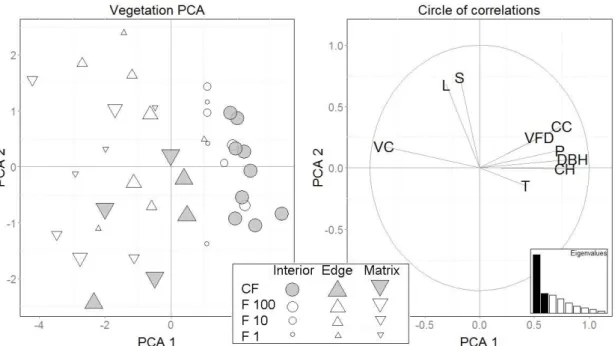
In this study, we took advantage of the unique experimental setting provided by the BDFFP to investigate how tropical bat assemblages respond to vegetation structure and landscape-scale characteristics across an interior-edge-matrix disturbance gradient. Our analyses are based on more than 4000 captures of 50 species and we expand on traditional fragmentation studies by using a multi-scale approach to simultaneously investigate how different biodiversity metrics (species richness, evenness and abundance) are affected by local-scale vegetation structure and landscape-scale forest amount and fragmentation metrics at a range of different focal scales.
Despite the “soft” matrix in which the BDFFP fragments are embedded (composed of ≥ 16 year secondary vegetation) we found strong area-related effects and responses to local- and landscape-level attributes were scale-dependent and ensemble-specific. The findings of this study add to an increasing body of evidence suggesting that scale-sensitive measures of landscape structure are needed for a more comprehensive understanding of the effects of fragmentation on tropical biota.
21 Chapter 3. Does sex matter? Gender-specific responses to forest fragmentation in Neotropical bats
One of the major challenges of conservation is to understand how species can survive in fragmented landscapes. Yet, while many vertebrate groups are known to exhibit differences between sexes in habitat use, sex-specific responses to forest fragmentation remain little explored.
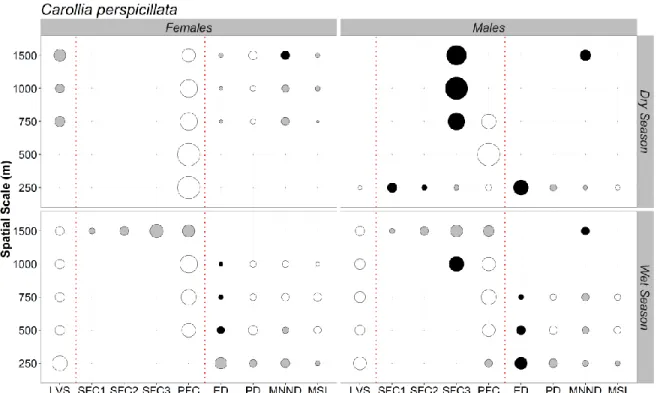
In this study, we investigated male and female responses of eight Neotropical bat species to an interior-edge-matrix disturbance gradient at the BDFFP. To account for seasonality effects we conducted analyses independently for the dry and wet seasons and, for the two most common species, we further investigated the responses to vegetation structure and landscape-scale composition and configuration at a range of different focal scales.
Our results unveiled that both sexes responded similarly to the interior-edge-matrix gradient. However, for three species, we found distinct differences in habitat use between male and female bats for at least one of the seasons. Male-female ratio was balanced in continuous forest and fragment interiors, however, for most species females outnumbered males at edge and matrix sites. Abundance responses to vegetation structure and landscape-scale composition and configuration differed between male and female bats of the two most common species. The observed differences between the responses of male and female bats were consistently more pronounced in dry season. The findings of this study unveil considerable differences in the response of male and female bats to tropical forest disruption and degradation and suggest that future studies investigating the effects of habitat modification on tropical forest vertebrate communities should consider both sexes, due to the possibility that sex-specific differences in habitat use exist.
22 Chapter 4. Design matters: an evaluation of the impact of small man-made forest clearings on tropical bats using a before-after-control-impact design
Across the tropics, widespread human disturbances are moulding human-modified landscapes in which small (< 100 m wide) man-made forest clearing are conspicuous features. Since many old-growth specialists avoid even narrow (< 30 m wide) clearings, understanding the impacts of these small-scale disturbances on primary forest species is paramount to frame effective conservation strategies. In this study, we used a periodical re-isolation of the fragments at the BDFFP, as a before-after-control-impact experiment to investigate the short-term consequences of small clearings on the occupancy of Neotropical bat assemblages in fragment interior, edge and matrix habitats. For this, we sampled interior, edge and matrix sites of eight forest fragments and six control sites in continuous forest before and after the experimental manipulation, capturing ~6 000 bats.
We observed a decline in species richness in all habitats other than fragment edges after fragment re-isolation. Although responses were idiosyncratic, the decline in species richness was more pronounced for forest specialist than for generalist species. Moreover, the similarity between assemblages in continuous forest and fragment interiors, edges and matrix was smaller after fragment re-isolation than before the experimental manipulation. Sampling of experimental controls (sites in continuous forest) both before and after the re-isolation of the fragments unveiled that much of the variation in bat species occupancy between sampling periods did not arise from fragment re-isolation but rather reflected natural spatiotemporal variability. This highlights the need to sample experimental controls both before and after disturbance occurs and suggests caution in the interpretation of results from studies in which the impacts of habitat modification are investigated based uniquely on data collected using space-for-time substitution approaches.