Application of complementary didactics for enhancement of the
teaching-learning process about polyphenic chromosomes
Aplicação de didáticos complementares para o reforço do processo de
ensino-aprendizagem dos cromossomos polifênicos
Recebimento dos originais: 18/11/2018 Aceitação para publicação: 20/12/2018
Fabiana América Silva Dantas de Souza
Doutora em Biociência Animal (Biotecnologia Aplicada à Saúde) pela Universidade Federal Rural de Pernambuco
Instituição: Universidade de Pernambuco (Campus Mata Norte) Endereço: Rua Amaro Maltez, 201, Centro, Nazaré da Mata – PE, Brasil
E-mail: [email protected]
Maria Leticia de Oliveira
Graduanda em Licenciatura em Ciências Biológicas pela Universidade de Pernambuco Instituição: Universidade de Pernambuco (Campus Mata Norte)
Endereço: Rua Amaro Maltez, 201, Centro, Nazaré da Mata – PE, Brasil E-mail: [email protected]
Mirtes Alves Dias
Graduanda em Licenciatura em Ciências Biológicas pela Universidade de Pernambuco Instituição: Universidade de Pernambuco (Campus Mata Norte)
Endereço: Rua Amaro Maltez, 201, Centro, Nazaré da Mata – PE, Brasil E-mail: [email protected]
ABSTRACT
Alternative methodologies are important tools for education, since it is a low cost and attractive alternative that arouses students' interest, improving the acquisition of knowledge as well as the teacher-student relationship. The association between cytology and genetics is of great importance for the study of different biological species. In this way, this work aimed to develop and apply an alternative didactic to improve the teaching-learning process on the endomythic cycle and politenic chromosomes. The research was carried out at the High School Reference School Professor José Mendes da Silva, in the city of Timbaúba-PE, with 3rd year students. Initially a traditional class was given and a questionnaire was applied for knowledge avaluation, followed by complementary didactics using a workshop to construct polythenic chromosomes, as well as reading a cordel literature. Finally, a questionnaire was applied to evaluate the effectiveness of the methodology developed. The results indicated an increase in the percentage of correct answers in the second questionnaire. In the questions (3rd, 7th and 9th), the increase in knowledge acquisition was 80%, 68% and 79%, respectively. Throughout the class, it was observed the interest of the students to participate in the workshop and the reading of cordel literature. The results obtained in this work corroborate with other researches, thus reinforcing the fact that the use of alternative practices allied to conventional classes, awakens and enhances learning, and shows to be great allies in the teaching-learning process.
RESUMO
Metodologias alternativas são ferramentas importantes para a educação, uma vez que é uma alternativa atraente e de baixo custo que desperta o interesse dos alunos, melhorando a aquisição de conhecimento e a relação professor-aluno. A associação entre citologia e genética é de grande importância para o estudo de diferentes espécies biológicas. Desta forma, este trabalho teve como objetivo desenvolver e aplicar uma alternativa didática para melhorar o processo de ensino-aprendizagem sobre o ciclo endométrico e cromossomos politênicos. A pesquisa foi realizada na Escola de Referência do Ensino Médio José Mendes da Silva, na cidade de Timbaúba-PE, com alunos do 3º ano. Inicialmente foi ministrada uma aula tradicional e aplicado um questionário para avaliação do conhecimento, seguido de didática complementar, utilizando uma oficina para construção de cromossomos polifenéticos, além da leitura de uma literatura de cordel. Finalmente, um questionário foi aplicado para avaliar a eficácia da metodologia desenvolvida. Os resultados indicaram um aumento na porcentagem de acertos no segundo questionário. Nas questões (3º, 7º e 9º), o aumento da aquisição de conhecimento foi de 80%, 68% e 79%, respectivamente. Ao longo da aula, observou-se o interesse dos alunos em participar da oficina e da leitura da literatura de cordel. Os resultados obtidos neste trabalho corroboram com outras pesquisas, reforçando o fato de que o uso de práticas alternativas aliadas às aulas convencionais, desperta e potencializa a aprendizagem, e mostra-se um grande aliado no processo de ensino-aprendizagem.
Palavras-chave: Ciclo endométrico; Cromossomos polieticos; Didática alternativa. 1 INTRODUCTION
For a long time the teaching of biology underwent a process of mechanization, leading students to decorate without actually learning. This type of dissemination of knowledge began to be questioned because it did not show efficacy in learning. Given this context, over time the student loses interest in biology classes, because little is done to make the class more attractive, and motivate the same to learn and build their own knowledge (NICOLA, 2016; VLACHOPOULOS and MAKRI 2017). In this way, activities that provide physical, cognitive, ethical, interpersonal and social insertion capabilities that promote a complete learning are necessary. The learning-mediated learning games are considered as a way to stimulate the involvement of theory and practice with the play dimension (VALOIS et al., 2010), and teachers are responsible for mediating this interaction with students, because, as Freire ( 1996), "to teach is not to transfer knowledge, but to create the possibilities for its own production or its construction".
One method to make these classes more attractive is to use practical classes and play games that foster meaningful learning, stimulating student enthusiasm for interactive, fun and competitive learning. The games play an important role in the process of acquiring knowledge because it is a strategy that assists and stimulates the student to build his own knowledge together with his colleagues and teachers, as well as providing a relationship in which dialogue and interaction are always present (OLIVEIRA, 2018). In this way, we consider that active learning is a more effective teaching strategy when compared to traditional teaching methods with the use of expository class
only, and is characterized by the active and concrete action of the students themselves in the construction of knowledge (CARVALHO and CHING, 2016, p.13).
Cytogenetics is the area of genetics that studies the chromosomes, as well as their structure, composition, evolution and development of diseases, this field of biology is studied by the students of High School, who in turn present learning difficulties. Content involving endomyocyte cycles and polythenic chromosomes is embedded in cytogenetics and requires students to know the concepts of cytology and genetics so they can understand the importance and mechanics of these biology topics. Like genetics, cytogenetics also has several complex and difficult to understand concepts. For Mascarenhas et.al (2016), it is fundamental to look for new forms of teaching that are innovative and that can facilitate students' learning about the subject studied. In view of the above, this work aimed to develop and apply an alternative didactics to improve the teaching-learning process about endomythic cycle and politenic chromosomes.
2 METHODOLOGY
2.1 AREA OF STUDY
The research was carried out at the Reference School of Erem Professor José Mendes da Silva, located in the municipality of Timbaúba - PE, with 35 students of the 3rd year. At the beginning of the research, we found that there was a hearing impaired student, so we had the help of a pound interpreter from the school so that all the students could participate in the research.
2.2 APPLICATION AND DATA COLLECTION
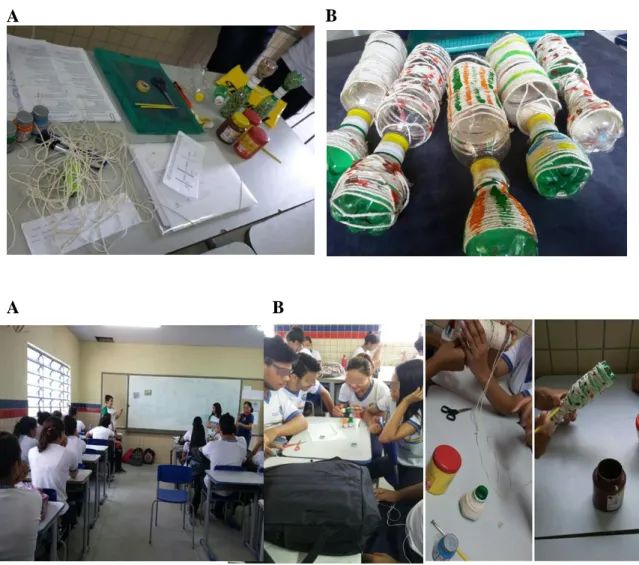
For a practical class, a workshop with a model representing the politenic chromosome was carried out. Polyethylene terephthalate bottles were used for the base of the chromosome, string, paints, Scotch tape, hot glue, scissors and brushes.
Initially a traditional class was ministred with drawings made on the board and some images about what would be polyploidy, politenic chromosomes as they are formed, and their occurrence in living beings, in addition to the comparison between the cell division cycle and the endomythic cycle, and then applied a questionnaire to evaluate the absorption of knowledge of the students on the subject, since this is a subject that is not part of the curriculum of the same. Soon after, a workshop was held, the students were divided into 4 groups, each group was responsible for making a chromatid, which in the end were collected forming the polygenic chromosome or "giant chromosome". To make a demonstration that served as a comparison, we used a nonpolytenic chromosome, for that, we took a model also made with bottle of polyethylene terephthalate, in which the string painted in different colors, represented the genes, and was inside the bottle, and so
, to show how complex the genetic material that forms the chromosomes is. The comparison was intended to show how the politenic chromosome made in the workshop was much larger and less condensed.
To make the chromosome, the string was rolled out of the bottle to show that in the politenic chromosomes the genetic material is practically decondensed. The binding of the string was done with adhesive tape, then the chromosome was painted to define the chromomers (sites where the genetic material is most condensed).
The cordel literature about subject was inserted in the class after the workshop, so that they could use the string, review the class and understand the process of forming the polythenic chromosomes, and associate with the subjects involving genetics that they were learning in the school. Then, the same questionnaire was applied again, to evaluate the students' achievement after the activities developed.
Figure 1. (A) Making the chromosome. (B) Chromosomes ready.SOURCE: Oliveira et al., 2018
A B B
A B
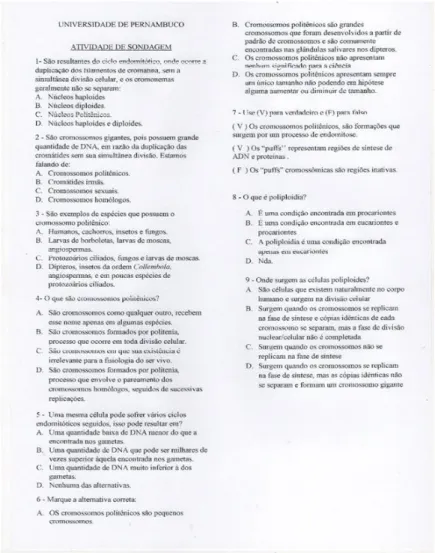
Figure 2. (A) Class with students of the 3rd year. (B) Students participation in the workshop. SOURCE: Oliveira et al., 2018
Figure 4. Cordel literature about polythene chromosomes. SOURCE: Oliveira et al., 2018
3 RESULTS AND DISCUSSION
When applying the first questionnaire, after the traditional class, we noticed that most of the students struggled to respond, even though it was a subject they had never heard of in high school, since this is a subject that is not part of the curriculum students. However, some students did not give much importance to answer, it was noticed, because the questionnaire was front and back, and they were not worried about answering the back of the sheet, therefore, in all 5.7% of the students did not respond the other side of the sheet, however, on the second questionnaire applied after the practical intervention, all of them responded to the activity completely, that is, there was an increase in interest in participating in the class, in addition, with the second questionnaire they had the opportunity to show the who have learned.
The proposed challenging activities are of fundamental importance to successful learning, bring the necessary skills at each stage, stimulate reasoning and participation, provide opportunities for interaction and group work, while working with individual skills and favors collective learning. During the whiteboard and pilot class everyone paid attention, but there was not much student interaction in class. Education can not ignore the changes that take place in society, which have been happening for a long time, and continue to use only the traditional methods that worked in the past, when access to information was more difficult if it was insufficient for learning . Today, access to knowledge is very easy and fast, we do not only learn in school, but anywhere, at any time, including with the subsidy of the internet. Not updating teaching methods to reality, is contributing to the student's lack of interest and consequently learning lag (MORÁN, 2015).
During the intervention, many students were curious to ask about the printed images that showed the occurrence of polyploidy. This demonstrates the importance of how these teaching situations are presented for improving the absorption and achievement of learning. (OLIVEIRA et al., 2018). In this way, creativity and versatility in class, avoiding predictable and repetitive methods, which do not arouse the student's interest in participating in the class, are essential today, and even with a lack of resources, it is possible for the teacher to innovate his class by investing in ways to draw the student's attention to the content addressed. Technological resources are a great way to work on content, but in their absence, the teacher should not be limited, and seek alternatives to present the subject in a differentiated and effective way.
The moment of greatest interaction of the students was in the workshop, the proposal was to make four groups, and each group would make a chromatid of the polythenic chromosome, and then we would join the chromatids to represent the giant chromosome, but some students did not fit into any of the four groups, perhaps for lack of affinity with the other colleagues, because of this, we asked that these students join in forming a fifth group, so no one was left out of the workshop, but even so, the goal of showing that the chromosome had four chromatids was achieved. The workshop was the key point of the intervention, because after we explained the steps to make up the chromosomes, it did not require the pound interpreter to intervene to explain to the hearing impaired student about the workshop, and everyone interacted equally. Thus, the workshop contributed not only to learning about the constitution of the polythenic chromosome, but also called attention to the students interested in participating in the rest of the other methodologies used in the class.
The workshop, materialized abstract contents, which only with traditional classes would make the learning process very difficult. The construction of the chromosome with polyethylene terephthalate bottles was designed to show the complexity of the chromosome by spiraling and
condensing, and demonstrated how this spiralization is different in the polythenic chromosome, which justifies its large size.
In applying cordel literature, there was a great interest of the students to participate, because, besides the cordel being an alternative nonconventional methodology, it was a revision of some concepts that they were seeing in genetics and and still brought a new subject they had learned.
The class lasted longer than 1 hour and 40 minutes, but the students' satisfaction in attending was so great that they stayed in the classroom even though it was the time of the break. In the first class, the traditional class was ministred on the whiteboard, and the first questionnaire was applied, and then, in the second class, the workshop was applied, the cordel literature and the second questionnaire was applied. In the second class, there was effective participation of the students.
After the second questionnaire, we noticed the evolution of the correct answers. In the first questionnaire applied before the intervention, only in the questions that asked directly on the subject of polyploidy and politênicos chromosomes, was verified a great amount of errors. As for example in question 3, which dealt with the occurrence of politenic chromosomes, in the first questionnaire only 26% of the students answered, while in the second questionnaire 80% answered. The same was observed in question 6, which dealt with the occurrence and characteristics of the endomyocyte cycle, only 29% of the students answered the question in the first questionnaire, whereas in the second questionnaire there were 60% of correct answers. Another research with similar methodology, also obtained satisfactory results and were reported by CARDOZO et al., 2016.
Figure 5. Comparative chart referring to the number of hits per question from the 1st questionnaire (before the intervention) and from the 2 nd questionnaire (after the intervention). SOURCE: Oliveira et al., 2018
0% 10% 20% 30% 40% 50% 60% 70% 80% 90% Question 1 Question 2 Question 3 Question 4 Question 5 Question 6 Question 7 Question 8 Question 9 1st Questionnaire 2nd Questionnaire
One of the high points of the work we want to highlight was the issue of inclusion, not only because the school supports the hearing impaired with an interpreter of pounds, which is a right guaranteed by law, but also of the importance of the teacher working with alternative methodologies to facilitate learning, thus promoting inclusion. For an inclusive education, the school must guarantee the quality of educational instruction to all its students, according to the diversity of each one and according to their potentialities and needs, not underestimating the abilities of their students, but stimulating them for the improvement of learning (PEREIRA et al., 2016).
4 CONCLUSION
In the face of the results, it was concluded that the application of alternative resources after the traditional class increased the level of learning in a simple and effective way, being practice and playfulness complementary tools that should be used to arouse students interest in relation to the content addressed , thus making the teaching-learning process innovative, light and enjoyable. This type of methodology can be used for any content at any age, thus broadening the student's view of the concept of learning.
The addition of playful practices in the classroom contributed considerably to the acquisition of knowledge, and to the socialization between students and teacher, stimulating cognitive reasoning, logic and group activity. Since most schools do not have the resources to improve classes, it is up to teachers to seek new teaching methods. Following this context, the complementary play methodology has proven to be a good way to overcome the lack of resources, as well as being a low cost strategy for educational institutions.
REFERENCES
CARDOZO, L. T; MIRANDA, A. S; MOURA, M. J. C. S; MARCONDES, F. K. Effect of a puzzle on the process of students’ learning about cardiac physiology. Adv Physiol Educ n. 40, 2016.
CARVALHO, F. O; CHING, H. Y. Metodologias de Ensino X Resultados de Aprendizagem. In:
Práticas de Ensino-Aprendizagem no ensino superior: Experiências em sala de aula. 1º. Ed.
Rio de Janeiro. Alta Books, 2016. p. 1-25.
MASCARENHAS, M.J.O; SILVA, V.C.; MARTINS, P.R.P; FRAGA, E.C.; BARROS, M.C. Estratégias Metodológicas para o Ensino de Genética em Escola Pública. Pesquisa em Foco, São Luís, v. 21, n.2, p.05-24, 2016.
MIRANDA, Simão de. No Fascínio do jogo, a alegria de aprender. Ciência Hoje, v.28, n. 168, p. 64-66, jan/fev, 2001.
MORÁN, José. Mudando a educação com metodologias ativas. In. SOUZA, Carlos; MORALES, Ofélia. Convergências Midiáticas, Educação e Cidadania: aproximações jovens. PROEX/UEPG, 2015. p. 15-33.
NICOLA, Jéssica Anese; PANIZ, Catiane Mazocco. A importância da utilização de diferentes recursos didáticos no ensino de biologia. InFor, Inovação e Formação , v. 2, n. 1, p.355-381, 2016.
NUNES, F.M.F.; FERREIRA, K.S.; SILVA Jr, W.A.; Barbieri, M.R. ; Covas, D.T. Genética no ensino médio: uma prática que se constrói. Genética na Escola, v.1, n.1, p.19-24, 2006. Disponível
em:
<
http://www.geneticanaescola.com.br/ano1vol1/08.pdf.>. Acesso em 19/04/2018.OLIVEIRA, Lucimere de Souza. O jogo como recurso pedagógico para o ensino de biologia. 2018, 64 f. Trabalho de Conclusão de Curso - Universidade Federal Da Paraíba, Areia, 2018.
REO, R. P.; SOUZA, S. C. S; ASSELF, R. F.; RAMOS PONTES, F. A.; FERREIRA, M. H. R. Inclusão de estudantes com deficiência no ensino superior: uma revisão sistemática. Revista
Educação Especial. Santa Maria, v. 29, n. 54, p. 147-160, janeiro-abril, 2016.
VLACHOPOULOS and MAKRI. The effect of games and simulations on higher education: a systematic literature review. International Journal of Educational Technology in Higher