Soraia Milene Oliveira Quintinha
Bio
tech s
trategies to impro
ve t
he quality of crude oils
Escola de Engenharia
Soraia Milene Oliveira Quintinha
Biotech strategies to improve the quality
of crude oils
Dissertação de Mestrado
Mestrado em Bioengenharia
Trabalho Efetuado sob a orientação do
Professor Doutor José António Couto Teixeira
e do
Doutor Eduardo José Gudiña Pérez
Escola de Engenharia
Soraia Milene Oliveira Quintinha
Biotech strategies to improve the quality
of crude oils
ii
DECLARAÇÃO
Autora: Soraia Milene Oliveira Quintinha
E-mail: [email protected]
Título tese: Biotech strategies to improve the quality of crude oils
Orientador: Professor Doutor José António Couto Teixeira
Co-orientador: Doutor Eduardo José Gudiña Pérez
Ano de conclusão: 2014
Designação do Mestrado: Mestrado em Bioengenharia
É AUTORIZADA A REPRODUÇÃO INTEGRAL DESTA TESE/TRABALHO APENAS PARA EFEITOS DE INVESTIGAÇÃO, MEDIANTE DECLARAÇÃO ESCRITA DO INTERESSADO, QUE A TAL SE
COMPROMETE
Universidade do Minho, ___/___/______
AGRADECIMENTOS
A realização desta tese de Mestrado assinala mais uma importante etapa da minha aprendizagem. Uma etapa que ficou marcada quer pelo conhecimento científico adquirido, quer pelo meu desenvolvimento pessoal. Ao longo desta jornada, foram muitas as pessoas que de alguma forma me apoiaram e ajudaram na realização deste trabalho, e às quais não poderia deixar de expressar o meu sincero agradecimento.
Ao meu orientador, Professor José Teixeira, e à Professora Lígia Rodrigues, a oportunidade de realizar este projeto no âmbito da dissertação de mestrado. O vosso incentivo e disponibilidade para me ajudarem a encontrar um tema de dissertação de acordo com as minhas perspetivas.
Ao meu co-orientador, Doutor Eduardo Gudiña, todas as palavras de agradecimento não seriam suficientes. Neste último ano foste o meu mentor e contigo aprendi mais do que com qualquer outra pessoa. Agradeço-te a partilha de conhecimentos, os ensinamentos, a enorme paciência, a disponibilidade, o apoio e o sentido de humor. Simplesmente um muito obrigado!
À Micoteca da Universidade do Minho (MUM), em especial à Célia, por todo o auxílio e ajuda prestada na identificação do fungo #28.
A todo o pessoal do Laboratório de Fermentações, em especial à Rita e à Isa pela boa disposição e companheirismo durante todo o ano.
Aos colegas de mestrado que se tornaram amigos para a vida, Rafael, Rui e Tânia, agradeço a receção ao Minho, os disparates na realização dos 1001 trabalhos mas acima de tudo a diversão durante estes últimos dois anos.
Ao grupo “Filhos do recluso” que embora longe sempre estiveram presentes! À minha amiga Adriana, agradeço os conselhos e a amizade incondicional!
Ao meu grande amigo Gil, todos os obrigados seriam poucos, e muitas coisas nem se agradecem, sentem-se!
Um agradecimento especial, aos meus Pais e irmã, por todo o carinho, apoio emocional
ABSTRACT
The isolation and identification of microorganisms with potential for bioconversion in petroleum fields is of great relevance, since these organisms may be related to a decrease in petroleum quality in the reservoirs or cause damages in the production facilities; furthermore, microorganisms with beneficial effects and activities can also be found. In that sense, a petroleum sample was obtained from a Brazilian oil field (oil well CLB), with the aim of isolating microorganisms and evaluating their ability to degrade different hydrocarbons, in particular long
chain n-alkanes. Twenty-three isolates were obtained from the oil sample: fourteen bacterial
isolates and nine filamentous fungi. Five isolates were identified as Pseudomonas sp. according
to their macroscopic characteristics. The Pseudomonas sp. strains were selected due to their
high biosurfactant-producing ability. The biosurfactants produced by those isolates reduced the surface tension of water from 72 to 30 mN/m, and exhibited emulsifying activities of almost 60%. Furthermore, one of the filamentous fungi isolated, identified through morphological and
molecular techniques as Scedosporium spp., produced a bioemulsifier growing in a medium
containing 30% (v/v) of oil mill wastewater (OMW). This bioemulsifier exhibited high stability at extreme conditions of pH and salinity. Oil treatments using microorganisms to improve the API degree of heavy crude oils constitute an innovative approach. In that sense, the Mukhaizna crude oil (heavy oil) was subjected to treatments with filamentous fungi, Pseudomonas sp. and Bacillus subtilis strains, all of them isolated from oil samples. However, none of the assays performed improved the quality of this oil. Other promising biotechnological application is Microbial Enhanced Oil Recovery (MEOR), which is potentially useful to increment oil recovery from reservoirs beyond primary and secondary recovery operations using microorganisms and their metabolites. In this work, a sand-pack column model was used to simulate the oil recovery operations and evaluate the mobilization of residual oil by three filamentous fungi isolated from the oil sample, with additional oil recoveries ranging from 1.9 to 9.2%.
In conclusion, although the main objective of this work couldn’t be achieved (improve the quality of Mukhaizna crude oil), the results obtained show that microorganisms isolated from oil reservoirs can be useful for several applications, not only in the oil industry, but also in other areas such as waste management and the production of surface-active compounds for several applications.
SUMÁRIO
O isolamento e identificação de microrganismos com potencial de bioconversão nos campos petrolíferos é de grande relevância, devido ao relacionamento dos organismos com a diminuição da qualidade do petróleo nos reservatórios ou dos danos causados nas instalações de produção. Além disso, microrganismos com actividades benéficas podem também ser encontrados. Nesse sentido, foi recolhida uma amostra de um campo de petróleo brasileiro (poço petrolífero CLB), com o objectivo de isolar microorganismos e avaliar a capacidade desses degradarem diferentes compostos. Vinte e três isolados foram isolados a partir da amostra de óleo: catorze bactérias e nove fungos filamentosos. Cinco isolados foram identificados como Pseudomonas sp. de acordo com as suas características macroscópicas e apresentaram capacidade de produzir biossurfatantes. Os biossurfatantes produzidos por estes isolados reduziram a tensão superficial da água de 72 para 30 mN/m e exibiram actividades emulsionantes de quase 60%. Além disso, um dos fungos filamentosos isolados, identificado
através de técnicas moleculares e morfológicas como Scedosporium spp. produziu um
bioemulsionante num meio contendo 30% (v/v) de águas ruças. Este bioemulsionante exibiu alta estabilidade em condições extremas de pH e salinidade. Os tratamentos de petróleo utilizando microrganismos como estratégia para melhorar o grau API de petróleo pesado constituem uma abordagem inovadora. Nesse sentido, o petróleo oriundo do poço do Mukhaizna foi submetido a
tratamentos com fungos filamentosos, Pseudomonas sp. e estirpes de Bacillus subtilis, todos
eles isolados a partir de amostras de óleo. No entanto, nenhum dos ensaios realizados melhorou a qualidade deste petróleo. Outra aplicação biotecnológica promissora é a recuperação de petróleo com utilização de microrganismos (MEOR), que é potencialmente útil para aumentar a recuperação de petróleo num reservatório. Neste trabalho, um modelo de coluna com areia empacotada foi concebido para simular as operações de recuperação de petróleo e avaliar a mobilidade de óleo residual inoculado pelos três fungos filamentosos isolados a partir da amostra de óleo, onde as recuperações adicionais de óleo variaram entre 1.9 e 9.2%.
Em conclusão, embora o principal objectivo deste trabalho não tenha sido alcançado (melhorar a qualidade do petróleo do Mukhaizna), os resultados obtidos mostram quem os microrganismos isolados de reservatórios de petróleo podem ser uteis para diversas aplicações, não só na industria petrolífera, mas também em outras áreas como a gestão de resíduos e a produção de compostos tensioactivos para diversas aplicações.
Table of Contents, List of Figures, List of Tables
and List of Abbreviations
TABLE OF CONTENTS
AGRADECIMENTOS III ABSTRACT V SUMÁRIO VII TABLE OF CONTENTS IX LIST OF TABLES XVLIST OF FIGURES XIX
LIST OF ABBREVIATIONS XXII
CONTEXT AND MOTIVATION XXV
RESERCH AND AIMS XXVI
1.Introduction 1
1.1.Crude oil composition: problems and opportunities for improvement 3 1.2.Biological treatments to improve the quality of the oils 5
i. Microorganisms as biocatalysts 6
ii. Biosurfactants versus surfactants 7
iii. Bioemulsifiers 10
1.3.Microbial Enhanced Oil Recovery (MEOR) 11
2.Materials and Methods 15
2.1.Isolation of microorganisms from the crude oil sample 17
2.2.Screening of biosurfactant-producing strains 17
2.3.Optimization of biosurfactant/bioemulsifier production 19
2.3.1.Bacterial strains 19
2.3.2.Filamentous fungi 19
2.4.Biosurfactants and bioemulsifier recovery 20
xii
2.4.2.Filamentous fungi 20
2.5.Surface tension measurements 21
2.6.Emulsifying activity determination 21
2.7.Critical micelle concentration (CMC) 22
2.8.Stability studies 22
2.9.Effect of OMW on the growth of the filamentous fungus #28 23
2.10.Ligninolytic enzymes determination 23
2.11.Mukhaizna crude oil treatments 24
2.11.1.Viscosity measurements 25
2.11.2.Evaluation of n-alkanes degradation 25
2.12.Microbial Enhanced Oil Recovery assays 25
2.13.Identification of the filamentous fungus #28 28
2.14.Analytical techniques 28
i. Carbohydrates concentration 28
ii. Protein concentration 29
iii. Phenolic compounds concentration 29
2.15.Statistical analysis 29
3.Results and Discussion 31
3.1.Isolation of microorganisms from the crude oil sample 33 3.2.Study of biosurfactant production by the bacterial strains 34
3.2.1.Screening of biosurfactant-producing strains 34
3.2.2.Biosurfactant production by Pseudomonas sp. isolates 35
3.2.2.3.Critical micelle concentration (CMC) 44 3.3.Study of biosurfactant production by the filamentous fungi 47
3.3.1.Screening of biosurfactant-producing strains 47
3.3.2.Study of bioemulsifier production by the isolate #28 50
3.3.2.1.Optimization of bioemulsifier production 50
3.3.2.2.Bioemulsifier recovery 53
3.3.2.3.Bioemulsifier stability 55
3.3.2.4.OMW: toxicity and degradation of phenolic compounds by the filamentous fungus #28 58 3.3.2.5.Identification of the filamentous fungus #28 62
3.4.Screening of enzyme-producing microorganisms 64
3.5.Treatments to improve the quality of Mukhaizna crude oil 65 3.5.1.Treatments performed with Pseudomonas sp. strains isolated from the oil sample CLB 65
3.5.2.Treatments performed with the filamentous fungi isolated from the oil sample CLB 68 3.5.3.Treatments performed with B. subtilis and Pseudomonas sp. strains isolated from the oil
samples PTX-9 and PTX-11
69
3.6.Additional biotech applications 72
3.6.1.Microbial Enhanced Oil Recovery 72
4.General Conclusions and Recommendations 75
5.References 81
LIST OF TABLES
Table 1: Microbial products, their role in enhanced oil recovery, and some of the effects to solve production problems
14
Table 2: Isolates obtained from the oil sample CLB and culture media and conditions used for their isolation.
33
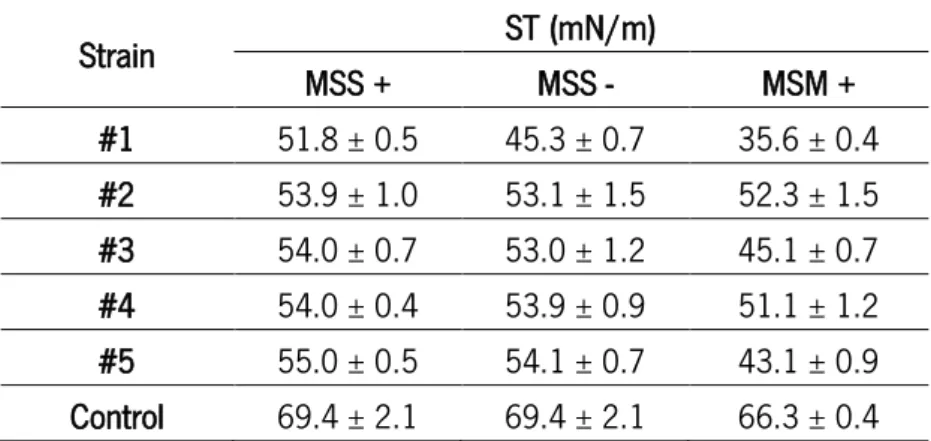
Table 3: Surface tension values (mN/m) obtained with the isolates Pseudomonas sp. #1, #2, #3, #4 and #5 grown in MSS+, MSS- and MSM+ media for 5 or 7 days at 37 ᴼC and 105 rpm under aerobic conditions. The surface tension values were measured at room temperature (20 ᴼC). Results represent the average of two independent experiments ± standard deviation.
35
Table 4: Surface tension values (mN/m) and emulsifying indexes (%) obtained in cultures performed with Pseudomonas sp. #1, #2 and #3 in MSM+ supplemented with 10% (v/v) of OMW, at 37 ᴼC and 180 rpm. The surface tension of the culture medium is 66.3 mN/m. Results represent the average of two independent experiments ± standard deviation.
42
Table 5: Evaluation of different methods for biosurfactant recovery. Surface tension values (mN/m) of cell-free supernatants before/after acidic precipitation and after adsorption chromatography using the polystyrene resin Amberlite XAD-2. The cell-free supernatants correspond to cultures of Pseudomonas sp. #1, #2 and #3 performed in LB medium at 37 ᴼC and 180 rpm for 72h. The surface tension of LB medium is 47.0 ± 0.4 mN/m. The results represent the average of two measurements ± standard deviation.
43
Table 6: Amount of biosurfactant produced by Pseudomonas sp. #1, #2 and #3 grown in MSM+ at 37 ᴼC and 180 rpm for 96 hours.
44
Table 7: Study of biosurfactant production by the filamentous fungi #21, #25 and #28. Surface tension (mN/m) and emulsifying indexes (%) were measured in the cell-free supernatants obtained after growing the three isolates at 37 ᴼC in the different media for 3 weeks. The surface tension values of the different media are 69.8, 69.2 and 67.0 mN/m for MA (+/-), BRM (+/-) and Wunder (+/-) media, respectively.
48
Table 8: Study of bioemulsifier production by the filamentous fungus #28. Surface tension values (mN/m) and emulsifying indexes (%) measured in the cell-free supernatants obtained after growing the isolate at 37 ᴼC in MA+/- media supplemented with the different substrates for 21 days. The surface tension value of MA (+/-) medium is 69.8 mN/m.
xvi
Table 9: Emulsifying indexes (%) obtained with the products recovered from the cell-free supernatants after precipitation with acetone or ethanol. The cell-free supernatants used were obtained from cultures performed with the filamentous fungus #28 in MA- medium supplemented with 10, 20 and 30% (v/v) of OMW, at 37 ᴼC and 180 rpm for 3 weeks.
54
Table 10: Effect of high and low temperatures on the activity of the bioemulsifier produced by the filamentous fungus #28. The emulsification indexes (%) were performed using the supernatants obtained from cultures of the filamentous fungus #28 grown on MA- medium supplemented with 30% of OMW, after exposition to different temperatures for different time intervals. The emulsifying index before the treatments (control) was 56.0%. Results represent the average of three independent experiments ± standard deviation.
56
Table 11: Concentration of carbohydrates, protein and phenolic compounds (g/l) in the OMW used in this study.
60
Table 12: Viscosity (η) and API degree of Mukhaizna crude oil after treatment with Pseudomonas
sp. #1, #2 and #3 in MSS+ (25 days) and MSS- (30 days) at 37 ᴼC and 105 rpm. Surface tension values and emulsifying indexes of cell-free supernatants obtained at the end of the treatment. The API degree of Mukhaizna crude oil is 15.2ᴼ, and its viscosity at 50 ᴼC 2430 mPa.s. The surface tension of MSS (+/-) is 69.4 ± 2.1 mN/m.
65
Table 13: Viscosity (η) and API degree of Mukhaizna crude oil after treatment with Pseudomonas
sp. #1, #2 and #3 in MSM1/2 at 37 ᴼC and 180 rpm during 30 days. Surface tension values and
emulsifying indexes of cell-free supernatants obtained at the end of the treatment. The API degree of Mukhaizna crude oil is 15.2ᴼ, and its viscosity at 50 ᴼC is 2430 mPa.s. The ST and ST-1of
MSM1/2 is 66.3 ± 0.54 and 70.8 ± 4.0 mN/m, respectively.
67
Table 14: Viscosity (η) and API degree of Mukhaizna crude oil after treatment with the filamentous fungi #21, #25 and #28 in MSS+ medium at 37 ᴼC and 105 rpm for 25 days. Surface tension values and emulsifying indexes of cell-free supernatants obtained at the end of the treatments. The API degree of Mukhaizna crude oil is 15.2ᴼ, and its viscosity at 50 ᴼC 2430 mPa.s. The ST of MSS+ is 69.4 ± 2.1 mN/m.
PX191, PX551, PX571, PX572 and Pseudomonas sp. PX901 with the media MSS+ or MSS- at 37 ᴼC and 105 rpm for 25 days. Surface tension values of cell-free supernatants obtained at the end of the treatments. The APIᴼ of Mukhaizna crude oil is 15.2, and its viscosity at 50 ᴼC 2430 mPa.s. The ST of MSS+ is 69.4 ± 2.1 mN/m.
Table 16: Surface tension values and emulsifying activities measured in the supernatants obtained after the treatment of Mukhaizna crude oil with B. subtilis PX191, PX551, PX571 and PX572 for 30 days in medium MSS1/2 at 37 ᴼC and 180 rpm. The surface tension of MSS1/2 is
69.4 ± 2.1 mN/m.
71
Table 17: Summary of the results obtained in the sand-packed column assays performed with the filamentous fungi #21, #25 and #28. Results represent the average of two independent experiments ± standard deviation.
72
Table 18: Viscosity and API degree of crude oil before passing through the column (control), after water-flooding, and after the incubation with the filamentous fungi (AOR).
74
Table 19: Dry weigh (mg/L) obtained for the filamentous fungi after growing in BRM (+/-) at 37 ᴼC during 12 days. The cultures were incubated in three different conditions: aerobic (Ae), microaerophilic (Ae/An) and anaerobic (An).
LIST OF FIGURES
Figure 1: Schematic representation of the biodegradation process in an oil reservoir, leading to changes in their capacity to decrease the API degree.
4
Figure 2: Representation of the role displayed by biosurfactants in the uptake of hydrocarbons. The figure shows the emulsifying effect of rhamnolipids produced by Pseudomonas sp. within the oil-water interphase and the formation of micelles.
9
Figure 3: Winsor classification of microemulsions. Microemulsions can exist in three forms, known as Winsor type microemulsions. Type I (O/W), when the water– surfactant interaction is stronger than oil–surfactant interaction (R < 1), microemulsions solubilize oil in spherical normal micelles within the water-continuous phase. Type II (W/O), when the strength of oil–surfactant interaction is stronger than water–surfactant interaction (R > 1), microemulsions solubilize water in reverse micelles within the oil-continuous phase. Type III, when the interactions are balanced (R = 1); in this case, microemulsions are three-phase systems in which the middle phase microemulsions are in equilibrium with both excess oil and excess water phases. The Winsor R parameter represents the ratio of the total interaction energies (per unit area of interface) of the surfactant for the O and W phases and is also dependent on environmental factors.
10
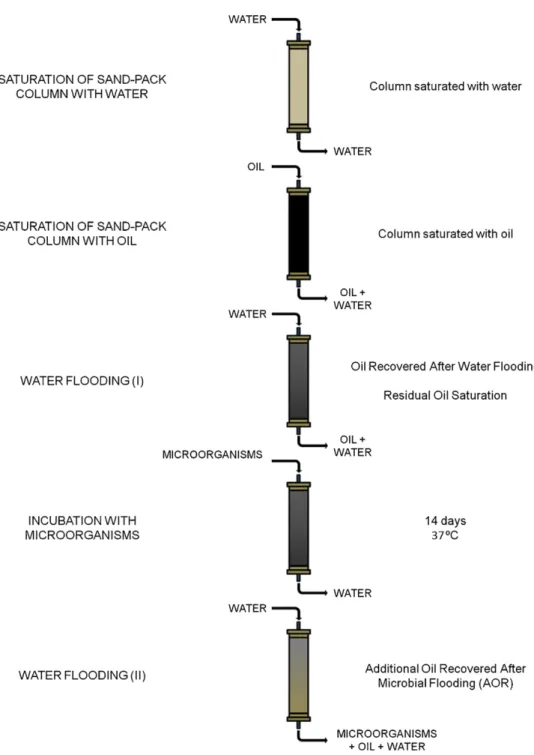
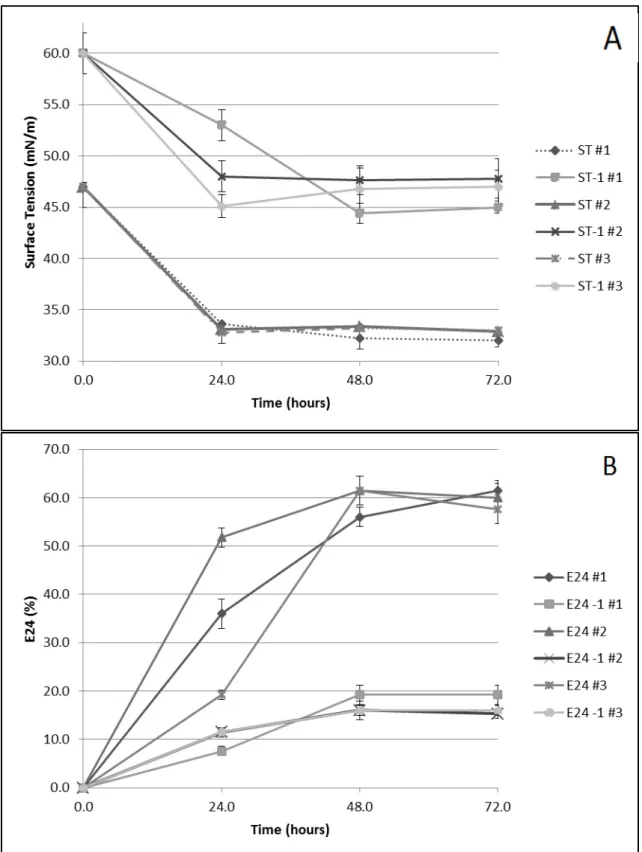
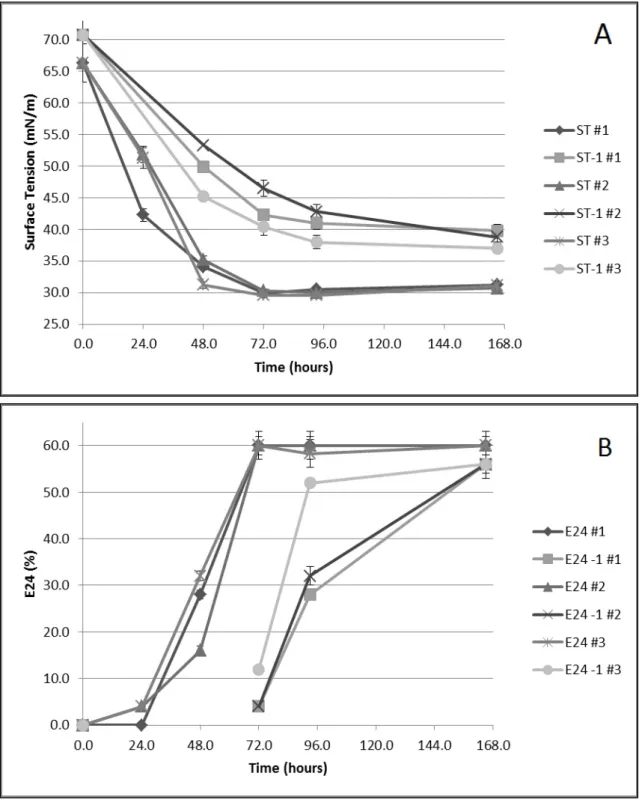
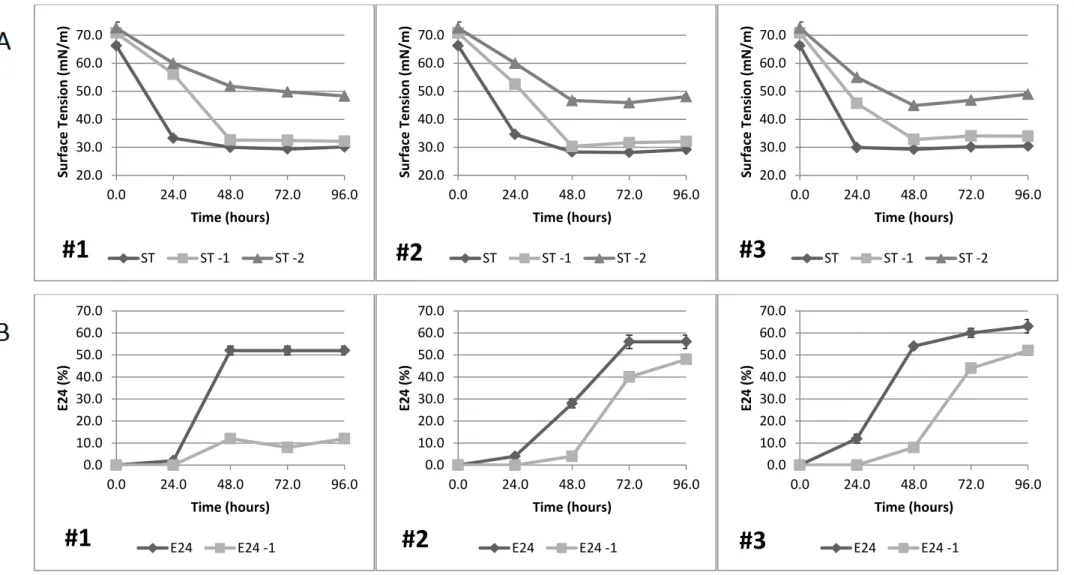
Figure 4: Schematic representation of the sand-packed column process. 27 Figure 5: Pseudomonas sp. #1, #2 and #3 grown in LB medium at 37 ᴼC. 34 Figure 6: Evolution of surface tension (mN/m) (A) and emulsifying activity (%) (B) in cultures performed with Pseudomonas sp. #1, #2 and #3 in LB medium at 37 ᴼC and 180 rpm. Results represent the average of two independent experiments ± standard deviation.
37
Figure 7: Evolution of surface tension (mN/m) (A) and emulsifying activity (%) (B) in cultures performed with Pseudomonas sp. #1, #2 and #3 in MSM+ medium at 37 ᴼC and 105 rpm. Results represent the average of two independent experiments ± standard deviation.
39
Figure 8: Evolution of surface tension (mN/m) (A) and emulsifying activity (%) (B) in cultures performed with Pseudomonas sp. #1, #2 and #3 in MSM+ medium at 37 ᴼC and 180 rpm. Results represent the average of two independent experiments ± standard deviation.
xx
Figure 9: CMC of the biosurfactants produced by Pseudomonas sp. #1 (A), #2 (B) and #3 (C) in MSM+ at 37 ᴼC and 180 rpm. The plot represents the surface tension (mN/m) versus the logarithm of biosurfactant concentration (mg/l). The CMC was determined from the intersection of the regression lines better describe the two parts of the curve, below and above the CMC. Results represent the average of two measurements and error bars represent the standard deviation of the mean values.
45
Figure 10: Evolution of surface tension (mN/m) (A) and emulsifying activity (%) (B) in cultures performed with the filamentous fungi #21, #25 and #28 grown in MA+ and MA- media supplemented with 10% (v/v) of OMW. The cultures were performed at 37 ᴼC and 180 rpm. Results represent the average of two independent experiments ± standard deviation.
49
Figure 11: Surface tension values (mN/m) (A) and emulsifying indexes (%) (B) obtained in cultures performed with the filamentous fungus #28 grown in MA- medium supplemented with different OMW concentrations (between 10 and 50%). The cultures were performed at 37 ᴼC and 180 rpm. Results represent the average of two independent experiments ± standard deviation.
52
Figure 12: Effect of salinity on the activity of the bioemulsifier produced by the filamentous fungus #28 in MA- medium supplemented with 30% (v/v) of OMW. The emulsifying indexes were performed at room temperature. Results represent the average of two independent assays and error bars represent the standard deviation.
55
Figure 13: Effect of pH on the activity of the bioemulsifier produced by the filamentous fungus #28 in MA- medium supplemented with 30% (v/v) of OMW. The emulsifying indexes were performed at room temperature. Results represent the average of two independent assays and error bars represent the standard deviation.
57
Figure 14: Diameter of the mycelium of the filamentous fungus #28 grown in plates of MA- medium supplemented with 10, 30 and 50% of OMW at 37 ᴼC. MA- medium without OMW was used as control (0%). Results represent the average of four independent experiments ± standard deviation.
59
Figure 15: Evolution of phenolic compounds concentration along the time in cultures performed with the filamentous fungus #28 grown in MA- medium supplemented with 30% of OMW. The cultures were performed at 37 ᴼC and 180 rpm. Results represent the average of three measurements ± standard deviation.
Agar for 7 days at 30 ᴼC.
Figure 17: Microscopic pictures of the filamentous fungus #28 after 7 days of growth at 30 ᴼC. (A): 40x10; (B): 100x10.
62
Figure 18: Phylogenetic neighbour-joining tree based on the sequence of the ITS region from the filamentous fungus #28 (unknown). The tree was constructed using sequences of comparable regions of the ITS regions available in the GenBank database of the National Center for Biotechnology Information (NCBI).
63
Figure 19: Treatment performed with Pseudomonas sp. #3 with MSM1/2 and Mukhaizna crude oil. 66
Figure 20: Oil-in-water emulsions formed with the supernatants obtained after the treatment of Mukhaizna crude oil with Pseudomonas sp. #1 in MSM1/2 medium at 37 ᴼC and 180 rpm during
30 days.
68
Figure 21: Treatments performed with Mukhaizna crude oil and the filamentous fungi #21 and #25, after 25 days of incubation with the medium MSS+ at 37 ᴼC and 105 rpm.
68
Figure 22: Treatments performed with Mukhaizna crude oil and B. subtilis PX551 during 30 days in MSM1/2 at 37 ᴼC and 180 rpm. Culture medium removed (A) and new culture medium (B).
71
Figure A.1: Calibration curve of carbohydrates concentration. 91 Figure A.2: Calibration curve of proteins concentration. 91 Figure A.3: Calibration curve concentration of phenolic compounds. 92
LIST OF ABBREVIATIONS
ABTS 2,2’-azinobis-(3-ethylbenzothianoline-6-sulphonic acid)
ANOVA Analysis of variance
AOR Additional Oil Recovery
API American Petroleum Institute
BLASTn Nucleotide-nucleotide blast network service
BOD Biochemical Oxygen Demand
BRM Basidiomycetes Rich Medium
BRM + BRM medium supplemented with glucose (10g/l)
BRM - BRM medium without glucose
BSA Bovine Serum Albumin
BTEX Benzene, Toluene, Ethylbenzene and Xylene
CMC Critical Micelle Concentration
COD Chemical Oxygen Demand
CSL Corn Steep Liquor
E24 Emulsification Index
E24-1 Emulsification Index of a sample 10 times diluted
GC Gas Chromatography
LB Luria Bertani Medium
LiP Lignin Peroxidase
MA+ MA medium supplemented with glucose (10g/l)
MA- MA medium without glucose
MEOR Microbial Enhanced Oil Recovery
MnP Manganese Peroxidase
MSM Mineral Salt Medium
MSM+ MSM medium supplemented with glucose (12g/l)
xxiv
MSM1/2 MSM medium supplemented with glucose (6g/l)
MSS Mineral Salt Solution Medium
MSS+ MSS medium supplemented with sucrose (10g/l)
MSS- MSS medium without sucrose
MSS-CSL MSS with CSL 10% (v/v) without sucrose
NCBI National Centre for Biotechnology Information
OA Oatmeal Agar medium
OMW Oil Mill Wastewater
OOIP Original Oil In Place
PCR Polymerase Chain Reaction
PDA Potato Dextrose Agar medium
PV Pore Volume
rpm Rotations per Minute
SD Standard Derivation
Soi Initial Oil Saturation
Sor Residual Oil Saturation
Sorwf Oil Recovered after Water Flooding
ST Surface Tension
ST-1 Surface Tension of a sample 10 times diluted
ST-2 Surface Tension of a sample 100 times diluted
Swi Initial Water Saturation
Wunder+ Wunder medium supplemented with glucose (10g/l)
Wunder- Wunder medium without glucose
Crude oil is the major source of energy worldwide. As the price of petroleum increases and crude oil reserves collapse, exploitation of oil resources in mature reservoirs is essential for meeting future energy demands. Conventional oil recovery methods currently used have become inefficient to provide the increasing demand of crude oil; for that reason, there is a continuous need of developing new technologies to increase oil production from mature oil fields. Microbial enhanced oil recovery (MEOR) is a cost-effective and eco-friendly important tertiary oil recovery method which can contribute to improve oil production from mature reservoirs.
On the other hand, the treatment of heavy oils (API gravity below 20.0°) is also a priority. The degradation of heavy oils using biological treatments as a strategy to improve their API (American Petroleum Institute) degree constitutes an innovative approach with enormous potential. Typically the heavy oils are characterized by exhibiting high viscosity and density. Their biological treatment is an environmentally friendly alternative and/or a complement to other existing processes. Additionally, these treatments require less severe operational conditions and are highly selective and specific as compared to the conventional chemical methods. The use of microorganisms as biocatalysts in these treatments presents several advantages, such as stability, specificity and selectivity; furthermore, microorganisms can use a wide range of substrates and are recyclable.
In summary, MEOR process and the biological treatment of Mukhaizna crude oil will help to overcome the economic barriers and will allow the exploration of oils that, at this moment, are not available.
xxvi
REASERCH AND AIMS:
The main goal of this work was the application of biotech strategies to improve the quality of heavy crude oils using different microorganisms. At the same time, other studies were performed, as described below:
Isolation of microorganisms from the crude oil sample;
Evaluation of biosurfactants/bioemulsifiers production by the different microorganisms and study of their production profiles;
Optimization of biosurfactants and bioemulsifiers production;
Study of alternative substrates (oil mill wastewaters (OMW)) for bioemulsifier production;
Characterization of the bioemulsifier produced (stability studies);
Study of ligninolytic enzymes production by the filamentous fungi isolated from the oil sample;
Treatments to improve the quality of Mukhaizna oil; Microbial Enhanced Oil Recovery assays.
1.1.
Crude oil composition: problems and opportunities for improvement
Crude oil formed from the thermal cracking of kerogen is a complex mixture of aliphatic, aromatic and naphthenic oils, as well as other compounds containing sulfur, oxygen, nitrogen and organometallic constituents complexed with nickel and vanadium. Among these compounds highlight the biomarkers and geochemical fossils originating from living organisms, which are classified as linear, and branched alkanes, isoprenoids, cycloalkanes, terpanes, steranes and aromatic compounds [1].
Biodegradation is a process of change in crude oil due to the activity of different microorganisms. Early in the process, the hydrocarbons are used by microorganisms as energy source (electron donor), while nutrients (molecular oxygen, nitrate, sulphate or ferric ion) are required as electron acceptors for microbial activity. At the end of the biodegradation process, the
hydrocarbons are converted into metabolites such as organic acids and/or CO2, resulting in a
reduction in the amount of saturated compounds and the API degree, and a progressive increase of the content of asphaltenes, metals, sulphur, acidity (due to the formation of carboxylic acids and phenols), density and viscosity. These changes affect the characteristics of the petroleum production and the efficiency of refinery process, increasing the production costs [2].
The American Petroleum Institute gravity, or API gravity, measures the gravity of liquid petroleum products. The API gravity or degree is calculated as follows (Equation 1):
ᴼ� � =1 1.� − 3 .5 Equation 1
Where ρ is the density of the oil. Although the API gravity has no units, the measuring
scale is calibrated in terms of degrees API.
Crude oils are classified as light, medium, heavy or extra heavy, according to their API gravity [3]:
o Condensed oil is defined as having an API gravity higher than 45.0 °API;
o Light oil is defined as having an API gravity between 20.0 and 45.0 °API;
o Heavy crude oil is defined as having an API gravity between 20.0 and 10.0 °API;
|
1.Introduction4
Figure 1 represents a schematic biodegradation mechanism within an oil reservoir and the changes in API degree during the process.
Figure 1: Schematic representation of the biodegradation process in an oil reservoir, leading to changes in their capacity to decrease the API degree. Adapted from da Cruz and Marsaioli [2].
Most of the World’s oil is entirely or partially biodegraded in the reservoirs, and this
process can take millions of years to occur [4]. To have a better understanding of the mechanisms of oil biodegradation it is necessary to use optimal conditions for the process to occur at short intervals compared to geological time [2]. In general, biodegradation requires: i) the presence of electron acceptors and inorganic nutrients required for the beginning of the process and the maintenance of the microorganisms, respectively; ii) the source rock must have sufficient porosity and permeability to allow the diffusion of nutrients and the mobility of
microorganisms [5]; iii) the reservoir temperature should not exceed 80 ᴼC to avoid the
“paleopasteurisation” or “sterilization” of the oil, that would kill the biodegrading
microorganisms. Considering the typical geothermal gradient (25-30 ᴼC/Km), this temperature is
reached at about 2-3 Km deep; iv) the salinity of formation water should be in the range of 100-150 ‰. Oils in reservoirs with higher salinity are typically non-biodegradable [4]; v) the presence of microorganisms capable of degrading the oil components [6]; vi) the absence of “natural poisons”: microorganisms without the ability of degrading hydrocarbons which are tolerant to the
reservoir conditions and inhibit or limit the growth and enzymatic activity of degrading microorganisms. If all these conditions are present, the oil is modified by the microorganisms, decreasing its quality.
Biodegradation of petroleum hydrocarbons is a complex process that depends on the nature and the amount of the hydrocarbons present. Petroleum hydrocarbons can be divided into four classes: saturates, aromatics, asphaltenes (phenols, fatty acids, ketones, esters, and porphyrins), and resins (pyridines, quinolines, carbazoles, sulfoxides, and amides). Hydrocarbons differ in their susceptibility to microbial degradation, that can be generally ranked as follows: linear alkanes > branched alkanes > small aromatics > cyclic alkanes [7]. Some compounds, such as the high molecular weight polycyclic aromatic hydrocarbons (PAHs), may not be degraded at all [8].
The microorganisms present in oil reservoirs exhibit preferences regarding their metabolic and enzymatic capacities to degrade different oil components. In appropriate conditions, in the presence of inorganic nutrients and electron acceptors, oil in reservoirs is often biologically degraded in geologic time scales by microorganisms that destroy hydrocarbons and other components, producing new compounds that modify the physical properties of the oil, turning it into “heavy oil” and reducing its economic value [2]. Rapid urbanisation and industrialisation led to a multifold increase in petroleum consumption, and the demand for petroleum-derived products continues growing [9].
Heavy oil and bitumen resources dominate the World’s oil inventory. These resources are
estimated to comprise about five times the remaining conventional oil reserves: in other words,
5.60 trillion versus 1.02 trillion barrels, respectively [10]. As most of the World’s oil is
biodegradable, alternative solutions to recover “heavy oils” are continually being evaluated [2].
1.2.
Biological treatments to improve the quality of the oils
The bioconversion of crude oils leads to an enrichment in lighter hydrocarbons and an overall redistribution of these hydrocarbons. The interactions of microorganisms with crude oils are variable and depend on the microbial species and the chemical composition of crude oils. Different interactions may influence the efficiency of processes in which single or mixed microbial species are used for the oil treatment and may also suggest possible combinations of biological and chemical technologies. In bioconversion, heavy oil fractions are converted into lighter ones by microorganisms, reducing the viscosity of crude oil [6].
|
1.Introduction6
The bioconversion processes depend on many factors including pH, temperature, oxygen concentration, microbial population, degree of acclimation, accessibility of nutrients, chemical structure of the oil, cellular transport properties, and chemical partitioning in growth medium [11].
Microbial consortia have been widely used in laboratory studies. It is generally accepted that microbial consortia are more effective than pure cultures in bioconversion of hydrocarbons [12]. Mixed microbial communities exhibit a powerful biodegradative potential because the genetic information of more than one organism is necessary to convert the complex mixtures of organic compounds present in crude oil [13]. This is possible because a broader enzymatic capacity is achieved, and the formation of toxic intermediate metabolites is counteracted by the conversion of these dead-end products by co-metabolism processes [14]. Bouchez et al. [15] found that a microbial consortia could readily mineralize a mixture of five PAHs; however, mixed cultures of two or three pure strains possessing the capacity to mineralize each PAHs achieved a limited conversion of the mixture.
i. Microorganisms as biocatalysts
Aromatic hydrocarbons (e.g., BTEX compounds (Benzene, Toluene, Ethylbenzene and Xylene) and naphthalene) belong to the large volume of petrochemicals widely used as fuels and industrial solvents. Phenols and chlorophenols are released into the environment as products and also as waste materials from different industries. Aromatic compounds are formed in large amounts by all the organisms (e.g., as aromatic amino acids, phenols or quinones). Thus, it is not surprising that many microorganisms have developed catabolic pathways to degrade aromatic compounds [13]. The induction of degradation capacity by exposing the microbes to higher levels of pollutants may, at times, result also in genetic adaptability or changes responsible for higher bioconversion rates [11].
Although many studies have reported the ability of bacteria to convert hydrocarbons with different carbon numbers, most bacteria can use only a narrow range of hydrocarbons. For example, Bacillus stearothermophilus is capable of growing only on n-alkanes between C15 and
C17; Geobacillus jurassicus grows only on C6-C16; Geobacillus thermodenitrificans has the
converts n-alkanes up to C23. Few strains capable of converting a wide range of hydrocarbons
have been identified to date, including Rhodococcus strains that convert n-alkanes up to C36
[16], and a Dietzia strain which can use a broad range of crude oil components as the sole
carbon source, including aliphatic hydrocarbons, branched alkanes, cyclo-alkanes and aromatic hydrocarbons [17].
Several fungi are known to have the ability of converting persistent pollutants. The bioconversion pathways in ligninolytic fungi have been intensively studied in the last years. Due to the irregular structure of lignin, ligninolytic fungi produce extracellular enzymes with very low substrate specificity, making them suitable for bioconversion of different compounds. The ligninolytic system consists of four main enzymatic groups, with lignin peroxidase,
manganese-dependent peroxidase, phenoloxidases (lacases, tyrosinases), and H2O2-producing enzymes [11].
Algae are also potential hydrocarbon converters. Prokaryotic and eukaryotic photoautotrophic marine algae (i.e., cyanobacteria, green algae and diatoms) are known to metabolize naphthalene to a series of metabolites, and there are indications that cishydroxylation of naphthalene by cyanobacteria (Oscillatoria and Agmenellum spp.) involve pathways similar to those present in fungi [11].
Walker at al. [18] isolated the alga Prototheca zopfi, which was capable of utilizing crude
oil and a mix of hydrocarbon substrate, and exhibited extensive conversion of n-alkanes,
isoalkanes and aromatic hydrocarbons. It was also observed that nine cyanobacteria, five green algae, one red alga, one brown alga and two diatoms oxidized naphthalene. Protozoa, by contrast, have not been shown to utilize hydrocarbons [7].
ii. Biosurfactants versus surfactants
Surfactants improve solubilisation and desorption of hydrophobic organic compounds, and increase their availability (or bioavailability) [19]. Surfactants manufactured by the chemical industry are used for several applications, but they exhibit environmental problems because of their toxicity and resistance to degradation. There is currently interest in replacing these chemical surfactants with surfactants of biological origin [20]. Biosurfactants are amphiphilic compounds produced by microorganisms with pronounced surface and emulsifying activity. Microbial
|
1.Introduction8
surfactants comprise a diverse group of surface-active molecules which are categorized by their chemical composition and microbial origin [21]. They include glycolipids, lipopeptides, polysaccharide-protein complexes, protein-like substances, lipopolysaccharides, phospholipids, monoglycerides, diglycerides, fatty acids and neutral lipids [20, 21]. Diverse properties and physiological functions in the producer organisms are expected for different groups of biosurfactants, including enhancing the solubility of hydrophobic/water-insoluble compounds (which facilitates their uptake into the cell), heavy metal binding, bacterial pathogenesis, cell adhesion and aggregation, quorum sensing and biofilm formation [21]. Biosurfactants may substitute their synthetic counterparts in environmental applications due to their biodegradability, low toxicity and high efficiency under extreme environmental conditions. It was also reported that
biosurfactants may enhance bioconversion through enzyme stimulation [22] or promote better
permeability of cellular membranes in hydrocarbon-degrading microorganisms [23].
Biosurfactants are believed to increase the surface area that hydrophobic compounds can expose to the water phase, thereby facilitating the access of microorganisms to the oil phase [24]. In liquid cultures, biosurfactants have been reported to increase the uptake and assimilation of alkanes such as hexadecane [25]. However, in soils and other situations, the usefulness of biosurfactants for the uptake of alkanes is less evident [26].
Biosurfactants can isolate individual petroleum molecules, in micelles and can differentially affect the bioavailability of petroleum to the microorganisms, depending on how the biosurfactant interacts with the cell envelopes of the broad suite of bacterial species that are present in the oil-degrading community (Figure 2) [27]. The abundance of biosurfactant-producing microorganisms in petroleum conversion has mostly been studied for soils and sediments with recent oil contamination, where up to 30% of the culturable bacteria typically screen as positive for biosurfactant production [27, 28]. Those microorganisms play a keystone role in shaping the species composition and activity of petroleum-degrading consortia, by favouring the growth of those bacteria that can access to hydrocarbons that are mobilized by the predominant biosurfactants [27].
Figure 2: Representation of the role displayed by biosurfactants in the uptake of hydrocarbons. The figure shows the
emulsifying effect of rhamnolipids produced by Pseudomonas spp. within the oil-water interphase and the formation
of micelles. Adapted from Das and Chandran [7].
Viisimaa et al. [29] demonstrated that the simultaneous application of biosurfactants, microorganisms and oxidizing chemicals in moderate dosages resulted in an increased removal of aromatic compounds from selected matrixes compared to that obtained by a single process. However, further research on the effect of biosurfactants addition on the removal of various types of organic contaminants by integrated chemical–biological treatment of different types of matrixes remains to be explored.
|
1.Introduction10
iii. Bioemulsifiers
Microorganisms produce a wide variety of high- and low-molecular weight surface-active compounds. Low-molecular weight surface-active compounds reduce the surface and interfacial tension as their primary activity [30]. Common representatives of this group exhibit molecular masses in the range from 500 to 1500 Da. On the other hand, less-studied high-molecular
weight surface-active compounds, usually referred as bioemulsifiers don’t necessarily reduce
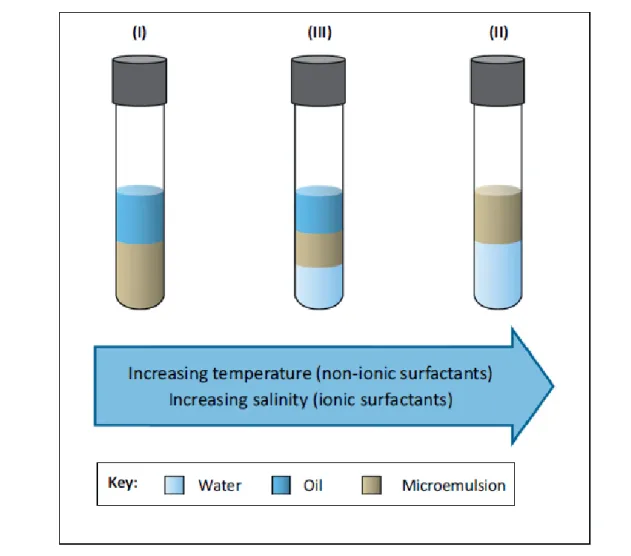
surface or interfacial tension, but form stable emulsions between liquid hydrocarbons and water mixtures (Figure 3) [31, 32].
Figure 3: Winsor classification of microemulsions. Microemulsions can exist in three forms, known as Winsor type microemulsions. Type I (O/W), when the water– surfactant interaction is stronger than oil–surfactant interaction (R < 1), microemulsions solubilize oil in spherical normal micelles within the water-continuous phase. Type II (W/O), when the strength of oil–surfactant interaction is stronger than water–surfactant interaction (R > 1), microemulsions solubilize water in reverse micelles within the oil-continuous phase. Type III, when the interactions are balanced (R = 1); in this case, microemulsions are three-phase systems in which the middle phase microemulsions are in equilibrium with both excess oil and excess water phases. The Winsor R parameter represents the ratio of the total interaction energies (per unit area of interface) of the surfactant for the O and W phases and is also dependent on
These high-molecular weight surface-active compounds are highly efficient emulsifiers that work at low concentrations and exhibit considerable substrate specificity. They are composed of polysaccharides, proteins, lipopolysaccharides, lipoproteins, etc. [34, 35].
The chemical diversity and functional properties of these compounds result in a broad spectrum of potential applications in sectors as diverse as agriculture, petroleum spill recovery technologies, cosmetics, environmental, food, leather, paper, pharmaceutical and textile industries, among others [30, 36].
Despite their potential applications in multiple biotechnological areas, the commercial availability of bioemulsifiers is currently limited. This is mainly due to economic obstacles to their sustainable production at industrial levels. The production of new biomolecules and the discovery of new bioemulsifier-producing strains could therefore be the key for overcoming these limitations and challenges, especially if inexpensive substrates can be used. It is important to remark that
the culture media represent 10–30% of total production costs [37].
1.3.
Microbial Enhanced Oil Recovery (MEOR)
Oil is an essential source of energy and one of the main factors driving the economic development of the World. Its recovery comprises a primary phase, which produces oil and gas using the natural pressure drive of the reservoir; and a secondary phase, which involves stimulating the oil wells by the injection of fluids to improve the flow of oil and gas to the well-head. While primary recovery produces 5-10% of the original oil in place, recovery efficiencies in the secondary stage range from 10% to 40%. Therefore, crude oil remaining in the reservoirs after conventional oil recovery operations makes up to two-thirds of the total oil reserves [38, 39].The main factors responsible for the poor oil recovery from producing wells are the low permeability of some reservoirs, the high viscosity of the oil and the high interfacial tension between the hydrocarbon and the aqueous phases, which result in high capillary forces that entrap oil in small pores within the reservoir. As the price of petroleum increases and petroleum reserves shrink, exploitation of oil resources in mature reservoirs is essential for meeting future energy demands. In the last years, more attention has been focused on tertiary recovery techniques, known as Chemical Enhanced Oil Recovery (CEOR), to mobilize entrapped oil [38]. The most widely used
|
1.Introduction12
CEOR techniques include CO2 injection, surfactant flooding, polymer flooding, alkaline–
surfactant–polymer flooding, steam injection, and the use of acids and solvents [40]. The results from the past field assays revealed that the application of these techniques typically increase oil recovery by 5–15% [41]. However, these processes are environmentally hazardous, expensive, and leave undesirable residues which are difficult to dispose of without adversely affecting the environment [38].
MEOR is an important tertiary oil recovery technology that represents a cost-effective and eco-friendly alternative to CEOR. In MEOR, selected microbial strains are used to synthesize compounds analogous to those used in CEOR processes to increase the recovery of oil from depleted and marginal reservoirs, thereby extending their life. Microorganisms can synthesize useful products by fermenting low-cost substrates or raw materials [40].
In 1926, Beckman suggested for the first time that microorganisms could be used to release oil from porous media. Between 1926 and 1940, little was done on this topic. Then, in the 1940s, Zo-Bell and co-workers (1947) started a series of systematic laboratory investigations, and their results marked the beginning of a new era of research in petroleum microbiology with application in oil recovery [42].
During MEOR processes, selected microorganisms use the crude oil from the reservoir or injected nutrients for their metabolic processes, and release some non-toxic chemicals such as biosurfactants, biopolymers, biosolvents, bioacids and gases. These biological products increase
the oil sweep efficiency by changing the reservoir’s physicochemical characteristics [43].
Biosurfactants, known as one of the most important bio-products, reduce the capillary forces in
the reservoir rock by the reduction of oil-water interfacial tension [44, 45](Table 1).
MEOR is a relatively inexpensive and environmentally compatible method for tertiary oil recovery and is being optimized through the development of more effective microorganisms that can subsist on inexpensive and abundant nutrients present in the oil reservoirs. However, the application of most MEOR techniques is very specific, and the choice of microorganisms is critical and field sensitive. In addition, even a few percentage of additional oil recovery can contribute an enormous amount, cumulatively and across the whole region. Thus, MEOR studies are continuously being performed on specific oil fields worldwide [41].
Another important process in MEOR is the bioconversion of heavy oil fractions by microorganisms. In this process, heavy oil fractions are converted into lighter ones, reducing the viscosity of crude oil and improving its mobility through the reservoir, which increases oil recovery. In recent years, a wide variety of microorganisms able to degrade n-alkanes have been described. The use of hydrocarbon degrading bacteria with the simultaneous ability to produce surface-active compounds is also a good option for MEOR [39].
Gudiña et al. [39] reported that Bacillus subtilis were able to convert the hydrocarbon chains
higher than C27. Among them, the B. subtilis #311 exhibited the highest degradation with an
increase in the relative weight fraction of n-alkanes lower than C19, and a decrease in the percentage of n-alkanes higher than C18. These results indicate that this isolate degraded the higher n-alkanes into lighter ones during the sandpack column assays.
MEOR can overcome the main hindrances of efficient oil recovery, such as low reservoir permeability, high viscosity of the crude oil, and high oil-water interfacial tensions, which in turn result in high capillary forces retaining the oil within the reservoir rock [40].
Continuous research and successful applications affirm the fact that MEOR can be viewed as a potent technology [46, 47] despite the existing disagreement by some groups [24]. However, successful MEOR field applications reported are specific for each well and published information to support economic advantages is lacking. MEOR is, therefore, considered as one of the
promising future research areas with great preference as identified by the Oil and Gas in the 21st
Century Task Force [48], may help in recovering the 377 billion barrels of oil that are unrecoverable by conventional technologies [46].
Table1: Microbial products, their role in enhanced oil recovery, and some of the effects to solve production problemsa) Adapted from Lazar et al. [42].
Microbial product
Role in enhanced oil recovery
Some of the effects
Reduce oil viscosity and improve flow characteristics Improved oil recovery by gases
Displace immobile Miscible CO2 flooding
Sweep oil in place
Acids (low molecular weight acids, primarily low molecular
weight fatty acids) Improve effective permeability by dissolving carbonate precipitates from pores throat. Significant improvement of permeability and porosity Enhanced oil flooding
CO2 produced from chemical reactions between acids and carbonate reduce oil
viscosity and causes oil droplet to sweel
Solvents (alcohols and ketones
that are typical cosurfactants) Dissolve in oil reduce viscosity Emulsification promotion for increased miscibility
Dissolve and remove heavy, long chain hydrocarbons from pore throat (increase
effective permeability)
Involved in stabilizing and lowering interf, tension that promotes emulsification
Reduce interfacial tension
Biosurfactants Reduce interfacial tension between oil and rock/water surface which causes
emulsification; improving pore scale displacement Microbial surfactant
Alter wettability Flooding
Biopolymers Improve the viscosity of water in waterflooding and direct reservoir fluids to
previously unswept areas of the reservoir
Improve the sweep efficiency of waterflood by plugging high permeability zones or
water-invaded zones Microbial permeability modification (selective plugging)
Control of water mobility
Biomass (microbial cells) Physically displace oil by growing between oil and rock/water surface Same biopolymers
a)Formation damage; low oil relative permeability; trapped oil due to capillary forces; poor sweep efficiency channelling; unfavourable mobility ratio; low sweep efficiency; water or gas coning
2.1.
Isolation of microorganisms from the crude oil sample
The crude oil sample obtained from a Brazilian oil field (oil well CLB) was collected in a sterile bottle and stored at room temperature until use. For isolation of microorganisms, enrichment cultures were performed in 100 ml flasks containing 50 ml of Corn Steep Liquor (CSL) (10%, v/v), Mineral Salt Solution (MSS) supplemented with 10 g/l of sucrose (MSS+) and MSS without sucrose (MSS-). Crude oil samples (1 ml) were transferred to the flasks and
incubated at 37 or 50 ᴼC, under aerobic or anaerobic conditions, for 27 days. Anaerobic cultures
were prepared removing oxygen by aseptically bubbling oxygen-free nitrogen into the flasks, which were sealed with rubber stoppers. Samples (100 µl) of the enrichment cultures were periodically spread on agar plates (Luria-Bertani medium (LB) for bacterial strains and Potato
Dextrose Agar (PDA) for filamentous fungi), that were incubated at 37 ᴼC under aerobic or
anaerobic conditions. Morphologically distinct colonies were re-isolated by transfer to fresh agar
plates at least twice to obtain pure cultures. The bacterial strains were stored at -80 ᴼC in LB
medium containing 20% (v/v) of glycerol. The filamentous fungi were stored at 4 ᴼC in
demineralised water, and at -80 ᴼC in a glycerol solution (80%, v/v).
The composition of MSS was (g/l): CaCl 10.0; Na2HPO4 5.0; NH4NO3 2.0; KH2PO4 2.0;
MgSO4·7H2O 0.2; supplemented with 1% (v/v) of trace salt solution. The trace salt solution
contained (g/l): MnSO4·4H2O 3.0; EDTA 1.0; FeSO4·7H2O 0.1; CaCl2·2H2O 0.1; CoCl2·6H2O 0.1;
ZnSO4·7H2O 0.1; CuSO4·5H2O 0.01; AlK(SO4)2·12H2O 0.01; H3BO3 0.01; Na2MoO4·2H2O 0.01. The
composition of LB medium was (g/l): NaCl 10.0; tryptone 10.0; yeast extract 5.0. Both media were adjusted to pH 7.0.
PDA medium was purchased from OXOID (England).
CSL was provided by COPAM (Companhia Portuguesa de Amidos, S.A., Portugal). For its use, CSL was dissolved with demineralised water (10%, v/v), and its pH was adjusted to 7.0.
2.2.
Screening of biosurfactant-producing strains
The bacterial strains were grown in 25 ml of different media at 37 ᴼC and 105 rpm, under
aerobic conditions. The media used were MSS+, MSS-, Mineral Salt Medium (MSM) supplemented with 12 g/l of glucose (MSM+) and MSS- supplemented with CSL (10%, v/v)
|
2.Matelials and Methods18
(MSS-CSL). Regarding the medium MSS-CSL, the precipitates formed after sterilization were removed by centrifugation (9000 rpm, 30 min) and the supernatants obtained were used as culture medium. All the media were supplemented with 1% (w/v) of CLB crude oil.
The composition of MSM was (g/l): KH2PO4 2.3; Na2HPO4·2H2O 5.03; (NH4)2SO4 1.06. This
medium was supplemented with 1% (v/v) of a MgSO4·7H2O solution (40 g/l); 1% (v/v) of a
CaCl2·2H2O solution (20 g/l); and 1% (v/v) of a trace element solution, which consisted of (grams
per 200ml): FeSO4·7H2O 0.55; MnCl2·4H2O 0.396; H3BO3 0.06; Na2MoO4·2H2O 0.006; CoCl2·6H2O
0.1; ZnSO4·7H2O 0.058; FeSO4·7H2O 0.55; MnCl2·4H2O 0.396; the trace element solution was
sterilized by filtration and added to the medium. The initial pH of this medium was adjusted to 7.2.
The filamentous fungi were grown in 25 ml of MSS+ and MSS-, as well as in 100 ml of MA, BRM (basidiomycetes rich medium) and Wunder media (all of them supplemented with glucose
(MA+, BRM+, Wunder+) and without glucose (MA-, BRM-, Wunder-)) at 37 ᴼC and 105 rpm,
under aerobic conditions, for 3 weeks. All the media were supplemented with 1% (w/v) of CLB crude oil. Furthermore, the fungal isolates were also grown in 100 ml of MA+ and MA-
supplemented with 10% (v/v) of oil mill wastewater (OMW), at 37 ᴼC and 180 rpm.
The composition of MA medium was (g/l): (NH4)2SO4 7.532; NaCl 0.152; KH2PO4 0.147;
MgSO4 0.542; ZnSO4 8.39 × 10⁻⁴; FeSO4 6.07 × 10⁻⁵; glucose 10.0.
The composition of BRM medium was (g/l): NH4NO3 0.724; KH2PO4 1.0; MgSO4·7H2O 1.0;
KCl 0.5; yeast extract 0.5; FeSO4·7H2O 0.001; ZnSO4·7H2O 0.0028; CaCl2·2H2O 0.033; glucose
10.0; peptone 10.0.
The composition of Wunder medium was (g/l): (NH4)2SO4 1.0; MgSO4·7H2O 0.5; KH2PO4
0.875; K2HPO4 0.125; CaCl2·2H2O 0.1; NaCl 0.1; MnCl2 0.05; FeSO4 0.001; peptone 2.0; glucose
10.0.
OMW was obtained from a Portuguese olive oil factory (which uses a three-phase
centrifugation process for oil extraction) and stored at 4 ᴼC until use.
In all the studies (with bacteria and fungi), samples were taken at different time points during the fermentation to determine biosurfactant production. The samples were centrifuged
(4000 rpm, 20 min, 20 ᴼC) and the cell-free supernatants were used to measure the surface tension and the emulsifying activity, as described below.
2.3.
Optimization of biosurfactant/bioemulsifier production
2.3.1. Bacterial strainsBiosurfactant-producing bacterial strains were grown in 500 ml flasks containing 150 ml of different media (LB, MSM+ and MSM+ supplemented with 10% (v/v) of OMW). Each flask was inoculated with 100 µl of a glycerol-stock of the corresponding strain. The cultures were
incubated at 37 ᴼC. The effect of the agitation rate on biosurfactant production was studied by
incubating the flasks at 105 or 180 rpm. Samples were taken at different time points during the fermentation to determine biosurfactant production. The samples were centrifuged (4000 rpm,
20 min, 20 ᴼC) and the cell-free supernatants were used to measure the surface tension and the
emulsifying activity. At the end of the fermentation, the biosurfactants were recovered from the cell-free supernatants, as described below.
2.3.2. Filamentous fungi
Bioemulsifier production by filamentous fungus #28 was studied in 250 ml flasks containing 100 ml of MA+ and MA-, supplemented with 10% (w/v) of OMW, CLB crude oil, paraffin, soybean oil, gas oil or n-hexadecane, as well as in MA- supplemented with 20, 30, 40 or
50% of OMW. Each flask was inoculated with the stocks stored at 4 ᴼC. The cultures were
incubated at 37 ᴼC and 105 or 180 rpm for up to 3 weeks. In all the cases, samples were taken
at different time points during the fermentation to determine bioemulsifier production. The
samples were centrifuged (4000 rpm, 20 min, 20 ᴼC) and the cell-free supernatants were used
|
2.Matelials and Methods20
2.4.
Biosurfactants and bioemulsifier recovery
2.4.1. Bacterial strainsTo recover the biosurfactants produced by the bacterial isolates, two different techniques were evaluated: acidic precipitation [21] and adsorption on the polystyrene resin Amberlite XAD-2 (adapted from [49]). In both cases, the cell-free supernatants obtained at the end of the fermentations were used.
For the acidic precipitation, the cell-free supernatants were adjusted to pH 2.0 using HCl 6
M and left overnight at 4 ᴼC. Afterwards, the precipitate (crude biosurfactant) was recovered by
centrifugation (9000 rpm, 30 min, 4 ᴼC). The crude biosurfactant was dissolved in a minimal
amount of demineralised water by adjusting the pH to 7.0, using NaOH 1 M. Finally, the crude
biosurfactant solution was freeze-dried. The product obtained was weighed and stored at -20 ᴼC
for further use.
Regarding the adsorption on the polystyrene resin Amberlite XAD-2, 50 ml of the cell-free supernatants were placed into 100 ml flasks containing 5 g of resin; subsequently, the flasks were incubated at 180 rpm for 90 minutes, to promote the adhesion of the biosurfactants to the resin. Thereafter, the supernatant was removed and 50 ml of demineralised water were added to the flasks, which were incubated at the same conditions for 30 min; this step removes those compounds that are not adhered to the resin, and was repeated three times. Afterward, the biosurfactant was released from the resin by incubation with 50 ml of methanol for 30 min at 180 rpm; this process was repeated two times to recover all the biosurfactant. The solvent was
recovered and removed using a rotary evaporator at 35 ᴼC. The product obtained (crude
biosurfactant) was dissolved in a minimal amount of demineralised water and the solution was
freeze-dried. The product obtained was weighed and stored at -20 ᴼC for further use.
2.4.2. Filamentous fungi
To recover the bioemulsifier produced by the filamentous fungus #28, two different precipitation techniques were evaluated [34, 50]. In both cases, the cell-free supernatants obtained at the end of the fermentation were used. The cell-free supernatants were obtained after
centrifuging the cultures at 9000 rpm for 30 min at 4 ᴼC, followed by filtration using a 0.45 µm pore-size filter.
Three volumes of acetone or ethanol were added to the cell-free supernatants. The
mixtures were incubated overnight at -20 ᴼC. The precipitates formed were collected by
centrifugation (9000 rpm, 30min at 4 ᴼC) and then dissolved in demineralised water. In order to
confirm if the bioemulsifier was recovered using these techniques, the emulsifying activity of those solutions was calculated. Finally, the solutions were freeze-dried and the products obtained
weighed and stored at -20 ᴼC for further studies.
2.5.
Surface tension measurements
Surface tension measurements of cell-free supernatants, biosurfactant solutions and bioemulsifier solutions were performed according to the Ring method, as described elsewhere [21]. A KRÜSS K6 Tensiometer (KRÜSS GmbH, Hamburg, Germany) equipped with a 1.9 cm DeNoüy platinum ring was used. To increase the accuracy of the surface tension (ST) measurements, an average of duplicates was determined. Whenever required, the cell-free supernatants were diluted 10 or 100 times with demineralised water, and the surface tension
(ST-1 and ST-2, respectively) was measured. All the measurements were performed at room
temperature (20 ᴼC).
2.6.
Emulsifying activity determination
The emulsifying activity was determined by the addition of 2 ml of n-hexadecane to the
same volume of cell-free supernatants, biosurfactant solutions or bioemulsifier solutions, in glass test tubes. The tubes were mixed with vortex at high speed for 2 minutes, and then incubated at
25 ᴼC for 24 hours. The emulsification indexes at 24 hours (E24) were calculated as the
percentage of the height of the emulsified layer (mm) divided by the total height of the liquid column (mm) [51]. Whenever required, the cell-free supernatants were diluted 10 times with
|
2.Matelials and Methods22
2.7.
Critical micelle concentration (CMC)
Critical micelle concentration is defined as the concentration of an amphiphilic compound in solution at which the formation of micelles is initiated. It is important for several biosurfactants applications to establish their CMC, as above this concentration no further effect is expected in the surface activity. Concentrations ranging from 0.001 to 5 g/l of the crude biosurfactants recovered from the different isolates were prepared in demineralised water, and the surface tension of each sample was measured by the Ring method at room temperature (20 ᴼC), as described previously. The CMC was determined by plotting the surface tension as a function of the logarithm of biosurfactant concentration, and it was found at the point of intersection between the two lines that best fit through the pre- and post-CMC data. All the measurements were performed in duplicate.
2.8.
Stability studies
The applicability of surface-active compounds can be conditioned by their stability to different environmental parameters. Therefore, the effect of pH, temperature and salinity on the activity of the bioemulsifier produced by the filamentous fungus #28 was determined. Stability studies were performed using the cell-free supernatants obtained after centrifuging the cultures at the end of the fermentation at 9000 rpm for 30 min. In order to assess the effect of salinity on bioemulsifier activity, the culture broth supernatants were supplemented with different NaCl concentrations (from 10 to 200 g/l). The emulsification indexes were measured as described above and compared with the value obtained without addition of NaCl. To evaluate the stability at
high and low temperatures, the samples were incubated at 121 ᴼC for 20 min, as well as at -20
ᴼC and -80 ᴼC during 5 or 10 days. The emulsification indexes obtained with those samples (at room temperature) were measured and compared with the corresponding values before each treatment. The pH stability was studied by adjusting the cell-free supernatants to different pH values (2.0-12.0) using HCl or NaOH solutions. Subsequently, the emulsification index of each sample was calculated.