Original article
reactions in Lagos, Nigeria
Incidência e estimativa de custo do tratamento de reações adversas a drogas de uso pediátrico
em Lagos, Nigéria
Kazeem Adeola Oshikoya
I, Henry Chukwura
II, Olisamedua Fidelis Njokanma
III, Idowu Odunayo Senbanjo
IV, Iyabo Ojo
VPharmacology Department, Lagos State University College of Medicine, and Paediatrics Department, Lagos State University Teaching Hospital, Ikeja, Lagos, Nigeria
IMD, MSc. Lecturer, Pharmacology Department, Lagos State University College of Medicine, and Resident, Paediatrics Department, Lagos State University Teaching Hospital, Ikeja, Lagos, Nigeria. IIBPharm, MPH. Assistant Director of Pharmacy, Pharmacy Department, Lagos State University Teaching Hospital College of Medicine, Ikeja, Lagos, Nigeria.
IIIMD, FWACP, FMCPaed. Professor and Head, Paediatrics Department, Lagos State University Teaching Hospital, Ikeja, Lagos, Nigeria. IVMD, FWACP. Consultant Pediatrician, Paediatrics Department, Lagos State University Teaching Hospital, Ikeja, Lagos, Nigeria.
VBPharm. Senior Pharmacy Superintendent, Pharmacy Department, Lagos State University Teaching Hospital College of Medicine, Ikeja, Lagos, Nigeria.
ABSTRACT
CONTEXT AND OBJECTIVES: Adverse drug reactions (ADRs) may cause prolonged hospital admissions with high treatment costs. The burden of ADRs in children has never been evaluated in Nigeria. The incidence of pediatric ADRs and the estimated cost of treatment over an 18-month period were determined in this study.
DESIGN AND SETTING: Prospective observational study on children admitted to the pediatric wards of the Lagos State University Teaching Hospital (LASUTH) in Nigeria, between July 2006 and December 2007.
METHODS: Each patient was assessed for ADRs throughout admission. Medical and non-medical costs to the hospital and patient were estimated for each ADR by reviewing the medical and pharmacy bills, medical charts and diagnostic request forms and by interviewing the parents. Cost estimates were performed in 2007 naira (Nigeria currency) from the perspectives of the hospital (government), service users (patients) and society (bearers of the total costs attributable to treating ADRs). The total estimated cost was expressed in 2007 United States dollars (USD).
RESULTS: Two thousand and four children were admitted during the study; 12 (0.6%) were admitted because of ADRs and 23 (1.2%) developed ADR(s) during admission. Forty ADRs were suspected in these 35 patients and involved 53 medicines. Antibiotics (50%) were the most suspected medicines. Approximately 1.83 million naira (USD 15,466.60) was expended to manage all the patients admitted due to ADRs.
CONCLUSIONS: Treating pediatric ADRs was very expensive. Pediatric drug use policies in Nigeria need to be reviewed so as to discourage self-medication, polypharmacy prescription and sales of prescription medicines without prescription.
RESUMO
CONTEXTO E OBJETIVOS: Reações adversas a drogas (RAD) podem causar hospitalização prolongada com alto custo de tratamento. Este efeito das RAD em crianças nunca foi avaliado na Nigéria. A incidência de RAD em pediatria e o custo estimado de tratamento em um período de 18 meses foram determinadas neste estudo.
DESENHO E LOCAL: Estudo prospectivo observacional de crianças admitidas nas unidades pediátricas do Hospital Universitário do Estado de Lagos (LASUTH) na Nigéria, entre julho de 2006 e dezembro de 2007.
MÉTODOS: Cada paciente foi avaliado para RAD durante a admissão. Os custos médicos e não médicos para o hospital e para o paciente foram estimados para cada RAD pela revisão das contas médicas e da farmácia, pelos registros médicos, pelos exames necessários para diagnóstico e pelas entrevistas com os pais. Os custos foram estimados em nairas (moeda nigeriana) de 2007 a partir das perspectivas do hospital (governo), dos usuários de serviços (pacientes) e da sociedade (portadores dos custos totais atribuídos ao tratamento de RAD). A estimativa de custo total foi apresentada em dólares americanos (US) de 2007.
RESULTADOS: Duas mil e quatro crianças foram admitidas durante este estudo; 12 (0,6%) foram admitidas devido a RAD e 23 (1.2%) desenvolveram RAD durante admissão. Quarenta RAD foram suspeitadas nesses 35 pacientes e envolveram 53 medicamentos. Antibióticos (50%) foram as drogas mais suspeitas. Aproximadamente 1.83 milhões de nairas (US 15,466.60) foram gastos para cuidar de todos os pacientes admitidos por RAD.
CONCLUSÕES: O tratamento das RAD pediátricas foi bastante caro. As políticas de uso de drogas em pediatria na Nigéria devem ser revistas para desencorajar a auto-medicação, a prescrição de polifarmácia e a venda de medicamentos de prescrição sem prescrição.
KEY WORDS:
Drug toxicity. Child. Hospitalization. Body burden. Nigeria.
PALAVRAS-CHAVES: Toxicidade de drogas. Criança.
Hospitalização.
INTRODUCTION
Adverse drug reactions (ADRs) occur frequently and globally, ac-counting for a signiicant number of fatalities each year.1,2 It has been
estimated that fatalities directly attributable to ADRs are the fourth to sixth leading cause of death in hospitals in the United States, exceed-ing deaths caused by pneumonia and diabetes.3 Among a population
of adults in Cameroon, the rate of ADRs was 3.5%4 and among adult
medical inpatients in South Africa, the rate was 12.6%.5 here is a
rel-ative dearth of epidemiological studies of ADRs in pediatric patients in Nigeria and other African countries. Previous studies have reported ADR rates of 2.1% to 9.5% in pediatric populations.6,7 However, these
studies were conducted in developed countries where disease patterns, access to medicines, medicine use patterns and patient management dif-fer signiicantly from those of developing countries.8 We have reported
an ADR rate of 1.2% among pediatric patients in Nigeria.2
he inancial burden resulting from medicine-related morbidity and mortality is equally signiicant and has been conservatively estimated as United States dollars (USD) 30 billion annually in the United States.9
Deaths resulting from ADRs have been reported in Nigeria.2 In
addi-tion to the human costs, ADRs have a major impact on public health by imposing a considerable inancial burden on society and the already-stretched healthcare systems. In Spain, the minimum direct cost to the public health system of diagnosing and treating adult patients with sus-pected ADRs in a single month was estimated as 42,732 Ecus (USD 54299.57).10 Wu and Pantaleo11 estimated the mean cost of treating an
ADR per patient as USD 9,491 with 50% of this cost being the hospi-talization or room charges alone. In India, Patel et al.12 also estimated
the total cost to a hospital due to hospitalization of patients with ADRs over a six-week period in an emergency room as USD 27,358.
Although nearly all medicines are capable of causing injuries, cer-tain medicines such as antibiotics,7,13 immunosuppressive agents14 and
anticonvulsants13,14 are more likely to be associated with ADRs in children.
Antibiotics and sulfadoxine/pyrimethamine antimalarials are the leading cause of ADRs in children in Nigeria,2 since they constitute the medicines
most frequently self-medicated to children,15 most regularly prescribed by
doctors15,16 and most frequently stocked at home by parents.15
Prevention of medicine-related morbidity and mortality has become an increasingly important requirement for reducing the morbidity, mor-tality and healthcare expenditure relating to ADRs. Estimates of treat-ment costs in hospital cost-efectiveness studies need to take the cost of medicine into consideration, but this should not be limited to its pur-chase price.17 he real cost of a medicine must also take into account
the impact of ADRs potentially induced by this medicine.18 Despite the
widespread impression that ADRs in hospitalized patients are costly be-cause they require additional treatments and prolong the length of stay,19
the exact cost attributed to ADRs has not been studied in children. he various risk factors associated with ADRs in children and the likely medicines involved have previously been reported in Nigeria.2
However, lack of national pediatric pharmacovigilance schemes makes information collation about ADRs and its reporting nationally poor, such that ADRs remain a clinical problem. A few studies have examined
the clinical and epidemiological trends of ADRs in Nigerian children,2
but none have speciically evaluated the cost of care associated with them.
OBJECTIVE
he aims of this study were to determine the incidence of ADRs as a cause of pediatric admissions at the Lagos State University Teaching Hospital (LASUTH) over an 18-month period and to estimate the cost of treating these patients. he incidence of ADRs in pediatric inpatients, after hospital admission, was also determined over the study period.
PATIENTS AND METHODS
Patients and settings
his prospective observational study was conducted at LASUTH in Nigeria and involved children admitted because of suspected ADRs, or who developed ADRs while on admission, in a 98-bed children’s ward between July 2006 and December 2007. Patients admitted for less than 24 hours or with repeated admissions, and those whose medical records were unavailable for review, either during the admission or following discharge, were excluded from the study.
were also used to calculate the medical expenditures. he study therefore estimated the inancial burden of ADRs from the perspectives of the ser-vice provider (government), serser-vice users (patients) and society (bearers of the total costs attributable to treating ADRs).
Patient evaluation and data collection on ADRs
During the study period, a research team comprising a pediatric clinical pharmacologist, pediatricians and two hospital pharmacists, who were members of the ADR monitoring committee of LASUTH, prospec-tively assessed all admissions to the pediatric wards to determine wheth-er patients had been admitted as a result of a suspected ADR or whethwheth-er an ADR had occurred after admission. All the members of the research team had been trained many times on how to recognize, assess and report suspected ADRs. he team members had also acquired additional experi-ence from participating in previous studies on pediatric ADRs.2
On each day of the study period, a speciic questionnaire was com-pleted for all children newly admitted. All children were evaluated daily for the presence of ADRs, by the research team, and were observed until discharge to ascertain the inal diagnosis. Patient evaluation was usually carried out about two hours before the normal ward rounds. he eval-uation consisted of examining medical and nursing records, reviewing prescription charts and attending clinical rounds. All the pediatricians, junior doctors and nurses were asked to participate in the study and to report or record any suspected ADR.
ADRs were deined in accordance with Edwards and Aronson.20
his deinition excludes ADRs that require no intervention and has been applied in a previous ADR study on adults.21 If a suspected ADR
was reported, the research team usually evaluated all the suspected cas-es. he pediatric clinical pharmacologist and the more senior of the two pharmacists assisted in assessing the suspected ADRs for causality, sever-ity and avoidabilsever-ity. ADRs were identiied on the basis that they were well recognized as shown by their inclusion in the summary of product characteristics,22 the Nigerian National Drug Formulary23 and the
pe-diatric British National Formulary,24 or in previously published case
re-ports. ADRs were also classiied as type A (dose dependent and predict-able from known pharmacology) or type B (idiosyncratic, no clear dose response and not predictable from the known pharmacology), in accor-dance with the classiication of Rawlins and hompson.25
Data on the particular suspected medicines and reactions were col-lected in a suitably designed ADR documentation form. All relevant data, including all medicines the patient had received before the on-set of the reactions, their respective doses, the routes of administration with their frequency, laboratory test results present in the medical re-cords, clinical details (system-organ class involvement) and the treatment (pharmacological and non-pharmacological), were noted. In addition, where the documented medicine history was unclear, the patient’s medi-cation history was taken from the patients or parents/guardians or the at-tending physicians, and comorbidity was identiied to assess the causal relationship between the suspected medicine and the reaction. Informa-tion regarding previous medicine use was obtained by interviewing par-ents, relatives, nurses, or others, as necessary. A modiied list of trigger events requiring further assessment for medicine-related causes (Table 1)
was adapted from the work of Rozich et al.,26 to increase the sensitivity
to possible ADRs on admission. All the members of the research team fa-miliarized themselves with the list, and the document was used as a pock-et reference. In situations in which an identical reaction occurred more than once in the same patient during the same hospital stay, the patient was documented as having experienced a single reaction.
Table 1. List of triggers and process identiied in children with adverse drug
reactions (ADR)
Trigger Process identiied
Diphenhydramine, promethazine, or/ and any other antihistamine
Hypersensitivity reaction or drug effect
Systemic or localized topical corticosteroid*
Hypersensitivity reaction
Vitamin K or fresh frozen plasma* Over-anticoagulation with warfarin or
drug-induced DIC
Metoclopramide or other antiemetic* Nausea or emesis related to drug use
Antidiarrheals Drug-induced diarrhea
Sodium polystyrene Hyperkalemia from renal impairment/drug effect Insulin with glucose* Hyperkalemia from renal impairment/drug effect
50% dextrose Hypoglycemia (possibly with insulin) Flumazenil Oversedation with benzodiazepines Naloxone Oversedation or respiratory depression with
narcotics
Phenobarbitone statim or ≤ 24 hours* Drug-induced seizure
Diazepam stat or ≤ 24 hours* Drug-induced seizure
Adrenalin Anaphylaxis /bronchospasm Biperiden* Extrapyramidal effect to phenothiazine
Atropine* Extrapyramidal effect to phenothiazine
Dopamine* Drug-induced hypotension
Cimetidine or other anti-ulcer agents* Drug-induced gastritis
Laboratory triggers
Potassium < 3.5 mmol/l Hypokalemia due to loop diuretics PTT > 100 seconds Over-anticoagulation with heparin WBC < 3000 × 106/µl Neutropenia due to drug or disease
ALT > thrice the normal* Hepatotoxicity (possibly due to drug)
Bilirubin > twice the normal* Hepatotoxicity (possibly due to drug)
Serum glucose ≤ 2.5 mmol/l Hypoglycemia due to insulin Rising level of serial serum creatinine Drug-induced renal insuficiency
Event triggers
Oversedation, lethargy or fall Related to overuse of medication Skin rash or ulceration Drug-related adverse event Lip swelling and/or angioedema* Drug-related adverse event
Seizures and/or dizziness* CNS adverse drug event, drug toxicity
Dystonia, ataxia, torticollis and/or dyskinesia*
CNS adverse drug event, drug toxicity
Altered level of consciousness (after excluding cerebral malaria) *
CNS adverse drug event, drug toxicity
New bradycardia or tachycardia* Drug-related cardiac event
New onset of jaundice* Drug-related hepatotoxicity
New hypotension (deined by BP values relative to age)*
Drug-related vascular event
New cardiac failure* Drug-related cardiotoxicity
Wheezing* Allergic reaction
Abrupt medication stop Adverse event Transfer to PICU in another hospital* Adverse event
Event suspected to be drug-related*
by doctor, nurse or parents
Suspected ADR
*Event added or modified from trigger event published by Rozich et al.26. Modification was based on
he suspected ADRs and the suspected medicines were classiied in accordance with the World Health Organization (WHO) classiica-tion.27 he causality relationship between the suspected ADR and the
suspected medicine therapy was assessed case by case using the Jones method.28 Severity was classiied according to the Schirm et al.29
clas-siication for pediatric age group: fatal (resulting in near death or even-tual death for the patient); severe (directly life-threatening and/or pro-longed hospitalization, associated with organ or system dysfunction and permanent harm); moderate (requiring treatment intervention, and patient temporarily harmed); and mild (uncomplicated primary disease, increased patient monitoring, no treatment required and drug discontinuation not necessary). Avoidability was assessed within the local context of medicine management for the patient. A reaction was considered to be “avoidable” if it met the criteria of Schumock and hornton,30 i.e. the medicine involved in the ADR was
inappropri-ate for the patient’s age, weight and disease stinappropri-ate; the dose, route or frequency of administration were inappropriate for the patient’s age, weight and disease state; required therapeutic drug monitoring or oth-er necessary laboratory tests woth-ere not poth-erformed; past history of al-lergy or previous reactions to the medicine; documented toxic serum drug level; and deviation from the recommended dose.
Analysis for causality, severity and avoidability was done indepen-dently by two of the investigators (KAO and HAC). Overall, there was approximately 70% agreement in the causality and avoidability assess-ments, using the kappa statistics. Any discrepancies were then discussed with other investigators to achieve a consensus.
he length of stay was calculated separately for each admission and was used to determine the total number of bed days and the mean length of stay. he ADR admission rate was determined based on the number of patients admitted at least once with an ADR during the study.
Health cost of ADRs
Only the 12 patients admitted because of ADRs were evaluated for the health cost of ADRs. We excluded the patients who developed ADRs while on admission, because they had not fully recovered from the primary disease for which they were admitted. It was also diicult to ascertain whether prolonged hospitalization was due to the primary disease or to the ADRs. Only the cost of treating moderate and severe ADRs (including the two fatal cases) was estimated, since most cases of mild ADRs were treated at the outpatient clinic.
Admissions due to an ADR were evaluated for the total length of hos-pitalization as well as the direct and indirect costs of treatment. Any case that did not involve stopping the ofending medicine or continuation of treatment without any change was considered as nil. he costs of manag-ing an ADR were determined as highlighted below. he total estimated cost of treating ADRs was expressed in United States dollars (USD) of 2007, at a rate of 1 USD equals 118 naira ( ) (i.e. 2007 naira values).
Direct medical costs to the hospital
he medical and pharmacy bills, as well as medical charts, were re-viewed for each patient admitted due to ADRs, in order to document all
medications received by the patient and the diagnostic tests associated with ADRs. Medicines bought at the hospital pharmacy or from com-munity pharmacies, as well as investigations done outside the hospital, were excluded at this stage.
ADR management was symptomatic and varied according to severi-ties and the organ or system involved. hus, a wide variety of medica-tions and diagnostic investigamedica-tions were involved in the management. Unit costs were therefore calculated for medications and diagnostics as-sociated with each case of ADRs, as well as the costs for hospital bed-days for each patient. Medications were assigned wholesale medicine costs per unit, based on the LASUTH fee-paying pharmacy prices, while the laboratory manager provided pre-calculated costs for each di-agnostic test. he total quantity of each medication used per patient multiplied by its unit cost, and the total number of speciic diagnostic investigations performed on each patient multiplied by the unit cost were summed to yield the direct medical cost to the hospital incurred per patient. he total direct medical cost to the hospital incurred by all the patients is presented in Table 2. Ideally, patients with severe ADRs were supposed to be nursed in a pediatric intensive care unit (PICU) but such a facility was not available in the hospital; therefore, we did not include the cost of PICU. he total medication and diagnostic costs to the healthcare system equaled the sum of the individual unit costs multiplied by the quantity of medications and diagnostic tests ordered, respectively.
he hospital care and bed-day costing included staf salaries per day, electricity, linen, water supplies, building and equipment depreciation, maintenance and medical record expenses incurred by the healthcare facility, with inpatient expenses calculated at 80% occupancy rate. Fol-low-up visits, after discharge, were arranged so that the patients’ relative stability could be monitored. he actual charge for any prior visit before the appointment dates or subsequent consultation with any general or specialist doctors and other paramedics within the hospital were includ-ed in the total visit cost.
he direct medical costs to the hospital equaled the sum of all med-ication, diagnostic and visit costs. he direct medical cost incurred in managing patients admitted because of ADRs was calculated as the total amount spent by the hospital on the patients divided by the total num-ber of patients admitted due to ADRs.
Direct medical costs to the patient
Direct non-medical costs
he direct non-medical costs equaled the sum of all transporta-tion, food and hotel expenses incurred during the hospital admission for ADRs since some of the patients were referred from distant health centers.
Indirect costs
he indirect costs of the ADRs per household refer to the wages lost by each parent caused by nursing a child with an ADR. hese were cal-culated by using the human capital method, which measures the parents’ average monthly wages. he indirect cost equaled the sum of each par-ent’s estimated daily wage based on the minimum monthly wage (7,500 naira of 2007) for workers in Lagos multiplied by lost workdays. An in-dividual employee in Lagos would work for an average of 9 hours per day or 45 hours per week. Each parent who spent up to 9 hours or more per day with an ADR patient was considered to have lost a day of work.
Ethical issues and statistical analyses
he study protocol was approved by the ethics committee of LA-SUTH. All data from the questionnaires and the medical records were coded and statistical analysis on the results was performed using the Sta-tistical Package for the Social Sciences (SPSS), version 13. Comparisons between ADR and non-ADR patients with regard to continuous data were made using the t-test or the Mann-Whitney U-test, depending on skewness, and the chi-square test was used for comparisons of continu-ous data between ADR patients at a signiicance level of P< 0.05.
RESULTS
Demographic data on the patients and their parents
Two thousand and four children were admitted during the 18-month prospective study, of whom 1222 (61%) were males. he ad-mission rate was 111 per month. Twelve patients (0.6%) were admitted due to ADRs, and 23 inpatients (1.2%) developed ADRs, thus giving an overall incidence of 1.8%. Male patients experienced signiicantly more ADRs (23; 65.7%) than female patients (12; 34.3%; P= 0.02) but there was no signiicant gender diference between the ADR and non-ADR patients (male-to-female ratios of 1.92 and 1.50, respective-ly) (P = 0.08). he mean age of the patients admitted due to ADRs was 8.9 ± 3.4 years (age range, 3-12 years) and was not signiicantly diferent from the mean age of the inpatients who developed ADRs (5.1 ± 3.8 years; range, 2 days-12 years) (P = 0.81). he overall mean age of the ADR patients (5.0 ± 3.2 years) was not signiicantly diferent from the mean age of the non-ADR patients (6.4 ± 4.1 years) (P= 0.72).
he mothers’ education levels, their occupations, annual household in-come (in naira) and costing data for the hospital are presented in Table 3.
he patients were admitted because of a variety of diseases, but main-ly malaria (842; 42%) and meningitis (365; 18.2%). A total of 8,417 medicines were received by the 2,004 patients (4.2 medicines per patient; range, 2-10). he most frequently used medicines were cefuroxime and gentamicin. he inpatients who developed ADRs were prescribed a total of 67 medicines, including multivitamins, hematinics and antioxidants Table 2. Mean cost to the hospital per single adverse drug reaction (ADR) admission in 2007 naira ( )
Direct medical costs to hospital (government)
Moderate (n = 5)
Severe
(n = 7) P-value
Days of hospitalization 10.4 ± 2.1 days 15.7 ± 7.4 days < 0.001
Hospitalization costs* 2,080.00 ± 420.00 3,140.00 ± 680.00 0.043
Healthcare professional fees† 4,308.72 ± 870.03 13,233.53 ± 3,625.00 < 0.001
Medication costs‡ 3,400.00 ± 240.00 36,800.00 ± 7,200.00 < 0.001
Diagnostic costs§ 3,300.00 ± 232.10 10,750.00 ± 2,788.00 < 0.001
Others|| 600.00 ± 59.20 1,800.00 ± 498.00 < 0.001
13,688.72 ± 1,821.33 65,723.53 ± 14,791.00 < 0.001
Follow up visit costs¶ 1,628.60 ± 61.28 6,170.00 ± 1,729.10 < 0.001
Total cost per ADR case:
Naira 15,317.32 ± 1,882.61 71,893.53 ± 16,520.10 < 0.001
USD (1 USD = 118) 129.81 ± 15.95 609.27 ± 140.00
n = number of patients with ADRs;
*the bed costs during admission; †the doctors’ and paramedics’ fees for managing the patient during admission; ‡ the costs of medicines obtained free of charge from the non-fee-paying pharmacy; §the costs of investigation done
free of charge during hospital admission; ||Others refers to the mean cost of electricity, linen, water supplies, building and equipment depreciation, maintenance and medical record expenses incurred by the healthcare facility with
(mean of 4.5 medicines per patient; range 4-8). here was no signiicant diference in the mean number of medicines received between the inpa-tients who developed ADRs (4.5 medicines per patient) and the non-ADR inpatients (4.1 medicines per patient) (P= 0.08).
ADRs detected, drugs incriminated and organs or systems affected
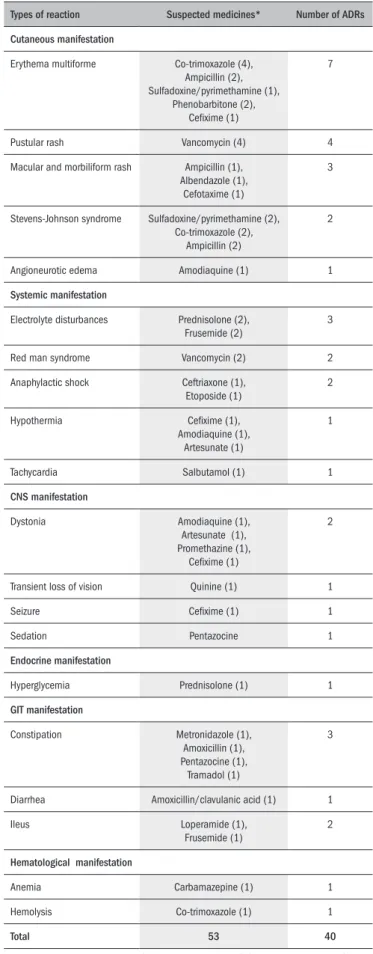
Table 4 summarizes the ADRs detected according to the organ or system afected. Cutaneous manifestation (17; 43%) was the common-est means. Tables 5 and 6 show the pattern of ADRs and the suspected medicines recorded during the study period. Erythema multiforme rash (7) and pustular rash (4) were the commonest clinical manifestations. In all, 53 medicines were suspected of causing 40 ADRs (Table 4). Half of the medicines were antibiotics.
Causality and avoidability of ADRs
Because many of the patients used multiple numbers of medicines with potentials for ADRs, we did causality assessment for each of the suspected medicines. Nine ADRs were considered deinite, 18 probable and 26 possible. Only eight ADRs were judged to be avoidable: elec-trolyte disturbance and hyperglycemia due to prolonged use of predni-solone; erythema multiforme due to prolonged use of phenobarbitone; electrolyte disturbance and ileus due to prolonged use of frusemide; hemolysis due to the use of co-trimoxazole in a glucose-6-phosphatase dehydrogenase deicient patient; and red man syndrome due to rapid administration of intravenous vancomycin (Tables 5 and 6). Out of
the 12 patients admitted due to ADRs (Table 5), three were due to the use of non-prescribed medicines (parental self-medication). Type A ac-counted for 33 (82.5%) of the ADRs while the remaining seven (dys-tonia due to amodiaquine, artesunate or ceixime; hypothermia due to amodiaquine, artesunate or ceixime; macular and morbiliform rash due to albendazole; anemia due to carbamazepine; angioneurotic edema due to amodiaquine; seizure due to ceixime; and transient loss of vision due to quinine) were idiosyncratic.
Case description of ADRs
Fifteen ADRs (37.5%) were severe and 23 (57.5%) were moder-ate (Tables 5 and 6). ADRs were the cause of death in two fatal cases. Most of the survivors recovered without long-term sequelae. he two deaths resulted from Stevens-Johnson syndrome (SJS). Erythema multi-forme was the most frequent form of severe ADR manifested by the pa-tients. he two most frequently experienced moderate ADRs were pus-tular rashes (4) from the use of vancomycin, and macular and morbili-form rashes (3) from the use of ampicillin, albendazole and cefotaxime.
Direct medical costs of ADRs to the hospital
he mean costs per moderate and severe ADR to the hospital are reported in Table 2. he mean total direct cost of moderate ADRs was signiicantly lower than for severe ADRs ( 15,317.32 ± 1,882.61; USD 129.81 ± 15.95 versus 71,893.53 ± 16,520.10; USD 609.27 ±
140.00; P< 0.001).
Table 3. Baseline demographics of the mothers and costing data for the hospital (Lagos State University Teaching Hospital, LASUTH)
Parameters Moderate
(n = 21)
Severe
(n = 14) P-value
Mothers’ demographics
Mean age (years) 36.5 ± 6.8 years 37.2 ± 5.5 years 0.873
Levels of education
None 3 2 0.527
Primary 7 4 0.865
Secondary 8 6 0.804
University/polytechnic/college 3 2 0.527
Mean annual household income 210,825.00 ± 15,225.70 186,608.00 ± 32,318.44 0.693
Hospital costs
Inpatient cost per bed day 200.00 200.00
-Pediatrician consultation fee 214.30 214.30
-Specialist consultation fee 214.30 214.30
-Nursing care fee - -
-Social worker fee 100.00 100.00
-Psychologists fee 100.00 100.00
-*Other cost per day - -
-*Other cost refers to the mean cost of electricity, linen, water supplies, building and equipment depreciation, maintenance and medical record expenses incurred by the healthcare facility with inpatient expenses calculated at an 80%
occupancy rate.
Direct medical costs, direct non-medical costs and indirect costs of ADRs
to patients
he mean total direct costs to parents for treating moderate and severe ADRs are summarized in Table 7. he total direct cost is the sum of the direct medical costs, direct non-medical costs and indi-rect costs of ADRs. he cost incurred by the parents for treating se-vere ADRs was signiicantly higher than the cost of treating moderate ADRs ( 162,713.00 ± 32,422.00; USD 1,376.92 ± 274.76 versus
21,246.00 ± 1,786.00; USD 180.05 ± 15.13; P< 0.001).
Total cost of treating ADRs
he mean cost per ADR treatment is presented in Table 8. he mean treatment cost per severe ADR was signiicantly higher than the cost per moderate ADR ( 234,606.00 ± 48,942.10; USD 1,988.19
± 414.76 versus 36,563.32 ± 3,668.61; USD 309.86 ± 31.09; P < 0.001).
DISCUSSION
It is evident from this study that ADRs in children pose a inan-cial burden both to parents and to hospitals in Nigeria. he overall in-cidence (1.8%) of ADRs in this study is comparable with the 1.1% previously reported in Nigeria.3 However, when this rate is compared
with results (2.1% to 9.5%) from developed countries,6,7 ADRs are still
grossly underreported in Nigeria.
More males than females were afected with ADRs, probably be-cause more males than females were admitted over the study period. Moreover, parents tend to seek healthcare earlier for male than for fe-male children,31 probably due to male child preference.32 he
propor-tion of children admitted due to suspected ADRs (0.6%) was half the proportion who developed ADRs while on admission (1.2%). his dis-parity may be as a result of the exclusion of mild ADRs from the ad-missions. Parents in Nigeria traditionally consider skin manifestation of ADRs as measles rash. Measles is usually perceived as a punishment for breaking family taboos or as an evil deed from witches or enemies.33
Parents may therefore not seek modern medical care for children with measles or skin manifestation of ADRs, which might have invariably contributed towards the low proportion of children admitted due to suspected moderate and severe ADRs.
One study has reported poor perceptions of ADR reporting among doctors working in a teaching hospital in Nigeria.34 At LASUTH, only
doctors and nurses usually participate in ward rounds and they are like-ly to underreport ADRs. Previous studies showed that many doctors do not record all the symptoms of ADRs reported to them by adult pa-tients.35 herefore, a multidisciplinary approach towards ADR
surveil-lance, as practiced in this study, may be necessary for efective pediatric pharmacovigilance in Nigeria.
We have previously reported that antibiotics and antimalarials are associated with ADRs in children.2 his trend has remained unchanged
in the present study, since antibiotics and antimalarials remained the most frequently incriminated medicines in ADRs. hus, it appears that infectious diseases are still a menace to children in Lagos, Nigeria.
Table 4. Systemic-organ classes of adverse drug reactions (ADRs) and the
suspected medicines
Types of reaction Suspected medicines* Number of ADRs
Cutaneous manifestation
Erythema multiforme Co-trimoxazole (4), Ampicillin (2), Sulfadoxine/pyrimethamine (1),
Phenobarbitone (2), Ceixime (1)
7
Pustular rash Vancomycin (4) 4
Macular and morbiliform rash Ampicillin (1), Albendazole (1),
Cefotaxime (1)
3
Stevens-Johnson syndrome Sulfadoxine/pyrimethamine (2), Co-trimoxazole (2),
Ampicillin (2)
2
Angioneurotic edema Amodiaquine (1) 1
Systemic manifestation
Electrolyte disturbances Prednisolone (2), Frusemide (2)
3
Red man syndrome Vancomycin (2) 2
Anaphylactic shock Ceftriaxone (1), Etoposide (1)
2
Hypothermia Ceixime (1),
Amodiaquine (1), Artesunate (1)
1
Tachycardia Salbutamol (1) 1
CNS manifestation
Dystonia Amodiaquine (1),
Artesunate (1), Promethazine (1),
Ceixime (1)
2
Transient loss of vision Quinine (1) 1
Seizure Ceixime (1) 1
Sedation Pentazocine 1
Endocrine manifestation
Hyperglycemia Prednisolone (1) 1
GIT manifestation
Constipation Metronidazole (1), Amoxicillin (1), Pentazocine (1),
Tramadol (1)
3
Diarrhea Amoxicillin/clavulanic acid (1) 1
Ileus Loperamide (1),
Frusemide (1)
2
Hematological manifestation
Anemia Carbamazepine (1) 1
Hemolysis Co-trimoxazole (1) 1
Total 53 40
he most common organs and systems associated with ADRs in this study were the skin and the circulatory system (Table 4). Previ-ous studies equally identiied dermatological manifestations as the most common presentation of ADRs in children29 and adults.36 Erythema
multiforme was the most frequent skin manifestation of ADR in this study, and was associated with antibiotics (ampicillin and co-trimox-azole), antimalarials (sulfadoxine/pyrimethamine) and anticonvulsants (phenobarbitone). he association between these medicines and erythe-ma multiforme had been reported earlier.2
Polypharmacy was practiced by many of our patients, and more than one medicine was often suspected to be the cause of the ADRs. We therefore undertook causality assessment for the individual med-icine using the Jones method.28 In order to improve the accuracy of
our assessments, two expert members of the research team under-took the causality assessment, which yielded 70% agreement. Any disagreements were resolved by consensus discussions with other members of the team. Causality assessments are diicult, and in-ter-rater agreements may vary.37 It was impossible for us to
ascer-tain deinite causality between the ADRs and many of the suspected medicines because this requires re-challenge: a procedure that the
parents would not consent to. However, the majority of the ADRs were suspected to be probably based on de-challenge. his limita-tion therefore highlights the special challenge that faces ADR assess-ment in children.
Unlike the previous studies in adult populations, in which most of the ADRs were avoidable,38 only 20% of the ADRs observed in this
study were avoidable, which is consistent with the proportion reported in another pediatric population by Weiss et al.6 he government may
therefore need to review the policy on sales and use of pediatric medi-cines in Nigeria, which should be complemented with development and implementation of preventive strategies against ADRs. Given the wide variety of medicines implicated and the array of ADRs identiied in this study, afecting many organ systems in the body, prevention is likely to require complex multifaceted intervention strategies. Computerized prescribing and monitoring systems39 have been adopted in developed
countries to prevent ADRs, but may be too expensive to implement in Nigeria. However, less expensive methods like participation of pharma-cists in ward rounds,40 drug treatment monitoring,41 and enhanced
edu-cation and training in prescribing42 can be implemented in Nigeria to
reduce the burden of ADRs.
Table 5. Clinical details and characteristics of patients admitted due to adverse drug reactions and the suspected medicines (ADR)
Adverse drug reactions Indication for the
medicine
Medicine(s) used Suspected medicine(s) Age
(years)
Sex Severity Duration of
admission (days)
Dystonia Malaria, enteric fever* Ceixime,
amodiaquine/arte-sunate, paracetamol
Amodiaquine, artesunate, ceixime
12 Male† Moderate 4
Hypothermia Malaria, enteric fever* Ceixime,
amodiaquine/arte-sunate, paracetamol
Amodiaquine, artesunate, ceixime
12 Male† Moderate 4
Electrolyte disturbance Status asthmaticus* Prednisolone, salbutamol,
erythromycin
Prednisolone 6 Female‡ Moderate 14
Hyperglycemia Status asthmaticus* Prednisolone, salbutamol,
erythromycin
Prednisolone 6 Female‡ Moderate 14
Erythema multiforme Generalized seizure* Phenobarbitone Phenobarbitone 6 Male Severe 8
Erythema multiforme URTI, malaria§ Sulfadoxine/pyrimethamine,
co-trimoxazole, paracetamol
Sulfadoxine/pyrimethamine, co-trimoxazole
10 Male Severe 21
Erythema multiforme URTI|| Co-trimoxazole Co-trimoxazole 12 Male Severe 28
Erythema multiforme URTI|| Co-trimoxazole, ampicillin Co-trimoxazole, ampicillin 8 Female Severe 18
Erythema multiforme URTI, malaria§ Co-trimoxazole, chloroquine,
paracetamol
Co-trimoxazole 10 Male Severe 20
Macular and morbiliform rash URTI¶ Ampicillin Ampicillin 2 Female Moderate 7
Macular and morbiliform rash Abdominal pain§ Albendazole Albendazole 10 Male Moderate 10
Ileus Diarrhea¶ Loperamide, co-trimoxazole,
chloroquine
Loperamide 3 Male Moderate 7
Stevens-Johnson syndrome Malaria, enteric fever§ Ampicillin, co-trimoxazole,
sulfadoxine/pyrimethamine, ibuprofen
Ampicillin, Co-trimoxazole, sulfadoxine/pyrimethamine
10 Male Fatal Died 10 days later
Stevens-Johnson syndrome Malaria, URTI§ Ampicillin, co-trimoxazole,
sulfadoxine/pyrimethamine
Ampicillin, Co-trimoxazole, sulfadoxine/pyrimethamine
12 Male Fatal Died 5 days later
*Medicine prescribed at the Lagos State University Teaching Hospital outpatient clinic; †a patient who presented with two types of suspected adverse drug reactions (dystonia and hypothermia) to more than one medicine; ‡a patient
who presented with two types of suspected adverse drug reactions (electrolyte disturbances and hyperglycemia) to a single suspected medicine; §self-medicated medicine (medicine not prescribed by a doctor); ||medicine prescribed
Table 6. Clinical details and characteristics of inpatients who experienced adverse drug reactions (ADR) and the suspected medicines
Adverse drug reactions Admission diagnosis Medicine(s) administered Suspected medicine(s) Age Sex Severity Duration of
admission
Anaphylactic shock Retinoblastoma Vincristine, etoposide, allopurinol Etoposide 3.5 years Male Severe 8 weeks
Anaphylactic shock Septicemia Ceftriaxone, gentamicin, artemether/lumefantrine
Ceftriaxone 8.5 years Female Severe 3 weeks
Anemia Recurrent generalized seizure
Carbamazepine, artemether/ lumefantrine
Carbamazepine 4 years Male Severe 4 weeks
Angioneurotic edema Lobar pneumonia Amodiaquine, cefuroxime, gentamicin
Amodiaquine 10 years Female Severe 4 weeks
Tachycardia Acute severe asthma Salbutamol, prednisolone, erythromycin
Salbutamol 10.5 years Male Moderate 1 week
Constipation Painful crises in a sickle cell anemic patient
Tramadol, gentamicin, cefu-roxime, artemether/ lumefantrine
Tramadol 6 years Female Moderate 2 weeks
Constipation Amoebiasis Metronidazole, chloroquine, amoxicillin
Metronidazole, amoxicillin 8 years Male Moderate 2 weeks
Constipation Osteomyelitis Pentazocine, ibuprofen, vanco-mycin, ciproloxacin
Pentazocine 6 years Female* Moderate 6 weeks
Sedation Osteomyelitis Pentazocine, ibuprofen, vanco-mycin, ciproloxacin
Pentazocine 6 years Female* Moderate 6 weeks
Diarrhea Presumed sepsis Amoxicillin/
clavulanic acid, gentamicin, paracetamol
Amoxicillin/ clavulanic acid
3 years Female Moderate 2 weeks
Dystonia Malaria Chloroquine, promethazine, paracetamol
Promethazine 12 years Male Moderate 1 week
Erythema multiforme Cerebral abscess Cefotaxime, Ampicillin, pheno-barbitone
Ampicillin, phenobarbitone 0.5 years Male Severe 6 months
Erythema multiforme Presumed sepsis Ciproloxacin, Ceixime Ceixime 9 years Male* Severe 4 weeks
Seizure Presumed sepsis Ciproloxacin, Ceixime Ceixime 9 years Male* Severe 4 weeks
Electrolyte disturbances Nephrotic syndrome Frusemide, potassium supple-ment, prednisolone, ciproloxacin
Frusemide, prednisolone 11 years Male Moderate 4 weeks
Electrolyte disturbances Congestive cardiac failure Frusemide, potassium supple-ment (under dosage), crystalline penicillin
Frusemide 10 years Male* Moderate 2 weeks
Ileus Congestive cardiac failure Frusemide, potassium supple-ment (under dosage), crystalline penicillin
Frusemide 10 years Male* Moderate 2 weeks
Hemolysis Malaria Co-trimoxazole artemether/ lumefantrine, paracetamol
Co-trimoxazole 10 years Male Severe 4 weeks
Transient loss of vision Malaria Quinine, paracetamol Quinine 6 years Male Moderate 4 weeks
Macular and morbiliform rash Presumed sepsis Cefotaxime, gentamicin Cefotaxime 5 days Male Moderate 3 weeks
Pustular rash Sepsis Vancomycin , gentamicin Vancomycin 3 days Female Moderate 2 weeks
Pustular rash Sepsis Vancomycin , gentamicin Vancomycin 2 days Female Moderate 2 weeks
Pustular rash Sepsis Vancomycin , gentamicin Vancomycin 2 days Female Moderate 4 weeks
Pustular rash Sepsis Vancomycin , gentamicin Vancomycin 4 days Male Moderate 4 weeks
Red man syndrome Osteomyelitis Vancomycin, chloramphenicol Vancomycin 3 years Male Severe 6 weeks
Red man syndrome Osteomyelitis Vancomycin, chloramphenicol Vancomycin 6 years Female Severe 6 weeks
Table 8. Mean cost per adverse drug reaction (ADR) treatment in 2007 naira
Parameters Moderate
(n = 5)
Severe
(n = 7) P-value
Hospital expenditure (Government perspective) 15,317.32 ± 1,882.61 71,893.53 ± 16,520.10 < 0.001
Parents’ expenditure (Patients’ perspective) 21,246.00 ± 1,786.00 162,713.00 ± 32,422.00 < 0.001
Total cost of treatment (Society’s perspective) 36,563.32 ± 3,668.61 (USD 309.86 ± 31.09)
234,606.00 ± 48,942.10 (USD 1,988.19 ± 414.76)
< 0.001
n = number of patients with ADRs; = in 2007 naira (Nigerian currency); USD = United States dollar.
Table 7. Mean cost to a single patient per adverse drug reaction (ADR) admission in 2007 naira
Direct medical and non-medical costs to patients
Moderate (n = 5)
Severe
(n = 7) P-value
Direct non- medical costs* 5,400.00 ± 315.00 42,308.00 ± 8,921.00 < 0.001
Private hospital visit cost† 2,240.00 ± 140.00 38,450.00 ± 7,720.00 < 0.001
Medical costs during admission at LASUTH‡ 3,448.00 ± 216.00 46,890.00 ± 9,120.00 < 0.001
Follow-up visit costs§ 6,315.00 ± 422.00 16,225.00 ± 3,115.00 < 0.001
Total direct costs 17,403.00 ± 1,093.00 (USD 147.48 ± 9.26)
143,873.00 ± 28,816.00 (USD 1,217.26 ± 244.20)
< 0.001
Indirect medical costs|| 3,843.00 ± 693.00
(USD 32.57 ± 5 .87)
18,840,00 ± 3,606.00 (USD 159.66 ± 30.56)
< 0.001
Total cost of an ADR to parents 21,246.00 ± 1,786.00 (USD 180.05 ± 15 .13)
162,713.00 ± 32,422.00 (USD 1, 376.92 ± 5274.76)
< 0.001
Estimated annual income 210,825.00 ± 15,225.70 (USD 1,786.65 ± 129.03)
186,608.00 ± 32,318.44 (USD 1,581.42 ± 273.88)
0.693
% of annual income 10.08% 87.20% < 0.001
n = number of patients with ADRs. = 2007 naira (Nigerian currency). USD = United States dollar.
*the sum of all transportation, food and hotel expenses incurred during hospital admission for ADRs; †expenses incurred on medications, investigations and procedures during initial visit to a private hospital; ‡expenses incurred on
medications, investigations and procedures during admission at LASUTH; §expenses incurred on medications, investigations and procedures during follow up visits to LASUTH or a private hospital; ||lost by each parent, caused by
nursing a child with an ADR.
Previous studies that looked into the estimated cost of ADRs in developed countries focused only on adult populations, and estimates were mainly based on the cost of hospitalizing the patients.10,11
Con-trarily, in the developing countries where attempts had been made to estimate the cost of ADRs, pediatric children were studied along with adults. he direct medical and direct non-medical costs to the patients were not considered in previous studies,43,44 thus underestimating the
i-nancial burden of ADRs. However, the present study focused on a pe-diatric population and estimated the direct and indirect medical costs as well as the non-medical costs to both the hospital and the parents.
Among the estimated medical expenditures, the mean costs of hos-pitalization for moderate ADRs ( 2,080.00 ± 420.00; USD 17.63
± 3.56) and severe ( 3,140.00 ± 680.00; USD 26.61 ± 5.76) were relatively cheaper than the costs reported in previous studies from de-veloped countries10,11 and other developing countries.12 he diferences
in the cost may be attributed to the high level of poverty in Nigeria and lack of sophisticated and advanced technology to investigate and moni-tor patients with ADRs. Similarly, a high cost of hospitalization, simi-lar to the costs reported in previous studies,10-12 may discourage patients
with ADRs from seeking hospital care.
he total estimated cost per moderate and per severe ADR were 36,563.32 ± 3,668.61 (USD 309.86 ± 31.09) and 234,606.00 ±
48,942.10 (USD 1,988.19 ± 414.76) respectively, which are ive to thirty times the minimum monthly wage ( 7,500 = USD 63.56) of an average worker in Lagos. he mean annual income of the parents ranged from 186,608.00 ± 32,318.44 (USD 1581.42 ± 273.89) to 210,825.00 ± 15,225.70 (USD 1786.65 ± 129.03), thus indicat-ing that the parents were from low socioeconomic classes.45 Expending
10.8% to 87.20% of their annual income to treat just one hospital-ized case of moderate to severe ADRs is worrisome. hus, these data indicate that the treatment of ADRs may place a large inancial bur-den on Nigerian households. If pediatric health care were completely free, the hospital would have expended approximately 1.83 million naira (USD 15,466.60) to treat the 12 patients admitted due to ADRs over an 18-month period. his sum of money is staggering and repre-sents a signiicant inancial burden on the government, especially in a resource-poor country.
dis-eases.46 hese diseases include pneumonia, diarrhea, malaria, measles
and meningitis. In spite of the eforts of the Nigerian government to achieve this goal, children are still dying of these killer diseases in high numbers.47 he mean cost estimates for malaria and meningitis during
hospital admission, over the 18-month period, were not determined. However, a mean cost per admission in the range of USD 47 to USD 96 and USD 54 to USD 285 has been reported in Kenyan public gional and national hospitals for treating malaria and meningitis, re-spectively.48 hese cost estimates included the cost of hospitalization
and may be extrapolated to the treatment cost for malaria and menin-gitis in Nigeria because of the similarities in the gross domestic prod-uct (GDP) of the two countries. Considering the high proportion of children who were alicted with malaria and meningitis in this study, and the potential risks of morbidity and mortality that may compli-cate these diseases, it will be more reasonable for the government to direct the large sum of money expended on the few cases of ADRs to ight the killer childhood diseases and implement preventive measures against ADRs.
In this study, we were unable to statistically determine the risk factors associated with ADRs due to the small number of cases with suspected ADRs. It would have been more appropriate to compare the mean estimated cost of suspected ADRs with the mean cost of treating non-ADR patients while on admission, or to compare the estimated cost of ADRs with the proportion of total annual hospi-talization costs for all the children. However, lack of access to de-tailed information on all the non-ADR patients made this impossi-ble. We compared the cost estimates of ADRs in children with those of adults because of a lack of data on children. his therefore calls for caution in interpreting our results. Another limitation of this study is that the indirect costs involving the lost work days and productiv-ity cost to the parents due to morbidproductiv-ity and mortalproductiv-ity of the patients were not included in the cost estimates. Lack of records of the yearly population of pediatric patients who developed ADRs in the hospi-tal has also made it impossible for us to calculate the annual cost of treating ADRs.
It is very likely that we have underestimated the inancial burden of ADRs because all the patients were managed in the open wards, instead of managing the severe and fatal cases in a pediatric intensive care unit. Some very important investigations such as arterial blood gas levels were not done due to lack of facilities. he costs of these facilities and inves-tigations, if available, may be very high. he exclusion of mild cases of suspected ADRs and the inpatients who developed ADRs might also have contributed towards the underestimation of the inancial burden of ADRs in this study.
ADRs are a signiicant public health problem that is associated with prolonged hospitalization, morbidity and mortality. In spite of a num-ber of methodological limitations, this study has provided data for fu-ture reference to the estimated cost of ADRs in children. he cost of treating ADRs in children was substantial and imparted a signiicant i-nancial burden on both the parents and the hospital. Public enlighten-ment campaigns on rational use of medicines, strengthening of policies on the sale and use of prescribed medicines, promotion of
pharmaco-economic studies and cooperation between clinicians, clinical pharma-cologists and pharmacists in pharmacovigilance remain the cornerstone for preventing ADRs and decreasing their costs. More eforts should be devoted to achieving these interventions.
CONCLUSION
he overall incidence of ADRs as a cause of pediatric hospital ad-missions was 1.8%, and the age of these patients was not diferent from the non-ADR inpatients. he incidence after admission was 1.2%. he mean cost of treating a single case of severe ADR ( 234,606.00 ±
48,942.10; USD 1,988.19 ± 414.76) was signiicantly higher than the cost for a moderate ( 36,563.32 ± 3,668.61; USD 309.86 ± 31.09) ADR (P< 0.001).
REFERENCES
1. Pirmohamed M, Park BK. Adverse drug reactions: back to the future. Br J Clin Pharmacol. 2003;55(5):486-92.
2. Oshikoya KA, Njokanma OF, Chukwura HA, Ojo IO. Adverse drug reactions in Nigerian Chil-dren. Paediatric and Perinatal Drug Therapy. 2007;8(2):81-8. Available from: http://www. ingentaconnect.com/content/apl/ppdt/2007/00000008/00000002/art00007. Acces-sed in 2011 (Jan 27).
3. Lazarou J, Pomeranz BH, Corey PN. Incidence of adverse drug reactions in hospitalized patients: a meta-analysis of prospective studies. JAMA. 1998;279(15):1200-5. 4. Mbuagbaw J, Mbuagbaw LCE, Chiabi A, Bisseck C, Nkam M. Mucocutaneous adverse drug
reactions in a hospital setting in Cameroon. The Internet Journal of Dermatology. 2008;6(2). Available from: http://www.ispub.com/journal/the_internet_journal_of_dermatology/ volume_6_number_2_2/article/mucocutaneous_adverse_drug_reactions_in_a_hospi-tal_setting_in_cameroon.html. Accessed in 2011 (Jan 27).
5. Mehta U, Durrheim DN, Blockman M, et al. Adverse drug reactions in adult medical inpa-tients in a South African hospital serving a community with a high HIV/AIDS prevalence: prospective observational study. Br J Clin Pharmacol. 2008;65(3):396-406.
6. Weiss J, Krebs S, Hoffmann C, et al. Survey of adverse drug reactions on pediatric ward: a strategy for early and detailed detection. Paediatrics. 2002;110(2 Pt 1):254-7. 7. Impicciatore P, Choonara I, Clarkson A, et al. Incidence of adverse drug reactions in
paedia-tric in/out-patients: a systematic review and meta-analysis of prospective studies. Br J Clin Pharmacol. 2001;52(1):77-83.
8. Lopez AD, Mathers CD, Ezzati M, Jamison DT, Murray CJ. Global and regional burden of disease and risk factors, 2001: systematic analysis of population health data. Lancet. 2006;367(9524):1747-57.
9. Wiffen P, Gill M, Edwards J, Moore A. Adverse drug reactions in hospital patients: a systema-tic review of the prospective and retrospective studies. Bandolier Extra. 2002:1-15. Avai-lable from: http://www.medicine.ox.ac.uk/bandolier/Extraforbando/ADRPM.pdf. Accessed in 2011 (Jan 27).
10. Ayani I, Aguirre C, Gutiérrez G, et al. A cost-analysis of suspected adverse drug reactions in a hospital emergency ward. Pharmacoepidemiol Drug Saf. 1999;8(7):529-34. 11. Wu WK, Pantaleo N. Evaluation of outpatient adverse drug reactions leading to
hospitaliza-tion. Am J Health Syst Pharm. 2003;60(3):253-9.
12. Patel KJ, Kedia MS, Bajpai D, et al. Evaluation of the prevalence and economic burden of adverse drug reactions presenting to the medical emergency department of a tertiary referral centre: a prospective study. BMC Clin Pharmacol. 2007;7:8.
13. Jonville-Béra AP, Giraudeau B, Blanc P, Beau-Salinas F, Autret-Leca E. Frequency of adverse drug reactions in children: a prospective study. Br J Clin Pharmacol. 2002;53(2):207-10. 14. Clarkson A, Ingleby E, Choonara I, Bryan P, Arlett P. A novel scheme for the reporting of
adverse drug reactions. Arch Dis Child. 2001;84(4):337-9.
15. Oshikoya KA, Njokanma OF, Bello JA, Ayorinde EO. Family self-medication for children in an urban area of Nigeria. Paediatric and Perinatal Drug Therapy. 2007;8(3):124-30. Available from: http://www.ingentaconnect.com/content/apl/ppdt/2007/00000008/00000003/ art00008. Accessed in 2011 (Jan 27).
Therapy 2006;7(4):183-8. Available from http://www.ingentaconnect.com/content/apl/ ppdt/2006/00000007/00000004/art00006. Accessed in 2011 (Jan 27).
17. Bordet R, Gautier S, Le Louet H, Dupuis B, Caron J. Analysis of the direct cost of adverse drug reactions in hospitalised patients. Eur J Clin Pharmacol. 2001;56(12):935-41. 18. Porter J, Jick H. Drug-related deaths among medical inpatients. JAMA. 1977;237(9):
879-81.
19. Johnson JA, Bootman JL. Drug-related morbidity and mortality. A cost-of-illness model. Arch Intern Med. 1995;155(18):1949-56.
20. Edwards IR, Aronson JK. Adverse drug reactions: deinitions, diagnosis, and management. Lancet. 2000;356(9237):1255-9.
21. Pirmohammed M, James S, Meakin S, et al. Adverse drug reactions as a cause of admission to hospital: prospective analysis of 18,820 patients. BMJ. 2004;329(7456):15-9. 22. Association of the British Pharmaceutical Industry. ABPI data sheet compendium. London:
Datapharm Communications Ltd.; 2005.
23. EMDEX. The complete drug formulary for Nigeria’s health professionals: with guide to drug administration. Canada: Lindoz books; 2006.
24. British Medical Association, Royal Pharmaceutical Society of Great Britain, Royal College of Paediatrics and Child Health, Neonatal and Paediatric Pharmacists Group. British National Formulary for Children. London: BMJ, RPS, RCPCH; 2006.
25. Rawlins MD, Thompson JW. Pathogenesis of adverse drug reactions. In: Davies DM, editors. Textbook of ADRs. Oxford: Oxford University Press; 1997. p. 10.
26. Rozich JD, Haraden CR, Resar RK. Adverse drug event trigger tool: a practical methodology for measuring medication related harm. Qual Saf Health Care. 2003;12(3):194-200. 27. World Health Organization Collaborating Centre for International Drug Monitoring of Adverse
Reaction Terminology. Switzerland: the Uppsala Monitoring Centre; 2002.
28. Jones JK. Adverse drug reactions in the community health setting: approaches to recogni-zing, counseling, and reporting. Fam Community Health. 1982;5(2):58-67.
29. Schirm E, Tobi H, van Puijenbroek EP, Monster-Simons MH, de Jong-van den Berg LT. Repor-ted adverse drug reactions and their determinants in Dutch children outside the hospital. Pharmacoepidemiol Drug Saf. 2004;13(3):159-65.
30. Schumock GT, Thornton JP. Focusing on the preventability of adverse drug reactions. Hosp Pharm. 1992;27(6):538.
31. Oshikoya KA, Senbanjo IO, Njokanma OF. Parental reporting of suspected adverse drug reac-tions in children in Lagos, Nigeria. Arch Dis Child. 2009;94(6):469-73.
32. Kiriti TW, Tisdell C. Family size, economics and child gender preference: a case study in the Nyeri district Kenya. International Journal of Social Economics. 2005;32(6):492-509. Available from: http://www.deepdyve.com/lp/emerald-publishing/family-size-economics-and-child-gender-preference-a-case-study-in-the-04jfrbw03n. Accessed in 2011 (Jan 27). 33. Feyisetan BJ, Asa S, Ebigbola JA. Mothers’ management of childhood diseases in
Yoruba-land: the inluence of cultural beliefs. Health Transit Rev. 1997;7(2):221-34.
34. Okezie EO, Olufunmilayo F. Adverse drug reactions reporting by physicians in Ibadan, Nigeria. Pharmacoepidemiol Drug Saf. 2008;17(5):517-22.
35. Jarernsiripornkul N, Krska J, Capps PAG, Richards RME, Lee A. Patient reporting of potential adverse drug reactions: a methodological study. Br J Clin Pharmacol. 2002;53(3):318-25. 36. Jose J, Rao PG. Pattern of adverse drug reactions notiied by spontaneous reporting in an
Indian tertiary care teaching hospital. Pharmacol Res. 2006;54(3):226-33.
37. Agbabiaka TB, Savović J, Ernst E. Methods for causality assessment of adverse drug reac-tions: a systematic review. Drug Saf. 2008;31(1):21-37.
38. Ducharme MM, Boothby LA. Analysis of adverse drug reactions for preventability. Int J Clin Pract. 2007;61(1):157-61.
39. Evans RS, Pestotnik SL, Classen DC, et al. Preventing adverse drug events in hospitalized patients. Ann Pharmacother. 1994;28(4):523-7.
40. Dormann H, Criegee-Rieck M, Neubert A, et al. Implementation of a computer-assisted mo-nitoring system for the detection of adverse drug reactions in gastroenterology. Aliment Pharmacol Ther. 2004;19(3):303-9.
41. Pirmohamed M, Ferner RE. Monitoring drug treatment. BMJ. 2003;327(7425):1179-81. 42. Dean B, Schachter M, Vincent C, Barber N. Causes of prescribing errors in hospital
inpa-tients: a prospective study. Lancet. 2002;359(9315):1373-8.
43. Ramesh M, Pandit J, Parthasarathi G. Adverse drug reactions in a south Indian hospital--their severity and cost involved. Pharmacoepidemiol Drug Saf. 2003;12(8):687-92. 44. Chan ALF, Lee HY, Ho CH, Cham TM, Lin SJ. Cost evaluation of adverse drug reactions in
hospitalized patient in Taiwan: A prospective, descriptive, observational study. Current Thera-peutic Research. 2008;69(2):118-29. Available from: http://www.journals.elsevierhealth. com/periodicals/cuthre/article/PIIS0011393X08000398/abstract. Accessed in 2011 (Jan 27).
45. Oyedeji GA. Socio-economic and cultural background of hospitalized children in Ilesa. Nig J Paediatr. 1985;12(4):111-7.
46. United Nations Development Group. Indicators for Monitoring the Millennium Development Goals. New York: United Nations Publication. Available from: http://unstats.un.org/unsd/ mdg/Resources/Attach/Indicators/HandbookEnglish.pdf. Accessed in 2011 (May 25). 47. Fetuga B, Ogunlesi T, Adekanmbi F, Olanrewaju D, Olowu A. Comparative analyses of
chil-dhood deaths in Sagamu, Nigeria: implications for the fourth MDG. SA Journal of Child Health. 2007;1(3):106-11. Available from: http://www.sajch.org.za/index.php/SAJCH/ article/viewFile/16/25. Accessed in 2011 (Jan 27).
48. Aiyeko P, Akumu AO, Grifiths UK, English M. The economic burden of inpatient paediatric care in Kenya: household and provider costs for treatment of pneumonia, malaria and meningitis. Cost Eff Resour Alloc. 2009,7:3.
Sources of funding: None
Conlict of interest: None to declare
Date of irst submission: October 13, 2009
Last received: December 7, 2010
Accepted: February 9, 2011
Address for correspondence: