374
Original Articles
Analysis of medication use by elderly persons with supplemental
health insurance plans
Elaine Cristina Salzedas Muniz1
Flávia Cristina Goulart2
Carlos Alberto Lazarini2
Maria José Sanches Marin3
1 Faculdade de Medicina de Marília, Saúde e Envelhecimento, Marília, SP, Brasil; 2 Faculdade de Medicina de Marília, Farmacologia. Marília, SP, Brasil;
3 Faculdade de Medicina de Marília, Enfermagem em Saúde Coletiva. Marília, SP, Brasil.
Correspondence Carlos Alberto Lazarini
E-mail: [email protected]
Abstract
Objective: To analyze the socio-demographic and pharmacotherapeutic profiles of elderly users of a private health plan. Method: A cross-sectional and descriptive study was conducted with 239 elderly users of a private health plan in a medium-size city in the state of São Paulo, Brazil. A structured questionnaire was used for data collection and absolute and relative frequencies were obtained. The pharmacotherapeutic survey estimated the prevalence and average number of medicines used in the 15 days prior to the interview, as well as adherence to treatment. Results: Of the respondents, 79% were female, with a mean age of 73 years. The main health problems reported were: arterial hypertension, rheumatism/ arthritis, dyslipidemia and diabetes. A total of 97.1% of the elderly persons used medicine, and the most frequently used classes were for the cardiovascular and digestive systems. An average of 5.9 drugs/elderly person were used and 62.8% of the sample were undergoing polymedication. A total of 11.7% of the sample used medications that were unsuitable for the elderly, 51% had average adherence to medication and 12.1% had poor adherence.
Conclusions: The majority of elderly people in the sample were female, lived with relatives and had a higher-level education. Despite the use of polymedication and the presence of multiple comorbidities, the percentage of elderly persons with low adherence to treatment was lower than that found in other studies. A high level of education and purchasing power, which facilitated the access to medication of the elderly patients under study, may be important predictors of adherence to treatment. The results support maintaining a model of care for the elderly centered on the treatment of diseases and pharmacotherapy.
375
IntrOduCtIOn
The aging process is in most cases accompanied by the onset of diseases, a finding confirmed by the Pesquisa Nacional de Saúde (the National Health Survey) (PNS) of 2013, in which the elderly were found to be the age group with the highest rates
of noncommunicable chronic diseases (NCCD)1.
Around 80% of elderly persons suffer from one or more NCCD and 36% suffer from three such
illnesses2. In the 2008 Pesquisa Nacional por Amostra
de Domicílios (the National Household Sample
Study) (PNAD)3, 77.4% of elderly persons said they
suffered from a NCCD, and approximately 55% of individuals with Supplemental Health Insurance
(SHI) had an NCCD3.
Elderly persons are therefore expected to use multiple medications to control these diseases and to maintain quality of life and the quantity of years
lived4, as such treatment is a significant technological
development designed for this purpose. Such use can cause harm to health however, especially when used improperly or to the detriment of non-drug treatment measures, which, as they require changes in behaviors that have been defined throughout
life5, demand great attention from both the elderly
persons and the health team.
In addition to using multiple medications, the elderly are more exposed to the consequences of this use, as they undergo physiological changes that modify pharmacodynamics and pharmacokinetics,
contributing to the toxicity of such drugs6.
The most common errors in drug use among the elderly involve inappropriate medications, improper dosage, inadequate frequency, insufficient duration of use or exaggerated consumption, and the unsuitable combination with other drugs, causing unwanted interactions. Problems also arise from non-adherence
to drug treatment 7.
Many countries have their own evaluative criteria to guide prescribers about the risks of indicating a large number of drugs for the elderly population, such as the PRISCUS criteria in Germany, the French consensus panel list, STOPP/START Screening in Ireland, the Beers criteria in the USA, and McLeod’s
list in Canada8, among other protocols around the
world. Brazil does not have its own consensus, with the Beers Criteria the most commonly used reference in the country. The first list of inappropriate drugs
was published in 1991 and updated in later versions8,
and the latest version of the Beers Criteria, updated by the American Society of Geriatrics (AGS), was
published in 20159.
Given the different conditions involving the use of drugs among the elderly, it is important to recognize the profile of drug use by this population in different life and health contexts, so that strategies can be designed for the rational prescription of drugs for this age group.
However, there are few studies that deal with elderly persons with SHI, who, despite their greater purchasing power, can present complex problems that require specific actions. Membership in a health plan results in ease of access to care and medical prescription and is associated with the increased
use of medications10. The amount of medicines used
and their financial cost therefore weigh significantly in the budget of this age group, while many older people with SHI also seek to obtain at least some of their drugs through the Sistema Único de Saúde
(the Unified Health System) (SUS)6.
The 2013 Pesquisa Nacional de Saúde (National
Health Survey) (PNS)11, published in 2015, found
that 27.9% of the population surveyed had a health plan of some kind, with this rate rising to 28.4% among people aged 60 years or older. However, in 2016 the Agência Nacional de Saúde Suplementar (the National Agency of Supplemental Health) (ANS) stated that 48.8 million people (25.5%) in Brazil have SHI, of whom 12.3% are elderly, and who are
predominantly women12.
376
MEthOd
A cross-sectional quantitative study was carried out of the profile of the medication use of elderly people with supplemental health insurance, living in a town in the interior of the state of São Paulo,
Brazil. This town has 224,637 inhabitants13, with
approximately 78,000 beneficiaries of health insurance, corresponding to 34.7% of the total population. Of these, 15.4% are over 60 years of
age, according to ANS data12.The vast majority
of these elderly people belong to the portfolio of beneficiaries of the health plan provider studied.
The study population included people who were 60 years of age or older, irrespective of gender, who were not institutionalized and were users of the health plan with the widest coverage in the town. The sample size was calculated using the following statistical parameters: an elderly population who used the health plan of 8,474 people, a prevalence
of medication use of 83%10, a margin of error of
5%, and a confidence level of 95%, resulting in 239 elderly people.
The data were collected through interviews at home, from May 2014 to January 2015, using a questionnaire applied by the principal researcher. From the list with names and addresses of the elderly provided by the health plan provider, a random draw was performed to enable data collection to be carried out. After three unsuccessful attempts to locate an interviewee the next elderly person was drawn.
The information was obtained directly from the elderly persons, and the elderly/caregiver were asked to provide the researcher with all medications used in the fifteen days prior to the date of the interview. In cases in which the elderly person presented difficulty in providing such information, the interview was performed with the caregiver/ family member responsible for administering their medication.
The questionnaire was composed of demographic data (gender, ethnicity/color, marital status, age and religion); social data (occupation, medication expenses, educational level, with whom the elderly person lived and economic class according to the
Critério de Classificação Econômica Brasil (the
Brazilian Economic Classification Criteria)14, health
problems in the last six months; medications used, prescribed or otherwise; access to medications; adherence to medication use evaluated with the Portuguese version of the Morisky-Green Test (MGT), which consists of four questions through which the elderly are classified as having high,
medium and low adherence15. The behavior of those
with low adherence is also defined as intentional or unintentional.
The Beers Criteria, updated in 20159, were created
to evaluate the inappropriate use of drugs. They include a list of pharmacological classes and sub-classes that help in the selection of appropriate medicines and the identification of Potentially Inappropriate Medications (PIM), or in other words, those that offer greater risks than benefits for the elderly. This list is divided into five categories: medications that are inappropriate for the elderly; those that should be avoided with determined illnesses or syndromes; medications that should be used with precautions among the elderly; medications that require an adjustment in dosage in accordance with renal function and medications that can cause medication-related hospitalization.
The drugs were classified according to the Anatomical Therapeutic Chemical Classification
System (ATC) 201616, recommended by the World
Health Organization for drug use studies. In this classification, medications are divided according to the anatomical group or system in which the drug and its active principle act. Descriptive statistics were used for the analysis of the data.
377
rESuLtS
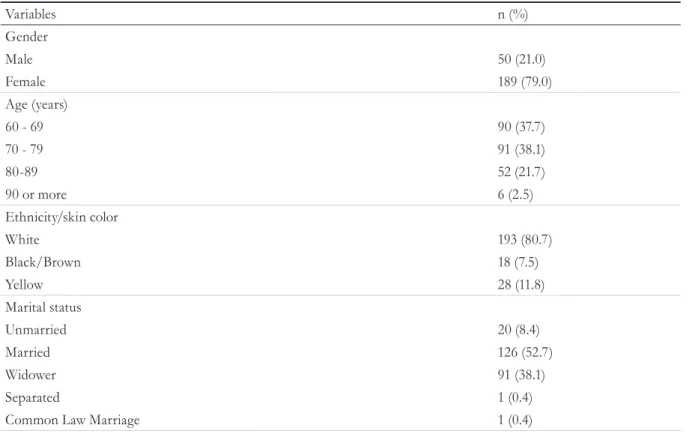
As shown in Table 1, of the 239 interviewees, the majority (79%) were women; 75.8% were aged between 60-79 years; 80.7% were of white/ Caucasian skin color/ethnicity; 52.7% were married and 74.5% practiced the Catholic religion. The mean age for both genders was 73 (±8) years. In terms of occupation, the majority were retired (81.2%). Medication expenses were between R$101.00 and R$300.00 (40.1%). The most prevalent economic class was B, to which 51.1% of respondents belonged. The majority of the elderly lived with relatives (75.6%) and 27.2% had completed higher education. The respondent (61.5%) was the main person responsible for paying for the health insurance.
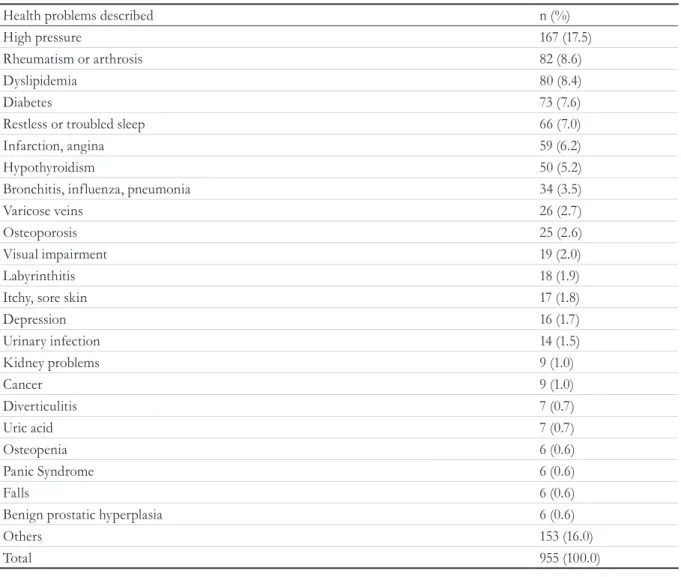
A total of 955 health problems were reported by the elderly, with arterial hypertension the most prevalent, affecting 17.5% (167) of the interviewees, followed by rheumatism or arthrosis (8.6%), dyslipidemia (8.4%) and diabetes (7.6%). On average,
the elderly described suffering from four health problems.
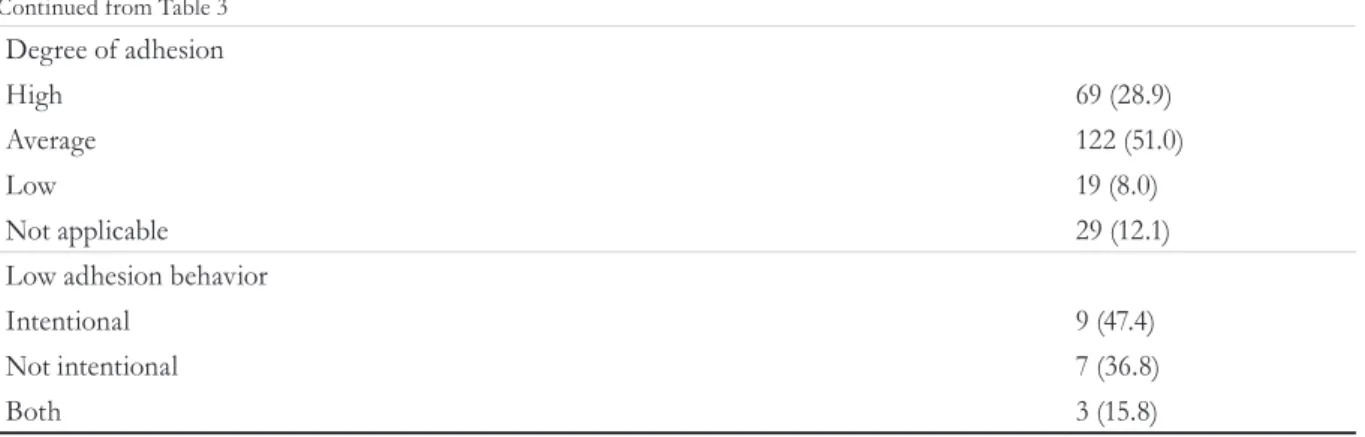
Among the elderly interviewed, 97.1% (232) had used some type of medication in the 15 days prior to the interview, while 62.8% (150) consumed five or more drugs. The average number of medications used by the elderly was 5.9 (± 4.1), with men consuming 5.4 (±3.3) medications on average and women 6.1 (± 4.2). The maximum number of drugs consumed by the elderly was 15. In terms of access to medicines, 48.9% (117) purchased them in commercial pharmacies with their own resources, 36.5% (87) bought some of their medicines in a commercial pharmacy, while others used public health units where medications are dispensed free of charge. Of the elderly persons interviewed, 51% (122) exhibited medium adherence and 12.1% (19) low adherence to medication use (Table 3). Among the elderly who did not adhere to medication, 47.4% were found to be in the condition of intentional non-adherence, that is, even if they feel better when taking medication, the patient stops using it.
to be continuous
Table 1. Distribution of demographic characteristics of the 239 elderly users of the Supplemental health plan. Marília, São Paulo, 2015.
Variables n (%)
Gender
Male 50 (21.0)
Female 189 (79.0)
Age (years)
60 - 69 90 (37.7)
70 - 79 91 (38.1)
80-89 52 (21.7)
90 or more 6 (2.5)
Ethnicity/skin color
White 193 (80.7)
Black/Brown 18 (7.5)
Yellow 28 (11.8)
Marital status
Unmarried 20 (8.4)
Married 126 (52.7)
Widower 91 (38.1)
Separated 1 (0.4)
378
Continuação da Tabela 1
Variables n (%)
Religion
Catholic 178 (74.5)
Evangelical 20 (8.4)
Spiritism 20 (8.4)
Buddhist/Other 21 (8.70)
Occupation
Retired 194 (81.2)
Housewife 23 (9.6)
Others 22 (1.2)
Spending on medicines
Up to 100.00 65 (27.1)
From 101.00 to 300.00 96 (40.1)
From 301.00 to 500.00 41 (17.2)
More than 500.00 13 (5.5)
Nothing / Do not know 24 (10.1)
Lives
Alone 58 (23.6)
With friends 2 (0.8)
With relatives 179 (75.6)
Economic Classification
Class A 15 (6.2)
Class B 122 (51.1)
Class C 90 (37.6)
Class D 10 (4.3)
Did not answer 2 (0.8)
Education
Illiterate/Incomplete elementary 59 (24.7)
Complete elementary/Incomplete high school 54 (22.6)
Complete high school/Incomplete higher education 60 (25.1)
Graduate 65 (27.2)
Did not inform 1 (0.4)
Responsible for paying for health plan
Interviewee themselves 147 (61.5)
Family (child/spouse) 78 (32.7)
379 Table 2. Health problems described by interviewees. Marília, São Paulo, 2015.
Health problems described n (%)
High pressure 167 (17.5)
Rheumatism or arthrosis 82 (8.6)
Dyslipidemia 80 (8.4)
Diabetes 73 (7.6)
Restless or troubled sleep 66 (7.0)
Infarction, angina 59 (6.2)
Hypothyroidism 50 (5.2)
Bronchitis, influenza, pneumonia 34 (3.5)
Varicose veins 26 (2.7)
Osteoporosis 25 (2.6)
Visual impairment 19 (2.0)
Labyrinthitis 18 (1.9)
Itchy, sore skin 17 (1.8)
Depression 16 (1.7)
Urinary infection 14 (1.5)
Kidney problems 9 (1.0)
Cancer 9 (1.0)
Diverticulitis 7 (0.7)
Uric acid 7 (0.7)
Osteopenia 6 (0.6)
Panic Syndrome 6 (0.6)
Falls 6 (0.6)
Benign prostatic hyperplasia 6 (0.6)
Others 153 (16.0)
Total 955 (100.0)
Table 3. Use of medications in the fifteen days prior to the date of the interview, way of obtaining medicines, and degree of adhesion of elderly persons interviewed. Marília, São Paulo, 2015.
Variables n (%)
Use of medications in 15 days prior to the interview date
Yes 232 (97.1)
No 7 (2.9)
Number of medicines
0 7 (2.9)
1 to 4 82 (34.3)
5 or more 150 (62.8)
Medicines obtained from
Health unit 15 (6.3)
Pharmacy 117 (48.9)
Third parties 0 (0)
Health unit + pharmacy 87 (36.5)
Pharmacy + Third Parties 11 (4.5)
Health Unit + Pharmacy + Third Parties 2 (0.8)
Does not use medicines 7 (2.9)
380
Continued from Table 3
Table 4. Anatomic classification of medications used by the elderly, according to the Anatomical Therapeutic
Chemical (ATC) Classification System16, 2016, Marília, São Paulo, 2015
Anatomical Classification n (%)
Cardiovascular apparatus 410 (30.2)
Digestive system and metabolism 307 (22.6)
Nervous system 247 (18.2)
Musculoskeletal system 130 (9.6)
Blood and Hematopoietic Organs 71 (5.2)
Systemic hormonal preparations, other than sex hormones and insulins 56 (4.3)
Herbal medicines 42 (3.1)
Respiratory Device 36 (2.6)
Sensory organs 20 (1.5)
Genito-urinary tract and sex hormones 16 (1.2)
Antimicrobials for systemic use 14 (1.0)
Dermatological 5 (0.3)
Others 4 (0.3)
Total 1358 (100.0)
Degree of adhesion
High 69 (28.9)
Average 122 (51.0)
Low 19 (8.0)
Not applicable 29 (12.1)
Low adhesion behavior
Intentional 9 (47.4)
Not intentional 7 (36.8)
Both 3 (15.8)
A total of 1358 drugs were consumed (Table 4), with medications for the cardiovascular system appearing most frequently (30.2%), and antihypertensive drugs the most used (8.10%). Drugs for the digestive system and metabolism were the next most common (22.60%), predominantly vitamins (8.9%), followed by those for the nervous
system (18.19%), where analgesics were the most used (5.54%).
381
dISCuSSIOn
In terms of the sociodemographic data of the interviewees, the majority were female, confirming
the findings of another study17, as well as data from
the Instituto Brasileiro de Geografia e Estatística (the Brazilian Institute of Geography and Statistics)
(IBGE) which describe the feminization of old age18,
as women are less exposed to the risk of illness
and death17. Nevertheless, in the present study, the
predominance of women (79%) was greater than that found in general studies, which have described this proportion as around 55%, coinciding with the
PNAD 20083 and IBGE projections for the elderly
population of Brazil in 2016.19 In a study carried out
in the same locality by Marin et al.20, it was found
that among users of the Family Health Strategy (FHS), 61.8% of the elderly population was female. In terms of the elderly who use health insurance, it has been found that for every 100 men aged 60
years or over, there are 143 women21. In addition,
women are more likely to agree to data collection, as was the case in the present study.
The most prevalent age range in the present study was 70-79 years (38.1%). This older profile was also observed in elderly beneficiaries of health insurance when compared with those without health Table 5. Inappropriate medications for elderly persons according to the Beers Criteria, 2015. Marília, São Paulo, 2015.
Group/medications n (%)
Musculoskeletal system 54 (34.0)
Musculoskeletal relaxants 4 (27.0)
Non-steroidal anti-inflammatory drugs 11 (7.0)
Digestive system and metabolism 36 (22.6)
Proton Pump Inhibitor 35 (22.0)
Metoclopramide 1 (0.6)
Central Nervous System 33 (20.8)
Benzodiazepines 17 (10.8)
Amitriptyline 8 (5.0)
Paroxetine 4 (2.5)
Phenobarbital 3 (1.0)
Non-benzodiazepine hypnotics 1 (1.0)
Endocrine 16 (10.1)
Insulin 9 (5.7)
Estrogen 5 (3.2)
Long-lasting sulphonylureas 2 (1.2)
Cardiovascular 14 (8.8)
Amiodarone 9 (5.8)
Nifedipine 2 (1.2)
Digoxin 2 (1.2)
Methyldopa 1 (0.6)
Antimicrobial 3 (1.9)
Nitrofurantoin 3 (1.9)
Antithrombotics 2 (1.2)
Ticlopidine 2 (1.2)
Antihistamines 1 (0.6)
Hydroxizine 1 (0.6)
382
insurance21. However, among elderly persons with SHI
in Brazil, the largest age group was 60-69 years12. The
predominance of white/Caucasian skin color/ethnicity, the Catholic religion, and a marital status of married corresponded to data from the 2010 Demographic
Census22. Among women, however, there was a
predominance of widows, which is explained by male over-mortality and by the fact that older men seek to
remarry, often with younger women18.
The majority of the elderly persons were retired, an index similar to those found in social indicators
of the Brazilian population18, in which 77.4% of the
elderly population were found to be retirees and/ or pensioners.
When applying the Brazilian Economic
Classification Criteria 201514, most of the elderly
persons interviewed belonged to class B, in line
with PNAD 20083, which confirms that elderly
people with health insurance are from the most socially favored classes. It is important to emphasize
that this social class represents only 25.5%12 of the
Brazilian population.
A study carried out in Rio de Janeiro6 found
an association between having health insurance and greater spending on medicines. The average expenditure on medicines accounts for approximately one quarter of the average monthly income of more
than half of the Brazilian elderly population23.
Most of the elderly interviewed lived with relatives, but many lived alone, which is considered a justification for pharmacological monitoring, as there is an indication that these elderly people are
more prone to problems related to medication use6.
Another finding of the present study which differs from results observed in the general elderly population was schooling, as 52.3% of participants in the present study had completed secondary or higher education. Even so, almost a quarter (24.7%) had no education or incomplete elementary schooling
only. A study by Marin et al.,20 of elderly users of
an ESF (Family Health Strategy) (Estratégia Saúde
da Família) in the same city19 found that 68.1% of
individuals did not have an education or only had incomplete elementary schooling, as opposed to
24.7% who did. The PNS 201324 found that the
higher the level of education, the greater the health plan coverage, with figures ranging from 16.4% for individuals without education or with incomplete elementary schooling to 68.8% for those with complete higher education.
As has also been found among the general population, the present study reported an average of four health problems per elderly person, with the distribution of diseases that most affected this age
group very similar to that found in the PNS 201324,
although depression was found to be the 14th most
common disease affecting the elderly in the present
study, while it was the 4th most prevalent chronic
disease among the Brazilian population in the PNS
2013. In the present study, the 4th ranked CNCD was
diabetes, which was closer to the results of PNAD
20083 and the findings of a study of elderly SUS
users in the same locality20. In a study carried out in
Belo Horizonte, in the state of Minas Gerais17, it was
concluded that although the morbidity and mortality profile of the SHI beneficiaries was similar to that observed for SUS users, the average diagnosis of disease described by the elderly in this study was 2.5 times greater than the results of a study with
SUS users20.
The prevalence of drug use in the study population was 97.1%, surpassing the rates found in other regions of the country, such as 79.4% in the
south25 and 85.5%26 in the northeast regions These
data are in line with the study by Silva et al.10, in
which it was found that enrollment in a health plan was positively associated with the use of medication, due to the greater ease of access to doctors from different specialties, resulting in a greater number of prescriptions.
Polypharmacy was practiced by 62.8% of the elderly participants of the study. National studies have
found a variation ranging from 15.97% to 36%27,28.
This variation can occur due to methodological differences (populations studied, recall period) and even to the interpretation of the concept of polypharmacy. However, it is known that the use of six or more drugs raises the risk of serious drug
interactions by as much as 100%29.
383 vitamins and analgesics. The frequent use of drugs
that act on the cardiovascular system in this age group has also been found in other studies10,17 and is consistent with the PNS-2013, which highlights cardiovascular disorders as having a higher occurrence of CNCDs.
The simultaneous occurrence of multiple diseases, associated with the use of large quantities of drugs, the lack of a private health plan, a low level of schooling and the aging process itself, with loss of independence and cognitive capacity, are factors that
limit adherence to medications30. Good schooling,
a health plan and good functional and cognitive capacity are factors that likely contributed to the fact that only 12.1% of the elderly in the present study had low adherence to treatment. However, the data from the sample diverge regarding the occurrence of comorbidities and the use of large quantities of drugs as limiting factors of adherence to treatment. In spite of the use of polypharmacy and the presence of several comorbidities, low adherence to treatment occurred in a smaller proportion of the elderly persons in the present study than generally found in literature. It is possible that a high level of schooling and purchasing power, facilitating access to medication among the elderly studied, are important predictors of adherence to treatment.
According to the Beers Criteria 20159, 11.7% (159)
of the drugs used by the elderly persons in this study were inappropriate, a prevalence lower than those found in other studies, which ranged from 13% to 44.73%. It is important to note that the Beers Criteria revised in 2015 includes consistent modifications over previous versions, such as the withdrawing or changing of the groups of many inappropriately used medications for the elderly, regardless of disease.
In Brazil, as in many countries around the world, a national consensus is being developed on medicines
that are inappropriate for the elderly32,33, considering
existing medicines in the domestic market and the possibility of replacing inappropriate drugs with other drugs with a lower risk/benefit ratio.
Among the drugs considered to be inappropriate for the age group of the present study, musculoskeletal relaxants (carisoprodol, Cyclobenzaprine and orphenadrine) were the most frequently used. These drugs are tolerated poorly by the elderly as they cause
anticholinergic effects, sedation and weakness. They are sold in Brazil in combination with dipyrone, diclofenac, paracetamol and caffeine and without the need for medical prescription, allowing their use
as self-medication34. In the USA, the use of muscle
relaxants among the elderly aged over 65 years
increased 136% between 1999 and 201234. Proton
pump inhibitors, meanwhile, elevate gastric pH,
increasing the risk of infection by Clostridium difficile,
bone loss, fractures, pneumonia and malabsorption35,
and so the Beers Criteria 2015 recommends avoiding
their use for more than eight weeks9.The medications
used by the participants of the present study differed from those seen among elderly Family Health
Strategy users20. Among such individuals, the use
of muscle relaxants was not observed, whereas
proton pump inhibitors represented the 5th most
used group of medicines. It should be considered that this difference in data may be related to the recall period used. In addition to this variable, it is important to point out that 85% of the patients receiving care via the SUS obtain most of their medication from within the system itself or from
a Farmácia Popular (Popular Pharmacy) (21.9%)24.
Muscle relaxants associated with non-steroidal anti-inflammatory drugs (NSAIDs) are not among the medicines provided by city authorities and are not listed in the Relação Nacional de Medicamentos (National Medications List) (RENAME). Many of the participants in this study (48.3%) bought their medicine from a commercial pharmacy, as was also
demonstrated by PNAD 20083.
However, it should be considered that the PIM list
for the elderly, according to the 2015 Beers Criteria9,
continues to disregard the heterogeneity of the elderly population and the availability of pharmaceutical
specialties in the markets of each country29,32, as it
is designed for use in the USA. The new version, however, puts greater emphasis on clinical judgment in decision-making regarding the pharmacotherapy of the elderly. However, while the lack of specific criteria in Brazil continues, the application of the 2015 Beers Criteria facilitates clinical practice and improves the quality of care.
384
COnCLuSIOnS
The sociodemographic profile showed that the majority of the sample was female, who lived with relatives. There was an older mean age than in other similar studies, and most of the sample had a higher level of education, differing from the general level of schooling of the Brazilian elderly population.
Regarding pharmacotherapeutic profile, the disease/elderly person ratio of the sample was similar to many studies on the subject, although indices of the use of polypharmacy, the mean medication use/ elderly person and the prevalence of medication use were higher than in literature. The use of potentially inappropriate medications was lower than the majority of Brazilian studies. This variation may be associated with changes made in the updated 2015 Beers Criteria, which is significantly different from previous versions, as well as demographic differences among the elderly, local medical and pharmaceutical care, access to health services and the recall period of the study. Regarding adherence to treatment,
12.1% of the elderly had low adherence. Despite the use of polypharmacy and the presence of several comorbidities, the proportion of low adherence to treatment among the elderly was smaller than that found in literature. It may be that the higher level of schooling and purchasing power, favoring the access to medication of the elderly studied, are important predictors of adherence to treatment.
The results regarding medications suggest that an elderly care model focused on the treatment of diseases and pharmacotherapy continues to predominate, even among individuals with greater purchasing power, higher levels of education and access to a supplemental health plan. Therefore, in order to better understand this issue, it is important that new studies are carried out, evaluating the training of those who prescribe medicine and their knowledge regarding the risks/benefits of medications, to better define criteria and proposals that can rethink the model of patient care for the elderly population, given the increase in the life expectancy of this population.
rEFErEnCES
1. Instituto Brasileiro de Geografia e Estatística. Pesquisa Nacional de Saúde 2013: percepção do estado de saúde, estilos de vida e doenças crônicas. Brasil, grandes regiões e unidades da federação [Internet]. Rio de Janeiro: IBGE; 2014 [acesso em 24 fev. 2017]. Disponível em: http://portalarquivos. saude.gov.br/images/pdf/2014/dezembro/18/PNS-2013.pdf
2. Silva R, Schmidt OF, Silva S. Polifarmácia em geriatria. Rev AMRIGS. 2012;56(2):164-74
3. Instituto Brasileiro de Geografia e Estatística. Pesquisa Nacional por Amostra de Domicílios. Um panorama da saúde no Brasil: acesso e utilização dos serviços, condições de saúde e fatores de risco e proteção à saúde 2008. Rio de Janeiro: IBGE; 2010 [acesso em 05 maio;2015. Disponível em: http:// biblioteca.ibge.gov.br/visualizacao/livros/liv44356.pdf
4. Flores VB, Benevegnú LA. Perfil da utilização de medicamentos em idosos da zona urbana de Santa Rosa, Rio Grande do Sul, Brasil. Cad Saúde Pública. 2008;24(6):1439-46.
5. Manso MEG, Biffi ECA, Gerardi TJ. Prescrição inadequada de medicamentos a idosos portadores de doenças crônicas em um plano de saúde no município de São Paulo, Brasil. Rev Bras Geriatr Gerontol. 2015;18(1):151-64
6. Duarte LR, Gianinni RJ, Ferreira LR, Camargo MAS, Galhardo SD. Hábitos de consumo de medicamentos entre idosos usuários do SUS e de plano de saúde. Cad Saúde Pública. 2012;20(1):64-71.
7. Aiolfi CR, Alvarenga MRM, Moura CS, Renovato RD. Adesão ao uso de medicamentos entre idosos hipertensos. Rev Bras Geriatr Gerontol. 2015;18(2):397-404
8. Assato CP, Borja-Oliveira CR. Psicofármacos potencialmente inapropriados para idosos. Estud Interdiscip Envelhec. 2015;20(3):687-701.
385 10. Silva AL, Ribeiro AQ, Klein CH, Acurcio FA.
Utilização de medicamentos por idosos brasileiros, de acordo com a faixa etária: um inquérito postal. Cad Saúde Pública. 2012;28(6):1033-45.
11. Instituto Brasileiro de Geografia e Estatística. Pesquisa Nacional de Saúde 2013: percepção do estado de saúde, estilos de vida e doenças crônicas. Brasil, grandes regiões e unidades da federação [Internet]. Rio de Janeiro: IBGE; 2014 [acesso em 10 out. 2015]. Disponível em: http://biblioteca.ibge.gov. br/visualizacao/livros/liv91110.pdf
12. Brasil. Ministério da Saúde, Agência Nacional de Saúde Suplementar. Dados e indicadores do setor [Internet]. Brasília, DF: ANS; 2016 [acesso em 05 maio 2016]. Disponível em: http://www.ans.gov.br/ perfil-do-setor/dados-e-indicadores-do-setor
13. Fundação Sistema Nacional de Análise de Dados [Internet]. São Paulo: SEADE; 2015. Informações dos Municípios Paulistas; 2015 [acesso em 06 jul. 2015]; [aproximadamente 2 telas]. Disponível em: http:// www.imp.seade.gov.br
14. Associação Brasileira de Empresas de Pesquisa. Critérios de Classificação Econômica Brasil [Internet]. São Paulo: ABEP; 2014 [acesso em 18 maio 2015]. Disponível em: http://www.abep.org
15. Bem AJ, Neumann CR, Mengue SS. Teste de Morisky-Green e Brief Medication Questionaire para avaliar adesão a medicamentos. Rev Saúde Pública. 2012;46(2):279-89.
16. World Health Organization, Collaborating Centre for Drug Statistic Methodology, Norwegian Institute of Public Health. Guideline for Anatomical Therapeutic Chemical (ATC) Classification and DDD Assignment 2016 [Internet]. Oslo: WHO; 2016 [acesso em 10 abr. 2016]. Disponível em: http://www.whocc.no/ atc_ddd_index.
17. Santos VR, Maia CS, Diniz CG, Santos BF, Pimenta AM. Morbimortalidade de usuários de um plano privado de saúde de Belo Horizonte, Minas Gerais. Rev Enferm Cent.-Oeste Min. 2013;3(3):788-96.
18. Instituto Brasileiro de Geografia e Estatística. Censo demográfico 2010: características gerais da população, religião e pessoas com deficiências [Internet]. Rio de Janeiro: IBGE; 2012 [acesso 03 mar. 2014]. Disponível em: http://biblioteca.ibge.gov.br/visualizacao/ periodicos/94/cd_2010_religiao_deficiencia.pdf
19. Instituto Brasileiro de Geografia e Estatística. Projeção da população 2016 [Internet]. Rio de Janeiro: IBGE; 2016 [acesso em 05 maio 2016]. Disponível em: http://www.ibge.gov.br/apps/população/ projeção/
20. Marin MJS, Cecílio LCO, Perez AEWUF, Santella F, Silva CBA, Gonçalves Filho JR, et al. Caracterização do uso de medicamentos entre idosos de uma unidade do Programa Saúde da Família. Cad Saúde Pública. 2008;24(7):1545-55.
21. Brasil. Ministério da Saúde, Agência Nacional de Saúde Suplementar (ANS). Plano de cuidado para idosos na Saúde Suplementar [Internet]. Brasília, DF: ANS; 2012 [acesso em 8 jul. 2016]. Disponível em: http://bvsms.saude.gov.br/bvs/publicacoes/plano_ cuidado_idosos.pdf
22. Instituto Brasileiro de Geografia e Estatística. Síntese de Indicadores Sociais: uma análise das condições de vida da população brasileira 2010 [Internet]. Rio de Janeiro: IBGE; 2013 [acesso em 3 mar. 2014]. Disponível em: http://biblioteca.ibge.gov.br/ visualizacao/livros/liv66777.pdf
23. Lima-Costa MF, Barreto SM, Giatti L. Condições de saúde, capacidade funcional, uso de serviços de saúde e gastos com medicamentos da população idosa brasileira: um estudo descritivo baseado na Pesquisa Nacional por Amostra de Domicílios. Cad Saúde Pública. 2003;19(3):735-43.
24. Instituto Brasileiro de Geografia e Estatística. Pesquisa Nacional de Saúde 2013: acesso e utilização dos serviços de saúde, acidentes e violência Brasil, grandes regiões e unidades da federação [Internet]. Rio de Janeiro: IBGE; 2015 [acesso em 19 maio 2015]. Disponível em: http://biblioteca.ibge.gov.br/ visualizacao/livros/liv94074.pdf
25. Dal Pizzol TS, Pons ES, Hugo FN, Bozzetti MC, Sousa MLR, Hilgert JB. Uso de medicamentos entre idosos residentes em áreas urbanas e rurais de município no Sul do Brasil: um estudo de base populacional. Cad Saúde Pública. 2012;28(1):104-14.
26. Neves SJF, Marques APO, Leal MCC, Diniz AS, Medeiros TS, Arruda IKG. Epidemiologia do uso de medicamentos entre idosos em área urbana do Nordeste do Brasil. Rev Saúde Pública. 2013;47(4):759-68.
27. Smanioto FN, Haddad MCL. Avaliação da
farmacoterapia prescrita a idosos institucionalizados. Rev Bras Enferm. 2013;66(4):523-7.
28. Goulart LS, Carvalho AC, Lima JC, Pedrosa JM, Lemos PL, Oliveira RB. Consumo de medicamentos por idosos de uma unidade básica de saúde de Rondonópolis/MT. Estud interdiscip Envelhec. 2014;19(1):79-94.
386
Received: July 1, 2016 Reviewed: February 2, 2017 Accepted: May 5, 2017
30. Tavares NUL, Bertoldi AD, Thumé E, Facchini LA, França GVA, Mengue SS. Fatores associados à baixa adesão ao tratamento medicamentoso em idosos. Rev Saúde Pública. 2013;47(6):1092-101.
31. Manso MEG, Biffi ECA, Gerardi TJ. Prescrição inadequada de medicamentos a idosos portadores de doenças crônicas em um plano de saúde no município de São Paulo, Brasil. Rev Bras Geriatr Gerontol. 2015;18(1):151-64.
32. Oliveira M. Brazilian consensus of potentially inappropriate medications in the elderly: preliminary data. J Am Geriatr Soc. 2015;63(Suppl 1):147.
33. Cassoni TCJ, Corona LP, Romano-Lieber NS, Secoli SR, Duarte YAO, Lebrão ML. Uso de medicamentos potencialmente inapropriados por idosos do município de São Paulo, Brasil: Estudo SABE. Cad Saúde Pública. 2014:30(8):1708-20.
34. Kantor ED, Rehm C D, Haas JS, Chan AT, Giovannucci EL. Trends in prescription drug use among adults in the United States From 1999-2012. JAMA. 2015;314(17):1818-30.