Clostridium tetani
infections in newborn infants: a
tetanus
neonatorum
review
Infecção por Clostridium tetani no recém-nascido: revisão sobre o
tétano neonatorum
INTRODUCTION
“Spasms after a wound are fatal”. Hippocrates of Cos
Tetanus is an acute infectious, non-contagious disease(1) that is triggered by
the action of neurotoxins - in particular, tetanospasmin - that are produced
by the gram-positive bacillus Clostridium tetani,(2,3) an anaerobic spore-forming
bacterium. C. tetani is found throughout the environment(3,4) (e.g., in sand,
dust, tree branches, bushes, putrid water, agriculture tools, animal or human
stools), its multiplication is boosted by oxi-reductive substances,(2,3) and the
bacteria can contaminate wounds.(4) Under ideal conditions, the spores can
transform into a vegetative form that produces tetanospasmin. Another toxin that is produced by this bacillus is tetanolysin; however, based on our current knowledge, tetanolysin is not related to any of the clinical features of tetanus.(3)
In immunocompromised subjects, tetanus toxin can block inhibitory neurons, causing muscle hypertonia, hyperrelexia and muscle spasms; however, the patient remains lucid. Similarly, the toxin acts at the level of the preganglionic nerves, causing sympathetic hyperexcitability, increased circulating catecholamine levels, thereby leading to dysautonomia and consequent systemic blood pressure instability, heart arrhythmias, diaphoresis
and hyperthermia.(2,3) In newborn infants, this disease manifests between three
and 12 days after birth as progressively impaired feeding (e.g., sucking and
Andréia Patrícia Gomes1, Brunnella
Alcantara Chagas de Freitas2, Denise
Cristina Rodrigues2, Guilherme
Lobo da Silveira3,Walter Tavares4,
Rodrigo Siqueira-Batista1
1. Department of Medicine and Nursing, Universidade Federal de Viçosa - UFV - Viçosa (MG), Brazil. 2. Department of Medicine and Nursing, Universidade Federal de Viçosa - UFV - Viçosa (MG), Brazil. Neonatal Intensive Care Unit, Hospital São Sebastião - HSS - Viçosa, (MG), Brazil.
3. Neonatal Intensive Care Unit, Hospital São Sebastião – HSS – Viçosa, MG. Post-Graduate Neonatology Course, Fundação Educacional Lucas Machado – FELUMA – Brazil. 4. Medical Graduation Course, Centro Universitário Serra dos Órgãos – UNIFESO – Teresópolis (RJ), Brazil.
ABSTRACT
Although tetanus is a preventable disease by vaccination, it continues to claim lives around the world. Whereas cases of accidental origin relect insuicient population immunization, tetanus neonatorum reveals a double-nature fault—poor vaccination coverage of adults coupled with diiculties accessing appropriate prenatal care; this situation is aggravated by the extreme severity of tetanus in this age group in which the mortality rate can reach up to 80%. he
early detection of tetanus in neonates is essential for immediately initiating the proper therapy. herefore, although reaching an early diagnosis of tetanus is important, the most relevant aspect is related to the appropriate management and prophylaxis of this disease. Consequently, the aim of this article is to review
neonatorum tetanus with an emphasis on its therapy and prevention.
Keywords: Clostridium tetani;
Tetanus/prevention & control; Infant, newborn
Conlicts of interest: None. Submitted on August 8, 2011 Accepted on November 2, 2011
Corresponding author:
Andréia Patrícia Gomes Universidade Federal de Viçosa Department of Medicine and Nursing Avenida P. H. Rolfs s/n - Campus Universitário
Zip Code: 36571-000 – Viçosa (MG), Brazil
swallowing), thus resulting in hunger and inconsolable crying. In addition, the disease is characterized by palsy or reduced movements, touch hypertonia and spasms with or without opisthotonus.(2,3,5)
Tetanus is an immunopreventable, yet potentially, lethal disease. Its diagnosis is based fundamentally on clinical criteria, and a positive prognosis depends on both establishing an early diagnosis and providing adequate therapy. he control and eradication of tetanus can be achieved using relatively simple measures such as population education and vaccination. Vaccination of potential childbearing or pregnant women (during their prenatal care) is the best preventive strategy against tetanus
neonatorum.(1,6-8)
In light of these considerations, the aims of this manuscript are to revise the ethiopathogenic, clinical, therapeutic and epidemiological aspects of the disease and to improve the control of neonatal tetanus.
Clostridium tetani
his pathogenic agent is a gram-positive, obligate anaerobic toxin-producing bacillus that measures approximately four microns in length. Its spore is described
as having a tennis racket shape(2) and can be found in
soil(3), animal stools (both human and non-human),
putrid water and unsterilized surgical instruments. he spores are highly resistant to many agents, including disinfecting substances, and can survive for years. he vegetative forms are easily inactivated and susceptible to various antimicrobial compounds; however, these forms
are responsible for the production of tetanospasmin,(2) the
toxin that causes tetanus symptoms.(3)
PATHOGENESIS
Because of the ubiquitous environmental presence of tetanus bacilli, its contamination in wounds or the umbilical cord stump is relatively common. he organism’s transformation into the vegetative form and its production of toxins requires proper conditions, including anaerobic conditions and the presence of substances with low oxi-reduction potential. Indeed, the disease can only occur in this context, which is often observed in wounds with devitalized or necrotic tissues, in the presence of foreign bodies or an infection by other
organisms.(2) he toxin is released into the wound and
reaches peripheral motor neuron terminals, where it progresses via the axons to the central nervous system, spinal cord and brainstem. he toxin crosses the synaptic terminals to reach the pre-synaptic membrane, where it
blocks the release of the inhibitory neurotransmitters glycine and gamma-amino butyric acid (GABA). he iring rate of resting motor neurons is increased, thereby causing hyperrelexia and muscle spasms. Similarly, the inhibition of pre-ganglionic sympathetic neurons inhibition may be lost, thereby leading to sympathetic hyperexcitability and high levels of circulating
catecholamines, contributing to dysautonomia.(3,5)
In generalized tetanus, the toxin reaches the blood and lymph and is then disseminated to other nerve terminals. Shorter nerves are afected irst, thus explaining the sequential involvement of the head, trunk and inally the extremities. In the localized and cephalic forms of tetanus, only a select number of nerves are afected, resulting in localized muscle spasms.(2,5)
CLINICAL FEATURES
Tetanus neonatorum occurs in the umbilical cord
stump and results from non-aseptic conditions and handling. In remote regions of Brazil, the popular names of the disease can be roughly translated into English as “seven-day evil” or “navel disease”.(7,9) Home birth is still
common in these regions, and a number of substances are often applied to the umbilical cord stump, including dust, cofee powder and spider webs, all of which are believed to promote healing or are used as part of a
deeply rooted ritual.(9,10) In addition, shortcomings in
the vaccination program (including vaccinations for pregnant women) and in prenatal care culminate in illness in the neonatal child. he clinical features of tetanus
neonatorum manifest after a 5–13-day incubation time and begin as diiculty feeding from the breast due to an inability to suck, progressing to trismus and an inability to swallow. Subsequently, hypertonia, opisthotonus and generalized spasms occur. Table 1 summarizes
Bazin’s(10) categorization of tetanus neonatorum. Tetanus
neonatorum is an extremely severe disease with a mortality rate that can exceed 90% without adequate therapy. Death is usually due to a perturbed hydro-electrolytic balance or asphyxia and can occur even with adequate therapy; in the case of adequate therapy, hemodynamic
instability is a common cause of death.(9)
Incubation is the time that passes from germ implantation (e.g., in a wound) until the irst clinical signs and symptoms and averages seven days, although it can
last from 5 to 15 days after infection with C. tetani.(2,3)
A shorter incubation and progression time correlates
with a more severe disease course.(2,3) Lastly, this disease
provides no immunity to the host.(1)
DIAGNOSIS
A diagnosis of tetanus neonatorum is based on clinical
indings, including muscle stifness and painful muscle
spasms.(9) he presence of a causative agent does not
conirm the diagnosis, nor does its absence preclude a diagnosis in patients who manifest the clinical features of tetanus. Cultures of material from the infective focus or
blood cultures have no diagnostic value.(2)
In the diferential diagnosis of tetanus neonatorum,
one should consider an adverse drug efect (e.g., to metoclopramide), a metabolic or hydro-electrolytic disorder (e.g., hypocalcemia), labor-acquired neurological injury and meningoencephalitis.(2,11,12)
THERAPY
he therapeutic targets should include the following: a) neutralization of circulating (i.e., not bound to receptors) toxins; b) the elimination of the toxin-producing source
(i.e., the vegetative C. tetani forms); and in particular,
c) management of clinical features using ventilation, nutrition and hemodynamic support in addition to treatment of muscle spasms.(6,10-13)
Neutralizing toxin activity
Unbound tetanus toxin can be found in organ luids, in particular, in blood and tissues surrounding the wound. For neutralization purposes, heterologous anti-tetanus serum (ATS) or hyperimmune human tetanus immunoglobulin (TIG) should be administered as soon as possible, ideally before the tetanus toxin has begun its axonal migration toward the spinal cord, after which neutralization is no longer possible. here is no apparent diference in clinical efectiveness between ATS and TIG. TIG is able to maintain serum levels longer, whereas ATS requires previous sensitivity testing due to
the risk of developing a heterologous serum reaction. Although the reported doses that can be used vary in the medical literature,(2,5,14-16) the Brazilian Ministry of Health
recommends the following doses: ATS, between 10,000 and 20,000 IU given intravenously; TIG, between 1,000 and 3,000 IU given intramuscularly, with the dose divided into two diferent muscle masses. Currently, intrathecal
TIG administration is not generally recommended.(1,17)
Elimination of the toxin-producing source
Although surgical debridement and the removal of
foreign bodies from wounds that are infected with C.
tetani are essential for post-neonatal disease control,
removing the umbilical cord stump is not recommended in neonatal tetanus. However, the following regimens are recommended: 1) rigorous cleansing of the umbilical
stump and 2) systemic antibiotic therapy.(1) he drugs of
choice are penicillin G or metronidazole, both of which are given intravenously.(1,5,14,16,18) Alternatively, oral cephalexin
and erythromycin can be administered, particularly in less severe cases.(1,19)
Management of clinical features
he most important treatment aspect is assuring survival until the toxin is released from their receptors in the cells; the objectives are to maintain vital functions and nutrition and to prevent associated infections.(2,5)
Considering the disease’s severity and high lethality rate, admission to an intensive care unit is recommended. In addition to the spasms that are typical of the disease, a newborn with neonatal tetanus can experience instability of several organ systems and may also experience respiratory failure, hemodynamic changes, sympathetic hyperactivity and heart arrhythmias; this combination can cause a hypercatabolic state with high potential for sequelae and even death. Some intensive care units report survival rates above 90%, whereas treatment outside of an intensive care unit carries a survival rate of 20–50%.(20,21)
he newborn should receive minimal handling and should be kept in a quiet environment with low ambient light, as stimuli can trigger muscle spasms. Coordination
Table 1 – Categorization of therapy and prognosis
Score Age Progression time Type of spasm
5 (ive) < 7 days < 12 hours Frequent or sub-penetrant, high intensity, long-lasting, apnea. 3 (three) 7–10 days 12–24 hours Strong, frequent, short induration, spontaneous or stimulus-elicited. 2 (two) > 10 day > 24 hours Absent or weak, short in duration, usually elicited by stimuli. Categorization: moderate tetanus – total score 6; severe tetanus – total score 7–10; very severe tetanus – total score above 10.
between the medical, nursing and physiotherapy teams— as well as other healthcare professionals—is recommended for providing both fast and efective patient care. Hydro-electrolytic and acid-base disorders should be controlled and corrected, and supplying appropriate nutrition is essential.(2,5)
Muscle spasms are controlled by an intravenous infusion of benzodiazepines, as these compounds provide anxiolytic, sedative and muscle-relaxing properties. A continuous midazolam infusion at doses of up to 6–8 mcg/ kg/minute and diazepam at 0.3–2.0 mg/kg/minute are the most commonly used drugs, and their doses should be titrated based on the clinical response of the patient.(1,2,5,22)
Muscle spasms are extremely painful; therefore, analgesic drugs should always be administered, with fentanyl as a good option. In cases in which benzodiazepines and analgesics fail to resolve the spasms, the patient must be curarized with pancuronium or vecuronium; in this case,
the patient must already be ventilated mechanically.(1,23)
EPIDEMIOLOGY
Tetanus neonatorum is a cosmopolitan disease that
afects newborn babies of both genders (1,14) and has both
varying incidences worldwide and high lethality; the disease is more prevalent in regions with precarious health conditions and serious social and economic problems, thus preventing the dissemination of correct information and access to adequate healthcare services.(15)
In Brazil, the number of conirmed tetanus neonatorum
cases has recently dropped signiicantly. In fact, compared
with the past decade, the incidence of tetanus neonatorum
has dropped by 89.0%, and the current lethality rate is
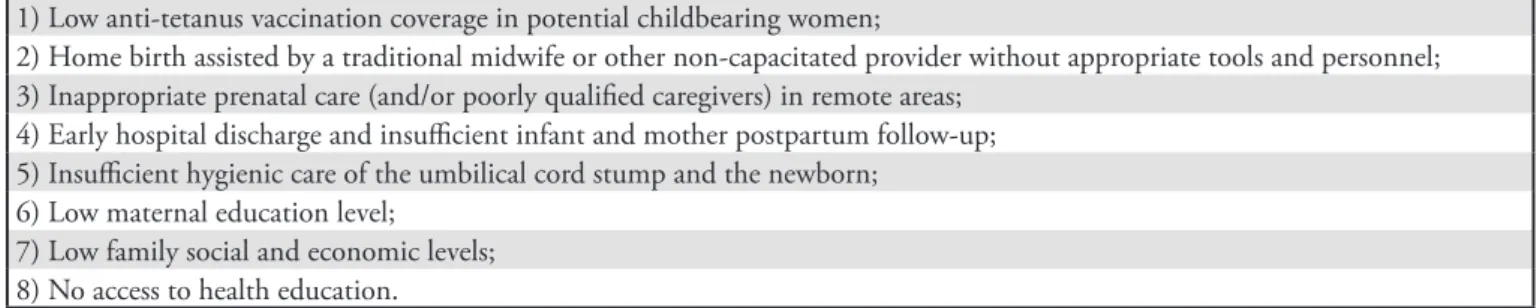
43.7%.(24,25) he risk factors for tetanus neonatorum are
shown in table 2.
he use of vaccinations has signiicantly contributed to the reduction in the incidence of this disease. In the United States, the few cases that occur are related to
unvaccinated or inappropriately vaccinated individuals or to elderly persons who failed to receive a booster vaccine within the appropriate interval. his situation
is also observed in Europe.(26) Conversely, in developing
countries, tetanus continues to afect elderly persons, young adults, newborn infants and children, thereby relecting inefective vaccination regimens and diiculties in accessing adequate healthcare services.(12)
PROPHYLAXIS AND CONTROL
Although there has been considerable progress toward
the eradication of tetanus neonatorum, the World Health
Organization (WHO) estimates that approximately 60,000 deaths could be ascribed to this disease in 2008,
with more than half of these cases occurring in Africa.(27)
Nations that have eradicated tetanus neonatorum used
relatively simple strategies, such as improving their primary immunization regimens and providing appropriate care during delivery, including training traditional midwives, vaccinating pregnant women and using surveillance systems to track reports of tetanus neonatorum.(27-33)
he oicial data from the Brazilian Ministry of Health show a decrease of 89.0% in the incidence of
tetanus neonatorum compared with the past decade,
and this decrease is predominantly in the northern and northeastern regions, with no new cases reported in the central-western region since 2005.(24,25)
he eradication of tetanus neonatorum is feasible
and depends on education and immunization measures; therefore, political willingness at various levels within the Brazilian Healthcare System (SUS) and the implementation of prevention and education measures—
as appropriate for any society—are needed.(34,35) Indeed,
tetanus neonatorum can occur in babies of mothers without
suicient levels of circulating antibodies, which would have been able to confer passive protection. herefore, the most important form of prevention is through the
Table 2 – Risk factors for tetanus neonatorum
1) Low anti-tetanus vaccination coverage in potential childbearing women;
2) Home birth assisted by a traditional midwife or other non-capacitated provider without appropriate tools and personnel; 3) Inappropriate prenatal care (and/or poorly qualiied caregivers) in remote areas;
4) Early hospital discharge and insuicient infant and mother postpartum follow-up; 5) Insuicient hygienic care of the umbilical cord stump and the newborn;
6) Low maternal education level; 7) Low family social and economic levels; 8) No access to health education.
vaccination of potential childbearing women and pregnant women; the vaccination schedule should be updated or initiated during prenatal care using tetanus toxoid, a
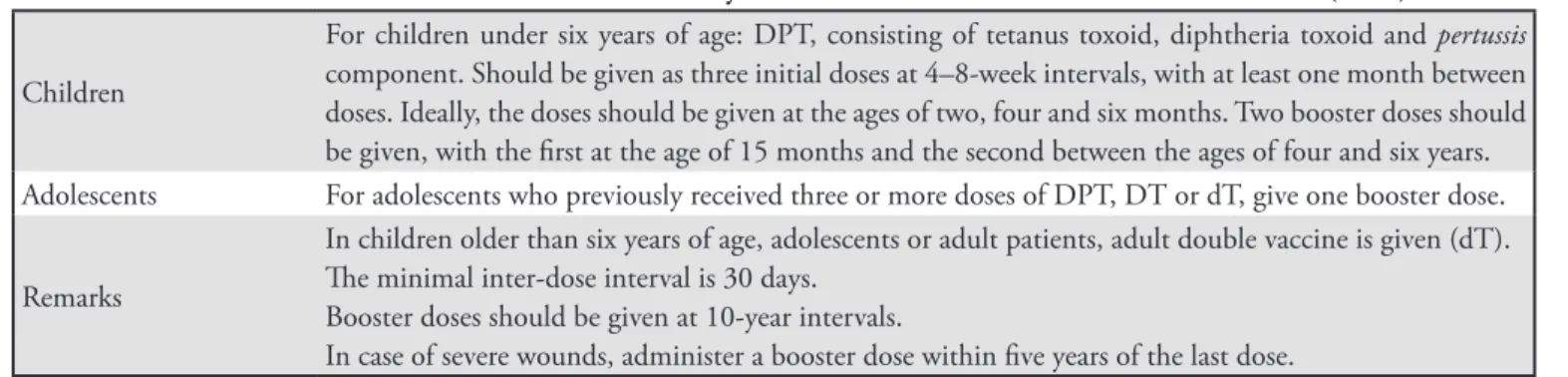
low-cost and efective measure.(1,8,36) Table 3 shows the basic
immunization schedule that was proposed by the Brazilian Ministry of Health and the Brazilian Pediatrics Society.
he addition of vaccinations and appropriate prenatal
care to prevent tetanus neonatorum is possible based on
the health education measures(1) that are summarized in
tables 4 and 5.
From an epidemiologic standpoint, the control of an immunopreventable disease is usually achieved
Table 3 – Basic immunization schedule – Brazilian Ministry of Health and Sociedade Brasileira de Pediatria (2011)
Children
For children under six years of age: DPT, consisting of tetanus toxoid, diphtheria toxoid and pertussis
component. Should be given as three initial doses at 4–8-week intervals, with at least one month between doses. Ideally, the doses should be given at the ages of two, four and six months. Two booster doses should be given, with the irst at the age of 15 months and the second between the ages of four and six years. Adolescents For adolescents who previously received three or more doses of DPT, DT or dT, give one booster dose.
Remarks
In children older than six years of age, adolescents or adult patients, adult double vaccine is given (dT). he minimal inter-dose interval is 30 days.
Booster doses should be given at 10-year intervals.
In case of severe wounds, administer a booster dose within ive years of the last dose. DPT – triple bacterial vaccine (diphtheria, pertussis and tetanus; DT – double infantile vaccine; dT – double adult vaccine.
Sources: Sociedade Brasileira de Pediatria. Departamento de Infectologia. Calendário vacinal: manual 2011/2012. Rio de Janeiro: Sociedade Brasileira de Pediatria; 2011 [atualizado 2011; citado 2011 Out 19]. Disponível em: http://www.sbp.com.br/pdfs/calendario_vacinal_SBP2011.pdf. (41)
Brasil. Ministério da Saúde. Secretaria de Atenção à Saúde. Departamento de Ações Programáticas Estratégias. Caderneta de saúde da criança. 7a ed. Brasília: Ministério da Saúde; 2011.(42)
Brasil. Ministério da Saúde. Secretaria de Atenção à Saúde. Departamento de Ações Programáticas Estratégias. Caderneta de saúde do adolescente. Brasília: Ministério da Saúde; 2011. (43)
Table 4 – Measures that are considered essential for tetanus neonatorum prophylaxis and control
Health education and communication actions
Publish preventive measures using expressions such as “umbilical tetanus”, “navel evil” or “seven-days-evil” (the latter two expression are approximate English translations of popular Brazilian expressions) to provide clear communication to the general population.(9,44)
Prenatal care
Appropriate assessment of the vaccine status, guidance of aseptic delivery, breastfeeding, family planning and hygienic care of the newborn and the umbilical cord stump in particular. here is a direct relationship between partum and postpartum care and neonatal tetanus.(1,39,40)
Vaccination
Full dT schedules vaccinations for every potential childbearing woman—whether pregnant or not— between 12 and 49 years of age; for indigent women, the potential childbearing age should be considered between 10 and 49 years; the Pan-American Health Organization (PAHO) considers this age to be between 15 and 49 years; pregnant women who have not begun the schedule should be started as soon as possible. Immunity is provided to the newborn infant by appropriate maternal immunization with at least two doses. Children from mothers who were vaccinated with three doses within the past ive years have transient passive immunity until two months of life (Table 5). Passive immunity via anti-tetanus serum (ATS) and human anti-tetanus immunoglobulin (HATIG) persist an average of two and three weeks, respectively.(1,39)
Birth care Delivery under rigorous aseptic techniques with the use of sterilized tools and aseptic dressing of the umbilical cord stump.(10)
Postpartum care
Education for health and the use of sterile materials for the care of the umbilical cord and stump. Mothers and responsible persons should be educated at all opportunities regarding the care of the newborn infant and hygienic care of the umbilical stump using 70%. Postpartum consultations provide unique opportunities for the education and detection of disease-predisposing practices and for updating the vaccine calendar for both the mother and child.(1)
by providing vaccination coverage to 70–80% of the susceptible population. In the context of tetanus
neonatorum, strategies to increase vaccination coverage should be considered, with an emphasis on utilizing available opportunities to vaccinate children and adults - including pregnant women who were not appropriately vaccinated - during their visit to a healthcare facility; in this manner, the so-called ‘lost opportunity to vaccinate’ would therefore be prevented.(37,38) In addition, care of the
umbilical cord stump should be emphasized; speciically, the stump should be handled using aseptic techniques both during and after the delivery, and the mother should
be educated on proper postpartum care.(18)
The care of pregnancy and delivery has improved in Brazil; improved social and economic living conditions have led to advances, although some
less-developed regions continue to remain deficient.(39)
Studies in Brazil have identified lost opportunities and poor anti-tetanus coverage in children and pregnant
women at 31.0% and 70.0%, respectively.(38) These
findings indicate that all healthcare professionals who are involved in the care of pregnant women - both in public service and in private clinics - should be aware
of the importance of providing tetanus vaccinations.(38)
In addition, it should be highlighted that neonatal deaths are under-reported and remains a major issue in the Brazilian society, particularly in the northeastern region.(40)
CLOSING REMARKS
Although an early diagnosis of tetanus neonatorum is
essential for adequate therapy and an improved prognosis, the importance of prophylaxis and control of the disease
is clear. Clostridium tetani cannot be eradicated from the
environment; however, tetanus is immunopreventable, and eliminating this disease requires political will (at the level of the SUS) and awareness by healthcare
professionals. he eradication of tetanus neonatorum is
feasible and depends on improving the levels of education and healthcare, particularly prenatal care.
It should be highlighted that measures to prevent
tetanus neonatorum should be sustained in accordance
with each site’s particularities and should rely on active and continued surveillance and reporting. By maintaining high levels of vaccine coverage (which is both efective
and afordable), mortality from tetanus neonatorum can
be eliminated.
RESUMO
A despeito de ser uma doença imunoprevenível, o tétano per-manece ceifando vidas em diferentes regiões do planeta. Se para a doença de origem acidental a ocorrência de novos casos relete a in-suiciente imunização da população, no caso do tétano neonatorum
o problema tem dupla natureza: a precária cobertura vacinal dos
Table 5 – Immunization schedule for potential childbearing women
History of previous vaccination against tetanus
Potential childbearing women
Pregnant* Non-pregnant
No recorded dose Start the vaccination schedule as soon as possible with three doses, with 30–60-day intervals Vaccine schedule of three doses with 30–60-day intervals
Fewer than three recorded doses Complete the three doses as soon as possible at 30–60-day intervals Complete the three doses with 30–60-day intervals hree or more doses, with the last
dose less than ive years ago
No vaccination required No vaccination required
hree or more doses, with the last dose 5–10 years ago
One booster dose No vaccination required
hree or more doses, with the last dose more than 10 years ago
One booster dose One booster dose
*If vaccination is started late, the second dT (double adult) vaccination dose should be given up to 20 days before the anticipated date of birth; this time is necessary for the formation of antibodies and their placental transference to the fetus (passive immunization). In this case, the third dose should be scheduled for after the delivery.
Sources: Secretaria de Vigilância em Saúde. Departamento de Vigilância Epidemiológica. Guia de vigilância epidemiológica. 7a ed. Brasília: Ministério da Saúde; 2009. Tétano neonatal. Caderno 4. p. 27-36. Disponível em: http://portal.saude.gov.br/portal/arquivos/pdf/gve_7ed_web_atual.pdf.(1)
Bassin SL. Tetanus. Curr Treat Options Neurol. 2004;6(1):25-34.(6)
adultos e as diiculdades de acesso ao pré-natal de qualidade, situa-ção agudizada pela extrema gravidade da moléstia nesta faixa etária, cuja letalidade pode chegar a 80%. Deste modo, ainda que seja im-portante o reconhecimento precoce do tétano no recém-nato para seu pronto e adequado tratamento, o aspecto de maior relevância é, indubitavelmente, a implementação de adequadas medidas de
proilaxia e controle. Com base nestas premissas, propõe-se, neste artigo, uma atualização sobre o tétano neonatorum, enfatizando-se, com mais vigor, o tratamento e a prevenção da moléstia.
Descritores: Clostridium tetani; Tétano/prevenção & controle; Recém-nascido
REFERENCES
1. Secretaria de Vigilância em Saúde. Departamento de Vigilância Epidemiológica. Guia de vigilância epidemiológica. 7a ed. Brasília: Ministério da Saúde; 2009. Tétano neonatal. Caderno 4. p. 27-36. Disponível em: http://portal.saude.gov.br/portal/arquivos/pdf/gve_7ed_ web_atual.pdf.
2. Veronesi R. Tétano. In: Veronesi R, Foccacia R, editores. Tratado de infectologia. 3a ed. São Paulo: Atheneu; 2005. 3. Tavares W, Bazin A. Tétano. In: Coura JR, editor.
Dinâmica das doenças infecciosas e parasitárias. Rio de Janeiro: Guanabara-Koogan; c2005. p. 1553-61.
4. Magnussen R. Tetanus. In: Reese RE, Betts RF, editors. A practical approach to infectious diseases. 4th ed. New York: Little, Brown and Company; 1996.
5. Oliveira JS, Campos JA. Tétano. In: Tonelli E, Freire LMS. Doenças infecciosas na infância e adolescência. 2a ed. Rio de Janeiro: Medsi; 2000. p.505-15.
6. Bassin SL. Tetanus. Curr Treat Options Neurol. 2004;6(1):25-34.
7. Vieira LJ, Oliveira MHP, Lefèvre F. Uso da expressão mal-de-sete-dias, por mães de crianças que morreram de tétano neonatal em Minas Gerais (1997-2002). Texto & Contexto Enferm. 2006;15(1):51-9.
8. Blencowe H, Lawn J, Vandelaer J, Roper M, Cousens S. Tetanus toxoid immunization to reduce mortality from neonatal tetanus. Int J Epidemiol. 2010;39 Suppl 1:i102-9.
9. Murahovschi J. Tétano dos recém-nascidos: revisitado. Rev Paul Pediatr. 2008;26(4):312-4.
10. Bazin AR. Estudo clínico e anatomopatológico do tétano neonatal no Estado do Rio de Janeiro [tese]. Rio de Janeiro: Faculdade de Medicina da Universidade Federal do Rio de Janeiro; 1976.
11. Bartlett JG. Tetanus. In: Gorbach SL, Bartlett JG, Blacklow NR, editors. Infectious diseases. Philadelphia: Saunders; c1992.
12. Nida H. Neonatal tetanus in Awassa: retrospective analysis of patients admitted over 5 years. Ethiop Med J. 2001;39(3):241-6.
13. Siqueira-Batista R, Gomes AP, Calixto-Lima L, Vitorino RR, Perez MCA, Mendonça EG, et al. Sepse: atualidades e perspectivas. Rev Bras Ter Intensiva. 2011;23(2):207-16. 14. Fetuga BM, Ogunlesi TA, Adekanmbi FA. Risk factors
for mortality in neonatal tetanus: a 15-year experience in Sagamu, Nigeria. World J Pediatr. 2010;6(1):71-5. 15. Behrman RE, Kliegman RM, Jenson HB, editores. Nelson:
tratado de pediatria. 17a ed. Rio de Janeiro: Elsevier; 2005. 16. Novak RT, homas CG. Tetanus. In: Centers for Disease
Control and Prevention. CDC Health Information for International Travel 2012. Yellow book. New York: Oxford University Press; 2012. Chapter 3. Available from: http:// wwwnc.cdc.gov/travel/yellowbook/2012/chapter-3-infectious-diseases-related-to-travel/tetanus.htm#879 17. Kabura L, Ilibagiza D, Menten J, Van den Ende J.
Intrathecal vs. intramuscular administration of human antitetanus immunoglobulin or equine tetanus antitoxin in the treatment of tetanus: a meta-analysis. Trop Med Int Health. 2006;11(7):1075-81. Review.
18. Blencowe H, Cousens S, Mullany LC, Lee AC, Kerber K, Wall S, et al. Clean birth and postnatal care practices to reduce neonatal deaths from sepsis and tetanus: a systematic review and Delphi estimation of mortality efect. BMC Public Health. 2011;11 Suppl 3:S11.
19. Campbell JI, Lam TM, Huynh TL, SD TO, Tran TT, Nguyen VM, et al. Microbiologic characterization and antimicrobial susceptibility of Clostridium tetani isolated from wounds of patients with clinically diagnosed tetanus. Am J Trop Med Hyg. 2009;80(5):827-31.
20. Ertem M, Cakmak A, Saka G, Ceylan A. Neonatal tetanus in the South-Eastern region of Turkey: changes in prognostic aspects by better health care. J Trop Pediatr. 2004;50(5):297-300.
21. Farrar JJ, Yen LM, Cook T, Fairweather N, Birnh N, Parry J, Parry CM. Tetanus. J Neurol Neurosurg Psychiatry. 2000;69(3):292-301.
22. Puliyel MM, Pillai R, Korula S. Intravenous magnesium sulphate infusion in the management of very severe tetanus in a child: a descriptive case report. J Trop Pediatr. 2009;55(1):58-9.
23. Oliveira RG. Blackbook pediatria. 4a ed. Belo Horizonte: Black Book; 2011.
24. Brasil. Ministério da Saúde. Portal Saúde. Tétano neonatal [citado 2011 Mar 11]; Disponível em: http://portal.saude. gov.br/portal/saude/visualizar_texto.cfm?idtxt=27694. 25. Brasil. Ministério da Saúde. Portal Saúde. Casos
26. Symeonidis S, Symeonidis C, Souliou E, Houiazi E, Diza E, Symeonidis A, Antoniadis A. Serological survey of immunity to tetanus in adult population of Northern Halkidiki, Greece. Eur J Epidemiol. 2003;18(12):1147-52. 27. Evaluation of elimination of neonatal tetanus in Madagascar,
2009. Wkly Epidemiol Rec. 2010;85(37):357-61. 28. Elimination of maternal and neonatal tetanus in Myanmar,
2010. Wkly Epidemiol Rec. 2010;85(43):428-34.
29. Validation of elimination of neonatal tetanus in Turkey by lot quality assurance cluster sampling. Wkly Epidemiol Rec. 2009;84(17):141-6.
30. Validation of neonatal tetanus elimination in selected states--India, 2007. Wkly Epidemiol Rec. 2008;83(21):185-92. 31. Validation of neonatal tetanus elimination in Bangladesh
by lot quality-assurance cluster sampling. Wkly Epidemiol Rec. 2008;83(34):301-7.
32. Validation of neonatal tetanus elimination in Zambia by lot quality-assurance cluster sampling. Wkly Epidemiol Rec. 2008;83(14):119-24.
33. Vandelaer J, Partridge J, Suvedi BK. Process of neonatal tetanus elimination in Nepal. J Public Health (Oxf). 2009;31(4):561-5.
34. Talan DA, Abrahamian FM, Moran GJ, Mower WR, Alagappan K, Tifany BR, et al. Tetanus immunity and physician compliance with tetanus prophylaxis practices among emergency department patients presenting with wounds. Ann Emmerg Med. 2004;43(3):305-14.
35. Jacobsen GW, Hem E, Sigurdsson JA. “No doubt this childhood disease on Vestmannö can be prevented”--neonatal tetanus on the Westman Islands. Tidsskr Nor Laegeforen. 2011;131(7):701-7.
36. Hassan B, Popoola A, Olokoba A, Salawu FK. A survey of neonatal tetanus at a district general hospital in north-east
Nigeria. Trop Doct. 2011;41(1):18-20.
37. Loevinsohn BP. Missed opportunities for immunization during visits for curative care: practical reasons for their occurrence. Am J Trop Med Hyg. 1989;41(3):255-8. 38. Mattos LMBB, Caiafa WT, Bastos RR, Tonelli E.
Oportunidades perdidas de imunização antitetânica de gestantes de Juiz de Fora, Minas Gerais, Brasil. Rev Panam Salud Publica = Pan Am J Public Health. 2003;14(5):350-4. 39. Chrestani MAD, Santos IS, Cesar JA, Winckler LS,
Gonçalves TS, Neumann NA. Assistência à gestação e ao parto: resultados de dois estudos transversais em áreas pobres das regiões Norte e Nordeste do Brasil. Cad Saúde Pública . 2008;24(7):1609-18.
40. Schramm JMA, Sanches O, Szwarcwald CL. Análise da mortalidade por tétano neonatal no Brasil (1979-1987). Cad Saúde Pública. 1996;12(2):217-24.
41. Sociedade Brasileira de Pediatria. Departamento de Infectologia. Calendário vacinal: manual 2011/2012. Rio de Janeiro: Sociedade Brasileira de Pediatria; 2011 [atualizado 2011; citado 2011 Out 19 ]. Disponível em: http://www.sbp.com.br/pdfs/calendario_vacinal_ SBP2011.pdf
42. Brasil. Ministério da Saúde. Secretaria de Atenção à Saúde. Departamento de Ações Programáticas Estratégias. Caderneta de saúde da criança. 7a ed. Brasília: Ministério da Saúde; 2011.
43. Brasil. Ministério da Saúde. Secretaria de Atenção à Saúde. Departamento de Ações Programáticas Estratégias. Caderneta de saúde do adolescente. Brasília: Ministério da Saúde; 2011.