Copyright © 2015 Revista Latino-Americana de Enfermagem This is an Open Access article distributed under the terms of the Creative Commons Attribution Non-Commercial License (CC BY-NC).
This license lets others distribute, remix, tweak, and build upon your work non-commercially, and although their new works must also acknowledge you and be non-commercial, they don’t have to license their derivative works on the same terms.
Corresponding Author:
Maria Isabel da Conceição Dias Fernandes
Universidade Federal do Rio Grande do Norte. Departamento de Enfer-magem
BR 101, Campus Universitário Bairro: Lagoa Nova
CEP: 59072-970, Natal, RN, Brasil E-mail: [email protected]
1 Paper extracted from master’s thesis “Accuracy of clinical indicators of nursing diagnosis excessive fluid volume in patients undergoing hemodialysis”, presented to Universidade Federal do Rio Grande do Norte, Natal, RN, Brazil.
2 MSc, Professor, Departamento de Enfermagem, Universidade Federal do Rio Grande do Norte, Natal, RN, Brazil. 3 RN, Hospital Universitário Onofre Lopes, Universidade Federal do Rio Grande do Norte, Natal, RN, Brazil.
4 Master’s student, Universidade Federal do Rio Grande do Norte, Natal, RN, Brazil. RN, Hospital Universitário Onofre Lopes, Universidade Federal do Rio Grande do Norte, Natal, RN, Brazil.
5 PhD, Associate Professor, Departamento de Enfermagem, Universidade Federal do Ceará, Fortaleza, CE, Brazil. 6 PhD, Adjunct Professor, Departamento de Enfermagem, Universidade Federal do Ceará, Fortaleza, CE, Brazil.
7 PhD, Adjunct Professor, Departamento de Enfermagem, Universidade Federal do Rio Grande do Norte, Natal, RN, Brazil.
Diagnostic accuracy of the defining characteristics of the excessive fluid
volume diagnosis in hemodialysis patients
1Maria Isabel da Conceição Dias Fernandes
2Miclécia de Melo Bispo
3Érida Maria Diniz Leite
4Marcos Venícios de Oliveira Lopes
5Viviane Martins da Silva
6Ana Luisa Brandão de Carvalho Lira
7Objective: to evaluate the accuracy of the defining characteristics of the excess fluid volume nursing diagnosis of NANDA International, in patients undergoing hemodialysis. Method: this was a study of diagnostic accuracy, with a cross-sectional design, performed in two stages. The first, involving 100 patients from a dialysis clinic and a university hospital in northeastern Brazil, investigated the presence and absence of the defining characteristics of excess fluid volume. In the second step, these characteristics were evaluated by diagnostic nurses, who judged the presence or absence of the diagnosis. To analyze the measures of accuracy, sensitivity, specificity, and positive and negative predictive values were calculated. Approval was given by the Research Ethics Committee under authorization No. 148.428. Results: the most sensitive indicator was edema and most specific were pulmonary congestion, adventitious breath sounds and restlessness. Conclusion: the more accurate defining characteristics, considered valid for the diagnostic inference of excess fluid volume in patients undergoing hemodialysis were edema, pulmonary congestion, adventitious breath sounds and restlessness. Thus, in the presence of these, the nurse may safely assume the presence of the diagnosis studied.
Descriptors: Validation Studies; Sensitivity and Specificity; Nursing Diagnosis; Signs and Simptoms; Renal Dialysis.
Rev. Latino-Am. Enfermagem 2015 Nov.-Dec.;23(6):1057-64
DOI: 10.1590/0104-1169.0380.2649
www.eerp.usp.br/rlae
Introduction
Clinical validation of nursing diagnoses is accomplished through measures of the accuracy of
their deining characteristics. From these measures, the characteristics are identiied, among the set of
characteristics, which predict with greater accuracy the occurrence of the investigated diagnosis. In this way, the measures of diagnostic accuracy can distinguish individuals with and without a nursing diagnosis, from
the deining characteristics, thus providing greater
reliability in the diagnostic choice(1).
Accordingly, it can be seen that research on this topic is relevant due to the uncertainty involved in the diagnostic judgment performed by the nurse, since
the interpretation of human responses is conigured as
subjective impressions, so that the correct inference becomes a complex challenge(2). Linked to this, some
nursing diagnoses share identical deining characteristics,
a problem that can generate doubts for nurses in the diagnostic inference(3). The dificulties experienced by students and clinical nurses at the time of diagnostic inference, regarding the number of characteristics
suficient to elucidate the presence of a diagnosis should
also be highlighted.
In view of the problems mentioned that make it
dificult to establish accurate diagnoses, it is necessary
to carry out studies that demonstrate the validity of the relationships between the clinical manifestations and the nursing diagnoses(3), to reduce the inaccuracy in the diagnostic choice, through selection of the nursing diagnosis most suitable for the situations/problems presented by the patient and therefore achieve positive health outcomes.
In addition, studies on diagnostic accuracy are recommended by NANDA International, which states the importance of carrying them out in
speciic populations, because, by virtue of taxonomic globalization, there are numerous contexts identiied
in the investigated populations, with geographic, economic and cultural variations. These differences
interfere with the diagnostic indings, due to variation
of the measures of accuracy, according to the study population(4).
From this perspective, to study the diagnosis
of excessive luid volume in patients with Chronic
Kidney Disease (CKD) was chosen, as there are studies that shows the frequency of this diagnosis in this population(5-7). Furthermore, studies on diagnostic validation are still incipient(3).
The relationship between the physiology of CKD
and excess luid volume should also be noted, as the affected kidney is unable to perform the iltration of nitrogen excreta, electrolytes and luids, with the
performance of hemodialysis not completely replacing kidney function, leading to the accumulation of these
substances. Excess luid affects the health of these
patients and may cause pulmonary edema, congestive heart failure and hypertension, which, if left untreated, can lead to death(6-7).
Thus, the performance to this study is seen as important because its results will assist in the rapid
and precise identiication of the excess luid volume
diagnosis in renal patients undergoing hemodialysis, minimizing the previously mentioned complications and helping to reduce the risk of interventions inconsistent with the reality presented by the patient. It is expected that this study will contribute to the diagnostic inference process of nurses, reducing the uncertainty involved in the diagnostic judgment and making their work more
eficient. It is also hoped that it will contribute to the
teaching/learning of students in the training process regarding the proper techniques of diagnostic inference(8).
In this context, the following question arose: Are
there deining characteristics of the excessive luid volume
diagnosis in hemodialysis patients with a greater degree of accuracy? In response to this question, the aim was
to evaluate the accuracy of the deining characteristics of the excess luid volume nursing diagnosis of NANDA
International, in patients undergoing hemodialysis.
Method
This was a study of diagnostic accuracy, with a cross-sectional design, performed in two stages. In
the irst, the deining characteristics of the excess luid
volume nursing diagnosis of NANDA International were
identiied, in patients undergoing hemodialysis. In the
second stage, the diagnostic inference was performed by specialist nurses.
In the irst stage, the sample consisted of 300
patients with CKD, undergoing hemodialysis, treated during one month in a hemodialysis clinic and a university hospital of northeastern Brazil. The following parameters were used for calculating the sample, a
conidence level of 95%, estimated sensitivity of the most important characteristics of 85%, length of the constructed conidence intervals of 10%, assuming that a proportion of 50% of the population presented the
The calculated sample size was 98 individuals, opting for rounding up to 100 patients, recruited consecutively by convenience. For the recruitment, in
the irst hour of the hemodialysis treatment, one patient was randomly chosen, selecting one that fulilled the
inclusion and exclusion criteria explained below.
The inclusion criteria were: to present CKD and be undergoing hemodialysis treatment; to be,
at the moment of data collection, in the irst hour of
hemodialysis; and to be aged 18 years or over. The exclusion criteria were: having impaired physical and mental conditions that prevented the collection of all items of the instrument.
The data collection of the irst stage was carried
out between December 2012 and April 2013, through the application of a form type instrument, based
on the deining characteristics of the excess luid
volume diagnosis of NANDA International, including socioeconomic and clinical data, general physical exam, laboratory exams and follow-ups. These data measured, with appropriate reliability, in the 100 patients in the
sample, the 23 deining characteristics of the diagnosis
studied present in NANDA International and are presented in the results of this study(4).
For the construction of the instrument, a review of
the operational deinitions of the deining characteristics of the excess luid volume diagnosis was carried out,
from a previously conducted study(9). The content of the instrument was validated by two nurse teachers, specialists in Nursing Care Systematization, with their suggestions included. Subsequently, a pre-test of the
instrument was carried out, with 10% of the study sample, for the veriication of possible gaps, without the
need for changes to the instrument.
It should be highlighted that the data collection of
the irst stage was developed by eight undergraduate
students of the nursing degree course, adequately trained for the standardization of the measurement methods. The training was delivered over 10 hours, divided into
two meetings. In the irst meeting, the theme of the study, the excess luid volume nursing diagnosis and its deining characteristics were discussed. In the second,
the research instrument was presented.
Subsequently, the data obtained from the 100 patients were analyzed for the presence or absence of
the deining characteristics of the excess luid volume
diagnosis. Next, 100 spreadsheets were constructed using Microsoft Excel 2010, one for each patient studied,
containing the list of deining characteristics of the
nursing diagnosis in question, listed as present or absent.
The second step constituted the diagnostic inference
process, with the invitation of ive diagnostic nurses,
specialists in nursing diagnoses and/or with experience in the clinical practice or teaching of nephrology. To choose these specialists training was conducted, explaining diagnostic accuracy, clinical rational, clientele
with CKD, excess luid volume diagnosis and operational deinitions of the components of the diagnosis.
The training with the diagnostic nurses was necessary because of the absence of a gold standard for
identiication of nursing diagnoses, taking into account
that human responses can not be measured by devices
that ensure the accurate identiication of a diagnosis.
Therefore, the training was essential for the diagnostic nurses, to reduce the impact of the absence of a gold standard. It was also important to check the diagnostic inference capacity after the training(1).
Accordingly, the diagnostic ability of the diagnostic nurses was estimated by applying simulated case histories, containing the characteristics of the studied diagnosis. The evaluation of the responses was based
on four different aspects: eficiency, trend, false positive
rate and false negative rate. Only three were selected
and composed the inal sample for the development of
the second stage of the study.
After the diagnostic nurse participants were selected for the second stage of the study, they received the 100 spreadsheets containing the medical history and a list
of the deining characteristics of the nursing diagnosis
studied, with their presence or absence marked in the
irst stage. With this, based on the inventory of deining
characteristics listed above for each patient and through clinical rational and diagnostic experience, the three diagnostic nurses judged the presence or absence of
excess luid volume in the patients investigated.
Subsequently, in order to verify the correlation between the three diagnostic nurses regarding the
presence or absence of the excess luid volume nursing
diagnosis, the response of each diagnostician was compared and, when in disagreement, the decision of the majority was established, considering the diagnosis
present when two of the three diagnosticians identiied
it. This stage of the study took place between August and September 2013.
Data were analyzed based on descriptive and inferential statistics, using the IBM SPSS Statistic, version 19.0, program, calculating the relative and absolute frequencies. To investigate the accuracy of the
predictive values were calculated based on the inference of the occurrence of the diagnosis studied, using a
80% cutoff point for the deining characteristics, with
the results above this point considered relevant. The positive and negative likelihood ratio and Diagnostic Odds Ratio (DOR) were also calculated to verify the
statistical signiicance of each deining characteristic.
Sensitivity (Se) represents the probability of correct
identiication of a clinical indicator in patients with
the nursing diagnosis. For its calculation the following
formula was used: Se = a/ a + c. Speciicity (Sp) is the probability of correct identiication of the absence of an
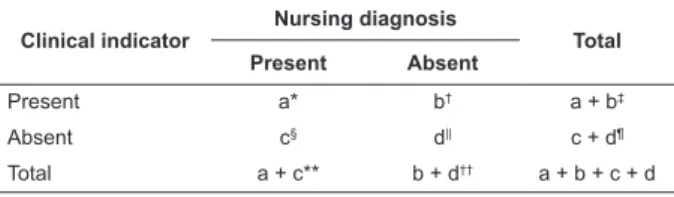
indicator in a patient without the nursing diagnosis. For its calculation the following formula was used: Sp = d/ b + d. Table 1 shows the calculation of the accuracy of the characteristics of a diagnosis(1).
Table 1 - Data for calculating the diagnostic accuracy of a clinical indicator. Fortaleza, CE, Brazil, 2012
Clinical indicator
Nursing diagnosis
Total Present Absent
Present a* b† a + b‡
Absent c§ d|| c + d¶
Total a + c** b + d†† a + b + c + d
*a = True positives †b = False positives
‡a + b = number of positive results §c = False negatives
||d = True negative
¶c + d = number of negative results
**a + c = number of individuals with the diagnosis ††b + d = number of individuals without the diagnosis
It should be highlighted that the judgment conducted regarding the presence and absence of the diagnosis was established by the diagnostic nurses in the second stage of the study. From the presence and
absence of the diagnosis and deining characteristics,
the accuracy could be calculated, as previously shown. The performance of the study was approved by the Research Ethics Committee of the institution responsible
through authorization No. 148.428, under the Certiicate
of Presentation for Ethical Assessment (CAAE) No. 08696212.7.0000.5537.
Results
A total of 100 patients undergoing hemodialysis
were evaluated, the majority (52%) were female, 50% of brown skin color, 57% with partners and 55%
retired. The mean age was 51.1 years (± 16.5), with a median of 48 months of kidney disease and 28 months undergoing treatment.
The excess luid volume diagnosis was present in the majority of the sample (82%), in the remaining 18% of the sample the diagnosis was found to be absent. The frequencies of the deining characteristics present in the sample were: azotemia (100%), decreased hematocrit (96%), altered electrolytes (88%), intake exceeds output (88%), anxiety (85%), edema (81%), decreased hemoglobin (73%), oliguria (63%), blood pressure changes (52%), increased central venous pressure (47%), positive hepatojugular relex (46%), restlessness (44%), weight gain (42%), pulmonary congestion (42%), adventitious breath sounds (40%), jugular vein distension (38%), orthopnea (30%), dyspnea (25%), changes in mental status (19%), pleural effusion (15%), anasarca (8%), change in respiratory pattern (4%), and S3 heart
sound (2%).
Regarding the diagnostic accuracy of the deining characteristics of the excess luid volume diagnosis,
the characteristic with greater sensitivity was edema
(92.62%), with statistically signiicant likelihood values and DOR. The deining characteristics altered
electrolytes and intake exceeds output, although within
the 80% cutoff point (91.46%), need to be evaluated
cautiously, as the positive likelihood ratio was not
statistically signiicant, including the value one in their conidence intervals.
Furthermore, although the characteristics decreased hematocrit, anxiety and azotemia presented sensitivities within the cutoff point established, they did not present
statistically signiicant likelihood values and DORs, therefore,
they were not considered important characteristics to identify of the diagnosis studied.
Among the 23 deining characteristics, three revealed speciicity for the excess luid volume diagnosis,
these being: pulmonary congestion, adventitious breath
sounds and restlessness. In addition to high speciicity, they presented statistically signiicant likelihood values
and DORs.
Anasarca, weight gain and change in respiratory
pattern presented speciicity and positive predictive values of 100%. However, these should be treated with
caution, considering the inability to determine their positive likelihood values and DORs.
The characteristics S3 heart sound, jugular vein distention, pleural effusion, dyspnea and change in
mental status, despite having high speciicity, above the
cutoff, were not considered good characteristics in this
study due to lack of statistically signiicant likelihood
Table 2 – Measures of accuracy of the deining characteristics of the excess luid volume nursing diagnosis, in patients
undergoing hemodialysis. Natal, RN, Brazil, 2014
Defining characteristics Se* Sp † PPV‡ NPV§ PLR|| (95% CI) NLR¶ (95% CI) DOR** (95% CI)
Restlessness 50.00 83.33 93.18 26.78 3.00(1.04-8.61) 0.60(1.04-8.61) 5.00(1.34-18.58)
Anasarca 9.75 100.00 100.0 19.56 - 0.90(0.84-0.96)
-Anxiety 87.80 27.77 84.70 33.33 1.21(0.90-1.63) 0.43(0.17-1.12) 2.76(0.81-9.42)
Azotemia 82.00 - - -
-Pulmonary congestion 50.00 94.44 97.61 29.31 9.00(1.32-61.2) 0.52(0.41-0.67) 17.00(2.16-133.74)
Pleural effusion 15.85 88.88 86.66 18.82 1.42(0.35-5.77) 0.94(0.78-1.14) 1.50(0.30-7.35)
Dyspnoea 28.04 88.88 92.00 21.33 2.52(0.65-9.75) 0.80(0.65-1.00) 3.11(0.66-14.64)
Jugular vein distension 42.68 83.33 92.10 24.19 2.56(0.88-7.41) 0.68(0.52-0.90) 3.72(1.00-13.86)
Edema 92.68 72.22 93.82 68.42 3.33(1.58-7.04) 0.10(0.04-0.23) 32.93(8.75-123.85)
Altered electrolytes 91.46 27.77 85.22 41.66 1.26(0.94-1.69) 0.30(0.10-0.85) 4.12(1.13-14.96)
Weight gain 51.21 100.0 100.00 31.03 - 0.48(0.39-0.60)
-Decreased hematocrit 96.34 5.55 82.29 25.00 1.02(0.90-1.14) 0.65(0.07-5.97) 1.54(0.15-15.81)
Decreased hemoglobin 75.60 38.88 84.93 25.92 1.23(0.83-1.82) 0.62(0.31-1.25) 1.97(0.67-5.77)
Intake exceeds output 91.46 27.77 85.22 41.66 1.26(0.94-1.69) 0.30(0.10-0.85) 4.12(1.13-14.96)
Change in mental status 19.51 83.33 84.21 18.51 1.17(0.38-3.59) 0.96(0.76-1.21) 1.21(0.31-4.69)
Blood pressure changes 54.87 61.11 86.53 22.91 1.41(0.76-2.60) 0.73(0.47-1.14) 1.91(0.67-5.42)
Change in respiratory pattern 4.87 100.00 100.00 18.75 - 0.95(0.90-0.99)
-Oliguria 65.85 50.00 85.71 24.32 1.31(0.80-2.14) 0.68(0.39-1.18) 1.92(0.68-5.40)
Orthopnea 32.92 83.33 90.00 21.42 1.97(0.67-5.80) 0.80(0.62-1.03) 2.45(0.65-9.21)
Increased central venous pressure 51.21 72.22 89.36 24.52 1.84(0.85-3.99) 0.67(0.47-0.97) 2.73(0.89-8.35)
Positive hepatojugular reflex 48.78 66.66 86.95 22.22 1.46(0.73-2.91) 0.76(0.52-1.13) 1.90(0.65-5.56)
Adventitious breath sounds 47.56 94.44 97.50 28.33 8.56(1.25-58.29) 0.55(0.43-0.70) 15.41(1.95-121.31)
S3 heart sound 1.21 94.44 50.00 17.34 0.21(0.01-3.34) 1.04(0.93-1.17) 0.20(0.01-3.52)
*Se = Sensitivity †Sp = Speciicity
‡PPV = Positive predictive value §NPV = Negative predictive value ||PLR= Positive likelihood ratio ¶NLR = Negative likelihood ratio **DOR = Diagnostic Odds Ratio
Discussion
Regarding the prevalence of the diagnosis
investigated, 82% of the patients undergoing hemodialysis presented excess luid volume. According
to the literature, patients with CKD have higher chances
of presenting this diagnosis, due to luid overload
and uremic syndrome, inherent in impaired renal function(6-7,10). In this way, luid overload is a problem present in these patients and is related to factors that endanger the lives of the patients affected(11-13).
Studies reveals that luid overload is associated
with increased risk of death from cardiovascular disease and lower survival, due to its effects on systemic arterial pressure and overload of volume in the heart, and can accelerate the progression of decline in renal function(12,14). Therefore, in view of the impact of luid retention, the relevance of its control can be perceived.
However, studies show that it is very dificult for patients
to follow the recommended restrictions for water control. Evidence shows that measures of encouragement
provided by health professionals involved in the dialysis
treatment have signiicant association with improved
adherence to the therapeutic control(15).
Regarding the frequency of the deining
characteristics of the diagnosis studied, those that
obtained a frequency above 50% in the population were
highlighted: azotemia, decreased hematocrit, altered electrolytes, intake exceeds output, anxiety, edema, decreased hemoglobin, oliguria and blood pressure change.
Among these, despite not being the characteristic with the highest prevalence rate, edema presented the most sensitivity for the occurrence of the excess
luid volume diagnosis (92.68%). In contrast to the
results observed in this study, it should be noted that another study found that the isolated analysis of this characteristic had limited value in the diagnosis of excess
luid, however, its detection is of paramount importance,
the identiication of cardiovascular risk factors, relevant
in predicting mortality in dialysis patients(16).
Regarding the characteristics speciic to the excess luid volume diagnosis, pulmonary congestion was identiied. It is known that the overload of body luid
can cause impairment of pulmonary function for CKD patients, due to a possible increase in intravascular pressure in the lungs, in addition to increased pulmonary capillary permeability, and is associated with pulmonary congestion and adventitious breath sounds. It should be noted that, pulmonary congestion is a major cause of hospitalization of patients undergoing hemodialysis and
is associated with excessive consumption of luids and
foods high in sodium(17).
An international study revealed that pulmonary congestion in chronic renal failure patients undergoing hemodialysis is an insidious and very present problem and, although there is a reduction of congestion after the dialysis, approximately one third of patients still
presents accumulation of luid after the treatment. The
study also highlights that the existence of congestion in these patients is associated with poor physical performance(18) and is a strong predictor of death and cardiovascular events(19). Patients with very severe pulmonary congestion have a 4.2 times higher risk of death and 3.2 times higher risk of cardiac events(20).
The clinical indicator restlessness, also considered
speciic to the diagnosis studied, could be explained
due to respiratory distress caused by the pulmonary
congestion identiied in the renal patients, decreasing
hematosis, with consequent reduction in the amount of oxygen carried to the muscles and brain. However, the literature cites increased calcium in the body as the cause of restlessness(21), a common problem in the clientele undergoing hemodialysis.
It should also be noted that in this study, the characteristics azotemia, decreased hematocrit, altered electrolytes, intake exceeds output, anxiety, decreased hemoglobin, oliguria and blood pressure changes, despite presenting high prevalence in the sample
studied, were not identiied as accurate characteristics to establish the presence of excess luid volume.
This result has a signiicant importance, particularly
in relation to the characteristics azotemia, decreased hematocrit, decreased hemoglobin and anxiety, since the occurrence of these, according to the literature, is
independent of the presence of excess luids, occurring
due to factors inherent to the kidney disease itself(22-23). In contrast, the characteristics altered electrolytes, intake exceeds output, oliguria and blood pressure
change, although not identiied as accurate, present a theoretical relationship with excess luid volume.
Regarding altered electrolytes, it is known that increased
dietary sodium intake predisposes to greater luid
intake and promotes the development of hypertension in these patients. Therefore, the daily intake of less than two grams of sodium is recommended. However, the literature reveals that this recommendation has low adherence for these individuals(24).
Finally, oliguria is commonly present in renal patients undergoing hemodialysis, because of the
ineficiency of the renal system to ilter the nitrogen excreta and liquids, which inluences the retention of
these substances, and decreases urine produced per day. One investigation showed that urinary excretion below 0.3 ml/kg/h, over an observation period of less
than ive hours, leads to a high risk of mortality(25). Given the above, it is emphasized that patients
with CKD are susceptible to developing excess luid
volume and present signs and symptoms that allow
an accurate identiication of the diagnosis, therefore,
the clinical applicability of this study is focused on the correct diagnostic choice made by nurses, when they have this information.
A limitation in the development of this study was
the fact that the study was carried out with a speciic
population, chronic renal failure patients undergoing hemodialysis, limiting the generalization of the results to similar populations only. Thus, diagnostic accuracy studies should be encouraged for other populations, considering that research on this topic will increase the
scientiic nursing knowledge and assist in the clinical
practice.
Conclusion
From this study it was found that edema was the
more sensitive deining characteristic for the excess luid volume nursing diagnosis. Regarding speciicity for
this diagnosis, three characteristics were highlighted: pulmonary congestion, adventitious breath sounds and restlessness. These indicators presented statistically
signiicant likelihood values and DORs.
The deining characteristics identiied as accurate in this study can assist nurses in the excess luid volume
diagnostic inference process in patients undergoing hemodialysis, enabling greater security in the choice
of diagnosis. The beneits generated for patients with
CKD should also be mentioned, as by identifying the
volume diagnosis, the results and interventions will
present a greater chance of correct targeting and eficacy.
References
1. Lopes MVO, Silva VM, Araújo TL. Methods for establishing the accuracy of clinical indicators in predicting nursing diagnoses. Int J Nurs Knowl. 2012;23:134-9.
2. Lunney M. Critical thinking and accuracy of nurse’s diagnoses. Int J Nurs Terminol Classif. 2003;14(3):96-107.
3. Mendes LC, Sousa VEC, Lopes MVO. Accuracy of diagnosis of the defining characteristics of ineffective family therapeutic regimen management. Acta paul enferm. 2011;24(2):219-24.
4. Herdman TH. Diagnósticos de Enfermagem da NANDA: definições e classificação – 2012/2014. 2. ed. Porto Alegre: Artmed; 2013.
5. Costa AGS, Santos RMB, Vitor AF, Araújo TL. Nursing diagnosis of patients in treatment of hemodialysis in teaching hospital. Rev Enferm UFPE On Line [Internet]. 2010 [acesso 20 abr 2014];4(3):1477-83. Disponível em: http://bases.bireme.br/cgibin/wxislind.exe/iah/ online/?IsisScript=iah/iah.xis&src=google&base=BDEN F&lang=p&nextAction=lnk&exprSearch=20348&indexS earch=ID.
6. Dallé J, Lucena AF. Nursing diagnoses identified in hospitalized patients during hemodialysis. Acta Paul Enferm. 2012;25(4):504-10.
7. Frazão CM, Medeiros AB, Silva FB, Sá JD, Lira AL. Nursing diagnoses in chronic renal failure patients on hemodialysis. Acta Paul Enferm. 2014;27(1):40-3. 8. Pascoal LM, Lopes MVO, Silva VM, Beltrão BA, Chaves DBR, Santiago JMV, et al. Ineffective breathing pattern: defining characteristics in children with acute respiratory infection. Int J Nurs Knowl. 2014;25(1):54-61.
9. Boery RNSO, Guimarões ECQCP, Barros ALBL. Operational definitions of the defining characterístics of the nursing diagnosis Fluid Volume Excess. Acta Paul Enferm. 2005;18(2):197-202.
10. Silva GLDF, Thomé EGR. Complicações do procedimento hemodialítico em pacientes com insufuciência renal aguda: intervenções de enfermagem. Rev Gaúch Enferm. 2009;30(1):33-9.
11. Jha V, Garcia-Garcia G, Iseki K, Li Z, Naicker S, Plattner B, et al. Chronic kidney disease: global dimension and perspectives. Lancet. 2013;382:260-72.
12. Kalantar-Zadeh K, Regidor DL, Kovesdy CP, Wyck
DV, Bunnapradist S, Horwich TB, et al. Fluid retention
is associated with cardiovascular mortality in patients undergoing long-term hemodialysis. Circulation. 2009;119(5):671-9.
13. Pivato DR, Abreu IS. Principais causas de hospitalização de pacientes em hemodiálise no município de Guarapuava, Paraná, Brasil. Rev Gaúch Enferm. 2010;31(3):515-20.
14. Tsai YC, Tsai JC, Chiu YW, Kuo HT, Chen SC, Hwanget
SJ, et al. Is fluid overload more important than diabetes in renal progression in late chronic kidney disease? PLoS ONE. 2013;8(12):e82566.
15. Yokoyama Y, Suzukamo Y, Hotta O, Yamazaki S, Kawaguchi T, Hasegawa T, et al. Dialysis staff encouragement and fluid control adherence in patients on hemodialysis. J Nephrol Nurs. 2009;36(3):289-98. 16. Agarwal R, Andersen MJ, Pratt JH. On the importance of pedal edema in hemodialysis patients. Clin J Am Soc Nephrol. 2008;3(1):153-63.
17. Halle MP, Hertig A, Kengne AP, Ashuntantang G, Rondeau E, Ridel C, et al. Acute pulmonary edema in chronic dialysis patients admitted into an intensive care unit. Nephrol Dial Transplant. 2012;27:603-7.
18. Enia G, Torino C, Panuccio V, Tripepi R, Postorino R, Aliotta R et al. Asymptomatic pulmonary congestion and physical functioning in hemodialysis patients. Clin J the Am Soc Nephrol. 2013;8:1343-48.
19. Zoccali C, Tripepi R, Torino C, Bellantoni M, Tripepi G, Mallamaci F. Lung congestion as a risk factor in end-stage renal disease. Blood Purif. 2013;36:184–91. 20. Zoccali C, Torino C, Tripepi R, Tripepi G, D’Arrigo G, Postorino M, et al. Pulmonary congestion predicts cardiac events and mortality in ESRD. Clin J Am Soc Nephrol. 2013;24:639–46.
21. Carroll R, Matfin G. Endocrine and metabolic emergencies: hypercalcaemia. Ther Adv Endocrinol Metab. 2010;1(5):225-34. 22. Azevedo DF, Correa MC, Botre L, Mariano RM, Assis RR, Grossi L, et al. Sobrevida e causas de mortalidade em pacientes hemodialíticos. Rev Méd Minas Gerais [Internet]. 2009 [acesso 10 jun 2014];19(2)117-22. Disponível em: http://rmmg.org/ artigo/detalhes/461.
23. Fontenele RM, Cavalcante TLB, Albuquerque JOL, Feitosa LGGC. A percepção dos enfermeiros sobre ganho de peso interdialítico dos pacientes em hemodiálise. Saúde Coletiva. 2011;8(51):155-9.
25. Mandelbaum T, Lee J, Scott DJ, Mark RG, Malhotra A, Howell MD, et al. Empirical relationships among oliguria, creatinine, mortality, and renal replacement therapy in the critically ill. Intensive Care Med. 2013;39(3):414–9.
Received: Aug. 4th 2014