The family experience of care in chronic situation
The family experience of care in chronic situation
Roseney Bellato1, Laura Filomena Santos de Araújo2, Janderléia Valéria Dolina3, Cleciene dos Anjos Musquim4, Geovana Hagata de Lima Souza Thaines Corrêa5
Experência familiar de cuidado na situação crônica Experiencia familiar de lo cuidado en situación crónica
1,2 Faculdade de Enfermagem. Universidade
Federal de Mato Grosso, Cuiabá, MT, Brazil.
3,4,5 Nurse. Masters in Nursing. Member
of Research Group “Nursing, Health and Citizenship” in University Federal of Mato Grosso, Cuiabá, MT, Brazil.
DOI: http://dx.doi.org/10.1590/S0080-623420160000300012
ABSTRACT
An essay that aims to relect on the family experience of care in chronic situation, incre-asing the understanding of the family as the primary caregiver. It is based on comprehen-sive approach in studies conducted in three matrix searches from family care experiences. We have taken three axes to organize our relections: a) conformation of family care in chronic situation, highlighting the multiple costs incurred to the family, which can exhaust the potential of care and establish or increase its vulnerability if it is not backed by networks support and sustenance; b) family rearrangements for the care, giving visibi-lity to care cores in which many loved family members share the care, dynamic, plural and changeable way; c) self care modeling family care, pointing to the range of possibilities of the person taking care of diseased conditions supported by people close to them. We learn that the family takes care of itself in everyday life and in the illness experience, creating networks that can provide you support and sustenance. hus, professionals in health practices should shape up in a longitudinal and very personal way, by reference to the family care, supporting him in what is his own.
DESCRIPTORS
Health care; Family; Family caregivers; Chronic disease; Qualitative research.
Autor Correspondente: Roseney Bellato
Avenida Fernando Corrêa da Costa, 2.367 Boa Esperança
CEP 78068-900, Cuiabá, MT, Brazil [email protected]
Received: 26/03/2015 Approved: 14/11/2015
ORIGINAL ARTICLE
INTRODUCTION
OutliningOurvisiOn
his essay tries to highlight some concepts of family ca-re that have emerged from compca-rehensive approach studies whose participants were patients and families who were experiencing chronic conditions(1). he relective efort we
made is based on studies carried out by us over the course of seven years, consisting of three major matrix surveys. Some are referred to here, such as publication in an article and as a chapter of a book, so as to make it clear that this knowled-ge has been gradually developed by us.
We begin from the assumption that families take care of their members, not only to provide and/or recover health, but also to take care of life and for life. We are particularly interested in giving visibility to this type of care in its dife-rent forms and places – be it self-care, family environment or through the creation of support networks.
he creation of support networks, composed of people who are close to patients, such as relatives and friends, is necessary in searching for and obtaining resources, in sui-cient quantity and quality, in various situations of provision of care experienced over time. In this way, families attempt to ensure the “best in health” for the provision of care to all their members.
Support networks composed of less close relationships and less afectivity, namely those who are outside the family circle, are also necessary; they occur more occasionally, but are no less important for ensuring care maintenance. Heal-th professionals and services may be part of Heal-this network, as well as other institutions. hus, we can state that diferent levels are implicated and have diferent efects in the search for the provision of care by families, especially in the expe-rience of chronic conditions.
We considered situations chronic conditions to be those that involve both illness and all care actions required, and the efects of the illness itself and the search for care throu-ghout the lives of patients and their families, which has a certain duration and which we will discuss below.
he aim of this essay was to examine the family expe-rience of care in chronic conditions, expanding the un-derstanding of families as primary care providers. We organized our examination based on three axes: formation of family care in chronic conditions; family rearrangements for care; and self-care shaping family care.
Our purpose was to call on health professionals, espe-cially nurses, to relect on the participation of health servi-ces in networks built by families and emphasize the need for professional practices to be shaped by family care, gi-ving it support. hen perhaps professional practices will be conigured as personal, and as a desirable means of care of families and become more efective.
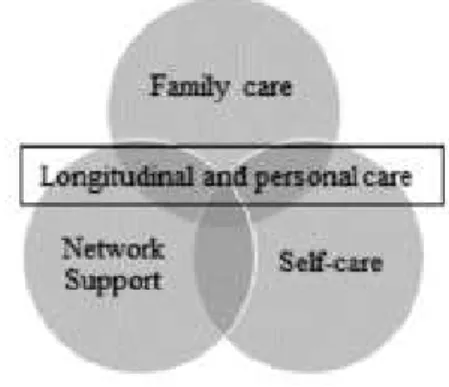
Figure 1 provides a synthesis into a single image of our understanding of care in chronic conditions.
Figure 1 - Rosette of care in chronic conditions.
FORMATION OF FAMILY CARE IN CHRONIC CONDITIONS
As pointed out above, it is our understanding that fa-milies are the primary caregivers for their members, since it is within this environment that a host of care actions is conceived and provided to family members throughout their lives. We mean by “host” the various modes of ex-pression of these care actions, which are generally invisi-ble, because they are subtle, diverse and multiple, going far beyond the way this is usually considered by the health sector.
Families provide care for life, ranging from “emotional interactions necessary for the full development of mental health and the personalities of their members” to learning daily care actions for the body and the environment, as well as those required in cases of illness (2).
However, it is important to mention that families pro-vide care with the resources available to them. his care potential is weakened in situations of vulnerability, which may continue and/or have considerable impact on concrete possibilities for care. herefore, as the main care providers, families face demands for care in chronic situations, some-times by more than one family member. Regarding this ex-perience, some studies(1,3-5) have shown the importance of
individual provision of care on a continuous basis, whose maintenance requires great efort from families.
If the provision of care falls upon families, it is impor-tant to understand how they experience chronic condi-tions, considering the possibilities of providing daily care according to the diferent needs that emerge, and also the way they maintain care over time.
Still regarding studies carried out from that perspective, we support authors(6) who have spoken about the
impor-tance of considering families as a whole when rearranging their organization, which results in new routines and res-ponses in view of chronic conditions; this movement and its consequences fall upon all family members.
su-The family experience of care in chronic situation
ch comprehensiveness is set in motion by families that take care of their members brought us to shift the discussion from the context of health services to the diferent contexts of daily life, such as the living spaces where illness and care are experienced by these individuals.
Routine is considered as the main space-time of life ex-periences, where things happen and make sense, and is re-ferred to as “a sense of belonging to a place,” which is actu-alized by the home. Family routines are where this process occurs in terms of both repetition and sudden and/or uns-table events, which need to be rearranged according to the possibilities for each individual and each family (8). Among
these events, illnesses mobilize energy and family resources when it comes to the provision of care. he efects of illness need to be managed according to all possible situations of family members individually and families as a whole, whi-ch indicates the unique conditions experienced by family members(8).
he naturalization of the care experience by families, which is essential to life, culminates in the allocation of
moral responsibility for care, resulting from family history and socialization of family members, among other factors. hus, it concerns family values and afectivity between pe-ople(9). However, this moral responsibility of families
inclu-des situations in which health services and professionals have an ethical or legal obligation to provide responses, which are often not very efective. As a result, the provision of care by families is a lonely experience.
A study carried out with a family that was experien-cing the illness of two teenagers with sickle-cell anemia (10)
showed the professionalization of the mother in the nur-sing ield, with the aim of meeting the health care needs of her children. Families take over several professional care actions at home, and such actions are sometimes indiscri-minately passed on to mothers. Likewise, responsibilities originally belonging to professionals are also passed on, and they distance themselves from comprehensive care of children and families.
Some studies (4, 10-11) have shown that health services
usually act during periods of “exacerbation” of disease, and are requested by families for speciic events, and therefore respond in a timely manner. Nevertheless, chronic diseases present their own “highs and lows, movements and den-sities, expressed in countless ways, in an unstable manner and moving back and forth between the poles of crisis and normality”(8), and are experienced by individuals and
fami-lies without a speciic path between those poles. Famifami-lies provide daily care, which certainly includes care in com-promising conditions; they must manage their own, fre-quently scarce, resources in order to provide that care(8,12).
herefore, we highlight that families must be considered as an element that also requires care, and for this reason, they must be assisted with addressing the implications of disea-ses and diiculties that arise from everyday care (5).
However, even in situations of little support for families and under the moral responsibility allocated to them, social and legal obligations for care continue to be assigned to families. Article 3 of the Senior Citizens Statute(13) holds
families responsible for care of the elderly, placing them in irst place for this obligation, followed by communities, society and the State. However, neither the legal text nor public policies have ensured efective conditions for sup-porting families in facing this legal delegation of respon-sibility.
Children and teenagers are situated on the fragile si-de of life, and guarantees for them are encosi-ded in Brazi-lian law - the Federal Constitution and the Statute of the Child and Adolescent. In Article 4 of that Statute, families are the irst entities held responsible for the achievement of human rights, food, education, sport, leisure and professio-nalization, among others(14). Similarly, such provisions do
not explicitly guarantee concrete conditions for families to take care of children and adolescents.
In view of this commonly imputed liability, families may encounter situations of little support for provision of care that reduce their potential(8). his depletion of
poten-tial is even more challenging in cases of chronic diseases, given care needs that are renewed, increased and longer--lasting.
hus, various expenses are covered by families, re-sulting from the illness itself and countless demands for provision of care. Broadly speaking, these expenses are pre-sented as: a) wear - understood as the energy and potential of relatives who wear out as a result of caretaking eforts; b) expenditures - considered as increases in the eforts requi-red that go beyond family routine, which are all the more essential to the provision of care, resulting from recurrent exacerbation of illnesses; and c) waste - understood as the narrowing down of possibilities for family life projects, gi-ven the lack of support for families for extended periods of care.
hese expenses are of diferent natures, and can be emotional, economic, or social, resulting from decreases in the potential for family and individual care. In the life of families, these elements strengthen one another, producing negative cascade efects and creating movements that con-verge and intensify family sufering. hey create a vicious circle in which families receive little support(5).
hus, family vulnerability is created or increased as a result of lack of support for family care on the part of heal-th services and professionals, since family potential decrea-ses over time in view of care demands, which are constantly renewed and increased in chronic conditions.
he deinition of chronic conditions proposed by the World Health Organization(15) refers to health
care.’ Likewise, it requires the understanding of life events that place individuals in circuits of vulnerability, more or less wide, which produce several inlexions and changes in their potential for care - their own and that of their fami-lies” (16). he circuits of vulnerability include a triad of
ele-ments related to the following aspects: a) individual, which alludes to values, beliefs, afections, and impulses; b) social, referring to living and working conditions, culture, econo-mic status, environment, and relationships among genera-tions, gender, and class, among others; and c) programma-tic, as it refers to elements that structure and qualify the health system(17).
People are not vulnerable beforehand, but they can be vulnerable at certain times. hus, vulnerability is not a hu-man condition of “being,” but rather a contingency, “being in a state of.”
Based on the consideration of families as primary care units that also need to be cared for, we consider that their potential can be an important analyzer of vulnerabilities, especially in situations that require continuous, extended and renewed care (8).
Such an understanding is important for health, since areas of vulnerability arise, to a greater or lesser extent, as a result of the support that health professionals and services may provide to individuals and families, who face countless efects of this experience. herefore, vulnerability has dife-rent durations and intensities, and is neither homogeneous, nor does it arise in speciic situations. One can be vulnera-ble at certain times for the management of speciic aspects of life, but not for others; hence, we speak of vulnerabilities in the plural and in context.
It seems that “support” in the experience of sickness and care provision can be an essential element, in both the genesis and the possibility of overcoming vulnerabilities. For such support, the potential for care is implied and rein-forced in movements of positivity or negativity, made up of diferent levels - personal, family, community and health system.
he formal responsibilities of the health system, inclu-ding ethical and legal obligations regarinclu-ding care of people and families, reinforce the requirement of helping in the experience of care; however, lack of guarantees of institu-tional care (8, 18) - those provided under the responsibility
of health services and professionals - expand and extend situations of family vulnerability; that is, such obligations emphasize the programmatic component in the genesis and maintenance of vulnerabilities(17). We understand that
this is one of the major contradictions for professional he-alth services, since their practices should be in synergy wi-th family care, strengwi-thening and expanding its potential, instead of reducing that potential through greater search eforts that are not very fruitful.
Some authors (19, 20) argue that health services need to be
a reliable source of care of people and families, continuing throughout their illness experiences. Calling this continui-ty of professional health care “longitudinalicontinui-ty,” they argue that it is the major challenge to facing chronic conditions in today’s world.
But in order for health services and professionals to pro-vide better support for family care, it is necessary to unders-tand the families’ own ways of care, with an emphasis on re-arrangements of routine in the experience of chronic illness.
FAMILY REARRANGEMENTS FOR CARE IN CHRONIC CONDITIONS
In the experience of sickness, several family members share family care, in a dynamic, plural and changing way, exchanging the diferent elements of care needed in va-rious situations. Studies that look at the family experience with care (16, 18, 11, 21) show that families are rearranged by
making up care units; this notion attenuates the presence of “main caregivers,” conceived by the Ministry of Heal-th(22) as the individuals responsible for nearly all the daily
work with ill people, their role being to meet needs during periods of sickness or disability.
We assume that the necessary support for the well--being of ill individuals and families takes place on the ba-sis of family relationships, above all, bonds of kinship (23).
In that sense, family ties – which diferentiate “the family” from “the others” – allow for meeting needs, both material and emotional. here are also those who, although not re-latives, have close relationships and are considered to “be part of the family,” thus belonging to “us” (24).
Care units are composed of these intertwining, close and unique relationships, as a way of rearrangement of care provided by families, and they represent more or less re-liable sources of care provision. hese units seek to ensure permanent care, that is, they seek to provide care on a regu-lar basis, with the same duration and intensity. As “places” of care, such units involve a certain emotional proximity and interactions between members who care for and those being cared for, and such interactions are not necessarily cohabitation (18, 23).
he structure of family care units may be modiied throu-ghout the disease process, with diferent members making them up, giving them a transient and reversible nature(3).
Simultaneous development of other care units in diferent places is also possible(18). his development goes along with
family life dynamics and the daily requirements of care, but not with the logic of previous preparation for care.
his understanding difers from that of the Ministry of Health(25), according to which family care of ill individuals
must be planned ahead of time, in order to avoid wearing out the main caregivers. One person may be considered the “reference for the ill” by other family members and/or he-alth professionals; however, that person is, as a general rule, supported by other family members. herefore, this forma-tion of “family care supported by a network” is dissociated from the idea of main caregivers.
The family experience of care in chronic situation
It is important to understand that correlated elements that have a certain synergy with the family way of life in-luence the formation of care units. hese units have their own shape at diferent times in life, with unique dynamics in the care of members throughout their lives in families.
Among the elements that have an inluence on the for-mation of family care units, we can mention:
a) emotional closeness, shown by diferent afections that constitute the ties between members and between members and ill relatives. Such afections are expressed with difering intensity and duration. Blood relations play an important role, as well as position in the family tree, feelings of attrac-tion or repulsion between members, closeness or distance of relationships, and cross-generational or inter-generational ties. hese ties are not stable, continuous or permanent, but rather evolving, bringing people closer or pushing them fur-ther apart, according to care requirements and possibilities of care, for both families and individuals.
b) family history and signiicant events that lead to new conigurations of families, such as birth, marriage, divorce, and death, among others; such developments bring about new care needs.
c) care potential and conditions for families and their members to carry out care actions. We consider as having care potential those present and available and those who can be deployed by support networks.
d) attitudes toward care, which relects more subjecti-ve aspects that involsubjecti-ve family members in diferent ways, showing diferent levels of readiness and disposition, kno-wledge built throughout the experience, and the emotional maturity to deal with sickness, among others.
e) appreciation of care actions that are more or less vi-sible. Moral, social, economic and cultural values, as well as certain types of regulations, are important for this appre-ciation and for making sense of care.
We also highlight that reciprocity of care is not objec-tive, straightforward or symmetrical, but rather based on the aid received from diferent family members in diferent ways. Care is provided in terms of “life scale”; in other wor-ds, the amount of time spent providing care may not be the same given back by those who received the initial aid (26).
Afectivity and trust give a timeless dimension to care with regard to recompense for family members, becoming a sort of “long-term credit”(26).
It should be noted that families continuously set up and provide care to their members; demands for personal care may increase in situations of sickness, as a result of the ne-eds of ill people. herefore, the particularities of ill indivi-duals and their sickness also play a role in the formation of family care units and shape them according to their nature and duration.
In this way, illnesses that appear at birth have diferent care needs than those that are developed at a later stage of life; likewise, the needs resulting from progressive degene-rative complications difer from those that go along with chronic diseases, which are more stable over time. Families rearrange themselves and create care units according to the-se peculiarities.
It is also necessary to consider that ill people also take care of themselves when they are in good enough condi-tion and are mature enough, and this self-care is essential to their well-being.
Hereafter we have tried to emphasize self-care, which is an important element for shaping family care and needs to be considered in its particularities.
SELF-CARE SHAPING FAMILY CARE
Family rearrangements for care are related to the ca-re potential of each person, which is called self-caca-re. From an experiential perspective, self-care is the way individuals take care of themselves in everyday life in order to achieve well-being. It is comprehensive care supported by signii-cant knowledge built throughout life, which makes sense of their “own care.”
Made up of many small and invisible actions and atti-tudes, self-care is not just related to the state of health or “functional capacity” of people. herefore, even while ex-periencing chronic conditions that impose limits and res-trictions on their daily lives, individuals can still maintain a certain degree of self-care over time, which varies in terms of quality and possibilities (1).
We understand that self-care is intensely connected to the life experience and care of others. We deine experience to be “what happens to us, what touches us. And not what is happening, nor what is being touched”(27). For that
rea-son, self-care is also presented from a relational perspecti-ve, as it relates to shared life experiences, encompassing all modes of care and founded on shared knowledge; that is, it is formed by interdependence or co-autonomy. herefore, it is related to a range of possible personal situations, as well as those that are shared, especially with closely related people.
In contrast, the concept of self-care formulated by the health sector seems to be based on the idea of autonomy and independence, aimed at the emancipation of indivi-duals. his idea is polarized by the concept of dependence, which has a negative and derogatory connotation.
We think that the terms autonomy and independence have to be put into perspective, since social life is created by interdependence by means of care(28-29). Human beings are
certainly not, and will never be, completely independent or autonomous, since in certain situations they might ne-ed help and support to develop self-care and manage their own lives(1).
If self-care is developed in everyday life and for everyday life, chronic conditions are not separate from it; rather, diferent levels and duration are increasingly requi-red. Hence, it must be supported in its potential. However, the question must be raised as to whether becoming ill ne-cessarily refers to determining the level of dependence of sick individuals, as this concept ofsets their potential for self-care, even if this potential is reduced or subtle.
Another study (1) presented diferent ways to provide
care of the elderly people, and also to enhance and help their self-care by meeting their needs and being constantly present, even if living in separate houses.
It is necessary to put into perspective the idea that el-derly people are dependent because of their fragile condi-tion and limited funccondi-tional capabilities, which limit their self-care potential, according to the view of “functioning” as being at an organic and merely instrumental level. he-refore, the provision of care must be considered in its se-veral dimensions and always “in context,” including the possibility of self-care and family care being in synergy in a dynamic and personalized way.
We also inquired how health services and professio-nals could support this synergy for the care of people in everyday life. We have shown that continuity of care takes place mainly in the family environment, where people take care of each other, with the available resources and in the si-tuations in which they ind themselves. As for professional care, it is limited to the institutional level, being demanded by families at speciic times and in a timely manner. When people seek this level of care, they face diferent kinds of embarrassment, especially when their own ways of provi-ding care are depreciated and disregarded. Such attitudes from health professionals have little efect on contributing to the care of people and families and their peculiarities.
We believe that the domestic settings of families ne-ed to be more visible and valune-ed as “places of care,” since they are where people live their experiences in everyday life. herefore, we airm that professional care must be in-volved in self-care and family care in order to provide its unique type of support. his provision of care does not set aside the institutional level when it is necessary, given the particularities of certain interventions that can only be per-formed at that level.
CONCLUSIONS: FOR SUPPORTED CARE
In this essay, we tried to expand the understanding of families as main caregivers, especially in chronic condi-tions. We have repeatedly shown that families take care of
themselves and their members every day, also in the expe-rience of illness, through the creation of networks to provi-de support and help.
We highlight the importance of development of these networks in the event of chronic illnesses, where there is an essential need for diferent types of care actions, which ne-ed to be continuous, extending over time, and often beco-me more intense and/or permanent, reducing or draining family care potential. As long as health services and pro-fessionals respond inefectively to these needs, families will need to put forth greater eforts in order to create networks that ensure the efectiveness of care, even if by other means. When we speak about resources for care, we consider them in a broad sense, since a lot of conditions, feelings, emotions, devices and knowledge are necessary for care provision on a daily basis. Leveraging such resources and making them available according to individual needs re-sults in a complex series of measures that require a lot of efort from families, in addition to the eforts required for everyday life.
Based on the thoughts presented here, we understand that health care in chronic conditions is not shaped solely by families and their support networks, nor by health ser-vices and professionals alone. It is rather a combination of diferent ways of caring put in place to meet the needs for continuous and extended care required by each situation, shaped in a personal manner, as expressed by our rosette of care.
herefore, we airm that the synergy of eforts put into care – family care, self-care and networks – must be the reference for health services and professionals in the orga-nization of health care practices so as to be actually and mainly targeted at ill people and families, achieving grea-ter efectiveness and contributing to reducing the pain that is the result of weariness, expenditures and waste of care potential. Only in this way should we call our professional practices “care,” in its desirable and substantive dimension.
RESUMO
Ensaio que tem por objetivo reletir sobre a experiência familiar de cuidado na situação crônica, ampliando a compreensão da família como cuidadora primária. Embasa-se em estudos de abordagem compreensiva realizados em três pesquisas matriciais que abordaram experiências familiares de cuidado. Tomamos três eixos para organizar nossas relexões: a) conformação do cuidado familiar na situação crônica, destacando os múltiplos custos gerados à família, que podem exaurir seus potenciais de cuidado, instaurando ou ampliando sua vulnerabilidade se não for amparada por redes de apoio e sustentação; b) rearranjos familiares para o cuidado, dando visibilidade aos núcleos de cuidado compartilhados pelos diversos entes familiares, de modo dinâmico, plural e mutável; c) cuidado próprio modelando o cuidado familiar, apontando a gama de condições de possibilidades da pessoa adoecida se cuidar apoiada pelas pessoas que lhe são próximas. Compreendemos que a família cuida de si e de seus entes no bojo da vida, assim como na experiência de adoecimento, tecendo redes que a sustentem ao longo do tempo. As práticas proissionais em saúde precisam modelar-se, então, tendo por referência o cuidado familiar, amparando-o naquilo que lhe seja próprio.
DESCRITORES
Cuidados à saúde; Família; Cuidadores familiares; Doença crônica; Pesquisa qualitativa.
RESUMEN
The family experience of care in chronic situation
si no está respaldada por el apoyo y soporte in sus redes; b) reordenamientos de la familia para el cuidado, dando visibilidad a núcleos del cuidado en los que muchos miembros de la familia lo comparten de manera dinámica, plural y cambiante; c) autocuidado en la familia que hace el cuidado adecuado, apunta a la gama de posibilidades para el cuidar en las condiciones enfermas con el apoyo de las personas cercanas a ellos. Nos enteramos de que la familia ocupa de sí mismo y de su vida cotidiana y, en él, la experiencia de la enfermedad, la creación de redes que las sostien al longo del tiempo. Los profesionales en las prácticas de salud deben tener como referencia el cuidado de la familia, dando el apoyo a él en lo que es la suya.
DESCRIPTORES
La atención de salud; Familia; Los cuidadores familiares; Enfermedad crónica; La investigación cualitativa.
REFERENCES
1. Corrêa GHLST, Bellato R, Araújo LFS. Networks to care woven by elderly and her family experiencing situations of chronic illness. Rev Min Enferm. 2014; 18(2): 346-355.
2. Gutierrez DMD, Minayo MCS. Produção de conhecimento sobre cuidados da saúde no âmbito da família. Ciênc Saúde Coletiva. 2010;15(Supl. 1):1497-1508.
3. Bellato R, Araújo LFS, Faria AP, Costa ALRC, Maruyama SAT. Itinerário terapêutico de famílias e redes para o cuidado na condição crôni-ca: alguns pressupostos, In: Pinheiro R, Martins PH, editores. Avaliação em saúde na perspectiva do usuário: uma abordagem multicên-trica. Rio de Janeiro: CEPES/UERJ/UFPE, ABRASCO; 2009. p. 187-194.
4. Hiller M, Bellato R, Araujo LFS. Cuidado familiar à idosa em condição crônica por sofrimento psíquico. Esc Anna Nery. 2011;15(3): 542-549.
5. Araújo LFS, Bellato R, Hiller M. Itinerários terapêuticos de famílias e redes para o cuidado na condição crônica: algumas experiências. In: Pinheiro R, Martins PH, editores. Avaliação em saúde na perspectiva do usuário: uma abordagem multicêntrica. Rio de Janeiro: CEPES/ UERJ/UFPE, ABRASCO; 2009. p. 203-214.
6. Buchbinde M, Longhofer J, MCcue K. Family routines and rituals when a parent has cancer. Fam Syst Health. 2009; 27(3): 213-227.
7. Cecílio LCO. Apontamentos teórico-conceituais sobre processos avaliativos considerando as múltiplas dimensões da gestão do cuidado em saúde. Interface. 2011; 15(37):589-599.
8. Bellato R, Araújo LFS, Mufato LF, Musquim CA. Mediação e mediadores nos itinerários terapêuticos de pessoas e famílias em Mato Grosso. In: Pi-nheiro R, Martins PH, editores. Usuários, redes sociais, mediações e integralidade em saúde, Rio de Janeiro: UERJ, IMS, LAPPIS; 2011. p. 177-184.
9. Alves JMPM. Vidas de Cuidado(s): uma análise sociológica do papel dos cuidadores informais [dissertação]. Coimbra (PT): Faculdade de Economia da Universidade de Coimbra, 2011.
10. Silva AH, Bellato R, Araújo LFS. Cotidiano de família que experiencia a condição crônica por anemia falciforme em dois adolescentes. Rev. Eletr. Enf. 2013;15(2): 437-446.
11. Musquim CA, Araújo LFS, Bellato R, Dolina JV. Genograma e ecomapa: desenhando itinerários terapêuticos de família em condição crô-nica. Rev. Eletr. Enf. 2013;15(3): 656-666.
12. Dolina JV, Bellato R, Araújo LFS. Research Experience with a Person Going through the Process of Dying and Death. Journal Palliative Medicine. 2014; 17(2):244-245.
13. Brasil. Lei n.10.741 de 10 de outubro de 2003. Dispõe sobre o estatuto do idoso e dá outras providências. Parecer nº 1301, de 2003, Brasília, DF, 2003.
14. Brasil. Ministério da saúde. Estatuto da criança e do adolescente, Brasília, DF; 2008.
15. Organização mundial de saúde. Cuidados inovadores para as condições crônicas: componentes estruturais para ação. Relatório mundial, Brasília, DF: OMS; 2003.
16. Correa GHLST, Bellato R, Araujo LFS. Different forms of family care for elderly in chronic situation. Cienc Cuid Saúde. 2015; 14(1):796-804.
17. Ayres JRCM, França JI, Calazans GJ, Saletti FH. O conceito de vulnerabilidade e as práticas em saúde: novas perspectivas e desaios. In:
Czeresnia D, Freitas C M. Promoção da saúde. Rio de Janeiro: FIOCRUZ; 2003. p. 117-139.
18. Correa GHLST, Bellato R, Araujo LFS, Hiller M. Itinerário Terapêutico de idosa em sofrimento psíquico e família. Cienc Cuid Saúde. 2011; 10(2):274-283.
19. Starield B. Atenção primária: equilíbrio entre necessidades de saúde, serviços e tecnologia. Brasília, DF: Unesco, Ministério da Saúde;
2002.
20. Mendes EV. O cuidado das condições crônicas na atenção primária à saúde: o imperativo da consolidação da estratégia da saúde da família. Brasília, DF: Organização Pan-Americana da Saúde; 2012.
21. Almeida KBA, Araújo LFS, Bellato. Family caregiving in chronic illness: a young person’s experience. Rev. Min Enferm. 2014; 18(3):724-732.
22. Brasil. Secretaria especial dos direitos humanos, Subsecretaria de promoção e defesa dos direitos humanos. Cuidar melhor e evitar a violência: Manual do Cuidador da Pessoa Idosa. Brasília: Série A. Normas e Manuais Técnicos; 2008.
23. Mufato LF, Araújo LFS, Bellato R, Nepomuceno MAS.(Re)organização no cotidiano familiar devido às repercussões da condição crônica por câncer. Cienc Cuid Saúde. 2012; 11(1): 89-97.
25. Brasil. Ministério da saúde. Secretaria de atenção à saúde, Secretaria de gestão do trabalho e da educação na saúde. Guia prático do cuidador. Brasília: Série A. Normas e Manuais Técnicos, 2008.
26. Portugal S. O que faz mover as redes sociais? Uma análise das normas e dos laços. Revista Crítica de Ciências Sociais. 2007; 79(1): 35-36.
27. Bondía JL. Notas sobre a experiência e o saber de experiência. Rev Bras Educ. 2002; 19: 20-28.
28. Medeiros M, Diniz D. Envelhecimento e deiciência. SérieAnis. 2004; 36. Brasília: Letras Livres. p. 1-8.