Review Article
Rev. Latino-Am. Enfermagem2015 Jan.-Feb.;23(1):169-79
DOI: 10.1590/0104-1169.0251.2539 www.eerp.usp.br/rlae
Copyright © 2015 Revista Latino-Americana de Enfermagem
This is an Open Access article distributed under the terms of the Creative Commons Attribution Non-Commercial License (CC BY-NC).
This license lets others distribute, remix, tweak, and build upon your work non-commercially, and although their new works must also acknowledge you and be non-commercial, they don’t have to license their derivative works on the same terms.
Corresponding Author: Cintia Monteiro
Universidade Federal de São Paulo. Escola Paulista de Enfermagem Rua Napoleão de Barros, 754
Bairro: Vila Clementino
CEP: 04024-002, São Paulo, SP, Brasil E-mail: [email protected]
1 Paper extracted from master’s thesis “Interruptions of activities performed by nurses at a university hospital: implications for patient safety”,
presented to Escola Paulista de Enfermagem, Universidade Federal de São Paulo, São Paulo, SP, Brazil. Supported by Conselho Nacional de Desenvolvimento Científico e Tecnológico (CNPq), Brazil, process # 476088/2010-0 and 303006/2012-9.
2 Master’s student, Escola Paulista de Enfermagem, Universidade Federal de São Paulo, São Paulo, SP, Brazil. RN, Instituto de Oncologia
Pediátrica, São Paulo, SP, Brazil. Scholarship holder from Coordenação de Pessoal de Nível Superior (CAPES), Brasil. 3 PhD, Adjunct Professor, Escola Paulista de Enfermagem, Universidade Federal de São Paulo, São Paulo, SP, Brazil.
4 PhD, Associate Professor, Escola Paulista de Enfermagem, Universidade Federal de São Paulo, São Paulo, SP, Brazil.
Interruptions of nurses’ activities and patient safety: an integrative
literature review
1Cintia Monteiro
2Ariane Ferreira Machado Avelar
3Mavilde da Luz Gonçalves Pedreira
4Objectives: to identify characteristics related to the interruption of nurses in professional practice,
as well as to assess the implications of interruptions for patient safety. Method: integrative
literature review. The following databases were searched: Pubmed/Medline, LILACS, SciELO
and Cochrane Library, using the descriptors interruptions and patient safety. An initial date
was not established, but the final date was December 31, 2013. A total of 29 papers met the
inclusion criteria. Results: all the papers included describe interruptions as a harmful factor for
patient safety. Data analysis revealed three relevant categories: characteristics of interruptions,
implications for patient safety, and interventions to minimize interruptions. Conclusion:
interruptions favor the occurrence of errors in the health field. Therefore, there is a need for
further studies to understand such a phenomenon and its effects on clinical practice.
Introduction
Patient safety is a problem faced in the health ield
around the world. A study conducted in the United States
of America (USA) identiied the occurrence of adverse
events during healthcare delivery as the 8th leading
cause of death in the country(1). A signiicant number of
these adverse events is avoidable because they accrue
from human errors of systemic origins(2). Additionally,
most of these errors occur due to the complexity of the
care involved, considerable variation in the qualiication
and quantity of available healthcare providers, diversity
of procedures, deiciencies in infrastructure and
management, and mainly arise from failures in activity
systems that disregard the human factor in the design
and conception of actions(1-2).
The nursing staff plays a key role in insuring the
safety of patients because it provides direct assistance
and care to the patient and family, composing the largest
group of professionals in the health ield in the world(3).
Because these professionals have direct participation
in the safety of patients, it is essential to understand the
conditions and complexities of the working environment in
which nurses work and that may compromise the quality
of care delivery, especially in regard to interruptions of
the activities performed by nurses.
According to the report To Err is Human: Building
a Safer Health System, developed by the Institute
of Medicine (IOM)(1), interruptions contribute to the
occurrence of errors and are the main cause of failures
related to the work environment, very common in
hospital facilities(4-5).
Interruptions occur when the main task is suspended
so that a secondary activity receives attention(6).
Interruptions can be classiied into: intrusions
(unexpected encounters with someone who temporarily
interrupts the main activity), distractions (psychological
responses triggered by external or environmental
stimuli, or by secondary activities that break one’s
concentration on the primary task), breaks (planned
or spontaneous pauses in a task), and disagreements
(uncertainty perceived by the professional according to
his/her knowledge, expectations and/or observations
that are relevant for the work being performed)(7).
Additionally, such interruptions can be a disturbing
factor, affecting the professionals’ concentration and
delaying care delivery, impeding the professional
from successfully inishing tasks, potentially favoring
the occurrence of errors and putting patients at risk,
in addition to wasting the resources of the healthcare
system(8). A task’s cognitive load also inluences the
impact of interruptions on care delivery; human memory
has limitations hindering the simultaneous assimilation
of multiple inputs of information.
Some interruptions are, however, essential in the
process of care delivery and enable the transmission of
important information(4).
Nurses constantly perform multiple activities
and need to develop cognitive mechanisms to keep
their focus on clinical rationale, which is necessary to
providing care. This dynamic environment in which
tasks are performed requires relection and complex
psychomotor and cognitive skills to ensure quality
and safe care delivery. Interruptions during practice
may compromise the attention of workers, leading to
distractions, and therefore, may represent a risk to the
safety of patients.
These distractions may be more related to failure in
the systems than to individual performance(9-10).
Note that patient safety is a result of the quality
of interactions among all the components of the care
system, not uniquely determined by one individual, type
of activity, infrastructure or technology(11). Therefore, to
achieve good results it is essential to conceive and design
environments and working processes in health and
nursing, the fundamental principles of which are guided
by the needs of patients and their families, comprising
the causes and consequences of interruptions.
In the face of evidence that interruptions increase
the likelihood of errors during care delivery and
because of there being few international studies and
no Brazilian studies characterizing such occurrences or
describing their impact on clinical practice, this study’s
aim was to perform a literature review to understand
the characteristics of interruptions and the factors
contributing to this phenomenon, so as to implement
strategies that enable reducing the occurrences of such
events and improving quality of care.
Hence, this study’s guiding question was deined
as: “What are the interruptions experienced by nurses in
their practice and how do these interruption compromise
Objectives
This study’s objective was to identify in the Brazilian
and international literature characteristics related to the
interruption of nurses in their professional practice and
then assess the implications of such interruptions for
patient safety.
Method
This integrative literature review addresses the
interruption of nurses, implications for patient safety
and factors contributing to minimizing the occurrence
of interruptions.
The purpose of this type of review is to synthesize
a subject or theoretical framework to promote better
understanding of an issue and to incorporate evidence
into clinical practice. The stages of an integrative
literature review include the identiication of the topic and
establishment of the research question; the establishment
of inclusion and exclusion criteria of studies; the deinition
of information to be extracted from the selected
studies; assessment of studies included in the review;
interpretation of results and presentations of review(12).
The descriptors used for the search were
interruptions and patient safety. The following databases
were included: Medical Literature Analysis and Retrieval
System on Line (Medline), National Library of Medicine
(Pubmed), Latin American and Caribbean Health
Sciences (LiLACS), Scientiic Electronic Library Online
(SciELO) and Cochrane Library. An initial date was not
established but the inal date was December 31, 2013.
The inclusion criteria were: indexation in the
previously identiied databases; written either in English,
Portuguese or Spanish; the study’s objective should
contain questions that indicated the topic was interruptions
of nurses in clinical practice; and full-text articles.
The exclusion criteria were papers addressing
interruptions of activities developed but by healthcare
providers other than nurses, book chapters, or letters
to the readers.
First, we read the title of the publication followed
by a careful reading of abstracts to verify whether the
inclusion criteria were met. In cases in which the title
and abstract were not suficient to deine the topic
addressed, we sought the full-text so that all the criteria
would be applied and papers answering the study’s
guiding question would be included.
The database search resulted in the identiication
of 290 papers. After applying inclusion and exclusion
criteria, 29 (10%) papers were selected.
A form was developed to collect data to guide
the reading and extraction of relevant data, which
was illed in for each paper that was part of the inal sample. Data were recorded concerning: the identiication of papers and authors; year and country
of publication; study’s objectives; methodological
characteristics; results; conclusions; and implications
for nursing practice.
The results and data analysis are presented in
descriptive form.
Results
All 29 papers assessed were published in periodicals
published outside Brazil. In regard to databases, 19
(65.5%) papers were found both in PubMed and Medline,
nine (31.0%) in PubMed, and one (3.5%) in Medline.
Among the 29 (100.0%) papers, 12 (41.4%) were
conducted in the USA, ive (17.2%) in Canada, four (13.8%)
in Australia, two (7.0%) in Italy, two (7.0%) in the United
Kingdom, one (3.4%) in China, one (3.4%) in Denmark,
one (3.4%) in Germany, and one (3.4%) in Sweden.
In 13 (44.8%%) papers, the samples were exclusively
composed of nurses (20.7%); six papers (20.7%)
included the surgical staff (surgeon, anesthetist and
nurse); three (10.4%) were composed of physicians and
nurses and one (3.4%) paper veriied a multidisciplinary
team. Six (20.7%) papers were literature reviews.
All the papers included explored interruptions or
mentioned them as being harmful to nurses’ cognitive
processes, leading to a greater number of errors, and
consequently, compromising patient safety.
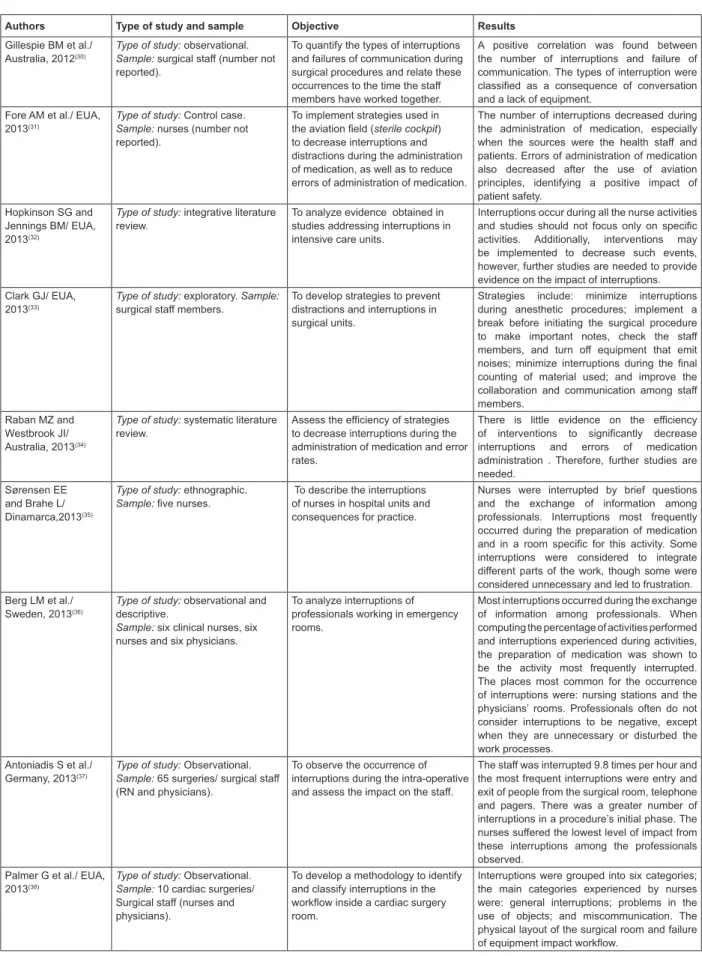
Figure 1 presents the studies analyzed, which are
presented according to author, methodological design,
study sample and main results.
Analyzing the papers enabled the identiication of
three categories as the main aspects in the interruption
of nurses in the routine of care delivery: characteristics
of the interruption, which include frequency of
occurrence, type, cause and source of interruption;
activity interrupted; and place where the interruption
occurred; implications of interruptions for patient safety;
Authors Type of study and sample Objective Results
Brixey JJ et al./EUA, 2005(13)
Type of study: observational.
Sample: eight nurses.
To identify and classify the types of interruptions experienced by nurses.
The organizational structure contributed to the occurrence of interruptions in the workflow. A greater number of interruptions was identified as being caused by environmental factors (face-to-face, technology, lack of supplies, patient’s needs).
Potter P et al./ EUA, 2005(14)
Type of study: exploratory. Sample: three nurses.
To identify the cognitive effect of interruptions on the performance of nursing workers.
The dynamics of work and interruptions may harm the professional’s assessment and clinical decision-making, consequently increasing the number of omissions and errors. In this study, 47% of the interruptions occurred when direct care was being provided to patients.
Brixey JJ et al./ EUA, 2007(15)
Type of study: exploratory. Sample: physicians and nurses (number of participants not reported).
To develop a method to categorize interruptions.
The study resulted in the development of an instrument to categorize activities and interruptions. Interruptions were named and categorized into eight distinct taxonomies. Collins S et al./ EUA,
2007(16)
Type of study: observational.
Sample: 38 healthcare providers (physicians, nurses, physical therapists and occupational therapists).
To characterize and analyze interruptions and distractions experienced by professionals using an electronic information system.
Nurses experienced five distractions per hour and, consequently, their primary activity was interrupted (62.5%), multitasks (25.0%), and tasks were postponed (12.5%). Additionally, such distractions led to the occurrence of memory lapses, incomplete tasks and change in the workflow.
Wiegmann DA et al./ EUA, 2007(17)
Type of study: exploratory.
Sample: 31 cardiac surgical procedures.
To analyze the relationship between interruptions during cardiac surgeries and the occurrence of errors.
Interruptions occurred due to failures in staff communication and failures in equipment. In addition to external interruptions, there were distractions related to the activity and access to resources. Surgical errors occurred regularly and increased significantly with the occurrence of interruptions in the staff’s work.
Sevdalis N et al./ Reino Unido, 2008(18)
Type of study: observational and exploratory.
Sample: 16 surgeons, 26 nurses and 20 anesthetists.
To develop a tool to assess the perceptions of professionals working in surgical environments, concerning interruptions they and their co-workers experience.
All the professionals reported that individual issues, the surgical environment and communication problems affect other professionals more frequently and more severely them themselves. Surgeons reported a significantly lower number of interruptions than nurses and anesthetists.
Brixey JJ et al./ EUA, 2008(19)
Type of study: case study. Sample:
eight nurses and five physicians.
To observe activities and interruptions experienced by physicians and nurses.
Nurses experienced 12 interruptions/hour. Main sources of interruptions: telephone; pager; other people; self-interruption; physical environment and lack of supplies. The professionals resumed their primary activity after performing eight activities.
Kreckler S et al./ United Kingdom Unido, 2008(20)
Type of study: observational, prospective. Sample: 38 times of administration of medication.
To analyze the occurrence, type and duration of interruptions experienced by nurses during times when medications were administered.
In activities concerning the administration of medication, nurses spent 11% of their time managing interruptions. There was an average of 2.6 interruptions per administration; interruptions lasted one minute on average. Main sources: physicians, nurses, patients, telephone, family members, and self-interruption. Interruptions that lasted the longest included patients and telephone.
Biron AD et al./ Canada, 2009(21)
Type of study: observational, descriptive.
Sample: 102 times when
medication was being administered.
To assess the characteristics of interruptions experienced by nurses during the administration of medications.
Main sources: nursing staff and lack of supplies. Causes of interruptions varied according to the time in which it occurred (preparation or administration). Most of the time, nurses immediately attended to the interruption. McGillis Hall L et al./
Canada, 2010(5)
Type of study: observational and exploratory.
Sample: 32 pediatric nurses.
To analyze aspects related to interruptions experienced by pediatric nurses in clinical practice.
The environment and nursing staff were the main sources of interruptions and the most frequent were intrusions and distractions. In regard to causes, the communication of patient-related issues, pumps/monitors and the need to provide assistance, were the most frequent. Care directed to patients and documentation activities were the activities most frequently interrupted and most of the interruptions negatively impacted care delivery.
Authors Type of study and sample Objective Results
Trbovich P et al./ Canada, 2010(22)
Type of study: observational.
Sample: 17 nurses.
To assess the characteristics and frequency of interruptions during the administration of medication and the effects of interruptions on the efficiency of medication administration.
There were frequent interruptions during the performance of critical activities (verification of medication during preparation, checking the patient during administration and infusion of intravenous drugs). Main sources: nursing staff, patients, and infusion pump alarms. Interruptions compromised the efficiency of the care activities and increased the probability of errors.
McGillis Hall L et al./ Canada, 2010(23)
Type of study: observational and exploratory. Sample: 30 nurses.
To analyze processes and factors related to interruptions, including source, type, cause, task interrupted, and the results of such occurrences.
Main sources of interruption included: healthcare providers, nurses, patients and families. Intrusion was the most frequent type, followed by distraction. Most common causes were communication related to care delivered to patients, waiting or searching for patients or material, and patient requests. The activities most frequently interrupted were care delivery, documentation and preparation of medication. Most interruptions caused a negative impact on patient safety.
Rivera-Rodriguez AJ and Karsh BT/ EUA, 2010(4)
Type of study: systematic literature review.
To review the literature on interruptions in healthcare services, determine the state of knowledge and identify gaps.
Interruptions may divert attention and increase the complexity of the work of healthcare professionals. Some interruptions, however, are essential to providing information to professionals and meeting the needs of patients.
McGillis Hall L et al./ Canada, 2010(24)
Type of study: observational.
Sample: 360 nurses.
To observe interruptions during work, related issues, and associated results.
Main characteristics of interruptions in the clinical unit, in regard to source, type, and activity interrupted were, respectively: members of the healthcare staff, distraction, documentation tasks, and medication. In the surgical units: self-interruption, intrusions, disagreements, and direct care activities and in transit. Negative impact on care included delay in treatment and loss of concentration. Magrabi F et al./
Australia, 2010(25)
Type of study: literature review. To analyze the difficulties presented in the study of interruptions in the health field.
The complexity of studying interruptions and measuring their impact on clinical practice due to the study method and variables used is one of the reasons there are gaps in the knowledge of consequences accruing from such events. Magrabi F et al./
Australia, 2011(26)
Type of study: literature review. To verify the difficulty of researching interruptions in the health field.
Interruptions are influenced by various factors that compromise patient safety and workflow, such as: characteristics of the primary task; time and duration of interruptions; the individual’s cognition; type of interruption; environment; other aspects.
Colligan L e Bass EJ/ EUA, 2012(6)
Type of study: observational.
Sample: nurses (number was not reported).
To understand how nurses deal with interruptions during the administration of medication and design strategies to avoid errors.
Three of the strategies used allow interruptions and the fourth strategy does not (block) in order to maintain attention on the primary task. Factors related to the activity and professional experience influence control over interruptions. Tomietto M et al./
Italy, 2012(27)
Type of study: observational.
Sample: nurses (number not reported).
To assess interruptions during the administration of medication before and after the implementation of a program of interventions with the use of visual signs and an interruption-free area.
There was an increase of interruptions after the intervention, mainly on the part of staff members, though interruptions were of shorter duration.
Buchini S and Quattrin R/ Italy, 2012(28)
Type of study: descriptive.
Sample:
18 nurses.
To identify the occurrence of interruptions during activities of medication administration, causes, avoidable interruptions, and develop a project to decrease such interruptions.
A total of 1,170 interruptions were observed during 3,000 hours of observation; 14 causes of interruption were observed, nine of which were avoidable. The authors propose a form for a multidisciplinary recording of the prescription, preparation and administration of medication, including the occurrence of incidents.
Li SYW et al./ China, 2012(29)
Type of study: systematic literature. To understand the effects of interruptions on healthcare services.
The main factors impacting the effects of interruptions are: the work’s cognitive load; time the interruption occurred; similarity between primary and secondary activity; the same sensory stimulus is used in the primary and secondary tasks; practice and experience of the professional being interrupted; and management of interruptions.
Authors Type of study and sample Objective Results
Gillespie BM et al./ Australia, 2012(30)
Type of study: observational.
Sample: surgical staff (number not reported).
To quantify the types of interruptions and failures of communication during surgical procedures and relate these occurrences to the time the staff members have worked together.
A positive correlation was found between the number of interruptions and failure of communication. The types of interruption were classified as a consequence of conversation and a lack of equipment.
Fore AM et al./ EUA, 2013(31)
Type of study: Control case.
Sample: nurses (number not reported).
To implement strategies used in the aviation field (sterile cockpit) to decrease interruptions and distractions during the administration of medication, as well as to reduce errors of administration of medication.
The number of interruptions decreased during the administration of medication, especially when the sources were the health staff and patients. Errors of administration of medication also decreased after the use of aviation principles, identifying a positive impact of patient safety.
Hopkinson SG and Jennings BM/ EUA, 2013(32)
Type of study: integrative literature review.
To analyze evidence obtained in studies addressing interruptions in intensive care units.
Interruptions occur during all the nurse activities and studies should not focus only on specific activities. Additionally, interventions may be implemented to decrease such events, however, further studies are needed to provide evidence on the impact of interruptions. Clark GJ/ EUA,
2013(33)
Type of study: exploratory. Sample:
surgical staff members.
To develop strategies to prevent distractions and interruptions in surgical units.
Strategies include: minimize interruptions during anesthetic procedures; implement a break before initiating the surgical procedure to make important notes, check the staff members, and turn off equipment that emit noises; minimize interruptions during the final counting of material used; and improve the collaboration and communication among staff members.
Raban MZ and Westbrook JI/ Australia, 2013(34)
Type of study: systematic literature review.
Assess the efficiency of strategies to decrease interruptions during the administration of medication and error rates.
There is little evidence on the efficiency of interventions to significantly decrease interruptions and errors of medication administration . Therefore, further studies are needed.
Sørensen EE and Brahe L/ Dinamarca,2013(35)
Type of study: ethnographic.
Sample: five nurses.
To describe the interruptions of nurses in hospital units and consequences for practice.
Nurses were interrupted by brief questions and the exchange of information among professionals. Interruptions most frequently occurred during the preparation of medication and in a room specific for this activity. Some interruptions were considered to integrate different parts of the work, though some were considered unnecessary and led to frustration. Berg LM et al./
Sweden, 2013(36)
Type of study: observational and descriptive.
Sample: six clinical nurses, six nurses and six physicians.
To analyze interruptions of professionals working in emergency rooms.
Most interruptions occurred during the exchange of information among professionals. When computing the percentage of activities performed and interruptions experienced during activities, the preparation of medication was shown to be the activity most frequently interrupted. The places most common for the occurrence of interruptions were: nursing stations and the physicians’ rooms. Professionals often do not consider interruptions to be negative, except when they are unnecessary or disturbed the work processes.
Antoniadis S et al./ Germany, 2013(37)
Type of study: Observational.
Sample: 65 surgeries/ surgical staff (RN and physicians).
To observe the occurrence of interruptions during the intra-operative and assess the impact on the staff.
The staff was interrupted 9.8 times per hour and the most frequent interruptions were entry and exit of people from the surgical room, telephone and pagers. There was a greater number of interruptions in a procedure’s initial phase. The nurses suffered the lowest level of impact from these interruptions among the professionals observed.
Palmer G et al./ EUA, 2013(38)
Type of study: Observational.
Sample: 10 cardiac surgeries/ Surgical staff (nurses and physicians).
To develop a methodology to identify and classify interruptions in the workflow inside a cardiac surgery room.
Interruptions were grouped into six categories; the main categories experienced by nurses were: general interruptions; problems in the use of objects; and miscommunication. The physical layout of the surgical room and failure of equipment impact workflow.
Discussion
Characteristics of interruptions
The number of interruptions experienced
by nurses ranged from 0.4 to 13.9 interruptions
per hour, according to the type of unit under
observation(5,9,13-14,16,18-19,23-24,28,35-37,39). Interruptions
were most frequent in pediatric units, a fact that may
be explained by the peculiar care environment of
pediatric units due to the physiological characteristics
and complex development of this population. It is also
a dynamic unit with a high transit of family members,
companions and workers(5).
Additionally, the study showed that nurses are rarely
able to complete an activity without being interrupted,
which may be related to the tasks they constantly
perform involving managing the unit, care delivery, and
care directly provided to patients, in addition to being
the most requested professional to provide information
to patients, families and other healthcare providers(39).
Interruptions were more frequent when care was
directly provided to patients, during the administration of
medication, and completing documentation(4-5,14,23-24,35-36).
Some studies speciically assessed activities involving
the administration of medication(6,20-22,27-28,31,34), while
others focused on interruptions during surgical
procedures(17-18,30,33,37-38).
Among the professionals in the surgical staff,
surgeons are the professionals most frequently
interrupted, followed by nurses(30,37). One study,
however, assessed the perceptions of professionals
concerning this phenomenon and veriied that surgeons reported being interrupted signiicantly less frequently
than did nurses or anesthetists(18). Additionally, there
is a positive and signiicant linear correlation between interruptions in the worklow of surgical procedures and
the occurrence of errors (p<0.001)(17).
Only three studies classiied interruptions according
to type, while the most frequent interruptions resulted
from intrusion and distraction, and less frequently, from
disagreements and breaks(5,23-24).
The main sources of the interruption of nurses were
other healthcare providers, members of the nursing staff,
telephones, pagers, patients, family members, visitors,
and self-interruption(5,13-14,18,20,22-24,27,30,35,37). There are
also the environment’s physical characteristics(5,13,38) and
a lack of supplies or a failure of equipment necessary
for care delivery(13,21,30,38), which lead to interruptions in
the worklow. Researchers report that nurses were more
frequently interrupted to answer questions concerning
professional issues and due to the need to provide
patient-related information(35).In regard to places where
interruptions occur, research shows there is greater
occurrence in nursing stations, followed by rooms
dedicated to storing and preparing medication , medical
staff rooms, areas near beds and corridors(35-36).
One study reports that one nurse was interrupted 43
times in a period of 10 hours; 23% of these occurrences
accrued from operational failures such as lack of supplies,
equipment or personnel(40). These interruptions caused
by failures in the system are avoidable, therefore,
working processes in healthcare facilities should be
improved to minimize such occurrences. Where these
failures are corrected, nurses spend less time resolving
institutional failures and have more time to provide
direct care to patients(41).
A characteristic observed in one study assessing
interruptions during the administration of medication was
that among the 14 causes of interruptions, nine (64.3%)
were avoidable. The most frequent reasons were:
illegible or incomplete medical prescriptions; the need
to address the requests of physicians or other providers;
and alarms. All of these are avoidable interruptions(28).
An instrument called the “Hybrid Method to
Categorize Interruptions and Activities” (HyMCIA) was
developed to allow professionals to understand the
activities performed and interruptions in the worklow. This method classiied activities using Grounded Theory
and simultaneously developed a hybrid method to classify
interruptions. The analysis of these observations resulted
in the development of a taxonomy of interruptions and
a chronology of activities and interruptions, which
increased the likelihood of understanding discontinuities
in worklow caused by interruptions(15).
The interruptions were categorized into: recipient
– the person who was interrupted; unintended recipient
– the person was not intended to be interrupted;
indirect recipient – person who was indirectly affected
by an interruption; self-interruption – the worker him/
herself interrupted his/her task without the intervention
of another person; distraction – interruption caused by
lack of attention; organizational structure – interruption
caused by failures in the work area’s physical structure;
lack of supplies – interruption originated from a need
to seek materials or equipment not available in the
work area; and initiator – the person who caused the
Implications of Interruptions for Patient Safety
Interruptions directly affect the performance
of activities and may compromise decision-making
processes and the eficiency of workers when they occur
during the performance of more complex activities that
require greater concentration(7). These occurrences are
common in the practice of nurses and impact the quality
and safety of care delivered to patients by interfering in
staff member’s cognitive processes, potentially resulting
in a great number of errors(4-6,13-14,16-17,22-24,26-27,29-30,35).
Additionally, one study reports that interruptions
unnecessary for care generate frustration, stress, and
demotivate professionals(35-36).
Studies identiied that 88.9% to 90% of
interruptions resulted in negative consequences, such
as delay in treatment and loss of concentration(5,23-24).
Other studies related interruptions to a greater chance
of errors in the administration of medication(6,27).
The literature shows that interruptions do not
always lead to adverse events and some may have a
positive impact on a professional’s performance and care
delivery because some interruptions may contribute to
increased safety, increased comfort of patients, and help
nurses to be more accurate in their tasks(5).
Therefore, further studies addressing this topic with
methodology appropriate to the study’s objective(25-26)
are needed to assess the impact of interruptions on care
delivery, since some interruptions are actually necessary
to quality care(4-5,32,35-36).
Interventions to Minimize Interruptions
Data analysis shows the important need to
improve and restructure the health system with the
goal to manage and minimize the number of harmful
interruptions, thus ensuring patient safety and the
quality of nurses’ work.
The identiication of conditions that cause
interruptions in the work of nurses may contribute to
the development of strategies to avoid this occurrence
and minimize the impact on care delivery. These
interventions, however, are more eficient when they
involve and sensitize the entire staff in regard to the
great probability of posing risks to patients.
Ten studies addressed strategies of interventions,
including the management of processes,
activities-support tools, signalization of interruption-free areas,
and continuous education of the staff to qualify both
those being interrupted and those who are doing the
interrupting, controlling interruptions, and considering
the priorities and times with a greater risk of harming
the work process and patient safety(4,6,20,24,27-29,31,33-34).
Other important factors that enable putting
into practice changes that lead to a smaller number
of interruptions involve education, motivation and
cooperation within the team; the commitment
and interest of managers; an appropriate number
of professionals and collaboration among them;
decreased overload; and the modiication of behavior
of other healthcare providers, patients and/or family
members(4,6,24,28,33).
The intervention designed to decrease the
number of interruptions during the administration of
medications established: an area exclusively dedicated
to prepare medications; use by the nurse responsible
for administering medications of a red vest with the
following words on it “Please, do not interrupt, I am
administering medications”; and the use of educational
strategies(27). After such interventions, however, an
increased number of interruptions were observed,
especially during the time when medication was being
prepared, mainly by staff members. Nonetheless,
interruptions were or shorter duration and the time
nurses dedicated to the performance of direct care
increased, enabling the supply of care to a greater
number of patients(27). Another study, however, which
implemented strategies used in the aviation ield (sterile
cockpit), showed a decreased number of interruptions
during the administration of medication, especially when
the sources were the health staff and patients(31).
Interruptions, however, may still occur, even after
instructing the staff and adopting strategies to decrease
the number of interruptions, depending on patient needs
and staff adherence to recommendations.
Therefore, it is necessary for nurses to be able to
deal with the occurrence of interruptions. One study
aiming to understand how nurses manage interruptions
during the administration of medications reports four
primary task is discontinued and can be resumed after
a secondary task that has greater priority is performed;
when the professional shares attention between the
primary and secondary tasks, as both have similar
priority; and when an interruption is mediated with
an action that allows the primary task to be resumed
(prospective memory). The fourth intervention,
however, called “blocking”, occurs when the primary
task has greater importance and the interruption must
be blocked, so that the professional is able to maintain
attention to this primary task. Note that these strategies
depend on staff workload and clinical assessments
and are inluenced by factors related to the activities
involved and professional experience(6).
Conclusion
The occurrence of interruptions is a constant in the
environment of healthcare delivery because it involves
patients with different levels of complexity and dynamics
of healthcare delivery, in addition to interactions with
various healthcare providers and sectors.
This review enabled the identiication of relevant
aspects in nursing practice that favor the occurrence
of interruptions. Nonetheless, few studies describe the
impact of interruptions for clinical practice and patient
safety and most papers only describe the characteristics
of interruptions and present few proposals of
interventions to implement them into practice.
Therefore, further studies are needed to identify
environmental and human factors that contribute to
the occurrence of interruptions, to the assessment of
the impact of interruptions on care, the design of the
work system, and the design of easy-to-implement and
eficient strategies to support nurses in better managing
interruptions in a complex and dynamic working
environment.
Final considerations
Studies presented in this review show a scarcity
of papers addressing interruptions during the practice
of nurses, which may be related to the absence of
a descriptor for this topic that is used worldwide.
Additionally, no study addressing this topic was found
in Brazil, which hinders comparisons with the Brazilian
context in which nurses often have to correct failures in
the system and the nursing staff is mostly composed of
professionals without a bachelor’s degree.
References
1. Kohn LT, Corrigan JM, Donaldson MS (eds.). To err
is human: building a safer health system. Institute of
Medicine, Washington: National Academy Press; 2000.
536 p.
2. Leape LL. A systems analysis approach to medical
error. J Eval Clin Pract. 1997;3(3):213-22.
3. Harada MJCS, Pedreira MLG, Peterlini MAS, Pereira
SR. O erro humano e a segurança do paciente. São
Paulo: Atheneu; 2006. 217 p.
4. Rivera-Rodriguez AJ, Karsh BT. Interruptions and
distractions in healthcare: review and reappraisal. Qual
Saf Health Care 2010;19(4):304-12.
5. McGillis Hall L, Pedersen C, Hubley P, Ptack E,
Hemingway A, Watson C, et al. Interruptions and pediatric
patient safety. J Pediatr Nurs. 2010;25(3):167-75.
6. Colligan L, Bass EJ. Interruption handling strategies
during paediatric medication administration. BMJ Qual
Saf. 2012;21(11):912-7.
7. Jett QR, George JM. Work interrupted: a closer look
at the role of interruptions in organizational life. Acad
Manage Rev. 2003;28(3):494-507.
8. Brixey JJ, Robinson DJ, Johnson CW, Johnson TR,
Turley JP, Zhang J. A concept analysis of the phenomenon
interruption. ANS Adv Nurs Sci. 2007;30(1):26-42.
9. Redding DA, Robinson S. Interruptions and geographic
challenges to nurses’ cognitive workload. J Nurs Care
Qual. 2009;24(3):194-200.
10. Kalisch BJ, Aebersold M. Interruptions and
multitasking in nursing care. Jt Comm J Qual Patient Saf.
2010;36(3):126-32.
11. Pedreira MLG. Enfermagem para segurança do
paciente. In: Pedreira MLG, Harada MJCS, (orgs.).
Enfermagem dia a dia: segurança do paciente. São
Caetano do Sul: Yendis; 2009. p.3-22.
12. Mendes KDS, Silveira RCCP, Galvão CM. Revisão
integrativa: método de pesquisa para a incorporação de
evidências na saúde e na enfermagem. Texto contexto -
13. Brixey J, Robinson D, Tang Z, Johnson T, Zhang J,
Turley J. Interruptions in workflow for RNs in a level one
trauma center. AMIA Symp Proc 2005:86-90.
14. Potter P, Wolf L, Boxerman S, Grayson D, Sledge J,
Dunagan C, et al. An analysis of nurses’ cognitive work:
a new perspective for understanding medical errors.
In: Advances in Patient Safety: From Research to
Implementation. Rockville, MD: Agency for Healthcare
Research and Quality; 2005. p.39-50.
15. Brixey JJ, Robinson DJ, Johnson CW, Johnson TR,
Turley JP, Patel V, et al. Towards a hybrid method to
categorize interruptions and activities in healthcare. Int
J Med Inform. 2007;76(11-12):812-20.
16. Collins S, Currie L, Patel V, Bakken S, Cimino JJ.
Multitasking by clinicians in the context of CPOE and CIS
use. Stud Health Technol Inform. 2007;129(2):958-62.
17. Wiegmann DA, ElBardissi AW, Dearani JA, Daly
RC, Sundt TM. Disruptions in surgical flow and
their relationship to surgical errors: an exploratory
investigation. Surgery 2007;142(5):658-65.
18. Sevdalis N, Forrest D, Undre S, Darzi A, Vincent C.
Annoyances, disruptions, and interruptions in surgery:
the Disruptions in Surgery Index (DiSI). World J Surg
2008;32(8):1643-50.
19. Brixey JJ, Tang Z, Robinson DJ, Johnson CW,
Johnson TR, Turley JP, et al. Interruptions in a level
one trauma center: a case study. Int J Med Inform.
2008;77(4):235-41.
20. Kreckler S, Catchpole K, Bottomley M, Handa A,
McCulloch P. Interruptions during drug rounds: an
observational study. Br J Nurs.
2008;17(21):1326-30.
21. Biron AD, Lavoie-Tremblay M, Loiselle CG.
Characteristics of work interruptions during medication
administration. Nurs Scholarsh. 2009;41(4):330-6.
22. Trbovich P, Prakash V, Stewart J, Trip K, Savage
P. Interruptions during the delivery of high-risk
medications. J Nurs Adm. 2010;40(5):211-8.
23. McGillis Hall L, Pedersen C, Fairley L. Losing the
moment: understanding interruptions to nurses’ work.
J Nurs Adm. 2010;40(4):169-76.
24. McGillis Hall L, Ferguson-Paré M, Peter E, White
D, Besner J, Chisholm A, et al. Going blank: factors
contributing to interruptions to nurses’ work and related
outcomes. J Nurs Manag. 2010;18(8):1040-7.
25. Magrabi F, Li SY, Dunn AG, Coiera E. Why is it so difficult
to measure the effects of interruptions in healthcare?
Stud Health Technol Inform. 2010;160(Pt1):784-8.
26. Magrabi F, Li SY, Dunn AG, Coeira E. Challenges
in measuring the impact of interruption on patient
safety and workflow outcomes. Methods Inf Med
2011;50(5):447-53.
27. Tomieto M, Sartor A, Mazzocoli E, Palese A.
Paradoxical effects of a hospital-based,
multi-intervention programme aimed at reducing medication
round interruptions. J Nurs Manag. 2012;20(3):335-43.
28. Buchini S, Quattrin R. Avoidable interruptions during
drug administration in an intensive rehabilitation ward:
improvement project. J Nurs Manag.
2012;20(3):326-34.
29. Li SYW, Magrabi F, Coiera E. A systematic review
of the psychological literature on interruption and its
patient safety implications. J Am Med Inform Assoc.
2012;19(1):6-12.
30. Gillespie BM, Chaboyer W, Fairweather N.
Interruptions and miscommunications in surgery: an
observational study. AORN Journal. 2012; 95(5):576-90.
31. Fore AM, Sculli GL, Albee D, Neily J. Improving
patient safety using the sterile cockpit principle during
medication administration: a collaborative, unit-based
project. J Nurs Manag. 2013;21(1):106-11.
32. Hopkinson SG, Jennings BM. Interruptions during
nurses’ work: a state-of-the-science review. Res Nurs
Health. 2013;36(1):38-53.
33. Clark GJ. Strategies for preventing distractions and
interruptions in the OR. AORN J. 2013;97(6):702-7.
34. Raban MZ, Westbrook JI. Are interventions to
reduce interruptions and errors during medication
administration effective?: a systematic review. BMJ Qual
Saf 2013;0:1-8.
35. Sørensen EE, Brahe L. Interruptions in clinical
nursing practice. J Clin Nurs. 2014;23(9-10):1274-82.
36. Berg LM, Källberg A-S, Göransson KE, Östergren
J, Florin J, Ehrenberg A. Interruptions in emergency
department work: an observational and interview study.
BMJ Qual Saf. 2013;22(8):656-63
37. Antoniadis S, Passauer-Baierl S, Baschnegger H,
Weigl M. Identification and interference of intraoperative
distractions and interruptions in operating rooms. J Surg
38. Palmer G, Abernathy JH, Swinton G, Allison D,
Greenstein J, Shappell S, et al. Realizing improved
patient care through human-centered operating room
design: a human factors methodology for observing
flow disruptions in the cardiothoracic operating room.
Anesthesiology. 2013;119(5):1066-77.
39. Biron AD, Loiselle CG, Lavole-Tremblay M. Work
interruptions and their contribution to medication
administration errors: An evidence review. Worldviews
Evid Based Nurs. 2009;6(2):70-86.
40. Potter P, Boxerman S, Wolf L, Marshall J, Grayson
D, Sledge J, et al. ‘‘Mapping the nursing process: a new
approach for understanding the work of nursing.’’ J Nurs
Admin 2004;34(2):101-9.
41. Tucker AL, Spear SJ. Operational failures and
interruptions in hospital nursing. Health Serv Res.
2006;41(3):643-62.
Received: June 24th 2014