www.bjorl.org
Brazilian
Journal
of
OTORHINOLARYNGOLOGY
ORIGINAL
ARTICLE
Postural
control
assessment
in
students
with
normal
hearing
and
sensorineural
hearing
loss
夽
,
夽夽
Renato
de
Souza
Melo
a,b,∗,
Andrea
Lemos
a,
Carla
Fabiana
da
Silva
Toscano
Macky
c,
Maria
Cristina
Falcão
Raposo
a,d,
Karla
Mônica
Ferraz
aaDepartmentofPhysiotherapy,UniversidadeFederaldePernambuco(UFPE),Recife,PE,Brasil
bDepartmentofPhysiotherapy,CentroUniversitáriodoValedoIpojuca(UNIFAVIP/DeVry),Caruaru,PE,Brasil cDepartmentofPhysiotherapy,FaculdadedosGuararapes(FG),JaboatãodosGuararapes,PE,Brasil
dDepartmentofStatistics,UniversidadeFederaldePernambuco(UFPE),Recife,PE,Brasil
Received18December2013;accepted23April2014 Availableonline16September2014
KEYWORDS
Motorskills; Vestibulardiseases; Psychomotor performance; Posture; Deafness
Abstract
Introduction:Childrenwithsensorineuralhearinglosscanpresentwithinstabilitiesinpostural control,possiblyasaconsequenceofhypoactivityoftheirvestibularsystemduetointernalear injury.
Objective: Toassessposturalcontrolstabilityinstudentswithnormalhearing(i.e.,listeners) andwithsensorineuralhearingloss,andtocomparedatabetweengroups,consideringgender andage.
Methods:Thiscross-sectionalstudyevaluatedtheposturalcontrolof96students,48listeners and48withsensorineuralhearingloss,agedbetween7and18years,ofbothgenders,through the Balance Error Scoring Systems scale. This tool assesses postural controlintwo sensory conditions:stablesurfaceandunstablesurface.Forstatisticaldataanalysisbetweengroups, theWilcoxontestforpairedsampleswasused.
Results:Studentswithhearinglossshowedmoreinstabilityinposturalcontrolthanthosewith normalhearing,withsignificantdifferencesbetweengroups(stablesurface,unstablesurface) (p<0.001).
夽 Pleasecitethisarticleas:MeloRS,LemosA,MackyCF,RaposoMC,FerrazKM.Posturalcontrolassessmentinstudentswithnormal
hearingandsensorineuralhearingloss.BrazJOtorhinolaryngol.2015;81:431---8.
夽夽Institution:DepartmentofPhysiotherapy,UniversidadeFederaldePernambuco,Recife,Pernambuco,PE,Brazil.
∗Correspondingauthor.
E-mail:[email protected](R.S.Melo).
http://dx.doi.org/10.1016/j.bjorl.2014.08.014
Conclusions:Studentswithsensorineuralhearinglossshowedgreaterinstabilityinthepostural controlcomparedtonormalhearingstudentsofthesamegenderandage.
© 2014Associac¸ãoBrasileira de Otorrinolaringologiae CirurgiaCérvico-Facial. Publishedby ElsevierEditoraLtda.Allrightsreserved.
PALAVRAS-CHAVE
Destrezamotora; Doenc¸asvestibulares; Desempenho
psicomotor; Postura; Surdez
Avaliac¸ãodocontroleposturalemescolaresouvintesecomperdaauditiva sensorioneural
Resumo
Introduc¸ão:Crianc¸ascomperdaauditivasensorioneuralpodemapresentarinstabilidades pos-turais,possivelmenteprovocadaspeloacometimentodosistemavestibularemvirtudedalesão naorelhainterna.
Objetivos: Avaliaraestabilidadedocontroleposturalemescolaresouvintesecomperda audi-tivasensorioneuralecompararosdadosentreosgrupos,considerandoosgêneroseasfaixas etárias.
Método: Estudodecortetransversal,queavaliou96escolaresdeambososgênerosnafaixa etáriaentre7-18anos,sendo48ouvintese48comperdaauditivasensorioneural.Aavaliac¸ão docontroleposturalfoirealizadapormeiodaEscaladeBESS(BalanceErrorScoringSystem) queavaliaocontroleposturalemduascondic¸õessensoriais:superfícieestável(SE)e superfí-cieinstável(SI).Paraaanáliseestatísticadosdadosentreosgrupos,foiutilizadootestede Wilcoxondecomparac¸ãodemédiasparaamostraspareadas.
Resultados: Osescolarescomperdaauditivademonstrarammaiorinstabilidadenocontrole pos-turalqueosouvintes,apontandodiferenc¸assignificativasentreosgruposnaSEeSI((P<0,001).
Conclusão:Osescolarescomperdaauditivasensorioneuraldemonstrarammaiorinstabilidade nocontrolepostural,emcomparac¸ãocomosescolaresouvintesdomesmogêneroefaixaetária. ©2014Associac¸ãoBrasileira deOtorrinolaringologiaeCirurgiaCérvico-Facial.Publicadopor ElsevierEditoraLtda.Todososdireitosreservados.
Introduction
In the first years of life, children develop a vast reper-toire of motor skills such as dragging, crawling, walking, and eventually running; however, in order todevelop all thesemotor skills, an improvement of postural control is required.1Around12monthsofage,thechildlearnshowto
stayinastandingposition,acquirestheabilitytostayinthis positionwithoutanyhelporsupportand,thus,canfurther exploretheenvironmentaroundit,makingtheachievement of the postural control a milestone in any child’s mental development.2
Postural control has been described as the ability of the individual to remain comfortably in a stand-ing position, keeping his/her body posture stable and aligned, even when suffering disruptions stemming from the external environment.3 For a satisfactory postural
control,is necessary that thosesensory systems responsi-ble for its regulation present a seamless integration and regulation.4
Themainsensorysourcesresponsiblefortheregulation ofposturalcontrolarethevisual,somatosensory,and ves-tibularsystems.5The contributionof eachof thesetothe
regulationofposturalcontroloccursselectively,whenthe centralnervous system increasesthe activity of a system thatwillprovemostusefulatthetime,reducingthe activ-ityoftheothers,fortheregulationand/ormaintenanceof
body posturein a particular taskor posture.6,7 Ifthere is
anychangeinanyofthesesensorysystems,theregulation dynamicsofposturalcontrolcanappearuncoordinatedand consequentlyimpaired.8,9
Duetotheanatomicalproximityofthestructures respon-sible for auditory and vestibular functions, it is common to find associated changes in both systems, in the case of involvement of theinner ear. Thus,it is reasonable to assume that children withsensorineural hearing loss also demonstrate vestibular disorders.10 Furthermore, studies
haveshownthatthehypoactivityofthevestibularsystemis afrequent findinginotoneurologicevaluationsof children withsensorineural-typehearingloss.11---13
Children with sensorineural hearing loss appear to show sensory changes from the vestibular system, prob-ably due to inner ear damage. Because the vestibular system is one of the sensory systemsresponsible for reg-ulating the postural control, these children may present instabilities in the regulation of this control, or this regulation may be uncoordinated,14 when compared to
Methods
Thiswasacross-sectionalstudyconductedbetweenJulyand Decemberof2012.Todeterminethesamplesize,a prelim-inarysurveywasconductedjointlywiththeadministration ofthe CentrodeReabilitac¸ão eEducac¸ãoEspecial Rotary, aschoolfocusedonteachingchildrenandadolescentswith specialneeds,inordertoidentifythenumberof students withsensorineuralhearinglossenrolledintheagegroup tar-getedbythisstudy,aswellasthosewhomettheinclusion andexclusioncriteria.
Thus,itwasobservedthatthepossibilityofmatchingthe childrenaccordingtogenderandagewouldbepossiblefor 48students,sincetherewasapredominanceofonegender andofsomeagegroups,makingitdifficulttoincreasethe studysample.Thesameamountofstudentswassettoform thegroupoflisteners,pairingbothgroups.Thus,96 volun-teersparticipatedinthisstudy,with48 listeners(LG)and 48withsensorineuralhearingloss(SHLG),agedbetween7 and18years.
Theinclusioncriteriainthestudyforbothgroupswere: beingregularlyenrolledinoneoftheschoolscollaborating withthepresent research,aninformedconsentsignedby theparent or guardian,andage between 7and18 years. In addition„the following alsowere inclusion criteriafor SHLG: clinical diagnosis of sensorineural hearing loss, an audiometryperformedinthelastsixmonths,andproficiency in Brazilian Sign Language (Língua Brasileira de Sinais ---LIBRAS).Thislastcriterionwasusedtoensurethatthe com-mandsrelatedtothedemandsofthemethodologywouldbe understoodbyallstudents.Itisnoteworthythatallchildren evaluatedhadaccesstoLIBRASteachingintheireducational institution.
The exclusion criteria for LG were: presence of any hearing complaint,neurological, physical, visual, or men-tal disability,anda discrepancy>2cminthe lowerlimbs, obtainedthrougharealmeasurementtestandanapparent lowerlimbmeasurement,previouslyheldbytheevaluators. The exclusion criteriafor SHLG were:any associated dis-abilityandadiscrepancy>2cminthelowerlimbs,obtained througharealmeasurementtestandanapparentlowerlimb measurement,previouslyheldbytheevaluators.
Fordataacquisitionoftheinclusionandexclusion crite-ria of this study, the information reported by parents of studentsduringtheinterviewwiththeresearcherswas con-sidered, together with data obtained from the student’s schoolrecord, whichwereprovidedtothe researchersby theschoolsadministration.
The volunteers were recruited from a convenience sequential sample matched by gender and age group, selected through an allotment conducted by their tea-chers, who were blinded to the study characteristics. The allotments were held in the classroom environment, withthe presence of all students and researchersof this study.
The listeners wererecruitedfromtheEscolaDuquede Caxias,targetedtothenormal-hearingpublic;thestudents withhearinglosswererecruitedfromCentrodeReabilitac¸ão eEducac¸ãoEspecialRotary,targetedtostudentswith spe-cial needs. Both schools belong to the state education network,haveasimilarprofileandarelocatedinthecity ofCaruaru,Pernambuco,Brazil.
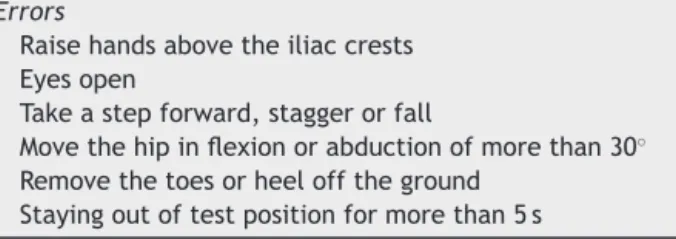
Table1 BalanceErrorScoringSystem(BESS)scalescoring, whichascribes1pointforeacherror.
Errors
Raisehandsabovetheiliaccrests Eyesopen
Takeastepforward,staggerorfall
Movethehipinflexionorabductionofmorethan30◦
Removethetoesorheelofftheground Stayingoutoftestpositionformorethan5s
The procedures preceding the testing and evaluation of postural control were previously explained orally by researcherstovolunteerlisteners;tovolunteerswith hear-ingloss receivedthe explanationin LIBRAS by oneof the researchers,whoisaninterpreterinLIBRAS.
Fordataacquisition,thestudentsunderwentan assess-ment of postural control, performed always by the same researcher, individually, in a private room of the school, usingtheBalanceErrorScoringSystem(BESS)scale,15which
assessesthestabilityofposturalcontrolintwosensory con-ditions:
a Stablesurface:Testsperformedontheground. b Unstablesurface:Testsperformedonafoamblock.
TheBESSscale15comprisessixstages,lasting20seach,
whichareconductedwiththesuppressionofthevisualfield (eyesclosed).Forthetest application,the studentswere placeduprightontheground,inandemarcatedarea, wear-inglightclothing (shortsformalesandshortsandtops for females),barefoot,withoutanyexternalsupportforfootor ankle;arms positionedalong thebody, withhandsonthe iliaccrests, standingwitheyesclosedduring allstages of theevaluation,asdescribedbelow:
- Step1:staticpostureonbothlegs,withfeetparalleland togetherontheground;
- Step2:staticpostureonthelowernon-dominantlimbon theground(thehipthatdoesnotsustainweightwasflexed between20◦and30◦andthekneewasflexedbetween40◦
and50◦);
- Step3:staticposturewithonefootaheadoftheotheron theground,withthenon-dominantlowerlimbpositioned behindthedominantleg,withtoestouchingtheheel.
After finishing the first three steps, the volunteer rested for 1min and the steps were repeated; this time with the child standing on a block of foam measuring 60cm×60cm×10cm.
AccordingtotheBESSscale,15 posturalstabilityis
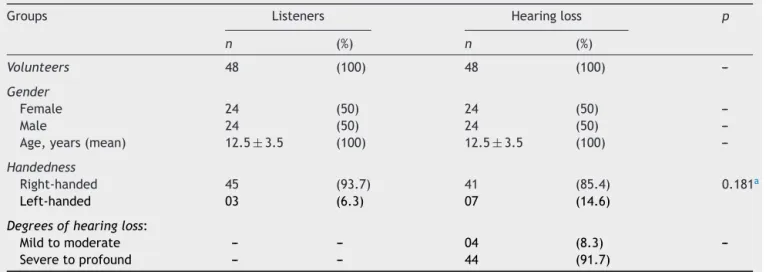
Table2 Characterizationofthestudiedsample.
Groups Listeners Hearingloss p
n (%) n (%)
Volunteers 48 (100) 48 (100)
---Gender
Female 24 (50) 24 (50)
---Male 24 (50) 24 (50)
---Age,years(mean) 12.5±3.5 (100) 12.5±3.5 (100)
---Handedness
Right-handed 45 (93.7) 41 (85.4) 0.181a
Left-handed 03 (6.3) 07 (14.6)
Degreesofhearingloss:
Mildtomoderate --- --- 04 (8.3)
---Severetoprofound --- --- 44 (91.7)
aPearson’schi-squaredtest.
theamount ofswayshowedby achild duringtesting,the loweritsstabilityintermsofposturalcontrol.
The postural control assessments were recorded by a Nikon® Coolpix P-500 camera, positioned on a Digipod® TR-650antripod, positioned1m fromthe ground and 3m from the child. The postural control performance of the students was analyzed and scored by two researchers at thesametime.Aftertheassessmentofposturalcontrolin SHLG,data werecollectedonthe degreesof hearingloss obtainedbyaudiometrytestsbroughtbythestudent’parent orguardian,orbytheaudiometricresultspostedinthe stu-dent’sschoolrecord,giventotheresearchersbytheschool administrator.
Todefinethedegreeofhearingloss,thecriteriaofthe BritishSocietyofAudiologywerefollowed,16bywhich
hear-ing loss can be classified into four grades, according to thethresholds of decibels(dB)achieved,asfollows: mild (25---40dB), moderate (41---70dB), severe (71---95dB), and profound(thresholdsabove95dB).Studentspresented vary-ing degrees of hearing loss: sometimes bilaterally, or of oneearin relationtothe other.However,whendifferent gradeswereperceivedinthesameindividual,theyalways variedwithinthe‘mild andmoderate’or ‘severeand pro-found’level.Thus,somereportssuppliedwiththestudent’s audiometryexamsregistered lossgrades as‘light to mod-erate’ and as ‘severe to profound’. Therefore, the ‘light and moderate’ and ‘severe and profound’ nomenclatures wereusedtocategorizethesub-groupsofthe‘hearingloss’ variableinthepresentstudy.
Data regarding handednessof students and degrees of hearinglosswereexpressedasfrequency percentage;and forourstatisticalanalysis,thePearsonchi-squaredtestwas used,whennecessary.
Datafor assessmentofposturalcontrolwereexpressed asmean and confidence interval of the means, analyzed through the Wilcoxson test for comparison of means for paired samples, for the comparisons between the two groups. For the analysis of the sub-groups in SHLG, the Mann---Whitneytestwasused.Statisticalsignificancewasset atp<0.05andSPSSversion18.0wasusedfordataanalysis.
This study was approved by the Ethics Committee in ResearchoftheAssociac¸ãoCaruaruensedeEnsinoSuperior (CEP/ASCES),accordingtothefinaldocumentn.114/2010 andtoResolution196/96oftheConselhoNacionaldeSaúde.
Results
The datarelatingtothecharacterizationoftheevaluated groupsareshowninTable2.Statisticallysignificant differ-ences were observed in the results of the assessment of posturalcontrolbetweenthegroups,withhighermeansin SHLG,showinggreaterinstabilityin posturalcontrol,both onthestable(p<0.001)andontheunstable(p<0.001) sur-face,asshowninTable3.
The same was observed when the genders were con-sidered between groups, both on thestable andunstable surfaces(p<0.001),accordingtodatapresentedinTable4. Whenevaluatingtheposturalcontrolaccordingtoage, in all age groups studied a greater instability in postural control in SHLG was observed, both on the stable (7---10 years, p=0.001;11---14 years, p<0.001; and15---18 years,
p=0.009)]andontheunstable(7---14years,p<0.001;15---18 years,p=0.008)surface.InSHLG,areductionofthe insta-bilityinposturalcontrolwasobservedwithadvancingage, bothonthestableandunstablesurfaces,accordingtodata showninTable5.
When considering the performance of postural control andthedegreeofhearingloss,itwasobservedthatstudents withmild andmoderate grades showedbetterstability in posturalcontrol,whencomparedtothosewithsevereand profoundgrades,inallcategoriesevaluated.However,these differenceswereobservedonlyfor thestepsperformed in thestablesurface(p=0.005),accordingtoTable6.
Discussion
Table3 Meanandconfidenceintervalvaluesforperformanceofposturalcontrolofstudentslistenersandwithsensorineural hearinglossofthesample(n=96).
Listeners(n=48) Hearingloss(n=48) p
Mean(CI) Mean(CI)
Doublesupport(ground) 0.00(0.00;0.00) 0.77(0.28;1.26) 0.001a
Singlelegsupport(ground) 2.79(2.41;3.17) 5.16(4.47;5.86) <0.001a
Footaheadoftheother(ground) 0.31(0.06;0.56) 3.70(2.96;4.45) <0.001a
Mean(ground) 1.03(0.88;1.88) 3.21(2.68;3.74) <0.001a
Doublesupport(foam) 0.02(−0.02;0.06) 2.73(1.61;3.84) <0.001a
Singlelegsupport(foam) 4.31(4.31;4.60) 7.40(6.80;8.00) <0.001a
Footaheadoftheother(foam) 1.50(1.05;1.95) 6.20(5.30;7.10) <0.001a
Mean(foam) 1.94(1.74;2.14) 5.45(4.65;6.23) <0.001a
CI,Confidenceinterval.
a Wilcoxon’stestforcomparisonofmeansforpairedsamples.
greater instability in postural control, compared to listeners.
Inthiscontext,theresultsobtainedinthisstudy corrob-oratethoseof Derlichetal.17 whoevaluatedthe postural
controlofchildren(listenersandwithhearingloss)through aforceplatform,withandwithouttheuseofafoamblock, andreportedthattheperformanceofposturalcontrolofthe children assessedshowedsignificant differences;and that thegroupwithhearinglosshadgreaterposturalinstability, aswasalsoobservedinthepresentstudy.
Derlichetal.17alsoreportedthat,duringassessmentson
the unstable surface, their results showed significant dif-ferencesbetweengroups,withagreaterswayonpostural controlinthosechildrenwithhearingloss,mostcommonly in the medial-lateral direction, whereas no differences betweenthegroupswerenotedontherigidsurface.These resultsdifferfromthefindingsofthepresentstudy,where students withhearing loss showed differencesin postural
controlonbothstableandunstablesurfaces.Anexplanation forthisfindingmaybethefactthatallstagesofBESSscale wereperformedwithvisualguidancesuppression.Thisalso referstotheinfluenceofothersystemsresponsibleforthe regulationofposturalcontrol,sincewhenitisnotpossible tousethevisualsystem,thesomatosensoryandvestibular systems are those most required for the maintenance of posturalstability.
Similarly,Sousaetal.18analyzedtheposturalcontrolof
100 children, 43 with hearing loss and 57 listeners, aged between7and10years,usingaforceplatform.Theauthors observeddifferencesbetweentheanalyzedgroups;andthe groupwithhearinglossdemonstratedmorefluctuationsin posturalcontrolinalltestsevaluated,aswasalsonotedin thepresentstudy.
Also according to Sousa et al.,18 the position with
feet together and eyes closed was the most sensitive to detect differences between groups. These findings are in
Table4 Meanandconfidenceintervalvaluesforperformanceofposturalcontrolofstudentslistenersandwithsensorineural hearinglossaccordingtogender(n=96).
Female Male
Listeners(n=24) Hearingloss(n=24) p Listeners(n=24) Hearingloss(n=24) p
Mean(CI) Mean(CI) Mean(CI) Mean(CI)
Doublesupport (ground)
0.00(0.00;0.00) 0.62(−0.2;1.27) 0.042a 0.00(0.00;0.00) 0.91(0.14;1.70) 0.011a
Singlelegsupport (ground)
2.95(2.38;3.55) 5.25(4.30;6.20) <0.001a 2.62(2.10;3.15) 5.08(4.00;6.18) 0.002a
Footaheadofthe other(ground)
0.50(0.70;0.93) 3.41(2.26;4.57) <0.001a 0.12(−0.13;0.38) 4.00(3.00;5.01) <0.001a
Mean(ground) 1.15(0.91;1.40) 3.10(2.31;3.90) <0.001a 0.92(0.71;1.11) 3.33(2.55;4.11) <0.001a
Doublesupport (foam)
0.00(0.00;0.00) 2.25(0.70;3.80) 0.007a 0.42(−0.04;0.13) 3.20(1.51;4.90) 0.002a
Singlelegsupport (foam)
4.45(4.00;4.90) 6.87(5.60;7.75) <0.001a 4.16(3.76;4.57) 7.91(7.09;8.74) <0.001a
Footaheadofthe other(foam)
1.75(1.06;2.43) 5.60(4.12;7.05) <0.001a 1.25(0.62;1.88) 6.83(5.68;8.00) <0.001a
Mean(foam) 2.07(1.75;2.38) 4.90(3.75;6.05) <0.001a 1.82;(1.56;2.07) 6.00(4.90;7.10) <0.001a
CI,confidenceinterval.
T able 5 Mean and confidence interval values for performance of postural control of students listeners and with sensorineural hearing loss according to age group ( n = 96). 7---10 years 11---14 years 15---18 years Listeners ( n = 16) Hearing loss ( n = 16) p Listeners ( n = 16) Hearing loss ( n = 16) p Listeners ( n = 16) Hearing loss ( n = 16) p Mean (CI) Mean (CI) Mean (CI) Mean (CI) Mean (CI) Mean (CI) Double support (ground) 0.00 (0.00; 0.00) 1.94 (0.61; 3.26) 0.011 a 0.00 (0.00; 0.00) 0.31 ( − 0.01; 0.63) 0.059 a 0.00 (0.00; 0.00) 0.06 ( − 0.07; 0.20) 0.317 a Single leg support (ground) 3.56 (2.80; 4.31) 5.62 (4.08; 7.16) 0.014 a 2.37 (1.73; 3.01) 5.68 (4.55; 6.81) 0.001 a 2.44 (1.92; 2.95) 4.20 (3.17; 5.20) 0.014 a Foot ahead of the other (ground) 0.25 ( − 114; 0.61) 5.37 (4.00; 6.74) 0.001 a 0.37 ( − 0.17; 0.92) 3.75 (2.87; 4.63) 0.001 a 0.31 ( − 0.15; 0.78) 2.00 (0.80; 3.20) 0.019 a Mean (ground) 1.27 (0.97; 1.56) 4.31 (3.10; 5.52) 0.001 a 0.91 (0.63; 1.20) 3.25 (2.70; 3.80) <0.001 a 0.91 (0.68; 1.15) 2.10 (1.40; 2.76) 0.009 a Double support (foam) 0.00 (0.00; 0.00) 5.50 (3.21; 7.78) 0.002 a 0.00 (0.00; 0.00) 1.62 (0.10; 3.14) 0.026 a 0.07 ( − 0.07; 0.20) 1.06 ( − 0.36; 2.50) 0.144 a Single leg support (foam) 4.81 (4.25; 5.37) 8.62 (7.61; 9.63) 0.001 a 4.00 (3.44; 4.55) 7.31 (6.38; 8.24) <0.001 a 4.12 (3.70; 4.55) 6.25 (5.21; 7.30) 0.003 a Foot ahead of the other (foam) 1.75 (0.90; 2.60) 8.62 (7.56; 9.70) 0.001 a 0.88 (0.17; 1.57) 6.25 (5.26; 7.23) 0.001 a 1.87 (1.00; 2.74) 3.75 (2.00; 5.51) 0.058 a Mean (foam) 2.18 (1.80; 2.56) 7.58 (6.24; 8.92) <0.001 a 1.62 (1.30; 1.96) 5.06 (4.14; 6.00) <0.001 a 2.02 (1.70; 2.35) 3.70 (2.46; 4.91) 0.008 a CI, Confidence interval. a W ilcoxon test for comparison of means for paired samples.
agreementwiththeresults obtainedinthe presentstudy, sinceallthereviewswereperformedwiththesuppression ofthevisualfield.
Furthermore,De Kegelel et al.19 investigatedthe
reli-abilityofthemeasurementofposturalstabilityinchildren (listeners and with hearing loss) aged between 6 and 12 years,withtheuse ofa forceplatform, clinical testsand scales.Theauthorsconcludedthatclinicaltestsandscales areasreliableforthedetectionofposturalinstabilityinthis populationastheforce platform,thusmakingreliablethe findingsofthepresentstudy.
Besides the data between groups, in this study some variableswere alsoanalyzed inisolation; oneofthe most importantfindingswasobservedinthevariable‘agegroup’. Thepurposeofusingalargeagerangewastoobservethe evolutionofposturalcontrolwithage,sincesuchdataare scarce in the literature. The results showed an increase ofpostural controlduetoloweroscillationexhibitedover timeinSHLG,althoughthereremaineddifferencesbetween groups,asshowninTable5.Thissuggeststhatinterventions inthispopulationshouldoccurinchildhoodandalsoin ado-lescence,andthattheycanbeincorporated intheschool environment.
Anotherrelevantfindingwasobservedwhenthe perfor-manceofpostural controlandthedegreesof hearingloss wereconsidered. Studentswithmild tomoderatedegrees of hearing loss had greater stability in postural control than studentswithsevere andprofound grades inall cat-egories evaluated, indicating statistical differences only for the evaluationsperformed onthe stablesurface. One explanation for this finding may be based on the results of studies thatsought toassess the functionof the vesti-bularsystem inchildrenwithhearingimpairment.Guilder et al.20 reported that children with severe and profound
degrees of hearing loss often showed hypoactivity of the vestibularsystem.Similarly,Lavinsky21statedthatchildren
with profound degree of hearing loss showed high inci-dence of vestibular dysfunction. Such data could explain the findings of the present study regarding the variable ‘degreeofhearingloss’,consideringthat91.5%ofchildren with hearing loss in this study had severe and profound grades.
Possiblerepercussions of instability in postural control couldbefallonbodyposture. Recently,Olszewska etal.22
evaluatedthepostureofchildrenwithhearinglossand con-cludedthatchangesinbodypostureinthisgrouparequite common.Similarly,Meloetal.23reportedintheirstudythat,
among thechildren evaluated, students withhearing loss had a higher incidence of postural changes in the spine, comparedtolisteners.
Based on the present results, the involvement of the vestibular system appears to be a detrimental factor for a properandsatisfactory posturalcontrol, asreportedby Plata.9 Thisfactmayalterthe regulationofpostural
con-trolinchildrenwithhearingloss,makingthemmoreprone topostural instability, when compared tolisteners of the samegenderandage.
This occurs mainly because other studies also have reportedthatvestibulardysfunctionisafrequentfindingin otoneurologicreviewsofchildrenwithsensorineural hear-ing loss.24---27 Thus, it is valid tosuggest that all children
Table6 Meanandconfidenceintervalvaluesforperformanceofposturalcontrolofstudentslistenersandwithsensorineural hearinglossaccordingtodegreeofhearingloss(n=48).
Mild/moderate(n=04) Severe/profound(n=44) p
Mean(CI) Mean(CI)
Doublesupport (ground)
0.25(−0.54;1.04) 0.82(0.29;1.35) 0.843a
Singlelegsupport (ground)
2.00(−0.25;4.25) 5.45(4.76;6.14) 0.002a
Footaheadofthe other(ground)
1.00(−2.20;4.20) 3.95(3.20;4.70) 0.031a
Mean(ground) 1.09(−0.73;2.89) 3.41(2.87;3.95) 0.005a
Doublesupport (foam)
1.25(−1.14;3.63) 2.86(1.65;4.07) 0.787a
Singlelegsupport (foam)
5.75(3.03;8.46) 7.54(6.92;8.16) 0.106a
Footaheadofthe other(foam)
3.00(−0.89;6.90) 6.50(5.56;7.43) 0.031a
Mean(foam) 3.33(0.52;6.14) 5.63(4.81;6.45) 0.125a
CI,Confidenceinterval.
a Mann---Whitney’stest.
undergoan examination of thevestibular system, regard-less ofage and gender, evenin theabsence ofvertigo or dizziness.28
Itisworthnotingthatthisstudydidnotassessthe func-tionofthevestibularsysteminhearingchildren,sincethe computedvectoelectronystagmographyexamisvery expen-sive,notavailableinthepublichealthnetworkofthiscity. Moreover,thisprojectdidnothaveanyfunding,andthiswas alimitationtoanyconclusionregardingtheinvolvementof thevestibularsystem.
Amajorcontributionofthisstudywastoprovidedataon thestabilityoftheposturalcontrolofchildrenwithhearing loss,inrelationtoageanddegreeofhearingloss.Tothebest oftheauthors’knowledge,therearenostudiesinthe litera-tureonMedline/Pubmedintheperiodof1966---2013;Lilacs: 1982---2013;andCinahl:1937---2013,thathaveobservedsuch arelationship.
Itis concludedthatchildrenwithsensorineuralhearing losspresented greaterinstability inposturalcontrol when comparedtolistenersofthesamegenderandage.In addi-tion, students with hearing loss of severe and profound gradesdemonstratedgreaterinstabilityinposturalcontrol, comparedtostudentswithmildandmoderatedegrees.
Thisconditionmayberelatedtotheinvolvementofthe vestibular system due to damage tothe inner ear,which caninterferewiththeperformanceofsomemotorskillsof childrenthatdependonanappropriateposturalstabilityto beexecuted(suchaswalking,running,andjumping),and maybenegativelyinfluencingtheirphysicalfitnessand/or sportspractice.
In this sense, Hartman et al.29 analyzed the motor
performanceof42childrenwithhearinglossandtheir par-ticipation in sports activities, compared to a sample of listeners. Children with hearing loss had greater limita-tion when comparedlisteners in manual skills (62%), ball skills (52%), and body balance skills (45%). The authors
emphasizedthatimprovingsuchmotorskillscouldpositively contributein theschool contextand insports practiceof thesechildren.
Thisleadstothereflectionontheimportanceof aware-ness of health professionals who deal with this group of people, such as otorhinolaryngologists and speech thera-pists, as well as those who work with children’s motor behavior,giventhatthistopicisstillunknownformanyof theseprofessionals.
Thus,theauthorsemphasizetheneedforprevention pro-gramstargetedtoschoolhealth enhancingthepracticeof specificphysicalexercises,earlydetectionofriskfactorsfor theemergence ofposturalinstability, andperiodic sensor-imotorreviewsandspecificinterventions.30
Alltheseperformancesareattributionsofphysical ther-apy,which reflects theimportanceof integrating physical therapistsintheschoolenvironment.31Theseinterventions
could be incorporated into the day-to-day of schools, of institutionsprovidingservicestothispopulation,andin mul-tidisciplinaryteams,inordertoadaptand/orenhancethe posturalstabilityandqualityoflifeofchildrenand adoles-centswithsensorineuralhearingloss.
Conclusion
Children with sensorineural hearing loss presented more instabilityinposturalcontrolthanlistenersofthesame gen-derandage.Studentswithhearinglossofmildandmoderate degrees showed greater stability in postural control than thosewithsevereandprofounddegrees.
Conflicts
of
interest
Acknowledgements
TheauthorswouldliketothankthemanageroftheGerência RegionaldeEducac¸ão doAgreste Centro Norte---Caruaru, Antonio Fernando Santos Silva, for permission toconduct this research; the managers and teachers of the Escola DuquedeCaxiasandtheCentrodeReabilitac¸ãoeEducac¸ão EspecialRotary,forthespacegiventoresearchersfordata collection;allparents,whoagreedontheparticipationof theirchildren in thisstudy,and thestudents who partici-patedinthisstudy;withoutthesepeople,notonepageof thisarticlecouldbewritten.
References
1.AdolphKE.Learninginthedevelopmentofinfantlocomotion. MonogrSocResChildDev.1997;62:1---162.
2.AdolphKE,BergerSA.Motordevelopment.In:DamonW,Lerner R, editors.Handbookchild psychology:cognition,perception andlanguage.6thed.;2006.p.161---213.
3.Gallahue DL, OzmunJC. Compreendendo o desenvolvimento motor: bebês, crianc¸as, adolescentes e adultos. São Paulo: Phorte;2005.
4.RiemannBL,GuskiewczKM.Effectsofmildheadinjuryon pos-turalstabilityasmeasuredthroughclinicalbalancetest.JAthl Train.2000;35:19---25.
5.NashnerLM.Analysisofstancepostureinhumans.In:ToweAL, LuscheiES,editors.Handbookofbehavioralneurology.1981.p. 527---65.
6.Meredith MA.Ontheneuronalbasisfor multisensory conver-gence: a brief overreview. Brain Res Cogn Brain Res. 2002;14:31---40.
7.OieKS,KiemelT,JekaJJ.Multisensoryfusion:simultaneous re-weightingofvisionandtouchforthecontrolofhumanposture. BrainResCognBrainRes.2002;14:164---76.
8.HorakFB,MacPhersonJM.Posturalorientationandequilibrium. In: Rowell LB, ShepardJT, editors. Handbook ofphysiology: Section12,exercise:regulationandintegrationofmultiple sys-tems.NewYork:OxfordUniversityPress;1996.p.255---92. 9.Plata AE.Understandingtheroles ofvision inthecontrolof
humanlocomotion.GaitPosture.1997;5:54---69.
10.Caovilla HH,Gananc¸aMM, MunhozMSL,SilvaMLG. Equilibri-ometriaclínica.1sted.SãoPaulo:Atheneu;2000.
11.LisboaTR, JurkiewiczAL, ZeigelboimBS,Martins-Bassetto J, KlagenbergKF.Vestibularfindingsinchildrenwithhearingloss. IntArchOtorhinolaryngol.2005;9:271---9.
12.Angeli S. Value of vestibular testing in young children with sensorineuralhearingloss.ArchOtolaryngol HeadNeckSurg. 2003;129:478---82.
13.KagaK,ShinjoY,JinY,TakegoshiH.Vestibularfailureinchildren withcongenitaldeafness.IntJAudiol.2008;47:590---9. 14.MeloRS,SilvaPWA,SilvaLVC,ToscanoCFS.Posturalevaluation
ofvertebralcolumninchildrenandteenagerswithhearingloss. IntArchOtorhinolaryngol.2011;15:195---202.
15.RiemannBL,GuskiewiczKM,ShieldsEW.Relationshipbetween clinicalandforceplatemeasuresofposturalstability.JSport Rehabil.1999;8:71---82.
16.BritishSocietyofAudiology.Recommendation.Descriptorsfor pure-toneaudiograms.BrJAudiol.1988;22:123.
17.DerlichM,KreciszK,KuczynskiM.Attentiondemandand pos-turalcontrolinchildrenwithhearingdeficit.ResDevDisabil. 2011;32:1808---13.
18.SousaAMM,BarrosJF,SousaNetoBM.Posturalcontrolin chil-dren with typical development and children with profound hearingloss.IntJGenMed.2012:433---9.
19.DeKegelA,Dhooge I,CambierD,BaetensT, PalmansT, Van WalveldeH.Test---retestreliabilityoftheassessmentofpostural stabilityintypicallydevelopingchildrenandinhearingimpaired children.GaitPosture.2011;33:679---85.
20.GuilderRP,HopkinsLA.Auditory functionstudiesinan unse-lected group of pupils at the Clarke school for the deaf. Laryngoscope.1936;46:190---7.
21.LavinskyL.Vestibularfunctioninchildrenwithseverehearing deficiency.RevHCPA.1990;10:14---26.
22.OlszewskaE,Trzci´nskaD.Characteristicsofbodyposturein chil-drenandyouthwithhearingdisorders.In:TheodorosB,editor. Recentadvancesinscoliosis.2012.p.193---207.
23.MeloRS,SilvaPWA,MackyCFST,SilvaLVC.Posturalanalysisof spine:comparativestudybetweendeafandhearingin school-age.Fisiotermov.2012;25:803---10.
24.SelzPA,Girardi M,KonradHR,Hughes LF.Vestibulardefects in deaf children. Otolaryngol Head Neck Surg. 1996;115: 70---7.
25.CushingSL,PapsinBC, RutkaJA, JamesAL, GordonKA. Evi-denceofvestibularand balancedysfunctioninchildrenwith profound sensorineural hearingloss using cochlear implants. Laryngoscope.2008;118:1814---23.
26.Rine RM, Cornwall G, Gan K, Lo Cascio C, O’Haire T, Robinson E, et al. Evidence of progressive delay of motor developmentin childrenwith sensorineuralhearing lossand concurrentvestibulardysfunction.PerceptMotSkills.2000;90: 1101---12.
27.SchwabB,Kontorinis G.Influencing factorsonthevestibular function of deaf children and adolescents --- evaluation by means of dynamic posturography. Open Otorhinolaryngol J. 2011;5:1---9.
28.Gananc¸aMM,VieiraRM,CaovillaHH.Princípiosde Otoneurolo-gia.SãoPaulo:Atheneu;2001.
29.HartmanE,HouwenS,VisscherC.Motorskillperformanceand sportsparticipationindeafelementaryschoolchildren.Adapt PhysActivQ.2011;28:132---45.
30.Melo RS, Silva PWA, Tassitano RM, Macky CFST, Silva LVC. Balance and gait evaluation: comparative study between deaf and hearing students. Rev Paul Pediatr. 2012;30: 385---91.