Herbert Zoglowek Maria Aleksandrovich
Development through Movement –
Psycho-pedagogical Analysis and Psychomotor
Approaches
Review article
UDK: 796.012.2:373.2(481+438)
ABSTRACT
This paper discusses psychomotor development in early childhood and consists of three parts. The irst part is a brief historical overview of the theoretical description and analysis of movement. The second part gives an overview of the variety of movement therapies and activity methods, which are effective in kindergarten work. The third part of the paper is an attempt to analyse and to relect on the authors’ own practical experiences of psychomotor work in kindergartens in Poland and Norway.
Key words: early childhood, motor development, movement analysis, psychomotor activity, zone of proximal development
Razvoj z gibanjem – psihopedagoška analiza in
psihomotorični pristopi
Pregledni članek
UDK: 796.012.2:373.2(481+438)
POVZETEK
Članek obravnava psihomotorični razvoj v zgodnjem otroštvu in sestoji iz treh delov. V prvem delu je kratek zgodovinski pregled teoretičnega opisa in analize gibanja. Drugi del daje pregled raznih gibalnih terapij in metod dejavnosti, ki so učinkovite pri delu v vrtcu. Tretji del članka poskuša analizirati in relektirati praktične izkušnje avtorjev pri psihomotoričnem delu v vrtcih na Poljskem in na Norveškem.
Introduction
The irst years of growing up and especially the development of a child’s physical abilities constitute a fascinating period. The child learns to control its relexes, turn them into voluntary physical movements and adjust them. It learns to move its body and to use movement to explore itself and the surrounding world, e.g. to roll, to sit and to stand up, to hold a bottle or a toy, to run, to climb and to jump, and
many other movements (see the overview in Figure 4 on page 6: “Development
of Elementary Movements”). All these movements are complex physical tasks that require perception, coordination and strength. A child’s physical growth irst
begins as muscles gain strength through use, and children gradually try to control
the relex movements and to develop coordination (Brotherson 2006).
These examples show that motor development not only develops movement,
but that it also provides children with the abilities they need to interact with the
world around them. We can say that, from the irst day of life, physical activity and movement are what drives a child’s learning and development. “Early childhood development is a process that is largely inluenced by an active, sensory engagement with the world, engagement that is embedded in a child’s social interaction with its environment. The basis for social interaction is the child’s ability to enter into
relationships and communicate with others. This occurs from day one, through
verbal and nonverbal means, through gestures and facial expressions and through body language” (Zimmer 2013, 27). Movement experiences are fundamental for
the whole development of all children and are particularly important for children with special needs.
There is an increasing amount of research and newly developed theories about
movement, play and physical activity with respect to children’s development,
not only motor development, but also cognitive, social, affective and creative development (cf. Stinson 1990; Saracho, Spodek 2003; Zachopoulou et al. 2006;
Zimmer 2008; 2009; 2010; Kiphard 2009; Bogdanowicz 2013).
Movement gives young children predominantly kinesthetic feedback. This kind of “body learning” highlights the moment of movement and learning through
their senses (cf. Bruce & Meggit 2002). Zaichkowsky et al. (1980) emphasize
that children learn much more than motor skills through movement, play and physical activity. These researchers suggest that children learn to employ cognitive strategies, that they come to understand themselves in psychological terms, and
that they learn how to interact with other children. The newborn’s reactions to internal and external stimuli help to shape the child physically, intellectually, emotionally and socially. It is not necessary to discuss the importance of movement
for early childhood development: we should instead be discussing when and how to support this development.
will present the concept of ‘psycho-motorics’ and some methods of implementing
and approaches to this holistic theory. Finally, we will provide a description of two practical approaches, based on the given theories, and we will describe the daily work of supporting children in their motor development in kindergarten.
Laban Movement Analysis
Rudolf von Laban (1879-1958) was a Hungarian dancer, dance theorist and dance and movement educator. He is considered by most to have been a true pioneer of movement education, even though there had been predecessors in
various countries – e.g. the French speech trainer and movement educator, Francois Delsarte (1811-1871), who was an inspiration for Laban. Being primarily interest in “body language” – dynamic body gestures, postures and expressive movements (Stebbins 2013) – Delsarte understood movement as a unity of time, space and
motion. These basics and his nine laws of motion, which referred to altitude, force,
motion, sequence, direction, form, velocity, reaction and extension (Hanson &
Gunckel 1896), were revised and further developed by Laban (Laban 1926).
Central to Laban’s thinking and work is an understanding of the relationship of body and psyche, and his understanding of movement as the basis for experience and expression. Laban was conident that movement relects personality, the inner
feeling and attitude of a person. Therefore, he postulated that the internal state
could inluence the movement and vice versa. Based on these observations and relections, he created his theory that all movements are built up of four factors: space, time, weight and low. The quality of a movement depends on the quantity of
and relation among these factors. With these basic elements (factors), it is possible to analyse movement in both pedagogical and therapeutic work.
Laban explained that the main objective of his work is that everybody should be
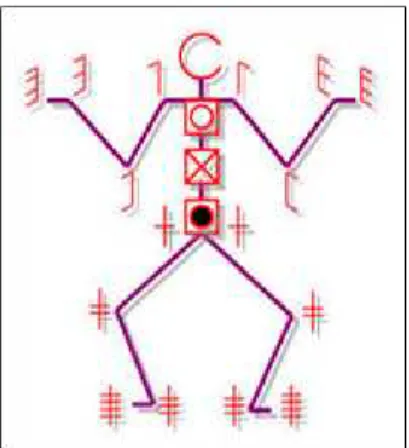
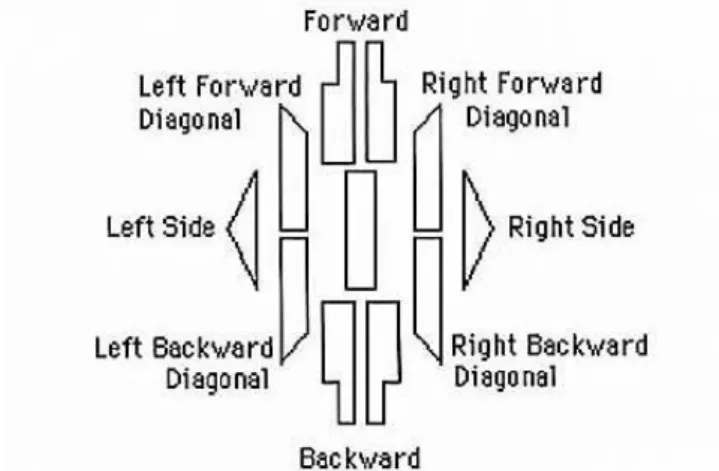
capable of recognising, appreciating, evaluating and realising his or her body with all its possibilities and limitations. He created Labanotation, a system for analysing and describing human movement (Figures 1 and 2).
Figure 2: Basic Movement Signs in Labanotation
The Laban Movement Analysis system (LMA) – which was later developed by his student and colleague Irmgard Bartenieff, who created the Bartenieff Fundamentals (LMA/BF) (Bartenieff 1980) – is considered an outgrowth or embodiment of his theories and remains in use to this day. It comprises four major categories: body, effort, space and shape. These became the bedrock of Laban’s movement education (Laban 1926; 1966). In brief, these categories are metonymically related to the
WHAT, the HOW, the WHERE and the WHY of movement.
A critical point in his theory of movement is his focus on the concept of effort.
Laban believed that the body is an instrument of expression and made a distinction between this expressive movement and movements that serve a purpose in everyday life, the functional movements. Expressive movement communicates ideas in dance or other forms of artistic expression. The purpose of functional movement is to help
with the tasks of everyday life, such as sports and games.
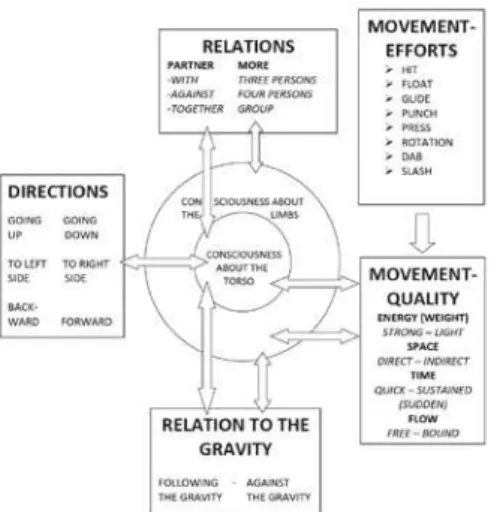
Figure 3 presents an overview of the categories and subcategories in relation to the body.
The circle in the middle represents the whole body, the torso as well as the
extremities. On the right hand, we can see the movement qualities and range of
types of effort that we can make. The top shows the relationship with others or the capacity for cooperation, and at the bottom we have the options connected with
gravity. On the left hand, we are presented with the six possibilities for movement
in space.
In all observation and analysis of movement, the main emphasis should be placed
Figure 3: Movement Analysis, elaborated as a working tool (Reworked after Sherborne 1997, 77; translation by the authors)
‘Psycho-motorics’
Introduction
Today the term ‘psycho-motorics’ is used in a range of ields, for example
pedagogy, sports science, medicine and psychology. This shows that
‘psycho-motorics’ is a highly varied concept, and it is therefore not easy to deine or to explain its pure meaning. Based on an intention analysis, Seewald (1997) found four different meanings or concepts of ‘psycho-motorics’:
– ‘Psycho-motorics’ as a concept for stimulation and fostering of development – ‘Psycho-motorics’ as a term which shows the unity of psychic and motor
processes
– ‘Psycho-motorics’ as a term in (sport) motoric research – ‘Psycho-motorics’ as a development related term
(cf. Seewald 1997; Reichenbach 2010).
This article focuses primarily on the fourth meaning: ‘psycho-motorics’ as a
development-related term in the study of early childhood development. Thus, development proceeds from a neuromotor state, via a sensorimotor one, to a
psychomotor and inally to the ‘sociomotor’ state (cf. Kiphard 2009). The inal section of the article also includes the irst meaning, in order to show the practical
use of stimulating and fostering development in early childhood.
These perspectives are based on the following two deinitions. First, general, that ‘psycho-motorics’ is characterised by “the functional unity of psychological and
motor processes, the close connection between the physical-motor and the mental-emotional” (Zimmer 2008, 22; translation of the authors), and second, conceptual,
according to which “’psycho-motorics’ is characterized by a holistic-humanistic,
development- and child-oriented form of movement education” (Kiphard 1989, 18; translation by the authors).
History
The neurologist and psychiatrist Wilhelm Griesinger was the irst to use the term
“psychomotor” (Griesinger 1844). The psychomotor approach is based on a holistic view of the human being and its development. According to this understanding, the
human body and mind are united. In this holistic view, the cognitive, emotional
and physical aspects are integrated, as well as the capacity of being and acting in a
psychosocial context (Probst, Knapen, Poot, Vancampfort 2010).
In the early 20th century, the German rhythmist Charlotte Pfeffer was the irst educator who attempted to apply the psychomotor approach in practice, which means here in therapeutic practice (Pfeffer 1955; 1958). However, Ernst J. Kiphard
is regarded as the founder of the psychomotor approach – at least in the German speaking countries. In the middle of the last century, he worked for several years
regard to this therapeutic effect, he began systematically to use movement activities for these groups.
Kiphard traced motor and sensorimotor abnormalities in children with learning and behavioral problems back to a minimal cerebral dysfunction. The resulting
deicits in perception and movement were the subjects of his concern. In
addition, he ascribed disturbances such as restlessness, hyperactivity, emotional
instability, inhibited and fearful behavior, motivational deiciency, disturbances in
endurance and concentration to the effects of minimal dysfunctions. Therefore,
Kiphard defended the necessity of psychomotor exercise treatment. In children,
motor operations and the analysis of their own abilities and fears should lead to
the harmonization and stabilization of the child’s personality. On the basis of this work, he developed the concept of ‘psycho-motorics’, later sometimes called
“motor pedagogy” (Kiphard 1989; 2009).
Physical activity in all its forms and corporeality is the central theme. Although physical activities have somatic effects (at the morphological, muscular, cardiorespiratory, metabolic, and motor levels), psychomotor therapy is considered to be both a psychological and a motor-pedagogical treatment.
From the present point of view, the history of the term ‘psycho-motorics’ is marked
by a range of concepts developed in various countries. The (dis-)similarities should be understood in the light of cultural differences (Probst, Knapen, Poot, Vancampfort
2010). For example, in the Romance-language countries, “psychomotricity” was developed in the ields of pedagogy, psychology and psychiatry. The foundation for
this idea is the link between body and mind based on a psychoanalytic perspective
(Buytendijk 1948; Gordijn 1961; Sivadon, Gantheret 1965).
Gradually, the term “movement therapy” appeared, and attention switched from physical activity to the question of how people move in relation to their environment, and how they use physical activity in their tasks, activities and responsibilities. The main idea behind psychomotor therapy was the interaction between physical activity and the mind (Probst, Knapen, Poot, Vancampfort 2010). Therefore, movement therapy began to include movement-oriented and
body-oriented (relaxation, sensory and body awareness) types of therapy, and the term “psychomotor therapy” was chosen (Broadhead, Vermeer, Boscher 1997).
Psychomotor therapy combines emotional, physical, cognitive and symbolic
responses and reactions in the body. It views a person holistically as being one in
mind and body. Developed by the Americans Diane and Albert Pesso (1969) in
the 1960s, it relies on the individual’s own ability to interact positively with the
social and cultural environment. Unlike physical movements alone, psychomotor activity involves an action without a cognitive or physiological intent. The purpose of the action is not to achieve a desired physical outcome. Rather, the motion or movement is a direct result of an internal process of perception and management
psychomotor therapy is the creation or activation of neural networks responsible for integration processes in the brain.
As a preliminary summing up, it can be noted that over the last two centuries there have been several “psychomotor” approaches in gymnastics, dance and
movement education, as well as in movement therapy. Indeed, Kiphard did not
create anything new, but he did collect, integrate and systematize the various roots
of ‘psycho-motorics’ in an innovative way.
Psychomotor methods in preschool today
In kindergarten, psychomotor activities can be used as a method for supporting the psychomotor development of children, and as a therapeutic method. In both
cases, the main intention is to support and stimulate motor development and,
consequently, children’s development as a whole.
In practical work with children, the “Developmental Movement Method” by Veronica Sherborne, the “Good Start Method” by Marta Bogdanowicz, and the
“Psychomotility Method” by Renate Zimmer are very popular. These three methods
are briely described here. There are many other methods in use, which are partial combinations, adaptations or modiications of these three concepts.
Veronica Sherborne’s Developmental Movement
Method
Movement experiences are fundamental for the development of all human beings
at all stages of development. Veronica Sherborne created her method over 50 years ago, based on the philosophy and theory of human movement by Laban (see
also Figure 3, which shows parts of Sherborne’s reworking of Laban’s movement analysis). In the beginning, this method was used for work with children with severe learning dificulties, but nowadays it has been extended to people of all
ages and with all types of special needs. Sherborne Developmental Movement is a method, which stimulates the development of emotional, social and cognitive spheres in children, while assisting the development of physical abilities and
positive relationships with others through shared experiences. This approach
provides an opportunity for children to get to know their own bodies, giving them
a sense of power and eficiency, and therefore a sense of security. That is why the development of trust, innate to ourselves and others, and creative self-expression
are fundamental themes in this type of movement (Sherborne 1990; 1997). There
are two basic objectives, according to Sherborne:
– Awareness of oneself. This is gained through movement experiences that help
the child to focus concentration, so that it becomes aware of what is happening
to its body – “listening” by touching and feeling of inner physical sensations
rather than by the usual looking and thinking. This helps to lessen self-criticism
and allows the child to grow in terms of self-esteem and conidence at both a
– Awareness of others. The next step is to learn to move around and interact with
others in a way that encourages further development of trust and the building
of positive relationships. These movement experiences enable the child to be appropriately supported while being encouraged to explore its unique creativity
through shared movement activities (Sherborne 1990).
Sherborne’s Developmental Movement is based on a motion called romping. This is a fun activity in which parents take part with their child. It is very simple,
natural and acceptable for use in all conditions, without any special material or
equipment. Exercises are barefoot, in comfortable clothes, on the loor, in low,
secure body positions and without an atmosphere of competition. Following
intense effort, relaxation and rest are in order. During the lessons everyone is active,
successful and happy. Each movement and activity ends in success, and everyone will be engaged and encouraged to make further effort.
“Through my experience of teaching and observing human movement, and learning through trial and error, I have come to the conclusion that all children
have two basic needs: they need to feel at home in their own bodies, and so gain mastery, and they need to be able to form relationships” (Sherborne 1990, 12).
The Good Start Method
The Method of Good Start (MGS) is a Polish modiication (Bogdanowicz 2013)
of the sensorimotor approach in work with children, which is developed on the
basis of the original Netherland-French method ‘Le Bon Depart’ created by Thea Bugnet (1990). The main aim of the MGS is to integrate all psychomotor functions that contribute to the process of learning to read and write. It also helps to develop
lateralization and body awareness, as well as left-right orientation in body schema and space. Over time, attention, memory and imagination are developed, and then motor abilities and coordination, and the ability to understand abstract symbols.
During speciic play experiences, a teacher can stimulate the psychomotor
development of a child. All the work is organized on the basis of three elements and their integration:
–the visual element: graphic models like geometrical patterns or letters;
–the auditory element: songs or short poems;
–the motor element: movement to the rhythm of a song while reproducing
graphic models or letters (Bogdanowicz 2013).
This method consists of a series of exercises, which are carried out in several stages, organized within a programme of activities. It usually begins with exercises
to develop body awareness and right-left orientation of the body plus space schema, followed by the main activities, which develop visual, auditory and motor
The form of the organisation of the activities should be appropriate for the
children’s needs. Using this method, the teacher can have the children work
individually, in pairs and in bigger groups.
The effectiveness of MGS, as well as the ‘Le Bon Départ’ method, has been conirmed by considerable scientiic research, especially in Poland, but also in other European countries (Bogdanowicz 2013; Leemrijse, Meijer, Vermeer, Adèr,
Diemel 2000).
The Psychomotility Concept by Renate Zimmer
Renate Zimmer`s research ields are early childhood development and psychomotility, with particular focus on the movement experiences of infants
and toddlers and their impact on both language acquisition and social-emotional
development (Zimmer 1981; 2008; 2009; Volkamer & Zimmer 1986). Her special
therapeutic interest concerns the movement of children with behavioural and developmental problems. She attributes great importance to the potential for
children’s development through sport and play.
Her method is based on individual support for a child’s development. The child
is seen and treated as a serious partner, who takes action, has its own feelings and thoughts, and is responsible for itself and its life situation. The teacher or therapist must show empathy and respect when working with the child.
According to Zimmer, a negative self-concept is often the most important cause of developmental disorders among children. Her concept is dependent on
socio-cultural factors, developed in early childhood. It strengthens the positive feedback
from the environment, while negative feedback from the environment distorts the
concept and gives negative self-esteem. Zimmer’s assumption emphasizes that the most important task of ‘psycho-motorics’ is to build a positive self-concept.
Particular attention is paid to the interaction between the child and the teacher, or
an important adult. For the child, it is an active and independent exercise to learn
to take responsibility for its own behaviour. That includes learning how to build a realistic self-concept and self-acceptance.
The therapist should refrain from evaluating or comparing. Zimmer believes that everyone has an innate desire for self-realization and self-improvement, which under appropriate conditions will ensure the improvement and development of
personality. It is therefore an important objective for supporting the development of
a child to create a favourable atmosphere, in order to work on disordered processes of maturation and growth. Her method of working with children is based mainly on providing help and support in the self-discovery of oneself and the environment.
According to Zimmer, the method of psychomotor development corresponds with four key issues:
explore their own interests and to try out objects and materials. These games
do not require special equipment and should be implemented in a short time. 2. Fun with movement experiences and physical activities. Playgrounds
provide effective locations for children to become used to equipment and material. Here they require more time and equipment. The games are more
complex; they activate children’s fantasy, allow the possibility of identifying with various roles and occupying a range of positions. It also allows further expansion of the children’s imagination.
3. Having fun together. Activities should also promote playing in a group, and
thus develop social relationships between children. To work, for example,
with simple rules and tasks within the group, a condition which requires cooperation. The rules must be clear and understandable, so that they can be used and internalized by all children, with varying degrees of comprehension. 4. Rest. Each course or phase in a playgroup should be followed by a relaxing
exercise. These will allow the children to feel, to see and to understand the beneicial effects of the exercises.
Zimmer gives a description of many practical examples of the main focal points
for promoting psychomotor development in various games (Zimmer 1989; Zimmer
& Cicurs 1987), taking into account the content of psychomotor development support (tangible, body and social experience), motor competence (e.g. strength,
motor coordination), and sensorimotor abilities (e.g. visual perception).
According to Zimmer, each human being from the moment of birth strives towards self-realization and self-improvement. Therefore, it is important to create favourable conditions for the development and building of a positive concept from the beginning.
Lev S. Vygotsky and the Concept of Zone of Proximal
Development
Introduction
Before we present the current approaches towards psychomotor activities in
kindergarten, we want to introduce one educator who is not well known in the
ield of motor development. Nevertheless, we think that Lev S. Vygotsky (1896-1936), with his social-cultural theory of development, has in a way also inluenced
the concept of motor development, even if he himself has never said or written anything on this topic. His concepts and some basic elements of his theory can
indirectly be rediscovered in the concept of ‘psycho-motorics’.
The zone of proximal development
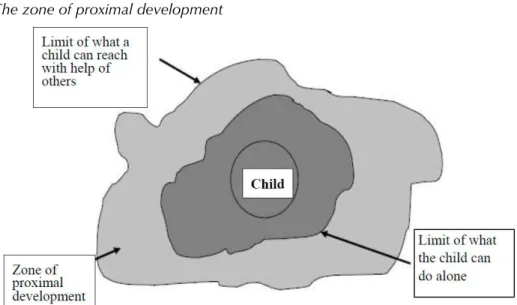
Figure 5: The zone of proximal development
According to Vygotsky, the zone of proximal development (ZPD) is the distance
between the actual developmental level, as determined by independent problem solving, and the level of potential development, as determined through problem solving under adult guidance, or in collaboration with more capable peers (Vygotsky 1981; 1987). The ZPD (see Figure 5) implies that interaction with more
capable and experienced persons helps children to achieve their potential intended and deined goals in all development areas.
Thus, children can learn from each other, especially in age-heterogeneous groups, where children display various degrees of advancement in different development
levels, so that they can inluence each other, stimulating the ZPD of their playmates
(peers). The interaction between the learning child and other people is so important because imitation, as an act of reason based on understanding, can cultivate and
extend those abilities that are still in a state of development. Therefore, it can be
highly relevant to take into account differences in levels or different competencies
when classifying children. This can be of great signiicance in playgroups
(Aleksandrovich, Zoglowek 2010; Zoglowek 2011).
Situation-oriented and relectively organized activity constitute high-quality types
of physical nurturing. This helps children to become familiar with their bodies and to master them, to learn basic and specialized movement skills, and to build
self-esteem and self-conidence.
Basic elements with relevance to motor development
Apart from the role of language/speech, to which will pay less attention in this
respect, there are three important elements in Vygotsky’s learning theory (Vygotsky
Creating the learning environment
It should be noted that motivational and stimulating environments generally seem to have more importance for children’s development than was once thought (Zimmer 2008; 2009). In relation to movement opportunities, physical nurturing and education, we should deine or understand “stimulating environment” in a
sense broader than only as “supporting a competent person”. For motor learning, the natural environment or an arrangement of the playground or the sports hall can have the same stimulating effect as the right questions or verbal impulses of the teacher. Another aspect of motor learning is that in early childhood learning of physical and coordinative skills depends on growth and maturity. Older children, who have already developed a range of abilities and capabilities, can support the
ZPD just as adults can.
Playing together
Vygotsky was mostly interested in role-play, because this activity develops, above all, such mental activities and functions as thinking, abstracting, memory
and creativity. Social behavior also develops in and through role-play, for example
satisfaction of needs, cooperation, acceptance and adoption of common standards
and values. Very relevant in this context is that the child adopt a behavioral pattern,
which does not correspond with its age; this means that it is one step ahead in its development.
Play and physical exercises in groups of children from mixed age levels will yield many opportunities to extend the movement mastery stage. Models of movement and behavior by older children inluence the younger ones to try similar things,
and in this manner the older ones have enlarged the ZPD for the younger ones. An arrangement of movement and physical activities that is both stimulating and differentiated for each child will begin with those abilities that have already been mastered, in order to foster security. However, as they observe the mastery stages of
others, they will become motivated to try something new. In a way, all children can
develop themselves, but all can also stimulate the ZPD of others. The adult has only to supervise them and, eventually, to give verbal encouragement (Aleksandrovich
& Zoglowek 2010).
The role of the (preschool) teacher
The importance of the preschool teacher or other signiicant persons for individual
development process has been repeatedly highlighted. “Many scholars believe that
the ability of teachers to structure the learning activities and experiences, to create
an optimum learning environment and to interact with children plays an important
role in developing and promoting children’s use of creative and critical thinking
skills” (Zachopoulou et al. 2006, 280). The effectiveness of ZPD depends strongly
on the teachers’ professionalism in providing the optimum balance between structure and freedom of exploration, discovery, experimentation and expression
In Vygotsky’s theory, the teacher is much more important for early childhood
development than in other pedagogical approaches. According to Vygotsky, the assumed chronology of development is as follows: support and promotion of
competent persons in the ZPD – new learning – (further) development of the child.
The competent person, which means primarily the preschool teacher, takes different roles as observer and evaluator, composer, instructor and model, dialogue partner, active participant in the learning process, and playing partner.
In physical activities, the special task of preschool teachers is to ind or to arrange the appropriate movement situation, for example one that corresponds to the ZPD
of the particular child. The professional perspective of preschool teachers includes to their pedagogical and content knowledge. The concept of ZPD suggests that each child has a different potential based on its individual cultural heritage (its
background and learning experiences) and actual body development. Therefore, the
preschool teacher needs a highly developed level of knowledge and understanding
of all children as individuals. In learning a new movement, some children will
require minimal input from the teacher, while others will require ongoing support and information.
Experiences with and reflections on psychomotor
activities in Norwegian kindergartens
Even if Vygotsky and his basic learning theory are not explicitly mentioned
in the Norwegian curriculum for kindergarten (KD 2006), the formulation of
superordinate aims is very similar to Vygotskian concepts. Combining Vygotsky’s
theory of learning with a child-centered development model of physical nurturing can provide a holistic approach, as claimed by the Ministry of Education.
As part of the aims and tasks of kindergartens, the following purposes and intentions
are expressed (KD 2006): The purpose of kindergarten is to give preschool children
good opportunities for activity and development. Kindergartens shall provide pre-school children with an environment that offers both challenges appropriate
to the children’s age and level of functioning, and protection from physical and
psychological harm. Kindergartens shall increase opportunities that children have to learn and to participate actively in a peer group. Kindergartens shall have the physical, social and cultural qualities that at any given time correspond to current knowledge and understanding regarding children and their requirements.
What is characteristic is the holistic view of children and their development. Development is seen as a dynamic and closely interwoven interaction between physical and mental circumstances and the environment in which the children
are growing up. In the developmental process, children are social players, who personally contribute to their own and other children’s learning. Interaction is crucial to all learning and development. The characteristic feature of children’s
enthusiasm. In general, there are no differences between children who develop
normally, and children with certain disorders or diseases. Even if the latter get some
extra exercises, most of the time all children are included in all activities, both free
and instructed.
Movement and physical activity make up an explicitly named content module:
body, movement and health (KD 2006, 22). During early childhood, children acquire fundamental motor skills, body control, physical characteristics, habits and insights into how they can protect their health and quality of life. Children
are physically active, and they express themselves largely through their bodies.
Through physical activity, children learn about the world and about themselves.
Through sensory impressions and movement, children gain experience, skills
and knowledge in a number of areas. The contact that children have with other children often starts with body language and bodily activities. This is important to the development of social competence. Active use of the outdoor environment and local community provides many opportunities.
Through work on the body and through movement, kindergartens shall help to ensure that “children develop a positive self-image through physical achievements,
have positive experiences of varied and all-round movements and challenges, continue to develop their body control, gross motor skills and ine motor skills,
sense of rhythm and motor sensitivity” (KD 2006, 22).
Following this plan, the kindergartens are working towards implementing this program. One kindergarten in Alta, a town in northern Norway, collaborated for nearly two decades with the institute for Sport Science and Physical Education at
the Finnmark University College in Alta. Children between the ages of three and six
participated in the physical activities.
When the cooperation between the kindergarten and the University College
started, there was no clear concept or model. Both sides had only the deep conviction
that movement was crucial for development. The kindergarten itself has very good outdoor facilities to stimulate movement, but is ill-equipped in terms of indoor facilities. Even if the children have to be outside as often and as long as possible, there are also long indoor periods, because of the long wintertime in northern Norway. Therefore, the kindergarten was given the opportunity to use the sports hall at Finnmark University College once a week. For the activities, an arrangement was made in the sports hall, where a set of indoor equipment became a “landscape
for movement”. Initially, the aim was just to observe the children in their activities
and to discover what special program should be developed. However, very soon it emerged that it was unnecessary to prepare a special teacher-guided movement or activity learning program. Often the children found and developed movement games and activities that were different from those that had been planned. These
activities were individual, of varying level and quality, but also creative. Because of
With these observations, came the time to formulate a concept for pedagogical
work. Vygotsky’s concepts were followed. The co-constructivist approach, which could be recognized in the children’s activities, in social interaction on different
learning levels, and in the clear importance of a purposeful and considered
environment, became crucial to the process. In a way, the environment was
considered as an invitation to the ZPD, whereas environment here is understood primarily as the physical environment, which in this case should initiate and stimulate movement and physical activity. The variety of movements made it obvious that children had distinct needs. Some needed a great deal of repetition to
be safe and to achieve a personal mastery stage, some were looking for extension
and enhancement, which they sought to achieve with the support of others, and
others were just beginning to learn basic movements. Children in this third category
probably needed most help from the adults. Step by step the youngest developed the elementary movements, while the older children initiated and showed them the way into the ZPD.
The environment, that means here the arrangement of the equipment and assorted materials, was the most crucial prerequisite for this learning approach. The preschool teacher had only to observe and perhaps to intervene, to stimulate or to
support, but inherent to the arrangement was the fact that it should ‘speak for itself’. Advancement in the purpose of the activities or, in Vygotsky’s words, ‘achieve[ment of] higher mental functioning’ (Vygotsky 1981), led to the question
of how children could best perform with their movement abilities. This could be
through coniguration, social interaction or playing together. A relevant attempt was to include Sherborne’s concept of “development through movement”. Two
different approaches were implemented: for the younger children, especially those
with less experience and self-initiative, it was important to get more security and
self-assurance into their motor activities. The preschool teachers had to actively ensure more individual care and a better atmosphere of security. For the older children, more common activities had to be arranged, where they could learn interdependence and see that they had to work together and support each other.
The importance of learning through play – which Vygotsky describes mainly as role-play – revealed itself in movement games and physical role-playing. It was interesting
to see that even after two or three weeks, the younger children were achieving a
‘higher mental-motoric’ level, not simply because they were suficiently brave and
able to try and to face challenges, but also because they had found the path into
their own zone of proximal development.
Experiences with and reflections on psychomotor
activities in Polish kindergartens
pre-primary classes in primary schools to get their pre-primary education. A child’s usual day in a Polish kindergarten lasts for a minimum of ive hours. During this
time the child participates in activities organized or suggested by the teacher, and they play spontaneously in the classroom or in the garden. So, in their everyday activities, the child has the opportunity to develop contacts with peers and adults,
as well as to develop their motor and cognitive skills. (Osiński 2003).
One method used in child development can be Veronica Sherborne Developmental
Movement. I am fond of this method because it is a system of exercises developed on the basis of children’s natural needs. Apparently simple at irst sight, the method
provides an opportunity for the development of self-awareness and an awareness of others; it also develops the motor and social abilities of the children, as well as their creativity. This method can be successfully used for both healthy children and
children with special needs (Bogdanowicz, Kisiel, Przasnyska 1996; Bogdanowicz 2009; Wieczorek & Kuriata 2014; Aleksandrovich & Zoglowek 2015). For example,
in case of autism Veronica Sherborne Developmental Movement effectively
supports the therapy, improves children’s behavior and their social relations, and supports the participation of parents and siblings in therapy sessions (Wieczorek &
Kuriata 2014).
As an Advanced Practitioner of Veronica Sherborne Developmental Movement,
I have been working with this method since 2006, both in private practice and as a practical psychologist in an Integration Kindergarten in Slupsk, Poland. Working as private movement therapist, I have used Sherborne Developmental Movement
in work with healthy children between two and three years old. While working as
a kindergarten psychologist, I used this method for all children in the kindergarten between three and six years old, for healthy children, and for children with a range
of disabilities, as well as for their parents.
In the irst case, my main aim was to develop consciousness of the child’s
body, to build their sense of safety, to improve “child-parent” relationships and to increase creative abilities. We worked with parents and children in small groups of three or four pairs, twice a week for 30 minutes. Parents appreciated the easy,
open form of the exercises, and together with their children enjoyed working in a small therapeutic group. In the interview, one parent said, “We underestimated the therapeutic strength of the good old exercises. All parents should know how easy it
is to support the development of your child through a number of adequate moving
exercises, through ordinary fun” (Wioletta, 35 years old, mother of a girl).
In the second case, my aim was more complicated, since the therapeutic group
was bigger, and the participants differed in the level of their motor development, as
concentrated mostly on the development of motor abilities, awareness of other persons and creativity. Another important point was paying special attention to
children’s energy and teaching them how to use this energy without aggression, how to cooperate in pairs and groups, how to fulill commands, following the rules
of the games. During the lessons, parents were surprised at how different children could be in individual motor abilities: in some cases, the help of three adults was needed to assist the child in crawling from one side of the room to another; in other cases, a passive autistic child showed very good motor abilities and creativity.
In both cases the effects of the work assisted the children in therapy to gain further
opportunities for communication across the curriculum, but also to master them in
their quest to form social relationships. Among the beneits of developing shared learning opportunities in movement, I can mention development in such areas as
social and emotional relationships, awareness that our feelings vary in intensity and
acceptance that others have feelings as well as ourselves. The exercises also helped
me in developing a shared understanding that all people can feel the same range of emotions and that our actions can affect the feelings of others, help to develop effective non-verbal communication, empathy and negotiation skills for child-child relationships as well as child-adult relationships.
Summary
The analysis of movement shows the natural course of motor development.
Inspired by his own studies in dance and dance education, Rudolf von Laban
(1879-1958) created an analysis method, Labanotation, which is considered
fundamental to this day. In movement education this theory was irst used mainly in movement therapy, for example by Thea Bugnet (1887-1951) in the Netherlands,
Veronica Sherborne (1922-1990) in England, or Ernst J. Kiphard (1923-2010) in
Germany. Bugnet initiated and created the ‘Le bon depart’, Veronica Sherborne the ‘Developmental Movement Method’ and Ernst J. Kiphard ‘psycho-motorics’. All
these concepts were later elaborated into systems for supporting children in their motor development.
The article gives a brief history of Laban’s Movement Analysis (LMA) and of ‘psycho-motorics’. The importance of a holistic view in motor development in early
childhood is especially emphasized in the three psychomotor or
psychomotor-related concepts, which were presented in the second part of the article. In addition to Veronica Sherborne’s method, these are the ‘Good Start Method’, the Polish adaptation of ‘Le bon depart’, developed by Marta Bogdanowicz, and the ‘Psychomotility’ concept by Renate Zimmer.
The last part is introduced by the social-cultural theory of learning and development of Lev Vygotsky (1896-1934). Even if he did not talk about motor development, his general thoughts about development are so fundamental, that
the concept of the ‘zone of proximal development’ and its implications, which can be used, with great success and beneit for all, in the development of elementary
movements.
The closing descriptions of and relections about psychomotor practice in a
combination of different concepts show how productive it can be to consciously
apply ZPD in supporting children’s motor development. The account of the experience of working in Norwegian kindergartens focuses mainly on Vygotsky’s ideas, transferred to motor development, while the account of experience in Polish kindergartens refer irst and foremost to Sherborne’s method, especially as used to
work on integration and inclusivity.
LITERATURE
Aleksandrovich, M., Zoglowek, H. (2010). Implications of the idea of ZPD for movement development and physical activities in the kindergarten. In «Зона Ближайшего развитя» в
теоретическойипрактическойпсихологии, (Ed.)ФедеральноеАгентствопообразованию,
231-243. Moscow: Moscow Psychological University.
Aleksandrovich, M., Zoglowek, H. (2014). Movement activities and therapy methods as a support of the preschool children’s development. In Inclusion, Therapy, Development Support as the Problems of Contemporary Education, (eds.) T. Senko, I. Bugajska-Bigos, B. Lisowska, 317-330. Nowy Sącz: Nova Sandec.
Bartenieff, Irmgard. 1980. Body Movement: Coping with the Environment. New York and London: Routledge.
Bogdanovicz, Marta. 2013. Metoda Dobrego Startu. Gdansk: Harmonia Universalis. Bogdanowicz, M., Kisiel, B., Przasnyska, M. (1996). Metoda Weroniki Sherborne w terapii i wspomaganiu rozwoju dziecka. Warszawa: WSiP.
Bogdanowicz M., Kasica A. (2009). Ruch Rozwijający dla wszystkich. Efektywność Metody
Weroniki Sherborne. Gdansk: Wydawnictwo Harmonia.
Broadhead, G., D.,Vermeer, A., Boscher, R., J. (Eds). (1997). Movement therapy across the lifespan. Amsterdam: VU University Press.
Brotherson, S. (2006). Understanding of Physical Development in Young Children. Accessed May 01, 2014. http://www.ag.ndsu.edu/pubs/yf/famsci/fs632.pdf
Bruce, T., Meggit, C. (2002). Childcare and Education. London: Hodder & Stoughton. Brzozowski, S. (1903). Jędrzej Śniadecki: jego życie i dzieła. Warszawa: M.Arct.
File, N. (1995). Applications of Vygotskian theory to early childhood education: Moving toward a new teaching-learning paradigm. Advances in Early Education and Day Care, 7, 295-317.
Bugnet, T. (1990). Le bon depart. Association le bon depart Colmar.
Buytendijk, F. J. J. (1948/1974). Algemene theorie der menselijke houding en beweging. Utrecht: Spectrum.
Griesinger, W. (1844). Neue Beiträge zur Physiologie und Pathologie des Gehirns. In: Archiv für physiologische Heilkunde. (3) Stuttgart: Ebner und Seubert.
Hanson, J. W., Gunckel, L. W. (1896). The Delsarte Elocutionist. Chicago: American Publishing House.
KD (= Kunnskapsdepartementet). 2006. Rammeplan for barnehagens innhold og oppgaver [Framework Plan for the Content and Task of Kindergartens] Oslo: Ministry of Education and Research. Accessed May 01, 2014. http://www.regjeringen.no/upload/kilde/kd/reg/2006/ 0036/ddd/pdfv/285775-rammeplanen-engelsk-pdf.pdf
Kiphard, E. J. (1989). Psychomotorik in Praxis und Theorie. Gütersloh: Flöttmann.
Kiphard, E. J. (2009). Psychomotorische Entwicklungsförderung, Bd. 1: Motopädagogik. Dortmund: Modernes Lernen.
Laban, R. von. (1926). Choreographie. Jena: Eugen Diederichs.
Laban, R. von. (1966). The language of movement.London: Macdonald & Evans, Ltd.
Laban, R. von. (2011). The mastery of movement. (4th ed.). Alton, New Hampshire, UK: Dance Books7 Ltd. (Original work published in 1950).
Leemrijse, C. J., Meijer, O. G., Vermeer, A., Adèr, H. J., Diemel, S. (2000). The eficacy of Le Bon Départ and Sensory Integration treatment for children with developmental coordination disorder: a randomized study with six single cases. Clinical Rehabilitation, 14 (3), 247-59. Osiński, W. (2003). Kinesiology. Poznań: AWF.
Pesso, A., Boyden-Pesso, D. (1969). Movement in Psychotherapy: Psychomotor Techniques and Training. New York: NYU Press.
Pfeffer, C. (1955). Psychomotorische Heilerziehung. Zeitschrift für Kinderpsychiatrie (22). Basel: Schwabe & Co.
Pfeffer, C. (1958). Bewegung, aller Erziehung Anfang. Zürich: Sämann Verlag.
Probst, M., Knapen, J., Poot, G., Vancampfort, D. (2010). Psychomotor Therapy and Psychiatry: What’s in a Name? The Open Complementary Medicine Journal, 2, 105-113. Reichenbach, C. (2010). Psychomotorik. München: Reinhardt Verlag.
Saracho, O., Spodek, B. (2003). Contemporary Perspectives on Play in Early Childhood Education. USA:Age Publishing, Inc.
Seewald, J. (1997). Glossar zum Begriff der Psychomotorik. Praxis der Psychomotorik, (22)4, 272.
Sherborne, V. (1990). Developmental movement for children. Cambridge: University Press.
Sherborne, V. (1997). Utvikling gjennom bevegelse. Oslo: Cappelen.
Sivadon, P, Gantheret, F. (1965). La rééducation corporelle des fonctions mentales. Paris: Èditions Sociales Françaises.
Stebbins, G. (1882/2013). Delsarte System of Dramatic Expression. Charleston: Hardpress Publishing.
Stinson, S. (1990). Dance Education in Early Childhood. Design for Arts in Education. 91(6), 34-41.
The system of education in Poland (2010). Warszawa: Foundation for the Development of the Education System.
Volkamer, M., Zimmer, R. (1986). Kindzentrierte Mototherapie. Motorik 9, 49-58.
Vygotsky, L. S. (1981). The genesis of higher mental functions. In The concept of activity in soviet psychology, (Ed. and trans.) J.V. Wersch, J.V. Armonk, NY: M. E. Sharpe.
Vygotsky, L. S. (1987). Ausgewählte Schriften. Bd.2: Arbeiten zur psychischen Entwicklung der Persönlichkeit. Köln: Pahl-Rugenstein.
Wieczorek, M., Kuriata, B. (2014). Sherborne Developmental Movement Method as a form of support for therapy in children with autism spectrum disorders. Journal of Health Sciences. 4 (13), 95-103. Accessed January 20, 2016. https://zenodo.org/record/13247/ iles/2014_4_13_ 95-103_2451_954.pdf
Zachopouloua, E., Trevlasa, E., Konstadinidou, E. (2006). The design and implementation of a physical education program to promote children’s creativity in the early years. International Journal of Early Years Education, 14 (3), 279-294.
Zaichkowsky, L. D., Zaichkowsky, L. B., Martinek, T. J. (1980). The child and physical activity. St. Louis, MO: Mosby, Davies.
Ziółkowski, A., Frołowicz, T. (2009). Jędrzej Śniadecki The Originator of The Polish Thought on Physical Education. European Journal of Physical & Health Education Social and Humanistic Perspective. 1, 7-13.
Zimmer, R. (1981). Motorik und Persönlichkeitsentwicklung bei Kindern im Vorschulalter. Schorndorf: Hofmann.
Zimmer, R. (1989). Kreative Bewegungsspiele. Psychomotorische Förderung im Kindergarten. Freiburg: Herder.
Zimmer, R. (1990). Bewegung, Spiel und Sport mit Kindern. Aachen: Meyer & Meyer.
Zimmer, R. (2008). Handbuch der Psychomotorik. Freiburg: Herder.
Zimmer, R. (2009). Kinder unter drei–von Anfang an selbstbewusst und kompetent. Freiburg: Herder.
Zimmer, R. (2010). Bewegung, Körpererfahrung & Gesundheit. Berlin: Cornelsen Scriptor.
Zimmer, R. (2013). Using the body to discover language: Fun approaches to language and literacy. In Prepare for life, (eds.)J.F. Maas, S.C. Ehmig, C. Seelmann, 27-32. Mainz: Stiftung Lesen.
Zimmer, R., Cicurs, H. (1987). Psychomotorik – Neue Ansätze im Sportförderunterricht und im Sonderturnen. Schorndorf: Hofmann.
Links to the Labanotation signs:
https://www.google.de/search?q=basic+signs+of+Labanotation&hl=no&biw=1301&bih=6 42&tbm=isch&tbo=u&source=univ&sa=X&ved=0ahUKEwjVrofzjLTKAhUJpnIKHXKrB50Qs AQINw
Herbert Zoglowek, University in Tromsø – The Artic University of Norway, and Pomeranian Academy in Slupsk, Poland, [email protected]