Pre se nce o f the
RHD
pse udo ge ne
and the hybrid
RHD-CE-D
s
ge ne in
Brazilians with the D -ne gative
phe no type
1Hemocentro, Universidade Estadual de Campinas,
Campinas, SP, Brasil
2New York Blood Center, New York, NY, USA
A. Rodrigues1, M. Rios2,
J. Pellegrino Jr.1,
F.F. Costa1
and L. Castilho1
Abstract
The molecular basis for RHD pseudogene or RHDΨ is a 37-bp insertion in exon 4 of RHD. This insertion, found in two-thirds of D-negative Africans, appears to introduce a stop codon at position 210. The hybrid RHD-CE-Ds, where the 3' end of exon 3 and exons 4 to 8
are derived from RHCE, is associated with the VS+V- phenotype, and leads to a D-negative phenotype in people of African origin. We determined whether Brazilian blood donors of heterogeneous ethnic origin had RHDΨ and RHD-CE-Ds. DNA from 206 blood donors
were tested for RHDΨ by a multiplex PCR that detects RHD, RHDΨ
and the C and c alleles of RHCE. The RHD genotype was determined by comparison of size of amplified products associated with the RHD
gene in both intron 4 and exon 10/3'-UTR. VS was determined by amplification of exon 5 of RHCE, and sequencing of PCR products was used to analyze C733G (Leu245Val). Twenty-two (11%) of the 206 D-negative Brazilians studied had the RHDΨ, 5 (2%) had the
RHD-CE-Ds hybrid gene associated with the VS+V- phenotype, and
179 (87%) entirely lacked RHD. As expected, RHD was deleted in all the 50 individuals of Caucasian descent. Among the 156 individuals of African descent, 22 (14%) had inactive RHD and 3% had the RHD-CE-Ds hybrid gene. These data confirm that the inclusion of two
different multiplex PCR for RHD is essential to test the D-negative Brazilian population in order to avoid false-positive typing of polytransfused patients and fetuses.
Co rre spo nde nce
A. Rodrigues Hemocentro, Unicamp Rua Carlos Chagas, 480 Caixa Postal 6198 13081-970 Campinas, SP Brasil
Fax: + 55-19-3289-1089 E-mail: artemisr@ bol.com.br
Research supported by FAPESP (Nos. 99/03620-0 and 00/03510-0).
Received O ctober 19, 2001 Accepted May 7, 2002
Ke y words •RHD pseudogene
•RHD-CE-Ds
•D-negative phenotype
•VS antigen
•Brazilians
Intro ductio n
The Rh blood group system is clinically important because it is involved in hemolytic disease of the newborn, hemolytic transfu-sion reactions and autoimmune hemolytic anemia. Rh is a highly complex red cell blood group system with 46 antigens (1,2).
The most important antigens are D, C/c, and E/e. The Rh system antigens are encoded by two homologous genes (3), the RHD gene and the RHCE gene, both located on chro-mosome 1p34.3-p36.1 (4). RHCE gives rise to C/c and E/e polymorphism and RHD en-codes the RhD antigen (5).
can result in the D-negative phenotype (3,6-9). In non-Whites, D-negativity can appear in individuals carrying the complete RHD
gene (10,11). This group includes individu-als of black or Asian origin (10,11) who exhibit either an internal duplication (12) or a deletion (13) within the RHD gene, result-ing in a premature stop codon in RHD tran-scripts. The presence of certain RHD regions in hybrid genes encoding partial D antigens may predict a D-negative phenotype, and the presence of some RHD regions in genes encoding no D antigen may predict a D-positive phenotype. In order to avoid these complications, methods which detect more than one region of RHD have been intro-duced (11,14,15).
About two-thirds of D-negative Africans have an inactive RHD gene (12). This pseudogene (RHDΨ) has a 37-bp insert in exon 4, which may introduce a reading frame shift and premature termination of transla-tion and a translatransla-tion stop codon in exon 6 (12). Of the remaining one-third of African D-negative donors, about half appear to be homozygous for an RHD deletion and about half have the RHD-CE-Ds hybrid gene char-acteristic of the (C)ces haplotype that pro-duces c, VS, and abnormal C and E, but not D (8,12). In D-negative African Americans and South African people of mixed race, the same three genetic backgrounds are present, but 24% of African Americans and 17% of South African donors of mixed race have
RHDΨ, and 54% of African Americans and 81% of South African donors of mixed race have no RHD (12).
In the present study we investigated whether D-negative Brazilian blood donors of heterogeneous ethnic origin had altered
RHD. We studied DNA samples from 206 D-negative blood donors (50 of Caucasian descent and 156 of African descent) by two different multiplex PCR that detect RHD, D
variants, RHC/c and the RHDΨ and by se-quencing exon 5 of RHCE for the 733 C>G polymorphism (VS antigen). Our
observa-tion was in agreement with previous publi-cations showing that RHD was deleted in all individuals of Caucasian descent. However, 14% of D-negative Brazilians of African descent studied had the RHDΨ and 3% had the RHD-CE-Ds hybrid gene. These data show the necessity of performing multiplex PCR for detecting more than one region of
RHD and the 37-bp insertion in populations of African descent for predicting the D phe-notype from DNA in order to avoid false-positive typing of polytransfused patients and fetuses.
Mate rial and Me thods
Blood donors
We studied peripheral blood samples from 206 random D-negative blood donors (50 of Caucasian descent and 156 of African de-scent) who agreed to participate in this study by signing an informed consent form. The study was approved by the Medical Ethics Committee of UNICAMP and CONEP.
Agglutination te sts
RhD phenotypes were determined by hemagglutination in gel cards (Diamed AG, Morat, Switzerland) using two different com-mercial sources of monoclonal antisera (Gamma Biologicals Inc., Houston, TX, USA; Diamed AG). VS and V phenotypes were determined by standard techniques us-ing polyclonal antibodies (patient serum).
DNA preparation
DNA was extracted from blood samples using the DNAzol (Gibco BRL, Rockville, MD, USA) and a blood DNA purification kit (Amersham Pharmacia Biotech Inc., Piscat-away, NJ, USA) according to manufacturer recommendations.
performed in two genomic regions, intron 4 and exon 10. Briefly, PCR was performed with 100-200 ng of DNA, 50 pmol of each primer, 2 nmol of each dNTP, 1.0 U Taq
DNA polymerase, and buffer in a final vol-ume of 50 µl. PCR was carried out in a thermal cycler (9700, Perkin Elmer, Foster City, CA, USA) and the same profile was used for both assays, as follows: 15 min at 95ºC, 35 cycles of 40 s at 94ºC, 40 s at 62ºC, and 1 min at 72ºC, followed by 10 min at 72ºC. Amplified products were analyzed by electrophoresis in 1.5% agarose gel in Tris-acetate EDTA buffer. For exon 10, a com-mon 5' primer (EX10F) was used for both
RHD and RHCE. When paired with the RHD-specific 3'-untranslated region (UTR) primer, it produced a product of 210 bp, and when paired with the RHCE-specific 3'-UTR primer, a product of 163 bp (16) was pro-duced. A set of three primers, RHI41 and RHI42 (previously reported; 16), and an ad-ditional third primer RHI43 were used for intron 4. The combination of these three primers generates products of 115 bp for
RHD and 236 bp for RHCE (Figure 1). The sequences of the primers are listed in Table 1.
Multiple x PCR for the pre se nce of the RHD
pse udo ge ne
Analysis of the RHDΨ 37-bp insert was performed using a multiplex PCR that de-tects the presence of D, differentiates RHC/c
and identifies RHDΨ (12). PCR primers are listed in Table 2. Thirty cycles of PCR were performed at 94ºC for 1 min, 65ºC for 1 min, and 72ºC for 3 min 30 s. PCR products were analyzed by 2% agarose gel electrophoresis (Figure 2B).
Multiple x PCR for RHD variants
Analysis of RHD variants was performed in all samples using an RHD multiplex assay directed at six regions of RHD (exons 3-7
and exon 9), covering all exons with RHD -specific sequences in the coding regions (15). The multiplex PCR was performed in a ther-mal cycler (9700, Perkin Elmer) with the following cycle specifications: 32 cycles of 1 min at 95ºC, 1 min at 55ºC and 45 s at 72ºC, followed by 10 min at 72ºC. PCR products were size-separated by 8% acrylamide gel electrophoresis (Figure 2A). PCR primers are listed in Table 3.
Se que nce analysis
Sequence analysis was performed on PCR products amplified from genomic DNA us-ing RHCE-specific primers for exon 5 (Table 4) to determine the presence of 733G pre-dicted to encode Val245 (VS+) and RHD -specific primers for exon 3 (Table 4) to determine the presence of the D-CE hybrid. PCR products were purified on 1% agarose gels using a Qiaex II gel extraction kit (Qiagen, Valencia, CA, USA), and sequenced directly using an ABI 373XL Perkin Elmer Biosystems sequencer.
Table 1. Primers used for RHD genotyping.
Primers Sequence Intron/exon/bp
RHI41 5'-GTG TCT GAA GCC CTT CCA TC-3' Intron 4/236/115
RHI42 5'-GAA ATC TGC ATA CCC CAG GC-3'
RHI43 5'-ATT AGC TGG GCA TGG TGG TG-3'
EX10F 5'-TTT CCT CAT TTG GCT GTT GGA TTT TAA-3' Exon 10/210/163 RHD3' -UTR 5'-GTA TTC TAC AGT GCA TAA TAA ATG GTG-3'
RHCE3' -UTR 5'-CTG TCT CTG ACC TTG TTT CAT TAT AC-3'
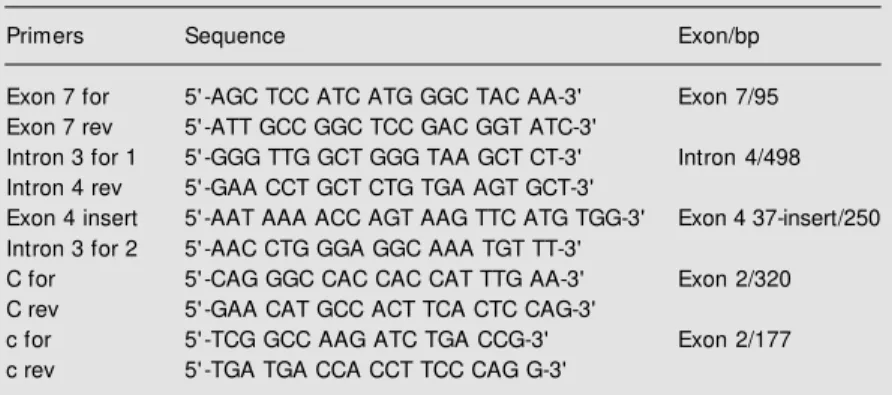
Table 2. Primers used for identification of RHD-CE-Ds.
Primers Sequence Exon/bp
Exon 7 for 5'-AGC TCC ATC ATG GGC TAC AA-3' Exon 7/95
Exon 7 rev 5'-ATT GCC GGC TCC GAC GGT ATC-3'
Intron 3 for 1 5'-GGG TTG GCT GGG TAA GCT CT-3' Intron 4/498 Intron 4 rev 5'-GAA CCT GCT CTG TGA AGT GCT-3'
Exon 4 insert 5'-AAT AAA ACC AGT AAG TTC ATG TGG-3' Exon 4 37-insert/250 Intron 3 for 2 5'-AAC CTG GGA GGC AAA TGT TT-3'
C for 5'-CAG GGC CAC CAC CAT TTG AA-3' Exon 2/320
C rev 5'-GAA CAT GCC ACT TCA CTC CAG-3'
c for 5'-TCG GCC AAG ATC TGA CCG-3' Exon 2/177
alloanti-D reagents that react with all known partial D and weak D antigens. Red blood cells from five black donors who were D-negative were phenotyped as C+c+E-e+ VS+ and V-. These five donors all showed a weak expression of C.
Scre e ning D-ne gative donors for e xon 10 and
intron 4
All D-negative donors were tested by the allele-specific PCR method designed to de-termine the presence of RHD exon 10 and intron 4 (Figure 1). Three patterns of reac-tion were apparent: presence of both RHD
regions, absence of both RHD regions, and presence of RHD exon 10, but absence of
RHD intron 4. Of the 206 D-negative Brazil-ian blood donors tested, 87% lacked RHD
(50 of Caucasian descent and 129 of African descent), 11% had both regions of RHD, and 2% had only RHD exon 10 (Table 5).
Scre e ning D-ne gative donors for the RHDΨΨΨΨΨ
37-bp inse rt
Of 156 D-negative samples from people of African origin, 22 (14%) contained the exon 4/37-bp insert (Table 5, Figure 2B).
Scre e ning D-ne gative donors for RHD exons
3-7 and exon 9
Multiplex PCR to detect D variants (Fig-ure 2A) in selected donors with RHD re-vealed that donors with RHD exon 10 and intron 4 also had RHD exons 3, 4, 5, 6, 7, and 9, suggesting the presence of a grossly intact
RHD. Red cells from five donors of African descent with RHD exon 10, but without RHD
intron 4, were C+ and VS+V-. In addition to
RHD exon 10, donors of this type had RHD
exon 9 and a hybrid exon 3 comprising a 5' end derived from RHD and a 3' end derived from RHCE. The presence of the 773G mu-tation in exon 5 of the RHCE determined by sequencing confirmed the VS antigenicity.
236 bp 245 bp
160 bp
115 bp
1 2 3 4 5 6 7 8
Figure 1. RHD genotyping by intron 4 and exon 10 of RHD. Lanes 1 and 3: RHD-positive samples display bands of 236 bp for RHCE and 115 bp for the RHD intron 4 sequence. Lane 2: RHD-negative sample displays only the 236-bp band corresponding to the RHCE intron 4 sequence. Lane 4: Reaction blank. Lane 5: 50-bp DNA ladder. Lanes 6and 8: RHD-positive samples that amplify a 245-bp product of the RHD and a 160-bp product of the RHCE exon 10 sequence. Lane 7: RHD-negative sample displays only the 160-bp band corresponding to the RHCE exon 10 sequence.
Re sults
Se ro lo gy
Red blood cells from the 206 blood do-nors gave D-negative results with two
Table 3. Primers used for identification of the RHDΨ 37-bp insert.
Primers Sequence Exon/bp
M R364 5'-TCGGTGACTGATCTCAGTGGA-3' Exon 3/111
M R474M 5' -ACTGATGACCATCCTCATGT-3'
M R496 5' -CACATGAACATGATGCACA-3' Exon 4/126
M R621 5' -CAAACTGGGTATCGTTGCTG-3'
M R648 5' -GTGGATGTTCTGGCCAAGTT-3' Exon 5/157
M rex5 5' -CACCTTGCTGATCTTACC-3'
M R898 5' -GTGGCTGGGCTGATCTACG-3' Exon 5/57
M rex6 5'-TGTCTAGTTTCTTACCGGCAAGA-3'
M R973 5' -AGCTCCATCATGGGCTACAA-3' Exon 7/96
M R1068 5' -ATTGCCGGCTCCGACGGTATC-3'
M re9SD2 5' -AACAGGTTTGCTCCTAAATATT-3' Exon 9/71
M R1219 5'-AAACTTGGTCATCAAAATATTTAACCT-3'
Table 4. Primers used for sequence analysis of VS and D-CE hybrid.
Primers Sequence Exon/bp
RHCEint4 sense 5'-GAG GTT GCA GTG AGC CCA TGA TCG-3' Exon 5/474 RHCEex5 reverse 5'-TGA CCC TGA GAT GGC TGT CA-3'
RHDex3 sense 5'-TCG GTG CTG ATC TCA GTG GA-3' Exon 3/116
reported among Caucasians with the less frequent Ce and cE haplotypes and among D-negative individuals of African descent (10,14,17,18). The RHDΨ, characterized by an insertion of 37 bp leading to a premature stop codon, can inadvertently cause discrep-ancy in genotype/phenotype correlation un-less a specific assay (12) for detecting this insertion is employed. RHDΨ is found in D-negative South Africans (66%) and in Afri-can AmeriAfri-cans (24%) (12). In our study, 11% of the 206 D-negative Brazilians stud-ied had this nonfunctional RHD.
An RHD-CE-D fusion gene, in which the 3' end of exon 3 plus exons 4-8 is derived from RHCE, is sometimes associated with a D-negative phenotype in people of African
Exon 5
Exon 4 Exon 3 Exon 7
500 bp RHDI4
200 bp
Exon 9
Exon 6
400 bp 300 bp
200 bp
100 bp
RHC
RHDΨ
RHc
RHD Exon 7
R
H
D
-C
E
-D
s
N
or
m
al
R
H
D
+
A B
Figure 2. M ultiplex PCR for de-tection of the RHD hybrid alle-les and the RHDΨ. A, 8% acryl-amide gel show ing results w ith multiplex PCR products ampli-f ied w it h six RHD-specif ic primer sets (exons 3, 4, 5, 6, 7 and 9). B, 2% agarose gel show -ing results w ith multiplex PCR for predicting D and C/c pheno-type and for detecting the pres-ence of RHDΨ.
This suggests that these five donors (2%) have the RHD-CE-D gene associated with the (C)ces complex (RHD-CE-Ds) (Table 5). Donors with neither exon 10 nor intron 4 of RHD also lacked RHD exons 3, 4, 5, 6, 7 and 9.
Ge nomic DNA analysis by se que ncing
Genomic DNA analysis performed by sequencing revealed in five donors of Afri-can descent the presence of the D-CE hybrid exon 3 and the 733G mutation [predicted to encode Val245 (VS+)], associated with the
RHD-CE-Ds hybrid gene (Table 5).
D iscussio n
There are actually three genetic mechan-isms associated with the D-negative pheno-type: deletion of RHD (3), an RHD pseudo-gene containing a 37-bp insert and one or two stop codons (12), and a hybrid RHD-CE-Ds gene that probably produces an
ab-normal C antigen but does not produce a D antigen (8,12). RHD is generally absent in
RHD-negative Caucasians carrying the cde haplotype. However, exceptions have been
Table 5. Results of testing for the presence or absence of RHD, RHDΨ and RHD-CE-Ds in 206
Brazilian blood donors.
Donors Phenotype Genotype
RHD- RHDΨ RHD-CE-Ds
Caucasian RhD- 50 (100% ) 0 0
African RhD- 129 (83% ) 22 (14% ) 5 (3% )
Total 206 179 (87% ) 22 (11% ) 5 (2% )
origin (8,12). The hybrid gene carries a Leu245Val substitution responsible for the VS antigen and is associated with the pres-ence of a weak C. We found this hybrid gene in five donors of African descent phenotyped as D-Cweakc+E-e+VS+V-. These samples
were positive by exon 10 analysis but D-negative by intron 4 and exon 7 analysis. The five samples were all heterozygous for C733G in exon 5 of RHCE which predicts a Leu245Val (VS antigen) and so had a prob-able ce/(C)ces genotype.
These findings, taken together with a previous report that RHDΨ is of high preva-lence in populations of similar background (10), strongly suggest that genotype determi-nation of RH must include a thorough analy-sis of RHD. In the present study, we used two multiplex PCR, one (15)to detect gross chro-mosomal alterations in RHD and RHCE in-cluding gene rearrangement and hybrid genes, and the other (12) to detect RHDΨ. Further-more, the multiplex PCR that detects RHDΨ
has the advantage of determining C/c at the DNA level in the presence of RHD, a feature that is desired in transfusion practice and to predict the RhD blood type of a fetus in populations of African descent. Typing the fetus for the RHC allele is also valuable because anti-G may be responsible for he-molytic disease of the newborn.
The most common D-negative Rh haplo-type in Africans is RHDΨ with the ce allele of RHCE. The 37-bp insert in exon 4 of
RHDΨ is a duplication of a sequence span-ning the boundary of intron 3 and exon 4. This insert may introduce a reading frame shift and a translation stop codon at position 210. However, the duplication introduces another potential splice site at the 3' end of the inserted intronic sequence in exon 4 and another stop codon in exon 6 of the gene (12). RHD mRNA was not detected in D-negative individuals with RHDΨ, despite the presence of RHCE transcripts. In fact, Africans with RHDΨ are truly D-negative since they can produce anti-D and cause hemolytic disease of the newborn as previ-ously reported (12).
Our results confirm the necessity to per-form multiplex PCR including gene rear-rangement and hybrid genes and the RHDΨ
in populations of African descent for the appropriate management of transfused pa-tients and for RhD-negative pregnant women who are sensitized, particularly when the fetal RHD is determined by molecular as-says.
Finally, the 11% prevalence of RHDΨ
suggests a high degree of admixture of indi-viduals of African descent in the Brazilian population.
Ackno wle dgm e nts
We thank Maria Helena M. Carvalho for technical assistance.
Re fe re nce s
1. Issitt PD (1994). The Rh blood group sys-tem: additional complexities (Editorial). Immunohematology, 10: 109-116. 2. Daniels Gl, Anstee DJ, Cartron JP, Dahr
W, Fletcher A, Garratty G, Henry S, Jor-gensen J, Judd WJ, Kornstad L, Levene C, Lin M , Lomas-Francis C, Lubenko A, M oulds JJ, M oulds JM , Overbeeke M , Reid M E, Rouger P, Scott M , Sistonen P, Smart E, Tani Y, Wendel S & Zelinski T (2001). International Society of Blood Transfusion Working Party on
terminol-ogy for red cell surface antigens. Vox San-guinis, 80: 193-196.
3. Colin Y, Cherif-Zahar B, Le Van Kim C, van Huffel R & Cartron JP (1991). Genetic basis of the RhD-positive and RhD-nega-tive blood group polymorphism as deter-mined by Southern analysis. Blood, 78: 2747-2752.
4. Cherif-Zahar B, M attei M G, Le Van Kim C, Bailly P & Cartron JP (1991). Localization of the human Rh blood group gene struc-ture to chrom osom e region
1p34.3-1p36.1 by in situ hybridization. Human Genetics, 86: 398-400.
5. Simsek S, Jong CAM , Cuijpers HTM , Bleeker PM M , Westers TM , Overbeeke M AM , Goldschmeding R, van der Schoot CE & von dem Borne AEG (1994). Se-quence analysis of cDNA derived from reticulocyte mRNAs coding for Rh poly-peptides and demonstration of E/e and C/ c polymorphisms. Vox Sanguinis, 67: 203-209.
Three unrelated RhD gene polymor-phisms identified among blood donors w ith Rhesus CCee (r’r’) phenotypes. Blood, 84: 321-324.
7. Umenishi F, Kajii E & Ikemoto S (1994). M olecular analysis of Rh polypeptides in a family w ith RhD positive and RhD nega-tive phenotypes. Biochemical Journal, 299: 207-211.
8. Faas BHW, Beckers EAM , Wildoer P, Lightart PC, Overbeeke M AM , Zondervan HÁ, von dem Borne AEGKr & van der Schoot CE (1997). M olecular background of VS and w eak C expression in blacks. Transfusion, 37: 38-44.
9. Blunt T, Daniels G & Carrit B (1994). Sero-type sw itching in a partially detected RHD gene. Vox Sanguinis, 67: 397-401. 10. Daniels G, Green C & Smart E (1997).
Differences betw een RhD-negative Afri-cans and RhD-negative Europeans. Lan-cet, 380: 862-863.
11. Okuda H, Kaw ano M , Iw amoto S, Tanaka M , Seno T, Okubo Y & Kajii E (1997). The
RHD gene is highly detectable in RhD-negative Japanese donors. Journal of Clinical Investigation, 100: 373-379. 12. Singleton BK, Green CA, Avent ND, M
ar-tin PG, Smart E, Daka A, Narter-Olaga EG, Haw thorne LM & Daniels G (2000). The presence of an RHD pseudogene contain-ing a 37 base pair duplication and a non-sense mutation in Africans w ith the Rh D-negative blood group phenotype. Blood, 95: 12-18.
13. Chang JG, Wang JC, Yang TY, Tsan KW, Shih M C, Peng CT & Tsai CH (1998). Hu-man Del is caused by a deletion of 1,013 bp betw een intron 8 and 9 including exon 9 of RHD gene. Blood, 92: 2602-2604. 14. Avent ND, M artin PG, Armstrong-Fisher
SS, Liu W, Finning KM , M addocks D & Urbaniak J (1997). Evidence of genetic diversity underlying Rh D-, w eak D (Du), and partial D phenotypes as determined by multiplex polymerase chain reaction analysis of the RHD gene. Blood, 89: 2568-2577.
15. M aaskant-van Wijk PA, Faas BH, de Ruijter JA, Overbeeke M A, von dem Borne AE, van Rhenen DJ & van der Schoot CE (1998). Genotyping of RHD by multiplex polymerase chain reaction anal-ysis of six RHD-specific exons. Transfu-sion, 38: 1015-1021.
16. Reid M E, Rios M , Pow ell D, Charles-Pierre D & M alavade V (2000). DNA from blood samples can be used to genotype patients w ho have recently received a transfusion. Transfusion, 40: 48-53.
17. Huang CH (1996). Alteration of RH gene structure and expression in human dCCee and DCW-red blood cells: phenotypic ho-mozygosity versus genotypic heterozy-gosity. Blood, 88: 2326-2333.