CHANGING
SOCIETIES:
LEGACIES
AND CHALLENGES
Ambiguous
inclusions: inside
out, outside in
Sofia Aboim
Paulo Granjo
Alice Ramos
editors
CHANGING
SOCIETIES:
LEGACIES
AND CHALLENGES
Ambiguous
inclusions: inside
out, outside in
Sofia Aboim
Paulo Granjo
Alice Ramos
editors
Rui Costa Lopes
Pedro Magalhães
Ângela Barreto Xavier
Av. Prof. Aníbal de Bettencourt, 9 1600-189 Lisboa – Portugal Telef. 21 780 47 00 – Fax 21 794 02 74
www.ics.ulisboa.pt/imprensa E-mail: [email protected]
Instituto de Ciências Sociais – Cataloguing-in-Publication Data Changing societies: legacies and challenges.
Vol. i. Ambiguous inclusions: inside out, outside in [electronic resource]
eds., Sofia Aboim, Paulo Granjo, Alice Ramos. Lisboa: Imprensa de Ciências Sociais, 2018.
3 vols.
isbn 978-972-671-503-0 cdu 316.3
https://doi.org/10.31447/ics9789726715030 © Instituto de Ciências Sociais, 2018.
Creative Commons License Attribution 3.0 Unported (cc by 3.0)
Proofreading: Mick Greer Graphic design: vr First Published: September 2018
Table
of contents
introduction . . . .13
Paulo Granjo, Sofia Aboim and Alice Ramos
part i
Alterity experiences in displacement 1.
Ambiguous boundaries between exclusion and inclusion.
Experiences from the Meheba Refugee Camp (Zambia) . . . .29
Pedro Figueiredo Neto
2.
Long-distance nationalism, boundaries and the experience of racism
among Santomean migrants in Portugal . . . .49
José Manuel Sobral
3.
Portuguese in the cane: the racialization of labour in Hawaiian plantations . . . .65
part ii
Citizenship and discrimination 4.
On marginal inclusion: refugees at the fringes of citizenship in Portugal . . . .99
Francesco Vacchiano
5.
Opposition towards immigration: the view of natives and immigrants . . . .113
Alice Ramos
6.
Socially critical decisions towards low status groups: the role of meritocracy . . .137
Rui Costa-Lopes, Ana Filipa Madeira, Mariana Pires de Miranda and Wilson Moreira
part iii
Mobility and migrations 7.
Nodes of inclusion and exclusion: media, context and the shaping
of contemporary movements across the Atlantic . . . 161
Marta Vilar Rosales
8.
Tactics in movement: pursuing social inclusion in transnational migration . . . .175
Simone Frangella
9.
Mirroring the dialectic of inclusion and exclusion
in ethnoheterogenesis processes . . . .195
Nina Clara Tiesler
part iv
Past to present 10.
The “Brasileiro”: a 19th century transnational social category . . . .221
table of contents 5
11.
Reducing difference in the Portuguese empire?
A case-study from early-modern Goa . . . 241
Ângela Barreto Xavier
12.
In and out of history: how a Goan scholar in Bombay imagined
a colonial Indian past and a future independent India (1870-1900) . . . .263
Filipa Lowndes Vicente
part v
Gender and family 13.
Why are caring masculinities so difficult to achieve?
Reflections on men and gender equality in Portugal . . . .303
Vanessa Cunha, Leonor Bettencourt Rodrigues, Rita Correia, Susana Atalaia and Karin Wall
14.
Trans masculinities: embodiments, performances and the materiality
of gender in times of change . . . .333
Sofia Aboim, Pedro Vasconcelos and Sara Merlini
15.
Family and kinship in contemporary mobile world . . . .357
Marzia Grassi
part vi
Learning and working 16.
Including and excluding. Schools’ reputations:
students, families and choices . . . .383
17.
Inclusions and exclusions in the production and circulation of scientific knowledge: the case of the Royal Anthropological Institute (rai)
and of the Portuguese Society of Anthropology and Ethnology (spae) . . . .407
Patrícia Ferraz de Matos
18.
Inclusion processes in work cultures and their impacts:
a comparison of Portuguese and Mozambican cases . . . .431
Paulo Granjo and João Feijó
part vii
Spaces and boundaries 19.
With or without you: models of urban requalification
under neoliberalism in Portugal . . . 457
Sónia Alves and Rosa Branco
20.
Inclusive communities, exclusionary city, planning n/a? Mapping condomínios fechados semi-quantitatively in Lisbon,
Cascais (and Barreiro) . . . .481
Simone Tulumello and Alessandro Colombo
21.
Physical, geographical and social access: the neglected dimensions
of food security . . . .509
table of contents 7
List
of figures
1.1 Regional map . . . .33
1.2 Meheba refugee settlement map (as of 2015, adapted from Agier 2011, unhcr 2017 and Google Maps) . . . .35
3.1 “Ancestry, Portuguese”, included in Romanzo Adam’s Interracial Marriage in Hawaii . . . .71
3.2 “Portuguese women, children and bread at a plantation” . . . .74
3.3 Portuguese church in Kula, Maui. . . .88
3.4 Portuguese owen, Kepaniwai Park’s Heritage Gardens, Iao Valley, Maui. . . . .88
3.5 Traces of Portuguese societies in O‘ahu . . . .88
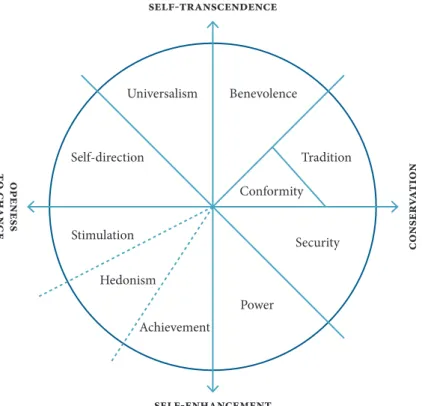
5.1 Theoretical model of relations among motivational types of values, higher order value types and bipolar value dimensions . . . 118
5.2 Opposition to immigration (means) 1 (allow many) to 4 (allow none) . . . 126
12.1 José Gerson da Cunha (1844-1900). Photographic portrait in carte-de-visite format pasted in the endleaves of his posthumously published book . . . .266
13.1 Early leavers from education and training (18 to 24 years), by sex (%) – Portugal, 2005-2015 . . . .312
13.2 Population distribution by level of educational attainment (total and age group 25-34 (%)
– Portugal, 2014 . . . 312
13.3 Employed population in Education and Human Health and Social Services, proportion by sex (%) – Portugal, 2011 . . . .315
13.4 Proportion of male teachers, by teaching level (%) – Portugal, 2004/05 – 2014/15 . . . 315
13.5 Individuals who disagree that men’s take-up of parental leaves has positive effects in helping the father to keep his job, by sex and age group (%) – Portugal, 2014 . . . .318
13.6 Individuals who agree that the child suffers when the father does not take part in childcare and that the father is as capable as the mother, by sex and age group (%) – Portugal, 2014 . . . .319
13.7 Sex ratio in causes of death mainly affecting men (sex ratio > 200) – Portugal, 2014 . . . .321
13.8 Sex ratio at death, by age group (%) – Portugal, 2015. . . .322
17.1 Rai Archive, London, 2016 . . . .412
17.2 SPAE Archive, Porto, 2015 . . . .412
18.1 Integrative liminality, through centripetal participation . . . .435
18.2 Expelling liminality, desired by workers . . . .442
18.3 Structural liminality, by change refusal . . . 451
19.1 The Cardosas quarter in the historic centre . . . 472
20.1 Metropolitan Lisbon and the municipalities of Lisbon, Cascais and Barreiro . . . 491
20.2 Condomínios Fechados in Lisbon (left) and Cascais (right) . . . .495
20.3 cf Typologies (multi-villas, apartment building and mixed developments) in Lisbon (left) and Cascais (right) . . . .495
20.4 Number of housing units in cfs in Lisbon (left) and Cascais (right) . . . .496
20.5 Temporal stages of production of cfs in Lisbon (left) and Cascais (right) . . . .496
20.6 CFS and professional-managerial employee rate, 1991, 2001 and 2011 in Lisbon (above) and Cascais (below) . . . .497
table of contents 9
List
of tables
5.1 Respondents’ profile . . . .125
5.2 Predictors of opposition to immigration in European countries (Standardised coefficients) . . . .128
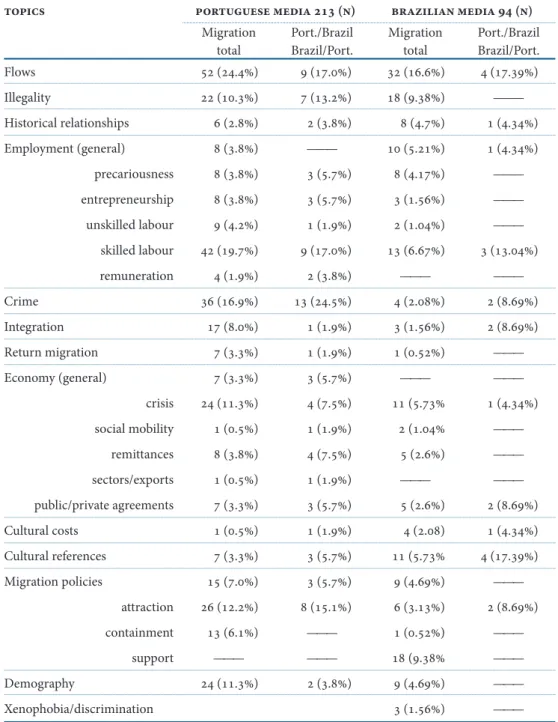
7.1 Migration in Portuguese and Brazilian Media . . . .169
19.1 List of interviews . . . .468
19.2 The main strategies and operations drafted and implemented by Porto Vivo sru over the last 10 years . . . .471
20.1 Main socio-economic and territorial indicators . . . .492
20.2 Condomínios fechados in Lisbon and Cascais, main findings . . . .494
List
of appendices
5.1 Indicators of basic values and underlying motivations . . . .131
5.2 Structure and salience of Schwartz’s values – nationals, immigrants from European countries and immigrants from non-European countries . . . .132
5.2.2 Values structure – Immigrants from European countries (Multidimensional Scaling
– Proxcal; Tucker coefficient of congruence = .981) . . . .132
5.2.3 Values structure – Immigrants from non-European countries (Multidimensional Scaling
– Proxcal; Tucker coefficient of congruence = .978) . . . .133
5.2.4 Importance attributed to the ten basic values by group (centred means) . . . 133
20.1 Available works about cfs in the Lisbon metro, with the total number of cfs found
foreword
In 2016, the Scientific Board of the Institute of Social Sciences (University of Lisbon) decided to prepare a three volume publication in English based on its 2015/2020 Strategic Programme: Changing Societies: Legacies and Challenges. Each volume focuses on one of the programme’s main research areas: Inclusion, Citizenship and Sustainability (I-C-S). The aim was to foreground the science carried out at ics, make its researchers’ innovative contributions to the advancement of knowledge in social sciences more widely known, and leave a significant mark on the national and international scientific agenda. A further aim was to encourage and foster interdisciplinary collaboration between researchers belonging to different Research Groups - as strongly encouraged a few months earlier by the External Advisory Committee during its visit to the Institute.
Once the rules of the game had been thought out, two calls were made to the Institute’s scientific community. The first, for the selection of interdisciplinary editorial teams for each volume, was based on the presentation of an editorial project. Candidates explained how their project would explore the theme (Inclusion, Citizenship or Sustainability), as well as their conceptual and possible empirical approaches. The second invited proposals for texts for each of the volumes. Their provisional versions would be presented, discussed and commented on publicly at the ics Conference, in November 2017, in addition to being subject to the usual peer review processes organised by the volume editors.
The response to this challenge went far beyond our expectations. The numbers do not speak for themselves, but they do give some indication of the ics community’s remarkable
collaborative vitality. They also show the amount of work involved in the initiative: three editorial teams, benefiting from the support of three editorial boards; 21 chapters, 39 authors in the Inclusion Book (vol. i); 13 chapters, 30 authors in the Citizenship Book (vol. ii); 14 chapters, 37 authors in the Sustainability Book (vol. iii).
However, I would particularly like to emphasise the quality of the editorial lines defined, as well as the texts that have been collected and are now accessible to the reading and scrutiny of a vast international audience. As well as highlighting the virtues of interdisciplinarity in science practice, one of the structuring marks of ics-ulisboa is that its work is illustrated through different prisms.
On behalf of the ics-ulisboa Scientific Board, I would like to thank all the authors for their contributions, which invite us into areas of scientific thought and innovation, from issues and concepts to the empirical contexts, through the strategies and methodological instruments used. I also wish to express my gratitude to the editors of the three volumes, for having decided to advance with the original, inspiring proposals for their volumes, as well as for their perseverance and determination over many months of work: Sofia Aboim, Paulo Granjo and Alice Ramos; Marina Costa Lobo, Filipe Carreira da Silva and José Pedro Zúquete; Ana Delicado, Nuno Domingos and Luís de Sousa. My sincere thanks also go to the editorial boards that worked so closely with them: Rui Costa-Lopes, Pedro Magalhães and Ângela Barreto Xavier; José Luís Cardoso, António Costa Pinto and Jorge Vala; João Ferrão, Dulce Freire and Susana Matos Viegas. The Director of the Imprensa de Ciências Sociais (the Social Sciences Press), José Machado Pais, who from the first moment enthusiastically welcomed this publication, disseminated in open access, also deserves our warmest thanks. My final expressions of gratitude are to Carla Araújo, who served as secretary and Marta Castelo Branco, editorial assistant to the project.
Ana Nunes de Almeida
President of the Scientific Board ics, University of Lisbon
introduction
Paulo Granjo
Sofia Aboim
Alice Ramos
editors
inclusion: a sui generis word and a falsely clear idea
The word “inclusion” has become increasingly conspicuous over the last few decades, both in well-intentioned, though vague, political speech, and as a guiding element for obtaining scientific funding in the social sciences.
It is a pleasant word to hear, especially if we do not give it too much thought: inclusion immediately sounds positive, desirable and moral. We tend to assume those favourable characteristics because we are also used to interpreting “inclusion” and “exclusion” as an opposite pair or concepts, which are clearly delimited and supposed to have positive or negative contents, according to the prefix. However, such opposition is not that simplistic.
On the one hand, the value we may attach to the word “inclusion” is neither abstract nor permanent, but rather depends on the place or situation for such inclusion. If we used inclusion to describe being well adjusted to incarceration in prison, life in the World War i trenches or being a member of the Ku Klux Klan, it is a fairly safe guess that almost no reader would see inclusion as positive, desirable or moral.
On the other hand, the opposition between inclusion and exclusion is not absolute or clearly evident at all but, in each particular case, an elaborate social construct. It is true that, as Levi-Strauss (1962) has shown us, the functioning of human thought is based on the manipulation of oppositions and similitudes. However, contrary to the use of several opposite notions that become clear once we define a criterion for their objective differentiation, every time we establish an opposition between a specific field of inclusion and exclusion, we are not taking notice of empirical evidence.
What we are doing is to arbitrarily select and emphasise a set of criteria or characteristics, amongst many alternatives, in order to highlight the similarity and/or possession between those who are “included”. Simultaneously, we emphasise another set of characteristics or criteria of differentiation and/ or dispossession, which allow us to contrast such a group with that of the “excluded” (Granjo 2014). It is only in the light of this arbitrary negotiation, usually set-up according to the socially dominant valuation criteria, that the border between “in” and “out” (and between the “included” and the “excluded”) is proclaimed and seems evident.
This means that the selection and valuation of a specific inclusion field, as desirable or relevant, is not at all an evidence. We valuated that field, instead of many other possible ones, as a result of an ethical and political choice – and the
introduction 15 reasons and processes underpinning that choice should also be the object of a demanding and self-reflexive analysis. This urge for epistemological criticism is reinforced by other characteristics of the relationship between inclusion and exclusion.
Firstly, it might be almost redundant to recall that every inclusion process implies and presupposes a previous exclusion. For a social scientist, however, it is also necessary to understand precisely “what” those people were excluded from; on which terms, and what meaning they ascribe to the exclusion we attribute them.
Secondly, every inclusion process into something is simultaneously an exclusion process from something else, at least in conjunctural terms. Since people and groups are not blank sheets of paper who live in some abstract social nonexistence, the inclusion in a group, a status, an identity, a system of practices, values or ways of feeling, implies their exclusion from previous opposite, or just different, groups or forms of inclusion. Again, this has individual and social costs, which should be taken into account.1
Symmetrically, exclusion processes cannot project their results into a void. Therefore, an exclusion from something implies further inclusions − in new groups or systems of practices, representations and/or identities – to which the now “excluded” are pushed by the effects of the exclusion they suffered, or pulled in either by their new peers, or through their own attempts to be integrated and accepted.
Inclusion and exclusion are thus not really opposite sides of the same coin; they are processual and can, in fact, be the very same thing, looked at from different perspectives. This conundrum calls for a heightened awareness from social scientists and, ideally, requires the understanding of the diverse perspectives involved, beyond the dominant social, political and/or epistemological ones.
inclusion and liminality
The dynamics of inclusion and exclusion are not, however, reducible to oppositional simplification and to one-dimensional criteria separating the included and the excluded along the lines of a single and clear frontier.
1 For instance, in several cultural contexts inclusion in market-oriented agriculture may induce
exclusion from the local mechanisms of social solidarity, eventually leading to vulnerability and
On the contrary, the grounded observation of empirical realities often shows us a “no-man’s-land”, that is, an area of ambiguity where some are no longer “others” but not yet “us”. This common process creates a grey zone for those who are no longer purely excluded, but are not yet plainly included. In other words, when we focus on the inclusion and exclusion processes, we are systematically confronted with situations and statuses of liminality (van Gennep 1909; Turner 1969).
In the classic definition, liminality corresponds to a transitory phase (delimited and projected to a time and space perceived as exterior to those of daily existence) in a path leading to integration in a new group of practices, values, knowledges, attitudes and/or status.2 In order to differentiate it from
other liminal processes, we will call it “integrative liminality” here.
However, instead of a transitory path for full inclusion, liminality can also become a perennial intermediate situation that reproduces and institutionalises an ambiguous status, from which, under exceptional conditions, only a few may escape. This is what we can call a “structural liminalisation”.3
Finally, it may often happen that liminality does not drive to inclusion at all but, instead, has exclusion as an outcome, after a variable and often long period of ambiguity.4 When such a period of “excluding liminality” lasts for long, it
can easily be confused, in the perceptions of both social actors and external observers, with structural liminality. This happens because the difference between them is only apparent when considering the time and the specific characteristics of the systemic framework which sets up and reproduces that liminal situation – and both these factors are difficult to perceive, unless we already expect them to be possibly relevant.
Most importantly, structural and excluding liminalities correspond to systemic liminality situations. Furthermore, they can be relatively marginal and complementary or actually crucial for the existence and reproduction of the system, which would not function and endure without liminality, or without deep alterations that would change it into something else.5
2 This model of liminality corresponds, for instance, to an apprentice-like status (Lave and Wenger 1991), or to processes like the rites of passage originally studied by van Gennep (1909).
3 The historical cases of goeses (Xavier 2011), literate Cape-Verdeans (Batalha 2004) and assimilados (Moreira 1997) in the Portuguese colonial period are good examples of this kind of liminality.
4 This is, for instance, expectable and predominant with systemic labour precariousness.
5 See Piketty (2013) on the intrinsic role of precariousness in neoliberal capitalism, or the current structural precarity of the Portuguese scientific system.
introduction 17 Moreover, since they are both systemic and long-lasting, such kinds of liminality can induce inclusion into stable status groups, different from those that defined the inclusion/exclusion dynamic in relation to which the liminal situation was created. Therefore, we may observe diverse inclusion/exclusion processes, interacting mutually and affecting each other throughout such interaction.
chapter outline
The theoretical reflexion on the ambiguity, complexity and plurality of meanings that we usually merge under the word “inclusion” was the benchmark to the call for the chapters in this volume. Inside Out, Outside In brings together 21 contributions authored or co-authored by researchers from the Institute of Social Sciences (ics), each of which explores, either from a disciplinary or transdisciplinary approach, one or more aspects highlighted above. The volume is a collective effort covering a wide range of subjects, which represent the research being carried out at the ics and contribute to the reflection on inclusion and exclusion.
The book is divided into seven parts, each of which includes three chapters that tackle various forms of liminality, the key conceptual lens with which we seek to overcome the inclusion/exclusion divide.
part i is dedicated to alterity experiences in displacement situations, and
to the manipulation of inclusion/exclusion dynamics.
In Chapter 1, Pedro Figueiredo Neto presents the Meheba Refugee Camp (Zambia) as a case depicting how ambiguous the boundaries between exclusion and inclusion can be. The camp’s purpose is to enclose, better manage and control displaced populations, whose rights are indefinitely suspended as long as they remain under humanitarian rule. However, refugee camps also provide protection, food provisions, access to basic health care and education, economic opportunities and training programmes that are commonly absent in the refugees’ place of origin, as well as in the hosting region where a given camp is deployed. They are illustrative of the paradox between the inclusion of the excluded (the refugees) and the exclusion of the supposedly included – the national citizens whose plight and needs have been neglected by their own state.
Exploring the potential of the “long-distance nationalism” concept, in
and inclusion among the Santomean migrants and their descendants in Portugal. The author shows how those immigrants’ transnational identification as Santomean is mainly a product of their own agency, by formal and informal ways that bind the members of the community and keep them connected to their “homeland”. On the other hand, full understanding of this identification process also requires the analysis of the processes that tend to exclude such immigrants from the full exercise of citizenship in the settlement society, racism in particular.
In Chapter 3, Cristiana Bastos discusses the significant migration flux of Portuguese islanders to Hawai’ian plantations, during 19th and 20th centuries,
and their ambiguous and liminal inclusion in the multi-layered local society, facing stereotypes and ethnicization (if not racialization) processes. The author finishes her article by raising a pertinent broader issue: the exclusion from national narratives of the Portuguese who reached the plantations and towns of British Guiana and Hawai‘i escaping from oppression and destitution, when they were far more numerous than those following the path of imperial aspirations in the Portuguese African and Asian colonies.
part ii analyses precarious liminal citizenship processes resulting from
social discrimination.
In Chapter 4, Francesco Vacchiano addresses the social insertion process of a group of refugees who arrived in Portugal in 2017, presenting the public policy initiatives undertaken and discussing problems still to be addressed. One main finding is that reception works frequently as a process of marginal inclusion into the most fragile strata of society, due to a process in which scarcity is paradoxically justified by the idea of having to do with people in extreme needs. The author concludes that it is urgent to reformulate the notion of reception. It should be changed from a benevolent concession into an opportunity for rethinking the structural mechanisms of social stratification operating in the receiving society, investing in a common future in which citizenship is not a corollary of nationality but a project of radical inclusion.
Chapter 5, authored by Alice Ramos, explores the opposition towards
migration from a multi-layered angle that offers novel insights beyond the common opposition between migrants and nationals as two homogeneous groups. Starting from the perspective that immigrants are heterogeneous, the author deconstructs this simplistic dualism and discusses how immigrants from within and outside Europe see the entrance of other immigrants, as well as the extent to which their attitudes differ from those of nationals. By
introduction 19 exploring the role of values in the formation of a common cultural heritage, she concludes that the main divide opposes Europeans and non-Europeans, with the first being protective of “Europeanness” in contrast to the attitudes of non-European migrants.
Focusing on a social psychological approach to socially critical decisions, in Chapter 6 Rui Costa-Lopes, Ana Filipa Madeira, Mariana Pires de Miranda and Wilson Moreira present empirical research testing how the contextual salience of a meritocratic norm impacts on these decisions towards low status group members. They also test the hypothesis that the social norm of descriptive meritocracy may legitimise the maintenance of inequality and limit actions towards inclusion. Findings indicate that when people are made to believe that society is structured along meritocratic principles, they will make inferences about whether people deserve to be in the situation they are in. Moreover, results show that people from low status groups are consistently treated in a more negative and exclusionary way.
In part iii, present day mobility and migration processes are addressed. Marta Vilar Rosales examines in Chapter 7 how and to what extent migrants interact with and make use of media content to feed imaginaries and expectations, design positioning strategies, manage belonging and handle exclusion and inclusion in the different spatial, cultural and political contexts that comprise their migration experiences. The chapter examines the print content published by the Portuguese media during 2011-15, focusing on three topics: Portugal as a hospitable and inclusive location for foreign middle classes; the attractiveness of diverse migration destinations for the Portuguese population; and the particular social, economic and political context, which promoted the simultaneous exploration of pulling and pushing aspects in Portugal and Brazil, by the Portuguese media.
Focused on the experience of immigrants from Goiás (Brazil) to Portugal, in Chapter 8 Simone Frangella discusses the implications of informal and irregular networks in the construction of migrant routes and routines in transnational mobility. The author argues that the webs of vicinity projected to and re-appropriated from the regions of origin, as well as those uncertain and negotiated ones built up in the settlement locations, reconfiguring family and friendship interactions, are crucial to the feasibility of the migratory process and to highlight the complex ways migrants struggle to gain a sense of place. She argues that the strength of the concept of vicinity is in its use of social inclusion to address the structural inequality that permeates transnational mobility.
In Chapter 9, Nina Clara Tiesler analyses the dialectic of inclusion and exclusion, as empirically observed in several diasporic settings of Portuguese emigrants and Portuguese Muslims of Indo-Mozambican origin. She demonstrates how current analytical concepts and frameworks are too limited to grasp the complex and multi-dimensional formative processes which produce ethnicities. The outcome of her debate is the proposal of an innovative concept, “ethnoheterogenesis”, which is able to surpass such limitations and address the dialectic of homogenization and heterogenization inherent in ethnogenesis and ethnic change.
In a move from present to past, the three chapters in part iv revisit the construction of categories, institutions and social relations, as well as imagination in the colonial contexts of Portuguese empire.
Isabel Corrêa da Silva reflects, in Chapter 10, on the multiple and often contradictory dynamics of inclusion and exclusion faced, in both 19th century
Portugal and Brazil, by those belonging to an enduring but ambivalently regarded social category: the “Brasileiros”, those Portuguese emigrants who were successful in Brazil. Back in Portugal, the author argues, they were excluded from the elites in which they sought to be accepted, because although the modern world democratised elites with more widespread and inclusive integration criteria, the trend towards standardisation created new exclusion criteria by drastically reducing the acceptance of diversity.
In Chapter 11, Ângela Barreto Xavier revisits the first centuries of the Portuguese presence in Goa and the strategies followed by the Portuguese crown in order to conserve those territories and people under Portuguese rule. She analyses the physical and cultural miscegenation policies practised in 16th century Goa and contends that the inclusive and assimilationist policies
led both to the reduction of difference and the multiplication of distinctions and hierarchies between the colonisers and the colonised, as well as within the latter. The author explores the tensions and dilemmas between inclusion and exclusion in the early-modern Portuguese empire, while establishing a critical dialogue between the contrasting interpretations of Gilberto Freyre and Orlando Ribeiro that brings the luso-tropicalist views of the 20th century
to the fore.
Chapter 12 focuses on the inclusion and exclusion of Indian scholars
within 19th and 20th century Portuguese historiography. Filipa Lowndes
Vicente explores the life of Gerson da Cunha (1844-1900), a historian, doctor and collector born in Goa. Gerson da Cunha studied medicine in Bombay,
introduction 21 Edinburgh and London before returning to Bombay, and published numerous articles and books on themes related to the Portuguese in India. Despite his inspiring comparisons and connections between different histories and historiographies, Cunha was always on the fringe of both empires, which contributed to his invisibility as a historian and as a producer of knowledge about India.
The three chapters on gender and family dynamics in part v bring to light different, though intertwined, processes of social change.
Vanessa Cunha, Leonor Rodrigues, Rita Correia, Susana Atalaia and Karin Wall, the authors of In Chapter 13, analyse the challenges posed to men by the emergence of caring masculinities as a dominant norm leading them to reshape their practices and identities. The ideal of caring masculinities has gained momentum as a key ally against hegemonic masculinity, gender inequality and the harmful traits of traditional masculinity itself. Nonetheless, the shift is not free of obstacles hindering men from full equity as partners and fathers, and their inclusion in the realm of care work. The examination of men and care in Portuguese society reflects the growing international concern about men’s inclusion and harmful exclusion from care, relocating gender equality as a problem for men and not only for women.
With the new challenges brought about by the increasing visibility of the transgender category, Sofia Aboim, Pedro Vasconcelos and Sara Merlini, focus on the construction of masculinity by trans individuals in Chapter 14. They address both the internal plurality of trans masculinities and the ways in which apparent subaltern forms of ‘doing masculinity’ might, even if unwillingly, benefit from the privilege historically associated with manhood. Drawing on fieldwork with trans men in Portugal and the United Kingdom, the authors conclude that, after all, gender matters. The dividends of being perceived by others as men are acknowledged, even if they are unwanted or viewed with criticism, which is not the case of trans women, regardless of their greater visibility in public spaces and the media.
In Chapter 15, Marzia Grassi focuses on family mobility between Africa and Europe, while offering an overview of three empirical studies carried out in the national/transnational mobile spaces between Angola, Cape Verde, and Portugal. By examining the changes occurring in conjugality, parenthood and care, the author explores the processes of marginalisation that target some individuals over others by analysing the role of culture, the unequal access to resources and the impact of geographic distance. Transnational flows of
people are changing families and creating renewed forms of exclusion and inclusion that reshape political views, forms of gender power and policy making, let alone the performances and semiotics of transnational families as a multifaceted category.
In part vi, the three chapters on learning and working processes address, in different but complementary manners, the ways in which resources are unevenly distributed.
Maria Manuel Vieira, Ana Nunes de Almeida and Ana Sofia Ribeiro, the authors of Chapter 16, explore the concept of reputation, emerging from the sociology of art, to untangle the criteria guiding educational options for parents and children. Drawing upon six case studies of state and private schools, the authors provide an account of objective and subjective motivations leading to a given school preference. They demonstrate that choice is constrained on the basis of a systemic exclusion, counteracting the ideal of equality in schooling, and revealing how reputation influences parent and children’s preferences when searching for the symbolic gains awarded by the most reputable schools, even if they are state run. The state system also constructs its own reputation and selection mechanisms, thereby also reproducing inequality at the heart of a supposedly inclusive system.
In Chapter 17, Patrícia Ferraz de Matos explores the knowledge construction processes in two scientific societies. She examines the relationships between the Royal Anthropological Institute, created in 1871 and still internationally renowned today, and the Portuguese Society of Anthropology and Ethnology (spae), founded in 1918 and whose activity is nowadays considered peripheral. The author addresses the legitimacy of knowledge in different geographies across time, showing how the reputation of knowledge is key for understanding why claims from the centre are deemed more relevant. In the context of unequal globalisation processes, where the Anglophone world is still central, this chapter locates Portugal and Lusophone scientific production as a semi-peripheral space in present day scientific dynamics of power.
Paulo Granjo and João Feijó explore, in Chapter 18, the normative work ethics in three labour contexts (inside the largest industrial companies in Portugal and Mozambique, galp and mozal, and amongst the workers of several smaller Mozambican companies with Portuguese, Chinese or Mozambican owners). Through these case studies, the authors compare how newcomers are integrated into their jobs and into the workers’ group; the different visions of labour and duties/rights relationships; and, thirdly,
introduction 23 the impact of the previous aspects on the development and reproduction of labour cultures, workers’ identities, safety and production. As the authors demonstrate, the capitalist model implies specific cultural settings, work cultures, and stereotypes about workers. By identifying multiple and different modes of exclusion/inclusion, they prove that even if there is a hegemony of capitalism, it is an adaptive one which implies fostering work cultures better understood from a transnational angle.
Finally, in part vii, inclusion and exclusion are viewed from the angle of spaces and geographical boundaries.
In Chapter 19, Sónia Alves and Rosa Branco discuss the impact of urban requalification on resident families. They explore the role of globalisation and financialisation, via the recently created Urban Requalification Societies (sru), in replacing programmes that aimed at maintaining and assisting poor families by transforming affordable privately rented housing into spaces for tourism and consumption. The authors also give a picture of the urban requalification models implemented in Portugal from 1974 to the present day. Focusing on the Porto Vivo sru campaign in the Cardosas quarter, located in the heart of Porto city centre, they discuss how public policies professing to be inclusive may in fact create social exclusion and, instead of mitigating poverty dynamics, actually aggravate them by reinforcing social and spatial inequality. Simone Tulumello and Alessandro Colombo explore, in Chapter 20, the spatial dimensions of urban inclusion/exclusion by addressing the topic of “condomínios fechados”, the Portuguese version of the gated community. The chapter presents the mapping – the first in Portugal, and among the very few available worldwide – of condomínios fechados in the cities of Lisbon and Cascais (besides Barreiro, were none were found). By reflecting comparatively on these cases, the authors suggest that the phenomenon of residential fortification needs to be considered in terms of the dimensions of production (real estate and planning) and consumption (social demand). Considering the characteristics of the Portuguese case, they argue that, with relatively low segregation (like most Southern European metropolitan areas), the concept of polarisation and fragmentation is useful to understand the patterns of urban inclusion and exclusion.
In the final chapter, 21, Mónica Truninger, Sónia Goulart Cardoso, Fábio Rafael Augusto and Vasco Ramos explore the consequences of income inequality and its links with food poverty in food-insecure households. The analysis combines the material lack of resources with other forms of exclusion
that go beyond simple economic access. The authors start by defining food security from a perspective that emphasises the multi-layered nature of these concepts and reconstitutes the social, economic and political dynamics currently shaping accepted definitions. This serves as a backdrop to propose the importance of access in grasping the concept of food (in)security, leading them to engage both with food deserts and social exclusion. While food represents a strong element of social inclusion and identity, the focus on the physical and social aspects of access permits a conceptual refinement.
beyond this volume
We believe this set of texts demonstrates that the criticism of simplistic and irreflexive uses of the idea of “inclusion” does not supress its relevance as a trans-thematic and transdisciplinary research line. On the contrary, to conceive and approach inclusion and exclusion as ambiguous and socially situated notions, and to study their dynamics and processes according to their complexity and the key-role played by liminality, provides an innovative conceptualisation contributing to the advance of research and enhances the heuristic potential of those notions. We can even reasonably hope that such an approach by the social sciences might eventually influence the political and public speech about inclusion and exclusion, turning it into something less pedestrian and ideological.
However, this set of texts also highlights another crucial issue: the current structural precariousness of the Portuguese scientific system. Ironically, in a volume on “Inclusion”, only 19% of the first authors (and 15.8% of all authors) are included in the Research Career. All others are in a precarious and liminal situation, many of them have been for more than a decade, by holding temporary contracts or post-doctoral grants.6
Those numbers are not a random distortion. About ¾ of the ics researchers are precarious, and this tendency is generalised throughout Portuguese research centres. Besides issues of social and labour fairness, this brings up serious problems for autonomous research institutions. It introduces instability into the medium and long-term planning and dissuades ground-breaking research
6 Besides the clearer cases, one of the 38 authors is a previously precarious researcher who had to immigrate in order to secure a permanent position.
introduction 25 programmes that may transcend ‘normal science’. It makes it harder to keep the researchers with more competitive specific competences, and is an obstacle to generational renewal and institutional culture reproduction.
Therefore, it seems that a new and urgent research challenge has been presented to ics and its peers on the subject of “Inclusion”: the in-depth analysis of the structural precariousness of the Portuguese scientific system, its impact and how to overcome it, from the perspective of turning science into a lever for a healthier economy and society.
____________________________________ paulo granjo
Instituto de Ciências Sociais, Universidade de Lisboa
Av. Prof. Aníbal Bettencourt 9 — 1600-036 Lisboa, Portugal [email protected]
orcid.org/0000-0003-1567-5839
____________________________________ sofia aboim
Instituto de Ciências Sociais, Universidade de Lisboa
[email protected] orcid.org/0000-0002-6605-8614
____________________________________ alice ramos
Instituto de Ciências Sociais, Universidade de Lisboa
[email protected] orcid.org/0000-0001-9512-0571
____________________________________
references
batalha, L. 2004. The Cape Verdean Diaspora in Portugal: Colonial Subjects in a Postcolonial
World. Lanham: Lexington.
granjo, P. 2014. “Raça e racismo são coisas que se aprendem”. In O que é Racismo?. Maputo: Escolar, 93-127.
lave, J., E. Wenger.1991. Situated Learning. Legitimate Peripheral Participation. Cambridge: cup.
levi-strauss, C. 1962. La pensée sauvage. Paris: Plon.
moreira, J. 1997. Os Assimilados, João Albasini e as Eleições. Maputo: ahm.
negrão, J. 2001. Cem Anos de Economia da Família Rural Africana. Maputo: Promédia. piketty, T. 2013. Le capital au xxie siècle. Paris: Seuil.
cite this chapter as:
granjo, P., S. Aboim, A. Ramos. 2018. “Introduction”. In Changing Societies: Legacies and Challenges. Vol. i. Ambiguous Inclusions: Inside Out, Inside In, eds. S. Aboim, P. Granjo, A. Ramos. Lisbon: Imprensa de Ciências Sociais, 13-26.
https://doi.org/10.31447/ics9789726715030.00
turner, V. 1969. The Ritual Process: Structure and Anti-structure. Chicago: Aldine. van gennep, A. 1909. Les rites de passage. Paris: Émile Nourr.
xavier, Â. B. 2011. “Conversos and novamente convertidos. Law, religion and identity in the Portuguese kingdom and empire (16th and 17th centuries)”. Journal of Early-Modern History, 15: 255-287.
part
i
Alterity
experiences
Ambiguous
boundaries
between exclusion
and inclusion.
Experiences from
the Meheba Refugee
Camp (Zambia)
Pedro Figueiredo Neto
introduction
Refugee camps are often created and portrayed as places of exclusion where “supernumerary” (Bauman 2004), “undesired populations” (Agier 2011) are concentrated. And yet, experiences from the Meheba Refugee Settlement show that the reality is rather more complex, providing evidence of the ambiguous line between inclusion and exclusion involving refugees and the neighbouring population.
In order to better “care, cure and control” – in United Nations High Commission for Refugees (unhcr) terms – internationally displaced individuals and communities, the humanitarian aid regime often enacts a set of international legal frameworks and provides basic services and infrastructures which find their sum in the “refugee camp”. Albeit in different ways and to different degrees, humanitarian settings usually provide protection, food provisions, access to basic health care and education, economic opportunities as well as training programmes. In the context of rural Sub-Saharan Africa, these are elements often absent in the refugees’ places of origin but also sometimes virtually non-existent among the marginal populations in villages and towns near refugee camps. In contrast, once in a refugee camp, displaced individuals see the suspension of key fundamental rights such as the right of movement, the right of assembly, the right to work, among other limitations, as we shall see below. Indeed, refugees do not enjoy the same rights and freedoms – nor have the same duties – national citizens, or even regular immigrants, do. But to what extent do national states provide their citizens with similar resources and entitlements outside a refugee camp?
At the crossroads between humanitarian and state rationales, within the “liminality” (Malkki 1995a) embodied by the camp, emerges the paradox between the inclusion of the excluded– the refugees who live a “suspended life” (Agier 2011) in a sort of “campzenship”1 (Sigona 2015) –, and the exclusion
of the supposedly included – that is, the citizens belonging to a socially and politically defined community and that supposedly fulfil the “national order of things” (Malkki 1995b).
1 Campzenship: an attempt “to capture the specific and situated form of membership produced in and by the camp, the complex and ambivalent relationship of its inhabitants with the camp and the ways the camp shapes the relationship of its inhabitants with the state and their capacity and modes of being political (Sigona 2015, 1)”.
experiences from the meheba refugee camp (zambia) 31 Although sociopolitical divisions and hierarchies among refugees in camps – sometimes taking form as dynamics of inclusion and exclusion – have been highlighted by different authors in different contexts (Powles 2000; Veroff 2009; Turner 2010; 2014; Agier 2011). The fact is that similar dynamics between refugees and the local population in their relationship with the camp has been overlooked (Malkki 1995a; Jansen 2014). In this regard, the experiences of refugees and local citizens in the Meheba Refugee Settlement is an interesting case study, which brings about insights into the ambiguous boundary between inclusion and exclusion among these two rather heterogeneous groups. Thus, in order to understand the dialectical inclusion/exclusion complementarity the humanitarian logistics entails, and before introducing a set of ethnographic accounts from the Meheba Refugee Settlement that illustrate the phenomenon, it is necessary to theoretically frame the nature of the camp.
Designed by the unhcr alongside (inter)national governments and organisations – the “international community” –, refugee camps are “extraterritorial spaces” (hors-lieu) by their very nature (Agier 2002; 2011; 2014; Bauman 2004). Challenging any Euclidian continuity, camps are often managed by the unhcr offices in Geneva, in conjunction with the so-called implementing partners2 whose headquarters are located, say, in The Hague or
New York. If, on the one hand, the plight of the camps and their inhabitants is usually determined in important decision centres across the world; on the other, camps are often set in inhospitable, unpopulated and hard-to-access areas, on the periphery of the periphery.
Equally noteworthy is the common absence of their representation in the official national cartographies, therefore suggesting the non-existence of refugee camps. By taking cartography as ontology, illustrated in a common institutional quest for “invisibility” (Harrel-Bond and Voutira 2007), the non-representation of camps is a form of denying the existence of such places and their respective inhabitants ( Anderson 2006 [1983], 173; Neto 2016). Nevertheless, this does not mean that camps do not play a key role at the sociocultural and economic level – thereby creating new centres – or that camps cannot be integrated in the national cartography at a certain point in time (Agier 2011), closing the circle of a protracted state of “liminality” (Malkki 1995a).
2 Implementing partners are the associate governments or non-government agencies that carry out institutional arrangements in line with the larger organisation’s goals and objectives.
In addition, refugee camps are usually enclosed places – fenced, geographically and/or socially demarcated –, and therefore physically and symbolically separated from the national territory. A clear line between the refugee camp and the “outside world” is evident at different levels: a dividing line that not only configures a boundary in an anthropological sense: a double recognition between refugees and the “others”, or between citizens and the “others”. It is a more or less visible physical border – a defined and demarcated space –, but also a legal one – knowing how international legal frameworks3 and specific local refugee acts rarely coincide with national
laws applied to citizens. Notwithstanding the existence of specific rights and duties in camps, legal measures might be changed, reframed, suspended – or simply not enforced (Veroff 2009) – in a more or less arbitrary fashion. In this sense, the camp illustrates the physical manifestation of a continuous “state of exception” (Agamben 1995; 2005), which alongside its extraterritorial character, configures a “space of exception” (Bauman 2004; Agier 2011). At the same time, the camp enacts a set of boundaries at the social, economic, cultural, political and legal level. These nevertheless configure sites of contact, of potentially fruitful conflict, of mediation and interaction between the inside and the outside (Barth 1969; Mezzadra and Neilson 2012). And yet, although similar in its operational principles, each refugee camp is one of a kind (see the many cases in Agier 2014). In spite of their exceptionality, camps are not exclusively composed by ever evolving “walls and fences” but also of flickering “doors and windows” (Diken and Laustsen 2005).
In order to examine how different boundaries between inclusion and exclusion are continuously – and ambiguously – forged in the Meheba Refugee Settlement, I will start by providing a brief background to the camp and outline past and present divisions among the refugee community. I will then present a set of experiences portraying the struggles and interactions between Zambians and refugees, which have the humanitarian infrastructure at their core.
Last but not least, given the size and heterogeneity of Meheba, any effort to grasp its complexity as a whole would be easily defeated. Thus, by using the term “experiences”, I intend to focus on specific cases and situations I came across and that inform of period in which fieldwork was conducted between
3 Namely the Refugee International Law, to a large extent based on the 1951 unhcr Geneva Convention and the 1967 New York Protocol, among other regional treaties and protocols, and overlapping national bills/acts concerning refugees. For the case of Zambia, see the 1970 Refugee Control Act, which was repealed and replaced by the Refugees’ Bill in 2017.
experiences from the meheba refugee camp (zambia) 33
Regional map
Figure 1.1
2012 and 2014. Indeed, as the more recent news, reports and statistics from the terrain indicate, the situation in Meheba and in the region has probably changed.
meheba refugee camp, a brief context
The Meheba Refugee Camp is an immense agricultural settlement located some 70 kilometres away from the town of Solwezi, the capital of North-Western Province, Zambia (see Figure 1.1). As a result of the growing influx of Angolan refugees and increasing insecurity along Zambian eastern borderlands, the Government of the Republic of Zambia (grz) passed the Refugee Control Act in 1970 (rca 1970), which was at the origin of the creation of Meheba in 1971. The camp was deployed in an unpopulated area belonging to the Kaonde chiefs, which was ceded to the grz, and, in turn, to the unhcr administration.
The escalation of the war in Angola, alongside new and re-emerging conflicts in the region, meant that Meheba would come to host populations from
the Democratic Republic of the Congo (drc), Rwanda, Burundi and, more recently, Somalia.4 As a consequence, the camp would experience five
expansions defined in three specific areas: Old Meheba (1971-85), New Meheba (1985-1995) and New Extensions (1995-2002) (see Figure 1.2).
The main road of the camp starts from the road connecting Solwezi and Mwinilunga. It is in the form of a fishbone and articulates the different blocks. The eight blocks or zones of the camp, from A to H, subsequently split into perpendicular roads (67 from Block A to E, of roughly 1 km distance from each other); and from Rd 68 to 125, Blocks F, G and H, the settlement is organised in villages. Meheba does not have a clear demarcated perimeter, apart from an entrance gate whose control is erratic. Instead, its limits are marked by natural elements – the rivers that flank the eastern and western slope of the camp – and by social boundaries – demarcated by the edges of the inhabited areas and/or agriculture fields.
The agricultural character5 and continuous flow of refugees largely explain
the Meheba dimensions, now covering an area of approximately 720 square km (roughly 35 km long by 15-25 km wide).
In 2001-2002, the camp registered its population peak of more than 50,000 refugees – of which 90% were Angolans (wcrwc 2001). Between 2011 and 2013, the official number was roughly 18,000 refugees (unhcr/ grz 2014), and – though expected to decrease – almost 20,000 as of October 2017 (unhcr 2017). The end of the conflict in Angola, in 2002, and the subsequent repatriation process; the transference of Congolese refugees coming from the Northern Province camps (Mwange and Kala) closed in 2010; as well as the end of refugee status for Angola and Rwanda nationals, in 2012, certainly had an impact on Meheba’s demographics. Recent unhcr data indicates that Congolese now constitute the most representative group6.
4 unhcr 2013 census informed about the presence of other less representative nationalities such as the Republic of the Congo, Mozambique, Zimbabwe, South Sudan and Namibia (unhcr 2013).
5 According to the unhcr, Meheba is not a camp but a settlement. In a settlement, each household is allocated a plot of land with the aim of facilitating self-reliance (unhcr 2013). I will refer to Meheba either as a camp or settlement in the same way refugees and unchr staff did.
6 As of October 2017, the total number of Congolese refugees stayed at 8,286 (unhcr 2017). The displaced Congolese, however, are not a homogeneous community. In spite of sharing the same country of origin, Congolese refugees come from different parts of the drc. The oldest Congolese communities arrived from the Kasai and Katanga during 1990s, whereas the most recent come mainly from the Kivu, Eastern Congo.
experiences from the meheba refugee camp (zambia) 35
Figure 1.2
Still, access to the number of Zambians living in the camp continues to be limited to those officially married to refugees – 196 to be statistically accurate (unhcr 2017). Not included in the official figures are those who work for the camp’s administration and civil servants (whose offices are located in Rd 36), the police (whose barracks and offices are located in Rd 6), individuals occasionally involved in the unhcr programmes (some living in nearby towns and staying occasionally in the unhcr Lodge in Rd 36, others actually living in the camp), as well as all those who live in Meheba but are not directly linked to the bureaucratic-humanitarian activities. In fact, since the early 2000s, that economic opportunities arising from the neighbouring – and ever-growing – Lumwana Mine have attracted people, some of whom have settled in Meheba.
Meheba refugee settlement map (as of 2015 , adapted from Agier 2011, unhcr 2017 and Google Maps)
In 2014, the camp was undergoing profound changes, much as the result of a recently approved urban masterplan – promoted by the Lumwana mine – and due to refugee resettlement. The new masterplan was devised to host many of the Lumwana staff, the required services and facilities, and was planned to take over a considerable area from Blocks A, B and C (Neto 2014).7 The on-going
resettlement programme, essentially involving former Angolan and Rwandan refugees who refused repatriation and qualified for local integration, was taking place in the more peripheral areas of the camp, in Blocks E, F, G and H, and has been conceived to also host some 4,000 Zambian families (unhcr 2017).
Over time, the organisation of the camp would not only reflect the outbursts of violence, the presages of peace but also the more recent local integration and development processes, which led to the opening, peopling, emptying, abandonment or re-organisation of each block.
inclusion and exclusion within the refugee community
While not the main purpose of this paper, it is nevertheless important to summarise a set of situations that involve economic, political, social and spatial aspects illustrating different dynamics of exclusion and inclusion within Meheba’s diverse refugee community.
In 2002, Michel Agier observed how the social stratification within the camp was linked to the chronology of the place. The several generations of refugees were “sociologically” organised according to the moment of arrival and split into settled, recent and new arrivals. The level of autonomy, the housing and social hierarchy were intimately linked to the length of stay and location in the camp (2011, 121). By then, Agier also perceived a “logic of inclusion in domination”, where social relations were almost “normal”. In other words, they were unequal but inclusive, as one would find in a village or community, where the longstanding inhabitants preserved a set of privileges and status, having a protective and dominant role regarding the recent refugees (Agier 2011, 126-127). Since then, however, the population numbers, characteristics and distribution have undergone profound changes, leading to different social dynamics and a rather more complex spatial panorama. Even though a “logic
7 According to recent information from Meheba, the masterplan implementation is currently at a standstill.
experiences from the meheba refugee camp (zambia) 37 of inclusion in domination” was still evident in the period from 2012 to 2014, some of the actors had shifted.
First of all, there were striking differences between those who lived in or close to the more urbanised areas (near the entrance gate, along the main road, in Road 6, Road 18 and Road 36) and those located in the camp’s more peripheral, rural areas. Though differences in material conditions – most visible at the housing level – were sometimes evident between settled and new arrivals, the fact is, given the size of the camp, to live in a more urbanised area meant better infrastructures and access to markets, to different agricultural produce, to clinics and schools. Some of the populations living in the more peripheral pockets, however, actually preferred to stay away from the central areas. The voluntary exclusion from the wider social dynamics in the camp was deliberate and essentially supported by a set of sociocultural arguments. In Block B, G and H, there were groups from Angola who preferred to stay apart, these being still visibly traumatised by their experiences of war violence. From the contact I had, this was not only a way to keep the cultural system and family structure in place but, in their view, was also a self-protection strategy. Refugees from Burundi and Rwanda (mainly Hutu) presented another noteworthy feature. Living chiefly in Zone G and on the periphery of Zone D, these kept contact with the other groups to a minimum – essentially regarding trade and the exchange of agricultural surplus (Neto 2016, 99; for possible reasons why, see Malkki 1995a).
Ancient tensions between Angolan refugees – supporters or sympathisers of mpla or unita8, and whose location in the camp reflected those regional,
political and sometimes ethnic divisions –, became largely diluted over time (Agier 2011, 123; Powles 2000, 15; 2002, 100; Veroff 2009, 62, 64). In reality, these no longer involved clear forms of inclusion/exclusion, quite the contrary. In 2012, most of the several Angolan refugee communities were united and – though unsuccessfully – demanded the right to vote in the then upcoming Angolan elections.9
8 mpla (People’s Movement for the Liberation of Angola) and unita (National Union for the Total Independence of Angola) were the main opposing parties during the conflict that ravaged the country. The armed conflict between them worsened considerably after independence in 1975, lasting until the end of the war in 2002.
9 Although refugees are not entitled to vote in their countries’ national elections nor in those of the hosting country, Meheba refugees can elect road and block leaders. Since 2010, after the protests by a Congolese group against corruption (see below), those new elections have been suspended.
If most of the ancient Congolese groups (mainly those coming from the Kasai region in the drc) had economic ties with the Angolan communities (with most Angolans being involved in farming and the Congolese in trade) and inter-marriage was common, the same was not true among the several Congolese communities. Indeed, tensions between the drc nationals were recurrent, as mutual suspicion and avoidance between groups coming from the Kasai, Katanga and Kivu regions was evident, resulting in divisions and conflicts along regional and ethnic lines (see note 6).
Moreover, religion was an issue at times. Whereas most of the communities in Meheba attended Christian churches (Baptist, Methodist, Adventist, Catholic, The Church of the Pastor Brahnam, etc.), Somali refugees professed Islam and were therefore looked on with some suspicion. The existence of pig farms, namely in Zone H, unwittingly excluded Somalis, who alluded to these as “dangerous” areas.
Furthermore, the local integration process, involving former Angolan and Rwandan refugees, suggests that these will be set apart from the remaining displaced community and probably will not be able to benefit from the same humanitarian resources. The inclusive local integration process will therefore largely mean a renewed form of exclusion.
These and other aspects were and are at the core of dynamics of (in)voluntary inclusion and exclusion among the several refugee groups – aspects reflected in, or arising from, socioeconomic, political and cultural expressions, and fairly evident in the space. Still, the situation between refugees and Zambians and between the camp and the outside is the point that undoubtedly warrants more attention.
legal aspects
During my fieldwork, several refugees overtly contested the presence of Zambians in the camp. Most complaints were not necessarily directed at the bureaucratic-humanitarian staff, but towards those who worked in the Lumwana mine and lived in Meheba, and, most of all, towards those who, though being Zambians, pretended to be refugees. Some refugees argued that there were several “impostors” in Meheba, and that they, the true refugees, were the ones really suffering and, therefore, exclusively deserving of humanitarian support. The entitlement to the camp – and by extension to humanitarian aid
experiences from the meheba refugee camp (zambia) 39 – as a result of a recognised suffering was a strong exclusionary argument in relation to non-refugees. According to an elder Angolan refugee, from Block B, and whose words could resonate elsewhere: “We suffer and the camp is all we have left… and then we see these individuals trying to take advantage and seize the few existent opportunities… these are spongers (aproveitadores)… Once life was easier here, there was room for all, but lately things have become more and more difficult, everything is scarce now.”
Curiously enough, Zambian citizens gave similar accounts about refugees who, unwilling to enter a refugee camp – which would confirm them as de facto refugees – pretended to be local citizens and sought integration in border villages (Hansen 1979a, 1979b; Bakewell 2000, 2007; Silva 2011; Neto 2017a, 2017b).
It was widely known that there were “illegal refugees” living in the camp.10
Even if that included the cases of new refugee arrivals who did not go through the normal registration procedures – mainly concerning those coming from the drc and being de facto refugees nonetheless. There were also cases of Zambian nationals who declared themselves refugees and/or had purchased refugee id cards. Corruption in the camp was perceived as endemic and a group of Congolese refugees who had protested against it – and against the living conditions and the absence of some fundamental rights – had faced deportation.11 Political freedoms are dramatically limited within camps and
refugees are not supposed to meet and discuss, let alone to demonstrate (for the laws then applied to refugees in Zambia, see rca 1970).
In early 2010, the camp’s management was handed to the grz, while remaining under the supervision of the unhcr. Since then grz members, the Refugee Officer (ro) and the Commissioner for Refugees (cor) staff have been under investigation. Beyond the selling of gate passes to refugees (required to leave the camp for a maximum period of 30 days) and of refugee id cards, there was also the suspicion that names had been added for ineligible food distribution, and that records that could enhance better resettlement opportunities for specific individuals were deliberately changed. Perhaps, this was not a recent phenomenon, as official data and statistics seem to have
10 See, for instance: “Refugees at Meheba occupy unhcr offices to protest corruption”, American Embassy in Lusaka (22/02/2010) available at http://wikileaks.wikimee.org/cable/2010 /02/10lusaka110. html visited on 26th October 2017.