Characterization of Bacteriocin like inhibitory substance produced by a new Strain
Brevibacillus borstelensis
AG1 Isolated from ‘Marcha’
Nivedita Sharma, Anupama Gupta, Neha Gautam
Department of Basic Sciences, Dr. Y. S. Parmar University of Horticulture and Forestry, Nauni, Solan, India.
Submitted: August 12, 2012; Approved: December 13, 2013.
Abstract
In the present study, a bacterium isolated from Marcha- a herbal cake used as traditional starter cul-ture to ferment local wine in North East India, was evaluated for bacteriocin like inhibitory substance production and was tested against six food borne/spoilage causing pathogens viz. Listeria monocytogenes MTCC 839, Bacillus subtilis MTCC 121, Clostridium perfringens MTCC 450, Staphylococcus aureus, Lactobacillus plantarumandLeuconostoc mesenteroidesMTCC 107 by us-ing bit/disc method followed by well diffusion method. The bacterial isolate was identified as Brevibacillus borstelensison the basis of phenotypic, biochemical and molecular characteristics us-ing 16Sr RNA gene technique. Bacteriocin like inhibitory substance produced by Brevibacillus borstelensis AG1 was purified by gel exclusion chromatography. The molecular mass of the Brevibacillus borstelensisAG1 was found to be 12 kDa. Purified bacteriocin like inhibitory sub-stance ofBrevibacillus borstelensiswas further characterized by studying the effect of temperature, pH, proteolytic enzyme and stability. Bacteriocin like inhibitory substance was found to be thermo-stable upto 100 °C, active at neutral pH, sensitive to trypsin, and partially thermo-stable till third week of stor-age thus showing a bright prospective to be used as a potential food biopreservative.
Key words:Bacteriocin, purification, SDS -PAGE, Marcha, preservation.
Introduction
Food borne outbreaks are of major concern all over the world. Bacteria are the causative agent of 2/3rdof the food borne disease outbreaks (Kumaret al., 2009). To con-trol these food borne pathogens in food items, role of bacteriocin or bacteriocin like substances might be the best alternative to chemical preservative because bacteriocin provides safety against spoilage causing and food borne pathogens and it does not have any ill effect on health. Bacteriocin has attracted the attention of academia and in-dustry declaring thrust area of research on its production, purification, genetics and applications (Pingitora et al., 2007). Therefore, there is a growing interest to apply these antimicrobial peptide/bacteriocins of bacterial origin that target food spoilage and pathogenic organisms. Bacterio-cins are ribosomally synthesized antimicrobial protein or protein complexes with bactericidal activity directed
against species that are usually closely related to the pro-ducer microorganisms (Sharma and Gautam, 2008). These are heterogeneous compounds which vary in molecular weight, biochemical properties, activity spectra and mecha-nism of action (Klaenhammer, 1993). Bacteriocins are fre-quently found as secondary metabolites produced by various microorganisms, such as the gram positive bacteria of genusBacillusandLactobacillus sp. (Jacket al., 1995).
The genusBacillusand Lactobacillus sp. include a variety of species with a history of their safe use in different beneficial industrial products like enzymes, antibiotics and amino acids etc. (Bizani and Brandelli, 2002). Similarly for the bacteriocin production,Bacillusand Lactic acid bacte-ria have become the major focus of the study. In the present study, we report on bacteriocin producing potential of a rarely reported isolate, Brevibacillus borstelensis AG1 which belong to a nested genusBacillus. This rarely re-ported bacterial isolate, isolated from least explored
Send correspondence to N. Sharma. Department of Basic Sciences, Dr. Y. S. Parmar University of Horticulture and Forestry, Nauni, 173 230 Solan, India. E-mail: [email protected].
‘Marcha’ (a herbal cake used as starter culture to ferment local wine) was taken to produce potential bacteriocin.
Materials and Methods
Isolation of bacteriocin producing strain
A bacterial strain capable of producing bacteriocin like inhibitory substance was isolated from ‘Marcha’. Marcha is a traditional herbal cake, which is used to fer-ment a popular local wine in North Eastern part of India. For its isolation, 1 g fermented material after crushing in sterilized pestle mortar was soaked in 10 mL of distilled water at 25±2 °C for 24 h and it was serially diluted. Isola-tion of bacteria was carried out by standard serial diluIsola-tion method on nutrient agar medium followed by incubation at 35 °C for 48 h (Chen and Hoover, 2003).
In total, 5 different bacterial colonies were initially observed on the plates followed by screening of bacteriocin producing isolates by bit/disc method and well-diffusion method (Barefoot and Klaenhammer, 1983; Kimuraet al., 1998) against test indicators such as Listeria monocytogenesMTCC 839,Bacillus subtilisMTCC 121, Clostridium perfringens MTCC 450, Staphylococcus aureus, Lactobacillus plantarum and Leuconostoc mesenteroides MTCC 107 which were mainly spoilage causing/food borne pathogens. Out of total 5 isolates, one present bacterium was selected for further study based on its strong antagonistic activity against maximum number of test strains.
Identification of bacteriocin producing isolate
Identification of selected isolate was done by observ-ing morphological and biochemical characteristics. Further identification at genomic level was done by using 16S rRNA gene technique. Genomic DNA was extracted by us-ing DNA prep kit (Banglore Genei, India Pvt. Ltd. Make). The PCR analysis was carried out with a volume of 50mL mixture in thermocycler (Astec, Japan). The procedure consisted of 35 cycles of 95 °C for 2 min; 50 °C for 1 min and 72 °C for a min with final extension of 72 °C for 10 min. Amplified PCR product was harvested from agarose gel and purified with gel extraction/purification kit. The pu-rified product was sequenced with an automated sequencer (Applied Biosystem, USA) and the sequence obtained was deposited in NCBI. The isolate was identified as Brevibacillus borstelensis AG1 with an accession no. JX129162.
Purification of bacteriocin like inhibitory substance produced fromBrevibacillus borstelensisAG1
From previously prepared seed culture, 10% of Brevibacillus borstelensisAG1 (1.0 OD) culture was added to flask having 500 mL of nutrient broth (pH 7.0) and was kept for incubation at 35 °C at 120 rpm for 48 h. Culture supernatant was obtained by centrifugation (10,000 rpm for
10 min at 4 °C) ofBrevibacillus borstelensisinoculated nu-trient broth incubated at 35 °C for 48 h. Ammonium sulphate precipitation method was followed for partial pu-rification of bacteriocin like inhibitory substance (Ogun-banwo, 2003). Precipitation was attained at 50 per cent salt saturation level and solution was kept at 4 °C for 12 h fol-lowed by centrifugation at 15,000 rpm for 30 min (4 °C). The pellet obtained after precipitation was dissolved sepa-rately in 1 mL of sodium phosphate buffer (0.1 M, pH 7.0) and was stored at 4 °C. The cell free extract ofBrevibacillus borstelensisAG1 was dialysed against phosphate buffer (pH 7.0, 0.1 M). After 24 h, the dialysed cell free extract was carefully removed from dialysis bags and anti-microbial activity was checked against test indicatorsviz. L. monocytogenesMTCC 839,B. subtilisMTCC 121 and C. perfringensMTCC 450. The resulting pellet was resus-pended in 3 mL sodium phosphate buffer (0.1 M, pH 7.0) and loaded on gel filtration column and 50 fractions were eluted with same buffer.
Each fraction was tested against standard indicators for formation of inhibition zones to detect bacteriocin ac-tivity. The fractions showing positive antimicrobial activity were pooled and 12mL of protein along with 8mL of sam-ple buffer were applied to 15 per cent polyacrylamid gel which was electrophoresed at 100 V for 2 h. A molecular weight marker of 13-90 kDa was also loaded along with the sample. The gel was then placed in fixing solution for over-night. Next day the gel was put in 30% (50 mL) ethanol for 30 min twice. After fixing, gel was kept in Farmer
’
s reagent for 5 min followed by three washings of 10 min each with autoclaved distilled water. After washing, 0.1% AgNO3 so-lution was added and the gel was put in dark for 30 min. Gel was washed for 2-3 times with distilled water for 20 s each and 100 mL of developing solution was added until brown coloured band appeared in the gel (Merrilet al., 1981). Ar-bitrary units of purified bacteriocin produced by Brevibacillus borstelensisAG1 were calculated by serial two fold dilution method (Barefoot and Klaenhammer, 1983). AU/mL is the reciprocal of highest dilution forming detectable zones of inhibition (Van Rennanet al., 1998). Protein content of bacteriocin like inhibitory substance was estimated after every step of purification by Lowry’s method (Lowryet al., 1951).Characterization of purified bacteriocin like inhibitory substance
Effect of temperature on activity of purified bacteriocin like inhibitory substance
sub-stance samples were then assayed for antimicrobial activity by using well diffusion method against selected test patho-gens.
Effect of pH on activity of purified bacteriocin like inhibitory substance
A volume of 0.5 mL bacteriocin like inhibitory sub-stance was added to 4.5 mL nutrient broth in different test tubes and the pH values of the contents were adjusted from 2.0-12.0 individually using dilute NaOH / HCl. After al-lowing samples to stand at 35 °C for 30 min, the activity was assayed against indicators as already given.
Effect of Proteolytic enzyme (trypsin) on activity of purified bacteriocin like inhibitory substance
Proteolytic enzyme trypsin was selected for the study. Lawns ofL. monocytogenesMTCC 839,B. subtilisMTCC 121 and C. perfringens MTCC 450 were prepared. EC1 marked as enzyme control I was 0.3 mL of phosphate buffer, EC2marked as enzyme control II was 0.15 mL of partially purified bacteriocin like inhibitory substance and 0.15 mL of phosphate buffer and ER marked as enzyme re-action was prepared by dissolving 0.25 mg of trypsin in 1 mL phosphate buffer (0.1 M, pH 7.0) and added to puri-fied bacteriocin like inhibitory substance in the ratio of 1:1. The preparation EC1, EC2and ER were incubated for 1 h at 35 °C. Enzyme reaction and both enzyme controls were as-sayed by well diffusion method against corresponding indi-cators.
The potency of purified bacteriocin like inhibitory substance was checked at regular interval viz. 0, 1, 2, 3, 4, 5 and 6 weeks against sensitive indicators. The activity of pu-rified bacteriocin like inhibitory substance was seen against indicators by well diffusion method.
Results and Discussion
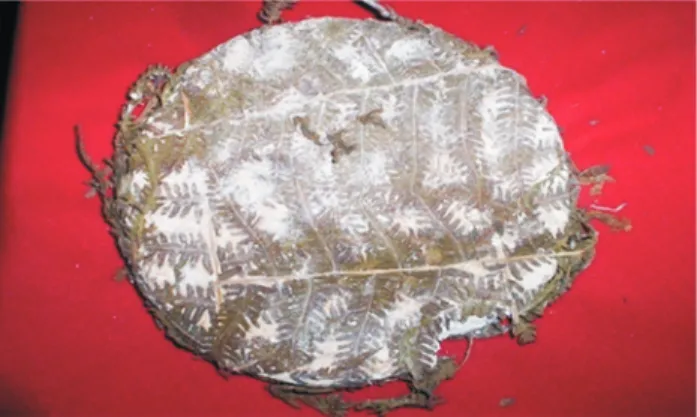
“Marcha” is a traditional fermented herbal cake capa-ble of fermenting a unique local wine of India (Figure 1). Under the specified set of conditions, total 5 strains were isolated from ‘Marcha’. Out of them, isolate AG1 was se-lected for bacteriocin production as it showed maximum antagonistic activity against most of the potent spoilage causing /food borne pathogens used as test indicators. It formed wide zones of inhibition againstL. monocytogene MTCC 839 [10 (0.81) mm], B. subtilis MTCC 121 [10 (0.81) mm] andC. perfringensMTCC 450 [8 (0) mm].
This isolate was found to be gram positive, rod shaped having circular and creamish colonies on nutrient agar medium and found to be catalase positive. Based on morphological, biochemical examination and molecular 16S rRNA gene technique the strain was identified as Brevibacillus borstelensis AG1 with accession no. JX129162. Following sequences of Brevibacillus borstelensisAG1 was obtained after sequence analysis:
Brevibacillus borstelensisAG1
GCAACGCTGGCGGCGTGCCTAATACATGCA AGTCGAGCGAGTCCCTTCGGGGGCTAGCGGCGG ACGGGTGAGTAACACGTAGGCAACCTGCCCGTA AGCTCGGGATAACATGGGGAAACTCATGCTAAT ACCGGATAGGGTCTTCTCTCGCATGAGAGGAGAC GGAAAGGTGGCGCAAGCTACCACTTACGGATGG GCCTGCGGCGCATTAGCTAGTTGGTGGGGTAACG GCCTACCAAGGCGACGATGCGTAGCCGACCTGA GAGGGTGACCGGCCACACTGGGACTGAGACACG GCCCAGACTCCTACGGGAGGCAGCAGTAGGGAA TTTTCCACAATGGACGAAAGTCTGATGGAGCAAC GCCGCGTGAACGATGAAGGTCTTCGGATTGTAAA GTTCTGTTGTCAGAGACGAACAAGTACCGTTCGA ACAGGGCGGTACCTTGACGGTACCTGACGAGAA AGCCACGGCTAACTACGTGCCAGCAGCCGCGGT AATACGTAGGTGGCAAGCGTTGTCCGGAATTATT GGGCGTAAAGCGCGCGCAGGCGGCTATGTAAGT CTGGTGTTAAAGCCCGGGGCTCAACCCCGGTTCG CATCGGAAACTGTGTAGCTTGAGTGCAGAAGAG GAAAGCGGTATTCCACGTGTAGCGGTGAAATGC GTAGAGATGTGGAGGAACACCAGTGGCGAAAGG CGGCTTTCTGGTCTGTAACTGACGCTGAGGCGCG AAAGCGTGGGGAGCAAACAGGATTAGATACCCT GGTAGTCCACGCGTAACGATGAGTGCTAGTGTTG GGGGGTTTCATACCCCTCAGTGCCGCAGCTAAAC GCAATAAAGCACCTCCCGCCCTTG
TGGCAAGGTCGAGCGAGTACCTTCGGGGGC TAGCGGCGGACGGGTGAGTAACACGTAGGCAAC TGCTGGTAAGCTCGGGATAACATGGGGAAACTC ATGCTAATACCGGGATAGGGTCTTCTCTCGCATG AGAGGAGACGGAAAGGTGGCGCAAGCTACCACT TACGGATGGGCGTGCGGCGCATTAGCTAGTTGGT GGGGTAACGGCCTACCAAGGCGACGATGCGTAG CCGACCTGAGAGGGTGACCGGCCACACTGGGAC TGAGACACGGCCCAGACTCCTACGGGAGGCAGC AGTAGGGAATTTTCCACAATGGACGAAAGTCTGA TGGAGCAACGCCGCGTGAACGATGAAGGTCTTC GGATTGTAAAGTTCTGTTGTCAGAGACGAACAAG TACCGTTCGAACAGGGCGGTACCTTGACGGTACC
TGACGAGAAAGCCACGGCTAACTACGTGCCAGC AGCCGCGGTAATACGTAGGTGGCAAGCGTTGTCC GGAATTATTGGGCGTAAAGCGCGCGCAGGCGGC TATGTAAGTCTGGTGTTAAAGCCCGGGGCTCAAC CCCGGTTCGCATCGGAAACTGTGTAGCTTGAGTG CAGAAGAGGAAAGCGGTATTCCACGTGTAGCGG TGAAATGCGTAGAGATGTGGAGGAACACCAGTG GCGAAGGCGGCTTTCTGGTCTGTAACTGACGCTG AGGCGCGAAAGCGTGGGGAGCAAACAGGATTAG ATACCCTGGTAGTCCACGCCGTAAACGATGAGTG CTAGGTGTTGGGGGTTTCAATACCCTCAGTGCCG CAGCTAACGCAATAAGCACTCCGCCCTGGGAGA CCTCCG CCTAATACATGCAAGTCGAGCGAGTCCCTTC GGGGGCTAGCGGCGGACGGGTGAGTAACACGTA GGCAACCTGCCCGTAAGCTCGGGATAACATGGG GAAACTCATGCTAATACCGGATAGGGTCTTCTCT CGCATGAGAGGAGACGGAAAGGTGGCGCAAGCT ACCACTTACGGATGGGCCTGCGGCGCATTAGCTA GTTGGTGGGGTAACGGCCTACCAAGGCGACGAT GCGTAGCCGACCTGAGAGGGTGACCGGCCACAC TGGGACTGAGACACGGCCCAGACTCCTACGGGA GGCAGCAGTAGGGAATTTTCCACAATGGACGAA AGTCTGATGGAGCAACGCCGCGTGAACGATGAA GGTCTTCGGATTGTAAAGTTCTGTTGTCAGAGAC GAACAAGTACCGTTCGAACAGGGCGGTACCTTG ACGGTACCTGACGAGAAAGCCACGGCTAACTAC GTGCCAGCAGCCGCGGTAATACGTAGGTGGCAA GCGTTGTCCGGAATTATTGGGCGTAAAGCGCGCG CAGGCGGCTATGTAAGTCTGGTGTTAAAGCCCGG GGCTCAACCCCGGTTCGCATCGGAAACTGTGTAG CTTGAGTGCAGAAGAGGAAAGCGGTATTCCACG TGTAGCGGTGAAATGCGTAGAGATGTGGAGGAA CACCAGTGGCGAAGGCGGCTTTCTGGTCTGTAAC TGACGCTGAGGCGCGAAAGCGTGGGGAGCAAAC AGGATTAGATACCCTGGTAGTCCACGCCGTAAAC GATGAGTGCTAGGTGTTGGGGGTTTCAATACCCT CAGTGCCGCAGCTAACGCAATAAGCACTCCG.
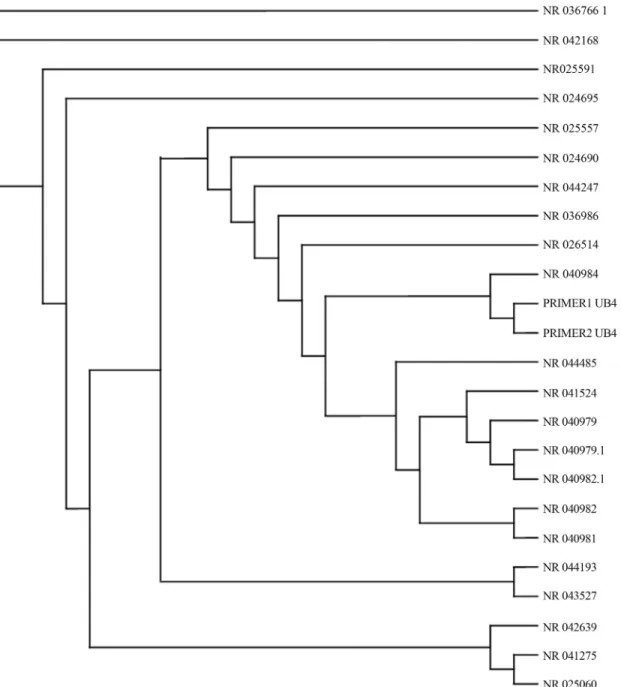
Sequence of the isolate so obtained was submitted to NCBI database and has been registered to gene bank data-bases. Phylogenetic tree was constructed on the basis of 16S rRNA gene sequence analysis for Brevibacillus borstelensis - JX129162 with the reference sequences available at NCBI through BLAST analysis as depicted in the Figure 2.
Maximum units - 1 x 10⁶AU/mL of crude bacteriocin like inhibitory substance were found at 35 °C after 48 h of incubation (Figure 3). After precipitation using ammonium sulphate, bacteriocin like inhibitory substance of Brevibacillus borstelensisAG1 had been concentrated pro-ducing 3 x 10⁶ AU/mL. This partially purified cell free bacteriocin like inhibitory substance of Brevibacillus borstelensisAG1 retained its original pattern of antago-nism against L. monocytogenes MTCC 839, B. subtilis MTCC121 andC. perfringensMTCC 450. Bacteriocin like
inhibitory active precipitates when dissolved in buffer and subjected to gel exclusion chromatography showed maxi-mum activity in fraction no. 20 to 24 expressing OD of 0.767, 0.927, 1.295, 1.452 and 1.114, respectively at 280 nm (Figure 4). The active fractions after pooling were found to exhibit strong activity against respective test indi-cators.
Molecular mass of the Brevibacillus borstelensis AG1 was confirmed through SDS PAGE and was esti-mated using Alfa Digi Doc software for molecular mass de-tection which was found to be 12 kDa (Figure 5). Molecular mass of the bacteriocin laterosporulin produced by Brevibacillussp. strain GI-9 determined by MALDI-TOF experiments was found to be 5.6 kDa (Singhet al., 2013). The bacteriocin Bac-GM100 was purified to homogeneity and based on MALDI-TOF/MS analysis was found to be a monomer protein with a molecular mass 4.375 kDa (Ghad-baneet al., 2013). In literature, very low to very high mo-lecular weight bacteriocin ranging from 2.0 (Martraniet al., 2001) to 94 kDa (Rajaramet al., 2010) has been reported. In our study, molecular weight of purified bacteriocin of Brevibacillus borstelensisAG1 had been found slightly to be on higher side reflecting the possibility of a novel bacte-riocin produced from a strain ofBrevibacillus borstelensis AG1.
The increase in the size of inhibition zones due to the activity of bacteriocin like inhibitory substance after final purification against the respective indicator has been de-picted in Figure 6. The zone sizes as noted by well diffusion assay were 18 (0.47), 14 (0) and 13 (0.81) mm for L. monocytogenesMTCC 839,B. subtilisMTCC 121 andC. perfringensMTCC 450, respectively.
An increase of 80, 40 and 62.5% was recorded in zone size against L. monocytogenes MTCC 839, B. subtilis MTCC 121 andC. perfringensMTCC 450 after purifica-tion. Activity unit of bacteriocin like inhibitory substance ofBrevibacillus borstelensisAG1 were increased from 1 x 10⁶in culture supernatant to 3 x 10⁶in partially purified and 4 x 10⁶ in purified bacteriocin like inhibitory substance. The specific activity was raised to 3.2 x 10⁶in the purified bacteriocin like inhibitory substance (Table 1). This proves that the bacteriocin activity enhances after purification along with the increase in the titres of bacteriocin. Similar studies related to increase in bacteriocin activity after puri-fication has also been reported. Purified bacteriocin ofB. thurigiensisshowed 1.28 x 10⁴AU/mL (1) and AU/mL of bacteriocin of purified from Brevibacillus brevis strain GM100 was found to be 11,000 AU mL-1(Ghadbaneet al., 2013).
121 andC. perfringensMTCC 450, respectively after treat-ment of bacteriocin like inhibitory substance at 40 °C, 50 °C and 60 °C which decreased to 16 (0.47) mm, 15 (0.47) mm and 12 (0.47) mm for respective indicators by further increasing the temperature to 70-80 °C. The decline was more at higher temperature of 90 °C and 100 °C, zone size with residual activity of 7 (0.81) mm for L. monocytogenes MTCC 839, 6 (0.81) mm for B. subtilis MTCC 121 and 5(0) mm forC. perfringensMTCC 450. The bacteriocin like inhibitory substance lost its activity at very high temperature of 121 °C (Figure 7). The loss of bacteriocin activity at autoclaving temperature may be due to denaturation of three dimensional structure of protein.
Earlier studies also have revealed that bacteriocin Bac-GM100 produced byBrevibacillus brevis strain GM100 was extremely heat-stable (20 min at 120 °C) (Ghadbaneet al., 2013). Bacteriocin produced byB. megaterium19 also displayed heat stability upon exposure to 100 °C for 15 min but was sensitive to autoclaving temperature (Karthikeyan and Santosh, 2009). The bacteriocin produced byBacillus licheniformiswas stable at 100 °C for 10 min but lost its ac-tivity at 121 °C in 15 min (Khalilet al., 2009) and another novelBacillussp. retained 70% of its activity after 60 min at 100 °C (Kayalvizhi and Gunasekaran, 2010). This heat stability may be useful if the bacteriocin is to be used as an antimicrobial agent in thermally processed foods.
Bacteriocin like inhibitory substance ofBrevibacillus borstelensisAG1 showed the maximum activity at neu-tral pH 7.0 against respective indicators. Bacteriocin re-tained its activity when pH was changed from 4.0 to 10.0 though there was a complete loss of activity when the pH was lowered to 3.0 and 2.0 and was raised beyond 10.0 (Figure 8). Similar studies were reported where bacteriocin of Brevibacillus brevis strain GM100 was stable within a pH range of 3-10 (Ghadbaneet al., 2013). Purified
bacte-riocin ofB. amyloliquifaciens showed activity in the pH ranging from 3.0-8.0 and thuricin S produced by the Bacil-lus thuringiensiswas found stable at a variety of pH levels i.e.3-10.5 (Lisboaet al., 2006; Mottaet al., 2007). Thus, this bacteriocin was found to be active at wider range of pH which could be another desirable attribute to use it as food preservative in a variety of food items which may be neu-tral, acidic and alkaline in nature.
Figure 3- Production of bacteriocin during growth cycle ofBrevibacillus borstelensisAG1.
When phosphate buffer alone and phosphate buffer containing enzyme trypsin @ 0.25 mg/mL were welled into lawns of indicator strains, no inhibition zone was formed (Figure 9). But bacteriocin like inhibitory substance treated with phosphate buffer resulted in zone formation of 11
(0.81) mm, 9 (0) mm and 7 (0.81) mm for L.
monocytogenesMTCC 839,B. subtilisMTCC 121 andC. perfringensMTCC 450, respectively. This shows that en-zyme trypsin had completely inactivated the bacteriocin of Brevibacillus borstelensisAG1. Sensitivity of bacteriocin to proteolytic enzyme proves that it is proteinaceous nature and thus can be recommended to be used as a safe food pre-servative. The proteolytic enzymes of digestive tract are ca-pable of degrading it down completely in our system thus leaving no residue behind. Sensitivity of bacteriocin to proteolytic enzymes has also been observed in other stud-ies. Bacteriocin of B. thuringiensis subsp. tochigiensis named as tochicin was found sensitive to trypsin at a con-centration of 1 mg/mL (Chehimiet al., 2007). Similarly, in-activation of inhibitory activity of partially purified
bacte-riocin produced from Brevibacillus brevis strain GM100 was noticed with various prateases (Ghadbaneet al., 2013).
Bacteriocin like inhibitory substance produced from Brevibacillus borstelensisAG1 was found to be stable upto 6 weeks of storage at low temperature while there was a consistent loss of its activity afterwards at refrigerated
tem-Figure 5- SDS-Polycrylamide gel electrophoresis of purified bacteriocin produced byBrevibacillus borstelensisAG1.
Figure 6- Percent increase in inhibition zone size (mm) against test indicators of partially purified and purified bacteriocin ofBrevibacillus borstelensis
AG1 over culture supernatant.
Table 1- Partial purification and purification of bacteriocin produced byBrevibacillus borstelensisAG1.
Purification steps Volume (mL)
Activity units (AU/mL)
Total activity Protein (mg/mL)
Specific activity (AU/mg)
Purification fold
Recovery (%)
Culture supernatant 800 1 x 10⁶ 8 x 10⁸ 12.8 7.8 x 10⁴ 1 100
Partially purified bacteriocin 30 3 x 10⁶ 9 x 10⁷ 10.5 2.8 x 10⁵ 3.5 82
Figure 7- Effect of temperature on activity of purified bacteriocin produced byBrevibacillus borstelensisAG1.
Figure 8- Effect of pH on activity of purified bacteriocin ofBrevibacillus borstelensisAG1.
perature. It suggested that bacteriocin of Brevibacillus borstelensisAG1 could be used efficiently upto six weeks time with minimal loss in its activity.
Conclusion
Bacteriocin like inhibitory substance produced from Brevibacillus borstelensisAG1 showed antimicrobial ac-tivity against most challenging and serious food borne pathogens likeL. monocytogenesMTCC 839, B. subtilis MTCC 121 andC.perfringensMTCC 450. Purification of bacteriocin like inhibitory substance was done by salt satu-ration (ammonium sulphate) method followed by gel ex-clusion chromatography. The purified bacteriocin like inhibitory substance exhibited very high activity of 4 x 10⁶ AU/mL and specific activity of 3.2 x 10⁶. Its titre had in-creased at every step of purification, along with the size of zone of inhibition which was increased by 80%, 40% and 62.5% against respective indicators. The characterization of bacteriocin like inhibitory substance showed high thermostability upto 100 °C for 10 min, a wide range pH tolerancei.e.from 4.0-10.0 and was found to be completely sensitive to proteolytic enzyme - trypsin. The unique com-bination of all the above mentioned properties rendered bacteriocin like inhibitory substance of isolated strain Brevibacillus borstelensis AG1 as an attractive food biopreservative and thus highly desirable for preservation of food items in the food/ food processing industry.
References
Ahern M, Verschueren S, Van Sinderen D (2003) Isolation and characterization of a novel bacteriocin produced byBacillus thuringiensisstrain B439. FEMS Microbiol Lett 220:127-131.
Barefoot SF, Klaenhammer TR (1983) Detection and activity of Lactacin B, a bacteriocin produced by Lactobacillus acidophilus.Appl Environ Microbiol 45:1808-1815. Bizani D, Brandelli A (2002) Characterization of a bacteriocin
produced by a newly isolatedBacillussp. strain 8A. J Appl Microbiol 93:519-521.
Chehimi S, Delalande F, Sable S, Hajlaoui MR, Van Dorsselaer A, Limam F, Pons AM (2007) Purification and partial amino acid sequence of thuricin S, a new anti-listeria bacteriocin fromBacillus thuringiensis. Can J Microbiol 53:284-290. Chen H, Hoover DG (2003) Bacteriocins and their food
applica-tion. Comp Rev Food Sci Food Safety 2:82-100.
Ghadbane M, Harzallah D, Laribi AI, Jaouadi B, Belhadj H (2013) Purification and biochemical characterization of a highly thermostable bacteriocin isolated fromBrevibacillus brevis strain GM100. Biosci Biotechnol Biochem [Epub ahead of print].
Jack RW, Tagg JR, Ray B (1995) Bacteriocins of gram positive bacteria. FEMS Microbiol Rev 59:171-200.
Karthikeyan V, Santosh SW (2009) Isolation and partial charac-terization of bacteriocin produced from Lactobacillus plantarum. Afr J Microbiol 3:233-239.
Kayalvizhi N, Gunasekaran P (2010) Purification and character-ization of a novel broad-spectrum bacteriocin fromBacillus licheniformis MKU3. Biotechnol Bioprocess Eng 15:365-370.
Khalil R, Elbahloul Y, Djadouni F, Omar S (2009) Isolation and partial characterization of a bacteriocin produced by a newly isolated Bacillus megaterium19 strain. Pak J Nut 3:242-250.
Kimura H, Sashihara T, Matsuki H, Sonomoto K, Ishizzaki A (1998) Novel bacteriocin ofPediococcussp. ISK-1 isolated from well aged bed of fermented rice bran. Ann New York Acad Sci 864:345-348.
Klaenhammer TR (1993) Genetics of bacteriocin produced by LAB. FEMS Microbiol Rev 12:39-86.
Kumar TDK, Murli HS, Batra HV (2009) Simultaneous detection of pathogenicB. cereus, S. aureusandL. monocytogenesby multiplex PCR. Ind J Microbiol 49:283-289.
Lisboa MP, Bonatto D, Bizani D, Henriques JA, Brandelli A (2006) Characterization of a bacteriocin-like substance pro-duced byBacillus amyloliquifaciensisolated from the Bra-zilian Atlantic forest. Int Microbiol 9:111-118.
Lowry OH, Rosebrough NJ, Farr AL, Randall RJ (1951) Protein measurement with folin phenol reagent. Journal of Biologi-cal Chemistry 19:265-275.
Martrani L, Varcamonti M, Nacleria G, Felice MD (2001) Purifi-cation and partial characterization of bacillocin 490, a novel bacteriocin produced by a thermophilic strain of B. Licheniuformis. Microbial Cell Fact 1:1-5.
Merril CR, Goldman D, Sedman SA, Elbert MH (1981) Ultra sen-sitive stain for proteins in polyacrylamide gels show re-gional variations in cerebrospinal fluid proteins. Science 211:1417-1437.
Motta AS, Loreuzeni DM, Brandelli A (2007) Purification and partial characterization of an antibacterial peptide produced by a novelBacillussp.isolated from the Amazon basin. Curr Microbiol 54:282-286.
Ogunbanwo ST, Sanni A, Onilude AA (2003) Characterization of bacteriocin produced by Lactobacillus plantarum F1 and
Lactobacillus brevisOG1. Afr J Biotechnol 2:219-227. Pingitora EV, Salvucci E, Serma F, Nader-Macias ME (2007)
Different strategies for purification of antimicrobial peptide from LAB. Trends Appl Microbiol 557-568.
Rajaram G, Manivasagan P, Thilagavathi B, Saravanakumar A (2010) Purification and characterization of a bacteriocin produced byLactobacillus lactisisolated from marine envi-ronment. Journal of Food Science 2(2):138-144.
Sharma N, Gautam N (2008) Antibacterial activity and character-ization of bacteriocin of Bacillus mycoides isolated from whey. Ind J Biotechnol 7:117-121.
Singh PK Chittpurna Ashish, Sharma V, Patil PB, Korpole S (2013) Identification, purification and characterization of laterosporulin, a novel bacteriocin produced by
Brevibacillussp. strain GI-9. PLoS ONE 7:e31498-e31498. Van Rennan CA, Dicks LMT, Chikindas ML (1998) Evaluation
of numerical analysis of random amplified polymorphic DNA-PCR on the method of differentiates Lactobacillus plantarum and Lactobacillus pentosus. J Appl Microbiol 84:1131-1137.