rev bras reumatol.2015;55(1):75–78
REVISTA
BRASILEIRA
DE
REUMATOLOGIA
ww w . r e u m a t o l o g i a . c o m . b r
Case
report
Two
pairs
of
brothers
with
juvenile
idiopathic
arthritis
(JIA):
case
reports
Teresa
Cristina
M.V.
Robazzi
a,b,∗,
Gabriela
Rios
b,
Catarina
Castro
caDepartmentofPediatricRheumatology,UniversidadeFederaldaBahia,Salvador,BA,Brazil
bDepartmentofPediatrics,MedicalSchool,UniversidadeFederaldaBahia,Salvador,BA,Brazil
cMedicineSchool,UniversidadeFederaldaBahia,Salvador,BA,Brazil
a
r
t
i
c
l
e
i
n
f
o
Articlehistory: Received21July2012 Accepted21May2013
Availableonline26November2014
Keywords:
Juvenileidiopathicarthritis Siblings
Children
a
b
s
t
r
a
c
t
Thisisacasereportofjuvenileidiopathicarthritisintwopairsofbrothersfollowedin theDepartmentofPediatricRheumatology,UniversidadeFederaldaBahia.Genetic involve-mentinjuvenileidiopathicarthritispathogenesisisclearandtheriskofrecurrenceamong siblingssupportsthiscontribution.Animportantlandmarkofthisdiscoveryinvolvesthe acknowledgmentofmajorhistocompatibilitycomplexpolymorphismcontributionto juve-nileidiopathicarthritisdevelopmentsusceptibility.Despitemanyadvances,thenumerous availablestudiescannotexplainseveralimplicitmechanismsinjuvenileidiopathicarthritis pathogenesisyet.
©2014ElsevierEditoraLtda.Allrightsreserved.
Dois
pares
de
irmãos
com
artrite
idiopática
juvenil
(AIJ):
relato
de
casos
Palavras-chave:
Artriteidiopáticajuvenil Irmãos
Crianc¸as
r
e
s
u
m
o
RelatodecasosdeocorrênciadeArtriteIdiopáticaJuvenil(AIJ)emdoisparesdeirmãos acompanhadosnoservic¸odereumatologiapediátricadaUniversidadeFederaldaBahia.O envolvimentogenéticonapatogênesedaAIJestáclaroeoriscoderecorrênciaentreirmãos corroboraestacontribuic¸ão.Umimportantemarcodessadescobertaenvolveaconfirmac¸ão dacontribuic¸ãodospolimorfismosdocomplexoprincipaldehistocompatibilidade(MHC) nasusceptibilidadeaodesenvolvimentodaAIJ.Apesardemuitosprogressos,osinúmeros estudosexistentesaindanãosãocapazesdeexplicardiversosmecanismosimplícitosna patogênesedaAIJ.
©2014ElsevierEditoraLtda.Todososdireitosreservados.
∗ Correspondingauthor.
E-mail:[email protected](T.C.M.V.Robazzi).
http://dx.doi.org/10.1016/j.rbre.2013.05.005
76
rev bras reumatol.2015;55(1):75–78Introduction
Juvenile idiopathic arthritis (JIA) refers to a collection of chronicarthropathiesinchildrenwithanonsetbeforetheage of16and ayetunknownetiology,but withamultifactorial influencelinkedtoimmune,infectiousandgeneticfactors.1
The literature shows higher disease prevalence in sib-lings,aswellasinfirst-degreerelativeswithotherrheumatic diseases,thusdemonstratingthemagnitudeofgenetic contri-butiontodiseasesusceptibility.2Severalgeneticstudieshave focusedtheunderstandingofmajorhistocompatibility com-plex(MHC) polymorphism contributionto JIAdevelopment susceptibility.Theresultsofthesestudiesdemonstrate asso-ciationsbetweenJIAandgenesencodingHLAandnon-HLA.3 However,identifyinggeneticfactorsinvolvedinJIA pathogen-esis hasbeen difficultforseveral reasons, including alow prevalenceoffamilial casesanda lackofpopulation stud-iesestimatingtheirriskofrecurrence.Thus,fewstudieshave beenconductedandtheyareoftenbasedonalownumberof cases.4
TheauthorsdescribeJIAoccurrenceintwopairsof non-twinbrothers.
Case
reports
Firstreport
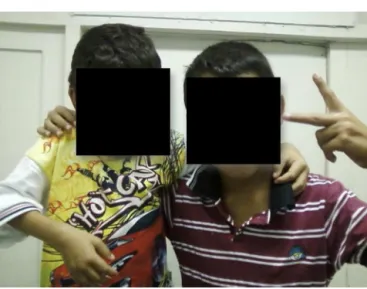
NSF,an11yearsand8monthsoldboy,presentedwith prox-imal interphalangeal joints (PIP) of the fingers, knee and anklepolyarthritisassociatedwithanintermittentfeversince 8 months of age. On physical examination, he had bilat-eral4thfingerPIP,knee, andanklesynovialthickeningand swellingwithpreservedrangeofmovement.Antinuclear anti-bodies(ANA)andrheumatoidfactor(RF)werenegative.The patientfailedtoadheretotreatmentforsocioeconomic rea-sons and was lost to follow up, but returned to the clinic witha clinicallyactive disease 9years laterand was then accompanied bya younger brother, JPSF, a patient aged 5 years and 10 months with intermittent fever and arthri-tis of metatarsophalangeal, knee, and ankle joints since 9 monthsofage.Claudication,wristandkneesynovial thick-ening,bilateral kneearthritis,and a5th-fingerboutonniere deformitywerenotedonphysicalexamination.ANAandRF werenegative.Afterrulingoutinfectiousdiseases, malignan-cies,andothersystemicautoimmunediseases,thediagnosis ofpolyarticularJIA(ILAR)wasmadeforbothbrothers.They arecurrentlytakingnaproxen,methotrexate,andetanercept (Fig.1).
Secondreport
IJS,an8yearoldboy,presentedwithahistoryofdailyfever (100.4–102.2◦F),evanescentskinrash,andadditive
polyarthri-tisinvolvingthewrists,elbows,knees,ankles,andproximal interphalangeal joints since 11 months of age. On physi-cal examination, hepatosplenomegaly, bilateral arthritis of the knee,ankle, distaland proximal interphalangealjoints and a nodule in the 3rd left PIP were noted. ANA and RF
Fig.1–SiblingswithpolyarticularJIA;casereport1.
were negative,and infections,malignancies and other sys-temicautoimmunediseaseswereruledout,thusleadingto adiagnosisofsystemicJIA(ILAR).Thetreatmentstartedwith methotrexate,naproxen, prednisolone,folicacid,and etan-erceptwithimprovementofthefever,rash,morningstiffness andarticularmanifestations.Threeyearslaterthanthe above-mentioneddiagnosis,hisyoungerbrotheraged5yearswas seenwithacomplaintofgeneralizedjointpainfor5months associatedwithrightwristandkneeswellingandhighevening feverwithanonsettwomonthsearlierthan jointfeatures. Hehadanorexiaandweightloss.Hepatomegaly,rightwrist andkneeswellingwithlocalheatandpainonactiveand pas-sivemovementwerenotedonphysicalexamination.ANAand RFwerenegative.Followingtheexclusionofotherdiseases, thediagnosisofasystemicJIAwasmadeandtreatmentwith indomethacin,methotrexate,andfolicacidwasinitiated.He showedgoodclinical andlaboratoryresponsetotreatment. TheyevolvedtopolyarticularandpauciarticularJIA, respec-tively(Fig.2).
Discussion
Despitegeneticstudiesnotbeingperformedinthosepatients described,evidencesuggests thatJIAisacomplex disorder influenced by multiple genetic and environmental factors. JIAprevalenceamongindividualshavingsiblingsaffectedby the disease is 15- to 30-foldhigher than in general popu-lation and the risk ofrecurrence amongsiblings supports the genetic contribution to the disease. In addition, stud-iesdemonstratepairsofsiblingsaffectedbyJIAhavesimilar humanleukocyteantigens(HLA)andclinicalfeatures,with aconcordancerateinmonozygotictwinsof25%,thus sug-gesting a 250-fold higher prevalence than in the general population.4
rev bras reumatol.2015;55(1):75–78
77
Fig.2–Siblingsaged8and5years(fromlefttoright)with pauciarticularandpolyarticularJIA;casereport2.
Thereafter,other studiesreported JIAinpairsoftwinsand a number of them highlighted the disease onset within a shorter time in twins than in other pairs of affected siblings.5 Studies have further shown the same disease onset and course subtype among siblings, as well as dif-ferent onset patterns, but a similar subsequent course, emphasizingtheinfluenceandcomplexityofgeneticeffects on JIA; however, the implicit mechanisms could not be explained.5,6
InareviewstudybyPrahaladetal.,thegeneticinfluence onJIAdevelopmentispointedouteitherwithinoroutofHLA region.7
Säiläetal.studiedpatientsfrommultiplexfamiliesofJIA and observed that the onlysignificant difference between familialandsporadiccaseswasanearlieronsetofthe dis-ease in familial cases, with no essential difference in the disease clinical featuresbeing seen betweenpatients from bothgroups.8
Maroldoetal.investigatedclinicalphenotypesand demo-graphiccharacteristicsin183pairsofsiblingsaffectedbyJIAto determinewhetherdifferencesbetweenclinicalphenotypes inthefamilialdiseasecohortcomparedwithpatientsinthe sporadicdisease cohort existed. Theresultsconfirmed the conclusionsfromotherstudiesshowingahighconcordance rateforthediseaseonsettypebetweenpairsofsiblings,except forthesubgroupofpatientswithsystemicdisease.9Regarding thecurrentstudy,therewasaconcordancefortheonsettype onlyinthefirstcasereport.
Afactthatstandsoutinthecurrentreportsisthedisease onsetatearlyages. Al-Mayoufetal.,byaimingtocompare
patientswithfamilialJIAversussporadicJIAregardingclinical andlaboratoryvariables,observedresultsthatweresimilarto previousresultsregardingageofonset:patientswithfamilial JIAweresignificantlyyoungeratthediseaseonsetandwere diagnosedearlierthanpatientsinthesporadicgroup. How-ever,thehighdegreeofconcordanceregardingtheonsettype seeninthatgroupofcaseswasnotconsistentwithprevious reports.Thefactthatdatawerecollectedfromahospitalthat isthemaintertiarycenterinthecountry,whichcould repre-sentacohortofpatientswithmoresevereJIAcases,wouldbe areasonableexplanationfortheresults.10
Recently, Prahalad et al. performed an analysis of the largest availabledatabaseandfoundthatsiblingsand first-degree cousins of subjects with JIA have a higher risk to developthedisease.Therelativerisks(RRs)foreachclassof kinshipwere calculatedthroughconditionallogistic regres-sion: RR in siblings and first-degree cousins was elevated compared withcontrols; the same fact did notoccur with second-degreecousins.11
In summary,geneticinvolvementinJIApathogenesisis clear;however,theabilitytolistthegenesinvolvedand under-standthecontributionofgeneproductstothepathogenesis willdependonlarge-scalewellplannedstudies,aswellasthe understandingofenvironmentalcontributiontothedisease triggeringandperpetuation.
Conflicts
of
interest
Theauthorsdeclarenoconflictsofinterest.
r
e
f
e
r
e
n
c
e
s
1.BerentP,SalvatoreA,AlberrtoM.Juvenileidiopathicarthritis. Lancet.2011;377:2138–49.
2.BukulmezH,FifeM,TsorasM,ThompsonSD,TwineNA,Woo P,etal.Tapasingenepolymorphisminsystemiconset juvenilerheumatoidarthritis:afamily-basedcase–control study.ArthritisResTher.2005;7:R285–90,
http://dx.doi.org/10.1186/ar1480.Publishedonline2005 January11.
3.PrahaladS.Geneticsofjuvenileidiopathicarthritis:an update.CurrOpinRheumatol.2004;16:588–94.
4.PrahaladS,O’brienE,FraserAM,KerberRA,MineauGP,Pratt D,etal.Familialaggregationofjuvenileidiopathicarthritis. ArthritisRheum.2004;50:4022–7.
5.PrahaladS,RyanMH,ShearES,ThompsonSD,GlassDN, GianniniEH.Twinsconcordantforjuvenilerheumatoid arthritis.ArthritisRheum.2000;43:2611–2.
6.Ozc¸akarL,Dinc¸erF,Ozc¸akarZB.Juvenilechronicarthritisina monozygotictwincouple.RheumatolInt.2003;23:149–50.
7.PrahaladS,GlassDN.Acomprehensivereviewofthegenetics ofjuvenileidiopathicarthritis.PediatrRheumatolOnlineJ. 2008;21:6–11.
8.SäiläHM,SavolainenHA,KotaniemiKM,
Kaipiainen-SeppänenOA,Leirisalo-RepoMT,AhoKV.Juvenile idiopathicarthritisinmulticasefamilies.ClinExpRheumatol. 2001;19:218–20.
78
rev bras reumatol.2015;55(1):75–7810.Al-MayoufSM,MadiSM,AlManeK,AlJummahS. Comparisonofclinicalandlaboratoryvariablesinfamilial versussporadicsystemiconsetjuvenileidiopathicarthritis.J Rheumatol.2006;33:597–600.