Instituto Dante Pazzanese de Cardiologia
Mailing address: Ari Timerman – Rua Pará, 90/71 – 01243-120 – São Paulo, SP – Brazil - E-mail: [email protected]
Objective - To analyze the early and late results of
cardiopulmonary resuscitation in a cardiology hospital and to try to detect prognostic determinants of both short-and long-term survival.
Methods - A series of 557 patients who suffered
car-diorespiratory arrest (CRA) at the Dante Pazzanese Car-diology Institute over a period of 5 years was analyzed to examine factors predicting successful resuscitation and long-term survival.
Results - Ressuscitation maneuvers were tried in 536
patients; 281 patients (52.4%) died immediately, and 164 patients (30.6%) survived for than 24 hours. The 87 patients who survived for more than 1 month after CRA were compared with nonsurvivors. Coronary disease, car-diomyopathy, and valvular disease had a better prog-nosis. Primary arrhythmia occurred in 73.5% of the >1-month survivor group and heart failure occurred in 12.6% of this group. In those patients in whom the initial mecha-nism of CRA was ventricular fibrillation, 33.3% survived for more than 1 month, but of those with ventricular asys-tole only 4.3% survived. None of the 10 patients with electromechanical dissociation survived. There was worse prognosis in patients included in the extreme age groups (zero to 10 years and 70 years or more). The best results oc-curred when the cardiac arrest took place in the cathete-rization laboratories. The worst results occurred in the in-tensive care unit and the hemodialysis room.
Conclusion - The results in our series may serve as a
helpful guide to physicians with the difficult task of deciding when not to resuscitate or when to stop resuscitation efforts.
Key words: cardiorespiratory arrest, acute myocardial in-farction
Arq Bras Cardiol, volume 77 (nº 2), 152-60, 2001
Ari Timerman, Naim Sauaia, Leopoldo Soares Piegas, Rui F. Ramos, Carlos Gun, Elizabeth Silva Santos, Antonio C. Mugayar Bianco, J. Eduardo M. R. Sousa
São Paulo, SP - Brazil
Prognostic Factors of the Results of Cardiopulmonary
Resuscitation in a Cardiology Hospital
The technique of cardiopulmonary resuscitation (CPR) by external cardiac massage, introduced in 1960 by
Kouwenhoven et al 1, represents a great advance in
intensi-ve care medicine and allows many patients to be saintensi-ved. Se-veral studies on CPR in a hospitalized population have shown the effectiveness of the resuscitation maneuvers with a significant number of patients being discharged alive from general hospitals or from university hospitals, where the studies were carried out. We intend to report here short-and long-term results of our experience with 536 patients who suffered cardiorespiratory arrest (CRA) in a cardiac medical center during a 5-year period and who were followed up for 1 year.
The study was conducted to address questions rela-ting to the demographic and clinical characteristics of pa-tients suffering CRA and also to the predictors of outcome and of long-term survival in an attempt to provide some useful perspectives to physicians involved in CPR.
Methods
From February 1, 1978 to February 28, 1983, 339,000 out-patient visits and 7694 hospital admissions took place at the Hospital. During this 5-year period, 557 patients suffered cardiac arrest (excluding those that occurred inside the ope-rating room). In 21 terminally ill patients, CPR maneuvers were not initiated. CPR maneuvers were tried in 536 patients.
The institute had a staff that included 120 physicians working in its departments and 60 medical residents. Because of the reduced size of the institute, a specific cdiac arrest team was not available, and therefore, carcdiac ar-rests were attended by the professional house staff, each one having undergone an effective training program in CPR techniques according to the standards of the American
Heart Association 2,3.
The CPR training program with the use of mannequins is regularly given, every year, by the doctors responsible from the emergency department to other physicians, nurses, and health professionals working at the institute. The CPR training program is given monthly to medical residents ro-tating at the emergency department.
CRA, defined as the sudden cessation of circulation, respiration, or both resulting in loss of consciousness and requiring initiation of CPR, was initially attended by the closest physician, nurse, or another health professional while other cardiologists, residents, and nurses from the emergency department proceeded to the site of arrest. After an initial stabilization at the site of the arrest, the patient was transferred to 1 of the intensive care units to continue the treatment.
Every patient who suffered CRA had personal data, the diagnosis, the causes and characteristics of the arrest, and the results of CPR reported on a case report form.
In this study, the time of duration of the CPR maneu-vers was not computed. Only the first arrest on each admis-sion was counted. Second or subsequent arrests, if unsuc-cessfully treated, were recorded as later death and were ignored if the patient survived. One patient was discharged alive from the hospital after successful resuscitation after a first event, and during another hospital admission had ano-ther cardiac arrest and died. Only the first cardiac arrest was counted, and the last was recorded as a late death.
At the time of the study and according to the recom-mendation of the American Heart Association, we conside-red 3 modalities of cardiac arrest: VF, asystole, and EMD. Respiratory arrest was included as an initial modality of CRA when it resulted in the loss of pulse, which prompted the need for CPR maneuvers. Arrhythmia was classified as pri-mary when it did not occur as a consequence of a signifi-cant myocardial contractility depression.
Resuscitation was deemed successful if stable circula-tion was established and the resuscitators disbanded. The patients who survived the CRA were followed-up through review of their clinical file, personal interviews, letter, phone, or by communications of their personal physician. When necessary, the patient’s family was contacted to assess the long-term outcome.
Underlying diseases and determinant causes of CRA were analyzed on the basis of clinical, laboratory, and surgi-cal findings. Postmortem examinations were performed on 97 patients. Particular attention was given to verifying deaths occurring during 48 hours, 30 days, and 1 year after CPR. The variables sex, age, underlying disease, determi-nant cause, and modality of CRA and the location where the
CRA occurred were considered factors that may have influ-enced the outcome.
In a preliminary analysis, the association between the mentioned factors and survival was studied. The
Mantel-Haenszel chi-square (x2) test without correction for
continui-ty was used in the association tables (2x2). The Pearson x2 test
was used in the contingency tables to evaluate the homoge-neity of survival proportions according the focused factor modalities. If the association was statistically significant, the Cochran procedure was used.
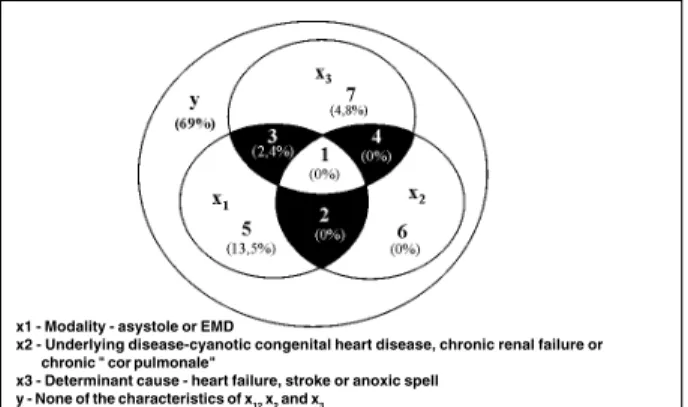
In a second analysis, logistic regression was used to eva-luate the value of each factor (age, underlying disease, de-terminant cause, location, and modality of CRA) without the risk of transitiveness of its influence over the outcome of CPR. The probability of survival for more than 30 days after CRA and CPR was calculated based on factors that achie-ved statistical significance in the multivariate analysis, which were the underlying disease, the determinant cause of cardiac arrest, and the modality of CRA. For each of these variables, the condition that indicated a worse prognosis for survival for more than 30 days was selected. For underlying disease, the conditions were cyanotic congenital heart disease, chronic renal failure, and chronic cor pulmonale. For the determinant cause of cardiac arrest, the conditions were heart failure, stroke, and an anoxic spell. For the moda-lity of cardiac arrest, the conditions were asystole and EMD. The three variables were represented by one circle, and these 3 circles were contained in one bigger circle that com-prises the entire population studied. The remaining area in the big circle not occupied by the smaller circles comprises the group of patients that do not have any of the conditions of the smaller circles.
Decisions were made using the significance level of 0.05.
Results
In the 5-year period comprising the study, CPR was tried in 536 patients; 55 (10.3%) were at the outpatient de-partment and 481 (89.7%) in hospitalized patients (Table I). The study population consisted of 330 males (61.6%) and 206 females (38.4%) ranging from 9 days to 86 years of age with a mean age of 47.2 years. Table II shows the age distribution of the patients who suffered a CRA.
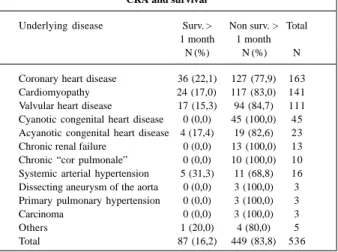
Table III summarizes the underlying diseases of the pa-tients undergoing resuscitation. The most common under-lying disease was coronary heart disease occurring in 163 patients (30.4%) with 93 patients (57.1%) in the course of acute myocardial infarction (AMI), followed by cardiomyo-pathy in 141 patients (26.3%), and valvular heart disease in 111 patients (20.7%).
Of the CRA determinant causes (Table IV), heart failu-re pfailu-redominated, occurring in 295 patients (55%), followed by primary arrhythmia in 88 patients (16.4%), respiratory fai-lure in 34 patients (6.3%), and stroke in 31 patients (5.8%).
respiratory arrest in 20 patients (3.7%), and EMD in 10 pa-tients (1.9%).
Analysis of the results of CPR maneuvers revealed that 281 patients (52.4%) died immediately; another 91 (17%) died within the first 24 hours after CRA (after an initial recovery). Of the 164 patients (30.6%) who survived for more than 24 hours, 77 (14.4%) died in the first month after CRA and another 11 (2.1%) died 1 month to 1 year after CRA (Fig.1). Seventy-six (14.2%) patients were still alive late 1 year after CRA.
Data pertaining to the site of arrest and to the outcome of CPR are presented in Table I. The greatest rates of survi-val were obtained in the cardiac catheterization laboratories (70.3% of the patient who suffered CRA at that site survi-ved for more than 1 month). The smallest rates of survival occurred in the hemodialysis room, where no patient survi-ved for more than 1 month, and in the emergency room with 8.9% survival for more than 1 month. The univariate analy-sis revealed a statistically significant difference when all
si-tes of CRA were compared (x2= 92.61, p<0.00001), when the
catheterization laboratory is compared with the
hemodialy-sis room alone (x2=10.66 p<0.001) or associated with the
emergency room (x2 = 85.15 and p<0.00001). In the
multiva-riate analysis, no significant statistical difference at 1 month (p<0.4) occurred.
CPR was initiated within 5 minutes of the arrest in 97.8% of the cases, and all patients who survived for more than 1 month were in this situation.
In the group of 87 patients who survived for more than 1 month after recovery from CRA, the age ranged from 11 to 83 years, with a mean age of 49 years. In the group of 449 pati-ents who died within 1 month, the age ranged from 9 days to 86 years, with the mean age being 46.9 years. When the pa-tients are divided into 3 age groups (zero to 10 years, 11 to 69 years, and 70 years or more), we observed that no patient survived for more than 1 month of the 45 patients aged between zero and 10 years. Of the 70 patients 70 years or ol-der, the survival rate for more than 1 month was only 5.7%. Of the 421 patients aged between 11 and 69 years, 19.7% sur-vived for more than 1 month. This difference was statistically
significant with x2 = 18.17 and p<0.0001 (Table VI). When we
compared the age groups of zero to 10 years and 70 years or more with the age group of patients 11 to 69 years, we
confirmed the significant statistical difference with x2 = 17.51
and p<0.00002. In the multivariate analysis, however, when compared with other factors, statistical significance at 30 days (p<0.25) was not sustained. In the group of 87 patients surviving for more than 1 month, 51 patients (58.6%) were male and 36 (41.4%) were female. In the nonsurviving group, 279 were male (62.1%) and 170 (37.9%) were female. No significant statistical difference existed between the number
of survivors according to sex (Mantel-Haenszel x2 = 0.38
and p<0.53).
Table I - Underlying disease of patients suffering in-hospital CRA and survival
Underlying disease Surv. > Non surv. > Total 1 month 1 month
N (%) N (%) N
Coronary heart disease 36 (22,1) 127 (77,9) 163 Cardiomyopathy 24 (17,0) 117 (83,0) 141 Valvular heart disease 17 (15,3) 94 (84,7) 111 Cyanotic congenital heart disease 0 (0,0) 45 (100,0) 45 Acyanotic congenital heart disease 4 (17,4) 19 (82,6) 23 Chronic renal failure 0 (0,0) 13 (100,0) 13 Chronic “cor pulmonale” 0 (0,0) 10 (100,0) 10 Systemic arterial hypertension 5 (31,3) 11 (68,8) 16 Dissecting aneurysm of the aorta 0 (0,0) 3 (100,0) 3 Primary pulmonary hypertension 0 (0,0) 3 (100,0) 3
Carcinoma 0 (0,0) 3 (100,0) 3
Others 1 (20,0) 4 (80,0) 5
Total 87 (16,2) 449 (83,8) 536
Table II - Determinant causes of patients suffering in- hospital CRA and survival
Determinant Cause Surv. >1 month Non surv. >1 month Total
(%) (%) N
Heart failure 11 (3,7) 284 (96,3) 295 Primary arrythmia 64 (72,7) 24 (27,3) 88 Respiratory failure 4 (11,8) 30 (88,2) 34
Stroke 0 (0,0) 31 (100,0) 31
Anoxic spell 0 (0,0) 19 (100,0) 19
Uremia 1 (5,9) 16 (94,1) 17
Infectious diseases 0 (0,0) 16 (100,0) 16 Hypovolemic shock 1 (8,3) 11 (91,7) 12 Cardiac tamponade 0 (0,0) 3 (100,0) 3 Hiperkalemia 1(33,3) 2 (66,7) 3 Hipokalemia 4 (66,7) 2 (33,3) 6 Mesenteric thrombosis 0 (0,0) 2 (100,0) 2
Others 1(10,0) 9 (90,0) 10
Total 87 (16,2) 449 (83,8) 536
Table III -Modalities of CRA in patients suffering in- hospital CRA and survival
Modality Surv. > Non surv. > Total 1 month N(%) 1 month N(%) N
Ventricular asystole 11 (4,3) 247 (95,7) 258
EMD 0 (0,0) 10 (100,0) 10
Ventricular fibrilation 68 (33,3) 136 (66,7) 204 Respiratóry arrrest 5 (25,0) 15 (75,0) 20
Unknown 3(6,8) 41 (93,2) 44
Total 87 (16,2) 449 (83,8) 536
Fig. 1 – Results of in-hospital CPR. patients
Death within 24h Immediate
death
Survival > 24h
Death within 1 month
Death within 1 year
Survival > 1 year
In the group of patients surviving for more than 1 month, the most common underlying disease was coronary heart disease, occurring in 36 patients (41.4%) with 21 pa-tients (58.3%) dying during the course of AMI. Cardiomyo-pathy was present in 24 patients (27.6%), valvular heart di-sease in 17 patients (19.5%), isolated high blood pressure in 5 patients (5.7%), acyanotic congenital heart disease in 4 pa-tients (4.6%) and sinus node disease in 1 patient (1.1%) (Table III). In the non-survivor group, coronary heart disease predominated, occurring in 127 patients (28.3%) with 72 patients (56.7%) dying during the course of AMI. Cardio-myopathy occurred in 117 patients (26.1%), valvular heart di-sease in 94 patients (20.9%), and cyanotic congenital heart disease in 45 patients (10%). Limiting the comparison to the most common diseases (coronary heart disease, cardiomyo-pathy, and valvular heart disease), no significant statistical difference existed among those who survived for more than 1
month after the event (x2 = 2.3 and p<0.31). When we compare
the group of these 3 diseases with the group comprising cyanotic congenital heart disease, chronic renal failure, and chronic cor pulmonale, the difference among the proportions of those who survived for more than 30 days was statistically
significant (x2 = 15.0 and p<0.0001). In the multivariate
analysis, the statistical significance persisted (p<0.002). As to CRA determinant causes, in the group survi-ving for more than 1 month, primary arrhythmia predomina-ted, occurring in 64 patients (73.6%), followed by heart failu-re in 11 patients (12.6%), failu-respiratory failufailu-re in 4 patients (4.6%), hypokalemia in 4 patients (4.6%). In the group of 449 patients who died within 1 month after CRA, heart failure predominated, occurring in 284 patients (63.3%) followed by stroke in 31 patients (6.9%), respiratory failure in 30 pa-tients (6.7%), and primary arrhythmia in 24 papa-tients (5.3%) (Table IV). Comparing the proportions of those who survi-ved for more than 1 month documented with heart failure and primary arrhythmia, the difference was statistically
sig-nificant (x2 = 204.9 and p<0.00001). The difference was also
significant when primary arrhythmia was compared with
heart failure, stroke, and anoxic spells (x2 = 236.8 and
p<0.00001). In the multivariate analysis, the statistical signi-ficance persisted (p<0.02).
VF was the most common initial CRA modality in the survivor group, occurring in 68 patients (78.2%), followed by ventricular asystole occurring in 11 patients (12.6%), and respiratory arrest in 5 patients (5.7%). In 3 patients (3.4%), we could not identify the initial CRA modality. In the non-survivor group, asystole predominated, occurring in 247 patients (55%) followed by VF in 136 patients (30.3%), respiratory arrest in 15 patients (3.3%), and EMD in 10 pa-tients (2.2%). The initial CRA modality could not be identi-fied in 41 patients (9.1%) in this group (Table V). A statis-tically significant association existed between survival for
more than 30 days and the initial CRA modality (x2 = 70.94
and p<0.00001). Comparing the groups by using the Coch-ran method, we verified that no difference existed between
groups with asystole and those with EMD (x2 = 0.44) or
between groups with VF and with respiratory arrest (x2 =
0.57). Comparing the patients who had asystole or EMD with those who had VF or respiratory arrest, we found a
sig-nificant statistical difference (x2 = 69.9 and p = 0.00001). The
difference was also statistically significant when we
compa-red VF with asystole, both isolated (x2 = 67.91 and
p<0.00-001) or associated with EMD (x2 = 71.01 and p<0.00001). In
the multivariate analysis, the statistical significance (p<0.0001) persisted.
Those patients discharged alive from the hospital we-re followed-up for 1 year; after that period 76 patients wewe-re alive (14.2%).
To calculate the probability of survival after CRA and CPR, we utilized the factors that reached statistical signi-ficance in the logistic regression: underlying disease, deter-minant cause, and initial modality of CRA. Each factor cons-tituted a group with the characteristics with of an inverse re-lation to survival for more than 30 days after the event (Fig. 2, Table VII). A significant statistical difference existed among the proportions of those who survived for more than 30 days according the subgroups and their complements (x2 = 256.38 and p<0.00001).
In the subgroup of patients without any characteris-tics of the three big groups, the survival for more than 30 days was 69%. In the subgroup with at least 1 characteristic of each big group, the survival for more than 30 days was zero. Comparing these 2 subgroups, we observed a signifi-cant statistical difference (x2 = 37.34 and p<0.00001).
Discussion
The success rate of CPR from out-of-hospital CRA is significantly associated with short time intervals from col-lapse to initiation of basic life support (BLS) (within 4 minu-tes) and to provision of advanced cardiac life support
(ACLS), mainly cardiac defibrillation (within 8 minutes) 4-11,
obtaining a mean of 19% of these patients discharged alive from the hospital 12-15.
When CRA occurs inside the hospital, it becomes
ea-sier to apply BLS and ACLS 16-18.
In the specific case of DPCI, which is specifically dedi-cated to cardiology with the peculiarity of having, at the ti-me of this study, most of its installations localized on the sa-me floor along a single corridor, these facilities are accen-tuated permitting, therefore, rapid arrival of physicians, nurses, defibrillators, and drugs to the site of the arrest. This group of patients has been previously reported in the literature 19.
Time to initiation of CPR in the vast majority of the ca-ses (97.8%) was less than 5 minutes, and all patients who survived for more than 1 month were in this situation. For this reason, it becomes evident that other important factors may have an influence on the results of CPR inside a
hospi-tal. Bedell et al 20, DeEbard 21, Rozenbaum and Shenkman 22
and Suljaga-Pechtel et al 23 suggest that the location where
catheteri-zation laboratories, with 70.3% of patients surviving over 1 month after cardiac arrest. Similar results are cited by Gilston 24,
Jeresaty et al 25, McGrath 26 and Tortolani et al 27 probably
be-cause the major determinant be-cause of cardiac arrest in these
la-boratories is primary arrhythmia. Other authors 28-32 observed
that CRA occurring in certain locations, such as the coronary unit, also has a better prognosis.
The worst results in our study occurred in the hemo-dialysis room and intensive care unit with 0% and 8.9% survival for more than 1 month, respectively. This may well be due to the fact that these patients belonged to a high-risk group, with a more severe underlying disease. Univaria-te analysis revealed a significant statistical difference when the different locations of the CRA were compared (p<0.00-001) and when the catheterization laboratory was compared with the hemodialysis room alone (p<0.001) or in associa-tion with the intensive care unit (p<0.00001). In the multi-variate analysis, however, no significant statistical diffe-rence (p<0.4) occurred showing that underlying disease, CRA determinant cause, and CRA modality are the most im-portant factors and that the location simply houses patients with similar characteristics.
Coronary heart disease, cardiomyopathy, and valvu-lar heart disease were the most frequent underlying disea-ses, in the general group, in the group of 87 patients who survived for more than 1 month, and in the group of those
who did not survive for more than 1 month. Patients with these 3 diseases had a better prognosis when compared with others, regarding survival for more than 1 month. No survivors of CRA existed in the 45 patients with cyanotic congenital heart disease, in the 15 patients with chronic re-nal failure, or in the 8 patients with chronic cor pulmore-nale. This difference reached statistical difference both in the univariate (p<0.0001) and in the multivariate analysis (p<0.002). These findings are in accordance with the obser-vations of other authors 24,33-36.
No significant statistical difference existed regarding sex distribution between the survivors and nonsurvivors beyond 1-month; this fact is also reported in the literature 22,24,27,37-41.
Our series demonstrated a poorer prognosis for pa-tients included in the extreme age groups, which is in accor-dance with some authors 20,23,26,28,30,32,33,37,42-51, but in
disa-greement with others 21,22,24,25,36,41,52-62. No patients survived
for more than 1 month among the 45 patients aged between 0 and 10 years. Of the 70 patients >70 years who underwent resuscitation, only 4 survived for more than 1 month (5.7%). The best results occurred in groups whose age varied from 26 to 30 years (33.3%) and from 46 to 50 years (25%). We compared the groups of patients with age varying between 0 and 10 years and patients >70 years with the group of patients whose age ranged from 11 to 69 years, obtaining a significant statistical difference (p<0.00002). In the multiva-riate analysis, age looses its statistical significance (p<0.25). The mean age of the survival group was higher than that of the nonsurvival beyond 1-month group, perhaps because of the high mortality rate of the younger group. These data, however, must be analyzed with caution. The greatest part of the younger group (age between 0 and 10 years) was for-med by patients with cyanotic congenital heart disease, and this fact (and not the age itself) may have determined the poorer outcome in this age group. CRA that occurs in children without serious organic disease, in a high percenta-ge of the cases is due to upper airway obstruction, and when patients receive prompt treatment they have a good
prognosis 63-68. Horimoto et al 69 had an initial CPR success
rate of 30% and hospital discharge of 21% in a group of 43 pediatric patients who suffered a CRA caused mainly by air-way obstruction.
Regarding CRA determinant cause in the general group, a net predominance existed of heart failure, which is was present in 295 of 536 patients of the entire group, cor-responding to 55%, and primary arrhythmia was the deter-minant cause in 88 (16.4%) patients. However, in the group of 87 patients who survived for more than 1 month, an in-version occurred in this order, with primary arrhythmia being the determinant cause in 64 (73.6%) patients and he-art failure being the cause in 11 (12.6%) patients. In the group of 449 patients who did not survive for more than 1 month, heart failure was the determinant cause of CRA in 284 (63.3%) patients and primary arrhythmia in 24 (5.3%) patients. This difference is statistically significant
(p<0.00-001). These findings were observed by other authors 20,70.
Thus, of 295 patients with heart failure, only 11 (3.7%)
Table IV - Case distributions of CPR according to patients and CRA characteristics
Surv. > 1Non surv. > 1 Total Month month N
Groups (%) (%)
Y Without any characteristics 69 (69,0) 31 (31,0) 100 of x1, x2 or x3
1 Intersection of x1, x2 and x3 0 (0,0) 24 (100,0) 24 (all characteristics)
2 Intersection of x 1 and x2 (-1) 0 (0,0) 23 (100,0) 23 3 Intersection of x 1 and x3 (-1) 4 (2,4) 165 (97,6) 169 4 Intersection of x 2 and x3 (-1) 0 (0,0) 5(100,0) 5 5 x1 - (1 + 2 + 3) 7 (13,5) 45 (86,2) 52 6 x2 - (1 + 2 +4) 0 (0,0) 16 (100,0) 16 7 x3 - (1 + 3 +4) 7 (4,8) 140 (95,2) 147
Total 87 (16,2) 449 (83,8) 536 Fig. 2 – CPR prognostic evaluation.
x1 - Modality - asystole or EMD
x2 - Underlying disease-cyanotic congenital heart disease, chronic renal failure or chronic " cor pulmonale"
survived for more than 1 month; of 88 patients with primary arrhythmia 64 (72.7%) survived for more than 1 month. In the multivariate analysis, the CRA determinant cause was a sta-tistically significant factor with p<0.02.
Cardiac arrest in VF had quite a better prognosis than that in ventricular asystole or in EMD: our findings are consistent with the observations of other authors 18,23,26,32,33,36,54,57,60,71-77.
Of 204 patients with cardiac arrest in VF, 68 (33,3%) survived for more than 1 month, but only 11 of 258 (4.3%) patients who suffered cardiac arrest in ventricular asystole survived for more than 1 month. None of the 10 patients wi-th cardiac arrest in EMD survived (p<0.00001). The statistical difference was also observed in the multivariate analysis with p<0.0001.
Our study revealed an immediate success rate of 47.6% with CPR maneuvers; this rate dropped to 30.6% at the first 24 hours. Eighty-seven patients (16.2%) survived for more than 1 month, and 76 (14.2%) patients were alive after 1 year (Fig. 1). These findings are comparable to those of previous studies 16,20,23,28,71,78-82 (Table VIII).
Our findings, therefore, showed a higher CPR success and survival rate for more than 1 month in those patients included in 1 of the following categories: age between 11 and 69 years, with CRA occurring in the cardiac catheteriza-tion laboratories, with coronary heart disease, cardiomyo-pathy, or valvular heart disease being the underlying disea-se; primary arrhythmia being the determinant caudisea-se; and VF or respiratory arrest being the initial modality of CRA.
The worst results occurred in those patients included in 1 of these categories: age between 0 and 10 years or >70 years, CRA occurring in the hemodialysis room or intensive care unit with underlying disease being cyanotic congenital heart disease, chronic renal failure, or chronic cor pulmona-le, with the determinant cause being heart failure, stroke, or an anoxic spell, and ventricular asystole or EMD being the initial modality of CRA.
In the multivariate analysis, only underlying disease, CRA determinant cause, and the initial modality obtained statistical significance. Age and location of CRA lost sta-tistical significance in the multivariate analysis, because some underlying diseases, determinant causes, and initial modality of CRA are more frequent in certain age groups and when they occur in specific places of CRA (Table IX).
These results may serve as a helpful guide to physicians in the hard task of deciding when not to resuscitate or when to stop with resuscitation efforts.
Attempts to determine parameters that estimate the possibility of success of in-hospital resuscitation maneu-vers induced some authors to propose prognostic indexes. The APACHE index (Acute Physiology and Chronic
Health Evaluation) created by Knaus et al 34,35 is a system to
classify the severity of diseases. Peterson et al 83 applied the
APACHE II index retrospectively in 114 patients who suffered CRA and verified that those who were discharged alive from the hospital had an APACHE index smaller than the nonsurvivors.
Kentsch et al 84 in Hamburg, proposed a prognostic
score of out-of-hospital CRA based on parameters as age, CRA modality, type of respiratory arrest, pupil state, and
as-piration. Martens et al 48 applied this score retrospectively
in 6178 patients with in- and out-of-hospital CRA; the Kentsch score could not show an appropriate correlation with the results of CPR.
The KPS score (Karnofsky Performance Status) 85 was
initially utilized to categorize the physical ability of patients with cancer on a scale from 1 (almost dying) to 10 (totally
normal). Brezinski et al 86 applied this score in 849 patient
with AMI. Those with KPS scores less than 8 had more heart failure, in-hospital CRA, and death compared with those with a score of 8 or greater.
George et al 45 proposed the PAM index (Pre Arrest
Morbidity) to evaluate the prognosis of patients who suffe-red a CRA and in whom CPR was tried inside a hospital.
This index was based on the study of Bedell et al 20,
attribu-ting the higher scores to those factors significantly associa-ted with in-hospital mortality in the multivariate analysis (pneumonia, hypotension, renal failure, cancer, and a seden-tary lifestyle before hospitalization). A lower score was attri-buted to other variables.
His index was applied in 140 hospitalized patients who suffered CRA and in whom CPR was tried; 55% had an im-mediate success on resuscitation and 24.3% were dischar-ged alive from the hospital. The PAM index had a negative and statistically significant association with survival to hospital discharge. Survival to hospital discharge of pati-ents with a PAM index of zero was 50.6%, and no patient with a PAM score higher than 8 survived long enough for hospital discharge. The PAM index, therefore, may be help-ful in identifying patients in whom CPR may be ineffective.
Ebell 37 proposed a modification in the PAM index
ba-sed on a metaanalysis of 14 studies of survival after in-hos-pital CPR including 2643 patients, reducing the variables from 15 to 8, metastatic cancer being that with the worst prog-nosis. Interestingly, AMI was associated with a high per-centage of survival for hospital discharge, receiving a
nega-tive score. O’Keefe and Ebell 70 named this modified PAM
index the PAR (Prognostics After Resuscitation) score and compared the PAM index with the PAR score as a prognosis of nonsuccess on survival after in-hospital CPR in a
popu-lation of 274 patients described by O’Keefe 49. The PAR
score was considered better than the PAM index as predic-tor of unsuccessful CPR.
The difference in the results of CPR could be due to different periods (the improvement in CPR techniques should help to obtain better results), to the characteristics of the study population, and to the selection of patients who suffered a CRA and underwent resuscitation maneuvers.
In countries where specific legislation exists permit-ting prior discussion among physicians, patients, and their family about the use of resuscitation maneuvers the possi-bility of do not to resuscitate (“DNR”orders) exists, provi-ding physicians protection for their beliefs and respecting the wishes of patients and their families 17,45,87-93.
(RF) that shows the group of persons in whom CPR was tried compared with the entire population that suffered CRA. They utilized the following formula:
CPR tried x 100 = RF
Total of CRA
In their study of a total of 270 patients who suffered CRA in one year, CPR was tried in 80 (in 190 a previous “DNR”order existed). RF was, therefore, 29.6%. In the study
of George et al 45, RF was 43%, which is similar to that of
Lemire and Johnson 56.
Our study was carried out in a cardiology hospital, with a smaller incidence of cancer, which is the most frequent
disease in patients with DNR orders in general hospitals 45,56.
Consequently, the greater incidence of severe cardiac diseases makes it difficult in many situations not to try CPR, for example in patients like with congenital cyanotic heart disease. This fact is accentuated by the lack of specific le-gislation in our country that may protect physicians and patients in their decision to withhold resuscitation, and the lack of a wide public debate about this issue. RF in our
se-ries was 96%. This number demonstrates by itself that pro-bably a significant percentage of patients may undergo CPR without hope of success.
The practical applicability of these prognostic CPR in-dexes is arguable, not only for their complexity in the urgent situation imposed by CRA and CPR but also by the fact that these indexes are based on different studies, with different RF in populations with unequal characteristics, coming sometimes to conflicting conclusions.
The knowledge of certain characteristics of the patient who suffers CRA may help us with the judgment of the validity of the implementation or the abandonment of resusci-tation efforts, without the need for using prognostic indexes. Some factors have been showing an important correlation with the failure of CPR maneuvers in different studies: duration of CPR longer than 15 minutes 20,22,27,71,73,94, stroke 20,70, cardiac
arrest in a different rhythm than VF 9,26,27,57,60,71,73-75,77,94,95,
chro-nic renal failure 20,24,36,96, chronic cor ulmonale 34, 35, cyanotic
congenital heart disease 19, metastatic cancer 20,37,49,55,83,96,
sepsis 20,22,37,83,96, unwitnessed CRA 25,48,51, and time to initiate
CPR longer than 5 minutes 6,7,10,13,33,96.
Tortolani et al 27 analyzing 512 in-hospital CPRs
veri-fied that when the patient was older than 68 years, CRA oc-curring in the emergency unit, in asystole, when a defibrilla-tor was used, tracheal intubation, intravenous administra-tion of more than 1 drug or dropping more than 1 inotropic or vasopressor, the in-hospital mortality was 100%. When the patient did not have any of those characteristics, mortality was 35.7%.
In our series, when a patient suffered a CRA in
asysto-Table V – World experience of in-hospital CRA
Reference Year No. patients Immediated Survival (%) Late % Hospitalar discharge survival
Stemmler61 1965 103 + 1 h (35) 4,8 NR
+ 24h (12,6)
Gilston24 1965 37 (55) 35 NR
Johnson et al.79 1967 552 + 24h (31,7) 14,9 NR
Hollingsworth54 1969 368 + 24h (24,7) 8,2 NR
Jeresaty et al.79 1969 237 (41) 22 9-42 m.-18,1%
Camarata et al.79 1971 132 (38) 5 NR
Castagna et al.79 1974 137 (35) 10 NR
Peatfield et al.79 1977 1063 (32,5) 8,7 10 y-3,7%
Bedell et al.79 1983 294 + 1h (44) 14 6m-11,2%
+ 24h (33)
Suljaga-Pechtel et al.79 1984 207 (40,5) 14 6m-10,3%
Horimoto et al.79 1985 43 (30) 21 NR
Ballin 42 1986 200 (18) 7 NR
Kyff et al.79 1987 272 (37,5) 11 NR
Goldberg et al.79 1987 667 NR 22 9y-13,6%
Rozenbaum et al.79 1988 71 (41) 18 NR
Timerman et al.79 1989 536 + 24h (28) NR* 9 y- 8,0%
George et al.79 1989 140 (55) 24,3 3m - 20,7%
Roberts et al.79 1990 310 (37,1) 9,7 NR
Hendrick et al.79 1990 90 (49,5) 16,5 7,1m -14,3%
Tortolani et al.79 1990 470 + 24h (33) 15 NR
O’Keeffe et al.79 1991 274 (29,9) 9,1 NR
Tunstall-Pedoe et al.79 1992 2.838 + 1h (45)
+ 24h (32) 21 15%
Doig C. J. et al.79 2000 239 NR 21,3 NR
16.2% of survival for more than 30 days; y- years; m- months; h- hours; NR- not reported..
Table VI - Multivariate analysis
P
Factor 48 hours 30 days 1 year
References
le or EMD, had congenital cyanotic heart disease, chronicrenal failure, or chronic cor pulmonale, having as the CRA determinant cause heart failure, stroke, or an anoxic spell, none survived for more than 1 month. In those without any of these characteristics, survival for more than 1 month was 69% (p<0.00001) (Fig. 2 and Table VI). When we compare the 3 groups of adverse CPR outcome factors and
underly-ing disease (x2 group on Fig 2 and Table VI), lack of survival
for more than 30 days acquires prognostic value greater
than the CRA determinant cause (x3 group) and than the
ini-tial CRA modality (x1 group).
1. Kouwenhoven WB, Jude JR, Knikerbocker GG. Closed-chest cardiac massage. JAMA 1960; 173: 1064-7.
2. Standards and guidelines for cardiopulmonary resuscitation (CPR) and emergency cardiac care (ECC). JAMA 1980; 244: 453-509.
3. Standards for cardiopulmonary resuscitation (CPR) and emergency cardiac care (ECC). JAMA 1974; 227: 833-68.
4. Atkins JM. Emergency medical service systems in acute cardiac care: state of the art. Circulation 1986; 74(Suppl. 4 - Part 2): 4-8.
5. Cummins RO, Eisenberg MS. Prehospital cardiopulmonary resuscitation: is it effective? JAMA 1985; 253: 2408-12.
6. Cummins RO, Ornato JP, Thies WH, Pepe PE. Improving survival from sudden-cardiac arrest: the “chain of survival”concept: a statement for health professionals from the advanced cardiac life support subcommittee and the Emergency Cardiac Care Committee of American Heart Association. Circulation 1991; 83: 1832-47.
7. Eisenberg MS, Bergner L, Hallstrom AP. cardiac resuscitation in the commu-nity: importance of rapid provision and implications for program planning. JAMA 1979; 241: 1905-7.
8. Hallstrom AP, Cobb LA, Swain M, Mensinger K. Predictors of hospital mortality after out-of-hospital cardiopulmonary resuscitation. Crit Care Med 1985; 13: 927-9.
9. Kaye W, Mancini ME, Rallis SF, et. Can better basic and advanced cardiac life support improve outcome from cardiac arrest? Crit Care Med. 1985; 13: 916-20. 10. Stiell IG, Wells GA, De Maio VJ, et al. Modifiable Factors Associated with Improved Cardiac Arrest Survival in a Multicenter Basic Life Support Defibril-lation System: OPALS Study Phase I. Results. Ann Emerg Med 1999; 33: 44-50. 11. Becker LB, Han BH, Meyer PM, et al. Racial differences in the incidence of
cardiac arrest and subsequent survival. N Engl J Med 1993: 329: 600-6. 12. Cummins RO, Eisenberg MS, Litwin PE, Hallstrom AP. Survival benefit of
prehospital cardiopulmonary resuscitation for cardiac arrest. Crit Care Med 1985; 13: 944-5.
13. Eisenberg MS, Hallstrom AP, Bergner L. Long-term survival after-out-hospital cardiac arrest. N Engl J Med 1982; 306: 1340-3.
14. Myerburg RJ, Conde CA, Sung RJ, et al. Clinical, electrophysiologic and hemodynamic profile of patients resuscitated from pre-hospital cardiac arrest. Am J Med 1980; 68: 568-76.
15. Tresh DD, Keelan Jr. MH. Long-term survival after pre-hospital sudden cardiac death. Am Heart J 1984; 108: 1-5.
16. Becker LB. The epidemiology of sudden death. In: Paradis NA, Halperin HR, Nowak RM. Cardiac Arrest: The Science and Practice of Resuscitation Medicine. Baltimore: Williams & Wilkins, 1996: 28-48.
17. Cummins RO, Chamberlain D. Consensus development in resuscitation: the growing movement toward international emergency cardiac care guidelines. In: Paradis NA, Halperin HR, Nowak RM. Cardiac Arrest: the Science and Practice of Resuscitation Medicine. Baltimore: Williams & Wilkins, 1996: 935-51. 18. Kern KB, Ewy GA. Cardiopulmonary resuscitation in patients with acute
myocardial infarction. In: Francis GS, Alpert JS. Coronary Care. 2nd Ed. Boston:
Little Brown, 1995: 367-86.
19. Timerman A, Piegas LS, Sousa JEMR. Results of cardiopulmonary resuscitation in a cardiology hospital. Resuscitation 1989; 18: 75-84.
20. Bedell SE, Delbanco TL, Cook EF, Epstein FH. Survival after cardiopulmonary resuscitation in the hospital. N Engl J Med 1983; 309: 569-76.
21. DeEbard ML. Cardiopulmonary resuscitation: analysis of six years’experience and review of the literature. Ann Emerg Med 1981; 10: 408-16.
22. Rozenbaum EA, Shenkman L. Predicting outcome of in-hospital cardiopul-monary resuscitation. Crit Care Med 1988; 16: 583-6.
23. Suljaga-Pechtel K, Goldberg E, Strickon P, Berger M, Skovron ML. Cardiopul-monary resuscitation in a hospitalized population: prospective study of factors associated with outcome. Resuscitation 1984; 12: 77-95.
24. Gilston A, Leeds MB. Clinical and biochemical aspects of cardiac resuscitation. Lancet 1965; 2: 1039-43.
25. Jeresaty RM, Godar TJ, Liss JP. External cardiac resuscitation in a community hospital: a three year experience. Arch Intern Med 1969; 124: 588-92. 26. McGrath RB. In-house cardiopulmonary resuscitation: after a quarter of a
century. Ann Emerg Med 1987; 16: 1365-8.
27. Tortolani AJ, Risucci DA, Rosati RJ, Dixon R. In-hospital cardiopulmonary resuscitation: patient, arrest and resuscitation factors associated with survival. Resuscitation 1990; 20: 115-28.
28. Tunstall-Pedoe M, Bailey L, Chanberlain DA, Marsden AK, Ward ME, Zideman DA. Survey of 3.765 cardiopulmonary resuscitations in British hospitals (the BRESUS study): methods and overall results. Br Med J ANO???; 304: 1347-51. 29. Burns R, Graney MJ, Nichols LO. Prediction of in-hospital cardiopulmonary
arrest outcome. Arch Intern Med 1989; 149: 1318-21.
30. Frabicius-Bierre N, Astvad K, Kiaerulff J. Cardiac arrest following acute myocardial infarction: a study of 285 cases from three medical departments using a joint acute admission section containing a coronary care unit. Acta Med Scand 1974; 195: 261-5.
31. Stiles AR, Tucker BL, Meyer BW, Lindesmith GG, Jones JC. Cardiopulmonary arrest evaluation of an active resuscitation program. Am J Surg 1971; 122: 282-7.
32. Wildsmith JAW, Dennyson, W.G.; MYERS, K.W. Results of resuscitation following cardiac arrest: a review from a major teaching hospital. Br J Anaesth 1972; 44: 716-20.
33. Herlitz J, Ekström L, Wennerblom B, Axelsson A, Bang A, Holmberg S. Risk indicators for, and symptoms associated with death among patients hospitalized after out-of-hospital cardiac arrest: pathophysiology and natural history. Coron Artery Dis 1994; 5: 407-14.
34. Knaus WA, Draper EA, Wagner DP, Zimmerman JE. Apache II; a severity of disease classification system. Crit Care Med 1985; 13: 818-29.
35. Knaus WA, Wagner DP, Draper EA, et al. The Apache III: prognostic system risk prediction of hospital mortality for critically ill hospitalized adults. Chest 1991; 100: 1619-36.
36. Roberts D, Landolfo K, Light RB, Dobson K. Early predictors of mortality for hospitalized patients suffering cardiopulmonary arrest. Chest 1990; 97: 413-9. 37. Ebell MH. Prearrest predictors of survival following in-hospital
cardio-pulmonary resuscitation: a meta-analysis. J Fam Pract 1992; 34: 551-8. 38. Sack JB, Kesselbrenner MB, Bregman D. Survival from in-hospital cardiac arrest
with interposed abdominal counterpulsation during cardiopulmonary resuscitation. JAMA 1992; 267: 379-85.
39. Sack JB, Kesselbrenner MB, Jarrad A. Interposed abdominal compression: Cardiopulmonary resuscitation and resuscitation outcome during asystole and electromechanical dissociation. Circulation 1992; 86: 1692-700. 40. Tucker KJ, Galli F, Savitt MA, Kahsai D, Bresnahan L, Redberg RF. Active
compression-decompression resuscitation; effect on resuscitation success after in-hospital cardiac arrest. J Am Coll Cardiol 1994; 24: 201-9.
41. Urberg M, Ways C. Survival after cardiopulmonary resuscitation for an in-hospital cardiac arrest. J Fam Pract 1987; 25: 41-4.
The results of our study may help to identify prog-nostic factors of in-hospital CPR and may be used to sup-port, on a rational basis, the implementation of specific legis-lation in our country about the decision of not to resuscitate or to abandon the resuscitation efforts.
42. Ballin NC. A prospective study of 200 cardiopulmonary arrests at the university hospital of the West Indies. West Indian Med J 1986; 35: 88-91.
43. Coskey RL. Cardiopulmonary resuscitation. Impact on hospital mortality: a ten-year study. West J Med 1978; 129: 511-7.
44. Dickey W, Adgey AAJ. Mortality within hospital after resuscitation from ventricular fibrillation outside hospital. Br Heart J 1992; 67: 334-8. 45. George Jr. AL, Folk III BP, Crecelius PL, Campbell WB. Pre-arrest morbidity and
other correlates of survival after in-hospital cardiopulmonary arrest. Am J Med 1989; 87: 28-34.
46. Klassen GA, Broadhurst C, Peretz DJ, Johnson AL. Cardiac resuscitation in 126 medical patients using external cardiac massage. Lancet 1963; 1: 1290-2. 47. Linn BS, Yurt RW. Cardiac arrest among geriatric patients. Br Med J 1970; 2: 25-7. 48. Martens PR, Mullie A, Buylaert W, Calle P, Van Hoeyweghen R, The Belgian Cerebral Resuscitation Study Group. Early prediction of non-survival for patients suffering cardiac arrest: a word of caution. Intens Care Med 1992; 18: 11-4. 49. O-Keefe S, Redahan C, Keane P, Daly K. Age and other determinants of survival after
in-hospital cardiopulmonary resuscitation. Quart. J Med 1991; 81: 1005-10. 50. Stephenson Jr. HE. Cardiac resuscitation: what is being accomplished? In:
Cardiac Arrest & Resuscitation. 4th ed. Saint Louis: Mosby, 1974: 827-44.
51. Taffet GE, Teasdale TA, Luchi RJ. In-hospital cardiopulmonary resuscitation. JAMA 1988; 260: 2069-72.
52. Carlen PL, Gordon M. Cardiopulmonary resuscitation and neurological complications in the elderly. Lancet 1995; 345: 1253.
53. Gulati RS, Bhan GL, Horan M.A. Cardiopulmonary resuscitation of old people. Lancet 1983; 2: 267-9.
54. Hollingsworth JH. The results of cardiopulmonary resuscitation: a 3-year university hospital experience. Ann Intern Med 1969; 71: 459-66. 55. Kelly CA, Watson DM, Hutchinson CM, Pole JM. Prognostic factors in cardiac
arrest occurring in a district general hospital. Br J Clin Pract 1986; 40: 251-3. 56. Lemire SG, Johnson AL. Is cardiac resuscitation worthwhile: a decade of
experience. N Engl J Med 1972; 286: 970-2.
57. Linko E, Kaskinen PJ, Siitonen L, Ruosteenoja R. Resuscitation in cardiac arrest. An analysis of 100 successive medical cases. Acta Med. Scand 1967; 182: 611-20. 58. Murphy DJ, Murray AM, Robinson BE, Campion EW. Outcomes of
cardiopul-monary resuscitation in the elderly. Ann Intern Med 1989; 11: 199-205. 59. Peatfield RC, Taylor D, Sillet AW, McNicol MW. Survival after cardiac arrest in
hospital. Lancet 1977; 1: 1223-5.
60. Scaff B, Munson R, Hartings DF. Cardiopulmonary resuscitation at a community hospital with a family practice residency. J Fam Pract. 1984; 18: 561-5. 61. Stemmler EJ. Cardiac resuscitation: a 1-year study of patients resuscitated within
a university hospital. Ann Intern Med 1965; 63: 613-8.
62. Tortolani AJ, Risucci DA, Powell SR, Dixon R. In-hospital cardiopulmonary resuscitation during asystole: therapeutic factors associated with 24 hours survival. Chest 1989; 96: 622-6.
63. Chameides L, Brown GE, Raye JR, Todres DI, Viles PH. Guidelines for defibril-lation in infants and children. Report of the American Heart Association target activity group: cardiopulmonary resuscitation in the young. Circulation 1977; 56: 502A-3A.
64. Fisher D, Behrman RE. Reanimación del recién nacido. In: Klaus MH, Fanaroff AA. Asistência del Recién Nacido de Alto Riesgo. Buenos Aires: Médica Panamericana, 1978: 17-48.
65. Hock R, Davis CD. Resuscitation of the newborn infant. In: Stephenson Jr. HE. Cardiac Arrest & Resuscitation. 4th ed. Saint Louis: Mosby, 1974: 453-8.
66. Seidel JS. A needs assessment of advanced life support and emergency medical services in the pediatric patient: state of the art. Circulation 1986; 74(suppl 4): 129-33.
67. Timerman A, Fehér J. Reanimação em recém-nascidos. In: Viegas D, Vilhena-Moraes R. Neonatologia Clínica e Cirúrgica (Vol 1). Rio de Janeiro: Atheneu, 1986: 111-26.
68. Zaritsky A. Advanced pediatric life support: state of the art. Circulation 1986; 74(sppl. 4): 124-8.
69. Horimoto Y, Yoshizawa M, Okazaki A, Hasumi K. Five years experience of cardiopulmonary resuscitation in a children’s hospital. Resuscitation 1985; 13: 47-55.
70. O’Keefe S, Ebell MH. Prediction of failure to survive following in-hospital cardiopulmonary resuscitation: comparison of two predictive instruments. Resuscitation 1994; 28: 21-5.
71. Doig CJ, Bostean PJE, Sandham JD. A 2-year prospective cohort study of cardiac resuscitation in a major Canadian hospital. Cl Invest Med 2000; 23: 132-143. 72. Castagna J, Weil MH, Shubin H. Factors determining survival in patients with
cardiac arrest. Chest 1974; 65: 527-9.
73. Dupont B, Flensted-Jensen E, Sandoe E. The long-term prognosis for patients resuscitated after cardiac arrest: a follow-up study. Am Heart J 1969; 78: 444-9. 74. Jordan D, Lavin T, Hamelberg W. Resuscitation experience within the hospital.
JAMA 1964; 188: 181-2.
75. Kaplan BM, Nott Jr. AP. Closed chest cardiac massage for circulatory arrest effectiveness in 100 consecutive cases. Arch Intern Med 1964; 14: 5-12. 76. Levy RD, Rhoden WE, Shearer K, Varley E, Brooks NH. An audit of drug usage
for in-hospital cardiopulmonary resuscitation. Eur Heart J 1992; 13: 1665-8. 77. Smith HJ, Anthonisen NR. Results of cardiac resuscitation in 254 patients.
Lancet 1965; 1: 1027-9.
78. Goldberg RJ, Gore JM, Haffajee CI, Alpert JS, Dalen JE. Outcome after cardiac arrest during acute myocardial infarcton. Am J Cardiol 1987; 59: 251-5. 79. Johnson AL, Tanser PH, Ulan RA, Wood TE. Results of cardiac resuscitation in
552 patients. Am J Cardiol 1967; 20: 831-5.
80. Kyff J, Puri VK, Raheja R, Ireland T. Cardiopulmonary resuscitation in hospitalized patients: continuing problems of decision-making. Crit Care Med 1987; 15: 41-3.
81. Camarata SJ, Weil MH, Hanashiro PK, Shubin H. Cardiac arrest in the critically ill. I; a study of predisposing causes in 132 patients. Circulation 1971; 44: 688-95.
82. Hendrick JMA, Pijls NHJ, Van Der Werf T, Crul JF. Cardiopulmonary resus-citation on the general ward: no category of patients should be excluded in advance. Resuscitation 1990; 20: 163-71.
83. Peterson MW, Geist LJ, Schwartz DA, Konicek S, Moseley PL. Outcome after cardiopulmonary resuscitation in a medical intensive care unit. Chest 1991; 100: 168-74.
84. Kentsch M, Stendel M, Berkel H, Mueller-Esch G. Early prediction of prognosis in out-of-hospital cardiac arrest. Intensive Care Med. 1990; 16: 378-83. 85. Karnofsky DA, Ablemann WH, Craver LF, Burchenal JH. The use of nitrogen
mustards in the palliative treatment of cancer. Cancer 1948; 1: 634-41. 86. Brezinski D, Stone PH, Muller JE, et al, The Milis Study Group. Prognostic
significance of the Karnofsky performance status score in patients with acute myocardial infarction: comparison with the left ventricular ejection fraction and the exercise treadmill test performance. Am Heart J 1991; 121: 1374-81. 87. Lo B, Davis CD. Resuscitation of the newborn infant. In: Stephenson Jr. HE.
Cardiac Arrest & Resuscitation. 4th ed. Saint Louis: Mosby, 1974: 453-8.
88. Miles SH, Cranford R, Schultz AL. The do-not-resuscitate order in a teaching hospital: considerations and a suggested policy. Ann Intern Med 1982; 96: 660-4.
89. Stephens RL. “Do not resuscitate” orders: ensuring the patient’s participation. JAMA 1986; 255: 240-2.
90. Veatch RM. Deciding against resuscitation encouraging signs and potential dangers. JAMA 1985; 253: 77-8.
91. Walker RM. DNR in the OR: Resuscitation as an operative risk. JAMA 1991; 266: 2407-12.
92. Youngner SJ, Lewandowski W, McClish DK, Juknialis BW, Coulton C, Bartlett ET. “Do not resuscitate”orders: Incidence and implications in a medical intensive care unit. JAMA 1986; 253: 54-7.
93. Zimmerman JE, Knaus WA, Sharpe SM, Anderson AS, Draper EA, Wagner DP. The use and implications of do not resuscitate orders in intensive care units. JAMA 1986; 255: 351-6.
94. Girardi LN, Barie PS. Improved survival after intraoperative cardiac arrest in noncardiac surgical patients. Arch Surg 1995; 130: 15-8.
95. Stiell IG, Hebert PC, Weitzman BN, et al. High-dose epinephrine in adult cardiac arrest. N Engl J Med 1992; 327: 1045-50.