2016
UNIVERSIDADE DE LISBOA
FACULDADE DE CIÊNCIAS
DEPARTAMENTO DE GEOLOGIA
THE INTERACTION BETWEEN THE MACROFAUNA AND
GEOLOGIC FEATURES IN THE GULF OF CADIZ
DISSERTAÇÃO DE MESTRADO EM CIÊNCIAS DO MAR
Cristiana Pereira da Cunha
Dissertação orientada por:
Professor Doutor Filipe Medeiros Rosas
As metas que se traçam sem dor e sem sacrifícios,
Nunca serão saboreadas como aquelas
Em que Lutar até ao último segundo,
É acreditar que sempre se pode ir mais longe.
Afinal, superarmo-nos a nós próprios é saber que não há limites,
Que tudo pode acontecer mesmo quando todos à nossa volta
Nos arrastam contra o precipício.
v
RESUMO
O Golfo de Cádis encontra-se localizado numa complexa área tectónica a oeste do Estreito de Gibraltar, sudoeste da Ibéria e noroeste de Marrocos. Este está posicionado numa área de transição entre a falha transformante da Gloria, delineando a fronteira entre as placas Africana e Euroasiática, e a parte mais oeste da cintura orogénica Alpina, marcada pelo Arco de Gibraltar. O Golfo de Cádis é uma região sismicamente ativa e como tal, pensasse ter sido o epicentro do Grande Terramoto de Lisboa, Portugal, de 1755, que atingiu um magnitude de 8.5 a 8.7 na escala de Richter. O terramoto originou o maior tsunami decorrido até agora na zona oeste da Europa, levando à destruição da cidade de Lisboa. Esta atividade tectónica ocorre no fundo do mar em estruturas responsáveis pelo escape de fluidos, como pockmarks (pequenas depressões no fundo do mar), cristas diapíricas, carbonate mud mounds e vulcões de lama. Os vulcões de lama são estruturas sedimentares localizadas no fundo do mar, criadas pela rápida advecção de fluidos e lamas saturadas de metano, provenientes das camadas sobre pressionadas de sedimentos do fundo do mar. Estes devido a exalação de fluidos geológicos, permitem a existência de comunidades biológicas quimiossintéticas.
O principal objetivo deste trabalho consiste em compreender a influência das falhas SWIM e dos vulcões de lama na distribuição da macrofauna no Golfo de Cádis. Vários passos foram realizados de forma a tornar possível a sua concretização, assim como a consulta de artigos publicados, onde se recolheram 122 espécies do filo Annelida, Mollusca, Arthropoda, e Echinodermata, o uso da batimetria multifeixe e da refletividade do fundo do mar (backscatter) com o intuito de se obter informação espacial detalhada sobre as estruturas em estudo, a localização geográfica, a distância das falhas SWIM e a sua associação com os vulcões de lama, e a examinação das correntes oceanográficas locais. Das espécies em estudo, 29 são quimiotróficas (18 da classe Poliqueta e 11 da classe Bivalvia) e 93 heterotróficas (17 da ordem Tanaidacea, 16 da classe Ophiuroidea, 56 da classe Gastropoda e 3 da classe Bivalvia). As espécies heterotróficas incluem todos os organismos que obtêm energia para o seu metabolismo a partir de fontes de carbono orgânico, em oposição encontram-se as espécies autotróficas que fixam o carbono inorgânico usando a luz do sol (fotoautotróficos) ou energia química (quimioautotróficos). Os seres quimioautotróficos (neste trabalho denominados de quimiotróficos), devido à ausência de luz, são os únicos organismos a habitarem o fundo do mar. Estes organismos normalmente vivem em fontes hidrotermais, fontes frias e outros ambientes redutores, e podem ser, ou não, simbiontes. As fontes hidrotermais, na sua maioria, estão localizadas ao longo do oceano onde fluidos a elevadas temperaturas se libertam do fundo do mar. Estas podem ser distinguidas entre dois tipos principais: as fumarolas negras e as brancas. As fumarolas negras emitem colunas de fumo quente, por volta dos 370 ºC, e são compostas por partículas pretas e finas de sulfureto. Este fluido mistura-se rapidamente com a água de fundo (bottom water) rica em oxigénio, resultante da precipitação de grandes quantidades de sulfureto e silicato, formando assim as chaminés hidrotermais. No geral, as fumarolas brancas encontram-se nas margens dos montes e descarga de fluidos, exibindo temperaturas entre os 265 e 300 ºC. Devido as suas baixas temperaturas, quando comparadas com as fumarolas negras, as fumarolas brancas estão incrustadas de tubos de vermes e outos organismos. As fontes frias são sistemas geológico e geoquímico ativos localizados onde o enxofre e o metano reduzido emergem dos
vi
sedimentos do fundo do mar, que se formam devido à migração ascendente de hidrocarbonetos dissolvidos e/ou gasosos. As fontes frias ocorrem nas margens passivas e ativas do mundo inteiro e apresentam uma grande variação temporal e espacial de fluxo. As suas expressões superficiais incluem vulcões de lama, pockmarks, piscinas de água salgada, óleo e infiltrações de asfalto, sendo os vulcões de lama e os pockmarks os mais comuns.
Os dados utilizados neste trabalho foram compilados a partir da bibliografia mais relevante sobre a macrofauna dos vulcões de lama do Golfo de Cádis, incluindo vários artigos publicados recentemente (Dworschak and Cunha 2007; Génio et al. 2008, 2013; Hilário and Cunha 2008; Rodrigues et al. 2008; Blażewicz-Paszkowycz et al. 2011a, 2011b; Oliver et al. 2011; Rodrigues et al. 2011, 2013). As amostras foram recolhidas utilizando diferentes equipamentos (p.e.: Gravity Corer - GC, FLUFO Lander - FLUFO, USNEL Box Corer - USNEL, Multi Corer - MUC, Geology Dredge - GD, Kasten Corer - KC, BIGO Lander - BIGO, TV-Grab - Gr, Suction Sampler ROV - SUS, Push Corer ROV - PUC, NIOZ Box Corer - NIOZ) dependendo do objetivo específico da cada campanha, da natureza geológica do fundo do mar amostrado e da disponibilidade de equipamentos do navio.
No ArcMap, o componente principal do ArcGis (Sistema de Informação Geográfico) foi criada uma base de dados geográfica usando-se o ArcCatalog, de nome Biodata, para armazenar todos os dados espaciais e tabulares. Os dados foram organizados em layers: Feature Classes e
Raster Dataset, dando origem aos mapas utilizados ao longo desde trabalho. Todos os mapas
foram projetados utilizando-se o sistema de coordenadas UTM Zona 29N Datum WGS84. No total foram analisadas 122 espécies recolhidas em 105 estações, 18 pertencem à família Siboglinidae (filo Annelida, classe Polychaeta), 14 à classe Bivalvia (filo Mollusca), 56 à classe Gastropoda (filo Mollusca), 17 à ordem Tanaidacea (filo Arthropoda, Subfilo Crustacea, classe Malacostraca), uma à ordem Decapoda (filo Arthropoda, subfilo Crustacea, classe Malacostraca) e 16 à classe Ophiuroidea (filo Echinodermata). No Golfo de Cádis, a maior concentração de espécies encontra-se a pouca profundidade (200 a 1200 m) e estão maioritariamente localizadas nos vulcões de lama. As espécies heterotróficas foram encontradas na maioria das estruturas em estudo, com exceção do vulcão de lama Semenovich. Este resultado está de acordo com o esperado, uma vez que os organismos heterotróficos apresentam uma distribuição global. O número de espécies heterotróficas diminui com o aumento da profundidade, possivelmente devido à escasses de alimento. A via nutricional dominante dentro dos organismos quimiotróficos é a thiotrophy, o que acontece devido à elevada disponibilidade de enxofre na forma de sulfureto ou enxofre nas áreas de infiltração de metano no Golfo de Cádis. As espécies metanotróficas apenas se encontram em dois vulcões, Mercator (351 m) e Captain Arutyunov (1324 m), o que indica que o sistema biogeoquímico no Golfo de Cádis é possivelmente dominado por enxofre. A elevada concentração de espécies quimiotróficas ocorre em vulcões de lama localizados nas falhas SWIM 1 e SWIM 2, a uma profundidade superior a 1220 metros, o que sugere que estas falhas agem preferencialmente como condutas de fluidos, alimentando essas espécies. De uma forma geral, as infiltrações de metano são especialmente comuns e ativas a profundidades entre os 500 e os 1000 metros, em que a temperatura e a pressão combinam para desestabilizar os hidratos de gás, mas no Golfo de Cádis esta profundidade pode aumentar devido à influência da água quente vinda do Mediterrâneo (Mediterranean Outflow Water). A maior limitação deste trabalho foi a diferença existente entre o esforço de amostragem, que se encontrava entre uma e 19 estações.
vii
Palavras-Chave: Macrofauna, Espécies Quimiotróficas, Vulcões de Lama, falhas
SWIM, Golfo de Cádis, distribuição geográfica.
ix
ABSTRACT
The Gulf of Cadiz is located in a complex tectonic area of the North-East Atlantic Ocean, west of Gibraltar Strait, offshore SW Iberia and NW Morocco. It straddles across the Africa-Eurasia lithospheric plate boundary, defined by the SWIM strike-slip faults, where presently tectonic activity is occurring. This tectonic activity is reflected in fluid escape structures on the seabed: pockmarks, diapiric ridges, carbonate mud mounds and mud volcanoes. The exhalation of geological fluids allows for the existence of biological chemosynthetic communities on the mud volcanoes of the Gulf of Cadiz. The main goal of this work is to understand the influence of the SWIM faults and mud volcanoes on the distribution of macrofauna. This study was based on published records of 122 species of the Phyla Annelida, Mollusca, Arthropoda, and Echinodermata, spatial information extracted from detailed swath bathymetry and backscatter, geographic localization, distance to the SWIM faults and association to mud volcanoes and inspection of the local oceanographic currents.
The data used in this work was compiled from the most relevant bibliography on the fauna observed in the Gulf of Cadiz mud volcanoes, including several recently published articles (Dworschak and Cunha 2007; Génio et al. 2008, 2013; Hilário and Cunha 2008; Rodrigues et al. 2008; Blażewicz-Paszkowycz et al. 2011a, 2011b; Oliver et al. 2011; Rodrigues et al. 2011, 2013). The samples were obtained using different gears depending namely on the specific objectives of each campaign, on the geological nature of the sampled seafloor, and on the ship equipment availability.
Using the ArcMap, a comprehensive geodatabase was created using ArcCatalog to store all the spatial and tabular data. The data was organized in layers: Feature Classes land Raster Dataset, which allowed to create the final maps. In total 122 species were analysed from 105 stations, 18 belong to the Family Siboglinidae (Phylum Annelida, Class Polychaeta), 14 to the Class Bivalvia (Phylum Mollusca), 56 to the Class Gastropoda (Phylum Mollusca), 17 to the Order Tanaidacea (Phylum Arthropoda, Sub-Phylum Crustacea, Class Malacostraca), one to the Order Decapoda (Sub-Phylum Arthropoda, Sub-Sub-Phylum Crustacea, Class Malacostraca) and 16 to the Class Ophiuroidea (Phylum Echinodermata).
In general, the higher concentrations of species in the Gulf of Cadiz occur at low depths, from 200 to 1200 m and are mostly located in the mud volcanoes. The heterotrophic species were found in most of the studied features of the Gulf of Cadiz, except in Semenovich MV, as expected, since they occur globally. The number of these species decreases with depth probably because the available food also becomes scarcer. The thiotrophy is the dominant nutritional pathway of the chemotrophic species. It occurs due to the high availability of sulfur in the form of sulfide or sulfur in the methane seepage areas of the Gulf of Cadiz. Therefore these species only occur in mud volcanoes, except in Pen Duick Escarpment. The methanotrophic species are only located in two mud volcanoes, Mercator (351 m) and Captain Arutyunov (1324 m), which indicates that the biogeochemical system in the Gulf of Cadiz is probably dominated by sulfur. The highest concentration of chemotrophic species occur in mud volcanoes located on the SWIM 1 and SWIM 2 faults at water depths ≥ 1200 m. Thus suggesting that these faults act as preferential fluid conduits, feeding those species. In general, the methane seeps are especially common and active at water depths of 500–1000 m, where temperature and pressure combine to destabilize gas hydrates (Hester and Brewer, 2009), but in the Gulf of Cadiz this depth may be greater owing to the influence of the warmer Mediterranean Outflow Water (Niemann et al. 2006; Sommer et
x
Keywords: Macrofauna, Chemotrophic Species Mud Volcanoes, SWIM faults, Gulf of Cadiz, geographic distribution.
xi
ACKNOWLEDGEMENTS
This research project would not be possible without the support of several people. They have helped and gave me hope to finish this stage of my life.
First of all, I would like to thank God, my mother Elisa Viola, my father Rui Cunha and my brothers Pedro Cunha and Jorge Cunha for making me strong and believing in me.
Secondly, I would like to express my deepest gratitude to my supervisors, Filipe Rosas, Marina Cunha and Pedro Terrinha, for their availability and professionalism. Thank you for your guidance, numerous suggestions and encouragement, which helped leading this project to its completion.
I´m very grateful to the Pedro Terrinha team, without them this project would not be possible. They were my family, one amazing family during these months. A big, big thank to Pedro Terrinha, Carlos Ribeiro (the sweet Calex), Victor Magalhães, João Noiva, Debora Duarte, Sara Rodrigues, Marta Neres, Pedro Brito, Luís Baptista, Rui Quartau, Marisa Borralho, João Silva, Sónia Silva, Rachid Omira, Manuel Teixeira and João Duarte. They are the best co-workers ever.
A big thanks to Professor Rui Taborda and this scientific team, in special to Mafalda Carapuço and Ivana Bosnic for all support with the program ArcGis.
I´m also very grateful to Luciana Génio and Fábio Matos of the CESAM, Biology department, Aveiro University for allowing me to use the Class Gastropoda images.
I would also like to thank João Sobral, Paulo Alves, Luís Antunes, André Gaspar, Vanessa Rodrigues, Telma Marques, Dário Lucas for their excellent work. Your friendship and affection was very important to me. Thank you to all for reading parts of my project.
I´m also very grateful to Alcina Sousa, António Osório, André Azinheiro, Ana Teresa Marques, Luís Leão, Nuno Orfão, Gonçalo Dias, Hugo Monteiro, Ariana Moutinho, Carlos Gomes (the fofinho) and my new friend Ricardo Maçãs for the motivation and support.
A very special thanks to Rúben Soares, because without him this wouldn´t have been possible. You gave me a home, friendship, food, and everything that I needed in Lisbon.
Last but not the least, a very special thanks to a special boy named Tiago Nascimento. He believed me, gave me strength in all moments in special when everything was confused in my head; he was a good friend. I´m grateful for all moments spent by your side, our conversations, your love, your friendship, our lovely dinners and for everything. I miss your kiss, your hugs, your smile and our conversations; in one word I miss you. Without you, the sun has some clouds in his eyes.
xiii
TABLE OF CONTENTS
RESUMO ... v
ABSTRACT ... ix
ACKNOWLEDGEMENTS ... xi
TABLE OF CONTENTS ... xiii
LIST OF FIGURES ... xvii
LIST OF TABLES ... xx
ABBREVIATIONS ... xxi
Chapter 1 - Introduction
... 1
1.1.
Motivation and objectives ... 1
1.2.
Thesis Outline ... 2
1.3.
Fluid Circulation and Seepage in Sedimentary Basins ... 2
1.3.1. Hot Vents ... 3
1.3.2. Cold Seeps ... 3
1.3.3. Methane formation ... 6
1.3.3.1. Thermogenic Methane ... 7
1.3.3.2. Abiogenic Methane ... 7
1.3.3.3. Microbial Methane ... 7
1.3.4. Gas Hydrates ... 8
1.4.
Geophysical Data ... 9
1.4.1. Bathymetry ... 9
1.4.2. Seismic Reflection ... 9
1.4.3. Backscatter ... 9
1.5.
Submarine Mud Volcanoes ... 10
1.6.
The Gulf of Cadiz – General Context ... 11
xiv
Chapter 2 -
Regional Setting
... 17
2.1. The oceanographic circulation in the Gulf of Cadiz ... 17
2.1.1. Eastern North Atlantic Central Water ... 17
2.1.2. Mediterranean Outflow Water ... 19
2.1.3. North Atlantic Deep Water ... 20
2.2. SWIM Faults... 21
Chapter 3 -
Study Areas
... 23
3.1. El Arraiche Field ... 26
3.1.1. Al Idrissi ... 28
3.1.2. Mercator ... 28
3.1.3. Fiúza ... 30
3.1.4. Gemini ... 31
3.1.5. Lazarillo de Tornes ... 31
3.1.6. Kidd ... 31
3.2. Carbonate Province ... 33
3.2.1. Mud Volcanoes ... 33
3.2.1.1. No Name ... 33
3.2.1.2. Anastasya Area (off Tarsis) ... 33
3.2.1.3. Meknès ... 33
3.2.1.4. Student ... 34
3.2.1.5. Ginsburg ... 34
3.2.1.6. Yuma ... 34
3.2.1.7. Aveiro ... 34
3.2.1.8. Jesus Baraza ... 35
3.2.1.9. Shouen ... 35
3.2.1.10. Darwin ... 35
xv
3.2.2. Other Features ... 36
3.2.2.1. Channel West of Gibraltar Strait ... 36
3.2.2.2. Vernadsky Ridge ... 36
3.2.2.3. Pen Duick Escarpment Area ... 37
3.2.2.4. Iberico ... 38
3.2.2.5. Formosa Ridge ... 38
3.2.2.6. Cadiz Channel ... 38
3.3. Deep Field... 39
3.3.1. Captain Arutyunov ... 39
3.3.2. Sagres ... 40
3.3.3. Carlos Ribeiro ... 40
3.3.4. Bonjardim ... 40
3.3.5. Semenovich ... 41
3.3.6. Porto ... 41
Chapter 4 -
Data and Methods
... 43
4.1. Spatial analysis with ArcGIS ... 43
4.1.1. Workflow of the ArcMap ... 45
4.1.1.1. Geodatabase ... 45
4.1.1.2. Feature Classes and Raster Dataset ... 45
4.1.1.3. Join Data and Final Maps ... 46
Chapter 5 -
Results
... 47
5.1. Chemotrophic Organisms ... 49
5.1.1. Class Polychaeta ... 49
5.1.2. Class Bivalvia ... 52
5.2. Heterotrophic Organisms ... 54
5.2.1. Order Tanaidacea ... 54
xvi
5.2.2. Class Ophiuroidea ... 55
5.2.3. Class Gastropoda ... 56
5.2.4. Class Bivalvia ... 58
Chapter 6 -
Discussion
... 61
6.1. Strengths and Limitations of the data ... 61
6.2. Spatial and Bathymetric Distribution ... 61
6.3. Metabolic Strategy ... 63
6.4. Proximity to the SWIM Faults... 63
Chapter 7
-
Conclusions
... 67
7.1. Future Work ... 67
Bibliographic References ... 68
xvii
LIST OF FIGURES
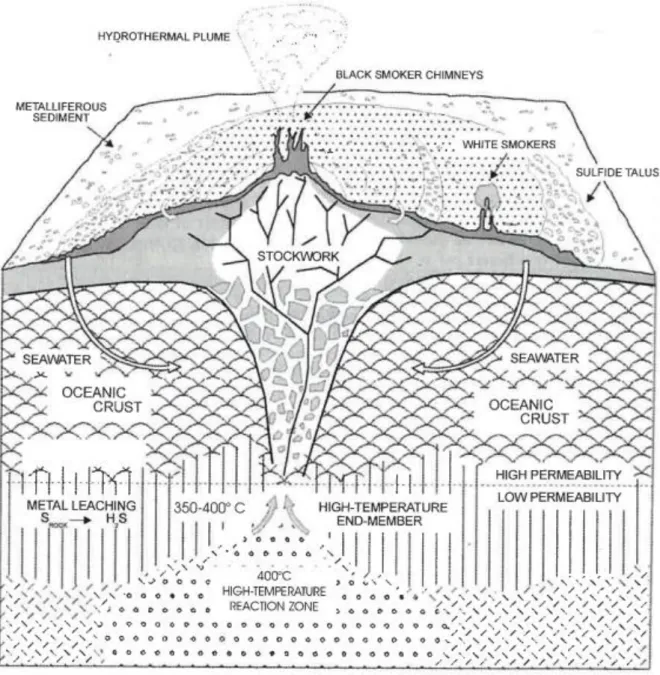
Figure 1.1 - Surface features and internal structures of an active hydrothermal mound and stockwork complex at an oceanic spreading centre (Schulz and Zabel, 2000);
Figure 1.2 - A: Global distribution of the Hot Vents (Archive Website: http://archive.noc.ac.uk/). B: Black smokers located in the Pacific Ocean (Hydrothermal vents Sound Website: http://www.bio.miami.edu/); C: White smokers near to the Vanuatu Island from NW of Australia (Piccola Era Glaciale Website:http://PiccolaEraClaciale.com);
Figure 1.3 – A: World-wide distribution of modern and ancient cold seeps (adapted from Campbell et
al. 2002). B: Methane bubbles (Gas Plumes) flow in small streams out of the sediment on an area of
seafloor offshore Virginia north of Washington Canyon (Okeanos Explorer Website: http://oceanexplorer.noaa.gov/). Blue square – The Localization of the area where methane bubbles were found;
Figure 1.4 – Gas hydrates. A: Hand sample of the methane clathrate (Laboratório de Química no Estado Sólido Website: http://lqes.iqm.unicamp.br/); B: Crystalline Structure (MarieCuriesNews Website: https://mariecuriesnews.wordpress.com/);
Figure 1.5 - Worldwide occurrence of mud volcanoes (Magalhães, 2007). Red triangles – Mud Volcanoes; Blue lines – Plates Boundaries;
Figure 1.6 – A: Location of the Gulf of Cadiz area in the general tectonic setting of the Eurasia - Africa plate boundary. AGFZ - Azores-Gibraltar Fracture Zone (adapted from Rosas et al. 2009; Duarte, 2011 and Duarte et al. 2011); B: Simplified tectonic map of the Gulf of Cadiz area (from Duarte et al. 2011); Black dots – mud volcanoes; Black dashed line – SWIM faults;
Figure 1.7 - The formation (Cretaceous to Present) of the Gulf of Cadiz Accretionary Wedge (adapted from Duarte et al. 2011). Ab - Alboran; Cb - Calabria; Cs - Corsica; Sd - Sardinia. The absolute ages in Ma correspond to the limits of the intervals;
Figure 2.1 – Overview of the oceanographic patterns in the Gulf of Cadiz area, showing the three main water masses: ENACW (Dark grey arrow), MOW (Dark spot) and NADW (White fat arrow). The MOW current is split into two main currents, the MU and the ML, which is divided into the SB, the PB and the IB (modified from García et al. 2009; Wienberg et al. 2009);
Figure 2.2 – The temperature and salinity of three masses of water, NACW, MOW and NADW. The presence of the MOW, carrying slightly warmer and saltier water is clearly evident in the 600 to 1200 m depth range (Hansen et al. 2012);
Figure 2.3 – The Gulf of Cadiz slopes. A: Physiography of the continental shelf, upper, lower and middle slope. Dashed lines - Limits of the middle slope terraces; B: Topographic profile along the middle slope terraces (from García et al. 2009);
xviii
Figure 2.4 - Simplified tectonic map of the Gulf of Cadiz area. Dark grey outline - Gulf of Cadiz Accretionary Wedge (GCAW; White lines – SWIM wrench system according to Zitellini et al. 2009). Black dots correspond to the location of known mud volcanoes (e.g.: Duarte et al. 2011);
Figure 3.1 - Gulf of Cadiz showing the three study areas of this work. Pink area - Deep Field (1200 – 4000 m); Blue area – Carbonate Province (600 – 1200 m); Green area - El Arraiche Field (200 – 600 m). Black dashed lines – limit of Portuguese, Spanish and Moroccan Exclusive Economic Zones; Figure 3.2 – Gulf of Cadiz showing all sampled features in this work (Green dots). White dots – The features discovered until now in the Gulf of Cadiz. A, B and C: Zoom of the areas located inside the black squares, detailing the morphology of the Anastasya MV, Pipoca MV and Tarsis MV, Shouen MV, Yuma MV, Darwin MV and Ginsburg MV and No Name MV, Kidd MV, Lazarillo de Tornes MV, Pen Duick Escarpment (PDE), Gemini MV, Fiúza MV, Mercator and Vernadsky Ridge (VR);
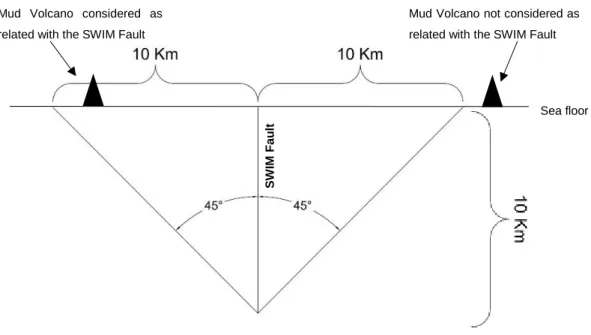
Figure 3.3 - Schematic representation (cross section) of the criteria established to consider if a MV is related or not with a SWIM fault;
Figure 3.4 - Morphology of the El Arraiche mud volcano field (from Van Rensbergen et al. 2005b). DQ – Don Quichote; LdT - Lazarillo de Tormes;
Figure 3.5 - Schematic representation of the Gulf of Cadiz showing the main mud volcano fields in their structural setting (from Van Rensbergen et al. 2005b). GDR - Guadalquivir Ridge; SPM - Spanish Morrocan margin;
Figure 3.6 – A: Detail of some features of the Gulf of the Cadiz. Localization of the seismic line observed in (B); B: General high-resolution seismic line (sparker source) over Al Idrissi, Fiúza and Gemini mud volcanoes and Pen Duick escarpment. The mud volcanoes are characterized by a reflection-free seismic facies that show stacked outflow lenses within a stratified series of hemi-pelagic sediments above a regional unconformity. The inset shows a detail of interfingering mud flows that accumulate in moats at the base of the Fiúza mud volcano cone (Van Rensbergen et al. 2005b);
Figure 3.7 – A: Schematic overview of the stratigraphic setting of the Vernardsky Ridge and Mercator MV showing the location of the salt diaper. B: Geological interpretation of the seismic section (C). C: High-resolution seismic line over the Mercator MV, the outcrop of the Vernadsky Ridge and the Buried MV (Haffert et al. 2013).
Figure 3.8 – Swath bathymetry at the exit of the Gibraltar Strait (modified from Hernández-Molina et
al., 2014). Red Lines – Delimit Northern and Southern parts of the Channel;
Figure 3.9 - Swath bathymetry of the central sector of the middle slope of the Gulf of Cadiz Contourite System, showing the main contourite channels, furrows and main diapiric ridges, with a NNE trend. Red line – Cadiz Channel (from Hernández-Molina et al. 2006);
Figure 4.1 – Examples of gear used to collect the samples analysed in this work. Gravity Corer - Mooring Systems, inc. website: http://www.mooringsystems.com/; Box Corer - KC Denmark website: http://www.kc-denmark.dk/; BIGO Lander - Pfannkuche et al., 2006; TV-Grab - Pfannkuche et al., 2006; Geology Dredge - American Geophysical Union website: http://blogs.agu.org/; Kasten Corer -
xix
Alfred Wegener Institut website: www.awi.de; Multi Corer - Alliance for Coastal Technologies website: http://www.act-us.info/;
Figure 4.2 – The main operation performed in ArcMap;
Figure 5.1 – Number of species per feature. A: Chemotrophic species (Class Bivalvia and Polychaeta); B: Heterotrophic species (Order Tanaidacea, Class Gastropoda, Bivalvia and Ophiuroidea). Red rectangles - MV located at less than 10 km to the SWIM faults. West of Gibraltar (WoG); Vernadsky Ridge (VR); Pen Duick Escarpment (PDE); Iberico (Ibe); Formosa Ridge (FR); Cadiz Channel (CC); Al Idrissi (AI); Fiúza (Fiú); Gemini (Gem); Mercator (Mer); Lazarillo de Tornes (LdT); kidd (kid); No Name (NN); Anastasya Area (off Tarsis; AA); Meknès (Mek); Student (Stu); Ginsburg (Gin); Yuma (Yum); Aveiro (Av); Jesus Baraza (JB); Shouen (Sho); Darwin (Dar); Captain Arutyunov (CA); Sagres (Sag); Carlos Ribeiro (CR); Bonjardim (Bom); Semenovich (Sem); Porto (Por);
Figure 5.2 – Distribution of polychaetes. Green dots – Specie Polybrachia sp.1; Blue dot – Specie
Polybrachia sp.2; Pink dot – Specie Polybrachia sp.3; Red dots – Specie Polybrachia Va; Dark grey dots – Specie Polybrachia Vb; Dark blue dot – Specie Polybrachia Vc;
Figure 5.3 – Distribution of polychaetes. Green dots – Specie Siboglinum Ia; Pink dots - Specie
Siboglinum Ib; Blue dots – Specie Siboglinum Ic; Red dots – Specie Siboglinum Id; Dark grey dot –
Specie Siboglinum Ie; Drk blue dots – Siboglinum If; Dark green dots – Siboglinum cf. poseidoni; Black dot – Siboglinum sp.1; Grey dots – Siboglinum sp.2;
Figure 5.4 – Distribution of polychaetes. Blue dot - Specie Bobmarleya gadensis; Red dot – Specie
Lamellisabella denticulate; Green dot - Specie Spirobrachia tripeira;
Figure 5.5 – Distribution of bivalves. Green dots - Specie Acharax gadirae; Blue dots - Specie Solemya
(Petrasma) elarraichensis;
Figure 5.6 – Distribution of bivalves. Dark blue dot - Specie Axinulus croulinensis; Blue dot - Specie
Spinaxinus cf. sentosus; Green dots - Specie Thyasira (Parathyasira) granulosa; Pink dot - Specie Thyasira tortuosa; Red dots - Specie Thyasira vulcolutre;
Figure 5.7 – Distribution of bivalves. Green dot - Specie “Bathymodiolus” mauritanicus; Blue dot -
Isorropodon megadesmus; Red dot - Isorropodon sp. indeterminate; Purple dot - Lucionoma asapheu;
Figure 5.8 - Distribution of tanaids. Green dots – Suborder Apseudomorpha (family Apseudidae and Sphyrapodidae); Blue dots – Suborder Tanaidomorpha (family Colletteidae, Leptocheliidae, Paratanaoidea incertae sedis, Pseudotanaidae and Tanaellidae);
Figure 5.9 – Distribution of ophiuroids. Green dots - Family Amphilepididae; Dark blue dots - Family Amphiuridae; Blue dot - Family Ophiacanthidae; Yellow dots – Family Ophiactidae; Pink dot – Family Ophiolepididae; Red dot - Family Ophiuridae;
Figure 5.10 – Distribution of gastropods. Pink dots - Subclass Caenogastropoda; Figure 5.11 – Distribution of gastropods. Blue dots - Subclass Vetigastropoda;
xx
Figure 5.12 – Distribution of gastropods. Purple dots - Subclass Heterobranchia; Blue dot - Subclass Neomphalina; Dark blue dot -.Subclasse Patellogastropoda;
Figure 5.13 – Distribution of bivalves. Green dots - Specie Leptaxinus minutus; Blue dot - Specie
Mendicula ferruginosa; Red dots - Specie Thyasira obsolete;
Figure 6.1 – Heterotrophic species distribution in the Gulf of Cadiz (Purple dots);
Figure 6.2 – Chemotrophic species distribution in the Gulf of Cadiz. Blue dots – Mixotrophic species; Green dots - Thiotrophic species; Red dots – Methanotrophic Species; Purple dot – Dual Symbiosis.
LIST OF TABLES
Table 3.1 – General characteristics of the mud volcanoes from the three study areas, El Arraiche Field, Carbonate Province and Deep Field;
Table 5.1 - Number of samples taken with different types of gear in each feature. NIOZ Box Corer (NIOZ); USNEL Box Corer (UB); Multi Corer (MUC); Kasten Corer (KC); TV-Grab (Gr); Gravity Corer (GC); Geology Dredge (GD); BIGO Lander (BIGO); FLUFO Lander (FLUFO); Push Corer ROV (PUC); Suction Sampler ROV (SUS); Rov Arm (ARM);
xxi
ABBREVIATIONS
GCAW: Gulf of Cadiz Accretionary Wedge SWIM: South West Iberian Margin
NACW: North Atlantic Central Water
ENACW: Eastern North Atlantic Central Waters
ENACWt: Eastern North Atlantic Central Waters subtropical ENACWp: Eastern North Atlantic Central Waters subpolar MLD: Mixed Layer Depth
NADW: North Atlantic Deep Water AIW: Atlantic Inflow Water
MOW: Mediterranean Outflow Water MU: Mediterranean Upper Water ML: Mediterranean Lower Water
SB: Southern Branch
PB: Principal Branch IB: Intermediate Branch
MV: Mud Volcano
MVs: Mud Volcanoes
TTR: Training Through Research AOM: Anaerobic Oxidation of Methane
xxii
H2S: Hydrogen SulfideCO2: Carbon Dioxide
WMF: Western Moroccan Field MSM: Maria Sibylla Merian
1
Chapter 1
Introduction
1.1. Motivation and objectives
The Gulf of Cadiz has been studied extensively since the 1970ies from a geological, oceanographic and biological point of view for various reasons, such as:
- It straddles across the Africa-Eurasia lithospheric plate boundary, defined by the South West Iberia Margin (SWIM) strike-slip faults, where the Alpine orogeny terminate;
- It is the locus of important mega-seismicity, like the 1755 Lisbon earthquake;
- It is a gulf where various Atlantic currents come together and meet the Mediterranean Outflow Water;
- Biological chemosynthetic communities associated with the exhalation of geological fluids have been found in the last two decades, only.
The mud volcanoes in the Gulf the Cadiz have been studied for the past two decades and it has been found that they host chemosynthetic species associated with cold seeps that depend on methane and sulphate. The motivation for this work is trying to understand if there is a relationship between the geologic substrate, environmental conditions and the distribution of the macrofauna.
Thus, the main goal of this work is to understand the influence of the SWIM faults and the mud volcanoes on the distribution of macrofauna in the Gulf of Cadiz. This study was based on published records of 122 species of the Phyla Annelida, Mollusca, Arthropoda, and Echinodermata, spatial information extracted from detailed swath bathymetry and backscatter, geographic localization, distance to the SWIM faults and association to mud volcanoes and inspection of the local oceanographic currents.
In order to achieve this scientific goal the following technical tasks were carried out:
1. Construction of a database including the compilation of all biological information available in published scientific papers;
2. Using the ArcGIS software as a study tool in order to analyse the spatial distribution of macrofauna in the Gulf of Cadiz;
3. Analyse the macrofauna species distribution according to their metabolic strategy, geographic distribution and depth;
4. Analyse the distribution of the macrofauna as a function of the distance to the SWIM faults and to mud volcanoes.
2
1.2. Thesis Outline
This dissertation is organized in the following sixth chapters: First Chapter - Introduction
The thesis presents an introduction (this chapter) about the fluid circulation and seepage in sedimentary basins, the geophysic data, the submarine mud volcanoes, the general context of the Gulf of Cadiz and the Trophic Status.
Second Chapter – Regional Setting
The second chapter describes the main environmental drivers of the biological assemblages studied in this work: the oceanographic circulation in the Gulf of Cadiz and the existence of major right-lateral strike-slip faults (the so called SWIM faults).
Third Chapter – Study Areas
The third chapter presents all study areas within the Gulf of Cadiz in which macrofauna species were reported to occur: the El Arraiche Field, the Carbonate Province. The geologic and biologic characteristics of these features are described, based on the information available from published scientific papers and cruise reports.
Fourth Chapter – Data and Methods
The fourth chapter addresses the employed methodological approach, including several aspects of the used software package, the ArcGis.
Fifth Chapter – Results
In the fifth chapter are presented the main results of the analyses performed, including mapping of taxa distribution.
Sixth and Seventh Chapters – Discussion and Conclusion
The sixth chapter concerns the discussion of the obtained results, and the seventh chapter the consequent main conclusions.
1.3. Fluid Circulation and Seepage in Sedimentary Basins
The chemoautotrophs, because of the absence of light, are the only autotrophic organisms in the deep sea (see subchapter 1.7). These organisms usually inhabit hydrothermal vents, cold seeps and other reducing environments and can be free-living or symbiotic. Since cold vents are so far the only source of crustal fluids exalted into the shallow sediments and to the seafloor in the study area, these
3
systems are have described in more detail as well as the origin of methane, the main energy source for chemotrophic species at these depths.
1.3.1. Hot Vents
The seafloor seepage can be distinguished in two categories, Hot Vents (Hydrothermal Vents) and Cold Seeps. Hot Vents, in its majority, are located along the ocean spreading centres where high temperature fluids escape from the seafloor (Damm, 1990). Asthenospheric upwelling brings the mantle rocks up to the surface. As a result, the lithostatic pressure decreases, allowing adiabatic fusion of part of the mantle rocks. The resulting magmatic fluid of this partial fusion (primary magma) feeds the oceanic ridges' typical volcanism. This volcanism, drastically, modifies the geothermal gradient. The geothermal gradient variation promotes water convention through the oceanic crust rocks (i.e.: Basalts). In contact with the oceanic crust rocks, the seawater heats up to 300-400°C and becomes extremely corrosive. This hot fluid dissolves the surrounding basaltic rock, leaching out metals and other elements. The fluid begins rising rapidly back to the surface due to increased pressure, being responsible for the occurrence of fluid seepage at the sea floor (Hot Vents). Two main types of hot venting systems, can be distinguish, the black or the white smokers (Figure 1.1 and 1.2). The black smokers emit hot plumes (~370ºC) loaded with fine, dark particles of sulphide material. This fluid is quickly mixed with the ambient oxic bottom water, resulting in the precipitation of bulk sulphide and silicate minerals, forming hydrothermal vent chimneys (Kelley, 2001; Gartman et al. 2014). The white smokers are, in general located on the margins of the mounds and discharge fluids exhibiting temperatures between 265 and 300 °C. Due to their relatively lower temperatures, when compared with the black smokers, the white smokers are typically encrusted with worm tubes and other organisms. Their venting fluids are white because the white barium and calcium sulphate (BaSO4 + CaSO4) minerals precipitates (Libes, 1992; Kelley, 2001).
1.3.2. Cold Seeps
Cold seeps form due to upward migration of hydrocarbons, dissolved and/or gaseous (Fischer
et al. 2012; Sauer et al. 2015). These geologically and geochemically active systems (Omoregie et al.
2009) are found where reduced sulfur and methane emerge from seafloor sediments (Levin, 2005). They occur worldwide (Figure 1.3) at passive and active continental margins and show strong temporal and spatial variations in the flux (Fischer et al. 2012; Sauer et al. 2015). The cold seeps surface expressions include mud volcanoes, pockmarks, brine pools, oil and asphalt seeps, being the mud volcanoes and pockmarks the most common (Petersen and Dubilier, 2009). The Gulf of Mexico, the Gulf of Cadiz (the most extensive cold seepage area known along the different European margins; Dworschak and Cunha, 2007; Hilário and Cunha, 2008; Rodrigues et al. 2008), the continental margins of India, the western African margin and the Eastern Mediterranean, are examples of passive margins prone of cold seepage (Omoregie et al. 2009; Wenau, 2013). These active seafloor systems often host dense and diverse microbial and faunal communities fuelled by low temperature fluids (when compared with the hot vents) and by gas emissions to the sea floor (Omoregie et al. 2009; Petersen and Dubilier, 2009; Wenau, 2013). The typical temperatures of the cold seep are close to the temperature of the bottom sea water where they occur.
4
Figure 1.1 - Surface features and internal structures of an active hydrothermal mound and stockwork complex
5
Figure 1.2 - A: Global distribution of the Hot Vents (Archive Website: http://archive.noc.ac.uk/). B: Black
smokers located in the Pacific Ocean (Hydrothermal vents Sound Website: http://www.bio.miami.edu/); C: White smokers near to the Vanuatu Island from NW of Australia (Piccola Era Glaciale Website:http://PiccolaEraClaciale.com).
6
1.3.3. Methane formation
In the earth´s crust, the methane is very abundant and it is often found to be related with fluid flow features and gas hydrate formation. In seabed sediments there are three possible sources of methane: thermogenic, abiogenic and microbial (as specified above).
Methane seepage occurs when the amount of organic matter contents in the sediments are sufficient to allow the generation of high volumes of methane within the sedimentary column and the features that facilitate the methane migration towards the seafloor are present. The escape of fluids, such as methane from the seafloor is a consistent feature throughout geologic time, as documented by both seismic surveys and seepage outcrops (Judd, 2003).
A
B
Figure 1.3 – A: World-wide distribution of
modern and ancient cold seeps (adapted from Campbell et al. 2002). B: Methane bubbles (Gas Plumes) flow in small streams out of the sediment on an area of seafloor offshore Virginia north of Washington Canyon (Okeanos Explorer Website: http://oceanexplorer.noaa.gov/). The blue square shows the methane bubbles location, illustrated by Figure B.
7
1.3.3.1. Thermogenic Methane
The thermogenic methane occurs when the organic matter that is not degraded by methanogenic microbes within the top 1000 m of the sedimentary column is buried and can be degraded by thermocatalystic processes. The organic matter that survives the burial is transformed into amorphous organic matter (kerogen), under the influence of increasing temperature and pressure. The kerogen undergoes thermal cracking, while burial increases, which leads to the formation of various hydrocarbons compounds with solid, liquid and gaseous fractions. The most abundant and mobile molecule formed is the methane, since it has the simplest and the smallest molecule size, therefore it is the most prone to migrate to the seabed (Judd, 2001).
1.3.3.2. Abiogenic Methane
Abiogenic methane (or abiotic) is formed by chemical reactions (carbon dioxide reduction; Lollar et al. 2002) that do not directly include organic matter (Etiope and Lollar, 2013). The most commonly invoked reaction for abiotic hydrocarbons generation is the Fischer–Tropsch type reaction that converts CO2 to hydrocarbon gas by reacting it with H2 (Potter et al., 2004; 2013; Cao et al., 2014):
𝑛𝐶𝑂2 + (3𝑛 + 1)2 → 𝐶𝑛𝐻2𝑛+2 + 2𝑛𝐻2𝑂 Equation 1.1
Methane (CH4) is produced when 𝑛 = 1:
𝐶𝑂2 + 4𝐻2 → 𝐶𝐻4 + 2𝐻2𝑂 Equation 1.2
The hydrothermal alteration of Fe-rich minerals, at temperatures above 200ºC, is one of the possible origins of the H2 required for the reaction (Potter et al. 2004; Tassi et al. 2012). This process occur during the magma cooling, during the serpentinizations of ultramafic rocks (e.g. the serpentinization of olivine in ultramafic rocks will generate magnetite and H2, which contributed to the elevated CH4 and H2 concentrations in hydrothermal fluids venting from submarine ultramafic-hosted systems, fumarolic gases of volcanoes and in fluid inclusions in alkaline complexes; Lollar et al. 2002; Cao et al., 2014) and more commonly in hydrothermal systems during water-rocks interactions (Lollar
et al. 2002).
1.3.3.3. Microbial Methane
The decomposition of organic matter, realized by microbial activity (e.g.: methanogenic archaea), at small burial depths under low temperature and pressure conditions, originated the microbial methane (Judd, 2001; Moore and Wade, 2013). In the oceans, the most of the organic matter available is generated through photosynthesis by primary producers (autotrophs organisms; see subchapter 1.7)
8
and after the dead of the organisms, settles through the water column. The organic matter is oxidized in the uppermost oxygen-rich layer of the sedimentary column (the top few millimetres or centimetres of the sediments) as long as oxygen is available. In the anoxic environment immediately below the oxygen rich zone, oxidation stops and the organic matter is buried and may be decomposed anaerobically. This is a very complex process and the final steps of it may be summarized by the following equation representing the formaldehyde decomposition into methane and carbon dioxide by the action of methanogenic microbes:
2𝐶𝐻2𝑂 → 𝐶𝐻4 + 𝐶𝑂2 Equation 1.3
1.3.4. Gas Hydrates
Gas hydrates are crystalline solids formed from water and hydrocarbon gases under low temperature and high-pressure conditions (Figure 1.4; Léon et al. 2009). The water molecules form cages containing guest molecules such as methane and other light hydrocarbons (ethane, propane, butane and pentane; Grauls, 2001). They are common worldwide in sediments of continental margins at water depths exceeding 300 m (Léon et al. 2009). The methane hydrate is the most common hydrate form in the marine sediments (Schmidt et al. 2005) but clathrates of carbon dioxide or sulphide may also occur (Arvo, 2014). Gas hydrates are considered by the scientific community as the main hydrocarbon source for the coming century, as resources account for 50 % of the total organic carbon in the earth or twice the conventional fossil fuel energy (Grauls, 2001).
B
Methane Molecule
Water Molecule
A
Figure 1.4 – Gas hydrates. A: Hand sample of the methane clathrate (Laboratório de Química no Estado
Sólido Website: http://lqes.iqm.unicamp.br/); B: Crystalline Structure (MarieCuriesNews Website: https://mariecuriesnews.wordpress.com/).
9
1.4. Geophysical Data
To pursue the present study, it was mandatory to discuss the different geophysical data and methods, such as swath bathymetry, seismic reflection and backscatter, based on which the morphologic features of the Gulf of Cadiz were found and described.
1.4.1. Bathymetry
The swath bathymetry is an important acoustic tool to investigate the seafloor morphology. It characterizes the seafloor topography and allows the interpretation of the geomorphology of the seafloor. Therefore it is used to identify the mud volcanoes and define the settings where the macrofauna occurs.
1.4.2. Seismic Reflection
The seismic reflection method is based on the fact that the acoustic signals propagates in the water column and in the sub-seafloor, and are reflected by interfaces between media with different acoustic impedance resultant mainly from differences in density between the two rocks or sediments. Seismic reflection data corresponds therefore to an acoustic vertical 2D image of the structure and the stratigraphic layers under the seabed. This method depends on the generation and detection of acoustic waves that are mechanically generated. When the seismic reflection profiles are of very high resolution they may image fluid channels within faults and mud volcanoes allowing a better interpretation of the cold seeps systems.
1.4.3. Backscatter
The backscatter data consist of a measurement of the intensity and characteristics of the echoes returns from the sound pulses at the seafloor. The backscatter signal depends on the physical nature of the seafloor, the frequency and angle used and orientation of the illuminated surface. Acoustic backscatter data are used for classifying seafloor characteristics. A weak return signal (low intensity) indicates a soft bottom substrate, while a strong return signal (high intensity) indicates a hard bottom substrate.
Chemosynthetic cold seep communities and authigenic carbonate may cause an acoustic impedance and roughness clearly distinct than the surrounding normal seafloor. Therefore, acoustic backscatter data (high backscatter) can be used to identify the distribution of potential seeps sites. Acoustic anomalies at the sea-floor morphology can be detected with side-scan sonars mounted on submersibles, ROVs, or towed vehicles, which can mark the location of gas seeps (e.g.: mud volcanoes and pockmarks; Naudts et al. 2008; Orange et al. 2002).
10
1.5. Submarine Mud Volcanoes
Submarine Mud Volcanoes (MVs) are sedimentary structures on the seafloor created by the rapid advection of fluid and methane-saturated muds from over-pressured sediment layers deep beneath the seafloor (Vanneste et al. 2012). They are formed when a mud rich material with clasts and other fluids reaches the seafloor, where extrusive features (such as mud flows, craters, gryphons, mud pools or salses) are formed. The material extruded from the MVs is composed of a fluidized mixture of sediments dominated by clays, liquids and gases that, in general, incorporate rock fragments (e.g.: clasts) pulled up from the pierced sedimentary sections (Magalhães, 2007). Although marly clay and salt diapirism are considered important in the formation of the MVs, seismic profile analysis and geochemical data indicate that mud volcanism in the Gulf of Cadiz is fault-controlled (Nuzzo et al. 2009; Vanneste et al. 2013), since some of the MVs are located along major WNW-SE and ENE-SW trending faults (Pinheiro et al. 2003).
In general the MVs occur along the world´s oceans (Figure 1.5; Vanneste et al. 2011). Fifty of these were confirmed by coring (Medialdea et al. 2009) on the Iberian and Moroccan margins (Pinheiro
et al. 2003; Vanneste et al. 2013), because on this area we have a relatively thick sedimentary succession
in which the diagenetic and compaction processes generate significant amount of overpressure and fluids (water and hydrocarbons) and in which the tectonic setting with faults promotes the seepage of these fluids (Vanneste et al. 2012). They are defined as conical shape positive morphological features in relation to the regional morphology, with a central feeder chimney or conduit and extrusive features such as mud flows (Cordes et al. 2010; Vanneste et al. 2012). The MVs are in water depths ranging from 200 to 4000 m (Cunha et al. 2013), with a diameter between 800 to 4000 m and up to 200 m height (Vannest et al. 2011; Vanneste et al. 2013). These MVs show considerable variations in morphology, dimension and composition of erupted material and fluids (Pinheiro et al. 2003; Van Rensbergen et al. 2005b). The MVs situated in the deeper areas of the Gulf of Cadiz are under the influence of deep Atlantic water masses, in turn the shallower mud volcanoes are strongly influenced by the Mediterranean Outflow Water (Pinheiro et al. 2003; Van Rensbergen et al. 2005b).
The MVs usually occur in petroliferous regions. Their seepage fluids are mainly solutions enriched by hydrocarbon gases (particularly CH4), hydrogen sulfide, carbon dioxide, and petroleum products and their escape is expressed in the sea floor by positive reliefs such as mounds or cones (Stadnitskaia et al. 2006). MVs are active during short periods of time (ranging from hours up to years) that intercalate with, in general, longer periods of dormancy that typically vary between hundreds to thousands of years (Vanneste et al. 2012). The study of authigenic carbonates is one way to evaluate the long-term variation in carbon fluxes, which precipitate from the ascending fluids and are generally well preserved in the geological record (Vanneste et al. 2012). In general, gas and fluid seepage activity at the MVs is considered to be moderate with advection velocities up to 15 cm yr-1. However the presence of methane-derived authigenic carbonates throughout the Gulf of Cadiz suggests several episodes of extensive methane seepage in the past (Vanneste et al. 2012).
The first Mud Volcano was discovered and sampled in Gulf of Cadiz in 1999 (Pinheiro et al. 2003; Van Rensbergen et al. 2005b) during the Training Through Research (TTR) 9 cruise (Pinheiro et
al. 2003), of Research Vessel (R/V) Professor Logachev which were carried out within the framework
of the UNESCO/IOC ‘Floating University’ Programme (Stadnitskaia et al. 2006) and since then have been extensively investigated during several research cruises (e.g.: TTR 10, Anastasya, TTR 11, TTR 11A, Tasyo, Cadipor, TTR 12, GAP, TTR 14, Merian Cruise, Darwin Cruise, TTR 15, TTR 16, TTR
11
17, MvseisHespérides; Kenyon et al. 2001, 2002, 2003, 2006; Akhmetzhanov et al. 2007, 2008; Hensen
et al. 2007; Ivanov et al. 2010).
1.6. The Gulf of Cadiz – General Context
The Gulf of Cadiz is a wide marine basin located in a complex tectonic area of the North-East Atlantic Ocean, west of Gibraltar Strait, offshore SW Iberia and NW Morocco (Figure 1.6; Navarro et
al. 2006; Duarte et al. 2009; Rosas et al. 2009; Duarte, 2011; Vanneste et al. 2011). It is positioned on
the transition area between the Gloria transform fault zone delineating the African-Eurasian plate boundary in the Atlantic, and the Western-most part of the Alpine-Mediterranean orogenic belt, marked by the Gibraltar (or Betic-Rif) Arc (León et al. 2006; Stadnitskaia et al. 2006; Vanneste et al. 2011). The region is seismically active and is thought to host the epicentre of the famous 8.5 to 8.7 (Johnston, 1996) magnitude 1755 Great Lisbon Earthquake that originated a devastating tsunami and decimated the city of Lisbon, Portugal (Hensen et al. 2007; Duarte, 2011). It was the largest tsunami ever experienced in Western Europe (Zitellini et al. 2009).
Figure 1.5 - Worldwide occurrence of mud volcanoes (Magalhães, 2007). Red triangles – Mud Volcanoes; Blue lines – Plates Boundaries.
12
Figure 1.6 – A: Location of the Gulf of Cadiz area in the general tectonic setting of the Eurasia - Africa plate boundary. AGFZ - Azores-Gibraltar Fracture Zone (adapted from Rosas et al. 2009; Duarte, 2011 and Duarte et al. 2011); B: Simplified tectonic map of the Gulf of Cadiz area (from Duarte et al. 2011); Black dots – mud volcanoes; Black dashed line – SWIM faults.
13
A) Early Cretaceous (145-100 Ma)
B) Oligocene (33,09-23,03 Ma)
C) Middle Miocene (15,97-11,63 Ma)
D) Tortonian to Present (11,63-0 Ma)
E) Tortorian to Gelasian (11,63-1,8 Ma)
F) Calabrian to Present (1,8-0 Ma)
Figure 1.7 - The formation (Cretaceous to Present) of the Gulf of Cadiz Accretionary Wedge (adapted from Duarte
et al. 2011). Ab - Alboran; Cb - Calabria; Cs - Corsica; Sd - Sardinia.The absolute ages in Ma correspond to the limits of the intervals.
14
During the Late Cretaceous and Tertiary, the opening of the North Atlantic Ocean induced the divergence of North America and Eurasia, in parallel with the convergence of Africa and Eurasia (Figure 1.7). The African continent was diverted to north causing the progressive closure of oceanic basins of the Tethys Ocean and the rapid propagation to west of the Alpine, Betic–Rif orogenic collision front in the Gulf of Cadiz, at the same time that the western Mediterranean basin development (Maldonado et al. 1999).
The Gibraltar Arc was formed due the convergence between Africa and Eurasia plates. The convergence caused the narrowing of the East-West oceanic corridor between Africa and Iberia and led to the collision of the Alboran terrane (that was migrating almost unimpeded towards the Atlantic Ocean, in the Middle Miocene) with the SE Iberia and NW Africa (see Figure 1.7 - C; Duarte, 2011). The Gibraltar Arc migrated west dragged by the roll back of the subducted Gibraltar oceanic slab. At the same time as the Gulf Cadiz Accretionary Wedge (GCAW; a high rugosity sedimentary slope with an undulating surface morphology; Gutscher et al. 2008) formed as a consequence of rollback subduction of the Tethyan slab beneath Gibraltar (Duarte, 2011; Duarte et al. 2011; see Figure 1.7 - D) on top of basement faults (nowadays the SWIM faults).
According to Duarte et al. 2011, the formation of the SWIM faults can be associated with the opening of the Tethys Ocean. The SWIM basement faults were probably inactive during Middle Miocene times, although capable of originating a linear-like perturbation in the GCAW surface morphology. At the same time, the convergence between Iberia and Africa gradually suffered a counterclockwise rotation, shifting from N–S (see Figure 1.7 - B) to near WNW–ESE (see Figure 1.7 - E). This rotation triggered a dextral strike-slip reactivation of the basement (SWIM) faults (see Figure 1.7 - F) during a period in which the subduction driving the GCAW growth was slowing down.
1.7. Trophic Status
The macrofauna species studied in this work were analysed according to their metabolic strategy (chapter 5). Given this criteria and the following detailed explanation such species can be classified as autotrophic or heterotrophic. A second level of classification considers the type of symbiotic relationship between the deep-sea invertebrate host and its methanotrophic and/or thiotrophic bacteria (see below).
Heterotrophs include all organisms that obtain the energy for their metabolism from organic carbon sources in their food (e.g.: all animals, including man, fungi, and many parasitic plants and saprophytic angiosperms as well as many microorganisms). In opposition autotrophs fix inorganic carbon using sunlight (photoautotrophs) or chemical energy (chemoautotrophs).
1.7.1. Thiotrophy and Methanotrophy
Symbiotic invertebrates in deep-sea environments derive all or part of their nutrition from microbial symbiont metabolism. The organisms that rely partly on chemotrophic nutrition but retain the ability to
15
feed heterotrophically are designated as mixotrophic. Symbiotic associations with thiotrophic or methanotrophic bacteria occur in a wide range of animal species that live in reducing environments (e.g.: hydrothermal vents, whale falls, sunken wood, cold seeps and sediments; Petersen and Dubilier, 2009). In rare cases species harbour both methanotrophic and thiotrophic symbionts, in which case they are designated as possessing a dual symbiosis.
Thiotrophic bacteria can exploit the chemical energy from the oxidation of sulfide or sulfur with oxygen or nitrate for their cell metabolism and growth (Grunke et al. 2012) while the methanotrophic bacteria utilize methane as a sole carbon and energy source (Hanson et al. 1996). The bivalves with sulfide-oxidizing gill symbionts are frequently found in environments that are inhospitable to other invertebrates due to a low oxygen (O2) content and the presence of free hydrogen sulfide (H2S). Sulfide-oxidizing bacteria are involved in symbioses with members of at least five bivalve families, occurring intracellularly in Vesicomyidae, Lucinidae, Mytilidae and Solemyidae, and mostly extracellularly in Thyasiridae (Rodrigues et al. 2010; Oliver et al. 2011). In addition to the bivalve, others important symbiotic seep organisms include siboglinidae polychaetes (vestimentiferan, frenulate and monoliferan tubeworms) and sponges (Cladorhizidae).
17
Chapter 2
Regional Setting
2.1. The oceanographic circulation in the Gulf of Cadiz
The Atlantic Ocean in Gulf of Cadiz is characterized by three main water masses (Eastern North Atlantic Central Water, North Atlantic Deep Water and Mediterranean Outflow Water; Figure 2.1) with different characteristics of salinity, temperature, oxygen content and current velocities. Hence, a combination of water circulation, chemically reduced habitat and trophic input will determine the benthic communities of this region (Blazewicz-Paszkowycz et al. 2011a).
2.1.1. Eastern North Atlantic Central Water
The North Atlantic Central Water (NACW) is located at the main thermocline of the North Atlantic Ocean (Pollard et al. 1996) and is characterized by an almost linear decrease of potential temperature (16.0˚C to 12.5˚C) and salinity (36.25 to 35.50 ‰; Alves et al. 2011) with depth. This body of water, in the upper 500 – 1000 m of the ocean (Pollard et al. 1996), is influenced by the mix of several waters (Cianca et al. 2009), the Mediterranean Water, the Antarctic Intermediate Water and the Labrador Sea Water (Mauritzen et al. 2001). The NACW, in the eastern North Atlantic, is more saline (usually by less than 0.1 ‰ at constant temperature) than in the western North Atlantic, due to the influence of Mediterranean Water (Pollard et al. 1996; Mauritzen et al. 2001). The Eastern North Atlantic Central Waters (ENACW) can be subdivided in two types as an exchange result of water and heat within the thermocline (Padin et al. 2011): the eastern North Atlantic central water subtropical (ENACWt) and the eastern North Atlantic central water subpolar (ENACWp). The ENACWt range from 12.2 to 18.5 °C and from 35.66 to 36.75 ‰ and its origin was located in a front near the Azores. The ENACWp is formed at the eastern flank of the North Atlantic Current, approximately north of Cape Finisterre (43ºN)
and corresponds to water between 4 and 12 °C and between 34.96 and 35.66 ‰ (Bode et al. 2002; Padin
et al. 2011). Besides the thermohaline differences, ENACWp and ENACWt also show different
chemical properties due to changes in ventilation rates and remineralization of organic matter. In this way, the ENACWt is a nutrient-poor water whereas ENACWp is characterized by high nutrient levels mainly due to deep winter MLD (mixed layer depth) in the formation region (Padin et al. 2011).
18
Figure 2.1 – Overview of the oceanographic patterns in the Gulf of Cadiz area, showing the three main water masses: ENACW (Dark grey arrow), MOW (Dark spot) and
NADW (White fat arrow). The MOW current is split into two main currents, the MU and the ML, which is divided into the SB, the PB and the IB (modified from García et al. 2009; Wienberg et al. 2009).
Morocco
SW Iberia
MU MOW ML PB IB SB Water MassesMediterranean Deep Water (MDW)
Mediterranean Intermediate Water (MIW)
Eastern North Atlantic Central Water (ENACW)
Atlantic Inflow Water (AIW)
North Atlantic Deep Water (NADW)
MOW Circulation
Mediterranean Outflow Water (MOW)
Mediterranean Upper Water (MU)
Mediterranean Lower Water (ML)
19
2.1.2. Mediterranean Outflow Water
The Mediterranean Outflow Water (MOW), results from the exchange of water masses between the Mediterranean Sea and the Atlantic Ocean (Mulder et al. 2009), North Atlantic Surface Water (0 – 100 m) and North Atlantic Central Water (100 – 700 m; Toucanne et al. 2007; Singh et al. 2015). It is an energetic, saline (38 ‰) and warm (13 °C) water mass (Figure 2.2; Toucanne et al. 2007; Mulder et
al. 2009; Bozec et al. 2011; Khélifi et al. 2014) moving from the SE to the NW along the middle slope
(which is formed by four relatively flat terraces with gradients of less than 0.5°, at average depths of 500, 675, 750 and 850 m; Figure 2.3) between 500 and 1200 m water depth above the NADW (García
et al. 2009). This independent strong contour current enters the Gulf of Cadiz at depths of 250 – 300 m
with a western trend and velocities of up to 250 cm s-1 (García et al. 2009; Mulder et al. 2009). The main MOW current divides into two main currents that flow along the seabed at water depths of 300 – 1400 m, the Mediterranean Upper Water (MU) and the Mediterranean Lower Water (ML; see Figure 2.1; Mulder et al. 2009). The MU represents the upper, less dense (salinity is 37.07 ‰), warm (13.7 °C) core that flows at the base of the upper Spanish and Portuguese continental slopes at depths of 300 – 600 m. Its average velocity is 0.46 ms-1. The ML constitutes the lower, more saline (salinity is 37.42 ‰) current that forms the main MOW. Its mean temperature is 13.6 °C, is centred between 600 – 1400 m and its velocity range between 0.2 and 0.3 m s-1 (Mulder et al. 2009). The ML, splits into three minor branches (Mulder et al. 2009), the Southern Branch (SB), the Principal Branch (PB) and the Intermediate Branch (IB; see Figure 2.1, Garcia et al. 2009), each one of which follows its own deep channel (Mulder
et al. 2009). They return to join at 8,333º W and leave the Gulf of Cadiz towards the west Iberian margin
and central north-Atlantic (Garcia et al. 2009).
Figure 2.2 – The temperature and salinity of three masses of water, NACW, MOW and NADW. The presence of the MOW, carrying slightly warmer and saltier water is clearly evident in the 600 to 1200 m depth range (Hansen et al. 2012).
20
2.1.3. North Atlantic Deep Water
The North Atlantic Deep Water (NADW) is formed in the high-latitude regions of the Atlantic Ocean and incorporates upper Labrador Sea Water (uLSW), classical Labrador Sea Water (cLSW),
B
A
Middle Slope Profile
(Fig. 2.3 B)
Figure 2.3 – The Gulf of Cadiz slopes. A: Physiography of the continental shelf, upper, lower and middle slope. Dashed lines - Limits of the middle slope terraces; B: Topographic profile along the middle slope terraces (from
21
Iceland-Scotland Overflow Water (ISOW), and Denmark Straits Overflow Water (DSOW; Van Sebille
et al. 2011). It is a cold (3 – 8 ºC) and less saline (34.95 – 35.5 ‰) water mass that flows at depths >
1500 m from the Greenland–Norwegian Sea region towards the south. In the Gulf of Cadiz, the NADW is joined by part of the saltier but warmer MOW. This mixture flows southwards down the eastern part of the Atlantic Ocean (Knauss, 1978; see Figure 2.1 and 2.2).
2.2. SWIM Faults
The morphology of the Gulf of Cadiz is largely controlled by the main tectonic processes in the area, namely the thrust faults (reverse faults) accommodated in the Gulf of Cadiz Accretionary Wedge (GCAW) and the wrenching associated to the South West Iberian Margin (SWIM) fault system (Duarte
et al. 2011). In addition to the accretionary wedge, the thrust faults are also accommodated in other
structures as the Horseshoe Thrust Fault, the Marquês de Pombal Fault, Gorringe Bank and the Tagus Abyssal Plain (although this last one is out of the Gulf of Cadiz strict domain; see Figure 2.4; Rosas et
al. 2012).
The SWIM lineaments are faults (the SWIM faults) corresponding to a set of WNW – ESE trending, vertical right-lateral strike–slip faults, in agreement to the observation and interpretation of several seismic profiles and swath bathymetry that cross cut these features (Rosas et al. 2009; Terrinha
et al. 2009, Zitellini et al. 2009; Duarte et al. 2011). These lineaments are described by six a hundred-kilometer long linear bathymetric expression and extend from the easternmost part of the GCAW until the Horseshoe Abyssal Plain, south of the Gorringe submarine mountain (Gorringe Bank; see Figure 2.4; Duarte et al. 2009; Rosas et al. 2012).
The SWIM Fault Zone is located between the western and eastern ends of two well-established plate boundaries, the Gloria Fault and the Rif-Tell fault and forms the southern boundary of the main seismically and tectonically active area of the Gulf of Cadiz (Zitellini et al. 2009). The morphologic expression of the SWIM faults corresponds to a continuous alignment of seafloor crests and troughs (valleys), corresponding to fold crests and fault traces in the Holocene sediments (Zitellini et al. 2009), sometimes exhibiting an en echelon geometrical disposition, and commonly punctuated by active mud volcanoes within the domain of the Accretionary Wedge. This overall linear morphology is more salient both in the Horseshoe Valley and close to the northern part of the GCAW front, where lineaments can be followed almost continuously for more than 200 km (Duarte et al. 2011).
22
The SWIM 1 fault (see Figure 2.4) exhibits an evident morphological expression in the Horseshoe Valley and intersects the wedge deformation front to the north of the Coral Patch Ridge. Its continuation to the east is less visible, although punctuated by mud volcanoes (Duarte et al. 2011). This fault exceeds 600 km, corresponds to a strike-slip fault and can be followed from the Gorringe bank southern flank to the Morocco shelf. In some fault segments to the North of the Coral Patch Ridge is possible to identify E-W-striking undulations with maximum lengths of about 8 km. These features show an en échelon pattern, which corresponds to oriented folds of the recent sedimentary cover, thus allowing the establishing of a dextral strike-slip movement (Rosas et al. 2009).
The SWIM 2 fault (see Figure 2.4), intercepts a northern segment of the GCAW front in the proximity of the Sagres Valley. The morphological expression of the SWIM 2, within the thrust wedge to the east, is well marked by a slightly arched trough that splays in the same direction (Duarte et al. 2011).
The SWIM 3 fault (see Figure 2.4), characterized by several elongated WNW–ESE ridges, troughs and slope breaks, cuts along the southern flank of the Coral Patch Ridge, crosses a small portion of the Seine Abyssal Plain to the east and intersects the GCAW deformation front (Duarte et al. 2011).
Figure 2.4 - Simplified tectonic map of the Gulf of Cadiz area. Dark grey outline - Gulf of Cadiz Accretionary Wedge
(GCAW; White lines – SWIM wrench system according to Zitellini et al. 2009). Black dots correspond to the location of known mud volcanoes (e.g.: Duarte et al. 2011).