Universidade de Aveiro 2020
Departamento de Economia, Gestão, Engenharia Industrial e Turismo
ZHULDYZ
DOLAYEVA
AVALIAÇÃO DO IMPACTO DA CORRUPÇÃO
RELATIVO AO COMÉRCIO DOS PAÍSES
EXPORTADORES DE PETRÓLEO
ASSESSMENT OF THE IMPACT OF CORRUPTION
ON TRADE IN OIL EXPORTING COUNTRIES
Universidade de Aveiro 2020
Departamento de Economia, Gestão, Engenharia Industrial e Turismo
ZHULDYZ
DOLAYEVA
ASSESSMENT OF THE IMPACT OF CORRUPTION ON
EXPORTING COUNTRIES
Dissertação apresentada à Universidade de Aveiro para cumprimento dos requisitos necessários à obtenção do grau de Mestre em Economia, realizada sob a orientação científica da Professor Doutor João Paulo Cerdeira Bento, Professor Auxiliar do Departamento de Economia, Gestão, Engenharia Industrial e Turismo da Universidade de Aveiro e da Professor Doutora Violeta Pukeliene, Professora da Faculty of Economics and Management de Vytautas Magnus University, Kaunas.
agradecimentos Aos meus pais Zarif Kabirovich e Svetlana Tohtarovna. À minha primeira universidade na Kazakhstan, a Academia de Ciências Sociais e do trabalho, que me deu o conhecimento principal em economia. À Universidade de Vytautas Magnus, que me deixou frequentar o curso de Mestrado e depois estudar na Universidade de Aveiro. À Universidade de Aveiro e todos os professores pela possibilidade de obter o “Dual Degree”. Uma gratidão
especial aos Professores João Paulo Cerdeira Bento da Universidade de Aveiro e Jonė Kalendienė da Universidade de Vytautas Magnus.
o júri
presidente Prof.ª Doutora Mara Teresa da Silva Madaleno
Professora Auxiliar da Universidade de Aveiro
vogais Prof. Doutor Janis Priede Associate Professor of the
Department of Economics University of Latvia Prof. Doutor João Paulo Cerdeira Bento Professor Auxiliar da Universidade de Aveiro
palavras-chave Corruption, International Trade, Oil exporters, Augmented Gravity Model, PPML, OLS.
resumo O objectivo desta investigação é compreender o impacto da corrupção no comércio dos
países exportadores de petróleo. Consideramos as possibilidades e os resultados da corrupção e o efeito da corrupção no comércio. Utilizando um conjunto de dados de painel para 10 países no período 2000-2018, este estudo contribui para a área de comércio e corrupção nos países exportadores de petróleo. A primeira parte deste estudo expõe as causas da corrupção e apresenta uma revisão literária de muitos autores sobre corrupção e comércio em países exportadores de petróleo. A segunda parte analisa os métodos e expõe a construção de um modelo econométrico para a estimativa do impacto da corrupção. Utilizando um conjunto de dados de painel para 10 países no período 2000-2018, este estudo contribui para a área de comércio e corrupção nos países exportadores de petróleo. E a última parte apresenta os resultados dos dados de pesquisa e avaliação apresentados na terceira parte expor, que uma diminuição na corrupção no país exportador melhora o comércio e, do lado dos importadores, uma diminuição na corrupção induzirá um aumento no volume do comércio.
keywords Corruption, International Trade, Oil exporters, Augmented Gravity Model, PPML, OLS.
abstract The aim of this research is to understand the impact of corruption on trade in oil
exporting countries. We consider the possibilities and outcomes of corruption and the effect of corruption on trade. Using a panel data set for 10 countries over the period 2000-2018, this study contributes to the area of trade and corruption in oil exporting countries. The first part of this study exposes the causes of corruption and presents a literature review of many authors concerning corruption and trade in oil exporting countries. The second part reviews the methods and exposes the construct of an econometric model for the estimation of the impact of corruption. Using a panel data set for 10 countries over the period 2000-2018, this study contributes to the area of trade and corruption in oil exporting countries. And the last part presents the results of the research and assessment data results presented in the third part expose, that a decrease in corruption in the exporting country improves trade and on the importer side, a decrease in corruption will induce an increase in trade volume.
CONTENTS
INTRODUCTION ... 1
I. LITERATURE REVIEW ... 4
1.1. Theory of corruption and its evaluation ... 4
1.2 Specificity of corruption in oil industry... 12
1.3. Theory of trade... 19
1.4. Research on corruption impact on trade analysis ... 21
II. RESEARCH METHODOLOGY ... 31
2.1. OLS and PPML ... 31
2.2. The measurement of corruption ... 39
2.3. The evolution of trade in oil exporting countries ... 42
2.4. Research hypotheses...45
III. RESULTS AND DISCUSSION ... 47
3.1. Results of corruption and trade in oil exporting countries ... 47
3.2. Discussion of results ... 58 IV. CONCLUSION ... 64 REFERENCES ... 67 ANNEXES... 82 LIST OF TABLES ... 93 LIST OF FIGURES ... 94
Background
INTRODUCTION
Different levels of corruption we can find in every country. The increasing scale of corruption, in many countries of the world, and the increasing degree of its negative impact on trade need a new assessment of this phenomenon in modern conditions. Corruption is the misuse of one's power for private gain. Corruption classified as grand, petty and political, depending on the amounts of money lost and the sector where it occurs. The main issue of combating corruption is one of the infinite issues of the organization of the state. Specific measures that can reduce corruption in the state and society and identify and punish those involved in corruption play an important role in the fight against corruption. (Transparency International)
In research, perception of corruption has progressed gradually from illegal activity that characterizes the beginning of emerging nations to common modes of government that overlap with institutional processes. Corruption will manifest as bribing, embezzlement, clientelism, bribery, patrimonialism, dependent on a series of social relationships (Granovetter, 2007; Rothstein and Varraich, 2017). However, the way corruption looks mostly depends on the specific conditions in which it appears. As seen by the Petrobras cases in Brazil in 2014, JPMorgan Chase in Nigeria in 2011, or 'Kazakhgate' in Kazakhstan in 2003, oil-related corruption quickly became a major scandal affecting the highest political ranks. After this case the oil sector attracted even more attention, which led to the development of researchers in field of corruption in oil exporting countries.
Relevance and topicality. Among the global problems of our time that determine the future
state of the economy, there is also a problem with corruption. Corruption is one of the challenges of global development. Corruption weakens the rule of law and democracy, which leads to human rights violations, impairs mechanisms that have been honed, violates human rights, and contributes to the development of crime, terrorism, and other threats to international security.
Nowadays, corruption has spread in many countries. Special departments are created to combat them. Corruption exists in all structures, but it can cause particular harm to the economy. In this master thesis will be studied the existence of corruption in oil-exporting
countries. Oil exports are the important and main branch of development of economy in oil exporting countries, and trade as the main interaction with other countries can be subject to corruption since it is in oil area money has a large turnover.
Research problems: How does corruption affect international trade in oil exporting
countries?
What is the role of “institutional quality” in this relationship?
The object of the final master thesis is the impact of corruption on trade.
The aim of the thesis is after the analysis of the theory of corruption and trade to
create econometrics model of the assessment and to evaluate the impact of corruption on trade in oil exporting countries.
To reach the aim of the paper the following objectives were set:
1. To summarize the theory and research on trade and corruption and make literature review of authors that includes research topic of the impact of corruption on trade. 2. To select a list of countries that are oil exporting countries and have a high level of
corruption for the econometrics calculation, Estimating the gravity coefficients on a list of oil exporting countries and years utilizing different corruption steps.
3. To analyze the data of trade, corruption and the importance of combating against corruption using data from the most concerning database, such as, World Competitiveness Report, World Bank’s World Development Indicators, Eurostat, World Bank. OECD, CPI and Transparency International.
4. To create and examinethe data using an econometrics model of panel data to estimate the effect of corruption on the trade in oil exporting countries, and in this research will be used data methods of a random effect, common effect, fixed effect, Ordinary Least Squares estimator (OLS), and Poisson Pseudo Maximum Likelihood estimator (PPML).
The paper is structured in 3 main parts.
The first part. Important aspects of this study in Part One of this final master thesis
are summarized research issues, questions, including the study's importance, key motivations, and literature review.
The second part. Framework for thesis assessment is composed. Great attention
will be paid to the Panel Model and the Gravity Model of International Trade as it is the main empirical model that will be used in this dissertation to analyses trade.
In the third part the results of the assessment are analyzed and discussed, and the
importance and impact of corruption on trade in oil exporting countries is summarized.
Research methods. Data from the most concerning database, such as, World
Competitiveness Report, World Bank’s World Development Indicators, Eurostat, World Bank, OECD, and tradingeconomics.com are used. This research examines the theoretical part and collect empirical data using econometrics model of panel data to estimate the effect of corruption on the trade in oil exporting countries. The use of panel data, the analytical tools used in this research will be random, common effect, fixed effect, Ordinary Least Squares(OLS) estimator, and Poisson Pseudo Maximum Likelihood (PPML). For the econometrics estimation of international trade and corruption will be used the gravity model by using data about the level of corruption and the volume of exporting oil from the countries.
Information sources. OECD, World Bank, Eurostat, World Competitiveness,
tradingeconomics.com, Organization of the Petroleum Exporting Countries, Corruption Perception Index, Global Economic Data, Indicators, Charts& Forecasts.
I.
LITERATURE REVIEW
This chapter covers the theoretical part of the impact of corruption on trade in oil-exporting countries. Opinions and views of authors who publish their vision on this topic will be considered. In the first part, we will look at the theory of corruption, which will cover the topic of corruption in oil exporting countries, as well as the impact of corruption on trade. In the second part, you will see a review of the literature of many authors who cover the topic of trade. And the last part summarizes the research of the impact of corruption on trade analysis.
1.1. Theories of corruption and its evaluation
Corruption raises the degree of uncertainty and the likelihood of violence by undermining the authority and prestige of state agencies, and compromising attempts to establish peace and preserve peace. Parallel to that, corruption generates dynamics of wrongdoing which may not have occurred previously. The studies below aim at different aspects of the effect of corruption on oil exporting countries.
Corruption erodes trust in government and undermines the social contract. Corruption impedes investment, with consequent effects on growth and jobs. Countries capable of confronting corruption use their human and financial resources more efficiently, attract more investment, and grow more rapidly (World Bank, 2018).
Corruption in oil industry regulation is often referred to as prevalent variations in the extent to which the oil industry benefits host countries. Improved access to information, active journalism, and watchdog non-governmental organizations all encouraged international comparisons. Many countries, like Norway, are praised for their strong oil wealth management. Despite the development in the oil industry (GDP per capita in Nigeria concerning Purchasing power parity (PPS)), other sectors, such as Nigeria and Angola, were experiencing a negative economic increase at the same level as in 1970.
"Resource curse theories" are important to understand the structural problems faced by oil- rich nations, and corruption is a significant cause for the "carbon curse" theory. Nevertheless,
our knowledge of how corruption currently affects major decisions in the petroleum industry is limited and policymakers have only outdated information on the main risk fields. This section provides a fundamental survey of the study of how and why corruption can misrepresent or prevent effective oil sector regulation. The emphasis is primarily on the roles played by host governments, private petroleum companies, and donor governments, but the position of state-owned national petroleum companies (NOCs) and others is also increasingly dominant. We begin a debate on emerging petroleum patterns of corruption significance and then examine the risks of corruption in the regulatory process. The early literature on resort-rich socioeconomic development attributed its misleading economic success to a 'curse' in which the assumption was that countries with an abundance of natural resources simply cannot develop as quickly as countries lacking such resources (Sachs and Warner, 1994). The curse 's original understanding was based on a pure economic basis, which argued that massive losses of wealth contributed, amongst other diseases, to the Dutch epidemic, general macroeconomic chaos, and debt overhang (Corden, 1984). The following literature notes that oil wealth decreases growth, because it may cause corruption and profits — a voracious effect that affects long-term growth (Tornell and Lane, 1999). This may have a negative impact. During the boom in the resource sector, the connection between oil and corruption is becoming clearer, which is starting to turn capital into less profitable and rent- generating activities such as white elephants, which are negative social surplus investment projects (Robinson and Torvik (2005), Collier and Goderis (2007)).
The resource phenomenon study – which shows how petroleum revenues can make governments deviate from social welfare policies – tends to be negatively affected by very low growth, low human development, and high levels of poverty and inequality (Ross (1999), Sachs & Warner (1995), Bulte et al. (2005)). The resource curse is described by a variety of problems including Netherlands diseases, rent demand, sponsorship, and institutional degradation. Governance and corruption as key factors affecting how countries tackle these issues are given substantial contributions to literature (Robinson et al., (2006), Kolstad and Søreide, (2009)). The wide range of discussions and policy approaches including the Extractive Industry Transparency Initiative (EITI), include how poor governance and corruption – both at and outside the oil industry – affect income management, public spending decisions, and wealth levels in oil producers' countries.
However, both the resource literature ignores the question as to whether bad governance and corruption can influence actual petroleum production.
Recent research of Bhattacharyya Sambit & Hodler Roland, 2010, and Ibrahim A. Elbadawi, Raimundo Soto, 2016, shows that oil wealth, growth, and corruption relationships are dependent upon institutional quality and, in particular, the availability of controls and balance sheets that restrict the abuse of political power and resource rent.
Corruption can also result in a conspiracy between private and public actors, where existing institutional mechanisms make it easier to extract rents. In the absence of transparency of oil-related financial transactions, such mechanisms are maintained and officials have limited liability for such transactions. Because governments have no incentives to achieve proper project selection and public procurement policies, they are likely to allocate discretionary allowances for projects that enable bribing or political incentives to be received (World Bank, 2007). These outcomes in an improper allocation of public resources, which include expenditures for financing which do not focus on the most effective and efficient projects (Mauro, (1996) and Tanzi (1998)). At the same time, ineffective management support for private staff with vested interests is also being encouraged (Kaufmann and Wei, 1999). Governments have also the ability, to obtain a policy or personal benefits at public expense (World Bank, 2007), to control innovations of industrial policy, including the implementation of laws and the granting of exclusive rights and tax incentives.
Oil is almost universally regarded as a strategically important resource. (Daniel Yergin and Joseph Stanislaw 1998) From the governments of the producing countries, oil is one of the "team heights" of the economy, which explains the government's broad involvement in the industry. Government intervention can be varied, from resource ownership to policy and legislation, to control access to resources, infrastructure, and operations regulation before national oil companies are organized. Each form of government intervention can open up countless opportunities for corruption (McPherson, Charles. 2003).
At the level of consumer governments, the understanding of the strategic importance of oil raises strong concerns about the reliability of its supplies. This concern often leads to agreements with producing governments to ensure the security of supplies. Such
arrangements can create conditions for corruption at different levels. New influential consumers from developing countries are making no secret of their desire to secure oil supplies by entering into opaque agreements with producers from developing countries. The largest consumers from developing countries also allow themselves to ensure the reliability of supplies, if not directly involved in corruption, then at least to exploit their economic, political or military influence on producers from developing countries. At the same time, they can tolerate the corrupt behavior of developing country Governments so as not to harm the security of supply. The press has repeatedly shown examples of this contradictory attitude of the Governments of developed countries towards alleged cases of corruption and human rights violations.
Corruption in the oil sector can be characterized by describing the channels through which it is carried out. Below are the four most common types of corruption.
Political corruption. The purpose of political corruption is to influence policy in the
sector, as well as to adopt laws and tax regimes that bring political or personal benefits to the detriment of the public interest. Condescending foreign policy, tax incentives, price controls, exceptional rights, unique of accounting methods, and a host of specific industry and territorial concessions that are typical of the oil industry — all of this can be attributed to the category of political corruption. Openly illegal actions such as offering a bribe in this area are not always found. A most important role is played by so-called legislative corruption
(Kaufmann, Daniel, and Pedro Vincente. 2005.).
Political corruption Administrative corruption Commercial corruption Large-scale corruption
Figure 1. Types of corruption in the oil sector
Source: Illustration based [Kaufmann, Daniel, and Pedro Vincente. 2005, Walker 2004].
Administrative corruption. With a rank slightly lower than political, this type of corruption
is associated with abuse of official authority and illegal receipt of advantages in exchange for approval of a wide array of business and economic processes, for favorable treatment of satisfactory interpretation or corrupt behavior of tax legislation. As in the case of political corruption, the concept of legislative corruption is quite applicable here.
Commercial corruption. This is a wide area of procurement abuse, including bid fraud,
kickbacks, and inflating costs. Given the volume of industry operations, the scale of corruption in this area is staggering. One of the most recent examples of large-scale procurement abuses is the well-publicized scandals of inflating the cost of rebuilding Iraq's oil sector, which involves mainly American contractors (Walker 2004).
Large-scale corruption. The direct misappropriation through misuse of production capacity,
goods, or incomes of a significant amount of money may also be defined as massive corruption. Investigators allege that General Sani Abacha, the President of Nigeria from 1993-1998, transferred tens of millions of dollars a month from the government's oil revenues to the accounts of offshore banks and companies controlled by his family.
Svensson (2005) defines corruption as the abuse of public office as the basis of personal benefit to justify the underlying theory. The theoretical research on corruption has the advantage of taking advantage of the wider literature to promote criminal activity in situations where the potential costs and advantages of its acts are weighed by fair lawbreakers (Becker, 1968). The theoretical study of corruption Law violators indulges in illegal acts if the predicted benefits outweigh the potential costs. Benefits can consist of preferential care, services not eligible to receive government contracts, or a rejection of the queue to receive services. For natural resources, incentives or export quotas can provide benefits. A fine or a jail sentence may be the cost of engaging in a corruption act. Political, social, and cultural factors affect even the interpretation of the corrupt act. Therefore, the role of the government to counter corruption is twofold: streamline leakage (profit of corruption) reduction procedures, thus increasing the time spent in jail and punishing
responsible persons. The more systematic corruption is practiced by the government, the greater the extent of corruption.
Corruption scientists used these basic theories to explain the motivation to participate in corrupt behaviors and included aspects of corrupt conduct. Throughout the literature on industrial organizations and auctions, this paper is used as a basis for establishing the impact of discretion among government officials throughout terms of the role of bribe-takers and bribe-donors in granting benefits and competition (Rose-Ackerman, (1997), and Shleifer, (1993 and 1999)). In other words, the study of opportunities for unethical practices was the primary focus in this regard. We depend on this study both on corruption theory and the curse of wealth theory.
In comparison, we illustrate the effect on perceptions of corruption of the various tools. The reason for the relation between the availability of resources and the rent-oriented behavior is that the availability of resources transfers focusses from output to resource rental usage of certain entrepreneurs. It makes the synthesis of resource capture competitions (Wick and Bulte, (2006), Brunnschweiler and Bulte, (2007)). Impatience or urgency in obtaining these rents results in demands for bribes (Baland & Francois (2000) for theoretical models, and Torvik (2002), Stevens (2003) for a review of literature). In this context, qualitative differences will influence the tendency for legal or illegal (corrupt) purchases of resources. Agricultural land, for example, is easier to plunder or to tax than mines or oil wells (Mehlum et al., 2006).
Measurement difficulties complicate the calculation of the expense of corruption (Galtung (2005), Heller (2009)). The main difficulties in measuring are: 1 ) different acceptance of the term corruption; 2) differences in the levels of corruption suspected and actual; 3) aggregation difficulties when data are collected from various corruption surveys to produce a single indicator (for instance the transparency international corruption sensitivity index [CPI]), and 4) limited methodologies, that can appropriately demonstrate the causal links between corruption and growth (as opposed to purely associative links).
Most corruption assessments have traditionally been focused on surveys on perception. Such perception surveys benefit from good reporting – asking people for the impression of corruption is much easier than actually assessing corruption directly. The majority of cross- country indexes of corruption, such as the CPI and the World Bank Anti-Corruption Index
are still established. They still have the largest number of international indices for corruption. In some of the first empiric studies on the economy of corruption, such as the Mauro cross- country (1995) research on the relationship between corruption and economic development, perception-based metrics have also been used.
Visions by bribery respondents can be the most effective way of calculating bribery. The stigma associated with paying bribes is fairly low in most cases, and bribery can also be assessed using surveys of businesses or households. An example of this is the study of companies in Uganda by Svensson (2003), who has investigated the amount of bribes they have received. On average, the businesses surveyed report paying approximately $88 per worker or approximately 8% of its overall costs.
Sometimes, the only way to assess corruption is to detect it directly. Needless to say, this is difficult, as officials seldom allow unethical conduct to be observed. There are, however, some important examples of the direct detection of illegal behavior. One such example of a case of Montesinos in Peru, reported by Mr. McMillan and Mr. Zoido (2004). Montesinos, who was the head of the secret police under President Alberto Fujimori in Peru, bribed judges, politicians, and news media to support the Fujimori dictatorship. Incredibly, he maintained meticulous documents, signed contracts of bribery, and videotapes of bribery, which became public after the collapse of the Fujimori regime. Mr. McMillan and Mr. Zoido use them to measure the expense of bribing different forms of government officials. On average, politicians received bribes ranging from USD 3,000 to USD 50,000 per month, depending on whether the politician was in the opposition party (higher) or the Fujimori party (lower), with judges receiving bribes of the same magnitude. The media bribes were orders of greater magnitude — as much as USD 1.5 million a month for the sponsorship of one television station.
In certain situations, the market balance principle, combined with market activity data, can be used to estimate the amount of corruption. In a pioneering analysis, Fisman (2001) used this method to estimate the importance of political relations with Indonesian President Soeharto. Furthermore, he received an estimation from the Jakarta consultancy firm of how much every publicly traded company was linked to Soeharto on a scale of 0-4. He then calculated how far the price of each company jumped when Soeharto fell ill to measure the importance of such political relations on the stock market. If the market hypothesis is effective, the change in the value of the stock market surrounding these events will capture
the value of the political relationship with the firm. Because investment bankers in Jakarta calculated that the overall market would decline by 20% if Soeharto died, they can calibrate these figures to estimate the total value of Soeharto 's connections. On the net, the most affiliated firms estimate that Soeharto's connections accounted for about 23 percent of their value.
It is widely held that "good governance" is required for growth to take place. This implies that corruption must be bad for growth. Empirical studies present a more complicated picture (Carothers and de Gramont, (2011), Norris (2011), Zhuang et al., (2010)). A significant body of research shows that corruption levels do not explicitly assess economic development rates. Many other governance parameters besides corruption may be much more important. Zhuang et al. (2010) find in a study of developing countries in Asia that policy performance, the rule of law and the standard of regulation are stronger linked to economic growth than corruption, voice and accountability (V&A) or politics is correlated with.
Many cases of profit diversion from commodities trading have been recorded since the end of the 1990s. Some of these case studies have been carried out by foreign organizations (World Bank (2000), in connection with the oil for food scandal: IIC (2005)). Others originate with non-governmental organizations (e.g., GW 1999; 2002; 2005; 2006; 2013; BD 2013a; 2013b; 2015; NRGI, 2015d). These cases are often restricted to the newspapers. Case studies are less often supported by court documents. These cases show that the above- mentioned risks occur and offer valuable insight into the strategies and methods used. However, attempts to systematize such data – and to analyze patterns – are seldom. While the OECD study did not contain a summary of trade data, it is one of the two exceptions that we have found. This helps us to draw some conclusions about the position of intermediaries in 49 out of 130 cases of natural resource corruption. It allows one to take into account the scope and sophistication of corruption schemes. Of the 130 incidents, 21 involved complex transactions in which various shell companies were involved (OECD 2016, 7). Secondary literature also recognizes the position of these actors, who are euphemistically referred to as business people or big people (McPherson and MacSearraigh 2007, 207). Those findings are also consistent with the results of an inquiry into illicit financial flows, in particular the widespread use of shell companies for covering fraudulent transactions or obstructing judicial proceedings (WB, UNODC, and Star 2011). Secondly, the 2016 NRGI study
investigated eleven cases of oil or gas abuse (NRGI 2016). The research also reveals that collusion exists at various stages of sales from choosing customers to decide on purchases and transfers of funds. These two reports explain in detail the steps to prevent such robbery.
1.2.
Specificity of corruption in oil industry
The use of intermediaries between the public body and the final buyer in some situations is more complicated. The process is simple: instead of directly paying bribes, goods are sold to the recipient State – often to postal firms – to intermediaries at a discount and instead, these intermediaries sell them to well-known merchants at nearly instant market price. The beneficiaries of the intermediary who can become a PEP in the receiving State or an individual near to the PEP (Fig. 2) have an unjustified income. By placing an intermediary under an appropriate competence, beneficiary owner may remain anonymous and reduce
income taxes for their company.
Figure 2. The mechanism of corruption in oil sector
Oliver Longchamp and Natalie Perrot: Anti-Corruption Resource Centre
Case examples
A striking example of such a scheme is the company Philia, based in Geneva. Philia was founded in October 2012 and has no world trade experience and in 2013 was granted a
special contract by the Congo (Brazzaville) oil refining firm Coraf, without public tenders for exports of petroleum products. This means that Philia acted as a broker between Coraf and the foreign market and sold their cargo at no extra cost to third parties – generally established traders. He took the margins by providing a logistics service that virtually did not exist. Filia belongs to a shareholder who is a friend of the son of the Congo President. Finally, he is also Coraf's General Manager and signs the contract which has been so beneficial to Philia (BD 2015). The sole shareholder declined to have a business arrangement with the son of the President when the investigation started. The release of subsequent Panama studies however revealed that Philia 's owners and President's son had contracts in Mossack Fonseca with the same offshore company (Tilouine, 2016).
Identifying corruption-prone governance practices is one of the EITI's most valuable and unique contributions to combating corruption. The EITI research has established processes and procedures in a number of countries that may easily lead to corruption if this is not done already. Such vulnerabilities are also country-specific and are therefore especially effective in recognizing them by the country-specific nature of EITI studies. Substantially discretionary licensing decisions are the related processes opened through EITI; extra-budgetary accounts subject to control restriction; transfer of money or non- accumulated goods; money-purchases but little-doing subsidiaries; license holders who do not fall under the jurisdiction of the tax authorities; legal and regulatory provisions to encourage corruption. The EITI study identified common activities and was closely checked by representatives of the MSG and other stakeholders. This led to a reform in some cases. This powerful, dynamic can limit corruption in the system to some of the easiest ways.
When the EITI first emerged at the market, some observers thought that all of the dirty dealings in the sector might pull the curtain back. Indeed, in some cases, EITI reports contain data that is initiated or informed about further investigations of certain transactions with external parties. One journalist revealed several mining enterprises in Cameroon using EITI reports in Liberia. xi. Indonesian non-governmental organizations (NGOs) used EITI data to demonstrate that mining firms operate out the front of their territory, as well as in protected forests, and the Global Witness and The Guardian used EIT-ID data to raise questions about the licensing transaction. In its investigations on the DRC's largest state- owned mining company, the Carter Center and the Global Witness used EITI reports.
At present, some actors are discussing the EITI to over-sell their ability to fight corruption and discuss its involvement as evidence of a well-controlled corruption (the challenge of "whitewashing" mentioned above). Others unfairly criticize the EITI for continuing corruption in its member countries or for poorly assessing cross-national corruption measures. The EITI could make its role in the fight against corruption more clearly known. This enhanced message could:
• Explain the strengths and limitations of the EITI, as described above;
• Address corruption more explicitly in the various implementation documents, including to justify why certain types of information are required to be disclosed;
• Recognize openly that some participants of EITI are facing serious corruption challenges and that validation does not measure corruption control;
• Compile evidence of how the EITI is trying to fight corruption, such as through more systematic study of the uses of EITI data noted in Section II; and,
• Make it clear that the EITI is just one part of what is needed to curb corruption in the extractive field and cannot be a proxy for a sufficient reaction against corruption. The Secretariat could guide how different stakeholders should communicate this nuance, for example by signing up companies, describing good validation results, or applying EITI- related conditionality by donors. The Board may address the issue of "whitewashing" and give the practitioners a cautionary note.
We have also attempted to demonstrate why corruption so badly impacts the oil sector, identify ways of corruption and list the main players in corruption relationships, and list the types of corrupt practices in each link in the oil industry's value chain. This final segment addresses alternative solutions and strategies to tackle corruption. We should, however, make a few reservations before making any recommendations. First, it should be remembered that the corruption attractiveness of the sector is extremely high. Interest groups that oppose reform are very powerful and do not lack funds. All the investigations mentioned here are about corruption networks, not individuals, and these networks are most often international. One network generates another, causing the networks to spread like an infection. For this reason, eradicating corruption in the oil sector is an extremely difficult
and even dangerous task that can take a long time to solve. A sustained and strong commitment to fighting high-level corruption is essential for success here.
Secondly, anti-corruption programs in the petroleum sector would have a much greater chance of success if they are incorporated into a wider national system to improve international governance and corruption. Fortunately, thanks to the Internet and other means of communication, the international community and local communities are very well aware of the ravages of corruption, and reforms today have a broad base of supporters.
Thirdly, and in other areas too-governmental, industrial, civil society, financial, development, and development organizations such as the World Bank and the IMF-depend on the successful fight against corruption in the petroleum industries. As developing countries are often overlooked here, their role and responsibilities need to be given particular attention. There is a tendency to view corruption in the oil sector, particularly in the context of development, as a problem in the developing world. However, for several reasons, this approach does not correspond to reality. As the examples in this section illustrate, in developed world cases corruption also exists directly or indirectly between corporations and organizations in the developing world, as well as in the governments of the nation in which they are based. While this may be difficult to achieve by many standards, diplomatic and otherwise, governments in developing countries should make an effort to stop sending ambiguous signals to countries fighting corruption in the oil sector.
The strategic essence of oil has a destructive effect on the values of the most influential developed countries of the world. Too often, simultaneous praise for governments in countries with high levels of corruption undermines the effectiveness of sectoral campaigns which can be carried out through bilateral or multilateral means with the support and consent of developed countries – praise supported by developed countries' interest in securing or prevention of oil supplies. However, the behavior of too few players across developing countries in comparison to more aggressive activities shows that corruption is not just an alien disease polluted with abroad by westerners. Quite the other way around! Corruption has deep origins in the developed world, and a toxic combination is created when the West's greed meets development politics. An adjustment against corruption in the petroleum sector, which exclusively or primarily focuses on developing countries, is bound to fail.
Fourth, the fight against corruption in any industry, including the oil sector, requires resources-certain knowledge and abilities and adequate funding. The required set of resources ranges from managing information campaigns, technical support, the ability to set up government agencies and build civil society, conducting complex investigations, and conducting surveillance. You can't go far with rhetoric that isn't backed up by resources. And finally, it all depends on the situation. A crisis, for example, maybe the most favorable moment to launch an anti-corruption campaign. As a priority, the oil sector was centered as the local and foreign public viewed it as the most corrupt, and corruption was spreading from the oil industry not just to other sectors of the economy but to society in general. The oil sector received priority attention. Subject to these reservations or concerns, the desirable characteristics of any anti-corruption initiatives should include leadership or support, a reform context that goes beyond the oil sector alone, a coalition of supporters, adequate resources and funding, favorable conditions, and a willingness to "seize the opportunity".
Table 1. Corruption in the oil sector: summary characteristic
Value chain in the oil sector
Corruption vulnerability
Signal indicator Recommended
countermeasures Exploration * Policy formulation * Laws, contracts, taxation * Licensing, Conclusion of contracts * Obtaining permits and visas
* Lack of clear policy;
* Non-transparent, incomplete legal framework and tax system; * Direct non- transparent negotiations Under license; * "Unbalanced"," suspicious " choice of contractors; At the conclusion of contracts; * Delays in granting permits and obtaining visas; * Clear, publicly announced policies; * Improving the legal framework and tax system;
* Transparent, simple tenders for obtaining licenses, publication of results;
* Transparent public reports on issuing permits;
Table 1. Corruption in the oil sector: summary characteristic (to be continued) Value chain in the
oil sector
Corruption vulnerability
Signal indicator Recommended countermeasures Development and production * Obtaining permits and visas; * Custom; * Theft of products or revenue; *Delays in granting permissions;
* Limited use of the international competitive bidding procedure, Tenders, non- transparent tenders; * "Suspicious" or repetitive selection of contractors during procurement; * Rumors of abuse; * Aggressive rhetoric about national interests; * Differences in energy; * The lack of consideration; * Transparent public reports on issuing permits; * Transparent competitive procurement procedure; * Publication of results; • Reliable procedures for the appeal or contestation; * Regular volume control and reconciliation; Trade and transportation *Understating the cost or volume; * Illegal rent- seeking to access to the infrastructure;
* Prices are below public guidelines; * Differences in energy * Non-transparent sales reporting or lack of reporting; * Unusually wide use of intermediaries;
* Full open trade and sales reporting; * Openness tenders for choosing intermediaries; * Periodic sales audit; * Amount of checks and reconcile;
Table 1. Corruption in the oil sector: summary characteristic (to be continued) Value chain in the
oil sector
Corruption vulnerability
Signal indicator Recommended countermeasures Trade and transportation * Misuse reports; * Infrastructure Connection Queues; * Clear well-known network control rules and tariffs; * Appeals and complaints procedures; Processing and marketing * Formulation of policies in the final market, such as price regulation; * Black market, smuggling; * Price control; * Non-transparent; purchases of petroleum products; * Queues, shortage of oil products; * Clear policy; * Liberalization of prices (transparent allocation of income); * Competitive, open * Falsification of
petroleum products; * Difference of tenders;
* Purchase of volume; petroleum products; Enterprise accounting and Finance * Inconsistent reporting; * Tax evasion; * Misuse of funds; * Money- laundering; * Limited transparency, secrecy; * Tax exemption or unusually low tax burden;
* Poor quality audit;
* Comprehensive, transparent audit, publication of audit results;
* Qualified and independent tax and cost audits;
McPherson, C. and Mac Searraigh, S. (2007), Corruption in the Petroleum Sectors, p. 191
The map for the official mentioned at the commencement of this Chapter is summarized in Table 1. He splits into many sections the value chain in the oil sector,
identifying places that are vulnerable to corruption, suggesting signs, and providing suggestions for combating corruption. The problem of corruption in the oil sector is extremely serious, but the results of success should be no less impressive, in any case, they are worth fighting for. A better understanding of the phenomenon, new initiatives and a reduction intolerance towards corruption give hope that efforts to combat this phenomenon have not been wasted.
1.3. Theory of Trade
Trade is a growth driver that creates employment, reduces poverty and increases economic opportunities. Because of the global development underpinned by free trade since 1990, over one billion people have been rising out of poverty. The World Bank Community is supportive of a free, transparent, stable, foreign trade environment. By providing customers more competitive products and services, free trade provides important, yet ignored advantages to lower-income households. Developing countries also contend with indirect factors impeding their exposure to foreign markets, such as anti-competitive trading policies, regulatory conditions unfavorable to corporate development and innovation, or insufficient infrastructure ability. Even a country with a free and open foreign strategy loses if its economies become unconnected, because many of the world's poorest citizens reside in countries that are landlocked, isolated, or even poorly supported by international trading ties. Through addressing these obstacles, the World Bank Community helps its member countries strengthen their exposure to developing country markets and increase their involvement in the world economy. Trade will contribute to job reductions in many regions and sectors, despite the economic growth and the technical advancements that follow it. The World Bank Community is working to promote strategies that enable all countries to take advantage of the prospects emerging from trade and technological change. These include short-term responses such as training programs and job search assistance, but also long-term solutions that build more resilient economies. The world needs to strengthen the global trading system to promote greater inclusiveness and help developing countries address trade- related constraints to growth. Tensions are confronting the framework of global trade laws that have nurtured exponential economic development over multiple generations. Such strains would not preclude future trade regulation could stop the global economy from looking at the specific untapped benefits (World Bank,2019).
International trade is critical to the development and is a primary factor of globalization and local market prospects. Export finance is important for the transport of products at all levels of the supply chain, which can have a significant effect on developing countries (World Bank,2015).
From an international economic viewpoint, Dutt and Traca (2009) offer one of the most compelling explanations of the beneficial consequences of corruption, describing circumstances in which border corruption can improve trade. Nevertheless, there are no clear signs as a standard rule of thumb that corruption spurs economic growth. The same standard approach to gravity used to forecast bilateral trade flows stems from Newton's physics gravity equation which predicts the gravitational force between two point masses.
According to Thedeγ S. and Gustafsonη N. (2010) because of its good explanatory capacity, the application of the gravity formula to the estimation of trade flows is very common, and our methodological definition relies on a considerable literature covering the correct usage of the gravity equation based on economic theoretical underpinnings and econometric considerations. The methodological approach of this research has been inspired in particular by the interventions of Anderson and Marcouiller (2002), Anderson and Wincoop (2003), Dutt and Traca (2009), Helpman, Melitz, and Rubinstein (2008), and Silva and Tenreyro (2009). Anderson and Marcouiller (2002) and Anderson and Wincoop (2003) demonstrate that in order to make reliable forecasts of reciprocal product movements, account must be taken off the export effects of national price indices. Helpman, Melitz, and Rubinstein (2008) demonstrate how systematic trade theoretical advances on firm heterogeneity can be integrated into the definition of the gravity model while Silva and Tenreyro (2009) discuss their methodological definition in depth. As mentioned earlier, Dutt and Traca (2009) provide an equation of gravity which integrates the effects of border corruption on trade.
Kruger (1974) introduces the first exchange and rental system. Quantitative controls on imports grant legal importers monopoly rights, thus creating incentives for commercial practices aimed at obtaining rents (in comparison to tariffs, the Quotas, and other official permits). Agents may enter into legal competition or unlawfully engage in rent-seeking activities such as smuggling, black markets, bribery, and corruption. This practice, Kruger shows, causes a divergence between social and private costs and forces the economy to
function in a sub-optimal way. In addition to trade barriers, the economy still faces social security costs.
1.4. Research on corruption and trade
The effect of corruption on trade is discussed by De Jong and Bogmans (2011) and shown that corruption has an influence on trade as a whole. This can be demonstrated by the extra expenses incurred by both importers and exporters. But abuse will also contribute to reduce the expense of inadequate border controls. Corruption has a positive impact on imports in its role as a "pace currency" (De Jong and Bogmans, 2011). In this situation, cheating acts as a means to resolve more profoundly ingrained flaws or inefficiencies, in the context of poor procedural productivity for example.
Wei (2000) suggests another framework for clarification of trade-corruption ties and takes into account the costs and benefits of public officials monitoring. He argues that the efficiency and the ability of the institutions to fight corruption crucially depend on the money the country has earmarked for this purpose. A nation spends more when its advantages outweigh costs to boost the efficiency of these internal institutions.
To check the argument that restricted trade shifts capital from productive activities to rental activities, Torres (2002) examines the relationship between trade and corruption. The study has shown that a negative relationship exists for more empirical evidence, but it is not trustworthy.
In the former Soviet Socialist Republics Union (USSR), where required measures to privatize the economy and reform trade rules following the collapse of socialism were often followed by systemic corruption, evidence of positive ties between trade openness and corruption was first found in the transitional economies of Eastern Europe (Transparency International 2005, p.271).
Openness to trade can also generate new corruption opportunities. Tanzi (1998) states that liberalization of trade generates new incentives for corruption, including the value of bribery in securing international contracts or preferential market access, or such similar benefits as tax cuts. Bribery maximizes government and corporate shared interests. Politicians want the re-election to remain in control, and they need money to finance their
An increase in trade openness
campaigns, while companies need opportunities. Politicians, therefore, have an opportunity to grant payments to businesses or other benefits.
These studies show that further policy changes are necessary to ensure a positive welfare impact. Such studies do not, however, equate more institutional reforms with corruption. Similarly, trade and corruption literature lacks the importance of more institutional changes in the fight against corruption. This study explores this discrepancy by stressing the
importance of more policy changes to reduce corruption.
Figure3. Theory of corruption decreasing trade
Source: Krueger (1974), Ades and DI Tella (1999), Wei (1999), Gatti (2004)
To research the economic growth function of natural resources, the mechanisms that connect natural resource availability with low economic indicators need to be investigated. The literature addresses many political and economic explanations why natural resources have not been translated into economic development, such as Dutch diseases, political rents and corruption, low institutional efficiency, commodity market volatility and a lack of diversification.
Corruption decreases
Incentives for good governance Less motivation for bribes
Incentives for lower cost for international contracts Reduces their ability to pay a bribe
Increase foreign stakeholders Reduces monopoly rents for
Natural Resources revenue boom
Inflation and real exchange rate
appreciation
The price of products increased making them
expensive in comparison to the world price of the
market. Increase in resource rents Decreasing output is unrelated to capital in other sectors. As a result, profits and
employment are decreasing. The Dutch disease is one of the most famous supposed economic explanations for the resource curse. In most resource-rich countries non-resource sectors are likely to be influenced by a major national monetary increase as the resource income from natural resources is partial to domestic non-tradable sectors (Corden and Neary (1982), Sachs and Warner (1995), Papyrakis and Gerlagh (2007), Iimi (2007)). This makes products from non- resource industries (normally manufacturing) more expensive relative to the world market and less competitive in these industries. As a result, the net national income falls, resulting in economic growth slowing down. It is called the "waste effect" of this process.
Figure 4. The spending effect in the ‘Dutch disease’
Source: Badeeb, Lean and Clark (2017).
The so-called 'resource curse' is rich in literature. Some data from across the Developing World suggest that natural-infrastructure rich nations, in particular, due to the momentum and stimulus that resource-growing industries aspire to develop for the governing elites (Asemoglu and Johnson, (2005), Humphries et al., (2007), Vicente (2010) all surveys, Standard 2-stake analysis and other survey results, Standard 2-stage regression analysis).
Results of resource management studies indicate that the increased autonomy of people by the state decreases the need to establish long-term specific political agreements with different classes of society for state representatives (Sogge, 2006). The abundance of oil and diamonds and other resources, including gold, was, if not, a major factor in weakening
Decrease in world demand for country’s non-resource products.
transparency, fracturing the bonds between government and society, and enabling those in charge to operate large patronage networks while being oblivious to the general public. In reality, it leads, inter alia, to an overall impression that public services are a public benefit rather than a benefit in the argument, thereby undermining vertical accountable mechanisms (Moore (2004), Unsworth (2010), comparative case studies) that a state does not rely on its people to increase income. Besides, the allocation of resource supplies and mining rentals may have important effects on conflict and cause difficulties in stable society-to-peace co- existence (Collier (2006), DiJohn (2002), Le Billon (2012), Williams (2010)).
Auty studied economics and geography, and he investigated the reasons why some resource-rich countries underperform and remain undeveloped in spite of the abundance of natural resources in the country as in the case of Nigeria. In other words, Auty defined the term natural resource curse as the perverse effects of a country’s natural resource wealth on the country’s economic, social, or political well-being (see Rose, 2014 Cited in Mehrdad, 2017: 2).
Azarhoushang and Rukavina (2014), and Mellissa (2017), in their respective studies
of the resource curse theory, lumped the term with the Dutch Disease, an idiom used in association with a 1960 crisis in the Netherlands after the discovery of natural gas in the North Sea region of the country. They saw the phrase as the appropriate word to describe what happens when an event, like a commodity-boom, makes a country’s currency more expensive and its other goods less competitive. Akpotor (2016) stated that the Dutch Disease or Resource Curse theory is used to examine the negative effects that rich natural resources bring upon the economic growth of a resource rich country. To him, it is paradoxical for countries with the abundance of non-renewable natural resources to experience stagnant economic growth and contraction often associated with conflicts or crises of marginalization of the host community. For Duruji and Dibia (2017: 63), Resource curse is also known as the Paradox of Plenty and Moses Duruji, Okachikwu Dibia, 2017, describe the failure of many natural resource-rich nations to benefit fully from the wealth of their rich natural endowment following the inability of their governments to respond favorably and effectively to public welfares and needs. In a more elaborate manner, Azarhoushang and Rukavina
(2014) argued that rich natural resources such as oil deposits and some significant others
which are located in abundance in some countries have become a trap or a curse rather than being a blessing to the countries. The reason can be traced to the way and manner in which
the resources are managed right from the exploration stage by the multinational companies, through to the attitude of the home governments of the countries in which the resources are located, made worse by the activities of the local elite class as influenced by foreign and external forces of the developed nations of the world. According to Azarhoushang and Rukavina, the actions of these individuals and institutions have, in most cases, resulted in regular weak economic performance, the creation of long-lasting ineffective institutions, socioeconomic stagnancy and political backwardness, they argued. Venables (2016) argued that most of the oil-rich nations, rather than cultivate the culture of diversifying their economic system to a macroeconomic based system, they embrace a mono-economic policy which has resulted into over-reliance of crude oil exports which is detrimental to the country’s economic growth as evident in Nigeria.
The oil industry must be regulated for many reasons. Each country has its oil and gas resources and access to them is required. For this to happen in an orderly manner, a state system and appropriate legislation are necessary. Other regulatory reasons are related to technology transfer, the need for security, the need for revenue control systems, and the need to protect the environment. If not governed by law, details related to these considerations are contained in the oil-exploration or production license contract and will generally replace existing regulations for this concession period. These agreements can indicate serious risks of corruption. For situations where government officials are required to follow the requirements laid down in the contract instead of in the law, the state's regulatory ability is likely to be reduced. Conflicts resulting from various Treaty definitions will be subject to international arbitration, not national court arbitration, which would mean decreased national power. Also, contract variations probably reflect the interests of individual firms that make government oversight difficult. In all cases, the regulation of the petroleum industry includes decision-making that is essential to government revenues and business income, and many players want to influence these decisions.
How oil operations are regulated vary from country to country, as do the stages associated with oil exploration and production. Typically, regulatory regimes cover the licensing stage, the exploration, production or exploitation stage, and the post-production or decommissioning stage. Figure 5 shows typical regulatory stages of oil operations. Approval of the Field Development Plan (FDP), endorsement of the Final Plan, and endorsement of
the decommissioning step are the key steps. At any point in this process, incentives for corruption will occur as discussed below.
Figure 5. Milestones in the relationship between government and licensees
Source: Petroteam AS
The literature review in this study also indicates that rich states are usually often more effective to manage, although causality has been hard to determine (for instance, whether countries are wealthy because they are better governed or better managed because they are wealthy). The typical collection of "good governance" (and corruption in particular) metrics are not related to the pace of growth (Meisel and Ould Aoudia, 2007). Short to medium-term differences in growth rates are not related to governance differences as the traditional "good governance" prescriptions, including corruption, understand (Williams et al., 2009). As Khan (2006) has demonstrated, there are no significant differences in governance quality in studies comparing more or less successful emerging economies.
The petroleum sector is increasingly moving toward stronger host governments and national petroleum companies. Private oil firms, including the "seven sisters," are less likely in many countries to control or enforce working standards and are less likely to benefit financially. As per Robinson "Foreign firms are no longer running businesses.", PFC Energy President: "Western oil corporations are politicians, now. They manage the company. "There is significant uncertainty with big companies in the sector about their future profits, despite record-high oil prices.
Along with the sector's changing face, annual oil reserves are continuously lagging anticipated demand growth. Despite the knowledge, that the conventional petroleum resources of the world are dwindling and that they need to be used effectively, large quantities of petroleum will never come up as production in many countries is under optimal. To maximize early production, oil companies prefer quicker income generation. This can be achieved conveniently at the cost of greater oil recovery if resources were extracted over longer periods and with sufficient recovery steps.
Significant contributions to the literature in the resource curse indicate that poor governance and corruption are key factors behind the large social divide in oil-producing countries. The broader debate is about the poor governance and corruption, the effects of revenue control and spending decisions, and the future benefits generated from oil. However, it has attracted little attention to how they affect the volumes of oil produced. This chapter brings together a study of the resource curse and petroleum production literature with qualitative findings from interviews with experts from the oil industry to understand how related corruption to oil production was below its potential.
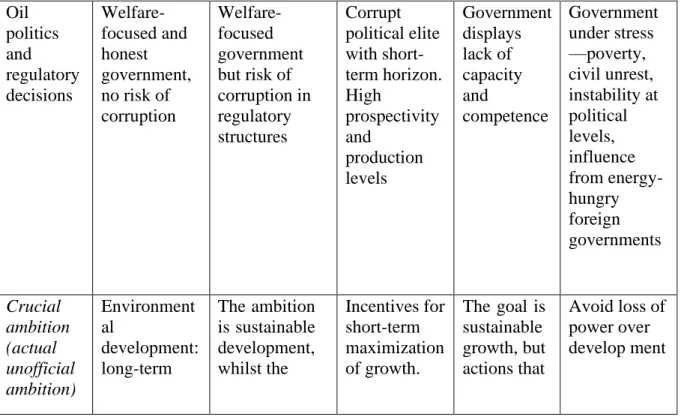
Table 2. Potential consequences for the regulation of oil.
Oil politics and regulatory decisions Welfare- focused and honest government, no risk of corruption Welfare- focused government but risk of corruption in regulatory structures Corrupt political elite with short- term horizon. High prospectivity and production levels Government displays lack of capacity and competence Government under stress —poverty, civil unrest, instability at political levels, influence from energy- hungry foreign governments Crucial ambition (actual unofficial ambition) Environment al development: long-term The ambition is sustainable development, whilst the Incentives for short-term maximization of growth. The goal is sustainable growth, but actions that Avoid loss of power over develop ment
Table 2. Potential consequences for the regulation of oil (to be continued) behind oil production maximized profits reinvested in sustainable values. The effective institutions. Efficient institutions. Clear regulations and rules on petroleum. present regulation is different from good practice. Support based on populist arguments. Unclear legislation. do not fulfill that aim are made. politics and prevent coups. Using oil capital for limited strategic advantage s. Military financial update. Structures of ownership and legislation. Foreign entry welcome. Limited, separate regulatory and commercial functions of the national company authority. Without corresponding output, the national oil company is ambitious. International petroleum participation is being slowed down by bureaucracy. Powerful national petroleum company directly under President or Minister with the business role and regulatory control or regulatory functions. As regulators or bureaucratic supervision, the national oil company dominates. Divergence between planned and actual performanc e regulatory functions. Production superficial control. More vulnerabili ty in regulatory systems to corruption. Award of access to oil resources. Procedures and criteria clarity. Pre- qualifying. Bidding competitive. Discretion in accor- dance with assessment transparency Companies may access tendering criteria and procedures through undue influence. Operators accepted without the required Based on bonuses for signature. Round concept/aucti on – to promote fast start-ups. Poor incentives to invest in exploratory wells for Operators propose how to tender even if they are competitors themselves. he award process is used systematic ally, formally across rounds.
Table 2. Potential consequences for the regulation of oil (to be continued) capacity. More need for track record data. drilling. Less focus on improved track record for recovery.
Field Creating And if the FDP agrees Companies FDP may
develop- communicatio desires of only if, have a greater be less
ment plan n between the client irrespective negotiating important
(FDP). licensees and were split, of the effect power in and
authorities. the FDPs on the relation to possibly
Maximized approved it. overall government left to the
complete Speedy recovery of and more regulatory
resource production capital, reservoir level, but
recovery at emphasis output is information. without the
optimum and less maximized For operators, support of
NPV. regeneration in the short FDP decisions higher optimal. term. will reap big officials.
Local benefits. In a
material politically
unreasonabl challenging
e requests. situation.
Overview Multi-angle Substantial Companies On-the-field Minimum
and regulation (oil oversight of may reduce documentatio focus on
control of authority, legislation. investments n and production
production businesses, Manipulated and production monitoring
. finance production optimize figures were .
ministry, figures. It's high limited to
central bank). hard to performance government
Revenue install or . Weak capacity.
control and audit a official Development
transparency. metering control. activities of
system. Weak operators and
official official control. figures Approval acknowledged method . Shallow assessment.
Table 2. Potential consequences for the regulation of oil (to be continued) The tail- end game Companies dedicated to "tail-end production" have been invited. Tail-end development is less likely for operators. The ambiguity of the contract is prevalent in the movement. Output at tail-end is not a priority, but it is facilitated by decreasing cash flow. Limited understanding of how tail- end production solutions can be promoted. Authorities may not be completely aware of the probability of volume maximization or have little interest in it.