Ana Vanessa Antunes Carvalho
Licenciada em Ciências da Engenharia Química e Bioquímica
Ionic liquids as catalysts of lignocellulosic
biomass processing
Dissertação para obtenção do Grau de Mestre em Engenharia Química e Bioquímica
Orientador: Rafal Bogel-Lukasik
Presidente: Professora Doutora Ana Maria Martelo Ramos Arguente: Professora Doutora Susana Filipe Barreiros
Vogal: Doutor Rafal Bogel-Lukasik
Ana Vanessa Antunes Carvalho
Licenciada em Ciências da Engenharia Química e Bioquímica
Ionic liquids as catalysts of lignocellulosic
biomass processing
Dissertação para obtenção do Grau de Mestre em Engenharia Química e Bioquímica
Orientador: Rafal Bogel-Lukasik
Presidente: Arguente:
Vogal: Doutor Rafal Bogel-Lukasik
I “Copyright” Ana Vanessa Antunes Carvalho, FCT/UNL e UNL
III
Agradecimentos
Gostaria de agradecer a todos os que me apoiaram e ajudaram ao longe desta etapa. Um grande
obrigado, em especial, ao Dr. Rafał Łukasik pela disponibilidade, orientação, ajuda e pelas
oportunidades proporcionadas ao longo deste período.
Ao André Lopes pelo acompanhamento, ajuda e apoio em todo o trabalho.
A todas as pessoas da Unidade de Bioenergia do LNEG, que também me ajudaram ao longo da minha
presença e que sem elas, este trabalho não seria possível. E em especial à Claúdia, Frederico, Rita,
Rute e Sofia pela amizade e todos os momentos de entreajuda e alegria.
A todos os meus colegas de faculdade e em especial à Alison, Ana, Jorge e Sara.
Por último, um muito obrigado aos meus pais, irmã, tio, avós e primos pelo suporte ao longo desta
caminhada e por acreditarem em mim.
V
Abstract
The present work is devoted to study the pre-treatment of lignocellulosic biomass, especially wheat
straw, by the application of the acidic ionic liquid (IL) such as 1-butyl-3-methylimidazolium hydrogen
sulphate. The ability of this IL to hydrolysis and conversion of biomass was scrutinised. The
pre-treatment with hydrogen sulphate-based IL allowed to obtain a liquor rich in hemicellulosic sugars,
furans and organic acids, and a solid fraction mainly constituted by cellulose and lignin. Quantitative
and qualitative analyses of the produced liquors were made by capillary electrophoresis and
high-performance liquid chromatography. Pre-treatment conditions were set to produce xylose or furfural.
Specific range of temperatures from 70 to 175 °C and residence times from 20.0 to 163.3 min were
studied by fixing parameters such as biomass/IL ratio (10 % (w/w)) and water content (1.25 % (w/w))
in the pre-treatment process. Statistical modelling was applied to maximise the xylose and furfural
concentrations. For the purpose of reaction condition comparison the severity factor for studied ionic
liquid was proposed and applied in this work. Optimum conditions for xylose production were
identified to be at 125 °C and 82.1 min, at which 16.7 % (w/w) xylose yield was attained. Furfural was
preferably formed at higher pre-treatment temperatures and longer reaction time (161 °C and 104.5
min) reaching 30.7 % (w/w) maximum yield.
The influence of water content on the optimum xylose formation was also studied. Pre-treatments with
5 and 10 % (w/w) water content were performed and an increase of 100 % and 140 % of xylose yield
was observed, respectively, while the conversion into furfural maintained unchanged.
VII
Resumo
O seguinte trabalho é dedicado ao estudo de pré-tratamento de biomassa lignocelulósica, em especial
palha de trigo, através da aplicação do liquido iónico (LI) ácido 1-butil-3-metilemidazolio sulfato de
hidrogénio. A capacidade deste LI para hidrolisar e converter biomassa foi examinada. O
pré-tratamento com LI á base de sulfato de hidrogénio permitiu obter um licor rico em açúcares a partir da
hemicellulose, furanos e ácidos orgânicos, também como uma fracção sólida constituída
maioritariamente por celulose e lignina. Análise quantitativa e qualitativa do licor produzido foi feita
através de electroforese capilar e cromatografia líquida de alta-performance. Condições de
pré-tratamento foram selecionadas para produção de xilose ou de furfural. Gamas específicas de
temperaturas a partir de 70 até 175 °C e tempos de residência de 20.0 a 163.3 min foram estudados,
fixando parâmetros como a razão biomassa/LI (10 % (w/w)) e o conteúdo de água (1.25 % (w/w)) no
processo de pré-tratamento. Modelação estatística foi aplicada por forma a maximizar a concentração
de xilose e furfural. Com o objectivo de comparar as condições de reacção, o factor de severidade para
o LI estudado foi proposto e aplicado neste trabalho. Condições óptimas para a produção de xilose
foram identificadas a 125 °C e 82.1 min, onde 16.7 % (w/w) de rendimento em xilose foi obtido.
Furfural foi formado preferencialmente a temperaturas mais elevadas e tempos de reacção mais longos
(161 °C e 104.5 min, respectivamente) alcançando um rendimento máximo de 30.7 % (w/w).
A influência do conteúdo de água nas condições óptimas para formação de xilose foi analisado.
Pré-tratamentos com 5 e 10 % (w/w) de humidade foram executados e um aumento de 100 % e 140 % no
rendimento em xilose foi observado, respectivamente, enquanto a conversão em furfural manteve-se
constante.
IX
List of Publications
The work presented in this thesis was presented in various forms as listed below:
Peer-reviewed papers
1. V. Carvalho, A. M. da Costa Lopes, R. Bogel-Lukasik, Direct xylose and furfural production
from biomass using acidic ionic liquids, Green Chemistry, 2014, submitted.
Oral communications
1. F.Relvas, M. Brenner, A. da Costa Lopes, V. Carvalho, A. R. C. Morais, S. P. Magalhães
Silva, A. Mata, L. B. Roseiro, R. Bogel-Lukasik, Biorefinery concept with green solvents
towards the phenolic valorization, 8th World Congress on Polyphenols Applications, VI.2014,
Lisbon, Portugal.
2. V. Carvalho, F.Relvas, A. da Costa Lopes, A. R. C. Morais, S. P. Magalhães da Silva, A. Mata, L. B. Roseiro, R. Bogel-Lukasik, Green chemistry and biorefineries – common future?, Lignocellulosic Crops as feedstock for Future Biorefineries, Summer Course of FIBRA
Project,VII.2014, Caparica, Portugal.
3. M. da Costa Lopes, V. Carvalho, S. P. Magalhães da Silva, L. B. Roseiro, R. Bogel-Lukasik,
Ionic liquids as new solvents for residues, COST Action TD 1203 Workshop on Valorisation
of Vegetable Waste, VIII.2014, Novi Sad, Serbia.
Poster presentation
1. A. M. da Costa Lopes, M. Brenner, V. Carvalho, S. P. Magalhães da Silva, L. B. Roseiro, R.
Bogel-Lukasik, Extraction of phenolic compounds from wheat straw using ionic liquids, 8th
World Congress on Polyphenols Applications, VI.2014, Lisbon, Portugal.
This work was supported by the Fundação para a Ciência e a Tecnologia (FCT, Portugal) through
Bilateral Cooperation project FCT/CAPES 2014/2015 (FCT/1909/27/2/2014/S) and grant
IF/00424/2013. The work was also supported by CAPES (Brazil) though the Pesquisador Visitante
XI
List of Contents
AGRADECIMENTOS ... III ABSTRACT ... V RESUMO ... VII LIST OF PUBLICATIONS ... IX LIST OF FIGURES ... XIII LIST OF TABLES ... XV
1. INTRODUCTION ... 1
1.1. BIOREFINERY ... 2
1.2. BIOMASS ... 3
1.2.1. Lignocellulosic biomass ... 3
Cellulose ... 4
Hemicellulose ... 5
Lignin ... 6
1.2.2. Wheat Straw ... 7
1.2.3. Biomass pre-treatment ... 8
1.2.4. Valorisation of lignocellulosic biomass ... 10
1.3. IONIC LIQUIDS ... 13
1.3.1. Ionic liquids – novel solvents ... 13
1.3.2. Dissolution of biomass in ILs ... 14
1.3.3. Biomass pre-treatment with ILs... 14
1.3.4. Acidic ionic liquids as tools to process biomass ... 16
2. OBJECTIVES ... 17
3. MATERIALS AND METHODS ... 18
3.1. MATERIALS ... 18
3.2. METHODOLOGY ... 19
3.2.1. Pre-treatment of wheat straw with [bmim][HSO4] ... 19
3.2.2. Solid analysis ... 21
3.2.3. Liquor analysis ... 21
3.2.4. Chemical analyses ... 21
Capillary electrophoresis (CE) ... 21
High-performance liquid chromatography (HPLC) ... 22
3.2.5. Optimization of xylose and furfural production ... 22
XII
4. RESULTS ... 25
4.1. PRODUCTION OF XYLOSE ... 25
4.2. PRODUCTION OF FURFURAL ... 28
4.3. STATISTICAL MODELLING ... 32
5. DISCUSSION... 36
5.1. THE EFFECT OF TEMPERATURE AND PRE-TREATMENT TIME ON BIOMASS CONVERSION ... 37
5.2. OPTIMISATION OF XYLOSE AND FURFURAL PRODUCTION ... 41
5.3. HEMICELLULOSE PRODUCT SELECTIVITY ... 42
5.4. EFFECT OF WATER CONTENT ON THE BIOMASS PRE-TREATMENT ... 43
6. CONCLUSIONS ... 46
7. PERSPECTIVES ... 47
8. REFERENCES ... 48
9. APPENDIX ... 51
ANNEX A–DETERMINATION OF SUGARS AND BUILDING BLOCKS PRESENT IN LIQUID FRACTION ... 51
ANNEX B–DETERMINATION OF SUGARS PRESENT IN SOLID FRACTION ... 53
XIII
List of Figures
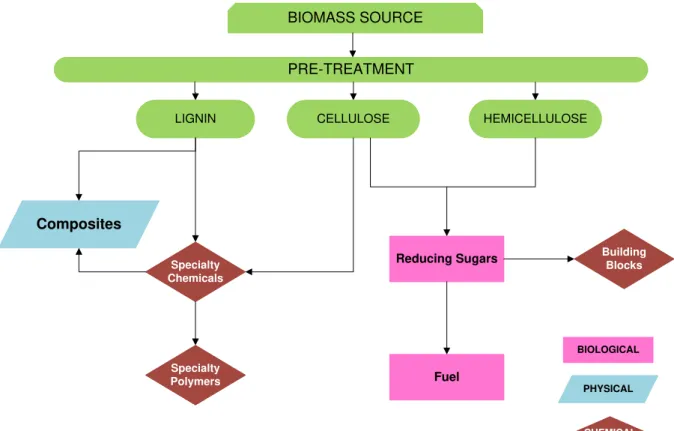
Figure 1.1 Conceptual biomass biorefinery (adapted from 4)... 2
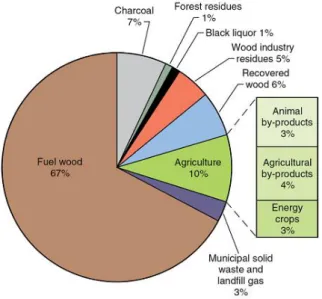
Figure 1.2 Share of biomass sources in the world.6 ... 3
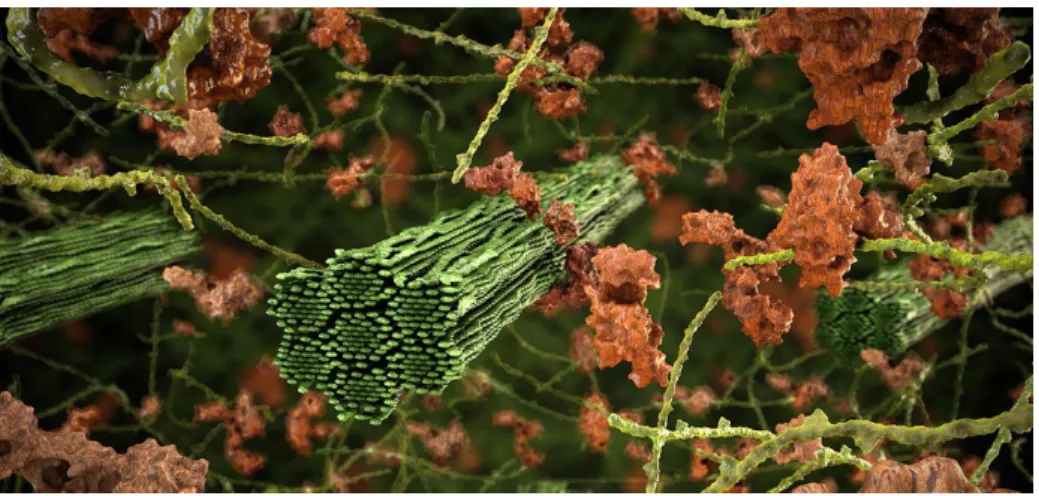
Figure 1.3 Graphical representation of lignocellulosic biomass based on supercomputer models. Cellulose (dark green), lignin (brown) and hemicellulose (light green) Rreproduced from 8 ... 4
Figure 1.4 Structure of cellulose (adapted from 9, 10)... 4
Figure 1.5 Examples of hemicellulose structure 9 ... 5
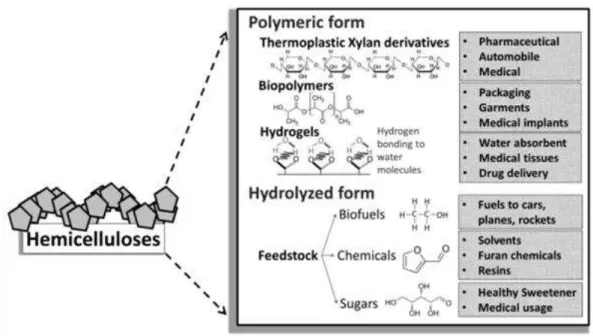
Figure 1.6 Applications of hemicellulose derivatives (adapted from 16) ... 6
Figure 1.7 Example of lignin structure 9 ... 6
Figure 1.8 Monosaccharides from biomass ... 10
Figure 1.9 Products and summary reaction routes for the degradation of biomass poly- and monosaccharides and lignin during pre-treatment 9 ... 11
Figure 1.10 Furfural and other chemicals from biomass. For full caption please consult Biorefineries – Industrial Processes and Products. Wiley-VCH Verlag GmbH & Co. KGaA, Weinheim.28 ... 12
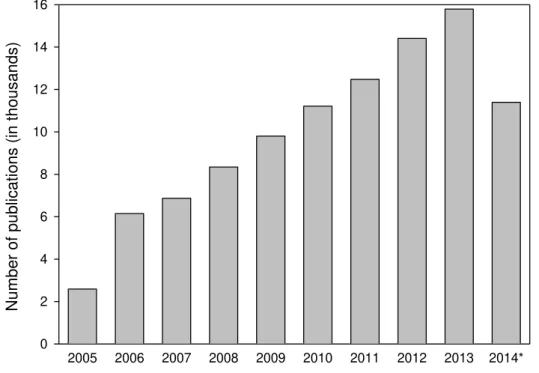
Figure 1.11 Number of literature reports published in last 10 years found in ISI Web of Science search by topic “ionic liquid*”(accessed on 19th September 2014). *up to date of access. ... 13
Figure 1.12 Structure of 1-butyl-3-methylimidazolium hydrogen sulphate ... 16
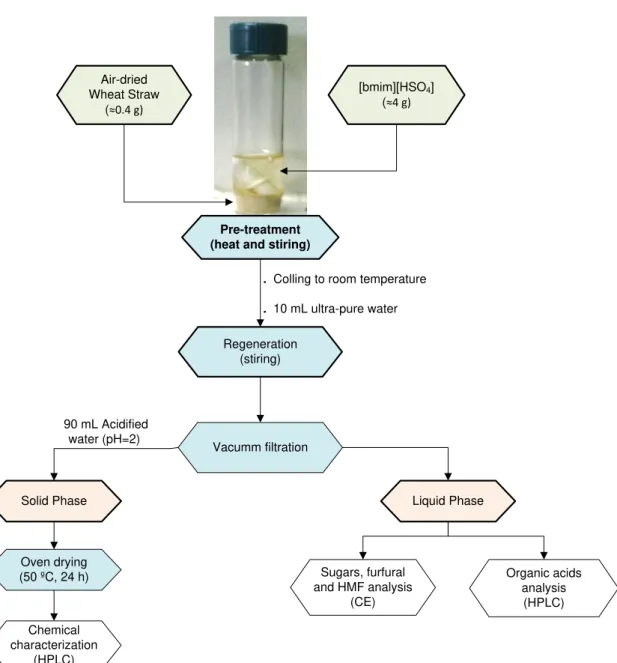
Figure 3.1 Schematic representation of the pre-treatment method ... 20
Figure 4.1 Doehlert experimental design for xylose production for 70 °C<X1<160 °C and 20.0 min<X2<120.0 min; the points represented by the orange and blue hexagon were the conditions studied. ... 25
Figure 4.2 Total recovery of hemicellulose and cellulose in pre-treatment of wheat straw with [bmim][HSO4] for xylose production ... 28
Figure 4.3 Doehlert experimental design for furfural production for 115 °C<X1<175 °C and 63.3 min<X2<163.3 min; the points represented by the green hexagon. ... 29
Figure 4.4 Total recovery of hemicellulose and cellulose in pre-treatment of wheat straw with [bmim][HSO4] for furfural production conditions ... 32
Figure 4.5 Response surface and contour plot of modelled xylan hydrolysis into xylose (bottom figure), and hemicellulose conversion to furfural (upper figure) as a function of reaction time (min) and temperature (°C) ... 34
XIV
Figure 5.2 Total hemicellulose loss (bars) and recovered lignin (●) in the course of the pre-treatments
executed. Solid line is designed by polynomial adjustment to the experimental points and serve as
guide for the eye ... 40
Figure 5.3 Selectivity of [bmim][HSO4] for xylose (○) or furfural (●) production after wheat straw
pre-treatment. Solid lines are designed by polynomial adjustment to the experimental points and serve
as guide for the eye ... 42
Figure 5.4 The proposed mechanism of furfural formation from biomass (adapted from 87-89). ... 43
XV
List of Tables
Table 1.1 Anastas and Warner’s twelve principles of Green Chemistry 1
... 1
Table 1.2 Examples of lignin derivatives applications (adapted from 18, 19) ... 7
Table 1.3 Composition of examples of lignocellulosic raw materials (wt% on dry biomass) (adapted from 20) ... 7
Table 1.4 Main conventional uses of wheat straw in the EU 21 ... 8
Table 1.5 Methods for biomass pre-treatment 23-25 ... 9
Table 3.1 Composition of wheat straw used as feedstock (% by dry weight)68 ... 18
Table 3.2 Pre-treatment temperatures and times studied in this work, and respective coded levels for statistical modeling ... 23
Table 4.1 Liquid phase composition obtained after wheat straw pre-treatment with [bmim][HSO4] at various temperatures and residence times ... 26
Table 4.2 Results of solid phase composition in mass percentage of processed biomass produced in wheat straw pre-treatment with [bmim][HSO4] at various temperatures and residence times ... 27
Table 4.3 The liquor composition analysis at various temperatures and residence times for furfural formation ... 30
Table 4.4 Results of solid phase analysis obtained from wheat straw pre-treatment with [bmim][HSO4] at various temperatures and residence times considered for furfural formation ... 31
Table 4.5 Doehlert experimental design applied for the corresponding experimental responses Y1 (xylan hydrolysis to xylose) ... 32
Table 4.6 Doehlert experimental design applied for the corresponding experimental responses Y2 (xylan conversion to furfural) ... 33
Table 4.7 Parameters of the polynomial models representing the studied response Y1 (xylan hydrolysis to xylose) and Y2 (xylan hydrolysis to furfural); The adequacy of the models to fit the sets of data was performing using Fisher test (F-test) for the effectiveness of the factors. ... 33
Table 4.8 Analysis of the liquid fraction produced in experiments performed at the optimum conditions for xylose and furfural production ... 35
Table 4.9 Analysis of the solid produced from wheat straw pre-treatment at optimum conditions for xylose and furfural production obtained from statistical modelling ... 35
1. Introduction
1
1. Introduction
In the course of the depleting petrochemical feedstock, increasing concerns regarding the climate
changes and market globalisation, one of the most important drivers for nowadays development is the
sustainability. Thus, towards this trend the concept of green chemistry was created following twelve
principles as mentioned in Table 1.1.1
Table 1.1 Anastas and Warner’s twelve principles of Green Chemistry 1
1. It is better to prevent waste than to treat or clean up after it has been formed.
7. A raw material of feedstock should be renewable rather than depleting wherever technically and economically practicable.
2. Synthetic methods should be designed to maximise the incorporation of all materials used in the process into the final product.
8. Unnecessary derivatisation (blocking group, protection/deprotection, and temporary modification of physical/chemical processes) should be avoided whenever possible.
3. Wherever practicable, synthetic methodologies should be designed to use and generate substances that possess little or no toxicity to human health and the environment.
9. Catalytic reagents (as selective as possible) are superior to stoichiometric reagents.
4. Chemical products should be designed to preserve efficacy of function while reducing toxicity.
10. Chemical products should be designed so that at the end of their function they do not persist in the environment and break down into innocuous degradation products.
5. The use of auxiliary substances (e.g. solvents, separation agents etc.) should be made unnecessary wherever possible and innocuous when used.
11. Analytical methodologies need to be further developed to allow for real-time, in-process monitoring and control prior to the formation of hazardous substances.
6. Energy requirements should be recognised for their environmental and economic impacts and should be minimised. Synthetic methods should be conducted at ambient temperature and pressure.
12. Substances and the form of a substance used in a chemical process should be chosen so as to minimize the potential for chemical accidents, including releases, explosions and fires.
The development and implementation of principles proposed by Anastas and Warner show the ways to
achieve sustainability at the industrial level.2 One of the means to achieve this is the use of sustainable
feedstock such as biomass. The use of biomass as the raw material for the processes is accomplished
by the biorefinery.3 Thus, the integration of biorefinery concept into green chemistry principles is
1. Introduction
2
1.1. Biorefinery
The increasing demand for energy, fuels and chemicals is forecasted for the near future that will
possibly place additional pressure on the use of fossil resources and the environment. Accordingly,
finding new technologies and development of novel processes to bring this growth in line with the
social demand for sustainability are major challenges for current and future generations. A biorefinery
might be one of the ways to achieve this goal. A biorefinery is a facility, which concept is analogous
to today's petroleum refinery consisting on multi-step platform for the production of fuels and
chemicals, but starting from renewable sources (e.g. biomass) as raw material instead crude oil (Figure
1.1). Therefore, biorefinery refers to refining biomass into various separated products that undergo
further biological, (bio)chemical, physical and/or thermo-chemical processing and downstream
separation. Within biorefinery processes, both (high) added-value products (chemicals and/or
materials) and secondary energy carriers (transportation fuels, gaseous energy carriers, power, heat)
are co-produced.3 Market competitive products could be produced, especially when the biorefinery
processes may possibly be integrated into existing industrial ((petro)chemical, food/feed, power
production) infrastructures.
BIOMASS SOURCE
PRE-TREATMENT
CHEMICAL
PHYSICAL BIOLOGICAL
LIGNIN CELLULOSE HEMICELLULOSE
Composites
Specialty Chemicals
Specialty Polymers
Building Blocks
Reducing Sugars
Fuel
1. Introduction
3
1.2. Biomass
Biomass is a readily available and low-cost feedstock and is one among a few resources that can
facilitate the large-scale and sustainable production of the substantial volumes of energy and
materials.5 Figure 1.2 illustrates biomass resources available in the world and their respective share.
Figure 1.2 Share of biomass sources in the world.6
Biomass refers to biological material derived from living organisms and it can be divided into primary,
secondary, and tertiary resources.7 Primary biomass resources are produced directly by photosynthesis
and are taken straight from the land. They include perennial short-rotation woody crops and
herbaceous crops, the seeds of oil crops, and residues resulting from the harvesting of agricultural
crops and forest trees (e.g., wheat straw, corn stover, and the tops, limbs, and bark from trees).
Secondary biomass resources result from the processing of primary biomass resources either
physically (e.g., the production of sawdust in mills), chemically (e.g., black liquor from pulping
processes), or biologically (e.g., manure production by animals).7 Tertiary biomass resources are
post-consumer residue streams including animal fats and greases, used vegetable oils, packaging wastes,
and construction/demolition debris.7 Lignocellulosic biomass as one of the most available and studied
feedstocks in biorefineries can be considered as primary and secondary biomass resource categories.
1.2.1. Lignocellulosic biomass
The plant cell wall of lignocellulosic biomass contains three major biopolymers: cellulose, lignin, and
1. Introduction
4
Figure 1.3 Graphical representation of lignocellulosic biomass based on supercomputer models. Cellulose (dark green), lignin (brown) and hemicellulose (light green) Rreproduced from 8
Cellulose
The cellulose structure is made of glucose units linearly linked by (1→4)-β-D-glycosidic bonds
forming a polymer presented in Figure 1.4. An extensive and ordered network of hydrogen bonds and
van der Waals forces result in a cellulose structure, with varied size and crystallinity depending on
many factors by mostly on the type of biomass. The degree of polymerization (DP) is measured by the
number of molecular glucose units in the polymer. Decrystallization and hydrolytic depolymerization
to glucose are mechanistically two separate steps prior to rendering crystalline cellulose into usable
monosaccharides, either for biocatalytic fermentations or for thermocatalytic processing. In most of
studied aqueous systems, hydrolysis of bulk cellulose typically involves hydrolytic fragmentation to
reduce the DP followed by hydrolysis to glucose.9, 10
Figure 1.4 Structure of cellulose (adapted from 9, 10)
Cellulose is Earth’s most widespread natural organic polymer and therefore the most important bio-renewable resource. It is produced by biosynthesis on land (wood, grasses) and in the sea (algae) as
component of plant cells in quantities of approximately 75 x 109 tons per year. However, out of these
1. Introduction
5 feedstock for further processing – mainly for the pulp and paper industry. As a raw material for
chemical processes, cellulose is used in very small amounts (5 x 10⁶ tons per year, i.e. 0.007%).11
Cellulose has numerous applications focused on biocompatibility and chirality for the immobilisation
of proteins, antibodies, and heparin, for the separation of enantiomeric molecules, as well as the
formation of cellulose composites with synthetic polymers and biopolymers.12 The numerous
applications of cellulose are based on its distinct fibre morphology.12
Hemicellulose
Hemicellulose is constituted by branched-chain polysaccharides containing pentose and hexose
monosaccharide building units, such as xylose (C5), arabinose (C5), galactose (C6) and mannose (C6),
as well as acetyl groups, glucuronic and galacturonic acids. Hemicellulose has a random and
amorphous structure (two examples are demonstrated in Figure 1.5). Hemicellulose is the easiest
component of lignocellulosic biomass to be degraded in acid or in alkaline processes or even in hot
water.13
Figure 1.5 Examples of hemicellulose structure 9
1. Introduction
6
Figure 1.6 Applications of hemicellulose derivatives (adapted from 16)
Lignin
Lignin is polymer with an amorphous three-dimensional structure and is the most abundant aromatic
biopolymer in nature. It consists of phenylpropanoid units originated by three aromatic alcohol
precursors (monolignols): p-coumaryl, coniferyl and sinapyl alcohol.16, 17 Lignin (Figure 1.7) is highly
branched aromatic polymer with complex structure.10, 17 High-molecular-weight lignin is insoluble in
sulphuric acid (H2SO4), whereas low-molecular-weight lignin is considered as acid soluble.
Figure 1.7 Example of lignin structure 9
1. Introduction
7 Table 1.2 Examples of lignin derivatives applications (adapted from 18, 19)
Multi-polarity products Materials Agriculture
Dispersion Others phenolic resins soil rehabilitation
Ceramics complexing agents polyurethanes slow release
fertilisers
oil well drilling Flocculating epoxies artificial humus
clay brick & tiles heavy metal binders particle boards Fertiliser
Cements ion exchanging resin boards manure treatment
concrete gypsum board water softening rubber reinforcing composting aid
Dyestuffs destabilization of oil emulsions bloc copolymers soil stabilisation
Electrolytes corrosion protection polyesters Insecticides
paper sizing metal cleaners composites Granulation
Emulsion Chemicals polyolefins Miscellaneous
Wax Cresols biodegradables energy production
Asphalt Catechols carbon sieves diesel fuel
Bitumen Resorsinols activated carbons foam stabilizers
Vitamins Quinones carbon fibres Binders
micronutrients Vanilin tanning agent
Guaiacols Absorbents
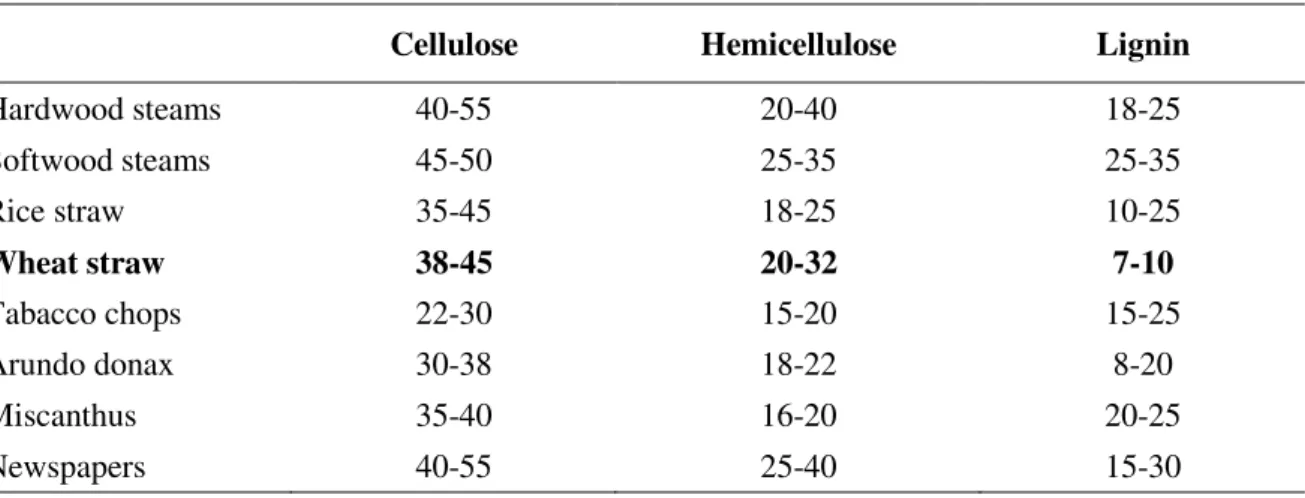
Lignocellulosic biomass has diverse composition however examples of lignocellulosic raw materials
and their compositions are given in Table 1.3.
Table 1.3 Composition of examples of lignocellulosic raw materials (wt% on dry biomass) (adapted from 20)
Cellulose Hemicellulose Lignin
Hardwood steams 40-55 20-40 18-25
Softwood steams 45-50 25-35 25-35
Rice straw 35-45 18-25 10-25
Wheat straw 38-45 20-32 7-10
Tabacco chops 22-30 15-20 15-25
Arundo donax 30-38 18-22 8-20
Miscanthus 35-40 16-20 20-25
Newspapers 40-55 25-40 15-30
1.2.2. Wheat Straw
1. Introduction
8
hemicellulose, 7 – 20 % lignin (Table 1.4), as well as a number of minor fractions such as proteins and
ash.
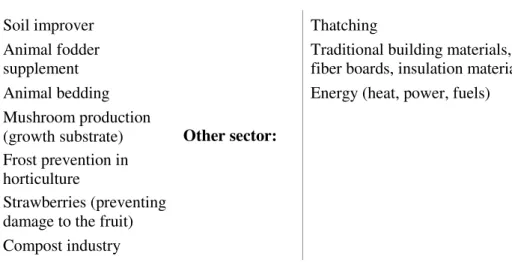
Wheat straw is worldwide abundant agricultural residues and the current applications of this biomass
feedstock are depicted in Table 1.4.
Table 1.4 Main conventional uses of wheat straw in the EU 21
Within agricultural sector: Soil improver Other sector: Thatching Animal fodder supplement
Traditional building materials, fiber boards, insulation material
Animal bedding Energy (heat, power, fuels)
Mushroom production (growth substrate) Frost prevention in horticulture
Strawberries (preventing damage to the fruit) Compost industry
Essentially, wheat straw is used as animal’s feed and bedding as well as energy source. Nevertheless,
there are two particular limitations of using wheat straw regarding the applications for bioenergy
purposes. The high carbon-to-nitrogen content of wheat straw leads to a very low biodegradability in
comparison to other agricultural residues. This is of particular interest when straw is used for
anaerobic digestion to produce biogas. It means that in many cases, straw needs to be blended with
other agricultural residues, in order to speed up the degradation of organic constituents presented in
straw. Another limitation, in particular for thermal processes such as combustion and gasification, is
the high ash content (typically 6 – 12wt%) as well as the high inorganic composition of wheat straw
which promotes slagging, fouling and corrosion in reactor systems. Herein, these disadvantages arise
the opportunity to use green and sustainable technologies that could be more adequate for wheat straw
processing in the frame of the biorefinery concept.
1.2.3. Biomass pre-treatment
The major aim of biomass pre-treatment is to process biomass to make it more subjectable for for
further processing.4, 13 The pre-treatment makes biomass fractions more subjectable biological and/or
chemical treatments aiming further valorisation towards particular products or pivot chemicals.22
However, to achieve this goal various challenges must be addressed. Furthermore, depending on the
expected results, the most adequate pre-treatment method can be selected. In addition, the choice of
pre-treatment should consider the overall compatibility of feedstocks, enzymes and organisms to be
1. Introduction
9 have been used for developing low cost pre-treatments to generate sugar-rich liquors from cellulose
and hemicellulose.23, 24
Table 1.5 Methods for biomass pre-treatment 23-25
Pre-treatment Name Means Effect
Physical
Mechanical comminution
Ball milling, compression milling, colloidal milling
Decrease of the particle size, crystallinity and DP of cellulose
Pyrolysis High temperatures
(>300ªC)
Decomposition of cellulose to produce gaseous products and residual char
Physico-chemical
Explosion (steam, CO2, ammonia,
etc)
High-pressure fluid
Decrease of cellulose
crystallinity and DP by increase of the surface area; lignin and hemicellulose removal Ammonia recycle
percolation method (ARP)
Temperatures 150-170ºC, ammonia recycle at low fluid velocity (1 cm/min)
Increase of accessible surface area; removal of lignin and hemicellulose
Chemical
Acid Mineral acids
Decrease of crystallinity and DP of cellulose; partial or complete degradation of hemicellulose
Alkaline
Sodium hydroxide, sodium carbonate, ammonia, ammonium sulphate, lime, etc.
Cleavage of hydrolysable linkages in lignin and glycosidic bonds of polysaccharides; decrease of crystallinity and DP of cellulose; disruption of the lignin structure
Autohydrolysis Liquid hot water
Hemicellulose removal and lignin transformation; increase of potential of cellulose hydrolysis
Oxidative delignification
H2O2 and peroxidase
enzyme
Dissolution of lignin and hemicellulose and glucose production from cellulose saccharification
Organosolv process
Organic or aqueous organic solvent mixture with inorganic acid catalysts (HCl or H2SO4)
Breaking down of linkages between lignin and
hemicellulose; hydrolysis of hemicellulose and lignin
High pressure fluids
High-temperature and high-pressure exposition to fluids e.g. CO2
Decrease of cellulose
crystallinity and DP by increase of the surface area; lignin and hemicellulose removal
Ionic Liquids Simple salts ILs or binary ILs
Dissolution of biomass; Integrated dissolution and hydrolysis of biomass fractionation
1. Introduction
10
An effective pre-treatment should meet the following requirements:23
1) Overcome lignocellulosic biomass recalcitrance, by deconstructing the three-dimensional structure
of lignocellulose and breaking down the semi-crystalline cellulose and hemicellulose;
2) Afford high yields to sugars or chemicals and/or give highly digestible pre-treated solid;
3) Avoid carbohydrates degradation and in particular preserve the utility of pentose (hemicellulose)
fraction;
4) Avoid the formation of inhibitory toxic by-products;
5) Allow lignin recovery and exploitation to give valuable co–products;
6) Be cost–effective, involving reasonable size of reactors, low amount of wastes and low energy demands.
The pre-treatment methods can be classified in a various ways. One of them is a character of forces
leading to the biomass processing. Thus physical (pyrolysis and mechanical disruption/comminution),
physicochemical (steam explosion, fluid explosion, etc.), chemical (acid hydrolysis, alkaline
hydrolysis, organic solvent pre-treatment, ionic liquids, etc.) and biological (degradation by
microorganism) methods can be classified as shown in Table 1.5.23, 24
1.2.4. Valorisation of lignocellulosic biomass
Biomass polysaccharide fraction is mainly composed by glucan, xylans and arabinan, which after the
hydrolysis give mixture of oligo- and monosaccharides namely glucose, xylose, arabinose and other
sugars in minor concentration (Figure 1.8).21 Xylose and arabinose can be obtained from hemicellulose
and glucose comes from the cellulose hydrolysis. Thus, sugars obtained could be fermented to produce
biofuels, such as ethanol and/or used in a wide range of applications, such as food and feed,
pharmaceuticals and other purposes
Glucose Xylose Arabinose
Figure 1.8 Monosaccharides from biomass
The formation of several pivot compounds can be attained directly from the biomass pre-treatment.
High temperatures and longer pre-treatments enable the dehydration of reducing sugars into furans,
1. Introduction
11 Depending of the reaction conditions, 5-(hydroxymethyl)-2-furaldehyde (HMF) and/or levulinic acid
and formic acid can be formed from glucose (previously obtained after cellulose hydrolysis). Xylose
rand arabinose, derived from hemicellulose, follow different reaction pathways resulting in the
formation of furan-2-carbaldehyde (furfural) and/or various C-1 and C-4 organic compounds (Figure
1.9). The aromatic fractions of lignin can be converted e.g. by oxidation or hydrolysis to various types
of polyphenolics depending on type of structural monomeric units of lignin.
Figure 1.9 Products and summary reaction routes for the degradation of biomass poly- and monosaccharides and lignin during pre-treatment 9
5-hydroxymethylfurfural (HMF) is a furan based raw material which is considered as one of the top
building blocks obtained from biomass.22 It comprises an aromatic alcohol, aldehyde and furan ring
system. HMF is already used as raw material in the production of resins, fine chemicals,
pharmaceuticals, polymers (polyester), solvents and liquid transportation fuels (2,4-dimethylfuran, a
biofuel that has 40% higher energy density than ethanol).26 Furfural, similarly to HMF is a
heterocyclic aldehyde that has been identified as one of the pivot chemicals to be produced from the
lignocellulosic feedstock biorefinery.22 Furfural is an intermediate commodity chemical used a wide
range synthesis of more specialised chemical products, starting mainly with furfuryl alcohol (65
1. Introduction
12
Furfural is used mainly in the production of resin, which is then used as a binding agent in foundry
technologies (Figure 1.10). The second main use is as a selective solvent in petroleum production of
lubricants. There are many other uses (adhesive, flavouring and as a precursor for many specialty
chemicals). Furfural is highly regarded for its thermosetting properties, physical strength and corrosion
resistance.
Figure 1.10 Furfural and other chemicals from biomass. For full caption please consult Biorefineries – Industrial
Processes and Products. Wiley-VCH Verlag GmbH & Co. KGaA, Weinheim.28
Organic acids are degradation products of lignocellulosic materials. Acetic acid is formed by
hydrolysis of acetyl groups linked to hemicellulose structure while formic and levulinic acids are
1. Introduction
13 1.9).9 Acetic and formic acids are inhibitors of cellulolytic enzyme activity.29 Levulinic acid and its
derivatives have found a use in highly diverse areas, such as polymers, biological active materials,
batteries, personal care products, etc.30
1.3. Ionic Liquids
1.3.1. Ionic liquids – novel solvents
Ionic liquids (IL) are salts with melting point below 100ºC composed solely of cation and anions.31, 32
ILs have broad liquid ranges, negligible vapour pressures and high polarity. Due to the unique
properties and numerous combination of cations and anions, IL have been receiving considerable
attention (Figure 1.11) and found the use in different areas including industrial application.33 Among
all applications and due to the negligible vapour pressure ILs are mostly used as solvents. Because of
this, they allow for easy separation of products providing more favourable chemical environment to
carry out clean reactions with minimum waste generation. This drives to name ionic liquids - green solvents however questions related to ILs’ toxicity and degradability must be still addressed.34-36
Figure 1.11 Number of literature reports published in last 10 years found in ISI Web of Science search by topic “ionic
liquid*”(accessed on 19th September 2014). *up to date of access.
One of the commonly considered drawbacks of ILs’ application is their price. However, recent
achievements in this field show that IL can be as cheap as organic solvents especially in the bulky
quantities.37
2005 2006 2007 2008 2009 2010 2011 2012 2013 2014*
N
um
ber of
publicat
ions (in t
housands)
1. Introduction
14
1.3.2. Dissolution of biomass in ILs
As it was referred before, ILs are great solvents and were broadly used in the biomass dissolution
examination. The solubility of either entire biomass or its fractions was extensively studied already.38
The impact of the IL anion on the dissolution of cellulose was analysed.39, 40 NMR studies about the
dissolution of glucose and cellobiose in ILs showed that the anion strongly coordinates to the
carbohydrates’ hydroxyl groups. Furthermore, it was shown that IL anion is able to penetrate into the
inner structure of cellulose and to form hydrogen bonds with the hydroxyl groups of cellulose, thus
disrupting the existing hydrogen bonding network present in crystalline cellulose. The ability to
dissolve cellulose was found to correlate proportionally with anion concentration. Nevertheless, the IL
cation also contributes to the dissolution.38 In order to dissolve cellulose, the IL should satisfy the
following conditions:
1) Anion must be a good hydrogen bond acceptor;
2) Cation should be a moderate hydrogen bond donor because it has moderate proton capacity bonding
with oxygen atoms of the hydroxyls of cellulose;
3) Size of the cation should be as small as possible because of the increasing viscosity affecting
negatively the dissolution.
The increase of alkyl chain of the dialkyl imidazolium cation guides to decrease of biomass
dissolution.40 Additionally, the size of the cation interferes with the ability to form hydrogen bonds
with cellulose.38, 41 Therefore, a smaller size of cation favours dissolution of cellulose be promoting the
interaction with the oxygen atom of the hydroxyl group in the cellulose structure.42
Dissolution of lignocellulosic biomass with ILs is referred as an innovative process where the
physicochemical properties of the original biomass are altered in a way not observed before by other
solvents.43, 44 Lignocellulosic biomass interaction with ILs is more complex due to the presence of
lignin and extractives, as well as the recalcitrant structure inherent to these materials.45 The efficiency
of lignocellulosic biomass in ILs is associated to the hydrogen bond basicity of the IL anion. Anions
with strong hydrogen bond basicity can effectively weaken the hydrogen-bounding network present in
the biomass polymers as it was observed for pure biomass fractions.46
1.3.3. Biomass pre-treatment with ILs
Pre-treatment with ILs offers advantages superior to conventional methods allowing to: (i) alter
physicochemical properties of the biomass macromolecular components, such as reducing the lignin
content and cellulose crystallinity; (ii) extract a specific macromolecular component, such as isolation
1. Introduction
15 ILs.45 Biomass pre-treatment using ILs consists of processing biomass for a determined time and
temperature, with or without agitation and no need to apply pressure. This normally results in total or
partial dissolution of biomass and alteration of its original properties. The pre-treated biomass is
recovered by regeneration, where addition of a protonated precipitating solvent called also anti-solvent
is desired.47 The anti-solvent competes with the dissolved fraction of biomass for the hydrogen bonds
formed and creates stronger bonds with ionic liquid that those between IL and biomass fraction. Thus,
it results in the precipitation of the desired biomass fraction, and as a result the IL maintains in the
liquid phase. The resulted regenerated biomass contains polysaccharides as main content. The
regenerated material can be later selectively separated to obtain cellulose and hemicellulose fractions,
while IL is recovered from liquid stream with prior to lignin precipitation.48 During this process a
decrease of cellulose crystallinity is observed48, 49 that guides to enhancement of cellulose
saccharification yield.48, 50, 51
Pre-treatment conditions can differ depending on: (i) type of IL used; (ii) type, moisture, size and
loading of lignocellulosic biomass; (iii) residence time and temperature of pre-treatment; (iv)
anti-solvent used and (v) water content. Optimisation of the pre-treatment process is always needed
because alteration of the aforementioned condition leads to different pre-treatment results.
The biomass particle size used in the pre-treatment process directly impacts on the contact and
diffusion of IL into the lignocellulosic material.52 Smaller particle size promotes the efficiency of the
pre-treatment. However, lower yields of pre-treatment of biomass are verified due to a more extensive
depolymerisation to low molecular weight soluble compounds.53, 54 Concentration of biomass is also
an important parameter affecting the pre-treatment efficiency. Better IL performance for dissolution of
biomass is favoured in case of less concentrated solution however this is unfavourable due to the lower
economic efficiency of the process. On the other hand, extensively high concentrations of solid can
hinder agitation of the mixture leading to heat and mass transfer limitations, and as a result low
efficiency of the IL action.45 As such, the ratio of biomass/IL should be optimised and determined
depending on the particular biomass and IL used.
Time and temperature of the pre-treatment processes are interlinked. Higher temperature accelerates
swelling and dissolution of biomass and normally shorter reaction time is needed, while lower
temperatures often require longer times to achieve similar efficiency.46, 49, 55 Another important aspect of temperature selection is that ILs’ properties depend on temperature.56-58
For example, high
temperature lowers viscosity and favours IL effectiveness of the biomass pre-treatment.59, 60 The
disadvantage of higher temperatures is that biomass degradation may occur and as a result the yield of
recovered biomass decreases.61 In other words, high temperatures imply a richer carbohydrate fraction
but with a substantial loss in regenerated biomass. The opposite applies to lower temperatures and
1. Introduction
16
Water content in a pre-treatment with IL can also affect the IL efficiency.43, 47, 63 Water, being an
anti-solvent as mentioned previously,47 competes with biomass to form hydrogen bonds with IL. Thus the
ability of the IL to dissolve biomass is reduced and only partial dissolution of lignocellulose may
occur.43, 63 All of the above mentioned factors vary depending on the IL and biomass used and must be
established individually for each studied IL-biomass system.
1.3.4. Acidic ionic liquids as tools to process biomass
Rather than only to dissolve and to pre-treat biomass, some ILs are able to hydrolyse produced
fractions and by this convert them to polysaccharides. Acidic ILs can do this kind of integrated
processing behaving as both solvent and catalyst.64-67 Functionalization or alteration of cation or anion
is a way to produce acidic ILs. Nowadays, most of the acidic ILs presented in the literature are based
on imidazole and pyridine.26 Acidic ILs functionalised with SO3H group greatly increase the reaction
rate of the cellulose hydrolysis and demonstrate higher catalytic activity for the cleavage of glycosidic
bonds.26 [HSO4]- based ILs are another example of acidic ILs able to catalyse biomass. They are
extensively used because of their acidic character and their low cost in comparison to other ILs.37 One
of the commonly examined hydrogen sulphate ILs is 1-butyl-3-methylimidazolium hydrogen sulphate
([bmim][HSO4]), which structure is depicted in Figure 1.12. This IL was reported to provide a
selective hydrolysis of hemicellulose observed as a reduced hemicellulose content in the recovered
biomass.48
2. Objectives
17
2. Objectives
The integration of dissolution, pre-treatment, hydrolysis and conversion of lignocellulosic biomass
into particular product is one of the key issues to accomplish the economic efficiency and
sustainability of lignocellulosic biorefineries.
The main purpose of this work was to analyse the potential of the acidic IL, [bmim][HSO4], to
examined this approach in case of one of the most common European lignocellulosic residue such as
wheat straw. As it was referred, [bmim][HSO4] demonstrated the potential to fractionate wheat straw
and ability to hydrolyse and to convert hemicellulose into furfural. In this work, the mentioned IL
hydrolysis and conversion ability was examined in details. For this purpose a wide range of
temperature and residence time was studied. The conditions of hydrolysis and conversion capacity to
3. Materials and Methods
18
3. Materials and Methods
3.1. Materials
Wheat straw supplied by Estação Nacional de Melhoramento de Plantas (Elvas, Portugal) was used as
feedstock. The milling of the raw material was done using a knife mill IKA® WERKE, MF 10 basic,
Germany, to get <0.5 mm particles. Humidity of raw biomass used was determined to be 8.3 % (w/w).
The used biomass composition is depicted in Table 3.1.
Table 3.1 Composition of wheat straw used as feedstock (% by dry weight)68
Component Composition
Cellulosea 38.5 ± 0.1 Hemicellulose 24.9
Xylan 19.1 ± 0.6
Arabinan 3.0 ± 0.1
Acetyl Groups 2.7 ± 0.2 Klason Lignin 17.7 ± 0.1
Ash 10.7 ± 0.1
Protein 4.7 ± 0.1
Others 3.5
a
Determined as glucan
For the pre-treatment experiments, the [bmim][HSO4] IL was used (99% purity, Iolitec GmbH,
Heilbronn, Germany). The water content in the examined IL was measured by a volumetric Karl –
Fischer titration and was 5385 ppm. The [bmim][HSO4] IL was used as received without further
purification.
For the pre-treatment experiments, 4M HCl aqueous solution was prepared from fuming 37 % (w/w) HCl bought from Merck (Darmstadt, Germany) and ultra-pure water (18.2 MΩ/cm) produced by Purelab Classic Elga. Nylon filters (Ø=47 mm, 0.45 µm porosity) from Merck Millipore (Billerica,
MA, USA) were also used. Acidified water was made by adjusting the pH of distilled water to value of
2.0 with a solution of 4 M of HCl. Basylone M-350 oil purchased from Bayer (Leverkursen, Germany)
was used as the heating medium for pre-treatments experiments.
Capillary electrophoresis (CE) analysis was performed using an electrolyte solution containing 130
mM of sodium hydroxide (NaOH) from EKA (Funchal, Madeira, Portugal) and 36 mM disodium
hydrogen phosphate dihydrated (Na2HPO4·2H2O) from Riedel-de Haën (Sigma-Aldrich
Laborchemikalien GmbH, Germany). For the standard sugar samples preparations, D(+)-sucrose,
3. Materials and Methods
19 Merck (Darmstadt, Germany). Furfural and HMF obtained from Sigma-Aldrich (St. Louis, USA) were
also used as standard samples. The standard solutions were prepared using ultra-pure water and
contained HMF (0.5-0.03mM), furfural (3-0.05mM) and sugars sucrose, cellobiose, cellulose,
arabinose and xylose (4-0.2mM). Solutions of 1.0 mM acetic acid from Panreac (Barcelona, Spain)
and 0.1 and 1.0 mM NaOH were applied during the flush phase in CE.
For high-performance liquid chromatography (HPLC) a solution of 5mM sulphuric acid (H2SO4) by
Panreac Química, (Barcelona, Spain) was used as the mobile phase. Standard samples of acetic acid,
fomic acid and levulinic acid from Panreac (Barcelona, Spain) were used in acids analysis using
HPLC.
Nylon syringe filters (Ø=13mm, 0.22µm porosity), purchased from Red® analytical (Cambridgeshire,
UK), were used to filtrate all the samples before running on CE and HPLC.
For the solid analysis, H2SO4 96% (w/w) by Panreac Química, (Barcelona, Spain), Nylon syringe
filters (Ø=13mm, 0.22µm porosity) and filtering crucibles with fritted disc, Gooch with porosity grade
4 from SciLabware (Stone, Staffordshire) were used.
3.2. Methodology
3.2.1. Pre-treatment of wheat straw with [bmim][HSO4]
The pre-treatments performed in this work were carried out according to the procedure represented in
3. Materials and Methods
20
Figure 3.1 Schematic representation of the pre-treatment method
A 4 g of [bmim][HSO4] was placed into a 15 mL vial and mixed with wheat straw in 10% (w/w)
biomass/IL ratio. The vial was submitted to continuous stirring for a defined period of time and
temperature in a silicone bath. After pre-treatment, 10 mL of ultra-pure water was added to the flask
under continuous agitation. The mixture was filtrated under vacuum and 90 mL of acidified water was
used to wash the recovered biomass. The filtrate (liquor) was collected and stored in freezer. The solid
phase was dried in oven at 50 °C for 24 h. Afterwards, the recovered biomass was left for a minimum
of 1 h at room temperature, and then the recovered mass was measured.
The liquor obtained from each pre-treatment trial was submitted to CE and HPLC analysis while the
recovered biomass (solid phase) was submitted to chemical characterisation. Air-dried
Wheat Straw (≈0.4 g)
[bmim][HSO4] (≈4 g)
Pre-treatment (heat and stiring)
Regeneration (stiring)
Vacumm filtration
Solid Phase Liquid Phase
Oven drying (50 ºC, 24 h)
90 mL Acidified water (pH=2)
Chemical characterization
(HPLC)
Sugars, furfural and HMF analysis
(CE)
Organic acids analysis
(HPLC)
. Colling to room temperature
3. Materials and Methods
21
3.2.2. Solid analysis
Solid moisture determination
A nickel plate was placed in oven at 100ºC for at least 5h to remove humidity. After that between 0.1
and 0.06 g pre-treated sample was placed in each plate, heated up in oven for at least 18h and then the
dried sample was weighted.
Chemical characterization of the recovered solids
The solid phase resulting from the pre-treatment was washed with ultra-pure water and oven-dried at
50 ºC for at least 48 h. Next, the solids were exposed to room conditions for a minimum of 12 h. The
solids obtained from each pre-treatment were subjected to quantitative acid hydrolysis to determine
the sugar content (both cellulose and hemicellulose). The protocol of National Renewable Energy
Laboratory (NREL)69 was applied to analyse each recovered solid: (i) 1 mL of H2SO4 (72 %) was
added to 0.1000 ± 0.0010 g of grounded recovered biomass and the mixture was placed in 30 °C water
bath for 1 h; (ii) the treated solution was diluted with 29.65 g of distilled water to obtain acid
concentration of approximately 4 %; (iii) the solution sample was conditioned at 121 °C for 1 h using
autoclave; (iv) the solution sample was filtered with filtering crucibles grade 4; (v) the resulting liquid
was analysed by HPLC to determine the sugar content as mentioned in the following section; (vi) the
resulting residue material was dried at 100 °C for 16 h, and lignin content was measured; (vii) ash
content was determined by placing the filtering crucibles in a muffle furnace at 550 °C for 5 h.
3.2.3. Liquor analysis
Liquors produced during pre-treatments were subject to two different analyses, namely capillary
electrophoresis and high-performance liquid chromatography. Sugars and furans (furfural and HMF)
were analysed with CE and the determination of organic acids was made by HPLC analysis.
3.2.4. Chemical analyses
Capillary electrophoresis (CE)
The method applied for sugar and furan determination was based on methodology described in
literature.70 Standard samples with known concentration of sugars, furfural and HMF were produced
for the construction of calibration curves. Furthermore, [bmim][HSO4] was also included as internal
3. Materials and Methods
22
solution. At this IL concentration the linearity of calibration curves was observed.71 A solution
containing 130 mM NaOH and 36 mM Na2HPO4·2H2O was prepared as the electrolyte solution.
The analyses were carried out using Agilent Technologies CE instrument (Waldbronn, Germany),
equipped with a diode array detector. The detection was recorded at a wavelength of 270 nm and 200
nm, both with 10 nm bandwidth. Agilent 3D-CE ChemStation data software (Rev B.04.01) was used
to perform qualitative and quantitative analysis. An uncoated fused-silica extended light path CE
capillary with 50 μm i.d. and 56/64.5 cm total length was used. Between runs the capillary was
pre-conditioned by rising sequentially acetic acid 1mM (3 min), sodium hydroxide 1M (3 min), water (3
min) and the electrolyte solution (5 min) and thermostated to +17ºC. The samples were filtered with
nylon syringe filters (Ø=13mm, 0.22µm porosity) and injected with a pressure of 35 mbar for 10 s.
The separation voltage was fixed at +18 kV for 27 minutes run.
High-performance liquid chromatography (HPLC)
The organic acid content (acetic, formic and levulinic acids) from the collected liquor samples were
analysed by an Agilent 1100 Series HPLC equipped with Aminex HPX-87H (Bio-Rad, EUA) column
and a refractive index detector (RID). All samples were filtrated using a 0.22 μm syringe filter. The
quantification was made by calibration curves using organic acid solutions with known concentrations. Sulphuric acid with 5 mM concentration was flow 0.6 mL/min (sample volume 5L) for liquor analysis and 0.4 mL/min (sample volume 5L) for solid samples was used as mobile phase. Column
temperature was 50ºC and detector temperature of 45ºC was employed.
3.2.5. Optimization of xylose and furfural production
A methodology based on Doehlert72 experimental design was performed for two different optimisation
responses, namely xylose and furfural production from wheat straw hemicellulose. The experimental
distribution was considered for two factors: the independent variables “temperature” (X1) and
“residence time” (X2).Two different experimental distributions were made: the first for xylose
production, where 70 °C < X1 < 160 °C and 20.0 min < X2 < 120.0 min were considered; the second
for furfural production by using 115 °C < X1 < 175 °C and 63.3 min < X2 < 163.3 min. Table 3.2
presents the conditions of pre-treatment and respective coded factors, which were used for calculation
3. Materials and Methods
23 Table 3.2 Pre-treatment temperatures and times studied in this work, and respective coded levels for statistical modeling
T
(°C)
t
(min)
Coded levels (xylose) Coded levels (furfural)
X1 X2 X1 X2
85 113.3 -0.67 +0.87 - -
100 70.0 -0.33 0.00 - -
115 26.7 0.00 -0.87 -1.00 -
113.3 0.00 +0.87 -1.00 0.00
130 70.0 +0.33 0.00 -0.50 -
156.6 +0.33 - -0.50 +0.87
145 26.7 +0.67 -0.87 0.00 -
113.3 +0.67 +0.87 0.00 0.00
160 70.0 - - +0.50 -0.87
156.6 - +0.50 +0.87
175
63.3
-
- +1.00 -1.00
163.3 - +1.00 +1.00
113.3 - +1.00 0.00
The responses studied were xylan hydrolysis to xylose (Y1) and xylan conversion to furfural (Y2). The
model used to express the responses was a second order polynomial model and is represented by the
following equation:
(1)
where X represents the conditions used (independent variables), Y is the response obtained from experimentations and β is the parameters of the polynomial model. The β parameters utilised to
estimate the responses have precise meanings: β0 represents the analysed response in the ` of the
experimental domain; the magnitude of β1 and β2indicates the importance of the respective factors
(temperature and time, respectively) on the responses; the interaction parameter, β12, indicates how the
effect of one factor depends on the level of the other factor. The values of β11 andβ12 determine how
the response surface folds downward (negative values) or upward (positive values) quadratically,
depending on the magnitude of the absolute value. The relationship between the dependent variables
and the response variables was demonstrated by the response surfaces and contour plots obtained
using SigmaPlot®, Systat Software Inc.
The adequacy of the models to fit the sets of data was performed using the statistical F-test for the effectiveness of the factors, which detects whether the source of variance included in the residuals is
due to the inadequacy of the models to reproduce experimental data. The adequacy of the model was
3. Materials and Methods
24
3.2.6. Experimental errors
4. Results
25
4. Results
Wheat straw with chemical composition given in Table 3.1 was subject to IL processing with acidic
[bmim][HSO4] IL in temperature range from 70 to 175 °C and residence times from 20.0 to 163.3 min
at fixed biomass/IL ratio (10 % (w/w)) and water content (1.25 % (w/w)).
4.1. Production of xylose
Pre-treatments with [bmim][HSO4] were made focusing on the hydrolysis of hemicellulose fraction
from wheat straw to produce xylose as the main product. Based on the literature report49 the
experimental conditions were settled using Doehlert experimental design as shown in Figure 4.1
(orange region) The conditions, 85 °C/26.7 min and 70 °C/70.0 min, were not experimentally
validated because less severe reaction condition (85 °C/113.3 min) showed no signs of hydrolysis and
conversion of xylan to xylose. For the highest pre-treatment temperature conditions (130 °C/70.0 min),
the highest hydrolysis of xylan to xylose was found among all examined conditions. Therefore,
following the pattern of Doehlert experimental design, pre-treatments with higher temperatures were
studied, namely at 145 °C/26.7 min and 145 °C/113.3 min (blue region) without 160 °C/70.0 min
which was not considered for the optimization of xylose production due to the expected extensive
hydrolysis.
Figure 4.1 Doehlert experimental design for xylose production for 70 °C<X1<160 °C and 20.0 min<X2<120.0 min; the
points represented by the orange and blue hexagon were the conditions studied.
Temperature (ºC)
80 100 120 140 160
4. Results
26
The results obtained for all performed experiments are given in Table 4.1.
Table 4.1 Liquid phase composition obtained after wheat straw pre-treatment with [bmim][HSO4] at various temperatures and residence times
T
(°C)
t
(min)
Xylose Arabinose Furfural Glucose HMF Acetic acid
mg % (w/w)a mg % (w/w)a mg % (w/w)b mg % (w/w)a mg % (w/w)b mg % (w/w)c
85 113.3 0.0 0.0 2.5 20.3 0.1 0.1 1.4 1.0 0.9 0.6 0.9 9.5
100 70.0 1.4 2.1 2.5 20.0 0.2 0.2 1.2 0.8 1.1 0.8 1.2 12.4
115 26.7 3.3 4.6 1.9 15.2 0.3 0.3 1.2 0.9 1.2 0.8 1.8 17.8
115 113.3 10.7 15.3 1.4 11.3 2.5 3.1 1.5 1.0 1.3 0.9 3.8 38.3
130 70.0 13.2 18.8 1.3 10.3 11.6 14.3 1.2 0.8 1.0 0.7 5.7 57.9
145 26.7 8.8 12.5 0.6 4.5 8.8 10.9 1.0 0.7 1.2 0.8 5.6 56.6
145 113.3 3.1 4.4 0.5 4.1 21.1 26.1 1.6 1.1 1.3 1.0 8.2 83.3
a
Xylose, arabinose, glucose and acetic acid production as percentage of initial concentration of xylan, arabinan, glucan and acetyl groups present in untreated biomass, respectively; bFurfural percentage was calculated based on sum of initial concentration of xylan and arabinan and HMF conversion was calculated on glucan present in untreated biomass.Formic and levulinic acids were not found in the samples.
The obtained results show that xylose yield in liquor increases with temperature and residence time up
to 130 °C and 70.0 min up to 18.8 % (w/w) while for higher temperature (145 °C) the xylose yield
decreases to less than ¼ of the maximal one. This decrease is counterbalanced by increase of furfural
yield to 26 % (w/w). In case of arabinose, a constant decrease of arabinose yield was found to decrease
with the increase of reaction time and temperature. Analysing the glucose yield it can be stated that
concentration of glucose remains unchanged in the range of experimental error for all experiments.
Similar conclusion can be drawn for glucose degradation product such as HMF, which concentration remains constant in the range of studied parameters. Similarly to furfural, the yield of acetyl groups’ hydrolysis to acetic acid increases leading to 83.3 % (w/w) of initial acetyl groups’ hydrolysis. Two
most common organic acids such as formic and levulinic were not found in the examined samples.
The results of solid produced during the wheat straw processing with [bmim][HSO4] are summarised
4. Results
27 Table 4.2 Results of solid phase composition in mass percentage of processed biomass produced in wheat straw pre-treatment with [bmim][HSO4] at various temperatures and residence times; Y represents the yield of the regenerated biomass
T (°C) t (min) Composition (% w/w)
Y% Xylan Arabinan Acetyl groups Glucan Lignin Ash
untreated biomass 19.1 3.0 2.7 38.5 17.7 10.7
85 113.3 24.3 2.6 2.4 40.7 18.6 2.8 89.4
100 70.0 23.3 2.1 2.1 43.1 20.8 3.5 82.8
115 26.7 21.4 2.0 2.3 44.9 20.0 3.6 78.2
115 113.3 14.5 0.9 2.3 50.3 18.7 4.3 66.1
130 70.0 10.5 1.1 1.1 58.2 20.6 5.8 58.8
145 26.7 9.6 0.8 1.0 54.6 22.1 5.5 58.7
145 113.3 5.6 1.4 1.0 50.9 32.6 5.4 58.1
Characterisation of obtained solids was necessary to determine the amount of biopolymers which did
not undergo hydrolysis by [bmim][HSO4]. The solid yield varies from 89.4% to 58.8% for 85ºC/113.3
min and 145ºC/113.3 min respectively. The obtained data shows that xylan is still present in the
recovered solids and its contents decreases from 24.3 % (w/w) of produced solid to 5.6% (w/w) for the
lowest and the highest examined conditions. Similar behaviour is observed for arabinan and acetyl
groups found in the processed solids. The loss of xylan, arabinan and acetyl group contents in the
produced solids is counterbalanced by significant increase of glucan and lignin content. For the
highest temperature examined the glucan content is above 50 % (w/w) and lignin reaches as much as
32.6 % (w/w) of obtained solid sample.
The partition of cellulose and hemicellulose fraction between liquid and solid phases is depicted in
Figure 4.2. Analysis of this figure reveals that hemicellulose recovery for the lowest temperature is
quantitative while for more severe conditions the recovery of hemicellulose fraction decreases
significantly to 49.4 % (w/w) and most of the hemicellulose can be found in liquor as hydrolysis and
degradation products. In case of cellulose recovery, it also can be observed an analogous decrease of
cellulose recovery however decline is much less significant than for hemicellulose. It is also important
to mention that for the mildest conditions studied the cellulose was recovered with 88.6 % (w/w) of
4. Results
28
Figure 4.2 Total recovery of hemicellulose and cellulose in pre-treatment of wheat straw with [bmim][HSO4] for xylose production
4.2. Production of furfural
The pre-treatments previously made demonstrated that xylose is rapidly converted into furfural mostly
at higher temperatures. Therefore, the extent of wheat straw pre-treatment and hydrolysis with the aim
of xylose conversion to furfural was also studied at more severe conditions. The conditions chosen by
Doehlert experimental design to study and to optimise the production of furfural with [bmim][HSO4]
are represented by the green hexagon in Figure 4.3. Furthermore, two additional set of conditions
namely 175 °C/163.3 min and 175 °C/63.3 min was also taken into account for the optimisation of