1
1)
Obesity
A.
Obesity Definition
Overweight and obesity are defined as abnormal or excessive fat accumulation in the fatty tissue of humans and mammals that presents a risk to health (WHO Health Topics: Obesity and Overweight).
Obesity is the consequence of an energy imbalance between calories consumed and calories expended, it is not a single disorder, but a complex multifactorial disease involving environmental and genetic factors, and it develops from the interaction of individual biology and the environment.
There are nevertheless several factors that contribute to the appearing of this disease, like (Levy et al. 2012; Aller et al. 2011; Burkhalter & Hillman 2011):
o Bad nutritional habits, eating disorders, an increased intake of energy-dense foods that are
high in fat, salt and sugars but low in vitamins, fibres, minerals and other micronutrients;
o Sedentary lifestyle with a decrease in physical activity;
o Hereditariety;
o Malfunctioning of some vital organs that would prevent the elimination of toxins, fat burning
or complicate the organism’s metabolism;
o Stressful mentality. According to psychologists, emotional issues and unresolved and
increased social pressure can influence a person to eat too much. Obese people have a tendency to emotional eating;
o Insufficient sleep;
o Smoking cessation;
o Hormonal changes that alter the normal functioning of the organism (depressions, etc.).
Changes in dietary and physical activity patterns are often the result of environmental and societal changes associated with development and lack of supportive policies in sectors such as health, agriculture, transport, urban planning, environment, food processing, distribution, marketing and education, all problems we will approach later on in this study (Ogunbode et al.
2
Body Mass Index (BMI)
Body mass index (BMI) is a simple ratio between weight and height, commonly used to classify overweight and obesity in adults (WHO Obesity Fact File). It is calculated by dividing the subject’s weight in Kg by the square of his height in meters.
2 2
weight (Kg) BMI =
height (m )
(1)
The World Health Organisation’s (WHO) Classification of adult underweight, overweight and obesity according to BMI (Table 1.1):
T a b l e 1 . 1 . W H O’s C l a s s i f i c a t i o n f o r B M I v a l u e s a n d w e i g h t c a t e g o r i e s
BMI (Kg / m2) Classification Sub-Classification BMI (Kg / m2)
< 18,50 Underweight
Severe Thinness < 16,00
Moderate Thinness 16,00 – 16,99
Mild Thinness 17,00 – 18,49
18,50 – 24,99 Normal Range Normal 18,5 – 24,99
≥ 25 Overweight
Pre-Obese 25,00 – 29,99
Obese
Obese
Class 1 30,00 – 34,99
Obese
Class 2 35,00 – 39,99
Obese
3
B.
Obesity as a major problem
Obesity represents a major health issue nowadays.
The global epidemic of overweight and obesity - "globesity" - is rapidly becoming a major public health problem in many parts of the world. Paradoxically coexisting with undernutrition in developing countries, the increasing prevalence of overweight and obesity is associated with many diet-related chronic diseases including diabetes mellitus, cardiovascular disease, stroke, hypertension and certain cancers, apart from serious psychological problems (WHO : Global Database on Body Mass Index).
Overweight and obesity are two major risk factors for a vast number of chronic diseases and other health issues (e.g.: congestive heart failure, asthma, cancer, etc.) (Shao et al. 2011;
Peairs et al. 2011; World Health Organization Fact Sheet nº 311).
Obesity was once considered a problem only in the richest countries but it is now present and increasing in low- and middle-income countries, especially in urban settings, affecting children, men and women of all ages and races (Ogunbode et al. 2011).
I)
A Growing concern
The most recent WHO projections indicate that at least 1 in 3 of the world's adult population is overweight and almost 1 in 10 is obese. Additionally there are over 20 million children under age five who are overweight.
Here is some information provided by the WHO as to how this disease has been escalating, just how serious it already is and how it tends to get even worse.
(a)
Facts and Numbers
(WHO Website)·
Worldwide
o Worldwide obesity has more than doubled since 1980.
o 65% of the world's population lives in countries where overweight and obesity kills
more people than underweight.
o Overweight and obesity are the fifth leading risk for global deaths. At least 2.8 million
4
o In 2008, more than 1.4 billion adults, 20 and older, were overweight, amongst these,
over 200 million men (approximately 10%) and nearly 300 million women (about 14%) were obese, accounting approximately 500 million obese adults worldwide. When Asian-specific cut-off points for the definition of obesity (body mass index >28 kg/m2) are taken into account, this number rises to over 600 million.
o Globally, about 200 million children under the age of 5 are either overweight or obese,
of those, 40-50 million are classified as obese.
o 44% of the diabetes burden, 23% of the ischaemic heart disease burden and between
7% and 41% of certain cancer burdens are attributable to overweight and obesity.
o Overweight and obesity are important risk factors for cardiovascular disease, which is
the number one cause of death worldwide and accounts for over 17 million deaths every year.
o The World Health Organization predicts there will be 2.3 billion overweight adults in
the world by 2015 (about 1/3) and more than 700 million of them will be obese (approximately 1/10).
·
Europe
o In 2008, over 50% of both men and women in the WHO European Region were
overweight, and roughly 23% of women and 20% of men were obese.
o In Europe alone, nearly 15 million children under 5 are overweight, and more than 25%
of these obese
o The latest estimates (2010) in European Union countries point to between 30 to 70%
adults affected by overweight, and 10 to 30% by obesity.
o Over 60% of children who are overweight before puberty will be overweight in early
adulthood.
o About 60% of adults and over 20% of school-age children are overweight or obese,
around 260 million adults & over 12 million children.
o Obesity accounts for 2–8% of Europe’s health costs and 10–13% of deaths in different
5
·
Portugal
Obesity in Portugal has been steadily growing. In 2004, 14.2% of Portuguese adults were obese. The latest numbers (2010) show that 21.6% of the Portuguese population are obese, and 55.3% overweight.
According to the WHO’s COSI study (Childhood Obesity Surveillance Initiative):
Tabl e 1. 2. Chil dhood O ver wei ght and O besi t y i n Por t ugal ( Padez e t a l. 2005)
Boys Girls
Overweight 34,0% 30,3%
Pre-obesity 18,4% 16,8%
Obesity 15,6% 13,5%
Tabl e 1. 3. O ver wei ght and O besi t y i n Por t uguese adul t s ( do Carm o I . e t a l.2005) .
Women Men Total
n % n % n %
Low (<18.5) 126 3.4 27 1.0 152 2.4
Normal (18.5-24.9) 1830 49.4 1069 39.5 2899 45.2
Overweight (25.0-29.9) 1256 33.9 1216 44.9 2472 38.6
Obesity I (30.0-34.9) 371 10.0 341 12.6 712 11.1
Obesity II (35.0-39.9) 89 2.4 49 1.8 138 2.1
Obesity III (≥40.0) 33 0.9 5 0.2 38 0.6
Total 3705 100.0 2706 100.0 6411 100.0
6
Simultaneously, the dietary habits of the world’s population tend to deteriorate with the appearing of fast food and the fast growth and expansion of fast food chains. They are more and more exposed to high-fat, high-sugar, high-salt, energy-dense, micronutrient-poor foods, which tend to be lower in cost. Overweight is also regarded by many less informed people as a sign of good health, as many parents are happy to see their sons being overweight, for it means that they are not enduring lack of nourishment as some of them might have had to (Burke & Heiland, 2007).C.
Anti-obesity strategies
Prevention will always be a better strategy than treatment. The simple fact that, in avoiding a disease rather than curing, it you are steering clear of any side effects, is big enough reason to support this affirmation (TP Gill, 1997).
At the individual level, in order to prevent obesity, people can (WHO Redefining obesity and its treatment; WHO Obesity: preventing and managing the global epidemic):
o limit energy intake;
o shift the fat consumption away from saturated to unsaturated fats and towards the
elimination of trans-fatty acids;
o increase consumption of fruit and vegetables, whole grains and nuts;
o limit the intake of sugars and fats;
o engage in regular physical activity.
When diet and exercise simply aren’t enough to bring a person back to a healthy weight, there are several methods nowadays for treating an obese person, depending on the person’s level of obesity, their associated noncommunicable diseases (NCDs) and individual needs, each with its own effectiveness and side effects (Fabricatore & Wadden, 2003; ).
The most common ones are behavioural therapy, surgery and medication (Orzano & Scott, 2004).
I)
Behavioural therapy7
In spite of it being a very healthy option, this method might prove to be very expensive if the patient chooses private. Also, not all people respond well to this kind of treatment. It can also be a very slow process (Foster et al., 2005).II)
SurgeryNext on the list is Bariatric (Obesity) surgery, which works primarily by helping to reduce the number of calories that are available in your body. Bariatric surgery offers the best chance of losing a large amount of weight in a moderate period of time (Buchwald & Williams, 2003).
Several types of surgery are available nowadays, such as Laparoscopic adjustable gastric banding (lagb) (or lap-band®), Vertical banded gastroplasty (also known as stomach stapling), etc.
However, there are certain criteria that qualify a patient for these types of intervention (Hollywood et al. 2012):
o BMI ≥ 40,
o BMI between 35 and 39.9, and you also have developed, in consequence of
overweight, a serious NCD, such as diabetes, hypertension, etc.;
o You're committed to making the lifestyle changes that are necessary for surgery to be
effective on improving your condition.
Nevertheless, a surgical procedure, which, ultimately, can even result in the patient’s death, naturally has side effects, apart from the severe discomfort of being submitted to such an invasive procedure, it can pose serious risks and several limitations and it does not guarantee that you'll lose all of your excess weight or that you won’t gain it back on the long term. The surgery may also result in inadequate weight loss, requiring additional procedure to reach the adequate weight. Weight-loss success after surgery demands a very high degree of compliance from the patient to dietary and exercise changes (Buchwald et al.
2004).
III)
MedicationMedication is another option for obese people.
Just like bariatric surgery, in order to be effective, medication is to be used along with dietary, exercise and behavioural changes (Haddock et al. 2002; Greenway et al. 2008).
Mainly, doctors will resort to weight-loss medication on two situations:
8
o Patient has a BMI over 30 or over 27 and medical complications that are consequence
of obesity.
There are several weight-loss drugs that work in three different ways (Haddock et al. 2002;
Greenway et al. 2008):
- Stimulant-like drugs that stimulate the central nervous system and reduce appetite, medication that increases levels of serotonin and norepinephrine, helping the patient feel full, and drugs that prevent fat absorption.
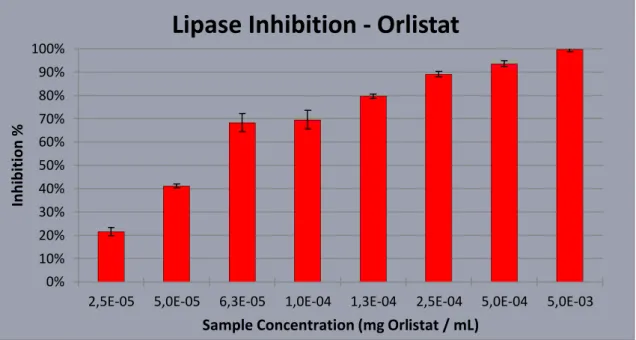
Orlistat (Xenical) is one of the latter, a Fat Absorption Inhibitor, and it is the only one that has been approved by the USA’s Food and Drug Administration (FDA) for long-term weight loss. Orlistat irreversibly blocks gastrointestinal lipase, thus inhibiting fat hydrolysis and reducing cholecystokinin (CCK) secretion. Orlistat’s lipase inhibition mechanism acts through a covalent bond to the lipase’s active site serine (Hadváry et al., 1988, 1991; Tsujita et al., 2006). By
covalently blocking the lipase, orlistat inhibits the hydrolysis of dietary triglycerides (TGs) to generate free fatty acids; the inhibition of fat hydrolysis reduces the subsequent intestinal absorption of the lipolysis products monoglycerides (MGs) and free fatty acids. Unabsorbed fat is eliminated in the stool. Average weight loss with orlistat is only about 2.5 to 3.2 kilograms, more than you can get from diet and exercise after one or two years of taking the medication (Haddock et al. 2002; Greenway et al. 2008).
The FDA has approved orlistat for use in adults, children and adolescents. The FDA also has approved a reduced-strength version of Orlistat (Alli) to be sold over-the-counter, without a prescription.
Apart from lipase inhibition, there are also drugs that alter hormone levels, hence increasing satiety/suppressing appetite. Sibutramine is the first new drug for treating obesity via appetite suppression to be approved by the FDA within the past 30 years (Tziomalos et al., 2009). Its
main mechanism causes an increase in the feeling of satiety by controlling noradrenalin, serotonin, 5-hydroxytryptamine, and dopamine (Lean, 2001; Poston and Foreyt, 2004).
9
All of these problematic methods make novel therapeutics to reduce food intake and body weight with minimal adverse reactions highly desirable.Thus, natural products appear as a safe and effective solution for obesity prevention and therapy.
11
2) FUNCTIONAL FOODS AND NUTRACEUTICALS
Functional foods are foods that have a potentially positive effect on health beyond basic nutrition (European Commission 2010).
An everyday example is wholegrain cereals, considered as functional food because they naturally contain soluble fibre that helps lower cholesterol levels (Bell et al. 1990).
Apart from natural functional foods, some foods are modified to have extra health benefits. For example, Activia Yogurt, from Groupe Danone, is enriched with a strain of bifidobacteria that reduces intestinal transit time, thus improving bowel regularity (Kendall Powell, 2007).
Naturally, all foods can be considered functional because they do provide nutrients and energy to sustain growth, support vital processes and assure a person’s health and well-being (Linda Orh, 2004). Despite no legal definition existing for functional foods, they are generally considered to offer additional benefits that may reduce the risk of disease or promote optimal health (JA Milner 2002).
Difference between functional foods and nutraceuticals
There is actually no regulatory definition for a nutraceutical. Dr Stephen DeFelice coined the term "Nutraceutical" from "Nutrition" and "Pharmaceutical" in 1989.
A proposed definition to help form distinction between the two terms is that, when a functional food aids in the prevention and/or treatment of disease(s) and/or disorder(s) (except anaemia), it is called a nutraceutical. This definition may still bears further confusion, as a functional food for one person, can therefore act as a nutraceutical to another one (Ekta K. Kalra, 2003)
Another suggested definition for functional foods and nutraceuticals is, according to Health Canada, the “Federal department responsible for helping Canadians maintain and improve their health, while respecting individual choices and circumstances”:
“A functional food is similar in appearance to, or may be, a conventional food that is consumed as part of a usual diet, and is demonstrated to have physiological benefits and/or reduce the risk of chronic disease beyond basic nutritional functions, i.e. they contain bioactive compound.
12
The use of nutraceuticals, as an attempt to accomplish desirable therapeutic outcomes with reduced side effects, as compared with other therapeutic agents has met with great monetary success, hence making the discovery and production of nutraceuticals over pharmaceuticals well seen in pharmaceutical and biotechnology companies (Jadhav et al. 2005).FUNCTIONAL FOOD COMPONE NTS
Natural products may represent a precious help in fighting obesity, as they provide a vast pool of components that act as pancreatic lipase inhibitors which, as will be explained later on in this work, are the key element in a very effective strategy for weight reduction and satiety promotion (Chapter 3).
Several food components can be considered functional. They can be macro- or micronutrients or a component not even considered as a nutrient. These are divided into several classes, such as dietary fibre, fatty acids, probiotics, phytochemicals, etc. On this work, we will focus on the latter.
Phytochemicals
Phytochemicals are complex chemicals found in plants, notably in fruits and vegetables (BJ Xu
et al. 2007; Sun et al. 2002)
The term "phyto" originated from a Greek word meaning plant. Phytonutrients are certain organic components of plants, and these components are thought to promote human health. Fruits, vegetables, grains, legumes, nuts and teas are rich sources of phytonutrients (Pascal & Segal 2006).
The classification of phytochemicals can be rather complex but phytochemicals can be classified into three major classes:
T a b l e 2 . 1 . T h r e e m a j o r c l a s s e s o f p h y t o c h em i c a l s a n d t h e p h y t o c h em i c a l s i n e a c h c l a s s ( D i l l a r d & G e r m a n , 2 0 0 0 )
Phytochemical
class Phytochemicals
Terpenoids
Monoterpenoids, iridoids, sesquiterpenoids, sesquiterpene lactones, diterpenoids, tritepernoid saponins, steroid saponins, cardenolides, bufadienolides, phytosterols, cucurbitacins, nortriterpertenoids, triperpenoids, carotenoids, limonoids
Phenolic metabolites
Anthocyanins, anthochlors, benzofurans, chromones, coumarins,
flavonoids, flavonones, flavonols, isoflavonoids, lignans, phenols, phenolic acid, phenolic ketones, phenyl-propanoids, quinonoids, stilbenoids, tannins, xanthones Alkaloids and other nitrogen-containing constituents
13
Heneman et al. (2008) presented a few of the benefits associated with some phytochemicals:T a b l e 2 . 2 . P o t e n t i a l h e a l t h b e n e f i t s f r o m s o m e p h y t o c h em i c a l c o m p o u n d s ( H e n em a n e t a l ., 2 0 0 8 )
Food Phytochemical Possible benefit
Soy beans, soy milk and tofu
Isoflavones (Genistein and Daidzein)
A reduction in blood pressure and increased vessel dilation
Strawberries, red wine,
blueberries Anthocyanins
Improvement of vision, inhibition of nitric oxide production, induction of apoptosis
Red Wine, grape juice, grape extracts, cocoa
Proanthocyanidins and flavan-3-ols
Inhibition of low-density lipoprotein (LDL) oxidation, inhibition of cellular
oxygenases and inhibition of proinflammatory responses in the arterial
wall
Garlic, onions, leeks, olives,
scallions Sulphides, thiols Decrease in LDL cholesterol
Carrots, tomatoes and tomato products, various
types of fruits and vegetables
Carotenoids such as lycopene,
beta-carotenes
Neutralization of free radicals that cause cell damage
Broccoli and other cruciferous vegetables such
as kale, horseradish
Isothicyanates
Neutralization of free radicals that cause cell damage and protection against some
cancers
14
F i g u r e 2 . 1 . C l a s s i f i c a t i o n o f d i e t a r y p h y t o c h e m i c a l s ( R H L i u , 2 0 0 4 )Phytochemicals are divided into several sub-classes, as shown in Figure 2.1..
Here are a few facts on the main ones:
Polyphenolic Compounds
Polyphenolic compounds are a group of chemical substances found in plants, characterized by the presence of more than one phenol group per molecule. They are natural components of a wide variety of plants also being secondary plant metabolites (Manach et al. 2004).
Polyphenols are responsible for the colouring of some plants—for example, the colour of leaves in the autumn.
Food sources rich in polyphenols include apple, tea, red wine, red grapes, grape juice, strawberries, raspberries, blueberries, cranberries, black currants, yerba mate, peanuts, green tea, white tea, red wine, olive oil and olive derivatives, dark chocolate, and pomegranates, and other fruits and vegetables and certain nuts. High levels of polyphenols can generally be found in the fruit skins with some of the highest percentages in grape skin, apple skin and orange skin.
15
Research indicates that polyphenols have antioxidant characteristics with potential health benefits. These polyphenol antioxidants may reduce the risk of cardiovascular disease, present anti-inflammatory properties, anti-carcinogenicity properties and most have anti-microbial activity.More recently reported is that these substances reduce the onset of Alzheimer's.
Polyphenols can be classified as non-flavonoids and flavonoids:
Flavonoids are a subclass of polyphenols (Hollman & Katan, 1999), diverse in chemical structure and characteristics than can be found ubiquitously in plants (Cook & Samman 1995). Their many functions include producing yellow or red/blue pigmentation in flowers and providing protection from attack by microbes and insects.
Flavonoids are most commonly known for their powerful antioxidant activity protecting against oxidative and free radical damage (PG Pietta 2000).
The widespread distribution of flavonoids, their variety and their relatively low toxicity compared to other active plant compounds (for instance alkaloids) mean that many animals, including humans, ingest significant quantities in their diet.
Flavonoids have been referred to as "nature's biological response modifiers" because of strong experimental evidence of their inherent ability to modify the body's reaction to allergens, viruses, and carcinogens. They show anti-allergic, anti-inflammatory, anti-microbial and anti-cancer activity.
There are over 4.000 different flavonoids, divided into classes (Cook & Samman 1995) which include flavonols, flavones, flavanones, catechins, anthocyanidins, isoflavones, dihydroflavonols, and chalcones.
Flavonoids are potent antioxidants, free radical scavengers, and metal chelators and inhibit lipid peroxidation.
Consumers and food manufacturers have become interested in flavonoids for their medicinal properties, especially their potential role in the prevention of cancers and cardiovascular disease. The beneficial effects of fruit, vegetables, and tea or even red wine have been attributed to flavonoid compounds rather than to known nutrients and vitamins.
Nonflavonoids (also called Phenolic acids) account for about one third of the total intake of polyphenols in our diet, and flavonoids account for the remaining two thirds.
16
They form a diverse group that includes the widely distributed hydroxybenzoic and hydroxycinnamic acids.Phenolic acid compounds seem to be universally distributed in plants. They have been the subject of a great number of chemical, biological, agricultural, and medical studies.
Terpenes
The term “terpenes” originates from turpentine (lat. balsamum terebinthinae), the so-called
"resin of pine trees", is the viscous pleasantly smelling balsam which flows upon cutting or carving the bark and the new wood of several pine tree species (Pinaceae) (Breitmaier, 2006).
Terpenes have been long associated with the term Essential Oils comprising resins, steroids and rubber. In fact, they are hydrocarbons that usually contain one or more C=C double bonds, while the terpenoids are oxygen-containing analogues of the terpenes. They are thoroughly distributed in the plant kingdom, especially in those plants that have abundant chlorophyll (Dewick, 2002).
There are several sub-classes of terpenes (Dewick, 2002):
• Hemiterpenes C5H8
• Monoterpenes C10H16
• Sesquiterpenes C15H24
• Diterpenes C20H32
• Sesterterpenes C25H40
• Triterpenes C30H48
• Tetraterpenes C40H64
• Polyterpenes (C5H8)n
Hemiterpenes do not appear to accumulate in plant tissues, but are instead found to be associated with other compounds like alkaloids, coumarins and flavonoids.
Monoterpenes are naturally occurring compounds, the majority being unsaturated hydrocarbons (C10). But, some of their oxygenated derivatives such as alcohols, ketones, and carboxylic acids are known as monoterpenoids.
Monoterpenes together with sesquiterpenes and diterpenes form the majority of essential oils.
17
Diterpenes occur in all plant families and consist of compounds having a C20 skeleton. Thereare about 2500 known diterpenes that belong to 20 major structural types (Dewick, 2002).
In a similar manner to monoterpenes, diterpenes arise from metabolism of geranyl geranyl pyrophosphate (GGPP). These C30 constituents are abundant in nature, particularly in resins
and may occur as either esters or glycosides (often called saponins - molecules made up of sugars linked to steroids or tripterpenes - due to their ability to make aqueous solutions appear foamy) (Dewick, 2002).
Steroids are modified triterpenes. They are most familiar from their role as hormones, i.e., androgens such as testosterone and estrogens such as progesterone. Steroids, such as cortisone, are most often used as anti-inflammatory agents, but many have other uses such as in birth control pills. Triterpenes belong to a large group of compounds arranged in a four or five ring configuration of 30 carbons with several oxygens attached. Cholesterol is one example of a triterpene(Dewick, 2002).
Probably the best known Tetraterpenes are the C40 yellow or orange-red carotenoid pigments,
of which about 180 have been reported (Dewick, 2002).
Polyterpenes are composed of many isoprene units. Common examples, both having macromolecules of molecular weight over 100 000, are found in India rubber and gutta-percha. Doubtless, the rubber-like substances of many other plants have similar composition (Dewick, 2002).
Polyisoprenes have yet to show any biological function (Dewick, 2002), none has yet been referred in the literature.
Saponins
Saponins are a group of phytochemicals that occur in a wide range of plant species (Hostettmann and Marston, 1995) which play important roles in plant defense against pathogens and animals (Price et al. 1987; Morrissey and Osbourn, 1999).
These compounds also are nowadays processed as drug, foaming agents, sweeteners, taste modifiers and cosmetics (Hostettmann and Marston, 1995), attributing them a considerable commercial value.
Saponins can be divided into three major groups:
Triterpenoid, steroid, or steroidal glycoalkoloid saponins (steroidal amines) (Bruneton J, 1995).
18
(Hostettmann and Marston, 1995). Oats (Avena spp.) are unusual because they contain bothtriterpenoid and steroid saponins (Price et al 1987).
Steroidal glycoalkaloids are found primarily in members of the family Solanaceae, which
includes potato and tomato. The steroidal glycoalkaloid α -Tomatine is the major saponin present in tomato. However, the highest concentration of this saponin occurs in the leaves, flowers and green fruits of tomato (Roddick, 1974).
Many studies have reported pharmacological activities of saponins, such as anti-inflammatory (Takagi et al. 1980), molluscicidal (Huang et al. 2003), antimicrobial (Tamura et al. 2001),
antispasmodic (Corea et al. 2005), antidiabetic and anticancer (Yuan et al. 2010),
hypocholesterolemic (Seth & Sarin, 2010), antioxidant (Lu et al., 2005), anticonvulsant and
analgesic (Pal et al., 2009), antitussive and cytotoxic activities (Sparg et al., 2004).
Some saponins are known to reduce the feed intake and growth rate of non-ruminant animals while others are not very harmful. For example, the saponins found in oats and spinach increase and accelerate the body's ability to absorb calcium and silicon, thus assisting in digestion. Saponins are also diverse in ginseng. Many of the known effects of this plant are due to these compounds. The anti-inflammatory activity of English ivy, Hedera helix, also is due to
compounds of this group. The sweet tasting compounds of licorice, Glycyrrhiza spp., are
saponins (Biochemical applications of mass spectrometry, 1972).
19
3) CHOSEN METHOD: INCREASING SATIETY AND
REDUCING FOOD INTAKE
It is a known fact that fat is a food product with high caloric density, playing a crucial role in weight gain/loss (Bray & Popkin, 1998; Lissner et al. 1987). This fact renders a major interest to
the study of the mechanism for regulation of fat intake.
In our diet, fat (lipids) covers about 40% of our energy intake (Blundell et al. 1993). These
dietary lipids are composed mainly of organic compounds including fatty acids, monoacylglycerols, diacylglycerols, triacylglycerols (TG), phospholipids, sterols, vitamin A and E, carotenoids, and hydrocarbons (Galli et al. 2009).
Studies show that as long as fat stays in the intestine, satiety is promoted (Welch I et al. 1985).
This occurs through the fat released peptide hormones, the best known being CCK, which is released by fatty acids (Beglinger & Degen, 2004). Hence, retarded fat digestion with prolonged time for delivery of fatty acids promotes satiety.
A. Satiety as a result of prolonged fat digestion
TGs are the major lipid component in the human diet (Umberto Bracco, 1994). They carry energy as well as essential fatty acids (TG consist of three fatty acids esterified to a glycerol backbone) (Umberto Bracco, 1994).
Pancreatic lipase (PL), together with its protein cofactor, colipase, is the main enzymatic system responsible for intestinal fat digestion (Lowe ME, 1994). Studies with the objective of discovering some way of inhibiting the lipase/colipase catalysed hydrolysis of TG have been largely undertaken (Tsujita et al. 2006; Bläckberg et al. 1979, Pafumi et al. 2002; Köhnke et al.
2009).
20
F i g u r e 3 . 1 . S c h e m a t i c v i e w o f s o m e o f t h e m a i n d i g e s t i v eo r g a n s ( H e a l t h R e l a y . c o m )
After a brief pre-digestion in the stomach, where some of the dietary fat is hydrolysed (Hamosh
et al. 1979), the chyme is released into the duodenum.
Here is a simplified overview of the fat digestion mechanism (Fat Digestion and Absorption, 2000; Essentials of Medical Physiology, 2008):
o The chyme enters the first part of the small intestine which causes the secretion of a
hormone called secretin that stimulates both the pancreas and the liver, the large fat droplets contained in the chyme stimulate the production of CCK,
o CCK causes the gallbladder to contract and secrete stored bile (produced in the liver) into
the common bile duct,
o Bile salts emulsify fats into smaller particles, increasing the surface area and also lowering
the particles’ surface tension, hence enhancing lipase activity (Borel et al. 1994),
o Lipase breaks down fat into monoglycerides and fatty acids,
21
This work is based on pancreatic enzymes and their activity, so, a more complete description is required.The pancreatic enzymes are of immense importance because they can almost completely digest food in the absence of all other digestive secretions (Essentials of Medical Physiology, 2008).
These enzymes can digest all three categories of foodstuffs (The Digestive System, 2001):
o Proteolytic enzymes for protein digestion, pancreatic amylase for carbohydrate digestion
and PL for fat digestion.
The Pancreas secretes a pancreatic juice consisting of two components (Essentials of Medical Physiology, 2008):
o An aqueous alkaline secretion, o Pancreatic enzyme-rich secretion.
The aqueous alkaline secretion is by far the largest component of pancreatic secretion and it serves a very important purpose. Pancreatic enzymes work best in a neutral or slightly alkaline environment but, upon reaching the duodenum, the chyme is highly acidic, which serves a required media for fat emulsion but, would not only inhibit enzyme activity but would also damage the duodenal mucosa. So, this secretion not only prevents acid damage to the intestinal walls but also ensures optimal functioning of the pancreatic enzymes by neutralizing the chyme’s acid content (The Digestive System, 2001).
On this work, focus will be given to PL and proteolytic enzymes.
Pancreatic enzymes
PL is the only enzyme present in the whole digestive system that is able to digest fat (in humans lingual and gastric lipase also exist but in negligible amounts) (Fat Digestion and Absorption, 2000; The Digestive System, 2001). It hydrolyses TG into monoglycerides (first quickly into diglycerides and then slowly into monoglycerides) and free fatty acids, absorbable units of fat (Human Physiology: From Cells to Systems (7th Edition, 2008); Lauralee Sherwood; Cengage
Learning).
PL is water-soluble but acts on insoluble substrates at oil-water interfaces. Even though it can bind alone to the surface of lipid emulsions, certain substances present in the duodenum, such as bile salts, phospholipids, dietary lipids, cholesterol esters and dietary carbohydrates inhibit PL (Erlanson-Albertsson 1992; Borgström and Erlanson-Albertsson 1982). Hence, it requires the presence of its protein cofactor, colipase, to restore its activity (Brockman 2000; Borgström
22
covered water-oil surface (van Tilbeurgh et al. 1993). Colipase is synthesized and secreted, asa procolipase, in the pancreas.
Lipase is released as an inactive enzyme, a zymogen. In fact, most of the enzymes are secreted as inactive precursors or pro-enzymes (zymogens) (Biochemistry, 5th edition, 2002). The most important of all being trypsinogen (Chen et al. 2009).
Trypsinogen plays a central role in regulating all the other enzymes (Whitcomb et al. 2007). It
converts to protein digesting trypsin by the release of a small peptide, in a reaction catalysed by enteropeptidase, an enzyme present in the epithelial cells of the small intestine (Bates et al.
1935; M. Kunitz, 1937). Once a small amount of trypsin has been produced it can catalyse the conversion of more trypsinogen to active trypsin.
Trypsin converts several other precursors or zymogens, such as prolipase, to their activated forms (Biochemistry, 5th edition, 2002), in this case, lipase.
F i g u r e 3 . 2 . Z y m o g e n A c t i v a t i o n b y P r o t e o l y t i c C l e a v a g e . E n t e r o p e p t i d a s e i n i t i a t e s t h e a c t i v a t i o n o f t h e p a n c r e a t i c z y m o g e n s b y a c t i v a t i n g t r y p s i n , w h i c h t h e n a c t i v a t e s o t h e r z y m o g e n s . A c t i v e e n z y m e s a r e s h o w n i n y e l l o w ; z y m o g e n s
23
I)
Thylakoid membranes as natural satiety-inducing ingredients
Concept 1 - Spinach thylakoid membranes retard fat digestion hence inducing satiety (Albertsson et al. 2007).
Energy intake is a sine qua non condition for life to exist. We humans obtain our energy from nourishment but, green plants, algae and certain types of bacteria access this energy through sunlight, converting it into chemical energy. This process is named photosynthesis, and this term originates from two Greek words: photos = “light” and synthesis = “put together”. The major chemical pathway in photosynthesis is the conversion of CO2 and H2O to carbohydrates and oxygen (Photosynthesis, 2008).
F i g u r e 3 . 3 . P l a n t c e l l s c h e m e ( E x p l o r i n g N a t u r e E d u c a t i o n a l R e s o u r c e . © 2 0 0 5 – 2 0 1 2 )
In higher plants and algae photosynthesis takes place in specialized organelles, called chloroplasts.
F i g u r e 3 . 4 . G r e e n p l a n t c h l o r o p l a s t s ( I m a g e : K r i s t i a n P e t e r s – F a b e l f r o h , E v o l u t i o n a r y R o u t e s – W o r d p r e s s . c o m )
These organelles present a highly complex structure and are made up of three distinct types of membrane systems:
24
Thylakoids are flat, saclike structures located in the stroma and usually arranged in stacks called grana or granum.F i g u r e 3 . 5 . P l a n t C e l l C h l o r o p l a s t i n t e r n a l s t r u c t u r e ( F l o r i d a S t a t e U n i v e r s i t y W e b s i t e – M o l e c u l a r c e l l b i o l o g y a n d M i c r o s c o p y )
Thylakoids consist of more than hundred different proteins (integral, peripheral and luminal proteins), pigments (i.e. chlorophylls), carotenes (i.e. β-Carotene), xanthophylls (i.e. zeaxanthin), membrane lipids (i.e. galactolipids), plastoquinones, tocopherols and phylloquinones (Juhler et al 1993; DörmZbierzak et al. 2009).
F i g u r e 3 . 6 . E l e c t r o n i c m i c r o s c o p e p i c t u r e o f t h y l a k o i d m em b r a n e s f o r m i n g g r a n u m ( L . A . S t a e h e l i n , i n L . A . S t a e h e l i n , e d , E n c y c l o p a e d i a o f P l a n t
P h y s i o l o g y , v o l 1 9 , p 2 3 , S p r i n g e r - V e r l a g , 1 9 8 6 )
The thylakoid membranes, the most abundant biological membranes in nature, are the site of light-harvesting and adenosine triphosphate (ATP) synthesis (Photosynthesis, 2008).
25
a crucial role in light-harvesting and light-depended photosynthetic reactions (Emek et al.,2010).
Chlorophyll a and b
The basic constituents of all vegetation are the same: chlorophyll (the green pigment common to all photosynthetic cells) and other light-absorbing pigments, water, proteins, starches, waxes, and structural biochemical molecules such as lignin and cellulose (Elvidge, 1990). They all contribute to the reflectance, transmissivity and absorption spectra of each plant.
Green plants contain more than one type of chlorophyll: Blue chlorophyll (chlorophyll a), green chlorophyll (chlorophyll b), chlorofucin (chlorophyll c1, chlorophyll c2) and orange-yellow (xanthophyll) according to the pigment colours. These pigments have very specific absorbance properties, which facilitates their qualitative and quantitative analysis (Dere et al.1997).
Studies have determined that the pigment level is influenced by factors such as amount and intensity of light, lack of nitrogen and limited nutrients (Greene et al. 1991; Collier et al. 1992)
and have shown that chlorophylls have a maximum absorbance at different wavelengths depending on the chosen solvent.
For example, in pure acetone, chlorophyll a has a maximum absorbance at 661,6 nm and chlorophyll b at 644,8. (Lichtenthaler H.K., 1987)
Hence, chlorophyll a/b ratios change with the previously described factors, it is the organism’s way of adapting maintaining optimal rates of photosynthesis (Anderson et al., 1995).
26
II)
Thylakoid membranes
’
effect on the lipase/colipase activity
Studies show that thylakoid membranes, extracted from spinach leaves, partly inhibit the lipolytic activity of pancreatic lipase/colipase in vitro (Köhnke et al., 2009) and promote satiety
in humans, as well as in mice (Köhnke et al., 2009).
The mechanism by which this takes effect has been studied and two complementary mechanisms have been proposed to explain this inhibition of lipolysis by biological membranes/membrane proteins (Emek et al., 2010):
1) Adsorption of the lipase/colipase complex onto the thylakoid membrane surface such that the substrate binding site of the enzyme complex is hindered at the thylakoid surface, preventing it from coming into contact with the lipid substrate.
2) Adsorption of the thylakoid membranes at the surface of the fat droplets (lipid/water interface) thereby covering the substrate surface and hindering the lipase/colipase to come in contact with lipid surface.
III)
Phytochemicals as natural food intake inhibitors
Phytochemicals present several effects on human physiology, more specifically at digestive level, which may be harnessed to fight obesity. Studies have proven that phytochemicals present lipase inhibitory effect, suppressive effect on food intake, stimulatory effects on energy expenditure, regulatory effect on lipid metabolism, etc (Yun J.W., 2010).
Birari & Bhutani (2007) and de la Garza AL et al. (2011) have reviewed several extracts and
several studies on natural extracts that present pancreatic lipase activity, without the side-effects caused by synthetic medication. The phytochemicals contained in these extracts mainly include saponins, polyphenols, flavonoids and some alkaloids such as caffeine (Kim and Kang, 2005; Han et al., 2006; Moreno et al., 2006; Shimoda et al., 2006). Some of the
most widely-studied materials among the many natural sources of pancreatic lipase inhibitors are the different types of tea (green, black, oolong) (Han et al., 1999b; Lin and Lin-Shiau,
2006; Nakai et al., 2005; Thielecke and Boschmann, 2009), more specifically, compounds
such as L-epicatechin, epicatechin gallate, epigallocatechin and epigallocatechin gallate (Nakai et al., 2005).
Some of these extracts even present an effect similar to Orlistat (Chapter 1.C.III) (Tsujita et
al., 2006; Birari and Bhutani, 2007), as they inhibit lipase activity. However, their inhibitory
27
due to the composition of crude extracts, not only active substances but also non-active components, the inhibitory potencies of crude extracts from plants and other natural sources are significantly weaker than that of orlistat (Kim and Kang, 2005).Nevertheless, as previously referred, several extracts have been studied for their pancreatic lipase inhibitory activity and for possible drug development (Birari & Butani, 2007), such as Japanese Ginseng (Han et al., 2005b), Chinese bellflower (Han et al., 2000), Salacia reticulata
(Kishino et al., 2006), Indian lotus (Ono et al., 2006), Korean red ginseng (Kim et al., 2005),
Camellia sinensis (Kao et al., 2000; Moon et al., 2007; Dulloo et al., 1999; Nagao et al., 2005;
Wolfram et al., 2006), Caralluma fimbriata (Kuriyan et al., 2007), ephedra (Fleming, 2007),
Citrus aurantium (Klontz et al., 2006), Phaseolus vulgaris (Baintner et al., 2003; Celleno et al.,
2007), Robinia pseudoaccacia (Baintner et al., 2003), and sunflower oil (Ferrer-Lorente et al.,
2007; Remesar et al., 2000; Romero et al., 2007; Salas et al., 2007).
Some of these phytochemical compounds have already been extracted and made available commercially. For example, natural (-)-hydroxycitric acid (HCA), prepared from Garcinia
cambosia, a potential natural appetite suppressant, is currently commercially available under
the names HCA-SX and Super CitriMax™ (Ohia et al., 2002; Life Extension Vitamin Supplies
and Life Extension Institute, Inc., Place Scottsdale, AZ, USA).
These compounds may also have a suppressive effect on food intake as they may affect satiety systems by altering hypothalamic levels of some hormones and neurotransmitters, hence suppressing appetite (Chantre and Lairon, 2002; Halford and Blundell, 2000; Wynne et
al., 2005).
Naturally, the anti-nutritional effect varies with the compound involved, providing several mechanisms to fight obesity.
As practical example of a natural appetite suppressant is (-)-hydroxycitric acid (HCA), prepared from Garcinia cambosia. It acts by increasing the release/availability of serotonin, a neurotransmitter implicated in the regulation of eating behaviour and appetite control (Ohia et
al., 2002). This extract has been made available commercially under the names HCA-SX and
Super CitriMax™ (Ohia et al., 2002; Life Extension Vitamin Supplies and Life Extension
Institute, Inc., Place Scottsdale, AZ, USA).
Another similar natural appetite suppressant available on the market is CQR-300, an extract of
Cissus quadrangularis (Oben et al., 2007; WellCrops International, LLC, San Francisco, CA,
USA).
28
to efficiently describe the mechanisms through which these phytochemicals work, however, several theories have been developed for some active constituents; the main theory is that they amplify signalling in the basal hypothalamus’s energy-sensing function (Yun J.W., 2010) which consequently alters the Hypothalamic neurons’ response to fluctuations in nutrient concentrations (Moran TH, 2010). For example, H. gordonii extract causes increased ATPcontent in the hypothalamic neurons regulating food intake in the rat brain (MacLean and Luo, 2004), many other natural appetite suppressants mediate the reduced expression of hypothalamic neuropeptide Y (NPY) or serum leptin levels (Kim et al., 2005; Weigle, 2003),
conjugated linoleic acid, lauric acid, and salatrim have suppressive effects on energy intake (Feltrin et al., 2008; Kamphuis et al., 2003; Sørensen et al., 2008), fatty acids with over 12
carbon atoms slow gastric emptying, modulate gastrointestinal hormone secretion, and suppress energy intake (Feltrin et al., 2008) etc.
IV)
Appetite suppression through Cholecystokinin release
There is still another mechanism through which satiety is promoted, direct stimulation of peptide hormone production, CCK for example.
Despite of multiple control systems existing for the regulation of satiety, the peptide CCK is the most important and most studied one (Näslund & Hellström, 2007).
Studies support that intestinal fat acts via the peptide CCK (long-chain free fatty acids by lipase-mediated hydrolysis, undigested triglycerides are not able to stimulate CCK release), released to blood from the intestine during digestion, as a physiological satiety pathway (Beglinger & Degen, 2004). CCK exerts various functions: stimulation of gallbladder contraction and exocrine pancreatic secretion, inhibition/delay of gastric emptying, and inhibition of appetite (Schwartz JG et al. 1994). Thus, CCK works as a positive feedback
signal to stimulate digestive processes and as negative feedback signal to limit the amount of food consumed (Beglinger & Degen, 2004).
Evidence points to an increase in levels of circulating CCK through a trypsin-dependent mechanism (Hu et al. 2004; Komarnytsky et al. 2011).
Several studies have been developed on plant protease inhibitors (PPI) and their role as anti-nutritional agents. This class of protein compounds, commonly present in plants, present a natural defence mechanism against pests and infecting pathogens, help protect plant tissues from degradation by proteases and control sprouting (Plunkett G. et al., Arch Biochem Biophys
29
These phytochemicals are present in several foods, soybean for example, the predominant trypsin inhibitors in soybeans and derived materials (tofu, flour, etc) are proteins (Anderson & Wolf, 1995)But not only proteins showed trypsin inhibitory activity (TIA). Saponins and polyphenols have also presented this property. For example, green tea polyphenols (Huang et al., 2004; Łoś &
Podsędek, 2004) wine polyphenols and tannins (Gonçalves et al. 2007), faba beans (Helsper
et al. 1993), chickpea and pigeonpea (Singh U., 1988), white beans, coloured beans, black tea
and quince (Łoś & Podsędek, 2004) have all presented a considerable TIA due to the presence of some of the previously referred phytochemicals.
Studies have shown that protease inhibitors promote CCK release through a trypsin-dependent mechanism. CCK secretion is inhibited by trypsin activity in the proximal small intestine (Chung Owyang et al., Gastroenterology 84, 1983; Schafmayer A. et al., Digestion,
1985; Spannagel AW et al., Physiology 93, 1995). The mechanism by which this occurs is still
not clear but, by inhibiting trypsin activity, and therefore interfering with the protease-induced negative feedback that controls CCK secretion, the latter can be increased consequently increasing satiety and slowing/reducing gastric emptying (Schwartz JG. et al., Diabetes Care
17, 1994).
These protease inhibitors do not exert adverse effects in ruminants for example, because they are degraded in the rumen (Cheeke and Shull, 1985).
31
4. EXPERIMENTAL SECTION
A.
Material
Acetic acid (FLuka, >99%), acetone (Fluka), ammonia (Fluka), aluminum chloride (AlCl3) (Fluka), anisaldehyde (Fluka), antimony-III-chloride (Fluka), atropine (Sigma), bismuth nitrate (Merck), bovine serum albumin (BSA) (Fluka), Bradford reagent (Sigma), benzene (Fluka), caffeic acid (Fluka), chloroform (Fluka), catechin, dichloromethane (Sigma), diethyl ether (Sigma), diethylamine (Sigma), diphenylboric acid-β-ethylamino ester (=diphenylboryloxyethylamine) (Sigma), DMSO (Fluka), diosgenin, ethanol, ethyl acetate(Fluka), fast blue salt B (Sigma), ferrous sulphate (FeSO4) (Fluka), Folin reagent (Panreac), formic acid, gallic acid (Fluka), glacial acetic acid (Fluka), hydrochloric acid (Fluka), iron-III-chloride (Sigma), lead (II) acetate (10%) (Sigma), lipase from porcine pancreas (Sigma), magnesium chloride (Sigma), methanol, n-Butanol, N-benzoil-DL-arginine-p-nitroanilide (BApNA) (Sigma), nylon mesh filters 20 µm, pentane (Fluka), phosphate buffer saline (Dulbecco’s PBS), potassium hexacyanoferrate (Fluka), potassium hydroxide (Sigma), protease inhibitor cocktail, polyethylene glycol-4000 (PEG) (Sigma), potassium iodide (Sigma), sodium chloride (NaCl) (Sigma), sodium citrate (Riedel-de-Haen), sodium hydroxide (NaOH) (Sigma), sodium sulphate (Merck), sulphuric acid (Merck), sodium phosphate buffer, sucrose (Sigma), Silica gel 60 F254 – precoated TLC
plates (Merck, Darmstadt), sodium dodecyl sulphate (SDS) (Sigma), tannic acid, lupeol, toluene (Fluka), tricine, trichloroacetic acid (Fluka), trypsin from bovine pancreas (Sigma), tris-base (Fluka), vanillin, Whatman filter paper, 3,5-dinitrobenzoic acid (Fluka).
Ultra-pure water (18.2 MΩ.cm) was obtained from a Millipore-Direct Q3 UV system (Millipore, USA).
B.
Raw Materials
Fresh baby spinach, watercress and wild rucola from Vitacress were purchased during the week and the extractions were performed according to Chapter C.
Prunes and tomato residues were obtained from juice industry by-products.
Prune was divided into three samples and was bombarded with 1.000 Watt microwave radiation for 0.5, 1 and 1.5 minutes, in order to determine if this pre-treatment would influence the extract’s efficiency in the several assays (e.g.: phenolic quantification). All three samples were extracted twice and sequentially.
32
Opuntia ficus-indica cladodes were collected in Beja, Alentejo, Portugal, in October of 2010. Cladodes were sliced and were freeze-dryed.C.
Extraction procedures
Different kinds of extractions were performed for the different matrixes, according to available information and objectives established for each of them.
PHYTOCHEMICAL EXTRACTION
The prune extraction, as previously described, was performed twice on the same solid samples. The initial prune matrix was homogenised using a grinder (UFESA, LC5005, China) and divided into 3 samples.
Several studies have been developed on how Microwave exposure can increase phenolic yield in an extraction (Singh et al. 2011; Zheng et al. 2011; Rafiee et al. 2011). Thus, a microwave pre-treatment was performed by the host laboratory team. Briefly, prune was divided into three samples and was exposed to 1.000 Watt microwave radiation for 0.5, 1 and 1.5 minutes, in order to determine if different pre-treatment times would influence the extract’s efficiency in the several assays (e.g.: lipase inhibition).
The 3 samples were extracted sequentially twice, thus providing 6 different samples. The extractions were performed with a 50:50 ethanol:water (V:V) at a 1:4 ratio (mass:volume). Solvent, during 4 hours. Several solvents have been tested for phytochemical extractions in the laboratory and this particular one has yielded the best results up to date.
The ethanol:water 50:50 (V:V) solvent was chosen not only because of its low toxicity, but also because it is known to be an excellent phenolic extraction solvent (Nawaaz et al. 2006; Shi et al. 2003; Serpen et al. 2008). The ethanol is a good organic solvent and the water produces a swelling effect of plant tissue matrix, apart from solving some possible problems with some compounds’ solubility in ethanol, hence rendering this mixture an efficient extraction solvent(Hemwimol et al. 2006).
The first extraction was performed on the 3 pre-treated samples, 0.5, 1 and 1.5 minute radiation exposure, with a 50:50 water-ethanol solvent (V:V) The mixture was stirred for 4 hours at room temperature with a magnetic stirrer. After this, the mixture was filtered, the liquid extract was freeze-dryed and the solid remains were collected for further extraction.
The second extraction was performed in exactly the same conditions as the first one on the solid remains collected after the first extraction.
33
1st Extraction:30 second radiation exposure –I30
60 second radiation exposure –I60
90 second radiation exposure –I90
2nd Extraction:
30 second radiation exposure –II30
60 second radiation exposure –II60
90 second radiation exposure –II90
THYLAKOID EXTRACTION
Method was performed for the 3 green plant matrixes: Spinach, Watercress and Rucola. Protocol was adapted from Emek et al. (2009). Matrixes were homogenized using a grinder
(UFESA, LC5005, China) with a matrix to water ratio of 1:1,25 for 5 minutes. The slurry was filtrated with 20 µm pore size nylon mesh filters under vacuum. Filtrate was 10 fold diluted in water and acidified to pH 4.7 with HCl. The solution was cooled to 4ºC for 4 hours. A green deposit was obtained. The yellowish supernatant was discarded carefully not to break the sediment which was 10x diluted in water afterwards. After pH adjustment to 4.7, solution was left to settle at 4ºC for 4h. Again, yellowish supernatant was discarded and the green pellet was collected. Pellet was immediately lyophilized.
The whole procedure was conducted with minimal light exposure to minimize damage to photosensitive cells
PROTEASE INHIBITOR EXTRACTION
This method was applied to the Opuntia ficus-indica cladodes and the 2 tomato samples.
Protease inhibitors were extracted according to Komarnytsky et al. (2011). Matrixes were
34
Supernatant was collected and thermostable proteins were precipitated through addition of sodium chloride. Solution was centrifuged at 13.000g for 10 min to isolate the precipitate, PIC (Protease Inhibitor Concentrate). PIC was collected and lyophilized.In table 4.1 is summarized the extracts used in this work.
T a b l e 4 . 1 – E x t r a c t s u m m a r y
Extract
Designation Raw Material Procedure Target Compounds
Spinach Spinach Thylakoid extraction Thylakoids
Rucola Rucola Thylakoid extraction Thylakoids
Watercress Watercress Thylakoid extraction Thylakoids
Tomato 0.6 Tomato Protease inhibitors extraction Proteins
Tomato 0.9 Tomato Protease inhibitors extraction Proteins
Plum I30 Plum Microwave Irradiation 30s +
Phytochemical extraction Phytochemicals
Plum I60 Plum Microwave Irradiation 60s +
Phytochemical extraction Phytochemicals
Plum I90 Plum Microwave Irradiation 90s +
Phytochemical extraction Phytochemicals
Plum II30 Plum Microwave Irradiation 30s +
Phytochemical extraction Phytochemicals
Plum II60 Plum Microwave Irradiation 60s +
Phytochemical extraction Phytochemicals
Plum II90 Plum Microwave Irradiation 90s +
Phytochemical extraction Phytochemicals
Opuntia Opuntia ficus-indica
cladodes Protease inhibitors extraction
35
D.
Extracts Analysis
In order to maximize result accuracy, all assays were performed with sample triplicates.
TOTAL PHENOLIC CONTENT
Total Phenolics Quantification was performed using the Folin-Ciocalteau colorimetric Method (Singleton & Rossi, 1965).
In short, 20μL of an extract dilution was added to 1480μL of distilled water and oxidized with 100µL of Folin Ciocalteau reagent.
The reaction was then neutralized with 300μL of sodium carbonate and, after a 30 minute incubation at 40ºC, sample absorption was measured at 765 nm using a Genesys 10 UV spectrophotometer (Thermo Spectronic, New York, USA).
Result analysis is based on a standard curve, built by values from a standard curve obtained from tests performed on solutions with known concentrations of a standard substance, gallic acid.
Results were expressed by means of a standard curve (mg of gallic acid equivalents per g dry extract – mg GAE/g dry extract). Samples were analysed in triplicate.
PROTEIN DETERMINATION
Total protein quantification was performed according to the Bradford protein assay (Bradford, 1976).
In short, 1mL of Bradford reagent and 20μL of sample were added in a cuvette. The solution was homogenized and was allowed to sit at room temperature for 5 minutes.
Sample absorbance was then measured at 595 nm using a Spectrophotometer (Genesys™ 10UV).
Bovine serum albumin was used as standard and results were expressed as mg of BSA per mL (mg BSA/mL).
THIN LAYER CHROMATOGRAPHY (TLC)
36
A specific solvent was chosen for each sample and Standard solution. Specific solvent systems and developing spray reagents were prepared for each class of compounds, using up to 2 different ones of each for a single class if required to ensure proper compound identification.The sample solution was applied to the silica-gel plate near one edge, as 4 colinear small spots (1 Pattern, 3 Solutions). After the solvent evaporated, the sheet was placed inside the chromatography chamber with the edge to which the spot was applied down. When the solvent front nearly reached the top of the adsorbent coating, the plate was removed from the container and left to dry. After the eluent evaporated, the plate was sprayed with the developing solution and left do dry, followed by compound identification in UV or Vis.
CHLOROPHYLL QUANTIFICATION
Chlorophyll quantification was adapted from Lichtenhaler (1987). The chloroplast lyophilized suspension was shaken in 80% aqueous acetone. Solution absorbance was measured at 750, 662, 645 and 470 nm.
E.
Enzymatic assays
PANCREATIC LIPASE ACTIVITY MEASUREMENT
Pancreatic lipase activity was measured according to Sugiyama et al. (2007).
4-methylumbelliferyl-oleate (MUO) was used as the substrate. Lipase degrades 4MUO releasing 4-methylumbelliferone which can be measured using a fluorescence reader at an excitation wavelength of 320 nm and an emission wavelength of 450 nm.
In brief, Twenty-five microliters of the sample solution were dissolved in water, and 25 µL of the pancreatic lipase solution (1 mg.mL-1) were mixed in the well of a microtiter plate. Fifty
microliters of 4MUO solution (0.1 mM) dissolved in Dulbecco’s phosphate buffered saline was then added to initiate the enzyme reaction. After incubation at 23 °C for 20 min, 100 µL of 0.1M sodium citrate (pH 4.2) was added to stop the reaction. The amount of 4-methylumbelliferone released by lipase was measured using a fluorescence microplate reader at an excitation wavelength of 320 nm and an emission wavelength of 450 nm.
37
TRYPSIN ACTIVITY INHIBITION MEASUREMENTTrypsin activity was measured according to Gonçalves et al. (2007).
BApNA was used as substrate; temperature was 37ºC (physiological temp.); pH 7.0 (duodenal pH). Trypsin degrades BApNA (in DMSO, 2.5 g.L-1) releasing p-nitroaniline which is spectrophotometrically detectable at 410 nm.
39
5) Results and Discussion
In this work several matrixes and their capacity to induce satiety by enzyme inhibition mechanisms were studied.
Concerning the several matrixes and why they were chosen for this work:
Spinach was chosen because studies have proved it to be a great source of lipase inhibiting thylakoids (Köhnke et al. 2009a), and furthermore not only they were the subject of the studies that initially inspired this work (Albertsson et al. 2007; Köhnke et al. 2009b) but there is currently a company being established that will commercialize spinach thylakoids as weight-controlers (
http://www.naturalproductsinsider.com/news/2011/06/spinach-satiety-product-to-drop-in-2012.aspx).
Rucola and most of the vegetables belonging to the same family, have presented major phytochemical content, including phenolics and flavonoids in all different tissues, from flowers to roots, compounds such as several quercetin compounds, isorhamnetin and kaempferol (Martínez-Sánchez et al. 2007). Polyphenolic compounds are known for presenting lipase inhibitory activity (Birari and Bhutani, 2007), quercetin specifically has presented very high anti-lipase properties (Zheng et al. 2010).
Watercress has presented hypocholesterolemic and fat reducing potential (Manesh et al. 2012), its plant family phytochemical analysis has revealed the presence of flavonoids, saponins, tannins, cardiac glycosides, etc (Bhasin et al. 2011), watercress itself has been screened for phytochemicals and presented a high quantity of flavonoids, glycosides, terpenoids and saponins and a lower amount of alkaloids (Penecilla and Magno, 2011). The presence of all these compounds, aside from watercress being available as a food industry residue, as a green plant, its study was found to be interesting.
Furthermore, also rucola is a green plant, thus containing thylakoid membranes.
Studies regarding other varieties of Opuntia cactus have produced interesting results on the
presence of protease inhibitors in its seeds and cladodes (Torres-Castillo J.A. et al. Acta
Horticulturae 811; Torres-Castillo J.A. et al 2009), thus, as studies on Opuntia Ficus-indica were
already being developed in the host laboratory, assays on the cladodes’ anti-trypsin capacity gained high interest.
40
Tomato is reported as one of the two vegetables with the highest amount of protease inhibitors (Dana & Lewis, 2007). Several studies have been developed on proteinase inhibitors from tomato, mainly focusing on the production of protease inhibitors as a response to external stress (Plunkett et al. 1982; Graham et al. 1985; Jongsma et al. 1994) so, it is possible that the completely mowed tomato residue obtained from the food industry, may present a reasonable amount of inhibitors due to its processed state. Apart from this, tomato’s Lycopene has anti-inflammatory and anti-oxidant properties that can naturally be beneficial for an obese individual (Markovits et al. 2009).As previously described, the extraction solvent for phytochemical extraction was ethanol:water 50:50 (V:V). Not only because of its low toxicity, but also because it is known to be an excellent phenolic extraction solvent (Nawaz et al. 2006; Shi et al. 2003; Serpen et al. 2008). The ethanol is a good organic solvent and the water produces a swelling effect of plant tissue matrix, apart from solving some possible problems with some compounds’ solubility in ethanol, hence rendering this mixture an efficient extraction solvent (Hemwimol et al. 2006).
Upon the analysis stage of this work, 12 samples (6 matrixes) were ready for compound and activity screening (matrixes and samples), namely spinach, watercress, rucola, opuntia cladodes, the 2 tomato samples and the 6 prune samples (Chapter 4.C.).
In this work, thylakoid extracts were prepared as previously described (Experimental Section. Methods). This method had only been assayed for Spinach matrixes, it was applied to rucola and watercress for the first time.
Apart from the properties that were previously described, matrix choices were also based in a “Green perspective”, industrial waste exploit, because they are available in large quantities and are a very cheap to obtain. If any functional ingredient could be harnessed from them and made available, the commercial potential of this concept would be extremely interesting.
41
A. Extract Characterization
I)
Total Phenolic Content
All 12 samples were screened for total polyphenolic content (TPC) by means of the Folin Ciocalteau colorimetric method. Results were expressed as milligrams of gallic acid equivalents (GAE) per gram of dry extract and are presented in figure 5.1.
Fi gur e 5. 1 - Tot al pol yphenol i c cont ent of spi nach, wat er cr ess, r ucol a, t om at o 0. 6 and 0. 9, opunt i a, I 30, I 60, I 90, II 30, I I 60 and I I 90 sam pl es, det er m i ned by Fol i n Ci ocal t eau col orim et ri c assay. Resul t s ar e expr essed i n m g of G AE/ g of dr y ext r act .
The prune extracts presented high concentrations of phenols, with the II90 extract presenting the highest value at 36,18 mg GAE / g Dry Extract.
These results indicate that not all functional components were extracted in the first extraction. In fact, it points to the 2nd extraction not yet being able to remove all the components from the
matrix, as it presented the highest value of phenolic content. This could probably be due to the
26,06
21,36
9,20
0,00 0,15
8,02 25,45
34,01
28,33 28,20
33,54 36,18
0,00 5,00 10,00 15,00 20,00 25,00 30,00 35,00 40,00