Article
Printed in Brazil - ©2014 Sociedade Brasileira de Química0103 - 5053 $6.00+0.00
A
*e-mail: [email protected]
A DFT Study of the Conversion of CO
2in Dimethylcarbonate Catalyzed by
Sn(IV) Alkoxides
Renata C. de Souto,a Nilton Rosenbach Jr.b and Claudio J. A. Mota*,a,c
aEscola de Química,Universidade Federal do Rio de Janeiro, Av Athos da Silveira Ramos 149, CT Bl E, 21941-909 Rio de Janeiro-RJ, Brazil
bCentro Universitário Estadual da Zona Oeste, Avenida Manuel Caldeira de Alvarenga, 1203, Campo Grande, 23070-200 Rio de Janeiro-RJ, Brazil
cINCT Energia e Ambiente, Universidade Federal do Rio de Janeiro, 21941-909 Rio de Janeiro-RJ, Brazil
Foram realizados cálculos de teoria do funcional da densidade (DFT) de intermediários e estados de transição da reação entre o CO2 e metanol sobre catalisadores do tipo R2Sn(OCH3)2. A interação da molécula de CO2 com o catalisador de estanho é controlada pelo termo entrópico, sendo desfavorecida à temperatura ambiente e pressão atmosférica. Por outro lado, a inserção da molécula de CO2 na ligação Sn–OCH3 é termodinamicamente favorecida para todos os catalisadores estudados. A energia livre de ativação calculada varia com a natureza do substituinte R. Grupos fenila apresentam a menor barreira, enquanto que os átomos de halogênio, as mais elevadas. Os grupos alquila apresentam barreiras intermediárias. Os cálculos estão de acordo com resultados experimentais recentes, que indicaram uma maior frequência de rotação da reação (TON) para a formação de dimetil carbonato (DMC) quando Ph2SnO foi usado como catalisador. O esquema mecanístico completo foi calculado para os substituintes fenila e metila, considerando uma espécie de estanho dimérica.
Density functional theory (DFT) calculations of intermediates and transition states of the reaction between CO2 and methanol over different R2Sn(OCH3)2 catalysts (R = alkyl, phenyl and halogens) were carried out. The interaction of the CO2 molecule with the tin catalyst was controlled by the entropic term, being disfavored at room temperature and atmospheric pressure. On the other hand, the insertion of the CO2 molecule into the Sn–OCH3 bond is thermodynamic favorable for all the catalysts studied. The computed free-energy of activation varied with the nature of the substituent R. Phenyl groups exhibit the smallest barrier, whereas halogen atoms the highest. Alkyl groups present intermediate barriers. The results are in agreement with recent experimental results that indicated a higher turnover number (TON) for dimethylcarbonate (DMC) formation when Ph2SnO was used as catalyst. The whole mechanistic scheme was then computed for phenyl and methyl as substituents, considering a dimer tin species.
Keywords: CO2, dimethylcarbonate, tin alkoxides, DFT
Introduction
Carbon dioxide (CO2) is essential to maintain optimal temperature conditions for life on our planet, because it is the main responsible for the greenhouse effect. However, due to the burning of fossil fuels, the concentration of CO2 in the atmosphere is dramatically increasing, causing problems related with the global warming and climate
changes. If no action is made to control or reduce the emission of CO2 to the atmosphere, it is expected that the
Earth temperature may increase by up to 6 °C until the end of this century.1
There are many studies for capturing, storing and using the CO2 emitted from the burning of fossil fuels.2 One
alternative is the use of CO2 as feedstock in sustainable processes to produce fuels and chemicals.3 Today, the
also be produced from CO2, through hydrogenation over
Cu and Zn based catalysts.4 An industrial plant using this
route has been recently started up in Iceland, using hydrogen produced from geothermal source. Cyclic organic carbonates can be produced through the reaction of CO2 with epoxides.5
Ethylene carbonate is industrially produced by the reaction of ethylene oxide with carbon dioxide. This route avoids the emission of 1730 ton of CO2 to the atmosphere for each
10000 ton of polymer produced.6 The cyclic carbonates can
react with methanol to produce dimethylcarbonate (DMC), an important and versatile chemical.
DMC is mainly used as a polar solvent in the manufacture of pharmaceuticals, agrochemicals, paints, coatings and fragrances.6 It is also used7 as a carbonylation
and alkylation reagent in organic synthesis, substituting toxic reagents such as COCl2 (phosgene), CH3OCOCl
(methyl chloroformate), (CH3)2SO4 (dimethylsulfate) and
methyl halides (MeX). Yet, DMC is used in the production of polycarbonates and polyurethanes, which are important polymers of versatile applications. DMC can also be used as oxygenated additive in gasoline, improving the octane number and reducing the emission of pollutants.
DMC can be prepared by the reaction of methanol with phosgene.8 However, this method has been gradually
phased out, mainly due to the high toxicity of phosgene. The oxidative carbonylation9 of methanol and transesterification
routes are, today, the most used pathways to DMC, but also have environmental concerns.
One alternative for a green synthesis of DMC is the direct carbonylation of methanol with CO2 (Scheme 1).
Apart from being a cleaner route, this process may also contribute to a reduction in the amount of carbon dioxide released into the atmosphere.
The conversion of CO2 to DMC has been extensively
investigated.10 Organometallic compounds, such as
Sn(IV) alkoxides, are capable of catalyzing the reaction.11
Different pathways may be envisaged to describe the role of Sn(IV) alkoxides in catalyzing the reaction of CO2 with
methanol to afford DMC and water. The most accepted12
mechanistic pathway is shown on Scheme 2, involving a tin dimer species as catalyst. The dimerization increases the nucleophilicity of the Sn–OCH3 oxygen atom and the
electrophilicity of the tin atom. Kinetic studies show that the DMC yield increases smoothly and does not depend on the presence of methanol in the reaction medium. In fact, the alcohol can react with the product of the reaction between CO2 and the catalyst (distannoxane), after formation of the
DMC, to regenerate the catalyst.
The initial step of the mechanism is the insertion of the CO2 molecule into the Sn–OCH3 bonds of the catalyst,
which involves a nucleophilic attach at the carbon atom of 2 CH3OH + CO2 (CH3O)2CO + H2O
Scheme 1. Direct carbonation of methanol with CO2.
the CO2 molecule by the oxygen atom of the tin alkoxide,
affording a methoxy carbonate (2). This intermediate has
already been isolated from the reaction medium, supporting the mechanistic pathway.13 The formation of the methoxy
carbonate (2) is followed by an isomerization step, to
afford an intermediate where the tin atom has an expanded valence shell, which then decomposes into DMC and regenerates the methoxyalkyltin species (1) upon reaction
with methanol, restarting the catalytic cycle. In this last step, H2O is released and may contribute to the deactivation
of the catalyst, as well as it may react with the formed DMC to yield CO2 and methanol. In all transition states,
the Sn atom provides electrophilic assistance, binding to the oxygen atom of the CO2 molecule or the carbonate
group. Therefore, electron withdrawing or releasing groups may influence the Lewis acidity of the Sn atom, affecting the eletrophilic assistance which may modify the kinetic profile of the reaction.
Our aim in this contribution is to carry out a theoretical study to understand the electronic effect of the R1 and R2
substituents on the thermodynamics and kinetic parameters of the conversion of CO2 and methanol into DMC.
Computational methodology
Although the reaction of CO2 and methanol to afford
DMC and water is proposed to involve a dimeric Sn(IV) alkoxide species, we considered only the monomer, which is always in equilibrium with the dimer, to reduce the computational costs. This procedure may give a trend of the electronic effect of the substituents (R1 and R2) on the
thermodynamics and kinetic parameters of the first step (formation of the methoxy carbonate 2 through insertion
of CO2 molecule into Sn–OCH3 bond). In addition, steric
effects are more significant in the dimeric form, which, in principle, may override the electronic effects in the presence of bulky substituents. Based on these results, we, subsequently, evaluated the thermodynamics and kinetic parameters for all steps of those catalysts that present the best performance in the activation of the CO2 molecule,
using the same methodology, but considering a dimeric form of the catalysts. For comparison purposes, we also performed the same calculations for the methyl-substituted catalyst, as a reference case.
Geometry optimizations were performed with the Gaussian 09 package14 using the meta-GGA functional
M06-2x developed by Truhlar.15 The double-zeta polarized
basis set 6-31G(d,p) was used to describe all atoms except Sn, for which the LANL2DZ effective core potential and basis set were applied. Vibrational analysis in the harmonic approximation (HO) was performed for all optimized
structures at same level to correct for the zero-point energy (ZPE) and thermal effects at 298.15 K and 1 atm. Furthermore, all transition state structures were checked using the intrinsic reaction coordinate (IRC) method.
The rate constants k(T) were calculated using transition state theory with
in which c0 is the inverse of the reference volume assumed in translational partition function calculation, kb is the Boltzmann constant, T is temperature, h is plank’s constant, R is the universal gas constant, m is the molecularity of the reaction and ∆S≠ and ∆H≠ are entropy and enthalpy of activation, respectively. ∆H≠ is given by ∆H≠ = (E0 + ZPVE + ∆∆H)
TS–R, where ∆∆H is a temperature correction; ZPVE is the difference in zero-point vibrational energy between the transition state and the reactants; and E0 is the difference in electronic energy of the transition state and the reactants. We also calculated the activation energy with: Ea = ∆H≠ + mRT and frequency factor with
.
Results and Discussion
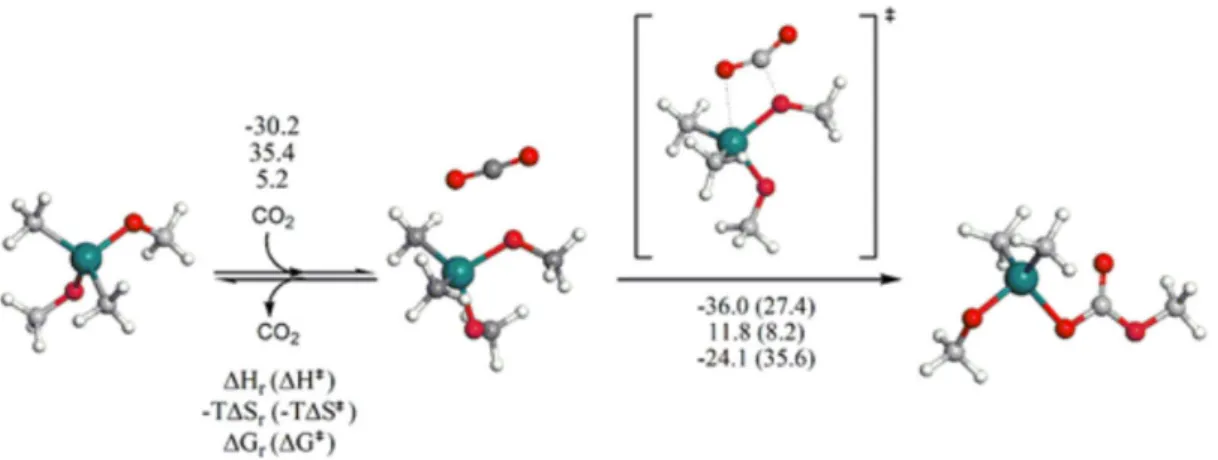
Figure 1 shows the structures of the transition state and intermediates for the insertion of the CO2 molecule
in the Sn–OCH3 bond of the (CH3)2Sn(OCH3)2 monomer.
The calculated thermodynamics and kinetic data are also reported in Figure 1 at 298.15 K and 1 atm (Gibbs free energies with the enthalpic and entropic contributions). The structures for the same species in the presence of other catalysts do not present significant differences.
Table 1 shows the thermodynamic and kinetic parameters for all catalysts studied. According to the results, the interaction between the CO2 molecule and
the tin monomer to afford the interaction complex is not thermodynamically favorable for all the substituents (R1
and R2) at room temperature and atmospheric pressure.
This results show the weak interaction between the species, not capable of overcoming the entropic term at room temperature. On the other hand, the CO2 insertion
in the Sn–OCH3 bond is thermodynamically favorable
for all catalysts and involves energy barriers in the range of 30 to 50 kJ mol−1. The weak interaction between CO
2
(VDW), with carbon atom faced to the oxygen atom of the OCH3 moiety, whereas the tin atom interacts with the
oxygen atom of the CO2 molecule.
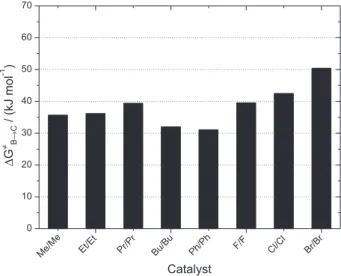
Figure 2 shows the effect of the substituents on the kinetic parameter (∆G‡) for the insertion of CO2 molecule in the Sn–OCH3 bond of the (CH3)2Sn(OCH3)2 monomer.
Phenyl substituents are the most effective groups to enhance nucleophilic/electrophilic assistance of the catalyst in the activation of the CO2 molecule, because the reaction in the
presence of Ph2Sn(OCH3)2 has the lowest energy barrier.
The Sn–OCO distance on the Ph2Sn(OCH3)2 catalyst
is shorter (dSn–OCO = 2.56 Å) than on (CH3)2Sn(OCH3)2
(dSn−OCO = 2.70 Å), showing that CO2 is more strongly bounded with the phenyl-substituted catalyst. Butyl
groups also present quite similar results, with activation parameters close to what was calculated for the phenyl substituents. Although the difference is not significant, the others alkyl groups (methyl, ethyl and n-propyl) present higher activation energy compared to the n-butyl group. The results of calculations with the phenyl and butyl groups are in agreement with recent experimental results, that showed that these catalysts presented higher turnover frequencies (TON) for DMC formation in the reaction between methanol and CO2, supporting the present
calculation model.16
The free-energy of activation of fluorine, chlorine and bromine substituents are larger, compared with the alkyl groups. The order among the halogen atoms may
Figure 1. Calculated structure of the transition state and intermediates of the insertion of CO2 into Sn–OCH3 bond of (CH3)2Sn(OCH3)2 (thermodynamic
and kinetic parameters are in kJ mol−1 and refer to 298.25 K and 1 atm).
Table 1. Thermodynamic (kinetic) parameters for the insertion of CO2 into Sn–OCH3 bond, computed at M062x/6-31G(d,p) level of theory
R1/R2/R3/R4 Stepa
∆H (∆H‡) /
(kJ mol–1)
−T∆S (−T∆S‡) /
(kJ mol–1)
∆G(∆G‡) /
(kJ mol–1) k /s–1
Me/Me/OCH3/OCH3 A→B −30.2 35.4 5.2 3.58 × 1005
B→C −36.0 (27.4) 11.8 (8.2) −24.1 (35.6)
Et/Et/OCH3/OCH3 A→B −37.4 39.9 2.4 2.98 × 1005
B→C −36.8 (19.2) 15.3 (16.9) −21.5 (36.1)
Pr/Pr/OCH3/OCH3 A→B −37.6 38.0 0.4 7.88 × 1004
B→C −36.5 (20.6) 13.1 (18.8) −23.3 (39.4)
Bu/Bu/OCH3/OCH3 A→B −40.3 47.5 7.2 1.57 × 1006
B→C −33.9 (22.4) 6.0 (9.6) −27.9 (31.9)
Ph/Ph/OCH3/OCH3
A→B −33.3 42.2 8.9
2.25 × 1006
B→C −42.9 (19.1) 11.0 (12.0) −31.9 (31.1)
F/F/OCH3/OCH3
A→B −30.9 39.6 8.7
7.36 × 1004
B→C −5.8 (30.7) 9.3 (8.8) 3.5 (39.5)
Cl/Cl/OCH3/OCH3
A→B −20.6 38.6 18.0
2.28 × 1004
B→C −23.2 (26.9) 11.1 (15.5) −12.1 (42.4)
Br/Br/OCH3/OCH3
A→B −29.7 36.2 6.5
9.31 × 1002
B→C −14.2 (38.1) 9.0 (12.2) −5.2 (50.4)
aA→B refers to the interaction of CO
be explained by the electronegativity, which affect the electrophilicity of the Sn atom. As the electronegativity of the halogen decreases, the free-energy of activation increases.
Based on these results, we evaluated the thermodynamics and kinetic parameters for the whole mechanistic pathway considering the dimeric form of Ph2Sn(OCH3)2 and
(CH3)2Sn(OCH3)2, as a reference case. Figure 3 shows the
structure of the transition states and intermediates involved in the reaction of CO2 and methanol to afford DMC with
the [(CH3)2Sn(OCH3)2]2 dimer as catalyst. The structures
are similar when considering the [Ph2Sn(OCH3)2] dimer.
The potential energy surfaces for both catalysts are shown in Figure 4. It comes from the results that the steric hindrance, due to the presence of bulky phenyl groups, overrides the electronic effects in the dimer catalyst, which present a similar kinetic profile. Indeed, the Sn–OCO distance in TS1
Figure 2. Effect of the substituent (R) on the kinetic parameter for the
insertion of CO2 molecule in the Sn–OCH3 bond of the R2Sn(OCH3)2
monomer.
Figure 3. Calculated structures of the transition states and intermediates in the reaction of CO2 with methanol to DMC, catalyzed by the (CH3)2Sn(OCH3)2
Table 2. Kinetic parameters for the reaction of CO2 with methanol to afford DMC, catalyzed by the R1R2Sn(OCH3)2 dimer, according to the mechanism
depicted in Figure 3
Parameter ∆H‡ / (kJ mol−1) −T∆S‡ / (kJ mol−1) ∆G‡ / (kJ mol−1) k / s−1 E
a / (kJ mol−1) A / (s−1 × 10¹¹) na / (cm−1)
Phenyl
A→B 35.9 3.0 38.9 9.55 × 1004 38.4 6.20 188.60
B→C 35.6 6.2 41.8 2.97 × 1004 38.1 6.17 116.26
C→D 131.7 5.2 136.9 6.32 × 10⁻¹³ 134.2 6.18 231.38
D→E 16.2 0.6 16.8 7.01 × 1008 18.7 6.22 214.60
Methyl
A→B 20.9 13.0 33.9 7.18 × 1005 23.4 6.12 108.37
B→C 28.6 6.8 35.5 3.76 × 1005 31.1 6.17 106.17
C→D 122.5 17.3 139.8 1.98 × 10⁻¹³ 125.0 6.08 232.10
D→E 23.1 −1.5 21.6 1.03 × 1008 25.5 6.24 212.57
aImaginary frequency.
slightly increases from 2.56 Å to 2.60 Å when considering the dimeric form of the Ph2Sn(OCH3)2 catalyst. This may
be explained to the steric hindrance, whist keeping the same value (dSn–OCO = 2.70 Å) for the dimeric form of the
(CH3)2Sn(OCH3)2 catalyst. Entropic contributions do not
significantly modify the kinetic profile of the reaction, which still shows an unfavorable thermodynamic energy. This may explain the low yields and conversions observed in the synthesis of DMC from CO2 and methanol. The use of
water suppressor is normally required17 to shift equilibrium
and achieve higher yields of DMC.
The calculated kinetic parameters for the reaction steps involving the TS are shown in the Table 2. According to the results, the activation energy of the slowest step (step C→D) for the dimeric form of the Ph
2Sn(OCH3)2 catalyst is
slightly higher compared to the (CH3)2Sn(OCH3)2 catalyst,
probably due to steric reasons.
Conclusions
Calculations on the thermodynamic and kinetic profile of the insertion of CO2 in the R1R2Sn(OCH3)2 catalysts were
carried out at M062x/6-31G(d,p) level of theory. Regardless of the substituents on the tin complex, the interaction with the CO2 molecule is not favored at room temperature and
atmospheric pressure due to the entropic term. The insertion into the Sn–OCH3 bond is thermodynamic favorable for all
the catalyst, but the free energy of activation depends on the nature of the substituents. Phenyl groups showed the lowest barrier, whereas halogen atoms the highest, supporting the dependence of the kinetics on the electrophilicity/ nucleophilicity of the Sn atom, caused by the substituents.
The entire mechanistic scheme was then calculated for the dimeric Ph2Sn(OCH3)2 catalyst, showing that steric
factors become predominant when considering the dimer as catalysts.
Acknowledgements
Authors thank FAPERJ (E-26/112.193/2012) and CNPq for financial support.
References
1. Peters, G. P.; Andrew, R. M.; Boden, T.; Canadell, J. G.; Ciais, P.; Le Quéré, C.; Marland, G.; Raupach, M. R.; Wilson, C.; Nat. Clim. Change 2012, 3, 4.
2. Jessop, P. G.; Ikariya, T.; Noyori, R.; Chem. Rev. 1995, 95, 259; Aresta, M.; Carbon Dioxide Recovery and Utilization, Springer: New York, 2003.
3. Sakakura, T.; Choi, J. C.; Yasuda, H.; Chem. Rev. 2007, 10, 2365; Wang, W.; Wang, S.; Ma, X.; Gong, J.; Chem. Soc.
Figure 4. Thermodynamic and kinetic profile for the reaction of CO2
Rev. 2011, 40, 3703; Cokoja, M.; Bruckmeier, C.; Rieger, B.; Herrmann, W. A.; Kuhn, F. E.; Angew. Chem.2011, 50, 8510; Centi, G.; Quadrelli, E. A.; Perathoner, S.; Energy Environ. Sci.
2013, 6, 1711; Aresta, M.; Dibenedetto, A.; Angelini, A.; J. of CO2 Utilization2013, 3-4, 65.
4. Olah, G. A.; Prakash, G. K.; Goeppert, A.; J. Am. Chem. Soc. 2011, 133, 12881; Bansode, A.; Urakawa, A.; J. Catal.
2014, 309, 66; Mota, C. J. A.; Monteiro, R. S.; Maia, E. B. V.; Pimentel, A. F.; Miranda, J. L.; Alves, R. M. B.; Coutinho, P. L. A.; Rev. Virtual Quim. 2014, 6, 44.
5. North, M.; Pasquale, R.; Young, C.; Green Chem.2010, 12, 1514.
6. Pacheco, M. A.; Marshall, C. L.; Energy Fuels 1997, 11, 2. 7. Tundo, P.; Selva, M.; Acc. Chem. Res.2002, 35, 706. 8. Keller, N.; Rebmann, G.; Keller, V.; J. Mol. Catal. A: Chem.
2010, 317, 1.
9. Romano, U.; Chim. Ind. (Milan, Italy)1993, 75, 303. 10. Hoffman, W. A.; J. Org. Chem.1982, 47, 5210; Kizlink, J.;
Pastucha, I.; Collect. Czech. Chem. Commun. 1994, 59, 2116; Fang, S.; Fujimoto, K.; Appl. Catal., A1996, 142, L1. 11. Choi, J.; He, L.; Yasuda, H.; Toshiyasu, S.; Green Chem.2002,
4, 230; Kohno, K.; Choi, J. C.; Ohshima, Y.; Yili, A.; Yasuda, H.; Sakakura, T.; J. Org. Chem.2008,693, 1389.
12. Sakakura, T.; Choi, J. C.; Saito, Y.; Sako, T.; Polyhedron2000,
19, 573; Ballivet-Tkatchenko, D.; Jerphagnon, T.; Ligabue, R.; Plasseraud, L.; Poinsot, D.; Appl. Catal., A 2003, 255, 93. 13. Choi, J. C.; Sakakura, T.; Sako, T.; J. Am. Chem. Soc. 1999,
121, 3793.
14. Frisch, M. J.; Trucks, G. W.; Schlegel, H. B.; Scuseria, G. E.;
Robb, M. A.; Cheeseman, J. R.; Scalmani, G.; Barone, V.; Mennucci, B.; Petersson, G. A.; Nakatsuji, H.; Caricato, C.; Li, X.; Hratchiean, H. P.; Izmaylov, A. F.; Bloino, J.; Zheng, G.; Sonnenberg, J. L.; Hada, M.; Ehara, M.; Toyota, K.; Fukuda, R.; Hasegawa, J.; Ishida, M.; Nakajima, T.; Honda, Y.; Kitao, O.; Nakai, H.; Vreven, T.; Montgomery, J. A.; Peralta, J. E.; Ogliaro, F.; Bearpark, M.; Heyd, J. J.; Brothers, E.; Kudin, K. N.; Staroverov, V. N.; Kobayashi, R.; Normand, J.; Raghavachari, K.; Rendell, A.; Burant, J. C.; Iyengar, S. S.; Tomasi, J.; Cossi, M.; Rega, N.; Millam, J. M.; Klene, M.; Knox, J. E.; Cross, J. B.; Bakken, V.; Adamo, C.; Jaramillo, J.; Gomperts, R.; Stratmann, R. E.; Yazyev, O.; Austin, A. J.; Cammi, R.; Pomelli, C.; Ochterski, J. W.; Martin, R. L.; Morokuma, K.; Zakrzewaki, V. G.; Voth, V. A.; Salvador, P.; Dannenberg, J. J.; Dapprich, S.; Daniels, A. D.; Farkas, O.; Foresman, J. B.; Ortiz, J. V.; Gaussian 09, Revision A.2, Gaussian Inc.: Wallingford, CT, 2009.
15. Zhao, Y.; Thuhlar, D. G.; Theor. Chem. Acc.2008, 120, 215. 16. Ferreira, H. B. P.; Vale, D. L.; Andrade, L. S.; Mota, C. J. A.;
Miranda, J. L.; Rev. Virtual Quim.2013, 5, 188.
17. Tomishige, K.; Kunimori, K.; Appl. Catal., A 2002, 237, 103; Honda, M.; Suzuki, A.; Noorjahan, B.; Fujimoto, K.; Suzuki, K.; Tomishige, K.; Chem. Commum. 2009, 4596; Eta, V.; Mäki-Arvela, P.; Reino, E. R.; Kórdaz, K.; Salmi, T.; Murzin, D. Y.; Mikkola, J. P.; Ind. Eng. Chem. Res.2010, 49, 9609.
Submitted on: August 14, 2014