© FECAP
RBGN
Received on
August 8, 2014
Approved on
June 29, 2015
1. Aline Dresch
Master in Production Engineering and Systems PPGEPS/Unisinos (Brazil)
2.Daniel Pacheco Lacerda
Doctor in Production Engineering
Coppe/UFRJ (Brazil)
3.Paulo Augusto Cauchick Miguel
PhD in Manufacturing Engineering
University of Birmingham, UK (England)
Review of Business Management
DOI:10.7819/rbgn.v17i56.2069
A Distinctive Analysis of Case Study, Action
Research and Design Science Research
Aline Dresch
Graduate Program in Production Engineering Universidade Federal de Santa Catarina, SC, Brazil
Daniel Pacheco Lacerda
Graduate Program in Production Engineering and Systems Universidade do Vale do Rio dos Sinos - Unisinos, RS, Brazil
Paulo Augusto Cauchick Miguel Graduate Program in Production Engineering Universidade Federal de Santa Catarina, SC, Brazil
Responsible editor: João Maurício Gama Boaventura, Dr. Evaluation process: Double Blind Review
ABSTRACT
Objective – his paper aims at analyzing the diference between
research methods that are typical in operations management (case study and action research) with design science research.
Design/methodology/approach – he paper adopts a
theoretical-conceptual methodological approach, based on an extensive literature review. he literature review focused on studies that discuss the use of Case Study, Action Research and Design Science/Design Science Research.
heoretical framework – his paper reveals the foundations of Case Study and Action Research. Due to its recent use as a research method, Design Science Research is presented in greater depth.
Findings – Firstly, we present design science and design science research as paradigms and as research methods, respectively, in the ield of management. Secondly, we present the diference between Natural Sciences, Social Sciences and Design Science. hirdly, we carry out comparative analysis of research methods Case Study, Action Research and Design Science Research. Finally, we ofer a set of suggestions for future research regarding the use of research methods in management, in general, and in operations management, in particular.
Contributions – he main contributions of this paper focus on
relecting about research methods used in the management ield. An important contribution is expanding the repertoire of research methods for understanding and using Design Science Research. he use of this method can contribute to reduce the distance between rigor and relevance, which has been described by several authors.
1 INTRODUCTION
he lack of attention to the relevance of scientific studies hinders the exchange of knowledge among professionals and scholars (Ford et al., 2003). Consequently, relevant studies are scarce in ields in which they would be fundamental, such as management (Hughes, Bence, Grisoni, O’Regan, & Wornham 2011; Kasanen, Lukka, & Siitonen, 1993; Romme, 2003; Singhal, Sodhi, & Tang, 2014; Van Aken, 2011). In this sense, the discussion regarding rigor and relevance has been the subject of important relections on research in management (Burgoyne e James, 2006; Manson, 2006; Pandza & horpe, 2010; Starkey, Hatchuel, & Tempest, 2009; Starkey & Madan, 2001; Tranfield & Starkey, 1998; Van Aken, 2004, 2005).
It is noteworthy to consider that the concept of materiality, here, is the same as defended by Starkey and Madan (2001), who claim that relevance can be understood as the ability of knowledge produced in the academy to have a signiicant impact also on the practical ield. Rigor, in turn, in the context of this study, is understood as a necessary element for the proper use of research methods (Hatchuel, 2009). In addition, suitable rigorous methodology helps to ensure the validity of the research work and, consequently, its recognition as a serious and well-conducted study.
Attention devoted to research rigor cannot be ignored by researchers. However, their excessive concern, especially with regard to research methods, may lead researchers to neglect the relevance of their research (Hevner, March, Park, & Ram, 2004). Starkey et al. (2009) claim that relevance should be a basic condition for research in management and it can in fact be considered rigorous.
here are arguments supporting the need for greater attention to relevance. First, relevance can help diferentiate studies in management from studies focused exclusively on the social ield (Pandza & horpe, 2010). Second, for a survey to be considered successful in operations
management, for example, there must be a practical contribution to the study ield and this research should also be accessed by the interested community (Manson, 2006). A third argument, defended by Starkey and Madan (2001), is that an increase in the relevance of research contributes to reducing the gap that exists between theory and practice in management. Considering the need for carrying out research that is more relevant and that has the rigor required by scientiic research, researchers should seek to justify and clearly establish the decisions taken while planning and carrying out research. In addition, researchers must clearly state their epistemological paradigm and the research methods that will guide it and that, consequently, increase the reliability of results.
he concern for better use of research methods in ields dealing with problems referring to operations management has motivated several papers that focus both on presenting these research methods and proposing recommendations for their use in several methodological research approaches, such as action research (Coughlan & Coghlan, 2002), survey type research (Forza, 2002); and case study (Voss, Tsikriktsis, & Frohlich, 2002), among others (Ellram, 1996; Hughes et al., 2011; Kasanen et al., 1993). In Brazil, this movement is no diferent (Mello,
Turrioni, Xavier, & Campos, 2011; Miguel, 2007, 2012). he mentioned papers seek to guide the appropriate use of methods and procedures that will improve research, as well as research results.
herefore, given the diversity of research methods, this paper aims to characterize and analytically distinguish typical research methods in operations management (case study and action research) and design science research. his analysis also seeks to establish a critical view of these research methods from the epistemological perspective of design science. In addition, this essay can serve as a tool for other researchers to establish the research method that is most aligned with research they want to carry out.
understood that this essay also sheds light on other perspectives. First, it seeks to present the paradigm of design science in general and design science research in particular. his stems from the fact that this research method is little known by the Brazilian academic community in the ield of operations management. Second, upon discussing design science and design science research, we seek to draw attention to the rigor-relevance dilemma that led a signiicant number of researchers from the ield to relect. hird, the development of cross-sectional papers that critically analyze research methods to further clarify and direct the choices of researchers about the repertoire of existing methods is required. Finally, the essay aims to open the discussion of the use of research methods, such as case study and action research, with a focus on design science.
These methods were chosen for the following reasons: case study is a method that, when properly carried out, provides an understanding of certain phenomena in depth, and is a common method used for empirical studies. Action research allows for a direct interaction between researcher and research object, with an intervention line in support of both, in an often prescriptive approach. Design science research, in turn, allows the researcher to not only explore, describe or explain a given phenomenon, but also to design or prescribe solutions to a given problem.
In order to meet the proposed objectives, this paper adopts a theoretical and conceptual methodological approach based on a literature review, seeking to present research methods in management in the most comprehensive way. he paper is divided into three main sections. Initially, key concepts and ways of implementation, with respect to the three selected research methods (case study, action research and design science research) are presented. hen, a summary of these methods through an analytical framework, in order to expand the portfolio of research methods that can assist researchers in general management, is presented. Finally, the conclusions of the essay, regarding the considered research methods, as
well as some opportunities for future work, are presented.
2 THEORETICAL FRAMEWORK
A research method aims to guide researchers in the search for necessary answers to the proposed research problem (Saunders, Lewis & hornhill, 2012). It should be noted that, to decide on the suitable research method for each investigation, the researcher should consider some aspects, such as (i) its contribution to address the research problem; (ii) legitimacy in the scientiic community; and (iii) systematic procedures to be followed in conducting research. A coherently organized research method helps ensure the rigor of the research, reliability of results and, above all, the answer to the proposed problem (Laville & Dionne, 1999).
Moreover, the research method choice is due to a number of positions deined by the researcher from an epistemological point of view. Saunders et al. (2012) present this set of decisions and argue that the researcher needs to be aware of it and take the necessary decisions in this regard. hese decisions, ultimately, will interfere with the researcher’s attitude towards reality (Saunders et al., 2012) and, by logical implication, with research results. On the one hand, the researcher can adopt a reality-observer perspective with the purpose of exploring, describing and explaining. On the other hand, the researcher can aim to intervene in reality and, therefore, solve problems and develop improvements in the systems that are being investigated. Literature distinguishes these perspectives, assigning, on the one hand, traditional sciences concerned with analysis (Le Moigne, 1994) and description, and, on the other hand, Design Science, characterized by its prescriptive nature and projection (Van Aken, 2004).
of science to help understand systems through the discovery of principles that may determine their characteristics, operation and the results they produce (Romme, 2003).
Traditional sciences are commonly divided into two other sciences: natural and social. Each of these sciences seek to achieve something diferent. On the one hand, natural sciences are concerned with the understanding of so-called complex phenomena, and have a mainly descriptive and analytical approach. Social sciences, on the other hand, seek to describe, understand and relect about human beings and their actions (Romme, 2003). It is noteworthy, however, that both research sustained by social sciences and based on natural sciences seek truth. hey aim to explore, describe, explain and predict the main purpose of advancing knowledge in a particular ield (Denyer, Tranield & Van Aken, 2008).
Nevertheless, it is worthwhile to note that management, in general, seeks to solve problems, or even design and build artifacts that can be used on a daily basis by professionals. hus, a study that describes or explains a given situation is not
always enough for knowledge improvement in this ield. Based on this statement, the debate about design science begins. It is a science that seeks to design and prescribe solutions to real problems, actions that traditional science is not capable of addressing (Denyer et al., 2008; Pandza; horpe, 2010; Simon, 1996). Because it presents such prescribing features and design, Design Science encompasses ields such as medicine, engineering and management (Denyer et al., 2008; Simon, 1996).
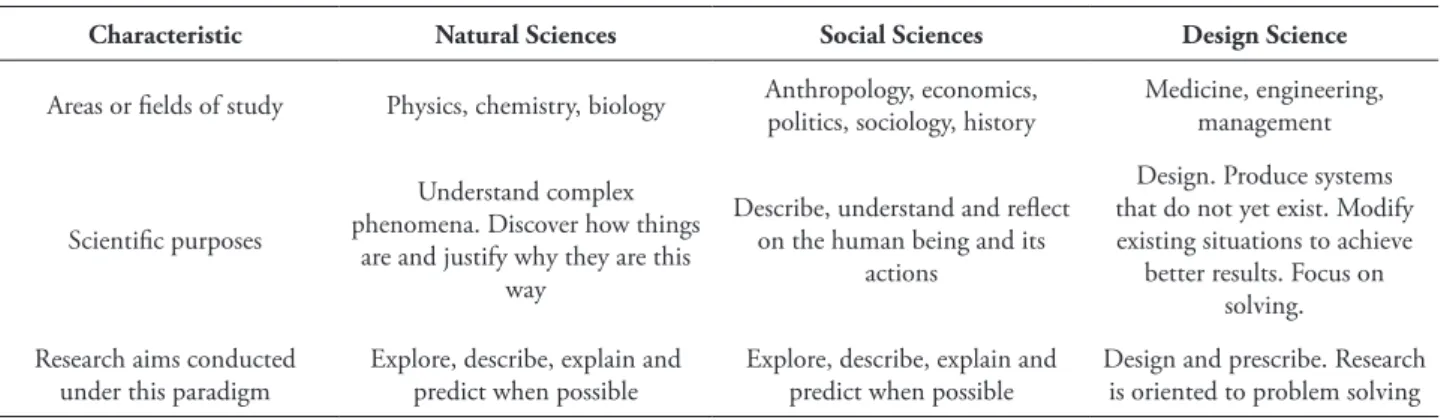
It is noteworthy that the concept of Design Science was irst introduced by Herbert Simon, in a book entitled “The Sciences of the Artiicial” published in 1969. In his work, Simon (1996) shows the diferences that can be observed between traditional science and Design Science, sometimes translated as Science of the Project, or even Science of the Artiicial. It should be emphasized that Design Science is the epistemological basis that deals with the study of the artiicial. Table 1 summarizes the main characteristics that diferentiate natural sciences, social sciences and design science.
TABLE 1 – Summary - Natural sciences, social sciences and design science
Characteristic Natural Sciences Social Sciences Design Science
Areas or ields of study Physics, chemistry, biology Anthropology, economics, politics, sociology, history
Medicine, engineering, management
Scientiic purposes
Understand complex phenomena. Discover how things
are and justify why they are this way
Describe, understand and relect on the human being and its
actions
Design. Produce systems that do not yet exist. Modify existing situations to achieve
better results. Focus on solving. Research aims conducted
under this paradigm
Explore, describe, explain and predict when possible
Explore, describe, explain and predict when possible
Design and prescribe. Research is oriented to problem solving
Note. Adapted from “Explicações Cientíicas: Introdução à Filosoia da Ciência,” by L. Hegenberg, 1969; “Design and natural science research on information technology,” by S. T. March and G. F. Smith, 1995, Decision Support Systems, 15,
251-266; “he sciences of the artiicial,” by H. A. Simon, 1996; and “Developing design propositions through research synthesis,” by D. Denyer, D. Tranield and J. E. Van Aken, Organization Studies, 29(3), 393-413
Another issue to be highlighted is that traditional sciences seek the truth in order to improve knowledge in a particular ield (Denyer et al., 2008). Similarly, design science seeks the
However, regardless of the scientific paradigm, for knowledge to advance through credible research, a proper use of research methods is necessary for carrying out investigation. For this reason, some research methods that are useful to research on operations management are presented in more detail.
he research methods selected for this study were case study, action research and design science research. Case study and action research methods are based essentially on the paradigm of traditional sciences. he main objectives of research carried out under this paradigm are to explore, describe, explain and, if possible, predict phenomena or existing systems (Romme, 2003; Van Aken, 2004). On the other hand, design science research is a method based on the design science paradigm, a science that deals with the design of new systems or the solution of real and relevant problems (Romme, 2003; Van Aken, 2004).
2.1 Principles of case study
One problem researchers face is selection of the methodological approach. There are
assumptions and restrictions as to the choice of each method used and these must be taken into consideration. After research gaps are identiied in literature and the questions of the study are developed, the researcher analyzes possible approaches, selecting the one that is most appropriate, useful and efective to address this study question or, in other words, a method that addresses it to propose/direct solutions. he use of an approach such as case study, for example, must address the research question to increase the chances of handling the issue proposed. hen, to meet research objectives, the work should be carried out with the necessary methodological rigor.
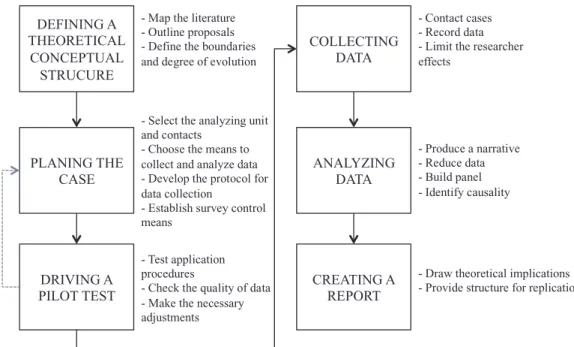
A proposal of content and sequence for carrying out a case study can be seen in Figure 1. Next, stages are described in more detail, based on Miguel (2007).
DEFINING A THEORETICAL
CONCEPTUAL STRUCURE
PLANING THE CASE
DRIVING A PILOT TEST
COLLECTING DATA
ANALYZING DATA
CREATING A REPORT - Map the literature
- Outline proposals - Define the boundaries and degree of evolution
- Select the analyzing unit and contacts
- Choose the means to collect and analyze data - Develop the protocol for data collection
- Establish survey control means
- Test application procedures
- Check the quality of data - Make the necessary adjustments
- Contact cases - Record data - Limit the researcher effects
- Produce a narrative - Reduce data - Build panel - Identify causality
- Draw theoretical implications - Provide structure for replication
FIGURE 1 – Carrying out a Case Study
First, a reference mapping of the literature on the subject should be developed. In addition, based on the literature review, it is possible to identify gaps to justify research, as well as to extract the following constructs – or elements extracted from literature that represent a concept to be verified in the field. Based on these constructs, the propositions of the work and its objectives are deined.
With regard to the planning of cases, it is necessary to choose an analysis unit, i.e., of the case(s). At first, the number of cases, single or multiple cases (Yin, 2013), with the advantages and disadvantages of each of these types, must be established. In general, 4 to 10 cases may be suicient (Eisenhardt, 1989). From case selection on, the methods and techniques for data collection and analysis should be established. In data collection, multiple sources of evidence (interviews, document analysis, in loco visits, among others) should be used. Once the techniques for data collection are chosen, a research protocol should be developed. Data analysis should also be pre-planned and clearly presented in the paper.
Another stage prescribed by the method is conducting a pilot test that, although it is not a common practice in the adoption of case study, must be carried out by the researcher even before data collection. he goal is to verify application procedures based on the protocol, aiming at its improvement. From this application, it is also possible to verify the quality of obtained data, in order to identify if they are associated with the constructs and, thus, contribute to addressing research objectives.
After the pilot test and adjustments to the research protocol, data collection begins. First, cases should be contacted, considering the main informants who are aware of the research. Before going to ield, it is important to have a clear estimate of the time to be spent and
the resources to be consumed. Data should be collected and recorded using the instruments defined in planning. Voice records offer a number of advantages to improve the accuracy of subsequent analysis. However, they can inhibit interviewees. Notes are also important, as well as all impressions and observations. he collection should be completed while the amount of data and information reduces and/or when data is considered sufficient to address the research question.
Based on the collected data, considering the multiple sources of evidence, the researcher must then produce an overall case narrative. In general, it is necessary to carry out data reduction, so that only what is essential and has close connections with the objectives and constructs of the research is included in the analysis. If there was recording of interviews, they should be transcribed in full, resulting in raw data. his should be done as soon as possible, so that details (for example, reactions) are not lost. he same goes for paper notes, which must be placed in one or more electronic iles. Notes and recordings should be structured according to research protocol. Secondary data may also be used, for example, data referring to the characterization of the object of analysis.
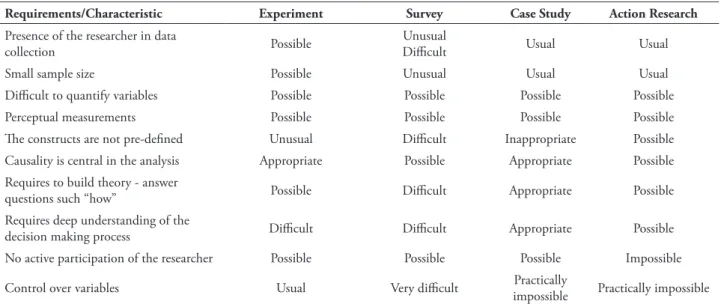
TABLE 2 – Types of research approaches and characteristics
Requirements/Characteristic Experiment Survey Case Study Action Research
Presence of the researcher in data
collection Possible
Unusual
Diicult Usual Usual
Small sample size Possible Unusual Usual Usual
Diicult to quantify variables Possible Possible Possible Possible Perceptual measurements Possible Possible Possible Possible he constructs are not pre-deined Unusual Diicult Inappropriate Possible Causality is central in the analysis Appropriate Possible Appropriate Possible Requires to build theory - answer
questions such “how” Possible Diicult Appropriate Possible Requires deep understanding of the
decision making process Diicult Diicult Appropriate Possible No active participation of the researcher Possible Possible Possible Impossible
Control over variables Usual Very diicult Practically
impossible Practically impossible
Note. Source: “Metodologia de pesquisa em engenharia de produção e gestão de operações,” by P. A. C. Miguel, 2012, p. 4
As can be seen in Table 2, each research type has diferent requirements, and the case study combines interesting characteristics for carrying out research and, perhaps for this reason, is relatively widespread. Other approaches are also important, such as action research, presented next.
2.2 Basis of action research
Action research is an empirical type of work, whose conception and construction should take place in close connection with the resolution of a collective problem, in which researchers and participants, representatives of the situation researched, are involved in a cooperative and participatory way (Thiollent, 2009). In general, it aims to address a research problem in an organization (Eden & Huxham, 1996). In addition, researchers working with this approach
Context and purpose
Preliminary round
Data Collection
Evaluation
Implementation
Action planning
M onitoring metaphase
Data Analysis Data Feedback
Phase: Six steps Driving Cycle
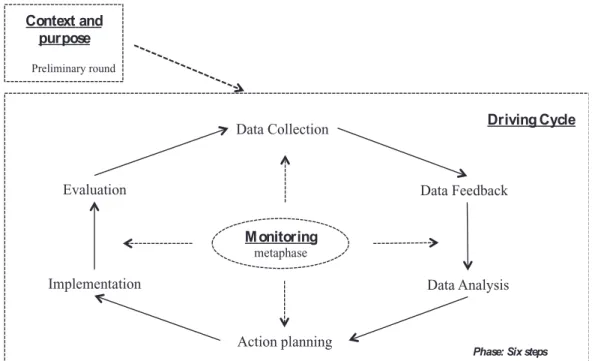
FIGURE 2 – he action research cycle
Source: adapted from “Action Research for Operations Management, ” by P. Coughlan and D. Coghlan, 2002, International Journal of Operations & Production Management, 22, 220-240. doi:10.1108/01443570210417515
As illustrated in Figure 2, the overall action research cycle comprises the description of the phases deined by Coughlan and Coghlan (2002). he irst phase (preliminary study) comprises the understanding of the context in which the research will be performed (object of analysis), as well as the purpose of carrying out the work. his phase also involves the establishment of justiications for the required action (why actions should be carried out) and justiications for the research itself (why this research should be conducted, what are the issues to be addressed, and what contribution will be generated). he second phase (conduction cycle through six stages) begins with data collection (diagnosis and/or data collected when the research is already in course) data feedback (for those involved with the research), analysis of such data (with those involved in research), action planning (deinition of interventions to be made), action implementation (put into practice what was planned), and evaluation (verify whether implementation results have been unsuccessful or not, or produced the desired efects), returning to new data collection (if necessary), closing
the loop. It is important to mention that these cycles are constant and sequential, i.e., they are continuous for as long as needed. Another observation is that there may be a broader cycle (for the research as a whole) and smaller cycles to speciic parts of the work.
2.3 Design science research
Concerning reducing the gap between theory and practice, by way of more relevant research, Van Aken (2004, 2005) advocates research that results in proposals beyond descriptions, explanations and predictions. his kind of research, with a prescriptive approach, inds support in a search method called design science research.
I n f a c t , t h e r e a r e a n u m b e r o f methodological research approaches. Design science research is considered aa research method that devotes attention to the development of studies that aim at prescription, project and artifact building. his research method has design science as its epistemological basis, a concept which difers from traditional sciences because it concerns itself with the artiicial, that is, with everything that has been designed and conceived by man.
In addition, design science is not concerned exclusively with understanding the problem, but with possible solutions. On the one hand, there is research based on the paradigm of design science, whose objective is to design artifacts and prescribe solutions to existing problems, improving or creating new systems (Van Aken, 2004). On the other hand, research based on traditional sciences studies natural or society complex phenomena in order to explore, describe, explain and, if possible, predict (Van Aken, 2004; Romme, 2003). One criticism that has been made to studies in the ield of management is that they are too focused on understanding phenomena and give little contribution to developing knowledge that would help professionals solve their problems (Daft & Lewin, 2008; Ford et al., 2003; Starkey & Madan, 2001; Van Aken, 2005).
In this sense, Design Science Research appears as a responsible approach because it operationalizes research that aim to design or develop an artifact, or even prescribe a solution. It is noteworthy that the research that is based on the Design Science paradigm can occur both in the
academic sphere as well as within organizations (Bayazit, 2004).
According to Vaishnavi and Kuechler (2009), Design Science Research allows the development of research for many different fields. Kasanen et al. (1993) emphasize that this approach, though not widely used, may be appropriate for researchers in management. For example, for researchers who seek more relevant and useful studies for the solution of problems of organizations. In management, in general, and in administration, in particular, Design Science Research proved adequate because it contributed directly to reducing the gap between theory and practice, since this method addresses problems both on the interest of professionals in organizations and academic interests (Hughes et al., 2011).
It can be argued, therefore, that Design Science Research establishes a systematic process that aims to design and develop artifacts that are able to solve problems, thus having a high relevance for the practical field. Also, it is a fundamental concern of Design Science Research to assess what has been developed in order to verify whether the artifact is, in fact, reaching the goals to which it proposed to (Çağdaş & Stubkjær, 2011). hus, the development of an artifact per se is not suicient to characterize an investigation as Design Science Research. It must be proved that the artifact actually achieved the objectives originally proposed by the researcher.
knowledge generated with research using Design Science Research as a research method.
In fact, the generalization of knowledge from the conduction of Design Science Research allows even that researchers contribute to the construction and improvement of theories, not the same type of theory proposed by traditional sciences, but rather a mid-range theory or a substantive theory.
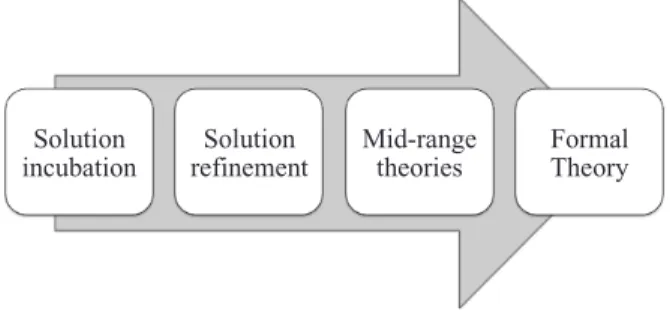
According to Holmström, Ketokivi and Hameri (2009), the development of theories from the use of Design Science Research can be divided into four stages (Figure 3). hese stages show briely the process of building a theory from its source to this stage of initial ideas, turning them into more simpliied theories, and eventually into formal theories.
Solution incubation
Solution refinement
Mid-range theories
Formal Theory
FIGURE 3 – Stages for developing theories
Source: Adapted from “Bridging Practice and heory: A Design Science Approach,” by J. Holmström, M. Ketokivi and A.-P. Hameri, 2009, Decision Sciences, 40, 65-88.
As can be seen in Figure 3, the irst stage in the development of a theory based on Design Science is “solution incubation”. This first stage aims to materialize a framework, properly representing the problem under study (Holmström et al., 2009). From this framework, the researcher should be able to suggest possible solutions to the problems under study (Holmström et al., 2009). hese suggestions, when formalized, enable their implementation in a pilot level (Holmström et al., 2009).
he second stage is “solution reinement”. During reinement, solutions previously developed are tested in a real environment in order to verify whether the solution proposed by the researcher
meets the criteria for a proper solution of the problem (Holmström et al., 2009). hese two irst stages, which support the construction of a theory by carrying out Design Science Research, often occur within organizations (Holmström et al., 2009). hat said, it is emphasized that professionals who are in organizations usually contribute only to these irst two stages. But this contribution, by itself, is not considered a recognized scientiic contribution (Holmström et al., 2009).
he third stage comprising the development of theories based on Design Science is called “substantive theory” or Mid-range heory. his stage, according to (Holmström et al., 2009), seeks relevance not only from a practical point of view but also from an academic point of view for the knowledge generated in the irst and second stages. In this stage, activities such as evaluation of the artifact from the perspective of theory rather than practice can be performed (Holmström et al., 2009).
It is worth stressing that mid-range theories are dependent on the context in which solutions have been developed, and may not be considered as general theories. hat is, a mid-range theory does not intend to be generalized to all contexts, but to generalize theoretical concepts that can contribute to the topic of interest of certain research programs (Holmström et al., 2009).
Finally, the fourth stage of the development of theories through Design Science Research corresponds to “formal theories”, which deal with the development of theories that can be used regardless of context (Holmström et al., 2009). In this last stage, still according to the abovementioned authors, scientiic contribution is more important than practical relevance. In addition, formal theories are often capable of generalization.
• The problem should be relevant and strongly explained
Problem
• The researcher must show that there is still no solution for the problem at hand
• The researcher should propose satisfactory solutions, not necessarily optimal
Solution
• Artifact that will be used to solve the problem must be properly developed
Development
• Every artifact should be evaluated in order to verify if it meets predetermined specifications (utility and viability)
Evaluation
• It is essential that the study can contribute to the advancement of knowledge and to improve organizational systems
Value addition
• The researcher should communicate "what" was done in the research, as well as the "how" it was performed
• Research implications must be also explicit
Communication
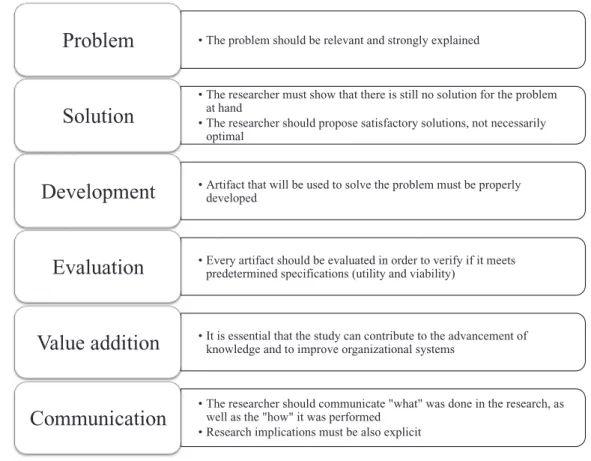
FIGURE 4 – Essential elements for proper conduction of Design Science Research
Source: Adapted from “Design Science in the Information Systems Discipline: An Introduction to the Special Issue on Design Science Research,” by S. T. March e V. C. Storey, 2008, MIS Quaterly, 32, 725-730.
he irst element pointed out by March and Storey (2008), which should be considered by the researchers that will carry out a Design Science Research, is the formalization of a problem that is truly relevant. he second element for the proper conduct of the research based on the Design Science paradigm shows that the researcher must show that there are still no appropriate solutions to solve the problem considered (March & Storey, 2008), thus justifying the importance of the proposed research.
A third element presented by March and Storey (2008) refers to the development of a new artifact that can be used to solve the problem considered. he fourth point emphasized by the abovementioned authors refers to the evaluation of developed artifacts. his evaluation must be made considering the utility and viability aspects
of the artifact in order to demonstrate its validity, both practical and academic (March & Storey, 2008).
Another element that March and Storey (2008) mention as crucial for a proper conduct of Design Science Research is that research should add value to existing theoretical knowledge (contributing to the improvement of general knowledge), and improve practical situations in organizations. Finally, it is recommended that researchers, upon concluding its activities, present the implications of their results for the practical ield (March & Storey, 2008).
Problem awareness
Suggestion
Development
Evaluation
Conclusion
Process Steps Formalism Logical Knowledge Flow
Abduction
Deduction Circumscription
Operation and purpose of knowledge
Outputs
Proposal
Attempt
Artifact
Performance measures
results
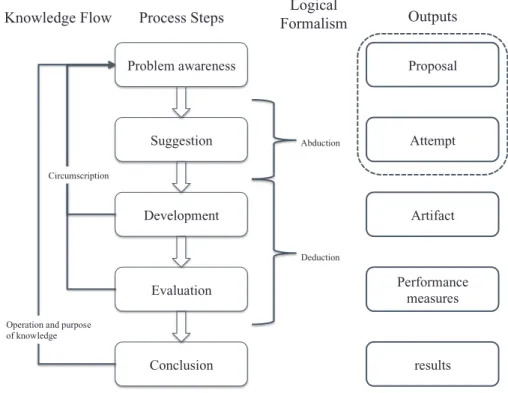
FIGURE 5 – Main stages to carry out Design Science Research
Source: “Design Research in Information Systems,” by V. Vaishnavi e W. Kuechler, 2009, from <http://desrist.org/design-research-in-information-systems>
he purpose of Figure 5 is to present the main stages to be followed for the conduction of Design Science Research and the main deliverables of each stage. he irst stage of the method consists in problem awareness. At this stage, in addition to clearly identify the problem of interest, which must be above all relevant, the researcher should try to understand the problem in order to identify all its sides and possible interrelations with the context in which it is inserted (Takeda, Veerkamp, Tomiyama, & Yoshikawa, 1990; Vaishnavi & Kuechler, 2009). he main deliverables of this stage refer to the formalization of the problem, its boundaries (environment external to the problem) and the considered satisfactory solutions to the problem.
In the second stage, suggestion, one or more artifact alternatives should be provided to solve the problem under study (Manson, 2006). hus, this stage results in a set of possible artifacts, as well as in the selection of one of them to advance to the next stage, development. It is
noteworthy that the suggestion stage is essentially creative (Manson, 2006) and therefore somewhat subjective. herefore, it is recommended that protocols be developed in order to ensure the internal validity of the study. hese protocols should indicate the choices of researchers and the reasons for these choices.
a priori by researcher and/or staf engaged in the research (Hevner et al., 2004).
he third big stage for carrying out Design Science Research concerns the development of the artifact itself (Manson, 2006). It is precisely at this stage that the researcher builds the internal environment of the artifact (Simon, 1996). To build the artifact, diferent approaches may be used. For example, algorithms, graphics models, models etc. (Lacerda et al., 2013). he product of the development stage will be the artifact itself, in its functional state (Manson, 2006).
he fourth stage of design science research covers the evaluation of the developed artifact. he evaluation aims to precisely determine how the artifact behaves in the environment for which it was designed, verifying its ability to meet the intended objective (Lacerda et al., 2013). In addition, the evaluation stage should strongly consider the pragmatic validity of the artifact. hat is, if the developed artifact really suits usefulness demands referring to its application in the external environment for which it was destined.
he conclusion stage, in turn, refers to the formalization of the entire research process. In this stage, all previous research stages must be synthesized, detailing their conduction process and justifying the choices made by the researcher (Lacerda et al., 2013).
Finally, the last stage, communication, proposed by Pefers, Tuunanen, Rothenberger, & Chatterjee (2007), aims to present the research results to the community, both academic and organizational. This communication is key to improving knowledge of studied fields. An analysis that summarizes some important characteristics of the three mentioned research methods is presented below.
3 CHARACTERIZATION OF RESEARCH
METHODS: AN ANALYTICAL VIEW
he following analytical table seeks to state the main characteristics of the research methods presented in this essay. This analysis proved to be adequate for research in management in general and operations management in particular
because it can support researchers in deining the methodological framework better suited to meet the objectives of their investigation.
It is noteworthy that the methodological framework of research should not be considered a bureaucratic act (Lacerda et al., 2013). On the contrary, the methodological framework should be seen as a tool to support the researcher in carrying out rigorous and relevant research. However, some researchers, in their impetus to have their studies accepted by the scientiic community, eventually force certain frameworks. his is the case, for example, of the improper use by some researchers of the term “case study”, as identiied by Berto and Nakano (2000). It is common for studies that collect data in a single organization to implement or evaluate methods and models and even solve problems, for example, to it research in a case study framework (Berto & Nakano, 2000). here may be studies that, by simply collecting data in companies, without meeting in depth requirements of case studies, frame them as case studies (Berto & Nakano, 2000).
Therefore, it is important to consider which other methods could accommodate this type of research (Lacerda et al., 2013). It is known that, because it is a case study, framework would be somewhat inappropriate, according to the understanding of many authors who debate on the subject (Berto & Nakano, 2000; Eisenhardt, 1989; Ellram, 1996; Miguel, 2007; Voss et al., 2002; Yin, 2013).
Some researchers, however, could propose that these studies, which result in some sort of intervention in an organization, are action research, for example. his could happen because action research requires a direct interaction between researchers and participants (Coughlan & Coghlan, 2002). It is important, however, to assess whether this is suicient to frame a study as action research or not.
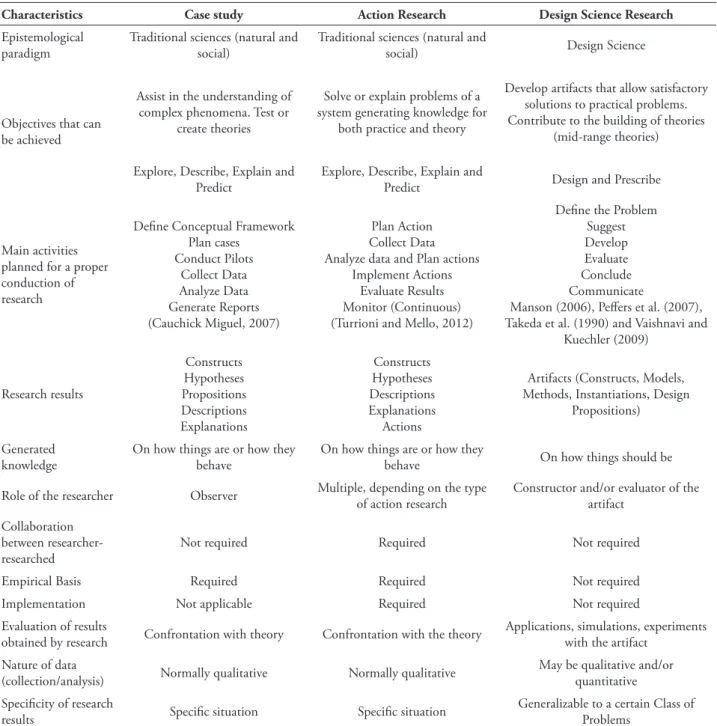
In this sense, Table 3 presents a possible contribution aimed, above all, at revealing certain diferences and similarities among the research methods discussed here. It is noteworthy that the main diferences can be seen regarding the
objectives that each method can achieve, the role of the researcher, the need or not of an empirical basis (Lacerda et al., 2013), and the possibility of generalization of knowledge (Dresch, 2013, Dresch, Lacerda, & Antunes, 2015)..
TABLE 3 – Case study, action research and design science research characteristics.
Characteristics Case study Action Research Design Science Research
Epistemological paradigm
Traditional sciences (natural and social)
Traditional sciences (natural and
social) Design Science
Objectives that can be achieved
Assist in the understanding of complex phenomena. Test or
create theories
Solve or explain problems of a system generating knowledge for
both practice and theory
Develop artifacts that allow satisfactory solutions to practical problems. Contribute to the building of theories
(mid-range theories)
Explore, Describe, Explain and Predict
Explore, Describe, Explain and
Predict Design and Prescribe
Main activities planned for a proper conduction of research
Deine Conceptual Framework Plan cases
Conduct Pilots Collect Data Analyze Data Generate Reports (Cauchick Miguel, 2007)
Plan Action Collect Data Analyze data and Plan actions
Implement Actions Evaluate Results Monitor (Continuous) (Turrioni and Mello, 2012)
Deine the Problem Suggest Develop Evaluate Conclude Communicate
Manson (2006), Pefers et al. (2007), Takeda et al. (1990) and Vaishnavi and
Kuechler (2009)
Research results
Constructs Hypotheses Propositions Descriptions Explanations
Constructs Hypotheses Descriptions Explanations
Actions
Artifacts (Constructs, Models, Methods, Instantiations, Design
Propositions)
Generated knowledge
On how things are or how they behave
On how things are or how they
behave On how things should be
Role of the researcher Observer Multiple, depending on the type of action research
Constructor and/or evaluator of the artifact
Collaboration between researcher-researched
Not required Required Not required
Empirical Basis Required Required Not required Implementation Not applicable Required Not required Evaluation of results
obtained by research Confrontation with theory Confrontation with the theory
Applications, simulations, experiments with the artifact
Nature of data
(collection/analysis) Normally qualitative Normally qualitative
May be qualitative and/or quantitative Speciicity of research
results Speciic situation Speciic situation
Generalizable to a certain Class of Problems
In addition to the main differences explained above, the epistemological paradigm distinction to which each of the methods is subjected can also be highlighted. While case study and action research are traditionally subordinated to natural and social sciences, Design Science Research is subordinated to the paradigm of the sciences of the artiicial, i.e., Design Science.
Moreover, the objectives that can be achieved through the application of each one of the methods shown in Table 3 difer from each other. While case study and action research allow exploring, describing, explaining and eventually predicting a particular phenomenon, Design Science Research essentially aims to prescribe solutions or design artifacts. However, according to the purposes of the research, the possibility of using traditional research methods under the paradigm of Design Science is not discarded. here are authors such as Sein et al. (2011) who propose an integration of action research and Design Science Research in a method they call Action Design Research.
It can be argued that action research, when applied under the paradigm of Design Science, can contribute to the building of artifacts. his can be useful in cases in which the artifact’s development depends on the interaction of those involved in the research, or in which the evaluation can only be performed in the context of the organization and with the participation of people from the environment that is being investigated.
4 CONCLUSIONS
his article sought to present alternatives to research methods that can be applied to conduct research in management and in operations management. Some researchers, with the urge to classify their research seeking a greater recognition by the academy put aside two central issues. First, research approaches only guide the construction of the working method. Due to the lack of work method, there is a diiculty to understand deeply
and in detail how the research was conducted, to justify conduction decisions adopted and especially to later replicate the study. Second, some researchers do not consider the relevance of studies with a weight equivalent to the rigor of the research. he question of relevance has a special attention when considering studies in management, since the knowledge generated must have, in addition to theoretical implications, practical repercussions.
As discussed, it is possible to seek increased relevance of studies in management through the application of research methods based on design science paradigms – by applying methods such as design science research or by implementing case study and action research under a paradigm that is diferent from the one that is traditionally used (based on traditional sciences). It is known that case study is a methodological approach that excels in the number of applications with respect to research in operations management and administration. Thus, carrying out case studies or action research from a design science paradigm constitutes an opportunity for further research. his can occur by either formalizing existing artifacts (case studies) or collaborative construction with professionals (action research).
his paper sought to help increase the repertoire of research methods that can be used by researchers in operations management. he lack of larger and deeper discussions about the possibility of applying these methods under a traditional complementary scientiic paradigm must be recognized. Studies are therefore needed to verify, mainly in practice, the possibility of using methods such as case studies and action research under the design science paradigm.
and, for now, these works still focus on thesis and dissertation formats. Again, there is an important need for research carried out under this guidance and published in national journals.
Finally, there are other possibilities to be explored in terms of a future research agenda. A relection on ontology and epistemology in design science and design science research is still incipient in the national and international community. Another aspect that deserves attention and is a research opportunity is the analysis of applications of the discussed research methods. A critical assessment of whether the academic community has been using them properly or not, in the light of rigor, and what these research methods (case study, action research and design science research) prescribe. In this sense, a study of research using design science research may be the most pressing possibility to avoid the accumulation of inappropriate uses throughout its development, considering that there is a small research universe. A critical evaluation of the appropriateness or not of Design Action Research for management and operations management would be interesting. In fact, there are several directions for further research and efforts needed to improve the repertoire of research methods for the academic community.
For the consolidation of knowledge in management, knowledge generated both by scholars and in practice must be adequately communicated to all communities. This is a significant challenge. However, in a field in which relevance is a key point, there must be a defragmentation of knowledge. Fragmentation contributes to increase the gap that exists due to lack of interaction among researchers and professionals in organizations.
That is, as well as concern as to the increasing relevance of research carried out by scholars, knowledge generated must also be properly systematized so that it can be accessed by other researchers and professionals who are interested in the subject. Easy access by professionals would greatly increase the possibility of practical application of knowledge generated by
universities. One way to systematize and organize the knowledge of a ield such as management, for example, could be the use of evidence-based management.
REFERENCES
Bayazit, N. (2004). Investigating design: A review of forty years of design research. Massachusetts Institute of Technology: Design Issues, 20(1), 16-29.
Berto, R. M. V. S., & Nakano, D. N. (2000). A produção científica nos anais do encontro nacional de engenharia de produção: Um levantamento de métodos e tipos de pesquisa. Produção, 9(2), 65-76.
Burgoyne, J., & James, K. T. (2006). Towards Best or better practice in corporate leadership development: Operational issues in mode 2 and design science research. British Journal of Management, 17(4), 303-316. doi:10.1111/ j.1467-8551.2005.00468.x
Çağdaş, V., & Stubkjær, E. (2011). Design research for cadastral systems. Computers, Environment and Urban Systems, 35(1), 77-87. doi:10.1016/j.compenvurbsys.2010.07.003
Checkland, P., & Holwell, S. (1998). Action research: Its nature and validity. Systems Practice and Action Research, 11(1), 9-21.
Cole, R., Purao, S., Rossi, M., & Sein, M. K. (2005). Being proactive: Where action research meets design research. Proceedings of the International Conference on Information Systems, Las Vegas, NV, USA, 26.
Coughlan, P., & Coghlan, D. (2002). Action research for operations management. International Journal of Operations & Production Management, 22(2), 220-240. doi:10.1108/01443570210417515
Science, 19(1), 177-183. doi: http://dx.doi. org/10.1287/orsc.1070.0346
Denyer, D., Tranield, D., & Van Aken, J. E. (2008). Developing design propositions through research synthesis. Organization Studies, 29(3), 393-413. doi:10.1177/0170840607088020
Dresch, A. (2013). Design science e design science research como artefatos metodológicos para engenharia de produção (Dissertação de mestrado). Universidade do Vale do Rio dos Sinos – UNISINOS, São Leopoldo, RS, Brazil.
Dresch, A., Lacerda, D. P., & Antunes Jr., J. A. V. (2015). Design science research: A method for science and technology advancement. New York: Springer.
Eden, C., & Huxham, C. (1996). Action
research for management research. British
Journal of Management, 7, 75-86.
Eisenhardt, K. M. (1989). Building theories from case study research. Academy of Managenent Review, 14(4), 532-550.
Ellram, L. M. (1996). he use of the case study method misconceptions related to the use. Journal of Business Logistics, 17(2), 93-138.
Ford, E. W., Duncan, W. J., Bedeian, A. G., Ginter, P. M., Rousculp, M. D., & Adams, A. M. (2003). Mitigating risks, visible hands, inevitable disasters, and soft variables: Management reasearch that matters to managers. Academy of Management Executive, 17(1), 46-60.
Forza, C. (2002). Survey research in operations management: A process-based perspective. In t e r n a t i o n a l Jo u r n a l o f O p e ra t i o n s & Production Management, 22(2), 152-194. doi:10.1108/01443570210414310
Hatchuel, A. (2009). A foundationalist perspective for management research: A European trend and experience. Management Decision, 47(9), 1458-1475. doi:10.1108/00251740910995666
Hegenberg, L. (1969). Explicações científicas: Introdução à ilosoia da ciência. São Paulo: Editora Herder.
Hevner, A. R., March, S. T., Park, J., & Ram, S. (2004). Design science in information systems research. MIS Quaterly, 28(1), 75-105.
Holmström, J., Ketokivi, M., & Hameri, A.-P. (2009). Bridging Practice and theory: A design science approach. Decision Sciences, 40(1), 65-88.
Hughes, T., Bence, D., Grisoni, L., O’Regan, N., & Wornham, D. (2011). Scholarship that matters: Academic--practitioner engagement in business and management. Academy of Management Learning & Education, 10(1), 40-57. doi:10.5465/AMLE.2011.59513272
Kasanen, E., Lukka, K., & Siitonen, A. (1993). The constructive approach in management accounting research. Journal of Management Accounting Research, 5, 243-264.
Lacerda, D. P., Dresch, A., Proença, A., & Antunes Jr., J. A. V. (2013). Design science research: A research method to production engineering. Gestão & Produção, 20(4), 741-761.
Laville, C., & Dionne, J. (1999). A construção do saber: Manual de metodologia da pesquisa em ciências humanas. Porto Alegre: Artmed.
Le Moigne, J.-L. (1994). Le Constructivisme Tome 1 - Fondements. Paris: ESF Editeur.
Manson, N. J. (2006). Is operations research really research? ORiON, 22(2), 155-180.
March, S. T., & Smith, G. F. (1995). Design and natural science research on information technology. Decision Support Systems, 15, 251-266.
March, S. T., & Storey, V. C. (2008). Design Science in the Information Systems Discipline: An Introduction to the Special Issue on Design Science Research. MIS Quaterly, 32(4), 725-730.
Miguel, P. A. C. (2007). Estudo de caso na engenharia de produção: Estruturação e recomendações para sua condução. Produção, 1 7( 1 ) , 2 1 6 2 2 9 . d o i : 1 0 . 1 5 9 0 / S 0 1 0 3 -65132007000100015
Miguel, P. A. C. (Org.). (2012). Metodologia de pesquisa em engenharia de produção e gestão de operações (2a ed.). Rio de Janeiro: Elsevier.
Pandza, K., & horpe, R. (2010). Management as Design, but What Kind of Design? An Appraisal of the Design Science Analogy for Management. British Journal of Management, 21(1), 171–186. doi:10.1111/j.1467-8551.2008.00623.x
Pefers, K., Tuunanen, T., Rothenberger, M. A., & Chatterjee, S. (2007). A Design science research methodology for information systems research. Journal of Management Information Systems, 24(3), 45-77. doi:10.2753/MIS0742-1222240302
Romme, A. G. L. (2003). Making a diference: Organization as design. Organization Science, 14(5), 558-573.
Saunders, M., Lewis, P., & hornhill, A. (2012). Research methods for business students (6th ed.). London: Pearson Education.
Sein, M. K., Henfridsson, O., Purao, S., Rossi, M., & Lindgreen, R. (2011). Action design Research. MIS Quaterly, 35(1), 37-56.
Simon, H. A. (1996). he sciences of the artiicial (3rd ed.). Cambridge: MIT Press.
Singhal, K., Sodhi, M. S., & Tang, C. S. (2014). POMS Initiatives for Promoting Practice-Driven Research and Research-Influenced Practice. Production and Operations Management, 23(5), 725-727. doi:10.1111/poms.12229
Starkey, K., Hatchuel, A., & Tempest, S. (2009). Management Research and the New Logics of Discovery and Engagement. Journal of Management Studies, 46(3), 547-558. doi:10.1111/j.1467-6486.2009.00833.x
Starkey, K., & Madan, P. (2001). Bridging the Relevance gap: Aligning stakeholders in the future of management research. British Journal
of Management, 12(Special Issue), S3-S26. doi:10.1111/1467-8551.12.s1.2
Takeda, H., Veerkamp, P., Tomiyama, T., & Yoshikawa, H. (1990). Modeling design processes. AI Magazine, 11(4), 37-48.
hiollent, M. (2009). Metodologia da pesquisa-ação (17a ed.). São Paulo: Cortez.
Tranfield, D., & Starkey, K. (1998). The nature, social organization and promotion of management research: Towards policy. British Journal of Management, 9, 341-353.
Turrioni, J. B., & Mello, C. H. P. (2012). Pesquisa-ação na engenharia de produção. In P. A. C. Miguel (Org.),Metodologia de pesquisa em engenharia de produção e gestão de operações (2a ed., pp. 146–163). Rio de Janeiro: Campus.
Vaishnavi, V., & Kuechler, W. (2009). Design research in information systems. Retirado de http://desrist.org/design-research-in-information-systems
Van Aken, J. E. (2004). Management research based on the paradigm of the design sciences: he quest for ield-tested and grounded technological rules. Journal of Management Studies, 41(2), 219-246.
Van Aken, J. E. (2005). Management research as a design science: articulating the research products of mode 2 knowledge production in management. British Journal of Management, 16(1), 19-36. doi:10.1111/j.1467-8551.2005.00437.x
Van Aken, J. E. (2011). he research design for design science research in management. Eindhoven.
Voss, C., Tsikriktsis, N., & Frohlich, M. (2002). Case research in operations management. In t e r n a t i o n a l Jo u r n a l o f O p e ra t i o n s & Production Management, 22(2), 195-219. doi:10.1108/01443570210414329