High genetic diversity among and within bitter manioc varieties cultivated in
different soil types in Central Amazonia
Alessandro Alves-Pereira
1,2, Nivaldo Peroni
3, Marcelo Mattos Cavallari
4, Maristerra R. Lemes
5,6, Maria
Imaculada Zucchi
7and Charles R. Clement
2,51
Departamento de Genética, Escola Superior de Agricultura “Luiz de Queiróz”, Universidade de São
Paulo, Piracicaba, SP, Brazil.
2
Laboratório de Evolução Aplicada, Universidade Federal do Amazonas, Manaus, AM, Brazil.
3
Universidade Federal de Santa Catarina, Departamento de Ecologia e Zoologia, Florianópolis, SC, Brazil.
4Empresa Brasileira de Pesquisa Agropecuária, EMBRAPA COCAIS, São Luis, MA, Brazil.
5
Instituto Nacional de Pesquisas da Amazônia, Manaus, AM, Brazil.
6
Laboratório de Genética e Biologia Reprodutiva de Plantas, Instituto Nacional de Pesquisas da Amazônia,
Manaus, AM, Brazil.
7Agência Paulista de Tecnologia dos Agronegócios, Pólo Regional Centro-Sul, Piracicaba, SP, Brazil.
Abstract
Although manioc is well adapted to nutrient-poor Oxisols of Amazonia, ethnobotanical observations show that bitter manioc is also frequently cultivated in the highly fertile soils of the floodplains and Amazonian dark earths (ADE) along the middle Madeira River. Because different sets of varieties are grown in each soil type, and there are agro-nomic similarities between ADE and floodplain varieties, it was hypothesized that varieties grown in ADE and floodplain were more closely related to each other than either is to varieties grown in Oxisols. We tested this hypothe-sis evaluating the intra-varietal genetic diversity and the genetic relationships among manioc varieties commonly cul-tivated in Oxisols, ADE and floodplain soils. Genetic results did not agree with ethnobotanical expectation, since the relationships between varieties were variable and most individuals of varieties with the same vernacular name, but grown in ADE and floodplain, were distinct. Although the same vernacular name could not always be associated with genetic similarities, there is still a great amount of variation among the varieties. Many ecological and genetic pro-cesses may explain the high genetic diversity and differentiation found for bitter manioc varieties, but all contribute to the maintenance and amplification of genetic diversity within the manioc in Central Amazonia.
Keywords:Manihot esculenta, microsatellites, Amazonian dark earths, floodplain, Oxisols. Received: February 28, 2016; Accepted: November 16, 2016.
Introduction
Manioc (Manihot esculenta Crantz ssp. esculenta)
was domesticated in southwestern Amazonia at least 7,000 years ago (Allem, 1994; Olsen and Schaal, 1999) and today is cultivated in all tropical countries (Lebot, 2009). It is grown for its tuberous starchy roots, which are the primary source of carbohydrates for more than 800 million people (Lebot, 2009). Cultivated manioc is classified into two ma-jor groups of varieties. The “sweet” varieties have low amounts of cyanogenic glycosides (< 100 ppm fresh weight), while “bitter” varieties have high amounts of these toxic substances (> 100 ppm fresh weight) (McKeyet al.,
2010a). The discrimination of these two groups is recog-nized by traditional farmers (Rival and McKey, 2008), and supported by molecular markers (Mühlen et al., 2000; Peroniet al., 2007).
There is strong selection for manioc varieties with high toxicity, especially in Central Amazonia where the majority of varieties are bitter (McKey and Beckerman, 1993). Bitter manioc is most frequently grown on the nutri-ent-poor Oxisols of non-flooded upland plateaus (Fraser and Clement, 2008). However, manioc is also cultivated in the highly fertile Fluvent Entisols found in the floodplains of Amazonian white-water rivers (Gutjahr, 2000). Bitter manioc is also a widespread crop in the highly fertile Ama-zonian dark earths (ADE) used by communities of small-holder farmers along the middle Madeira River (Fraser, 2010). ADE are anthropogenic soils, located on upland pla-teaus, associated with Amerindian settlements from the
DOI: http://dx.doi.org/10.1590/1678-4685-GMB-2016-0046
Send correspondence to Charles Roland Clement. Instituto Nacional de Pesquisas da Amazônia, Av. André Araújo, 2936, Petrópolis, CEP 69067-375, Manaus, AM, Brazil. e-mail: [email protected].
pre-Columbian period (Glaser and Birk, 2012), and are as fertile as the floodplain soils. Despite the importance of manioc cultivation on high-fertility soils, all previously published research on manioc genetic diversity in Ama-zonia was undertaken in environments of low soil fertility.
In Amazonia, manioc is generally cultivated in low-input swidden-fallow systems of traditional farmers (Emperaire, 2005), where secondary vegetation is cleared and burnt, and the swiddens are used for cultivation and then fallowed. Secondary vegetation is left to grow for a variable period before the area is again used for cultivation (Eliaset al., 2000). Although the cultivation of manioc is
based exclusively on clonal propagation, sexual reproduc-tion may be a very common spontaneous event as volunteer seedlings sprout after the burn and grow at the same time as plants that were vegetatively propagated (Pujol et al., 2007). Farmers may let the seedlings grow and by harvest-ing time they may decide to propagate some of these plants vegetatively (Rival and McKey, 2008). If so, farmers may either incorporate them into an existing variety or assign a new varietal name (Rival and McKey, 2008). The process of incorporation of seedlings is essential to maintain ge-netic diversity within the crop (Pujolet al., 2007; Duputié
et al., 2009) and results in polyclonal varieties.
Based on ethnobotanical observation, Fraser (2010) suggested that traditional farmers along the middle Ma-deira River manage distinct sets of varieties according to their suitability for the different environments of cultiva-tion, which are characterized principally by soil type and by the occurrence, or not, of annual flooding (ADE and Oxisols on the uplandsvs.Entisols in the floodplain). Soil
type is classified by traditional farmers as “weak” (soils that are more intensively cultivated, with short cropping cy-cles and shorter fallowing periods, such as ADE soils) and “strong” (soils that are more extensively cultivated, with short cycles of cultivation and longer fallowing periods, such as Oxisols). These authors observed that local variet-ies of bitter manioc are termed “weak” (low starch, fast ma-turing) or “strong” (high starch, slow mama-turing) according to their suitability for cultivation in “weak” or “strong” soils, respectively. In addition, due to the seasonality of flood events, bitter manioc varieties cultivated in the floodplain mature quickly (like “weak” varieties). For these reasons, the authors hypothesized that the “weak” varieties have origins traceable to the floodplain soils, and thus one would expect that the varieties grown in ADE are geneti-cally related to the varieties grown in the floodplain. A few interviews with farmers also supported this hypothesis (Fraser, 2010).
Fraser (2010) also observed that the classification of the soils may change according to their intensity of use, and farmers may select a new set of varieties more suitable for the soil type (Fraser and Clement, 2008). This variation in the perception of the suitability of varieties for different soil types may cause, for example, farmers to grow low starch fast maturing “weak” varieties on “strong” soils (Oxisols)
that are more intensively cultivated. Therefore, gene flow among varieties adapted to different soil types is probable through sexual reproduction and incorporation of seed-lings.
Despite the existence of distinct sets of varieties pref-erentially grown in each soil type, farmers along the middle Madeira River may still cultivate varieties with the same vernacular name in different environments than the most suitable one (Fraseret al., 2012). Therefore, the cultivation
system of this region is an ideal scenario to evaluate the ge-netic similarities and relationships among bitter manioc va-rieties in light of these ethnobotanical expectations. The objective of this study was to test a hypothesis raised by ethnobotanical observations that manioc varieties from ADE and the floodplain are genetically more closely re-lated to each other, based on the assessment of genetic di-versity using molecular tools. We evaluated the genetic diversity and structure among 14 of the most common vari-eties grown in different soil types in smallholder farming communities along the middle Madeira River region using ten microsatellite loci. The patterns of genetic diversity are discussed with the aim of integrating the accumulated knowledge on genetic diversity and ethnobotany of the crop.
Material and Methods
Sampling sites and permission
The manioc varieties analyzed in this study are amongst the most frequently grown in different soil types found in Manicoré (5°18’S; 61°18’W), an essentially agri-cultural municipality located in Amazonas state, Brazil, along the middle Madeira River (Fraser, 2010). The manioc varieties were sampled in the riverside non-indigenous communities of Água Azul, Barreira do Capanã, Barro Alto, Pau Queimado and Verdum (Figure 1), which are composed of smallholder farmers who grow manioc in tra-ditional swidden-fallow systems in upland ADE and Oxi-sols, as well as in floodplain soils. At each community, the project goals were explained to the farmers, in order to ob-tain prior informed consent. This work met Resolution 21 requirements for basic research and was exempted from au-thorization by Brazil’s Council for Genetic Patrimony (CGEN in the Brazilian acronym), which was consulted be-fore field work. Our study was authorized by theInstituto
Nacional de Pesquisas da Amazônia‘s Committee for
Re-search Ethics (Permit number 235/09) and our collecting was registered in the System for Authorization and Infor-mation on Biodiversity, coordinated by the Chico Mendes Institute for Biodiversity of the Ministry of the Environ-ment (number of register: 10020-5).
DNA extraction and microsatellite genotyping
Genomic DNA was extracted from 50 mg of pow-dered leaf tissue using the CTAB 2% method described by
Doyle and Doyle (1987) with a minor modification (the re-agent 2-mercaptethanol was not used). DNA was quanti-fied by comparison with known concentrations of standard
Figure 1- Map showing the communities of smallholder farmers in the municipality of Manicoré, along the middle Madeira River, Amazonas, Brazil, where manioc varieties were sampled. The numbers correspond to the varieties’ names and the soil types in which they were grown. Soil types are coded as ADE (Amazonian dark earths), FP (floodplain) and OX (Oxisols).
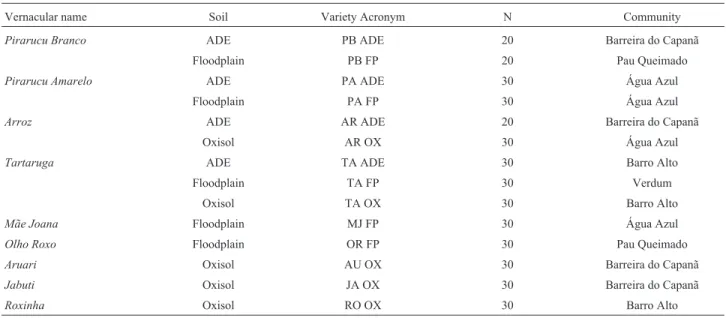
Table 1- Manioc varieties sampled in different soils of different communities of smallholder farmers in the municipality of Manicoré, along the middle
Madeira River, Amazonas, Brazil. N = number of individuals sampled.
Vernacular name Soil Variety Acronym N Community
Pirarucu Branco ADE PB ADE 20 Barreira do Capanã
Floodplain PB FP 20 Pau Queimado
Pirarucu Amarelo ADE PA ADE 30 Água Azul
Floodplain PA FP 30 Água Azul
Arroz ADE AR ADE 20 Barreira do Capanã
Oxisol AR OX 30 Água Azul
Tartaruga ADE TA ADE 30 Barro Alto
Floodplain TA FP 30 Verdum
Oxisol TA OX 30 Barro Alto
Mãe Joana Floodplain MJ FP 30 Água Azul
Olho Roxo Floodplain OR FP 30 Pau Queimado
Aruari Oxisol AU OX 30 Barreira do Capanã
Jabuti Oxisol JA OX 30 Barreira do Capanã
DNA (lambda DNA, Fermentas, Carlsbad, USA) in elec-trophoresis agarose gels (0.9% w/v) stained with GelRed (Biotium Inc., San Francisco, USA).
Seven microsatellite markers (GA21, GA126, GA131, GA134, GA136, GA140, GAGG5) developed by Chavarriaga-Aguirre et al. (1998), and three (SSRY13,
SSRY89, SSRY164) developed by Mbaet al. (2001) were
used. The microsatellite markers developed by Chavarriaga-Aguirreet al.(1998) were isolated from the
MCol22 accession of the manioc germplasm collection at the International Centre for Tropical Agriculture, Cali, Co-lombia (CIAT), with the aim of the mapping and character-izing the genetic variability of CIAT’s core collection. The microsatellites described by Mbaet al.(2001) were isolated
from the improved manioc variety TMS 30572, developed at the International Institute of Tropical Agriculture, Ibadan, Nigeria, (IITA), as part of an effort to generate mo-lecular markers to saturate a genetic map of manioc. The utility of these microsatellite markers for the assessment of genetic diversity of manioc has been demonstrated in previ-ous studies (Bradburyet al., 2013; Mühlenet al., 2013).
PCR assays were carried out in a final volume of 10mL
with 20 ng of genomic DNA, 1X buffer (Mg2+free), 2.5 ng
of BSA, 2.5 mM of MgCl2, 250mM of each dNTP, 2.5
pmols of each forward and reverse primer, and 1 UTaq
DNA polymerase (Fermentas). Amplifications were car-ried out in a Verirti thermocycler (Applied Biosystems, Inc, Foster City, USA) as follows: an initial denaturation step of 94 °C for 2 min followed by 30 cycles at 94 °C for 1 min; 56 °C for 1 min; 72 °C for 2 min, and a final step of exten-sion at 72 °C for 25 min. The quality of the PCR products was checked by electrophoresis in agarose gels (2% w/v) stained with GelRed. Forward sequences of the microsatellite primers were labeled with fluorescence (ei-ther FAM, 6-HEX or NED), and genotyping was per-formed in multiplexed systems in a DNA sequencer ABI3130xl (Applied Biosystems). GeneScanTM -500 ROXTM- size standard (Applied Biosystems) was used for
allele sizing. Data collection and analysis were performed using GeneMapper v.4.0 (Applied Biosystems). According to the manufacturer, since the size standard is added to each sample, the process of calling alleles is very precise. How-ever, as a standard procedure, in the case of samples that did not present clear patterns for allele calling, genotyping was performed more than once.
Data analysis
Intra-varietal genetic diversity
Genetic diversity parameters of total (A) and mean
(A) number of alleles, observed (HO) and expected (HE) heterozygosities, number of private alleles (Ap) and the
in-breeding coefficient (f) were estimated with GenAlEx v.6.5
(Peakall and Smouse, 2012) for each locus and variety, and for the groups of varieties of each soil type. Significance of
fwas determined with Genetix v.4.03 (Belkhiret al., 2002),
based on 10,000 bootstrap replicates. The recognition of identical and distinct multilocus genotypes (MLGs) was performed with GenClone v.2.0 (Arnaud-Haond and Belkhir, 2007) in order to investigate the presence of com-mon MLGs acom-mong different varieties. Individuals with missing data were excluded from this analysis.
Genetic structure
Two methods were used to investigate the genetic structure and relationships among varieties. First we used discriminant analysis of principal components (DAPC, Jombartet al., 2010), a multivariate analysis with no
under-lying model run with the adegenet R package (Jombart and Ahmed, 2011). Previous to the analysis we used theK -means clustering algorithm, also implemented in adegenet, to setK= 11 as the prior grouping criterion (Figure S1).
Based on these 11 clusters we ran DAPC retaining 10 prin-cipal components (corresponding to 98.73% of total varia-tion). To access stability of group membership probabilities generated in DAPC, we used the a-score criterion also im-plemented in adegenet. We then compared the DAPC indi-viduals’ assignments to those obtained with TESS (Chenet al., 2007). TESS implements a Bayesian model based on
Hidden Markov Random Field (HMRF), which models spatial dependencies at the cluster membership level of individuals being tested. The program searches for signifi-cant geographical discontinuities in allele frequencies de-termining population structure from individual multilocus genotypes sampled at different geographical locations. The interaction parametery controls the importance given to
spatial interactions, and when set to zero the HMRF model assumes a non-informative spatial prior, which corre-sponds to the no admixture, uncorrelated allele frequencies model implemented in Structure (Pritchard et al., 2000;
Durandet al., 2009). TESS was run with the no admixture
model, withy= zero for a period of 50,000 steps after a
burn in period of 10,000. With these configurations we aimed to perform an analysis similar to what may be per-formed with Structure, but with the advantage of not having the constraints of the assumptions of Hardy-Weinberg equilibrium and minimization of linkage disequilibrium within clusters. Ten independent runs were performed for each value of the maximal number of clusters (Kmax), with Kmaxvarying from two to 20. Selection of theKmaxthat best
fit data was performed with the Deviance Information Cri-terion (DIC, Figure S1) in a way similar to thead hocDK
criterion used for Structure results (Evannoet al., 2005).
The genetic differentiation among varieties was addi-tionally investigated by estimating pairwise fixation in-dexes (FST) using Arlequin v.3.5 (Excoffier and Lischer,
we aimed to evaluate allelic composition differentiation across varieties. To evaluate the distribution of genetic variation among the varieties, analysis of molecular vari-ance (AMOVA) was performed with Arlequin v.3.5 (Excoffier and Lischer, 2010). Statistical significance for the data was assessed based upon 20,000 permutations. Again, this analysis was performed retaining only one indi-vidual per MLG found within each variety.
Neiet al. (1983) genetic distances (DA) were
esti-mated among the varieties with MSA v.4.05 (Dieringer and Schlötterer, 2003), and a dendrogram was constructed us-ing the Neighbor-Joinus-ing method (Saitou and Nei, 1987) implemented by PHYLIP v.3.6 (Felsenstein, 2005). Signif-icance was estimated with 1,000 bootstrap replicates. The final tree was formatted with FigTree (http://tree.bio.ed.ac.uk/software/figtree/).
Results
Intra-varietal genetic diversity
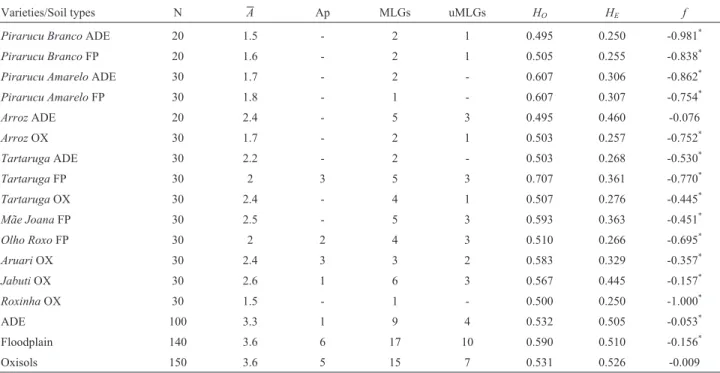
The whole set of individuals (N = 390) presented two to eight alleles per locus and an average of 4.5 alleles over all loci (data not shown). All 14 varieties had higher ob-served heterozygosities than expected by random mating and the excess of heterozygotes was reflected in negative values of inbreeding (Table 2). Observed heterozygosities were also higher than expected heterozygosities for all soil types; the floodplain varieties had a slightly higher mean
observed heterozygosity than did varieties from ADE and Oxisols, which had similar mean values ofHO. The
variet-ies Tartaruga and Olho Roxo from the floodplain, and
AruariandJabutifrom Oxisols, had private alleles. Most of the private alleles that were found across soil types had fre-quencies greater than 0.05 (Table S1).
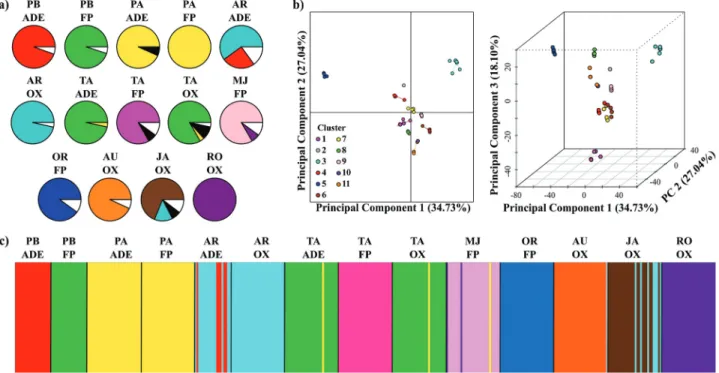
A total of 35 MLGs were detected. Twenty-one of them occurred in only one individual in the whole set of in-dividuals (unique MLGs, Table 2), and were distributed in eight varieties (Figure 2a). The other 14 MLGs were shared by two to 73 individuals (Table S2). High molecular ge-netic variability was observed among varieties, as shown by the multilocus genotypes (MLGs) detected within each variety (Figure 2a), confirming the polyclonal status of most varieties.Pirarucu Amarelofrom the floodplain and
Roxinhafrom Oxisols were the only two varieties with a
single MLG in our sample. The other varieties showed at least two different MLGs, and the Oxisol variety Jabuti
presented six different MLGs.
Genetic structure among varieties
TheK-means clustering method defined 11 clusters from the set of 14 bitter manioc varieties with DAPC (Fig-ure 2b). Membership coefficients based on individuals’ assignments to DAPC clusters were used to plot a Struc-ture-like barplot (Figure 2c), which revealed that varieties were grouped in ten major clusters (one of the DAPC clus-ters was composed by only one individual ofAruarigrown
Table 2- Genetic diversity parameters estimated for 14 bitter manioc varieties grown in three different soil types in Manicoré, Amazonas, Brazil, and for
the set of varieties in each soil type, based on 10 microsatellite loci. Number of individuals (N), mean number of alleles (A), number of private alleles (Ap), number of multilocus genotypes (MLGs), number of unique multilocus genotypes (uMLGs), observed (HO) and expected (HE) heterozygosities and
inbreeding coefficients (f). Soil types are coded as ADE (Amazonia dark earths), FP (floodplain) and OX (Oxisols). Significant values off* (p < 0.05) are
indicated.
Varieties/Soil types N A Ap MLGs uMLGs HO HE f
Pirarucu BrancoADE 20 1.5 - 2 1 0.495 0.250 -0.981*
Pirarucu BrancoFP 20 1.6 - 2 1 0.505 0.255 -0.838*
Pirarucu AmareloADE 30 1.7 - 2 - 0.607 0.306 -0.862*
Pirarucu AmareloFP 30 1.8 - 1 - 0.607 0.307 -0.754*
ArrozADE 20 2.4 - 5 3 0.495 0.460 -0.076
ArrozOX 30 1.7 - 2 1 0.503 0.257 -0.752*
TartarugaADE 30 2.2 - 2 - 0.503 0.268 -0.530*
TartarugaFP 30 2 3 5 3 0.707 0.361 -0.770*
TartarugaOX 30 2.4 - 4 1 0.507 0.276 -0.445*
Mãe JoanaFP 30 2.5 - 5 3 0.593 0.363 -0.451*
Olho RoxoFP 30 2 2 4 3 0.510 0.266 -0.695*
AruariOX 30 2.4 3 3 2 0.583 0.329 -0.357*
JabutiOX 30 2.6 1 6 3 0.567 0.445 -0.157*
RoxinhaOX 30 1.5 - 1 - 0.500 0.250 -1.000*
ADE 100 3.3 1 9 4 0.532 0.505 -0.053*
Floodplain 140 3.6 6 17 10 0.590 0.510 -0.156*
on an Oxisol). The number of DAPC clusters matched nei-ther the number of varieties (14) nor the number of different vernacular names (9). Generally, varieties with the same vernacular name were in the same cluster, except for
Tartarugafrom the floodplain, which was in a different
cluster fromTartarugafound in ADE and Oxisols. These
latter two varieties were grouped in the same cluster as the varietyPirarucu Brancofrom the floodplain. Thus, from
the total of 10 genetic groups recovered in DAPC, seven of them contained only one variety, another two were formed with varieties that had equal names but grown in different soils [Pirarucu Amarelo (from the floodplain
and ADE),Arroz(from ADE and Oxisol)], and one was
formed by varieties with different vernacular names
[Tartaruga (from ADE and Oxisols) plus Pirarucu
Branco(from the floodplain)]. DAPC and the
compari-sons of MLGs among varieties clearly showed that the same MLGs were present in different varieties. The vari-eties that were assigned to the same DAPC cluster showed the same MLGs, and the other varieties, each one assigned to a distinct cluster, had distinct predominant MLGs. These DAPC results were exactly the same as the DAPC based on the a-score criterion, and also highly congruent with the results of the Bayesian model-based analysis car-ried out in TESS (Figure S1).
Measures of genetic differentiation estimated among the set of different MLGs present in each bitter manioc
va-riety generally revealed very high values for pairwiseFST
between different varieties (Table 3). Some varieties with equivalent vernacular names but grown in different soil types (Tartaruga on Oxisols and Tartaruga in the floodplain, for example) also presented high differentiation values.
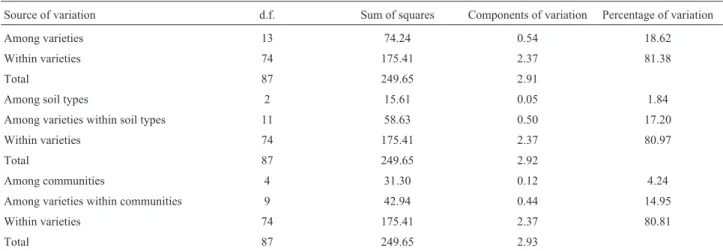
When comparing the MLGs for each variety, the analysis of molecular variance (AMOVA) revealed that most genetic variation is found within varieties (81.38%), but with a large proportion of variation (FST=
0.186, significant at p < 0.001) also found among them (Table 4). Additional AMOVAs showed that little varia-tion was found among soil types and among communi-ties.
Relationships among the varieties based on the ge-netic distance DA(Neiet al., 1983) using the
Neighbor-Joining algorithm corroborated the interpretations of the DAPC results (Figure 3). Varieties that were grouped in the same DAPC cluster were also closer to each other in the dendrogram, and had high bootstrap support. Reason-able bootstrap support was also found between Jabuti
andArroz.Soil type did not influence grouping of
variet-ies.
Discussion
Maintenance and increase of genetic diversity within bitter manioc varieties
Considerable excess of heterozygotes was found for all bitter manioc varieties analyzed. Observed heterozy-gosities much higher than expected heterozyheterozy-gosities were also found in the manioc varieties cultivated by Palikur Amerindians in French Guiana studied by Pujol et al.
(2005), because the Palikur frequently retain heterozygous volunteer seedlings in their swiddens. Pujolet al.(2005)
and Pujol and McKey (2006) demonstrated that the size of seedlings was correlated with their multilocus heterozy-gosities and with their survival. During the weeding of swiddens, small seedlings are removed and larger ones are retained, and these more heterozygous seedlings become candidates for subsequent clonal propagation. Such a pro-cess allows the increase of genetic diversity (through incor-poration of seedlings) and the maintenance of heterozy-gosity (through clonal propagation) in manioc varieties (Pujolet al., 2005).
The analysis of multilocus genotypes (MLGs) re-vealed that almost all bitter manioc varieties were poly-clonal, with a preponderance of one clone and a mixture of other different genotypes, as observed by previous authors studying other manioc varieties in different parts of Ama-zonia (Eliaset al., 2001; Peroniet al., 2007; Pujolet al.,
2007). The incorporation of new MLGs in a given variety may occur by the incorporation of volunteer seedlings, and by unintentional admixture of plants from different variet-ies by farmers. Subsequent clonal propagation in the next cultivation cycle is responsible for the increase in the num-ber of individuals with the new MLG within the variety. McKeyet al. (2010b) comment on the contribution of
so-matic mutations to increase genetic diversity within clonally propagated crops. However, this is unlikely to ex-plain the variation of MLGs found in this study, since the set of microsatellites used only covers a very small fraction of the estimated 772 Mb manioc genome (Awoleyeet al.,
1994; International Cassava Genetic Map (ICGMC), 2014).
Interestingly, about one-third of the farmers from two communities along the middle Madeira River intentionally use volunteer seedlings for clonal propagation, selecting the more attractive or healthy plants, and cultivating them separately for later evaluation (Fraser and Clement, 2008). These authors also observed farmers who unintentionally incorporated seedlings into existing varieties, allowing them to grow and later propagating them clonally without discriminating them from the other individuals of the culti-vated variety. Extending their previous findings, Fraseret al.(2012) report that the proportion of farmers in six
com-munities along the middle Madeira River that intentionally or unintentionally incorporate seedlings varies from 11%-32% and from 9%-33% per community, respectively.
Hence, the incorporation of seedlings followed by clonal propagation plays an important role in the increase of ge-netic diversity in varieties cultivated along the middle
Madeira River, just as occurs among the Makushi and Palikur Amerindians (Elias et al., 2001; Pujol et al.,
2005, 2007).
Figure 3- Neighbor-Joining dendrogram based on the Neiet al. (1983) genetic distance (DA), showing the relationships among 14 varieties grown in
dif-ferent soil types in Manicoré, Amazonas, Brazil. Soil types are coded as ADE (Amazonian dark earths), FP (floodplain) and OX (Oxisols). Bootstrap val-ues greater than 70% are indicated.
Table 4- Analysis of molecular variance for hierarchical groupings of 14 bitter manioc varieties grown in ADE, Oxisols and floodplain soils in ties in Manicoré, Amazonas, Brazil. The levels analyzed were: among the varieties; among varieties within soil types; among varieties within communi-ties. d.f. = degrees of freedom.
Source of variation d.f. Sum of squares Components of variation Percentage of variation
Among varieties 13 74.24 0.54 18.62
Within varieties 74 175.41 2.37 81.38
Total 87 249.65 2.91
Among soil types 2 15.61 0.05 1.84
Among varieties within soil types 11 58.63 0.50 17.20
Within varieties 74 175.41 2.37 80.97
Total 87 249.65 2.92
Among communities 4 31.30 0.12 4.24
Among varieties within communities 9 42.94 0.44 14.95
Within varieties 74 175.41 2.37 80.81
Genetic structure of bitter manioc varieties
Since pairwise FSTs were estimated with only one
individual per MLG found within each variety, their values must be interpreted with caution. In general, varieties had high values of pairwiseFSTs, which shows that the set of MLGs present in each variety is highly differentiated from that in other varieties. Low values ofFSTwere found
be-tween varieties that were in different DAPC clusters and that were distantly related in the dendrogram, so these may be an artefact of the sample size reduction we used before calculating the estimates. However, it is clear that the set of MLGs in these varieties had substantially different allelic compositions (Figure 2a).
Fraser and Clement (2008) and Fraser (2010) ob-served similar agronomic traits in varieties from ADE and from the floodplain, and suggested that the varieties of these two soil types would be genetically closer and more divergent from the varieties grown in Oxisols. However, the individuals ofTartarugaandPirarucu Brancofrom the
floodplain did not cluster together with the individuals of the same variety from ADE (Figure 3). Additionally, the in-dividuals ofTartarugaandArrozfrom ADE were grouped
with the individuals of corresponding varieties from Oxisols. There seems to be a tendency for varieties from the floodplain to be genetically differentiated from correspond-ing varieties in upland soils,e.g.,Tartaruga. This may not
be a general tendency, since individuals of Pirarucu
Amarelofrom the floodplain and ADE shared the same
pre-dominant MLG. Therefore, our results do not reflect the ex-pectations of the hypothesis derived from ethnobotanical observations (Fraser and Clement, 2008; Fraser, 2010), be-cause varieties from ADE and the floodplain were strongly differentiated, and because varieties clustered independ-ently from soil types. The exception (Pirarucu Amarelo va-rieties from the floodplain and ADE) may be due to the fact that these were the only two varieties with the same vernac-ular name sampled in different soils of the same commu-nity. As observed by Fraseret al.(2012), the composition
of bitter manioc varieties is clearly different on different types of soil in the middle Madeira River region, with higher differentiation between varieties from floodplain in relation to varieties from other types of soil. Genetic differ-entiation in bitter manioc varieties across soil types was also observed with molecular markers (Alves-Pereiraet al., 2011). Farmers’ convergent selection for similar ecological adaptations to nutrient-rich soils may be the reason why ADE and floodplain varieties share agronomic characteris-tics (Fraseret al., 2012), rather than shared phylogeny. Fast
maturing and low starch varieties may be the outcomes of selection for rapid growth required in more intensive culti-vation systems generally found in floodplain and ADE soils, as well as different soil conditions that may cause dif-ferences in stress to plants (Fraseret al., 2012). Among
these stress conditions, the differences in annual flood re-gimes among different zones within the floodplain may in-fluence the selection of an increasing number of varieties
that may be suitable for cultivation there. This, in turn, may contribute to increasing genetic diversity within floodplain varieties, as well as increasing genetic differentiation of these varieties in relation to the varieties grown in other soil types. Therefore, the convergent selection proposed by Fra-seret al.(2012) may be contributing to the maintenance and
amplification of genetic diversity among bitter manioc va-rieties cultivated along the middle Madeira River.
The genetic structure revealed by DAPC and Baye-sian analysis using TESS was corroborated by the relation-ships among varieties shown by the Neighbor-Joining dendrogram. The lack of bootstrap support for most of the branches may be due to the fact that, as shown by values of
FSTand detected by clustering in DAPC and TESS,the
vari-eties sampled are so distinct from each other that it may be difficult to establish genetic relationships among them without many more microsatellite loci. The reasonable sup-port found for the relationship betweenArrozandJabuti,
also detected by DAPC and TESS, may be explained by the large number of MLGs shared by these two varieties. On the other hand, the clustering produced by DAPC and TESS showed that several individuals ofArrozfrom ADE were
clustered with individuals ofPirarucu Brancofrom ADE, although they were not closely related in the Neighbor-joining dendrogram (Figure 3). This may be due to the higher similarity in allele frequencies, or even in allele composition, between the varieties Arroz and Jabuti, as
suggested by the lower FST found between Arroz
(ADE)/Jabuti (Oxisol) than between Arroz (ADE)/ Pira-rucu Branco(Floodplain) (-0.029 and 0.229, respectively), and by the composition of MLGs in these varieties.
The high levels of heterozygosity certainly reflected the high proportion of genetic variation within varieties re-vealed by AMOVA. On the other hand, the low genetic variation among manioc varieties in different soils and among communities was rather surprising since the floodplain communities had a generally different set of va-rieties when compared to the upland communities (ADE and Oxisols) (Alves-Pereira et al., 2011; Fraser et al., 2012). The fact that varieties with the same vernacular names, but sampled in different soils of different communi-ties, were in general grouped in the same cluster of DAPC and TESS, reinforces the finding that the greatest genetic divergence is found among the varieties cultivated in the middle Madeira River, rather than among soils, and AMOVA results are in accordance.
DAPC cluster number 2 was represented by a single individual of theAruarivariety from an Oxisol. This
indi-vidual presented one of the two unique MLGs found in
Aruari. Given the general genetic distinction among
variet-ies, it is possible that this individual belongs to another va-riety that has phenotypic similarities withAruari, which
might have caused the farmer to incorporate it inAruari. It
was shown to be almost identical to the varietyTartaruga
from ADE and Oxisol. These varieties had the same pre-dominant MLG, even thoughPirarucu Branco was
col-lected in a community different from the others. It is possible that the set of microsatellite loci were not suffi-cient for finding allelic differences between these varieties. Additionally, it is possible that genotype x environment (GxE) interactions may have an important role in explain-ing this findexplain-ing, since phenotypic plasticity may be present among the traits that were most favored by selection during crop domestication (McKeyet al., 2012). Boster (1985) discusses the “selection for perceptual distinctiveness”, in which selection is performed by farmers in order to recog-nize their varieties as a group of individuals that share a specific set of morphological characteristics that are differ-ent from other varieties. Therefore, it is possible that when the varietyTartarugawas moved from the uplands (ADE
or Oxixols) to the floodplain (or vice versa) it underwent a name change due to differential phenotypic expression of the same genotype in different environments. There also may be a certain range of variation in the morphological characteristics that identify each variety (Boster, 1985; Eliaset al., 2000; Duputiéet al., 2009). In spite of having
distinct MLGs, different individuals may present a set of morphological characteristics that are sufficiently similar to be grouped into the same range of phenotypic variation, which encourages farmers to give them the same varietal name. This is a possible explanation for the fact that the in-dividuals ofPirarucu Brancofrom floodplain were
geneti-cally differentiated from those of ADE, and the same explanation may hold for the individuals ofTartarugafrom floodplain, which were genetically distinct from the indi-viduals of upland soils (ADE and Oxisol). GxE interactions were already documented for cyanogenic potential and nu-trient composition in manioc (Bokangaet al., 1994; Burns et al., 2012), so it is not surprising to find other traits that
may be due to GxE interactions. Studies on the variation of morphological characteristics among varieties of manioc grown along the middle Madeira river may be valuable to cast light on the occurrence of GxE interactions, and also on the genetic evidence found in our study.
Individuals that were clustered by DAPC and TESS separately from the rest of the individuals of a given variety displayed MLGs identical to predominant MLGs of a dif-ferent variety (for example, betweenArrozandPirarucu
Brancofrom ADE). These results may be due to farmers’
confusion when assigning individuals to varieties. How-ever, the term ‘confusion’ is relative because GxE interac-tions may influence the naming of varieties (Emperaireet al., 1998), and because the criteria for distinguishing
variet-ies may vary among farmers (Salicket al., 1997; Sambatti
et al., 2001; Emperaire and Peroni, 2007; Heckler and Zent,
2008).
Indeed, all the factors discussed here may be shaping the extent of genetic diversity and structure among bitter manioc varieties in the region of the middle Madeira River.
These include, for example, the exchange of material among farmers, rates of incorporation of seedlings, and the naming of varieties may vary greatly among and even within different regions (Sambattiet al., 2001; Peroni and Hanazaki, 2002; Fraser and Clement, 2008; Oliveira, 2008). However, whatever the most important processes for the results reported in this study, they ultimately con-tribute to the maintenance of high genetic diversity within the varieties traditionally cultivated in communities of smallholder farmers along the middle Madeira River.
This study was the first to report on the genetic diver-sity and the genetic structure of bitter manioc varieties tra-ditionally grown in different soil types in a small geo-graphic region. Microsatellite variation revealed that traditional farmers of different communities along the mid-dle Madeira River manage high levels of genetic diversity within some of the most frequently cultivated varieties in the region. Although there is large intra-varietal genetic di-versity, varieties have distinct genetic features that, in gen-eral, differentiate one from the other. The genetic structure is primarily related to the varietiesper se,and there was no clear tendency to greater similarity between varieties from the floodplain and ADE. Rather, there seems to be a differ-entiation between varieties grown in the floodplain and the same varieties grown in upland soils (ADE and Oxisols), so the hypothesis proposed by Fraser and Clement (2008) and Fraser (2010) is not supported by our study. It is more likely that farmers in the middle Madeira River region select their ADE and floodplain varieties for convergent adaptive traits (fast maturing, low starch), which are possibly associated with the similar ecological adaptations to fertile soils and short periods of growth (Fraseret al., 2012). The genetic differentiation of some of the floodplain varieties in rela-tion to upland ADE and Oxisol varieties may be due to the selection of a distinct set of varieties for different flood re-gimes in different zones within floodplain soils. These may be a signature of physiological adaptations to flood regimes or edaphic properties, for example. The evaluation of mor-phometric characters in bitter manioc varieties grown in different soil types in the middle Madeira may be useful to better understand the possible existence of convergent ad-aptations.
Our study suggests that many factors may contribute to the maintenance and amplification of genetic diversity within bitter manioc varieties cultivated in communities along the middle Madeira River. We believe that it is worthwhile to invest in social policies that value the prac-tices of smallholders, as they manage high levels of genetic diversity within their cultivated varieties of bitter manioc. These farmers must be seen as collaborators for the on-farm
in-situconservation of the genetic resources of manioc.
Acknowledgments
CNPq/Brazil (CT Amazônia grant. no. 575588/08-0, led by CRC), supported by the Programa de Pós Graduação em Genética, Conservação e Biologia Evolutiva (PPG-GCBEv/INPA), and was part of AAP’s Master’s thesis. We thank all traditional farmers in the riverside communities of Manicoré who shared their time and allowed sample collec-tions. We thank André Braga Junqueira, Doriane Picanço Rodrigues, Michelly de Cristo-Araújo for field and labora-tory help. We thank Doyle McKey for comments on the manuscript. AAP thanks the Coordenação de Aperfeiçoa-mento de Pessoal de Nível Superior – CAPES for a Masters scholarship. CRC, MIZ and MRL are recipients of CNPq research fellowships.
References
Allem AC (1994) The origin of Manihot esculenta Crantz (Euphorbiaceae). Genet Resour Crop Evol 41:133-150. Alves-Pereira A, Peroni N, Abreu AG, Gribel R and Clement CR
(2011) Genetic structure of traditional varieties of bitter manioc in three soils in Central Amazonia. Genetica 139:1259-1271.
Arnaud-Haond S and Belkhir K (2007) GENCLONE: A computer program to analyse genotypic data, test for clonality and de-scribe spatial clonal organization. Mol Ecol Notes 7:15-17. Awoleye F, van Duren M, Dolezel J and Novak FJ (1994) Nuclear
DNA content andin vitroinduced somatic polyploidization cassava (Manihot esculenta Crantz) breeding. Euphytica 76:195-202.
Bokanga M, Ekanayake IJ, Dixon AGO and Porto MCM (1994) Genotype-environment interactions for cyanogenic poten-tial in cassava. Acta Hortic 375:131-139.
Boster JS (1985) Selection for perceptual distinctiveness: Evi-dence from Aguaruna cultivar ofManihot esculenta. Econ Bot 39:310-325.
Bradbury EJ, Duputié A, Delêtre M, Roullier C, Trujillo AN, Manu-Aduening JW, Emshwiller E and McKey D (2013) Geographic differences in patterns of genetic differentiation among bitter and sweet cassava (Manihot esculenta: Euphorbiaceae). Am J Bot 100:857-866.
Burns AE, Gleadow RM, Zacarias AM, Cuambe CE, Miller RE and Cavagnaro TR (2012) Variations in the chemical com-position of cassava (Manihot esculentaCrantz) leaves and roots as affected by genotypic and environmental Variation. J Agri Food Chem 60:4946-56.
Chavarriaga-Aguirre P, Maya MM, Bonierbale MV, Kreolich S, Fregene MA, Toehne J and Kochert G (1998) Micro-satellites in cassava (Manihot esculentaCrantz): Discovery, inheritance and variability. Theor Appl Genet 97:493-501. Chen C, Durand E, Forbes F and François O (2007) Bayesian
clus-tering algorithms ascertaining spatial population structure: A new computer program and a comparison study. Mol Ecol Notes 7:747-756.
Dieringer D and Schlötterer C (2003) Microsatellite analyzer (MSA): A platform independent analysis tool for large microsatellite data sets. Mol Ecol Notes 3:167-169. Doyle JJ and Doyle JL (1987) Isolation of plant DNA from fresh
tissue. Focus 1:13-15.
Duputié A, Massol F, David P, Haxaire C and McKey D (2009) Traditional Amerindian cultivators combine directional and ideotypic selection for sustainable management of cassava genetic diversity. J Evol Biol 22:1317-1325.
Durand E, Jay F, Gaggiotti OE and François O (2009) Spatial in-ference of admixture proportions and secondary contact zones. Mol Biol Evol 26:1963-1973.
Elias M, Rival L and McKey D (2000) Perception and manage-ment of cassava (Manihot esculenta Crantz) diversity among Makushi Amerindians of Guyana (South America). J Ethnobiol 20:239-265.
Elias M, Penet L, Vindry P, McKey D, Panaud O and Robert T (2001) Unmanaged sexual reproduction and the dynamics of genetic diversity of a vegetatively propagated crop plant, cassava (Manihot esculentaCrantz), in a traditional farming system. Mol Ecol 10:1895-1907.
Emperaire L (2005) L’agrobiodiversité en Amazonie brésilienne: Ressource et patrimoine. J d’Ethnobiol 42:413-426. Emperaire L and Peroni N (2007) Traditional management of
agrobiodiversity in Brazil: A case study of manioc. Hum Ecol 35:761-768.
Emperaire L, Pinton F and Second G (1998) Gestion dynamique de la diversité varie tale du manioc en Amazonie du nord-ouest. Natures Sci Societes 6:27-42.
Evanno G, Regnaut S and Goudet J (2005) Detecting the number of clusters of individuals using the software STRUCTURE: A simulation study. Mol Ecol 14:2611-2620.
Excoffier L and Lischer HEL (2010) Arlequin suite ver 3.5: A new series of programs to perform population genetics anal-yses under Linux and Windows. Mol Ecol Resour 10:564-567.
Fraser JA (2010) The diversity of bitter manioc (Manihot esculenta Crantz) cultivation in a whitewater Amazonian landscape. Diversity 2:586-609.
Fraser JA and Clement CR (2008) Dark Earths and manioc culti-vation in Central Amazonia: A window on pre-Columbian agricultural systems? Bol Mus Paraense Emilio Goeldi Ciênc Hum 3:175-194.
Fraser JA, Alves-Pereira A, Junqueira AB, Peroni N and Clement CR (2012) Convergent adaptations: Bitter manioc cultiva-tion systems in fertile anthropogenic dark earths and floodplain soils in central Amazonia. PLoS ONE 7:e43636. Glaser B and Birk JJ (2012) State of the scientific knowledge on
properties and genesis of Anthropogenic Dark Earths in Central Amazon (terra preta de Indio). Geochim Cos-mochim Acta 82:39-51.
Gutjahr E (2000) Prospects for arable farming in the floodplains of the Central Amazon. In: Junk WJ, Ohly JJ, Piedade MTF and Soares MGM (eds) The Central Amazon Floodplain: Actual Use and Options for a Sustainable Management. Backhuys, Leiden, pp 141-170.
Heckler S and Zent S (2008) Piaroa manioc varietal: Hyper-diversity or social currency? Hum Ecol 36:679-697. International Cassava Genetic Map Consortium (ICGMC) (2014)
High-resolution linkage map and chromosome-scale ge-nome assembly for cassava (Manihot esculenta Crantz) from 10 populations. G3 (Bethesda) 5:133-144.
Jombart T and Ahmed I (2011) Adegenet 1.3-1: New tools for the analysis of genome-wide SNP data. Bioinformatics 27:3070-3071.
Jombart T, Devillar S and Balloux F (2010) Discriminant analysis of principal components: A new method for the analysis of genetically structured populations. BMC Genet 11:94. Lebot V (2009) Tropical Root and Tuber Crops: Cassava, Sweet
(2001) Simple sequence repeat (SSR) markers survey of the cassava (Manihot esculenta Crantz) genome: Towards an SSR-based molecular genetic map of cassava. Theor Appl Genet 102:21-31.
McKey D and Beckerman S (1993) Chemical ecology, plant evo-lution and traditional Manioc cultivation systems. In: Hladik CM, Linares OF, Pagezy H, Semple A and Hadley M (eds) Tropical Forests, People and Food Biocultural Interactions and Applications to Development. Vol. 13. Parthenon Carnforth and UNESCO, Paris, pp 83-112.
McKey D, Cavagnaro TR, Cliff J and Gleadow R (2010a) Chemi-cal ecology in coupled human and natural systems: People, manioc, multitrophic interactions and global change. Chemoecology 20:109-133.
McKey D, Elias M, Pujol B and Duputié A (2010b) The evolu-tionary ecology of clonally propagated domesticated plants. New Phytol 186:318-332.
McKey D, Elias M, Pujol B and Duputié A (2012) Ecological ap-proaches to plant domestication. In: Gepts P, Famula T, Bettinger R, Brush SB, Damania AB, McGuire PE and Qualset CO (eds) Biodiversity in Agriculture: Domestica-tion, Evolution and Sustainability. Cambridge University Press, Cambridge, pp 377-406.
Mühlen GS, Martins OS and Ando A (2000) Variabilidade gené-tica de etnovariedades de mandioca, avaliada por marca-dores de DNA. Sci Agr 57:319-328.
Mühlen GS, Alves-Pereira A, Clement CR and Valle TL (2013) Genetic diversity and differentiation of Brazilian bitter and sweet manioc varieties (Manihot esculenta Crantz, Euphorbiaceae) based on SSR molecular markers. Tipití 11:66-73.
Nei M, Tajima F and Tateno Y (1983) Accuracy of estimated phylogenetic trees from molecular data. J Mol Evol 19:153-170.
Oliveira JC (2008) Social networks and cultivated plants. Tipití 6:101-110.
Olsen KM and Schaal BA (1999) Evidence on the origin of cas-sava: Phylogeography ofManihot esculenta. Proc Natl Acad Sci U S A 96:5586-5591.
Peakall R and Smouse PE (2012) GenAlEx 6.5: Genetic analysis in Excel. Population genetic software for teaching and re-search - An update. Bioinformatics 28:2537-2539. Peroni N and Hanazaki N (2002) Current and lost diversity of
cul-tivated varieties, especially cassava, under swidden cultiva-tion systems in the Brazilian Atlantic Forest. Agr Ecosyst Environ 92:171-183.
Peroni N, Kageyama PY and Begossi A (2007) Molecular differ-entiation, diversity, and folk classification of “sweet” and “bitter” cassava (Manihot esculenta) in Caiçara and Caboclo management systems (Brazil). Genet Resour Crop Evol 54:1333-1349.
Pritchard JK, Stephens M and Donnelly P (2000) Inference of population structure using multilocus genotype data. Genet-ics 155:945-959.
Pujol B and McKey D (2006) Size asymmetry in intraspecific competition and the density-dependence of inbreeding de-pression in a natural plant population: A case study in
cas-sava (Manihot esculenta Crantz, Euphorbiaceae). J Evol Biol 19:85-96.
Pujol B, David P and McKey D (2005) Microevolution in agricul-tural environments: How a traditional Amerindian farming practice favours heterozygosity in cassava (Manihot esculentaCrantz, Euphorbiaceae). Ecol Lett 8:138-147. Pujol B, Renoux F, Elias M, Rival L and McKey D (2007) The
un-appreciated ecology of landrace populations: Conservation consequences of soil seedbanks in cassava. Biol Conserv 136:541-551.
Rival L and McKey D (2008) Domestication and diversity in manioc (Manihot esculenta Crantz ssp. esculenta, Euphorbiaceae). Curr Anthropol 49:1119-1128.
Saitou N and Nei M (1987) The neighbor-joining method: A new method for reconstructing phylogenetic trees. Mol Biol Evol 4:406-425.
Salick J, Cellinese N and Knapp N (1997) Indigenous diversity of cassava: Generation, maintenance, use and loss among the Amuesha, Peruvian Upper Amazon. Econ Bot 51:6-19. Sambatti JBM, Martins PS and Ando A (2001) Folk taxonomy
and evolutionary dynamics of cassava: A case study in Ubatuba, Brazil. Econ Bot 55:93-105.
Internet Resources
Belkhir K, Borsa P, Chikhi L, Raufaste N and Bonhomme F (2002) GENETIX 4.03, Logiciel Sous Windows Pour la Génétique Des Populations. Laboratoire Génome, Popula-tions, InteracPopula-tions, Université Montpellier II, Montpellier, France, http://kimura.univ-montp2.fr/genetix/ (January 15, 2013).
Felsenstein J (2005) PHYLIP (Phylogeny Inference Package), version 3.6. Computer program distributed by the author, Department of Genome Sciences, University of Washing-ton, Seattle, http://www.phylip.com/ (January 15, 2013). FigTree software, http://tree.bio.ed.ac.uk/software/figtree/
(Janu-ary 15, 2013).
Supplementary Material
The following material is available for this article: - Table S1 - Table of private alleles (with frequencies > 0.05) found in bitter manioc varieties in different soil types in Manicoré, Amazonas, Brazil.
- Table S2 - List of multilocus genotypes (MLGs) across bitter manioc varieties in different soil types in Manicoré, Amazonas, Brazil.
- Figure S1 - Criteria for choosing the optimal number of clusters (K) for TESS and DAPC, and comparison of
indi-viduals’ assignments obtained with DAPC optimized with a-score and TESS.
Associate Editor: Dario Grattapaglia