Postoperative Atrial Fibrillation Following Coronary Artery Bypass
Graft: Clinical Factors Associated with In-Hospital Death
Dinaldo Cavalcanti de Oliveira, Carlos Romério Ferro, João Bosco de Oliveira, Guilherme Jose Prates, Audrey Torres,
Enilton Sergio Tabosa do Egito, Magali Santos Arraes, Luis Carlos Bento de Souza, Adib Domingos Jatene, Leopoldo
Soares Piegas
Hospital do Coração, Associação do Sanatorio Sírio - São Paulo, SP - Brazil
Summary
Objective: To identify factors associated with a higher likelihood of in-hospital death in patients submitted to coronary artery bypass graft surgery (CABG) who developed atrial fibrillation (AF) postoperatively.
Methods: The authors analyzed data from 397 consecutive patients submitted to CABG that developed AF postoperatively
between 2000 and 2003. The patients were divided into 2 groups: group 1 (G1) comprised patients who survived (n=369); and group 2 (G2) comprised patients who died during hospital stay (n=28). Statistical analysis was performed
using Student’s t test and chi-square test, and p values ≤ 0.05 were considered significant.
Results: A comparative analysis between G1 and G2 showed that there was no difference between the groups as regards
age (67.3 ± 8.4 versus 69.3 ± 9.6; p = 0.4), male gender (75.9% versus 64.3%; p = 0.1), systemic arterial hypertension (75.3% versus 85.7%; p = 0.2) and congestive heart failure (17% versus 17%; p = 1). Group 2 presented higher rates for previous acute myocardial infarction (14.6% versus 28.6%; p = 0.05), left ventricular ejection fraction < 40% (12.2%
versus 32.1%; p = 0.003), previous cerebrovascular accident (0.8% versus 17.9%; p = 0.03), previous percutaneous coronary intervention (19.5% versus 39.3%; p = 0.01) and previous CABG (19.3% versus 35.7%; p = 0.03).
Conclusion: Clinical history of acute myocardial infarction, CABG, percutaneous coronary intervention, cerebrovascular
accident and severe ventricular dysfunction were significantly more frequent in the group that died during hospital stay, which suggests a possible association of these factors with a higher likelihood of death following CABG. (Arq Bras Cardiol 2007; 89(1) : 15-19)
Key words: Atrial fibrillation; thoracic surgery; myocardial revascularization; death; fatal outcome.
Mailing address: Dinaldo Cavalcanti de Oliveira •
Rua Abílio Soares, 625/ 64 A - 04005-002 - São Paulo, SP - Brazil E-mail: [email protected]
Manuscript received June 21, 2006; revised received March 1, 2007; ac-cepted March 7, 2007.
Introduction
Atrial fibrillation (AF) is a frequent complication after heart surgery which affects approximately 10% to 40% of the patients undergoing coronary artery bypass graft surgery. It is known that 70% of the cases occur within the first three days, with a peak at the second day postoperatively1-4.
Unlike nonsurgical cases, the etiology of postoperative AF is not well defined, although recent studies suggest that a multifactoral mechanism is involved which includes oxidative stress, inflammation, atrial fibrosis, excessive production of cathecolamines, changes in autonomic tonus and in the expression of connexins. These changes result in an increase of atrial refractive index dispersion and in the formation of a pro-arrythmic substrate5-9.
Some risk factors are related to an increase in the occurrence of postoperative AF, such as old age, history of paroxistic AF, previous myocardial infarction, left ventricular dysfunction, systemic arterial hypertension, diabetes mellitus,
chronic obstructive pulmonary disease, discontinuation of beta adrenergic drugs prior to surgery, aortic cross-clamp time, use of extracorporeal circulation, postoperative ischemia, use of vasoactive amines and the need for mechanical ventilation for more than 24 hours postoperatively10-12.
The presence of this arrhythmia following coronary artery bypass graft surgery is associated with a two-fold increase in cardiovascular morbidity and mortality. There is a higher occurrence of heart failure and cerebral ischemic accident, both related to longer hospital stay, and consequently, with very high surgery costs13 -17.
We carried out a study with patients who presented atrial fibrillation following coronary artery bypass graft surgery to identify any characteristics related to the occurrence of in-hospital death.
Methods
Of these patients, 993 (73%) did not present AF in the first 24 hours postoperatively, whereas 397 (26%) did. The mean age of patients with atrial fibrillation was 67.6 ± 8.7 years; 297 (75%) of them were male. They were divided into two groups; group 1 was formed by 369 (93%) survivors during the hospital stay phase with a mean age of 67.3 ± 8.4 years; 277 (75%) of these were male. Group 2 was composed of the 28 (7%) deceased patients, whose mean age was 69.3 ± 9.6 years; 18 (64.3%) of these patients were male.
We carried out a comparative analysis of the following variables of the clinical profile between the groups: gender, age, systemic arterial hypertension (SAH), diabetes mellitus (DM), smoking habit, dyslipidemia, chronic kidney failure, left ventricular systolic dysfunction [according to ventriculography and classified as mild (ejection fraction between 50 and 60%), moderate (40 to 49%) and severe (< 40%)], previous acute myocardial infarction, previous heart failure, previous cerebral vascular accident, previous coronary artery bypass graft surgery and previous percutaneous coronary intervention. We assessed the differences between the groups as to the rates of reversion and duration of arrhythmia (≤ 24 hours
versus > 24 hours), and as to the therapeutics employed in reversion attempts (amiodarone versus quinidine versus electrical cardioversion).
In the statistical analysis, when the variable compared between the groups was a categorical one, we employed the chi-square test, and for numeric variables, we employed Student’s t test. Values of p ≤ 0.05 were considered significant. We used the logistic regression model to assess whether AF is an independent risk factor for in-hospital death.
In order to identify predictors of in-hospital death in patients who presented AF following coronary artery bypass graft surgery we employed the logistic regression model; variables with a value of p ≤ 0.1 in the multivariate analysis were included in this model.
Results
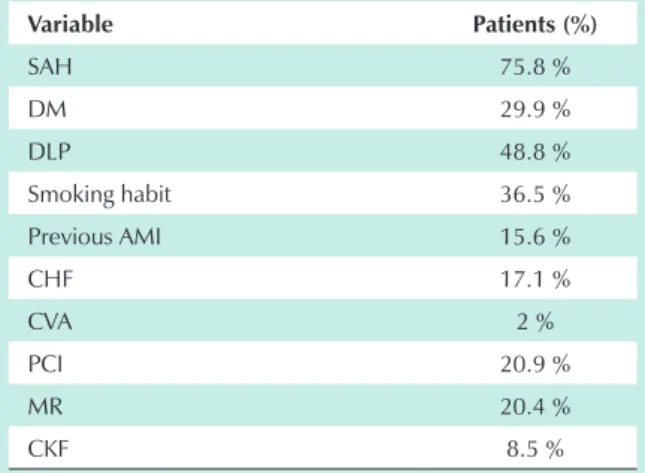
The demographic characteristics of the patients included in this study are shown on Table 1.
As regards the clinical profile, patients who died during
hospital stay presented the following conditions with greater frequency: previous cerebrovascular accident, previous acute myocardial infarction, severe left ventricular dysfunction, previous percutaneous coronary intervention and previous coronary artery bypass graft surgery (Tables 2 and 3).
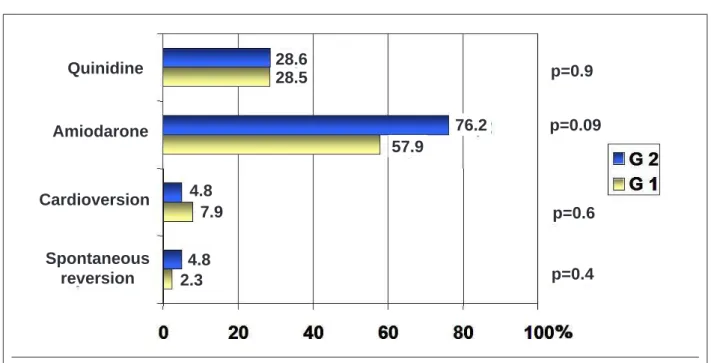
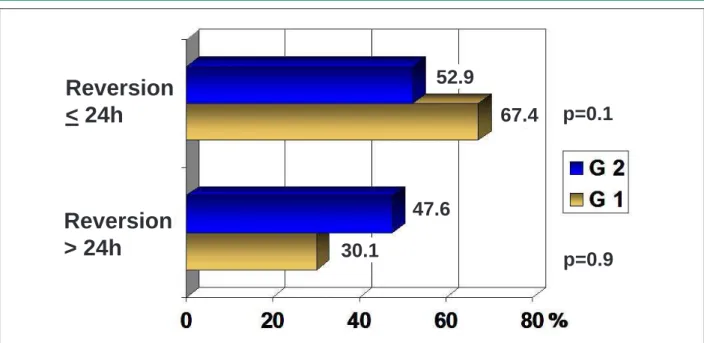
There was no difference between the groups as regards the rates and time of atrial fibrillation reversion, and the therapy used to achieve it (Figures 1 and 2).
The variables included in the multivariate analysis model with logistic regression were: male gender, previous acute myocardial infarction, smoking habit, previous cerebrovascular accident, severe left ventricular systolic dysfunction, previous percutaneous coronary intervention and previous coronary artery bypass graft surgery. None of these was an independent predictor of death in patients with postoperative AF (Table 4).
The number of in-hospital death of patients who progressed to AF within the first 24 hours postoperatively was higher as compared with death of those without such
Table 1 - Demographic characteristics of patients with AF (n=397)
Variable Patients (%)
SAH 75.8 %
DM 29.9 %
DLP 48.8 %
Smoking habit 36.5 % Previous AMI 15.6 %
CHF 17.1 %
CVA 2 %
PCI 20.9 %
MR 20.4 %
CKF 8.5 %
SAH - systemic arterial hypertension; DM - diabetes mellitus; DLP - dyslipidemia; AMI - acute myocardial infarction; CHF - congestive heart failure; CVA - cerebrovascular accident; PCI - percutaneous coronary intervention; MR - myocardial revascularization; CKF - chronic kidney failure.
Table 2 - Comparative analysis of clinical profile
Variables G1 G2 p
Age, years 67.3 ± 8.4 69.3 ± 9.6 0.4
Male gender 75.9% 64.3% 0.1
DM 29.8% 32.1% 0.9
DLP 47.8% 50.0% 0.8
Previous AMI 14.6% 28.6% 0.05
SAH 75.3% 85.7% 0.2
Smoking habit 35.2% 43.6% 0.1
CKF 8.2% 13.6% 0.2
Table 3 - Comparative analysis of clinical characteristics and ventricular function
Variables G1 G2 p
Mild LV dysf 75.3% 85.7% 0.2
Moderate LV dysf 29.8% 32.1% 0.9
Severe LV dysf 12.2% 32.1% 0.003
Previous CHF 17% 17% 1
Previous CVA 0.8% 17.9% 0.03
Previous PCI 19.5% 39.3% 0.01
Previous MR 19.3% 35.7% 0.03
Dysf. - dysfunction; LV - left ventricle; CHF - congestive heart failure; CVA - cerebrovascular accident; PCI - percutaneous coronary intervention; MR - myocardial revascularization.
Fig. 1 - Comparison between AF types and reversion rates (G1 - group 1 and G2 - group 2).
Quinidine
Amiodarone
Cardioversion
Spontaneous
reversion
28.6
28.5
76.2
57.9
4.8
7.9
4.8
2.3
p=0.9
p=0.09
p=0.6
p=0.4
arrhythmia (7% vs 2.1%, p < 0.001). In the multivariate analysis with logistic regression, atrial fibrillation was not a predictor of in-hospital death.
Of the 28 deaths of patients with postoperative AF, 26 died from cardiovascular causes.
Discussion
Until recently, postoperative atrial fibrillation was considered a transitory event with a benign prognosis. However, many studies have demonstrated that this condition is associated with a significant increase in short and long term morbidity and mortality10,11.
In this record on the in-hospital progression of patients who underwent coronary artery bypass graft surgery, the mortality of patients who progressed to AF was higher as compared with the mortality of those without such arrhythmia.
Studies reported that the presence of postoperative AF increases the risk for ischemic cerebral accident, ventricular tachycardia and ventricular fibrillation18.
Patients with AF after coronary artery bypass graft surgery are at a higher risk of cerebrovascular accident than those who do not develop AF (3.3% vs 1.4%)2. The presence of
cerebrovascular accident in these patients causes a five-fold increase in the rate of in-hospital death19,20.
The recognition of risk factors for the occurrence of postoperative AF is of paramount importance for the adoption of prophylactic and therapeutic measures for these patients, with a view to reducing rates of heart failure, kidney failure, pneumonia, prolonged mechanical ventilation, cerebrovascular accident and early and late deaths7-14.
Table 4 - Multivariate analysis with logistic regression
Variable OR (CI 95%,
lower - upper) p value
Male gender 0.6 (0.1 – 2.6) 0.5 Previous AMI 1.2 (0.3 – 4.2) 0.6 Smoking habit 2.5 (0.8 – 7.3) 0.09 Previous CVA 1.6 (0.5 – 5.4) 0.3 Previous PCI 3 (0.4 – 22.6) 0.2 Previous MR 0.6 (0.08 – 5.2) 0.7 Severe LV dysfunction 2.5 (0.7 – 8.9) 0.1
IAM - acute myocardial infarction; CVA - cerebrovascular accident; PCI - percutaneous coronary intervention; MR - surgical myocardial revascularization; LV - left ventricle.
surgery, especially after coronary artery bypass graft surgery. In this case, atriums may be dilated, hypertrophied or with areas of fibrosis, thus affecting the structure and function of the sinus node. These patients frequently have atherosclerotic disease, systemic arterial hypertension, and diabetes mellitus, in addition to reduced cardiopulmonary reserve as compared with younger patients3.
In this study, patients who died in hospital presented higher rates of previous acute myocardial infarction, previous coronary artery bypass graft surgery, previous percutaneous coronary intervention, previous cerebrovascular accident and severe left ventricular dysfunction, which suggests a possible association between these clinical characteristics and a higher likelihood of deaths.
Previous acute myocardial infarction is considered an
independent predictor of mortality in patients who develop atrial fibrillation after coronary artery bypass graft surgery4. It
has been described that the occlusion or major stenosis of the proximal segment of the right coronary artery (RCA) is an important predictor of such arrhythmia. This occurs due to the fact that the blood is supplied to the right atrium, the sinoatrial node and the atrioventricular node by the RCA when the coronary circulation is right-dominant21,22.
Ventricular dysfunction and congestive heart failure are associated with the development of AF in the population in general, especially after heart surgery23. This arrhythmia in turn
is related to higher early or late mortality in the postoperative period following coronary artery bypass graft surgery, which is directly related to the degree of ventricular dysfunction. StahleStahle et al24 demonstrated an operative mortality rate of 6.6% indemonstrated an operative mortality rate of 6.6% in
patients with ejection fraction ≤ 35%, as compared with 2.6% in those patients with ejection fraction ≥ 50%8.
It is believed that patients with a history of myocardial revascularization (percutaneous or surgical) have some clinical characteristics, such as ischemic substrate, myocardial dysfunction and others that may contribute to hospital mortality increase.
Prophylactic measures in patients at a high risk for developing atrial fibrillation after coronary artery bypass graft surgery can translate into a strategy able to reduce the morbidity and mortality of these patients. For instance, the use of beta blockers preoperatively is considered an effective measure in the prophylaxis of this arrhythmia10,11,14,24.
Conclusions
The results of this study allowed us to identify clinical characteristics associated with hospital mortality in patients undergoing coronary artery bypass graft surgery who presented atrial fibrillation within the first 24 hours postoperatively.
Fig. 2 - Comparison of AF reversion time (G1 - group 1 and G2 - group 2).
52.9
67.4
47.6
30.1
p=0.9
p=0.1
Reversion
< 24h
References
1. Ommen SR, Odell JA, Atanton MS. Atrial arrhythmias after cardiothoracic surgery. N Engl J Med. 1997; 336: 142-34.
2. Fuller JA, Adams GG, Buxton B. Atrial fibrillation after coronary artery bypass grafting: is it a disorder of the elderly? J Thorac Cardiovasc Surg. 1989; 97: 821-5.
3. Chung MK, Martin DO, Sprecher D, Wazni O, Kanderian A, Carnes CA, et al. C-reactive protein elevation in patients with atrial arrhythmias inflammatory mechanisms and persistence of atrial fibrillation. Circulation. 2001;104: 2886-91.
4. Aranki SF, Shaw DP, Adams DH, Rizzo RJ, Couper GS, VanderVliet M, et al. Predictors of atrial fibrillation after coronary artery surgery: current trends and impact on hospital resources. Circulation. 1996; 94: 390-7.
5. Cames C, Chung M, Nakayama T, Nakayama H, Baliga RS, Piao S, et al. Ascorbate attenuates atrial pacing-induced peroxynitrite formation and electrical remodeling and decreases the incidence of post-operative atrial fibrillation. Circ Res. 2001; 89: E32-8.
6. Gaudino M, Andreotti F, Zamperelli R, Di Castelnuovo A, Nasso G, Burzotta F, et al. The -174G/C interleukin-6 polymorphism influences postoperative interleukin-6 levels and postoperative atrial fibrillation. Is atrial fibrillation an inflammatory complication? Circulation. 2003; 108: II-195-9.
7. Goette A, Juenemann G, Peters B, Klein HU, Roessner A, Huth C, et al. Determinants and consequences of atrial fibrosis in patients undergoing open heart surgery. Cardiovasc Res. 2002; 54: 390-6.
8. Dupont E, Ko Y, Rothery S, Coppen SR, Coppen SR, Baghai M, et al. The gap-junctional protein connexin40 is elevated in patients susceptible to postoperative atrial fibrillation. Circulation. 2001; 103: 842-9.
9. Leung JM, Bellows WH, Schiller NB. Impairment of left atrial function predicts post-operative atrial fibrillation after coronary artery bypass graft surgery. Eur Heart J. 2004; 25: 1836-44.
10. Hakala T, Hedman A. Predicting the risk of atrial fibrillation after coronary artery bypass surgery. Scand Cardiovasc J. 2003;37:309-15.
11. Murphy GJ, Ascione R, Caputo M, Angelini GD. Operative factors that contribute to post-operative atrial fibrillation: insights from a prospective randomized trial. Card Electrophysiol Rev. 2003; 7 (2): 136-9.
12. Sobczyk D, Sadowski J, Sniezek-Maciejewska M. Causes of atrial fibrillation early after coronary bypass grafting. Przegl Lek. 2005; 62 (3): 141-7.
13. Benjamin EJ, Wolf PA, D’Agostino RB, Silbershatz H, Kannel WB, Levy D, et al. Impact of atrial fibrillation on the risk of death: the Framingham Heart Study. Circulation. 1998; 98: 946-52.
14. Wu ZK, Iivainen T, Pehkonen E, Laurikka J, Zhang S, Tarkka MR, et al. Fibrillation in patients subjected to coronary artery bypass grafting. J Thorac Cardiovasc Surg. 2003; 126 (5): 1477-82.
15. Hravnak M, Hoffman LA, Saul MI, Zullo TG, Whitman GR. Resource utilization related to atrial fibrillation after coronary artery bypass grafting. Am J Crit Care. 2002; 11: 228-38.
16. Kim MH, Deeb GM, Morady F, Bruckman D, Hallock LR, Smith KA, et al. Effect of postoperative atrial fibrillation on length of stay after cardiac surgery. Am J Cardiol. 2001; 87: 881-5.
17. Creswell LL, Damiano RJ. Postoperative atrial fibrillation: an old problem crying for new solutions. J Thorac Cardiovasc Surg. 2001; 121 (4): 638-41.
18. Creswell LL, Schuessler RB, Rosenbloom M, Cox JL. Hazards of postoperative atrial arrhythmias. Ann Thorac Surg. 1993; 56 (3): 539-49.
19. Athanasiou T, Aziz O, Mangoush O, Al-Ruzzeh S, Nair S, Malinovski V. Does off pump coronary artery bypass reduce the incidence of post-operative atrial fibrillation? A question revisited. Eur J Cardiothorac Surg. 2004; 26: 701-10.
20. Mahoney EM, Thompson TD, Veledar E, Williams J, Weintraub WS. Cost-effectiveness of targeting patients undergoing cardiac surgery for therapy with intravenous amiodarone to prevent atrial fibrillation. J Am Coll Cardiol. 2002; 40: 737-45.
21. Pehkonen E, Honkonen E, Makynen P, Kataja M, Tarkka M. Stenosis of right coronary artery and retrograde cardioplegia predispose patients to atrial fibrillation after coronary artery bypass grafting. J Thorac Cardiovasc Surg. 1998; 46: 115-20.
22. De Jong MJ, Morton PG. Predictors of atrial dysrhythmias for patients undergoing coronary artery bypass grafting. Am J Crit Care. 2000; 9: 388-96.
23. Kannel WB, Abbott RD, Savage DD, McNamara PM. Epidemiologic features of chronic atrial fibrillation. The Framingham study. N Engl J Med. 1982; 306: 1018-22.
24. Stahle E, Bergström R, Edlund B, Frostfeldt G, Lagerquist B, Sjögren I. Influence of left ventricular function on survival after coronary artery bypass grafting. Ann Thorac Surg. 1997; 64: 437-44.
The patients who died presented a more severe clinical profile, i.e. a greater association of comorbidities, and in the multivariate analysis with logistic regression we did not identify any independent predictor of in-hospital death. It is possible that one single isolated characteristic is not a likely determinant of death in this population, but rather an association of comorbidities.
Potential Conflict of Interest
No potential conflict of interest relevant to this article
was reported.
Sources of Funding
This study was funded with the investigator´s own resources.
Study Association with Graduate Work